


 Unlock with Patreon
About This Episode
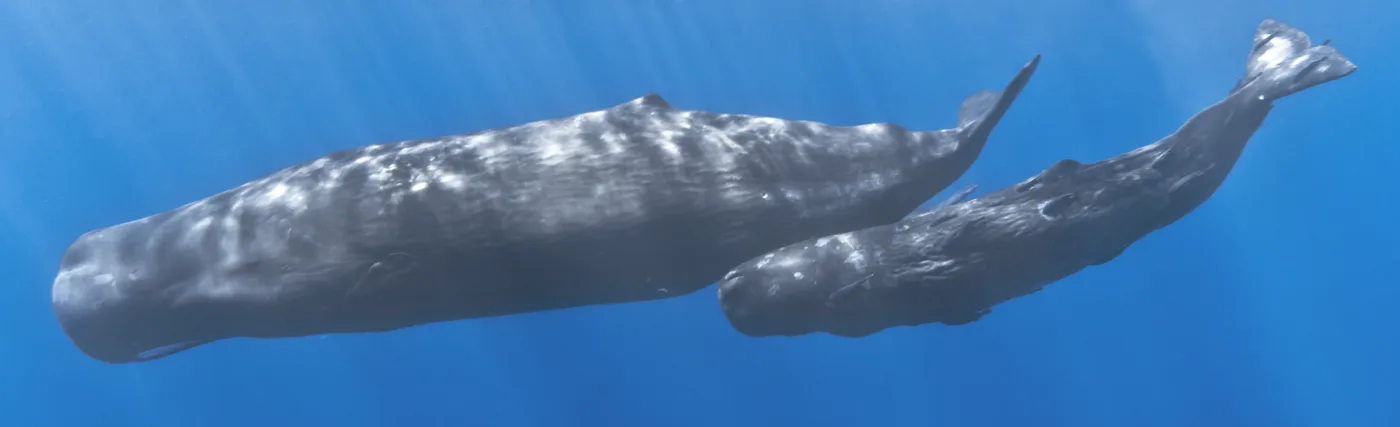
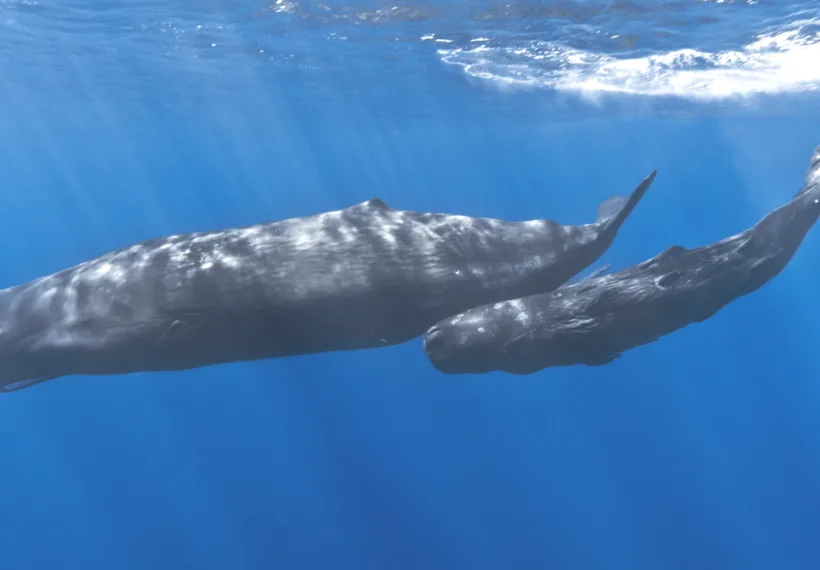
Can whales help us understand aliens? On this episode, Neil deGrasse Tyson and comic co-host Chuck Nice explore how whales can help us understand animal language with marine biologist, Dr. Ellen Garland, and marine ecologist, Dr. Michelle Fournet. What are the whales saying to each other?
We talk about the new documentary film Fathom featuring our two scientists detailing their work on decoding the language of whales. Can they crack the code? Find out how starting small could help tackle a whale of a mystery. Why do whales talk to each other? Discover whale migration and how they navigate the seas without GPS. Can whales detect the difference in the gravitational tug of the Earth? Is there any way that Dr. Doolittle could be a documentary? Does figuring out how to talk to animals mean we should talk to them?
How does verbal communication work under water? Is there a better way to communicate? How do animals produce sound? Could we use whales as our first attempt to learn another species’ language or learn… an alien language? How do you decipher a phrase or a word? We explore sound frequency underwater and what a shame it is that we haven’t decoded any other animal’s language yet. Will there ever be a day when we can talk to animals?
How does ocean noise pollution impact whale communication? What’s the coolest means of communication in the animal kingdom? Do animals have the same language centers in their brains that we do? If we communicated with whales, wouldn’t it freak them out? We break down the goals of Garland and Fournet’s studies featured in Fathom and how they go about capturing these complex vocal displays. All that, plus, find out if there’s a possibility for the existence of mer-people and hear Chuck moan like Dory in Finding Nemo.
Thanks to our Patrons blufor, Timothy Dalby, Mick Mowchenko, Bobby Penney, Jason, Brian Wright, human_h, Michael Hewitt, Zach Hicks, and Hschrull1 for supporting us this week.
NOTE: StarTalk+ Patrons can watch or listen to this entire episode commercial-free.
Transcript
DOWNLOAD SRTWelcome to StarTalk, your place in the universe where science and pop culture collide.
StarTalk begins right now.
This is StarTalk.
I’m Neil deGrasse Tyson, your personal astrophysicist.
This is going to be a Cosmic Queries edition, and of course, that means I have Chuck.
Hey.
Chuck, helping me out here.
Hey, Neil.
How you doing?
Yeah, I’m excited for this one.
Yeah, this one, this is very cool.
There’s going to be a happening Cosmic Queries.
Because.
Normally, when the expertise falls outside of anything I know, we, of course, bring in an expert.
But this time, we’ve got two experts.
Yes.
Two experts.
And why?
Because they’re both the subject of a recent documentary called Fathom.
Fathom.
And it’s a groundbreaking story to learn how to talk, how to talk to whales.
Wow.
How to talk to whales.
And I’ve got with me Ellen Garland and Michelle Fournet.
Did I pronounce that right?
Welcome.
Thank you so much.
Both you guys.
And so you’re each PhD Marine Ecology.
Michelle, you’re a Marine Ecologist and Ellen, you’re a Marine Biologist.
Do I get that right?
Okay.
Okay.
And so I didn’t know you can get separately a PhD as a Marine Ecologist from, we’ve all heard of Marine Biology, right?
But Marine Ecology, that a new field that we hear of?
If I was going to be really specific, my PhD is actually in Wildlife Science, which means that I focus specifically on studying animals in the wild, in their natural habitat, instead of in houses or zoos or homes.
I got it.
But how about humans?
When I’m in the city, that’s my habitat.
And you can study humans just as they gather in the cities in the wild.
Which, by the way, is nothing more than an open-range cage.
Let’s be real.
Let’s just call it what it is.
We put ourselves in cages.
So, Michelle, you’re a postdoctoral fellow at Cornell.
That’s right upstate New York in Ithaca.
And you specialize in animal communication and marine bioacoustics.
I like that.
I love new words.
It’s clear what you’re saying.
You don’t have to say, what does that mean?
Bioacoustics, figure it out.
We got that.
It’s a really laid-back whale with a guitar at a cocktail party.
It’s bioacoustics.
All that.
Acoustic, MTV Unplugged.
Ellen, you are a marine biologist, research fellow at the University of St.
Andrews in Scotland.
But you’re not Scottish.
No, I’m not Scottish.
I’m originally from New Zealand, so I’m a Kiwi, but I’ve moved all over the world, so I don’t have as strong a Kiwi accent, though I feel it may come out today a little bit.
A few certain words will come out.
We can still hear a little bit.
You have like a residual Kiwi accent.
We love New Zealand.
What is it about New Zealand that-
It’s because they filmed Lord of the Rings there.
That could be it.
No, I’m sure it’s not The Ring.
It’s a beautiful country.
It’s really lovely and green, and there’s a lot of ocean there, so I definitely grew up around that.
This new documentary we’re talking about, which I’m told is being entered into film festivals, but also will come out on Apple TV Plus, I think they call that channel now.
The director of the film, Drew Xanthopoulos, I think I pronounced his name right, he describes this film as a rival but with whales.
Remember the arrival being an visitation.
Except that one had like septopods in it, or like seven limbed octopuses.
And this one has whales.
But we would be the arrival for whales.
We would be the arrival.
Very cool.
Whales wouldn’t be the arrival, we’d be the ones who landed and wants to talk.
And we want to land and talk.
Okay, so let’s get to the bottom of this.
Let me ask you guys, and I don’t know who to direct it to, so you all just fight each other and then whoever’s still speaking.
Each of your specialties is the communication methods and tactics of these creatures who bear the largest brain of any living creature that ever was on earth.
So we hear the sounds they make, but why are you so convinced that we can crack that code?
Well, for my part, I’m not.
But any good question.
Thanks for tuning in, people.
This has been StarTalk with Michelle Fournet and Ellen Garland.
Well, but it’s worth a good try, right?
Any good question is worth trying to answer.
And when you’re dealing with something bigger than yourself and other than yourself, then you put in the very best of what our slightly smaller human brain has to offer.
And so for the work that I do, the best that I could do wasn’t to say I’m going to tackle all humpback whale communication at once.
I started with a very tiny piece of the puzzle.
And I said, what does this one sound mean?
And so if you start small, the hope is eventually you can get big.
Before you shoot for the stars, you have to make it to the moon.
Interesting.
And so you got a little piece of the sound.
And then what did you find?
Well, this is the kind of cool thing.
I found that, I mean, it seems simple, but I found that whales talk to each other.
And that if you do a good…
But did we need you to figure that out?
I mean, come on.
Yes, absolutely.
I learned that from Ellen in Finding Nemo.
I speak whale.
I speak whale.
Whale.
The answer to that is decisively yes.
This is one of the first times in human history that we have actively gone out and designed an experiment to try and figure out exactly what a whale does when it talks to itself.
So when one whale talks to another whale, how do they respond?
Why is that important?
Why is this whale producing a sound?
And to do that, we had to go out and drop a speaker in the water and produce a sound that a whale would make to see is this an exchange?
Or is this a whale trying to find fish?
Or is this a whale that’s trying to navigate?
Or is this a whale that’s trying to keep itself company?
I mean, you have to remember that.
And I do my work in Alaska.
So Southeast Alaska, it’s in the summertime.
Lots of primary productivity, which means the water is completely cloudy.
No light.
A whale that is 10 meters away from another whale is invisible unless it makes a sound.
What kind of activity is there?
Primary productivity.
Primary production.
So phytoplankton.
Activity.
Oh, okay.
So the base of the food.
It’s great feeding ground.
Really good feeding ground.
So the water is dense with food.
Yeah, we’ve got krill and copepods and lots of little swarming tiny food, which is why the whales come there.
But it also means our water is really cloudy and that a whale can’t see another whale.
So we might laugh and say, oh, why would a whale talk to another whale?
And that’s because if you want to know if someone’s around, you have to be sound producing.
Otherwise, the whale is functionally invisible.
Dating in the dark.
Is that what that is?
Well, look at that.
Wait, so Ellen, you’re based up in Scotland.
Are there any whales up in the North Atlantic?
Of course, there are humpbacks up here, but I do my work actually in the South Pacific, being from that region.
So I investigate.
So whales get around.
Yeah, there’s lots of different populations.
How far around?
Because now I think it was humpbacks that we were watching.
I was in Hawaii and we went watching.
It’s during their breeding time where they go.
I was off of Lanai and Maui, and they say the waters are warm, and so that’s where they go to birth.
So where is the scope of their travel around the world?
Because I saw one on the East River a few days ago.
So they do travel thousands and thousands of kilometers, because I work in kilometers.
So they will spend the summer months feeding, which is where Michelle works in the polar regions, and then over winter they go to the tropical and subtropical breeding grounds.
Wait, wait, wait, wait.
Winters and summers are switched from each other.
Exactly.
So do they cross the equator?
They do just around Colombia, Costa Rica, Nicaragua, that area on the western side of South America and Central America.
But if they have habits that are seasonally driven, then they can’t go too far across the equator, otherwise they’ll get completely…
Exactly.
And they go back to the same breeding location and feeding ground usually every year.
They have this really strong site fidelity, so they’ll go basically, you guys can see, up and down.
So they’ll go north and south.
How do they do this without GPS?
Oh, that is a really fantastic question.
We’re not entirely sure exactly how they navigate.
It may have something to do with magnetism and how that’s style, but we’re not entirely sure exactly.
This might be of interest to you, but in addition to magnetism as one theory, there’s also a theory that whales can actually detect differences in the gravitational tug of the earth.
So they use different gravitational forces to know when and where to migrate.
Or alternatively, as an acquisition, this matters to Ellen and I, that they can actually listen to learn their way around, that they hear what a soundscape sounds like, and they know, oh, I’m in the right place or I’m in the wrong place.
Kind of like you would know the difference between if you were in a basketball court or if you were in a closet.
Right, right.
So I vote against that they’re feeling Earth’s gravitational field.
I’m voting against that, okay, as like a physicist here.
As an astrophysicist.
As an astrophysicist.
Because the whale is basically neutrally buoyant, right?
And so people say, how much does a whale weigh?
It weighs zero until you pull it out on land, where now what does it weigh in air, but in water it’s basically zero.
And if you weigh zero, then variations in gravity around you are kind of irrelevant because you’re just floating there.
So that’s my first take at that, but I could be wrong.
Let me, before we go to break and then get to our questions from our fan base, let me just ask you, is there any way Dr.
Doolittle could be a documentary?
What I mean is, okay, let me be more precise.
All animals that all animals we care about communicate with each other.
So it’s just a matter of us learning how to communicate in that same way.
Can you imagine a day where we just communicate with all the animals the way Time Lords do in Doctor Who, for example, or the way Mary Poppins does when she talked to the dog and the parrot?
I’m going to counter that with a slightly more complicated question.
Should we?
Exactly.
That’s what I was going to say.
First of all, there’s a lot of animals I really don’t want to talk to.
I mean, if I’m at a cocktail party, I don’t want to talk to a llama.
That’s all I’m saying.
I may want to talk to the orangutan.
That orangutan looks like he might have something on his mind.
You know what I mean?
I certainly want to talk to a humpback whale.
You know what I mean?
But not a chimpanzee.
They’re assholes.
They’re rude.
Oh, no.
So you mentioned orangutans in Planet of the Apes.
The orangutans were the diplomats.
That’s right.
The gorillas were the police.
And the chimpanzees were the academic research scientists.
That’s right.
I just want to throw that out there.
Anyway, so let’s end this segment.
We’re going to come back and go straight to questions.
This is like marvelous expertise to have on StarTalk.
Because this is like we’ve all thought about this.
And you guys get to declare it your profession.
And we’re all jealous.
So we’ll be right back on Star Talk Cosmic Reds.
I’m Joel Cherico, and I make pottery.
You can see my pottery on my website, cosmicmugs.com.
Cosmic Mugs, art that lets you taste the universe every day.
And I support StarTalk on Patreon.
This is Star Talk with Neil deGrasse Tyson.
We’re back, StarTalk, Cosmic Queries edition.
And this is a good one, because we’re talking about how to talk to whales.
And neither Chuck nor I have any clue how to do that.
So we bring in PhD experts on this topic, Michelle Fournet and Ellen Garland.
Each of them specialize in animal communication, and they were each featured, both featured, in the documentary Fathom, Fathom, which you can find on Apple TV+.
It was also entered into film festivals, which are always fun to attend.
A quick test, Chuck, how long is a Fathom?
Pretty long, Neil.
Okay, Ellen, you said you’re metric, and Fathom is anything but metric.
How long is a Fathom?
Oh, oh, I’m in trouble.
I’m in trouble, I don’t know.
Michelle, how long is a Fathom?
Six feet, I think she’s about right.
I think you’re right there.
That’s right.
That’s right, you’re right.
That’s the bullet there.
Under the bustle, really.
So can you Fathom this?
That six feet is not that much, you know, when you think about it.
All right, let’s go to Q&A from our supporting Patreon members.
They support our, what we do.
And in other words, some perks in return.
Yeah, they give us money.
And so, Neil doesn’t like to say that.
He likes to use words.
He likes to use euphuistic words like support, support and, you know, I’m like, yeah, give us money.
You give us money and we’ll give you.
But anyway, all seriousness, the people from Patreon give us the opportunity to do some things that we otherwise would not do.
So, yeah, we experiment and we do things that are just fun.
And we’ll let you know when that happens.
Chuck, give us one.
Let’s go to Tomas Paz and Tomas says, Hello, it seems to me the verbal communication underwater or any other liquid would be difficult.
Do you think that intelligent life that lives beneath the surface could communicate using something else than sound?
Ah, that’s a really kind of cool concept.
You know, whales is definitely sound, you know.
So Ellen, what do you think about that?
That’s a really good question.
I mean, underwater, you really want to go for sound.
I mean, visual communication, as Michelle was saying earlier, that you’re not going to see that far underwater.
So it is really all about sound.
And they can’t send smoke signals, right?
No.
There are a lot of other ways we take for granted that you can’t do underwater.
Exactly.
It’s a really different environment.
And I think also, you know, chemoreception, that’s not going to go as far.
So it’s really all about sound underwater.
I’d be really surprised if there was a different communication system going on.
Michelle, do the different frequencies of sound travel different distances?
Because just because you’re underwater, it doesn’t mean sound doesn’t work.
It’s another medium through which the sound is moving.
It’s just a pressure wave through the molecules.
So it’s the physics of it.
So the whales, have they found a special frequency where they can talk a gazillion miles around the world?
Yes, actually.
Well, a gazillion miles, perhaps not.
But yes, is the answer to that.
So low frequency…
A gazillion is just longer than six feet.
So like a fathom and a half.
A fathom and a half.
So low frequency sound is what we think of as low pitch.
And it means that there’s a longer wavelength.
So wavelengths actually have distance, you know, distance and velocity.
And so your voice, Neil, is lower than mine.
So you will have a lower frequency voice, which means theoretically underwater, your voice would travel further than mine would.
And that has to do with the physics of the situation, with loss of energy, high frequency sounds, have very short wavelengths, and they’re used for short distance communication.
And by the way, that’s true in the air too.
I mean, that’s why lightning sounds very snap, crackle, and poppy when it’s right near you.
But if it’s on the horizon, you only hear the low rumble.
It lost all the high frequencies.
Exactly.
Yeah.
So with whales, depending on, with cetaceans in general, depending on what the sound is used for, it might be lower frequency for long distance communication, or it might be very high frequency to be used for things like echolocation or for short distance communication.
And then because of the physics of sound underwater, because of pressure in the ocean and temperature, there’s actually something called the SOFAR channel, the Sound Fixing and Ranging channel, which is an area of sound speed minimum.
And sound can get trapped in this underwater channel and travel for thousands of kilometers.
Because otherwise it’ll just escape and then you lose it.
So if you keep it contained, it’ll just reflect back and forth from these layers.
I love it.
I love it.
There’s a similar layer in the atmosphere.
It’s called the ionosphere.
And AM radio waves, when they hit the ionosphere, they actually reflect back down.
So you can detect AM radio, who has an AM radio anymore, beyond the horizon, whereas FM goes straight out and it doesn’t reflect.
So I like these parallels between Earth’s atmosphere and the ocean.
So you’re sticking with, both of you are sticking with sound on this one.
Sound is it, huh?
Yeah.
So can I ask a question speaking of sound?
When we speak, we force air past our cords, they vibrate, and it creates the sound.
How do these cetaceans do it?
Do they force water through the way we do?
Or how are they producing the sound?
I’m going to throw this to Michelle, because she has a fantastic answer for this.
So whales use air just like we do.
They have something that’s analogous to vocal cords, which are called vocal folds, so different folds.
And they pass air back and forth through different sinus cavities in their brain.
So unlike you or I, when we exhale, air comes out of our mouth and then we have to take another inhale.
Cetaceans will actually take the inhale of the surface, go underwater, and then move that air around, back and forth across these vocal folds in order to produce sound.
So, no.
I’ve got to say, Chuck, they would make excellent jazz musicians.
Just think about that.
Yeah, because they could hold a note forever.
You could just move it back and forth in the saxophone.
Oh my gosh, we need that.
In Sebastian’s band, in The Little Mermaid, was there a whale?
No, there wasn’t a whale in his band.
No, and there should have been.
They were missing out.
They were totally missing out.
It should have been Sebastian and the Biolacoustics.
Exactly.
Had you been around, okay, you might not have been born yet when that movie came out.
So very cool.
Wow, that’s amazing.
All right, give me another question.
All right, here we go.
This is Elliot Frost.
Do you believe we could utilize the electromagnetic spectrum to attempt to communicate with these marine mammals in a way to sort of replicate what it would be like to try to communicate with a cosmic society that may not know how to use the electromagnetic spectrum in the same way that we do?
So, can we talk to them and they’re not know that we’re talking to them, but somehow we let them know we’re talking to them, which I believe he just described the whole premise of your documentary.
Sort of.
So, I’m going to take a stab at this, but I’m hoping that those of you who understand the electromagnetic part of that will do a little bit better.
I think that what we are trying to do is not to communicate with whales the way that we want to be communicated with.
We’re trying to understand how they communicate with each other, which means that we need to work on their terms.
We are adopting their way of perceiving the world, their way of interacting.
By the way, this is a famous quote from Carl Sagan.
He was saying, why isn’t we judge animals’ intelligence by whether they can communicate with us?
But maybe we should judge our intelligence by whether we can communicate with them.
Exactly.
That is exactly what we are working on.
So when you think about what might be beyond our Earth’s extraterrestrial intelligence, why is it that we have such an enormous ego that we assume that everyone must speak our language instead of learning to speak theirs?
We have intelligent life right here on this planet and we have not yet interpreted how it is communicating with itself.
That is a really lovely analogue for perhaps trying to understand something otherworldly.
Elephants, dolphins, you know, whales.
Any animal with a brain bigger than ours.
So the audacity of us to declare that we could speak with another animal elsewhere when we can’t speak with the other animals on our own planet.
So I’m embarrassed by that fact.
Let me just say that right now.
Wouldn’t that be great though if they actually, because they do have bigger brains, they all spoke our language?
But then when we’re around, they’re just like, everybody shut up.
Yo, here come the dummies.
Here come the dummies.
Shut up, shut up, shut up.
Just make some sounds.
Back to our other language, guys.
Let me get a PhD off of this sound.
Back to our other language, guys.
Look, we don’t even know what half the communication is for.
Even though I studied the song, which is the male display, we don’t actually know exactly what it’s for.
And that’s where we’re at.
So, Ellen, do you get together with bird people because they try to understand bird songs?
How different is this really?
It’s like a slowed down bird song in some respects.
So if you slow down a bird song, it can sound like a whale.
And if you speed up a whale song, it can sometimes sound like a canary.
So, yeah, we definitely spend a lot of time with bird people, with bird song people, and a lot of the classification and now understanding of the structure of song comes from bird song because that was far more established before whale song, at least humpback whale song.
So we really draw on it.
It’s harder to chase a whale around than it is a bird.
Yes, tell me about it.
Very much tell me about it.
Just trying to get these recordings of these males singing their little hot sound.
So just one point relative to the question, and I don’t know if this is what he intended, but I don’t know where else it could go.
If you’re going to use electromagnetic energy, you’re using light of some frequency.
And that would mean you would be showing the whale and its eyeballs would be seeing some kind of electromagnetic information.
So that would be like writing or something, or some symbol.
And by the way, is that any different from the septopus, or whatever you guys call it, in the movie Arrival?
That was not sound.
And technically it was sort of the absence of light because it was making these ink drawings and the ink is absorbing light, but that then becomes the symbol.
So have you ever thought of communicating with them not by song, but just by giving them something to look at?
Ellen, have you thought about that?
Or are you just so song biased that that’s not even a thought?
Yeah, I’m on that side of the communication spectrum.
So I just, I do passive acoustic, so I record what they’re saying and what they’re singing.
I don’t try and play something.
You can’t record what they’re writing because they don’t write.
Well, I mean, I think there are aspects there with the, if we think about the song, it really has a lot of repetition in it.
It’s really repetitive and redundant.
So you think about whether if you’re trying to get a signal out, you’d want that redundancy built in because you may only catch the end of that signal at some point, because if the songs are spreading out, you may just hear the last little faint bit of a particular theme or a particular phrase, and you think, oh, there’s another whale out there.
This is the SETI philosophy where you don’t want to give a long dissertation because they might not know that you began it yesterday and might end it in three days.
So you’re sending a repeating signal.
So it’s not that it’s redundant.
It’s that you’re just being sensible about when they might come into the eavesdropping.
So with that in mind, how do you determine what is this whatever phrase or word or whatever you want to call it, how do you determine what sound to try to decipher?
Like, you know, like, for instance, there are certain things that we know mean something like help.
Right.
So even if you never spoke English, right, if you never spoke any language and you heard somebody go, help, like you would know that is a distress call.
Right.
Just if you keep listening over and over, you’re like, oh, that person’s in trouble.
So how do you find out, like, what the one thing is that you want to identify?
Okay.
First, Chuck, did you become a Patreon member yet?
Because you just stole a Patreon slot there.
I know.
I’ll cut you slack this one.
I’m not going to ask anymore now.
Please proceed.
I can answer that question.
You spend a decade listening first.
So that’s exactly what we wanted to do was to find out what is the essential.
When somebody screams at you, it’s because there’s something essential that is shared among all people.
So for whales, we looked to find out what is a sound that is essential to humpback whale communication.
Like the whale boat is chasing me.
The whalers want my blubber.
We wanted to know what is the sound that all whales produce, that male whales produce, that female whales produce, old whales, young whales, baby whales, any population, animals that have been separated by 3 million years of genetic isolation still produce the same sound.
So that was the sound that we decided to start with.
We said, okay, this is probably foundational.
This is essential.
So in order to figure out what that sound means, now that we’ve identified that there’s something important, we’re going to play it back to them and see how they respond.
So if you scream help and I scream help, we’re both in trouble.
Luckily, the sound doesn’t appear to mean that.
It’s more of a way of saying to the ocean, you know, I am and I am here and I am me.
And then other whales will respond with an I also am.
I am here.
I am me.
I think I think therefore I am.
It’s the day current of whales.
Therefore, I think that would freak that would freak us out.
We found out that they have philosophy class.
That’s so cool.
Oh, my God.
That’s so cool.
Do you want to hear what it sounds like?
Yes.
Yeah, I mean, yes.
And this is important for Ellen’s work too, because this is a sound that appears in song pretty regularly.
But the call.
I mean, Ellen DeGeneres imitating a.
The call is called a whoop call, and it sounds.
Is what the sound sounds like.
So that is a sound that humpback whales worldwide all produce.
Wait, wait, do that again.
Wow, wow, it sounds like a voice warm up before you go in an audition.
That’s what they’re doing underwater.
So, so quick, we got to wrap this segment and come back with more questions from our audience.
If Chuck doesn’t keep stealing those slots is a couple of things.
Underwater, a particular vibrational frequency underwater is now vibrating in a denser medium so that its frequency will change.
So you just gave me a sound that I’m hearing in air.
Is that what it sounds like underwater and you’re giving it an air version of it?
Or do you need that underwater and it’s going to take on its own frequency profile?
So that’s what it sounds like underwater at close range.
And so I thought there was a clever, you know, I’m not a whale person.
Maybe you guys thought this was the stupidest thing ever.
But I thought it was a clever element of the Star Trek IV, OK?
The Voyage Home, which is otherwise known as Save the Whales, right?
And I know you’ve seen those movies, the series.
And in it, there’s a sound they can’t interpret.
And was it Spock who figured out, let us immerse the sound underwater?
And then everyone said, that’s a whale sound.
And so do you give them credit for thinking that far through on that plot line?
Sure.
Yeah.
I mean, the way that sound propagates through a medium, like how sound propagates through water is very different than how sound propagates through air.
And in this case, the medium is very closely coupled with the sound producer.
So if you make a sound in water, and if that same animal were to even attempt to make it in air, it probably wouldn’t work.
And to your point, the sound propagation changes according to density and temperature.
And hence you get these, what do you call it?
The so far lane or something?
The so far channel.
The so far channel, we love it.
Yeah, you have to be in the so far channel for that to work.
So if you were to vocalize under it or above it, your sound wouldn’t travel as far.
Very, very cool.
Cool.
Let’s take a quick break, and when we come back, Chuck, shut up.
No, we need you to tell, we give the questions.
We’ll get as many as we can when we return, when we figure out how to talk to waves.
All right, it’s time to shout out our Patreon patrons, Timothy Dalby, Mick Malchenko, and Bolfer.
All right, I guess it’s like Cher, just one name, Bolfer.
Hey guys, thanks so much for your support.
Without you, how would we make our way across the cosmos?
And anybody else listening who would like to get on the Patreon shout out action, please go to patreon.com/startalkradio and support us.
We’re back, StarTalk, third and final segment.
We’re trying to find out how to talk to animals if you’re not Dr.
Doolittle.
But we have our own version of Dr.
Doolittle’s here in Michelle Fournet and Ellen Garland, and their expertise is precisely what we need to have this conversation.
So, let’s do this, Chuck.
You collected questions about talking to whales.
Yes, let’s continue.
I love this question from Chris Plotz.
And Chris says, how big of a problem is noise pollution in the oceans?
Is there something we can do to mitigate the effects while keeping our supply lines intact?
And then I’ll put an addendum on it, because it’s his question.
How great was the last year when all the shipping and everything ground to a halt?
But it’s also true, Ellen, isn’t it right that most commerce travels on shipping lanes so that, in principle, maybe the whales could adjust to that?
Exactly.
There’s a lot of low frequency sound being put into the ocean, which can interfere with the communication range of particularly the big baleen whales, which communicate over those long distances.
And of course, there are shipping lanes, so those can be moved a little bit if it’s on a migratory route.
At least we can understand where the whales are starting to go and when, and trying to minimize these overlaps and this interference in their sound space between the whales and our shipping, because we do need to move stuff around the world, but we also need to provide quieter locations.
At particular times of the year, that’s really important for the whales, say when they’re giving birth, in particular carving grounds and mating grounds, just to make sure that they’re able to hear each other so that they can find each other.
If you can’t hear a mate, you can’t find a mate to actually reproduce.
And I can tell you this, it seems to me you don’t want to piss off a whale because whatever boat you’re in, the whale is going to win.
It seems to me.
Yeah.
I’m thinking, I’m just thinking, I don’t know.
If you’re in a small boat, you really do not want to irritate a whale.
I mean, you don’t want to do that.
That’s not good.
I saw a YouTube video of a whale and it did something out of spite.
I know it.
It was like, they were poking at it and stuff and this whale came up and just slapped it, slapped its tail down and it didn’t quite capsize the boat.
But you know, even if it’s not true, let me keep thinking that because it was a beautiful thing.
They used to call gray whales devil fish in the Sea of Cortez because if you would separate a cow from her calf, she would actively go after the boat.
So it was this horrible tactic where they would try to do that to draw the bigger whales in.
So yes, they don’t mess with a mama whale.
Oh yeah.
Oh yeah.
Do not mess with them.
That’s very mammal of them.
That’s what mammals do, right?
We protect our young.
Yeah.
Well, I have a comment about the COVID thing because we just wrapped up some really cool new research on this.
We dropped hydrophones in Alaska during COVID and the year before.
So we had a total-
What is that?
What is a hydrophone?
Oh, an underwater microphone.
It’s how we listen to the whales.
Okay, hydro as in water and then phone as in phone.
Okay, hydrophone.
Cool.
A new word for me.
Yeah.
So we put hydrophones down in 2019 to listen to whales and also just to document ship traffic so that we could answer that noise question that your caller had about it.
But what we did when the pandemic hit was we dropped another hydrophone.
And in certain parts of Alaska, we documented a three-fold decrease in noise associated with the pandemic.
But this is even a bigger deal.
There was a 25-fold decrease in the loudest part of the day.
So when ships would pass over our hydrophone in 2019, it was 25 times louder than the loudest moments during the pandemic.
And we noticed a change in how humpback whales communicate in quiet versus how humpback whales communicate in noise.
What we-
Well, that makes sense.
Yeah.
I mean, we do the same thing.
I mean, anybody who’s been to a nightclub knows that you don’t come home from work and go, so, honey, how was it?
Like, you don’t do that.
Okay.
Wow, cool, man.
That is really cool stuff.
All right, let’s keep going.
Because this is the last segment, I want to make sure we get as many questions as we can.
They’ll have another chance.
They’ll have another chance on another show.
How often do we have whale whispers on the show?
All right, point taken.
Okay, here we go.
This is our friend Violetta and her mom Izzy, who says, other animals communicate using sound.
Wait, let me be clear.
Violetta, this 12-year-old Violetta.
Ain’t she 13 yet?
She’s been asking questions for like the last 20 years.
That’s hilarious.
Okay.
Violetta.
So Violetta, who wants to be an astrophysicist by the way, let’s not forget that.
She says, other animals communicate using sound frequencies and wavelengths of light that humans can neither see nor hear.
So what is the coolest, craziest means of communication that you guys have ever encountered in any other species?
Ooh.
I love it.
I have my vote.
I know what my vote is, but go ahead.
So Ellen, why don’t you start that?
Ooh, that’s a great question.
Isn’t that an awesome question?
I am kind of stumped.
Violetta, you’re not supposed to stump the experts.
Hey guys, let’s remember this is a 12 year old asking.
Violetta, you keep stumping the experts.
We’re going to have to cancel you.
So I reckon I’ve heard some really strange sounds be made by a humpback because whenever anyone’s like, oh, can you play me some song?
They want this gorgeous, really harmonic.
What you guys used to hear on records.
And they can make some horrifically screechy, horribly droney, high frequency sounds as well.
And they’re really just not…
I was incredibly surprised when I actually started listening to Humpback’s song, that they make this whole variety of sounds from the lower frequencies through to…
They almost whistle.
Okay, maybe some of it is just simply not songs.
That’s all.
Or maybe, I mean, when you listen to our songs, and maybe it’s just like, hey, welcome to W-H-A-L-E radio.
Now we got some…
We got some cetaceous death metal coming your way.
That’s what it is.
Right?
That’s what it is.
It’s heavy metal cetaceous music.
It’s more like Michael Buble, I reckon.
It’s more like Michael Buble going on in there.
Right on.
We know where Ellen’s tastes lie now.
So, Michelle, do you have…
What’s the weirdest form of communication you’ve seen?
Whales or otherwise?
I’ve got two.
So, I think the one that always blows my mind, that I don’t study and I’ve never seen, but anyone who was a beekeeper could, is the waggle dance.
The dance.
Yeah, so bees communicate the location of their food by dancing.
So, they do this sort of waggle, and they waggle their little bee butts.
And they do it in such a specific way that they can actually convey all this crazy information to the other members of their hives.
And I’m a terrible dancer.
If I were to do a waggle dance, you wouldn’t get far.
And I think that is just one of the coolest ways that animals can communicate.
I mean, your whole colony would go extinct.
They have to depend on you to waggle dance.
Sure, sure.
I mean, my sense of direction is bad when I’m using words.
Even worse when I’m miggling in movement.
Well, let me tell you something.
Bee twerking has got to be up there with the best, okay?
Bee twerking.
That’s what they’re doing.
That’s what they’re doing.
That’s the best waggle dance.
We devoted a whole episode in Cosmos on the bee waggle dance.
What’s the other one?
Fascinating.
The other one is, it’s a sound, but we can’t hear it.
Elephants produce something called a rumble, which is an infrasonic sound.
There’s wavelengths too high for us to see.
These are sounds too low for us to hear.
And so people for a long time didn’t even think that they were communicating at all.
And Katie Payne, who’s a researcher and also my neighbor, she actually started thinking about the fact that these elephants were communicating with sound, that that actually transmitted through the ground and then could be detected.
Again, those low frequency goes farther in the same way in air and in water, so that’s beautiful.
And through solids.
Sound travels further through water than air, but it travels even further through a solid than it does through water, the denser, the medium.
Right.
That makes putting your ear on a railroad track very effective.
You can hear it from very far away.
Until you fall asleep.
Let’s see how many more we can get in here.
All right.
Here we go.
By the way, mine was chemical communication through the way ants do.
Oh.
So cool.
All right.
Here we go.
My favorite would be when the aliens come and then we communicate telepathically.
That’s what I’m looking forward to.
Get out of my head, Belzac.
Is that what your alien is called?
Yeah.
Mine’s called.
Keep it coming.
Here we go.
Zach Metcalf wants to know this.
Good morning.
From Atlantic Canada, Austrian philosopher Ludwig Wittgenstein said if a lion could talk, we could not understand him.
His point was that consciousness has taken radically different forms in different animals.
Is this a valid concern when conversing with intelligent marine mammals such as dolphins and whales?
Let me shape that a little differently.
I’d like that question, but I want to sort of focus it a little differently.
When we study human brains, we can isolate the language center and the communication centers.
So is there similar sort of EKG or MRIs done on whale brains to…
You need a machine big enough to stick them in to do this.
But do they have language centers as we do?
And if that’s the case, do they have the same motives as we try to communicate?
I can take a stab at that, unless Ellen, you want to go for it?
I’m happy for you to take a stab at that.
It’s pretty hard to fit a whale brain in the MRI.
That’s the first part.
Yeah, humpback whales’ heads are 15 feet long and weigh 8,000 pounds, so getting them in an MRI is tricky.
But, I mean, it has similar…
You just squeeze it in.
Brain matter is pretty squeezy, I think.
That is amazing.
Yeah, but the skull, perhaps, is not.
But one of the big differences in how cetaceans communicate and how humans communicate…
We have language and that we have representational acoustic signals.
This is my hand.
I have a hand.
A whale doesn’t have a word for flipper.
A whale doesn’t have a word for fish.
All of the sounds that whales make to our knowledge…
Again, we don’t know how a whale perceives the world or even really how it hears very well.
But the way that they communicate and interpret is through action, function, and motivation.
So they might have a sound that is associated with foraging.
They might have a sound that’s associated with reproduction.
But it’s true that you can’t translate whale because it’s not representational speech.
Now, there is this really great principle called motivational structure theory that mammals and many terrestrial vertebrates share that fearful sounds are sort of high and shrieky.
Scary sounds are low and growly and rar and that we can translate the different sounds of pitch and timbre to understand something about motivation, which is like a science-friendly way of saying emotion.
It’s like Chuck saying, help!
That gets around even if you don’t interpret the word.
Exactly.
So there will be commonalities in how mammals produce sounds when they are feeling a certain way.
And we probably share some of that with whales.
But in terms of being able to say our language can be translated into whale, that’s not true.
They’re not tool users.
They’re not holding things.
By the way, I mean, it wouldn’t make sense for them to be in that position anyway.
When you think about it, all of our existence is predicated upon being able to make associations and references.
We couldn’t survive if we didn’t do that.
Whereas whales, I mean, their environment, they are one with their environment.
You know?
Chuck, slip in a few more.
Wait, Ellen, did you want to add to that?
I was going to add in that, you know, we still don’t completely understand the communication system.
We’re only starting to scratch the surface of trying to understand what some of these displays are, what some of these particular sound types mean, or if exactly, if they’re just associated with a particular behavioral setting.
We are only just scratching the surface, so…
Chuck, we’ve got time for one more question.
Bring it on.
This is Bayam Maselli.
Or Macelli says this.
I’m just going to be the person to ask it.
Nobody else will.
Is there even a slight possibility that merpeople have ever existed?
Oh, somebody had to go there.
Somebody had to go there.
Somebody had to go there.
Let me ask it another way.
I learned embarrassingly late in life that whales didn’t evolve in the ocean.
Their ancestors were land mammals that somehow decided they’d rather swim for a living.
At some point, you might have had the mammal that could just do both.
I might go the opposite way on that and say merpeople don’t currently exist, but some of us could start our way back.
Evolution brought mammals into the ocean.
We had fish, and the fish eventually came to land, and then we had all these evolutionary divergence.
In the same way that whales returned to the ocean, give it enough time and enough impetus and enough evolutionary drift and random genetic drift and merpeople perhaps might exist at some point in the very, very, very, very, very far future.
Sounds like she’s got a plan.
The first thing, of course, is to learn the language of the whales so that you know how to say hello when you get there.
I agree.
And here’s something a little bit of trivia.
In what’s the Tom Hanks movie with Splash?
In Splash, with Daryl Hannah as the mermaid, all scenes underwater, there are no bubbles coming out of her at all.
So this was an attempt to show how natural she was underwater and that she’s not trying to just hold her breath or anything.
That’s just where she hangs out.
And so apparently she has gills.
They didn’t otherwise make that clear.
But yeah, so that’s Splash.
And then there’s always the shape of water where, you know, there’s got to be some sexy people in the ocean.
So here’s my last point that I was going to make.
So let’s say you guys succeed and you figure out how to communicate with whales in their language in ways that they understand.
Wouldn’t this completely freak them out?
See, suppose we were unwittingly being studied by cats.
Okay.
Let’s say.
And then that’s not a stretch.
And then one day they all decide it is time.
And then a cat just goes up the White House lawn and says, pardon me.
I like to speak with your president.
I’m pretty sure we would shoot the cat.
All right.
We would kill the cat.
We don’t want any talking cats here.
So is there are you OK doing this?
They’ll see a different species giving them information that they give each other.
And that the answer is no.
How about their psychological health?
No, the goal is for the whales to never know we’re there.
We only we only do this work so that we can understand them.
The goal is not to start a conversation that we’re going to have for ages and ages.
The goal is not to start a relationship.
This is very Star Trek.
It is.
You have a prime directive.
That is the best example.
Yes, we have a prime directive not to interfere.
But we do want to understand.
To conserve something, to protect its existence, we have to demonstrate to the scientific community and to everyone that it has value.
It has to be important.
So the only reason that we are doing something as audacious as talking to a whale is so that we can understand what they say to each other.
Not to have this concept that they are supposed to talk to us.
And if we do our job well, they will have what seems to be a completely natural, unobtrusive interaction with a sound that they experience every day.
And that they will continue living their totally natural lives, oblivious to our existence.
That is beautiful.
Okay, wait, wait.
In our world, it’s called eavesdropping.
That’s called wiretapping.
We have two today.
Wait a minute.
One quick thing, though.
Let’s say you do figure out, you decode, you see, you’re able to understand with great clarity.
And what you find out is that what they’re really talking about is, or let’s just say you hear this, the plan to exterminate all human life is on track, going well.
And we’ll conclude in the next six months.
What do you do then?
Ellen?
I’m getting thrown.
I mean, I would be very surprised if that was what was being communicated.
We just…
I’m glad you’d be surprised by that, because if not, that would be…
But Ellen, why don’t you take us out with some concluding reflections on what you do and what we can look forward to?
So I’m trying to investigate how songs are shared across ocean basins, how whales are learning these really complex vocal displays that only the males are doing.
So they’re trying to understand who they’re singing to, whether they’re singing to females or to other males, to say, hi, I’m a big mature male and I’m ready to mate, or I’m big and strong, go away, and how these population level cultures are then shared between these populations across an entire ocean basin.
So we have these really amazing vocal cultures, all of these incredible vocal cultures in the oceans.
Unbelievable, man.
That is…
Well, you know, there’s more ocean than land, and the ocean goes really deep and land is pretty flat.
So maybe we should not be surprised by any of this, that the ocean is where it’s at.
And I like Michelle’s plan to breed Mer people.
So we’ll check back in on you, Michelle, see how they’re coming along there.
Yep, new career trajectory for me.
I just discovered it now.
So guys, we’ve got to call it quits there.
This has been a delight to have both of you on this Cosmic Queries, and the subject is so rich and so scientifically and culturally interesting that I’m sure we haven’t seen the end of this.
Watch for this documentary.
If you want to catch that documentary, Fathom, and you missed it at the Film Festival, you can check it out on Apple TV+.
That’s where you can go to learn something for a change, given all the time we’re spending binging sitcoms, throwing a documentary every now and then, and get a little closer to our own planet.
This has been StarTalk Cosmic Raiders, and Dr.
DeGrasse Tyson.



 Become a Patron