Laurie explains why the rise of anti-science movements stem from a rise in distrust of government. You’ll find out if there are public health policy avenues that can help combat the growing anti-vaccine movement. Explore why seeing a disease in action might be the most effective way to show people why vaccines are vital to public safety.
You’ll learn about “herd immunity” and why not getting vaccinated impacts far more than just the individual. Learn the dangers of a Measles outbreak. You’ll hear about a Measles outbreak that started at Disneyland and caused California to quickly re-think its laws on vaccines. We try and nail down the main reasons why parents are worried about getting their children vaccinated, and Felicia shares what her own worries were before she got her own children vaccinated.
Laurie explains why certain chemicals and preservatives are used in common vaccines. We also explore why not all vaccines have 100% success rates. Find out if you can get a vaccine shot without parental permission. We also investigate the difference between eliminating a disease and eradicating it.
You’ll also hear more about fighting against diseases when we travel to other planets, and we reminisce about H.G. Wells’ War of the Worlds and Michael Crichton’s The Andromeda Strain. All that, plus, Felicia asks, “Can we eradicate stupidity?”
Transcript
DOWNLOAD SRT
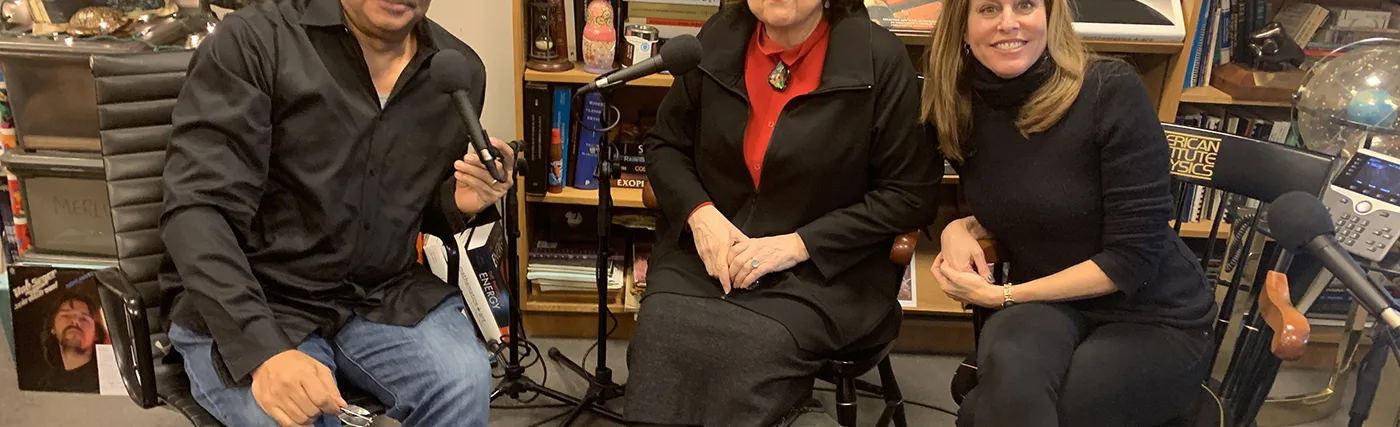
From the American Museum of Natural History in New York City, and beaming out across all of space and time. This is StarTalk, where science and pop culture collide. This is StarTalk. I'm your host, Neil deGrasse Tyson, your personal...
From the American Museum of Natural History in New York City, and beaming out across all of space and time.
This is StarTalk, where science and pop culture collide.
This is StarTalk.
I'm your host, Neil deGrasse Tyson, your personal astrophysicist.
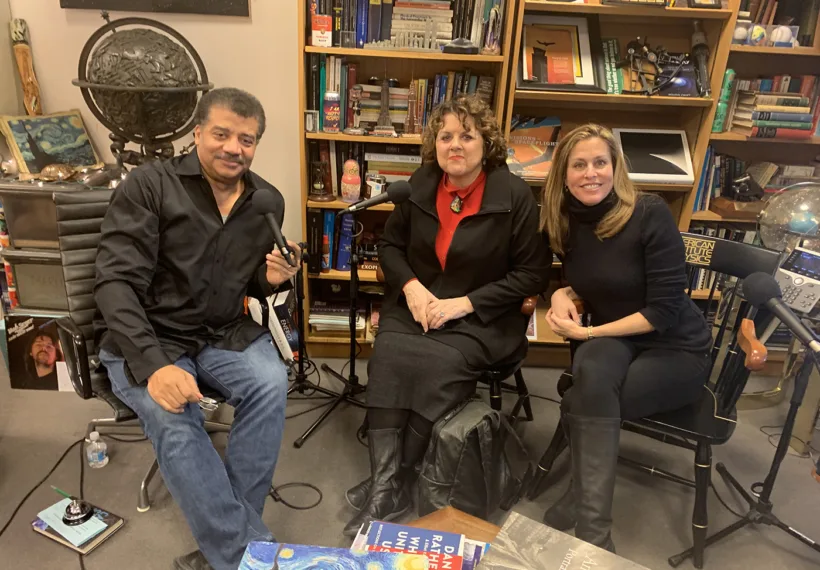
And today we have a Cosmic Queries edition from our portfolio of Let's Make America Smart Again.
Love those.
Wise up, America.
The topic today, vaccines.
And we have one of the world's most knowledgeable people on the intersection of vaccines and the public's reaction to it, Laurie Garrett.
Laurie, welcome to StarTalk.
Thank you.
Thanks for, this is not your first rodeo.
Nope.
You're your third time with us.
I had you for one.
Bill Nye had you for another.
The first time I think we talked about the zombie apocalypse.
Yeah.
And Bill Nye, you talked about Ebola.
So this time we're talking about vaccines.
So thanks for coming back.
You bet.
And my co-host, first timer.
Let me get your name right here.
Felicia Madison.
You got it.
Felicia, welcome to StarTalk.
Thank you for having me.
You're a stand-up comedian and a producer of comedy.
That's a wonderful thing.
And you also made sure to remind me you are a mom.
Of three kids.
Plus you're married to a fourth kid.
That's your husband.
The biggest baby.
My big baby.
Gotta love him.
And you produce, what is Laughing Affairs?
What is that?
It's a company that produces comedy shows for corporations.
I do a lot of charity event.
Nice.
Yeah.
Nice, okay.
We'll keep looking for you out there.
So this is Cosmic Queries.
We've solicited questions from our audience on the topic of vaccines, which is always in the news, especially lately.
And I think there's a lot of misunderstanding about it.
And Laurie, you're here to set the record straight.
And let me remind people, if I did my homework right, you won a Pulitzer Prize for your coverage of the Ebola virus.
I did.
As a science journalist.
And right now you're with, what's the magazine?
Foreign Policy.
Foreign Policy.
And you're a science journalist for Foreign Policy.
This is great.
We need more science journalists out there who tell it like it is, not how people want it to be.
Yeah.
Well, she looks really upset.
What are you doing here?
Get back out there and keep working.
Someone's gotta do it.
So, Felicia, what questions do you have for us?
Okay, our first question is from Kealia Silvis from Patreon.
Patreon.
Yeah.
You're just kissing ass there.
Yeah, we love Patreon.
Right, right.
I think if you're a Patreon member, we read your question first.
They gotta go first.
That's what they're for.
So, I'm Kealia Silvis, not me, but she's saying that.
A neuroscientist from Minneapolis, Minnesota.
What public health policy recommendations would you recommend to combat the growing anti-vax movement?
Well, first, yes, the movement is growing, unfortunately.
And so, yes, there are more anti-vax people today than there were five years ago, 10 years ago, what have you.
And that's bad news.
The problem is that more and more of the anti-vaccine movement is not specific to vaccines.
It's actually more an anti-government movement, a lack of trust in governance, which extends to include science and scientific admonishments that may come from government sources, whether it's public health leaders or organized medicine, what have you.
And it makes the battle of fighting this inappropriate, incorrect perspective about the role of vaccines in saving lives.
It makes fighting it very, very difficult because you're not really fighting to the message.
You're fighting to a larger social problem, a larger political problem that very few people in public health are prepared to address.
They don't have the skills.
They're very uncomfortable with politics, very uncomfortable with talking about, you know, why, for example, is the anti-vaccine movement on one side, that would be the sort of Texas, Missouri, deep south side, very tightly linked to Donald Trump and his politics, whereas the anti-vaccine movement on the other side, that would be places like Seattle, Portland, Northern California, very tightly linked to kind of a suspicion of government and drug companies coming from a sort of whole earth catalog place.
How do you reconcile those and fight both of them?
How do you deal with the fact that in Italy, the five star movement, a decidedly populist, very right wing movement has taken over the Italian government and they are, as part of their platform, opposed to all vaccines?
How do you deal with the fact that one of the rising right wing populist movements of France has, as part of its catalog, opposition to vaccines?
Laurie, you're bumming us out here.
I know, I'm sorry.
The question was, what solutions do we have?
You just said it's worse than we ever thought and we should just give up.
Well, if it were simply.
I'm paraphrasing, you just said give up.
I know, well, I didn't.
Felicia did, she said give up.
But my point is, we had a moment of opportunity maybe 10 years ago when opposition was really about dealing with the facts.
It was really about addressing specific concerns people had about vaccines and today it's more and more disconnected from any kind of fact base at all and has more to do with kind of general political suspicions.
We're asking you for a solution here.
So, I mean, if we do want to address the facts and we do want to get people on board, one of the big problems we have to deal with in rich countries like the United States is that most people haven't really seen someone with measles.
They haven't really seen a child face diphtheria.
They haven't actually seen any of these diseases and so they've grown very nonchalant about it and it's easy to get cavalier.
We even had Darla Shine who's the wife of the White House Communications Director Bill Shine who has been tweeting that it's good for you to have measles.
You should get your children exposed to all these and they should get sick with all of them because she who of course has no medical training falsely claims that they protect you from cancer.
So we have all kinds of disinformation out there that needs to be constantly countered and we have a fantastic tool kit available from multiple sites online, books, et cetera, to help you know how to give the correct information regarding the efficacy of vaccines and their safety.
But in terms of social policy, what you're saying is we, it's that famous, so you use an anti-dandruff shampoo and I come to you and I say, why do you use an anti-dandruff shampoo?
You don't have any dandruff.
Right, so why are you vaccinating your kids against the measles?
You don't, we don't have measles here.
What is, so do you just have poster children who are completely infected with vaccine preventable diseases and say this could be your kid?
Well, one of the things that has been happening is more and more parents of children with cancer are coming forward, going online, going on Facebook and so on and saying, please vaccinate your children because my child's immune system has been devastated and if your child is a carrier, my child will die.
Right.
And we have.
At that point, it becomes a very serious public health thing because it doesn't affect you alone, it affects other people.
That's right, because it's about herd immunity.
So this is the other reason, herd immunity.
So this is the other reason that it gets so balled up with politics because what public health is really saying to the masses out there is, hey, if 98% of you get a measles vaccine properly and your booster properly, then the good news is the whole society is protected.
The herd is immune because for measles, which is the most contagious human pathogen there is, we need about a 98% level of immune protection to protect the whole herd.
So that child with cancer, for example, is protected if 98% of the other kids have been immunized.
But as soon as that herd immunity falls, gets down.
And in some parts of the United States where resistance is high, people oppose vaccines, it's down to the 50% level, which is insane, which is zero herd immunity.
This is only individual immunity.
But presumably there are other kinds of diseases that don't require 98% protection.
Influenza.
Influenza, is that 50% protection?
Because it cuts off, if you have half the exposure and these are not people you're necessarily close to, you can get through it without catching it.
Right.
That's how they work.
That's why I don't get the flu vaccine.
Well, no, you should, but that's another story.
I think all my friends are doing it, so I'm not gonna get it, so I'm covered.
Well, we have this concept of reproductive rate and that has to do with if you have the flu and you're coughing and you're sick in this room right now, which better not be true, then you, odds are, statistically, statistically would infect three people in this room as a matter of pure statistics.
So the reproductive rate is three.
If it's measles, the reproductive rate is 15 to 18, so.
People in a crowded room.
Yeah, so in other words, you know, there are how many of us here in this room right now?
Five, so just purely statistically speaking, if I had measles and you folks weren't vaccinated, every one of you would get measles from being in this room with me.
And here's another way of looking at it.
Measles, one of the things that makes its reproductive rate so horrible is it's airborne and the virus can linger in a space and successfully infect somebody who comes in later.
I can leave this room, and Neil's office is a site of contagion for everybody else that walks in.
You can leave this room and yet you'll still be here.
All right, next question.
Okay, now we'll do another Patreon one right now from Brett LaRue.
In the future, if we were able to travel to other planets with a breathable atmosphere, what would be the steps to vaccinate against the unknown dangers?
You know who first thought about that?
Joshua Lederberg, who was a Nobel laureate, one of the greats, was at Rockefeller University for many years.
And he thought about it when he was one, I think at the time, the youngest Nobel laureate in history, I think he was like 33 or 34, something unbelievable.
And Rick Currier was pretty young, too, I think.
Well, and he had discovered the first examples of antibiotic resistance.
So one of the things Josh Lederberg said was, wow, we're sending men to the moon.
What if we unwittingly took our microbes to the moon with those men to the moon and infected a life form if there is any on the moon?
Or conversely, what if there is some kind of microbial life on the moon and those guys bring it back with them, right?
So that was the beginning of Michael Crichton's book, Andromeda Strain.
Loved the book and the movie, yeah, yeah.
And that has been a constant question.
Just for those who didn't know, in the Andromeda Strain, there is a space probe that returns to Earth, but it had been contaminated by a space virus.
And it basically killed everyone in the town where this thing landed.
And it became a major public health issue, how to deal with it, what they're doing, why.
Was it militarized?
Was it a project?
What was going on?
So a fascinating topic.
Michael Crichton, the same author of Jurassic Park.
Jurassic Park, yes.
Yeah, so that prompted NASA to look at this problem and it's been constantly revisiting the problem.
And in fact, in the current space station, now there's a whole division of NASA, the Division of Planetary Protection, where you protect where you're going and you protect Earth coming back.
Right.
It's in response to this.
And in the current space station, you know, we had the twins, the twin brothers, the Kellys, who were identical.
We had one on StarTalk.
Yes.
I don't know which one it was.
The one who's running for Senate or no.
No, we had the better looking one, apparently.
Well, one of them was in space and was the longest American in space, Scott, and while his brother was on Earth.
And one of the things they did was test their own microbiome every single day, so that on Earth, one is keeping track of what microbes are inside his body, and in space, the other's keeping track of his.
And you saw an actual clear change in space.
While it's possible for an invading virus or bacterium to completely take out a whole population that has no immunity to it, such as what happened when the explorers went back and forth from Europe to North America and back.
All right, there was smallpox, there was, what's the other one?
Well, influenza, smallpox, syphilis, all of it.
Syphilis, yes, syphilis actually went back to Europe.
Right, so, and then it infects people.
But the difference is there are human beings on both sides of the ocean, right?
So, an interesting point of safety is, can you catch a disease that has no experience in your species at all?
Like, so for example, can an oak tree catch whooping cough?
Answer no.
Maybe the Wizard of Oz trees can catch whooping coughs.
Well, and another way of asking that is, why do we assume that a foreign life form, an alien life form, would have a four-base pair DNA construct?
Exactly, yeah, the kinds of biochemistry to match and marry with our biochemistry so that anything can happen at all.
So, right, so it may be safer than we otherwise thought, but I'd rather be on the safest side by putting in these precautions.
And of course, the 2019, the 50th anniversary of the Apollo 11 landing, when they came back, they were put in quarantine in a little, what do you call the, it's not a Winnebago.
I love this game, I'll sign this for you.
Jet stream, it's a something stream.
Golf, no, air stream.
Air stream, thank you, air stream, thank you.
Yeah, so I think they were in air stream.
There they were crowded near the little window looking out to have a conversation with people just to keep them quarantined.
And what always worried me was, well, wait a minute, they had to get into that somehow.
Yeah, how'd they get there?
Yeah, how'd they get there?
Well, the other side.
What steps did they take?
The other side was war of the worlds.
The premise was what saved the world was that the invader got infected by an earthly virus.
Exactly, exactly.
Yeah, this is taking a creepy turn.
In fact, wait, wait.
Funny you mentioned war of the worlds.
I keep with me a quote from the original book that summarizes the entire story.
And if you will, with your permission, I will read it.
Please do.
As we take out this first segment of StarTalk Cosmic Queries, Let's Make America Smart Again.
For so it had come about, as indeed I and many men might have foreseen, had not terror and disaster blinded our minds.
These germs of disease have taken toll of humanity since the beginning of things, taken toll of our pre-human ancestors since life began here.
But by virtue of this natural selection of our kind, we have developed resisting power.
To no germs do we succumb without a struggle.
And to many, those that cause putrefaction in dead matter, for instance, our living forms are altogether immune.
But there are no bacteria on Mars.
And directly, these invaders arrived.
Directly, they drank and fed.
Our microscopic allies began to work their overthrow.
Already, when I watched them, they were irrevocably doomed, dying and rotting even as they went to and fro.
It was inevitable.
By the toll of a billion deaths, man has bought his birthright of this earth.
And it is his against all comers.
It would still be his with the Martians 10 times as mighty as they are.
For neither do men live nor die in vain.
Chills.
Ooh, this novel was written after the astronomer Percival Lowell reported that he believed he saw canals on the surface of Mars and published them.
And this was headline news.
There are Martians up there.
HG Wells says, I'm gonna make some money off of that.
Out came War of the Worlds a year later, two years later, out came the novel.
When we come back, more of Cosmic Query's The Vaccine Edition on Star.
This is Star Talk.
We're back on StarTalk, Let's Make America Smart Again, Cosmic Queries edition.
Vaccines, Laurie Garrett, vaccine professional extraordinaire.
No, you're just, it's not so much vaccines, it's you're just good about all diseases.
Yeah.
How's that go at the bar?
Yeah.
It's your specialty, infectious diseases.
What's your...
Well, the...
Yeah, the best way to kill romance is to start talking about deadly pathogens.
Deadly pathogens.
Felicia Madison, come on down.
What's the next question?
The next contestant is Thel Jocks on Twitter.
What is the main driver that causes parents not to vaccinate their children these days?
Well, it's...
Today, the number one driver, what would that be?
Doubting the safety of the vaccines themselves.
Okay, and wasn't there a time when some people refuse them on religious grounds?
That continues, that's ongoing.
And right now, we have an outbreak in New York City that's among Hasidic Jews, because there's a very high level of opposition, religiously, to vaccines.
And our nation has always respected religious rules, provided they didn't infringe on other people's freedoms.
So, are they more likely to, is a public health agency more likely to allow a religious person to not vaccine rather than someone who just fears the vaccine?
Well, you know, the thing is, the religious objections, it was like less than 1% of the population, so that was okay.
But now 17 states have created a category called philosophical objection.
And that means pretty much anybody.
As the catch basin of any argument you have?
Yeah.
Sounds like something my kids are gonna say to me.
Yeah, Mom, I hate shots.
I hate shots, philosophically against needles.
Yeah, if your kid says I'm philosophically object, it's like, that's kind of like, you have no rebuttal to that, because they've thought about it.
They just don't want to go to school.
Philosophically object to school.
Because you have to fill out these forms, you can't go to school if you don't get the vaccines.
Depending on the state you live in.
Oh, really?
Is there a state that is most egregious in this matter?
Well, Texas is way up there.
State of Washington is way up there, although they're now, because of their current measles outbreak, State of Washington has a bill before the state legislature supported by the governor that would eliminate the philosophical objection.
So what you're saying is, echoing how we started this show, people now see their kids and their friends have measles, they're more likely to vote differently than if you live in a world with no measles.
So Disneyland, 2014, Mickey Mouse et al, measles.
It spreads because of a visitor who's infected and all the not vaccinated people in Disneyland then disperse all over the country.
California at that time had philosophical objection possibilities.
The state boomerang, the legislature and the governor all said, OK, we eliminate all this.
You can't go to school unless you're vaccinated.
Now, California has one of the lowest rates of vaccine preventable disease in the nation.
So it just took a real example.
Took a real example.
Sounds like you need a better PR campaign.
You know, it's...
You know what you need?
You need Mr.
Measles.
Mickey Measles.
Mickey Measles, right.
Well, you know, I mean, just to be sober for a moment, I'm one of the few people that could say as an American, I've actually held a child in my arms that died of measles in my arms.
There's very few people in my generation and certainly in younger generations that have ever even seen the disease.
And doctors today have a hard time diagnosing diphtheria or whooping cough or, you know, even chickenpox.
They just haven't seen them.
And it creates a lot of resistance in the public mind.
You know, my favorite objection, which I have often heard is, you know, it's not that I think there's anything-
You mean the most laughable objection?
No, it's the one that's kind of the in chic vogue at the moment, okay?
It's not that there's anything specifically, some nasty chemical in the vaccine.
It's just that they're giving too many vaccines.
My children can't take so many.
They need to space them out more.
They can't, you know, and I always say, look, a baby has only two jobs.
Two jobs.
One, look at everything and listen to everything to finish the hard wiring of your brain and to learn language and, you know, what's going on in your world.
And the second job, pick everything up and stick it in your mouth, lick it, slobber all over it, grab another kid, slobber all over them.
You're programming your immune system.
In any given day, a kid is picking up more junk off the floor and throwing it in to program their immune system than is contained in all the various shots they will have for their entire life.
Nowadays, infants aren't getting all that though because parents are crazy.
But what we know is if you don't do the gravel on the floor and stick the dirt in your face, you end up with asthma, you end up with autoimmune diseases because you've never properly got your immune system knowing what is foreign and what is friend.
My sister has a barn and she makes sure when they had their kid, had the kid crawl around the floor of the barn.
He doesn't get sick.
All his friends have all these allergies.
He's got no allergies.
I wonder if third children are healthier than the first children because of that.
Oh, yeah.
Well, everyone always lets their, nothing touches the first kid, but the third kid, ugh.
Right then the parents are like, go whatever.
Yeah, whatever.
We should study that.
Felicia, next one.
Next question.
Okay, Alana from startalkradio.net.
I understand that science points to the benefits of vaccines, but there is still so much fear and disbelief as to the benefits versus harm.
I would like to know why they use the chemicals and preservatives they use.
Aluminum, formaldehyde, coloring, polysorbate.
Why haven't they moved forward with better vaccine technology?
And what is the real statistics around the effectiveness versus injury in children and adults?
Long question.
Well, let me take the preservatives part because that is the objection that has been most commonly raised amongst those that fear there's a contaminant that will poison their child and then.
Separate from the vaccine itself.
Yeah, that's used because you want the vaccine to be stored.
You don't want to have to make it every day, right?
And especially when you're going overseas into humid, hot climates and so on, you need a vaccine to be able to withstand a range of temperatures and so on.
In the past, we're talking 1950s, 1960s, 1970s, there were some preservatives used that contain mercury, methyl mercury and ethyl mercury.
And there were some that contain-
That's the mercury family.
Ethyl, ethyl's a good friend of mine.
Ethyl, here's joey mercury, this is ethyl mercury, okay.
And there were other preservatives used, but they've been greatly, greatly reduced.
And in fact, all the mercury containing ones were banned by the FDA quite a long time ago.
And worldwide, mostly what's done has more to do with the storage and how you store the vaccines than what preservatives you put in the vaccine.
So we've greatly reduced all of those threats.
So isn't it true that some percent of children who receive a vaccine will have an adverse effect?
What percent is that?
It depends on the vaccine and on the child's health at the time they receive a vaccine.
And also what you're calling an adverse effect.
A lot of people get a swollen arm wherever they get injected.
Is that an adverse effect?
Well, not one that anybody should be worried about.
A swollen arm that un-swells after time.
Yes, okay.
And a child may complain of a headache.
Did they have the headache already before they got vaccinated?
Did the vaccine give them a headache?
Or was it the experience of screaming in the doctor's office that gave them a headache?
Gives me a headache.
But the adverse events are-
Did it give you a lollipop when you finished?
No, it was my kid screaming that gives me a headache when they get the shot.
But the adverse events problem is very, very low.
Well, this is a scientific program, so I'm interested in you quantifying the five varies.
The problem is it's based on the vaccine.
So it varies widely.
Does any percent of the kids die?
The only deaths that we've seen associated with vaccines have been, at least in contemporary time, have been with inappropriately manufactured products in India and China.
And in fact, China has reached a point where they've made so many bad batches of vaccine that have harmed so many children that now they've had public executions of vaccine makers, they've imprisoned vaccine makers, and a lot of parents are refusing to use locally made vaccines and are trying to get American vaccines for their children.
All right, Felicia.
This is not a question, but Barry Fallon from Facebook says, all patents should be removed from vaccines and medication.
So let's ask about that.
What's the ethics of having a cure for something?
And maybe you spent a billion dollars for that first pill.
But now I wanna recoup, but it's gonna save lives.
Well, let me take that apart.
First, on the vaccine side, there's no drug company getting rich off vaccines.
It's such a tiny, tiny piece of the profit pile.
And a lot of companies, in fact, are abandoning making vaccines.
Our real danger is that it's concentrated down to just four corporations on the planet that are really making vaccines because it's so low profit.
On the drug side, we have another whole story.
Okay, it could be another show, so maybe.
Yeah, without a doubt, there's profiteering in the manufacture of pharmaceuticals.
And you're gonna have hearings on Capitol Hill about it.
You're gonna see that it's across the board politically.
Everybody's mad about it.
So we need some public health guidance.
We need some ethical sense that doesn't completely remove the profit motive.
There's gotta be some middle ground in there.
But you know, here's the thing, when the people blame patents, and believe me, I'm not a big defender, but when they blame patents, they fail to notice that right now, the biggest profiteering skyrocketing is in the generics industry.
You know, you all heard of that fellow Shkreli who's now gone to prison.
Well, he was buying up generic manufacturing.
It was off patent.
All right, Felicia, give it to me.
This is my favorite question, okay?
It's from Daniel J.
Saltzman from Instagram.
Can we create a vaccine to eliminate people that are against vaccines?
Whoa, well, I'll take that as a rhetorical question.
Let's add that to this one, but from Wilhelmina Van, I can't even pronounce her last name, DIJK.
Any guesses how you pronounce that?
Yick.
Yick.
From Facebook, can science ever undo the damage caused by the anti-vaxxers and their celebrity spokespeople?
Well, that's very much like the very first question we had in the first segment today because.
Well, the first one was asking about policy, but now we're talking about the power of popularity.
As a face of a movement.
You know, we have a lot of celebrities out there, you know, Jim Carrey and so on, who are anti-vaccine.
What we don't have are a lot of very prominent celebrities coming out saying, yay, vaccinate your kids, and let me show you my children.
I've had each one of them vaccinated for everything according to doctors' recommendations.
And that's a shame, we could really use those voices.
Yeah, that's life in general, though.
They're always the naysayers.
They're never like the positive ones.
Let's do this, let's do this.
It's like, let's not do this, right, right, right.
Yeah, they're always just the complainers.
I mean, think about, do you remember Michelle Bachman?
She ran for President of the United States, what, three times ago, three rounds ago?
And she claimed that the HPV vaccine, which protected you against the virus that causes cervical cancer, that that caused mental retardation.
And she said that she, in one of the presidential debates, she claimed she knew someone whose child had become, had mongolism as a result of being vaccinated with HPV.
Well, first of all, it's utterly ludicrous.
You don't develop trisomy 21, a genetic disease, as a result of a vaccine, and you're administering the vaccine at age 14.
So are you saying that for 14 years, she was, you know, without trisomy 21?
But it was utterly absurd.
And in fact, a lot of the far right opposes the HPV vaccine, mainly because there's this crazy idea that if you're protected against a sexually transmissible disease, you'll go out and have more sex.
You know, it's the same crazy notion that said you shouldn't use condoms or promote condoms because then everybody will go out there and have more sex because they have condoms.
And that's why I'm not getting the HPV vaccine.
I don't have to go out there and have more sex.
And meanwhile, now we go all these years later and we can see all over the world a dramatic decline in cervical cancer.
I mean, this vaccine is the first genuine anti-cancer vaccine on the planet.
And its efficacy is absolutely, I'm getting goosebumps even thinking about it.
Because I've lost a dear friend to cervical cancer.
I watched her suffer and die.
And if only that vaccine had been available just a few years earlier, she might have been with us today.
People are afraid.
I was afraid to give my kids the vaccine because you don't know, right?
But what are you afraid of?
It's new.
You don't know the effects of it.
We're going to find out more of what she's afraid of after this break.
Felicia, we want to hear your whole story on StarTalk.
Cosmic Queries.
The Vaccine Edition.
The future of space and the secrets of our planet revealed.
This is StarTalk.
StarTalk, we're back.
Let's Make America Smart Again, Cosmic Queries, Vaccines, Laurie Garrett.
Always good to have you.
We gotta have you more.
I love it.
Excellent.
And Felicia, my co-host, first timer.
The first timer.
Excellent.
Been unplugged.
You were just saying that you were resistant to vaccinating your kids against the human papillomavirus, HPV.
I was very nervous.
Mainly for my youngest one who had a, had psoriasis, and they said that if you have an autoimmune disease, it could be dangerous.
I've heard stories about people.
Who said that?
Friends.
Friends.
Yeah, a girl.
Facebook.
A girl that had it.
Instagram.
Like you said, a reaction, which could have been totally irrelevant.
I was just nervous for her.
It kinda makes sense if you have an autoimmune.
Did you end up doing it?
I did.
Good, and why?
I did a little research, and everyone that I spoke to that was knowledgeable in the field said, well, I had one or two people that still said no, but I basically decided the risk outweighed.
I joked around that I told my daughter.
Yeah, I told my daughter that there's a vaccine that if you have sex before, you could die of cancer, and the doctor's busy for about six years.
So, to keep her from having sex.
So, how about your sons?
So, my son, then it came out that you should give it to your sons also, and I decided that he was older at the time I let him make the decision, and the doctor was talking to him about it and telling him the risks.
And he said it could prevent you from giving someone cancer, it could prevent you from getting cancer, he was undecided.
And then he said, and it could prevent you from having warts on your balls.
He's like, I'll get it.
That's what made him decide to go forward with it.
Cosmetic.
There it is.
He was like, okay, large warts on the balls, I was like, I'm gonna have it.
But people were nervous.
And I remember in my schools, there was a lot of controversy in meetings and people talking about it.
And there were experts saying, you should definitely do it, definitely do it.
And the detractors were saying that the doctors get paid by the pharmaceutical companies to push it.
You know, what we've seen worldwide is such a dramatic reduction in the numbers of women all over the world dying of cervical carcinoma.
It's astronomical and, you know.
Good word on this program.
Yeah, astronomical.
And, you know, when I was young and very, you know, a teenage, sexually active teenager, the only protection we had against cervical cancer, other than trying to convince a partner to use a condom, was getting routine pap smears.
Well, the pap smear is actually detecting that you already have it, you know.
So it's already showing that cells are beginning to transform and at the very least you have what's called dysplasia, precancer, in your cervix or cervical area.
So that's like, oh, the horse is already running down the hill, you know, somebody please lock up the barn.
It's like the radiation badge you wear in nuclear power plants.
Right.
It's, you hand it in and say, okay, you were exposed today.
You'll die in 18 hours, oh, thank you.
Badge turned black, happy news.
Yeah, whereas now people are tested for the presence of HPV viruses.
And so you're actually not waiting to see, do you have transformed cells?
You're waiting to see, are you infected with the virus that will transform those cells and lead to cancer?
And good news is we have a vaccine so that you don't even have to worry about it.
There you go.
We did my daughter.
Oh, you did?
Yeah.
Hallelujah.
And my son, actually.
Got equal rights, right?
Okay, Lee Daly from Facebook says, I've been hearing of children and teenagers asking doctors to be vaccinated without their parents knowing.
Is it possible for doctors to do this or would it be considered unethical?
So these are presumably they're minors.
Yeah.
This is a new trend where we only have anecdotal reports of it in various places around the United States and in Europe, but it does seem to be happening and that is parents who refuse to vaccinate their children at the appropriate ages before age five.
Now those kids are growing up, they're about to go off to college where they will be exposed and live in dorm rooms and so on with other kids that potentially could be carriers or they are carriers or they might expose the other kids.
So these are kids who are more rational than their parents were.
More rational than their parents and are going to their pediatrician and saying, I want the shots.
But if they are 12, can a pediatrician do that?
No, the pediatrician is going to have to have a long conversation with the parents.
Okay, so at age 18, can they do it?
Yes, in most states and in fact in many states, at 16 they can do it.
It just depends on the state law.
It's probably too late for many of these kids if their parents are anti-vaxxers, right?
One of the things I say to parents that express doubts is, do you really think that when your child is 20 years old and now has wanderlust and wants to travel and do the thing that kids do in college, travel and go, let's go to Morocco and check out Algeria and Casablanca and blah, blah, blah, do you really think they're gonna say, thanks a lot mom and dad for making me vulnerable to every single darn disease I'm gonna be exposed to because you refuse to let me get vaccinated?
All right, next one.
Okay, this is from JTR Machine from Instagram.
What is a measles?
What is a measles?
What is a measles?
I'll re-ask the question.
When you get the measles, what the hell is going on in your body?
Wow, that's a really great question because measles is so contagious and we have so much history and we know a great deal about what it does to the human body.
When measles gets in, you inhale it, it very quickly goes through your lungs and into your bloodstream.
So it is almost immediately systemic.
But here's the really tricky thing that makes it so hard to conquer it.
You can be infected and have no symptoms for a couple of weeks.
Ooh, so you're a carrier.
You're a carrier and you don't know it.
You're not being a bad person, you just don't know.
It's being an awesome virus.
It's an awesome virus because it takes care of its host for a really long time.
Because if it killed you instantly, it wouldn't be able to spread itself.
Right, well, that's why Ebola, we have yet to have a world epidemic of Ebola because you are immediately debilitated.
You're so sick.
You're not out tromping around.
And in the case of measles, people can't.
So it means the best viruses from a human survival standpoint are the most deadly.
Well, the best viruses from their own perspective.
No, no, I'm talking about my perspective.
Oh, yeah, super deadly, rabies.
Rabies, in the absence of vaccine, rabies is 100% deadly to humans.
To all mammals.
All mammals.
So you get exposed, you die, and it's fast.
But you're not gonna give it to anybody else.
Because you're dead on the floor.
You're dead and you have to bite them to pass it.
Oh, and you have to bite.
So, you know, it's a kind of vampire virus.
You have to be infected and cannibalistic, okay?
But, okay, so what is measles?
So, the first symptoms of measles would be very hard to distinguish because it's fever, it's malaise, it's achy muscle, all the stuff that is like, oh, I have the flu.
It's similar.
Until you get the distinctive red splotches, which is petechia, and this is because your capillaries are responding to the virus.
And you get these little tiny red, and then the red splotches join, and then they look like big red, you know, blobs.
Listen to you describe this.
I'm examining my body and she's talking.
You have what's called medical student disease.
As they learn about it, they start feeling it.
And then at that point, you're feverish and you're down for the count, you know, and you're just gonna tough it out.
And it really is just, is your immune system able to muster a response or not?
When I was a child, I had measles, and it was before there were vaccines readily available.
I had chicken pox, I had rubella and rubeola.
So I went through the list and in every case-
Don't these sound like ice cream flavors?
And they were miserable experiences.
I mean, anybody that tries to minimize it has just never been around it.
Measles, I remember being so delirious that mother would come in to the bedroom and I wasn't sure it was her or a ghost or some image from somewhere.
You know, she would speak to me and I couldn't hear.
And that's another thing that people don't think about.
They look at something like measles and think it's either lethal or not lethal.
Well, there's, you know, measles used to be the number one cause of profound deafness in America.
And a very high percentage of people who get measles will have permanent hearing loss.
It also kills brain cells and a lot of people will find that they are permanently intellectually impaired by having suffered from measles.
But you had measles.
Yeah.
So apparently I came through okay.
So if it created brain damage.
So you might have had two Pulitzer Prizes by now.
Now you're just an idiot.
You only got one.
I won't get political right now.
Well, I was a finalist two other times.
Okay.
And shingles, like shingles is that everyone's questioning whether to get the shingles vaccine.
Oh, get it.
I've had shingles.
Oh, ow, awful.
I hear it's terrible, right?
Oh my goodness.
I'm shingles vaccinated.
Well, I had shingles.
I was, it was in 1983.
I had heard that-
She remembers the day, date, time.
It's horrible.
I really do because I was very young for getting measles.
I mean, shingles, it's usually considered a problem for seniors.
But I was covering the first documented cases of babies with AIDS.
And this is in the very early days of the AIDS epidemic.
And the tragedy I was seeing, living for weeks among screaming, crying children for whom we had no treatment, nothing.
And seeing them separated from their dying parents on another ward.
And it was so traumatic.
I came down with profound shingles and it went right up my spinal cord.
And believe me, you do not want shingles.
So your immune system was compromised in your emotional state?
Yes.
I didn't know that's how you get it.
Because the chicken pox virus hides in your nerve cells.
And so hence it's opportunistic when you get older.
Yes.
When you're more susceptible.
Yes.
And it's opportunistic when you're under high stress.
Another reason for me to stay calm.
Okay, let's hear from...
Let's do lightning round.
Now your answers have to be sound bites.
Okay.
But I don't know if you can do that.
Do you have this power?
I do.
We'll be the judge of that.
Okay.
This is a long question.
Felicia, go.
You got to pick short.
I don't have any short ones left.
Okay.
Arlene Conda, I'll talk fast.
startalkradio.net.
There is now an AI that can check to see if a baby is autistic at six months old with 96% accuracy, if this AI can predict autism at six months old at a 96% rate, but vaccines aren't given until 12 months old, doesn't this completely kill the notion that vaccines cause autism?
Yes.
There you go.
Okay.
This is from firecat711 Instagram.
That was a sound bite.
That was great.
No question about that one.
You get a reward for that one.
No doubt on that.
Given the current trend of people moving away from vaccines, how do you approach anti-vaxxers?
I live in an area with a high concentration of anti-vaxxers, and I'm finding it increasingly difficult to sway their opinions.
Tell them that by not vaccinating their children, they're putting your children at risk and that that is not a fair way to participate in democracy or be part of a community.
Grace 22 Burroughs Instagram, why aren't all vaccines 100% effective?
Oh, goodness.
That's a hard one to do really short, but let's just say it has to do with the nature of the kind of immune response that would be properly mounted in order to defeat that microbe.
So, let me follow up.
Are there any vaccines that are 100%?
Well, the Ebola vaccine looks to be 100%.
Nice.
And what's the vaccines that sort of the lowest percent would you say?
Influenza.
Influenza.
That's because it's not matching the right virus.
That's because two problems.
It's not matching the right virus that's circulating and it's your inherent immune system memory, which is against whatever was the first form of flu you were exposed to as a baby.
I have a question about flu because someone said, if you get the vaccine and it's the same strand, how come you're not immune to it the second time around?
Why do you have to get the flu vaccine again?
Because it never is the same.
But it has come back the same.
No, no, no, it'll be the same family, so like we might say there's an H1N1 flu circulating.
Is that the 1918 flu?
And you might have been exposed to H1N1 when it came through in 2009, which was that huge global pandemic we had, right?
School canceled.
But it's a different H1N1, so your immune system only partially recognizes it.
All right.
Next question.
Merle at Merle from Twitter.
What is the difference between a disease being eliminated and eradicated?
Ah, I love that.
Eliminated means it's not in circulation.
I didn't even know to ask that question.
That's great.
Smart person.
So eliminated is it's not in circulation and you're given community, state, nation, whatever group you're defining.
Eradicated, and we only have eradicated one human pathogen, smallpox, means it doesn't exist on planet Earth anymore.
Except in laboratories.
So people aren't vaccinated anymore for it?
That's correct.
Okay.
Right.
Well, we are going, that ends the lightning round.
Laurie, thanks for coming back.
Yeah.
I mean, I don't like having you on the show because it's about stuff that makes me itch and scratch and it's always apocalyptic.
But we need you.
It's important.
In spite of this, yeah, yeah.
And Felicia.
So, Felicia, where are you most active on social media?
Instagram and Facebook.
Felicia Madison, comedian on both.
But we can find you easily.
And do you tweet?
Oh, I do.
Oh, excuse me.
Excuse me.
And you're a Twitter handle?
At Laurie underscore Garrett.
We got it.
We got it.
We're following you right now.
We'll be looking for both of you.
This has been StarTalk.
A Let's Make America Smart Again edition.
All about vaccines.
I've been your host, Neil deGrasse Tyson.
You're a personal astrophysicist.
And I thank Laurie and Felicia.
And maybe we can do this again when the next disease that we have to eradicate comes up.
As always, I bid you-
Can you eradicate stupidity?
Good one.
As always, I bid you to keep looking up.
See the full transcript



 Unlock with Patreon
 Become a Patron