



 Unlock with Patreon
About This Episode
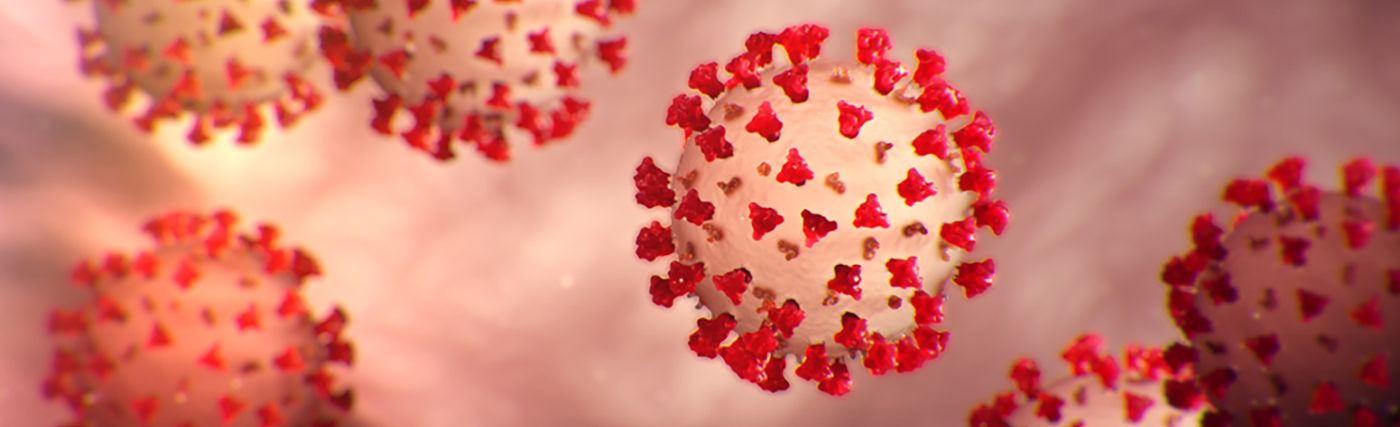
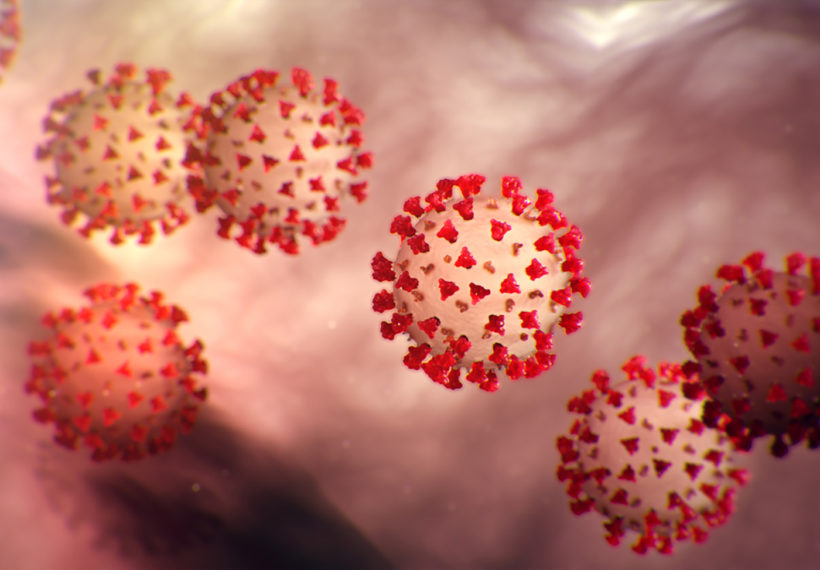
On this episode of StarTalk Radio, Neil deGrasse Tyson and comic co-host Chuck Nice sit down with Dr. Irwin Redlener, Director of the National Center for Disaster Preparedness, to discuss everything we need to know about the Coronavirus (COVID-19).
We start with the basics: what is the Coronavirus? Irwin gives us details on the virus that’s been making waves around the world. You’ll find out what we know and what we don’t know so far. Explore what makes something a pandemic and how viruses like this come about. Learn the similarities between COVID-19 and the seasonal flu. We discuss the processes behind getting a vaccine in place to deal with this issue. In the meantime, Irwin tells us all the things we can do to be preventative.
We discuss whether people are over-reacting to the outbreak. Irwin explains why paying attention to the updates about the virus is appropriate and why going over the top and panicking is not appropriate. You’ll learn about the most important aspects of disaster preparedness when it comes to virus outbreaks.
Irwin shares why clear and transparent communication between a government and its citizens is one of the most vital measures to have in place during a pandemic. Lastly, we explore the reasons to be hopeful during the upcoming weeks. All that, plus, we answer your fan-submitted Cosmic Queries.
Thanks to our Patrons Ivan Perez, Jon Mack, Johnathon Singer, Brandon Fergerson, Christopher O’Keefe, and Roy Hill-Percival for supporting us this week.
NOTE: StarTalk+ Patrons and All-Access subscribers can watch or listen to this entire episode commercial-free.
Transcript
DOWNLOAD SRTWelcome to StarTalk, your place in the universe where science and pop culture collide.
StarTalk begins right now.
This is StarTalk, a Cosmic Queries special edition focusing on disaster preparedness.
Disaster Preparedness.
Got with me Chuck Nice, as always, in the house.
We’re always doing this in front of some befuddled guests.
Yes, it’s like, why are these two reaching in front of me to bump hands?
I’ve got Dr.
Irwin Redlener, who is the Director of the National Center for Disaster Preparedness at Columbia University.
He’s a medical doctor by training, and he cut his teeth with the Children’s Health Fund.
Exactly, with Paul Simon that we started these mobile units that took care of…
Paul Simon, the performer.
Paul Simon, the singer-songwriter, and we started in 1987 taking care of homeless kids in New York, now expanded across the country with 53 mobile medical pediatric units.
Whoa, that’s quite noble.
And what a legacy to have that keep going.
Sure.
Right, right, right.
I look forward to the day when it’s no longer necessary.
I’ve been looking forward to that for 33 years.
Yes, exactly.
And so, disaster preparedness, who would have thought that that’s even a thing?
Isn’t it just, you know, get your go-bag?
Isn’t it just that?
Oh, God, I wish it was, Neil, it just isn’t.
Go-bag, you know, you have your flashlight.
Radio and knife or whatever.
Sidearm.
Irwin has a bit more dystopian view of disaster preparedness, I see.
They know I was kidding, right?
It depends on what state you’re getting listed in.
Yeah, so that’s the individual thing.
There’s things that you can do.
You look online, you go to the FEMA or the Red Cross website, they’ll tell you all that.
What we’re concerned about is the Emergency Management Agency.
But the much more important thing is society ready, is our government ready, is the country ready?
Are our institutions ready?
Is their readiness on the level of real serious preparedness and pre-thought about what we actually need to do to manage things like a pandemic?
We know what to do, just raid all the shelves of the grocery store, obviously.
Only if you look like you’re in a panic, yes, but that’s right.
You just buy up all the masks that you can, right?
The masks and the Purell.
And we’re done.
You’re prepared.
In fact, I’m looking around here to see if you got your stuff.
I don’t see anything, but okay, it’s probably hidden.
No, but I think really the big thing is what does the country need to do?
What kind of responsible leadership do we need to have in order to do it?
And should the country feel anywhere near comfortable right now, for example, when we’re dealing with this coronavirus or getting ready for any other kind of major disaster, a huge coastal storm like we saw with Katrina or Hurricane Maria and so on?
So there’s lots of work for the government to do.
That’s right.
You can’t leave out the asteroids.
We’ve got to give them some love, too.
We could actually leave that out.
I hope we can leave that out.
Seriously, should we be worried about that?
That’s another conversation.
And the answer is yes.
I can guarantee you that if the dinosaurs had a space program, they would have knocked that asteroid out of their way.
Right.
So can I, just for a second, just for play every man here, and ask you, number one, what is COVID-19?
What is a coronavirus as a category?
Right.
It is a category of viruses, much like we had with SARS, something called MERS.
Those are acronyms, right?
Those are, well, it’s the Middle Eastern Respiratory Syndrome, it’s MERS.
And SARS is Severe Acute Respiratory Syndrome.
So, yes, they’re all acronyms.
COVID also is, well, what COVID is is a coronavirus disease.
Coronavirus disease, COVID.
It’s called COVID-19, and the 19 just refers to last year when it was first recognized.
I was worried that there were 18 others walking around.
And six more to come.
COVID-25 is a really…
That’s the one you got to watch out for.
Right.
So it’s a category of virus.
Right.
And how does it differ because, you know, people hear coronavirus.
Why is it getting different?
What’s the big deal?
What’s the big deal?
So the thing about a virus like this, which makes it ultimately into a pandemic, which is what we’re dealing with now, is that it’s first of all, it’s a brand new virus that we’ve not seen before.
It is a virus that has jumped from animals, some animal source, to humans.
But more importantly, it is now able to be…
When you say jumped, it evolved.
Well, somebody caught it initially from an animal.
Plenty of viruses, dangerous ones that animals have that do not make their way to human beings.
Correct.
So this one has already made that leap and it’s now obviously infecting people.
But the big important point about this, it actually can be now transmitted from a person to another person.
And secondly, it could be lethal.
So it’s a new virus, it’s lethal, it’s transmissible from person to person, and it’s spread across international boundaries.
That’s because we have airplanes.
Right, exactly.
It’s not like, well, let’s walk to the nearest town.
It’s like we have a level of mobility without precedent in this world.
So there’s two very interesting things to note.
One is there was a massive avian flu called the Spanish Flu in 1918.
And as you will recall, very limited air travel then, like nothing.
And at that point, we also had very little in the way of medical care.
Now we have much better medical care, even though we don’t have a specific treatment for the COVID virus, but we have an enormous amount of international travel by air.
So, the ability to transmit across international boundaries is very, very significant.
So, if you really diabolical, you would say viruses invented humans to be smart enough to invent airplanes so that they could travel.
So they could catch a ride.
Well, they would never get through security otherwise.
Diabolical.
And by the way, people, there you have it.
So, if you want to know your place in the universe, you’re nothing more than an Uber for a virus.
Ooh, there you go.
Wow, okay.
So, in 1918, of course, that was the end of the First World War and this huge troop movement returning home.
Exactly.
Ships.
So that would be the means.
Right, the vector.
The means, yeah.
Right, so they brought a lot of the virus.
In fact, they went home to wherever they’re going, including the rest of Europe and back to the US.
And that was probably a major factor here.
We lost about almost 700,000 Americans to the Spanish Flu, but between 50 and 100…
700,000?
Yeah.
We only lost like 50 or 60,000 in the war.
In all of Vietnam.
Right.
Yeah, it was 58,000.
Yeah, 58,000 in Vietnam and 700,000 Americans.
And the population then, of course, was way smaller.
Now, is this true that the reason why that happened is because the government did not want to…
You’re talking about the Spanish flu.
The government did not want to acknowledge the transmission of the flu here in America and that it was happening on a military basis, or because it could be a morale problem, is that true?
No, it was impossible to ignore, I had two great-grandparents who died from the flu.
You couldn’t ignore it, there were just people dying constantly, although they didn’t know much about the virus behavior or how it was transmitted.
There was a lot, and they certainly had nothing to treat it with and there were no vaccines.
So it was happening, it was bad, they knew it was being transmitted one way or another when they’re trying to do what they could, but it wasn’t much in that era.
Okay, so now with COVID-19, it can travel.
So wouldn’t that be true for any virus?
What distinguishes COVID-19 from any other virus that would want to accomplish the same goal?
Right, so for one thing, it’s lethal, the second thing is we don’t know enough about the behavior.
Rather, it can be lethal.
It can be lethal, of course.
Yeah, in fact, the lethality rate is a big controversy right now because we don’t know the denominator, always a problem when we’re trying to figure out the percentage of something.
So right now, the World Health Organization, as of this morning, was saying it’s got a 3.4%.
But to be clear, the denominator is the total number of people infected in any given moment.
Exactly.
Right.
And then you know who dies because they’re dead.
Yeah.
But you don’t know everybody who has the disease.
We know a fraction.
And we don’t even know whether it’s a big fraction, a small fraction, whatever it is.
So given the number of people that we know have the disease worldwide, which is around 100,000 at the moment, and the fatality rate, what we know about that.
So you make that just a division and you find out that we have a 3.4% fatality right now, which also means, by the way, but it’s probably way less than 1%.
But even if it was 3%, that means that 97% of people who get this virus will survive it.
So this is not a, you know, it’s not a death sentence if you get this.
It’s not the zombie virus.
It’s not the zombie virus.
No.
No.
But he didn’t say, there is no zombie virus.
When I say that, you’re supposed to say, no!
You’re supposed to deny.
I thought you knew there was a zombie virus.
Of all people, you would know that, but apparently not.
We’re going to pick up more on this when we come back to a special edition of StarTalk Cosmic Queries Disaster Preparedness Viruses.
Hey, I’m Roy Hill Percival, and I support StarTalk on Patreon.
Bringing the universe down to Earth, this is StarTalk with Neil deGrasse Tyson.
We’re back, StarTalk, Cosmic Queries, Disaster Preparedness.
There’s one person in the universe who’s, that’s in his job title, Dr.
Irwin Redlener, Director of the National Center for Disaster Preparedness.
Put that on your business card.
People get out of your way, right there.
Exactly, either that or they’re always calling and asking you to help get them prepared.
How did you know that?
Yeah, that’s got to be annoying.
So, in any given moment, the seasonal flu, no one is taking these kinds of precautions, COVID-19 precautions, to not get the seasonal flu, why?
Well, 45% only of people actually get the flu shot every year, which is kind of crazy since we have between 35,000 and 50,000 deaths every single year from the seasonal flu.
That’s 100 a day.
I will never understand it.
Okay, that’s 100 a day.
Okay.
All right.
So why isn’t all of this outcry that we are now getting with COVID-19 applied to the seasonal flu?
Washing the hands and all those normal things would also protect you.
It would certainly protect you.
And I can’t explain.
Something about the fact that this is a new thing.
It came from China, which is scaring people.
It’s like some other mysterious thing that came, like the H1N1 and other kind of…
And SARS, in fact…
H1N1 was…
Swine flu, right?
Swine flu.
Exactly.
So this is actually a mystery, why people are so worked up about this.
And I think it has to do with the fact that it is new.
It’s getting a lot of attention.
We don’t know quite what to do about it.
Have we been able to track a virus with this level of daily updates before today?
Before this level of internet and social media access?
Well, it’s not really.
By the way, there’s a lot that we don’t know about this.
We’re getting hourly updates.
It’s crazy.
And part of it is that we just don’t know a lot of key information.
What’s the incubation period of COVID-19?
So we’re telling people it’s two to 14 days, probably three to four weeks actually for some people.
So you can be carrying this for a long time.
Can you carry it and transmit it while you’re carrying it?
Yes.
Even though you don’t have symptoms?
Exactly.
Oh, my God.
So asymptomatic transmission for three to four weeks?
It’s possible.
It’s possible.
You know what?
I’m going to calm down.
Panic has begun.
I just wrote him a prescription.
He’ll be okay.
Wait, I can say all this.
Don’t panic.
Right.
There you go.
He always knows the right thing to say.
Are you better now?
I’m so much better now.
Yeah.
So.
Well, under what conditions does anyone ever tell you, don’t panic?
All day long.
It’s when you have to panic.
That’s a good point.
Yeah.
You’re right.
No one ever walks into a room and says, ladies and gentlemen, the building is not on fire.
Don’t panic.
Yeah.
Right.
Yeah.
It’s like calm down.
Right.
So, yeah.
Now, this is really a problem.
Now, I just want to clarify something.
You obviously spread more virus when you’re coughing and sneezing.
Correct.
But still, when you’re asymptomatic, you’re still able to transmit it.
And that’s something that people should be aware of.
Okay, so now, again, compare it to a normal seasonal flu.
All these same precautions would prevent that, but we’re not undergoing those same precautions for the seasonal flu.
Correct.
And seasonal flu has a death rate, whatever that is, but…
It’s under 1%, like about a 0.6.
Fine, but if 100 times more people get a seasonal flu, it will kill more people than the COVID-19.
Right.
More total people.
But the thing is, if the COVID-19 turns out to be as prevalent as seasonal flu, with that millions and millions of people getting it, we still may have a slightly higher death rate.
So it’s still a serious issue.
And by the way, once we get a vaccine for this, which is a year to a year and a half from now…
You know, I want it tomorrow.
What’s…
These are your people.
Why does it take that long to make a vaccine?
There is a delay.
You know, the thing is, when do we get started?
Because it does take at least a year to a year and a half to make a vaccine, because you have to figure out the right combination, understand the DNA of the virus.
You have to make it, you have to do animal trials, you have to then do expanded human trials, and you have to manufacture and distribute it.
However…
Okay, so the total overhead adds up?
Yeah, it does.
And if you add to that two or three months of inexplicable delays and screw ups, if I can use that on this podcast, by the federal government, you have a really, really bad situation.
Did you just worry whether you can say the word screw up?
I did.
You know, we got to take them to the hood.
I’m ready to go.
I had to control myself.
But okay.
I said I’m ready to go.
That’s awesome.
But yeah, so yeah.
And I just, we’ve never seen the CDC this dysfunctional.
For one thing, they’ve been underfunded.
So now, with that in mind, let’s just talk about, because there is mixed messaging happening at the highest levels of government.
What can we do knowing that a vaccine is like a year away?
What can we do without, as Neil told me, without panicking?
Well, what we can do is, first of all, we can actually use the old tried and true.
Contact your representatives and your people in Congress and tell them we want everything accelerated.
We want enough money appropriated to deal with this.
We want staff rehired at the CDC.
That’s not going to stop you from getting the disease.
No, no.
I misunderstood what you were saying.
No, it’s fine, too.
I mean, yeah.
What can you do after he just told us the story about how dysfunctional it was?
Right.
So that’s what…
Well, no, I meant what can we do to not get the disease, but I was liking this answer as well.
Fine.
And then basically the thing is, while we’re waiting for the vaccine, we’re doing the things that Neil mentioned before, where a lot of frequent, obsessive hand washing, we’re using hand sanitizers, if you can even get it now, which you can for about $500 a little bottle on Amazon.
Yeah, I saw that.
You’re price gouging.
Oh, wow.
You noticed?
Yes, yes, yes.
So, no, that’s really unfortunate, but you take care of yourself.
You make sure that if you’re sick, if you got respiratory symptoms, please don’t go in public.
Stay home.
We want businesses to really gear up, including this one, for example, to be able to work remotely as much as possible if things really go to hell and we have lots of spread.
Fortunately, remote working is more real than ever in the history of the world.
Absolutely.
Right.
For more people, not everyone, okay?
You can’t flip hamburgers remotely, but for a lot of other jobs, you can.
You can, exactly right.
And so people should be right now assessing their abilities to do that and making sure their staff know what to do and that they’ve got all the equipment they need to do this kind of remote working and teleconferencing and so on.
And you do this until when?
Until, I don’t know when, actually, I’m sorry to say, because we don’t know how long it’s going to last.
The director of the National Center for Disaster Preparedness and I say, how long do we do this?
I don’t know!
But don’t pass.
Well, how about this, when is the asteroid hitting us?
I don’t know.
All right, you know that?
I was going to say, that’s a snappy comeback.
That’s a snappy comeback, there you go.
Snappy, I don’t know.
But is there a point where, this is not an unrealistic scenario.
Let me imagine that everyone does get the message.
You don’t go out if you have a little respiratory thing, if you’re sneezing, you stay in, you wash your hands all the time, you clean surfaces.
Is it possible that the COVID will just lightly wash over the country and then exit and then we come out with a minimal damage?
Is that possible?
It’s not out of the question.
And given the fact, this is the whole problem with these quote unquote novel or new viruses that we so much we don’t know about their behavior, what might happen, you could postulate almost any trajectory.
Scenario.
And, you know, it’s possible that it’ll fade away.
I don’t know why it would particularly.
Could it just become endemic?
It could become endemic.
It could slowly just always passing around, and it could become seasonal, like a regular seasonal flu, in which case we’d incorporate the new vaccine for this into the regular flu vaccines you get every day.
So then it becomes not really an issue.
And the second thing is that we might actually develop an antiviral medication that’s specific for this, and that would be good too.
But right now, we don’t really have those things, so we’re trying to really do all the containment we possibly can.
Would you say that the public has been overreacting based on everything you’ve seen?
Empty shelves in the grocery store.
Yeah.
Well, this panic buying stuff is not a good idea.
Plus, the general hope is that people will get ready for disasters anyway.
They’ll have a certain amount of food and water at all times in case some other kind of thing happens.
And, of course, that hasn’t really happened.
There’s been no penetration of that message particularly either.
But maybe this will kind of stimulate people to do that.
But we don’t want to go crazy.
But I’ll tell you, there’s a couple of key things that people need to be reminded about when they’re stocking up in case they have to be self-quarantined.
One is, if you have a pet, what’s going to happen?
You’re going to be able to walk the dog, you’re going to have cat litter, do you have all the stuff you need for the pet?
Secondly, your baby.
Baby, if you have a very young baby who’s being breastfed, that’s fine.
An older child who’s on either formula or needs other food or baby food, make sure you have that.
Make sure you have diapers and all that stuff.
But the third thing which is maybe most important is that if you have a chronic illness and you’re depending on daily meds for life, like you have diabetes or serious heart disease, make sure that you have enough stock of those medications to see you through whatever period of quarantine that we’re getting ready for.
That’s the thing where the supply chain, by the way, can be most problematic because if we can’t get the stuff and you can’t go to the drug store.
The transportation grid.
Right.
Everything is problematic about it.
I’d rather have you have it in your medicine chest or on the shelf someplace so that you have it available.
The problem is, well, the insurance companies allow you to get this ahead of time.
And what about all the uninsured people in general, by the way, even getting a test is a problem.
That’s a whole other, another, another.
Twelve million undocumented people who are really fearful, legitimately so, of even going to a doctor or a hospital because they might get deported that afternoon.
So we have all sorts of social economic problems that really keep us from being optimally prepared.
That said, the majority of people need to do the kind of things we’re just talking about.
Why don’t we do what we did when I was a kid, where, when we were kids, we’re about the same age, where, you know, someone has the mumps, everyone brings the kids in to get the mumps, and then we’re all immunized by our own chicken pox, so maybe not the mumps.
COVID party at my house!
Yeah, so, no, don’t ask me!
So there are some people who had only mild symptoms, and presumably when those symptoms go away, they have an immunity.
Well, that was the presumption.
But here’s the problem.
As this virus mutates, you may have been, you know, resistant to getting it again today, but if it mutates enough so it doesn’t really evoke the same immune response in your body, so your antibodies were ready for what it used to look like yesterday, not what it looks like tomorrow.
So it does like a Tom Cruise Mission Impossible reveal, it was me, the coronavirus, all along.
I fooled you.
Immune system.
Right.
Well, okay.
So yeah, so the worst case is, it’s endemic, it’s seasonal, you get it, but you guys figure out a vaccine, and we just live with it.
And we just live with it.
Yeah.
Which is really what we’re doing with seasonal flu.
Well, when we come back, we’re finally going to get to questions that we’ve solicited from our fan base on disaster preparedness and the COVID-19 virus.
We will see you next time.
Bye Hey, we’d like to offer a Patreon shoutout to the following Patreon patrons.
That’s John Mack and Ivan Perez.
Guys, thanks so much for helping us put StarTalk on the air.
We couldn’t do it without you.
And for those of you listening who would like your very own Patreon shoutout, go to patreon.com/startalkradio and support us.
We’re back, StarTalk.
Cosmic Queries.
We’re talking about disaster preparedness and viruses, in particular, the COVID-19 virus.
I’ve got Dr.
Irwin Redlener.
He’s actually an old friend, Chuck.
I don’t know if you knew that.
I did not.
He goes way back.
I know him now.
You know, there’s a friend we had in common by the name of Carl Sagan.
Oh, wow.
He worked with Carl on some humanitarian projects, is that right?
Oh yeah.
Yeah.
In fact, he was on the board of the Children’s Health Fund, my foundation.
Yeah, excellent, excellent.
So good to hear that.
And you’ve been, he’s just a good guy the whole time.
What do we have to show for that?
So Chuck, let’s get some questions out here from Patreon members.
Let’s start with them.
Go for it.
This is Morgan Gillen from Patreon, of course.
Do we really need to be so worried about this virus that’s killing less people than the common flu?
It seems it’s just hype by the media.
So two things kind of baked into that question there.
How much of this is clickbait?
Because if I saw a news story that said, outbreak in a new place, I’m clicking on it.
So how much of it is just, I don’t want to call it dishonest reporting, but just sensationalist reporting?
Yeah, sort of over the top reporting.
And you know, it’s really, it’s gotten so muddled now in terms of this that it’s really, it’s hard to know.
I would say that we need to be cautious.
We need to make sure that the systems are being developed to allow us to prevent and treat this thing.
And when there’s serious outbreaks, we need to pay attention because we actually don’t want to get this, even though the fatality rate may not be great.
It is a new virus that we can’t really treat.
And so you want to do what is appropriate without panicking, as we were talking about before.
So you want to stock up in case somebody says you got to be quarantined.
And by the way, that’s no joke.
If you’re told to quarantine, there’s actually police authority to enforce that.
So you want to be able to do that comfortably.
But we’re going to take this sort of every day, every one day at a time here.
But the fact is that paying attention to this is not inappropriate.
Going over the top and panicking is not appropriate.
How about domestic travel?
So domestic travel, I came back from Denver a few days ago with my wife and one of my granddaughters.
And one row ahead of me on the other side of the aisle was two guys who were wearing face masks, which got my attention.
And one of them starts coughing like crazy and sneezing, lifts up his face mask to blow his nose, blows his nose into tissue, puts it in the seat pocket in front of him.
By the way, I get up and I go to the purser.
Did you eject him from the emergency exit?
I said, excuse me, sir, but these guys, you know, and he said, listen, there’s nothing we can do about it.
I said, are they screened?
The guys are walking on the airplane with face masks.
Do we check their temperature?
Do we get it?
You know, were they just coming back from Wuhan and now going from, for some reason, from Denver to New York with us?
We can’t ask them.
We don’t know anything, blah, blah, blah.
So what we’re dealing with.
But anyway, the question comes up to me 10 times a day from friends, relatives, family, colleagues, so I personally…
You should get for having the title you do.
Exactly.
I personally would go to most places.
When I go to Seattle, make a phone call and say…
Even though there’s only a few hundred cases and there’s millions of people?
I’m just trying to be honest about human reactions.
You know, it’s like they closed the Louvre in Paris.
But that was because the union workers and everything didn’t want the thing open.
They’re not really having a big outbreak there.
My deputy, my friend…
I’m just looking at the numbers.
I’m a numbers guy and I look at the numbers and I look at the…
We have 330 million people in the country and all this reaction is to a few hundred cases.
Correct.
And that is over the top.
So, I would basically go anywhere in the country.
I’m just telling you, I’d be a little hesitant to go to Seattle, but I wouldn’t go to Milan, Italy.
I would go to Paris.
I would go to Madrid.
I wouldn’t go to South Korea.
Well, Wuhan, we do have reservations.
So, I’m going to have to go.
No, I wouldn’t go to Wuhan, of course.
I wouldn’t go to China, period.
And I think travel restrictions from China are appropriate right now.
All right.
Next question.
Go.
Okay, here we go.
This is David Hemsath.
And he says, I don’t expect the following to be read on the upcoming show.
It’s too long and there’s no question in it.
And I just wanted to say, David, you’re right.
So, our next question.
That was cold.
That was harsh.
And he read the guy’s name out of it.
Just called him out.
What can we say?
This is Matt Herefield who says, according to Dr.
Redlener, what is the most important aspect of disaster preparedness when it comes to virus outbreaks?
And what is the US currently the best or worst at effecting?
Good questions.
And so, first of all, let’s just start with this.
In general, it is always a good idea to be attentive to appropriate sanitation, I mean, sanitary habits, you know, hand washing frequently, cleaning off surfaces on places like airplane trays and things like that.
How long does a virus last on a surface?
Few hours, we think.
Now, are there some surfaces where it lasts longer than others?
Yes.
If it’s a very porous surface, less so than on a hard surface.
But that’s variable.
Whatever it is, you get on an airplane, I would use some sort of corax-infused wipe and I clean off the trays, I clean off the TV screen, I clean off the arm rest.
These are typically touch screens.
Touch screens.
So, you don’t want to try to put your hand in the pocket and seat pocket in front of you.
A very, very unfortunate surprise, but yeah, I wouldn’t put your hand in there.
And a quick thing.
We have a generation where the gentleman always had a cloth handkerchief in their pocket and would offer it to other people to blow their nose.
So nasty.
Isn’t that completely nasty?
Yeah, I would try not to do that.
Are you?
Thank you.
No, no, you look at old movies.
They would hand the kerchief.
Yeah, no, I wouldn’t do that.
But so the second part of the coming chunk again, he said what are we best at doing in terms of this country?
Right, so what should we do and…
In China, they have drive through…
South Korea.
Oh, sorry.
South Korea, they have drive through testing.
Yes.
And how about us?
Well, let me put it this way.
South Korea has done over 100,000 tests so far.
That’s good statistics.
That’s the denominator.
Yeah, that’s the denominator.
In the US, we’ve done about 1,200 total since this thing began.
So let’s start with what we’re not very good at, it seems.
And I’m surprised by this myself, which we’re not very good, apparently, at developing the technologies to start paying attention early enough.
We completely missed the bone on this.
I’m surprised because this in some ways transcends whoever’s in political power at the White House.
This is something that through all administrations, we depended upon really world-class experts in the CDC and NIH and so on.
Certain things should at all times transcend politics.
Probably most things should.
Would that be fair to say?
Yeah.
I was just trying to, you know, console the comment.
But anyway, so here we are at a time that we were really hoping for way, way, especially professionals in my field, public health in general.
We expected much, much more from the NIH and the CDC and those parts of the permanent infrastructure.
Is that incompetence or is that low budget?
Or both?
I don’t think it’s incompetent.
Certainly not at the high levels.
But we may have kind of strangled the ability for the organizations to function as they usually do by dropping staff or whatever.
But I…
So what do we do best then?
Give me some hope here.
You know, I was struggling for that.
Oh, it’s just the last time I’m inviting you on the show.
All right, fine, fine, fine.
The show itself is a source of hope, isn’t it?
Oh.
There you go.
Think about that.
Yeah.
Come back.
Yes.
I guess what do we do best in terms of this kind of viral thing?
Yeah.
I guess we’re pretty good at communications until we get to be over the top, which is where we’re on the verge of right now.
On the other hand, we don’t know where the top is.
Yeah.
We don’t know that we’re-
Is the top where the cases stabilize or they drop?
What is the top?
Will you know the top when you’re there?
Well, the top is when we start seeing spread and we start seeing a serious persistent diminishing of the number of cases, right?
But this morning, hours ago, as of this very date, Dr.
Tedros, the head of the World Health Organization said that, listen, no more games here.
We got a really serious problem and we got to take this as something that is going to get worse before it gets better.
It’s not clear what’s supposed to do with that message, but that was it.
All right.
So, listen, this is Anthony Taylor and he says, and I read this for specific reason that I’ll attach to the end, how big or small is a virus compared to an atom or a molecule?
With that, the reason why I asked this question, what is the efficacy of wearing a mask when it comes to staving off the transmission of the virus, whether you’re transmitting it or receiving it?
Right.
So, viruses are very, very tiny and they are much smaller than, say, bacteria.
Neil could probably tell you more about the actual world.
We have an exhibit here in the whole of the universe that has a physical model of a red blood cell and then on the next scale, you see the size of a virus, which is like miniscule.
Miniscule.
You can barely see it.
Correct.
Correct.
Gotcha.
So, masks.
This has been, of course, controversial and there’s been a rush on masks.
You can’t even buy one now, but there’s two basic kind of masks.
One is the surgical mask.
It is more porous than the other mask, which is what’s called a respirator mask or an N95.
N95s are worn by people that are dealing with a lot of high-risk patients.
They have to be changed every four to six hours, actually, and they will stop a much smaller particle getting through, but they’re also very hard to breathe through.
You would have a lot of trouble wearing one of those all day long.
Just to be clear, an actual virus can fit through any mask.
We’re talking about a virus that’s part of a particle, a vapor particle.
It would have to attach itself to something else.
A droplet, a water droplet.
It stops the water droplet and with the virus in it.
Right, but Neil’s point is very important because if the virus became really aerosolized on its own, it could get through any mask.
Any mask, right.
So, you’re still kind of going back to the hygienic techniques that you talked about for making sure, for taking preventative measures.
You’re still getting right back to that, even with the mask and all that.
It really comes down to the obsessive hand washing and personal space and all these other things.
Don’t shake hands with people, the elbow bumps and all that stuff.
That’s exactly right.
That’s right, black people never used to get sick because we always did the fist bump, elbow bump, and row hug.
See, that’s right.
That’s why he’s a known social commentator.
We should probably go deeper here, but I want to say something about the mask.
Please, go ahead.
It is useless to walk around the street in a mask unless you have your self respiratory symptoms.
So, in other words, it’s not to prevent you from getting it, it’s to prevent other people from getting it from you.
That’s right.
That’s an important point.
So, don’t wear a mask walking around the streets of New York or anywhere else.
And don’t even bother trying to deal with an N95 mask.
And if you have on a mask and you want to sneeze, don’t remove the mask and sneeze.
Put the mask back on.
Thank you very much, sir.
Neil deGrasse Tyson, MD.
That is my advice.
Oh, man, that’s hilarious.
So, give us some hope before we wrap this up.
Yeah.
So, the hope is that we’ve now gotten our act together.
I think the message is out.
The message is out.
We need to kind of depend on our true experts to tell us what to do.
And we need to, you know, pay attention to what’s developing.
We can hope that, in fact, it will level out, and we won’t have the major global problem, and it will end up having a fatality rate as low or lower than the seasonal flu.
It will become part of the regular flu vaccines that we get every year, and then we’ll go about our business.
But there is definitely hope.
It’s just that it’s a new thing, and people are, you know, obviously distressed about it.
And it’s a big new story.
But, you know, focus on the primaries.
I think that’s better.
Okay, there you go.
So, to summarize some of what you said, but put an extra little twist on it.
There was a day when we would elect politicians who were our leaders, and if there was some kind of outbreak or some kind of disaster, you would say, I wonder what my leader says, and I will do what the leader tells me.
But we’re at a time now where trust of politicians is not what it used to be.
And so, but we do have access to institutions and expertise through the Internet.
And so, the politician no longer needs to be the conduit between us and the scientific results.
And by the way, a good leader, a good political leader, can find that balance between complacency and panic, and say truth, and speak with transparency about what we know.
Here’s what we know.
We don’t think you should panic.
Here’s what we need to know, and we’re looking for it.
But in the meantime, do what’s precautionary, what’s appropriate.
But some leaders do that naturally, and we can tell that, and we elect them.
I think we got to end it there.
Irwin, thanks for coming.
I haven’t seen you in years.
Can we fix that?
No, no.
We’ll find another excuse to get you back on this show, maybe for an update in a few months, just to see.
If it gets worse, we’ll want more of you, but so will everyone else.
And if it gets worse, we’ll do it via Skype.
Just don’t come over to my house, that’s all.
Alright, Dr.
Irwin Redlener, the Director of the National Center for Disaster Preparedness, Columbia University.
You’re also with the medical school, is that correct?
Yeah.
That’s a double title there.
Excellent, and Chuck, always good to have you here.
Always a pleasure.
Fist bump that, no shaking hands.
Boom, boom, look at that.
Alright, no COVID-19 there.
You’ve been watching, possibly listening to StarTalk, Cosmic Query’s Disaster Preparedness edition.
I’m Neil deGrasse Tyson, as always, bidding you to keep looking up.



 Become a Patron