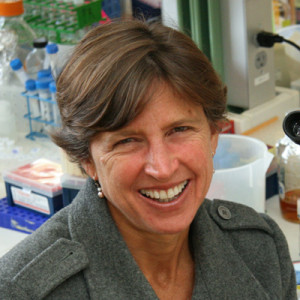
What’s in our food? Where does our food come from? Should we be worried about the future of food? Neil deGrasse Tyson and co-host Chuck Nice are here to dive into the science of GMOs, Genetically Modified Organisms, and the future of food with plant geneticist Pamela Ronald and documentary filmmaker Scott Hamilton Kennedy, the co-writer and director of Food Evolution, which is narrated by Neil. Discover how long GMOs have been a factor in agriculture and where Scott thinks the anxiety surrounding GMOs started. You’ll hear why Pamela believes “GMOs” is not a very useful term for advancing discussions on sustainable agriculture. Learn more about genetic engineering, and the relationship between organic farmers and genetically modified foods. You’ll also find out about the development of Food Evolution, Neil’s involvement in the film, where Scott got funding for the project, and the film’s mission to present science communication and data correctly. Explore the Seralini study, the banana blight in Uganda, the papaya crisis in Hawai’i, the eggplant crop in Bangladesh, and how the outlook on each event shaped the world’s view of GMOs. All that plus we’ll investigate the legality of pollen being spread from farm to farm, and Scott explains why the discussion of genes in our food is a distraction from the real problem.
Transcript
DOWNLOAD SRT
Welcome to StarTalk, your place in the universe where science and pop culture collide. StarTalk begins right now. This is StarTalk, and I'm your host, Neil deGrasse Tyson, your personal astrophysicist, and I'm also the director of New York City's...
Welcome to StarTalk, your place in the universe where science and pop culture collide.
StarTalk begins right now.
This is StarTalk, and I'm your host, Neil deGrasse Tyson, your personal astrophysicist, and I'm also the director of New York City's Hayden Planetarium at the American Museum of Natural History.
And I've got with me my co-host, Chuck Nice.
Hey, hey, hey.
Chuckie, baby.
How are you, Neil?
You're still tweeting at Chuck Nice Comic.
That's right.
At seeing weird places, but the weird fun places all the time on TV.
Yes, exactly.
You should just show up in places.
That's pretty much my whole career, weird fun places on TV.
It's like, where's Waldo?
It's like, where's Chuck today?
So today, we're talking about the science of GMOs.
Whoa, that's a whoa.
It's not a wow, that's a whoa.
Is it me or did all the air just get sucked out of this room?
What just happened?
We're featuring my interview with film director Scott Kennedy and he directed the documentary Food Evolution.
And just as a point of disclosure, I lent my voice to the film.
You are the narrator.
So I narrated the film.
I didn't write it, I assisted in some sentences just for clarity.
But it's his project and he found GMO scientist and...
Well, no, your voice lends a certain credence to the subject matter because you're a well-known scientist and science educator and everyone knows your voice.
Well, when I read the script, I was like, okay, he's trying to get the truth out there and that's all any scientist tries to do.
Establish what is objectively true and share that.
Wait a minute.
Whether or not it agrees with any of your prior philosophies, that's all I'm saying.
I heard what you guys were doing was trying to get that fat grant money so you could live it up and make it rain.
Exactly.
All the people living in mansions from grant money.
Right, exactly.
Who are that National Science Foundation?
They're crazy with the money.
My NSF yacht, yes.
So GMO, of course, is the abbreviation for genetically modified organisms.
And you know it's not an acronym, just to make that clear.
An acronym has to be pronounceable as a word.
So NASA is an acronym.
GMO is just an abbreviation.
Right, because if you pronounce it, it'd be like.
So I don't claim specific expertise.
I have general knowledge, but not specific expertise.
And so anytime we're in that situation, we bring in someone who's got the expertise.
We need an expert.
So joining us by video call today is our guest, a plant geneticist, Pamela Ronald.
Pamela, welcome to the show.
Hello, thanks for having me.
So you study rice genetics at UC Davis, is that correct?
I do.
Now I thought at UC Davis they just make wine.
There's a huge wine school there at UC Davis.
Well, when you're doing a lot of research, you need to drink a little bit of wine now and then.
Okay.
So that's the relationship among the schools of study.
I like the way you guys roll.
And you're a co-author of Tomorrow's Table, Organic Farming, Genetics and the Future of Food.
Did I get that right?
Yeah, that's right.
It's a book I wrote with my husband, who's an organic farmer.
Oh, wow, so you're a plant geneticist.
He's an organ...
You're like the Romeo and Juliet of biology.
Biology, it's pretty cool.
Well, we're still alive, though.
Good, that's an important difference.
Yeah, that's an important difference.
Right, you guys had a happy ending, I see.
So why don't we just start with basics here and just tell us what is a GMO and how do you create them?
Well, as you said, it's abbreviation for genetically modified organisms.
And the term isn't really so useful for advancing discussions about sustainable agriculture.
And that's because the term seems to me means something different to everyone.
And the Food and Drug Administration has stated that it's scientifically meaningless.
And that's because everything we eat, breakfast, lunch, and dinner, has been genetically altered in some manner.
And so for an example, some foods have been developed through a process of chemical or irradiation mutagenesis, which introduced random changes in the genome.
Some are developed through conventional breeding or hybridization.
And genetic engineering is a technique where you can take a gene from any species and put it into a plant.
So you could take a gene from a virus, for example, and put it into a plant.
So what you're saying is something I've known for a while, but it's good to hear it just sort of out of the horse's mouth here, that you, you know, we've been modifying organisms ever since the dawn of agriculture.
Right?
There are no herds of wild milk cows wandering the countryside.
We invented a cow for our purposes, to get meat and to get milk.
And we cultivate, we usually cultivate, but it's really a genetically changing corn from whatever caveman ate to these big old sticks of corn that we now munch on.
So this is true for essentially every food in the grocery store, essentially.
Is that correct?
Yeah, that's correct.
And genetic engineering and another approach, genome editing, these are more modern tools, but we've been, it's been about 10,000 years of history and there's been changes along the way.
Mendel discovered the genetic basis of inheritance.
Farmers started mixing two species together through grafting.
There's mutagenesis, hybridization.
So there's many different types of techniques and genetic engineering has been around for 40 years and is one of the newer techniques.
So Scott Kennedy, okay, as a documentary filmmaker, I think generally documentarians lean left, politically left.
Would you agree with that?
Yeah, for the most part.
Yeah, for the most part.
For the most part, and he makes a film that is not anti-GMO.
So I had to ask him, so I interviewed him just for this purpose.
And so I had to ask him, what was he thinking as someone who generally leans left in his politics and in his thinking and definitely as a documentarian.
So let's check out what he said.
We wanted to make a film, there's so many reasons why we wanted to make this film.
One of the biggest ones was relieving anxiety, right?
I've seen so many of my friends, so many of my neighbors, so many parents and mothers that have their shoulders like this, I know you can't see me on radio, but they have their shoulders up in their ears about food and where are they getting their information from and they're freaked out.
So it's anxiety.
Anxiety, yeah.
And should we have that anxiety, right?
That's the first question.
Anxiety about food.
Should we have anxiety about food, right?
And when we kept doing the research, the overall science and data said we are living, we could not be living in a safer time for our food, more abundant food, more nutritious food, available to more people than we were living in right now.
And that's not being communicated by some of the smartest people that have the ear of, especially in a country like the United States, have the ear of the media.
There's fear all over the place.
Chemicals and pesticides and all of these things.
Are some of those things in the food system?
Absolutely, but risk assessment.
So that was one of the biggest motivations.
Can we make a film that talks about food and science and safety and sustainability, looking towards 9 billion people screaming at us by 2050?
Are we gonna make our food system more sustainable and do it in a way that doesn't just give a hall pass to big food and big government and these other vague terms that are out there that have data that exists to say, we need to be concerned about those things.
Big profits and big greed can lead to problems.
Does that mean the world is upside down and I shouldn't trust anybody and I shouldn't trust food and I shouldn't trust my government?
No, that's what we found.
So Pamela, what's our evidence that a genetically modified food stuff is safe, because that's been a big issue out there, a big concern.
And can we genetically modify food to lower anxiety?
I feel two birds with one stone on that one.
Hey man, while we're at it, why don't we get to it, right?
Clean it all up.
Well, every crop must be looked at on a case-by-case basis, whether it's genetically engineered or developed through mutagenesis.
But what we do know is that every major scientific organization in the world, including the National Academy of Sciences, the European Food Safety Authority, and many other organizations have concluded that the process of genetic engineering is no more risky than conventional breeding.
And in fact, genetic engineering has been used for 40 years.
It's been used in cheeses, in medicine and in crops.
And there hasn't been a single case of harm to human health or the environment.
So this distrust, this anxiety, I always wondered like where it came from.
Do scientists need better marketing people?
I mean, I don't know.
So I asked Scott, I asked him, where does he think this anxiety comes from when normally these are people that would otherwise trust scientists and whatever is the consensus of observations and experiment.
So we chatted about that, check it out.
We're living in an age of distrust.
And in my simpleton historian way, I go back to Watergate as being the beginning of modern distrust, right?
We have distrusted each other since caveman days and we can get into that.
But the effect that Watergate had, two effects that Watergate had was seeing the ruthlessness of money and power and politics, how far they can go.
We're like, oh, we didn't trust politicians a little bit, but this was another level.
The second one, which is very interesting with the internet, is who saved us from what could have been the outcome of Watergate, Woodward and Bernstein, two journalists, now cut to 2016, and the journalists that are on the internet, some of them brilliant and doing hard work and getting us a piece of information that the New York Times will never get to.
And then there's a bunch of quacks that think they're Woodward and Bernstein trying to save the world and point out corruption.
It's like they want to find the next controversy so they can go, see, corruption.
They have to find the controversy.
They have to find it.
Whether or not it's there.
That's right.
Interesting analysis.
And that anxiety, I'm surprised a lot of these people just even go outside.
If you follow through, you know what I'm saying?
If you follow through on the level anxiety they have, I'm like, so why aren't you under your bed right now?
Because I would be, if I believed what you believe.
You'd be in your closet.
I'd be like, why don't, I don't get it.
The unknown unknowns and all of this.
I'm like, okay, there are tons of things that we don't know about.
And thankfully there are many, many more things that we do have good information about.
And we do know that if you're choosing to eat a traditionally produced vegetable, they would call that big ag, first an organically produced vegetable, which is more important.
And my friend and Dr.
John Swartzberg at the Berkeley Wellness Letter, somebody tried to communicate good science, said, it's much more important to eat the vegetable than determine between those two vegetables, right?
Eat the vegetable, eat the frozen vegetable, eat the canned vegetable, eat your vegetables.
I got on a mini-
You got some buttons there, okay.
So Pamela, do we just eat our vegetables?
Will that solve all the problems?
It'll solve a lot of problems.
It's not always easy to do.
I have a 16-year-old daughter getting her to eat vegetables.
It's not so easy.
And then there's places in much of the world where children don't have access to vegetables.
So, but if you can eat your fruits and vegetables, that's important.
But still, you know, I know because of my husband that farming is challenging, whether it's a big farm or a small farm.
Farmers face a lot of challenges and they need the best tools available.
So all farmers, whether you're an organic farmer or a large conventional farmer, you need to have access to genetically improve crop varieties as well as good farming practices and government policies.
If I understand this correctly, is it possible to be an organic farmer of genetically modified foods?
Okay, that's a great question.
So according to the National Organic Program Standards, if you want to be certified organic, you cannot grow genetically engineered crops.
However, you can grow crops that have been developed through mutagenesis or hybridization.
You can buy your seed from Monsanto.
You could do pretty much everything in terms of planting genetically improved seeds, except you cannot, for example, plant the genetically engineered papaya that I know you're gonna talk about on your show and be certified organic.
So they're distinguishing genetic engineering, which happens in a laboratory, from the genetic changes that were brought about through cross-breeding and the history of this exercise going back to the dawn of agriculture.
Well, that's partly true, but a lot of crops that organic farmers and other farmers grow have been developed in the laboratory.
So it's not necessarily a laboratory step.
There's not really a scientific reason for excluding genetically engineered crops from organic agriculture, but there's a historical reason.
Is that history, the fact that plant geneticists stand over their creations and say, it's alive?
What is that?
So part of it is this fear that GMOs are bad for you, right?
And I asked Scott, because there's a study in which rats were fed GMOs and they developed these massive tumors, and these were heavily cited.
And so I asked Scott, because he went there in the film, about this relationship between the fear of health risks and ultimately, we just wanted to ban this stuff altogether.
Let's check it out.
That is the Sara Lini study and an incredibly, incredibly influential study that just happened to drop three weeks before the vote on labeling GMOs in California, just happened to come at that same time.
And sadly, the science-
Food labels, nutrition label.
Yes, of them, it dropped at the same time and they were hoping that it would affect that.
But I digress, forgive me.
The Sara Lini study was done in France by a group of scientists and on the surface, they have the credentials to believe them as scientists.
And they said that they fed their rats GMO feed, which is too vague to begin with.
And the GMO pesticide Roundup, I don't know why you would feed Roundup to a rat anyway, but the, and they got these tumors.
The problem is, is the rats that they use have a propensity to getting tumors if they live as long as two years.
So they did do that over two years and they had rats with huge tumors.
So the people that looked at the study, scientists who looked at the study, which is, they vetted it and that's what we do with sciences that we have.
That's how it works.
That's how it works.
Thank you.
Please tell us how it works.
Tell us how.
One scientific result is not the truth.
It needs to be verified.
That's right.
By disinterested parties.
And when those disinterested parties looked at the paper, they found that it was, did not hold water, that the science was just not valid and these rats got tumors too quickly.
There was other problems within the study and it was, the paper was retracted, thankfully.
So the other problem with having the paper retracted is you can't retract the image of those rats, right?
Those images.
You can't unsee the pictures of the rats.
That's exactly right.
And incredibly, incredibly powerful.
You know, if somebody said, if you brought up those.
These tumors are like half the mass of the rat itself.
Which is another horrible part that I didn't realize in looking at them initially.
Where's PETA when you need it?
Right.
No, no, but that's right, Neil.
That when I talked to other scientists, that there are other scientists, if they had rats that got tumors, they would have euthanized those rats long before they got to that size.
So I don't, we can't say hard evidence that those scientists waited to get those tumors larger, but it sure smells.
Before the photos.
That's right.
That's a shame.
I mean, it's just, that's not the world I want to live in.
So Pamela, that study was retracted or redacted.
Is that correct?
It was retracted.
Retracted, that's the word.
But I'm told that you had a study retracted as well.
Is that correct?
Yeah, we retracted two studies and, you know, no one likes to make a mistake, especially a scientist.
But in, you know, if you make a mistake, you have to fix it.
And in our situation, we discovered that one of the papers that we had published had a serious error.
And so we made the decision to retract it because you don't want that sitting around in the scientific literature.
And, you know, I ended up being very fortunate.
I had a very, very hardworking, dedicated scientific team and we were able then to go back and find out the correct result.
And we published that a couple of years ago in Science Advances.
Yeah, so that's the noble pathway here, the self-correcting system that is science and why science distinguishes itself from anything else that's going on out there.
Well, we gotta take a quick break when we come back more on GMOs and what role they play, what people think they play or should play or don't play.
And we're featuring my interview with Scott Hamilton Kennedy and my guest, Pamela Ronald.
We're back on StarTalk.
I got Chuck Nice.
Chuckie Baby and we're talking about GMOs and their benefits and the debate surrounding them.
I've got via Skype Pamela Ronald, Pamela.
She was also featured in the film.
So Chuck, a quick fact about Pamela Ronald.
What is that?
Our producers found her on the internet as thinking she'd be a great addition to the show because she's given Ted Talks and has got a huge website on this stuff.
And they didn't even know she was in the film.
That's pretty cool.
Yeah, so she's arrived by natural causes.
Yeah.
So we got her for this interview that I have with Scott Kennedy, who is the co-writer and director of that film, a film that I also happen to have narrated.
Yes, yes, the smooth, mellifluous, silky tones of Neil deGrasse Tyson.
Come for the documentary.
Stay for the ear sex.
So let's go pick up my interview.
Just to find out, funding is an issue.
People want to know where you got your money to do your thing.
So let's get some insights on that.
For the film that he produced.
Food Evolution.
Food Evolution.
Let's check it out.
For any documentary that has social conscience, one needs to always ask who's funding it.
Right.
So you made a film that is at worst neutral to GMOs, but at best fully supports GMOs.
And we want to know who funded you.
Sure.
I will adjust that description in the way that you've adjusted that description, my friend, in the fact that full disclosure, which has already probably come out in this interview, that you are the narrator of Food Evolution, that you weren't supporting the film.
You are supporting a film that is trying to get science communication correct.
So we did not set out to make a pro-GMO movie.
We set out to make a clear data, clear science communication film.
And we were using the GMO struggle as a way to look at that.
So back to funding.
I was approached by IFT, the Institute of Food Technologists.
There's such a thing.
There's such a thing.
Food technologists.
Like GMOs, it might not be the best name as the Organic Growers Association or something like that.
It is a group of mostly food scientists, people that work in food and science and food safety around the world.
So did they approach you?
They approached me.
This is the first time.
I've always found my subjects.
So you're a documentarian.
And you're minding your own business.
You've got your own agendas, and then they knock on your door.
That's right.
And how cynical was this liberal documentarian when they first contacted me?
I was very cynical.
I was like, IFT, Institute of Food Technologists.
And they came with a very clear but broad description of a film that they wanted to make.
They wanted to make a respected film.
That's why they hopefully contacted me.
You guys can decide if that was a mistake.
And they contacted us.
And they said, they said, we want to make a film about food and science, looking at the problems we're gonna be facing with the population going to 9 billion by 2050.
By some estimates, people say we have to make, we have to produce more food in the next 34 years than we have in the last 10,000.
Those big questions.
So when they contacted me, subject matter sounded fantastic and broad, too big, but let's go do the research and see what film we could find in there.
But the cynical liberal documentarian in me thought, Institute of Food Technologists, it sounds like industry, it sounds big, it sounds like something that I might not be able to trust.
Are they contacting the liberal documentarian just to get my opinion?
I thought they were sucking my brain and then they'd go off and make an industrial.
And then meeting after meeting, Skype interview and face-to-face interviews, I was like, my God, these people want to make a film.
And most importantly, I put on the table very, very early, you do realize if you want to make this level of film, I have to have Final Cut.
I have to have Final Cut anywhere, I'm going to say no, but you realize as a film, if I don't have Final Cut, neither of us win.
I will be disrespected as a journalist and you will just be look like you're making an industrial.
And they agreed to it.
Okay, so where does the money come from?
So Pamela, you're familiar with this Institute, I presume.
Is that correct?
Well, when Scott approached us, Ronald and I also were skeptical.
We didn't know if he was funded by the organic industry or seed company money.
And so we also were hesitant, but we became convinced well into it that this was a serious filmmaker and team and that they absolutely wanted to get the science right.
So that really impressed us a lot because I have to say it's a little bit unusual.
But you're familiar with the organization that did fund him.
No, I had never heard of the organization until Scott told us about the funding source.
And so who funds your research?
Well, my research for the last 20 years has been funded by federal agencies.
So those include the National Institute of Health, US.
Department of Agriculture, the Department of Energy, USAID, and National Science Foundation.
These are all organizations I have heard of.
Okay, so Pamela, when you say, I am putting out a paper, a peer-reviewed study, I look at you and I go, I agree with that.
I know where you're coming from.
But when you say that I'm coming from the McDonald's Food Safety Inspection Company or whatever it was, I think that that can engender suspicion is all I'm saying.
Well, I did look up their website.
And they look pretty legit.
I mean, there's no agenda I could see on the website other than the urge to want to feed all the people who are going to want to be fed as we go forward.
Yeah, just check the website.
In fact, it's boring on some level.
It's just, there we are.
We're just trying to make food best we can.
That's all.
That's it.
That's it.
Very, very simple.
I feel better about them now.
Okay, okay.
So Pamela, I mean, I want to hear you just say this.
We know it's true because we've heard it, but why do we need GMOs at all?
I know your answer, but I just want to just hear it.
What is the need for it?
So it's not that we need so-called GMOs, but we need to advance sustainable agriculture.
And there are many important tools that we need.
And as I mentioned before, we need ecologically-based farming practices, but we also need seed.
That seed could be developed with many approaches, but for particular, there's some problems that have no real solution except genetic engineering.
So the example, classic example, which is in the film is papaya.
So let's pick up my interview with Scott Kennedy about that papaya example that you just raised.
Here it is.
What happened with the Hawaiian papaya?
The papaya industry in Hawaii was thriving, and then a terrible virus came along, the ring spot virus came along, and started to wipe out papayas.
Didn't just wipe out papayas on one island, they moved the entire industry to another island, and it jumped through insects.
It was spread to the next island, and they were going away.
People thought the industry of papayas in Hawaii was gonna go away, and nothing could stop this spread.
They used chemical pesticides, they tried organic methods, all of these things.
None of it worked.
Until they found a scientist named Dennis Gonzalez, who grew up in Hawaii and was educated at Cornell University, who had an-
Cornell.
Yes, Cornell and UC Davis, both amazing ag schools.
Yeah, huge ag school at Cornell.
That's right.
And, but he grew up in Hawaii, which is an interesting thing that he had both of those.
And he'd become a genetic engineer, and he'd seen the technology used before, and he had this amazing idea.
What if, through genetic engineering, we can inoculate the papaya against this virus, like our vaccines, right?
No controversy in vaccines.
We'll come back to that later.
Yeah, that's the next movie.
It's the subtext within this movie.
So, and it worked.
It took a long time, but-
How long?
Seven years.
Yeah, about seven years.
And he tried and he tried and he tried again, and it worked.
And the papayas were delicious, and he gave the papaya seeds away for free to the farmers.
And he basically saved the industry.
And now the industry is thriving and they ship millions of pounds of millions of tons of papayas around the world.
So, and nobody knows that story, right?
If you had a GMO conversation with your friends, most people that have a conversation with their friends on Facebook or face to face at a cocktail party or wherever they are, and they talked about GMOs, it would be all about Monsanto and evil and poison and none of them, very few people would know the story of the papaya.
Now, if I remember correctly, Hawaii banned GMO.
Later, much later.
How can they ban GMO knowing that it saved their papaya industry?
Well, Neil, that's one of the reasons we made the movie.
They started by banning, they succeeded in banning GMOs on the island and then they grandfathered in the papaya, which completely undercuts their whole reason for banning GE technology in my mind.
If I came to you, Neil, and I said, I'm gonna ban all GMOs on an island, and I convinced you that I should, and I said, oh wait, but one other thing, I'm gonna grandfather in this one GMO, the rainbow papaya.
Wouldn't you go, well, why'd you scare me about the GMOs in the first place?
So they didn't even realize that that undercut their argument or they spun it around and said, it's too hard to do, and I go, well, but wait a minute, should I be scared or shouldn't I be scared?
Is the technology worthy?
Isn't the technology worthy?
So that was, that's the opening to our film is talking about the complications, the misinformation, the passion and the confusion around the GMO conversation as told through the banning of GMOs and the saving of the papaya industry through GMOs.
Pamela, do you have other success stories like that?
So quick success stories that are not widely discussed or thought about?
Yeah, there's a serious insect that can destroy an entire eggplant crop in Bangladesh if it's not controlled.
An eggplant is the most important vegetable in Bangladesh.
So to control this disease, farmers spray chemical insecticides two to three times a week.
But we know some insecticides are very dangerous.
So there's the World Health Organization reports that 300,000 people die every year from overuse or misuse of insecticides, mostly in less developed countries.
They don't have safety measures that they can take.
So Bangladeshi and Cornell scientists decided to try to control this insect using a genetic approach that builds on an organic farming strategy.
So organic farmers will spray a pesticide called BT on crops to control various types of insect infections.
And they use it because it's not harmful to humans or wildlife or fish.
And in fact, it's less toxic than table salt.
But the problem is in Bangladesh, it's very difficult to get this insect aside.
It's expensive and it doesn't prevent the insect from getting inside the plant.
So what the Bangladeshi and Cornell scientists did was they took that gene from the bacteria and they entered it directly into the eggplant.
And it's been really very effective in the last three years.
Farmers that are growing this eggplant can reduce their insecticides dramatically, often down to zero.
And they could self the seed and replant it the next season.
It's a public domain seed.
You know, another little known success story, Pamela, is not to knock the papaya in Hawaii, but right here in New York, there's a guy named Gray who engineered a papaya to become a hot dog, and it's delicious.
Grace Papaya Hot Dog.
Were you saving that one up for this moment?
No, it just popped in my head.
I had to get it out.
You go to Grace Papaya to get hot dog.
You go to Grace Papaya.
No one buys papaya at Grace Papaya.
There you go.
Okay, I think you get a papaya drink or something.
We're back on StarTalk, and we're talkin about the future of food, possibly enabled by GMOs.
Not my food.
You did some head action on that.
You could felt that over the radio.
His hand was moving.
That's kinda how people get.
We're featuring my interview with a documentarian, Scott Kennedy, who produced the film, produced and directed and co-wrote the film, Food Evolution, a film that I narrated and a film in which appears our guest we have today, Pamela Ronald.
Thanks, Pamela, for being on this.
Let's go straight into my next clip here, which thinks about the developing world and what the relationship for GMOs is to that.
Let's check it out.
In researching food evolution, what did you find was the biggest difference between how GMOs were perceived or received in the developing world versus here in the land of plenty?
It's an excellent question.
I would have to adjust it though, because the perception was pretty similar.
Sadly, the perception was out of whack in both places.
The need was greater on the surface in the developing world.
But I don't, I wanna be nuanced as our friend, right?
The nuance of that is on the surface, the need for say a genetically engineered fix to the banana wilt problem in Uganda that's wiped out 50% of the bananas is much more important than the use of genetically engineered corn and soy and maize in the United States and other developed countries.
We can look at the data and see that our food system is better off, more sustainable, less toxic, healthier, many other positives because of those use of genetically engineered seeds in the United States as well.
But on the surface, you can't compare our need for corn and soy to a staple crop in Uganda that affects 14 million people who eat bananas as one third of their caloric intake.
So in one of the stories of the film, there's a genetic fix to this banana blight that creates a blight-resistant strain.
That's right.
And now the crops are back as they once were.
Well, they're still in development.
It's not accepted yet.
The fix is there, but the political, that's the comparison I was making, but the conversations being had in the United States and Europe are affecting Africa in terms of fear.
The activists are getting there.
The activists are going around and handing out flyers and getting on the radio saying that GMOs can cause cancer and rats and infertility and autism and just terrible, terrible fear-mongering without science to back it up.
But when that gets, when you hear that and somebody says it and you have another seed that you can use, this is where it gets really tricky with bananas, if you had another fix to the banana problem in Uganda, then you could look at that as an option, but there is no other fix to stopping this virus.
It's wiping out the bananas.
There's not an organic fix, it's not a traditional fix.
There's no spraying that's done anything to help this.
So if you don't have an answer, this is one of the most frustrating things when we talk to activists in Africa, and we said, so what are you doing?
How do you feel about GMOs?
And they would give some standard answers that we've heard all over the world.
Now, what are you doing for farmers that need help with this banana problem?
And they go, well, we're talking about this and we're looking at ways that that can happen, as Mark Linus says, you can't eat adjectives.
You know, you can't.
They were trying to say all these other ways of doing something and there was no there there in the way that they were helping farmers.
And again, these are people that I think are well-intentioned.
I will give them the benefit of the doubt that they are well-intentioned, but they are so hung up on thinking they should be afraid of this technology and getting information from people that they respect and getting the wrong information that it becomes very, very dangerous.
So, Pamela, this banana blight, is that some kind of fungus or virus or insect?
What was that?
Yeah, that's a very serious bacterial infection caused by bacteria.
Ooh, that's ugly.
We get some ointment.
Fix that right up, though, right at the pharmacy.
Isn't there a banana-free clinic somewhere?
That's where all bananas go.
So, I'm just curious, how many examples of this exist out there that are unresolved, that are awaiting the attention of genetic engineering?
There are many, many issues, which is what keeps plant pathologists like myself employed and breeders.
And there are, on my husband's farm, for example, he has problems with a very serious organism called symphylons.
It infests much of his field and they can't plant anything in that part of the field because it munches on almost anything he will plant.
And a conventional grower will use methyl bromide, which is highly toxic.
So that's an example where both an organic grower and a conventional grower really need some new tools.
And this is not new.
We see that the pest and disease populations shift over time.
And in fact, with climate change, we're expected to see even more quickly moving epidemics.
So as scientists and agricultural scientists and farmers, we really need to continue to innovate to try to control these diseases without using toxic compounds.
Quick question.
Do we have any idea as to how many species we have lost in recorded time due to blights and infections?
Because I think that would be a valuable arrow in the quiver of this conversation.
Like, look at all of these species that have been lost.
And this is what we can do to save plants today.
Did you actually say arrow in a quiver?
Did I say that?
Did I just say arrow in a quiver?
Do you talk like that up in the hood?
Oh, my God.
Let me tell you something.
Now I know why I got my ass beat all the time.
So, yeah, so let me restate that in simpler terms.
What crops have been lost from our portfolio of feeding because a solution was not arrived at on time of any kind and thereby reducing the amount of food we have to feed our population?
Show off.
No.
These are both good questions.
So when we think of extinct species, usually we're thinking of the entire global ecosystem and a lot of those species go extinct because of development or hunting that type of thing.
So a farm is a completely artificial environment and farmers are taking care of the crops.
They're hopefully planting some kind of biological diversity.
So if a single crop goes down, they might have some alternatives.
But obviously it hasn't always been successful.
So one of the very famous examples is the Irish potato famine about 150 years ago.
It's estimated that a million people died.
A million more people came, emigrated, including to the United States.
And it changed the course of history.
So Obama's great-great-great-grandfather fled the Irish potato famine.
That's a great little piece of history right there.
Especially since Obama was born in Kenya.
So Pamela, what about these auxiliary other issues that people want to raise?
I've only heard snippets of it, so I might get some of this wrong.
So you buy my seeds and you make a crop, and now your crop fertilizes some other farm, and now they have the resistance that my seeds had.
But now, but I patented my seeds.
Can I go after them and get money?
What's the legality of adjacent farms when you cannot stop where the spores are going?
Yeah, so in the less developed world in many places, for example, Bangladesh, I work on rice, so much of our work is in Bangladesh or India.
In the developing world, there isn't this kind of seed industry where you buy the seed and industry is trying to protect the seed.
So it's different in the less developed world.
In the United States and Europe and other developed countries, there's a seed industry, for-profit seed industry, and they sell their seeds.
Often, they make a lot of money on hybrid seed, which organic farmers are also allowed to buy.
So the issue of pollen flow, I don't think there's too many examples where, actually there's not really any examples, as far as I know, where some pollen has flown onto another crop and then the farmer gets sued, and it's just because it's sitting there.
Examples we've seen, there's a Supreme Court case, Bowman v.
Monsanto, and in that case, the farmer actually wanted the Monsanto seed, and he got it from a grain mill and planted it and sold it.
So it's actually when somebody takes a patented seed and sells it, that's when issues come up.
And that's the same whether it's plant variety protection act, there's many different types of patents.
That wouldn't have to be food at all.
That's patent infringement.
It's relevant to all kinds of seed.
It's not specific to genetic engineering, and I think there's a lot of confusion about that.
Well, Scott Kennedy comes from a highly sort of radical liberal family lineage.
And his father, in fact, was active in the civil rights movement.
And just to round out my understanding of who he is as a person, we chatted a bit about his father, so let's check it out.
Can we presume his legacy, sort of doing the right thing, taking on the struggle that others have failed to win, that some of this has rubbed off on you?
That's a very nice way of putting it.
Yes, did that influence, has that always influenced my work?
Absolutely.
My father was a trial lawyer as well, and he was a storyteller as a trial lawyer.
Very good storyteller, right?
He was telling a story to the jury to let them see where he thinks they should go in their journey.
Did he influence them in his storytelling?
Absolutely.
In terms of food evolution, my father was concerned at first when he heard about me making this film because he was influenced by the same bad information that's out there.
Neil Young saying things about poor Monsanto farmers without a great deal of information.
And he thinks, oh my God, I know you're not being funded by Monsanto, Scott, but why are you making a film that says anything positive about GMOs?
I said, Dad, take the journey with me.
And he did.
He got to see some rough cuts.
My father passed away in January of 2016, and I miss him dearly.
And he did get to see several rough cuts of the film, and he became a GMO activist.
And he really was won over by this, and he had seen this before in what the two of us came to call the limitations of well-intentioned liberals.
What a phrase.
Yeah, the limitations of well-intentioned liberals.
So bottom line with my father, one of the ways I describe his work and many have described his work is that he would take on cases and clients that others would see as possibly unworthy, controversial.
And in that way, I'm very proud that we took on the GMO struggle because like you started the conversation, what was I thinking?
There's a lot of people that have avoided this conversation that know the nuance, you know, and they don't want to deal with it because most people come out battered and bruised.
And I'm probably going to come out battered and bruised, but I found the subject worthy enough to try and tell the story.
Fade in and the catch and the cradle and the silver spoon, the little, I'm sorry.
Yeah, it was very touching.
It was very touching, right, right.
And when I conducted that interview, it was, his father had died within the last, you know, year, so it was still with him.
And his father was Atticus Finch, so that's a big deal, it's a big deal.
So, Pamela, what's, do you have strategies in mind to try to rectify the public attitude that so permeates the dialogue?
I think we need more of both of you, for one thing.
She just included me to be polite.
That was so kind of you to include me to be polite.
That was kind but obvious.
Yeah, go on.
We appreciate getting the science-based information out.
And I believe that there's just been, this whole discussion about genes in our food is a complete distraction.
Really, one of the most pressing challenges of our time is how are we going to feed the growing population without further destroying the environment?
And so really, we need to think in terms of sustainable agriculture and use all appropriate technologies to help farmers, help consumers afford the food, help the poor and malnourished, which are often forgotten in the discussion, and think about how we can reduce toxic inputs, foster soil fertility, and conserve land and water.
There's a lot of really important questions, and I'm afraid sort of this discussion about genes in our food is really a distraction.
And Pamela, if your organic growing husband one day ever goes missing, are you a primary suspect?
No, my husband as a farmer, most farmers are very open to new technologies.
They spend hours looking at seed catalogs, looking for genetically improved varieties.
There's probably many organic farmers that would like to try some of these new technologies, but they're prohibited because of the National Organic Program standards.
So I'd see organic farmers to be more like scientists than politicians.
So I think it's really sort of in the marketing and political realm that you get so much misinformation.
Plus in the end you have shared goals, and that's what really keeps you married.
We absolutely have shared goals.
We want to grow food in an ecologically-based manner.
Well, Pamela, thank you for giving us the last word on genetic engineering and the future of food.
So Pamela, thanks for being here.
And Food Evolution is in theaters now.
Yeah.
I mean, obviously it's a documentary, so you've got to find the...
Well, it's not in many theaters.
Right, you've got to find the art house theaters that you should be able to just check it out.
And I'm told in the fall it will land on Hulu.
So then you can hit it directly.
Very cool.
You've been listening to StarTalk and I've been your host, Neil deGrasse Tyson, your personal astrophysicist, Chuck Nice.
As always, thanks for doing this.
And as always, I've been used to keep looking up.
See the full transcript



 Unlock with Patreon
 Become a Patron