



 Unlock with Patreon
About This Episode
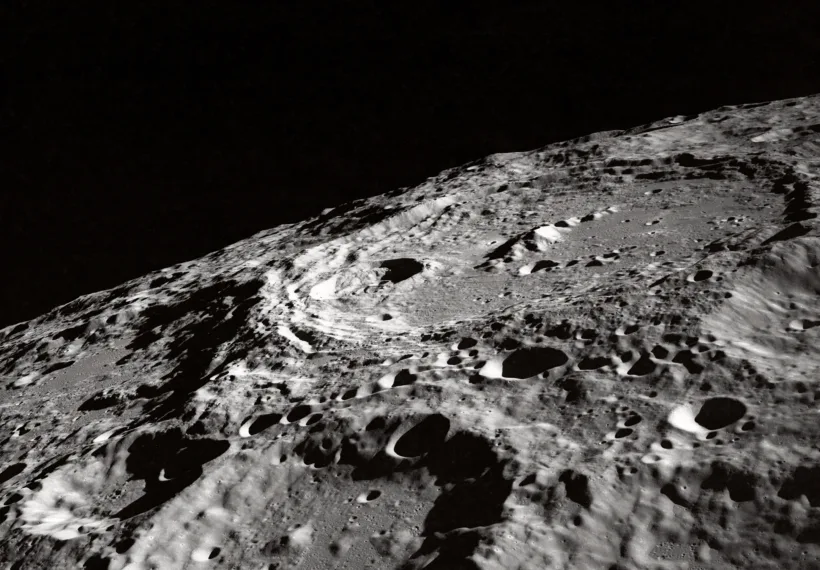
Does being in space mean there is no gravity? What does noon have to do with the Artemis Mission? Neil deGrasse Tyson and comedian Chuck Nice break down weightlessness, planetary alignments, and what is going on on the south pole of the moon.
We explore daytime, nighttime, and why Artemis III is going to the south pole of the moon. Where is the sun at high noon? Depends on where you are in the world. We break down how longitudinal position impacts access to daylight on both Earth and the Moon. What is a cold trap? Find out about the unique conditions on the inside of some lunar craters and in-situ resource utilization. Is this the first step to a lunar colony?
Are astronauts always floating when they’re in space? What does it mean to escape Earth’s gravitational pull? Find out what 0G really is as we explore the concept of weightlessness. What is a translunar injection? We discuss Lagrange points, The Expanse, Ad Astra, and transitioning between objects’ gravitational pulls. Can a person on a rocket tell between 1G of gravity and 1G of acceleration? Is microgravity actually a misnomer?
How rare are planetary alignments? What does it mean for the planets to be aligned? Does that mean that something special will happen or you will have good luck? We discuss the plane of the solar system, the origins of the days of the week, and what it means to be in alignment. That, plus, what is the difference between alignments and conjunctions?
Thanks to our Patrons Tatiana Joine, Marcos Rodriguez, Peter Gordon, Leonard Leedy, RolandP, and Shimon Zig for supporting us this week.
NOTE: StarTalk+ Patrons can watch or listen to this entire episode commercial-free.
Transcript
DOWNLOAD SRTYou’re in free fall.
Oh wait, let me say something that makes me sound smart.
You will be falling to whatever pulls you, no matter where that is, unless you happen to be in a LaGrange point.
Oh, oh, ah!
Welcome to Star Talk.
Your place in the universe where science and pop culture collide.
Star Talk begins right now.
This is Star Talk.
Things You Thought You Knew Edition.
And of course, I’m doing this with my co-host, Chuck Nice.
So Chuck, I’ve done this experiment.
I ask people, where’s the sun at 12 noon?
Invariably, more than half the cases, they point straight up.
Straight up, high noon.
And what’s odd is it means they’ve never looked.
Because for the entire continental United States, at no time of day and no day of the year is the sun ever directly overhead.
You know why I think it’s difficult?
Because it’s hard to look at the sun.
Yeah, and you shouldn’t look at the sun.
But you might notice maybe at noon, the shadows go away because it’s pointing straight down.
So it just means modern people are just not observant.
They repeat things they’ve heard.
And puts the word high in front of noon leaves people thinking that it’s directly overhead.
It’s just not true.
It leaves some people thinking it’s directly overhead.
It leaves other people thinking something totally different.
High noon, it’s a very western concept.
Yes, it’s where you kill a man in the middle of the day.
No, Chuck, no, stop.
No, it’s where you have a shootout.
Whether or not anybody dies.
That’s right.
Meet you at high noon.
All right.
So there are places on earth where the sun is occasionally directly overhead.
And it’s between 23 and a half degrees north latitude and 23 and a half degrees south latitude.
And 23 and a half degrees is the tilt of earth’s axis.
Okay.
In our orbit.
So that’s where that number comes from.
If you go in that range, those are what we call the tropics.
And there are days of the year where the sun is actually directly overhead.
Cool.
If you’re between those two zones.
And the tropic of cancer, which is the northern one, tropic of Capricorn is the southern limit, the tropic of cancer is falls just below Key West.
Just below Key West.
So, that’s why nobody in the continental United States has ever…
Hawaii is about 15 degrees north latitude.
So Hawaii gets to experience this, but not anybody else in the continental United States.
The general trend here is the farther away you are from the equator, the closer you are to the poles, the lower the noontime sun gets.
So if in the tropics it’s occasionally directly overhead, as you inch your way out of the tropics, the noontime sun gets lower and lower and lower in the sky.
Right.
Now that will change seasonally.
In New York City, where we live, where we record Star Talk, the noon sun in the winter, on December 21st, first day of winter, doesn’t get more than 26 degrees above the horizon.
Oh.
That’s high noon December 21st.
Now you go to June 21st, the high noon sun is higher, but still not directly overhead.
All right.
Directly overhead would be 90 degrees up.
It’s about, I got to look it up, 74 degrees, something like that.
High.
That’s high, but it’s not still…
That’s a long way from directly overhead.
A long way from directly overhead.
Yeah.
So, all I’m saying is that the highest the sun gets on any day of the year is lower as you approach the pole.
Gotcha.
All right.
So, you keep marching, you get to the Arctic Circle.
66.5 degrees of latitude.
There is a day where the sun never sets, and it stays that way throughout the summer.
And then it drops back down to the horizon, and then it goes below the horizon for the winter months.
And then it’s not to be seen again until summertime.
Yeah.
So, they basically just have day and night.
Yes.
Two seasons.
Day and night.
Exactly.
Day and night.
All right.
So, now, that makes an interesting fact, okay?
Let’s go to the moon.
All right.
Well, let’s go to the moon and go to the poles.
All right?
Let’s go to the south pole.
No different.
We can go to the north pole, but I got good stuff going on in the south pole for this explainer.
Okay.
All right?
So, you go to the south pole.
As you approach the pole, the sun, the height of the sun above the horizon doesn’t get very high, right?
Just like I described here on earth.
So, the noon time sun in the south pole of the moon is very low on the horizon.
Okay.
Are we there?
Okay.
Okay.
Now, there are craters on the moon.
Yes.
As you’ve surely seen.
Some craters are at the south pole.
Okay.
And craters everywhere, summer and the south, craters have rims.
Rims that stick up a little bit above the terrain.
All right.
Craters are deep.
Yes.
I got a deep crater and a rim, and I’m at the south pole.
Oh my gosh, when the sun is up at the moon’s south pole, it does not get high enough to peer above the rim of the crater.
So the base of some craters at the lunar south pole never ever see somewhere.
Saw the sun.
So, it is literally where the sun don’t shine, okay?
Now, there’s another south pole where the sun don’t shine.
Just letting you know.
So, now, what’s interesting on the moon is because there’s no air and there’s no sky getting illuminated by sunlight, right?
Why do we have a blue sky?
Because light comes from the sun, scatters into the atmosphere.
So, you say, oh, we have clear skies.
Actually, no, you’re looking at blue light scattered off of air molecules.
You’re not actually looking at the universe.
The universe is cloaked by the scattered light.
And because the scattered light is everywhere, if something is in a shadow, it’s a little darker, but you can see it.
Because light’s coming from everywhere other than the sun as well.
Right.
All right?
I mean, think about it.
If the sun were over to the left, and there’s a tree, and the tree makes a shadow, you shouldn’t be able to see anything inside the shadow, because the sun is not illuminating it.
It should be completely dark, but it’s not.
Because light is coming from all the scattered light elsewhere in the atmosphere.
On the moon, where there is no atmosphere, there’s no scattered light.
Shadows are pitch black.
That’s actually kind of cool.
It is kind of cool.
Unless you have something reflecting light into the shadow, there’s no scattered light from the atmosphere.
Oh, by the way, there are people who are sure we did not land on the moon.
And they looked at the photos of Neil Armstrong and Buzz Aldrin in daylight.
And they say, we know you’re supposed to see stars in daylight, and I don’t see any stars in this photo.
OK, so therefore, we didn’t really go to the moon.
As though NASA wouldn’t know to fake that, if that were the case.
We think NASA are idiots?
That kind of makes a lot of sense.
If you know that, well, then we, the space people, definitely knew it too.
Definitely know it too.
So why wouldn’t we just throw little dots in the back and let you see some stars?
OK, what the person doesn’t know is how photography works.
The terrain is so bright from the sun, the aperture of the camera closes down and cannot register the light of dim things, such as the stars in the sky.
That’s how that plays out.
There you go.
That’s true.
That’s absolutely the case.
So let’s get back to the South Pole.
So the sun not only doesn’t shine there, you can’t even see in it.
So now, what’s making these craters?
Well, a meteor or something.
Something hit it.
Thank you.
I don’t ask complicated questions.
Something hit it.
Something hit it.
Okay.
So meteors can be made of rock or they can be made of ice.
There are comet fragments that are out there.
So both can make these craters.
All right.
So now, if a comet hits the moon and so the material is now not rock, it’s like water and other ice like ammonia ice and things.
Let’s focus on the water.
The water molecules, there’s a lot of energy there.
It will evaporate.
The water molecule flies up, okay, and then falls back to the moon’s surface.
All right.
Right.
All right.
Well, if it falls to a part of the surface that’s in sunlight, it will eventually evaporate and escape.
But suppose it happens to fall where the sun don’t shine.
It stays frozen.
It stays frozen.
It’s called a cold trap.
That’s the official term for it.
Cold trap.
And it falls in there, and it stays there for billions of years.
Let me say that right.
Billions.
Billions of years.
And so, the next mission to the moon, Artemis, okay, the one where we’re going to land, Artemis 3, okay, this is NASA’s mission.
Artemis is the twin sister of Apollo.
And Artemis was the goddess of the moon and other related things.
So, they’re targeting the South Pole to land to check and verify that there’s water there inside those craters.
We not only think there is theoretically, we have some measurements that there’s likely water there.
And now we’re going to go and verify for sure.
Because if there is, you don’t need to bring water to the moon to drink.
Oh, look at that.
It’s part of what’s called ISRU, in situ resource utilization, which is a NASA thing.
Why bring sand to the beach?
Why bring water to the moon?
You ain’t got to bring water to the moon.
Right, right, right.
I like that.
Why bring sand to the beach?
Very good.
Unless your beach ain’t got no sand.
If it’s a rocky beach, I might bring sand.
So, all of this is related to the fact that the sun doesn’t get very high in the sky at the poles.
That’s all.
That’s why I started on Earth and I landed on the moon for this explainer.
That’s very cool.
That I love.
I love it.
That’s why NASA, we’re checking out this album.
It will be a geologically, chemically interesting next place to visit.
So, we go to the moon to look for water in a cold trap.
In a cold trap.
And they’ll need their own lights to see their way around.
Plus, it’s not this way because it’s like molecule deposits, but you’d have to mine the water through the material.
You bring the lunar material through and sift out the water molecules and then you have a puddle of water.
What they could do is sprinkle the water back in and then go ice skating maybe.
Once it’s too cold to ice skate, that could happen.
Hi, I’m Chris Cohen from Hallworth, New Jersey, and I support Star Talk on Patreon.
Please enjoy this episode of Star Talk Radio with your and my favorite personal astrophysicist, Neil deGrasse Tyson.
Every time you see a space movie or something, and people are in space, they’re always weightless.
You ever notice that?
That’s true.
And you know that because they’re, well, if you’re Sandra Bullock, your hair is like an afro.
You got a little space afro going on.
Except she didn’t.
In the movie Gravity, her bangs always seem to know which way down was.
Even when everything else was floating in the capsule.
So, it leaves people thinking that space equals no gravity.
Right.
It leaves people thinking that.
Like you just go up into space and all of a sudden you’re weightless.
And weightlessness is a very special condition for which you do not have to be in space to achieve.
So I just want to tease this out of people’s misunderstandings.
I’m not gonna push back on you.
I’m just gonna say that maybe your people have something to do with this.
And here’s why.
Whenever you see people in space, in the space station, whatever, they always say they’re in zero G.
Well, we think zero G means zero gravity.
That’s what we’re gonna think.
Correct.
It is zero G because there’s no net gravitational force acting on them, okay?
No net, there’s an important distinction here.
I don’t want to be too pedantic, semantic about it.
But, but, okay?
If you are in orbit around earth, you are falling towards earth.
We did a whole explainer on this.
Yes, we did.
How do you achieve orbit?
All right?
And…
Talk about Newton and shooting the cannonball off the mountain.
The cannonball and the duck and all of that.
So here’s my point.
Let’s say you are on route towards the moon.
Do you know how we do that?
How does NASA do that?
Well, they go into orbit.
The subway?
Then they do a TLI, translunar injection, where they leave earth orbit and aim towards where the moon will be when they get there.
All right.
So, at that point, they shut off their engines.
If you’re in space and your engines are shut off, you are falling towards whatever is pulling you wherever it is.
And your engines, right.
You’re in free fall.
Oh, wait, let me say something that makes me kind of sound smart, and I learned this from an explainer that we did.
This is why you need to listen to the explainers, people.
You will be falling to whatever pulls you, no matter where that is, unless you happen to be in a Lagrange point.
Oh!
Ow!
Ow!
This is what I love this job, because I didn’t know that, like, however, whenever I didn’t know it, I didn’t know it.
Okay, so there are five of them, and we don’t have to get into that just now, but all I’m saying is, if you are coasting, then you are falling towards wherever is pulling you at that point, okay?
You will be weightless as long as you are coasting.
Right, okay.
No matter what, okay?
And so here’s what will happen.
They have transluter injection, which is enough speed to make it to the, one of the Lagrange points between earth and the moon.
That’s called L1.
At that point, the earth’s pull towards earth equals the moon pulled towards the moon.
That’s a balance point, okay?
So now, if I have enough energy to cross that point, now I will guarantee to fall towards the moon.
Towards the moon.
Exactly.
Now, if I don’t have enough speed to reach that point, guess what happens?
Earth says, where you going?
Come on back.
What the hell you think you doing?
Oh, you trying to sneak out on me?
Get your ass back to earth.
So, if you don’t make it to that first Lagrange point, you will fall back to earth.
Exactly.
But that entire time, you’re still just falling.
As you’re leaving earth, you’re falling.
Earth’s gravity is pulling back on you, slowing you down, but you’re in free fall, even though you’re leaving earth, and you’re free fall when you turn around, and you’re free fall when you come back, you’re weightless that entire time.
If you cross the boundary point, you’re weightless crossing it.
You’re weightless the whole time.
You are weightless until you hit the moon.
Then you are one sixth earth’s gravity, okay, on the moon, after you collide.
All right?
Or if you turn on your engines, if you turn on your rocket engines anywhere in space, when you were otherwise just coasting, you will have what is effectively a gravitational field inside your rocket.
All right.
Because the rockets will be accelerating the spaceship.
It’ll be accelerating.
Right.
So, what’s a good way to show that?
All right, so how about this?
So we’re in a rocket headed towards Mars, let’s say.
We’re standing on the bottom of the rocket.
Okay.
Okay?
So the bottom, the trail end of this thing headed towards Mars.
But we’re weightless.
We’re weightless.
But we’re glued to the bottom.
And I toss you something, it’ll just go straight towards you.
Okay?
Because everything is weightless.
Everything, nothing’s falling.
It’ll just go straight towards you.
Okay, now watch.
I now ignite the rockets.
The moment I toss the object, right?
The rocket is going at a particular speed the instant I let go of the object, and the rocket is going faster in the next instant and still faster in the instant after that, so the object will look like it’ll fall towards the floor of the rocket.
Fall towards the back of the rocket.
Right.
Towards the back, which is our floor.
Which is our floor.
It’ll look like it’s falling towards the rocket, towards the bottom of the rocket.
Whereas it’s the bottom of the rocket accelerating towards the object.
Right.
Einstein figured out that if you’re in a rocket, you can not know the difference between the rocket accelerating through space and whether the rocket is sitting there on earth.
Right.
Because the rocket is creating an artificial gravity.
Correct.
By having the acceleration.
Now, I managed to catch in a couple of episodes of The Expanse.
I love that show.
Anyway, The Expanse is like, there’s the folks from Mars, and then there’s the Asteroid Belt, and then the Earth Federation, and of course, there’s wars and things, and fighting, and bad people.
Alright, point is, when they put on their rockets, there’s acceleration inside the rocket.
That’s right.
There’s basically, they have a way to attach to the surfaces when they are in zero-G, and they make sure you know that, so they’re not playing loosey-goosey with the laws of physics.
Yeah, they wear gravity boots.
Gravity boots, but in other conditions, in other circumstances, and I haven’t seen all seasons, but the few I’ve seen, they’re thinking about this.
No, they play it straight, yeah.
They play it straight, and when it’s accelerating, there is an effective field of gravity in the ship, and the higher that acceleration is, the higher that gravity will feel, okay?
Unlike the film, what’s the one where they had moon pirates?
Don’t get me started.
Oh, it had Tommy Lee Jones in it, and, oh, yes you do, Ad Astra.
Oh, yes, Ad Astra.
In Ad Astra, they’re in rockets accelerating to the moon, so it takes faster than three days to get there.
And in the accelerating rockets, everybody’s weightless.
Yes, that’s correct.
No, that’s not how that works.
So great.
If you want to get to the moon in a few hours, everybody’s sitting in their chair feeling this gravity.
You might as well be on a 737 to New York City.
Thank you.
Because it’s the same thing.
Same thing.
And what a great catch, because I now remember that, but I didn’t even catch that.
I didn’t even make that connection.
They all float around weightless and you see the rockets firing in the back.
It’s not how that works.
Well, the difference with the 737 is, in the 737, you still feel Earth’s gravity down, because you’re not in orbit and you’re not in free fall.
Right.
That’s why balloons, if you’re floating, but if you put a scale under your feet, you’re going to still weigh as much as you do on Earth.
Right.
It’s not in free fall.
Right.
It’s all about free fall.
Now, if I put you in an elevator, cut the cable, Right.
You’re in free fall.
So you’re going to fall, and the chalk that you’re holding is falling, or the ball, and everything’s falling, and it looks like it’s floating in front of your face.
So you could let go of your drink, your little soda can, while you’re falling in the elevator, and it would just stay right there, right with you.
Correct, correct, and you want to know a really cool experiment?
Okay, you could do this at home, but we’ll do it in the elevator first, because these are experiments you do in the elevator before you die at the bottom, okay?
So this is, but it’s for science.
Well, we might as well get those experiments out of the way, I mean.
If you’re going to die, let it not be in vain, okay?
When the elevator hits the bottom.
So, if you have one of these big gulps, okay?
So it’s a huge container, and you’re sitting there, and the elevator’s on the 100th floor, and you puncture a hole in the side of your big gulp vessel, okay?
So what’s going to happen?
Well, it should start sprinkling out.
It wasn’t a sprinkle, it’s a nice hole.
It’s a stream of fluid.
It’ll stream out.
It’ll have a nice arc as it goes down, okay?
It’s coming out because it feels pressure from the weight of the water above the hole.
Above the hole, right.
Go back to our water tower.
Water towers, yep.
If you want to know about the weight of water.
So, and by the way, if you put multiple holes, the one at the bottom will make a longer stream than the ones that are above it.
Because it’s under higher pressure, okay?
So you have a long stream, a middle stream and a little stream.
If you can punch three holes in it simultaneously.
Right.
That’s the weight of the water putting pressure to have the water exit the hole.
So now, cut the cable.
Okay.
You fall, the cup falls, the soda falls.
Everything is falling and everything is in free fall and everything is weightless.
You are in zero G.
If you are in zero G, the water is no longer under pressure because the water above it doesn’t weigh anything.
And if the water above it doesn’t weigh anything, there is no pressure for the water to come out the hole.
The water does not know to exit the hole and all three of those spillages cuts off instantly.
For the entire journey until you die at the bottom.
In which case, you just got a little, a bigger mess on the floor than you have to worry about with a big gulp.
You know, believe me.
Okay, so now the way to do this is go get a big gulp.
Right, ready?
Here’s what you do.
Puncture three holes in it, three vertical holes, and then put tape, one piece of tape over it.
Okay, now fill it up with some liquid that doesn’t make a mess.
Now stand up on some ladder, all right?
Or above some stairs or something, right?
Now hold it up high and film this.
Film this, okay?
Take the tape, quickly remove it.
You’ll see the three streams and then let it go.
And all three streams will just stop, like they would just cut off.
Because while the cup is falling, it is weightless.
And it’ll continue that way until it hits the ground.
Very cool.
If you are accelerating, this is what happens.
And by the way, NASA calls it microgravity.
To this day, I do not understand why.
Or rather, I’ll make a stronger statement.
They have misnamed it by calling it microgravity.
Gravity is identically zero on an orbiting spacecraft.
They’re worried because we’re still in Earth’s gravitational field, okay?
So I think they’re worried that that might confuse people.
So that’s why you say zero G, because that’s a force, a zero G force.
That’s a, it is a zero G, zero G.
And Walter Cronkite, in the 1960s, when we, when Apollo was eight, Apollo eight or 10 when we first went to the moon before the astronauts landed, this one of his broadcasts said as of 445 this afternoon, the astronauts have left the gravitational pull of the earth.
It’s like-
And then he had to say, this just in, I’m an idiot.
I’ve just been told that I’m a complete dumb ass because that’s not true.
Because they’re en route to the moon, which last we checked is held to earth by earth’s gravity.
So what he meant there was that it crossed from earth’s influence to the moon’s influence.
It crossed one of the Lagrange points.
So he lost a learning opportunity for the audience.
And so, yeah, there’s no micro nothing.
It is zero freaking G, period.
There you go.
Zero G.
This was fun.
This was great.
All right, and this thing with the acceleration in Earth’s gravity, that’s called, to Einstein, the equivalence principle.
It is one of the deepest, most brilliant ideas ever advanced in the history of physics.
The equivalence principle.
Right.
That gravitational acceleration is not only equivalent, it is indistinguishable from acceleration by rockets or anything else that would move you through space.
If you did that in a box with no windows, you would not be able to tell that.
Correct.
Look at that.
Am I on earth or am I accelerating through space at 1G?
You would not know.
Science.
You gotta love it.
I love it.
And one last thing, the units of acceleration, that’s why they have this weird construct, okay?
So the acceleration of gravity is 32 feet per second, per second.
That is, those are units of, what does that mean?
Per second, per second, what does that mean?
And it’s actually per second squared if you did it out.
What that means is, for every second, you increase your speed by 32 feet per second.
Right.
So how fast are you going after two seconds?
64 feet per second.
How fast are you going after three seconds?
128 per second.
No, 96.
I’m sorry, 96 feet.
Oh, no, it’s 32, not 64, it’s 64.
32, right, right, okay.
It’s just another 32.
Oh, another 32, so for every second, the speed keeps getting.
Every second, it’s another 32.
And it’s, well, never stop.
Right.
Never stop, never stop until you hit.
Oh, wait, now you just made me think of The Expanse again.
I just got something that they do in that show.
When they’re approaching a planet, even though they’re really far away from the planet, the rockets are firing in the opposite direction.
Yes, yes, yes.
That’s why.
Yes, otherwise, they’ll just free fall down.
They’ll free fall down.
And they’ll crash land.
So you have to, so you turn around, the rockets slow you down.
That will give you an acceleration, by the way.
Okay.
It’ll give you, so all of a sudden, they’ll have some kind of G-forces operating on them and they can take that all the way in if they want.
Yeah, but it looks weird because they’re like nowhere near the planet, but yet they’re still firing retro rockets.
Well, yeah, because they’ve been speeding up so fast that whole way.
Falling towards them.
Falling towards the planet.
They have to do that in order to put on the brakes.
In fact, one of the ideas of how to get to Mars without being zero G for nine months is you accelerate at one G halfway to Mars.
Then you turn around.
Turn around.
And decelerate at one G to Mars.
And so you’re in Earth’s gravity, one G, the entire trip.
That’s how you do that.
And then you don’t need the medical examiner looking at your, or whoever they are.
Something’s happened to his bone density.
We’re not actually sure what it is.
It’s no bone density, it’s that.
You’ve looked up at the Nice Guy before.
I have indeed.
All right, and you’ve been perhaps prompted from time to time to notice what the press would bill as a planetary alignment of note.
There was a big one that happened that was on the news some time ago last year.
Yes, I’m saying.
It was huge, everybody was talking about it.
Everybody was talking about it.
Everybody, did you see it?
No, I didn’t to be honest.
Okay, of course you didn’t.
I’m going to be honest, I did not see it.
You did not see it.
They made a giant deal out of it.
And I was like, okay.
Okay, so if I say the planets are aligned, what would that mean to you?
What do you think that means?
Well, for me, like just the intuitive thought would be that you go out, look up, and you see a line of dots in the sky, like they’re in, you know, in queue to come, you know, get some ice cream or something like that.
In a line.
In a line.
Planetary alignment.
So, so put a pin in there and consider the following.
We have the sun in the middle of its own star system, the solar system.
And first out, we have Mercury.
Right.
Orbits the sun.
Then you have Venus.
Then you have Earth.
Then you have Mars.
Then you have Jupiter.
Then you have Saturn.
And then you have Uranus and Neptune.
Right.
You realize that all of those planets orbit the sun in about the same plane.
Right.
Mm-hmm.
So with like one giant pizza pie with the sun in the middle.
Okay.
So far so good.
Oh, by the way, Pluto orbits 30 degrees out of that plane.
One of the many reasons why it does not belong among us.
Well, you know, cause Pluto was just like, look, I’ve marched to the beat of my own drum.
Okay.
So therefore, you are your own damn.
Pluto has his own rhythms for sure.
Right.
All right.
So, everybody is orbiting in the same plane, plane, geometric plane, flattened plane around the solar system.
And by the way, everybody’s moving in the same direction, which was a deep hint for us to tell us how the solar system formed.
Formed, okay?
Like, do these planets fly in randomly?
Well, if they did, then they’d have random orbits around the sun.
And then some going forward, some going backward.
So, they all go in the same direction and all in the same plane.
And so, it was concluded, this is now thinking that’s been 250 years ago, that maybe we started from a big gas cloud that collapsed into this pancake.
And in that pancake, the planets formed with the sun in the middle.
That gets you everybody orbiting in the same direction and in the same plane.
So now, let’s go down to earth and look up into the sky.
Where are you going to find all the planets?
Are they gonna be everywhere in the sky?
No.
No.
They’re gonna be on the same plane as you are.
So, not only that, at any given moment, at night, you’re looking at half the sky.
Right.
So, on average, half the stuff is gonna be in the sky when you’re looking up.
On average.
Right.
Half the stuff.
Okay.
Because we are on a ball, and so…
You look at one side.
You look at one side of the ball, and you see half of what’s out there.
You see half the sky.
Because the other side of the ball is looking at the other half of what’s out there.
Half the sky, okay.
And you gotta wait until it’s nighttime for them, but they see the other half, okay?
All right, half the sky, so point is, of the planets, including the moon, okay?
Which is also tilted a little out of the plane, but not enough to be important for this example.
And the sun is in the plane, almost by definition, because we’re orbiting the sun, okay, so the classical planets of antiquity, which are all the objects that moved against the background stars that wandered.
The Greek word for wanderer is planetes, which is where we get the word planet, and there were seven planets.
The sun, the moon, Mercury, Venus, Mars, Jupiter, and Saturn.
And the seven days of the week, the names we give to the seven days of the week are traceable to the gods that oversaw those days, dating back to Greek and Roman mythologies.
We’ve also touched with Norse mythologies.
So, the Norse counterpart gods to the Greek and Roman gods share the same day.
So, Thursday is whose day?
Thor.
Thor.
Thor wheels the lightning bolt.
Who in Roman legend wheels lightning bolt?
Zeus.
Well, Zeus is Greek.
Well, Zeus is Greek.
Jupiter is Roman.
So, if you look at the romance languages, the word for Thursday is named for Jupiter.
And, what is it in Spanish?
No, Spanish.
Lunes, Martes, Miraculous, Huebes.
Huebes, that’s Jupiter.
It’s named for Jupiter.
Point is, all of these objects in any given night are always in a line.
Period.
Right.
So, I don’t know how else to bring the news to you.
We are in the plane of the solar system, and we’re looking out, and we see other objects in the plane of the solar system.
And if you take a circle, put it on its side, it’s a line.
There you go.
So, it’s a news story that happens every single night.
Today in the news, planetary alignment once again.
Once again.
So, the way they try to bump it up is if some planets are a little closer to each other in our sight line than at other months, okay?
So, if they’re a little closer, then you don’t have to sort of turn your head along the line to see them.
You might catch them in one glimpse.
Okay, fine.
Generally, that is what they want to call planetary alignments, but it leaves people thinking that planets are not aligned at any other time, whereas they are always aligned.
Right.
Period.
Period.
Yes.
Period.
This is it.
And the moon is among them.
And the moon too.
The moon is among them.
So, in any given night, if you see the moon over here on the right and Venus over there on the left, make an arc between them and complete that arc across the sky.
Look for other planets on that arc.
And you’ll find them.
You’ll find them.
You’ll find Jupiter, Saturn.
And if not that half of the night, wait till the other half of the night.
Right.
Our top story tonight.
Once again, the planets decided to line up for our pet film at 11.
Now, here’s something else they do.
They’ll say, the planets are aligned and this lineup will not repeat for another 150,000 years.
That’s the one that happened last year that everybody was going crazy.
So you want to put that on your calendar.
That’s not going to repeat for another 150,000 years.
Well, by the way, every night will not repeat for another 150,000 years.
Whatever.
I mean, you can calculate.
The point is, it’s possible for something to be rare and completely uninteresting.
Right.
Because every night is equally as rare.
Exactly.
Hey, if we’re all special, nobody’s special.
Then nobody’s special.
We knew that.
We learned that from The Incredibles.
Right.
So I just try to put…
People say, oh, you’re such a downer.
And I put it on social media.
Why are you such a downer?
I like looking up.
There are other reasons to look up.
I don’t have to fake a reason for you to look up.
You know, the asteroid might be coming.
Why don’t you look up for that?
No, no.
Don’t look up.
I saw that documentary.
That’s a documentary.
That’s funny.
That was funny.
So that’s all I got to say about…
The planetary alignment.
Planetary alignments.
Yeah, just chill.
Yeah, there you go, guys.
So it’s BS.
And because we’re warmening the sun, we always get new angles on how everybody’s aligned.
And it’s always new.
And it’s not going to repeat for hundreds of thousands of years.
But every single day is that.
So, you know, there it is.
By the way, there is something called a conjunction.
Oh.
Which sounds like you need ointment for it.
What’s a function?
Yeah, conjunction.
I got some ointment to fix your conjunction.
Make sure you wash your hands if you get a conjunction.
Conjunction is you get like three planets, and I’ll include the moon among them, as a classical planet that wanders against the…
By the way, they call them wanderers because they didn’t understand the physics of gravity.
Right.
Right.
After Newton, they’re not wandering at all.
They know exactly what they’re doing.
Exactly.
We actually know where they’re going.
And so do they, right?
Right.
So nobody’s wandering.
So a conjunction is when you have at least three objects that are in the same part of the sky, where you can like look through binoculars and all of them are in one field of view.
We call those conjunctions.
Those are worth coming out to check out.
Okay, cool.
But this notion of alignment, no.
And it’s even made it into our language.
Oh, things are going so well, the planets must have aligned, right?
It’s worked its way into our culture.
And so you say, yeah, things work out for me all the time, because in fact, the planets are always aligned.
Exactly.
Also, I’m the master of my own fate, you know.
I would like to thank me.
Me.
No, no, you get the boxer who wins, and say, I thank God for the ability to pummel your other person.
So they should go to the other person, and they’re saying, I blame God for this.
If one gets to thank God, God hates me.
Somebody else might get to blame God.
I lost because God hates me, okay?
It’s that simple.
If God liked me, I wouldn’t be here right now.
All right, we gotta call it quits there.
On StarTalk’s Things You Thought You Knew edition.
Chuck, always good to have you.
I’m Neil deGrasse Tyson, your personal astrophysicist.
As always, I bid you, to keep looking up.

 Become a Patron