


 Unlock with Patreon
About This Episode
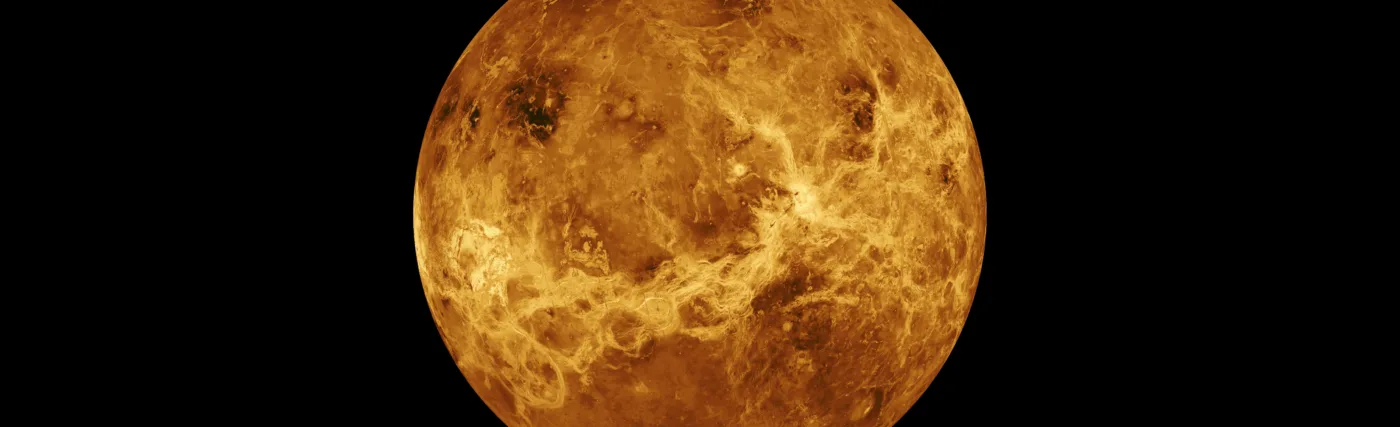
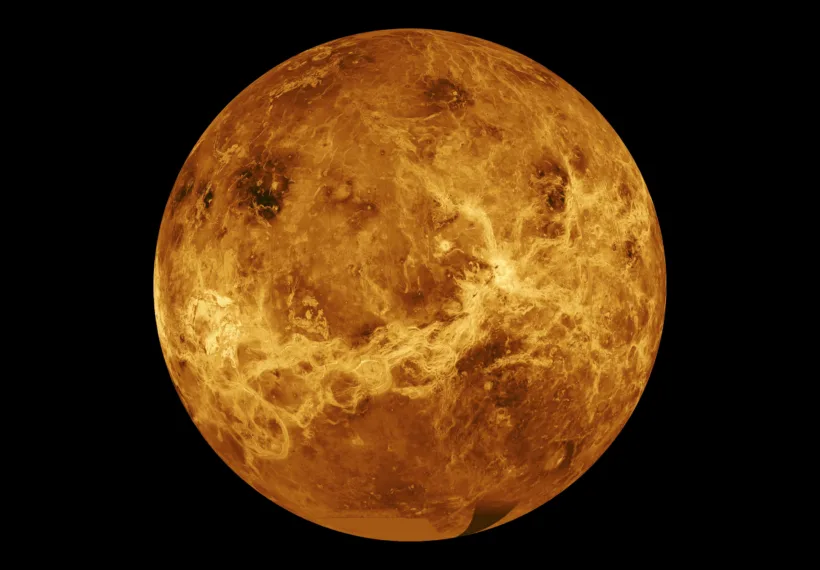
How long would it take to cook a pizza outside on Venus? On this episode, Neil deGrasse Tyson and comic co-host Chuck Nice discuss the physics of surface temperature, the size of ~wAvEs~, and the meaning of horsepower. How many horses would you need to get to space?
What is temperature in the world of physics? We explore the temperature of light and how thermometers sense heat. How can you tell the temperature if you don’t have any particles? How long would it take to cook a pizza on a windowsill on Venus? We calculate just how long it would take and what sort of factors you need to take into account while making the perfect Venusian pizza pie. How does what you’re wearing impact your temperature? We talk about light absorption, the hottest parts of Earth’s atmosphere, and what’s going on in the ozone layer.
What are the wavelength sizes on the electromagnetic spectrum? What’s a wavicle? Find out about wave-particle duality and how the human body detects different parts of the electromagnetic spectrum. Can our bodies sense more than just visible light? Discover microwaves and radio waves. How do we pick up on these types of waves? How do antennae work? We discuss the holes in your kitchen microwave and how electron microscopes work. How can we see something smaller than visible light?
We hop in our horseless carriages and take a ride down what it means for something to have horsepower. What is the power of one horse? We break down engines and the different metrics used to measure their power. What about watts? How much horsepower does a NASA shuttle rocket engine have? What would it take to get millions of horses to run fast enough to get into orbit? We discuss how the power of atomic bombs and hydrogen bombs are quantified. Exploding horses? Death stars? All that and more, on another Things You Thought You Knew edition of StarTalk!
Thanks to our Patrons Kyle W Odren, Frank Kotarski, John Pologruto, Corina Szabo, Shera, Bogdan Pop, Corey McKinney, Matthew Lichtenstein, and Richie Damiani for supporting us this week.
NOTE: StarTalk+ Patrons can watch or listen to this entire episode commercial-free.
Transcript
DOWNLOAD SRTWelcome to StarTalk, your place in the universe where science and pop culture collide.
StarTalk begins right now.
This is StarTalk, Neil deGrasse Tyson here, your personal astrophysicist.
Got with me Chuck Nice, co-host.
Hey, what’s happening?
All right, today we’re going to do some explaining.
Explaining front to back, three segments that’s become its own genre.
Yeah, it is.
Every time you say we’re going to do some explaining, I almost want to look over my shoulder for my wife.
Because of I Love Lucy?
Yeah, exactly.
That’s what I’m normally, that’s where it normally, you know.
Okay.
So this, I guess, I don’t know if we settled on a title.
It’s stuff you thought you knew.
Okay, I like it.
Even stuff you never knew that you didn’t know.
Right.
What?
Yeah, right.
So that’s what we…
I like that as a title, too.
Yeah, stuff you never knew that you never knew.
You never knew.
Three segments, we’re going to talk about what we really mean by temperature.
And that’s one of them.
Another one is going to be size and wavelength.
Right on.
There’s stuff happening there, I don’t think you knew that you knew or didn’t know that you didn’t know.
Cool.
Size and wavelength.
And…
Well, if we’re talking about that, I know I didn’t know.
All right.
And it’ll make you look twice at your microwave oven.
Make sure it’s designed properly.
And third, we’re going to talk about horsepower and how completely irrelevant it is when applied to rocket engines.
As NASA has done for decades.
So that’s on this edition on StarTalk, stuff you thought you knew.
We’ve talked a little bit about temperature before.
Yes.
But I just want to sort of do it again.
All right.
So let me first tell you, in the world of physics, what temperature is.
Oh, okay.
Temperature only has meaning when you have an ensemble of particles that are vibrating.
So you can ask, how fast is everything vibrating?
And you get how fast is this one and this one and all sort of moving in different directions like the molecules in a gas cloud or even in a solid object, the particles are vibrating.
Right.
And you can ask, what is the average kinetic energy, energy of this motion of all those particles?
So, okay, let me just ask them, do those vibrations from these particles produce some type of measurable energy like heat?
So they bang up against your thermometer and then the thermometer gives you a reading.
Oh, that is…
Okay.
That’s kind of dope.
I’m liking it so far.
That’s okay.
So we’re clean on that, right?
Yeah.
No problem.
Okay.
So what happens if you don’t have any particles?
You should be really chilly.
Like you need a glass of…
You need a cup of tea.
It means you’re chilling.
You’re so chilling.
No, no.
How do you measure the temperature of something if you don’t have a temperature of vibration?
Where there are no particles vibrating against it.
So what happens in that case is because the vibrating molecules or particles are not the only thing that can put energy to your thermometer.
Okay.
All right.
Light can do the same thing too.
Or electromagnetic energy, which would include light.
Okay.
Visible light.
So light goes to your thermometer as well.
All right.
But your thermometer has to be able to absorb it in order to then get a temperature for you.
All right.
If you’re trying to find the temperature of the visible light in this room, and your thermometer is made of transparent glass, the visible light goes right through the glass, and you won’t get the temperature of that light.
So temperature is not a completely obvious thing under certain circumstances that are not even much of a stretch.
So I’ll give you another example.
I once calculated, dare I say famously calculated, how long it would take to cook a 16-inch pepperoni pizza on the windowsill of your home on the planet Venus.
Okay.
Is this gluten-free we’re talking?
And did you make that calculation?
I didn’t do the gluten factor.
The gluten correction I didn’t make.
So it’s senior.
And is there an annoying Venusian who goes, I’m sorry, do you have gluten-free?
By the way, I’m also vegan.
Somebody don’t like vegan.
No, no disrespect to vegans.
It’s just an old joke.
How do you know somebody’s a vegan?
They’ll tell you.
Okay.
All right.
So 16 minutes pepperoni pizza on the window ledge of the planet Venus.
Right on your house on Venus.
So here’s what happens.
The atmosphere in Venus has like a hundred times as many particles in it per volume.
So it’s a hundred times as dense.
So there you have your pizza in the oven and there’s hot air hitting it.
But I have a hundred times as much hot air hitting it.
All of Venus is one big convection oven.
Pizza oven, right.
So there it is.
And the air is hotter.
The air is like 900 degrees Fahrenheit.
And a pizza oven is only around 500 degrees Fahrenheit.
So you have a hundred times the atmospheric contact and 500 more Fahrenheit degrees to boot.
So I calculate if it takes 15 minutes to cook a pizza and you do the fractions and you do this right.
I did it.
I got about seven seconds, between seven and nine seconds to cook a pepperoni pizza.
And we’ll be there in 30 minutes or less, guaranteed, baby.
Guaranteed.
15 seconds.
Seven and nine seconds, around there.
So then, as I’ve told you before, the geek spectrum knows no limits in who occupies it.
As I say that all the time when our good friend Charles Lew comes in.
So I put this out there and somebody called me out and said, Dr.
Tyson, you neglected the radiant energy just from the gas being hot.
That’s in addition to the molecular contact energy that’s going on at the pizza surface.
And if you included that, the pizza gets cooked in like two or three seconds.
Right.
Not the seven seconds.
So it’s not only the transfer of heat from the vibrating molecules, there’s the infrared light that’s coming out of the warm oven, not only the air itself, but the walls of the cavity.
That’s why pizza ovens are brick ovens, the ideal ones, because the oven is radiating to the pizza on top of the air.
Everything around it is hot, not just the air.
Everything around it is hot.
So the pizza is gaining energy from the air molecules directly and from the walls of the oven indirectly because of the radiant influx of infrared in that case.
Okay, so there’s these two ways.
So if you have a thermometer in the vacuum of space, what matters is how much of the photons of light is the thermometer absorbing.
So if you wrapped a thermometer in reflective mylar, then the temperature will just keep dropping until it reaches the temperature of the whole universe, which is damn near zero degrees, Kelvin, you know, absolute zero.
So the temperature has to do with what are you wearing?
Are you?
Oh, wait a minute, we’ve heard this before.
I thought we were doing that thing.
Well, you know, Chuck, what are you wearing?
What are you wearing?
No, it’s who are you wearing, Chuck?
Okay.
That’s the red carpet.
Did you wear it?
Well, so when they say wear lighter clothes in the summer, what they’re saying is the air will have whatever temperature it does, but you don’t want to, and it’s going to be hot probably, but you don’t want to add to that by absorbing light from the sun because that will just add more temperature.
That’s why in the summertime, I just wear bike reflectors.
Just walk around with bike reflectors on.
That’s all you’ll get.
So if you just clad your body with bicycle reflectors or something that is good at reflecting sunlight, which could just be…
By the way, it’s been rumored that all futuristic sci-fi space things that people wear, they’re always reflective.
They’re always silver.
It could be because they’re living too close to their host star and they have to keep reflecting it off to stay cool.
Point is, you cannot speak singularly about the temperature of the air in any way that matters to you if you’re also exposed to light that could be absorbed by what you’re wearing.
So, in the winter, it’s cold out, you want as much extra energy as you can get.
So, wear dark clothes, the dark clothes absorb sunlight, and then the temperature inside your clothes goes higher than would otherwise be if you were just measuring the air.
Right, and that is why in the winter time, I hang out with my black friends, and in the summer time, I hang out with my white friends.
And I’m always in the Goldilocks spot, always.
And in the fall and winter, you say, can you back up a little, come a little, no, you move away, and you got the zone.
In the fall and spring, I just hang out with Puerto Ricans.
Damn, Chuck is going to get this show canceled as fast as he can.
Come on, people, y’all can’t get mad at that.
That was pretty funny.
So I’m just saying, temperature is just a little more complicated than you might otherwise think.
That’s all.
It’s not just what is the air, it’s how fast are your molecules vibrating and what is causing that to vibrate.
And the air is how we usually think about it, but other things can make that happen as well.
So that’s what I’m saying.
And there are rules about the thermometer that gives you the official weather service temperature.
That thermometer is in a shadow.
It’s not open to the sunlight.
In fact, I used to do this when I was growing up.
I think they’ve corrected this.
So the bank temperature time signs, you know, they used to be on all banks.
I remember time and temperature.
Time and temperature, right?
I would look at bank time and temperatures that were in sunlight and bank time and temperatures that were in shade.
And the official air temperature might be 90 degrees.
The bank thermometer would say 105 degrees.
It’s like, no, it’s not.
Okay?
Because you’re sitting out in the sunlight and you’re absorbing the sun on top of the air temperature.
So that misrepresents what you would feel standing in the air but in shadow, in the shadow of a tree, for example.
Gotcha.
And when you walk under a tree, say, oh, it’s cooler under the tree, the air is the same temperature.
So Chuck, why is it cooler under the tree?
The absence, same as the shadow temperature.
It’s the absence of the light being directly on you.
It’s the absence of the light that you would be absorbing that would make you feel hotter.
It’s not just a feeling.
You’re actually hotter than the air temperature when you’re absorbing the sunlight.
Wow, there you go.
That’s pretty cool, man.
Yeah, so that’s just…
So temperature, I could go on…
There’s a lot more to temperature than just a reading.
Correct, correct.
And one thing I’ve said in multiple shows, and I’ll say it again, the fact that you can see the sun in the daytime, all right, that’s an obvious fact, means the sunlight is moving through the atmosphere and the atmosphere is transparent to sunlight, okay?
Right.
It’s a visible light, at least.
So, and the visible light is where the sun’s energy peaks.
So if the atmosphere is transparent to the sun, the sun is not heating the air, because the energy is going straight through it.
Right, oh, man, well, there you go.
Okay, but wait, so then what does it finally hit?
The ground.
The ground, and then the ground warms up, and then the ground is in physical contact with the air, and the ground heats the air.
So, Chuck, holding aside an exotic upper layer of the atmosphere, what I’m generally telling you is, what is the hottest part of the Earth’s atmosphere?
Right next to the ground.
Right next to the ground.
And as you ascend, the temperature drops.
As we all know, if you paid any attention at all to the data on the screen in an airplane, and what’s the temperature outside the airplane?
40 below zero.
So, Icarus had it all wrong.
He didn’t fly too close to the…
Right.
His wings would have froze.
They would have fell.
Correct.
They knew nothing about thermodynamics when they invented the story of Icarus.
As he ascends to get close to the sun, he would have been farther away from the sun’s source of heat on earth.
And the temperature would have dropped and dropped, and his wings would have frozen and cracked.
He still would have fallen.
But for different reasons.
All right, Chuck, we gotta call it quits there.
That’s very cool.
I’m so…
Who knew?
That was so…
You always surprised me, man.
You always surprised me.
That’s the whole point of this.
I didn’t think we could get this much out of temperature.
Temperature is a lot going on.
Who knew this was going on with temperature?
And let me just say, if you go high enough in the atmosphere, you reach the ozone layer.
And what does the ozone do?
To what?
The sun?
Why do we have the ozone?
Why do we like the ozone?
Oh, it protects us from radiation and…
And harmful rays of the sun.
Okay, so to protect us, it means it absorbs it.
Okay, so tell me about the temperature of the ozone layer.
Yes, it must be really hot.
It gets hot.
And so, in fact, if you look at the temperature profile of our atmosphere, the temperature drops until you get to what we call the thermosphere, and the temperature goes back up.
Because in that layer, the chemistry of the atmosphere is absorbing ultraviolet rays from the sun.
And that heats that layer.
Gotcha.
And protects us down here on the surface.
That’s very cool.
There you go.
All right.
Well, the only thing I really took away from this whole thing is that on Venus, no one ever says, who touched the thermostat?
Plus, delivering in 30 minutes or less is way too long if they don’t cook your pizza in four seconds.
All right, Chuck, we got to take a quick break.
But when we come back, we’re going to talk about size and wavelength.
These are two things you don’t normally hear in the same sentence.
This is true.
But we’re going to put them together in ways I maybe had never thought of before.
Hey, I’m Roy Hill Percival, and I support StarTalk on Patreon.
Bringing the universe down to Earth, this is StarTalk with Neil deGrasse Tyson.
Welcome back to StarTalk, Things You Thought You Knew.
Chuck, you may have heard of the wave-particle duality of nature.
You heard that?
Light.
Yeah, is it a wave or is it a particle?
And somebody tried to…
Hey, you got wave in my particle.
Hey, you got particle in my wave.
If you’re over 60, you’ll get that reference to a TV commercial for Reese’s Peanut Butter Cup.
Okay, so the problem is we have a brain that wants to compartmentalize and doesn’t really blend to what feels like disparate bits of information.
So people try, they invented the word wavicle.
I thought that was pretty cool, never caught on.
Wavicle.
Have you ever heard wavicle?
Yeah, because it’s just never caught on.
It doesn’t work, that’s why.
It doesn’t work.
But let me just give some interesting examples.
It actually sounds like something the professor from the Simpsons, wavicle, you know, Hayden Planetarium.
So before we pick up wavicle, let me just remind you that light, which in my field we call the electromagnetic spectrum, Okay.
is all forms of light.
Most familiar to us is visible light.
Okay.
Red, orange, yellow, green, blue, violet.
Okay.
But if you go on the other side of red, you get to what?
Infrared.
Infrared.
Very nice.
Your retina can’t detect it, but it exists.
We do have infrared sensors.
It’s, we detect it on our skin as heat.
All right.
So we can detect infrared, but not, we don’t see it.
We feel it though.
That by the way, makes us sound so much cooler than we really are.
Oh, with our skin sensors.
Yes, yes, yes, yes, yes.
Okay.
Now you go beyond the violet.
You get what?
Ultraviolet.
Ultraviolet.
So that’s beyond the violet.
We can’t see ultraviolet either.
We also have sensors for ultraviolet, but they’re significantly time delayed.
Oh, I thought you meant like black lights that just show us all the nastiness that happened in the hotel.
Oh, no, no.
What happens under, quote, black light is you’re illuminating the crime scene with ultraviolet light, which you cannot see, and certain substances fluoresce under it and send you the light back in violet light that you can see.
So you’re never seeing the ultraviolet.
You’re never seeing the ultraviolet.
No, no.
Okay, so here we are in ultraviolet.
We have ultraviolet sensors.
They’re just time delayed, okay?
So the time delay is, okay, you’re out in the sun.
Oh, and an hour later, you feel like you have your sun, if you have lighter colored skin, you feel like you get sunburned.
And you do that enough, then you get skin cancer.
These are, in a way, detectors of ultraviolet.
It’s just too late for you.
Okay, let’s go back to the other end.
So we had infrared, and you keep going in that direction on this spectrum.
By the way, what’s changing on the spectrum is the wavelength of the light, right?
So as we go to the red, wavelengths are getting bigger and bigger.
We get to infrared, beyond infrared.
We get to microwaves.
Microwave, yeah.
Okay, so now I can describe the length of the wave like with physical fingers and things.
So a microwave is like a few millimeters to like maybe a couple of centimeters around there.
Just call it a centimeter.
Yeah, a physical centimeter is like-
That’s a pretty big wave.
That’s a big wave.
That’s a half an inch.
And so a full wave, a crest and a trough gets manifested in that space when you have microwaves.
Let’s go beyond that.
You get to what we call radio waves.
Right.
So before microwaves had their own name, they were just short wavelength radio waves.
Gotcha.
You’ve heard of short wave radio.
Then we said, well, they’re small versions of radio waves, let’s call them microwaves.
And that’s why they’re called micro, even though they’re bigger than infrared.
Right.
All right, that’s all I’m saying here.
So radio waves are like meters and longer.
We don’t have words.
A radio wave can be miles in wavelength, but we don’t have a different word for that.
So radio waves are for everything bigger than microwaves.
All right, so now watch.
If I want to detect a radio wave, I need a thing that’s at least as big as one of the waves.
Gotcha.
So TV, old world TV, before it came in via cable, used antennae.
How long was a TV antennae?
Two stories.
The one on your TV was about a meter long.
Right, yeah.
Okay, in fact, you’d have two of them.
Sticking out all over the place.
And you’d extend it to about the length of the waves of the radio waves you’re trying to receive.
All I’m saying is you can’t detect waves bigger than the size of your detector.
It doesn’t work.
Okay.
It’ll just wash over your detector and your detector won’t even know what happened.
Right.
So how about microwaves?
Have you ever seen microwave walkie talkies?
How long is the antenna on a microwave walkie talkie?
It’s about like that.
That’s nothing to it.
It’s about a couple inches.
It’s like an inch and a half.
An inch and a half.
There’s your microwaves.
That’s the size of the microwaves.
That’s pretty wild.
That’s, so it is the size to fit the situation.
That also means if you have a substance that prevents the transmission of any of this energy, Okay.
you could put holes in it and as long as the holes are smaller than the wave, the wave is not going to get through.
Whoa.
Is that the, like, So take a look at your microwave oven.
So microwaves go through glass.
No problem.
Right.
So you have a glass thing.
So microwaves and visible light go through so you can see your food cooking.
But there’s something else on the other side.
There’s a screen.
A screen, yeah.
And that screen is opaque to microwaves.
Okay?
Except they put holes in it.
Now that’s why I got this tumor on my head.
No, stop!
Is that why?
Don’t stick your head inside the microwave oven.
So neither you nor the microwaves can see through that material except for the fact that they put holes in the material.
How big are the holes?
They’re smaller than the size of the microwaves they’re using in that oven.
That’s pretty wild.
Microwaves cannot squeeze out.
It’s the antenna in reverse.
In reverse.
Oh, I like that.
Very clever.
Very clever.
So you can put holes in things.
So radio telescopes.
Have you ever seen a radio telescope?
Go to a radio telescope one day.
They’re huge.
They’re huge.
They’re huge.
And they’re made of like mesh.
They’re like chicken wire mesh with these huge holes in it.
Because it’s depending on which kind of radio telescope you’re visiting, that the metal is reflective of radio waves.
But you don’t have to build the whole surface of metal.
You can put big holes in it.
Makes it lighter.
All right.
And rain can get through and not a problem.
Because of these huge dishes.
And they can take radio waves, reflect them to a focus, and there you have it.
That is really, really cool.
Well, let’s keep going in the other direction.
You ready?
Okay.
There’s more?
But wait, there’s more.
Okay.
I was satisfied, but yes, please.
So let’s go the other direction.
So we got red, orange, yellow, green, blue, violet, ultraviolet.
You go beyond ultraviolet, you have x-rays.
X-rays.
Wavelengths are getting smaller and smaller and smaller and smaller.
Really tiny, tiny, tiny, tiny.
Much smaller than the wavelengths for visible light.
Aha.
All right, so now watch.
If I have a regular microscope and I want to see something small, I cannot see anything smaller than the wavelength of the violet light I’m using in the visible spectrum.
Because otherwise it washes right over it.
It would not even know it’s there.
Right.
So if you want to see things smaller than the wavelength of visible light, that would be the violet side of it, you need even smaller wavelengths of light.
Interesting.
So here’s the talk about getting clever.
You ready?
So people said, how about electrons?
You say, well, electrons are particles.
They’re not waves.
They’re also waves.
Oh, my gosh.
What wavelength corresponds to electrons that we could generate in a machine?
X-rays.
Oh, my gosh.
So electrons and X-rays have the same wavelength.
So if I invent a microscope that uses electrons, then I’m using a wavelength of light as small as X-rays so I can see the tiniest detail.
So the photographs that have this, the most exquisite detail of the smallest things are not regular microscope photographs.
They’re electron microscopes.
Because we commandeered electrons, piggybacked an electron using the X-ray wavelength that it represents.
That’s why you see those bug pictures with the hairs and the thing.
That’s how electron microscopes work.
Isn’t it clever of the human mind to do that?
After quantum physics, we said we got the wave particle duality, and I can’t see anything smaller than the wavelength of violet light.
But I know there’s got to be detail there, because there’s detail up until the point where it gets fuzzy.
Well, let me keep going.
And then you invent the electron microscope, and bada bing, the world of the small continues to open to you.
So that means, if so, is our gamma, what’s the smallest wave?
So the smallest waves that we have a word for are gamma rays.
So gamma rays are the opposite like radio waves.
So smaller wavelengths than X-rays are gamma rays, and then we don’t have it, we don’t keep dividing it.
So gamma rays that are like really, really, really small, they’re still called gamma rays, yes.
So the problem is, a gamma ray telescope, you have to be able to focus it.
It’s not good enough just to use the light.
You need to be clever about when the machine you’re making, and we know how to focus electrons because they have a charge, and so we can focus them down and get images and things.
So, yeah.
So, the only thing gamma rays are good for is making you a superhero.
The Hulk, yeah.
That’s tested.
We know.
And I think it’s gamma rays on Spider-Man too.
I don’t know.
I’m not sure what it is.
Well, there was a radioactive spider.
There was a radioactive spider that bit him.
It bit him.
I’m not sure what kind of rays it was.
I don’t know what the machine was using to make him, you know.
First of all, I just love that we went from pure science, here’s how an electron microscope works, to now exactly how the Spider-Man came out.
And this is how you become the Hulk, if you want to do this in your basement.
So all I’m saying is double check your microwave oven.
If your holes are the size of like a centimeter, they’re too big and microwaves are leaking out.
If they’re down around a millimeter or two, then that’s a good size, the microwaves are not getting out.
There you go, there you go.
So that’s a little bit on size and wavelengths that you might not have known, a connection that you might not have known was ever there.
That was great.
All right Chuck, we got to take a quick break, but when we come back, when we come back, all kinds of stuff you never knew about horsepower.
Oh, nice.
In our third segment, when we come back.
Hey, time to honor some of our Patreon patrons, with a Patreon shout out for Josh Whitleaf, Kumara Vaibhav, and Daniel Davis.
Hey guys, thanks so much for your support.
Without you, this show couldn’t happen, so we really appreciate it.
And anyone else listening who would like their very own Patreon shout out, please go to patreon.com/startalkradio and support us.
Thank you We’re back, StarTalk, Things You Thought You Knew, our third and final segment, all about horsepower.
Horsepower, if horses only knew.
Chuck, I do a fair amount of reading of history.
I love looking at how we used to think about things and how the advance of science and technology modifies, improves, supplants whole words, whole concepts that just become obsolete.
Yeah.
I think our parents might have been the generation that might have still called a refrigerator an icebox.
Which, because it was an actual icebox.
It was a literal icebox.
You know, the ice man would come.
In fact, my mother-
Get your ice here!
Ice cold ice!
Is that how cold it is?
It’s ice cold.
And so Chuck, where was the space within the box where they put the ice?
What part of the-
Hopefully up top, since it’s cold air fall.
Exactly, cold air fall.
Chuck, you’re thermodynamically fluent.
I love you, man.
And it would have a mechanism where it melted and you’d replace the pan at the bottom where the water melted.
So, then we don’t need ice for it anymore because we perfect refrigerators and it orphans some people’s vocabulary, but that’s fine.
I don’t think anyone under 60 calls it an icebox anymore.
So, I find that fun to track the evolution of vocabulary in the face of the progress of science and technology.
You just reminded me of my great-grandmother and I’m just having a fond memory right now because she lived until I was 30 and she was born in 1901 and used to routinely tell me about the Iceman and the Fishmonger and the Milkman that all these people came around, and by the way, on horse-drawn carriage.
So, that’s the stuff you didn’t get from the market.
Somebody came by and you got it outside your door.
Especially since it was perishable or it would melt, right?
They couldn’t just leave it at the market hoping you’d come by and get it, right?
Exactly.
Right, right.
So, we go from horses which, you know, we built civilization on the back of horses.
We also fought wars on the back of horses, right?
And they never got to thank you.
No, there’s some horse memorials in the world.
Get out!
To the war horses, yes.
I speak with my sister about that.
Also many, a war statue are the soldiers on a horse.
So, the horses are a fundamental part of that.
But you’re right.
I don’t think anyone told the horses before they went to the battle that they’d be shot at.
I’m pretty sure that was not a, that we did not get a…
They would have bucked every soldier.
So we use horses up until like the car is invented, right?
So, Carl Benz sort of makes a really good version of an internal combustion engine.
And then we’re off to the races.
So then what happens to the horse?
Well, the horse rapidly disappears, especially from urban centers.
And then basically from all of civilization, much later on farms, I think, but eventually they would be replaced with tractors.
So what is the power of a horse?
Well, I don’t know, but let’s just call it one horsepower.
So now you have a car.
And what does someone who rode horses all their life call a car?
A horse drawn carriage without a horse.
A horseless carriage.
A horseless carriage, okay?
Because that’s the reference frame you’re using to identify it.
So now you say, how powerful is the engine?
We don’t have any way to think about the power of the engine other than in reference to horses.
So car engines started getting measured in horsepower.
That makes sense.
Horsepower.
Okay, so one horsepower, so then I know that’s like my horse.
Two horsepower, hey.
Oh, I got a pretty nice carriage going on here.
A carriage going on, four horsepower?
Oh, four horses, this is like Cinderella.
No, and six horsepower is Ben Hur.
Yeah.
You can think of it in terms of watts.
So one horsepower equals about 750 watts.
All right?
And because power doesn’t have to be how fast you’re moving, it’s what is the rate that you are consuming energy.
So in the old days, hairdryers would be up around that many watts.
All right?
Nowadays, they’re closer.
And they put it on the hairdryer still.
Oh, no, watts, they don’t put horsepower on a hairdryer.
No, the watts.
Yeah, yes, definitely put watts on it.
But generally, you see horsepower on things like that go into motion.
Or in some cases, I’ve seen horsepower on lawnmowers, on motorcycles, things that have sort of engines, because that’s where the deepest roots are traceable to when horses did that work.
That’s all I’m saying.
OK, so now we are left with the completely absurd, completely absurd statement in NASA press releases of how many horsepower the shuttle rocket engines are.
Oh, man, I love that.
Oh, man, it’s like souped up Santa Claus.
Two thousand horses flying into the sky.
So you have NASA’s press releases saying the shuttle main engine produces 37 million horsepower.
Oh my God.
OK.
And you say, that’s powerful, but it is completely meaningless, right?
Because there are not 37 million horses anywhere.
You will not find 37 million horses probably on Earth, let alone all together just hanging out.
At Kennedy Space Center.
So now, let’s say you could strap them together.
No matter how clever is your strapping, your 37 million horsepower is not going to…
If it’s actually made of horses, it’s not going to put you into orbit.
Horses are not going to ascend from Earth and go into orbit around Earth.
However, it is kind of cool to start every space mission with five, four, three, two, hi-yah!
Gentlemen, start your horses.
So we didn’t have a term that comes to us from cars that we would then apply to rockets.
It would have been nice if we had car power, right?
Leave horses behind.
Now we have car.
So what’s car power?
Let’s say 100 horsepower is now one car power, let’s say.
All right.
Then we could talk about rockets and car power.
If we’re going to be one generation behind, I would have been okay with that.
But no, they kept referencing horses, which I personally, I think is completely absurd.
And like I say now, since horsepower is just a matter of power, and so are watts and we all in the USA, we’re all watt fluent.
All right.
We could just use watts, kilowatts, that sort of thing.
So Chuck, there was a similar challenge when we detonated the first atomic bomb.
So is there a unit of energy to talk about atomic bombs?
No, because no one ever made one before.
So let me guess.
We now use exploding horse.
No, Chuck, stop.
No.
So we look back and say, what is the biggest explosion that we had before?
It’s a stick of dynamite.
And dynamite is TNT.
And TNT, by the way, discovered by Alfred Nobel, got quite wealthy on it, from it, and then created a fund to reward science and peaceful applications of it, especially with regard to medicine.
So TNT, a stick of dynamite, was the biggest explosion we had.
So now we have an even bigger explosion.
And so atomic bombs were measured with respect to how many tons of TNT it would be.
So the two bombs dropped in Japan in warfare by the United States, each of those was between 10 and 20 kilotons of TNT, 20,000 tons, kilotons, okay?
That’s crazy.
So now watch, as we, oh, by the way, so that’s a fission bomb that takes uranium and plutonium, big atoms, splits them into two lighter atoms, but they’re, those two lighter atoms, when you add them back, you don’t get to the original atom.
There’s extra energy that got converted into the bomb.
So we would develop an even more potent nuclear weapon called the hydrogen bomb, which comes from fusing hydrogen atoms together to make helium.
So you take four hydrogen atoms, you get a helium atom and you had, you started out with more mass than you ended up.
Where did the mass go?
Became energy, E equals MC squared.
All right.
So, mild hydrogen bombs are a thousand times more powerful than your atom bombs.
So we don’t speak of them in terms of kilotons, we speak of them in terms of megatons.
Nice.
10 megatons, 50 megatons, mega as in million.
Right.
So once again, we have these devastatingly powerful weapons and we’re referencing their power by something Alfred Nobel invented a century earlier.
And so to me, that’s the same as, well, I mean, not identically the same, but it’s linguistically the same as calling you refrigerator in an ice box and talking about the power of your car in horsepower.
In horsepower.
Right, right.
And we’re still there.
It’s still measured in megatons.
It’s still measured in megatons.
Is there anything bigger than a hydrogen bomb?
Well, a supernova is pretty big, but we just measure those in ergs with a power, very high power.
Yeah, we stopped finding words for it.
Let’s just go back to any unit of energy and stick in the high.
And stick it there.
Stick it there.
Right, right.
We’re not measuring supernova in terms of horsepower or TNT.
Or TNT.
Right, right, this is not happening.
You know what would be good?
If we measured it, this would blend pop culture with science.
If we measured it in death star power.
Yes.
The power it takes to completely obliterate a planet.
We can calculate what that is.
Oh my gosh.
Yeah.
And then our hydrogen bombs would be, it’s only one millionth a death star.
And then it becomes small rather than large.
Exactly.
But yeah, you can calculate exactly how much energy it takes to completely obliterate a planet.
Right.
And by the way, in Star Wars, The Force Awakens, where they have the new and improved death star, that can kill all the planets of an entire solar system.
And you know where it got its energy from?
Where?
Okay, it sucks the energy out of a nearby star.
Oh, the star.
Okay, so it goes through a star, sucks out all the energy, contains it, and then dishes it out and can take out a whole solar system all at once.
So that’s badass, right?
That is pretty badass.
Except if you actually add up all the energy of a star, it could kill a thousand planets, not just ten.
So they didn’t do their math, because had they, then the dark force, the dark side would have been way more powerful than anything portrayed in that movie.
You know what?
We should do a show, and I don’t want to offend anybody because I’m a huge Star Wars fan.
But over the years, I’ve heard you say many, many things that Star Wars gets-
Hold me back.
That they get it, and that they get totally wrong.
We should do a show called Star Wars is Stupid.
No, we should!
It’d be awesome!
I mean, it doesn’t mean that we don’t like it.
It just means like, look, here’s all the bad science that you find in Star Wars.
I mean, like BB-8 is a smooth, rolling, metal, spherical ball.
And somehow it’s not sliding uncontrollably on sand.
Or not only sand, but on waxed floors, like a bowling ball.
Dude, that’d be a great show!
Star Wars is stupid.
How to cut your viewership in half, right?
So Chuck, we gotta land this plane.
Oh man.
Or land those horses.
Yes, I was going to say, do we have saddles?
Do we have saddles to land this plane?
Are we gonna cut the red wire on the fuse to that bomb, and bring this episode to a close?
But I enjoyed it.
I enjoyed talking about stuff that people don’t always know that they know.
These are fun!
Yeah, yeah.
And I’d like to believe it connects you just a little more closely to the coming and going of society and all the ways that technology touches it or doesn’t.
I love that, you know?
All right, this has been StarTalk.
Always good to have you, Chuck.
Neil deGrasse Tyson here.
Here.

 Become a Patron