



 Unlock with Patreon
About This Episode
A year isn’t what you think it is… Neil deGrasse Tyson and comedian Chuck Nice explore things you thought you knew about the length of a year, the dark side of the moon, and the physics of a moving system.
How long is a year? Find out why the year is not 365 days and why leap day does not quite solve the problem. Are there other types of years we could go off of? Learn about the sidereal year and how Earth’s orbit precesses around the sun. Plus, what made the leap year in 2000 so rare?
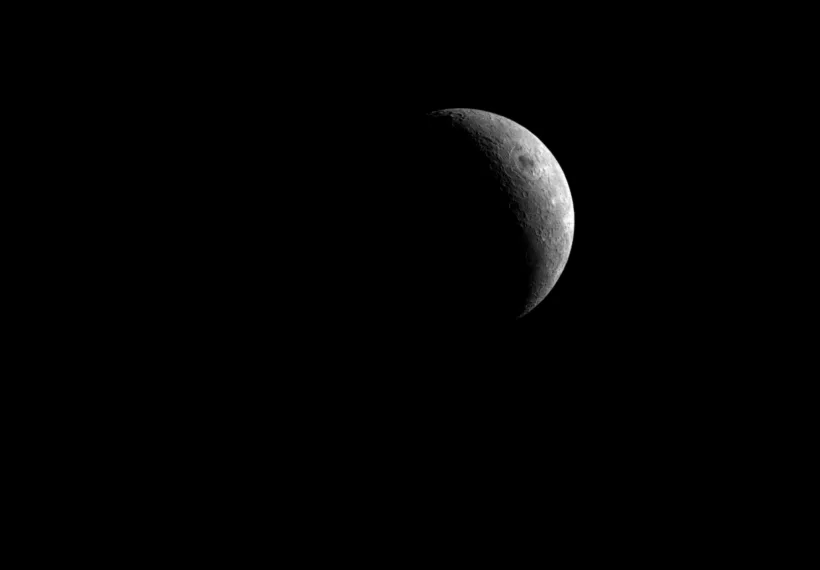
Is there a dark side of the moon? Neil busts a common misconception, discusses headlines after the Chandrayaan 3 Mission, and the near versus the far side of the moon. Discover parts of the moon that do stay dark, the temperature differences on the moon, and why lunar shadows are so striking.
What happens when you jump inside an airplane? We dive into the physics inside moving objects and why we don’t seem to notice what speed we are traveling at. Why do you land in the same place when you jump up and down in a moving airplane? We explore the physics of moving systems, acceleration, deceleration, and why you wear your seatbelt during takeoff and landing.
Thanks to our Patrons Jeffery R. Kaufman, Peter West Popovchak, Nicholas Calmes, Matt Kline, Vadym Feskin, Steve Ipyana, and Foohawt for supporting us this week.
NOTE: StarTalk+ Patrons can listen to this entire episode commercial-free.
Transcript
DOWNLOAD SRTWant to learn a new language, and who doesn’t?
Well, experience immersive lessons from the most trusted language app, Rosetta Stone.
You know you keep telling yourself you want to learn a new language.
The true accent feature even gives feedback on your pronunciation, so you can speak the language like a native.
Find lessons as short as 10 minutes, making it easy for you to learn anytime, anywhere.
Don’t put off learning that language, there’s no better time than right now to get started.
And Rosetta Stone makes the perfect holiday gift.
For a very limited time, StarTalk Radio listeners can get Rosetta Stone’s lifetime membership for 50% off.
That’s 50% off unlimited access to 25 language courses for the rest of your life.
Redeem your 50% off at rosettastone.com/startalktoday.
Nissan has a car for everyone, every driver who wants more.
Whatever your more is, more fun, more freedom, more action.
From sports cars, sedans and EVs to pickups and crossovers.
With Nissan’s diverse lineup, anyone can find something to fit their more.
Get more revs in their sports car, more guts with all-wheel drive and more than enough options to fit your driving style.
Nissan can take you where you want to go.
Find your adventure and more with Nissan.
They watch too many Warner Brothers cartoons.
That’s what’s wrong with those people.
Too many Wile E.
They’re using the cartoon laws of physics instead of the actual laws of physics.
In that person’s world, you know what else happens?
If you don’t know that you’re not standing on the edge of a cliff, you can actually stand on thin air.
Gravity only kicks in with your awareness.
Wait, that’s it, you know, and…
It’s a new law of physics, right, bitch?
Welcome to Star Talk.
Your place in the universe where science and pop culture collide.
Star Talk begins right now.
Chuck.
What’s up, Neil?
Time for another Things You Thought You Knew.
Awesome, which is pretty much everything for me.
I thought I knew it and then I found out I did not know it at all.
I thought I knew that.
I did not know, I did not know it.
Okay, so I got one here, you ready?
How long is a year?
All right.
I didn’t realize…
You thought I was that stupid that you had explained that to me.
I said I loved explainers.
I didn’t realize that we were getting down to the remedial levels.
Hello Chuck, hi.
Let’s tell you what a year is.
First of all…
What is a year?
Take this crayon and I want you to draw…
I want you to draw me a timeline, Chuck.
A year is a trip around the sun.
Okay, so how long does that take?
We say that it takes 365 days, but I got a feeling that you’re going to tell me, somehow, that is not the case.
That is totally not the case.
That is not the case.
Oh, wow.
It is not the case.
So, as a matter of social-civil convenience…
The year is mapped out to 365 days.
With 12 months each having as few as 28 days and up to 31 days.
And then every four years, we stick another day in there on that 28.
Well, that’s what I’m getting at.
So, that’s 365 days, and we celebrate New Year’s Day.
Right.
Earth has not yet completed its orbit around the sun.
Wait a minute.
So, you’re saying to me that when we go January 1st, yay!
All right.
Kiss you.
When you go January 1st to January 1st, each time we do it, Earth is six hours behind the completion of one trip around the sun.
Oh, crap.
I did not know that.
First of all, that is significant in terms of amount of time.
So, rather than celebrate the new year in these six-hour increments, no, we just cleanly divide the year into whole days.
Because we don’t want to mess with a day.
You wake up in the morning, you go to sleep, the sun rises, it sets, it’s day, it’s night.
We want to keep that intact.
So we ignore the six hours.
So now, how long are you going to ignore the six hours?
Well, I’m going to say, not very long.
Okay, so if you ignore it for four years, that’s a day.
How many hours have you ignored?
24, six times four.
Bada-bing.
So you then throw a day back into the calendar?
That makes sense.
Every six hours, six hours, four years, that’s a day.
Throw the day back in.
All right, people, let’s keep moving.
And you’re back in line.
And we give that day the very needy February.
Right.
Of course, Black History Month.
Yes, exactly.
Of course, they would do that.
You know that.
Just like, not only are we missing the day, it’s the shortest month of the year.
And by the way, black people, here you go.
By the way, it’s the shortest month, even when you give it an extra day.
Even when you give it an extra day, we still come up short.
Look, that’s amazing.
That’s amazing.
So, now everything is even-steven, okay?
Right.
All right.
So, what we’ve talked, I think we’ve talked about before, the fact that that overcorrects.
Did I ever mention that to you?
Now, I believe we did, but we were talking about it in a different…
It might have been in a different context…
.
calendar.
Calendars.
There was a Julian calendar.
Exactly.
We talked about this two years ago.
I’m trying to think of it in my…
I’m going to bring some of it back because it relates to the year.
I told you six hours, but it’s not six hours.
Okay.
Of course.
Right?
Because that only makes sense.
It’s a trip around the sun, 365 days, except it’s not.
And it’s six hours, except it’s not.
It’s a little less than six hours.
So, Chuck, since it’s a little less than six hours, if you add up four of those, you don’t quite have a full day, do you?
No, yeah, exactly.
You don’t.
You’re a little short.
Yet we put in a full day.
Right.
So it turns out, over a century, you’ve accumulated an extra day that shouldn’t be there.
So, every century, when it would have been a leap day, you take it out.
Because we’ve accumulated that day.
We don’t need to have the leap year that time.
So we just let it go.
The day self-corrects because the accounting, the ledger is now balanced.
Except it’s not quite…
Okay, so it turns out that over-corrects it by just a little bit.
Of course it would.
Over-corrects it.
So, over 400 years, there’s a day that should be in there that isn’t.
So, every 400 years, which counts as a 100-year increment, where you wouldn’t have taken out the leap day, every 400 years you put the leap day back in.
You put it back in.
Because you wouldn’t have taken it out, because it’s the correction for the times that already was accumulated, you wouldn’t have.
You would have just let things be.
But now, over 400 years, because it wasn’t quite what it is, just a little bit.
It took 400 years.
Now it’s just like, hey, now you know what we’re going to do?
Because we actually did accumulate over all this time.
So now we’re going to shove a day back in here.
And finally…
And you know something?
The year 2000 was just such a year.
So most people who said, well, year 2000 is divisible by four, it’s a leap year, had no clue how rare a leap year that is.
Right, that was the leap year that wasn’t.
Yeah, correct.
There was no leap day in the year 1900 or in the year 1700.
So all those century years had to accumulate a 400-year interval.
We’re up to the year 2000.
It’s got a leap day.
And people thought that was a normal leap day, but it wasn’t.
But it wasn’t.
Yep.
That’s actually a…
Wow, look at that.
Okay, it’s all because we’re not correcting by the precise amount.
We’re correcting by whole days.
Earth’s orbit around the sun doesn’t care about how long it takes Earth to rotate on its axis.
Oh, I see.
So we are shoehorning in our days with respect to how long it takes Earth to go around the sun.
Excellent.
Okay, so now…
But wait.
Okay, so that year is the time it takes the sun’s and Earth’s relationship to repeat in such a way that the seasons stay attached to the months of the year we’ve given them to.
Okay.
So, our year is based on the seasonal calendar because we’re historically agrarian.
Yeah, planting, sowing, reaping, all that crap.
It makes sense, okay?
It turns out that the seasonal calendar is slightly different from the time it takes Earth to return to the same spot in its orbit.
We simply don’t use that calendar.
And that’s called a sidereal year where we match up with the stars that surround the sun.
But our seasons don’t match up with the stars.
And the stars migrate through the year.
The sky you see in the springtime in March will shift against the calendar because that’s not the year that we’re based on.
So, whatever year you’re based on, that repeats every year.
Other accountings will then shift relative to it.
And so, when we return to our spot in space relative to all the stars, that’s a different length of time than the time for us to repeat the seasons.
And so, we have a seasonal year.
That’s the year we know and love.
Then it’s called a sidereal year.
Sidereal just simply means star.
Right.
And that’s right.
That’s the year where you look up and you have to find a point, and we’ve got to return to that point.
To that point.
And if we did that, then the seasons would drift.
The stars would stay where they are.
Right.
Okay.
But we’d be getting a little, you know, but we don’t have to worry about that anymore because we have climate change.
So, we have solved that problem.
Solved the calendar problem.
We solved the calendar problem.
There ain’t no winter.
There’s no nothing, baby.
But wait.
One land, there’s another kind of year.
Earth is an ellipse in its orbit.
Right.
So, that means sometimes it’s closer to the sun and sometimes it’s farthest.
Right.
Right.
We’re closest to the sun in July, farthest in January, early January.
Right.
So, that ellipse precesses around the sun.
So, in other words, if you step back and look at the ellipse orbit around the sun and watch it like for thousands of years, that entire ellipse will turn around the sun.
It’s called precession.
There are various kinds of precession.
That’s one of them.
So, if you timed the time between our closest point to the sun and our closest point to the sun again, that’s a kind of a year, isn’t it?
Yeah, it would be.
That would be a year within our orbit.
That’s a different length year from the sidereal year, different length year from our seasonal year.
Now, here’s the thing.
Yeah?
How much older am I based on all these years?
It’s a very small difference between them.
Yeah, it’s not.
I’m just seeing if I can cheat the system.
Yeah, just consider that what we chose as a year is in a sense arbitrary.
Not that the length of the year is arbitrary, but we had our choice of three.
Right.
And we don’t care about whether the stars in March stay the stars in March.
We care that March always has spring.
That’s it.
At least in the Northern Hemisphere.
That’s the years in a nutshell.
That was good stuff, I’m going to say.
You know, when you started off with, you know, what is a year, I was kind of like, you lost it, bro.
You finally lost it.
He’s finally gone.
But you pulled it out.
I got to tell you, you pulled it out.
This was a good one.
That’s kind of the whole point of these things you thought you knew.
Hey, if you like saving, you should join Walmart Plus.
It’s a membership that saves you money on the stuff you’d expect, plus the stuff you don’t.
Like gas, plus free delivery, plus a Paramount Plus subscription, plus so much more.
I love saying plus.
So you can drive the kids to soccer practice, order snacks for movie night, and stream your favorite movies all while saving.
Start a free 30 day trial at walmartplus.com.
See Walmart Plus terms and conditions.
Paramount Plus essential plan only, separate registration required.
No one sees the world quite like an airline, but the world seen below is changing fast.
That’s why Delta Airlines is committed to net zero carbon emissions by 2050.
It’s why they’re partnering across the industry to create the future of aviation and switching ground vehicle after ground vehicle to electric.
It’s why Delta’s accelerating their push to source sustainable aviation fuel.
And it’s why they’re also getting rid of 4.9 million pounds of single use plastics annually.
That’s just what they’re doing, but it’ll take more than just the 90,000 people at Delta.
It’ll take everyone at every airline and in every industry, because Delta knows a thing or two about getting where it needs to be.
And they believe it’s time we all got going together.
Learn more at delta.com/sustainability.
You know, chances are you’re listening to Star Talk Radio on your phone.
You’re probably on the go too.
Think of all you do on your phone the moment you leave your front door.
From checking the weather to transportation, to online banking, to ordering food.
You know, that requires an amazing network.
And that’s why you should switch to T-Mobile.
T-Mobile covers more highway miles with 5G than anyone else and helps keep you connected with 5G from the driveway to the highway and all the miles in between.
Because your phone should just work where you are.
It’s your lifeline to pretty much everything you didn’t bring with you.
Side note, I’ve been a T-Mobile customer for many, many years and I gotta tell you, I’m loving that network.
So next time you head out, whether you’re taking a trip or going to work or just running errands, remember T-Mobile’s got you covered.
Find out more at tmobile.com/network and switch to the network that covers more highway miles with 5G than anyone else.
Coverage not available in some areas.
See 5G details at tmobile.com.
Chuck got another one.
And another one.
Okay.
And another one.
It’s in our culture.
There’s no escaping it.
Some percentage of people who walk this earth, when asked, would be sure that there’s such a thing as the dark side of the moon.
Yeah, that’s where the transformers hide out.
I thought it was just the other side of the moon.
Right?
So the dark side of the moon, I think, hit a peak in 1973.
You know what happened then?
Did Pink Floyd put out an album?
Pink Floyd put out an album.
Because that would do it.
And the album did really well.
That’s the problem.
If people hated the album, my job would have been way easier because no one would have been brainwashed by it.
Exactly.
So, it was the title of the album called The Dark Side of the Moon.
And so, I’ve been spending 50 years, this is the 50th year anniversary, 2023 is the 50th year anniversary of the release of that album.
I spent every one of those 50 years trying to undo the damage caused by the title of that album.
Wow.
See, now what you should have done is just, you know, you should have took Pink Floyd out the same way you took out Pluto.
And you would not have to worry about this.
Get authoritative legislation.
The dark side of the moon is now dwarf side of the moon.
So now if you listen to the title track, like with headphones, the very last sentence, the very last two sentences, you know what they are?
I do not.
Okay, but you got to listen, because there’s a lot of fadey kind of music in all of those tracks.
So you listen, and it says at the end, there is no dark side of the moon.
Are you serious?
Yes.
Wait, wait, wait.
So I said, okay, that was all people just listen to the song.
However, there’s a sentence that follows it.
Well, of course, there has to be.
There’s a three word sentence that follows it, right?
So it says, there is no dark side of the moon.
It’s all dark.
Oh, that’s a little more philosophical.
That’s a little more philosophical.
Yeah.
Yeah.
Then I said, I can’t get on a case too much here because it’s just being poetic.
But anyhow, there are people who still think that the other side of the moon never sees sunlight.
True.
Which is interesting for anybody to think that because you never seen the far side, that side of the moon.
So why would you even conclude that?
You have no data.
The moon does always show the same face to earth.
We went over that in a previous session.
Tidal locking.
Tidal locking.
That’s right.
So the other side of the moon is gets as much sunlight as the near side.
So there’s a far side and a near side.
And a day on the moon lasts 30 days.
30 Earth days, so there’s like 15 days of sunlight and 15 days of darkness.
Gotcha.
So, yeah, so moon has days just as we do.
So had you thought about it, Chuck?
When you see a half moon in the sky, wouldn’t you think that like the half you don’t see on the other side is also getting sunlight?
Right.
Well, I mean, isn’t that how shadows work?
Shadows and round things kind of work that way, you know.
So that should have people should have been tipped off by that.
So here’s the thing.
When the Indians landed their first successful landing on the moon, becoming the fourth country to do so, from Soviet Union back in the day and the United States.
By the way, Soviet Union got there first.
Soviet Union beat us at everything until we put humans on the moon.
Then we said, we win.
Hey, man, that’s how you win.
You change the rules.
Change the goalpost?
Move the goalpost and change the rules, man.
They beat us.
They had the first satellite, the first non-human animal, the first human, the first woman.
Then we were just like, none of that counts.
We put the first dude.
Russia even had the first black person who was a Cuban.
He was a Cuban.
Okay.
Dark-skinned Cuban.
Right.
So, they became the fourth country to do this, but what’s more significant than that, because that would just be, okay, welcome to the club.
They landed near the moon’s south pole.
And the south pole, I think we talked about in a previous explainer, you have the bases of craters.
The sun never gets high enough in the sky.
As near the poles, the sun stays low.
Right.
Stays so low that sunlight never reaches the bottom of the crater.
And so, it’s literally where the sun don’t shine, okay?
There are literal dark places on the moon.
Right.
All right.
So, here’s the thing.
The Indian spacecraft landed not in the bottom of a crater, because it has solar panels and it needs energy.
So it landed outside the crater, but in darkness.
And so, why would they do that?
Well, here’s what they did.
They landed on the last day of night time.
Ah, the 30th day.
On the last day of night time, so that the next day the sun rose, and how much daylight do they get?
They get 15 days now.
They get 15 days.
So, it’s a two-week mission.
No, that was so smart.
Yes.
That’s really cool.
Yes.
So, now they have two weeks to go look for their ice or whatever in the season.
Yeah.
The water is going to be frozen, of course.
Frozen water.
Yeah.
And so, yeah.
It’s smart people or people who figure this stuff out.
And as a matter of fact, it is rocket science, right?
Because they have to leave Earth, right?
So that they landed there at that time.
That’s right.
That’s right.
So, oh, so my point is there were some Indian headlines that said Chandraiyan-3, which is the name of that mission, landed on the dark side of the moon.
Oh.
See?
So they got caught up in that.
Yeah.
But that wasn’t the Indian space program saying that.
It was the journalists who don’t understand that there is no dark side.
So I think they might have seen it landed in the dark and then moon and the word dark becomes dark side of the moon.
Yeah.
And so you might ask, well, how cold is it where the sun don’t shine?
Oh, how cold is it where the sun don’t shine?
Hundreds of degrees below zero.
That makes things difficult, doesn’t it?
And so this water, which would have arrived by comets, you know, moon’s been hit by stuff in case you didn’t notice the acne.
That’s why the man in the moon’s face looks like a pepperoni pizza.
What a terrible saying, the guy looks like he’s got some serious hormonal problems going on.
Teenage acne issues.
The man in the moon is not getting a day to the prom.
That’s all I’m saying.
It’s going to be tough.
It’s rough.
It’s rough.
Need a little acetane.
So because there’s no atmosphere to smooth out the hot places and the cold places, because what happens is in our air, our air sort of captures the heat once the sun heats the ground and it moves that around, right?
That doesn’t happen on the moon.
So where the sun is shining, it’s 200 degrees above zero.
You can sit out of a cup of water and boil it, and where the sun doesn’t shine, it’s hundreds of degrees below zero.
So really if you’re there, the side of you facing the sun is going to be hot and the side of you not facing the sun will rapidly cool off.
So ideally you should go on a rotisserie.
Like Boston chicken.
So I would say the reason for space suits to be reflective typically, because you want to be in full control of what’s going on.
So of course they had those big packs that were on the astronauts’ backs.
Half of that, I don’t know half, but a big part of it was the cooling system that keeps them at the right temperature so they don’t bake or freeze.
Nice.
And one other thing before we end this, because there is no atmosphere, that means there is no skylight.
There’s no blue sky in the daytime.
The daytime sky is just dark.
Right.
So the only source of light are direct sight lines from the sun.
So if you’re standing there, Chuck, and part of you is in shadow, unless some light is reflecting off the lunar terrain, it is pitch dark in the shadows of rocks and in your shadow.
Pitch dark.
Wow.
In broad daylight.
So that makes for fascinating contrasty photos when this happens.
Yes, you can get a reflection off the lunar module, okay?
But the general ambient light we take for granted when you walk around in the daytime is not there on the moon.
Look at that.
Yeah.
That’s cool.
So, Chuck, there is no dark side of the moon.
That’s all I got to tell you.
Well, there you go.
Pink Floyd, you’re a bunch of dummies.
So, Chuck, I was actually at a party one day when I met Roger Waters.
Very cool.
Yeah.
And you told him that there was no dark side?
Chuck, I had to.
I couldn’t remain silent.
And what was his response?
He was not sympathetic.
That makes sense.
He’s like, bro, I’m getting paid off this.
He got a gravy train.
Yeah.
I got a nice little racket going here with this dark side of the moon thing, and you are messing it up.
I’m going to need you to silence.
Don’t make me take out a gag order on you, Neil.
But anyhow, the job of the educator never ends.
I think that’s what’s going on.
Very cool.
As long as there are forces of untruths that pervade the world.
Look how poetic you are.
I was about to say, as long as there are ignorant dumbasses, the job of the educator shall not be finished.
All right.
That’s all I got for you on the dark side of the movie.
Hey, you’ve been searching for a hotel for that epic trip that you’ve been planning, but there’s so many options that you can’t decide which one to book.
The Choice Hotels family of brands has over 7,500 locations with a hotel for every type of stay, like Cambria Hotels with offerings like rooftop bars, spa-like bathrooms and convenient downtown locations, or a comfort inn for the whole family to enjoy.
Cambria Hotels offer spa-like bathrooms with many that have Bluetooth mirror connectivity so you can listen to your favorite podcast, and we all know that’s StarTalk, or songs while you get ready.
Each Cambria Hotel is curated with locally-inspired design elements, providing guests with a sense of space and place in the city you’re visiting.
Cambria Hotels offer hyper local craft beers on tap.
Okay, you had me at craft beer.
How about rooftop bars, lounges, and outdoor spaces for guests to enjoy?
Comfort offerings include a free hot breakfast, great pools for the entire family, and spacious rooms.
Make your travels come true today when you book direct at choicehotels.com.
That’s choicehotels.com, where travels come true.
If you want to make sure your day goes smoothly, you want your voice to be smooth as well.
Throat irritations like hoarse voice, throat tickles, and ahem, can really get in the way.
From making a good impression on a first date, to perfecting that presentation you’ve been practicing all week.
Or just hitting those high notes for everyone in the car, whether they want to hear them or not.
You need something you and your voice can rely on.
That’s where new Recolor Throat Balm comes in.
It’s an entirely new and tasty way to do throat care.
It coats and protects against throat irritations and has a delicious duo of a liquid center with honey and smooth caramel flavored coating.
So whether you’re talking, presenting, singing or even podcasting, new Recolor Throat Balm is the drop you want to shop.
It’s the perfect drop of protection to add to your daily routine to make sure you’re at your absolute smoothest.
Try new Recolor Throat Balm.
Coat your throat.
Now available in the Coff and Throat Drop Isles in stores across the US.
Hey, I’m Roy Hill Percival and I support Star Talk on Patreon.
Bringing the universe down to earth, this is Star Talk with Neil deGrasse Tyson.
I got another one for you.
All righty.
There’s no limit to these.
You must know that by now.
I’m good for that.
I’m glad there’s no limit.
I like them.
So this one is we’ve heard this.
People have talked about it and thought about it.
What happens when you jump in an airplane?
Well, hopefully you’re going somewhere.
I don’t know.
What do you mean?
What happens when you jump in an airplane?
You’re playing flying.
You mean what happens when you land?
You’re flying.
I thought you’d be like, yeah, jump in the airplane.
I’m going here.
Oh, jump onto an airplane.
No, you’re in the airplane, in the aisle, and then you jump.
Yeah.
Okay.
You go up and down.
Some people think that the airplane is going 500 miles an hour.
If you jump, you end up pinned against the back wall.
They watch too many Warner Brothers cartoons.
That’s what’s wrong with those people.
Too many Wile E.
Okay, so they’re using the cartoon laws of physics instead of the actual laws of physics.
In that person’s world, you know what else happens?
If you don’t know that you’re not standing on the edge of a cliff, you can actually stand on thin air.
Gravity only kicks in with your awareness.
That’s it, you know.
That’s a new law of physics right there.
Plus, if you’re hitting the head with a frying pan, your face takes the shape of the frying pan.
That’s right.
You just become two big eyes with a round face.
Yes.
Cartoon laws of physics.
Cartoon laws of physics.
So my answer here might be obvious, but I know there are people out there who wondered whether the plane would just sort of escape from under your feet for how fast it’s moving.
Right?
So, this is a very basic sort of first week of physics that you learn this and you see demonstrations of it, but I will now tell you, okay?
When the plane takes off and it is cruising at some constant speed, pick any speed.
563 miles per hour.
Fine, if it’s constant, the plane is moving 563 miles an hour and so are you.
And so is the air inside the plane.
So is the fly that happened to fly into the plane before they closed the door.
Right.
You, the air, the fly are moving 563 miles per hour.
If you’re all moving at the same speed together, then you don’t know how fast you’re moving.
Yeah, you’re not moving at all.
Basically, in the moving reference frame of the plane, you’re not moving at all.
Correct.
So if you jump up, you will land right back where you started.
Right.
It’s that simple.
All right, so now, so let’s unpack this.
Let me get a round number.
Let’s say you go 600 miles an hour.
600 miles an hour is 10 miles per minute.
Right.
That’s a mile every six seconds.
And in New York City, there’s 20 blocks per mile.
So that’s by like three blocks per second.
Oh man.
Can we find that transportation system?
So I can get around Manhattan the way I’d like to?
Man, that’d be fantastic.
That would be a flying car.
Maybe it would do that.
Okay.
So now watch.
So if you jump up in the plane, it’s going 600 miles an hour, and you stay airborne for one second, right?
And then you land where you started.
You also move forward three blocks.
So if someone is outside of the plane and watched you, you would jump up and you would follow this arc.
Right.
A parabolic arc through the air, through space, through my whole, my coordinate system, you, in my reference frame, because I’m outside of the plane, I see you jump and land, and there’s a beautiful parabolic arc that you took.
Right.
You also get a gold medal when you land.
So, another way to do this is, and we do this in physics class, if you have a train, like a model train in the front of the room, physics demos, this is a great physics demo, and the smokestack of the train has a little spring, you can put a ping pong ball in it, or no, not a ping pong ball, like a tiny ball.
Right.
So, as the train is going, a tiny ball like a…
A styrofoam ball.
No, it has to be a little heavier than that, like a rubber ball or something.
Or let’s take a golf ball, which is dense enough for this to work.
So, there it is.
As the train is moving, the spring can pop the golf ball straight up.
And then where does the golf ball land?
Does the train leave it behind?
Because the golf ball had the same forward motion as the train did.
All the train did was give it upwards motion, like you jumping in the airplane.
Then it fell back down, so it’ll shoot it up and it’ll fall back down and land exactly back in the nozzle.
You will see it take that arc and land where it had taken off.
And that is the train and golf ball version of you jumping inside of an airplane.
As far as you’re concerned, you’re landing in the same spot.
But as far as I’m concerned, you’re not.
You’re three blocks farther down the road.
So it has to do with your reference frame.
And it’s a remarkable thing.
If the vessel is big enough so you don’t feel jiggles, you don’t know how fast the thing is going.
We’re on Earth.
Earth is going 18 miles per second around the Sun.
Now, if you want to land in a different place, do that while the plane is accelerating.
Right.
Okay, now the flight attendants won’t let you do this, but right when the plane touches down…
They’re killjoys they are.
I’m trying to do a physics experiment here.
What do you mean I got to sit down and pass in my seatbelt?
And what is it with the seat in the upright position?
The seat only goes back two and a half inches.
Please put your seat up, sir.
Sir, please put your seat up.
Oh, sorry, let me put my seat up.
Okay, there you go.
Yeah, because now you’ll survive the crash before you wouldn’t have.
Oh, thank you for saving my life with this two and a half inch differential.
So, actually, I think I know why they do that.
Really?
Why?
Yeah.
You want to know why?
I would like to know, to be honest.
That when all the seats are aligned, if you’re climbing to get out in a wreckage, then you don’t have to navigate differently oriented seats.
That makes sense.
That makes sense.
I’m pretty sure that’s how that rolls.
So, if you magically got permission to do a physics experiment the moment the wheels touched, what happens the moment the wheels touch on a runway?
They put the engines into reverse thrust.
And so, now the engine exhaust reverses and is pointing forward instead of backwards.
And if necessary, they’ll also apply their brakes.
So, they might be landing at 200 miles an hour and it’s ultimately zero.
Okay.
If you jump while that’s happening, you will not land in the same spot.
Because when you jump, the plane was going 200 miles an hour, but when you landed, the plane was going 180 miles an hour.
You jump again, and so you have a faster speed going forward than the plane does because the plane is slowing down.
So, you could just jump up and down while the plane is on the runway and ultimately end up in the cockpit.
Nice.
Just by jumping straight up and down.
Yeah, but the door will be locked because, you know, security reasons.
Yeah, they’ll shoot you if you…
You won’t quite make it.
So, consider that’s why they’re animate about your seat belt on takeoff and landing, but not when you’re cruising.
Yeah.
Because the acceleration and the deceleration is what changes your relationship to the fuselage if you jump up and come back down again.
So, yeah, that’s why they can go 500 miles an hour.
You may now remove your seat belt and walk around the cabin, but it’s just pulling in to the gate.
Right.
It’s going five miles an hour, but then it’s going zero.
That’s enough to knock you over.
Look at that.
So, that’s all I got to say about jumping up and down in a damn airplane.
That’s cool.
Well, I mean, now, when you hear that I have been arrested…
Tell them it’s a science.
I’m just letting everybody know that this was a science experiment.
I did it for science, people.
We’ll get a GoFundMe to get you out of jail.
To get my bail.
That’s right.
Get my bail money up, people, because we know what we have to do now.
So, another fun thing I used to do, I’m too old and tired and crickety for this, when I was a kid, in an elevator.
I grew up in the city, so half my life is in elevators.
If the elevator is going up and it’s about to stop, you jump just at that instant.
When you do, you had the upward motion that the elevator had just before it stopped.
Then, when you come back down, you fall a bigger distance than you otherwise would have.
It feels great.
It feels like you go over a hill in a car or on a roller coaster.
If you do it in the opposite direction, then the elevator is closer to you than your body thought it would have been and you end up getting compressed.
A little pancake.
A little pancake.
Right.
It’s fun to do that where you’re in air while the thing you were attached to changes its speed.
It’s very cool.
Yeah.
I like it.
I like it.
So there you go.
In case anybody comes up to you and wonders what’s going on.
Yeah.
Why are you jumping up and down in a plane, Chuck?
So now we know why.
Because they listened to this episode.
Two reasons you were jumping up and down.
One, clearly you are drunk.
Two, you listened to Star Talk.
So there you have it.
That’s our trinity of things you thought you knew.
Chuck, always good to have you, man.
Always a pleasure.
This has been Star Talk, Things You Thought You Knew edition.
Neil deGrasse Tyson as always.
Okay, text from the wedding planner.
She’s talking about a cake pop mural.
Ah, exciting.
Ooh, it’s $8,000.
I don’t know, we’re trying to save for a house.
Well, you only get married once, or twice, the three time stops.
There’s a lot of bad money advice out there.
For knowledge you can trust, come to GISA Credit Union.
Whether it’s saving for the wedding, or everything that comes after, we can help get you where you wanna be.
Find a healthier approach to money at GISA.
The next generation of streaming is here.
Introducing Spectrum One Stream.
Bringing together internet, advanced Wi-Fi, mobile, and now TV with the all-new Zumo StreamBox.
Get fast and reliable internet for $49.99 a month.
Free advanced Wi-Fi, a free unlimited Spectrum mobile line, and a free Zumo StreamBox when you add Spectrum TV.
Spectrum One Stream, it’s streaming simplified.
Visit spectrum.com or a Spectrum store for details.
Offer subject to change, valid for qualified residential customers only.
Service not available in all areas, restrictions apply.


 Become a Patron