


 Unlock with Patreon
About This Episode
Is your compass actually wrong? Neil deGrasse Tyson and comedian Chuck Nice explore magnetic fields, why clocks go clockwise, and how our phone number got their area codes.
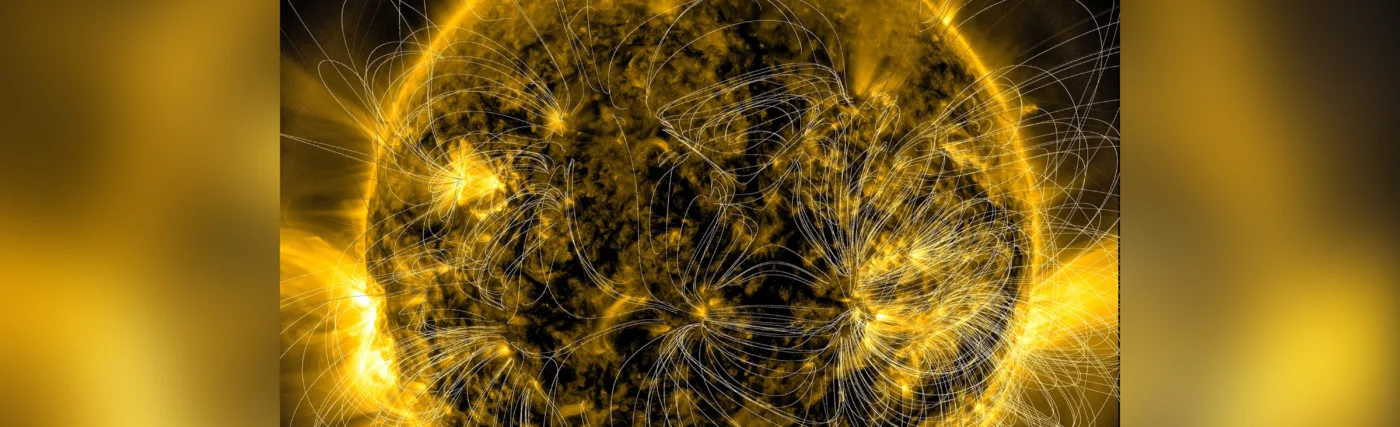
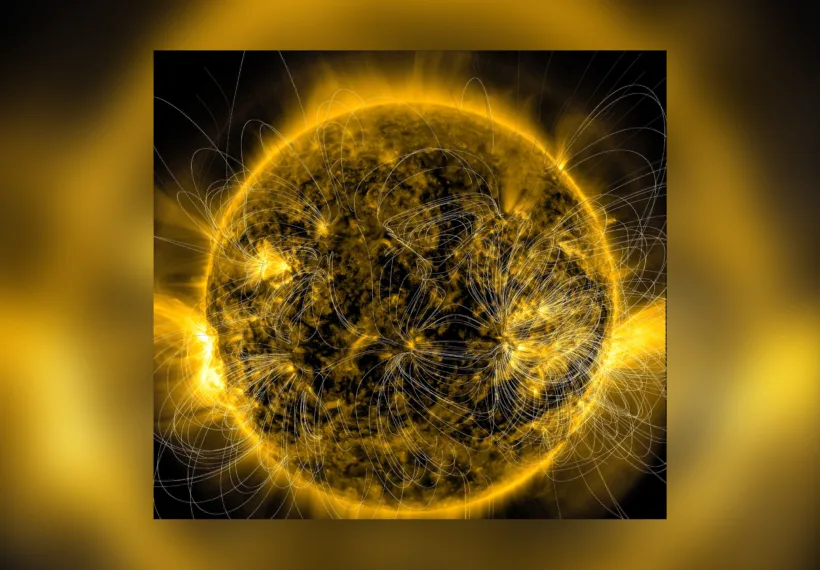
Find out why your compass isn’t pointing to the north pole and why magnetic north is always changing. Learn about the dynamo that creates our magnetic field and how it doesn’t necessarily align with geography. We explore other magnetic fields in the universe and how pulsars work. What happens when Earth’s magnetic field flips? What about the magnetic field on the sun?
Why do clocks go clockwise? Ponder with us about the way we tell our time. We think about time geometrically and the history of timekeeping with sundials. What if timekeeping had been invented in the Southern Hemisphere? Plus, we discuss precision, synchronization, and chronometers on boats.
How did we get area codes for our phone numbers? Discover how early area codes were determined and the underlying logic. How did major cities get their area codes? Neil has fun with phones, explains what it was like to use a rotary phone, and explores how the ingenuity of the past still has traces in the present.
Thanks to our Patrons Ed B, Thomas Skov, Kelly Castro, tasos, Doug Dee, and Antonio Gutiérrez Pérez for supporting us this week.
NOTE: StarTalk+ Patrons can watch or listen to this entire episode commercial-free.
Transcript
DOWNLOAD SRTWhen it comes to auto, home and life insurance, you want a company that’s on your side, like Amica.
They take the time to understand what you need and tailor a policy to meet your needs.
When you need Amica, their representatives put you first and let you know what you can expect from them.
They’ll tell you exactly what you need to do and walk you through it.
By choosing Amica, you know you’ll have someone in your corner when you need it most.
Amica, empathy is our best policy.
In New Orleans 2012, Bruce Kichera drove to an address someone had given him that didn’t exist.
As he stood in the parking lot where the address should have been, he was shot and killed.
I’m Delia D’Ambra.
Join me for the newest season of Counter Clock as I dive into the motive behind Bruce’s murder and a series of events that have never been fully investigated until now.
Binge all 14 episodes of Counter Clock Season 5 wherever you listen to podcasts.
For the rest of this day, I’m just going to be playing out the gang rats of New York.
Every rap mafia movie, you know, rap Corleone.
You come to me on the day of my daughter’s wedding.
And you ask me for this cheese.
Welcome to Star Talk.
Your place in the universe where science and pop culture collide.
Star Talk begins right now.
This is Star Talk, a Things You Thought You Knew edition, which abbreviated as T-Y-T-
T-Y-K.
T-Y-T-Y-K, Things You Thought You Knew.
There you go.
Things You Thought You Knew.
All right, Chuck, good to have you here.
There’s just stuff you might have known about, but maybe didn’t know everything you could have known.
And it’s something that I know, something that maybe you didn’t know, and I’m just putting it out there.
That’s all.
And it’s some of our most popular segments have come from Things You Thought You Knew.
Exactly, because most people don’t know anything.
That’s fine.
Chuck.
Don’t know, you don’t know nothing.
No, the thing is, you don’t know what you don’t know.
That’s the real thing.
That’s the struggle, so.
All right, here we go.
I was thinking the other day about compasses.
Oh, it came with its own little sharp stabby thing on the end of it.
It was a great way.
You poke somebody in the butt with it, it’s awesome.
Yeah, man, it’s awesome.
So you were carrying instruments of math destruction.
Yes.
No, no, that’s not that compass I’m talking about.
I’m talking about the kind that where you find your way.
All right, that’s all I’m talking about.
That’s why I did not become an astronaut.
And you flunked geometry.
That’s right, he is a hazard to the math department.
All right.
So you may know that Einstein as a child was fascinated that this compass and this little needle would always find its way north.
There was some magic force with no strings attached that moved the compass, okay, the compass needle.
And he was intrigued by this.
Yes, was that during his time at Hogwarts?
Yes, actually.
So we’ve known for a while that Earth has a magnetic field.
Okay, and there was lodestone, which is a naturally occurring variant of iron that is basically a magnet.
And the people just experimenting with it playing with it would notice that it aligns without anybody touching it, okay.
We would ultimately perfect this into a compass.
And the compass points north.
So there’s a little needle with an N on it.
And that little needle points north every time.
So a couple of facts just to consider, okay.
In magnetism, opposites attract.
And in love, okay.
Well, if opposites attract and the north pole of the needle of my compass points north, that means Earth’s south magnetic pole is north.
Hang on for a second here.
Because that one might have hurt a little bit.
It hurts the brain.
The north pole.
It hurt just a little bit.
So you’re saying the needle itself…
Is magnetized north, and it points north, which means it’s finding the south pole of Earth.
It points north.
If you take it up to any magnet, there’s a north and a south pole, bring the compass near it, that north pole of the needle is going to point to the south pole of the magnet.
It’s going to point to the south.
Yes, because opposites attract.
Right, absolutely.
Okay, I got you.
That’s going to point to the…
Because that’s what attracts it.
Okay, so therefore, Earth’s south magnetic pole is in the north.
I got you.
And that still hurts.
Okay, well, let’s keep going.
The south magnetic pole, which is in the north…
Which is in the north…
.
does not align with Earth’s geographic pole, where Santa Claus is.
It does not align.
They’re not in the same place.
All right.
When I was growing up, the north magnetic pole, which contains the south pole…
Let’s just still call it the north, because it’s easier.
That pole was in northern Canada.
So, if you were south of that pole, your cumpers would basically point north.
But if you were north of that pole, between our magnetic pole and the geographic pole, your cumpers would point due south, geographically south.
And if you were anywhere to the side, it would bend it inward.
So, good Boy Scout books would give the correction for where actual, because you don’t at the end give a shit where the magnetic pole is.
You care where Santa Claus is.
The geography is what you care about, not the magnetism.
There’s nothing for you at the north magnetic pole.
Okay?
So, they would give…
Plus, we don’t want Santa to be Canadian.
That’s a disaster, you know?
So, you want a truck, eh?
Is that what you want?
A truck, eh?
Sorry.
So, the only Canadian joke I know is when they’re learning how to spell Canada, and they said, well, how are you going to spell it?
And well, we just think C-N-D.
That spells it.
It’s C-A-N-N-D-N.
That’s how the A’s got into the spelling.
That’s how the A’s got into the spelling.
I’ve never heard that before.
That’s how they end up spelling it.
So, they would give correction.
So, if you knew what latitude you were on Earth, what longitude you were, and your latitude, you know how to correct the angle for it.
So, here’s my point.
The North Magnetic Pole is on a mission.
It is moving.
In fact, it moves a little less than a mile per week.
Wow, that’s a lot.
Yes, yes.
30 to 50 miles per year due north since my childhood.
Okay?
So, I’m an old fart.
So, over the last 60 years, there it is.
It started in middle Canada somewhere, and it started going north.
It is passing the North Pole en route to Siberia.
Holy crap.
Yes.
Your compass has never been more accurate before because it’s coming along the left side of the North Pole.
So, it’s close to the North Pole, the geographic North Pole, than it’s ever been in recorded history.
So, it’s going to go on its way over to Siberia.
This is because Earth’s core, which has iron in it that’s molten, that conducts electricity as it convects, is something called a dynamo, where if you have a magnetic material that can move, the movement of that electrically conducting material, such as iron, will induce a magnetic field that will take over the whole planet.
That will be manifest across the planet.
So, but that is, if it’s the fact that things are moving, means it’s not perfectly coupled to the rest of the planet.
So, the core can rotate at a slightly different rate than the whole planet does.
And it could sort of process back and, it can do things.
And right now, what it’s doing is, it’s twerking its North Pole, which is really the South Pole, out of Canada by the North Pole, and it’s en route to making a beeline for Siberia.
Now, did you say it’s twerking?
Was that what I heard?
That’s so strange.
I mean, I don’t blame anybody for trying to make a living, even in a magnetic field.
I’m just saying.
Yeah, it’s not…
The word should be more familiar than it is, but it’s torque.
Auto mechanics know the word torque, and physicists, but nobody else does.
Twerking is, you grab onto something and set it to rotate or not.
So, torquing is a force that, instead of putting something into straight motion, puts it into rotational motion.
That’s a torque.
It’s a cool word.
T-O-R-Q-U-E.
So, this is what’s going on with the magnetic field.
I just want to update you on that.
That’s pretty cool, actually.
Yeah, and there’s no requirement that the magnetic field exactly align with the geography.
In fact…
Well, it makes sense that it wouldn’t, because, like you said, the core is spinning inside of this kind of liquid…
Right, exactly.
It’s all fluid.
So, there’s some coupling, but it’s not tight coupling.
It’s wandering.
And so, by the way, planets that have solid cores don’t have magnetic fields.
So, the moon is solid all the way through.
No magnetic field.
We think Mars is solid all the way through.
It’s got hardly any, barely any magnetic field.
But Earth, we know, has an active core.
And, by the way, there are stars in the universe, neutron stars, that have magnetic fields that if the magnetic field is steeply angled to the rotation axis, that means when the thing rotates, it swings past your field of view, the North Pole, or whatever its pole is.
It goes, whoosh, whoosh, whoosh, like that.
And in so doing, it can accelerate particles and give off radio waves.
But these radio waves will pulse past your field of view.
These dead stars.
So we call these stars pulsars.
Pulsars.
Yes.
Get out of here.
That’s amazing.
A pulsar is a magnetic neutron star where the magnetic field axis is tipped so that as it rotates, it swings it past your field of view.
So nothing is actually pulsing.
Right.
It’s like a lighthouse effect.
What a perfect way to light house.
Now, when I was a kid, a pulsar was a watch.
That’s all we knew.
But they got their word from us, just so you know.
We got it first.
We got there first, okay?
So, and we got there first with a whole lot of vocabulary.
Like, anti-matter, that’s us first, okay?
Oh, come on, that was Star Trek.
I know you guys stole that from Star Trek.
You know you stole that from Star Trek.
And half the stuff that they didn’t steal, they made up and doesn’t exist, like dilithium crystals, right?
There’s lithium, but there’s no dilithium.
There’s no dilithium.
There’s definitely no dilithium crystals.
There’s flux, and there’s a capacitor, but there’s no flux capacitor.
Okay.
Anyhow, so, and this magnetic field, oh, by the way, there are times where our magnetic field has flipped, okay?
And the people read about this, and they worry that when they say, oh, the axis is gonna flip, they think it’s like our physical axis.
And they’re worried that that’ll be the end of the world.
But no, the magnetic axis, what’ll happen is the dynamo slows down, dies, dies, it fades, then the magnetic field disappears, and then it reappears, but flipped from what it was before.
So in that future, the actual magnetic north pole will be in the north, and compasses will then all point south when that happens.
Oh, by the way, you know something?
That happens to the sun every 11 years.
That’s cool.
Because the sun rotates once a month.
Okay, that’s pretty fast for something a million times larger than the earth.
And so, it has a magnetic field.
That magnetic field slowly dissipates, goes away, comes back, and resets itself, pointing the other direction.
And all sunspots come in pairs, and the sunspot pair is a positive and negative of a magnetic field.
So magnetism is everywhere.
It’s very cool.
That’s, that is more than cool.
I never knew that.
And when the sun’s magnetic field is getting weaker and weaker, and before it flips, all the sunspots go away.
It’s pretty wild.
So this magnetic thing, it’s not just a, I mean, it’s an active force operating on this world and others.
Excellent.
Just thought I’d tell you.
I love it.
All right.
This was a good one.
Okay.
This was a good one.
By the way, if you happen to still have one of those bar magnets, take a string with a thin thread, tie it exactly in the middle and just dangle it there and it will align it.
You don’t have to be inside of a compass vessel.
It’ll just find its way.
Magnetic north.
Right now, it’s pretty close to Santa.
Nice.
And one last thing before we call it quits.
At Grand Central Terminal in New York City.
Yes.
In the subway.
Yep.
Yep.
On the floor.
Is a compass rose.
Oh yeah, that’s right.
No, there’s no compass.
No, there’s nothing.
There’s no needle on it.
But there is the actual.
And it’s pointing the north that’s real on the geography of the world.
That’s right.
And so, and that’s in the subway.
So it’s just, it’s getting you ready.
It’s inlaid.
Inlaid into the floor.
Inlaid into the floor.
You got it.
Last I checked, it was there.
There’s been a lot of subway construction.
And plus, you never know what the rats are gonna do.
Sometimes we decide to, they’re just like, we’re gonna redecorate.
We’re sorry.
We’re tired of looking at this.
And this paint was tasty.
Let me lick it off.
No, no, you know what it is?
I got it.
I got it.
Cause the Cummiss Rose has all the directions, right?
So, the rats from the east show up.
They sit at the east point.
And then the rats from the south of town, they come in.
And that’s where all the dons are having their meeting.
The gang rats of New York.
Ha ha ha ha ha.
And the rats from Brooklyn.
All right, who called the meeting?
Who called the meeting?
Exactly.
I’m sorry, man.
I am no good now.
For the rest of this day, I’m just going to be playing out, the gang rats of New York.
Every rat mafia movie, you know, just, you know, like, a rat corleone.
You come to me on the day of my daughter’s wedding.
And you ask me for this cheese.
Stop.
All right, everything you ever wanted to know about compasses, there it is.
Yes.
All right, dude, we gotta take a break.
All right.
But when we come back, more T-Y-T-Y-K.
For.
You know FedEx as the brand that delivers millions of packages a day.
But what you may not know is that they’re also working to deliver a more sustainable future.
The initiative is called Priority Earth, and the goal is to achieve carbon neutral operations by 2040.
So how will they get there?
FedEx is working to reduce their emissions and waste by modernizing its parcel pickup and delivery fleet by adding electric vehicles and more efficient aircraft, empowering customers to make more sustainable shipping choices like recyclable packaging, investing in more efficient facilities, renewable energy and other energy management programs allows FedEx to use its resources more efficiently and responsibly.
Priority Earth is the most important delivery FedEx is making to date because it’s to an address we all share.
Earth, FedEx, where now meets next.
To learn more, visit fedex.com/sustainability.
In New Orleans 2012, Bruce Kichera drove to an address someone had given him that didn’t exist.
As he stood in the parking lot where the address should have been, he was shot and killed.
I’m Delia D’Ambra, join me for the newest season of Counter Clock as I dive into the motive behind Bruce’s murder and a series of events that have never been fully investigated until now.
Binge all 14 episodes of Counter Clock Season 5 wherever you listen to podcasts.
I’m Joel Cherico, and I make pottery.
You can see my pottery on my website, cosmicmugs.com.
Cosmic Mugs, art that lets you taste the universe every day.
And I support Star Talk on Patreon.
This is Star Talk with Neil deGrasse Tyson.
We’re back, Things You Thought You Knew edition of Star Talk.
So, do you know why clocks reckon time clockwise?
That sounds like a no.
Yeah, that’s a big no, cause see, what I was about to do was try to think of something quickly, but then immediately I went left to right, but clocks came about before left to right.
So, you know, in terms of we read left to right, but we’re not the only people that read left.
I mean, there are people who read up and down.
Some people read right to left.
So, you know, that doesn’t make…
And just to be clear, all the hands of a clock also go from right to left when they’re between the three and the nine.
That’s right.
Just to be clear.
All right, so that’s not it.
So it ain’t that.
Okay, so clockwise.
That’s just the way they did it.
And then all of a sudden we just started calling it clockwise.
Okay, Chuck.
All right, so the reason is simple and complicated at the same time.
Okay.
On the equator, the sun rises due east and sets due west every day of the year.
And it is the only place on earth where that happens.
All right?
And so the sun goes high overhead, giving literal meaning to high noon.
And then it goes over before it sets.
Dips down behind the horizon.
As you hike north, the arc the sun takes in the sky goes farther and farther south.
It’s no longer goes directly overhead.
It’s just that the arc going from east to west just sits lower and lower in the sky.
Until you hit the Arctic Circle where the sun is practically horizontal to the horizon, as it goes all the way around.
But we’re here in New York City.
We’re middle latitude.
So the sun’s path through the sky is sort of in between somewhere.
Okay.
That means it’s basically almost always south of you.
Just think about that.
If on the equator it’s to your left and above your head and to the right, as you walk north, the sun’s arc dips behind you and behind you is south.
Okay.
It’s south.
So here’s the point.
In the northern hemisphere, if you were ever facing the sun, you will never be facing north.
It is never north.
And where does the moss grow on the tree?
On the north side of the tree.
The sun never hits that side of these objects in the northern hemisphere.
In the southern hemisphere, it’s the opposite.
And they would grow moss on their southern side.
Because the sun would always then be north of where they are.
And it’s fun when I visit the southern hemisphere, I’m always just rethinking all of this.
It’s just a fun thing to reconstruct the geometry of earth in space relative to the sun.
Okay.
All right.
So, civilization as we know it began in the northern hemisphere.
All right.
What was one of the first timekeeping devices people used?
Sundial.
Sundial.
So, a sundial has all the hours of the day on a flat surface.
And there’s a thing sticking up that actually has an official word.
I would just call it a stick, but the official word is gnomon.
G-N-O-M-O-N.
Gnomon.
Gnomon.
Gnomon.
Gnomon.
Gnomon.
Gnomon.
So, the gnomon, when illuminated by the sun, cast a shadow on these numbers.
And you calibrate this, depending on what latitudes you’re in on earth’s surface.
You need a different sundial if you’re at a different latitude.
Each sundial only works for one latitude.
Okay?
All right.
So, picture this.
Okay, I got my sundial and I got my gnomon, and the sun rises in the east.
And as the sun rises up, the gnomon casts a shadow on these hours that are carved into the brass plate.
Right.
And we can ask, what direction does the gnomon shadow move?
Right, yes.
On the sundial.
Gnomon shadow moves clockwise.
All right.
All the way until the sun is in the west and it casts a shadow far over on the right-hand side of the dial.
If you’re facing south.
And then nighttime comes and gnomon knows what time it is.
I’d be facing north in my example.
That’s right.
So sundials are completely useless at night.
Like Spider-Man in the middle of a meadow.
Now you should.
Where did you come up with that?
You can outrun Spider-Man.
F you, Spidey.
So I never thought how to outrun Spider-Man.
That would work.
So if you’re gonna now make some kind of physical clock that is inspired by this amazing timekeeping device called a sundial, then it makes sense that you would track time in the same direction the sundial tracked time.
Exactly.
So our clocks are emulated sundials.
And mechanical sundials.
That is so cool.
Correct.
All right.
But that also means, so this is evidence that civilization that invented sundials did it in the Northern Hemisphere.
Because if it was the Southern Hemisphere.
All clocks would be running backwards.
Clocks would be going counterclockwise.
Correct.
And then we invented digital timekeeping where there’s just numbers.
And I remember when that came out, cause that’s how old I am.
I said, wow, we don’t have to think about what time it is by looking at hands on a clock.
Yeah.
The digits just tell you.
And what I found is people started forgetting how to think of time geometrically.
Okay.
So if it’s 12.30, you would, and it said it, you would say it’s 12.30 or 12.33, right?
Whatever.
In the old days you’d say, oh, it’s half past 12.
Quarter till.
A quarter to.
10 of.
But no, no, quarters and halves are geometry of a circular dial.
Right, yeah.
And so that’s why we think 15 minutes is a quarter of an hour.
Yes, it’s also that in digital time, but you’re not thinking that way.
The way you think of a quarter of a pizza or a quarter of a circle.
So we’ve lost the power to think about time geometrically.
I mean, some people have retained it, but by and large not.
But it also gives a false sense of precision.
When I say what time is it, you say it was 12.33.
Did I really care that it was 12.33?
12.33?
Really?
Was that what I was after?
I just wanted to know.
It’s about 12.30, right?
Well, not if you’re trying to catch a train.
No, okay, fine.
But otherwise, okay.
Otherwise, it’s, I’m just saying it’s a, often when you ask someone the time, you just want to know the approximate time.
But when it’s handed to you digitally, you end up reporting it digitally.
And that’s, and it becomes unnecessary precision in the moment.
And you know, I have an analog wrist watch.
And of course you see, even the digital watches today, you can put it in analog mode, right?
Where you can see the hand, which I like.
So I have a digital watch that you can change the face of.
I mean, and I have several different watch faces on here.
And most of them are analog.
But it’s funny that you just said what you said about the digital precision.
I don’t use them because when I look down, I want to see numbers.
You want to see numbers.
I want to see numbers.
No, it turns out today, everyone does have the exact time as each other, right?
And I tweeted a few months ago, I said, in the era of the smartphone, gone is the scene in heist movies, where people gather in a circle and say what?
All right, let’s synchronize our watches.
Synchronize our watches.
And so, anyone in modern time say, why would you do that?
Exactly.
Aren’t they already synchronized with GPS?
So that is such an antiquated, prehistoric moment in a heist movie, that it’s almost quaint.
And I say, damn, I am that old.
Yeah, well, nowadays, it’d be like, all right, let’s synchronize our watches.
And they’d be like, what’s a watch?
What are you talking, do you mean our phones?
The phone already has the time on it, man.
Phone’s got the time on it.
What you talking about?
What’s wrong with your phone, man?
Why does your phone not have time on it?
Yeah, go back into the other movie, we didn’t need you.
Exactly.
But a little known fact to the youngins out there, that accurate wristwatches would lose or gain a minute a day.
A minute a day?
Right.
The accurate ones was a minute a week, couple of minutes a month.
So you were guaranteed to not match the time of other people if you were about to commit a crime.
And that’s why you have people say, what time do you have?
Yes!
What time do you have?
Not what time is it.
Not what time is it, yes.
What time do you have?
And that way, that’s the time your own little world and your own little watch.
Yeah, be like, oh my God, it’s 4.30, I’m late.
Oh, wait a minute, I’ll just go in the kitchen.
It’s only 4.15 in there.
I had a friend in college who kept her clock 20 minutes early.
And I say, why do you do that?
Oh, so that way I’m never late.
Don’t you know that it’s 20 minutes early?
Exactly.
Yeah, but I still, I couldn’t, I’m too analytic to embrace that.
I just let it go.
I was not gonna have a conversation about that.
It’d be something different if she had someone randomly each morning set it ahead.
Yeah, you set my clock ahead, I won’t know what time, how many minutes or whatever.
It could be two minutes ahead, it could be 10 minutes, it could be 20 minutes.
Exactly.
But when you do it, it’s like hiding your own Easter eggs.
Come on.
And one last thing, in the old days, when they made chronometers that they would send out to sea, which had to be able to resist the rocking of the boat and keep accurate time, otherwise you don’t know where you are on Earth’s surface, by the way.
If you built a very careful sea-worthy chronometer and you sent it out and it lost a minute a day, you would not take it back to the shop to fix it.
You had a formula correction for it and you would not mess with it.
So after three days, it would be slow by three minutes and you’d correct for that.
And so that’s how you got a clock and took it with you.
The clock and the correction formula.
So you would always be on time and on cue.
Oh, that’s, yeah.
That’s, thank God for the phone.
Because that sounds like a nightmare.
Or jet planes, right?
So I just wonder, in a hundred years, and say all those poor suckers back in 2023, they only had GPS and they only had this and they only had that.
I think, I lose sleep over wondering how primitive it is, what’s going on with us, that when people a hundred years hence will look back and be glad they’re not alive back in these backwards times.
Or they’ll look back and realize, God, those guys were actually alive back then.
They still had some semblance of civilization.
Is that true, Mommy, Daddy?
Tell us about the before four times, Dad.
Before we became pets for AI., but before…
Yeah, man, who knows?
Children, there was a time when humans controlled artificial intelligence.
What?
You’re just making stuff up, Dad.
No, it’s true.
We invented them.
All right, that’s all the time we got for this segment, Chuck, but we got another segment on the other side of Things You Thought You Knew.
So stay with us.
Thank Jason Alexander, the star of Bedtime Stories of the Ingleside Inn, a brand new scripted comedy podcast in which I play Palm Springs Hotelier Mel Haber, who in the 1970s turned the rundown Ingleside Inn into the best kept secret getaway for Hollywood’s elite.
The series also stars Brian Jordan Alvarez, Michael McKean, Richard Kind, Lance Bass and more.
You can find Bedtime Stories of the Ingleside Inn on SiriusXM, Pandora, Stitcher or wherever you get your podcasts.
Don’t forget to follow the show, so you never miss an episode.
Chuck, we’re back for the next segment of TYTYK, Things You Thought You Knew.
Yes.
So you know, before a certain time, if you see phone numbers in old timey TV shows, they only gave seven numbers, they didn’t give an area code.
And, because area codes had to be sort of formulated and figured out by the phone company that if you were going to dial on your own, that they needed a way to direct the call to the proper location instead of calling the operator.
So operator, get me something in New York or in Los Angeles or in, right, so now you can dial it directly.
So this is a big advance in people’s ability to communicate without the help of a telephone operator.
All right, so now let’s go back to the dial phone.
The dial phone.
The dial phone.
All right, so in the dial phone, you stuck your finger in the hole and you rotated the dial all the way to this little finger stopper.
You pulled your finger out and then it clicked all its way back.
By the way, each one of those clicks was itself an acoustic instruction to the phone to dial that number.
If you, which I owned at the time, something that just simply makes clicking sounds, you can just pick up the phone and attach it to the microphone, you know, the bottom part of the phone, and then you can click your phone number into the phone system without actually dialing.
But that was like short lived because then we had touch tone in this.
Well, let’s go back to the dial phone.
So, the number one was all the way at the top and had the shortest distance to go to get to the finger stopper.
So, one, two, three, four, five, six, seven, eight, nine, and then what came after nine?
Zero.
Zero or O.
O for operator.
For operator, okay?
So, that one you bring it around, that was like 10 clicks, okay?
All the way around.
All right, so the phone company.
By the way, I worked for AT&T Bell Labs when I was in college.
I had a summer internship there at Murray Hill, which was the research headquarters in New Jersey.
I sold weed out of a phone booth once.
You We’re so much alike.
We should be friends.
So anyhow, so that sensitized me to the history of phones and the long lines and why long distance calls were so expensive, because they used the profits from that to pay for everything else, which is why making a normal phone call was not very expensive.
So in the day, you make a long distance phone call, you told the people you were calling, I’m making a, I’m calling long distance.
They would drop everything to accommodate you, because everyone knew that that was costing some real cash.
Right there.
This guy’s got some money.
No, that’s not what they were thinking.
They’re saying we gotta help out so that my bell doesn’t end up with all our money.
All right, that was the collective understanding here.
All right, so time to make area codes.
It’s time for area codes.
All right.
Well, they already had a set of digits that were reserved for certain tasks.
So 411, if you type 411, that was reserved for information.
You dial 411 and you’d get a human telephone book, basically.
What is the number of Johnny Jones, whatever, or Mary Smith at this address?
They’d look it up and sometimes they’ll dial it for you or they would just tell it to you and you’d write it down.
All right.
Wow.
Okay, this is like forever ago.
All right, so that’s one way you would use the operator.
Okay, so now another way is 611.
So 611 would be if there’s something wrong with your phone and you needed repairs.
Okay, so they say, we’ll be by tomorrow to look at the phone line, whatever.
All right, so they had a few of these that all had a one in the middle.
Okay, however, those were established after area codes were established.
Okay, now they knew we’re not gonna have a phone number beginning with a one, nor a phone number beginning with a zero.
Those are off limits, okay?
So start there.
Now, what city has the highest population in the United States?
New York City.
New York City, okay.
Absolutely.
So the highest population city, New York, they wanted that to be where the area code can be dialed the quickest because the most number of people would be dialing it.
That’s right.
And you don’t want to burden so many people with waiting around for the dial to finish dialing.
That’s right, because you’re going with the finger thing.
With the finger thing.
So you can’t have two, one, one.
So you gotta have two, one, two.
Two, one, two is the shortest time dialed area code on a dial.
Yo, that’s cool.
Okay, so now what city has the next highest population?
Probably Los Angeles.
Los Angeles.
What is the area code of Los Angeles?
What is Los Angeles?
Two, one, three.
Three.
Two, one, three.
That’s the next lower.
That’s why you have this.
What’s the next most popular city?
Probably Chicago.
Chicago.
What’s the area code of Chicago?
I don’t know it, but I’m sure it’s two, one, four.
No, no, no.
I can go lower than that.
What?
Three, one, two.
Oh, three, one, two.
That’s right.
Because you’re staying in the thing.
You’re staying in the thing.
You’re staying in that little, that three-finger hole zone.
But those three main cities, you get the point of this.
They wanted to minimize the time you would spend dialing, in a long-distance call, people who are in these most populated cities.
They were looking out for you.
These are smart people, physicists, engineers, developing the future of communication.
And they got so smart, they were like, why the hell don’t we just have push buttons?
No!
Right.
We should just have push buttons!
Somebody was like, George is right!
Right, so push buttons don’t make any difference anymore.
Makes no difference.
And then the population went up.
Not only did the population go up, but everybody now has three or four phone numbers associated with themselves.
You have your home phone number, you have your cell phone number, you have your work phone number, if you work and you have a desk.
That’s at least three.
Don’t forget your Google phone.
You got to have that phone number.
Yeah, yeah, so once the phone number has proliferated, then the municipalities needed more than one area code.
And then with push button, all bets are off.
It just didn’t matter anymore.
Now you have area codes that sound like the beginning of a phone number.
Because they started all area codes with a one in the middle, then they put a zero in the middle when you had touch tone, and that sort of smelled like an area code, 73707204, 204, right?
Now you got everything.
973-917, you got 646 is the area code.
Yeah, yeah, so four or five zero.
Yeah, they don’t make a difference.
So that’s all I wanted to tell you, Chuck.
Oh, well, that was fun.
That’s all.
New York, Los Angeles, Chicago.
Nice, there you go.
They just don’t want you to wear out your finger.
That’s it.
That makes sense, you know?
Oh, oh, so I got one for you.
So what is the area code of Cape Canaveral?
Cape Canaveral?
I need Jeopardy music here.
Do, do, do, do.
Yeah, I mean, I would have no idea.
Okay, are you ready?
Go ahead.
The area code of Cape Canaveral is three, two, one.
I’ve done, of course, they launched rockets at Cape Canaveral, it is three, two, one.
And they worked hard to get that.
That’s not the chance thing.
They worked on that.
They lobbied for that.
They got that.
And who’s gonna say no?
Who’s gonna deny that?
Exactly.
Of course not.
Of course not.
And so there was an episode of Seinfeld when area codes were proliferating where they created a social class around who had a two, one, two area code.
Remember Seinfeld took place in New York.
That’s a good deal.
And someone said, oh, they’re like ready to date.
And they said, well, what’s your phone number?
And he says, oh, it’s 646.
What?
Where do you live?
I don’t trust you.
So it created this social rift between those who were like in and those who weren’t.
And to this day, they’re New Yorkers with cell phone numbers, some of which are 212.
Yep.
And so those are badass, long old timers that-
Nobody wants to give up their 212.
But that’s right.
They might’ve had cell phones back when they were shoulder mounted.
Exactly.
And what I liked about the New York, so they isolated the 212 area code to just Manhattan.
Right.
And then they introduced 718 for all of the outer boroughs.
So Queens, Brooklyn, and the Bronx and Staten Island.
And then initially, cell phones were all 917s, and then they added 646s.
So New York City has at least four, there’s a fifth one, 347, I think it is.
347.
Yeah, so we have five area codes in there.
Five area codes.
It’s the New York City area, and that’s just because people do a lot of damn talking.
Mm-hmm, there you go.
What that is.
So I’d say-
Now you’re in the know for the area code.
Yeah, and it’s just a slice of history when dial phones was a thing, right?
And you realize solutions to some problems are rendered obsolete by later advances in technology, but at the time, they were quite clever.
And I’d like to just give a shout out to people who were trying to make life better for us all.
That’s very cool.
That’s very cool.
Frozen in time and in space.
Well, my cell service, I might as well have a rotary phone, so.
This meant a lot to me.
So Chuck, I enjoy these.
We should do more of them, I think.
Yes, the PYTs.
The PYTs.
That’s a Michael Jackson song.
That’s Michael Jackson, I’m sorry.
Just look it up, PYT.
It’s totally Michael Jackson.
All right, guys, this has been Star Talk.
Things You Thought You Knew edition.
Neil deGrasse Tyson here.
You’re a personal astrophysicist.
Keep Looking Up.


 Become a Patron