


 Unlock with Patreon
About This Episode
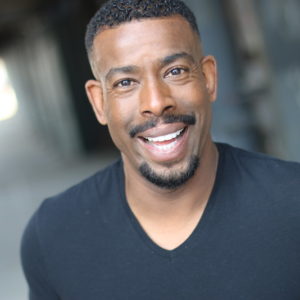
What happens if Earth’s core is slowing? Neil deGrasse Tyson and comedian Chuck Nice explore the spinning of Earth’s core, the physics of tire pressure, and the science of toast.
Discover protoplanets and the early formation of our Earth. What does the center of the Earth look like? How do we know what it looks like? Learn about seismometers and how Earth creates its magnetic field. Find out how planets are formed and what the composition of the Earth’s interior is. What is a dynamo? Plus, what happens when Earth’s magnetic field flips? Is it dangerous?
How much does air weigh? Is there still air in an empty tire? Find out how tire pressure works and how much air you need to put into a tire to hold up Neil. Why do bikes have thin tires and tractors have big ones? Discover how there’s math in everything…
Ever thought long and hard about your toaster? No? Now is your chance. What takes toast so long to brown? Why does it burn so easily? Learn about how to boil water in a paper cup, air frying, and how to make the perfect piece of toast. Discover the thermodynamics of toasting and more with your personal astrophysicist.
Thanks to our Patrons Gaija, Kyann McMillie, Brett Moorman, Craig Landon, and Ms. Gordon for supporting us this week.
NOTE: StarTalk+ Patrons can watch or listen to this entire episode commercial-free.
Transcript
DOWNLOAD SRTThis is StarTalk, the Things You Thought You Knew edition.
We have three segments ready to roll.
One of them is on Earth’s core.
We’re going to follow that with tire pressure.
And we’re going to round this out with something we’ve all done before, but I don’t know how much thinking you’ve ever put into it.
And it’s the art of making toast.
No, it’s the physics of making toast on StarTalk.
Welcome to StarTalk, your place in the universe where science and pop culture collide.
StarTalk begins right now.
Chuck.
Hey, man.
People have been talking about Earth’s core lately.
It’s been in the news.
It’s been in the news.
Clearly, it’s slowing down or something, and now we all have to wait for scientists to get into a machine that will burrow to the center of the Earth.
The way the machine gets stronger as the temperature goes up.
And they might as well have found…
They might as well have found…
What’s the Wakanda metal?
Because it’s the same.
Vibranium?
Vibranium.
Yeah, it gets stronger.
And mine will just be vibranium.
Okay, so Chuck, do you never leave your couch and watch movies?
Believe it or not, I don’t even watch a lot of movies.
Yeah, but you got some good fluency there.
I remember them all, though.
That’s why I don’t watch a lot.
I can never get them out of my head.
What’s fun is, yes, the latest news is that the core is slowing down.
Right.
And so that means we’re going to have to go there and speed it back.
Exactly.
So let me just back up.
I don’t claim to be a geologist.
And maybe we should do a whole show on this, I think, and bring in one of my geology colleagues, geophysicist colleagues.
But I know Earth is a planet, so let me speak of Earth the way an astrophysicist would speak of Earth.
Okay.
All right?
So when planets form, they are not solid initially.
Right.
All right?
They’re first gaseous, and then with enough pressure, they might become liquid.
But in any case, once a gravitational field is set up, then heavy things fall to the middle.
Right.
Because it’s not solid yet.
Right.
Heavy things fall to the middle.
And of all the available ingredients that are just hanging around in the formation of a star system, you get things like hydrogen and oxygen and silicon and nitrogen and carbon.
And you keep going.
And as you get to the heavier elements in the periodic table, iron is very common in the universe, and nickel.
These ingredients are heavier than silicon and oxygen and carbon.
So they fall to the middle.
And what floats on the top are light things like rocks.
Okay, there you go.
We don’t think of SiO2, silicon dioxide, that’s a major active ingredient in rocks.
We don’t think of them as light.
We think of rocks as heavy.
But they’re the lightest thing going on Earth when Earth is forming.
And they all float to the top.
So our crust is made of light, solid ingredients, and everything below it is made of heavier ingredients.
Like a delicious metal pie.
Metal pie, exactly.
So nature pre-sifts the ingredients.
And what’s interesting is protoplanets that did this, and then solidified, protoplanets might get slammed later on, and their bits and pieces break into asteroids.
So some asteroids are made of crustal material, others are made of core material.
So asteroids made of core material are pre-sifted heavy elements.
Such as, like I said, iron and nickel, gold, silver.
All these heavy elements are pre-sorted for you if you select a metallic asteroid versus a rocky asteroid.
Now there’s more of the rocky stuff than of the metallic stuff.
So most asteroids are rocky, some asteroids are metallic, and that’s what we have out there.
So now we have Earth, which was, thankfully, not broken apart.
It has retained its integrity.
By the way, there are transition zones where the metals are trying to descend and the rocky stuff is trying to ascend, and by then, the Earth froze, solidified, froze for its, whatever the ingredients are, solidified, and it’s stuck in place.
And this is how you get, like, these ore, what do you call these?
Deposits?
These loads, these deposits, okay?
They can be trapped in places, frozen out from whatever was going on previously, all right?
But the bulk of those materials have separated.
Just to make that clear.
Okay, so now, Earth has retained heat from its past, okay?
And so from the formation heat, it is still trying to cool down.
All right?
Mars is smaller than we are, and so it has more surface compared to its volume.
You do the math on that, it turns out to be correct.
And the more surface you have, the more you can radiate away your heat.
That’s why small animals, mammals, have to eat way more food than larger mammals relative to their body weight, because they’re radiating away their heat much faster.
Right.
Because if you look at their surface area compared to their volume, this is why babies need extra protection for their body temperature to protect it.
So it’s all, we did a whole surface area thing.
I remember.
All right.
It relates to that.
Okay.
So we have less surface area for our volume.
It’ll take us longer to cool.
The consequences of this leftover heat is that we, on the crust, which is cooled solid, because it’s touching the outer air, we’re floating on this sort of plastic liquid mantle.
Oh, the lake of fire.
Okay, and so we are floating, and that’s how you get continental drift.
And occasionally that mantle can punch through, and you get a volcano.
So you get earthquakes and volcanoes from a lot of this leftover heat.
But let’s keep going down.
Down.
And now the mixture in the earth is changing, and it is so hot, the iron has liquefied.
So the outer core of earth is liquid iron.
Damn.
That’s how hot it is.
That’s got to be hot.
It’s hot as the sun’s surface.
Whoa.
About 10,000 degrees.
You’ll melt iron.
Take that, Dante.
Ha ha ha.
Hell hath no fury like earth’s core.
That’s right.
Dante, you’re referring to inferno, which he describes the descent into hell.
Which, if you read that and believe it, you would never commit a sin for the rest of your life.
It’s some pretty devastating descriptions.
All right, so where are we?
So now we have this liquid outer layer.
Well, why isn’t it liquid all the way through?
Because as you keep going further down, the pressure is so high that it’s compactified into a solid.
Look at that.
Yes.
So it’s just as hot, but the pressure is so great, it will not allow it to melt.
Yes.
Oh, my God.
Yes.
So you have a solid iron core center that’s surrounded by a liquid core outer.
This means the solid core is kind of independent of the rest of the planet.
Yes.
Because it’s only a liquid.
It’s like lubrication even.
If you want to think about it that way.
It’s like a lava lamp.
Yes, Chuck.
It’s exactly like a lava lamp.
No, I forgot.
What?
They have these blobs.
They rise and fall through it.
Right, right, right.
Exactly.
But go ahead.
Okay, so by the way, how do we know all this?
You can say, have you been there?
Let me hear it.
So how do you know all this?
Like, you’ve been to the center of the Earth?
Kind of with our pressure waves.
Yes.
For every earthquake, once you find the epicenter, which is not too hard, you can triangulate on it, as long as you have earthquake sensors scattered around the world, you can time how long it takes that signal to reach you.
In so doing, you can infer the interior structure of the Earth, because different materials will transmit those waves at different rates than other materials.
So the interior becomes the medium, and then you’re measuring the wave as it moves through the medium, and that allows you to get the information.
You can learn if there are edges between sharp boundaries between one medium and another.
Occasionally you can have a wave that reflects off of a surface.
It’s a very complex map that you make from all of these signals when they’re done.
And it’s not just earthquakes.
You know what else gives you these data?
Underground nuclear tests.
Oh, wow.
And those are especially valuable geophysically because you know exactly where the test occurred.
So there’s less uncertainty in where the epicenter is.
You hear that, North Korea?
We’re on to you.
So you add up all these data, and you can reconstruct what the center of the Earth, what the entire structure of the Earth would be like without ever having gone there.
That’s amazing.
Yeah, and these are pressure, basically sound waves as they go through.
That’s crazy.
Yeah, so it’s pretty cool.
And by the way, it doesn’t reflect too often forever because it slowly damps out, and then you have no signal at all.
But these things are huge deposits of energy when they occur, and the earthquakes and the like.
And so it’s enough energy to make it through Earth and back.
But again, you need sensors, otherwise it’s a waste, right?
Yeah, exactly.
Okay, seismometers basically is what you need.
Okay, so another thing we know from physics that moving electrical charges create magnetic fields.
Right.
Okay, Faraday first.
Notice this, okay?
And vice versa, okay?
So you can move a charge.
There’s a magnetic field that’s created around it.
You can take a charge, move it in a magnetic field, and the magnetic field will induce a current in the wire.
So Faraday did this.
So he had a magnetic field, took a wire, moved the wire through the magnetic field, and an amp meter moved.
A needle moved because current was introduced into the wire.
That’s how electricity is made today.
Exactly.
It’s what a turbine is, all right?
You’re moving wires through a magnetic field creating a current.
Wow.
And with power plants, everything about a power plant is so that you can sit there and move wires through a magnetic field.
That’s so amazing.
It’s such a simple, simple concept.
And that’s just been scaled up to this huge form.
It’s amazing.
The civilization, when Faraday first demonstrated this, and there’s just a little meter, he’s like, that’s cute, Michael.
Okay, what’s Michael been doing today?
There’s a little meter, that’s a nice toy.
And there’s a famous quote, maybe apocryphal, when he asked for more funding, and he says, of what value is this to the British crown and the British empire?
And he said, I don’t know, sir, but one day you will tax it.
Wow.
That’s how you make electricity.
All right, let’s get back to the earth.
That is also how you talk to any government anywhere.
Yes, yes, if you’re a scientist and an inventor.
So you have this liquid layer.
If you have a liquid layer, then the iron can move within that liquid, and iron is an electrical conductor, as we’ve known since childhood, with the iron filings on the magnets.
On the sheet of paper.
So when you have these electrons provided by the iron moving, it creates a magnetic field, and that is the origin of Earth’s magnetic field.
There you go.
That’s the origin.
That’s super cool.
Okay, and it’s something called a dynamo phenomenon, where you have this circulation, and this continues.
And by the way, as is true for the sun and in many astrophysical objects, the dynamo runs a course of life, where it gets stronger, then it gets weaker, and then it gets stronger again, but with the opposite polarity.
Oh, I’m like a phoenix, baby.
Oh, so we have evidence from iron that has been spewed forth from volcanoes that then solidified in place, capturing the magnetic field at the time that the field was laid, and we see evidence every several hundred thousand years of the magnetic field of earth flipping back and forth.
Oh, look at that.
So that’s on a cycle, okay?
The sun’s magnetic field flips on an 11-year cycle.
Look at that.
Okay, the sun has an 11-year cycle, and every 11 years it gets stronger, more luminosity, less luminosity, but every 11 years it will do the same thing, but with the poles reversed.
Okay.
Okay, so now, let’s get back to this.
The core basically rotates with the surface of the earth, but occasionally will rotate a little faster.
All righty.
Slow down, slap, and then a little slower.
Okay.
All right, so we’re all comparing it relative to we on the surface.
And the recent measurement showed that the solid core of the earth was trailing behind earth’s surface.
Earth, wait up!
So presumably this has always been happening.
It’s not like there’s something new, but there’s a periodicity of this that they’re estimating to be about 70 years, where it’ll slow down, catch up again, overtake us, and then return.
So these measurements are affirmations that the core has its own sort of rhythms inside the liquid iron within the rest of the earth that’s rotating around it.
All I know is this whole thing was worth it just to hear the word periodicity.
Oh, oh.
I mean, I don’t know where you pulled that one from.
We use that word all the time.
The rhythms of the universe, to find them, we track their periodicity.
Let me tell you something.
If you gave that to like, you know, the people like Always and Stay Free, they would love you, because that’s a beautiful word.
What?
I’ll tell you right now.
You’re talking about feminine products?
Yes, I’m saying, like, you know, there’s so much, there’s so much, like, stigma unnecessarily attached to those.
Right, right.
But instead, it’s just like, hi, yes, I’m going to need some periodicity products.
And I’m totally cool with that.
Okay, all right, thank you.
Mom, send me to the store to get your periodicity stuff.
So anyway, we’re still trying to figure out what it means that we have this 70-year cycle in the center of the Earth.
But right now, Earth’s magnetic field is weakening.
But it’s not going to go away in anybody’s lifetime, so nothing would worry about it.
And by the way, there’s no evidence of extinction when the magnetic field went to zero and then went back up when it flips.
Because people say, well, the magnetic field is protecting us from the dangerous rays of the sun.
And maybe, but whatever damage it caused, it’s not even a blip in the fossil record.
And the fish don’t care.
The fish are underwater.
The particles don’t hit them ever, right?
So fish don’t give a…
They don’t care.
Everybody’s fine, except Harold.
He was in the wrong place at the wrong time.
Harold, we’re sorry.
That is totally a fish name.
The clueless fish named Harold.
Harold.
Who got fried when the poles flipped.
That’s what you get for trying to use those legs.
That you should have stayed in the ocean.
Any time we evolve yet.
All right, we got to end it there, Chuck.
So that’s my little bit, but I’d like to hear this all from the mind and the brain of a geologist.
So we’ll try to do a whole show on that.
Yeah, it’s all fascinating.
I love it.
You got it.
We got to take a quick break, but when we come back, more Things You Thought You Knew, we’re going to be talking about tire pressure.
Hey, I’m Roy Hill Percival, and I support StarTalk on Patreon.
Bringing the universe down to Earth, this is StarTalk with Neil deGrasse Tyson.
Welcome back to StarTalk, Things You Thought You Knew, segment two.
Chuck, we’re going to talk about tire pressure.
Are you ready for tire pressure?
I’m really not.
But this is good.
Listen, I feel like this.
At this point, we done paddled out.
It’s time to ride the wave.
That’s the way I feel.
We’re out there.
Just let’s do it.
Bring it on.
We’re out here.
You say tire pressure.
I’m like, you got to be zen enough to go ahead and jump up.
It’s time to get up and surf this wave.
So tire pressure.
First of all, if you have a tire with, quote, no air in it, of course there’s air in it because the atmospheric air is in it.
Okay?
And atmosphere has its own pressure.
And this is the weight of a column of air from Earth’s surface all the way up to the edge of the atmosphere.
If you had found a way to weigh this, I think we might have talked about this in another explainer, but if you have like one square inch or one square anything, but one square inch, and weigh that column of air, it will weigh 14.7 pounds.
And the way air works, fluids work, is that pressure, I would say yes, it’s sitting on the scale, but that pressure manifests in every direction because the molecules are vibrating in every direction.
So, right now I have 14.7 pounds per square inch on one side of my hand and on the other, above, bottom, and so everything is all equaled out.
So I don’t even notice it.
That’s why you’re not getting crushed by your 14-pound air.
Correct.
It just doesn’t make a difference.
Because it’s pushing down on you and pushing up.
It’s even still.
Whereas if I have a suction cup and I press out the air that would otherwise be balancing it, I press it out.
Yeah.
So now I say, lift up the suction cup.
You say, I can’t.
It’s sucking me down.
No, it’s not.
Why can’t you pick up the suction cup?
14.7 pounds.
Per square inch pressing down on…
Per square inch is pushing it down.
It’s really not sucking anything.
Yes, suction cups don’t suck.
They don’t suck.
They got a bad rap for so long.
They don’t suck.
They don’t suck.
So if you had 10 square inches of area on the suction cup, I can ask you how much force would it take to pull the suction cup off the surface?
So I got to go 10 square inches times 14.7 pounds per…
And then push back in that opposite direction.
Okay, that gets you 147 pounds.
So if you can pull 147 pounds or more, it pops right up.
Or you can cheat and pop open a little curl in the edge.
And then let nature…
And then it just comes off.
Let nature help you out.
Okay, so the point is, if you fill a tire to what we call 10 pounds per square inch, that’s 10 pounds on top of the air pressure that’s already in there.
That’s all I’m saying.
All right, so first of all, just lay that out.
All right, so now, have you noticed, or perhaps not, that on bicycle tires, the thinner, the skinnier the tube, the what?
The less air you should keep putting in it once it gets hard, because it will pop.
I’m telling you.
From experience.
Okay, if you look at the ratings of thin tires, in essentially every case, depending what they’re made of, but in every case, they have a higher pounds per square inch rating than the bigger tires.
Higher.
Period.
I didn’t know that, to be honest.
So now watch.
This is the first I’m ever hearing of this.
Okay, because you never got to pay attention.
Okay?
Well, no.
I’m going to tell you why.
Because I come from the times when you would fill your tire and then you just push down on it.
And if you can actually push it and flatten it, you’re like, now put some more air in it.
Oh, that was how you measured.
Yeah, you want to use a gauge, OK?
Right, exactly.
All right.
So, and the gauge is calibrated to not count air pressure.
All right.
So that’s how they work.
All right.
So now watch.
Here you go.
So, the pounds per square inch equals the pounds per square inch of your tires in contact with the road, OK?
You sitting on your bicycle, and the bicycle has tires, and the tires are in contact with the road.
Obviously, the heavier you are, the flatter the tire is going to look, OK?
You know this.
Why does the tire flatten if you’re heavier?
Why does it do that?
I’m going to tell you why.
Because at all times, the pressure inside the tire per square inch times the square inches of tire in contact with the road has to equal your weight plus the weight of the bicycle.
At all times.
At all times.
So.
So.
Okay.
All right.
So, if I have a big tire, like a kid’s tire, okay?
If I have one of those kind of tires, and it’s huge, it might take 30 pounds per square inch.
That’s not uncommon, okay?
20 to 30 pounds per square inch.
And there’s a square inch of it in contact in the back, and a square inch in contact with the front.
Add those up, it is holding up 60 pounds.
That could be the weight of the bicycle plus the weight of the kid.
You put a heavy kid on there, the bicycle has to hold up more weight against the air pressure in the tires.
So the tires flatten a little more, adding more surface area, okay?
Adding more area so that now you go the air pressure times the square inches in touch with the ground, and that will equal the weight of the heavier kid.
Okay, so I, I’m heavy, all right?
I’m 260 pounds right now, okay?
All right.
So now, I ride a bicycle with very narrow tires.
The air pressure in those tires is 130 pounds per square inch.
130 pounds, okay, per tire.
So watch what happens.
I deflate it to that amount, and those tires will flatten to slightly more than a square inch per tire.
Because it’s my weight plus the weight of the 22-pound bicycle, it’s got to hold up 280 pounds.
So it’s going to flatten slightly more than a square inch on each, and that is my tire, okay?
So farm tractors have huge tires.
Huge tires.
In that way, they put relatively low air pressure in them.
That way, when the tires roll over the crops, it does minimal damage.
Right, because you’re not digging in.
You’re not digging in.
It spreads out the pressure.
Okay?
Brilliant.
You can still hold up the tractor, if you get enough area coming down.
Otherwise, you’d be leaving deep tracks in the road, and you can’t have that, not in your farm.
It’s like dune buggies.
They all have big, giant, wide balloon tires.
So, well, that one is to increase traction on sand, okay?
Yeah, but they don’t dig into the sand.
They don’t dig into the sand.
Correct.
And so tire pressure is all about how much weight are you holding up.
And they will tell you in your car, if you’re going to carry a heavy load, increase the air pressure in your tires, so that your tires don’t flatten out.
Okay?
If you increase the pressure from, let’s say, 35 pounds to 45 pounds per square inch, that gets you extra support in all of your tires.
In a typical car, how wide is a tire?
It might be a foot, nine inches.
18 inches is a typical tire.
No, no.
A cross?
Yeah.
What are you, riding the Indy 500?
18 inches?
All right.
I’ll give it to you.
I don’t know.
We’re both city people.
So, you know.
Well, yeah.
I mean, I drive an SUV, though.
Oh, okay.
They’re sitting on 18s.
It’s an SUV.
You said car.
Excuse me.
I’m really not a big car.
Fine.
So, a car might be that.
And it’s not electric, and I’m very ashamed, but I’m buying an electric car.
I know you already have one.
So, eventually.
But I’m late for the game.
So, here’s what you do.
You can do this experiment at home.
Go look at how much of your tire is touching the ground.
Measure that.
Front to back, and then across the width.
So, you’ll get two measurements.
It might be like five inches of front to back, flattening on the ground.
And then measure the width of the tire.
Multiply those numbers by each other.
That’s the square inches per tire.
Multiply that by four, and that’s going to give you the weight of your car.
Get out of here.
That’s pretty wild.
I mean, that makes sense just from what you just said.
There’s only one problem.
I do not give a damn how much my car weighs.
Chuck, do it for science.
I will do it for science.
You should get somewhere between…
You’re an SUV.
Somewhere between 1,500 pounds and a ton.
2,000, something like that.
But all just by measuring the square inches.
Sorry, you have to know what your tire pressure is first.
And then get your square inches in the sidewall.
Or maybe if you’re a modern car, it tells you on the dashboard.
And so you got four tires and get the area.
So it’s front to back and contact and then the width.
Multiply those two numbers, then multiply by four.
And multiply by your air pressure.
That’s the weight of your car.
And that’s the weight of your car.
And so it’s a way to weigh your car without going to a scale.
Because your tires are doing it all by themselves.
And now all I need to do is figure out the calculation to put Aunt Gayle and Uncle Daryl in the back seat.
That’s a different calculation.
So it will either flatten the tires some more.
So then the car is giving itself a way to hold them up.
Or you increase the air pressure so that at the same area in contact with the ground, it holds them up.
Okay?
And generally they tell you to increase the air pressure because it’s better for gas mileage and things.
Yeah.
You got it, dude.
I love it.
That’s cool.
There’s math in everything in the world.
It really is.
I got to tell you, I was worried when you said tire pressure.
I really was.
I was worried, man.
We got to take a quick break.
But when we come back, Chuck and I are going to talk about the physics of toast on StarTalk.
We’re back, StarTalk, Things You Thought You Knew Edition, segment three.
Chuck, we’re going to talk about the physics of making toast.
All right.
You know, sometimes when you bring these up, man, I feel like you just, like you’re punking me, you know what I mean?
I’m like, let me just see what I can get Chuck to go along with, you know?
It’s like Neil deGrasse Tyson, right?
World renowned scientist and science communicator.
Chuck, I’d love to talk to you about something scientifically relevant.
Oh, Neil, please do tell.
Let’s talk toast.
What?
So here’s the deal.
All right.
And I don’t know if you ever paid attention to what’s going on inside a toaster.
All right.
Listen.
But it’s fascinating.
I have smoked a lot of weed.
I have been high out of my mind.
I have never looked at the toaster and went, I wonder what’s going on in there.
All right.
Here’s the thing.
Here’s the thing.
A toast, if you’re going to toast fresh bread.
It will spend most of its time in the toaster, most of the time not browning.
And is this fresh white bread?
Because that would make sense.
Yes.
It’s easier to see the browning on white bread.
So this is a white bread example.
But can you blame it?
Because let’s be honest.
In bread society, you know, white bread hasn’t the best.
They got the best.
But the seven grain blended model is coming along.
Okay.
So here’s the thing.
And let me tell you something.
Pumpard nickel, there goes your property values in the bread box.
I forgot all about pumpernickel.
That’s some dark ass bread right there.
Tell me right now.
Okay, go ahead, never mind.
I’m about to get us in trouble.
So if you observe the bread, Yes.
Most of the time, 90% of the time, I didn’t know exactly, but it’s very high percent of the time it’s in the toaster, it doesn’t change color at all.
Oh my God.
Because it can’t change color as long as it’s moist.
Because the highest temperature you can heat the bread is 212 degrees, and that’s not hot enough to toast the bread.
I mean, that really does make sense.
It’s like trying to start a fire with green kindling.
You can’t.
You can’t.
You can’t do it.
In fact, if you put a green log on an already established fire, the log is not going to ignite.
You know what’s going to happen?
It’s going to hiss out all the moisture for the next hour.
All right?
Because the log can’t get hotter than the highest temperature that water can get.
And the water that’s in the log tops out at 212 degrees.
So you’re going to have a 212 degree log until there’s no water left.
That’s cool.
And then it’ll ignite.
That’s right.
So your toast in the toaster, if you keep looking at it, it is going to be your white toast.
It’s going to be white and white and white.
And what the heat is doing, it’s like, get out of there, you water molecules.
Get out, get out.
And it’s only doing it to the top edge, not to the middle, because the heat is only hitting the top, the outer edges, right?
So the heat is like the Black Toast Matters movement.
Yeah.
Chuck, you need race counseling, okay?
All right.
So once all of the moisture on that outer edge of the bread has evaporated, it can now toast the bread by breaking apart the bread molecules, the proteins and the carbohydrates, revealing the carbon.
The carbon is black, okay?
If you leave the bread in too long, it’s completely black.
All right, but you have all this golden tip.
That all happens in like the last minute that your toast is in there, because it took all the rest of that time to heat up the water and evaporate it.
That is pretty doggone cool, to be honest.
And I got a little excited when you said that, because I’ve never considered it.
However, I don’t have a toaster.
I have a toaster oven.
I don’t use-
Okay, so in the oven, any oven, if you’re going to use a broiler, the same thing.
Same thing.
You layer the bread and you’re checking it, and you keep checking it.
You say, it’s not making progress.
Let me go away for five minutes.
No, because the moment the moisture is gone, that sucker browns in instance.
So it’s not a linear phenomenon.
No, it’s kind of like if it were a graph, it would bump along the bottom, and then all of a sudden it shoots straight up almost.
Yeah, all straight up.
Almost straight up.
So, and I know this because just the other day when you, it’s so weird now, I can’t believe that I’m recalling this.
I said, what’s taking this toast so damn low?
And then I turned, I went into the refrigerator, I pulled out some butter and fig spread, and I went back and the toast was brown.
There it is.
So that is so wild.
You lived this experience.
I lived this experience.
It’s also why you can boil water in a paper cup.
Okay, and I’ve done this experiment many times.
So wait, yeah, I mean, yeah, you just drop the paper cup inside the pot of boiling water, okay, and you…
No, no, no, that’s not what it…
No, so you can take a paper cup.
And you have to be careful about this because some paper cups have rims on the bottom that are not actively touching the water on the inside.
That will burn, okay?
But if you have a wide enough bottom and you have like a Bunsen burner, remember these?
I remember.
You put the flame on the paper cup in the bottom.
If the paper cup has water in it, what is the hottest temperature the paper can get?
The temperature of the water.
Okay, and so it’ll sit there and boil the water.
And it’ll keep boiling the water until all the water evaporates.
Then your paper cup burns.
This is why it’s so hard to burn someone at the stake.
You think, oh, let me just ignite you.
This is very medieval here.
Let’s put you on the stake and just ignite you.
You can’t just ignite, okay?
You’ll have this liquid in you.
Right, the real reason why this is very difficult to do is because we have laws against that now.
That’s why.
That’s the real reason.
That’s the actual reason.
It’s difficult.
Thank you.
Let me get out of my medieval.
So what they would do, especially the Catholic church, to make sure you would burn, that sometimes they would burn you upside down and that way will control the blood or the blood would drain and as the blood drains, then you have no liquid left in you and you burn faster.
Or you can burn in other directions where you retain the blood because if you don’t want the blood come out, there’s some other religious ritual where the whole person has to be burned including their blood, but then the blood has to still evaporate before any…
You’ll die before that happens, of course.
But in terms of igniting the body, you know what I’m saying?
It just doesn’t simply happen that way.
And this is sped up if you have fast moving air, hot air across the food.
Yes.
This is like a wind heat factor.
We have an explainer on wind chill factor and wind heat factor.
Yes.
Okay.
Because if it’s cold and the wind is blowing, you feel colder.
Colder, right.
If it’s hot and the air that’s blowing is hotter than your skin temperature, you’ll feel hotter.
Right.
Okay.
So, if you put food in, let’s say, an air fryer.
Yes.
What does that mean?
Okay.
So they are gonna brown your food fast because they’re moving hot air across and they’re evaporating any possible moisture on that surface.
And the faster the wind goes, the faster you’ll evaporate it and the faster you can get to the browning.
Can’t live without an air fryer.
I’m sorry.
It’s amazing.
They’re wonderful.
Yeah, they’re really air toasters.
Yes.
Because, you know, unless the surface is sprinkled with oil and then the oil will fry the, you know, you can heat the oil.
So you’re still oil frying, but you’re using air to heat the oil to fry the food.
Right.
But if it didn’t have any oil, it’s just a fast toaster.
Yeah, exactly.
Do you mean I spent $400 on a toaster?
Yes, you did.
Yes, you did.
You did indeed.
So that’s everything you wanted to know about toast and why it’s not a linear process.
Well, that was fun.
I’m-
What did you do?
You can do this experiment.
Okay.
Take a slice of bread, leave it out until it just gets hard.
A little crusty, right?
Just leave it out.
Just leave it out.
We’ll get crusty.
It’ll just get hard.
Yeah.
It’s no longer squishy.
And then you have another one that’s squishy that you just took out of the bag.
They’re both at the same temperature.
Right.
Now put them both in your toaster oven.
We’re both in the toaster.
And the one that had the lost moisture will toast 10 times faster.
Oh yeah.
Oh, there you go.
So yeah, and it’s already on its way to being toast.
That’s right.
Man, you leave it out.
Well, why you keep leaving the bread out?
I’m toasting the bread, man.
I’m toasting the bread.
Pre-toasting.
Pre-toasting.
It’s a pre-toast.
And one other thing, a reminder of how surface deep the color is.
Because it’s only what that sort of radio of energy can touch.
And anything’s behind anything else.
It’s not seeing your toaster thing, all right?
So, a reminder of that is, if you happen to burn the toast, you just take a bread knife, or a knife and scrape off the black.
Right.
And then there’s like this, and you can salvage many a burnt toast that way.
Or you could just accept the fact that it is black and enjoy it for its beautiful blackness.
You could do that as well.
Yeah, Chuck totally, definitely needs race therapy.
We’re going to work on it.
I can’t help it.
So, maybe that’s more than you ever care to know about making toast.
No.
I just thought I’d put that.
The thermodynamics of toasting.
That is awesome.
We got a title that’s just that.
The thermodynamics of toasting.
And the takeaway here is, however long you’re staring at the unbrowned toast, let that not be the measure of how much longer you have to wait.
I know this firsthand.
Absolutely.
Yeah.
You got it.
All right.
That’s all we had time for, Chuck.
That was great.
That was great.
That was great.
That was yet another edition of Things You Thought You Knew from StarTalk.
Chuck, always good to have you.
I’m Neil deGrasse Tyson, your personal astrophysicist, as always, bidding you the King Boy.
 Become a Patron