


 Unlock with Patreon
About This Episode
What if the dinosaurs had a space program? On this episode, Neil deGrasse Tyson and comic co-host Chuck Nice explore what Earth Day meant for the dinosaurs, how batteries work, and ways electric vehicles will come to change our infrastructure, with creator of Atlas Obscura, Dylan Thuras.
Will we always need an Earth Day? Does planet Earth need saving or just the life that lives on it? We talk about the dinosaurs and whether they’d still be here without their mass extinction event. Learn about keyhole asteroid trajectories and asteroid mining. We discuss why it is that we take the Earth for granted, the limits of human greed, and imagine a world where everyone is scientifically literate. Could one day we outgrow the need for Earth Day?
Why did it take us so long to get electric vehicles? What are the challenges associated with creating electric vehicles? We explore how batteries work, the geopolitics of oil, and future-proofing transportation. What will the energy profile of a modern car look like? We talk about how electric vehicles are more efficient with their friction. Someday could cars talk to each other?
Next, Dylan Thuros from Atlas Obscura joins us to discuss road trips and his atlas of weird oddities you can go see around the country. We discuss how highway infrastructure has changed in this country and how electric vehicles will change it further. Are we going to see a resurgence of small towns and backroads? If we don’t have to be so efficient with our fuel, will people take the time to explore more? Learn about The Lombard Effect on wildlife and how it may be impacted in the future. As we change our transportation methods will the roads change with us? All that, plus, find out about Chuck’s backroad motorcycle adventures.
Thanks to our Patrons Renee Morss, Rob L, Peter Stinchcomb, Larry Kwartowitz, Samii McLendon, Michaela Negus, Michael Henderson, Jun Del Rio, Ana Davidson, and Dominick Marciano for supporting us this week.
NOTE: StarTalk+ Patrons can watch or listen to this entire episode commercial-free.
Transcript
DOWNLOAD SRTWelcome to StarTalk, your place in the universe where science and pop culture collide.
StarTalk begins right now.
Welcome to StarTalk.
Things you thought you knew edition.
I got with me Chuck.
Yes.
Do you remember back a few years ago, there was the Science March on Washington?
I was there.
Okay, what deeply concerns me is that we needed a Science March.
That should not be necessary.
So the fact that we have a day committed to Earth, that should not be necessary.
You’re right.
Every day.
Sad.
Every day should be Earth Day.
It’s just everyone, every day should be appreciating Earth, and that is not how that’s been going.
But the fact that we have to be reminded of these things, I guess that’s how you got to do it, right?
Yeah.
Right, once a year.
And so Earth Day, people keep talking about save Earth.
Earth, Earth don’t care.
Earth is here with you and without you.
Earth is like Honey Badger.
Earth don’t care, okay?
You’re going to run away, greenhouse gas, guess what?
Earth don’t care.
Earth is going to be here.
You’ll be extinct.
You won’t be here, but Earth will be here.
Earth don’t care, okay?
The planet is here to stay.
Oceans are made of acid now, guess what?
Earth don’t care.
So all this stuff to save Earth, what people really mean is save life on Earth or save us on Earth.
So it’s more parochial than save planet Earth.
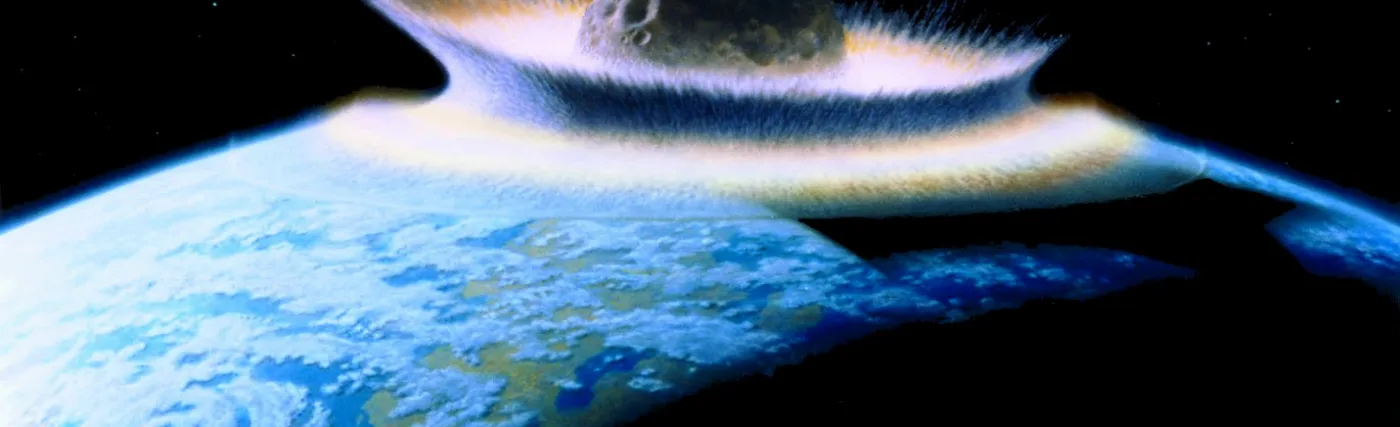
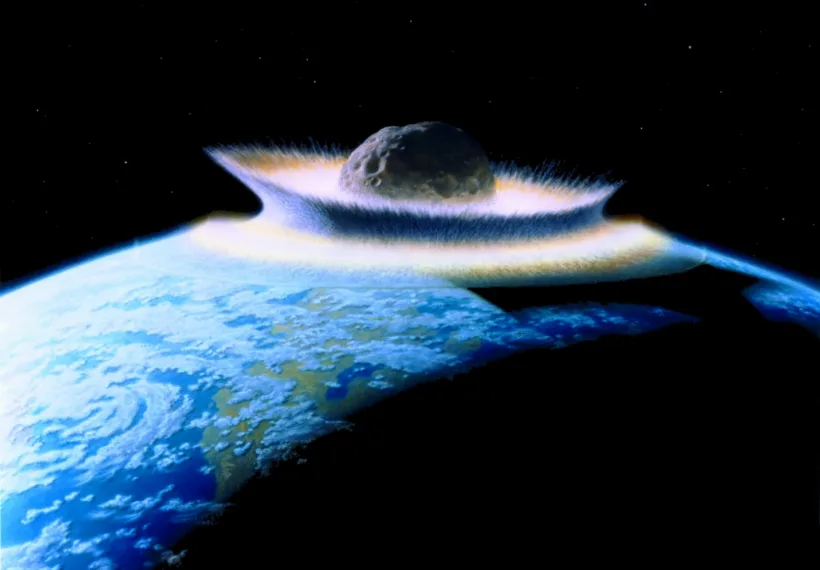
The planet Earth was here when the asteroid took out the dinosaurs.
A rock the size of Mount Everest.
Earth was here before, during and after that.
So let me ask you this since you brought up the dinosaurs, which I find kind of intriguing.
By the way, if they had a space program, probably they would have deflected the asteroid and they’d still be here.
Yeah, and we’d be snacks.
Snacks, tasty tidbits.
Exactly.
Scurrying underfoot.
By the way, did you know the evidence for why they’d still be here?
No.
Very excellent evidence.
Okay, you want to hear it?
Yes.
So, the dinosaurs were around for like 200 million years.
I forgot the exact number, but it’s around there.
Million years before the asteroid took them out.
There you go.
And how many years has it been since the asteroid?
65, 66 million years.
So they were around for longer than the time that it’s around since they went extinct.
That is exactly what I was about to ask you, but go ahead.
Okay, so now here’s what’s even better.
You ready?
Do you remember the, who’s the one with the plates on the back spine?
Stegosaurus is one.
Stegosaurus.
Do you realize the time between the last appearance of Stegosaurus and the rise of T-Rex is longer than the time since T-Rex went extinct?
So in other words, we are closer in time to T-Rex than T-Rex was to Stegosaurus.
Look at that.
So this is what I’m saying.
So they just were unlucky.
Now, so Earth Day, we’re trying to protect Earth from our own forces, but really we should be protecting Earth from rogue asteroids as well.
Fold that into all of the ways we want to protect life on Earth.
Yeah, asteroids are up there going, we did it before, we could do it again.
We’ll take your ass out again.
That’s right.
They’re all talking to each other like, okay, so Apophis, give us a report.
Well, I missed them this time.
I couldn’t get to the keyhole.
But guess what?
Okay, I gotta tell people what the keyhole is.
So there’s certain trajectories where they don’t hit Earth, but if they go through this point in space, Earth’s gravity can be just right, or rather, just wrong, so that the next time around, it ends up hitting Earth.
And we call that a keyhole.
If it comes a little closer, then Earth’s gravity will swing it harder, swing it farther away, a little too, if it misses it the other direction, it’ll go too slow.
So if it’s just right through the keyhole, then it will hit Earth.
So it’s an interesting name for it, and I think it’s well named, but a keyhole implies there’s something you want on the other side.
That’s true.
And it’s definitely not the case here.
Yeah, we don’t want to unlock our impending doom.
Correct.
And it wouldn’t be a problem if in the future we have mining companies, let’s say, that mine asteroids.
I’ve said many times, surely the first trillionaire will be the person who exploits the natural resources on asteroids.
If they can mine an asteroid, they can probably nudge it out of the way.
So we get on the horn and say, hey, we found an asteroid just discovered in our deep space network.
It looks like it’s headed our way.
Could you just hop over to that and deflect it or take half of it away?
And then he’ll say, I can for one trillion dollars.
I forgot that this is a Bond villain story here.
Hey, listen, for one trillion dollars.
Exactly.
So yeah, protecting Earth, I think, can involve these other ways.
I mean, why not?
So I look forward to the day where we’re so good at this that we can retire Earth Day.
That would be great.
Yeah, because it says that our ever present mentality is one where we appreciate it always, which we should.
And we know never to take it for granted.
And under those situations, we wouldn’t have needed Earth Day in the first place.
I don’t know what it is about human beings that makes us take things that are so necessary for our survival for granted.
It’s curious to me and I’m really puzzled by it.
Like I think about it a lot.
Chuck, it needs better marketing, maybe.
I mean, because people say, I don’t like science and I don’t like space and I don’t like this.
And they’ll say, you know, I’m fine with my, you know, weather.com and my, and my direct TV, but I hate space and I hate this.
So what you do is you sneak in in the dark of night and remove everything from their room that was inspired or invented by virtue of space technology.
And they’ll wake up in a cave.
Yeah, they’ll wake up naked, in a cave.
Cold, in a cave.
In a cave.
Basically that.
And so maybe we need those reminders.
Once a year, that’ll happen to you and you have to reacquire all the technologies that you were taking for granted.
Yeah.
See, you know what, you’re absolutely right.
Cause even when you think about the burning of fossil fuel, it’s greed that has driven that for many, many years.
Well, greed drives so much of everything, but that greed in particular had consequences, right?
I mean, greed is greed is greed.
Oh my God, you sound like Gordon Gekko right now.
Greed is, greed is good.
Greed is good.
Yes.
But I’m saying this, if people, if everyone were scientifically literate, even the greedy would always look for better ways to make money.
So even if I were the guy who owned the oil company.
This is my point.
My being scientifically literate would say, well, this is really an inefficient way for me to power stuff, and it’s only a matter of time before it’s obsolete.
Let me look forward, and I’m going to invent this now.
Because I’m greedy.
Because I’m greedy, right.
Yes, exactly, exactly.
Let me try to make all these other power sources affordable and cheap and easy, because then I will become rich for doing so, because I’m greedy.
So you just have to shift the greed vector into the green direction.
And maybe that’s not enough people thinking to do that, because they think that any greedy capitalist is necessarily anti-green.
And it might start out that way, but ultimately they’re all going to have to switch that around.
That’s right.
And they kind of did it.
Is it called Mobile Oil Company anymore?
I don’t think so.
I don’t think so either.
All right, the oil was taken out of all of those names.
Yeah.
Yeah, no, yeah.
Exxon is not Exxon Oil, or it was.
Actually, it’s Exxon Mobile.
Right, right.
Exxon Mobile.
And they see themselves as energy companies.
So they’re getting ready.
They’re priming the pumps for this future.
Yeah, yeah.
So, you know, that’s fine.
So listen here, you granola, Birkenstock, hippie-wearing suckers.
Get on the game and let’s get some capitalism so we can end this global warming thing, because only greed, only greed is going to help us.
Birkenstock-wearing.
Sitting around all earth and crunchy while we all die, okay?
Put your tie-dye down, okay?
Stop smoking your weed for a second, and let’s get on this.
Let’s make some money on this, damn it.
That’s the only way we’re going to win.
That’s a whole other outlook right there.
I should write an op-ed with that point of view.
Exactly.
Greed is good.
Greed is good.
Let greed save the earth, dog.
Greed and green, baby.
Greed and green.
Let’s make it happen.
All right, Chuck, we got to close down this segment, but in the next one, we’re talking about electric vehicles.
Ooh, yes.
Got to revisit that topic every now and then, because it’s changing so fast.
Yeah, love it.
All right.
We’ll be returned.
Later.
Hey, I’m Roy Hill Percival, and I support StarTalk on Patreon.
Bringing the universe down to earth, this is StarTalk with Neil deGrasse Tyson.
Chuck, how are you doing, man?
I think it’s time to revisit the electric car phenomenon.
Yes, I think it’s time for the whole world to visit the electric car.
The whole world, the whole world.
The entire world.
The whole world is watching.
So let’s remember a few things.
Back when electricity was discovered and harnessed, and there were some early ideas about electric cars, but they didn’t catch on relative to the combustion engine.
And there was some politics, there was some, you know, this sort of thing.
Right, Exxon was invented.
You know, once they invented Exxon, it was just like, death to you, electric!
So, the point is, right now, electric vehicles are making a comeback.
And I think the stigma that electric vehicles had for so long was that they were underpowered, or they looked ugly, or no one’s getting a date if you’re picking somebody up in an electric vehicle.
And so, that stereotype has been broken and busted open.
And so now, you have many manufacturers who are putting forth their…
Sexy electric cars.
Electric cars.
And so, there’s still some challenges.
For example, they still run on batteries.
Right.
Now, battery, it’s like, okay, that was invented in the 19th century.
The chemistry was a little different.
But if you want to look at sort of the last holdout of a century-old technology within a modern vehicle, it’s the battery.
Battery technology.
Never thought of it that way, but you’re absolutely right.
It is really kind of an antiquated way of thinking about powering things.
It’s correct.
But it’s nonetheless an effective means of storing energy.
An effective means of storing energy.
But you have to recharge it, but you can carry that around with you.
Here’s the problem.
If you have pure solar panels on your car, well, what happens if a cloud goes in front of the sun?
You could picture this where all these cars are approaching an intersection, and then a cloud goes in front of the sun, and then they all just stop.
Oh, everybody just slows down.
And then until the cloud goes away, and then they keep going.
And they weren’t being polite.
Nobody was being polite.
So there are sources of energy that are in the moment that are not effective for cars because you want to be able to store it and use it on command.
This is what made gasoline, so oil-derived products, so effective, because they have a lot of chemical energy built into their molecules.
You carry that with you.
You load up over here.
You carry it with you.
You use it up.
And then you reload at another destination.
So the portability of energy is everything.
So here’s an interesting fact.
Most of our transportation industry runs on gasoline or diesel.
And so we all know where to get that.
You get that at a gas station.
And we all know where the oil comes from.
It’s from the Middle East or from an Alaska pipeline or from Venezuela, wherever.
Wherever there’s trouble in the world.
If there’s trouble in the world, you know we got some oil there.
We know we got some oil there.
You know what I mean?
Anybody dropping bombs got to be some oil there.
So oil is geopolitically significant.
Absolutely, yeah.
Because not everybody in the world has their own oil well, where they just draw their own energy from Earth’s crust.
So somebody’s going to have it, and they’re going to have more of it than you do, and now you have to negotiate for it, buy it.
And are they your friend, or are they your enemy, or are they your frenemy?
So all of this matters so that you can drive your car to work each morning.
So the point is the geopolitics of access to oil influences things like your price of gas at the pump.
And so that’s weird when you think about it.
So what happens when you use an electric car?
And yes, you do have this 100-year-old technology, the battery, but it’s all we have for now, and the batteries are getting better than they were, but they’re still batteries, but fine.
I’ve got a battery, and I use it all up, and I have to charge it.
So what is a battery?
There’s like all these electrons in one half of the battery, and they have energy there, and by tapping that energy, the electrons move to the other side of the battery, and then your battery’s dead.
Okay.
In a non-rechargeable battery, you then throw it away.
In a rechargeable battery, you reverse the current, and the electrons move upstream, thinking of like salmon swimming upstream, and they go upstream, and they lodge themselves on the opposite plate again.
That’s basically a battery.
But first, they mate with another electron and die.
No, so that’s where the salmon analogy breaks down.
I’m sorry.
And a bear is ready to eat them on the top of it.
Just swipes them out of the water.
Poor salmon.
Be nice.
Oh, a quick point there, a point we’ve made before, but it’s worth saying in this moment.
If you have a freshly dead battery, and then you put in the reverse charge, those electrons can lodge anywhere on that opposite plate that they happen to land.
They got a zillion places to go to choose from, and then they land there.
But when you’re half charged, only half the spaces are left.
When you’re 90% charged, there’s only 10% of the spaces left.
All right.
So the electrons have a harder time finding that remaining spot.
It’s like musical chairs for electrons.
Or a big parking lot around a football stadium.
If you’re the first one there, park anywhere.
Right.
That’s true.
And you can park within seconds.
But if you come later, there’s a spot for you, but you got to find it.
It could take you a half hour to park.
So as the charge gets higher and higher on your battery, the time it takes to charge the rest of it continues to grow.
Right.
So just something to keep in mind.
So your battery is not screwing with you people when it’s…
It’s not just like breaking down on you in the last 10%, which is funny because it takes forever.
Right.
Right.
It’s not messing with you in the last 10, 20%.
It’s just the natural physics of that setup.
Anyhow, so watch what happens.
Now I want to recharge my battery.
It’s electric.
So I plug it into the wall.
Oh.
Oh, wait a minute.
Where does the wall get its energy?
From your regional power station.
Let’s go there.
So you walk down to the power station.
Hey, folks, how are you making power today?
Well, it’s nice to see you have such a cordial relationship with your electric company.
Because if I walk down, I’m going to be like, what the hell is up with this bill?
Now, I ain’t even been home for two weeks.
I haven’t been home for two weeks, and this bill is exactly the same.
I haven’t run the dishwasher and the washing machine.
Right.
What’s up, people?
What kind of clip joint are you running?
And Chuck, I agree.
I go on vacation, come back, and don’t make no damn bit of difference.
No difference.
No difference.
So, pretending I have a relationship with the power company manager.
Right.
So, I say, how are you making energy today?
And they show me the coal cars that drive up, dump coal into the hopper, and they burn the coal.
So, that was a fossil fuels, because coal comes from long dead plants, and this is carbon that had been sequestered for millions of years.
It’s now getting released into the atmosphere.
So, Chuck, here’s the catch with the coal cars that are dumping coal into the hoppers that are burning it in the electric company.
So, that electric company just, I’m making this up, but you got a sense of this.
That electric company just invested in solar panels.
They have a solar panel array out back.
What else do they have?
They’re tapped into a hydroelectric plant.
Nice.
It’s up the road a bit.
And what else might they have?
Maybe a little offshore wind.
Maybe there are some winds, some wind farms.
So, what’s happening now is their energy profile that they generate can come from any combination of these sources.
If you wanted to run your car off of wind energy, you couldn’t.
Or solar, you couldn’t.
Or hydroelectric, you couldn’t.
But the electric company can.
And they can send it to your wall socket.
So, the engine of your car doesn’t have to be able to run off of 12 different ingredients.
Your car doesn’t have to be so designed as to be able to have solar panels and wind turbines.
It doesn’t have to have any of that.
It just has to have a power plug.
It plugs into the wall.
And then you can put pressure on the power companies to generate energies in whatever green way you dictate or want or desire.
Excellent.
And that way your car ends up being equipped to go forward in a green turning society.
Sweet.
Whereas your internal combustion engine car, even though they still far outnumber electric cars, and they’re still in many ways cheaper to run and operate, the fact is if you’re going to be future proofing your driving, you’d want to think about this as an option.
Right, right.
But the cool thing is that electric cars have kind of proven to be better in many respects.
Yeah, I mean, so I was just talking about the basic physics of it.
But yeah, first of all, last I checked is 40,000 electric charging stations across the country.
40,000 of them.
But in addition, if the whole car is electric, then everything, and they’re modern and new.
They’re, of course, on the Internet.
You can talk to it from the Internet.
Everything is connected.
Everything.
It’s like if you reinvented the car today, it’s how you would design a car.
And that’s how all the great car manufacturers are putting their cars on the road right now, their electric cars.
So I look forward to what that future is.
Plus, an electric car in principle can talk to another electric car.
Absolutely.
Think about that.
That’s great.
Excuse me, I want to change lanes now.
Could you give me a little space?
And the car is to my right.
Separate.
Unless it’s from Boston.
No.
If it’s from Boston, it would be like, ah, screw you.
I’m in a wicked hurry.
Electric cars with regional accents?
With regional accents.
You know, I-95 is like, hey, hey, I’m driving over here.
I’m in a wicked hurry.
You and your car.
Boston meets Brooklyn on Interstate 95.
So anyhow, so electric cars is the future.
It really is.
And by the way, the chemicals that manufacture an electric car, those are not all green, you know, you still got to make the car.
So, but these are first steps.
And I applaud them all because it means society is responding to the cry of danger that scientists have put forth for decades now regarding our role in the warming of this planet.
Literally decades.
Decades and the catastrophic consequences that would unfold as a result.
So, so there you have it.
I love it.
I can’t wait to get an electric car.
Now let’s talk about the flux capacitor.
No, that has to be a whole other show.
Oh.
Because I’m working on one myself.
Because the electric engine can enable you to travel through space.
But the flux capacitor gives a boost to that so they can travel through time.
There you go.
Yes.
Marty!
It’s your kids, Marty!
At the end of one.
Right, right.
And one last, a couple of quick notes about Back to the Future.
I don’t know if you know this, but he experiment, he tested the time travel machine on an animal before he tested it on a human.
I’m trying to remember the movie now.
Okay, he tested it on Einstein, the dog.
Oh, that’s right.
Right, so animal testing, he did it on a family.
So if the stuff blew up, he would have lost Einstein.
So just a fast little fact about that.
And I have to level with you, Chuck.
In physics and electronics, there is such a thing as flux, and there is such a thing as a capacitor, but there’s no such thing as a flux capacitor.
All right, well, let’s get on that.
So I have to end it there on that sad note.
There really is no such thing as a flux capacitor.
All right, there you go, Chuck.
That’s cool, man.
Everything you ever needed to know, almost everything about electric cars.
I can’t wait to get one.
I’m serious.
Chuck, we got to take a quick break, but when we come back, we’re going to have the host of the Atlas Obscura podcast, Dylan Thuras, and he’s going to continue this conversation about the place and the role and the future of electric cars in civilization.
So be there.
Hey, StarTalk fans, this next segment is sponsored by the All Electric Chevrolet Bolt EUV, the everyday electric vehicle for everyday people.
That’s us.
Atlas Obscura host Dylan Thuras joined in for a fascinating Cosmic Queries conversation about the future of electric vehicles.
The All Electric Chevy Bolt EUV has so many cool features, including the ability to engage in conversations hands-free with the industry’s first hands-free driving assistance technology.
You can find out more at chevrolet.com/electric/bolt dash EUV.
All right, let’s get back to the show.
This is StarTalk.
This is a Cosmic Queries segment where we’re gonna just explore what the present and future is of electric vehicles.
And I’m gonna be doing a show on electric vehicles.
And I’m gonna be doing a show on electric vehicles.
And I’m gonna be doing a show on electric vehicles.
And I was able to take a tour, super excited about this, because I mean, this is the future.
This is the future right now.
And they’re making it really exciting.
Wait, wait, wait.
And there you go.
Okay, gotta wake up early.
I figured that one out.
Yeah, no, that’s super cool.
Very, very cool.
Well, thank you.
By the way, by the way, but now that you bring that up, the cool thing about it is pretty roomy EUV five passenger, you know what I mean?
Comfortable and and and and looks looks good too.
We’re not doing a commercial here, people.
I’m just excited about the car.
I’m sorry.
I’m not getting in any car unless it’s got leg room because my legs need some space.
So just got leg room.
Oh, yeah, without a doubt, bro.
Stop making me guess over this car.
Wait, by the way, this really is the future.
I’m telling you right now.
I’m so excited.
I’ve been waiting for electric vehicles to come and be accessible to everybody.
And you know, okay, but this show ain’t about you and your electric vehicle.
It’s about transportation and travel.
And I have a special guest for that.
And it’s it’s Dylan Thuras.
Dylan is the host of Atlas Obscura, Atlas Obscura.
And it’s a show about travel and finding all the weird, wacky, cool things in the world that wouldn’t show up in a normal Atlas.
All right.
Hence the subtitle Obscura.
And in fact, I didn’t even remember this until I said, why do I remember?
And then I own the man’s book.
The man has a book with that title and came out a few years ago.
And he didn’t send it to me.
I got this on my own accord.
It’s a big, fat book and it’s beautifully illustrated and it’s a discussion.
It’s a celebration of all things in the world that people do and participate in and worship and visit.
So I think if we’re going to take electric cars into the future, people like Dylan are going to want to care about are they going to serve his needs.
So Dylan, welcome to StarTalk.
Hey, Neil.
Thanks for having me.
And I’m thrilled that you had a copy of the book on the shelf.
That’s a delight.
Yeah.
So Dylan, I’m going to ask you to send me a copy because unlike Neil, I don’t buy books.
What?
You got it, Chuck, you’ll get one with an autograph coming your way.
So do you have questions about this future of electric cars given your professional life?
Yeah, I do.
So I just went on an enormous road trip with my two kids, my four-year-old and my six-year-old.
And we drove out to Minnesota and back again to see my parents from New York, New York States and Minnesota.
So 1500 miles or whatever.
And we…
Wait, I have to ask.
I have to ask.
How soon did they say, are we there yet?
Oh, that’s the constant refrain.
I mean, truly, it is like a timeless ages refrain.
And it starts 11 minutes in.
Chuck still says it when his wife is driving.
Are you kidding me?
And we’re only going to the market.
My son follows along on the GPS and kind of tells us, like, oh, you got a turn coming up.
Like, what’s the time say?
Nice, nice.
Yeah, he’s integrated with the experience.
But doing this drive, we were on the interstate, then for part of the time, we took the back roads.
And you could see the ways that the highway infrastructure has changed the country over the years.
And I’m curious about how you guys think that the Chevy Bolt and electric vehicles will change that infrastructure going forward.
How’s it going to remake the landscape?
So from what I’ve seen, early electric vehicles, let’s go back, you know, 10 years or so, a little longer, perhaps, they were really designed for just bouncing around town.
They were small, they weren’t very interesting to look at necessarily.
And so you charge it up, you might get 100 miles on a charge or 60 miles, something like that.
But that was plenty to just commute into town and come back home and charge up overnight.
And so that had a little, there was a very niche market in the early days.
And then people said, no, I wanna, if I’m gonna have a car and I’m gonna switch over, I wanna drive longer distances.
And so, okay, that means you need bigger batteries, more batteries, this is not, okay.
And so how many miles is good enough?
Now take a look at the map of the earth.
And it’s pretty well, quote, settled from coast to coast, unless you’re in the middle of the Mojave Desert.
And by settled, you can ask, how far away are you from the nearest reasonably sized city?
And I don’t know that you could be more than 100 miles from any reasonably sized city, no matter where you are in the United States.
That’s how populated we are across this country.
So what I noticed was that early electric car folks and then third party participants to say, let’s put charging stations with enough frequency across the country so that you can pull in and put it near a coffee shop or something.
So you just take a break and top off your tank, your quote tank.
So from what I’ve seen and Chuck, what do you know about the charging network across the country right now?
I am really, so the coolest thing which excites me is that there are 40,000 plus public charging stations that will allow you to plan your trip and then the car itself, and this is most exciting, this car has a range of nearly 250 miles, okay, on a full charge.
Well, any two big cities near each other are closer than 250 miles.
So yeah, if you can get me between 240, 250 miles, I’m going city hopping in the car, right?
As long as Northern Canada and Russian Siberia are not on your route, you will never be farther away from a charge.
What freak puts that on their route?
Okay.
Sorry, Dylan.
That’s all right, but that’s interesting.
One thing I was thinking about is, is, you know, electric vehicles are a lot quieter than cars.
And there’s something called the Lombard effect, which is basically because of all the background noise, birds and frogs and other animals sort of have to shout and they change their pitch to be heard.
And I wonder over time, with a full switch to electric vehicles, if the soundscape will change, if they will start to sort of revert to the norm.
So I’ve thought a lot about this.
So almost the entire noise you’re hearing from an electric car is the sound of the wheels against the pavement and the air moving over the body.
So on a freeway, your car still makes noise.
It’s just not the noise of the engine.
And lately, last decades, car engines, internal combustion engine engines have gotten quieter themselves.
So you go back to the 1950s and 60s, you know a car is coming down the road when it’s practically a half a mile away.
And you go really far back to one of the, anything from the Three Stooges or the Keystone Cops, the cars are belching out things and popping, and you’re getting the backfiring of the engine.
Yeah, yeah.
So that’s just a comment about how much noise it makes.
I can tell you this, that in an electric car, if you have a stereo system in there, it’s way better, okay?
Because usually the stereo has to compete with the rest of the noises going on in the car.
And so it’s more of a sanctuary, an acoustic sanctuary, that you can create under those conditions.
And yeah, you don’t have to scream over each other in the car, but if you have two kids, I don’t think they’re thinking about that at all.
Yeah, the quiet car doesn’t make your kids quieter.
I don’t think it works that way.
And by the way, Chuck, you said 40,000 charging stations.
I can’t even think where to put those, and if that’s how many are out there, I think this is a non-concern for anybody.
Yeah, listen, when you look at the whole usage, it’s kind of purposeful, it’s futuristic, but the technology is here right now, and I don’t know who wouldn’t want to do this.
Why would you want to do this?
And Dylan, how long, I mean, that’s a long road trip, and were you the only driver?
No, actually my wife does the majority of the driving.
I didn’t learn to drive till I was like 34, and she doesn’t trust me at all.
So you’re from New York?
You’re from New York too?
I wasn’t originally, but I was here early enough that I basically never got around.
Yeah, I think my kids are gonna turn out to be just like you because they’re in their 20s and they don’t even want to learn how to drive.
My kids don’t even call me dad anymore, they call me Uber.
They call you Uber.
Yeah, as soon as I walk in the door, my kids are just like, hey Uber.
Take me here, take me here.
So, I guess this is a question for you or for your wife.
When you’re on long stretches of road, that can get kind of monotonous and you can end up drifting.
Chuck, what’s the latest on that from self-driving cars?
You know, the cool thing is-
Do we get it from self-driving cars?
What’s up there?
I gotta say that the cool thing about this car is that it does have a driver assist feature that allows you to kind of, if you want to hang out with your kids, you can do that, you know what I mean?
You can have a conversation and the cool-
Wait, Chuck, we just agreed that’s what an Uber driver is.
That’s a driver assist so that you can play with your kids.
You get a whole human being to do that.
You’re saying we don’t need the human being.
I get it, I get it.
No, you don’t need the human being.
The technology is in the steering wheel and the dash and it allows you to, it monitors your eyes, so it’s not just a driver assist, it’s a safety assist as well, which I kind of like that, you know, because I have young kids as you know, you know, so.
I think one of the things that’s exciting to me about that is, is you know, when you go off the interstate and you take the back roads, it’s a much more interesting, exciting experience.
You see so much more, you can stop at these little local restaurants.
And the idea of maybe making driving a little less painful and experience a little more free, I think it might free people up to take basically the back road and then do more of that stuff.
That is so cool when you say that.
Interesting thought, interesting thought.
I was thinking about that this weekend because I have a motorcycle and I drive back roads, right?
And so my wife goes with me and as we’re driving, I’m trying to look because it’s beautiful.
You’re in this bucolic setting.
I’m like, and she keeps slapping my helmet like ahead, ahead, look ahead.
So it’s the same thing, you know, with the super cruise, you know, technology, that’s a really great thought that I didn’t even consider.
Look around and enjoy.
No to StarTalk producers, please increase the insurance on Chuck’s life, having just learned that he rides motorcycles on back roads.
Never knew that about you, Chuck, until this moment.
Yeah, yeah, yeah.
I love it, man.
But you know, I can’t wait till they get super cruise technology on a bike, so I can actually see where I’m going, I can enjoy it.
So Dylan, so do you think, I mean, this is the kind of technology that you’re going to be thinking about very seriously going forward.
Yeah, I’m really excited about the ways that the electric vehicles might change the driving infrastructure of the US, and hopefully bring back some of the kind of small town pit stops, maybe reduce the need for the amount of highway space that we have, and just kind of like make that sort of travel a more pleasant, integrated experience, get everyone off the interstate a little bit.
Not to put words in your mouth, but what you’re saying is, driving shouldn’t just be, I have to get from here to there.
Driving should be on route from here to there, what can I see?
Totally, totally.
That’s the only, as far as I’m concerned, that’s the only way to travel.
Hey Neil, we’re talking about hands-free driving, so just want to say, always pay attention while driving and when using the Super Cruise for compatible roads and don’t use any handheld device and view chevrolet.com/electric/super Dash Cruise for compatible roads, which is super cool.
Okay, Dylan, it’s been a delight to have you on here and the book is fun and your show is even more fun because it’s a living version of these travel stories and so thanks for being on StarTalk.
My pleasure, it was a real delight to talk to you guys.
Excellent, this has been StarTalk, a segment where we focused on just the joy and the delight of what the future of electric cars might bring.
Chuck, always good to have you here.
Always a pleasure.
And I’m Neil deGrasse Tyson bidding you to keep looking up.
Let me just say to anybody listening, if you’re ready to make the electric future part of your present and get the ultimate travel vehicle, check out the Chevrolet Bolt EUV at chevrolet.com/electric.
And by the way, take a virtual tour.
You will not be sorry.


 Become a Patron