


 Unlock with Patreon
About This Episode
The sun, moon, and SPACETIME CONTINUUM? On this episode, Neil deGrasse Tyson and comic co-host Chuck Nice break down space and time and other cosmic things you thought you knew.
Find out about Einstein’s special theory of relativity and our four dimensions. Neil and Chuck make lunch plans as they navigate space and time. What critiques does Neil have of The Terminator and Back to the Future? What are some unintended complications of time travel? Discover the concept of worldlines, getting unstuck from time in Slaughterhouse 5, and how time travel is just a changing of dimensions.
Next, Chuck carefully avoids making any moon jokes as we break down myths about the moon. Why does the moon look bigger on the horizon? Is it actually a trick of the eye? You’ll learn an easy trick to undo this illusion. What’s a honey moon? We break down different moons including the creepiest, and also Chuck’s favorite: the blood moon.
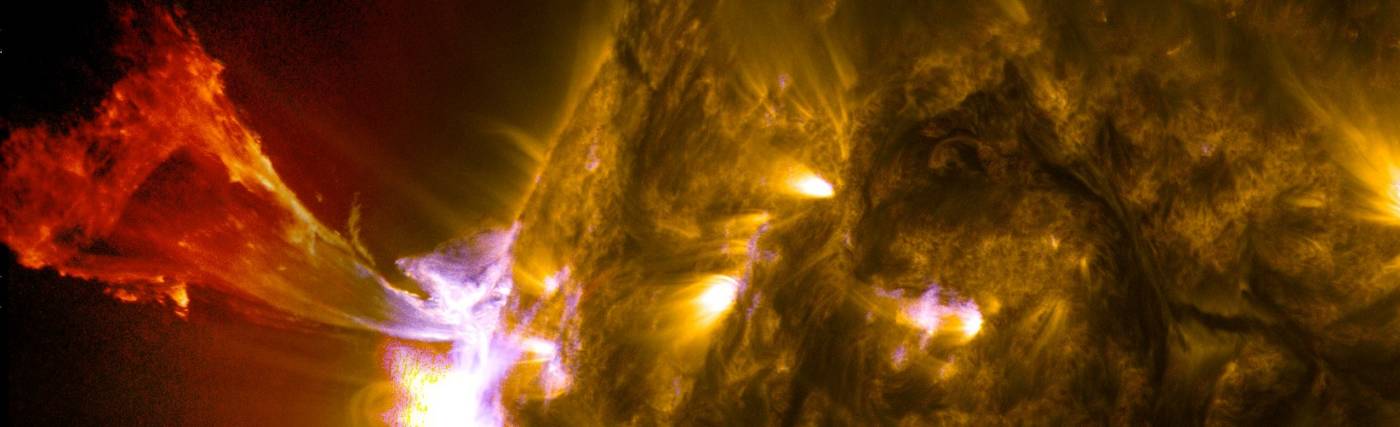
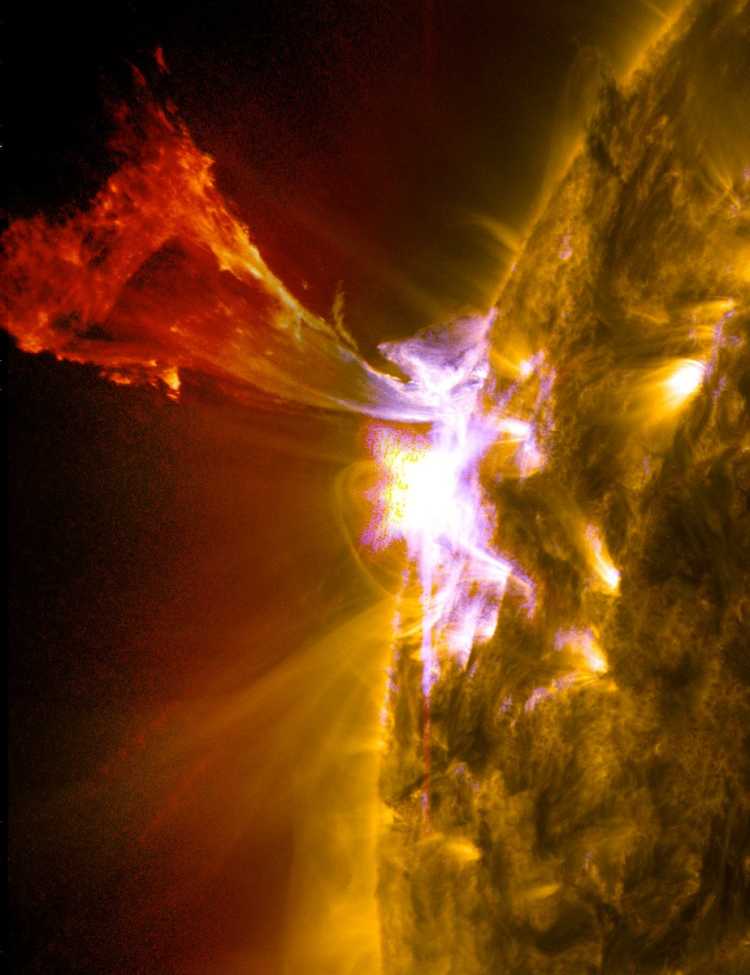
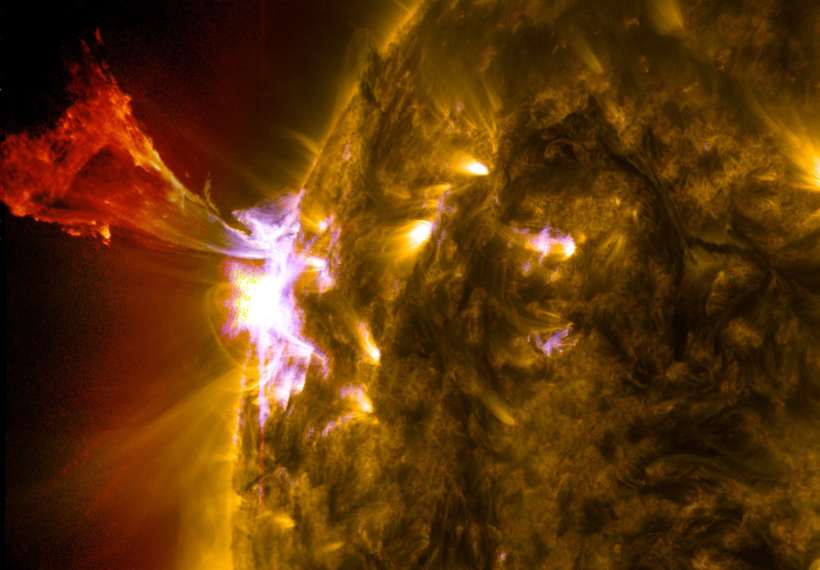
How big is the sun? We wrap our heads around the scale of our universe and the role of the sun on our planet. If the sun were magically plucked from its spot, how long would it take for us to realize it? How to do sunspots work? What about solar flares? We break down the mechanics of the sun’s interior, the merry-go-round effect, and the flipping of the sun’s poles. All that, plus, what are fishes’ experience with the sun?
Thanks to our Patrons Ian Konkle, Panda Man, Manuel zamarripa jr, Priscilla & Kyle, It’s all e=mc2 no vectors, Jesse Bunch, Dog Thereisno, www.TheRantingQueen.com, Francisco Cunningham, and Steven Severin for supporting us this week.
NOTE: StarTalk+ Patrons can watch or listen to this entire episode commercial-free.
About the prints that flank Neil in this video:
“Black Swan” & “White Swan” limited edition serigraph prints by Coast Salish artist Jane Kwatleematt Marston. For more information about this artist and her work, visit Inuit Gallery of Vancouver.
Transcript
DOWNLOAD SRTLenovo is sponsoring Life with Machines, a new video podcast hosted by comedian and tech whiz Baratunde Thurston, where he discusses all things AI.
Lenovo’s Smarter AI is your AI.
Personalized and easy to scale, Smarter AI delivers outcomes that matter most to you and your business.
With full stack AI hardware, software and service solutions, Lenovo is bringing the transformative power of AI to industries, organizations and people of all kinds.
Discover how Lenovo and Baratunde are using AI for good to power people forward.
Listen to Life with Machines now streaming wherever you listen to your podcast.
The holidays bring the world together and language can help us enhance our connections.
How will you be connecting with others this holiday season?
As the most trusted language learning program for over 30 years, Rosetta Stone immerses you in an enriching experience.
I’m learning and practicing Spanish with Rosetta Stone so that I can say things at the holiday table and nobody will know what I’m talking about.
Things like, estas terriblemente equivocado, which means you are horribly mistaken.
Start learning today with Rosetta Stone’s Lifetime Membership Holiday Special.
Visit rosettastone.com/startalk for unlimited access to 25 language courses for the rest of your life.
Available for a short time at rosettastone.com/startalk.
With incredible new features and upgrades, there’s never been a better time to armour up and play the critically acclaimed action RPG Diablo IV.
Get ready to continue the epic story in your battle against evil in the new expansion Vessel of Hatred.
As darkness spreads through the lands of Sanctuary, it’s up to you to fight back the encroaching corruption.
Read the benefits of massive updates to character progression, loot systems, difficulties and tons of added activities.
Face off against new and iconic bosses teeming with the spoils of Sanctuary.
Plus, harness formidable powers of the jungle with the all-new Spirit-Born Class, now yours to customise and progress alongside five other iconic classes.
Embark on the epic journey solo or with friends.
You’ll quickly understand why Diablo IV has been called one of the best action RPGs of the last decade by PC Gamer.
Forge your own path through hell-torn lands of Sanctuary.
Get Vessel of Hatred, available now in the Diablo IV expansion bundle, rated M for Mature.
Welcome to StarTalk, your place in the universe where science and pop culture collide.
StarTalk begins right now.
This is StarTalk, in a Things You Thought You Knew edition.
And I can’t do that without Chuck Nice.
Chuck.
Hey, Neil.
With me on this.
Yeah.
Yeah.
So much fun.
So I want to talk about the space time continuum.
All right.
That’s, you know, I’m cool with that.
I like that.
You’ve heard that.
Are you kidding me?
It is only the premise of every freaking sci-fi thing ever.
Yes.
Yes.
I just want to ground it.
I just want to ground it in a few ways that I don’t think people spend time doing.
So let’s think.
Are you going to ruin space time the way you did in Pluto?
Is that what’s going to happen right now?
Nothing I can do can help Pluto, just so you know.
It’s out of my hands.
So I’ve washed my hands of its demolition.
You are the Pontius Pilate.
Yeah, that’s a line right out of one of those accounts of the trial of Jesus.
So here we go, 1905, you should know immediately, one thing you should know in your head, 1905, Einstein comes out with this special theory of relativity.
It sets the world on fire.
It’s not what he called it, the paper that delivered it to us is called On the Electrodynamics of Moving Bodies.
And no one wanted to recite that, so it’s just called special relativity.
But that’s what it is, because it’s all about the relativity of motion and time.
Okay.
So what it did was codify the fact that spatial dimensions need a fourth, the three spatial dimensions, you know, height, width and depth, need a fourth dimension to localize it in any spatial system you’re talking about.
And since you needed time, then it’s a spacetime system.
So it sounds like it’s weird, like what are you doing, Einstein?
You know, leave me alone with my height, width and depth.
But it turns out we have always thought about life in four dimensions.
Always.
And here’s an example of why.
If I say to you, Chuck, I’ll meet you tomorrow morning at 10 o’clock.
I’ll say, great, what are we doing?
I’m so excited to find out.
I love when you surprise me like this.
Well, okay, I can do that, but I’ll say, all right, that’s fine.
I’ll meet you at the corner of 5th Avenue and 34th Street.
Okay.
What’s your next question to me?
When?
Because I don’t want to stay there all day waiting for you.
So you knew that giving you those coordinates, right, Earth’s surface, 5th Avenue, 34th Street, you knew that’s insufficient for us to actually meet.
Absolutely.
You’re going to say, when?
Bada-bing!
The time coordinate just got slapped on there.
Did you just bada-bing space-time?
Is that allowed?
I did.
I did bada-bing space-time.
Is that forgivable to you?
Yeah.
And you can reverse that, right?
I can say, Chuck, I’ll meet you at 12 noon tomorrow.
Okay.
And your next question to me is?
When or where?
Where?
I just said when.
Okay, where?
Where, exactly.
So we cannot meet unless the spatial coordinate is specified and the temporal coordinate is specified.
Oh, and by the way, because we’re all kind of stuck on Earth’s surface, if you want to do the full up three-dimensional meet in space, I would say I’ll meet you at Fifth Avenue, 34th Street, 107th floor is up.
Right.
Okay?
Or 86th floor is up.
That would be the Empire State Building because that’s the coordinate of the Empire State Building.
So I’d give one dimension, the other dimension, and then a height dimension.
Those are all three dimensions.
Often, you don’t give the height dimension because you’re just meeting on the street.
Right.
It’s just implicit.
Yes, we’re going to meet on Earth’s surface this time.
Right.
Right.
That one is an easy one to just accept as a given.
But technically, if you wanted all three, if you wanted to do it full up, you give three dimensions.
Earth’s surface, 34th Street, Fifth Avenue, and at a time.
So, we already knew this, but no one thought about it that way.
Now, here are the consequences of that.
If you’re crossing the street, and then a minute later, a truck drives down the street, you were in the same place as that truck.
Right.
When you were in the middle of the street.
At the right time, though, I was in that same place.
I mean, the right time meaning that’s not where the truck is at that time.
Exactly.
Yes, so I don’t want to say you were in the same place at the wrong time, you were in the same place at the right time.
Right.
Okay.
So, we are always in the same place as each other, but it doesn’t mean anything until you’re there at the same time.
So, I just want to drive home that concept.
So now, let’s go to sci-fi movies.
Right.
How about Back to the Future?
One of the greatest sort of thought through time travel stories there are.
Including The Terminator, I think, thought through time travel very hard on.
Yeah, they did all right.
I have an issue.
Wait, I have an issue with Arnold.
What is it?
Why do you have a problem?
So, on the first…
The first…
All right.
So, anyway, you had a problem with…
One problem with the Terminator.
Oh, yeah.
Even though it’s a very well-thought through…
It’s a well-thought through.
So, he goes back in time to kill the possible parents of…
Of John Connor.
The leader of the new movement, of the resistance.
But all he had to do is prevent the parents from meeting each other.
I mean, you can go back four generations earlier and just put two people on a different train so they never meet, and that entire genetic lineage never exists.
Right?
So, this idea that he’s got to kill them and it’s going to be all bloody, that made it like a violent movie, but it could have been done a little more with less blood and gore.
But also, just the fact that when he comes through, he comes out butt naked, remember that?
I do remember that.
In this bubble?
And you remember why he had to come through butt naked?
Because I am flesh of an endoskeleton.
No, because nothing, no living tissue, no dead tissue made it through the…
No, right, could go through.
Right.
Nothing non-living could go through…
.
could go through the time machine.
Except, of course, hair is dead.
So he would have been just totally bald and no eyebrows, no nothing.
Okay, I just thought I’d say that.
That there was an inconsistency within…
Time travel is giving me alopecia.
Alopecia.
What happened?
Alopecia?
How do you even know that that exists?
Alopecia is where you lose all your hair, you don’t grow your hair.
At any age, it can happen.
At any age, no matter what.
Alopecia.
All right, so where was I?
Oh, so here’s what you have to be concerned about.
Let’s go back to the future.
When, Marty, give me some Doc Brown here.
Marty, it’s time.
Now I’m in the mood, thank you.
Get in the car, Marty.
So, there’s Marty and he’s being chased by the Libyan terrorists, okay?
That’s right, that’s right.
And in the parking lot, in the Twin Pines parking lot.
All right, and then there’s a date in there from 1955 and he goes back in time to 1955, okay?
And he lands in the Twin Pines ranch, because as we know, all good farmland becomes strip malls, right, in modern times.
Makes sense.
All right, okay.
What they didn’t address is the fact that he would only land in that ranch if he goes back to when Earth was in the same place in its orbit.
Ooh.
He would have to be traveling on the anniversary of the date that he was, of when he left.
Right.
So that Earth is back where it is, so that when he goes back in time, he doesn’t end up suffocating in the vacuum of space.
Oh, man.
That, first of all, would be the best time travel short film ever.
Oh, Marty, I discovered the secrets of time travel, Marty.
Right?
Get in the car.
And then the tome are just floating in space.
The end.
The end.
I didn’t think this through, Marty.
So you mean, so I’m just saying, it’s not good enough just to travel back in time.
You need something to propel you in space as well.
So it’s a space time, a space time machine, not just a time machine, because earth is a moving target.
Right.
I just want to make that clear.
That’s really cool, actually.
And by the way, just to go back in time, you could still land on earth, but how was earth rotated?
You could end up in Siberia, in the middle of the ocean probably, because most of earth’s longitude is spanned by ocean.
So, I just want to sort of, is truth in time travel with regard to these space-time coordinates.
Now, we call these your coordinate in space and your coordinate in time.
We call that your world line.
Really?
World line.
So, your world line is where and when you are.
Nice.
So, you can step back and look at everyone’s world lines.
And the world lines are sort of, think of it as some kind of shadow moving through this hyper coordinate system.
And so, that way, I have to go to even a higher dimension so I can see your entire world line.
If I see your entire world line, you are always being born, you’re always living out your life and you’re always dying.
Right.
Because I can see the time coordinate.
Right.
The whole timeline is there in front of me.
And I can see other people’s world lines intersect your world line.
That’s when you met your wife.
Okay?
That’s when you were in my office and we recorded that episode.
So imagine this spaghetti picture of all these world lines of human beings interacting.
This is cool.
And I don’t know that anyone has actually thought to portray that.
No, they have not.
That’s why I said this is so cool.
Because first of all, first, I’ve ever heard of it.
But secondly, that is something that nobody’s put in sci-fi in terms of…
Actually, I take it back.
There’s a couple Star Trek episodes where they play with that, but they don’t present it that way.
They still present the linear as portrayed in different positions.
Exactly.
Exactly.
It’s still the linear and different.
But what you’re talking about is so much cooler.
Actually, what you’re talking about is on a religious, from a religious standpoint, what people believe to be God’s way of seeing time and space, which makes everything predetermined, yet still gives us responsibility for our actions.
That, right, it’s how that all plays out.
Thank you, Reverend Chuck.
It’s the New Church of World Lines.
The New Church of World Lines.
The space-time continuum, all right.
So, Eddie, that’s how that works.
And one last point in Kurt Vonnegut’s novel, Slaughterhouse-Five, which ostensibly takes place at the end of the Second World War.
And there’s other sort of historical details I won’t get into.
What I was most intrigued by is the time travel that goes on in that.
And he actually captures that accurately.
So what happens is the lead protagonist gets abducted by aliens, gets put in a cage, and that sounds bad, but they said, no, you’re still there, you’re still being born, you’re still dying.
And they went outside of his timeline.
Right.
And so he would sit there and daydream, but by daydreaming he was living his life and he could relive his life.
Multiple ways and in multiple times.
One last point I want to make, because we’re running out of time.
Wait, just real quick, because we’re running out of time.
Dr.
Manhattan, I forgot also, is a character who lives in his world line and also sees his world line simultaneously.
Okay, this is of the Dr.
Manhattan from The Watchmen.
Watchmen, correct.
Yes, yes, yes.
Excellent.
Yeah, that’s a pretty powerful guy.
Yeah, man.
I mean, once you have him, why have anything, do anything?
You know, that’s why I don’t like Watchmen, believe it or not, for what you just said, because it’s like, I got Dr.
Manhattan.
I mean, my answer to everything is like, seriously, bro?
No, I got Dr.
Manhattan.
Yeah, that’s the answer, Dr.
Manhattan.
It’s Dr.
Manhattan, it’s over.
The whole thing.
So now one other quick thing.
All right.
If you have an ant in a square, okay?
Right.
And let’s say there’s a sticky edge.
That’s basically a prison for the ant.
Right.
You can tell the ant, ant, just go up an inch and out and over.
No, but the ant is stuck in two dimensions.
The two dimensions of the paper that’s at length and a width, okay, or height or whatever.
Those two dimensions, the ant is stuck.
Right.
If he had access to the, if it had access to a third dimension, it could escape the prison, right?
Because it could find height and escape, right?
So think about it.
If you are in an actual jail cell and you had access to a fourth dimension, a fourth spatial dimension, you just have to step out of the spatial, into the spatial dimension and step back in and you just walk out of the prison without ever touching the walls, okay?
So that’s how you escape prison.
Just invent a fourth spatial dimension to do that.
So then I thought, if you need a spatial dimension for that, then what about our fourth time dimension?
Why can’t we, why can’t that work for us the way a fourth spatial dimension?
It does.
It does.
Here it is.
You ready?
So somebody put you in jail, and now you enter your fourth time dimension, you go to it, return to your time dimension before you were put in prison.
Right.
Now you’re not in prison.
You just escape the prison.
And you do it or after you escape.
So it works the same way as the spatial dimension, if we can invent that.
But that’s all I got to say about that.
Yeah.
A better thing would be to return to before you committed the crime and not commit it.
Oh, Reverend Chuck, the moralist, the moralist, Reverend Chuck.
So Chuck, we’re out of time.
In fact, we went a little over on this segment because there was some juicy stuff in the space-time continuum.
But when we come back, we’ll pick up on stuff you thought you know and we’ll talk about the moon on Star Talk.
Experiences make life more meaningful.
And with MasterCard’s priceless.com, you can immerse yourself in unforgettable experiences in dining, sports, art, entertainment and more in over 40 destinations.
From a round of golf with a legendary player to a cooking class with a celebrity chef, you can fuel your passions and create lasting memories.
Explore experiences today at priceless.com exclusively for MasterCard cardholders.
Terms and conditions apply.
Lenovo is sponsoring Life with Machines, a new video podcast hosted by comedian and tech whiz Baratunde Thurston, where he discusses all things AI.
Lenovo’s Smarter AI is your AI, personalized and easy to scale.
Smarter AI delivers outcomes that matter most to you and your business.
With full stack AI hardware, software and service solutions, Lenovo is bringing the transformative power of AI to industries, organizations and people of all kinds.
Discover how Lenovo and Baratunde are using AI for good to power people forward.
Listen to Life with Machines, now streaming wherever you listen to your podcast.
If you’re ready to elevate your driving experience, the first ever Kia K4 is worth a closer look.
It combines style and performance with a sleek futuristic design, featuring StarMap LED headlights and an available panoramic display.
For unforgettable looks, SiriusXM comes standard in every Kia K4, bringing you closer to what you love.
Plus, with an available 190-horsepower turbocharged engine, the Kia K4 delivers everything driving enthusiasts crave.
Learn more at kia.com/k4.
I’m Joel Cherico and I make pottery.
You can see my pottery on my website, cosmicmugs.com.
Cosmic Mugs, art that lets you taste the universe every day.
And I support StarTalk on Patreon.
This is StarTalk with Neil deGrasse Tyson.
Chuck, I’m excited about this one.
I’m gonna talk about the moon.
Okay.
All right, now, there’s a lot of these where we talk about the moon, but I wanna put it all in one place at one time, here and now.
All right, that sounds good.
All right.
I’m gonna resist every…
Moon joke, yeah, every mooning joke.
Yes, right now, I’m just putting myself in the mental space to stop thinking about butts and cracks and all of that.
I’m gonna let it go.
I’m letting it go.
All right, here we go.
All right, so this is mostly moon lore.
I just wanna put it all under one roof, okay?
Oh, I love it.
So let’s start out with the moon on horizon illusion.
You ever hear about that?
The moon on the horizon illusion?
No, I don’t think I’ve heard about that.
All right, so what it is, it’s what we call it, maybe you’ve felt it.
You see the moon rising over the city landscape.
Of course.
And it’s huge.
Yes, it’s so beautiful.
It’s like a big giant yellow ball.
Ball, right, right.
And you don’t have that reaction when it’s up overhead.
No, because it’s a little yellow dot and that’s not impressive.
So why does the moon feel bigger on the horizon than high in the sky?
It is not actually bigger at all.
OK.
You can measure it.
In fact, it’s slightly smaller for other reasons I’m not going to get into.
But so it’s completely psychological.
And so we call it the moon on horizon illusion.
Nice.
Yeah, because your brain makes a judgment at all times how far away something is.
It’s making this judgment.
OK, stereopsis.
Based on that, that’s correct.
And based on that judgment, it will say, here’s how big I think that object is.
Right.
Right.
So think about it.
If you look up in the sky and you see an airplane, right, you’re not saying to yourself, oh, the airplane is only this big.
It can fit between my fingers.
You’re not saying that.
But you do take your fingers and hold it up and look, make it look like you’re flying the airplane.
Like, you know, yeah, I’ve never done that, Chuck.
Oh, OK.
All right.
Moving on, moving on.
Sorry, I’ve never done that.
So maybe others have.
I don’t know.
I just personally, I don’t believe I have to help the airplane.
And I felt that way very early in my life.
So, you know, not only intuitively, but your brain is doing subliminal calculations about how big something would actually be, if it were right in front of you, for how small it is, for how far away you see it to be, right?
Okay, so it makes sense.
The moon, as far as your depth perception is concerned, is basically at infinity.
Okay, it’s basically at infinity.
That makes sense.
So what happens is the moon shows up in the company of terrestrial objects you are familiar with.
Buildings, mountains, trees.
You know how big those are.
Ugh, this is fascinating.
I love it.
And the moon is hanging out with them.
And so your brain is saying, wait a minute, is it really there?
Or is it, no, but while your brain is trying to figure this out, your brain starts thinking the moon is huge.
Huger than at any other time in the sky.
Last point about the moon on the horizon, okay?
What’s throwing off your depth cues is the full moon mixed in with other things that are familiar to you, as I’ve already said.
Correct, okay.
If you have the full moon rising over a horizon for which you have no depth cues, the effect is greatly diminished and in fact it’s hardly there at all.
For example, the moon rising at sea.
I was going to say, over the ocean.
Over the open ocean, there’s no trees, there’s no buildings, there’s nothing.
So that that effect is greatly diminished and you want to know how to get rid of the effect entirely?
Here’s what you do.
There’s the large moon on the horizon, next to the buildings and things.
Turn around, okay?
All right.
With your back to the moon, bend over and look at the moon upside down through your legs.
Okay.
I get it.
Okay.
Okay.
Now, don’t pull down your draws when you’re doing this, because then you’ll be mooning the moon.
But if you do this, then the buildings on the horizon and the trees are upside down.
And your brain says, I don’t know what that is.
Right.
I don’t want to upside down.
I don’t know what that is.
Oh, so now I can put the moon where it belongs, at infinity, and the moon becomes its regular size.
So, the lack of reference causes your brain to see the moon the way it is, instead of causing it to make the association to the size of the things surrounding it.
Correct.
Correct.
And so, and I invite you to do that experiment next time the moon looks suspiciously large on the horizon.
Just bend over, bada-bing.
It goes right back to its size.
There you go.
Can I get two bada-bings and one?
Yes, you can.
Chuck, what are you doing?
Well, I’m looking at the moon and kissing my ass goodbye.
All right, so more about the moon.
You know why it’s yellow when it’s low on the horizon?
I mean, I can only guess that it’s atmospheric.
Yeah, exactly.
For the same reason the sun is yellow on the horizon.
The sun isn’t actually yellow.
It’s yellow on the horizon because the atmosphere is affecting the color.
And if you have a polluted sky, it’ll be deeper and deeper and deeper from yellow into amber and maybe even red.
So, you can get very sort of deep, deep, deep amber moon if it stays low.
Point is, this is a moon on horizon illusion.
And people say, I saw such a big moon last night.
I’m saying, no, you didn’t.
You only thought it was big.
Wow.
That is so cool, by the way.
All right.
So now, so now, the moon is always opposite.
The full moon is, we’re talking about the full moon here, is always opposite the sun.
All right.
That’s because that’s why it’s full.
It’s full frontal to the sun.
It’s getting the full reflection of the sun.
The full reflection from our point of view on earth.
Okay.
So because you mentioned the moon is kind of yellowish on the horizon, yellowish amber, and I might have said this at another time, but here’s a good place to reinsert it.
Okay.
All right.
In the summertime, the sun is, it takes this very high arc across the sky.
Okay.
And then when the sun sets, it takes a very low arc beneath the horizon because it doesn’t stay down there very long.
Well, if it takes a low arc on the horizon, if you have full moon, the full moon will be opposite it and will also be in a low arc.
Okay.
So now watch.
So watch.
In the summer time, like in June, you know, June, when the full moon rises, it stays low in the sky, really low.
It doesn’t get very high at all.
So if you had sort of sunset colors on the moon right when it rose and it doesn’t get very high, it’s never going to free itself of the contaminating effects, the color contamination of the sky, of our atmosphere.
So it’ll come up, it’ll be like deep amber, but it’s not going to really ever not be amber in that very low arc across the sky.
And then it sets.
All right?
Wait a minute.
The full moon in June stays low on the sky and it holds on to those sort of sunset amber colors?
It takes on a kind of a honey color?
Oh.
Of all the moons of the year and they all have names, the name of the full moon in June is the honeymoon.
The honeymoon.
What?
Bada bing.
That’s sweet.
Oh.
I feel like I should be doing something more with the moon now.
So I just wanted to bada bing the moon.
Is that allowed?
How many bada bings of the day do I get?
I don’t know if you get to bada bing the moon.
Especially on the honeymoon.
On the honeymoon.
So every full moon has a name.
You’ve heard of some.
The Harvest Moon, this sort of thing.
The Flower Moon, the Harvest Moon.
They’re all cultural and regional, by the way, depending on what mattered.
There’s a Wolf Moon, a Snow Moon, this sort of thing.
The Blood Moon is my favorite.
No.
Don’t go there, please.
Don’t.
Come on, man.
Why not?
No.
That’s a whole other explainer.
No.
That’s a different explainer video.
To back away from the term.
Oh, come on.
Put the term down on the table.
Right.
Alright.
All right.
Maybe I should…
should I slip it in here?
All right.
Do you know what the Blood Moon is?
I heard of it.
I don’t know what it is.
Well, you like to…
how are you talking about it?
You don’t know what it is.
Because it’s my favorite term for the moon, the Blood Moon.
Okay.
So this is the term that some people invented to describe the full moon during a lunar eclipse.
Yes.
That’s where I heard it.
Okay.
So a blood moon could then happen at any time of the year if there is a lunar eclipse.
Okay.
And what happens in a lunar eclipse?
Earth interposes itself between the sun and the moon.
Right.
Okay.
So exactly interposes itself in such a way that…
And the moon is like, the moon is like, yo, hold me back, hold me back.
And the sun is like, you better hold him back because I’m about to mess him up bad.
He’s like…
and the earth was like…
Ladies and gentlemen, Chuck is from Philadelphia.
And the earth is like, guys, guys, come on, seriously, guys.
That’s always what the person who’s stopping the fight sounds like.
Why?
Why is the person stopping the fight?
Oh, guys, guys, come on, guys, come on, guys, seriously.
It’s never stop the fight.
Right.
The person who sounds like that never stops fights.
They start them.
All right.
So watch what happens.
So we are in space.
Earth is in space.
People say, I want to go into space.
Just stand on Earth.
You’re in space.
All right.
So Earth is in space and there’s a shadow that’s always there cast by the sun.
Okay.
Okay.
Now you have the moon orbiting the earth and occasionally the moon will enter that shadow.
Okay.
Blocking the light of the sun from the fully illuminated moon.
And we have a lunar eclipse.
Okay.
A lunar eclipse.
Okay.
So if you were to watch this from the moon, you’ll see this dark orb move slowly and begin to blot out the sun.
Okay.
The earth is much bigger than the sun on the sky.
All right.
So the sun is lost behind the earth.
Again, let’s watch this from the moon now.
Okay.
So now here’s what happens.
Sunlight tries to get around to the other side by working its way through earth’s atmosphere.
Right.
Okay.
So the light sort of disperses and refracts a little.
Almost like a filter.
Or, again.
It’s some kind of thing.
But it’s only around the edges.
Because the full disk of the sun is blocked by the moon.
Right, right.
So it’s just light that’s trying to work its way around.
If you have a heavily polluted atmosphere, then that sunlight gets deeply reddened.
As you’d have a deep red sun on our settings at sunset.
Right.
Just like it would be on the horizon.
Right.
Just like it would be on the horizon.
Okay.
Just like it would be.
Because the sun technically is on the horizon for that picture.
All right.
So if you have a highly polluted or it’s over the Sahara where there’s a lot of dust particles kicked up, then it deeply reddens the sunlight that leaks around the earth.
And some of that spills into earth’s shadow.
Got you.
And so the moon, which would otherwise be completely blotted out, can take on a very deep sort of amber.
A ruddy look.
A ruddy, ruddy, ruddy.
But okay, that can happen.
I saw it happen several times in the 1960s and early 70s.
And I have not seen that happen since.
Oh.
We’ve been cleaning up the air of the earth.
Because what makes the sun deeply red, people say, oh, beautiful.
Look, no, because the air got particles in it.
Okay.
You’re breathing pollutants.
You’re breathing particulates.
All right.
So that’s what’s reddening the sun.
You have less of that.
The sun is less red.
In a lunar eclipse, I have not seen a red moon lunar eclipse in 40 years.
Oh.
But they say blood red.
Plus it’s not red.
It’s like a deep amber.
All right.
It’s not any more red than someone who has red hair.
Is it actually red?
No, it’s more, it’s just rusted color.
Hold it up to a red.
Is it that red?
No, no, no.
That’s right.
A little ginger kid.
You.
Yeah.
So what happens is people exaggerate the color of other people.
Right.
Right.
So when they when they’re being described, white people aren’t purely white.
Black people aren’t purely black.
And we have a word for how much light you reflect is called albedo, by the way.
Okay.
Albedo.
So albedo of one means you reflect all the light, right?
Albedo of zero means you absorb all the light.
That’s another explainer.
We’ll get to that.
That’s awesome.
So here’s my point.
So that’s how you would get a red moon.
And people want to say blood.
So I’ve seen people who are very taken by vocabulary, by word, a blood red moon.
That means something bad is going to happen.
Just because somebody misnamed it doesn’t mean you now get to take the word and create a whole system of cultism around the word that someone badly chose to describe an object in the sky.
Well, thank you for making me hate blood moons now.
It went from my favorite to the worst.
I’m just saying.
So what will happen is the moon gets eclipsed and just basically disappears from the sky.
In fact, most people who have ever witnessed a lunar eclipse didn’t even know they were, didn’t even know.
Because it looks like you have a crescent moon.
The Earth’s shadow is curved, and it just looks like a crescent moon.
And it gets a little dimmer, and then it just disappears completely.
And then you don’t even notice it until it sort of re-emerges on the other side.
So a lunar eclipse is long and boring and hardly noticed by anybody who isn’t looking for it.
It’s just a reality check.
Don’t shoot the messenger.
That’s all the time for that segment.
But when we come back, we’re going to talk about the sun.
Whose sun?
Your sun or my sun?
We both have suns, Neil.
The sun.
Oh!
The sun.
Don’t get all homonymic on me.
All right.
We’ll be right back.
If you’re ready to elevate your driving experience, the first ever Kia K4 is worth a closer look.
It combines style and performance with a sleek, futuristic design featuring StarMap LED headlights and an available panoramic display for unforgettable looks.
SiriusXM comes standard in every Kia K4, bringing you closer to what you love.
Plus, with an available 190-horsepower turbocharged engine, the Kia K4 delivers everything driving enthusiasts crave.
Learn more at kia.com/k4.
When it comes to hiring, the best way to search for a candidate isn’t to search at all.
With Indeed, don’t search, match.
Indeed is your matching and hiring platform with over 350 million global monthly visitors, according to Indeed data, and a matching engine that helps you find quality candidates fast.
If you need to hire, you need Indeed.
You can even use Indeed for scheduling, screening and messaging to connect with candidates faster.
93% of employers agree that Indeed delivers the highest quality matches compared to other job sites, according to a recent Indeed survey.
And since Indeed’s matching engine is constantly learning from your preferences, the more you use Indeed, the better it gets.
Join over 3.5 million businesses worldwide that use Indeed to hire great talent fast.
Plus, listeners get a $75 sponsored job credit to get your jobs more visibility at indeed.com/sxm.
Just go to indeed.com/sxm right now and support our show by saying you heard about Indeed on this podcast, Terms and Conditions Apply.
Need to hire?
You need Indeed.
All right.
It’s time for a Patreon shout out to the following Patreon patrons.
Ian Conkle, Panda Man, I’m not making that up, and Manuel Zamarrita Jr.
Hey guys, thank you for your gravity assist as we make our way across the cosmos.
And for those of you listening who would like your very own Patreon shout out, please go to patreon.com/startalkradio and support us.
Chuck, we’re back.
Yes.
All right, we talked about space time, and we talked about the moon.
Right.
Well, you can’t talk about the moon without talking about…
The sun.
The sun.
So, let’s get some sun action here.
But it may be just things you didn’t know, but are glad you learned.
Yes.
Rather than things you thought you knew.
So, there’s a risk of that, but I think it’ll still be fun, but that’s not for me to judge.
Let’s step right into it.
Gotta like the sun.
It’s only the source of all life on Earth.
Well, not all.
Almost all life on Earth.
Not all life, but mostly all life.
Yeah, there’s some life at the bottom of the ocean.
At the bottom, right.
That never even sees the sun.
I wonder what that’s like.
It lives where the sun don’t shine.
That’s funny.
Yeah, yeah.
In the water where the sun don’t shine.
So, that has me wondering, what happens if you’re just a fish swimming in the water, and then someone captures you, pulls you out of the water into the air, and then there’s like land and mountains and sky and clouds and direct sunlight.
That’s the closest thing I can think of to someone grabbing you out of your dimension and putting you somewhere else.
Right.
But here’s what’s worse.
They pull you out, but then they put you back in the water.
Right?
And now you’re going around to all the other fish like, yo man, I’m serious.
This really happened to me.
This happened to me, man.
Okay?
Like, first, I thought it was some food, right?
They grabbed my jaw, it wouldn’t let me go.
I fought and I fought, they pulled me out, man.
I couldn’t breathe.
I couldn’t breathe, man.
And then it was like, oh, this light.
I don’t even know what to call it.
It hurt, it hurt like hell, man.
And it was these things, the fleshy things, man.
And it was crazy.
And it was like, you know what?
The bottom, what we see down the bottom, except instead of sand, it was like sand, but it was real hard.
And it was like puffy stuff above the sand.
And it was, oh, man, why y’all?
Dude, I’m not crazy.
Yes, you are.
Exactly.
You know what we’re going to do?
We’re going to get someone to animate that, and have an actual fish speaking those words.
All right?
So, anyhow, yeah, so one of the things they get to really experience is the sun, particularly if they live sort of, if they’re bottom feeders, right?
The sun is not a big part of their life, really.
So, let me talk about the sun.
The sun is, you know how far away it is in light travel time?
Eight and something minutes.
Yeah, good, good.
Chuck, you know, you’re coming along here.
So, it takes 500 seconds for the light to reach Earth from the sun.
So, 500 seconds, if you do the math, it’s eight minutes and 20 seconds.
All right.
And it’s moving at the speed of light through the vacuum of space.
So, that’s kind of cool.
And, but you know something, Earth’s gravitational influence also moves at that speed.
So, if some giant came along and plucked the sun from the center of our solar system, we would continue to see the sun, feel the sun, orbit the sun until eight minutes and 20 seconds passes.
Oh, and then the party is over.
Over.
That’s all she wrote.
Like you ain’t never seen a party end.
And so what then happens is the planets one by one will fling off into interstellar space and plunge into eternal darkness.
Woo, that is a needle scratch if I ever heard one, man.
And so we need a sci-fi story where somebody just reaches in and plucks the sun out and just watches what happened and how we are in our blissful ignorance for eight minutes and 20 seconds.
You know what?
That’s another great short film.
It’s like, you know, you show that and then you show like the beauty of life in real time of eight minutes and 20 seconds.
And only you, the viewer, knows.
Knows that it’s all going to end.
And by the way, they can’t know that any sooner than when it’s too late.
That’s right.
Because that’s the rate at which the information is coming.
Yeah.
Oh, that’s so, that’s creepy.
I love it.
I love it.
All right.
So the sun, this little tidbits about the sun.
So maybe it might not be something you thought you knew, but it might be something you glad you learned.
How about that?
Oh, wow.
Okay.
All right.
So if you hollowed out the sun.
Okay.
So now you just have the volume of the sun.
And then I sort of played a little basketball and started tossing earths into the sun.
Do you know how many earths would fit in the sun?
I know the sun is huge compared to the earth.
Huge.
Huge.
I don’t know how many earths would fit.
Take a guess.
How many?
Like 10, 100, 1000?
No, I will say more than 1000 earths.
I’m looking at the scale models of all the things that I’ve seen.
Okay.
On the ceiling of your kids who did the planet project.
Yes, exactly.
Do the little planet things.
I’m going to say 100,000 earths.
Okay.
That’s a lot of earths, right?
That’s too many earths.
100,000 earths.
So the actual number, the actual number, is about a million.
What?
Yes.
It’s about a million earths.
Damn.
A million.
And so the weird thing is you go back in time before we had any sense of anything, and there are people thinking that the sun is just something else in the sky, but earth is the thing.
We are.
We are the center.
Right.
And since earth and the moon are the same size on the sky, earth and the moon had almost equal presence in our culture.
Right?
There’s a moon god and a sun god, of course.
You know, there it was.
And any illustrations of the two of them, they’re the same size, because they look that way.
But they are nowhere commensurate with each other.
And it wasn’t until much later that anybody figured out that the moon does not give its own light.
It is only reflected sunlight.
Only.
So there’s a geometry of things going on there.
But some of that comes from the Bible, where I forgot which passage, but it’s in the sun, it’s in Genesis, of course.
And God created the sun to light the day and the moon to light the night, as though they are their own agencies of light sources.
But that’s not the case.
Plus the moon isn’t always out at night.
And most of the time, in an equal amount of time, it’s out in broad daylight, as it is out at night.
So, just saying.
So, a million times larger.
So that is huge.
The sun has blemishes, which we call what?
Sunspots.
Sunspots, they’re like liver spots except the sun has really good skin.
So the sun only occasionally has the liver spots, but has a really good dermatologist, this is what you’re telling me.
All right, so the sun, so sunspots are about the size of Earth.
So the sun has acne bigger than Earth.
Oh my goodness.
Yeah.
That’s crazy.
That’s cold.
Now, sunspots, even though they’re dark, they have to give a lot of energy in high energy, they have to give a lot of high energy radiation.
So they’ll go off a lot of ultraviolet and even, I think some x-rays, I’d have to double check that.
When the sunspot population grows, we say the sun is active.
It’s going through its cycles.
The sun, it has an 11-year cycle.
And it’s where there aren’t many sunspots, and then there’s a bunch of sunspots, and then there aren’t many, usually zero, actually.
Is it more moody?
Is it more moody?
I don’t know.
I haven’t asked.
Actually, well, no, yes, it is more moody.
During sunspots, yes.
Because during sunspots, not only is the sun radiate more, and this affects Earth’s atmosphere, the atmosphere absorbs this extra radiation, heats up, thickens, and all of our orbiting satellites now have to boost themselves more back to their orbit because it encounters more atmospheric resistance.
Look at that.
So we do that with the space station, with the Hubble Telescope, and anybody else up there who wants to stay and maintain an orbit, a stable orbit, during solar max, it’s called, we’re on the lookout for a decay of our orbits because the atmosphere got thickened by this extra radiation coming from the sun.
Oh, wow, that is really…
Okay, so that’s one very thing.
It’s messing with our satellites, okay?
That’s one sun-blamable thing.
What else happens is, there are solar flares.
Yes.
So, the explosions on the sun.
And these explosions, the sun is a magnetically charged gas.
Right.
And the word for that is plasma.
Plasma, yeah.
Plasma, yeah, yeah.
So, and magnetic fields are all entangled in there.
And during solar maximum, the magnetic fields become so entangled, they bust out.
Nice.
And when they bust out, the particles of the plasma, like hanging on to that magnetic field.
But they get flung into space.
And then you get waves of particles towards the earth.
There are always waves of particles.
We call it the solar wind.
But during these particular moments, when you get a solar flare, oh my gosh, the level of charged particles can be so high, it can short circuit the electronics of satellites when it reaches earth.
That’s crazy.
That’s awesome.
Yes, the sun is moody at that time.
I’m just making it clear.
And by the way, solar flares can happen, but they don’t always point towards earth.
We can see them, but the plasma pie goes out into space.
So it’s the ones where there’s a solar flare, and it’s headed towards earth that we keep track of.
And in fact, NASA has a whole department, it’s space weather.
It’s a space weather department.
It’s things that would affect astronauts in space.
And it’s not only the sun, it’s also is there’s anything happening in the rest of the galaxy.
So, it’s another thing that the sun is doing.
Oh, one other thing.
Go ahead.
All right.
Sunspots are always in pairs.
Okay, I did not know this.
And we figured out how to measure the magnetic fields of the sunspots, because we knew it was related to the magnetic activities.
And so, Chuck, we measured it, and one would have a positive charge, the other negative charge.
So we got magnets on the sun.
Nice.
Just saying.
But wait, there’s more, okay?
The sun is a big ball of gas, so it’s not solid the way earth is.
And so it turns out the equator of the sun completes one revolution faster than other latitudes on the sun.
So it doesn’t rotate as a solid object.
Look at that, because it’s a big ball of gas.
So the middle could be going faster than the tops, because it’s not…
Ah, that’s correct.
Just to be clear, it is always physically going faster, because it has more distance to travel.
So even if the sun were solid, it would be traveling faster the way equatorial residents on earth.
They’re all traveling 1,000 miles an hour.
We here in the middle, like New York, latitudes are traveling only about 800 miles an hour due east.
Because we both complete a circle at the same time.
But they went a bigger distance.
So they’ve got to be traveling faster.
As the merry-go-round effect, the outer courses are moving faster on the merry-go-round than the inner ones, even though it’s moving as a solid, rotating as a solid object.
With the sun, the equator rotates faster.
Now here’s the rub, so watch what happens.
Because the entire ball is magnetically charged and there are magnetic fields within it, the magnetic field wants to hold on to the plasma.
And the rotating sun says, no you don’t, I’m going to stretch you as I, what we say, differentially rotate.
Nice.
Okay, and as that happens, the magnetic fields stretch and stretch and stretch.
And there’s a point where they can no longer stay attached.
And they snap.
And this snapping is a very complicated magneto-hydrodynamical mechanism, but the disruption of the orderly magnetic fields are what it punches through to make the flares on the surface of the sun.
And when everybody punches out and they get it out of the system, the magnetic fields reconnect and we start the cycle again.
But wait, when the cycle repeats, okay, oh, by the way, the sun has a north pole and a south pole in addition to all of this, just so you know.
Okay.
Okay.
But when the cycle repeats, the entire magnetic field of the sun has flipped.
Oh, snap.
So it’s in fact a 22-year complete cycle, not an 11-year cycle.
Yeah.
Yeah.
That is amazing.
That’s the sun is doing all that while you’re sitting out there, you know, on the beach.
While I’m getting beautiful.
It does all that.
And it makes me look good too.
So I got to quote Galileo before we run out of time here.
Galileo said, I’m paraphrasing because he said it more poetically than I’m about to recount.
The sun manages to keep the planets in their appointed paths, yet somehow manages to ripen a bunch of grapes as though it had nothing else in the world to do.
Oh, that Galileo, he knew how to turn a phrase, that’s for sure.
And my boy was a wine drinker, so that’s what he’s talking about.
He’s thinking about what else you do with them grapes.
Exactly.
That’s pretty, that’s cool.
So that’s all the sun I could squeeze into 15 minutes here.
Oh man, that was fun.
That’s enough for you.
All right.
All right, Chuck.
So that was the stuff you didn’t know but may be glad you learned rather than stuff you thought you knew.
So, all right, call it quits there, Neil deGrasse Tyson, as always, keep looking out.
If you’re ready to elevate your driving experience, the first ever Kia K4 is worth a closer look.
It combines style and performance with a sleek, futuristic design featuring StarMap LED headlights and an available panoramic display for unforgettable looks.
SiriusXM comes standard in every Kia K4, bringing you closer to what you love.
Plus, with an available 190-horsepower turbocharged engine, the Kia K4 delivers everything driving enthusiasts crave.
Learn more at kia.com/k4.
 Become a Patron