



 Unlock with Patreon
About This Episode
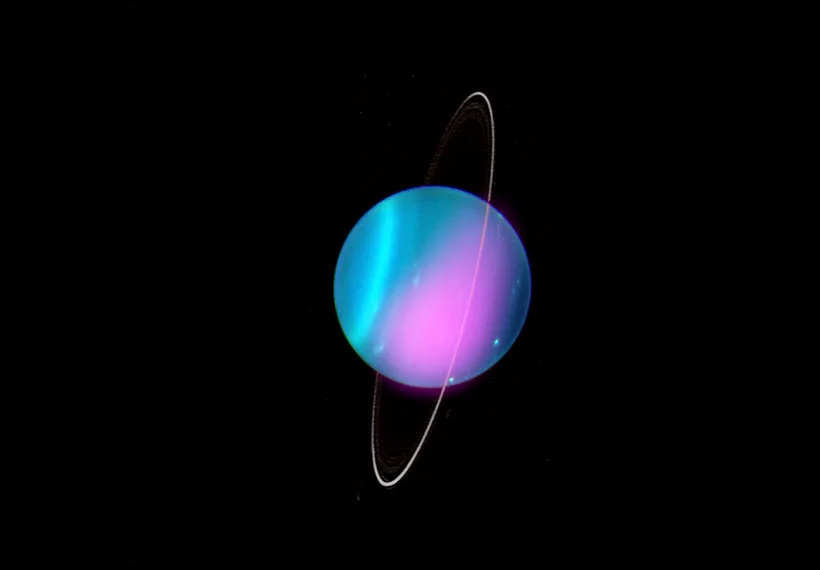
How did we name our planets and moons? On this episode, Neil deGrasse Tyson and comic co-host Chuck Nice explain all the things you thought you knew about the names in our solar system, the origin of the moon, and the constellations in the night sky. How did Uranus get its name?
Travel through time to the discovery and naming of Uranus, the first time an individual, William Herschel, discovered a planet. How did the planets get their names? Roman gods, Greek myths, and… a British King? Find out what Uranus was originally called and the story behind the naming of its moons. Is there a method to all these names?
We break down how the moon formed in our early solar system. What does Venus look like in the sky? Was the moon always as far away from the Earth? Take a journey to the early days of the Earth’s and the moon’s formation. What did the moon rise look like? What were early Earth’s tides like? We get into the Earth and the moon’s rocky relationship. Is the Earth slowing? Was the moon always tidally locked to the Earth?
How many constellations are there? We break down the difference between the constellations in the Northern and Southern hemispheres. Why is the Southern Hemisphere’s sky more beautiful? Is it really? What is an “asterism”? Discover the method of naming the features in our night sky. Octants, sextants, astrolabes; uncover the layout and nomenclature of the cosmos on another Things You Thought You Knew episode of StarTalk!
Thanks to our Patrons David Peterson, Gregory Strakos, Dr. G, Michael Loyd, Bobby G Ragan, raven williams, and Sofiane Shrekky for supporting us this week.
NOTE: StarTalk+ Patrons can watch or listen to this entire episode commercial-free.
Transcript
DOWNLOAD SRTWelcome to StarTalk, your place in the universe where science and pop culture collide.
StarTalk begins right now.
This is StarTalk.
Neil deGrasse Tyson here, your personal astrophysicist, and today’s show is going to be Things You Thought You Knew.
And old timers out there know there’s only one person I do that with, and that’s Chuck.
Chuck Nice.
Yes.
Always good to have you, man.
Always.
All right.
So you’re ready to have things you thought you knew explained?
Yes, because we could do millions of these if the criteria is, I don’t know.
You’ve future-proofed this.
That’s right.
There will be no shortage of topics, my friend.
All right.
Let’s get to this.
I occasionally get questions about naming of things in my field.
All right.
And let’s take, for example, the names of the planets and their moons.
All right.
Had you ever wondered how we get these names?
Not really, but I mean, I figured somebody looked up and said, I’m going to call it that.
Somebody did.
Right.
Because for me, it had been like, Jupiter and then Jupiter A, B, C, D, Jupiter 1, Jupiter 2, Jupiter 3.
That’s because you have no imagination right there.
Well, that goes without saying.
So here we go.
So the planets are named, they all have Roman, Latin names basically.
And so the name that they’re sort of Roman gods, Mercury, the messenger god, Mercury is the fastest moving planet.
Venus is quite beautiful in the evening sky.
That object got named for Venus, the goddess of love and beauty.
And then also in the sky, we have Mars, which is red, the color of blood.
So the warrior god got named after that planet, or that planet got named after the warrior god.
And let’s keep going.
You have Jupiter, Saturn.
And those are the planets known to the ancients.
And then later would be discovered Uranus and Neptune.
And the thing about Uranus was, it was the first time anyone discovered a planet.
It was William Herschel back in the 1700s.
And it was like all the other planets were just known because they’re just in the sky.
There’s not the person who discovered them.
Anyone who looked up noticed them.
So no one is on record for discovering Mercury, Venus, Mars, Jupiter or Saturn.
Right.
But Uranus got discovered.
And it got discovered by William Herschel.
And no one had discovered and therefore no one had actually named a planet in modern times.
He picked a good one.
He tried to figure out what to name it.
And so he did the right thing.
He named it after his principal funder.
That’s what scientists do.
Artists do the same thing.
They draw in the background the benefactor or whatever, you know, the sponsor of the painting.
It makes the rich folks feel good.
So he named this new star after King George.
Okay.
All right.
That’s the King George.
That’s of the American Revolution.
That same King George.
Because this is the late 1700s.
And so that’s the same George that John Hancock signed his big signature large enough for him to read.
The same George in Hamilton?
That same George.
Correct.
That same King George.
By the way, that King George, God, he was a show stealer.
So I’m trying to figure out where Uranus comes from King George.
Yeah, yeah.
Give me a second.
These are explainer videos.
That’s the whole point.
There you go.
So I have books from that period.
So late 1700s, early 1800s, where the the enumeration of planets is very clear.
It’s we know Earth is a planet, right?
So Mercury, Venus, Earth.
Since Copernicus, we knew that Earth is a planet as an object that goes around the sun.
So we have Mercury, Venus, Earth, Mars, Jupiter, Saturn, George and George.
Of course.
And George.
I have books that list the planets in that order with those names.
And this was you look back and say, what the but what?
What?
And so so God, we should have left that.
Oh, I’m telling you right now, that would be the best thing in the world.
One day we are going to get to George.
With our greatest of technology, we shall one day set foot upon George.
So or we could have said, I’m sorry, Uranus, we could have went with George’s ass.
Planet, oh my, Planet George’s Ass.
You gotta say it with a British accent.
Exactly, indeed.
Planet George’s Ass, arse, I’m sorry.
I’m terribly sorry.
I say, one day we shall get to George’s arse.
I say, oh boy, one day we’ll get there.
So looking forward to being firmly planted in George’s arse.
Okay, stop, that’s enough.
Oh no, oh no, oh no, no.
Okay, so it would take a little while, but clearer heads would prevail.
And how do you tell the discoverer of a planet that he has to unname it after his king?
This is very tentative, that’s sensitive, diplomatic moments here.
And so finally, we landed on Uranus, which from what I have read is similarly pronounced in both Greek and Latin, in Roman.
It’s the same word.
All right.
So it’s actually a crossover name between the Roman and the Greek.
So that I’ll show up later in a minute.
So and after that, we get to Neptune, that is a Roman god of the seas and this sort of thing.
And then when Pluto was discovered, when everyone believed it was a planet, that Pluto is the god of the underworld and it’s Roman.
So there you have it.
So you might say, well, what about the Greeks in the Western traditions?
They were pretty significant in what they contributed to all of this.
It’s not just the Romans.
Romans are like Johnny Come Lately compared to the Greeks.
And so we said, okay, in our Western astronomical traditions, we will honor not only the Romans with planet names, we will honor the Greeks with moon names.
So all moons, essentially, there’s some exceptions here, I can get to, all moons in the solar system are named after Greek characters in the life of the Greek counterpart to the Roman God after whom the planet is named.
Gotcha.
Are you with me on that?
Yeah, so basically, you take the Roman, all right, you find a God, and then you say, okay, how does that translate into a Greek God?
And now we got a name for a moon.
I mean, right, go ahead.
No, no, you got almost all of it.
So you got the Roman God.
Ask what is the Greek God counterpart to that Roman God?
Now, you look at characters in the life of the Greek God.
So you don’t…
And those are the names of the moons.
Right, because otherwise you would end up with just two gods on different sides of coin.
Two gods and with two different…
And who is the lesser you can’t…
Yeah, but one would be a planet, one would be a moon, and that wouldn’t be right.
Right.
You’d be pissing off some powerful god.
So let me give you a list of some of these moons.
Mercury doesn’t have any moons and neither does Venus.
Okay.
And let’s skip over Earth for a moment.
We’ll get back to Earth.
So what’s next?
Mars.
Mars has two moons and they’re pretty sorry moons.
They’re like a dozen miles across.
They’re not even spherical.
They’re embarrassments, basically.
They really are.
Yeah, people are wondering whether they were just captured asteroids.
I was going to say, that sounds like a rock that just happened to…
It doesn’t really sound like a moon.
It sounds like a rock that got lost.
A wayward rock.
Somebody lost their rocks.
So the Martian moons are called Phobos and Demos.
Phobos and Demos.
Yes, Phobos and Demos, as I have read in the Greek traditions, that’s the name of each of the two horses that drives the chariot of Mars across the sky.
Phobos and Demos.
Which, by the way, Demos is a really cool name.
Demos, yeah, yeah.
Wasted on a rock.
And the cool level name is Demos is, you wasted it on a rock.
Yeah, it looks like an Idaho potato.
It’s embarrassing.
It’s embarrassing.
But it’s all it’s got.
So, in fact, one of the Mars rovers, I forgot which, was in the path of a Phobos eclipse.
Right?
So, it’s got a picture of Phobos passing in front of the sun.
And it’s just this outline of an Idaho potato deep within the full disk of the sun.
It’s embarrassing.
It was like, it couldn’t even cover the whole sun because it’s so little and it’s not even round.
So, anyhow, let’s keep going.
So, it comes after Mars.
We get to Jupiter.
So, Jupiter, it’s four brightest moons.
They’re called the Galilean moons.
Galileo first saw them through his telescope and then described them.
But this is, let me remember, we have Io, Callisto, Ganymede and Europa.
Those are the four biggest moons of Jupiter’s, I lost count, is probably nearing, somewhere around 100 moons or more.
Because every time we get closer to it, we see other tiny little rocks.
And what distinguishes a moon from just like a not moon?
If it’s orbiting and it’s bigger than a dust particle, is it a moon?
Can you be a moon no matter how little you are?
This is a debate and I’m not going to bring that up here.
But I’m just going to say those are the four big ones and those are the ones that kind of really matter.
When you see Jupiter through a telescope, there they are.
And there’s four of them and they go around Jupiter.
And Galileo, when he first saw them, he said, there are stars near Jupiter.
And then he looked later on and he says, wait, the stars have moved.
He called them the Jupiter stars.
Why would you think you’re discovering a moon?
You’re coming out of nowhere and landing on this information.
And so he was able to see that they moved around.
They orbited Jupiter.
Oh, my gosh.
That meant the Earth was not the center of all motion.
This was devastating to people who wished it were otherwise.
The Jupiter stars sounds like a really bad basketball team.
Really, it does.
It’s a bad any kind of team, right?
Bad soccer team.
So now let me take you to Uranus.
Right.
Okay.
There was a pact.
So as not to piss off the Brits who are very powerful in the late 1700s.
Okay.
They’re one of the most powerful forces the world had ever seen, particularly with their naval power.
Okay.
So you’re going to piss off the Brits and King George?
What are you going to do?
So here’s what they did.
We said, okay, we will make an exception of the Greek rule for the planet Uranus, and we will name the moons of Uranus after fictional characters in the plays of Shakespeare.
Oh, okay.
I have never heard this ever.
So this threw a bone back to the Brits so that they could rest easily that their king was stripped from the name of the planet, and it became a Roman god.
Wait a minute.
A constellation prize.
Chuck, that was good.
Chuck, that was good.
I sailed back.
I got to hand it to you.
So what are some names?
We have Portia, P-O-R-T-I-A.
Remember Portia from your Shakespeare.
There are a lot of characters from A Midsummer Night’s Dream because that’s quite a fantastical storytelling going on there.
Among the moon names, we have Umbriel, Titania, Miranda.
Miranda is the lead character in The Tempest.
We have Ariel, Oberon, Puck, Desdemona.
All these moons have names drawn from Shakespeare.
That is really stunning because I mean, I can’t believe that that’s just something that everybody should know because it’s so like almost, it feels so random.
Well, it’s a little bit of history and it’s fun history.
It’s not science so much as it is just, it’s the intersection of science taking place, embedded in our culture.
Yeah.
Yeah.
So now you go on to the outer planets.
By the way, Pluto, the first moon was discovered around Pluto.
It was named Sharon, or I think in the Greek is Karen.
And Karen is the ferry boat driver who carries your soul across the river sticks to Hades.
Pluto, god of the underworld.
Well, yeah, but it’s Hades.
So you go to the Greek side of that.
So make a long story short.
So this is the origin stories of the names of the moons.
And in the very later years, when there are many more moons discovered and you run out of incidental characters in the life of Greek and Roman gods, by the way, we had many because they led complex and interesting social lives.
So there’s a lot of characters you could draw from.
But in modern times, a more inclusive sensibility has descended upon us.
And so now there are names of gods and other spiritual beings, fictional beings from other cultures, not just Greek and Roman, when we fully flesh out all the names of all the moons.
So that’s Solar System Moons 101.
Man, I’m telling you, that was really cool.
However, from now on, I’m sorry, I have to call Uranus George’s ass.
That’s…
Yes.
Chuck, we gotta take a quick break, but when we come back, guess what?
I have more explaining to do.
I’m Joel Cherico, and I make pottery.
You can see my pottery on my website, cosmicmugs.com.
Cosmic Mugs, art that lets you taste the universe every day.
And I support StarTalk on Patreon.
This is StarTalk with Neil deGrasse Tyson.
Chuck, we’re back.
Yes.
We’re gonna take a look at the moon.
Okay.
We looked at the moon a lot lately, but we’re not done.
I’m not finished with it.
Can you handle it?
Oh, yes.
No.
Maybe.
All right.
The moon is so mysterious for so many people, for so many reasons, and it’s so, I mean, and it’s so romantic, and, you know, there’s…
It’s all of the above.
It’s spooky and romantic.
Romantic, it’s poetic in many respects, you know?
Yes, yes.
It’s in so many paintings, like, you know?
Yeah, and it’s a fundamental part of the symbol for Islam, is a crescent moon with Venus in the sky next to it.
So yeah, the moon is important.
Yeah, very much.
And so a couple of things.
I did not know that was Venus in that flood.
Well, okay, it’s an evening or morning star.
And if it’s bright enough, it’s generally gonna be Venus.
But it’s rare that there’s another really cool star next to it, and Venus is always in the sky, either with the waning crescent or the waxing crescent.
So typically that’s Venus, in practice.
And by the way, it’s really cool to see it when it’s a certain time of night, and it really isn’t quite like all the way dark, and it’s so bright.
It’s called Twilight, Chuck.
Use the word.
What do you call it when it’s night, but not quite dark?
Did I just invent something?
And you know, there’s this stuff around us at all times that, you know, it goes in your lungs and you push it out.
And that big yellow ball that gives us light, that thing.
Chuck, I’m so glad you woke up today.
Out of your 40 year coma.
Yes.
Yes, but Twilight, Venus at Twilight is, I mean, and you can see it with the naked eye and it’s like, it really looks like somebody turned on a light in the sky.
It’s really nice.
Yeah, yeah.
And a little known fact, because Venus orbits the sun closer than we orbit the sun.
Okay.
Venus will never stray too far away from wherever the sun is on the sky.
Uh-huh.
It’s not going to end up behind us with the sun in front of us.
It’s going to be near the sun.
So that’s why you’ll typically notice Venus just after sunset in Twilight or just before sunrise.
And so in evening, Twilight, so dusk.
And then the poetic other side of that would be dawn.
Cool.
Yeah.
That’s the crescent moon.
That’s cool.
So more about the moon.
All evidence suggests and all theoretical understanding of the formation of the moon, helped by the way, by rocks we brought back by the Apollo program to study and look at, we get a sense of the origin of that place.
That tells us that the moon was formed.
That’s when America was great, remember?
When we did stuff, you know, because we didn’t mind our tax dollars being used to make us the greatest nation on earth.
I’m just saying.
Mercury.
Yeah.
Oh, go ahead.
So we brought back rocks and we were able to find out about the origins.
We analyzed them, we realized that the moon doesn’t have much iron in it.
And an object that size should have much more iron in it than it does.
So how do you make a whole object that has hardly any iron?
So you make it out of a collision with earth, but it’s side swipes earth after earth has already sunk its iron to its core.
Right.
So when the earth was molten, heavy stuff falls to the middle, light stuff floats to the top.
Compared to iron, rocks are light.
So all the rocks floated and the iron sunk.
Iron, nickel, gold, cadmium, all the heavy elements, they’re down there in the core.
Okay, so now earth has pre-sifted the elements.
Pre-sifted.
Now you have a Mars size impactor that side swipes the earth, scattering earth’s crust into a ring around the earth.
Nice.
That Mars size impactor keeps going, but the debris mess that it left continues to orbit the earth.
And the slightly larger bits of this have more gravity than the slightly smaller bits.
So they’ll attract more objects and they get bigger.
And as they get bigger, they have even more gravity and they get even bigger and bigger.
And it’s a runaway exponential growth.
The big get bigger and the little ones get…
Eaten, thank you.
So we think over not much time, a matter of months, if not only just a few years, Earth had a ring, not much unlike Saturn, and that ring coalesced into the moon.
And that moon was 20 times closer in the sky than it is today.
Oh, wow.
Well, that must have looked beautiful.
Yeah.
So imagine that.
Just imagine that.
It’s 20 times wider.
Imagine like moonrise.
That’s very Star Wars, you know?
Like you’re standing there in the desert and you see like, you know, a giant celestial body in the sky.
And you need music to go with that.
And that would just totally complete the scene.
So it turns out title forces are very sensitive to distance.
Very sensitive.
In other words, not emotionally sensitive.
That would be good, too.
But if you change the distance by a little bit, it’ll have a big, a much bigger effect than you’d otherwise think on the strength of the times.
Now I can’t get over thinking about emotionally sensitive title forces, where all of our oceans are just like, where you go?
What did I do?
What did I do?
You said it’s you.
It’s not me, but no, seriously.
Did I deserve this?
You’re just going to throw away everything we have.
As you slowly drift away, you’re so distant.
I don’t understand why we don’t communicate anymore.
All we had to do was talk.
Why are you so distant?
There’s a space between us.
I don’t know how to fill this chasm between us.
I can’t do all the work here, okay?
I’m Earth and I can’t do all the work.
Chuck, how many hours of therapy have you been in with your wife?
Oh, God.
By the way, I’m the one saying that in therapy, not her.
So mathematically, because you can be mathematically sensitive, okay?
I just want to broaden your use of the term sensitivity.
So the moon, the mathematical sensitivity of tidal forces goes as the cube of the distance.
Oh, sweet.
So in other words, if it just went as the distance, okay?
If it was like 20 times closer, then the tides would be like 20 times higher than they are today.
But no, does it go as the distance squared?
That would mean the tides would be 20 times 20 higher than today.
What’s 20 times 20?
I don’t know, 400?
Chuck, don’t you pull out a calculator.
You on this show, you’re going to tell me what 20 times 20 is.
Okay, you got 400.
However, tidal forces go as the cube of the distance.
So, back when the moon formed and it’s 20 times closer than it is today.
So, it goes as the cube.
So, the cube is, you’ve multiplied by itself three times.
So, 20 times 20, that’s 400, times another 20.
So, 400 times 20, that gets you 8,000.
So, the tides, the oceanic tides on Earth raised by the moon when the moon first formed were 8,000 times higher than they are today.
Look at that.
And look at that.
We’re trying to get back there with global warming.
That’s wonderful.
Yeah, tell me about it.
Okay, so now watch what happens.
Tides sloshing on and off the shores.
There’s friction between the solid Earth and the moving water.
And so, Earth’s rotation back then was actually faster than it is today.
Depending on how far back you go, you get like an 18, 20 hour day for Earth, not 24 hours.
Okay.
So you have a big moon, higher tides, faster rotating Earth.
But the tides are so ferocious, Earth is slowing down.
Oh, man.
Because of it.
And in response, the moon’s orbit is increasing.
It is spiraling away from the Earth.
Cool.
And it has been doing that ever since.
We still have sloshing of tides on the shores.
Earth’s rotation rate is still slowing down.
The moon is still spiraling away from the Earth.
But much slower than it once was.
Why are you killing me softly?
If you’re going to leave, just leave.
I don’t understand it.
Oh, by the way, we had tidal influence on the moon.
The moon at one time rotated like anybody else in the solar system.
You see the front side, the back side, the left side, the right side.
But our tidal forces on the moon slowed its rotation down until we locked it.
We locked the moon’s rotation around the earth.
That’s why I’m leaving.
Because see, you only see one side of me.
I’m a complex person.
But it seems like, you know, when we’re together, I can only show you one face.
This sounds like a TV series.
Why must you make it so torturous?
I’ve been drifting from you for all these years.
You didn’t feel me drifting away?
I mean, seriously.
Chuck, you can’t make a hole.
Psycho.
Relationship.
You know what this show is called?
As the World.
It would be authentically the best name show there ever was.
That may be the stupidest thing I’ve ever done on this show.
All right.
All right.
So anyhow, so the point is we tidally locked the moon, because we have stronger tides on the moon than the moon has on us.
And so moon just got locked.
We slow down its rotation, locked in on it.
It only shows one face to us.
And the other face we’ve never seen until we orbited it with spacecraft.
The moon is trying to do the same thing to us.
It wants to slow us down so much that we only show one face to the moon.
And the day that happens, we will be in what’s called a double tidal lock.
Nice.
Excellent.
That’s a nice dance.
I like it.
Yeah.
Yeah.
So that’s what it looks like.
Hey, man, that’s great.
That’s not moon lore.
That’s just sort of moon facts.
Hey, listen, that is awesome.
I mean, the moon and the earth locked in a dance as the world turns.
So I have to repeat my one perfect sentence that I’ve ever written in my life.
Okay.
May I repeat it for you?
The rotating planets orbit the sun like pure wedding dancers in a cosmic ballet choreographed by the forces of gravity.
Wow.
Damn.
You wrote that.
That’s…
All right.
Chuck, we got to take a quick break, but when we come back, some of the explaining I’m going to do is going to pick up on an earlier explainer video on constellations, but I only just scratched the surface.
Way more to come.
We’re back, Chuck.
Yes.
We’re gonna be talking about things you thought you knew about the night sky, the constellations.
We’re gonna pick up where we left off, because I wasn’t done with you.
Let’s see if you learned anything from the first session.
How many constellations are there?
Oh, God, 48.
Did I get it?
No.
Chuck.
I said, there are as many constellations as there are keys on piano.
Oh, that’s right, 88.
I got half of it, right?
I got the eight.
No, Teddy, that’s not how that works.
I got the eight, right?
If we’re going to the moon and the engineer says, I got half of it, right?
Well, you got there.
I mean, you’re not coming back.
As you float out of space, missing your target.
I’m not coming back.
I got half of it, right?
All right, so we said some cool things, I think, that Southern Hemisphere constellations, known to indigenous people from the Southern Hemisphere, would be later discovered by Europeans.
And when they named it, they were already deep into the industrial revolution.
So they started naming them, not after mythical, magical creatures, but after like stuff that was enabling the emergence of a new kind of break.
Another level of civilization.
There’s a sextant.
By the way, before the sextant was invented, which was 60 degrees of a circle, okay?
There’s six of those, six times 60, is 360 degrees.
What preceded that was an octant, okay?
That was an eighth of 360 degrees.
The sky has a sextant and an octant.
Very nice.
That feels a little excessive to me, all right?
You know, be happy with one, but no, you want two.
Two out of the 88 constellations are navigational devices that are kind of the same.
You never have to, you know?
You know?
That’s true.
You never can’t over tool anything.
All right, so a couple of things.
What’s in your mind, the most famous constellation in the Southern Hemisphere?
Oh, in the Southern?
God, see, so what I was gonna say, but that’s not Southern, was Big Dipper, but everybody knows that.
Yeah, it’s the North.
Yeah, yeah.
Okay, in the Southern Hemisphere.
Yeah, you’re 8,000 miles off.
I said it was in the North.
No, nine out of 10 people say the Southern Cross.
I was about to say the Cross, yeah.
You would not.
I really was.
There’s no evidence of that.
No, let me tell you something.
I really was about to say the Cross, but I was scared to do so, because one night we were sitting out and you had your top secret sky pointer.
Government issue.
And you were, but there’s a cross in the North too.
That you, and so that’s why I was about to say Cross, but I got confused.
So there’s a Northern Cross, which we love here in the Northern Hemisphere, and there’s a Southern Cross.
But they’re really different from each other.
The Southern Cross is embarrassing compared to the Northern Cross.
The Southern Cross has four stars in it.
It’s in the shape of a rhombus.
Oh.
There is no star.
There’s no cross.
At the transept.
So you could have just drawn a rhombus, to remind people from eighth grade geometry, a rhombus is like, take a perfect square, sit on it, distort the sides, and then you get a rhombus.
Okay?
So, so, so it is a stretch to call the Southern Cross a cross.
It’s a stretch.
I’m just telling you.
Not only that, of all 88 constellations, the Southern Cross is the smallest.
Your thumbnail at arm’s reach would completely cover all four stars of the Southern Cross.
It is one of the biggest marketing delusions there ever was.
Nice.
I mean, I mean, and isn’t there a Crosby Stills song?
Crosby and Nash?
That’s Southern Cross.
That’s the only line I know.
I don’t know the song at all, but.
Well, they didn’t sing that in the hood.
Yeah, I was going to say, CSR, that’s, you know, it’s a little Caucasian for me.
I’m just saying.
I mean, don’t get me wrong.
So I just want to put it out there with the Southern Cross.
Now, have you ever met people who have visited the Southern Hemisphere anywhere, be it Africa or Australia, and they come back and what do they tell you about the sky?
You know, I never really got into it.
I normally ask them about the place they were.
How’s the clubs?
You know, tell me about the food.
You know, only you will be like, and so the night sky.
Tell me more about that night sky.
But go ahead, what do they say?
What happens is people visit the Southern Hemisphere and they come back and say, the Southern Hemisphere sky is so beautiful.
It is so amazing.
Oh my gosh.
And so there’s another little delusion going on there as well.
And what is that?
Okay, I don’t want to stop you from liking the Southern Hemisphere sky better than the North.
I have no problems with that, but there are forces operating that contaminate your data.
Do you know how much of Earth’s land is in the Southern Hemisphere?
I would say not a lot.
When you look at Africa, it’s like that’s most of it.
About 15% of Earth’s landmass is south of the equator.
That’s also about 15% of Earth’s population.
So hardly anybody lives in the Southern Hemisphere.
So there’s hardly any city lights, hardly any light pollution, air pollution, all the things that subtract away from our experience, embracing the sky in the North, does not block your view in the South.
So people think the actual sky is better because they can see it better.
Wow.
So I’m telling you that the North has all the coolest constellations.
All right.
You know, with the Big Dipper and the, you know, and the Little Dipper and the, you know, and Cassiopeia, some constellations straddle the North and the South.
Orion is half in the North and half in the South.
But when we look at him, he’s right side up.
If you want to see Orion in the Southern Hemisphere, he’s upside down.
There’s no excuse for that.
So I’m just, I’m a Northern chauvinist here, but I think I have good reason for it.
Yeah, but the problem is we can’t see it.
So, I mean, you can be as hot as you want, you know, but if you’re walking around in a burlap sack, nobody knows how hot you are.
Wow, we got to get rid of it.
So, yeah, so this is an interesting fact about it.
Now here’s an, so the Northern Cross is much bigger than the Southern Cross, and there’s a star in the transept for it.
Okay, it’s called, and that’s an asterism.
An asterism is a set of stars that is the more interesting subset of all the stars that comprise the constellation.
So, the Northern Cross is Cygnus the Swan, the constellation, which is not only those stars in the cross, but there are other stars where you can imagine wings, and it’s flying long neck swan along the Milky Way.
So it’s a beautiful thought that there’s a swan doing this, but it’s bluntly a cross.
Now, last thing I’ll tell you, there’s more, but I just want to sort of put it out there.
Many of the star constellations are all Greek and some latter day technologically related ones, but some of the earliest navigators were the Arabs.
Okay, the entire Arabian Peninsula, all those folks, there are very few clouds because it’s desert, and so you saw the night sky and you want to get around, there’s no monuments, there’s no GPS, there are no mile markers.
How are you going to get around?
So they pioneered astrolabes, which was their version of the European sextant, okay, and the octant.
The astrolabe, they did it first and it’s beautiful works of art with rotating dials and you hold it up and you can get the angle and there are tables and charts.
It’s magnificent, all etched in brass.
Beautiful.
We have a collection at the American Museum of Natural History, but one of the largest collections in the world is at the Adler Planetarium and Astronomy Museum in Chicago.
They have one of the largest collections of astrolabes in the world.
Anyhow, point is, as an homage to the Arabic role in navigating the sky, two-thirds of all stars in the sky that have names have Arabic names.
This is part of the sort of inclusiveness of my field where if you contribute to it, we’re not going to forget you.
You guys remember the little people.
That’s cool.
And by the way, in the constellation Libra, the scales, the two brightest stars in that constellation are Arabic names.
One of them is Zubin el-Junubi.
The other is Zubin es-Shamali.
Those are the two longest star names of all named stars in the sky.
Just putting it out there.
And what is the abbreviation for pound?
LBS.
LB.
You know what LB stands for?
No, I don’t.
Libra.
It just gets worse.
First we go from pounds to LB.
Right, right.
And LB is a short for Libra, the scales, the measurement of things.
So cool.
So the sky is fun.
We can go on and on and on, but I want to get some basics out there.
I, Chuck, we got to call it quits.
Have you had enough things you thought you knew explained to you?
I never get enough of explaining.
There’s things I thought I knew and I’m like, I thought I knew, but I didn’t know.
Yeah, and the stuff you didn’t know that you thought you knew it.
That counts.
I didn’t know.
I thought I knew this and now I know that I do.
And then there’s some stuff that I didn’t want to know at all.
And I still know it now.
Occasionally, you have to know stuff that you didn’t want to know at all.
That happens in life.
Absolutely.
And that will happen here on Things You Thought You Knew.
Always good to have you, Chuck.
This has been StarTalk on Things You Thought You Knew edition.
Neil deGrasse Tyson here.
Okay, by the way, do you know what the name of our moon is?
Oh, no, the moon.
How did that happen?
Everybody has these great names, and we have moon.
Moon, no, no, it has a name, it’s called Luna.
Oh, that makes sense.
And that’s funny, because in certain languages, they call it Luna.
Yeah, Luna, and Earth has a name.
Okay, Earth.
It’s called Terra.
Oh yeah, and we’re called Terrans in most sci-fi films.
Oh, yes, we are called Terrans.
And the sun has a name.
It’s called Sol, S-O-L.
So if you just Latinized everything, we have Sol, Terra, and we have Luna, you got all the planets, and everybody’s one happy family of cultural expression and diversity.
Awesome.
Well, okay, that was great.

 Become a Patron