


 Unlock with Patreon
About This Episode
There are some things you thought you knew and on this episode of StarTalk Radio, Neil deGrasse Tyson and comic co-host Chuck Nice are here to investigate what we know and what we thought we knew.
We start with mass, weight, and density. If you’re trying to get in shape you need to lose weight, right? Neil deGrasse Tyson says wrong. Neil tells us why when you want to get in shape, you need to lose mass. You’ll learn why a weight-loss book written by a physicist would just be one sentence. We explore the difference between mass and weight and why weight is all about forces. Find out why heavy cream is lighter than skim milk. We explore how the hull of a ship keeps the ship buoyant. All that, plus, Neil explains why, if you want to lose weight quickly, just head to the Moon and hop on a scale.
Then, we move on to another seemingly simple question: Why does ice float? Neil explains why peculiar things happen to water when it changes state. We explore what happens when water freezes. Chuck gives a demonstration of why you usually see 10% of ice above water. You’ll learn why the arctic ice sheets float on the water. And, why the ice we need to worry about is the ice on land and the “runoff.” We discuss the power of freezing ice (which leads to bursting pipes). Find out more about the density of water. What if bodies of water froze from the bottom up? Neil tells us how a certain property of water protects aquatic life over the winter.
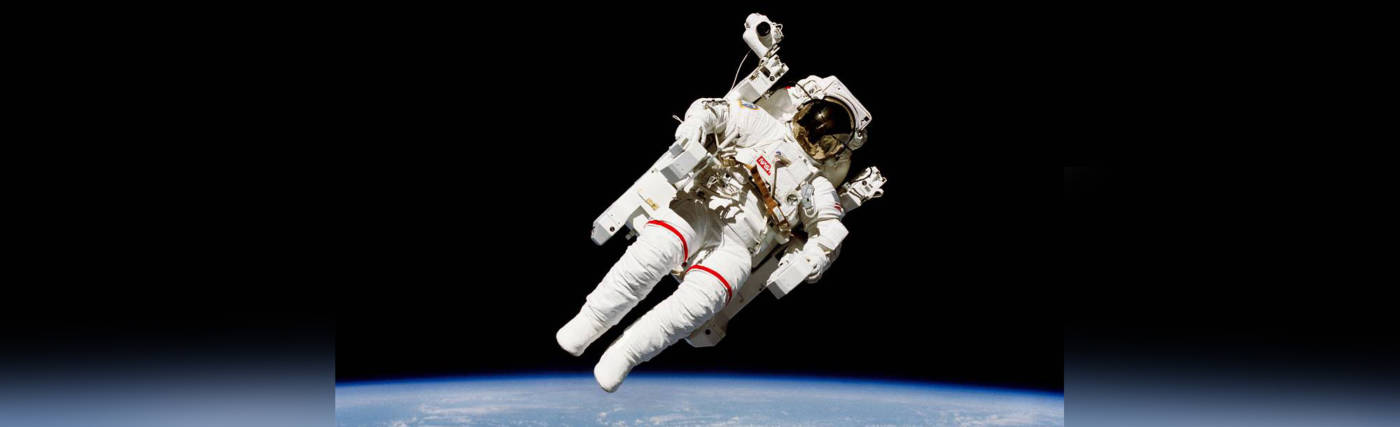
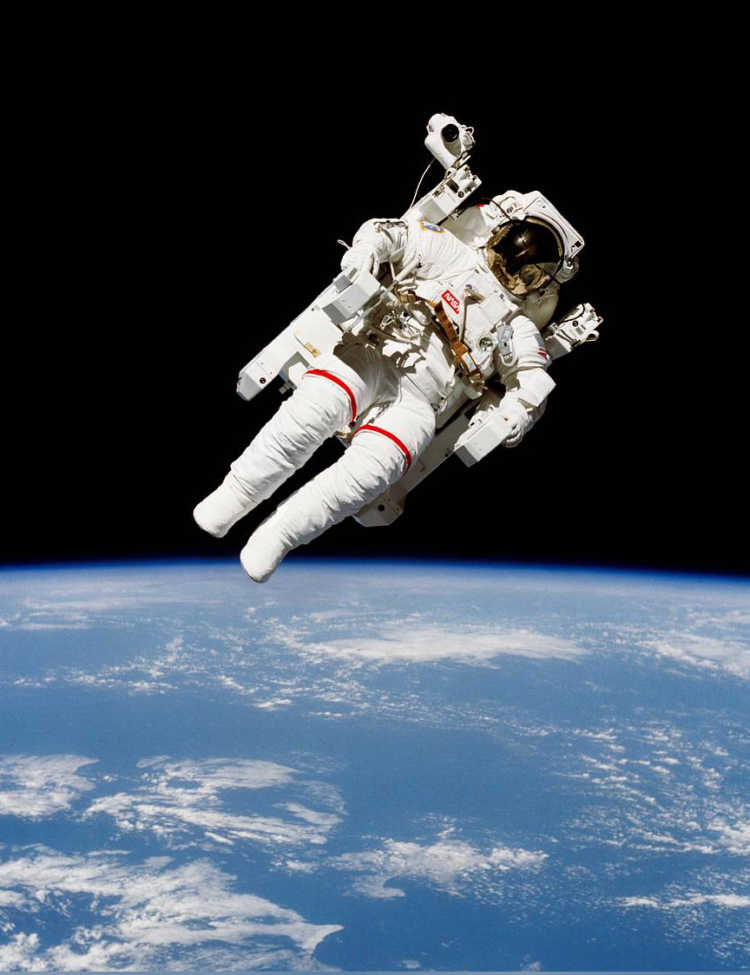
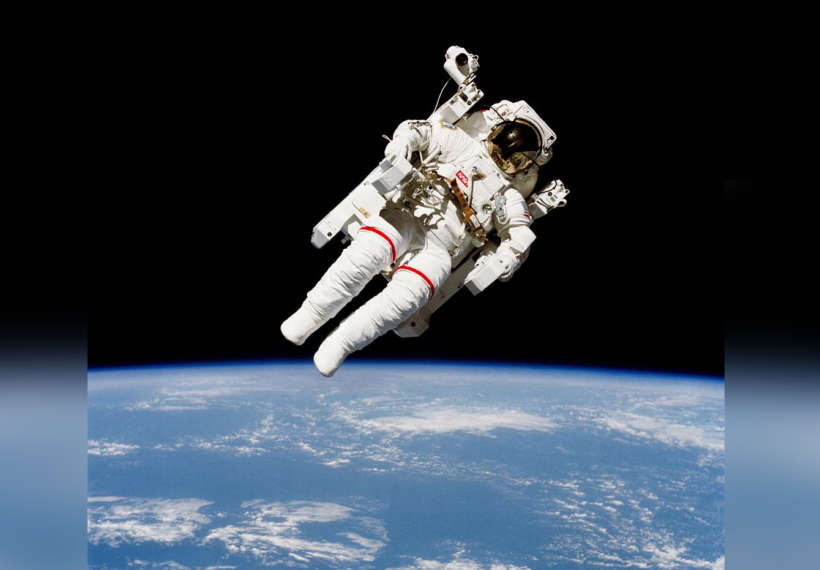
Lastly, we turn our attention to space. How much do you weigh in space? Neil tells us why we should be thinking about how much mass something contains instead of how much something weighs. You’ll learn why your weight in water is basically zero. Why are astronauts weightless in space? Neil explains how Sir Isaac Newton discovered orbits. Find out why most energy from a rocket launch is not used to get the rocket into space. All that, plus, we explore the science of Ad Astra, The Expanse, and 2001: A Space Odyssey.
Thanks to our Patrons Christopher Sukhanenya, Dmitry Pugachevich, Eugenio Barrera, Dakota Clifford, Nick Mancusi, Nicholas Musial, Sebastian Roser, Bryan J. Jacop, Robert Frasco, and Obumneme Ozoh for supporting us this week.
NOTE: StarTalk+ Patrons can watch or listen to this entire episode commercial-free.
About the prints that flank Neil in this video:
“Black Swan” & “White Swan” limited edition serigraph prints by Coast Salish artist Jane Kwatleematt Marston. For more information about this artist and her work, visit Inuit Gallery of Vancouver.
Transcript
DOWNLOAD SRTWelcome to StarTalk, your place in the universe where science and pop culture collide.
StarTalk begins right now.
Welcome to StarTalk.
I’m Neil deGrasse Tyson, your personal astrophysicist, and this episode features compilations of things you thought you knew.
Each segment, along with my co-host Chuck Nice, we dive into a topic that you might think you understand, but do you really?
What’s the difference between mass, weight and density, for example?
Well, let’s find out.
Chuck, good to see you again.
Good to see you.
What’s happening?
What do we got?
What’s going on?
I can’t wait to hear.
I’m still at it.
You know, I lose sleep at night thinking, I got to tell this to Chuck.
Just so you know, I’m thinking about you.
I don’t believe that for one second.
But I’ll take it.
I just got to straighten some things out.
I think that some people, not everybody, but some people I think have this all confused and I want to straighten it out.
It’s the difference between mass, weight and density.
Well, okay.
Now, without a doubt, there’s a lot of people that get that confused.
Okay, so generally, if you go on a diet, you want to lose weight, right?
Absolutely.
So it’s not what’s actually happening.
It is, but it’s not the root of what’s happening.
What you’re really doing is you’re losing mass.
You want there to be less of you tomorrow than there is today.
If only I could keep the parts that I want.
If you consume fewer calories today, then you burned calories today, you will lose weight.
It’s that simple.
I joked about this.
A weight loss book written by a physicist would have one sentence.
Consume calories at a slower rate than you burn them.
That’s the entire, that’s it.
But so if tomorrow you want less of you than there is today, you’re losing mass.
Okay, the mass is the sum of all the particles that comprise Chuck.
Okay, that’s your mass.
I could take you and put you on the moon.
You’ll weigh less, but you still have all of your particles.
Okay, then that is where I need to move.
When can we do this?
So if you weigh 180 pounds, I don’t know how much you weigh, but let’s call you 180 pounds on Earth.
On the moon, you weigh one sixth of that.
Right.
So you weigh 30 pounds.
So, Chuck, you want to lose 150 pounds?
Your nutrition will say, no, Chuck, you’ll die.
No, I’m just going to go to the moon for a day, weigh myself, I’m 150 pounds.
So your weight is not itself the measure of how much mass you have.
You also weigh a little less at the top of a mountain because you’re farther away from the center of the Earth than you do in Death Valley, where you’re at a low point relative to other places on Earth.
So if you get on a scale at the top of Everest, you’re going to weigh less than you would on that same scale in Death Valley.
In Death Valley, correct.
People at the equator weigh a little less than they would if they’re visiting Santa Claus.
Oh, that’s because there’s a lot of sun down there and they got to stay in bikini shape all year long.
That’s really what it’s about.
So the equator is the speed at which you are moving is faster than at other latitudes.
People on the equator are moving about a thousand miles an hour.
We here in New York, we’re moving about 800 miles an hour.
So that centrifugal force makes them lighter than we are.
Gotcha.
So all of this is affecting your weight, but it’s not affecting your mass.
So if you want to lose weight in any zone, then lose mass.
All right.
Just to be clear about that.
All right.
So weight loss programs are actually mass loss programs.
And so weight, then, is about forces, then.
Correct.
It’s not about…
It’s the definition of weight.
Weight is the force of gravity on you.
Well, whose gravity are we talking about?
Earth or the sun or Venus or the moon?
So you find out what are the conditions of that force of gravity on you in that place, not only among planets, but even different places on Earth, and then you’ve got your weight.
And that weight is related to how many molecules of Chuck exist.
But in the end of the day, if you want to weigh less, what you really mean is you want less mass.
You want less Chuck tomorrow than you had today.
So just want to put that out there.
Right.
Everybody can agree on that.
Less Chuck tomorrow.
It’s like we don’t show you the males we get.
When will Chuck disappear?
We withhold those from you, Chuck.
So now we talk about how heavy something is.
So when we think of something floating on water, generally the idea of it being heavy is not the same thought.
No.
If it’s heavy, it sinks.
Okay.
So now let’s take, let’s take, you know, let’s go to, who’s the guy who splits wood sections into firewood?
Lumberjack.
Whatever that is.
Okay.
Go take one of these Paul Bunyan guys, Paul Bunyan cylinders of wood.
It’s going to be really heavy.
We know this.
Take it, plunk it down in a swimming pool.
What happens to it?
It floats.
It floats.
Even though it’s super heavy.
It is heavy, but it floats.
Right.
So how do you get around that?
Let’s give more examples of that.
Ivory soap.
Nobody.
Okay.
Yes.
Ivory soap floats.
Right.
And as far as I know, it’s the only soap that floats.
I did an experiment when I was younger.
Lately.
But I did test this.
Yeah.
Ivory soap floats.
All the others.
Sink.
Sink.
So, why that should be a selling point, I don’t know.
But in its day, it was a selling point.
And then it was 88, 100% pure.
And it was like pure what?
Right.
Exactly.
I remember thinking that as a kid.
But Ivory soap long predates me, but I remember thinking all of that.
So, heavy cream is lighter than skim milk.
Heavy cream is lighter than skim milk.
And you know why?
Because it floats on the skim milk.
That’s how you get skim milk.
There you go.
The cream floats to the top.
The cream rises to the top.
You skim it off, you got some heavy cream.
So, we say it’s heavier, but we don’t really mean heavier.
Heavier, to me, is the absolute weight.
How heavy is it?
Can I pick it up?
What we mean is thinner.
No, it’s not thinner.
It’s less dense.
Less dense.
Viscosity is not.
I should have added that.
We’ll get to viscosity in a minute.
Heavy cream is less dense than water, than skim milk.
Right.
If you are less dense than something else, you float.
There it is.
Nothing else matters.
Right.
You will float.
So, heavy cream is, we would say, it’s lighter than skim milk, but that’s a little deceptive.
If you want to be precise, you say it’s less dense than skim milk.
Before it floats.
So, this is the fight I was in, the encounter I had in a Pasadena coffee shop when I ordered hot chocolate with whipped cream, and the hot chocolate came, and there was no whipped cream anywhere to be found, and I said, server, where is the whipped cream?
They said, oh, we put it on.
I said, where is it?
Oh, it must have sunk to the bottom.
At which point I said, either you are lying or the laws of physics that apply to the rest of the universe do not apply in your coffee shop.
And so he got all gruffy and indignant, and he went by and brought cream with him, okay, and then plunked it down, and it took one bob, and sort of, and it floated.
I said, thank you for my whipped cream.
Now, I don’t know if that became like a story, you know, because I’m sure waitstaff tell stories.
But that’s what happened.
So he’s thinking it’s heavy, it probably fell to the bottom, and would choose to lie at rather lie about it, thinking that I didn’t know what the hell I was talking about.
And when you took it away, you looked at him and you went, science, bitch.
You just got scienced.
You just got scienced.
So a couple more things about weight, mass and density.
So you realize that logs float, all right?
If you’re going to say, if I want it, but I don’t float very well.
All right.
So if I want to float on the water, I’m going to use a log.
So why don’t I get a big log and then hollow it out?
These are the first canoes.
Right.
The canoes are made of wood.
You know the canoe is going to float.
I’m going to get in it and we’re good to go.
Well, why don’t you make a boat out of steel?
Well, I can’t do that because the steel will sink.
That’s not a boat.
That’s not going to work.
No, let’s be clever about it.
By the way, if you make a boat out of steel, it’s then impervious to the weapons of other boats.
Oh my gosh, what a military advance this would be.
This in the 19th century, I think it was, where the first people figured out, I can make a boat out of things that are impervious to cannonballs.
And so whereas I make a boat out of wood, then it just busts through the wood.
So what matters is not the density of the material.
What matters is the density of everything that is sitting below water.
Aha.
So if I create a hull, only the outer edge of the hull is made of steel.
What’s everything else inside the hull made out of?
Something else.
No.
Air.
Air.
It’s like a ballast.
It’s okay.
No, no.
Ballast has a different purpose.
Because you want to stabilize.
Okay.
So, you put some heavy things just at the very bottom of the hull.
And that keeps it in position.
That keeps it in position.
That’d be ballast.
And a lot of the cobblestone in lower Manhattan that built the roads was ballast in ships that came from Europe.
And then they offload that and built roads with it.
Sweet.
Yeah.
So, a lot of it.
And other things as well.
But the point is, so now the density is, what is the total mass divided by the total volume?
So, the density is grams per cubic centimeter or pounds per cubic inch.
So those are the units of density.
So let me get some units out there.
So we’ve got the units of mass or grams and kilograms.
And I’m not going to tell you the unit of mass for the English system.
And the unit, you’re supposed to say, why not?
Tell me.
Why not?
No.
So, seriously, what is, why wouldn’t you give out the…
Okay.
The unit of mass in the English system is slug.
No.
Yes.
That’s why I told you.
I told you not to ask me.
So, so, so the mass, grams, kilograms, this sort of thing, volume is the cubic of some of some length, so cubic inch, cubic centimeter, cubic meter, those are the volumes.
Density is the mass divided by the volume.
Mass divided by volume.
Okay.
So, just see how that works.
So, if I have a certain amount of mass and I put it in a smaller and smaller volume.
It becomes more and more dense.
Yeah.
So, what happens if the denominator gets smaller, then the number gets bigger.
It’s bigger.
So, we get higher and higher density, because you’re cramming all this into a smaller volume.
Right.
The volume gets bigger and bigger and bigger for the same amount of mass, then the density gets lower and lower and lower.
You get beach balls and other things.
You’re spreading it out.
Spreading it out.
So, what I’ve done with the steel is I’ve put air in between the two steel sides of the boat.
So, now the density, the effective density, is the mass of the steel plus the mass of the air divided by the volume.
And when I do that, I get something that’s less dense than water, the whole thing floats.
So, then it will only go down a certain amount in the water.
A certain amount in the water.
That’s it.
But it will float.
That’s how you make boats out of steel, and that’s how military ships were first put together.
I mean, cool.
The indestructible type.
So, then you needed a weapon that can destroy the steel, and then you have the eternal contest of warring…
Arms raised.
Arms raised.
Exactly.
So, there you have it, Chuck.
So, we have mass density.
So, anything that floats on water is simply less dense than water.
Right.
It doesn’t matter how much it weighs.
Or what it is.
It just has to be less dense than water.
Nothing else matters.
That’s cool.
And it could weigh a zillion pounds, and it’ll just…
it’ll still float.
Which is why my Uncle Edward floats.
That’s a big man.
That’s a fat brother.
I’m telling you right now.
Oh, he’s a big fat buddy, but he floats.
So, fat is less dense than water, and bones and muscle is more dense.
So, if you float every time, you just have way more fat than muscle and bone.
Well, there you have it.
Good for you, Uncle Eddie.
That’s why it’s no accident that marine mammals have a lot of fat.
Okay, the blubber, they call it, right?
So, there’s a lot of fat there, and that gives them buoyancy in the water.
Yes.
All right.
Oh, by the way, what’s an ice cube made out of?
Water.
Okay, but why do they float?
Because they have air inside of them.
I don’t know.
Well, sometimes they do, but that’s not…
Oh, no.
They expand.
They expand.
It’s less dense than water.
So, it’s less dense than water.
The water it used to be now takes up more volume.
So, bigger volume makes it less dense.
So, ice floats.
There you go.
You know, we should do an explainer on ice expanding.
We should do that.
Well, looking forward to ice expanding then.
Thanks for doing this with me, Chuck.
Of course.
Always a pleasure.
We got to take a quick break, but when we come back, we’re going to talk about, you guessed it, ice expanding.
Why ice floats on StarTalk.
It’s Things You Thought You Knew edition.
We’ll see you in a moment.
I’m Joel Cherico, and I make pottery.
You can see my pottery on my website, cosmicmugs.com.
Cosmic Mugs, art that lets you taste the universe every day.
And I support Star Talk on Patreon.
This is Star Talk with Neil deGrasse Tyson.
Thanks for watching.
Yes, we are.
And this was interesting.
There are certain things that we just experience in our lives and never even think to question it.
Because it’s in our everyday life.
And some things you don’t want to know the answer.
You don’t want to know the answer, that’s different.
Some things you just like-
I best left unexplained, unknown.
This one, you asked a simple question, why does ice float?
Right.
Have you ever asked that?
I have.
You have, okay.
I have, yeah.
I mean, cause when you think about it, it’s water, but you’re putting it in water.
It’s liquid, it’s liquid.
It’s water in water, right.
It’s water in water, so-
And usually when you cool something down, it shrinks.
Okay, it becomes more dense.
Tell me about it.
It shrunk.
So it becomes more dense.
And so you would think that a cooler version of some liquid would be, you know, if you shrink the same mass down to a smaller volume, it’s more dense, that all ice cubes would sink to the bottom of your glass.
As a matter of fact, in certain parts of the oceans, I’m gonna, where you have what they call, oh God, now I forget the name of it, it was just on the tip of my tongue, but the coldest water stays at the bottom of the ocean.
Yeah, we’re not there yet.
Oh, we’re actually gonna talk about that?
Yes.
Oh, we are?
Oh, sweet.
Oh my gosh, we’re totally going there.
Forget about that.
All right, so a peculiar thing happens to water when it changes state, okay?
A change of state means you go from liquid to solid, solid to gas.
So we have water and there it is.
When it freezes, the water molecule, in order to freeze, takes up more volume than does the water molecule in a liquid state.
So the water expands by about 10%.
Nice.
And roughly, you can think about that as if you expand 10% and you go back into your liquid, you will bob with about 10% of your volume above the water and 90% below.
So just put an ice cube in your glass.
It’s easier to see this if it’s in a cube shape rather than in those crescent shapes or other things.
But if you take a cube and put it in there, 10% will be above the water and 90% will be below.
All right, hold on.
I just happen to have a glass of water here.
Oh, you do.
Is your ice in it?
Are they cubes?
Oh, my goodness.
Look at that.
That’s awesome.
Yes, this is a cube.
Okay.
And you just see it’s got like a little surface.
You can’t see it, but it’s got a little surface because the top part is clear.
I don’t know why.
But it’s just like you said.
It’s bobbing up.
But most of it is below.
Yeah, so Chuck, it’s not happening because I said so.
It’s happening because this is how the universe works.
No, you’re a wizard.
Stop lying.
Now, here’s an interesting fact.
If you take that same glass of water with that one ice cube in it and fill it as much as you possibly can so that not another drop can go in it without spilling over the edge.
If you do that, the ice will be sitting above that level, above the lip of the glass.
And you might be worried, oh my gosh, I better get a coaster because when this melts, it’s going to overflow.
But no, when it melts, it’s going to take up the volume that it’s already displacing in the water itself and it’s not going to get any higher than it currently is.
This is why the Arctic ice sheets in the Arctic, so where Santa Claus is, it is ice that is floating on the water.
In the future, where global warming melts the entire northern cap, when that happens, that alone will not increase the sea levels of the world because the ice is already floating in the bathtub of that water.
That’s correct.
So the ice you need to worry about is the ice that’s on land.
Oh, that runoff.
The runoff, okay, that ice, you melt that, you’re directly adding water that’s on Greenland and in primarily Greenland and Antarctica.
So that then starts flooding the oceans and raising the sea levels.
By the way, 232 feet, if that were to happen.
Oh, thank you for that number.
Yeah, I think I tweeted once that if you do that, then the water level will go up to the left elbow of the Statue of Liberty, the one that’s holding, I think it’s the Declaration of Independence just in her arm.
And yeah, and that basically you lose Manhattan and basically every other coastal city of which where you find most of the great cities of the world are on the water’s edge.
So anyhow, so that’s why ice floats, but there’s more going on here.
You could delay the freezing of the ice.
It freezes at 32 degrees or zero degrees Celsius.
You can make it freeze at like one degree below zero.
If you put it under pressure.
Yeah.
So it gets colder and it says, I want to freeze.
I have to get bigger.
I have to get bigger.
I’m not letting you.
So then it doesn’t.
It doesn’t change the state.
Okay.
But if you keep taking the temperature lower and lower, under pressure, the ice says, the ice says, okay.
And I will expand no matter what you’re doing.
And boom, pipes break.
Yeah.
Okay.
So I don’t know why I’m so happy about that.
I’m a homeowner.
What am I talking about?
That’s disastrous.
You’re happy that you now understand the full dynamics of that.
So it would be very hard for ice at 32 degrees to break a pipe because the pipes are made of typically, they’re made of copper or some strong metal.
And so it’ll keep it squeezed down and say, no, you’re not freezing at 30.
No, I’m not going to let you freeze at 30 degrees.
No, not at 29.
Oh, 25 degrees, pow!
And it is stronger than the pipes.
And you just break the pipes.
And, by the way, at that moment, all the pipes are frozen.
There’s no leakage.
When do you have leakage?
When the temperature goes up again and then the ice melts out of the path and then the water flies.
Ugh.
So the act of broken pipes in most cases is not the moment where you get the leak.
Because the ice is there.
The ice is there plugging the pipes.
It’s later on when the ice moves out of the way.
So this is the power of freezing ice.
Now, last point I want to make is, well, how about the density of water just as water?
Does it change density?
Yes, it does.
As you cool water, it takes up slightly less and less volume.
Hardly noticeable if you’re just swimming in it or just looking.
And if you heat water, it takes up slightly more volume.
And a lot of the increased sea level rise in the future of global warming is simply because the oceans are warmer.
And the warmer they take up, you know, let’s say it’s 1% more depth.
Right.
But what is 1% more depth in the middle of the ocean where it’s three miles deep?
If it’s 1% more depth, by the time you get to the shoreline, you have flooding.
So let’s cool the water.
It gets colder and colder and colder.
It begins to shrink.
Well, at some point that has to turn around because eventually it’s going to become ice where it’s bigger.
There is a point where ice is at its densest and it’s three degrees Celsius.
Really?
So you cool water at the surface.
It’s denser than the water below it.
And so that cool water drops and it goes to the bottom.
And it stays there.
You keep trying to cool water at the top and it goes down to the bottom.
But what happens now, your cooling water, now the water is two degrees Celsius or one degree Celsius.
It begins to stay on top.
Then it hits zero degrees Celsius.
It freezes on top.
On top.
Keeping the three degree water at the bottom.
Right.
Preserving all aquatic life over the wintertime.
That’s why you don’t have bird’s eye frozen fish once the lake freezes.
Just think about it.
If ice sank, oh my gosh, you would freeze lakes from the bottom up.
You’d freeze the top layer, go to the bottom, and slowly but surely, all the fish would be swimming in an ever thinner layer of water until you just go in and scoop them all up, and that’s the last fish that would ever exist in that lake.
Oh, what a bear’s dream.
No, they’re hibernating.
They’re missing this.
That’s true, yeah.
So this feature of water protects life over the winter, aquatic life over the winter.
And once you form the ice layer on the top, it actually insulates the bottom.
You get really cold on top, but how long will that take to transmit through a thick layer of ice?
It takes a long time by then.
It’s daytime compared to night, where spring has come, and so you rarely, if ever, do you end up freezing an entire lake.
And it’s because of this property of water that ice floats.
The ice is less dense than water.
That is amazing.
And it’s pretty cool that this becomes like its own little closed ecosystem where the ice freezes on top, insulates the water beneath it so that all the life is protected.
It’s protected.
That’s amazing.
It’s basically, so this is a feature of this fact about water, the water molecule.
One other thing, it’s what enables you to ice skate, okay, because the reverse is true.
So if I have an ice cube, and it’s sitting at, let’s say, 30 degrees, okay, and it’s frozen, so minus one, let’s say, Celsius.
If I squeeze it, if I squeeze it, I’m trying to put it into a smaller volume.
Ice won’t let you do that.
Right.
But if I press it really hard, what’s the only way the ice can respond to you to go into a smaller volume?
It’s got to become water.
It’s got to become water.
So you can squeeze-melt something, even at sub-freezing temperatures.
That’s how you get the great ice cube, no, no, ice spheres for drinking scotch.
What you just said, they take a copper press.
And I’m too excited about this.
Is this bar information that you’re sharing?
I know, I know.
Now we’re talking about scotch and drinking.
I’m like, oh, my God!
And you don’t even have your scotch voice today.
I know, exactly.
You want another scotch.
Definitely need a little scotch, as you say.
Let me finish this point.
When you’re skating on ice, okay, the blade is the way it’s sharpened, it has a very sharp edge on one side and on the other.
On the left and on the right hand side.
So you go on an edge and skaters know about this.
On the inside edge or on the outside edge.
That is a lot of pressure.
That pressure is so high that it actually melts the ice in place.
And the skate glides on a bead of water.
Wow, that’s great.
That’s why ice is slippery on ice skates.
So yeah, that same premise you just demonstrated.
They make spheres of ice for drinking scotch.
I love ice spheres.
And they use, for some reason, copper.
I don’t know why, but they use copper or brass.
One or the other.
And they just put the ice in the sphere and they let the brass…
It’s a big weight.
It’s a brass weight or a copper weight.
And it just presses down on the ice, and then the ice melts into a ball.
That is so cool.
Oh, okay.
Okay, so shaping the sphere from the pressure on a shape that’s not a sphere.
That’s right.
Okay.
So under pressure, yes, it will melt.
It melts.
Yet when you leave the pressure, it freezes instantly.
It freezes right back.
Because it’s the below freezing temperature that you started with.
Exactly.
And then you just have a big, a literal ball of ice.
Okay, Chuck, I don’t go to many bars.
I’ve never seen this.
I trust that in your bar hopping, this is something, a feature.
Okay.
I’m going to have to get you out, man.
I’m going to have to get you out of the house.
So that’s it, Chuck.
That’s ice is less dense than water.
Nice.
I’m always fascinated how we end up in these great places from something so seemingly mundane as a cube of ice or ice melting.
The next time we do this, we’ve got to do this with one of your spheres of ice, and I want to do a whole video with you and your Scotch voice.
Oh, absolutely.
Not a problem.
I’ll start on it right now.
Next on StarTalk’s Things You Thought You Knew edition, we’re gonna talk about the concept of weight in space.
It’s time to give a Patreon shout out to the following Patreon patrons.
Christopher Sukanenya, Dmitri Pugachevich and Ingenio Barrera.
Thank you so much guys for your support.
Without you, you know we couldn’t do this show.
And for those of you listening who would like your very own Patreon shout out, please go to patreon.com/startalkradio and support us.
Thank you.
Okay, Neil, here’s one for you.
All right.
In space, how much does an astronaut weigh?
You see, weight is not what you think it is.
Remember when we talked about mass versus weight?
Do you remember that?
Right.
We talked about that, and I said, you want to weigh less?
Go to the top of a mountain.
You’ll burn calories getting up there, so you’ll lose a little bit of weight for that, but at the top of a mountain, you’re farther away from Earth’s center, and you run the math, you weigh a little bit less.
Nothing significant, nothing large, but a measurable amount.
Okay.
Right.
It’s not gonna replace your P90X workout.
Not only that, you don’t weigh as much in air as you would in a vacuum, okay?
Because air has a buoyant force that makes you weigh a little less than you would if there was no air around you.
We don’t even think about that.
That doesn’t even, but a helium balloon knows everything about that.
Right, that’s so funny, yeah.
Remember that, right?
Helium balloon cares what the buoyant force of the air is on it, because it wants to float at the top of the air.
So I ask you, you know, what do you weigh when you’re in the water?
If I say, Chuck, what do you weigh?
And you’ll probably give me your weight on dry land.
Right.
But your weight in the water, since you’re about the density of water, your weight is basically zero.
Really?
Some people float, some people sink, and on average, people just sort of bob there.
That means you weigh nothing.
That’s, you’re weightless in the water.
In fact, NASA trains astronauts in a huge swimming pool to simulate what it’d be like to be weightless in space.
Do you realize there’s a swimming pool big enough to submerge an entire mock-up of the Hubble Space Telescope and to put in astronauts in there with tools to work on it?
Okay, that’s the pool I want to swim in.
That’s a badass pool, right?
I think it’s the biggest swimming pool in the world, actually.
Yeah, that pool is dope, okay?
And I’m sure it’s more than three feet because…
But there’s no diving board, I would say.
Right, only there was a diving board.
That pool would be amazing.
Let me dive down the tube of the Hubble Telescope.
And if they had a water slide too, oh my God.
So here’s the thing.
When we think of the blue whale, for example, the largest animal there ever was.
By the way, point of pride, blue whale is a mammal, okay?
So mammals have the record.
They’re bigger than dinosaurs ever were.
We can say, well, how much does it weigh?
And you look it up and you Google it, it’ll give you a weight for that whale, a full-grown whale.
But no, excuse me, that’s if you took it out of the water, put it on land and put it on a scale.
But that’s not where it lives.
That’s not its environment.
No.
By the way, I’d like to see that scale.
You’d have to weigh it in the water.
And when you do that, it weighs zero.
That’s why whales can just hang there.
Yeah, it’s such a beautiful thing to see.
Okay, if they had weight in the water, they would sink.
So, they’re just there.
They’re very close to zero.
So, they still have all the mass.
So, I’m saying we don’t really think of the word weight the way we ought to in a sort of physically significant way.
I just want to put that out there.
Whales weigh nothing in the water.
And they don’t hang out on land, so the weight on land is kind of irrelevant to us and to them.
So, really we should find a way to think about how much mass they contain rather than simply how much they weigh.
And usually that’s what people mean when they say that.
But I just want to try to be clear about that.
Physically clear about that.
And whales are a lot of blubbers, so muscle weighs more than fat, so probably not a lot of mass there.
No, no, it’s a lot.
No, no, there’s still a lot of mass.
There’s still a lot of mass, I know.
I’m just trying to not body shame the whale.
I don’t want to body shame the whale.
That’s what I’m saying.
You started it.
All right, so now astronauts in orbit weigh precisely zero.
Precise zero, okay?
And it’s not because they’re far away from Earth.
As I’ve said in others of these, how far away is the astronaut from Earth if they visit the space station?
Three-eighths of an inch above a schoolroom globe, if you shrunk it all down to that, it’d be three-eighths of an inch away.
That’s close.
It’s a fingernail.
Right, so a finger, yeah, the width of your finger, less even.
Yes, less than, yeah.
Yeah, yeah.
So that’s the distance.
So you can’t tell me, oh, they’re in space, they’ve left gravity.
No, no, if you’ve left gravity by being in orbit, then what the hell’s holding the moon in orbit, okay?
What do you think the moon is orbiting?
Of course, the moon feels earth gravity.
And it could also be, you know, the moon is kind of sweet on the earth, but so.
So, and there was a well-known news announcer back in the 1960s, who when the Apollo astronauts were headed to the moon for the first time, they said the Apollo astronauts as of 30 this morning, whatever time it was, have officially left the gravitational pole of the earth.
They actually said that on the-
Yes, yes, yes, yes.
You can’t leave the gravitational pole of the earth en route to the moon if the moon is orbiting earth.
Right.
Okay, so I don’t think they thought that through.
And in fact, in the equations, earth’s gravitational field gets less and less and less as you go out in space, but it never actually hits zero until you get to infinity.
Okay, so you tell me when you get to infinity, you call me and we’ll talk.
So, the reason why they’re weightless has nothing to do with their distance from earth.
It has to do with the fact that they were falling towards earth or free fall.
So I put you in an elevator shaft in a tall building and I cut the cable.
Okay, no, I put you in the elevator, you’re just standing there, right?
So here we go.
And you’re standing on a scale that has a spring.
So you’re squeezing the spring and it shows your weight.
But let’s just use round numbers, say 200 pounds, okay?
So there you are, the scale registers 200 pounds because you’re squeezing the scale.
Gravity is pulling on you to squeeze the spring to indicate the measurement.
Okay, now I cut the elevator cable, okay?
So what now happens?
The elevator drops.
The scale drops.
You drop.
All three of you are now falling at exactly the same rate.
Right.
So there is no net force of you on the spring.
Right, that’s right.
So while you are falling, you weigh zero.
And the scale will say zero, because it will not.
The scale will say zero.
Because there will be no compression to measure.
Correct, and here’s another measure of that.
You ready?
Let’s say you’re in an elevator and it’s just standing there, and you’re holding, you know, from my professor angle, I say you’re holding a piece of chalk, but no one holds chalk.
So what are you holding?
Find a, hold a ball, okay?
There you go.
If you let go of the ball, it drops to the ground, right?
Okay?
In fact, drop it is synonymous with let go, because gravity does that work, right?
The phrase drop it, you just let go.
You could just say let go and it means drop it, all right?
Because we live in a gravitational field that…
That doesn’t work in a cop movie though, it just sounds off.
Let go of the gun!
They do say drop it, they do say drop it.
And unless you’re black, in which case, they just…
That’s a whole other thing.
All right, so.
Okay, let’s go.
So now I cut the elevator cable, now you begin to fall.
Now you’re standing there holding the ball, now let go of the ball.
Well, you’re falling.
The ball is falling at exactly the same rate you are.
So it’ll appear to float in front of your face.
But really, you’re both…
It’s not floating.
You’re both just falling.
Everybody’s falling.
But from your point of view, you’re saying to yourself, wow, it’s floating.
I’m floating.
You do this until you die, when the elevator hits the bottom.
Right, exactly.
It’s a beautiful experiment until you’re a pile of goo, when the elevator hits the bottom.
Yeah, and the ball survives, of course.
The ball bounces, yes.
Right, you know.
So here’s the deal, okay?
I’m telling you the astronauts in orbit around the Earth are falling towards Earth.
Right.
In free fall, just like you in the elevator cable that I just cut.
Right.
All right?
Now, the reason why they don’t hit Earth, because they have really fast sideways motion.
So watch what happens, okay?
Watch what happens.
Here you are in an elevator, and you know you’re going to hit the ground, and you’re going to die, okay?
I’m going to say, all right, let’s take this elevator and move it sideways really fast.
Well, how fast should it go?
Let’s move it sideways so fast, so by the time it drops a foot, let’s say, Earth has curved a foot away from it.
You drop five feet, Earth has curved five feet away from it.
So whatever distance you have fallen, the curvature of Earth, because you’re traveling so fast down range, the curvature of the Earth cancels it out.
Wow.
Precisely.
That’s perfect.
And there’s one speed for which that is true, and that is if you go sideways five miles per second on Earth.
So you go sideways five miles per second.
At that speed, you will free fall to Earth at exactly the same rate Earth curves away from you.
You will never hit Earth.
And we have another word for this, because if you never hit Earth, this will just keep going.
You come back where you started and you keep going.
We have a word for that.
It’s called orbit.
So orbit is freefall with high sideways velocity around the Earth.
And that’s why people say, oh, we launched the rocket into space today.
What you really did was…
Have you ever watched a rocket more than just a couple of minutes after the launch pad?
Okay, what does it do?
It’s downrange.
It starts to careen off.
Most of the energy that’s launching that rocket is not to get it into space.
No, it’s to give it that sideways motion at five miles per second so that it can sustain an orbit around the Earth.
That’s pretty dope.
It’s totally dope.
And you know who first figured this out?
My man.
No, don’t even say it.
Isaac Newton.
My man, Isaac Newton.
Okay, he drew a picture.
He had Earth, okay, and he drew a little mountain, and he had a little, was it a cannon or something at the top of the mountain?
He said, what happens if you shoot the cannon out sideways?
Okay, and it just hits the ground.
Suppose you give it more speed.
It’ll go farther before it hits the ground.
Let’s give it more and more speed.
And as you follow this diagram, the cannonball continues around the earth, but still hits earth.
Is there a speed where it goes all the way around the earth, does not hit earth, and it hits you in the back of the head?
But you duck and the cannonball continues.
Is there a speed for that?
Yes.
And he figured out what that speed is.
And that’s the speed of orbit around the earth.
And like I said, that’s five miles per second.
Isaac Newton invented orbits with that simple diagram.
And in so doing, he merged our understanding of falling objects with the orbit of the moon around the earth.
This was his revelation when he watched the apple fall.
He didn’t hit him on the head, by the way.
He watched the apple fall straight down.
And he sees the moon in orbit around the earth.
And he said, this is exactly the same phenomenon.
Wow.
Except the moon is going sideways so that it doesn’t hit the earth.
So the moon in earth’s gravity is weightless because it’s in free fall around the earth.
There you go.
Wow.
That’s amazing.
Okay.
So now I just got to put this out there.
The movie Ad Astra.
Okay.
Yes.
With Matt Damon.
No.
I’m sorry.
Sorry.
Wait.
Don’t tell me.
Don’t tell me.
Because that’s the Marsha.
Get your leading man straight.
Yeah.
That’s Brad Pitt.
Looking for his dad who was Tommy Lee Jones.
Correct.
Correct.
Okay.
So in that movie, they knew correctly that you don’t have to wait three days to get to the moon.
That’s like a sort of a minimum energy transfer to the moon, where you fire your rockets until you have enough to sort of get into the moon’s pull and then the moon pulls you down.
So you can use minimal fuel, but if you want to get there, you can get there in a few hours and just use a lot of rocket fuel.
If your rockets are burning on your ship, you have weight on that ship because it’s accelerating towards you.
Right.
That is no different from you having weight standing here on earth because earth, the force of gravity is that same phenomenon.
So if I go on a ship and I don’t care where I am in the universe, if I’m accelerating the ship at 9.8 meters per second per second, that’s the acceleration of gravity on earth.
If I accelerate the ship at that speed in any direction, I can stand up at the bottom of the ship and it is though I’m standing on earth.
And what I’m telling you is that in that movie, they show people jetting around the solar system because it’s the future and the rockets are always ignited and everyone is floating in the ship.
No.
No.
No.
It wouldn’t have worked like that.
They got that totally wrong.
So what would have happened is they would have been pinned up against.
Pinned up against the thing.
If it’s strong accelerations, that’s right, because what’s happening is at any given moment, the whole system is going at a certain speed.
But if it’s accelerating, then the ship is accelerating towards you.
And so it’s going to come up against you and put a scale between there.
You’re going to have an equivalent weight on that ship.
Wow.
So space is not inherently a weightless place unless you are free falling towards one place or another.
And to make that happen, you can’t have rockets firing.
It’s got to have a sideways motion going on around the Earth, around the Earth, or you launch from the Earth and you reach up and you turn off your rockets and then you fall towards the moon.
Right.
Then your weight was that whole way.
But the moment you turn on the rockets, you’re going to pin to the side, the back, the front.
And so in fact, they’re long term plans to go to Mars if you don’t want to lose bone mass and all this and you don’t want to rotate the ship.
You accelerate halfway there and then you have to decelerate, otherwise you’ll miss Mars.
So what they do is then they turn the rocket around, then you decelerate.
But in either case, you can have an equivalent of 1G, you can have earth gravity the whole way.
Wow, look at that.
And you’ll get there like in a couple of weeks.
That’s cool.
I think maybe even faster rather than the 9, 10 months that it normally takes.
Yeah, that’s the premise behind The Expanse, the movie The Expanse.
Okay, no.
I mean, not the movie, the series.
The series.
That’s next on my binge list.
Yeah, definitely.
One very last thing because we’re out of time.
So just to be clear, there are three ways to simulate gravity.
One of them is just be on earth and let’s call that real gravity.
Okay.
Another way is to accelerate something at the acceleration of gravity, and a third way is you can rotate something and then the centrifugal force that wants to fling you outwards, that you’ll read that as a gravitational force.
And so that’s where you have a ring.
So if you did rotate a ring, you’d walk around on the outer rim, as they shown famously in the movie 2001, A Space Odyssey.
So there you have it.
Going into space does not automatically make you weightless.
Only a free fall towards an object will.
Very cool.
And the thing that I took away from this talk most is, if you shoot a cannon off a side of a mountain at five miles per second, you should duck.
Duck?
No, duck 88 minutes later.
That’s how long it will take.
That’s cool.
Oh, by the way, that calculation, we’re not going to get into it here, but I’ll just tell you, if you dig a hole through the earth, going through the center and coming out the other side, and then you drop something through, it will fall towards the center, overshoot the center, come out the other side, and if nobody grabs it, it will then bob back down and come back into your hand.
That round trip also takes 88 minutes.
Yes.
Oh, man.
Well, I’m going to start digging now.
I got one more.
One more.
You ready?
Just while we’re on the subject.
Earth’s equator feels a little bit of centrifugal force.
So you weigh a little bit less on the equator than you do at other latitudes.
So if I speed up Earth, you’ll weigh less and less and less and less.
Sweet.
There’s a speed with which I can spin Earth where you weigh so much less that you weigh zero.
You know what speed that is?
At the equator?
You know what speed that is?
78 RPM.
Chuck, how old are you?
No, so that’s speed.
So if the equator makes one full spin in 88 minutes, you’re weightless.
There you go.
You’ll just hover over the ground.
And so basically at that point, you’re in orbit around the earth.
It’s all the same number.
That’s what’s cool about it.
That is cool.
The thing that rotates once every 88 minutes, everyone on the equator is weightless.
Sweet.
Gotta end it there, Chuck.
All right, that was cool.
I’m going to Ecuador.
What a coincidence.
They’re named Ecuador and they’re on the equator.
Who would have thought?
All right, Chuck, always good to have you.
Always a pleasure.
Neil deGrasse Tyson here.

 Become a Patron