


 Unlock with Patreon
About This Episode
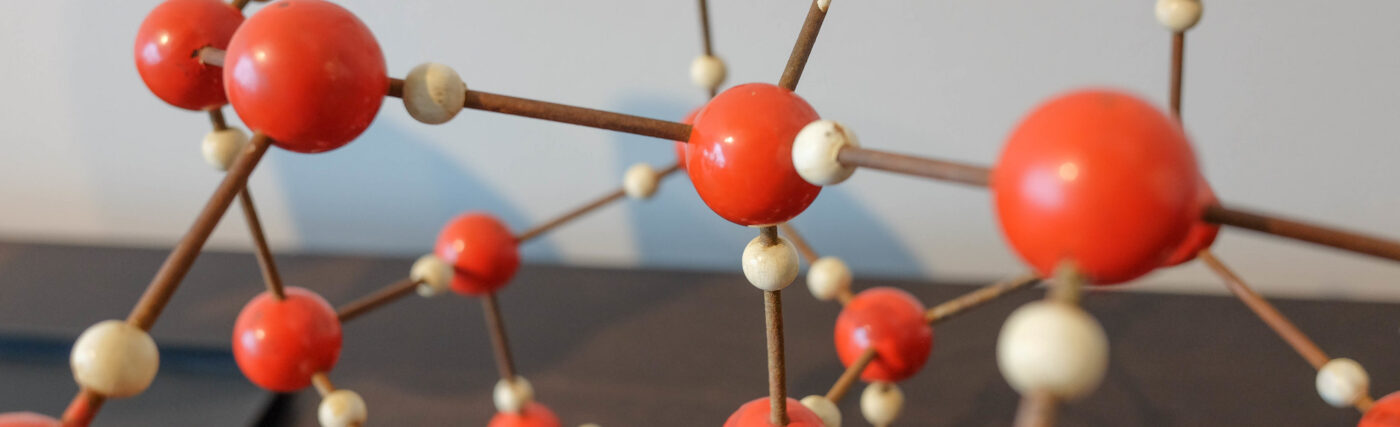
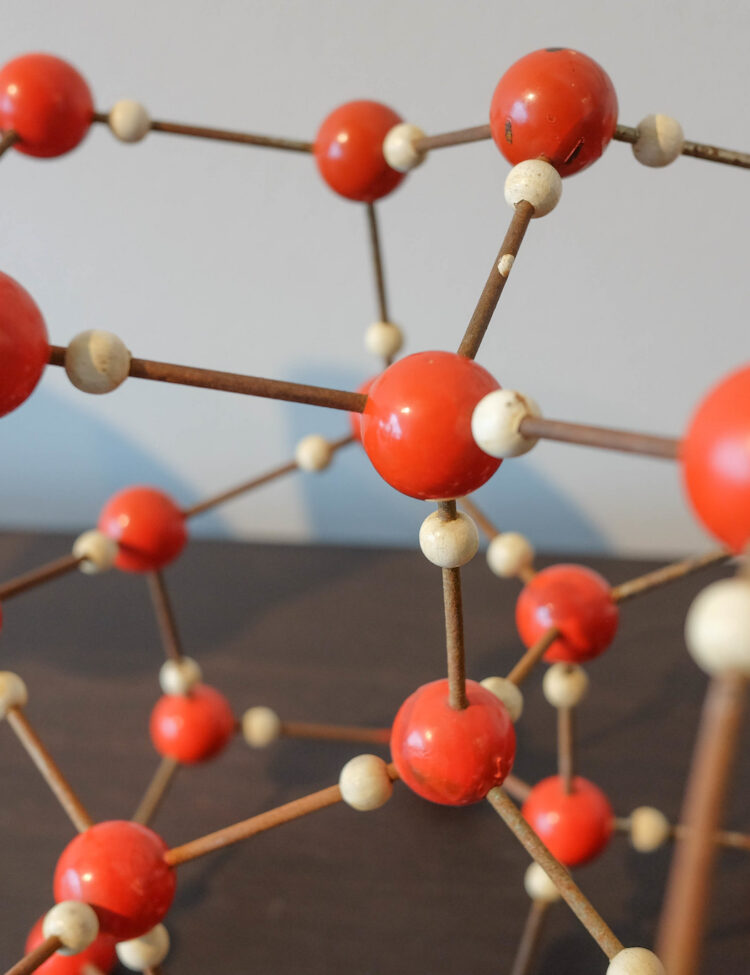
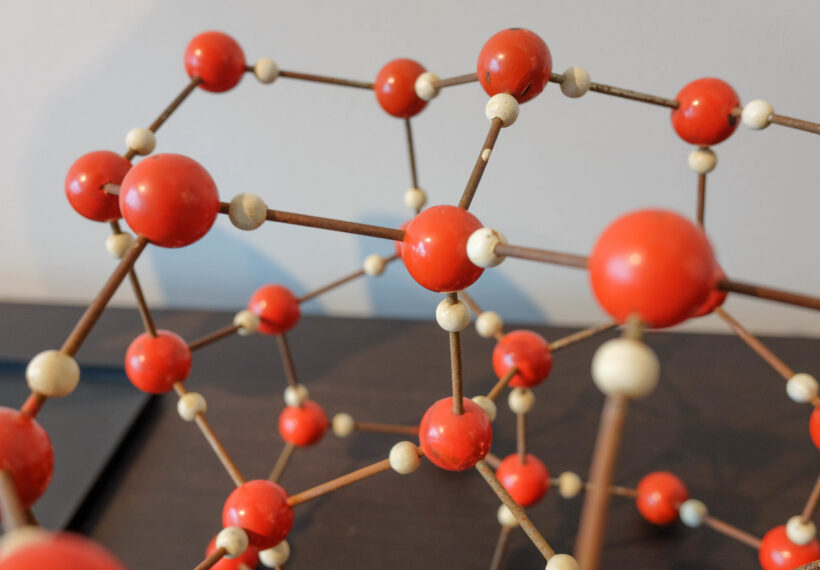
How small is a molecule? What is the color of light? How can quantum physics spoil food? Neil deGrasse Tyson and comic co-host Chuck Nice visualize a molecule’s actual size, break down the different colors of light, and the physics of what’s going on in your fridge.
To start, Neil gives his favorite thought experiment to help us understand the size of molecules. You’ll learn why this leads Chuck to say he’s never drinking water again. Are there more molecules in a breath than there are breaths of air on Earth? Discover more about “quantum construction” and building things on a molecular level. You’ll learn about Avogadro’s number and measuring things by mole. We explore why it’s remarkable that we were even able to discover molecules at all. Neil explains how our five senses held us back from discovering things until we invented ways outside our senses to discover them. All that, plus, we discuss why there’s a philosophical issue in our own physiology when it comes to communicating things of extraordinary size in the universe.
Red hot poker, red hot chili peppers, does red really mean hot? Learn how objects radiate electromagnetic energy and how temperature corresponds to color. Is blue really cooler? Why is Neil pissed off at photographers and water coolers? We explore temperatures at the scale of the universe and why our color associations are very Earth-minded. Find out how burning printer plates and arc lamps work. What color is the Sun?
How does food spoil? Neil tells us about the “normal” way food goes bad which involves microbes, bacteria, and temperature. We explore unpasteurized milk vs. pasteurized milk. Then, Neil explains how quantum physics can spoil your food (after a really long time). We discuss “quantum tunneling.” You’ll learn about the behavior of molecules and their continual quest to be “happy.” All that, plus, find out if there’s anything you can do to stop this quantum phenomena.
Thanks to our Patrons Kyle Brown, Jackie Meyer, Susan Schaubel, TheOGrestauranteur, Raf Fiol, David Sternberg, Ian, Ravi Seshadri, Marilyn Woodruff, Billy Boswell, reexilla, Евгений Семилетов, David Colón, Stephen Garr, Denver Naicker, David Carter, Reggie from Decatur, Ezekiel Reeves, GopherLove, Bryan Ebert, Jaidyn Janis, Mat Hill, Serin Dipity, Alpay Büyükyavuz, Conner Poll, Isabella, Nick Staffa, Mike Beeman, Andrew Walls, Emily Ashby-Flores, Jonathan Blackburn, Ramon Alarcon, Vincent Sheffer, Vonté Rushdan, Fopetar, jmb64, Aleksandr Kolchanov, Sunshine Squared, OMNI Ludicrous, Natalie Spangler, swimeveryday, Dean Winters, Rostislav Shnaper, Zach Zabel, t, Bill Doss, Sheilah Oliver, Kim Nash-Game, Micah Lettuce, Taylor Bittle, Jamie Clark, Jae Starks, Emily & Justin, Christopher Rogers, Koral Gail Eileen Hamilton, Kenny G, Onlydying, Jim, Ray Walker, Eli, Michael Garcia, Paul Stephen Howard, Kamilah Morton, Seth Osborn, Tyler Dixon, Kenneth Strickland, SpitfireBanksRight, Jose Hernandez, Nia Gill, raju, Pinky MacGyver, Mukunth Natarajan, John Zoeller, Toni Zugel, Lindsey King, Jonathan, Rocco Rizzo, Bengo Bashi, bret sechler, TheFailedPhysicist, James fish, GamerBach, John P. Reineck, Johan Rimez, Michael Mills, Alex Moore, Joseph Smith Blanco, christophe paka, Joshua McIntyre, Chris Weston, Stache Hardbody, Tamsin Gorecka, dmanphotoguy, Tyler Jacobsen, William Stoddard, Jason, and Josh Dobbs for supporting us this week.
NOTE: StarTalk+ Patrons can listen to this entire episode commercial-free.
Transcript
DOWNLOAD SRTHey, StarTalkians, we’ve got yet another Things You Thought You Knew episode.
We’re talking about small molecules, the temperature of light, and food gone bad.
Check it out.
Welcome to StarTalk, your place in the universe where science and pop culture collide.
StarTalk begins right now.
Do you have any idea how small molecules are?
Well, seeing as I can’t see them, I’m going to say I do not.
Right.
Even if you did say you knew, I would say you didn’t know.
I’m just pulling rank here.
I’m just saying molecules.
I mean, think about it.
Our understanding of the existence of atoms did not even come into age until the 20th century.
Atoms were still a hypothesis, all right, that there’d be this sort of smallest unit of a material called the atom.
By the way, the word atom from the Greek means indivisible.
So they imagined that there was some individual minimal part of a thing.
But of course, we break out, bust atoms all the time.
So no, they’re not indivisible, but we kept the term.
We kept the term atom to describe the electrons, protons, neutrons, the classical particles you learn about in high school chemistry and maybe physics.
So molecules are, I could give an example, okay?
And this is my favorite example of them all.
So I ask you, think about how much water there is in the world, in all the oceans.
Okay.
And if you go in the middle of the ocean, it’s miles deep.
Okay?
The Titanic was like three and a half mile.
I forgot the exact number.
Multiple miles below Earth’s surface.
Okay?
That’s a lot of water.
It’s a lot of water.
And what is the water molecule?
H2O.
H2O.
Okay?
So two hydrogen, one oxygen.
H2O.
So it just salts and dissolves salts and fish poop and stuff like that.
But it’s basically H2O all over the world.
All right.
I love that you’re throwing the fish poop.
I’m so proud of you.
Thank you.
That’s the juvenile part.
The eight-year-olds will want to know that.
Yes.
There’s also fish poop in the ocean.
So where else does it go?
And just to recite the title of a book they may have grown up on, everything poops.
It’s just a story.
It’s for little kids.
Because they poop and they know they poop and they’re fascinated by it.
And it’s just an account that everybody poops.
And all the fish poop in the ocean.
They don’t go onto land to poop.
Yeah.
I read that book to my daughter.
She thought it was crappy.
I couldn’t help it.
So they don’t have outhouses on the land, right?
Right.
That would be amazing, though.
Poop in situ.
Wouldn’t that be, oh, God, you just gave me the best thought in the world where a fish just shows up at somebody’s apartment door or house and just lets one go and goes, how do you like it?
Put it into your own house.
Because we put all our sewage into theirs.
We put them into theirs, right?
How great would that be?
Now you know how it feels.
All right.
So I now take a glass and fill it with water.
Okay.
A regular cup, a cup, okay, that you might drink water out of.
Okay.
Fill it up.
So stare at that cup.
And I will tell you that there are more molecules of water in that cup.
Then there are cups of water in all the world’s oceans.
Holy crap.
Wow.
Okay.
Now, the reason why I couched it that way is because that leads to fascinating conclusions.
Okay.
If this cup of water has more molecules than there are cups of water in all the world, that means when I drink this cup of water, and it comes out of me eventually, right, through snot, spit, sweat, pee, whatever, it’ll come out of you.
And it goes back into the environment, okay?
You have excreted enough molecules to populate every single cup of water that is ever drawn from the oceans.
Just got to give it enough time, okay?
So, this moisture goes back into the environment, and the molecules that pass through my kidneys are now working their way around the world.
Give it enough time, I can guarantee you that there will be some molecules in that next cup of water you scoop that pass through my kidneys.
So I get to make the following statement.
Every glass of water you drink contains molecules that pass through the kidneys of Abe Lincoln, of Genghis Khan, Joan of Arc.
Pick your favorite historical character.
You have shared water molecules with that person.
Well, all I can say is that somehow you’ve done it, Neil.
You’ve done it.
You’ve made it so I am never again going to drink water.
I think I ran the calculation.
It’s about 100 molecules per cup of water.
That’s how small molecules are.
That’s my point.
That’s the whole point of this exercise.
I’ll give you one more.
You ready?
Go for it.
All right.
There are more molecules in a breath of air.
This would be now nitrogen molecules, mostly nitrogen and then oxygen.
N2 and O2, because they’re each in a molecular form.
A little bit of argon and some carbon dioxide, but it’s predominantly nitrogen and oxygen.
There are more air molecules in a breath of air you take than there are breaths of air in all of the Earth’s atmosphere.
Oh, got you.
Right.
Okay.
So it means when you exhale, right, air that comes out of your lungs scatters back into the air and there are plenty of air molecules to scatter into every other breath that will ever be taken in the future history of the world.
Wow.
So you’re not only sharing water molecules with people who come before you, you’re sharing air molecules that you have breathed.
That’s how small they are.
This is my point.
And so it’s remarkable that we were able to discover them at all, much less the atoms that they comprise.
What you do is you look at things that they do that you can see through microscopes, electron microscopes, this sort of thing.
And you say the only understanding of this is if the atoms got together and made a molecule.
But nobody’s holding up a molecule.
Here, take this and plug it in this way.
All right, there’s some ways to image molecules.
We’re on the verge of that.
It’s something called quantum construction.
There’s a real term for it, but what they’re actually doing is if you get tools small enough, you can take a molecule and put it here and add an atom and build things at a molecular level, the way carpenters or construction workers assemble buildings by putting bricks together.
Okay, that’s freaky and scary.
It’s a little freaky and scary, right?
If you have a brick that’s a smaller part of a larger hole, you just need tools that can maneuver the bricks.
Right.
If I want to make a molecule that’s never been made before, and I make sure that it’s a stable molecule, how am I going to do that?
Do I just put all of them and jiggle them?
Maybe they won’t want to do that on their own.
But if I make it happen with quantum tweezers, then I can start making molecules and you might even be able to make life at that point and not wait for it to happen by chance.
So a frontier is our ability to manipulate those things that we could never see.
Interesting.
That is amazing.
But when I think of it, not as creepy that you’re drinking water that passed through someone else’s kidneys.
No, I don’t ever want to have that thought again.
I’m so sorry that you brought it up.
You’re going to stop drinking water entirely.
Let me tell you, the whole time you’ve been talking, I’ve been wanting to drink this right here.
I’m not doing it.
You’re not doing it.
I’m not doing it now.
It’s over.
I just can’t.
I can’t drink water anymore.
I’m going to have to go my whole life now.
It’s going to have to be great Kool-Aid, because guess what?
I know that I’m not sharing that with Jesus and Genghis Khan.
They didn’t have Kool-Aid.
I know that Jesus and Genghis Khan did not have Kool-Aid, so now I can only drink great Kool-Aid.
Thank you.
So, yeah, so I just, they’re impressively little.
Yeah.
And here we are in our big macroscopic scale.
I mean, think about most of the history of research and investigation and trying to understand the world around us.
We were anchored to our five senses.
As the only means of measuring and decoding what the world was doing around us.
Right.
And forget molecules.
We didn’t even know about bacteria or viruses, all right?
And so you catch a disease, you find somebody to blame, or you were a sinner.
You know, you had other explanations for it, none of which bore any correspondence with an objective reality that we would not then glean until many, many centuries later.
I don’t know what you’re talking about.
We still haven’t learned that lesson.
We’re still, although it’s true, people say.
Yeah, people don’t know how to relate to viruses.
We still don’t know.
Oh, man.
Oh, that is really cool, though.
Yeah, so there it is.
I have nothing more to add to that.
Oh, and by the way, this is how you get Avogadro’s number.
That’s the count of molecules in a mole.
What’s the mole number?
Yeah, so you have to look at the element on the periodic table or the atomic weight of the molecule itself.
Right.
And so let’s look at carbon.
Carbon has its atomic number is 12.
The natural carbon has six protons and six neutrons.
So a mole of carbon is 12 grams of carbon.
Got you.
Okay, a mole of silicon would be 18 grams of silicon.
Okay, so because its atomic number is 18.
Right.
I’m sorry, I didn’t say this right.
Carbon’s atomic number is six because you’re counting protons, but its atomic weight is six plus six, you get 12.
Okay.
All right.
So that’s six protons, six neutrons.
So my only point here is, so you can ask, if you have a mole of a substance, how many molecules is that?
Okay.
So 12 grams, you know, 12 grams is not very much.
No, it’s not.
Okay.
It’s not.
So 12 grams is a third of an ounce of carbon.
How many molecules in it?
Well, it’s Avogadro’s number of molecules.
And that’s 6.022, just call it six, times 10 to the 23rd power.
Right.
Okay.
Cool.
23rd.
That’s insane.
That’s insane.
Yeah.
Yes.
I mean, that’s really not a conceivable number.
It’s a hundred times bigger than the number of stars in the observable universe.
Yeah.
I was going to say, that’s not a conceivable number because like the 23 zeroes, like once a-
You can’t say, oh, it’s twice as big as this other thing you already know about.
Exactly.
Because there is no other thing.
It just doesn’t-
There’s just nothing to-
It’s crazy.
That’s crazy.
Right.
This is a problem when you are dealing with extremes, and we confront this all the time in astrophysics.
How do you talk about the biggest explosion in the universe?
How do you measure that?
Usually you measure something because you have other things that are bigger, other things that are smaller, and then you say, it’s somewhere in there, and then you triangulate on it.
And now I understand.
But if it’s more than anything you’ve seen before, it becomes a challenge to explain.
It’s a philosophical issue of communication, right?
And our own physiology’s ability to come to terms with things that fall far outside of our life experience.
I, as an astrophysicist, know that we have something called color temperature, okay?
I am aware of that.
We practically invented that concept, okay?
Well, I like photography, so that’s how I know color temperature.
Well, I’m gonna get there, and you’re gonna find out why I have issues, okay?
Uh-oh.
So, here’s what happens.
If you have an object that is of a given temperature, if it’s hotter than absolute zero, it will be radiating some electromagnetic energy, right?
So, the colder it is, the longer are the wavelengths of light it emits, radio waves.
The universe is pretty cold, it’s only three degrees Kelvin, that’s emitting microwaves.
And the hotter it gets, the more it emits light of higher and higher energy.
So, let’s keep going.
Eventually, you can heat this thing up, so that some of the energy that’s comes out, that it emits comes out in the red part of the spectrum.
That object, if you looked at it with your eyes, you’d say it’s red, okay?
It’ll start doing that at, you know, 1,000, 1,500 degrees, okay?
Keep increasing the temperature.
It’s not only giving you red light, it’s also giving you light from the rest of the rainbow, from the rest of the optical spectrum.
So it’ll give you not only red, but also orange, yellow, green, blue, violet.
If you do that, in roughly equal amounts, the glowing object turns white.
Okay.
Because you have equal amounts of all the colors of the rainbow.
So now, if you keep raising the temperature, this energy output continues to shift, and now it’s emitting more blue light than red light.
If you’re emitting more blue than red through the spectrum, that object will look blue.
Okay.
Okay?
So, I’m going from like a couple of thousand degrees to like 6,000 degrees to 10, 12, 15, 20,000 degrees.
We go from-
Is that my, or my stove?
I’m getting there, I’m getting there, I’m getting there.
So what?
I’m getting there, so I’m saying, there’s some saying, hang with me, hang with me.
So, an object goes from what is basically invisible to you, unless you had radio wave eyeballs or microwave eyeballs, to something that’s glowing kind of red, and then it goes to amber, and then it starts glowing white, and then it’ll start glowing blue, and it’ll forevermore glow blue, but it keeps giving you higher and higher energy.
It’ll give you x-rays, it can even give you gamma rays, but the part of it that comes through the spectrum is more in the red than in the blue.
So, hot things are blue.
Medium temperature things are white.
Cooler things that are still glowing are red.
Okay.
So, if you have an electric stove, when you first turn it on, it feels warm, but you can’t see it in the dark.
No.
Okay, that’s giving you infrared.
We can’t see infrared.
It’s gotta glow so hot that it’s giving you a little bit of red.
Right.
And then you say, oh, it’s glowing red hot.
Right.
But a red hot object is the coolest of all hots.
Uh-huh.
Okay.
Damn.
Damn.
That’s what I’m saying.
Sorry.
Sorry, red.
Dad.
Okay.
Oh, man.
So when I see red hot this and red hot that, I’m saying, that ain’t so bad.
Right.
That ain’t so bad.
Okay, so now watch.
Okay.
So that is what’s happening astrophysically.
That’s what’s happening in the laws of physics.
But now bring in the artistic photographer.
Okay.
Okay.
And in art, if you’re going to paint a picture, a painting, you’re going to create a painting, and you want the scene to feel cool like it’s in the Arctic, what is your predominant color in the painting?
White.
White.
Or, not just white, blue.
Blue.
Especially blue.
Okay.
So they say that it’s cool.
Right.
There’s a cool color.
Right.
Okay.
And then when they want to show something hot, like hell and devils and everything, they use the color red.
Red.
All right.
Because that’s how our emotions, we see ice cubes and it’s bluish, and anything that got hot enough to hurt us is glowing red hot.
It’s rare that you’ll see something so hot that it’s glowing white or glowing blue.
Non-Earth.
Because that stuff gets hot enough when it’s red hot.
All right.
So our entire life experience is shifted to the cool end of the spectrum with us thinking that red hot is actually hot.
As a result, we have the absurd conversation between an astrophysicist and a photographer.
It’s okay, I need a cooler lamp for this, right?
So what do they do?
They get the 6000 degree bulb instead of the 3000 degree bulb.
This is in the days when you use tungsten, but we still think of those temperatures even in the LED world.
Okay.
So when they say make this scene cooler, they mean get a higher temperature lamp.
And when they say we want to make this scene warmer, it means they want to put in a lower temperature lamp that glows at like 3000 degrees or 2500 degrees.
And I’m pissed off at this.
I’m just saying.
That’s great.
If you’re going to be numerical about whether something is warm or cool, do you have permission to leave the artists behind in this conversation?
You scientifically illiterate troglodyte?
No, I’m just saying.
Damn photographers.
I’m just saying.
If you want to say that it’s seen as cool blue and warm red, fine, but don’t hand it a temperature.
Right.
Don’t give it temperatures.
Because you have the absurd conversation.
Increase the color temperature of the lamp so that the scene it’s illuminating is cooler.
Well, see, you got to do that.
I hate that.
You have to talk to each other in temperatures.
Otherwise, we wouldn’t know what to do.
So if you’re ever shooting something and somebody says, all right, yo, let’s let’s give me that.
Give me that daylight.
And daylight is fifty six hundred.
Right.
It’s basically between that and six thousand.
And by the way, that is that is the temperature of the sun.
Right.
OK.
And wait, wait, wait, wait, wait, wait, that is the temperature of the sun.
And so so when daylight does that look blue to you?
No, I mean, but it’s bluer than a than a cooler, well, cooler lamp.
It’s lower than a low temperature lamp.
Right.
But but if you look at the five thousand six, that’s daylight.
By the way, it’s not yellow.
That is not a yellow lamp.
You still have people saying the sun is yellow.
No, it’s not.
The sun is fricking white, okay?
Right.
All right, well, I interrupted you.
What are you saying?
No, you didn’t.
I mean, that’s that you basically, that’s what it is, but it’s really like the only reference that photographers have.
But what you’re saying is photographers need to come up with a new reference because what they’re saying is scientifically wrong.
The numbers are wrong.
It’s artistically sensible, but then don’t put numbers on it, because these numbers mean things.
If you’re going to put a 10,000 degree lamp, that’s a hot lamp, and that’s a very blue lamp.
Blue is hot in the universe.
That makes sense.
We have blue stars, they’re 20, 30,000 freaking degrees.
We have red stars, they’re called red giants.
They’re hovering around 1,000, 1,500, 2,000 degrees, barely glowing.
I like what you’re saying.
I just like the fact that I’m changing red hot to white hot from now on.
Now, some people know that white hot is hotter than red hot.
It’s just not common in society.
Blue hot is my newest thing.
I’m going blue hot all the time.
You know what I mean?
All the way with a blue hot poker, that’s what I want for you.
The problem is it’s melted by then.
I mean, a fireplace poker, that’s a problem.
That’s right.
You’re right.
Because it’s, oh, yeah, that would melt.
Damn.
Yeah, you start melting stuff.
That’s a problem.
That’s why we have very little experience with white hot and blue hot.
But red hot, you can get almost anything to red hot temperatures.
You don’t see a lot of white hot, though.
No, you don’t.
My dad was a printer.
And so in printing, he owned a printing company.
And the coolest thing in the plant was how you make photo plates.
So the plate is treated with a chemical that when exposed to this super white hot light, the image is burned onto the plate and it’s called burning a plate.
Right.
And then that image is the only thing on the plate now that will transfer ink.
And that’s how you transfer an image.
But they used, I forget the name of these little tubes.
They came together and I forget the…
Oh, it’s an arc lamp.
Arc, yes.
Yeah, yeah, a carbon arc.
And the light in between…
That’s a very high temperature arc between there.
That’s correct.
And it was the coolest thing in the world.
And you weren’t allowed to look at it because it would make you blind.
Right, because it’s high in ultraviolet light.
It’s very high energy light.
Right.
And what they do is they have these carbon rods, basically.
And you attempt to send current through it.
But it has to gap across an air gap.
And depending on what your separation was and how big your current was, you could determine how, what the threshold was before you jumped the arc.
Right.
And there it was.
That’s exactly it.
And the whole thing was just those two tubes and the light in between.
And you had to look at it with like the same way you look at…
I forget the glass.
Welder’s goggles, yeah.
That’s the Welder’s guy.
You got to look at it with that.
Same thing you look at an eclipse with.
And it was the coolest thing in the world, but it was white hot.
Yeah.
Yeah.
And hot very clearly hotter than anything red hot.
Right.
That’s what that is.
So these are my issues that I’m bringing to you, Chuck.
I don’t have a solution for them.
I’m just highlighting them.
And by the way, when I walk up to a water cooler and the two spigots are color-coded, one is red.
And I say, OK, I’m no longer in my lab.
I’m in the real world.
And so blue is not hotter than red.
They think blue is cold.
So that’s my goal.
I waste.
I can’t tell you how much of my life I’ve wasted staring at twin spigots on a water cooler, figuring out which one is the cold water.
So what we should do is maybe the red is hot and then maybe pink for like the cooler blue, for the cooler water.
Like you want the water?
Keep working on that, Chuck.
I don’t know about that.
Keep working.
Oh, great, great.
No, nobody wants to drink gray water.
That’s for sure.
I’m trying to think of a color.
All right, that’s all I want to do on this explainer.
That’s a really cool, but see now you got me mad at the fact that all these things exist in life that tell us that blue is cooler than red.
Because now that you said that, it’s everywhere.
And even the photographers know it’s hotter because they ask for a higher temperature.
That’s right.
That’s the insidiousness of it all.
All right, cool.
Anyhow, all right.
I know what we should do.
Here’s the solution.
Next time you see a photographer people, just punch them.
Did that work for you so far?
Is that really?
Is that how you did that to your boss a few times?
How far did that get you?
No, exactly.
Did we find you on the street before you had this gig?
I punched my boss one too many times.
I want to talk about when food goes bad.
Okay, see, already you got me.
I love it.
When food goes bad, because something I’m very well aware of, because I come from a childhood where mom and grandmom refuse to almost throw away, I mean, refuse to throw away-
They don’t want to waste food.
They don’t want to waste food.
Never.
Even if the food would kill you, they wouldn’t throw away the food.
I’m just like, mom, this thing is moving.
What are you talking about?
You know?
Well, you put that in the pan, it’ll be just fine.
That ain’t nothing but a little mold.
That ain’t nothing but a little mold.
You throw that right back up.
You cut that mold off of there, that’s just fine.
These are people who grew up in the Depression, and where hunger was a thing.
Yeah, man.
So, they don’t want them young whippersnappers just throwing away food.
It’s like, how dare you waste food?
One of my favorite comics was Gary Larson, and the subtitle was, When the Potato Salad Goes Bad, and you go inside the refrigerator, and the potato salad’s got a gun and it’s holding it up to the lettuce or something.
That’s funny.
It’s like mugging other foods.
When it goes bad, right.
And he chose the right thing, the potato salad, right?
Because that’s the one you got to watch out for.
Exactly.
So, why am I, an astrophysicist, talking about that?
I’ll tell you why.
Because there’s the normal kind of way food goes bad, all right?
You leave it in there too long, and something grows on it, all right?
Something else wants to eat the food.
And it’s some kind of microbe, some bacteria, or combination of bacteria, that start eating the food.
And there could be mold that’s enjoying the food that you were going to eat.
All right.
Now, first of all, there’s this bacteria on the food all the time.
It’s just a matter of how much is there, all right?
And you have a digestive track, and depending on what you ate, the food will take a certain amount of time to go from your mouth to come out the other side or to get metabolized.
All right.
So if you ingest bacteria on your food that would otherwise be bad for you, that bacteria begins to multiply, all right?
It’s multiplying at some rate in the refrigerator.
But when it warms up to your body temperature, because you’ve just eaten it, it will duplicate faster, okay?
So there it is, duplicate.
Now it’s in your throat, it’s in your stomach, it’s duplicating faster.
It’s in your small intestine, your large intestine.
If it gets out before it takes over, then you don’t even think anything of it.
No, it’s no problem.
It’s no problem.
So, but there are these thresholds where if you ingest a certain amount, the doubling time of that bacteria will then manifest itself while it’s still in your digestive tract.
And then you end up with nausea, diarrhea, whatever, okay?
So that’s sort of normal food poisoning, all right?
Normal.
And we also, we have, we’ve developed a means to detect by the smell when something goes bad.
Okay, evolutionarily, if you casually ingest the things that would make you sick and possibly die, if you enjoyed the smell of rotting food, that’s a branch, that is a genetic branch that’s headed for extinction, right?
Because you and all your descendants who like the smell of rotting food that would kill you, you would end up with none of you to then propagate this feature about yourself.
Right.
All right, so we…
Unless you’re a vulture.
Unless you’re a vulture, right.
Right.
But they’re cool, they got…
But they’re cool with it.
Depending on, you know, how digestive your gastric juices are from one species to another, for humans, we know what those limits are.
You smell it, ooh, that’s bad, and you throw it away, except for your mama.
That’s right.
All right, so that’s the normal kind of when food goes bad, all right.
But suppose you got rid of all the microbes, and then you sort of vacuum sealed it.
Now, there are no microbes, anyway.
And you put it in a really cold temperature, because as far as we have been able to measure, chemical and biological processes double their rate every 10 degrees Celsius.
Okay.
Okay, that’s why cooling things make them last longer.
Right.
That’s right.
So you can do this.
So does it mean it stops at zero?
It would have to stop, yes, at zero.
Yes, nothing happens at absolute zero.
Oh, no, I don’t mean absolute zero.
I mean, if you just start, you say every 10 degrees Celsius.
Oh, okay, yeah, so it would stop at absolute zero.
At absolute zero.
Oh, you think zero is just on the…
Yeah, I was thinking on the regular…
There’s nothing special about that zero.
The only special zero is on the Kelvin absolute scale.
And we did a whole explainer video on that.
And we put a link in there somewhere.
Okay.
That’s right.
That’s right.
All right, so every 10 degrees, it’s half.
So you can just keep having all the way down.
Okay, so you can do the experiment if you want to.
You know, get milk and bring it to room temperature, okay?
Then get milk, put it in the refrigerator temperature, and then get milk, put it like right at near freezing.
And then get milk and just freeze it.
And just sit back and just watch what happens.
All right, the microbes that are already in it are doing their thing.
And you can look at the temperature differences and you can calculate this up.
And basically the milk might last a day or two.
Oh, by the way, what does ultra-pasteurized mean?
Ultra-pasteurized?
They took out even more microbes than were there in the normal pasteurized.
Wow.
Now with twice as little.
Twice as little.
I would say half as much, but you can say twice as little.
That’s fine.
So when you do that, the pasteurized milk, look at the expiration date on the ultra-pasteurized milk versus the regular pasteurized milk.
It’s way longer in the future because there’s so few microbes there.
They’re slowly coming along and they’re doubling time.
They still have a doubling time.
All right.
But they started out with fewer.
So they’re not going to get there.
This milk smells nasty threshold until much later.
Okay.
So that’s the biological when food goes bad.
But I want to take this up a notch.
Are you ready?
Okay.
Go ahead.
Let us get rid of all microbes.
Let us irradiate the food.
All right.
So now there’s nothing living on it at all.
Now we don’t want anything to come to it after the fact.
So now let’s vacuum seal it.
Okay.
So now nothing’s getting to it.
Nothing’s on it.
Okay.
So now I have a slab of meat vacuum sealed.
Okay.
Now I don’t have to refrigerate it because there’s no microbes that I can put out on the counter.
I can put it up in the cabinet.
Okay.
You can put it there for years and years and years.
You know why I know about this and think about it?
Because when you’re going to store food on a long space mission, you don’t want to carry freezers with you and refrigerators.
You want food that can just stay, you want food that could just survive on the shelf.
That could just be.
Be.
You need food that just is.
That food that is.
Right.
You need your steak to be a Twinkie.
I’m eating Twinkie steak.
Twinkies from eight years ago take just the same as you bought them yesterday.
Right.
My steak is good for 20 years.
All right.
So, but here’s what happens.
Okay.
Right.
And this is where quantum physics comes in.
So you didn’t see that comment, did you?
I did not.
You did not see that comment.
All right.
You totally had me.
All right.
So molecules exist in a state of existence.
All right.
All molecules do.
And you can ask yourself, is the molecule happy in that state of existence?
Is it happy?
In other words, is there a lower state of energy that this molecule can occupy?
Because if there is, it’s going to want to go there.
Is that state of energy, I’m such a big molecule, let me break into two.
Now I have less energy than before, because molecules don’t like remaining in higher states of energy.
And those two molecules can break, and then they settle into a lower and lower form of energy.
That’s how the molecule wants to exist.
Got you.
Okay?
Right.
All right.
So, how does it get access to that lower form of energy?
If you made the molecule and it’s happy here, how does it decide one day to not be happy?
It has me as a father.
Okay.
It is, it is, so think of it as in a well, but there’s a lower well off to the side.
How do you get to that well?
You have to go up a little hill before you go down to that lower well.
So this molecule has to find a way to get over that hill and it will immediately go to a lower energy state.
If there’s nothing to stick it over that hill, it would last forever.
But quantum physics said all these molecules and particles are also waves.
And the wave has an existence on the other side of that hill.
And there’s a chance that this particle can disappear from this state and reappear on the other side of that hill in a state where it slides down to a lower energy level.
Quantum physics takes it there.
It’s called tunneling.
So these bonds that are formed chemically, they’re not forever, if there’s another bond it could think about, that has a lower energy.
By the way, when it has a lower energy, it gives off energy.
So, your food has complex molecules in it.
They’re these protein fibers, and it’s complex, right?
So, given enough time, quantum physics degrades the texture of the food.
So, your meat will still be meat in five years.
But you’ll start noticing, start taking a little meal-y.
Right.
Where’s that chewy?
What is happening?
What’s happening to that?
Why does my meat now taste like Soylent Green?
Soylent Green.
Because it is.
Hey, what happened to Mac the Astronaut?
Where was he?
Well, he died.
Why is his suit still here?
So, all I’m saying is food can go bad biologically and food could go bad chemically.
Wow.
Now, you know the lowest energy state of anything?
Something at absolute zero.
Well, yes, that’s by temperature, but in terms of configuration, the lowest energy state, one of the lowest energy states you can occupy is crystal.
Oh.
Crystal form.
So, that’s why it’s weird that there’s a whole cult around crystals.
Crystals.
Like, I get so much energy from my crystal.
Crystals have the lowest energy of that molecule.
So, it’s just weird to knowing physics and chemistry to see this unfold.
That’s funny.
In this, the 21st century.
But anyhow, when you go to buy salt, are you checking the freshness date on the salt?
Have you ever done this?
Are you kidding me?
I actually have some Jesus salt in my cupboard.
So, plus, where do you get salt?
It gets mined from places that have been there for millions of years.
The salt that’s down below the ground, that’s just salt.
It hadn’t been touched.
It didn’t become something else.
It is salt.
It has been salt.
So, crystal and things.
Diamonds are forever.
Diamond is crystal.
OK?
Now, I’ve learned that there’s another state of carbon that’s a slightly lower energy than diamond.
So, diamonds are not actually forever, but they’re really, really long-lived, OK?
And so, another crystal is sugar.
OK?
By the way, if sugar goes bad, it’s not because something happened to the crystal, because you put it next to the barbecue pit or something, and it took on the smells, right?
Or something else was near it.
Or it absorbed water somehow.
Yeah, exactly.
You didn’t have it in a place that was dry enough.
Then the other things are what then messes with it, but the sugar crystal itself is happy.
So, yes, I think salt does have dates on it, but that’s just so you can use it and buy the next one.
Right.
Better put some more salt on that, man.
It’s about to go bad.
It’s about to go bad.
That happened with Tabasco sauce.
I don’t think this is apocryphal.
I think this is real.
You know what happened?
You know Tabasco sauce, the little thing.
Yeah, I love Tabasco sauce.
You kidding me?
Okay.
They figured out how to double your consumption of Tabasco sauce.
How’s that?
Someone in the company suggested that they make the hole twice as big.
Brilliant.
So you still think you’re not using much?
Using twice as much as you used to.
And guess what?
That makes perfect sense.
And they just double the sales and that person got a raise.
So anyhow, so I just want to say that when food goes bad, it can go bad by this other way that we don’t think about much, but for very long-term storage, like in the apocalyptic earth, this sort of thing.
That’s how you would need to think about that and want to know about.
By that would be true for any food stuff at all.
So you have to watch out.
You can’t really stop the quantum phenomenon from going on.
So it would still taste like steak, but the texture tends to be one of the things that goes first.
So the moral of this story is during the nuclear apocalypse, you better make sure that you have some salt.
Salt.
By the way, salt itself is a preservative of other foods.
That’s what I was about to say, because your meat’s going to taste like crap.
And your salt’s the only thing that’s going to last.
So there you have it, Chuck.
So that was just a quick one.
No, that was a good one.
I like that.
The chemical decomposition of…
Molecules…
.
food, of molecules.
Molecules in general, that’s right.
Yeah, super cool, man.
There you have it.
All right.
This has been another StarTalk explainer video.
Neil deGrasse Tyson, Chuck, always good to have you.
Always a pleasure.
As always, keep looking up.

 Become a Patron