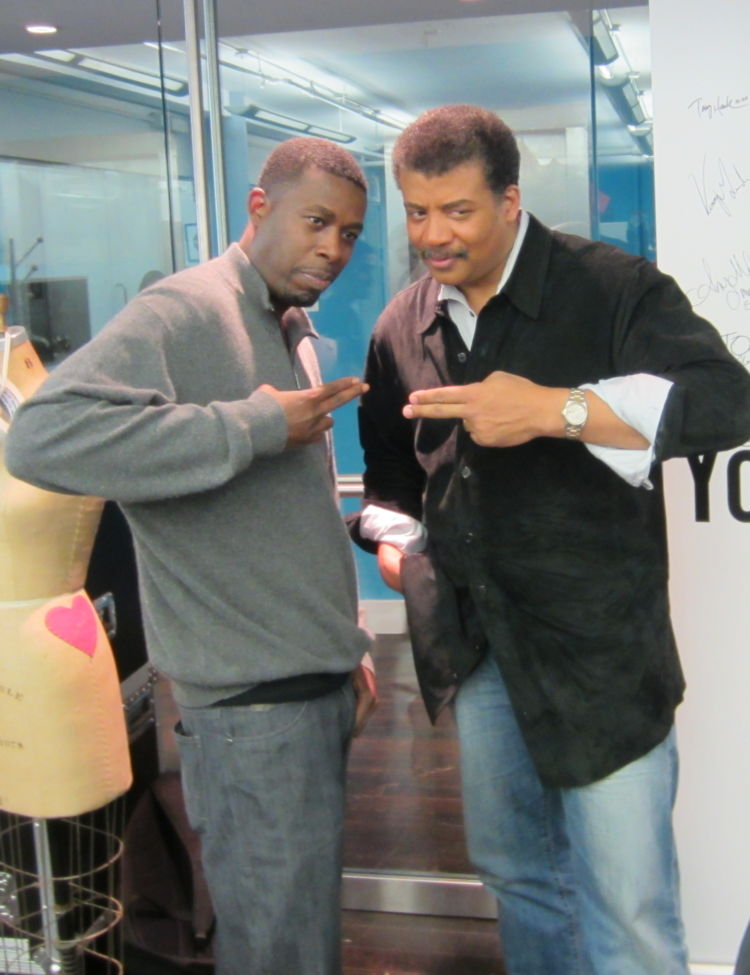
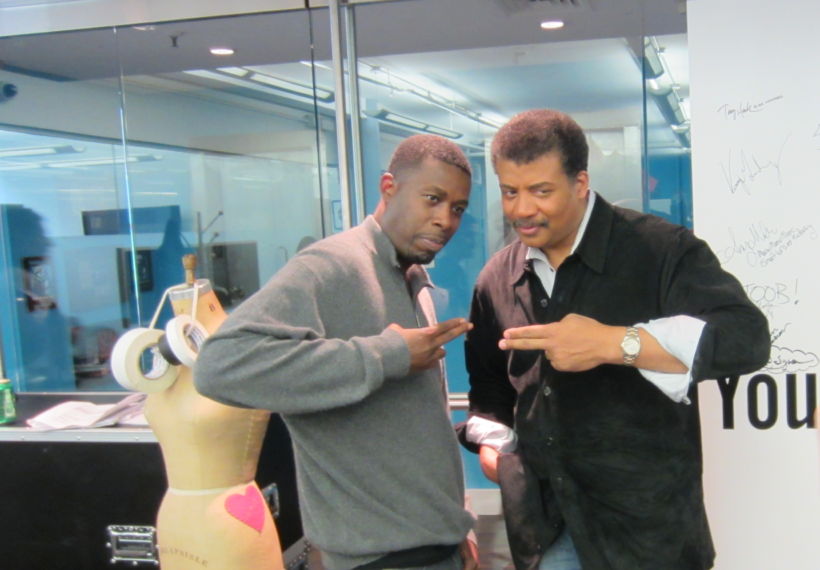
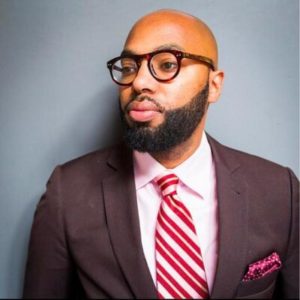
If you think rap music is just about violence, then you’re about to have your preconceptions shattered. Columbia Asst. Professor of Science Education and hip hop culture expert Dr. Christopher Emdin joins Neil deGrasse Tyson and comic co-host Chuck Nice to explain how he uses rap to connect inner city youth to science. For instance, Chris says that Kanye West’s use of bullet sounds in a song can teach kids the physics of the Doppler Effect. But the soul of the episode comes from Neil’s interview with rapper GZA from the Wu-Tang Clan. They explore science as a creative muse, and GZA talks about the difference between how he thinks of his music and how fans relate to albums like Enter the Wu-Tang (36 Chambers). GZA talks about growing up in the ‘hood and how violence often is a choice. Part 1 ends with Neil and The Genius spitting a cosmic verse together, leaving us hanging for Part 2 next week.
Transcript
DOWNLOAD SRT
Welcome to StarTalk, your place in the universe where science and pop culture collide. StarTalk begins right now. Welcome to another edition of StarTalk Radio. I'm Neil deGrasse Tyson, your host. I'm an astrophysicist with the American Museum of Natural...
Welcome to StarTalk, your place in the universe where science and pop culture collide.
StarTalk begins right now.
Welcome to another edition of StarTalk Radio.
I'm Neil deGrasse Tyson, your host.
I'm an astrophysicist with the American Museum of Natural History.
And as is common, I have with me my comedic co-host, Chuck Nice.
Hey.
Chuckie Baby.
Welcome back.
Thank you, my friend.
You know, whenever my show is on, you come in and mess with it.
Or mess it up.
We're not sure yet.
Jury's still out.
So this week, we're going to be talking about hip hop music, and we're going to be featuring my interview with GZA.
I can't tell you how disturbing that name is.
We get back to that name in a minute.
In addition to you, I got to share the stage with you here, OK?
If you don't mind.
Christopher Emdin, E-M-D-I-N.
That's correct.
You're an assistant professor up at Columbia?
Yes, I am.
Excellent.
And your title is what?
She's a professor of science education.
Science education?
And a director of secondary school initiatives in the Urban Science Education Center.
Nice, nice.
So you care about just folks in the inner city getting educated?
That's the majority of my work, yeah.
Educated in science.
OK, what do you do outside of the majority of the work?
Well, you know, I listen to hip hop.
OK, all right.
And that keeps you...
So that fleshes out.
I mean, most of it, right?
Listen to hip hop, you know, you know, I check out your YouTube videos, you know, I watch some HGTV, a little bit of everything.
And you learn how to tie a bowtie.
Oh, of course.
And that is tied.
That's not clip-on.
No, not at all.
Let me check it.
Nice.
Looks good, looks good.
Yeah, yeah.
So, I mean, this is because the bowtie is the emergent style in hip hop performers, I'm told.
It is.
It is in some.
You'd be surprised.
You'd be surprised.
Is there a hip hop artist that wears a bowtie?
I'm trying to think of one that...
You know, they wear them on the award shows.
I was going to say Fonsworth Bentley, but he doesn't quite classify as an artist.
But the look is becoming more trendy, so I might have to move to something else.
Well, I'm honored that you get so dressed up for this show.
So, GZA, founding member of the hip hop group Wu-Tang Clan.
That's right.
And so...
Shaolin represent.
Yeah, well, that's how that rolls.
And so you've used hip hop to help educate people?
Is that how you come at this?
Yeah, absolutely.
So research-wise, I get into classrooms and my goal is to engage urban youth of color in science.
And so that meant changing curriculum, it meant training teachers, it meant a whole bunch of different things and I wasn't getting the results that I wanted.
And I decided to sort of step into the dimension of interrogating youth culture.
And that hip hop just came out of it.
Oh, okay.
And so they were so deeply engaged in hip hop culture, so completely disengaged in science.
So I had to find a way where there was some intersections between hip hop and science.
So science, it's not just learning, it's science.
No, science in particular.
So there's learning, and that learning part is powerful, but the connections with science is even more powerful.
So there are connections between hip hop and science.
Billions, billions, trillions.
Like the Doppler effect of a speeding bullet.
Look, there's a section.
Oh, really?
Listen, nothing is sort of outside of the realms of possibility here.
So if they want to know about bullets, then, you know, hey, we can have that conversation.
The Doppler effect, there's a high pitch frequency shift as it comes towards you, and then a low pitch shift as it emerges.
So it goes, dee-yong, like that.
Unless you're hit, then you only hear the first part of the, I'm just saying.
Well, you know, rappers actually try to create, so Kanye West has his verse, where he was like, you know, I'm shooting and I'm like, bing-ong, bing-ong, bing, like he makes the sound.
He makes the sound, got the Doppler effect in the song.
In the song, without even knowing it.
And so those are the kind of things you explore, right?
So I'm like, Kanye West makes that noise.
That's the sound of a bullet.
Does that connect to anything?
Is that arbitrary?
And that becomes, you know, the way to spark conversation.
So GZA, how do you, it's like capital G, capital Z, capital A.
And you said the names got to go, you said.
Well, that's a weird, listen, I know there's RZA and GZA and...
Let's find out.
Let's find out how the man got his name.
Okay, because my record show, his born name was Gary Grice.
So, yeah.
I'm sure his parents are very happy he went with GZA.
Let's find out.
I would critique GZA's name knowing that there are like a million people in Wu-Tang also.
Oh yeah, so you gotta watch it.
A wise statement.
Let's find out how he got the name.
My guest this week is GZA.
Did I say that right?
Yes, you did.
Let me hear you say it just so I can confirm it.
I said it right.
You said it right.
All capital letters, GZA.
But that's not the only moniker you had.
Genius, Justice, Bond, Gary.
I had nicknames growing up.
I had different MC-ing names.
Names I use as a name.
All MCs have to have a name.
It's not, my name is MC Joe.
Well, nowadays, some guys are using their name, Jim Jones.
I can't do that.
I grew up hearing MC this and MC that.
Because MCs are more like superheroes.
Right, no, they had to have those names.
They had the power of the party.
I mean, they control...
So you were an MC.
Yes.
What was your MC name?
Divine, MC Justice, Gary G, Baby G, Gangsta G.
But right now?
GZA, Genius GZA.
And the Genius, where did that come from?
RZA, cousin RZA, ODB.
They named me that years ago.
We had this crew called the All In Together Now crew.
It was myself, RZA, and Dirty.
And he was the scientist, RZA was the scientist, Dirty was the professor or the specialist, and then they named me the Genius.
But I didn't want the title because people expected so much from it.
So I didn't want it.
At one time, I called myself the professor, took Dirty's name and put it on the fly, and he was mad about it.
So how important is identity in hip hop?
You don't hear James Tyrrell say, I'm James Tyrrell, James and the Teeth.
It seems unique to that culture.
I really think that it isn't though.
People express identity based on where they are at a certain point in time.
So human beings have their core identities as who you really are.
You have your role identities as that identity influx, and then you have like-
Identity influx.
Influx, right?
So depending on the role you're playing at a different time.
Yeah, this is why he has so many monikers, and this is why MCs have so many monikers.
Because he had different emergent selves coming through.
So sometimes he's a genius where he's just dropping signs.
Psychologists call it multiple personality disorder.
A lot of MCs have multiple personalities.
So I think the naming is in being able to call forth different pieces of myself in different points in time.
That makes sense.
It's like you identify not only with yourself, but your circumstance.
Okay.
So as they move forward, they accommodate the needs of the moment and whatever name that requires.
But it is interesting that many of them change their name.
Right.
I don't think James Taylor was born Arnold Schmednik and then he changed it.
Right.
I mean, so the notion of changing the name also enables them to match the moment.
Yeah.
Be a different person.
When we come back more with our interview with GZA on StarTalk Radio.
Welcome back to StarTalk.
I'm Neil deGrasse Tyson and I'm with my co-host Chuck Nice.
Chuck, you too.
Yes, I do.
Chuck Nice Comet.
Chuck Nice Comet.
Somebody else was Chuck Nice apparently.
Believe it or not, there's like 28 of them.
I couldn't believe it.
I'll find you Chuck Nice Comet and I've got with me Chris Emdin.
Professor up at Columbia University.
Thanks for coming in to do this.
You're an expert on urban culture and trying ways to educate a secondary school population is great.
Yeah, making connections.
Making connections and in particular a science connection.
Yeah.
And we're celebrating my interview with GZA, the hip hop master GZA, who was founder of the Wu-Tang Clan.
Wu-Tang Clan.
I get that G in the right place there.
And I chatted with him about what role science might play as the muse of an artist, in particular of a musician.
Let's find out what he told me.
You got my whole astrophysics vocabulary oozing out of your rap lyrics.
And so how does that happen?
I love it.
I just want to understand it.
It's just an interest in science and planets and the universe.
And so, well, there are plenty of people who are interested in it, but it doesn't infiltrate.
Well, I'm an artist first.
I'm a writer.
I write mostly music.
I'm working on novels and scripts.
Really?
Yes, I am.
But I always thought as an MC, growing up, it's always been about being lyrical for us.
Where did you grow up?
Well, I grew up in Brooklyn.
I'm born in Brooklyn.
Lived in Staten Island.
I lived in all of the boroughs.
Staten Island?
Yes, Staten Island.
We call it Shalan, Wu-Tang.
But it started from back then.
It was always about being lyrical and writing the tightest lyric and sharpest lyric and being witty and also incorporating things around us and anything we can incorporate into music.
I'm not a sports fan at all, but every now and then I always incorporate things about sports.
So you're reaching into pop culture and there it is and it's there for you.
So alright, but were your earliest songs that way?
Some of the songs, some of our lyrics, we went there years ago.
One time RZA had this rhyme.
It was about conception, being born, when conceiving and it was a line about when my mind flashed back to an eerie mood when I was just a sperm cell in a fallopian tube.
He was about 13 then.
That's a great, that's a great rhyme.
So in Brooklyn, if you start taking an interest in the universe and there are other rhymers, rappers, you had to be a little weird for doing that, isn't that right?
It depends on, well, it comes off as not being normal to most.
I wasn't normal doing it and I wasn't even a rapper.
Well, it depends on how you deliver it.
If I'm delivering it in a way where I'm like, Earth is the third planet and the sun shines light, it's not done in that way.
That doesn't play.
Right.
Not in Brooklyn, not in, okay.
But if it's in a way where you're saying, my universe runs like clockwork forever, my words are pulled together, sudden change in the weather, the nature and the scale of events don't make sense, a storm with no one in, you're drawn in by mints, gravity has gone mad, clouds of dust and debris, moving at colossal speeds, they crushing MC.
So you speak about the universe and planets, but you still incorporate the element of MCing.
And the mood and the feeling.
The feeling, yes.
And so you've embraced the universe, a lot of cool vocabulary there.
I make a big deal of the fact that our vocabulary is very accessible.
The galaxy, the dwarf, the black hole, big bang.
And a lot of them are even one syllable.
I'm guessing that that makes it easier to rhyme and easier to pulse into a lyric.
Yes.
Rather than the words of geologists who are...
Of course.
You know, Rakim, I usually quote him on some of his lyrics.
And he had this line years ago, and this was in the 80s, where he said, I'm the creator of the alphabets.
Now let's communicate, but not translate the situation straight.
No dictionaries necessary to use.
Big words do nothing but confuse and lose.
So...
There it is.
Half short, twice strong.
Beautiful.
The only difference is, if I use the word nova, I'll be speaking about a star, unlike the average rapper who will probably be talking about a car.
Wow, that's great.
That is fantastic.
From fallopian tubes to exploding stars.
Exploding stars, except the rhyme about the fallopian tube, that isn't atopic pregnancy, to be honest.
Sperm in a fallopian tube.
You don't really want that as a woman.
He was 13.
He was going there.
He went from there to basically cosmic storms, which a lot of people don't even realize that there are cosmic storms.
There are storms on Saturn, on Jupiter.
Jupiter has a big giant red spot.
It's a storm.
You call it a red spot because that's what it looks like to the first people who named it, but you look a little closer, you study it.
It's a cyclone larger than the planet Earth, raging on Jupiter for 300 years.
Mars has dust storms.
Dust storms kick up and you can't see what's happening on the surface.
That's where the aliens can redistribute their...
Absolutely, yes.
They can cover their tracks.
That's when they cover their tracks.
So this thing about science getting into pop culture leaders, I'm curious about that.
Have you seen that?
Absolutely, I'm just like...
The little lesson you just described just now, if you introduce that to a young person, they would be like, oh man, I got to spit a verse about that.
Did you say spit a verse?
Spit a verse, meaning I have to write a rhyme and then perform it.
To say spit a verse from someone wearing a bow tie, I just have to cover the bow tie so I can hear you correctly.
Now you're forcing me to want to kick a rap, spit a rap on here.
I may have to do that to prove myself.
Just to gain street cred here.
But just to make so many insightful points in that clip, the first of which was a lot of people do hip hop pedagogy or think that rap pedagogy is like, kids like rap, let's rap.
And they have the kids create raps or they perform raps and it doesn't work.
And the reason why it doesn't work is because it's just like what goes on in school already to rhyme.
And that doesn't work.
And so the distinction between, you know, saying something that rhymed and being a prolific MC, which requires analogy, metaphor, joint connections, weaving stories.
And it seems to be mostly cross-referencing.
Which means you have to learn and know some knowledge here, some knowledge here in order to access that to bring it together.
Absolutely.
I mean, I was working with a young person once and he, you know, we get into the classroom and I want him to learn about water.
And he's like, okay, I'm teaching a lesson.
He's like, yeah, your lesson is all right.
So I say, you know what?
You're a rapper.
You know, spit a rap about it.
So he starts rapping and he's rapping about everything but water.
He's like, I'm fly.
I'm sick.
I'm like, you had one line.
He's like, you know, I flow like water.
And by the way, I'm fly and I'm sick.
And so I was like, well, you know, this is not quite going to work.
Go home.
Because he's not actually making it work.
He's not making it work.
So I say, go home, read the textbook, come back and write a new rhyme.
He comes back in the morning, he's like, yo, it's type hard to spit a 16 about H2O.
Right?
And what that means, you know, I'll interpret.
It means that it's challenging.
It's challenging for me to be able to write a rap about water if I'm really going to understand the concept of water.
So I need at least a week to do it justice.
Or in other words, you need a week to learn enough about water to then know how to reach in and handle it.
And pull out the themes out of it to really make it a real rap.
When water gets cold, it gets less dense.
When you freeze it, it floats on the water.
It was.
That's more coffee house than it is.
Because I'm so cool on water ice.
You know, for you, we'll just snap and we'll just make it like a poetry thing.
So it doesn't have to necessarily rhyme.
Okay.
So like slam poetry.
Slam poetry.
Just slam it out.
So, okay, so that's so, so you bring to a point I hadn't appreciated even during my interview with GZA that the more pockets of knowledge you have command of, the more creative you can be as a rap artist.
And of course you need the metaphor and the more capacity you have to even make metaphorical references.
The more prolific the MCs, the more complex the lyrics are.
The more complex the lyrics are, it's based on the ability to make connections that the layperson can't see, which is inherently scientific.
I like it.
That was good.
That works.
So you got a quick something here.
I got 30 seconds.
30 seconds.
I'm a physicist, lyricist, spittin this, ridiculousness, so witness the ignorance I dismiss.
I have to do that first so people know I can rap.
Then I can get to the topic.
Then you can talk to them.
Right.
That is some authenticity, right?
So I love Newton and plus Einstein.
I like Einstein because Einstein's mind is like mine.
His formula was E equals MC squared, which is weird because me is your favorite MC squared.
And so what I did there is like Einstein the formula, but if I just said that, it would make no sense.
So I have to make a connection between the formula E equals MC squared to the fact that me is your favorite MC squared.
And I can say, you know, E's energy, M's mass, E's the speed of light, which is a constant.
Because if I were MC, I would so be MC squared.
When we come back, more of my interview with GZA and Chuck Nice and Chris Emdin.
StarTalk Radio, you can find us on the web at startalkradio.net.
We're also in the Twitterverse at StarTalk Radio.
And of course, on Facebook, you can like us there, StarTalk Radio.
By the way, StarTalk appears in three media now.
We're on Broadcast Radio, we're on the Nerdist channel on YouTube, you can find us there.
And of course, you can download our podcast at any time from our website or from iTunes.
I've got with me in studio Chuck Nice, tweeting at Chuck Nice Comic.
Chuck, you got a show on HGTV.
We were chatting about it at the break, you go into, it's called Home.
Home Strange Home.
That's creepy.
You go into people's homes and just talk about them.
I'm the strange part in the Home Strange Home.
You find weird homes and just talk about them.
And basically people show me around their weird houses and it's actually very cool.
I'm not inviting you to my home.
The cameras might be, like in 60 minutes, the cameras show up.
But I'll look forward to that.
No, it's going to be a good show.
Fridays on HGTV.
Fridays on HGTV.
Chris Emdin, thanks for coming to this.
It's an absolute pleasure to be here.
To comment on GZA's clips that we have.
And you tweet at Chris Emdin.
At Chris Emdin.
E-M-D-I-N.
E-M-D-I-N.
You tweet educational insights, I guess.
So I tweet education, I tweet hip hop, I tweet science, I tweet social commentary.
I'm going there.
And bow ties.
And bow ties.
Let the radio audience recognize that the man is wearing a self-tied orange bow tie.
So in my interviews with GZA, we talked about the role, certainly the role that media thinks violence plays in hip hop.
And it's always played up, perhaps more than it actually needs to be or should be, or perhaps it's not even representative of most of the hip hop that's out there, it just makes a better headline.
Well, I brought all this up with GZA and I wanted to get his reaction to this because that's like the, you can't just sweep that under the rug, it's out there.
And let's find out what GZA's reaction to when I brought up violence in hip hop.
So then there's all the songs where violence is a part of it.
Is there something missing in the uninitiated listener?
They think it's just all violence.
But of course, there's somebody trying to emote in those lyrics, right?
Well, yeah, it depends on how you interpret the lyric.
I mean, sometimes I run into people say, well, 36 Chambers got me through school.
And then I go back and listen to the album, I can't really, I don't see how.
I mean, I know it's great music, you know, according to fans and those who've listened to Wu-Tang for years, but I don't see what they're saying.
So it all depends on how you interpret the message.
Well, good art allows the listener, the viewer, to personalize what they hear or see, right?
Right.
Because you can't just take a, you know, I look at it like this sometimes if they say, Wu-Tang has got me through school, and then automatically it pops in my head, Wu-Tang Clan ain't nothing to eff with.
How did that get you through school?
You know, sometimes it's the first thing you have to do.
Maybe, I mean, maybe they, it was an escape.
But it was a certain, you know, the timing and all that, when the album came out, whatever they were going through, they were able to relate to the majority of the songs anyway.
So as a whole, it kind of...
Okay, it was the total philosophy and package that that represented.
Personally, I don't, I'm not with the schools of thought that say people got violent because they listen to a song.
If people get violent, they're violent, right?
Right, exactly.
Right, but still, it's nice to have some hope in your art.
And if the art is only about violence, I don't know, where am I going to, what do I reach for?
You reach for the piece.
You reach for the music without the violence.
And like I said, I don't think it's just the whole thing about violence.
It's just the way you're talking or telling your story.
Because most rappers have this thing where they're from the streets and they're telling their story.
And this is how I grew up.
And everything I say is real.
And I'm not a fake drug dealer.
I actually sold drugs and this is what I'm giving you.
But it's the same story.
It's like watching the same movie over and over and over and over and over.
You don't want to see it anymore.
You don't want to hear it.
Change it.
The story's been told.
The story's been told.
In that way.
In that way.
In that way.
Because you've spoken of violence in your songs, right?
Oh, yeah, definitely.
And what role does that play?
It's just part of the story.
It's just part of the story to get your point across.
But it's not violence in the way where it's gory or I got to speak about the screwdriver pulling your brains out and landing all on the back seat.
It would probably be done in a way where you don't see the screwdriver.
You don't see the brains.
You just see blood coming through the door and hitting.
Very Hitchcock.
Draw your own imagination.
Hitchcock forces you to fill in the blanks.
Shows you the edges of the violence.
That's how it should be.
Okay, screwdriver through the bride.
Missed that.
Hey, man, all I know is right now I want to kill somebody.
I don't know why, but I have a need to shoot somebody.
We only got like 20 seconds left.
Is there, Chris, real quick, do you think there's a cultural bias against rap that you don't find against other expressions of violence in the American culture, like evening television, like everything else?
I think that certainly does exist, and I think that in response to that, rappers pick up on what is sensationalized and realize that that's what gets attention, and so what could normally be a thin slice of the culture becomes exaggerated.
I gotcha.
That's very perceptive.
When we come back more of my interview with GZA, and we learn about violence growing up and what impact that can have on the creativity of an artist, I'm.
Bye.
Welcome back to StarTalk.
I'm Neil deGrasse Tyson, a National Physicist here at the American Museum of Natural History in New York.
I also serve as Director of the Planetarium there.
Come by, check us out when you're in town.
I've got Chuck Nice with me.
Comedian Chuck Nice, love having you on the show, Chuck.
It's always good to be here.
And we've got Chris Emdin.
Chris, great that you dress up for this show.
Jacket and bow tie with a matching hankie in your jacket pocket.
Pocket squares.
Absolutely, pocket square.
Got to do it.
I got you here because we're slotting my interview with GZA.
And we talked about his life as a rap artist.
And I wanted to get behind his modern life and find out, because we were trying to probe sort of what his background is.
Did he grow up in a dangerous neighborhood?
Did that influence?
I just didn't know.
And so let's find out what he says about his background and find out how that influenced his creativity.
Check it out.
In your life, how much danger were you exposed to as a kid?
What kind of neighborhood?
Were you in like a pansy neighborhood or a tough neighborhood?
You know, I grew up in a hood.
It may have been tough for outsiders, but it wasn't necessarily tough growing up in it.
That's a perceptive point because it's all you know.
It's just where you grow up.
But, you know, I had working parents.
You know, I never missed a day without eating.
Okay.
I didn't live in poverty, but we weren't rich or anything like that.
And I grew up in the normal urban cities, the hoods.
Right, sure.
Any violence?
Every now and then.
I mean, I know I've grew up with a lot of people that's not living now.
It was killed, but that was the path they chose to take.
I mean, we all grew up together and we learned right from wrong.
I think most people grew up in neighborhoods where no one dies.
Right, I mean, so for you to say, well, it was sort of, you know, there's some violence, some people don't, I mean, that's, you say that so casually, but that's not a, I mean, not many people can say that.
Because in some neighborhoods it's normal for people to, you know, for those things to happen.
My father had those stories.
People.
But I think any danger...
Somebody got shot just for wearing the wrong shirt.
Oh, yeah, see, I didn't grow up in a neighborhood like that.
I mean, I lived in Jamaica, Queens at a time where they had gangs in the 70s, the Seven Crowns, and there was a big gang out there.
But I don't think it ever affected me.
Right.
You were outside of it.
I think all the danger...
You'd better not be a part of it.
I think, yeah, I think the dangers that I came across with dangers, I put myself into like stupid stuff you do as a child, like walking on the rooftop.
Oh, on the, I know, on the ledge of the rooftop.
Yes, on the ledge of the rooftop or playing in elevator shafts.
You know, I even have this rhyme, one of my songs where I start off by saying, picture blood baths in elevator shafts, because I've known people that lost limbs and died in elevator shafts and we used to play in them.
So those were like the dangers.
All right, so some of that ends up in your lyric, but then we hear these other rap songs where it's, what do we do?
I mean, so who's got the biggest influence on the next generation?
Rap.
Okay, so agreed to that.
So now you got the portfolio of lyrics in the rap, in the rap repertoire.
All right?
I got you telling me about the universe, and I'm with that.
But you're not the only rapper out there.
So in the end of the day, who's going to win?
8 million rappers.
Who's going to win?
Those that make timeless music and timeless lyrics are going to win, and others will fade fast.
The universe is the most timeless thing we know.
And this is one of the longest-spinning records on airwaves.
I hadn't thought of it that way, but it's certainly spinning, and it actually has grooves.
Exactly.
Put a needle on it.
There's these, most people, you know, you look through a telescope, it looks like it's just a flat disc, but it's actually very, there's like thousands of separate rings in here.
That's my favorite planet, that's why it's here.
I never thought of it as a place for the music of the spheres.
Scratching the cosmos.
I think of a record when I look at that.
There he goes.
Look at that.
I love how you just told GZA that he has lost to the universe.
I didn't say that.
So how do you parlay a violent background as an educator?
You know that some kids have a violent or not nurturing background.
How do you parlay that into science education?
I mean, realizing first and foremost that science is everywhere, it's all around us.
Of course.
And that's something that we all agree with.
So you exploit that fact.
Of course you exploit it.
So you say, you know, I work with teachers and say, before you go teach a young person, you need to go with a notepad and walk through the neighborhood and read the neighborhood through the eyes of a scientist.
So if I'm talking about weathering in an earth science class, I'm looking at the rocks in the park around me.
If I'm talking about how the building is constructed, if there are alloys in the middle, I look at where I can find those examples within their life worlds to bring back.
And then also start making connections between the scientist and the emcee, where the corollaries exist.
What is it about Galileo saying, no, the earth does move, damn it.
And everybody's saying no.
And how does that make a connection to how an emcee sees the world and says, no, this is the way things are in my hood.
I want to get back to that when we return on StarTalk Radio.
We're back on StarTalk Radio.
Before the break, we were talking about how to parlay the life experience of a kid in the inner city into an educational, scientifically enlightened experience.
And that's what you do.
That's what you think about.
In fact, you have a book.
What's the title?
Urban Science Education for the Hip Hop Generation.
Absolutely.
That's awesome.
It's a rhyme right there.
That was purposeful.
That's why the title is, you know, is that love.
So, tell me more about when you walk into the inner city, how do you, what goes on in your head when you go back to the classroom?
I mean, exactly what I described earlier.
Depending on what it is.
By the way, you're a professor at a university, so you're teaching teachers.
I'm teaching teachers.
But I'm also going in classroom and teaching young people also.
Okay.
Just to make sure that what I do when I teach teachers is authentic, because that's a key piece of hip hop.
Otherwise, you're floating somewhere in the academic, and the hallowed halls, and man, it's easy when you get around a bunch of other professors.
We just end up speaking to each other so much that we just become removed from the rest of the world.
Right.
So you have to-
And there's a lot of pipe smoking going on.
Oh, yeah.
Pipe smoking in both eyes.
I'm halfway there.
So it's just going into the neighborhood through that lens of a scientist, and trying to understand what the phenomena around you, how that phenomena can be explained scientifically, and using that as an example to teach young people.
Right, because when I think of violence, I can think of a dead person and the trajectory of the decomposition of a body.
Right.
Right, I mean, that's kind of interesting.
Absolutely.
Right, I mean, initially, you're the same temperature as the air, and then since you're dead, you're not generating energy anymore, so your body temperature begins to cool.
So everyone says the body, it feels cold.
But in fact, it's not actually cold, because all it drops is to the room temperature.
And you don't think of room temperature things as being cold, but the body is so commonly warm to you that anything less than that, you're going to say it feels cold.
So you can go there, you can put biology in there, not just...
You can go anywhere.
Anywhere.
Even when you talk about hip hop more broadly, because we're talking a lot about rap pedagogy, and I think there's a distinction between rap and hip hop that we haven't even talked about.
Oh, really?
Yeah.
That's a whole piece of the equation we haven't touched yet.
I mean, rap is an artifact of hip hop culture.
Hip hop culture is so much more complex.
So, hip hop is the cult, rap is not the culture, hip hop is the culture.
Right, hip hop is the culture.
Oh, thanks for clarifying.
Right.
All right.
Well, you know, we've been slotting my interview with GZA.
All right.
And you can't have GZA, a founding member of the Wu-Tang Clan, unless we get him to spit a verse.
So, that's what we did.
Me and GZA, just jamming.
I have here one of your lyrics.
I think you said it earlier, but I want to like the privilege of reciting it with you.
Why universe, you and I.
Verse runs like clockwork forever.
Words pulled together.
Sudden change in weather.
The nature and the scale of events don't make sense.
A storm.
A storm.
You know, sometimes they switch the lyrics around online.
A storm with no warning you're drawn in by immense gravity that's gone mad.
Clouds of dust and debris moving at colossal speeds.
They crush and emcee since this rap region is heavily packed with stars.
Internal mirror and the telescope noticed in the Czar.
The Czar's.
We blank as a light to stroll with great distance and space between precise globes that travel in a circle of order like the tape in your cassette recorder filled with corporate slaughter.
Meaning the contract manifestly worked.
The hitman for hire with weapon in his hand he lurks.
In spite of his strange appearance he made his clearance on a target through a crowded market, no interference.
Microphone left on the scene without a serial.
Evidence consisted with organic material.
I forget the other two.
That's all I got.
So in that set of lyrics you transitioned from cosmic themes to street life, right?
Walking straight into the cassette recorder.
So how did that, you didn't blend them, you went from one to the other.
Right because I was speaking about traveling in a circle of order.
Cosmically.
Cassette recorder rhymed with order and cassette recorders spins in a circular motion.
So I just threw that in there, but I said take me a cassette recorder filled with corporate slaughter.
So somehow I took it back to the industry.
So the cassette recorder rhymed you back from the cosmos in, but then you're talking about meaning the contacts.
Contract.
Oh, contracts.
Manifest like the contracts you sign on a dotted line to sign your life.
The hit man for hire, weapon in.
I mean, this is very different from clouds and dust and debris.
It's extreme.
It's extreme.
You turn like that.
Weapon in his hand, he lurks in spite of his strange appearance.
So, what compelled you to turn in the lyric?
That tape cassette, that tape recorder.
You were pivoting on rhymes as you came out of the universe.
Surfing rhymes.
Rhyme surfer.
Is that a fair...
That's fair.
That's one thing about MCing.
It can go anywhere as long as it makes sense.
Man, you know, in retrospect, I should have just shut up while he was doing his lyrics.
I mean, I was just totally messed up.
I'm just like reading it and he's trying to get the pulse of the rhythm there.
No, it was good that way because I broke it down.
Broke it down.
We got to go.
We got to end this hour.
You've been listening to StarTalk Radio, brought to you in part by a grant from the National Science Foundation.
As always, I'm Neil deGrasse Tyson bidding you.
See the full transcript




 Unlock with Patreon

 Become a Patron