
StarTalk Radio tackles the physics of football

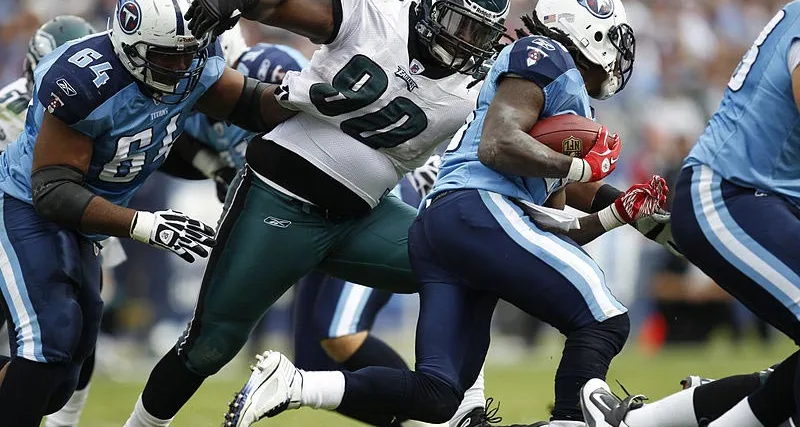
The Physics of Football

Image credit: Derek Boyko.
  • Free Audio
  • Ad-Free Audio

About This Episode

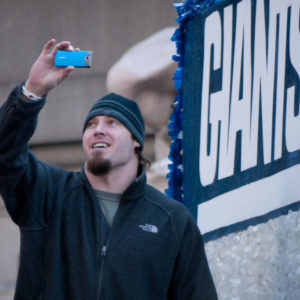
Huddle up with geeks of the gridiron—New York Giants linebackers Jonathan Goff and Chase Blackburn, and Giants tight end Travis Beckum. Goff has true geek credentials with a degree in Mechanical Engineering, while Blackburn knows all the angles on the football field thanks to his degree in mathematics.

“Everything about football is applied physics—from blocking and tackling to the Hail Mary, says Charles Liu, astrophysicist football fan. Liu explains the physics of tackling, touchdowns, and tossing the ball, and tells us what it would be like to play football on the Moon. Comedian Chuck Nice provides color commentary for our Superbowl of science.

NOTE: All-Access subscribers can listen to the entire episode ad-free here: The Physics of Football.

Transcript

DOWNLOAD SRT
Welcome to StarTalk, your place in the universe where science and pop culture collide. StarTalk begins right now. Welcome back to StarTalk Radio. I'm Neil deGrasse Tyson, your host, and I'm an astrophysicist with the American Museum of Natural History...
Welcome to StarTalk, your place in the universe where science and pop culture collide. StarTalk begins right now. Welcome back to StarTalk Radio. I'm Neil deGrasse Tyson, your host, and I'm an astrophysicist with the American Museum of Natural History of New York City, where I also serve as director of the Hayden Planetarium. Joining me is my special guest host, Chuck Nice. Hey, man. Nice Chuck Nice. That's Nice Chuck Nice. Thanks for having me back, Neil. People might want to know why I said Nice Chuck Nice. Oh, that's because you can follow me on Twitter at at Nice Chuck Nice. Chuck Nice was already taken, was that? You know what? Oddly enough, it was. So welcome back. This is our special Super Bowl break edition of StarTalk Radio. Yeah. I know you're a football fan from way back. Huge. Out of control football fan. Huge. I love it. I love it. It's like crack to me. You get in a football mood? Yes, I do. You just love? I love everything about it. I'm telling you right now, I got a little stiffy just talking about it right now. TMI, TMI. For today, I brought in one of my longtime friends and colleagues, Professor Charles Liu. He's a professor of astrophysics at the City University of New York. Charles, welcome to StarTalk Radio. Thank you so much for having me. Hi, Chuck. Let me say why I've got him on here. A couple years back, he wrote an essay on the physics of baseball and he did all kinds of cool calculations about what baseball would be like on the moon. And I figured, well, I need him for my football show. Because then he'll do all these weird, crazy, geeked out calculations for what goes on in football. And he'll get to comment on our interviews that we have for this segment. Do you know who he, Chuck, do you know who I managed to get? Three football players from the New York Giants. That's very cool. It was very cool. Aside from the fact that they're from the New York Giants. Because I'm an Eagles fan. You're an Eagles fan. Well, get over it. Three of them, tight end Travis Beckham, and special teams captain and linebacker Chase Blackburn. And another linebacker, Jonathan Cough. Good guys. Yeah, good guys. And on the very first segment with them, we talked about what makes the best tackle and how you might try to take someone down who's in motion. So let's see what they have to say. And Charles, when we come back, I want your analysis of this conversation. I'll do my best. All right. Let's check it out. Do you actually invoke laws of physics you learned in your engineering class to become a better linebacker? I could say yeah, but it's actually something that you learn as a young football player, and that's the low man wins. Low man wins. I've heard that. Leverage. And so you want to come in at what point in the person's body? You want your hat under their hat. Oh, okay. Oh, you call them hats? Yes. How polite. Well, my cap, yes. Okay, so you want your cap, your helmet under their helmet. What does that then do for you? It gives you better leverage and puts you in a better position. So if you're a smaller guy, it puts you in a better position to control the blocker. And so it helps if you can crouch a little lower than others can. Yes. So why aren't people just slithering along the ground to get to their people's ankles to get as low as humanly possible? You get some power. Oh, you start losing power when you get real low. So it's whatever is the best combination of how low you get, yet still get to use your leg strength. With the speed coming down, you know, obviously you meet force with force when you come out. That's where it all comes from. A lot of people think that it's your upper body, it's really your legs and what you have underneath them. So Jonathan, tell me about leg power. If you're going to block someone, the most obvious thing you're using is your upper body. So how do the legs play out? Your legs are, your legs and your hips, those are the most important things. That's where you generate all of your power, all of your momentum, that it gets started, you know, with your legs. You don't need to have phenomenal bench press to be able to deliver those big hits or to create separation between yourself and a blocker. It all starts with your legs. And if you can get good acceleration with your legs going, then everything else comes. If you had the choice of tackling a tall person or a short person, who would you be most effective at tackling? Tall. Bigger target. Get the legs and wrap them up, they can't drive. Same thing, if you're tackling and you hit a guy up high, they can still move their legs and drive. Oh, and there's still something going on in the play if the legs are still touching. And if you can get a taller guy and you take him on thigh level or waist level and wrap up the legs, they can't go anywhere. So why aren't there more little players, or are there in football? That water running backs are shorter. We got a mob Bradshaw back there for us. How tall is he? He's got to be 5'9. He might be like 5'9. So he's a little fire plug then. And what does he weigh? Much more than 200. Plus or minus, yeah. There's a lot of guys in the league that it's starting to come back. Like Barry Sanders, one of the greatest running backs of all time. He may have been 5'10. And Darren Sprouls? Darren Sprouls, yeah. My data says he's 5'6, maybe. A lot of the running backs now are. But they also have those thick legs that drive, too. Just let me alert the listening audience that Jonathan Kauff, linebacker for the New York Giants, majored in mechanical engineering in college. And Chase Blackburn was a math major. Charles, what does that do for you? Well, that explains why it sounded a heck of a lot like a NASA engineer conversation just now at Goddard Space Flight Center. Rather than the New York Giants locker room. Yeah, pretty much. It's quite amazing. But actually, they're quite right. The center of mass makes all the difference in terms of whether you're able to stop somebody. Now, what's interesting is, of course, the center of mass for most men is just above the belly button, whereas for most women, it's just below. So what that means is these short guys you referred to, like Darren Sproles, Ahmad Bradshaw, their centers of mass are more like women in the sense of further down in their legs, which makes them more effective in driving. But I wonder if they'd rather tackle a short guy 10 times or a tall guy 10 times, because you want to hit Brandon Jacobs, who's 6'4, 250, 10 times. You can stop him the first time, it'd be fun. I don't want to hit him at all. It's huge. Yeah, so I don't know. It's interesting that a single tackle, you want to tackle the big guy. But by the fourth quarter, I'll bet you you'd rather go for Darren Sproles any day of the week. Because he's beating you down, the big guy. Yeah, so the little guy is much less mass coming at you, and it works for you, is what you're saying. And so this thing about women with the lower center of mass, is it just because they're shorter, or because their hips bring some weight below the belt that would otherwise be above the belt for men? It has to do with the anatomical structure. Ah, the anatomical structure. So that explains why it's so damn hard for me to tackle women. I'll leave that to you, Chuck. You're listening to StarTalk Radio, and let's go back to my interview with my three New York Giants football players, Traffitz Beckham, tight end, Chase Blackburn. He's a special teams... What do we call him? He's the... Captain Linebacker and Jonathan Kauff. And this time we're going to talk about sort of what it might take to escape a tackle and what kind of force you'd feel if in fact you felt one. An NFL lineman hitting with a full force carries about 2,500 pounds into his opponent. And that's like a VW Beetle. On that point of impact, does it feel like that in a tackle? Or is the equipment just so well designed around your body that that's just a walk in the park? Well, it's by no means a walk in the park, but it doesn't feel like you're just standing in the middle of the road as a VW Beetle, you know? So it's not quite like you're standing in the middle of a road. Right, because you're going at them also. I mean, because he's bigger, he has more mass, so he won't be able to move quite as quickly. So that's where I need to use my athleticism to generate more speed than he is and then to try to overcome the force. The force. Feel the force. Big running back up high, flush, square it up head to head, it's going to feel a lot worse than you tackle a guy from the side. So the relative velocities are very different. Yeah, it's all about the angle of the tackle and everything else. But if you're watching where you're going, you're not really going to have the occasion to come straight head on. You're trying to avoid it. Goal line happens. You almost never line up and just go. It seems almost magic how a quarterback can avoid a tackle. I don't know what's going on there. They're ready to try to pass. Somebody's running after them and they just sort of step to the side and the guy just falls on his face. Or they spin a little bit with just a little bit on their shoulder. What's going on with the quarterback? They just have high experience away from heavy people? Looking out of your peripherals, I think that Vic will probably be the best person. Michael Vick? Yes. And the way he just sees people and he doesn't spin move a lot. Plus, he's quick. So if you're going to tackle where he is at this moment, in the next split second, he's in another place and your body is out of position. You never really got a handle on him. Plus, I also think with all the rules in place for the quarterbacks to protect them, a lot of the defensive players are so nervous about it that there's such a small target on the quarterback you can hit without a personal foul, that it's kind of like when you're going out and rushing full speed as a defensive player and you have to think for that split second, that's it. Once you think in the game of football, it's over. You have to react. So it has to be your life experience telling your body what to do without even processing it. So they're telling you not to think on a football field. What does that mean, Chuck? Well, look at that. It means that I could play football. Anything that requires no thinking at all. I'm a Viking. Wow, it's like a learned instinct. The learned instinct, yeah. I think Charles, is that what they mean there? Yeah. You see, the typical rushing lineman is moving about 20 miles an hour, which is about 30 feet per second. Average human reaction time is about 2 tenths of a second. So if you have to react after you see something, you're already six feet past the quarterback. So you really have to rely on that animal instinct, that learned instinct that has nothing to do with the thinking processes in your head in order to catch him. Otherwise, he's long gone by the time you thought, oh, I've got to go that way. So this one is split second timing of the action and the reaction of the tackle. Yeah, and that's what the training is so important, the repetition so that your body is used to moving without having to think about it first. Plus, the guy ready to tackle the quarterback is probably much more massive than the quarterback himself. So presumably the quarterback is more nimble, otherwise they wouldn't be quarterback. And a hell of a lot more scared, which helps you not have to think. There are big quarterbacks now, actually. Ben Rofflesberger. Right, just as you're getting smaller running backs, you're getting bigger quarterbacks. These guys, not only are they tall enough to see over the linemen and see the passing lanes. I was wondering how they see past that line. They're 6'5. It's like the Wall of China. How do you even know what's going on? In fact, the front line has to make passing lanes. The way they block, they make it so that the quarterback can actually see. They should have periscopes. That's a new helmet equipment edition there. Let's go to my next clip real quick. It talks about spinning moves. Spinning moves and whether anything you might learn in a ballet class would help your football. The easiest way to spin out of someone is if they have all their force on one shoulder. It's easy to spin the other way. It's very hard to spin it if someone's coming to top of you and their head up on you. If they hit you square in the middle, it's very hard to spin. Say if I'm running at you and you're coming at my upfield shoulder, you're going to hit my right shoulder. It's very easy to spin to my left because all of your force is going that way. So you don't know in advance, until contact is made, what's the best way to undo that? Or you can anticipate it, I guess, a little bit. I like to shuffle my feet and see where they go. Whichever they go, it's easy. So you do like a Muhammad Ali thing with your feet to try to shake them? Yeah, flying like a butterfly and spinning like a bee. Although the reason on defense that we like it when offensive players spin is because as an offensive man, you're the only man with the ball. And in defense, you have 11 guys out there going for that ball. So when someone spins on the first defensive player, there's usually one or two guys coming to hit them. So as soon as he spins, the ball's out. And that's the risk of spinning. Oh, because if you're spinning, the ball's away from the spin point and now you're exposed. Okay, my colleague posed this question. Many defense pass rushers will spin their bodies when they rush the quarterback. Dwight Freeney of the Indianapolis Colts may have the best such spin move in the NFL today. They're basically doing a ballet spin in the air to avoid blockers, and then they rush straight to the target. Is that spin move generally better than a straight bull rush, or is it just that Freeney does it so well that it's sort of uniquely effective for him? It's the mix up of it. They complement each other. Yeah, if you're a bull rush one time, and the offensive tackle's deep setting for you and trying to come at you, trying to get his leverage expecting you to just bull rush him, that's when you want to hit the spin move on him. Keep him guessing. Yeah, because if they get up, especially if they're deep setting because of your speed, they can deep set to your upfield shoulder, so as soon as they do that, you kind of lean into them to get them to guess that way. And then you take them out. And you roll back underneath, spin move underneath. So this is a mind game at that point. Yeah, it's like a chess match. In the old days, there were these videos of football coaches teaching their players ballet. Are these sort of tiptoe moves still taught for your agility? I've heard some guys do ballet. Yeah, I mean, if someone's going to do it, they'll do that on their own. And not tell anybody about it. And leave the tutu back at home. A whole football field of tutus. We're going to a commercial break, but when we return, a whole conversation about football injuries. Stay tuned on StarTalk Radio. We are listening to a special edition of StarTalk Radio during this Super Bowl break. I have the privilege of interviewing three NFL football players, and it's Travis Beckham, Chase Blackburn, and Jonathan Kauff. Two of them were science and math majors in college, which is pretty cool. You want to follow us, StarTalk Radio, we're on the web, startalkradio.net, and find us on Facebook, StarTalk Radio, and guess what our Twitter handle is? StarTalk Radio. And my special guest today is my colleague Charles Liu, astrophysicist and all-around calculator of geeky things. So, we're going to come back to you after this next clip, where I talk to these New York giants about what they do when they strip the ball from anyone's possession and the pile on that results. Let's see what they tell us. It didn't seem to me that back in the 70s or 80s that they'd tackle people aimed for the ball. It seems like it's happening all the time today. It's something that's taught now. Every coach teaches it. It's taught. Special teams, everything. Offense, especially now, teaches it. I mean, you sit on those meetings and they talk about if the defense gets an interception or a fumble recovery, that's what they're taught to do now is strip the ball because defensive guys aren't used to running with the ball. Say it like a loaf of bread, that's how they carry it. So it's there for the pickings. Yes, that's it. And also, if you look at the statistics for teams that win the turnover battle, the teams that create the most turnovers or that have the best ratio, those are the teams that are going to win the most games. He's calling them coaches, by the way. How do you not know the exact percentage throughout the league without the... Oh, let me go get my power points. I saved all the power points. I think it's like 80-some percent. I mean, in old days, they might have seen someone try to knock it out of your hands, but if you hit it with a helmet, it's almost impossible to keep holding that. I think it was somebody running full speed at you with a helmet right at that football. Aiming for the football. It's very hard to hold that football. That's why a lot of times you see guys holding the football with two hands. There's times where I've been running with the ball and they try to put their hat on the ball and they haven't hit my forearm and that's not very good. Just think about that pressure on the football. It's very hard to... Right, and the form is not protected. No, it's not at all. Yeah, and I guess to draw an analogy, it's a lot like hitting a nail with a hammer and your helmet sometimes ends up being the head of the hammer. Right, when the ball's bouncing around and it's live. For you guys, it seems to be quite dangerous because that's when the piling on happens. Somebody goes in, grabs the ball, and who determines who has possession of the ball? Whoever comes up with it. No, I don't know. No, there are 14 guys in a pile and they just peel them off one at a time. Whoever comes up with the ball. Whoever ends with it. So if you and I have equal grip on the ball... It's not going to happen. We're going to fight it out. We're going to... One of us is going to get it. I'm betting on John. There's some bad stuff in there that happens. Bad stuff in there, yeah. It means there's any biting or... I mean, everything's happening. I mean, you have these same tables. You can't really bite. People getting punched down there and people getting stepped on and people getting eyes poked and... Oh, yeah. It gets dirty down there. It's like throwing a fresh piece of meat in the line stand. So Charles, it must be a lot of force if you're in the bottom of that pile. Oh, yeah. You're suffering. Let's say, it's probably not 14 guys, but let's say 8 guys are on top of you and they're 250 pounds each. You're talking 2,000 pounds. That's a Volkswagen Beetle right on top of your chest. Just driving on top of your chest. And the thing is, of course, the ball is a prolate spheroid. All right, that's geek for football shape. What that means is that... It's a football. Football, yeah. It bounces like crazy. You don't know where it's going to go depending on whatever force. So the next guy piles on, suddenly it squirts that way. Next guy comes on, squirts the other way. But tacking a ball is also all about physics. The reason it's being coached now is because coaches figured out that it takes much less force to actually knock a ball out of a kid's hands than it is to actually take the guy down. It actually requires less force. Okay, so they're invoking the laws of physics to... Improve their ability to win the game. Gotcha. So it's easier to strip a ball than it is to tackle a guy. Absolutely, in all cases. In retrospect, this sounds kind of obvious. I don't know why they didn't figure that out 50 years ago. Maybe they didn't have Physics 101. I think that might have something to do with it. Well, you know, a big problem these days are helmet to helmet hits. And I had to bring that up and find out where that was, where that leads, where that was and where it's going to go. Let's find out the latest on that. Nowadays, you have these guys in the NFL that just lay people out. They just knock people out whether... And they do it with their helmet going into your helmet. And that's the worst part. I mean, if you want to strive yourself on being a hard hitter and knocking people out, hit someone in the chest. Hit someone... That still looks good on the highlight reel... . in the stomach. Hit somebody in the shoulders. When you hit somebody in their head where it messed up their cognitive skills and all that stuff, you shouldn't take pride in that. That's like you're knocking someone out based on something that they have control. But I wouldn't say that I take pride in taking a cheap shot at an opposing player. But it's football, you know. By any means necessary, you know, get your job done. But there's a law now against... Yeah. What is the law? There's no helmet to helmet contact on a defenseless receiver. And there's no helmet to helmet, period, on quarterbacks. So I'm a pass receiver. I don't have the ball yet. Now I have the ball. You can't hit your helmet to my helmet. Have you had an opportunity to make a football move? And it's how you tackle. Like if you're lunging at someone, like if you're attempting to go helmet to helmet, then yes. If the receiver is running and he ducks and you're going for a tackle... It's still... But it's kind of... It's a judgment call. It's where you can get fined. You can get penalized in the game and fined the week after, but you can actually send it in for an argument. For review. And then they could actually take your fine away. Usually it's $7,500. Some of the hits are arguable, but during the game, they call it flag. It's a flag. But the hardest part is the fact that, you know, a lot of times these balls are thrown and the receiver may bobble it. Or as they're casting, they're ducking. They're not in control yet. Yeah, but as a defensive player, you're aiming at their chest. But as they bobble the ball, it's going to the ground. They're going down a duck to get it. As they're doing that, your target area that you've already aimed for was their chest. Now, in that same area is now their head because they just dropped. Yeah, they're basically giving us a strike zone. Yeah, and here's the moment. It's so hard to change your strike zone as another player is moving. Yeah, I mean, this injury stuff is something else. And I then spoke to them once we talked about helmet to helmet buttheading behavior. You butthead. I asked them about concussions because it's one thing to just say we hit heads, but now what happens to your brain? Let's find out. Have you guys all had concussions? Oh, yeah. I haven't. So why did you, you said, oh, yeah. And Travis says, I haven't. I mean, I've blacked out. Oh, so it's a matter of the definition. It's a matter of what you say. That's the thing about it now is concussions have been graded so much differently now. Every head injury is now looked at. That's why there's so many more concussions. Where in the past the same head injury wasn't even looked at. Yeah, they just slap you, you know, put you back in the next line. A lot of times people get concussions and don't remember what happened. I remember in high school, we were playing a green team. I got knocked out and opened my eyes and all I could see was green. But that's not a concussion. They only lasted a couple of plays. But the thing is I remembered everything. Nowadays you've got guys that can't even like open their eyes and look at light or a week later can't even remember anything. Okay, so part of the problem is the helmets are rigid. If you made a soft helmet then the brain is not going to get the jolt because there will be a cushion, a padded... Which is what the padding is underneath the hard shell of the helmet. Well, this is already supposed to do that. And they're working on that again this year. That's one of the things they're working on is compression of the helmets and everything like that. Travis, I read your bio. You broke your leg in college. Well, it was actually my senior year. It was actually a very tough year for me because I started the season with a hamstring injury. So I missed the first three games, came back, played four more games, and then I broke my leg and I was actually blocking. Our running back got tackled onto my leg, broke my fibula. Fibula is in your shin. So it got broken with you getting tackled? No, no, I was blocking and our running back got tackled and tackled on my leg. So in a way, that was a secondary incident that broke the leg. Yeah. Injuries is a part of the game and that's one thing you're going to have to face. So in a way, a nice clean bone break, that's the best kind of injury. It's not your knee, it's not your brain. Exactly. It's a 100% injury rate in this game, in this league. Anything from a broken finger to something that's going to end your career, like blowing out your knee. What percentage of players leave the game because of injuries? I would say most do, even if they're not career ending per se. And you're speaking to me with your arm in a sling right now. I just had surgery on Friday. And your surgery was on what? I had my leg room repaired and ended up being my bicep tendon reattached. That just sounds painful. Reattach your bicep tendon. It was week one I had this actually happen, so I played the entire season with this. If it's not necessarily messing you up while you play, what is it, five years later, this really catches up? Yeah, and it can not be a career ending injury like, hey, this is it that day, but my shoulders could catch up to me in a few years, or the knees may not be that instant when they happen, but a few years later they're going to eventually slow you down, so it can become a career ending injury. What part of your body hurts the most after a game? Shoulders and elbows, yeah. Your shoulder, but that's where you got all the plastic stuff. That's why, even with all the plastic, because I see all the layers, and each layer kind of diffuses the force to spread it out as evenly as possible. Still, it's your shoulders. That's how much force there is in a game of football. That's why football players have big shoulders and big necks, because if they didn't, they'd be dead. There that is. So Charles, what's your reaction to all this injury talk? Well, first of all, helmet to helmet has been going on for a long time. You guys may remember a guy named Fred the Hammer Williamson, Kansas City Chiefs. That was all he did. But beyond that, when you have hard helmets, I know... He later had a big career in black exploitation films in the 70s. The problem is that when you've got hard helmets hitting each other, the time for the impact goes down, and therefore the impulse... So it's an elastic collision. Exactly. So you're actually transferring much more force in a very short time, even though you do have padding on the inside. So they really should be the leather heads. Soft helmets. That's right. Like in the old days. Well, keep the whatever's inside, but they should soften it, and that way the head butt takes longer for it to execute the contact. Right. It's like whether you have a bumper that crushes with your car, or whether a really hard piece, it transfers a lot more energy. What they should do is just grow giant afros. When we come back, more of our special Super Bowl Drake Star Talk program. Welcome back to StarTalk Radio, our special Super Bowl Break edition. We've had the pleasure and the privilege of having three New York Giants football players on StarTalk. They visited me in my office at the Hayden Planetarium. Two of them have backgrounds in science. Chase Blackburn was a math major at the University of Akron in Ohio, and Jonathan Goff majored in mechanical engineering. And where did he go to school? He was at- Vanderbilt. At Vanderbilt, that's right. And we have Travis Beckham, a tight end. He was the youngest of the three of them, even a little spunkier than the rest. And it was funny hearing him talk about the fact that he runs faster than the other two. He made them sound like old timers. It was funny. They're all born in like the mid-80s. This is what was crazy about it. And so, Charles, you do weird calculations about things. That's why I brought you on the show. What can you tell me about the football enterprise and what the uninitiated listener might want to know? Well, I got to tell you, football is the perfect example of how physics is actually fun. Everything we love about football is applied physics, everything from blocking and tackling to the Hail Mary. When you have a football that's flying out 50 yards toward the end zone with three seconds left, that ball is actually traveling almost exactly the same way an artillery shell fires. Because when you shoot the artillery shell out, it has rifling in the barrel that makes the shell spin. So they spin. That's because of stability. Exactly, it gives increases the ability for it to hit its target in a nice trajectory. And that's part of the reason why quarterbacks will spin the ball when they throw it. So they can legitimately call it the bomb. There is no question about it. Yeah. That's just one tiny example of how the physics just translates and translates out. And you can figure everything. We were talking earlier about how the reason people go for the ball these days instead of just trying to tackle the runner is because it takes less force to remove a ball from a runner than it is actually to stop the runner from running. And less energy on top of that. So if you analyze it physically, you can just become a better team. Absolutely. So you can have a whole team, 11 guys who are skinny, who just know how to strip the ball. And they're the best defense in football. Well, you know, football is... Equip with calculators, you know, I got you on that one. Football is an incredibly cerebral game. You look at a typical... Yeah, you look in a playbook and there are 200 plays in there that these guys have to learn. Yeah, yeah, yeah. So basically, it would actually benefit you to have a bunch of smart dudes on your team. Absolutely. Well, smart dudes who can run fast away from those who... Right. Or like you said, Neil, smart guys with calculators just like, okay, Ignatius, I'm gonna need you down at the 20-yard line. Just waiting. As long as they're really, really strong. So on my next clip, I had to ask these guys, because these are big guys, they're 6'4, 240 pounds or whatever, and they're, you know, they look like football players. I had to ask him, what goes on in the locker room with who's, are you guys, like, is there a pissing contest there or what? Let's see what they say. What is the measure these days of who's the strongest in the locker room? Is it the bench press? Yeah. Okay. Which makes no sense. I know, I know, I know, it's old school, I understand, it's old school, but something's got to happen in the old school way, so what can you bench, Travis? Now, I mean, my shoulders are so messed up, the most I've benched was 460. That's where they messed up shoulder? Well, that's where my shoulder was good. Okay, Jonathan? Same as Travis. 465. Tommy Topper. 470. 470, seriously? No, no, no. Honestly, you know, obviously, I can't bench at all right now with my shoulder on a sling, but I think 440 is about as much as I went up to. So does that still have bragging rights in the locker room? Yeah. There's guys, what are these, 600? Oh, yeah. We'll bench 600. One of our rookies, actually. I don't know if you can fit that much mass on the bar. That's when the bar starts bending. Yes, it pretty much does. Okay, now how about in the thigh lift? The leg press, squat, yeah. It all depends because a lot of guys, if you have injuries, you have to do, you can do a front squat on a slide machine or you can do leg press or… Oh, yeah, so leg press is the… Yeah, like it all depends and it's all relative to what exercise you're doing. I mean, a lot of guys can leg press a thousand pounds or so, you know? I mean, that's not on leg press, but now if you're squatting a thousand pounds, it's something to be said. Yeah, good leg press, your whole body is supported. You're just pushing weight off of you. Yeah. If you look at people in the Olympics with very strong legs, they're not necessarily huge, they're just very well defined. And so, where's the trade-off between getting super mondo thighs and having thighs that can actually serve your needs on the field? I think that it's the way you use them. I think if that's the case, you would think that ice skaters would have huge legs. You mean speed skaters? Yeah. Figure skaters or whatever. I think that to base off of any sport, I'd say football players probably have the most defined bodies. And it's just the way we use them. I think football is a sport where you need to use every single muscle in your body. Every muscle in the body. Wow. Chuck, how many muscles you have in your body? I think I have four. I'm pretty sure I have about four, maybe six tops. On a good day. On a good day, that four becomes six. But there's a whole other philosophy here, obviously. In the old days, the guy would flex your bicep, and if you had the biggest bicep, you'd say, oh, that's cool. But what good is that, other than flexing, when you need all your muscles to take somebody down who's running with the ball? A punter is not going to need biceps, right? A punter is going to use one. By the way, there are about 650 muscles in the human body, just so you know. But anyway, maybe your body. For my body, they're really small. But you've got a situation where a punter is going to kick a ball 50 yards or something in the air. He's not going to need biceps. He's going to need massive quadriceps. Oh, by the way, depending on which direction the field is facing, the spin of the earth will actually cause a punted football to slide to the left or the right. You're not talking about the Coriolis Force, are you? I am indeed talking about the Coriolis Force. You're totally geeking me out now. Hey, hey, it's awesome. This is the force that generates hurricanes on earth. If any air mass moves north or south, it's coming from a different part of the earth that has a different sideways rotational speed and either overshoots the center or pulls behind it. And when that happens, you can spin a storm in the northern hemisphere. They all spin counterclockwise. That's right. And so you kick a ball. About 50 yards, the ball will move one quarter inch either to the left or the right, depending on whether you're kicking north, south or east, west. But that's because you're in the north or southern hemisphere and you're kicking during a hurricane. This is the problem. Well, the Coral Sports doesn't need a hurricane to operate. Oh, OK. So I bet there are a couple of kicks that that hit missed by a quarter of an inch. It happens. Yeah. It's a game of inches or in this case, the earth hates me. That's why I missed that field goal. The earth hates me. Well, in Cowboys Stadium, which just opened a few years ago, you actually had a punter which hit the big screen above and that completely changed the path of the ball, too. Yeah. If you hit a blunt object. That or the Coriolis Force, one or the other. I also have to ask these guys about their diet because when you get your energy from, you get it from your food, from something you have slaughtered for the benefit of your own caloric intake. So get over it. Even vegetarians have to kill something to eat it, even if it's just a carrot. So let's find out what my guys were telling me about diet and calories. Do you guys count calories? What do you eat in a day? I mean, I just try to eat balanced meals for the most part, especially in season. Reesy cups. Reesy cups followed by ice cream. That would balance that out. All the sugar food groups. So what you're saying is you just eat to stay healthy, but not in any... You know your body. Everybody's body is different. I mean, you got to know yourself. Some guys are different. For instance, Kevin Boss, our tight end, is very strict in what he eats and he gets mad at me when I sit down and eat because I got the cakes and all the sweet stuff and he's just like, oh, I want some of that, but I can't. Because a lot of guys have to deal with the being overweight and you get fined for overweight. What do you mean you get fined? Exactly. You got to be a certain window. Five hundred dollars a pound. No. Four or five. So, there is some weight that the coach has decided you should be or some weight interval. And you come in after a cheeseburger weekend, five pounds overweight. Oh, yeah. You're paying. That's an expensive cheeseburger. That is a very expensive cheeseburger. Oh, my gosh. Per pound per day. So, what is your percent body fat? Although, it does depend on, now, see, if you are overweight, they check your body fat. If your body fat is still below a certain point, then you're good. That you're out. Okay. That you're out. So, you could have built some muscle over the weekend. So, what's your body fat? I'm 11%. Is that your ideal? 11% and then I have to be between 240 and 244. Jonathan? So, I mean, it depends on the time of year. So, when I'll start training. You sound like a woodland creature in the spring when I'm a hibernate. What do you mean? I'll be around. Full up schedule. I'll be around 13 in the spring and then I'll get down to about 10 or 11 come August. Okay. And your weight? 240 to 250. And above that, you start paying out. Yeah. I'm about the same as John. Get up to about 13 and 13 and a half and get down to about a 12 or just under maybe an 11. That's not an NFL rule. That's just the New York Giants. Oh, no. It depends on the club. But everybody's got got an incentive clause for this. So Chuck, they charge you if you come in fat. Look at that. And I thought models had it bad. These guys are just like, oh dear, I could never. I must be bulimic. I'm going to have a salad. I'm just going to have a salad. I'm playing this weekend. Yeah, I can't. I don't know, I don't even want to have that image, Chuck. But it's true. You need calorie equals energy. You know, Charles, I once, again, my colleague, Charles Liu, thanks for being on the show. I once saw, it was an ad for Snickers that said, high in energy, low in calories. I don't think so. Yeah, that's right. A calorie is a measure of energy. That was an ad slogan guy who never had Physics 101. And so, when we come back, we will talk more about what the total weight of all their equipment is. You ever think it's like, you know, it weighs like 50 pounds or something? It does not. And I ask them about it, they'll tell me about it. Oh, and amongst that equipment are girdles. Oh, come on. No, you were talking tutus earlier. We're talking girdles. Charles, I don't even want to know why you know that. We've got to take a quick break, but more StarTalk when we return. You are listening to a special edition of StarTalk Radio. In this Super Bowl break, for a special episode of StarTalk, what are the calculations have you done for us? Well, I figured I would figure out what would happen if we played football on the moon. They did golf on the moon, might as well have football. Turns out that your typical NFL quarterback will throw a ball 350 yards in the air before it comes down. That would have to be a really big stadium. That's cool. So that would be a Hail Mary Squared. 350 yards. Amazing. And so you would literally have to get in a car to go catch the ball. Yes, I'm afraid so. But there is another way you can do it. If the quarterback happens to throw it really high upward in the air using a trajectory, then you can actually have the quarterback kind of amble slowly across that 350 yards and you can actually catch it. But all thrown footballs have trajectories. Yeah, but what are you telling me here? Take the angle and aim it really high. Very high trajectory. As opposed to a low one. A high parabola. The ideal trajectory to get maximum distance is always 45 degree angle, but if you take it 60 or 70 degrees, you actually can give the runner enough time to make those 350 yards before you actually get it. So that would be a fun experiment. So when we have moon colonies, you'll be on the sideline recalculating all plays for moon gravity. It would be my pleasure. It would be a one sixth gravity situation. And what would be great in one sixth gravity is the goal line stands where you have the running back, where they want to jump over the line. Oh, yeah. Oh, that's it. That's pretty cool. You get that ballet music. 15 foot vertical. Try to play football in space, Rodney Jay. In fact, it can only jump over the line. It could jump over the goalpost. Exactly. Right. You wouldn't have to kick a field goal. You could just jump the field goal. Yeah, you score a touchdown and the extra point all in the same play. It's pretty awesome. Well, I got another clip here of my three New York Giants football players who came to my office at the Hayden Planetarium. Let's find out what they said. I was curious about just what equipment everybody's wearing these days. It looks like it's heavy and that they would impede their ability to move, but apparently not. So let's find out. Jonathan, you majored in mechanical engineering. As an engineer, is there any change in the football gear that you could suggest that would make the game better or faster or safer? I haven't had an opportunity to do enough research to give you. Good answer. I've not done my research. It's better than just making stuff up. How much does all of our stuff weigh? Yeah, what is the weight of all that gear? It depends if you wear thigh pads, knee pads and all that, counting your cleats, it's about eight to ten pounds. Only? Yeah, but it's two pounds. Helmets have gotten so much lighter, because I remember even in high school, that was only ten years ago now, and the helmets then were even so much heavier. You've got to look at it and say, yeah, it's ten pounds, but you have guys that when they run at the combine, run a four-three flat with nothing on and get down to this football field and can't run a four-six. Yeah, football speed, that's the difference in football speed. That's how much it does, yeah. It's still in the way. From a mental standpoint, the game will slow you down a little bit, it will slow some people down. When I look at a helmet, it doesn't look like you have full peripheral vision, but somehow quarterbacks always know when someone's coming up behind them. What kind of view do you have out the side of your helmets? A decent view. You have to do a lot of head turning just to see. As a quarterback, when a defense lines up also, you kind of have an idea of which side they're going to blitz from. When they're making out calls, they're setting their protection to block a certain way. So they're expecting someone to come free, like if we bring a blitz on defense that has too many defenders for them to pick up, we bring one more than they have to block, they know where that free defender is coming from. So they kind of have an idea of where already to be peeking at. The gloves that I see you guys sometimes wear, is it to keep your hand warm? Is it to give better friction with the ball? What's the point of the gloves? It's to give you better grip of the ball. So is the glove made of a special material that basically glues itself to the ball, like Velcro or not? Yeah, not so much glue, but... Literally, but... Yeah, your gloves will adhere to the ball a little more. It's just why pass receivers, I can see, put up their hand, and the ball just sticks to the hand. And the size of their hand also has something to play with, yeah, too. The big mitts, they got, that definitely helped. It makes my fingers feel stronger, and maybe, a lot of stuff plays a mental toll, but if it's doing that, I'm going to keep going for it, but my fingers just feel much more weak. It's a placebo, though. I mean, a lot of things in the NFL, there's a saying that look good, feel good, play good. This is the equipment, yeah. So Charles, you were telling me during the break that there was some changes in the equipment over the years? Yeah. In the, oh, a few decades ago, the guys would just wear a simple athletic supporter. You mean jockstrap, you mean, yeah. Oh, sure. But now, they wear full-fledged girdles. Girdles? Yeah. This is... Wait, wait, Charles, how do you know this? That's another show. Fine, fine. The basic point is that... It's a full-form fit girdle. That's right. Were they worried about panty lines or something with their jockstrap? What? Well, I don't know. But they have the entire groin area protected. They've got pictures, excuse me, pockets where you can take pads. That's why you don't see lines of undergarments on their, within their uniform. So they're basically wearing Spanx. Yes. Actually, they are. There was actually at least one or two running backs in the 70s and 80s who wore women's girdles for a period of time until this actually evolved into modern regular equipment. So the helmets have also changed. You were mentioning peripheral vision in that segment there. Yeah, it's true that humans usually can see about 200 degrees. So 180 is left, complete, exactly left to right, and a little bit extra on each side. Yes. Yeah. That's right. So the helmets have been made so that there are more gaps along the sides so people can actually take advantage of all those distances. And then I guess you mentioned the gloves at the very end, right? Yeah. Before the gloves, there was something called stick them. Stick them. And what was that? Well, just a spray on adhesive. It's actually legal in certain sports like pole vault, okay, because you don't let go of the pole vault, pole while you're having. But you do at some point need to let go of the, so it sticks, but not too much. Not too much. Exactly. So Lester Hayes was an Oakland Raiders player who used a lot of stick them in his day. He would take a brush and paint it on his arms, so that anything that came in contact with him would be stuck to him like fly paper. Yeah, so it's illegal now. It's illegal now. But the materials that the gloves are made of have a perfect combination of what they call squeeze, which is the ability to catch the ball, and tack, which is the ability for it to rub. And people can still find a way to get it sticky by covering it with water or sugar water and then washing it off just before the game. So you get a residue of the sugar left on it. That's right. You're listening to StarTalk Radio. I'm Neil deGrasse Tyson, your host. We'll see you again next week. And as always, I bid you to keep looking out.
See the full transcript

In This Episode

Get the most out of StarTalk!

Ad-Free Audio Downloads
Priority Cosmic Queries
Patreon Exclusive AMAs
Signed Books from Neil
Live Streams with Neil
Learn the Meaning of Life
...and much more

Episode Topics