Explore social media’s impact on society, celebrity and science when Neil deGrasse Tyson chats with Twitter co-founder, Biz Stone. Biz tells Neil about Twitter’s beginnings, the exact moment he knew it was going to take off, why he never expected celebrities to tweet, and what his favorite Twitter account is. (FYI, it’s not @neiltyson or @billnye.) In studio, Neil is joined by Eugene Mirman, sociologist Dr. Alondra Nelson, and journalist Clive Thompson. You’ll learn how social media has changed the way we get news and interact with each other, from flocking and flash mobs, to changing the definition of friend, to allowing communication across traditional gaps in power and status. Compare Twitter’s impact on the Arab Spring to the role TV played in the 1968 Democratic National Convention in Chicago, and learn why Biz downplays Twitter’s importance in the uprisings. Plus, find out what’s up with all the college dropouts who are Silicon Valley success stories like Biz, Steve, Bill, and Mark, and hear why Bill Nye “likes” the social media revolution.
Transcript
DOWNLOAD SRT
Welcome to StarTalk, your place in the universe where science and pop culture collide. StarTalk begins right now. I'm your host, Neil deGrasse Tyson. And here's my intrepid co-host, Eugene Mirman. Eugene, thanks for being back on StarTalk. It is...
Welcome to StarTalk, your place in the universe where science and pop culture collide.
StarTalk begins right now.
I'm your host, Neil deGrasse Tyson.
And here's my intrepid co-host, Eugene Mirman.
Eugene, thanks for being back on StarTalk.
It is great to be back.
Excellent, excellent.
So you're still doing stand up around town?
Still doing stand up around town.
Now you're seated, you're doing sit down here.
Right now, for this, yes.
But normally I would stand, because I'm a gentleman.
So we're featuring my interview with Biz Stone.
First, that's just an awesome name.
Yeah.
So it didn't matter what he did in life.
That's just an awesome.
Yes, he could easily transition to pornography, no problem.
Exactly.
So he's one of the co-founders of Twitter.
Oh.
Twitter has a huge impact on society, not only in social media, but also in it's moving entire cultures to communicate as one.
And I don't want to have that conversation about culture and social media without getting some expertise.
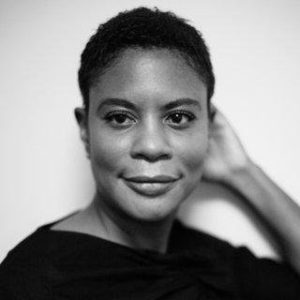
Alondra Nelson, welcome back to StarTalk.
We've had you before.
Excellent.
And so you're professor of...
Sociology.
Of sociology up at Columbia University.
So we'd be coming back to you many times in this conversation.
Because social media is a sociological phenomenon.
And you share common word roots there.
Absolutely.
So just be ready for this.
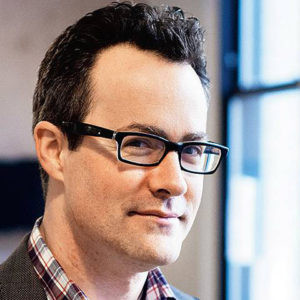
And not only that, Clive Thompson, welcome to StarTalk.
Good to be here.
So Clive, you're a journalist with the New York Times.
New York Times Magazine and Wired Magazine.
And Wired Magazine and how long have you been, you're a professional journalist.
Yeah, I've been writing about social media and the internet for about 20 years now.
Really since it sort of became the internet.
Yeah, I didn't know it was that 20 years ago.
So what the hell were you writing about 20 years ago?
Email, email, email.
I am the lone person on earth with an email account.
I will be a professor on this.
I will be the head of that division of the New York Times.
And another thing about Netscape.
And so we're talking about Twitter.
I tweet, I tweet under Neil Tyson.
You tweet at Eugene Mirman.
And you tweet?
At Alondra.
There are no other Alondras?
No, it's like Madonna, Shakira.
There's more Alondras.
I just got there first.
Which matters on Twitter, huh?
And you tweet?
At Pomeranian 99.
Yeah, I know.
There's a story behind that.
So that sounded like you were a late adopter for that Twitter handle.
Actually, what happened is I got Pomeranian 99 in 1999, when I signed up for AOL Instant Messenger.
And there's a complicated story behind why I like Pomeranians, but I do.
And it was 1999, so there you go.
Wow, and so we're gonna take advice from you in this conversation.
Are the Pomeranians the really crazy, cute dogs?
Yeah, they're little, they look like burnt marshmallows.
They're these fluffy little things.
They're completely cute.
Because if I were a wolf and I saw that dog walk by, I would just be so disappointed with humans that they turned my DNA into that.
Yeah, they serve no function, but I don't know, right?
So Alondra, this is technology arising that enables people to communicate without actually being with one another.
Yes.
And not even seeing one another.
Is this good or bad?
You're a sociologist.
You care about interaction.
I don't know if, I think the answer is it's social, right?
So it's people interacting with one another.
What's also interesting about Twitter is that you can follow someone without them following you.
It doesn't, unlike Facebook, it doesn't have to be reciprocal.
So it opens up all sorts of interesting asymmetries and the way that people relate to one another.
And you're cool with that.
It would be terrible to follow all the people that follow you on Twitter.
Because then you'd have to see a lot of stuff about their food.
And some of those people are bots.
Some of those people are bots, but some have like families and it's just pictures of their kids.
And you're like, I get it.
You have a kid, great.
So Twitter has created a kind of a revolution.
And we've heard about it in the Arab Spring, how people are communicating with one another.
We will even learn later in the show that it's responsible for massive flocking behavior exhibited by humans, something that we'd only ever really previously seen in other animals, other vertebrates, fish and birds and things.
So I'm just fascinated by that.
But in my interview with Biz Stone, because I knew he was a college dropout and I'm an educator, so I asked him, I said, if people like you continue to be successful, it puts bad light on me who's trying to get people to go to college.
Let's check out what happened when I asked him this.
I don't look at it as dropping out.
What I did was I chose to mentor, I chose to have a mentor, I chose to apprentice.
That's just a different way of learning.
And that's, it's different.
Yeah, I didn't get a piece of paper, but I did learn a lot from my mentor.
Because that's the whole point of going to college anyway.
Well, he offered me a job, then I thought, well, don't you go to college to get this kind of job?
Aren't I kind of skipping ahead in life?
So I took the job and then he became my mentor.
It's actually a really funny story of how I got the job, but you know.
The job.
I was at college and I wasn't really loving it.
I get a job moving heavy boxes from the attic to the lobby of this publishing house called Little Brown Company.
And they all go out to lunch one day.
Like it's a small art department.
It's the department that does the book jackets.
So they all go out to lunch.
And I sneak onto the art director's workstation and I find a jacket that needs designing.
There's like a little piece of, it's a transmittal.
It's a book jacket.
So I designed it, I printed out, I matted up, and I slip it in with the others to go out for approval in New York City.
It sales an editorial.
And then I go back to moving the boxes.
And when.
So nobody knew you did this?
Nobody knows I did it.
Until the art director comes back from New York and he says, who designed this jacket?
And I said, me.
And he said, the box kid.
And that turned into a job offer to be a book jacket designer.
So you can understand why I said, well, I got this free ride at college.
I got this full ride for excellence in the arts, but I'm not loving college and I'm being offered this cool job.
So I make one of my first big decisions in life, drop out, take the job as a designer.
So Clive, three out of the four founders of Twitter are college dropouts.
You write about these people.
These people provide your journalistic employment for what they do.
So what gives here?
Well, to some extent, this is really about the fact that people who have a really interesting burning idea have trouble making that happen in a college situation.
It's not that college wasn't valuable to them.
If you look at all of them, they got amazing things out of being in college.
Mark Zuckerberg, he essentially sort of cut his teeth.
Mark Zuckerberg of Facebook.
Of Facebook, that's right.
He created a little social networking game that gave him a taste of how to do this before he sort of could get together to make Facebook.
So they all get something out of that, but I agree.
It sort of, it doesn't look great for pushing secondary, post-secondary education when everyone's Bill Gates, you know, another famous dropout.
So Alondra, what I'm curious about is you're also an educator.
I'm also an educator.
At a university setting.
And might it be that college is a homogenizing force on the creativity of its students?
And these people are anything but the homogeny of what a college would churn out.
Sure, I think it's true that college creates some path dependency.
So teaching at Columbia.
Path dependency.
Sounds like a studied phenomenon.
It is a studied phenomenon in the social sciences.
So if you get on a circle track, you're more likely to stay on that track.
So the path dependency in college for undergraduates is as first year students, 80% want to be either pre-med or pre-law.
So if that's your path dependency, that's your track.
You're not going to become Mark Zuckerberg or Biz Stone.
Ever.
Right, until you flunk out of organic chemistry.
And then you can't help but become a billionaire.
Well, that's my second option.
But I will say, let's not forget that Mark Zuckerberg has just started a book club.
And so I think that he didn't finish college, but now he's sort of having a liberal arts moment.
So I want to hang on to that.
Wait, so Clive, people with this kind of artistic background, do they make more successful internet companies than others who don't?
It's a little hard to say for sure, but in my experience, yeah, the people who design technologies that understand human behavior, human psychology, human passions tend to make the things that we really enjoy doing and that bring out our best.
I mean, I think one of the things that happened with Twitter was that they created something that was really simple, that evoked people's desire to communicate to each other in a really simple way.
And so whenever someone has an understanding of what people really like to do, what they really want to do, they can make good technologies.
Is there another way to shame somebody who made some weird mistake that you can watch over and over and write about?
No, Twitter is the best way to shame people, by far.
So Clive, I think you made a point a moment ago that Twitter, no, Eugene, so simple, and it leaves me wondering if it's that simple and that received by the entire social media community, why wasn't it invented 10 years earlier?
Or right at the beginning, when you're the only one in the universe that had an email account.
This is what I want to find out.
We'll find out more about the birth of Twitter when StarTalk returns.
Eugene.
Very good, Alondra.
Clive.
My people.
My people for today.
Excellent, we're talking about Twitter, and featuring my interview with Biz Stone.
So it's 2005, and Biz Stone is working with some of his partners.
One of them is Jack Dorsey, on a podcasting company called Odeo.
You ever heard of Odeo?
Yeah, because it didn't do very well.
And it's not doing well, and they try to think up something else.
And they come up with an idea that would ultimately become Twitter.
So I had to ask him, what is the genesis of this?
What is the backstory of Twitter?
Check it out.
Jack and I teamed up, and he took me over to his desk, and he said, you see here on my AOL Instant Messenger chat, you know, back when we used to use MSN chat, or AOL chat, or whatever, you could see your friend's name, whether or not they were online or offline, that was their status, but you could also write whatever you wanted in there.
And some people were offline, online, listening to the white stripes, feeling like crap, I hate Mondays.
But this is the status message.
This is the status that would go out to someone who's trying to chat with you.
Yeah.
And so they would know what your state of being is.
Right, and so Jack said, take a look at this.
I got 12 people on here, and I don't even have to ask them, and I know what they're thinking.
Look, this guy's having a bad day.
I don't even have to ask him.
And I was like, and he said to me, he said, People are automatically keeping it short because it's just a quick.
It's just a quick thing.
And so Jack said, you've built networks before.
You built one of the early social networks.
You built, you worked on Blogger, all this stuff.
Do you think we can make a whole thing out of just this?
And I was like, yeah, let's do it because that's simple.
So he's talking about Jack Dorsey, which was one of his co-founders at the beginning of that.
So this idea, and I remember that, seeing these little notices, what are you up to?
Well, what are you not up to?
And if you have a friend and you're curious, this is, these are info bits.
And Alondra, isn't this voyeuristic?
And is that good or bad or neutral?
It's not voyeuristic if you're putting it out there, right?
So you're making a kind of...
Is it voyeuristic for me to want to know this about you?
We all want to know that about each other.
I mean, you know, we're all social animals.
We don't sniff each other like some of the other animals do, but, I mean, there's a reason.
Sometimes it's fine and sometimes it's inappropriate.
But we're curious about each other.
That's exactly true.
We're curious about each other.
No, no, you're absolutely right.
We people watch, I mean, you can spin...
You, you, you...
Seeing a status update is like sniffing their butt.
I didn't say that.
Yes, you did.
I think it.
No, it's, I think that's a brilliant analogy, just sniffing someone.
It's because smell comes at a distance and you get to know what they're doing or what their circumstances are.
That's a brilliant analogy.
Please continue.
I just think that we're curious about each other.
There's a reason why you can while away many hours, you know, sitting in a mall, watching people walk by, you know, sit on the subway, watch people sit at the beach, watch people, because we're inherently interesting.
And it's not voyeuristic if people are out in public space and there's not much more public than, you know, putting out to the world to 10,000 or five, a half a billion users that, you know, this is what I'm doing, this is what I'm feeling right now.
Clive, you have a book, Smarter Than You Think.
You speak about ambient awareness as a kind of social sixth sense.
Is that what this is?
Yeah, absolutely.
It's the idea that you sort of build a mental picture of what's going on in someone's life, what they're thinking about.
Someone else's life.
Someone else's life, yeah.
You're like, so what is my friend thinking about or reading about or wondering about?
They're called stalkers, I thought, but apparently not.
Like Alondra said, this is kind of a natural thing.
We've always done this in our everyday lives, but we couldn't do it over a long distance, right?
You could sort of know what someone's doing down the hallway from here.
This is a nosy neighbor looking in the window.
Yes, yes, there you go.
Oh, they're baking a pie now.
With permission, though.
With permission.
Yeah.
Yeah, yeah.
So basically, it's a way of sort of figuring out what's going on, not through like a big long conversation, but a whole bunch of little messages.
Like if you were to sort of, when you start following someone on Twitter, you see, you know, a little thing they say and then another thing they say.
And after two months, you have this kind of really deep sense of what's been going on.
Sometimes you find a little more than you need to know.
So Twitter's really something that people connect to deeply and it's connecting millions, hundreds of millions of people around the world.
You have to ask them, all right, when did you realize it would take off?
So I wanted to know, what was that moment?
Check it out.
So we built, we rushed and we hacked together the first iteration of what would become Twitter.
And it was a toy, it was fun, it was just for fun.
It was just like, it made us laugh.
One of the very first things that while we were prototyping, and this was another key lesson learned, while we were prototyping, my wife and I had made just enough money off of Google to get myself out of debt and get $50,000 to put down on a 400 square foot house in Berkeley.
I got this house and I had watched enough Bob Villa, this old house, when I was a kid, to realize that when you rip up the carpet in your house, you reveal the beautiful hardwood floors underneath.
So during this hot, really hot heat wave day, while we were still prototyping, we were still prototyping Twitter on the weekend, I decided I would like just start in the middle and just kind of cut the rug right open and rip open, show the hardwood floors, no hardwood floors.
I was ruining my house and I was sweating and I was cursing and my phone buzzed in my pocket and it was a tweet and it said, sipping Pinot Noir after a massage in Napa Valley.
And I laughed out loud.
And when I laughed out loud, I realized, wait a minute, I'm laughing at something I'm working on.
I must be working on the right thing.
It's making me laugh.
So we were having fun and it wasn't until March.
How many people have Twitter accounts at this point?
Nobody, like just the people at the company.
12.
So you're describing like the emergence of a species.
Wow.
So Twitter started as basically a toy for Biz and his friends to just play with.
But there was a moment when all of that changed.
That story when StarTalk returned.
StarTalk.
We're picking up with my interview with Biz Stone, co-founder of Twitter.
So here they are, just having fun, inventing this new way for his buddies to communicate with one another.
And then the idea took a turn.
A whole new trajectory for this project emerged.
Check it out.
Everything changed in March of 2007 in Texas.
And that's when the toy became important in an instant.
And that's when I realized, oh my gosh, we have created something that has never...
It is alive.
It really, no, here's the story.
It felt alive because of this.
What happened was I heard the story.
It was at a, it's a festival called South by Southwest.
It's still running strong today.
Back then, it was kinda like nerdier, right?
So that was the first chance to really see Twitter out in the wild, so to speak, because at that point, there's about 50,000 people using Twitter and most of them were concentrated nerds in this area.
So we got to see it being used and I heard this story that just made the hairs on the back of my neck stand up and really transformed my thinking.
It was a story about a guy who was at a pub and he really wanted to talk to his colleagues about what they were working on up in the Bay Area but it was loud and noisy and there was music there.
So he sent out a tweet that said, let's move to this other pub and he named it so we can talk.
And in the eight minutes it took him to move to that other pub, 800 people had shown up.
There was a line out the door.
The place was totally filled with capacity.
And I realized that the metaphor that came to mind immediately was that of a flock of birds.
A bunch of individuals, suddenly becoming one and then becoming individuals again.
So we think of flocking, you think of like birds typically, where they all kind of move together like this.
And yeah, like that, is that how we do it?
That's exactly how, that's how I remember swans moving.
And so what does a flock mean?
Well, you're individuals until you become a flock.
And then when the flocking time is over, you're back to individuals again.
So it's not like the proverbial lemming behavior, let's just all do the same thing because we don't have a brain.
It's that there's this one moment in time where the occasion is just right, where we all need to do the same thing at the same time.
And after that, we go back to being individuals.
And I had never thought about that, the way he described it.
This is the first example of mobs, but in a social setting.
Yeah, I guess so.
Yeah, he didn't use the word mob.
Yeah, he doesn't think of himself as a group of people descending on a monster to destroy it.
Right.
But a little.
Right, so how much discussion has there been?
I guess mobs is the closest early psychology to that.
Actually, sociologists, social scientists use mob as a category.
So altogether, it's called collective behavior.
And social scientists talk about mobs, they talk about crowds.
But there's a sense that there are these spaces where the kind of normal social norms may break down.
And so because you have so many people and it's not clear why they're there or they're there for a different category of activity, sort of a revival, South by Southwest or some other kind of event.
And so how are we supposed to behave in this way?
Or how are we supposed to behave when we get a cue to go to this certain pub?
But is it a different phenomenon or is it just a change of time scale?
So I can go to the opera and everybody else is at the opera together and presumably we all like this opera.
And we're all clapping at the same time and we're all tearing at the same time.
But we bought our tickets a year in advance and paid scads of money for it.
Is that mob behavior?
No, mob behavior would be we all go to the opera all at once because perhaps we get a tweet on Wednesday at 2 p.m.
Well, now that we have tweets.
But what I'm trying to distinguish between people doing everything together, which took months to organize, and people doing things together, things together because it took minutes to organize.
And is that sociologically different to your studies?
Yes, one has norms and one doesn't.
So when something takes moments to organize, it's not clear what's supposed to happen next or why this is happening, right?
And so that kind of gets worked out.
So the rules, there's no rules.
There's no rules.
Or the rules will be worked out in the source of that sociality.
So Clive, is this a phenomenon you guys write about and talk about?
The thing I found in my research is how often this kind of flocking behavior happens in really interesting, small, intimate ways.
Like someone will mention a random track, some B track to some band they like, and lo and behold, they'll discover the 20 other weirdos, one in Russia, one in Texas, who also like to talk about that.
And suddenly they're having this little happening, talking about this weird B track.
And that's something that was really hard to do, maybe impossible to do beforehand, happens all the time on Twitter now.
So clearly bringing huge numbers of people together is cool, but it can also be powerful.
Like bringing down entire governments.
More on that when StarTalk continues.
We're back on StarTalk.
We're talking about the Twitter revolution and how Twitter can enhance social interactions and also bring down governments.
So let me ask you something.
In between there, there are other things that have happened with Twitter.
Twitter has become a news source.
Clive, you're a journalist.
You will definitely get scooped by a story if someone's got a Twitter account and they see something that you might be interested in.
We learned about Michael Jackson's death first on Twitter.
When the plane was plunked down in the Hudson, someone tweeted, I just saw a plane crash in the Hudson.
You know, it's called sometimes citizen journalism, but it's quite powerful and it's very fast and much faster than traditional media.
Is it only an issue of speed as opposed to whether a phenomenon would happen at all?
Alondra, could you have a revolution such as the Arab Spring without Twitter?
Sure, we've had revolutions before without Twitter, but they haven't...
Name one.
I don't know, the French Revolution, the American Revolution.
One was enough for me, but I believe you now.
1789, they hadn't invented Twitter yet?
All they needed was a guillotine.
So surely it can happen without Twitter, but...
Let me repose the question then.
Yes, we've had revolutions with and without Twitter.
Are the revolutions triggered by Twitter of a different social nature than the ones that are not, that have not been?
Indeed, because the whole world is watching, right, or reading on their screen, right?
So they're watching videos, they're watching, they're seeing images that are on their timelines, and people are also reading about it.
That happened in 1968 Democratic Convention.
The whole world is watching.
The whole world is watching.
You had the militarized police outside, so...
But everyone didn't have television in 1968.
I mean, you know, the penetration of Twitter, you talk about half a billion users, means that there are people all over the world who are watching this and experiencing this in real time together.
So is it just a sped up revolution, or is the nature of the revolution different?
It's sped up news of a revolution.
Whether or not a revolution ever happens, I think depends on what's happening on the ground.
So Twitter is one piece, I think, of social action that can lead to a revolution.
So we can ask, what is the responsibility of such an efficient media communicative source?
That's a hard call.
I mean, you know, they have algorithms, they have the ability to censor hashtags that are gaining popularity or not, as is what they want.
But who's they?
The people, you know, the programmers, the man.
The programmers who create the algorithms.
There'd be transcendent trends all about Justin Bieber if they didn't censor stuff.
So there are ethical issues that arise with how Twitter is used and how news is disseminated and what choices are made.
Because I had to ask Biz Stone, co-founder of Twitter, what he thought about people referring to these revolutions as Twitter revolutions.
Check it out.
We were getting lumped into the headlines with every important thing that was going on in the world.
But I made sure to tell people at Twitter, because the newspapers were calling it the Twitter revolution and all this stuff.
I said, it's not the Twitter revolution.
You got to keep in mind, everybody, that these people are bleeding in the streets.
These people are dying.
They reached for the closest tool.
And we happened to be there at the right place, right time.
But let's not say to ourselves, we're doing this.
So I was getting invited to go on all these, you know, night, evening talk shows and all this stuff, and I said, no, this would be inappropriate.
First of all, I don't know anything about what's going on, so I'm going to look like an idiot.
They'll ask you to comment on international politics.
What do I know about it?
Second of all, these people are dying and bleeding and, you know, suffering.
And desperate.
And I'm not going to hawk my wares on the back of that.
So I wrote to...
But at the same time, I was getting sort of pressure from my board, like, hey, man, you got to go on these shows.
We've got to grow the, you know...
And are you some kind of idiot?
And I was kind of stuck because...
But the board has to do what boards do.
And that's...
You know, maximize the company.
Grow the company.
Right.
And so what did you do?
So I felt that I shouldn't...
My gut told me don't go on these shows.
But I also didn't want to piss off all these media folks because, yeah, I do want to go on the shows later.
And, yeah, I do want to hype up the product and get the brand out there and everything else.
So I lucked out with one word.
I chose one word that was the appropriate word, which was inappropriate.
I said, I feel it would be inappropriate for me to come on the program and talk about this.
And that worked because I got back universally another one-word answer from a lot of these producers was understood.
And so I was like, yes, that worked.
Because later on I did go on all the shows, but, you know, for brighter, sunnier things.
And, you know, obviously it was inappropriate.
And anyone who at the time was going on there and claiming that they're, you know, I would say, I said, yeah, when the Berlin Wall fell, were telephones used?
Yes.
Did AT&T say, we brought down the Berlin Wall?
No.
But were phone calls made?
Sure.
Yeah, after that comment, I fell in love with the guy.
I mean, that was noble.
It was righteous.
It was humble.
It was...
That's why they call him Biz Stone.
So, the Arab Spring, Twitter was used to organize protests efficiently and effectively.
And in fact, The Hill, one of the newspapers in Washington, DC, described Twitter as a strategic weapon.
I think that the simultaneity of what you can do on Twitter is unprecedented.
So, while it's true that other revolutions or other social movements were able to get at eventually 500 people, 5,000 people to get them to a march or a protest, to be able to do that all at once is this tremendous kind of leapfrog in the sort of evolution of how social theorists think about social movements.
So, typically, you do person by person, you do...
There's a sociologist named Alden Morris who talks about the civil rights movement being an institution of institutions, these sort of social building blocks.
Twitter allows that all to happen at once.
Churches, community centers, schools, building, building, building, right?
That's typically how we think of social revolutions, social movements happening.
Twitter puts every...
And that's how people connect.
So, there's these little pods or these little hives that come and connect into a big hive.
With Twitter, you connect the hive and then you have to, in some instances, go back and do all of that bootleather work to make the revolution or the social change sort of take hold.
Well, of course, when something like Twitter takes on a life of its own like this, even the creators themselves don't know where it's going to lead.
More on that when StarTalk continues.
We're highlighting my interview with Biz Stone of Twitter, and we're just talking about Twitter as a social phenomena, a social movement, a social media revolutionary force.
And I'm always intrigued when someone who creates something, they try to think of all the ways it could be used, and they can't.
Because if everyone has access, the creativity of the masses exceeds the creativity of the creator himself.
Let's see what Biz Stone tells us about that.
I was shocked by several things.
One, I thought celebrities would never use Twitter.
No way.
Because I thought the whole point of a celebrity was you had limited access to a celebrity.
You don't get to know my personal life.
You want to see me, you got to watch me on TV or on the movies.
I got the list.
But they went crazy on it.
As of this recording, top 10 celebrities, you know what number one is?
I think it's Katy Perry.
Katy Perry, number two.
I have no clue after that.
Justin Bieber, number three.
I don't know anything.
Barack Obama.
Number four, Taylor Swift.
Then YouTube, the only non-human entity.
Oh, YouTube.
Yeah, yeah, yeah.
Then Lady Gaga, Justin Timberlake, Britney Spears, Rihanna.
We're running off the top 10.
A lot of musicians.
Ellen DeGeneres.
There you go, yeah.
Well, she had that famous selfie thing.
The selfie thing, yeah, yeah, yeah.
So everything is not even anything you would have imagined.
No way.
I thought there's no way celebrities are gonna use it, but then afterwards I said, oh, well now it seems obvious they wanna connect, they do wanna connect directly to their fans.
So Alondra, is there some usage of Twitter that you can imagine that others haven't yet?
I think from a sociological perspective, what's interesting is that Twitter has created new social role.
So what your conversation with Biz Stone suggests is now that to be a celebrity or to be a public person means that you have to have a performance of your authentic self to the world in a different sort of way.
Why does it have to be authentic?
Well, it has to seem authentic enough for people to wanna follow you.
It has to be sellable as authentic.
It has to be sellable as authentic, fair enough.
In the same way that the idea of the Facebook friend has changed the social category of friend.
I mean, some of us probably have hundreds of friends on Facebook who we don't know, we don't know, we hardly know them.
It's surely, it's changed the way that we think about what a friend is.
The word has been redefined.
The word has been redefined.
Sheep and I'd say.
So Twitter has brought to us a whole other ways of having to interact with other people for celebrities and for non-celebrities alike.
For me, one of the coolest things about Twitter is its impact on science communication.
There's some of that going on too.
It's not just the Beliebers.
What do you call it, Justin?
I think that's right.
The Justin Bieber followers, the Beliebers?
No, there's like science, real science communication going on.
And what charmed me was that in my interview with Biz Stone, he cited what he thought was the coolest Twitter account ever.
And it's not even on Earth.
Check it out.
There was one really fun account that I liked a lot, which was in 2007, the Mars Phoenix Lander.
The woman who was working at JPL, her name escapes me now, but she created an account.
I think she even wrote to me about it and said, I'm going to create a Twitter account for the Mars Phoenix Lander.
Do you think it would be good if I anthropomorphized the little guy and made it sound like he was tweeting?
I said, oh, that's a great idea.
And what was so cool about that was that you could follow along.
The little guy was saying stuff like, okay, my landing gear just deployed.
Okay, I just touched down.
So what happened while she was so cool was that back then, any kind of news from JPL or NASA had to go through communications.
If you were going to find water ice on Mars, you were going to go through the communications department.
This was going to be a press release.
This was going to be a whole thing.
But back then, Twitter was like, whatever, who cares?
And it was this stupid little thing, right?
And everyone was saying it was dumb.
And it was just for nerds to follow along.
And the woman who was running the account asked her boss, she said, can I tweet stuff?
Do I have to run my tweets through comms?
Every tweet, and they were like, nah, don't worry about it.
So she tweeted, we found water ice on Mars.
Woo, best day ever.
So the news about discovering water ice on Mars was tweeted first.
And we...
Water ice as opposed to other kinds of ice.
She skipped over, she just skipped the whole thing.
And that was a huge thing for us because that was big news.
And it was released on our platform.
Yeah, so I actually played a role in some of that.
Not with the Phoenix Lander, but with Mars Curiosity.
And I was building my Twitter following at the time.
It might have been around a million or so.
And I thought to myself, wouldn't it be cool if as Mars Curiosity, which is this SUV-sized laboratory, the largest thing we've ever plunked down on Mars, in fact, they needed special landing apparatus to make this happen with joists and retro rockets.
And it was a whole Rube Goldbergian engineering marvel to get this thing to plunk down safely.
And so I got permission from JPL to open up a private, publicly viewable, but one-on-one communication channel with Curiosity Rover.
And it was the funnest thing, like, ever.
And then that got storified.
Is that what you call it, storified?
Yeah, when you collect together a whole bunch of tweets that are all related together.
Otherwise you have to piece this, but this isn't a utility that helps you turn one story arc out of it.
And so it got storified.
It's now on the Internet.
And I was delighted and honored to be given this opportunity.
Do you see this as a good future for science?
Yeah, in fact, I think this is a fantastic time for scientists.
I interview a lot of them.
I'm a science journalist.
And it's amazing how many of them have started to have these really active presence on Twitter, on blogs, whatever.
And it used to be that they would sit there in their room alone for years until maybe a journalist or someone called them up to ask them one question.
And now they can just sort of pour out stuff they're doing, talk about it, develop their own audiences, and they all talk about it in incredibly excited ways because they're making these connections to the public that wasn't before possible.
Because they actually are excited.
It's not an act.
Yeah, no, no, they're completely...
It's an authentic childlike enthusiasm.
And the other thing you find is that a lot of scientists are actually pretty good writers, and some of them are really good tweeters, too.
They think about language, they have to communicate, and they're pretty funny.
They're good in this medium.
Yeah, yeah, and when StarTalk returns, we're going to hear from my good friend Bill Nye the Science Guy and get his take on the impact of social media.
We're talking about my interview with Biz Stone and everything about Twitter.
The co-founder of Twitter, the guy is amazing.
Just to hear him talk, to hear his thoughts describe what became this revolution with half a billion Twitter followers.
I've got a good friend, Bill Nye the Science Guy.
He's a friend of the show, he's a friend of mine.
And let's find out what his take is on the impact of social media.
Hashtag Times Square afternoon.
That's brilliant.
People love to look at other people.
That's why we have gossip magazines and whole sections and libraries called biography.
When it comes to people looking at other people, it's happening now faster than ever.
And instead of just words and images, you can create a whole persona for yourself online.
It's like that ancient Greek guy narcissist who drowned while looking at his own reflection in a pool.
It started out with just a couple guys tweeting about what they had for breakfast.
But now it's so commonplace, even the NASA rover will tell you what it's up to, even how it's feeling.
This is a revolutionary tool that's overthrown entire governments.
It's revolutionizing the world.
And there's no escaping it, it's everywhere.
Like 80 likes.
You know, if Neil were doing this, there'd be like a thousand likes.
Help me out people, come on, help me out.
You gotta catch up.
Okay, here we go.
Bill Nye, yeah.
So, here's an interesting thing about Twitter.
I was always curious about this 140-character limit.
Did you take to the 140 characters?
Because you're used to long-form pieces in the New York Times Magazine.
None of those are 140 characters.
So, did this pinch your style?
Yeah, no, actually, I discovered what a lot of people discovered, which is that it kind of solved the blank page problem.
You know, when people think they want to write something on a blog or Facebook, they might think, well, what have I got to say?
By shortening the length of the utterance to like a single sentence, barely a sentence, they made a perfect box that anyone could fill and fill over and over and over again.
And that is really what a lot of people have told me they've loved about Twitter, is that by forcing them to think about every word, they sort of enjoy crafting a little sentence, a little witticism.
And the problem is some people still don't know how to do that.
And so they'll have five consecutive tweets, one of five, two of five.
No, you're not tweeting, you're blogging.
Get off the highway.
A tweet storm, it's called.
A tweet storm, there's a term for that.
It's called a tweet storm, yeah.
Do you know how they came about with the, decided on 140 characters?
Oh, I wanted to get to the bottom of that as well.
So that is exactly what I asked its creator, Biz Stone, where did this 140 characters come from?
What's up with that?
Check it out.
I actually have a strong belief that constraint inspires creativity.
When people are, when people have their back to the wall, they usually come up with really creative things.
By the way, that applies even through the engineering world.
The last thing you want to do is tell an engineer, build whatever you want.
Yeah, I know.
They'll fail.
They'll fail.
You have to say, here's the limit.
We have a money limit.
It has to fit in this volume.
It's got to be this.
It's like the movie Apollo 13.
We got this, this and this, and we need to make this.
Go.
Go.
Remember that scene?
That was a great scene.
That was a great scene.
Go.
So, 140 comes from the fact that on text messages there's 160 character limit.
That's the limit.
Universally, text messaging.
That's it.
So we knew that to be true.
And we wanted our idea, our earliest idea for Twitter was that you would update your tweets with a text message, not on the web, but with your phone.
Because the idea was that you could do it anytime, anywhere, waiting for the train.
That was the beauty of it, right?
So at first, it was just 160 characters minus however long your name was.
So my name was Biz and Jack's name was Jack.
And I said to Jack one day, I said, you know, I got an extra letter on you.
And he was like, oh yeah.
An extra letter to use to communicate with.
Yeah, I mean, sure, it's only one letter.
But I said, you know, if somebody's name is longer, I get more space.
It doesn't seem, first of all, it doesn't seem fair.
And second of all, it's not uniform, and neither one of us like that non-uniformity thing.
So the limit is 140, but the limit on names is 15 characters.
So there it is.
You heard it from the man himself, 140 characters.
But I think the community, as Twitter has evolved, has come to play a role in how the 140 characters work.
So you're not going to retweet a tweet storm, as Clive called it, and you're not going to retweet an elegant, you know, a tweet that's an elegant and has a lot of abbreviations where you have to figure out what all the abbreviations mean, is not going to go viral and not going to get retweeted a lot.
So that's the community sort of choosing what are the norms within the 140 characters.
What does a good tweet look like?
And so would you say, is this good or bad for literacy?
They've done lots of studies now on short forms in texting, and they found that it actually, because they have to think about what the short form means, they have to think about language.
And it doesn't in any way harm, and it might actually help with aspects they're learning.
But I think just as Alondra said, on a literary level, it's been this kind of fun renaissance in people trying to be aphoristic to say something short and terse.
And there's something kind of lovely about that moment.
Several Christmas Day tweets, they all had very different reactions from one another.
But one I'm quite proud of was about Santa Claus.
And I fit it exactly into the, can I share?
So as I said, Santa knows physics.
Red light penetrates fog better than any other color of light.
That's why Benny the Blue-Nosed Reindeer didn't get the gig.
So what's the future of this?
Twitter is well established now.
But these companies always eventually stumble because something new comes along that turns out to be even more fun or gets us to communicate in some weird, interesting new way.
I can't predict that.
I mean, I think if I could, I'd be out inventing it right now and I'd be the next billionaire.
But you're predicting the demise of Twitter.
Yes.
Twitter will eventually fall down when someone does something even more interesting and fun than what they're doing right now.
Can you imagine what that need is?
Probably some form of hooking up.
It's probably some form of hooking up.
I had to guess some that plus news, some sort of sex news will be what replaces Twitter.
With pictures of cats.
Adorable sex news.
Because I wonder, maybe this is the future of the democratization of all the things that used to just happen behind closed doors and ivory towers.
Everybody has access.
Guys, thanks for being on StarTalk.
I've been your host, Neil deGrasse Tyson.
And as always, I bid you to keep looking up.
See the full transcript



 Unlock with Patreon


 Become a Patron