


 Unlock with Patreon
About This Episode
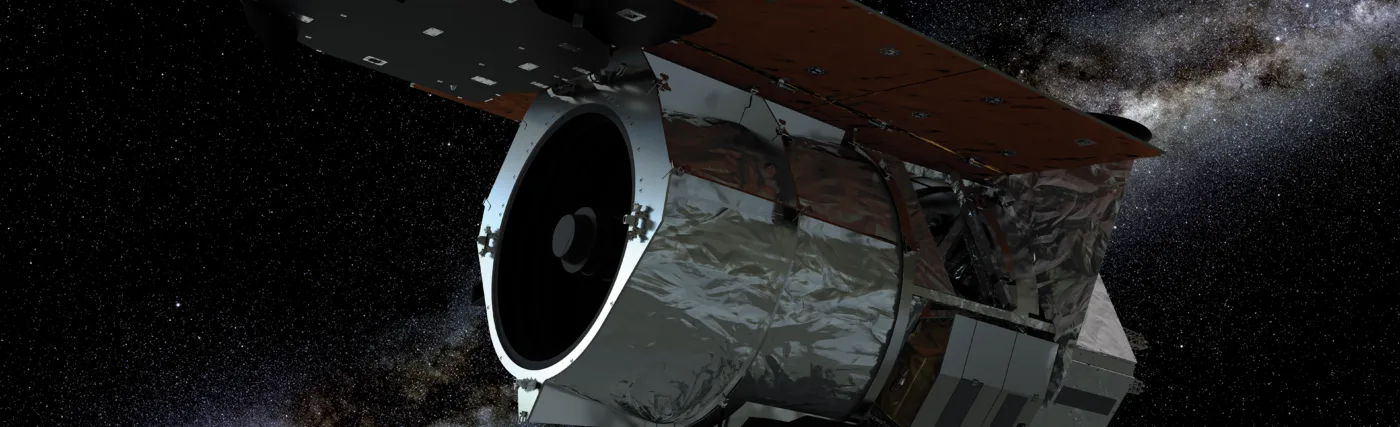
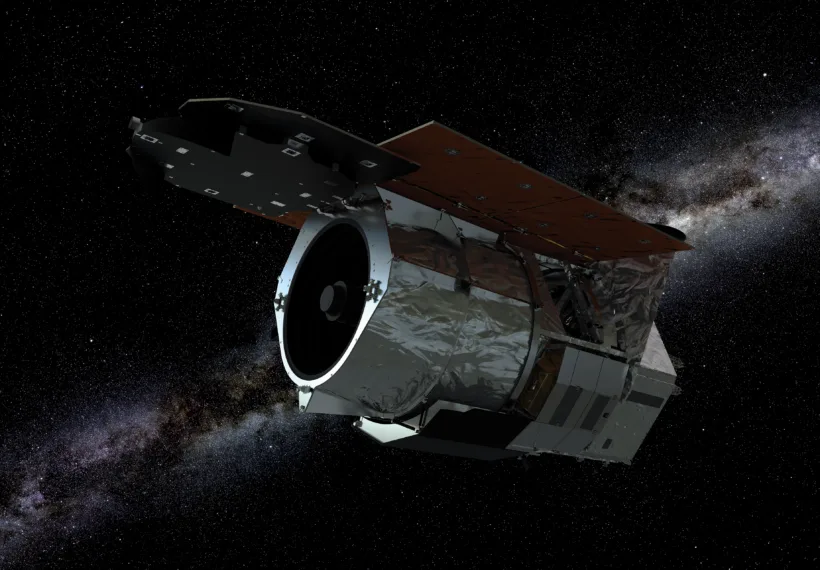
How do you build a telescope to study something you can’t see? Neil deGrasse Tyson and Paul Mecurio sit down with Jason Rhodes, senior research scientist at JPL, to explore the Nancy Grace Roman Space Telescope and its search for answers on dark energy and dark matter.
What is dark energy? Who was Nancy Grace Roman? We explore the story of Nancy Grace Roman herself before diving into why Lagrange Point 2 has become the most valuable piece of real estate in space. When will this special spot in space get too full? The conversation also tackles the growing problem of satellite streaks contaminating observations from both ground and space-based telescopes.
How does Roman actually measure dark energy? Jason walks through three approaches: using Type Ia supernovae as standard candles to measure the universe’s accelerating expansion, mapping the clustering of galaxies across cosmic time, and using weak gravitational lensing to trace dark matter by the subtle distortions it imprints on light from distant galaxies. Will this telescope finally put an end to Hubble tension? Could evolving dark energy or modified gravity finally replace Einstein’s cosmological constant?
Learn about the two different devices within the Roman telescope: the coronagraph and the wide field. We explore how the coronagraph could enable direct imaging of exoplanets and eventually the search for atmospheric biomarkers like oxygen and methane. We talk about how microlensing could detect rogue planets floating free of any star, which may actually outnumber planets in stable orbits. Plus, how much information can a single pixel bring? More than you’d think!
Thanks to our Patrons Bullseye, Steve Klein, Mr. G, Rachel Cecil, James Langfels, Amanda Dalton, Mark Robinson, Heyyo, Joshua Clark, Ava, Oliver Thomas, Daniel Treherne, Adam, David Fulps, Hanspeter, Derelict Doug, Maryrose, Robert Latta 3Rd, Benjamin Dudley, Henry De Sosa, AKlight47, Ray, Sarah Storie, Priest Of Forgotten Gods, Yamil Lopez, Patrick Nisius, Jay, Carey-Donois, pupperoni jo, Antonio Codato, slash128, Deedra Hansen, Benjamin Briggs, E, Anita, Gustavo Almeida Neves, Elissa Yoder, Alex, John Nawrocki, preston frizz, Brian Kaiser, Chad Perkins, Junkyard Monk, Lance Steinberg, Dumisani Yishvahk Tembe, Bruno Vieira, Jes Hughson, John Brocklesby, I’m Dave, Darryl Gillespie, Isa, Myopic Philomath, Mo Al-Sheikhly, Stuart, Duane McCurdy, Regina Anavy, Bob Lux, and Vino Miranda for supporting us this week.
NOTE: StarTalk+ Patrons can listen to this entire episode commercial-free.
 Become a Patron