


 Unlock with Patreon
About This Episode
This year marks the 400th anniversary of Galileo’s use of the first telescope. On this week’s show, we reflect on how telescopes have shifted our perspective on how small we are in size, space, and time. We also discuss how they help astronomers discover new and interesting aspects of the universe, from Earth-like planets to supernova, from black holes to the Big Bang.
Transcript
DOWNLOAD SRTOur universe is filled with secrets and mysteries, leaving us with many questions to be answered. Now more than ever, we find ourselves searching for those answers as the very fabric of space, science, and society are converging. As we...
Our universe is filled with secrets and mysteries, leaving us with many questions to be answered.
Now more than ever, we find ourselves searching for those answers as the very fabric of space, science, and society are converging.
As we give you the knowledge that breaks the barrier between what is science and what is merely pop culture, this is StarTalk.
Now, here's your hosts, astrophysicist, Dr.
Neil deGrasse Tyson, and comedian, Lynn Coplitz.
StarTalk.
I'm your host, astrophysicist, Neil deGrasse Tyson, and with me in studio is professional comedian, Lynn Coplitz.
Hi, Neil.
I'm great now that I'm here with you.
How are you?
That's sweet.
Thanks for saying that.
Do you know what this show is about?
Yes, I do.
It's about telescopes, isn't it?
It's about telescopes and how they have changed our understanding of our place in the universe.
Where are you in your universe?
I'm at the center, of course.
That was a setup.
Well, it turns out, of course, that we, everyone else, thought they were in the center of the known universe too, before Galileo first turned a telescope to the night sky, and that was 400 years ago, this year.
So this is the 400th anniversary of the telescope.
It's the 400th anniversary, and telescopes rocked the world.
They've changed our perception of where we are on the planet, correct?
And not only on the planet, but in the cosmos itself.
People thought that just looking up would give you all the information you needed to know to understand our relationship to the cosmos, and that was just not the case.
Because if all you do is look up, you will think you're in the center of the known universe, because everything revolves around you.
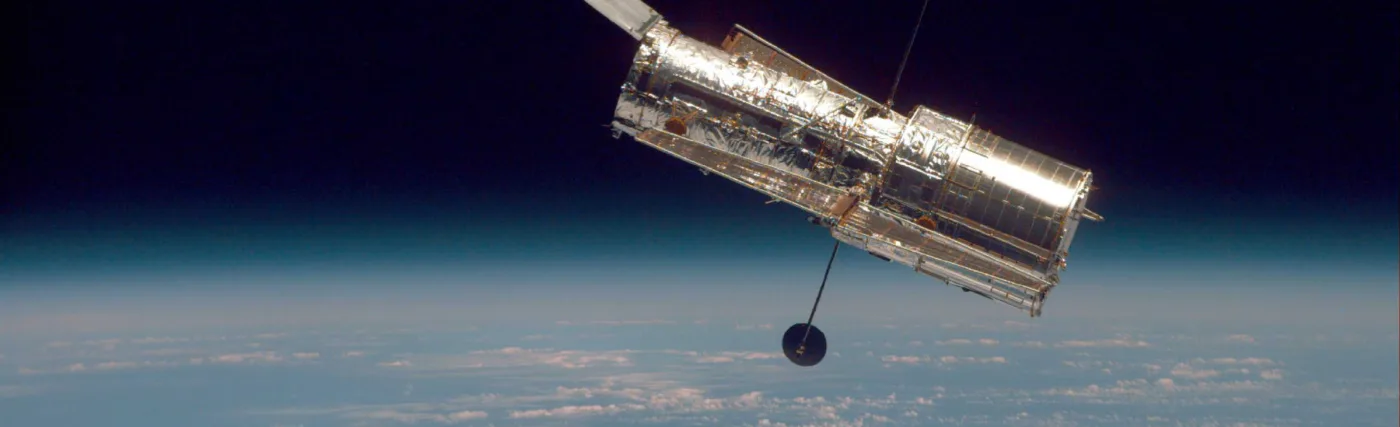
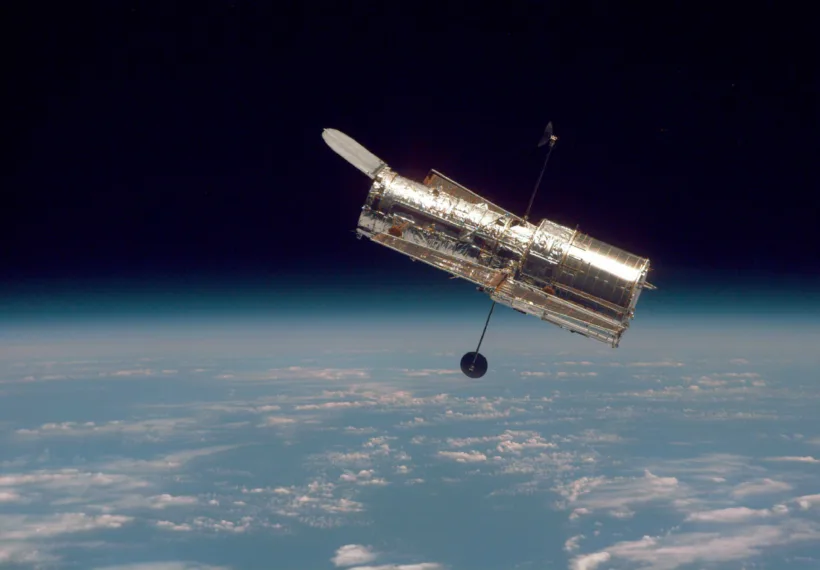
So wait, now tell me, today on the show, because I'm very excited about the show, we're going to talk about Galileo, but we're going to talk about the Hubble Space Telescope.
Hubble was just fixed.
We got a call lined up with one of the shuttle astronauts who's responsible for building the tools that fix the Hubble.
We got a lot of stuff lined up for the show, but it's all a survey of what telescopes have done for us and to us.
And how we realize that we are no longer the center of the universe.
We're not only not the center of the universe, we're not the biggest part of it or the smallest.
Or the only universe.
Yeah, we might not even be the only universe out there.
Telescopes will help us look for life elsewhere in the cosmos.
And so what the telescopes have done is however big your ego was at the beginning of the day, it has made your ego a little less by the end of the day.
That's what telescopes have done.
This is terrific.
And we're going to find out how they were invented.
Indeed.
And by the way, did you know that the international community of astrophysicists have gotten together and declared this year the International Year of Astronomy?
And the goal is to get everybody in the world to look through a telescope at least once.
I love that.
And I love when you ask me, did I know?
Because you know I didn't.
Well, maybe you did.
Did you know?
Lynn, you know stuff that surprises me every show.
Neil, you said a word the other day that I broke down and I still couldn't understand what the word was.
What was the word?
I don't remember.
Well, then why even...
Matayaleotocotology, something.
Yeah, I have no idea what that word was.
Well, keep me honest and make sure all the words that I use are understandable to the cosmos.
We have a lot of interesting people on the show today, too, don't we?
Yes, we do.
In fact, I think we're going to soon get Bill Nye on the line.
Bill Nye is an old friend of mine.
He's a manic man.
He is an exciting manic man.
Well, I think he just has his coffee every day.
That's all it takes.
He's just this bright science man.
I love him.
Yeah, he's got energy to just share with the rest of the world.
And so he's thought a little bit about telescopes, and he gets ranty every now and then.
And I always want to make sure I get him to share some of his rant with us on StarTalk.
As a New Yorker, what I like about Bill Nye is he's nice and quick.
He gets to the point fast.
He doesn't just drag on.
No, he doesn't.
What are we calling it?
A manic minute?
It's a nice manic minute.
Let's see what Bill Nye's got to tell us in his manic minute.
Hey, Bill Nye, the science guy here.
Last week, NASA sent some people up to the Hubble Space Telescope to fix it, and they did.
The space telescope is better than ever.
It will make discoveries that we can't even imagine.
This is what telescopes do.
Galileo Galilei was the first guy to take his military telescope, designed for looking at bad guys on the other side of the battlefield, and he turned it up into the sky, and he looked at the moon.
And instead of it being this perfect carved dinner plate, it's this mess, this jumble of chopped up Swiss cheesy rock.
And that discovery changed the world.
The universe is not perfect in the way that people first imagined it.
Instead, it's much more complex.
Now, there are many more telescopes being built right now, the Spitzer, the Webb, and these things are going to make discoveries that our ancestors couldn't even imagine.
I gotta fly, Bill Nye the Science Guy.
There he goes.
I don't know if he took a breath that entire minute.
Did you know, Lynn, about the telescope?
It was first used as a military device.
Well, you know what you were telling me before the show I found so interesting is that the guy who actually invented it, correct me if I'm wrong, was Hans Lipperhey.
Hans Lipperhey was a Dutch spectacle maker and a few years before Galileo used it to look at the night sky, he was up there fiddling with lenses that people had used just to read better.
But he was using them, Hans created it for battle so you could see people across the field or whatever.
No one thought fully about that yet.
In fact, the telescope was a toy.
It was kind of a curiosity that you could see far away things nearby.
But what I find so exciting is that Galileo looked up.
He had the idea to take the toy and look up.
Yeah, he looked up and he made a better version of this toy than had ever existed anywhere in the world.
Galileo was really smart and figured out how to do it.
But my point is if I make a toilet plunger and I make it just to suck it on to things and do nothing with, and then you come along and you go, hey, I can use it to unclog the toilet, all of a sudden, it's your invention now because you're the one who came up with the real good use for it.
Okay, I guess we can think of toilet plungers and telescopes.
I'm just saying Galileo sounds like a great guy to me.
Yeah, he was brilliant, one of the most brilliant people there ever was.
Plus he understood the value of the telescope to human curiosity and to understanding the cosmos.
So he looked up and he saw that the universe was not the perfect place that had previously been described, and the prevailing notion that the moon was a perfectly smooth orb, that the sun was a perfectly smooth orb, that the planets were just these dots of light moving around the night sky, all in orbit around the earth.
This concept slowly was dismantled, observation by observation by Galileo.
And he was doing this with not, we should tell everybody who's listening, he was doing this with a not very strong telescope, am I correct?
Well, it had been better than anything built before, but you're right.
If today you'd say, oh, you'd walk by it on the shelf because you can buy simple binoculars like a Kmart, that are better optics and better magnification than what Galileo had supplied.
But consider what he was using compared to what was around before.
Nothing was around before.
So whatever you have is better than what anyone was using.
Now, here's what I want to understand as well.
The doctrine that prevailed at that time was the Catholic Church was in charge of telling everybody what was going on, right?
Exactly.
In Italy and Rome, that's right.
The seat of the state basically was the Catholic Church.
And am I correct in that Aristotle, his theories were what the Catholic Church was going by, right?
Indeed it was.
Aristotle, you know, from ancient Greece, of course, had ideas about how the universe must be.
The problem is, he was successful in some areas and really not successful in other areas, like astronomy and physics.
He said stuff that was just flat out wrong.
Like the earth isn't moving.
No, but you can't blame him for that, because it doesn't feel like the earth is moving.
If it was moving, then we'd be moving.
Something would jiggle if you're moving.
Something like a chandelier would shake.
So you can't blame him for that.
But what I do blame him for, he made a statement that heavy things fall faster than light things in direct proportion to their weight.
So if you had a cannonball that weighed 10 pounds and a cannonball that weighed 1 pound, and you dropped them, the 10-pound cannonball would fall 10 times as fast.
And he just wrote this because it made sense to him, and everyone believed it, and no one thought to do the experiment until Galileo.
So Galileo went ahead and dropped them.
And now I have to tell you, in preparing for this show today, I dropped everything in my house from a book and a pencil, and everyone at home should do this because they do fall at the same rate.
Yes, so if you take a pencil and a book and drop them, obviously the book weighs more than the pencil, they will fall to earth at exactly the same rate and hit the floor at the same time.
Now what's interesting about this and what's interesting about what was happening at the time, and stop me if I'm wrong, is that Galileo, you know, so he's got this Aristotle's doctrine, he does the law of motion, and he realizes, oh, Aristotle is wrong.
He must have not tried this or been drunk or whatever.
And then all of a sudden, he thinks, well, if he was wrong there, he could be wrong for a lot of other things.
And the Catholic Church had based much of its religious philosophy on the teachings of Aristotle.
There was a good resonance between the two.
And we should remind people the Inquisition was taking place at this time.
So to challenge the Catholic Church was, I mean, on things smaller than this, challenge the Catholic Church was not a good idea.
It would be audacious, that's right.
And so Galileo had, you know, huevos to do this, you know.
Yeah.
So Galileo, so this is what happens.
Galileo sees that Aristotle is a bit of a schmuck.
He decides he's going to, you know, go ahead and test some of his other stuff.
He looks through the telescope.
He notices Jupiter.
He notices planets moving.
He sees craters on the moon.
He starts journaling this.
Am I correct?
Yeah, he journals it.
And what he noticed about Jupiter was that Jupiter had what he called stars that clustered near Jupiter, stayed with Jupiter wherever Jupiter was in the night sky, and that these objects moved around Jupiter.
And later we would learn, of course, they were Jupiter's moons, the four brightest of Jupiter's moons.
Today, they're named in Galileo's honor.
They're called the Galilean moons of Jupiter.
Oh, how exciting.
These moons went around Jupiter and were not going around Earth.
This was an astonishing fact because it flew in the face of all prevailing philosophy.
Now, but what I love about Galileo was he kept this to himself and just started journaling it because, what's his name, Bruno?
Oh, yeah, yeah.
Oh, you knew about Bruno.
Yeah.
Giordano Bruno was a monk who, a brilliant philosopher in his day, but he suggested that the stars in the night sky, maybe they're like the sun, and if they are, maybe they have planets in orbit around them because he liked Copernicus' idea that maybe the sun is in the middle of things, not the earth.
So he started flapping his big fat gums.
And so he suggests that maybe if there's life on one of the planets around the sun, earth, maybe there's life around the planets, around these other stars.
And if that's the case, then the glory of God is manifest everywhere in the universe and not just here on earth.
Earth is not the object of God's creation.
And then the church burned them at the stake.
That was bad for the church.
That was considered, not only heretical, it was considered, it was, it was, it was, he was impertinently heretical.
An impertinent heretic.
You know what happens if you're an impertinent heretic rather than a heretic?
My guess is they make you get naked in some way.
The Catholics love to strip you down.
So, he was burned at the stake, naked and upside down.
So, okay, so now Galileo keeps his information to himself, knowing that, you know, Bruno and the whole naked upside down burning thing.
Well, initially, I mean, he doesn't quite, I mean, he writes a book.
He writes a book.
But I mean, he starts gathering the information.
Exactly.
And that's, I think, the right way to think about it.
His first book on this, which reports his telescopic observations, he's, yeah, some of them are heretical, but it depends on what you do with it philosophically.
Are you going to say Aristotle's wrong, the church is wrong, you got to rethink the Bible?
Is this what's behind this book or not?
So the book comes out and it's a curiosity.
It would be later that Galileo publishes a book called A Dialogue of the Two Chief World Systems.
And there is the battle.
But he waited till he gathered all that information.
And he got it until he knew that his arguments were irrefutable.
And in the day, you're right, there's the risk of persecution because if you are a heretic, the Inquisition would inquire, and you could end up tortured or dead.
Giordano Bruno was burned at the stake in the year 1600 and Galileo was making his observations of the night sky in the year 1609.
So this is fresh in everybody's memory.
Especially someone that you spoke with, who has a lot of information.
In fact, yes, we have interviews for this show.
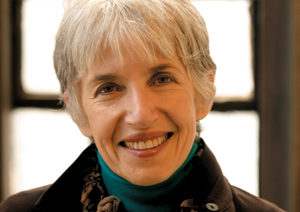
The best-selling author, Deva Sobel, she's written several best-selling books.
One of them is Galileo's Daughter.
A whole story about Galileo's illegitimate daughter.
She's got all the scoop on what was going on in Galileo's private life, as well as the culture of the day.
She's also the best-selling author of Longitude, which is the story of John Harrison and how he invented the first clock that you could take on a ship.
So, let's find out what Deva has to say about Galileo.
Now, you're some of an expert now on Galileo, and we only know him as a guy who got into a fight with the Catholic Church, but your research has made him a much more sort of fleshed-out character in the history of science.
I was wondering, what could you tell us about the time in which he lived and what his telescope meant to the people of the day and to the Church in history?
He was Tuscan.
He came from Tuscan and he was living in Venice.
To me, Tuscan is a loaf of bread I get in the grocery store.
Well, that's a venerable association.
He certainly loved the food and always wanted to go back there, but he taught in Venice for almost 20 years.
He always needed funding.
Like all scientists.
Exactly.
There's always the funding problem.
And there's always the deep pockets of the military who can help that out.
Definitely.
So there was a military instrument.
So Galileo is now selling his telescope to the military.
Yes.
And he got tenure at the university and a big raise, so it was great.
But then he had the idea of perfecting the instrument and looking at the moon.
And that's when everything changed, because the astronomy of his day was not what you would call astronomy.
It was all mathematical.
It was figuring out orbits and predicting planetary positions for the astrologers.
That's what it was.
Nobody was talking about what are the planets made of, because the idea was that everything beyond the sphere of the moon, from the sphere of the moon on out, was all made of the same stuff, this ether, this perfect substance.
And everything beyond the earth was different from the earth, because on the earth there was change and decay and death, but the heavens were eternal and perfect.
So no one even imagined that what you discovered here on earth, either materially or physically, could have any relationship to the rest of the universe.
That's right.
And so how active were the astrologers then, trying to predict the future of things?
I guess they needed orbits.
And so you get a handy mathematician at arm's reach, you got them.
Right.
And there had been people like Copernicus, who in trying to improve on the orbits, had come up with a really different idea of how things worked.
But even his idea wasn't accepted as reality for a long time.
But Copernicus put the sun back in the center of the known universe.
Exactly.
He put the sun at the center with the earth in motion around it, which seemed like a really crazy idea.
Because of course the earth doesn't move.
Of course it doesn't move.
Otherwise you'd feel it under your feet.
That's right.
And that was one of the things Galileo had to fight.
It was that idea that got him into all that trouble.
He took all the heat for Copernicus.
And if I remember correctly, Copernicus was on his deathbed when he published his great work, so that no one could kill him for it.
Well, nobody made a sound.
I mean, it was very quietly accepted.
And his book was dedicated to the Pope.
So, nobody considered these things irreligious.
I mean, Copernicus' book was dedicated to the Pope.
Was dedicated to the Pope of his time.
So, he didn't have a sense that he was doing something really irreligious, or he did and he knew it would be very cagey to dedicate it to the Pope.
So, he should die as quickly as he can.
Well, he was old by the time he published it because he hesitated for so long.
All right, so we've got, so now, but I read stories that Galileo was a pompous, obnoxious, irreverent ass, basically, and that that's really what got him into trouble.
Had he been a little more politic with the powers of the day, not the military heads where he sold his telescope, but the religious powers who had tremendous influence over life and culture.
So, are you saying that it's purely his discoveries that got him into trouble and not that he was just a pain in everyone's rear?
It was a mix because he loved to debate publicly and he was quite full of himself and could really embarrass people.
So, in a debate, if you were arguing with him, he would bolster your opinion for a long time to make you feel that he really was not against you.
And then he would come in and cut you off at the knees and make you feel ridiculous.
So, he's the kind of guy where after such an event, they drag him into the alley and beat him up?
I don't know that that happened, but probably people were tempted.
He was definitely in dispute with other scholars, but he didn't have patience for people who thought that Aristotle had figured everything out.
He believed in experiment and observation and he trusted his senses.
And the other thing he brought to this was skill as an artist.
So, when he looked at the moon from what he knew about perspective, he realized he was looking at mountains.
So, he surely was a believing Catholic, but he didn't care whether his views conflicted with the priests.
Right.
He felt that the priests, although theology was the highest science of the day, they hadn't studied physics and they shouldn't try to tell people how to interpret the Bible.
He really believed that the Bible was the true word of God, but that it was abstruse and it wasn't meant to teach the people astronomy.
It doesn't even mention the names of the planets.
So, why would you go to the Bible to study nature?
That's what his argument was.
If you want to study nature, you read the book of nature.
So, in the end, why did they put him under house arrest?
Well, one of the big mistakes he made was to tell the Holy Fathers of the Church that they could not interpret the Bible.
Plus, he's writing in Italian, so regular folk who are literate can read it, not just the academic folk.
Yes.
He had a philosophy that there were very intelligent people who for one reason or another had not gone to university and therefore could not read Latin, but that they would be interested.
And so wasn't he friends with the Pope that ultimately arrested him?
Yes.
And then he became enemies, I guess.
Yes.
You know how those things go.
So today, so that's interesting that back then you would put a scientist under house arrest with an idea different from prevailing dogma.
Right.
Well, he was tried because of his book, but still when it came out, got everybody very upset, and he was called to trial in Rome.
So it's one of the famous banned books of modern times.
It was banned for 200 years.
200 years, so you're talking...
Even after people accepted the fact that the Earth really was in motion around the Sun, that book stayed on the index.
So what books would you ban today?
What scientists would you arrest?
No one.
Do you think we are at risk of returning to a time where that freedom of speech would be squashed?
Well, I think the science and religion issue is always an issue.
I mean, we're 400 years past Galileo's trial, and we're still talking about it.
I know back then there were a lot of body parts that people kept after people died, just as keepsakes, perhaps.
Is that why they cut off Galileo's finger?
Apparently so, that he, by that point, there was some kind of hero veneration going on, and they took the finger, they took several vertebrae.
I think you can still see one of those at the medical school in Padua.
This is creepy, you know.
Yeah, it's creepy, but it was the taste of the time.
I guess today people get autographs of famous people, and back then they would just take your body parts.
I guess, yeah.
I kind of like the autograph, yeah.
David, how many telescopes did Galileo build?
Many.
He kept improving it.
I don't know how many he built, but probably two that survived are actually the ones he built, and they are, they live at the Museum of the History of Science in Florence, but one of them is here in the United States now.
The first time it's ever left Italy, so it's really exciting.
It's at the Franklin Institute.
In Philadelphia.
Right, and it will be there until September.
I say Galileo was right all along, that in the distant future, when you really understand the deep meaning of the Bible and you really understand your physics and astronomy, it will all make sense.
It will all hang together.
But until that day, they have to be separate.
And religion cannot have any control over scientific study.
And I think he was dead on.
Yeah, live on, dead on.
So, Dava Sobel, thank you for this interview.
And what's your next project?
I'm trying to write a play about Copernicus.
You don't stop?
No, I really like those guys.
Is it a love affair with Copernicus as you had with Galileo?
No.
No.
And maybe that's why I'm having so much trouble with it.
I like him a lot, but it's not the same thing.
We'll get you back on when the play is done.
This is StarTalk.
I love that interview.
I love Deva.
I'll tell you why she's having a hard time writing the play about Copernicus, Deva.
Why?
If you're still listening, I'll tell you why.
Because he's kind of a kiss butt.
I mean, I'm sorry, Galileo is sexy.
I'm now listening to her talk about him and I'm thinking, oh my gosh, I'm picturing him look like Patrick Swayze.
I love him because I love the way he challenges people.
I think he's the kind of guy that makes Sarah Palin cry.
I loved when she said that he will lure you into a debate and have you think that he was agreeing with you and then he would just drop the bomb that he knew more than you did.
Plus, Copernicus didn't publish until he was ready to die, so whatever.
And he was a kiss butt.
At the last minute, he wrote a thing, he dedicated it to the Pope.
Dedicated to the Pope, yeah.
He was trying to not get in trouble.
He was trying not to get burned, but I don't like that he was just kind of a kiss butt.
And not only that, there's a preface in the front of the book, of his famous book that...
Copernicus's.
Copernicus's book.
And he didn't write the preface, but it's there in front of his book.
Which says, it says that this idea, where the sun is in the center of the known universe and not the Earth, is probably not right, but it's useful for calculating orbits.
Oh, see, wishy washy.
Oh, come on, Copernicus, get off the pot.
Give me a break.
And so meanwhile, my man Galileo, now this is the other thing that I found so interesting about what David was saying.
Galileo, you know, Copernicus dies.
He writes this, Galileo has all his compilations, everything he's written.
He knows he's going to challenge the church.
What he does, genius, my man is genius.
He writes it in Italian.
Because that's what the people could read.
Those who are literate would only know Italian.
They certainly would not know Latin.
And most other scholars would be writing in Latin to speak to each other, not to speak to the common man.
So now, am I right by saying that basically what happened, this is how I'm hearing it, is that Galileo shook things up because now he can't be burned, they can't really kill him because he's got the masses have been reading his book.
They can ban the book, but they can't kill him yet.
It's so popular that it would be a bad political decision for the church to do anything really mean to him.
They put him under house arrest, they didn't torture him.
It's still kind of tough to be a famous important guy and be jailed in your own home, but that's what they did, but he was not martyred the way Giordano Bruno was.
Now, I've been to Rome, I've got to tell you, and the Romans, and I'm Italian, my people are Italian, and they like to collect saints' ears and all that stuff.
I love that they have his finger.
Yeah, and when I visited Italy, I learned at the time that it was supposed to be his index finger, but Dava later told me after the interview that it's not his index finger, it's his middle finger.
And it's propped up, sticking straight up in the display cabinet.
I like that, so he basically told the Vatican he feels the same way that they felt about him.
It's had the last word even in death.
By the way, we have a limited number of autographed copies of one of David Sobel's latest books, The Planets.
And if you can convince us why you might deserve one of these autographed copies, tell us on our website, startalkradio.net.
Sign up, tell us why you think you deserve one of these books, and we will send you a free autographed copy.
startalkradio.net.
I want one.
Well, you better write in and tell me why.
Tell me why you want one and need one.
Tell me, are there, you know, because I still can't get this whole church thing out of my head.
Tell me, are there other priests or anything that...
Well, it turns out that being religious didn't mean you couldn't be scientific.
In fact, there are other folks, there are many famous scientists who had been priests or even monks.
And in fact, there's a priest who is responsible for the idea of the Big Bang.
His name is George Lamatra.
He's a Belgian priest.
And he was a contemporary of Einstein.
He saw Einstein's theories and said, Hey, I can have a solution to your equations that says that the universe is expanding and was smaller in the past and maybe had a beginning.
And so it doesn't preclude it, but you just have to know how to keep your...
And as David said, she said that Galileo himself was a good Catholic.
He just didn't believe that religion was where you went to for science.
That's right.
That's right.
That's right.
And so, in fact, I wonder what our audience thinks about science and religion and how all this works.
Our phones are now open, too.
Oh, exciting.
Yes, yes.
Give us a call at 1-877-5-STARTALK.
Let me hear what you have to say about the relationship between church and science and Galileo and all that goes with it.
By the way, the church, the Catholic Church, in fact, does have scientists.
There's a friend of mine who is an astronomer for the Vatican.
Really?
Yes, yes.
And I've got him right now.
Oh, let's talk to him.
Yeah, yeah.
His name is Chris.
Let's check him out.
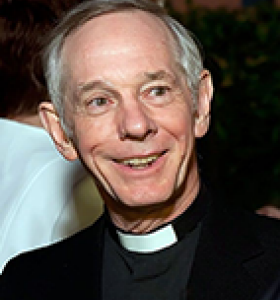
Father Chris.
Chris, Neil Tyson here.
How are you doing?
Oh, good.
Yeah, I've got you on the radio and I had to call you because our subject today is the invention of the telescope and the International Year of Astronomy and Galileo.
And last I checked, you're a Vatican astronomer.
So, that sounds like you should be in the middle of some of this.
So, let me just ask, why does the Vatican have astronomers in the first place?
Well...
Is it traceable to Galileo or even before?
Well, before that upstart came along, thought he knew all about astronomers.
The young whippersnapper, yeah.
Well, at least a little before.
It was a matter of about 20, 30 years before.
Because it was realized that the calendar, which had been going since Julius Caesar's time, so, you know, amazingly a long time, was now getting a little bit out of step with the seasons.
This would be the Julian calendar, right?
The Julian calendar.
So Pope Gregory XIII, it was, brought in a team to advise him, and that's why we now have the Gregorian calendar.
So, of course, astronomers are the keepers of time, so he doesn't bring in biologists for this.
He brings in astronomers.
So now Galileo comes along, and so he's doing astronomy.
He's a mathematician.
He's a physicist.
And he gets into trouble.
And so what is your reflection on that period?
Was he out of line?
Was he obnoxious?
Was he right?
And plus, didn't something happen in 1992 between the Vatican and the Pope, which seemed a little late for my measures of time?
What is that story?
It's a long story.
Galileo had a wonderful instinct in physics, how things worked.
But he couldn't prove it.
And I think that was part of the problem as well.
It wasn't proved until a couple of hundred years later, really pinned down the very fine observations needed to show that the sun was really in the center and the earth was moving around it.
So with Galileo's discoveries, are you suggesting that had he had better data than what his telescope showed, you think the church would have been just fine and would have celebrated him at the time rather than put him under house arrest?
There was a big philosophy change that had to happen.
Everything was wedded to the philosophy of Aristotle, which was sort of great.
But there was a physics there with Aristotle as well about how things moved and where the earth was.
And there was a problem also in interpretation of the Bible.
And the Bible had the sun sort of standing still.
And how could that, you know, how could that happen?
So how much of this was inertia of an old idea and how much of it was sort of strict religious dogma?
Oh, both, you know.
Because we all have some inertia for old ideas.
We all have inertia.
There's always enormous mix up of emotions and reasons.
Church under attack from Protestants in the North.
You know, retrench, you know, put up the barriers, set up the defenses.
You know, it's all that kind of thing as well.
So this new stuff, this new stuff called science is going to collapse the ancient philosophy on which the theology was based.
So where's that going?
So, yeah, all kinds of issues.
What happens today if you discover something that disagrees with the Pope?
I mean, you're in the, are you a Jesuit priest right now?
Yeah, yeah.
I'm not going to discover anything in science that's going to disagree with the Pope because the Pope isn't a scientist.
You know, a wonderful person, a wonderful theologian, but he's not a scientist.
So, you know, he will listen to scientists.
Well, that's a start, I think.
That's an improvement overall that we've read about from centuries ago.
So you're a pretty safe scientist working in the employ of the Pope, is what you're telling me.
Yes, definitely.
Well, Chris, it's been great to have you on the line.
All right, Neil, no disrespect to the Vatican, but you know I'm now in love with Galileo, so I'm going to channel my inner Galileo, and I'm going to tell you right out of the gate, I'm not going to believe anyone who sounds like he's from the cast of Spam-A-Lot.
I don't like how jittery he...
Every answer to every question was like...
Well, he's just trying to answer the question.
I mean, that's his accent.
Oh, you heard what he was saying.
When you asked him about Galileo, the first thing he said was he said, oh, well, he couldn't prove everything he was...
Well, of course he could.
He was under house arrest.
I mean, he did as much as he could possibly do with what he had.
Yeah, so it's a little misrepresented there.
I mean, Galileo did really well to make a case that Earth was not the center of all motion.
And what the Good Father was trying to say is that the real irrefutable evidence would take much longer.
That's what he was saying.
And I would also like to know why the Vatican needs astronomers.
Doesn't Italy have astronomers?
Yes, the country of Italy has astronomers, yes.
And yet the Vatican still has to have their own stuff.
The Catholics tick me off.
These are my people, but they tick me off.
I'll take astronomers anyway we can get them.
There aren't that many of us in the world, you know.
I agree, but I also love when you asked him, like, well, will the Pope challenge you?
And he's like, well, no.
Some of our Popes are like how old, like 112?
They tell them whatever they want and tell them.
You're listening to StarTalk.
I'm your host, Neil deGrasse Tyson, with my co-host, comedian Lynn Coplitz.
Our phone number is 1-877-5-STARTALK.
Looks like we have a caller on the line.
Yes, it's Sarah from Santa Monica.
Sarah, what do you got for us?
Hi, yes.
I was just wondering, what do you think if we found extraterrestrials?
Do you think the Church would try to baptize it?
Okay.
Yes, Lynn, you have a reply.
Thank you for that call, Sarah.
Sarah, I think the Catholic Church will baptize anything if it will stand still long enough and eat a cracker.
It's true.
Oh my grandmother, are you kidding?
Okay.
Maybe, okay.
I think any fanatical, the Baptists, same way.
You think everyone would be lined up to convert the alien into whatever is their religion?
Absolutely.
It won't even get off the craft.
Every Baptist, every Catholic will be there with holy water and snakes and everything else they got.
So, this is a frontier of culture.
Except for you and I.
We will show up and we will say, extraterrestrial friend, be a free thinker.
Alright, thanks for your call, Sarah.
So, let me ask you, Lynn.
You're born Catholic, right?
Actually, I was not baptized Catholic.
Is that hilarious?
My mother refused to baptize me Catholic, but my grandmother would take me to Mass all the time.
Alright.
Well, we've got Catholic priests out there as scientists, and they're doing good work.
Fr.
Corbally studies stars and how they work and what their chemical compositions are and where they're moving.
So, he does real astrophysics, and that's how that is.
I'm just teasing.
I know that.
He knows where to put the line in the sand, as did Galileo.
Galileo said, The Bible tells you how to go to heaven, not how the heavens go.
Right, exactly.
Speaking of how the heavens go, I want to talk more about telescopes.
Can we?
Yeah, sure.
Can we talk about the big, what's the big old telescope right now?
Well, the telescopes, let me tell you what happened.
So Galileo reveals that Earth is not the center of all motion.
Fine.
And then other telescopes come along, along the years, and we learn that the stars in the night sky are not the entire universe.
In fact, the stars in the night sky are part of our Milky Way galaxy, and that galaxy is just one of countless other galaxies in the universe.
So every time you turn a bigger telescope to the night sky, we end up smaller than we had previously imagined.
Every time that has happened.
Every single time.
It is an ego-dismantling device.
Every time.
And so people try to try to...
Some people don't survive these transitions.
They get depressed.
They try to resist it.
They say it can't be so.
And so, but I have a different view on this.
I see telescopes as revealing how majestic the universe is to us.
And our three pounds of gray matter actually can figure out how the universe works based on the information telescopes bring to us.
So I think it's quite a celebration.
Now you said something to me before the show, which I still don't understand completely.
So I'm going to ask you again what...
I'm going to ask you now what it means.
You said that they help the telescopes and the Hubble Space Telescope in general.
I mean, specifically, not in general.
Specifically, helps us by looking...
What did you say you said?
By looking forward, we look back?
No, no, they look back.
As you look farther out...
As you look out in space, you look back in time.
Oh, because of light years.
Yeah, well, it takes time, light time.
So in fact, I see you're seated about a yard for me, three feet.
Light travels about one foot every billionth of a second.
So I see you not as you are, but as you were three billionths of a second ago.
And you haven't changed much in that time.
You're not looking close, are you?
And if you go farther enough away, the moon takes about a second and a half for its light to reach us.
The sun, about eight and a half minutes, eight minutes and 20 seconds.
The farther away you go, the older is the light from that object that you see.
And so you get more and more powerful telescopes.
Take the Hubble Telescope, for example.
It can look way out into the universe, so far back that you're looking near the beginning of time itself.
Now, one of my favorite things ever is the Hubble Space Telescope, one of the most productive telescopes ever built, correct?
It is the most productive scientific instrument of any kind there ever was.
And you can measure that a lot of ways.
How many scientists participate, how many research papers are published.
Every metric has it winning the contest.
I don't want to be mean, but when did the Hubble Telescope, when was it created?
It was launched in the early 1990s, yes.
In the 1990s, it was, and clearly we've come far in the space program, we have more women now involved, because when we launched it, it had a problem.
Yes, it did have a problem.
What does it have to do with women?
What are you saying?
I'm just saying only men would send something up into space, and all of a sudden, you're like, oh my gosh, the pictures are fuzzy.
Yeah, they had, you remembered, yes, the pictures were fuzzy at the beginning of the time.
When we launched it, all the mirrors had a perfect shape, but one of the mirrors had the wrong perfect shape.
And the shapes didn't work together to make the sharp images that we had all expected.
But we had spent a lot of money and time in this.
We had to call a do-over.
It was going to do what we needed it to do, so then we fixed it.
We went back up and serviced it with the shuttle.
Shuttle astronauts went up and serviced it.
They had to invent special tools.
They had to figure out what needed to be changed, but put in corrective glasses, a corrective system of mirrors to fix the bad mirror and turn it all into good mirrors.
Then it became the telescope we had all dreamt it needed to be.
So it's strong.
It's, I say, it's strong now.
It's above the atmosphere because the atmosphere wreaks havoc on your ability to see sharp images.
Here's light coming from across the universe, and it's a nice sharp point of light, and it hits the atmosphere and it gets jiggled and smudged and interfered with, and you end up with a fuzzy image on Earth's surface.
Tell me quickly, what did the, what are some of the things that we found from the Hubble Telescope?
We found that black hole.
Black holes lurk in the center of galaxies.
Hubble confirmed the age of the universe itself.
How did that happen?
Well, it looked out in time, and you look at these exploding stars, we call them standard candles, because there's a certain kind of exploding star that all have the same brightness each time they explode.
And they're really bright, so you can see them halfway across the universe.
So Hubble got good data on these standard candles.
And once you know how far away an object is, and you see how fast it's receding from us, you get the expansion rate of the universe, you nail it down, and you turn the clock back.
If it's expanding today, the universe was smaller yesterday.
And if you know exactly how fast it's expanding, you turn the clock back and you can say that all the universe was in the same place at the same time, 14 billion years ago.
You know what is the joy of doing the show with an astrophysicist?
What I'd like to do is call one of my friends.
You can call an astronaut.
I've got an astronaut friend.
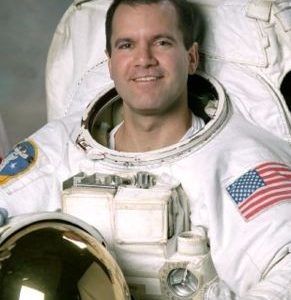
He's an engineer who's one of the people who designed the tools that they used to fix the Hubble telescope.
And he was a spacewalker.
He went on one of the shuttle missions to the space station.
I called him.
He didn't pick up the phone.
You called him?
Let's call Paul, my astronaut friend, and see if he should be home.
He's expecting me.
Hello?
Yeah, is this Paul?
Yeah, Paul, this is Neil deGrasse Tyson with Lynn Coplix, my co-host, calling from StarTalk.
How the hell are you today?
Hi, Neil.
Hi, Lynn.
How are you?
Yeah.
Our show today is on telescopes, and we knew that you had something to do with the Hubble.
As an astronaut, an active astronaut and an engineer, I was wondering, just tell us quickly, what did you do for Hubble?
Yeah, Hubble, I started my career there designing tools on Hubble to fix it for the first and second servicing mission.
And it's had like four or five servicing missions, right?
Yeah, five servicing missions, although the numbering got a little messed up.
The last one was 4A.
Oh, 4A, okay.
Paul, I just heard you say you design tools on Hubble.
You mean on it or for it?
For it.
No, for Hubble.
To work on Hubble.
So the tools have to be different.
Why?
I mean, if you need a screwdriver, you need a screwdriver.
Well, when the sun shines on them and shines on Hubble, when the sun shines, it's plus 250 degrees Fahrenheit.
When it's in the shade, it's minus 250 degrees Fahrenheit, and it's got radiation bombarding it all the time.
So you're hot and cold on and off?
On and off, yep, and there's no air, a lot of radiation, so you just can't bring up your average power tool.
So now are there rooms created like that at NASA that that's where you go into these things and you test this stuff out before you take it with you?
Yeah, yeah, we have thermal vacuum chambers where we suck all the air out and make it hot and cold, and we vibrate it for the shuttle launches.
Radiation we don't test here, but we just design it for that.
Now, I have another question.
Do you, now, did you have to talk to the engineers?
I'm really, I'm not the rocket scientist, clearly, because I'm going to ask some really dumb questions, but, like, did you talk to the people who designed the Hubble telescope itself?
So that you had a nice, you guys worked together?
Yeah, all the replacement instruments, we had to make special tools to interface with all of those instruments.
So, yeah, we had to work directly with them.
And it's a crew agent tools, it's called.
So there's certain tools that are your regular extensions, drills, screwdrivers, and then there's crew aids, which are special handles or fixtures and, you know, things to move the instruments around, because some of them are pretty big.
So what you're saying, some of your tools are sort of space age versions of ordinary tools, and other parts of the portfolio are special elements that enables...
I draw the life.
Yeah, yeah, like a special handle, then that folds up and, you know, moves out of the way when you have to close the doors, or a special place where you put your spare and hang it over the side of the orbiter, so it has to be able to hold it when you're getting a new instrument and putting it in a huddle.
And how hard is this?
Is it like working on your pod?
Well, the axial instruments are about the size of a refrigerator freezer, and the other instruments that go on the side in the fine guidance center, they're about the size of a baby grand piano, so you got...
So you have to work out.
Yeah, yeah.
Well, you're in zero G.
Now, I have another question that brings me to speaking of being weightless.
Is there some sort of contraption that locks you into the huddle while you're working on it?
Yeah, usually on a spacewalk you got two folks, and one is on the end of the robotic arm, and they're in a foot restraint, and so it's kind of like ski boots.
You're kind of locked in at your feet.
And then we have other foot restraints that we move all around.
There's the other person is the free floater, and they move around using their hands, even though it's called a spacewalk.
And you have to get into foot restraint, or you hold on with one hand and use the tool with the other hand.
So none of you guys are just freely floating?
No, whenever you are going to actually do something, you really got to brace yourself.
Otherwise, Newton's laws spin you in the opposite direction.
Yeah, I've been studying up on that.
This is an interesting question.
Just tell me, I'm just curious, how many times do you go over your checklist before you leave and before you get out onto the craft?
Well, you usually have, let's see, hundreds of hours within the simulators and spacewalks.
So you do it, and then you try not to memorize anything.
And you have somebody inside called the IVA, the Inner Vehicular Activity Crew Member.
And then the EVA is the person outside spacewalk.
But you have the person inside talking to the ground and to you reviewing your checklist and making sure you don't forget something.
Now, do you guys ever see space junk whizz by?
Because we always read about space junk.
And I'm just curious.
Yeah, now the distances are so great that now you really don't see it.
Usually the ground notifies you if something bigger than a softball is getting close.
And close is like kind of within a mile or two.
Oh, so they track a softball and you bring a catcher's mitt, I guess.
So they basically, you actually hear, they're like duck in five minutes.
Yeah, it's hard to duck when it's 17,500 miles an hour.
It's really interesting.
So Paul, we got to run, but thanks for having you on the line.
I'd like to be able to call you back one day because we'll be in space a lot.
I mean, nice to have an astronaut at arm's reach here.
Sure, anytime.
All right, thanks a lot.
We'll see you.
All right.
Take care.
So exciting.
I got to speak to an astronaut.
So Galileo and astronauts, you know, they all just...
I'm in love.
I really am.
I think he looks like Patrick Swayze too.
Well, let me tell you, we've, just to remind you, we're given, we've got some freebies for you.
If you log on to startalkradio.net and tell us why you deserve one of Dava Sobel's books, the planets autographed signed copy of one of her books, tell us why you deserve a copy.
And if we, if you convince us, we'll send you one.
And not only that, we have signed posters.
It's a Hubble Space Telescope poster signed by one of the astronauts.
So log on to the...
It's all cool.
And it's all free if we decide that you convinced us badly enough that you want one of these.
So go on to startalkradio.net.
So, Lynn, so you like astronauts now as well as Galileo.
I do.
And I didn't say this to Paul, but I've got to tell you, I think the most important thing I would be doing, you know, before I went to fix the...
Not that I would ever be fixing the Hubble, but I would be checking my boots.
Those boots that lock you in.
Wouldn't you be checking them?
Like, the last thing you need is just someone angry with you, cutting your velcro on your strap.
It's like checking your parachute before you...
Oh, so you don't want to float away?
I don't want to float away.
I don't want, like, the astronaut lady that wore the diaper.
I don't want someone like that angry with me, cutting my velcro and...
So it's important to not have enemies when you're an astronaut.
Absolutely.
You depend on so many thousands of other people.
And be a good communicator, because the IVA people and the EVA people, and this is something that is interesting, when they fix the Hubble, it's not like they went and did this in an hour.
Oh, yeah, yeah, it was days and days and days and days.
This is hard work.
There was a lot of...
Because now he said, Paul said, that there's people inside directing them, and there are people outside that are...
So they're telling them, turn to the right, turn to the right, turn to the right.
Yeah, great, I can't get the space wrench to go that way.
Right, right, yeah, it's hard.
It's hard stuff.
It's hard stuff.
But now they've got it all fixed.
Our phone number here at StarTalk is 1-877-5-STARTALK.
And it looks like we've got...
Who do we have on the line?
We have Steve on the line.
Steve?
Steve, where are you from?
Hi, Neil, I'm from Washington.
Oh, okay, Washington, DC or the state?
Well, welcome to StarTalk.
You got a question?
Hi, hi, Neil, hi, Lynn.
I have a digital camera and I was wondering, I've heard, is there digital telescopes up there?
Well, yeah, I mean, in fact, astronomers and the whole astrophysics community has been digital since the early 1980s.
We were one of the first to create digital images.
We had that demand for it.
So now, contrary to what many people think, they think we go to telescopes and look behind, look through the lens and see the universe.
No, it's all recorded digitally.
Many, many times we don't even leave our office because if it's digital, then who cares how far away your computer is that's analyzing the data?
It could be across the room.
It could be across the ocean.
It could be halfway around the world.
So all of our data are digital.
And the Hubble data is all coming in digitally.
And Hubble, which came of age in the 1990s, that's about when the world, well, at least the developed world, was coming on to the internet.
So images from the Hubble Telescope were perfectly timed in their digital form to be spread far and wide as attachments in people's emails, as screen savers on people's computers.
And so the Hubble Telescope was not only great scientifically, it's one of the most important ambassadors of scientific discovery there ever was.
This has been an exciting show, and now we've learned that we can look back.
In time.
In time.
Will we ever be able to look forward?
Not in any way that we know, because it hasn't happened yet.
The Hubble doesn't have much more time left.
Yeah, so this new servicing mission...
Oh, by the way, forgive me, I didn't give the last name of my astronaut friend Paul.
Paul Richards.
And he's an active astronaut with NASA, and he's down in Maryland, where he works at the Goddard Space Flight Center there.
And so I just want to thank Paul for agreeing to be on...
Thank you, Paul.
But now, tell me, wait, we have five more years, you said?
Yeah, so the servicing for Hubble gives it a new lease on life.
There were some parts that had broken and come in disrepair.
And so those were replaced.
Other instruments were swapped out.
And so now Hubble is more capable than it has ever been in any of the previous servicing missions.
And it will go for at least another five years if everything works as planned.
But it could go longer than five years.
But we're not going to stop there.
We're going to have some more stuff go up there.
Exactly.
So there's the Next Generation Space Telescope, named for James Webb, who was the head of NASA during the famous Apollo era, back in the 60s.
The James Webb Space Telescope is specifically tuned to observe the universe so early in time that we will see galaxies themselves being born.
That's exciting.
Yeah.
So when you see things being born, you feel you've got to celebrate that.
Someone just peeled a spock ear off and did a jump for joy.
So, and not only that, so we've got that telescope looking to the edge of the universe.
And there are others, for example, that's a telescope looking far.
We actually have telescopes looking nearby.
One of them was launched, and it's the Kepler Telescope, named for a famous astronomer, a German astronomer, a contemporary of Galileo's actually.
And so this telescope is going to observe the nearest hundred thousand stars.
Guess why?
Because we're looking for a habitable zone.
We're looking for life in all the right places.
What we think are the right places, we're looking for Earths.
But a scientist, when you're looking for life, you're just looking for proof that something can live here.
Well, yeah, of any kind.
It would be great if we found little green men and little green women.
That would be really cool.
But if we're searching for life, we're searching for life of any kind, we'd be tickled to death if some of that life we found was microbial.
That's exciting.
And so once we get that, then, now here's the thing.
Suppose the life is not what we call intelligent.
I mean, not that it's dumb, but that it's just microbial.
They're what we call biomarkers.
They're features in the atmosphere of a planet that would reveal the existence of life that could be thriving on the planet surface.
And so the next step, once we've logged these planets, is to look for biomarkers to then make a new catalog of what are the most likely planets that could possibly have life.
So that's what that'll be.
And once we find that, we'll be back.
And so, in fact, next week's show is, we're going to feature an interview with Senior Astronomer at the SETI Institute, Seth Shostak.
SETI is the Search for Extraterrestrial Intelligence.
So the entire subject of that show is going to be on just that.
I just got goose bumps.
Well, there you have it.
And so we're coming to the end of our time here.
It's been great.
It's been fun, Lynn.
It has been fun.
We learned that we are not the center of the universe.
And you can come and try to get some free stuff on startalkradio.net and tell us why you deserve one of Debra Sobel's books, The Planet, and get a signed poster of the Hubble Telescope by astronauts.
And from now on, I'd like to be referred to as Galileo's girlfriend.
There you go.
And I got to tell you, we are co-sponsored by the National Science Foundation.
This is StarTalk.
I am Neil deGrasse Tyson and Lynn Coplitz.
We are signing off.
Goodbye.
 Become a Patron