


 Unlock with Patreon
About This Episode
Do we control technology or does technology control us? On this episode of StarTalk Radio, Neil deGrasse Tyson joins forces with first-time comic co-host Negin Farsad and material scientist and engineer Ainissa Ramirez, PhD, to explore how technology has shaped the world as we know it. Ainissa is also the author of a new book The Alchemy of Us: How Humans and Matter Transformed One Another.
Why do we have a love/hate relationship with technology? Negin tells us why she thinks she was born in the wrong era. We discuss the rise of the printing press and our trio nerds out on calligraphy and quill pens. Then, we answer fan-submitted Cosmic Queries on how technology has impacted our lives. Ainissa tells us why we’re losing our ability to empathize. Has tech changed our biology? You’ll learn how the internet is re-wiring your brain. We explore how the internet has changed our memories from remembering what the information was to where the information is stored.
We debate which piece of technology has advanced us the furthest. Ainissa lobbies for steel, Negin gives her thoughts on the printing press, and Neil keeps it simple with the wheel and axle. Then we wonder – how much of technology is reversable? We reminisce on the outcry when Google Glass first launched. Discover more about innovations originally intended for space that have been successfully commercialized in our society.
We dive into the socioeconomics of technology: will there be a day when technology divides us even more? Are we mature enough to use technology? Is tech more suspectable to conspiracy thinking? Lastly, we discuss which technology worries us the most, why young people don’t get overwhelmed by technology, and how anti-tech and anti-science movements can slow progress. All that, plus, we ponder how to make sure technology is beneficial to all humankind.
Thanks to our Patrons Andy Green, Christopher Lee Knapmiller, Todd Schurr, Melissa Lenz, David Dickason, Steven Smith, Daniel J Kulikowski, and Sara Bakerfor supporting us this week.
NOTE: StarTalk+ Patrons and All-Access subscribers can watch or listen to this entire episode commercial-free.
About the prints that flank Neil in this video:
“Black Swan” & “White Swan” limited edition serigraph prints by Coast Salish artist Jane Kwatleematt Marston. For more information about this artist and her work, Please visit Inuit Gallery of Vancouver. for more information about this artist and her work.
Transcript
DOWNLOAD SRTWelcome to StarTalk, your place in the universe where science and pop culture collide.
StarTalk begins right now.
This is StarTalk.
I’m Neil deGrasse Tyson, your personal astrophysicist, and this is going to be a Cosmic Queries edition.
Fan favorites, and they’ve been that way ever since we began these many years ago.
My co-host, my comedic co-host for this episode is Negin Farsad.
Negin, welcome to StarTalk.
Oh, my God, hello.
And we’re in the Coronaverse, so we’re all separated.
Where are you right now?
I’m actually in a studio in Manhattan, a recording studio, because I’m in the middle of doing an audio book with a sultry voice of mine.
Whoa, you’re working.
I’m working.
I’m in the middle of a gig.
It’s new and different to be outside of my apartment.
Wow, because I knew comedians had gigs.
I didn’t know they had actual jobs.
This is a gig though, right?
This is a gig.
No, no, no.
Comedians aren’t good enough to have jobs.
Come on.
Okay, that’s what I thought.
That’s what I thought.
You get what comes your way day by day.
So you have a podcast with the greatest name ever, Fake the Nation.
Thank you.
Love your host of that podcast.
And you wrote a book, How to Make White People Laugh.
You got to buy that book just to know what…
Yeah, because it will tell you how to do it and then give you useful information.
But it will also make your bookshelf look fun.
Yeah, and people laughing is a…
that warms them up to receive other information that they might need.
I think you know a little something about that because sometimes you need to make them laugh before you can douse them with science.
Exactly, exactly.
And you’re, for fans of the show, you are a recurring guest on NPR’s Wait, Wait, Don’t Tell Me, which is another fan favorite out there.
So you’re here and you’re going to help us bring questions to our special guest.
She’s a returning guest on StarTalk.
And it’s Anissa Ramirez.
Anissa, welcome back to StarTalk.
Hey, Neil, how are you?
So glad to be here in the Coronaverse.
I know.
And it’s been too long.
It’s been years since we’ve had you on.
You’re a material scientist and engineer.
And you’ve got a pie, he’s got a podcast.
Host of the podcast Science Underground.
It’s not just studying caves or anything like that.
No, no caves.
No caves.
Give me a one sentence accounting of Science Underground.
Science Underground explains science in two minutes.
So we’ll explain how tires are made from lettuce and how leaves change color.
Wow.
I want some of that.
I thought with a name like Science Underground would be some sort of like punk science movement.
Yeah, something countercultural, Aneesha.
Yeah.
You got a ways to go there.
Okay, I’m working on it.
Baby steps.
You got to punk it up.
And the reason why we caught up with you again is because you have a new book out, just published this year, and it’s, I get the title right, The Alchemy of Us.
How Humans and Matter Transformed One Another.
Great title.
Thank you.
And so when you read that book, forgive me, I haven’t read it because I learned about it only just a couple of weeks ago.
How will you be changed for having read this book?
You’re going to look at technology differently.
You’re going to see that it actually shaped us.
Simple things like the telegraph shaped language, the light bulb is actually changing our health, and our computers are changing the way we remember things.
So we’re going to have a new relationship with the things that are around us.
That’s such an engineering thing to do.
A good thing I’m an engineer.
But I just want people to have a new approach to technology.
We’re wowed by them, and that’s perfectly fine.
But also know that we’re actually in a relationship with these technologies.
This is what this book highlights.
But Negin, do you have a relationship with technology?
I mean, in that I have to stare at a screen all the time.
I have a love-hate relationship with technology.
I’m one of those people that wishes I died before computers.
Like, I was born too late.
So, Aneesa, is there an age threshold below which they’re incapable of uttering what was just said about I wish I was born before computers?
I haven’t heard that.
That would be a great quote on the front of the book.
I wish I was born before computers or something like that.
Maybe in the next edition, I’ll have Negin come on board.
But does Negin need her head examined for even uttering such a sentence?
I know.
Is that sacrilege?
No, I don’t think so.
As a writer, I mean, when I was writing the book, I was using old tech.
I was using pencils and index cards because that’s what my brain could handle.
And I’m sure maybe younger folks would use computers and different ways of databases.
But, you know, so you have to do what you feel comfortable with.
Remember when we used to all have handwriting?
What’s that?
Like, we actually used to know how to, like, hold pencils and stuff.
Like this?
Is this how you do it?
Here’s what worries me.
I don’t think computers started this issue, okay?
Before printing, the printing press, everything was handwritten.
And so handwriting was an art.
And you would have illuminated manuscripts with artwork on the side.
And then you could write a word in a scripty way to convey an emotion beyond just the pure definition of the word.
So writing itself was a multi-dimensional mode of communicating.
Then you had a printing press.
Now letters just get stamped, okay?
And now you can flourish them.
And then, okay, so that took that out.
And now people forgot or lost how to communicate emotions.
Now you have emojis.
Right.
Well, that’s one of the things I discussed in the Alchemy of Us, that we’re actually losing our ability to empathize.
Because as you’re talking about, these different layers of communication that we use are being removed as we move from the printing press to our computers today.
And what we need is we need to look at each other and also be able to communicate with our body language.
So I’m totally on board with what you’re saying.
Wait, we have to actually look at each other?
I thought I was texting when you said that.
I’m taking notes with my quill pen of everything you say.
Can I tell you though, and I think you would like this, that when my dad met my mom, they’re Iranian immigrants, so in Iran, he was really into calligraphy and he wrote her a little book of poetry and with all the flourishes that Neil talked about, with the flowers on the side and little like, you know, just the stuff of calligraphy and all of this and beautiful, you know, Farsi text.
And then, you know, it worked on her.
She married.
It worked out.
So get yourself a quill.
I got to show you something.
Hang on a sec.
Get yourself a quill if you like someone.
Get yourself a quill because an emoji is just not going to have the same effect.
Not at all.
Oh, wait a minute.
Wait a minute.
Do you have a collection?
I love calligraphy and quill pens.
I have a whole supply of them.
Just for the emergency case where you need to…
Listeners, we’re looking at a bunkers worth of feather quill pens in Neil’s office.
I’m ready for the Coronaverse when all printing presses are down.
He’s making his own ink.
So, Negin, you collected questions for this Q&A, for this Cosmic Queries.
What was the theme?
Was it just technology in modern times?
Technology and how it’s connected to humans.
Well, let’s do that.
So, all these questions will be for Ainissa.
Occasionally, people slip in something where I can jump in, but basically, I’ll grab it.
Oh, there were plenty of questions that were for you.
Like, dark matter.
I was like, I know who’s going to answer that one.
So, go for it.
I’m going to start with a question from a Patreon listener.
Elaine asks, has technology affected our biology, like our actual biology?
Oh, I like that one.
It has.
It has.
Actually, researchers say that we are slightly taller than our ancestors, and one of the reasons, besides nutrition and water and better medicines, is actually the lights.
It ends up that we have two modes.
We have a daytime mode and a nighttime mode.
We have a growth mode and we have a rest mode.
And the growth mode is instilled by blue light, which is from the sun.
But also, artificial lights have a lot of blue light.
And since we’re under artificial lights most of the time, we grow.
And so, here’s how our biology has been affected by a simple, simple device, the electric.
I’m annoyed because I’m five foot three and a half, so I feel like my body did not get that memo.
Yeah, you have to get out more.
Just get out more, okay?
I’ve been hanging out in caves too much.
Listening to Science Underground.
See, I told you you should get out.
Wait, but so, all right, that’s one aspect of it.
But what about…
Okay, here’s something.
I don’t know how old the two of you are, but I’m old enough to remember that if you were clumsy, someone would say, hey, you’re all thumbs.
But then when video games came out, and the thumb is a fundamental part of the utility and your dexterity, to say you’re all thumbs in a modern context might mean you’re highly dexterous.
That’s a good point.
It’s true.
Well, is that in your book?
No.
It’s only 300 pages.
I didn’t get to the hand.
You didn’t get to the thumb part.
I didn’t get to the thumb part, but maybe if there’s a new edition.
But the hand-eye coordination achieved at a young age, you look at, it’s in the military, drone pilots are way back in some base camp, and they’re flying an airplane as though it’s a video game.
Is there any understanding of whether our brains are different because of technology?
Well, what you use a lot, you enhance.
So if they’ve been training and been doing this for some time, they will have a higher level of being able to do that than if someone just walks up and tries to fly a drone.
Okay, so the whole world of video games where parents are always complaining that the kids are spending too much time on them, they’re actually training for jobs.
Pretty much, but don’t tell them that.
We still have to do their homework.
All right, so the future of this, you gave basic biological examples, but you can imagine a future, which everyone talks about, I don’t think it’s coming, but people like to talk about, where they inject a chip into your brain.
So you merge the biology and the technology into one functioning entity, because it’s just electrochemical.
Do you see that as an inevitable step into the future?
That’s what scientists would like.
Whether it’s a good idea or not, that’s still something that’s for debate.
But I do know without even including the chip, our brains are actually being rewired by the internet.
I can give you an example.
I often ask people, I say, tell me your mother’s phone number.
And most people will say, well, they don’t know their mother’s phone number.
They love their mother, but what they’ve done is they’ve offset that information to their cell phones.
But I remember my childhood phone number.
So because of the internet, because of its pervasiveness and the fact that we can recall, have access to it all the time, our memories have changed.
We don’t remember what the information is, but where the information is.
So we’ve already been rewired.
Einstein is rumored for having said, never memorize anything that you can just look up.
Why isn’t Apple using that in their advertisements?
Einstein was born too early.
He was born too early.
Hey, you should switch.
We should have really been exchanged.
This was all messed up.
Can I say though that I don’t think, I do feel like we’re going in that being chipped direction, the way you’re talking about, Neil, but I still feel like there’s backlash to that.
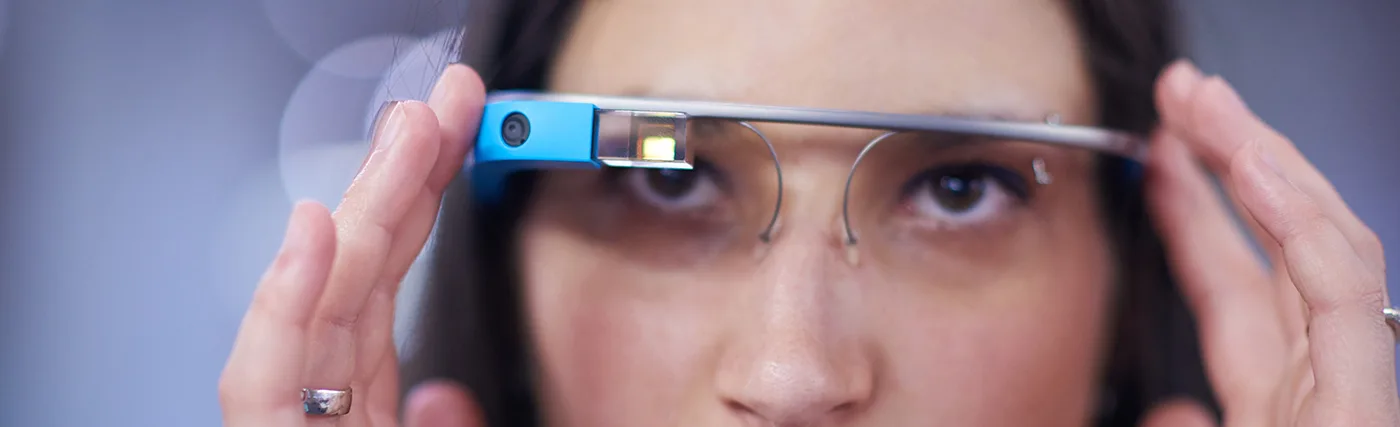
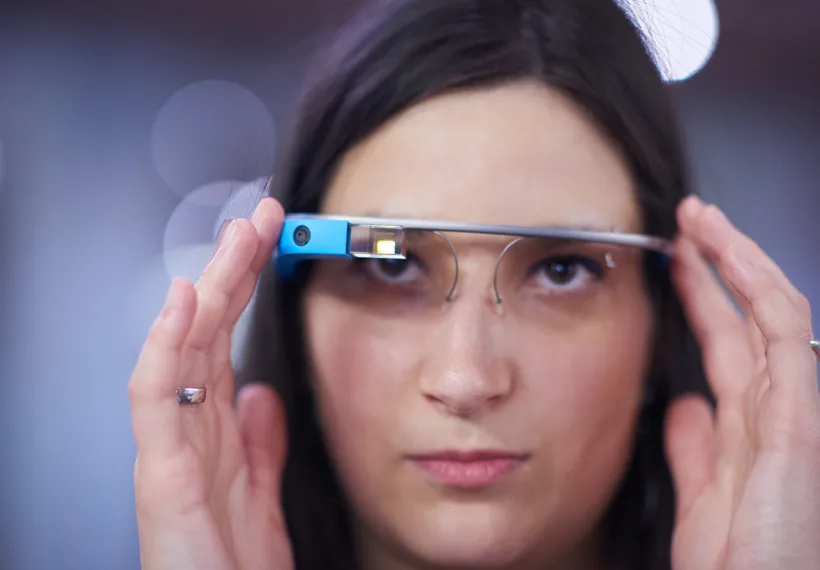
Remember when Google came out with Glass, and at first everyone was like, ooh, Glass, but then immediately, once started people wearing them, people called those wearers Glassholes.
You guys remember this?
Wow.
There was a backlash.
People were like, no, don’t merge your body.
Don’t have a thing on your body that does the thing.
I feel like people, they have some limits.
What you’re saying is that the, not to put words in your mouth, but what you’re saying, if you remember me because you had to look me up in your database, then the pretense that you have some fond thoughts about our last encounter are false.
And that fact was transparent to everybody.
Is that what you’re saying there?
I mean, because it’s sort of like when a politician is glad-handing at a big rally and there’s always a person right behind them whispering, like, this person is from, you know, Sheboygan, like, this person is one of your donors.
That’s like what we’re getting.
And we know that the politician is fake.
We know there’s not very much sincerity in that.
So that’s basically a chip is just making it.
You’re just being a glass hole.
I remember those people on place.
I think also the backlash is that they were recording people in front of them all the time.
And you wanted to be able to have control over your image being captured all the time and being lifted up into the cloud.
So it was both those things.
It was having these fake interactions, but also you stealing my likeness for whatever use.
So how about this then?
Like in the movie Avatar where the aliens, the life forms there, had these USB ponytails, right?
And they would plug it into stuff and it would connect and then they would be able to communicate.
And so if we had a USB port and we plugged in the internet so that we can gain immediate access to information, so I’m not…
It’s really just for research, I guess, rather than for social interaction.
What do you think of that?
What are we doing with all that information?
That’s my question.
Most of the time I see people playing games.
I don’t know who you’re hanging out with, Neil, but I’m seeing this and they’re just…
You know, it’s candy falling from the sky.
So if people are actually going to use that information to do something and to create, I’m all for it because you have access to the entire planet.
But we don’t use the Internet in a way that’s actually meaningful.
So that’s the thing I push back with.
You know, I play this game with my friends called the Human Google and it’s essentially we have a conversation and never look anything up.
So I’ve always wanted to introduce something similar to that, not as severe because, Negin, you crossed over there.
What I would do is you say, if an argument begins, someone usually quickly goes to their Google search and I say, no, we should argue this for at least 10 minutes.
Forcing you to dredge memory, to figure stuff out, and you get to learn that whoever is the loudest isn’t always the one who’s correct.
So you calibrate people’s capacity to argue based on what they think is true.
This is very useful.
That’s great because if you don’t practice that, you’re going to lose that ability.
That’s what we learned about the brain.
The brain is this wonderful thing.
It’s called plastic.
It will change.
If you give it a new talent, a new skill, it will enhance it.
But if you stop using that skill, it will lessen.
So it’s in…
Don’t call my brain plastic.
I meant in a good way.
Hey man, your brain is plastic.
It’s a compliment.
In a good way.
It’s bendy.
It’s malleable.
It can change and enhance.
But if you don’t use those skills…
And it can also stay in a landfill forever.
So guys, we’ve got to take a quick break.
When we come back, more Q&A for Ainissa Ramirez, engineer, material scientist.
We’re back, StarTalk, Neil deGrasse Tyson.
I’m here with my co-host, Negin Farsad.
Negin, welcome to StarTalk.
Well, what do you tweet, I presume?
What’s your Twitter handle?
My Twitter handle is at Negin Farsad, a name that is both easy to pronounce and spell.
That is, any G-I-N-F-A-R-S-A-D on the Twitter’s essay things.
Excellent, excellent.
And, Aneesa, you’re our special guest today.
It’s not often we have an engineer on the program.
It’s great to have most, I have more scientist friends than engineering friends.
Not nothing against you and your kind.
But.
We’re a special kind.
Special kind.
So, we’re discussing the ideas that are explored in your book.
Give me the full title again here.
It’s called The Alchemy of Us, How Humans and Matter Transform One Another.
That’s a brilliant title.
Can you see the cover kind of looks like the periodic table?
This is a week to you.
Very nice.
Very nice.
A-U, there would be gold.
Hey, that’s what I’m talking about.
I’m talking nerdy to me.
A-U, aureum for gold.
I feel alienated.
I just want you both to know.
Did we just leave you out of that?
No, we’re back.
We’re back.
We will drift back, but only when we feel like it, okay?
So this is Cosmic Query.
So Negin, you got another question for Aneesa.
We’re going to take another question from a Patreon listener.
Richard Russo asks, what would you say was the single greatest advancement in technology that propelled us further than any other?
I love that question.
Oof.
That’s a tough one.
That is a tough one.
And it’s really down to opinion.
And so as a material scientist, I would probably say steel.
Steel allowed us to have railroads so that we can connect this huge country.
Steel also allowed us to have tall buildings with skyscrapers.
Before steel, buildings were no taller than nine stories tall.
So those two things, the railroads, skyscrapers, department stores, that’s commerce, this small material made all this, this made this economy grow.
So that would be my vote.
So you couldn’t build taller buildings because the structural integrity of what was used before, bricks and things, would not support the weight.
You could use stone, but the rooms on the first floor would be very, very small because you needed a lot of stone to hold up all of that weight.
But steel has-
In fact, I live in a building where it’s a stone building.
Is that right?
I look at the blueprints for every floor as it gets higher and higher.
And in my apartment line, they say, hey, wait a minute, they got more space than we do.
It’s not their fault, it’s architecture.
But we have really thick walls and you can’t hear the neighbors, so it works out great.
So how about you, Negin?
What would you think is the most important-
Oh my gosh.
I mean, I was, that steel thing really, by the way, when was steel created?
When do we date that?
Steel’s been around for a while.
I would say late, the late 1700s, but when we, the way to make a lot of it was in 1850, in the 1850s.
That was Henry Besson.
Right, so then there was all this stuff that happened before the 1850s, and all this advancement.
I guess, I mean, you sort of met, I don’t know, you sort of mentioned this before, Neil, but the printing press, I feel like that’s a big one because people were like, oh, let’s form a government.
Like, how would people even know what our constitution is?
We’ll print it, we’ve got this printing press, right?
And then like, oh, we’re just going to hand them out?
Like, yeah, like brochures, what’s a brochure, you know?
Like, everyone’s learning.
What’s a newspaper, you know, yeah.
Definitely the printing press.
The printing press also helped to start religions.
Martin Luther wanted to separate from the standard way of religious practice.
And so he created these pamphlets, as you talk about.
From Catholics, just saying.
I’m trying not to get attacked, but okay.
I’m focusing on the technology.
But yeah, I would say the printing press is definitely up there.
Okay, now I have to, I’ve got to, I can say you’re both wrong.
I go way back, I’m a way back guy.
I’m going to say the wheel and axle.
Oh man, tell me why.
Well, because then you can move stuff.
You can build stuff.
What is this wheel?
I haven’t been outside.
So, you know, don’t over, don’t, you know.
Imagine life before the wheel and life after the wheel.
You would say, hey, I’m living in the future.
Look what I can do.
You know, as someone who has to stroller a baby through the streets of New York, the wheel does not always hold up against potholes.
Oh, okay, well, I think cavemen had worse than potholes.
They didn’t have Starbucks, they didn’t have anything.
You’re not, you’re not like wheeling the way you do through like an airport terminal where it’s like butter and you’re just gliding through.
Like, that’s not what it looked like for prehistoric men with their little wheels.
Okay, Nick Green, you’re not, you’re not swaying the attitudes of trogg.
All right, so what else you got?
Another question.
Ooh, another question.
Let’s go to, this comes from Instagram, Small Talk Small Laughs.
Do you think technology has affected our very means of life?
If so, do you think we as a world could survive in a world with minimal technology?
So another way to ask that maybe is, how much of this is reversible?
That’s a good question.
I think technology has always been important to us, starting from the wheel and from skins that we use.
I’m with you now.
Making tents, building fire, these are all technology.
So technology has always been important to us, but right now, how much is reversible?
I was okay in the 80s, but I don’t know if I could live in the 80s right now, with less tech.
I wouldn’t be able to connect with my friends, I wouldn’t be able to go to the bank, so I think we’re kind of on this escalator where we’re all kind of riding this wave to however the world will be.
But we could have less tech, but it would be a deliberate decision.
But here’s what I’m wondering, okay?
If I’m driving on a country road and I see a deer bounding across the road, I’d say to myself, wow, that deer doesn’t have grocery stores or internet, and it is a full grown living mammal living out its life.
Okay, here we are in the Coronaverse and people are hoarding toilet paper and water and I’m imagining what happens if our grid goes out.
What would we do?
Can we survive the way the deer can bounding through the woods?
I don’t think so, because we don’t know how.
We don’t know how, right?
The preppers know how, but we don’t know how.
I wait for the food to show up delivered, you know, I don’t go out, I don’t hunt for it.
I don’t, that’s why you have these survivalists, right?
They got their guns and they got their, you know, they’ll survive, I guess.
The rest of us, I don’t know.
We’re at, we’re goners.
I have no, I have honestly no skills.
It’s remarkable that I am, I can barely get the cap off of a soda, you know?
Wait, wait, wait, but Negin, ever since the earliest days of royalty and the like, there’s always been a need for comedians.
Right, and I think because you can make fun of me as I can’t get a cap off of a soda, like that’s what I’m there for.
You know, the court jester always had a job, okay?
Unless they failed to make the king laugh and then, you know.
I recently, not to promote myself, but I recently wrote a piece for the Progressive magazine called The Art of Being Not Essential because I think comedians and also magicians are the least essential workers right now in society.
And my theory is that if you ever find yourself in a bunker with a comedian or a magician, like the first thing you should do is basically eat that comedian.
Like, that’s all we’re good for, especially if we’ve been carb loading, you know.
You’re the first to get thrown off the life raft, yes.
Exactly.
Funny and delicious.
Let me try that funny bone.
Oh, that hurt.
Sorry, everybody.
So I got another question for Ainissa.
Another question for Ainissa.
So this is also from Instagram.
Thatboy.tristan asks, we know that NASA has contributed to the public with some of their innovations intended for space.
How much has technology created and innovated for a specific purpose come back around and improve everyday life?
Something NASA made, has it come back and made our lives better?
Well, I don’t have an example for NASA, but DARPA made the internet and they made that as a way for scientists all over the world to communicate with each other to send this crazy thing called email.
And then it became a way to shuttle information and now we know the internet.
So this is, it was for a specific use for a small population for scientists and now everybody uses it and relies on it.
So DARPA, the defense…
Yeah, I don’t know the meaning of that acronym.
I just know it is DARPA.
But it’s definitely part of the Department of Defense.
The Defense Advanced Research Projects Agency or something.
Right, so they have a budget where they only fund things that are kind of out of the blue and have a low chance of succeeding because you need to risk takers out there to, what is it, high risk but high return.
Right.
But you don’t spend all that much money on it.
Their budget is relatively low, but yeah.
And I always confuse the internet as a thing with the World Wide Web as a thing because I do know that at CERN, the particle accelerator in Switzerland, the physicists there made major contributions to this internet thing.
So I may be getting those confused, but yeah, essentially what I was trying to get across is that it was targeted for scientists to communicate.
And so with a small, and then it was launched into the rest of the world and it became the thing that we know.
So the questioner is presuming that we want to invent something for a purpose and we do it and then it solves that purpose and then we’re all done and we move on.
Okay, so I got one for you.
We’re throwing this into the pot.
In the Second World War, we learned that microwaves might be very good as a means of communicating over long distances.
And in one of the chambers where they’re experimenting with microwaves, as the rumor has it, they had left out a chocolate bar.
And when they hit a frequency of microwaves, it melted the chocolate.
And then that guy was like, hold on, let me go get a hot pocket and see if it works.
Now, see how our life has benefited from the Second World War.
So out of that concept came, of course, the contained microwave oven.
And the microwave oven exists not because anyone tried to invent it.
It exists because we saw the off-ramps from what it is working with microwaves to begin with.
But my favorite example here is a physics professor of mine from college who specialized in the study of molecules in space.
And he discovered a new physics phenomenon called magnetic resonance, nuclear magnetic resonance, where the nucleus of an atom would vibrate in a way, depending on what kind of energy you passed across it.
And that correlation was not previously known.
And he won a Nobel Prize for it, nuclear magnetic resonance.
Then a medical technician said, wait a minute, if one nucleus vibrates this way and another vibrates a different way, maybe I can make a cavity, and then we can identify what atomic nuclei are in the thing that you put in the cavity.
And thus was born the MRI, the magnetic resonance imager in hospitals.
Because now you can image things, you can image soft tissue that X-rays could not.
And of course, the original name of it, it had one of the N words you’re not supposed to use, like nuclear magnetic resonance.
So they took out the N, and now it’s a magnetic resonance imaging, the MRI.
But the full expression of that would be nuclear magnetic resonance imaging.
But no one would go into a cavity that has the word nuclear on it, they’re too spooked.
Well, Neil, I love that your example is MRIs because my example was going to be Tang, the orangey drink that I believe NASA developed for space travel.
So like the idea that you could take like a garbagey orange powder, add some water to it and create a drink.
I feel like that’s something that’s changed our lives.
I’m interested to learn this about you.
And of course, Velcro had some good applications in space and it’s still used today for so much and space, you don’t want to have to, if two things will stick to the wall of the space station, for example, without glue, without hooks, without, it’ll just stay there.
And the force required to separate it is not so large that you couldn’t, anyone could do it.
So it turned out to be quite useful.
So there’s a whole list of these.
In fact, there’s an organization called the Space Foundation which has the Space Technology Hall of Fame.
So you can just Google this.
Space Technology Hall of Fame in there are products conceived and invented for space that have been commercialized and are making people a buck just in the open marketplace.
Nice.
And one of them was TemporFoam, which was designed for impact safety for the cushions, the seats in spacecraft.
And now people make mattresses out of it.
So, yeah.
We gotta take another break.
And when we come back, we’ll have our third and final segment of Cosmic Queries, the intersection of life and technology.
Thank Hey, we’d like to give a very special Patreon shout out to the following Patreon patron, Andy Green.
Andy has been a terrific supporter of StarTalk for quite some time, and we certainly appreciate his support.
And if you would like your very own Patreon shout out, please go to patreon.com/startalkradio and support us.
We’re back, StarTalk, Cosmic Queries.
And we got a good one going here because the past, present, and future is on our table.
Negin Farsad, my co-host and comedian, and Aneesa Ramirez.
So Negin, you got another question for her.
I do, from Patrick Leby on Facebook.
He asked, do you think that there will be a day when technology will divide us even more, that the rich will have the majority of it and the poor will be outcast and will not have any technology?
Yeah, Aneesa, how much sociology do you get to in there?
Yeah, I know, I know.
Well, I think the question is very good.
I don’t talk a lot about the division of society, particularly that topic, but I do think that it’s going to continue to stratify us in many ways, because it’s a matter of access to technologies.
You need money to do that.
And so if we have a technology and it requires that you be connected to it and you don’t have the money, there’s going to be a further divide between these two things.
So I don’t talk about that so much in the Alchemy of Us, but as I was researching it, I definitely saw how this could possibly be a problem.
So isn’t that the premise of Avatar?
Neil, you mentioned Avatar earlier.
Okay, there was a guy, an ex-military guy who couldn’t afford the operation to get his legs, he’s in the future, so the principal would be able to do that.
So right, there was sort of, he could not live his fullest life simply because he didn’t have the money to do so.
And so that was sort of a sad element of it, but then, you know, all that needed to be righted was righted by the end of the movie.
So that’s why I put dwelling on his issues.
Right, and that’s just, it’s a biopic of the future.
So we’re all just gonna have an Avatar future with blue stuff.
And a quick note here, I think it was Dean Kamen who told me this, I hadn’t heard it.
Was it Dean Kamen?
Yeah, I think it was Dean Kamen who said that initially, there’s a big divide between the haves and the have nots for a new technology, but new technologies never really work well.
All right, and so by the time they work really well, their price has dropped and the company gets wealthy, not because they’re selling it to rich people, but because they’re selling it to everyone.
And so now that everyone has a cell phone, a smartphone, basically, you’re not looking, oh, they’re rich, they have a smartphone.
No, everybody has a smartphone, right?
And so, except for the poorest of the poor.
And so I was walking the street a few months ago before the COVID and a homeless person stopped me and he was laying in the street and he said, oh, you’re Neil deGrasse Tyson.
Yeah, and he said, yeah, I saw you on Netflix.
And I was like, you’re homeless in the street.
Explain that one to me.
Yeah, yeah, their promotion’s amazing.
Whoever’s doing marketing for Netflix, he needs to get a Nobel Prize, that’s amazing.
Yeah, it was good.
Let’s see how many questions we can squeeze in.
We’ve been luxuriously answering these questions, but let’s see if we can speed it up.
Okay, go.
This one is a little bit related to what we’re just talking about, but Virgil Hayward asks on Facebook, kind of a simple question, but I often wonder if we were ready for the technological era.
Do you believe that we, in this time, are mature enough in the way we use technology?
Has it been more harmful or useful?
Good one.
I don’t know if it’s a matter of maturity.
I don’t think we’re fully informed.
Some of the devices that have come into our lives, we didn’t know that we were actually giving away some of our privacy.
I think that if we knew about that to a deeper extent, then we would make different decisions, like having those devices that record us and we can have a voice command.
They’re also recording us at the same time, and that information is being stored.
Maybe if we knew that in much more detail, we could make different decisions.
It’s not a matter of maturity.
I think people are mature.
I think they don’t have all the information.
So disclosure is a thing?
Definitely.
But isn’t there a thing where we’re so addicted to our phones because we’re sort of the guinea pig cohort.
We don’t know how to put them down or how to modulate our use of them because we’re dumb-dumbs and it came to us.
They also have designed these things to be addicting.
They know that our brains get fired up when we see things that give us a sense of success and award.
That’s the reason why we get pulled in.
Sure, we may not be the most disciplined, but it’s also that the apps and the like are also taking advantage of that.
Any country that wanted to take over another country, just hand them free apps that will addict them and they won’t even know you’re coming.
I think that’s happening.
You weren’t supposed to say that.
Sorry, I didn’t say that.
Scratch that.
We’ll cut that out in the edit.
Okay, got another question.
Another question.
This is also from Patreon.
Woody asks, and I love this because I have questions about conspiracy theories myself, are 5G conspiracy theorists just Luddites and where does their ideology fit into how technology shapes us?
I don’t want 5G people coming to my house.
So I’ll just say that we need to learn much, much more about the connection between health and 5G and the thing.
And a lot of people are always attaching to that new thing so that they can attach their conspiracy onto that, but there’s still a lot more.
What is the fear in case listeners don’t know what the fear is?
Oh, that birds are going to die.
What have you heard, Neil?
I’ve heard just things about our health.
Like you said a moment ago, it’s driven by ignorance of technology.
Any new technology, if it’s not fully explained and people don’t take the time to sit down and recognize how it works and why it works, you still have people today who put food in their microwave oven and say they’re nuking it, as though there’s some kind of nuclear radiation going on in there.
And that’s not the case.
It’s just simple microwaves, which you use every day when you use your smartphone.
Different frequencies, of course.
So China pioneered 5G the way we in America pioneered 4G LTE.
We pioneered that, which enabled all kinds of streaming that wasn’t previously available.
Whole companies rose up within the marketplace, exploiting the bandwidth that that provided.
So 5G would take that yet another notch, except we didn’t pioneer that technology, so people are a little spooked.
China, China spook people.
But getting back to the specifics of the question, do you see technology as more susceptible to conspiracy thinking than other aspects of our lives?
I think so because it’s so complex and people don’t understand it.
If I said the light bulb is coming into our homes, it would be a little bit of an extension of what life was like before with gas lamps and the fireplace.
And you’re like, OK, I don’t know about a conspiracy here, but now with these technologies that have tons of code that’s so distant and so unfamiliar, it’s easy to latch on to something unfamiliar and say, OK, well, this is the cause of my ailment or what have you.
So we can expect this for every wave until the technology is so absorbed that it’s just commonplace and no one thinks about it anymore.
Or if we start explaining it.
Aneesa has completely lost it.
Sorry if that leveled sides underground.
No, but also, you know, what’s weird is that if people are concerned that they’re under mass surveillance or 5G is going to increase that surveillance, whatever, like we’ve already sort of been under mass surveillance.
So, like, it’s like these conspiracy theories end up seeming kind of normal or like rational, you know, and so it’s hard sometimes, you know.
I think if you really don’t know, it’s hard sometimes to see.
If you have maps operating in real time in your car to find grandma’s house, somebody is tracking how fast you’re going and where you’re going and where you are.
There’s all the three bits of information anybody wanted to know about you.
So, yeah, you’re all, that’s a great point.
You’re already seeding this content into the world.
So, you know.
Anyhow, I think what will happen is they’ll refuse to adopt 5G, everyone else will, and they’ll get left behind.
That’s what will happen.
That’s the op, yep, that’s true.
Got another question.
I have a question that is the logical extension of this one.
It’s from Jacob Owlette on Patreon.
And he asks, do you think that the rate at which we continue to progress in technology will continue or might it drop off sometime in the future?
Hmm.
I don’t think technology is going to slow down.
I mean, maybe now in this pandemic, it’s slowing down a little bit, but I think we’re going to continue to do progress.
If not, what are we going to do with all these scientists?
We better keep them busy.
Just give them something, give them the prize.
Do something.
So I don’t think it’s going to slow down.
What did we do with the scientists during the Dark Ages?
Weren’t they just churning butter?
They were no scientists in the Dark Ages.
That’s why it’s called the Dark Ages.
But during the war, they kept mathematicians busy.
They’re like, well, make these math tables, these very, very thick math tables, and we use them today, so we’ve got to keep them busy.
It’s a welfare program for you.
It is a welfare program.
It’s a very smart one.
I do feel like there’s going to be a time where people are just like, forget it, I’m joining a commune.
I can see people just being like, I’m going to a farm.
None of this is worth it.
I’ve never met anyone under 30 who came close to having that thought.
Think about it.
If you’re going to say, oh my gosh, I’m overwhelmed by all this technology.
Young people don’t think or feel that at all.
This is their life.
They’re not overwhelmed by it.
If it is what they’re forged in it.
Maybe my generation is the one that’s just feeling a little overwhelmed by it.
I take a break from it.
On Sunday, I’ll just say, okay, three hours, I’m not going to look at my phone.
My whole brain will come back.
That’s brave of you.
I miss it the whole time.
Something could happen in those three hours.
Something could happen.
You could miss a tweet.
A tweet could go by.
What happened?
Oh, man.
Do we have time for one more?
Yeah, let’s do a couple more.
Okay.
Todd Ambrose wrote on Facebook, How can we make sure that technology is used to benefit all humankind and bring us to a more peaceful and intelligent rather than dystopian society?
Todd’s watched some movies set in the future and it’s always dystopian.
That’s a good question.
Well, we can always control technology with our purchases.
If we don’t like the way something’s going, we can not purchase it or we can encourage other people not to purchase it.
Yeah, but when bad things happen, it’s not because everyone makes a bad thing happen.
It’s because one person makes a bad thing happen, exploiting the technology for nefarious reasons.
That’s a good point.
So what should we do about that?
I’m asking you.
You’re the engineer.
I think that we should keep an eye on each other.
I also think when we make technology, we often think that it’s going to be used in positive ways, and we need people who do bad things to look at a technology and show us, okay, how is this going to be used in a bad way?
And then put some fail safes in it to just kind of stop that.
So it’s like a hackathon where…
A hackathon, exactly.
Yeah, if I have a secure system, I invite in the world’s best hackers to see if they can hack into it.
Okay, we’ll fix that.
There’s a hole.
And whoever hacks in, they get a reward.
Absolutely.
Yeah, and now that bulletproofs my system.
Okay, so we need more of that.
I think we need more of that for all devices.
But I also think fashionability and trends, there’s a cultural pressure on certain technology.
You think, like I talked about glass holes before, that was just cultural pressure that ended that.
Or beta versus VHS, you know what I mean?
People just randomly decided that VHS was going to win.
I just applied for Medicare, you guys.
I look really good for my age.
Yeah, cultural pressure will do it.
But I think from the onset, as we’re making the innovation, we should start to think those hard questions.
How can this be misused?
So that’s got to be a fundamental part of the development.
I think so.
Very good.
Is there a technology?
Can you say that you are currently worried will be misused in the future?
Well, I’m a little worried about driverless cars.
They are being sold as wonderful ways to take us to places, and I think that’s great.
But they’re actually ethical decisions that are being made in the algorithms.
So when the car is at a place where it can possibly have an accident, it will make a decision who it’s going to harm.
And I think that…
It’s like the trolley car analogies, right?
Yeah.
Well, those are humans, though.
But this is an algorithm.
And so I think that ethicists and philosophers should be part of that decision-making when they talk to computer scientists, like, what is the best way?
Because right now it’s a couple of people with low-grade body odor who are making these decisions.
And I would like someone in another pay grade to be making these decisions.
So what you’re saying is if a car is going to hit two people by veering right or one person by veering left, it will say…
It will make a decision.
I want to make a decision.
I’m going to hit the one person, possibly kill them.
But then I…
We’re net plus one life by that decision.
Right, right.
But as…
I used to be a lifeguard, they would say, look, if there’s an old person and a young person who’s in trouble, choose the younger person.
I don’t know if the algorithms are doing that.
So we need some human interface in there, too.
Interesting.
I don’t want you to ever be my lifeguard.
I wouldn’t save me, so it’s okay.
All right, a couple of weeks, time for like two more real quick.
Oh, what do you think?
Oh, sorry, this comes from Meneko Hazagawa on Instagram.
What do you think has been the single biggest missed opportunity for technological advancement due to other factors, i.e.
death of the inventor, sociopolitical factors such as war, disease, or lack of funding?
Ooh, that’s a good question.
Yeah.
I think we’ve capitalized on most inventions.
I can’t think of one that hasn’t been capitalized.
Even with death, like I’m thinking about DNA, we stole Rosalind Franklin’s picture.
So people always capitalize on inventions.
I can’t think of anything off the top of my head where there was a lost opportunity.
Just to clarify, Rosalind Franklin was basically co-discoverer of the DNA.
Oh, sorry, she was co-discoverer of DNA and had this wonderful picture that explained how things were arranged.
She had it to the side.
It was actually taken, for lack of a better term.
She didn’t get the Nobel Prize, but we all know what DNA is.
But Watson and Crick did, but I think they’re doing a biopic on her if they haven’t already.
I’m glad.
There’s actually a couple of films.
Yeah, she’s getting her due.
So for me, the way I see this, and unfortunately we’re going to have to wrap here, is it’s not so much that there’s a single invention that could have been further exploited and was not.
I think there’s an entire slowdown that comes about by people who, a rising population of people who are just simply anti-science.
And they think science somehow has made their lives worse when half of them are actually alive today and wouldn’t have been alive 200 years ago because science, health, medicine, security, all of this have been brought about.
So if you have movements that are anti-science, anti-technology, that’s going to slow things down.
And you don’t even know what you could be benefiting from because it’s not there for you to benefit from it.
I mean, it’s one of these things.
So that’s my worry, that civilization could be in a more advanced place than it already is simply because of these regressive forces in society.
Well, that’s why we didn’t get on board with the electric car, right?
Like in the 80s or whatever, the electric car was trying to be a thing, and then all the forces were like, no, thank you, and then now here we are like 20 years later with the electric car becoming a thing.
The electric car was an idea back in the 1920s.
People thought about it because the electricity was becoming more and more available.
But by then, like you said, beta…
So, Ainissa, take us out with some quick words of wisdom.
Well, technology is all over us, and they’ve always been used as a way to advance humankind.
But what I talk about in the alchemy of us is that we are in a dance with technology.
We create them, and then they create us.
And so it’s up to all of us to make sure that these technologies are actually moving us in the directions that we think is best for all of humanity.
Oh, that’s beautiful.
Can’t top that.
We’ve got to end it there.
So, Ainissa Ramirez, great to have you back on StarTalk.
Could you write more books so we can bring you on more often?
Just that.
We’ll probably find another way to, we’ll invent an excuse to bring you back on.
And Negin Farsad, we really enjoyed you for this.
I hope you come back.
I would love to come back.
Also, Aneesa, I just want to pitch to you that The Alchemy of Us should be a spin-off series to This is Us, but it’s like a family of scientists.
Ooh, nice idea when you heard it here first.
Heard it here first.
All right, we got to cut it there.
I am Neil deGrasse Tyson, your personal astrophysicist.
This has been StarTalk Cosmic Queries Engineering Edition.
As always, I bid you to keep looking.


 Become a Patron