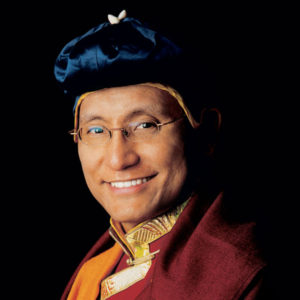
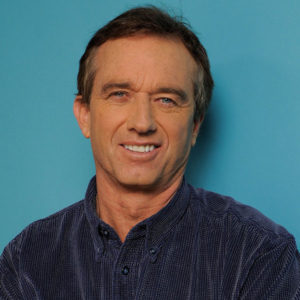
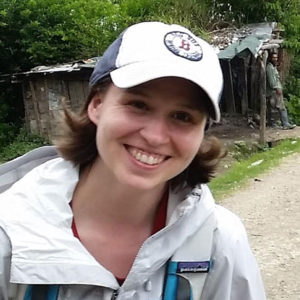
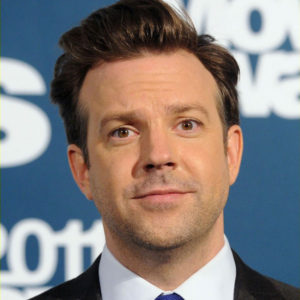
Join StarTalk Live! as we explore the world of water: from Earth, to the ancient subsurface sea of Jupiter’s icy moon Europa, to the comets that first brought water to our planet. Recorded live at New York’s Beacon Theater, host Neil deGrasse Tyson and co-host Eugene Mirman dive into science, humanitarian issues, economics, politics, and of course comedy, with the help of Waterkeeper Alliance founder Robert F. Kennedy Jr.; His Holiness the Gyalwang Drukpa, “Guardian of the Himalayas”; hydrogeologist Dr. Tess Russo and actor Jason Sudeikis. In Part 1, we investigate the physical properties of water, one of the most common 3-atom molecules in the universe. Discover how we know which comets have “our” kind of water (it’s all about the Deuterium) and how on Mars, water can exist side-by-side as a gas, a liquid and a solid (water’s “triple point”). Listen to RFK Jr. attack the “energy incumbents… and the big polluters: the Koch Brothers and their indentured servants in our political process.” You’ll learn about The Gyalwang Drukpa’s efforts to protect the water supply for half the world’s population, and find out what Kung Fu Nuns have to do with the fight for gender equality. And that’s just Part 1.
Transcript
DOWNLOAD SRT
Welcome to StarTalk, your place in the universe where science and pop culture collide. StarTalk begins right now. Welcome to StarTalk Live! as promised. It is my incredibly great pleasure to bring out your host, our nation's greatest science communicator...
Welcome to StarTalk, your place in the universe where science and pop culture collide.
StarTalk begins right now.
Welcome to StarTalk Live!
as promised.
It is my incredibly great pleasure to bring out your host, our nation's greatest science communicator and director of the Hayden Planetarium and host of Cosmos, ladies and gentlemen, the incredibly wonderful Neil deGrasse Tyson.
Thank you.
Very warm welcome, Beacon Theater.
Thank you.
Tonight is all about water.
Water in the universe, water on earth.
Is it clean, is it dirty, who's drinking it?
Who has it, who doesn't have it?
What to do about it?
And to start off that conversation, I have a hydrogeologist who will be joining this panel, and she is a professor in the Geosciences Department at Penn State University.
We give a warm New York welcome to Dr.
Tess Russo.
Dr.
Russo.
To join us in this discussion about water, I thought I'd bring a comedian who is on television and in movies, and is 60% water as we all are.
Ladies and gentlemen, the incredible, the wonderful Jason Sudeikis.
So I wanna lead off just to make sure we're all on the same aquatic page.
So Earth has water, it's a water world.
What percentage of our surface is water?
Oh, I don't know that.
You should ask, oh, thank you.
What percentage of our surface is water?
About 70%.
70%, but most of it, it's water, water all around, and not a drop to drink.
Exactly.
So how much is there to drink?
About 3% of the water on earth is fresh water, but most of that water is locked up in glaciers, in ice.
So we should melt the glaciers and get more.
We are.
We are.
All right, so 3% is fresh water.
What percent is in glaciers, about?
Two thirds.
Two thirds of that.
So we are one third of 3% of the total fresh water in the world is available to us to drink.
More or less.
So the other third, most of that is underground.
Oh, so you're talking about surface water.
A lot of fractions.
One third of a third of a half.
This sounds like a test of the least rate.
The least common multiple.
It's small.
It's 0.3% of 2.5%.
Oh, like what I tip.
Yeah.
I got it.
So that's just the lakes and rivers.
The lakes and rivers.
Okay, because that comes from rainwater.
And rainwater is drinkable.
Most of the time.
Usually, yeah.
When is it not drinkable?
When it's been contaminated.
Okay, I could have figured that out.
So, like when you throw up in it?
That's one, yeah.
That's one.
What's a second example of contamination?
Yeah, other than people constantly throwing up in our water supply.
All right, water comes out of my faucet.
That repository of drinking water, you're saying it's a really tiny, vanishingly small percent of the total clean water in the world.
Yes.
But it's not enough.
No, it is enough.
No, it is, it is enough.
All right, but there are people who don't have clean water.
Yes.
So what do we do about that?
Get rid of those people.
That can't be right.
Is it?
Is it right?
So let me back up a minute.
I'll put a little physics in this.
Water, as we know, comes in three phases.
We have liquid water, with which we are most familiar.
As correctly noted, we are two-thirds water.
The life is two-thirds liquid water.
And liquid water has some fascinating properties.
Because normally when something changes state to become solid, as water becomes ice, normally it shrinks.
Cold things get smaller.
So the properties of the water molecule are such that when it becomes solid, it freezes in such a way as where there are gaps between the molecules, where there weren't previously gaps when it was liquid.
And those gaps make frozen water less dense than liquid water, creating what we all take for granted, the fact that ice floats.
It's one of my favorite things about it.
Ice floats.
So for example, in the wintertime, it gets cold.
You have a lake.
The top surface gets cold.
Cold water is denser than warmer water.
We got that.
That cold water will drop to the bottom.
But the top water will freeze and not drop, thereby insulating the water below, protecting the fishes through the winter months.
Ain't that some shit?
You know?
Yeah.
It's a remarkable feature of water.
Well, and it's really important for life.
For ice fishing.
Yeah, there would be no such thing as ice fishing if ice sank.
Yeah, or it would be boring.
You would swim to the bottom of a lake, drill, and die.
So another interesting fact here, if you want to freeze water, it will expand.
If you want to compress ice, you can't do it.
The only way the ice can take up a smaller volume of volume is if it becomes water again.
So you can take ice below freezing, squeeze it so hard, you can liquefy it from the act of squeezing it.
And in fact, that is what enables ice skating.
You are skating not on ice.
Your blade is cut in such a way that your weight on top of that thin blade edge creates pressure on the frozen ice that the act of putting that high pressure melts it.
So you are actually gliding on a smooth bead of water.
When you ice skate.
I can't wait till you're on TV insisting it should be called ice squeezing.
So what else goes on?
Water can become gaseous.
Clouds are really water vapor.
When we think of gash, you want to think of a change of state and that would be steam.
So these are three phases of water.
Why can't you have water plasma?
Like slush.
It's probably a terrible question.
Yeah.
Yeah.
Yeah.
In its steam state, you will know if you've been to mountaintops that you have to adjust cooking times because the water boils at a lower temperature at high altitudes than it does at sea level.
So it's not as hot.
So if you're boiling an egg, you have to boil it longer because the boiling water is not as hot on a mountain as it is at sea level.
Now, here's what's interesting.
If you keep ascending an altitude, the boiling point of water continues to drop.
There is an atmospheric pressure at which the boiling point is the same as the freezing point.
And you can sustain simultaneously ice, steam and liquid water all in one pool at the same time.
It's called the triple point of water.
And on Mars, if you put water there, you could sustain steam, water and ice in the same bucket at the same time.
Mars is in many places on its surface at the triple point of water.
The same water is all three states or it's all just hanging out?
No, so you can put an ice cube in it, it's happy.
The water around the ice cube is boiling.
Steam rises up, it's happy sitting right above the surface.
Everybody is happy.
Wow, sounds like a solution for the Middle East.
We could just make them all into water.
So there was talk that maybe the water on Earth came from comets.
We didn't know for sure.
By the way, there's no shortage of water in the universe.
So the issue is not how do you get water.
The issue is of all the ways we could get water, what's the most likely?
Now, Tess is a geologist.
There's water coming out of volcanoes all the time, right?
Do the geologists think that we made all our oceans from water coming out of volcanoes?
I don't know, but I'm going to guess no.
Okay, you need some of our comets.
I think that's a great idea.
Okay, good.
We checked some comets and we noticed the water in those comets doesn't match the water that's in our oceans.
And that got us worried.
That's some CSI stuff right there.
This is a problem for actors.
Not all water is created equal.
So it has to do with what we call an isotope of hydrogen called deuterium.
You can make water out of a kind of hydrogen that's different from the water we're accustomed to drinking.
And it's still water.
And some of these comets have excess amounts of this.
It doesn't match.
Could you drink that water?
You could.
You would slow down though.
Really?
Yeah, the water is more massive.
So the water moving through your circulatory system would just be a little slower.
Have they tested that?
No, it's suspected.
Well, surely there are some mice who know the answer to that question is my guess.
But then we did find a couple of comets that did match the oceans.
But the jury is still out, just so you know.
What is the origin of Earth's water?
We know at least some came from volcanoes.
We're pretty sure there's a class of comet that did not supply the water.
And other classes of comets that might.
By the way, if you're a comet and you hit the Earth, all your water vaporizes on contact.
So you would become steam and would have to condense back out later.
Why is it that if it rains fresh water in the ocean, that the ocean is salty?
So the rain comes from evaporated water.
When you evaporate water, it leaves the salt behind.
It only picks up the fresh water.
So then when it rains, you're raining fresh water back down onto this salty reservoir, salty pool.
Okay, so it doesn't do us any good if it rains in the ocean.
You want the evaporated ocean, which has been purified of its salt, to then slide over onto land and rain there.
Isn't it possible for a lake to become salty eventually?
Yeah.
So how does that happen?
Well, so there can be salts from the rocks that the lake is sitting on.
Okay, so it just leaches it out of the rocks.
Sure, it can be the minerals that it's sitting on.
And then as you evaporate the fresh water out of that lake, it's like the same thing in the oceans.
You're leaving behind the salty water.
Like the Dead Sea, as it's evaporating and evaporating, it's becoming saltier and saltier.
So a lake that's big and old will be likely to be more salty than one that is small and recent?
Sure.
Okay, just checking.
Is the Dead Sea really a lake, to be honest?
Yeah.
Like it has rope swings and you can jump into it.
It's like a proper lake with pontoon boats.
What would be cool is if we got hit by comets all the time, and wherever a comet hit...
If a comet hit, it would just make a puddle of fresh water.
You could market that.
So one person would be selling Perrier, another person would be selling Halley's Comet.
People would definitely buy water from Halley's Comet.
That's what I'm thinking.
I'm one of those people.
A recent comet a few years ago, Comet Hail Bop, yes, that was the name of a comet, named after its two discoverers, Alan Hale and I forgot Bop's first name.
But it's an odd Hale Bop to have your comet name that.
That actually set a record for the comet that was visible to the naked eye for longer in the sky than any other comet in recorded history.
So it was a special comet.
We all knew about it.
I even saw that comet.
It was bright enough to see from Times Square, New York.
It was kicking comet butt among comet visibility.
It was very bright.
But we checked that comet and we saw that doesn't have the kind of water that matches our oceans.
How are you checking these things?
Yeah, be honest.
And don't say you're just in the Ferris wheel at the Toys R Us in Times Square.
Look up and you're like, yeah, not the same.
What you do is the comet, as it nears the sun, the heat from the sun evaporates the ice and it grows a tail, among other things that evaporate.
Acidites, water, ammonia, this sort of thing.
So as it evaporates out, you can wait for light to pass through it from the sun and see what those gases do to the sunlight.
And if there's water there, it will grab certain light out of the sun's spectrum and leave gaps in the spectrum that you analyze back here on Earth.
You say that's a water gap.
That gap can only have been left by water.
There's another gap that can be left by cyanogen.
In fact, Halley's Comet in 1910 was the first discovery of cyanogen in the tail of a comet.
And we knew that Earth would be passing through the tail of the comet.
And at the time, the gas chamber used cyanogen-derived gases.
And people said, but we're all going to die.
The whole Earth is going to die at the same time because we are going to plow through the tail of Halley's Comet.
So what we had was charlatans selling comet pills to protect you from this gas.
You say charlatans, but we're all alive.
That's how science works, right?
Exactly.
So we had the comet pills and people bought them and some people got rich.
But here's the problem, if you take all the gas of a comet's tail, which is in some cases 100 million miles long, and made it into kind of atmospheric density, because it's very thin and tenuous, but compress it down to just regular air, 100 million miles long tail, it would fill a few suitcases.
I don't know how big your suitcases are.
But it sounds like you mean small suitcases.
Small suitcases.
That humans would use.
So no, we clearly survived, but you can measure water.
Getting back to your question, Jason.
You see the water.
Now, if the water is a little heavier, it will leave features that are shifted slightly from regular water.
And you say, there's the odd water.
Gotcha.
Yeah, and it's deuterium, so it's called heavy water.
So could you take us into the water cycle?
What is that, and how does it work?
Energy from the sun evaporates water off the ocean.
It rises, forms clouds, sometimes moves onto land.
Then precipitation rains out of those clouds.
And that water can contribute to rivers and streams and becomes that tiny fraction of surface water that we know and see.
Or it can infiltrate into the ground, seeping down into the dirt and becoming aquifer water or ground water.
So when we drink water, we draw it from aquifers and from rivers?
Typically, yeah.
And when we have farms, we irrigate, maybe?
Yeah.
Okay.
And why can't we use salt?
Plants don't like salt water, I guess.
Not too salty.
So there's a lot of research now on, can we use treated wastewater?
Can we use brackish water to irrigate?
What are the other options?
Brackish is salty.
Brackish is kind of salty.
Mixed.
It's not as salty as the ocean, but it's not freshwater.
That's why it's brackish.
It's where freshwater and saltwater meet to throw a party.
So water is good for life?
Necessary.
Excuse me.
Yes, it's necessary for life.
But in fact, we might word that sentence in reverse.
It's not that water is good for life, it's that life is good for water.
Because it's not like we had life and said, gee, how can we improve it?
Let's get some liquid water in us.
No.
We rose up, evolved, knowing that there's water available to move nutrients through our body, to help our circulatory system, to move through the foods that we eat.
A water world is ripe for life as we know it because life requires liquid water.
Now, you know we got other places with water in the solar system, Mars.
No water on the surface.
We think there's water hidden below in aquifers.
So we got people who want to go check for microbial life there.
Europa.
Europa, I love me some Europa.
Europa.
You've got to check out Pret.
If you like Europa, you'll love Pret.
What is Europa?
OK, Jupiter, of its many moons, one of them is Europa.
It is well outside of the Goldilocks Zone of our planetary system, our solar system.
The Goldilocks Zone is where water left to its own devices would remain in a liquid state.
Not too hot, not too close to the home star, it would evaporate.
Not too far away, it would freeze.
So, Europa and Jupiter are outside of the Goldilocks Zone.
But Jupiter's gravity pulses the physical body of that moon in such a way that it's pumping energy into it, melting that ice.
And there's an upper layer of ice, but beneath ice floats.
Beneath it is an ocean of liquid water that's been liquid for billions of years.
I want to go ice fishing on Europa.
And I joke about this, but I'm mostly serious.
If you find life on Europa, you'd have to call it European, right?
And we would have to destroy what we now call Europe.
Or not.
I don't see another option.
But flooding regular Europe do not have one word mean two things.
It would be confusing.
It would be.
I'm from Kansas City, and there's a Kansas City, Kansas, Kansas City, Missouri.
It's a nightmare.
Yeah.
So Tess, let me ask you.
So we hear that water is a universal solvent.
Now that sounds dangerous that we just drink solvent, right?
Uh-huh.
Yes.
So what's going on?
What does that mean?
So the solvent is the word that describes the liquid or the matrix that something can dissolve into.
So when you stir salt or sugar into water, the salt and the sugar is the solute, and the water is the solvent.
And many things dissolve in water because it has this polar structure because of hydrogen bonding.
Are we can talk about hydrogen bonding?
Bonding?
We can talk bonding.
Have a hydrogen bond with someone.
That's a good bond.
We don't mind.
Yeah.
So you're saying hydrogen has the capacity to bond in ways that will grab more than one kind of thing into it so that you can dissolve more things in water than in most other liquids, which makes it a good cleansing thing.
Because I got something here and I don't want it there.
I want to put it in the water, send water across it.
It jumps into the water and you wash it away.
So surely there are other solvents, though.
How about pneumonia?
I clean my windows with ammonia.
So why isn't life based on pneumonia?
I don't know.
I don't study life.
You don't study?
Oh, you study rocks.
Yeah, sorry.
I know the answer, actually, that it would sting.
It tastes weird and it would sting.
So ammonia dissolves.
So does turpentine.
Can you imagine life based on turpentine?
I can.
All done.
It's eight feet tall.
How about in the lab, in the biolab, they have organs stored in formaldehyde, right?
These are other sort of liquids that exist in nature.
But we're based on water.
Maybe it has something to do with redox conditions.
Redox conditions.
Redox conditions.
Well, redox condition is, as you guys know, and I know, is a scientific thing that I have done, that you guys...
It's a kind of dog.
I don't really know what it is.
It's where, in the presence of some thing, you actually remove oxygen atoms from what's there.
The opposite is what happens when iron rusts, right?
You're adding oxygen to it.
But what I'd say, though, is water is one of the most common three-atom molecules in the universe.
And because hydrogen is common, oxygen is common.
And so when we say we're going to search for life as we know it, such as what NASA does, because NASA follows the water, you might say, that's kind of limiting.
Maybe there's life based on, you know, methane or something else.
But water is abundant everywhere in the universe.
What are the other two most common?
The CO2 is very common.
That's a three-atom.
Good.
Carbon and oxygen, very common in the universe.
Okay, just curious.
Except CO2 is a byproduct of our metabolism.
And of our civilization.
Ooh, ooh, uh-huh.
More on CO2 being a byproduct of our civilization disrupting the water cycle when we return in our second segment of StarTalk Live, Beacon Theater.
On the subject of water, it's not only ever about science.
It's the interplay of what we know as scientists regarding water, and then the efforts of people who are deeply committed to making water available to us all.
And we have, as a special guest this evening, a person who has committed his life, basically, to humanitarian causes, including in this long list of humanitarian causes, is what to do about water.
Rivers that have been polluted, we need to clean them.
Lakes that are dead, we need to fix them.
People who don't have fresh water to drink, we need to supply it.
Give a warm Beacon Theater in New York City welcome to Robert Kennedy Jr.
Our next guest is another person deeply committed to the human condition around the world.
We all take access to clean water and fresh air for granted.
So much of the world cannot.
And in this effort, we have brought with us to this stage His Holiness, the Gyalwang Drukpa Lama.
His Holiness.
So, this stage is now sanctified, I think, by your presence here.
Thank you for joining us, both of you.
It's almost a lost art.
I grew up in an era where sort of humanitarian causes led all political discussion, all UN conversations.
And it's refreshing to see that such an effort is still alive with whatever struggles it may require in modern times.
And I just wanna applaud what is an extraordinary legacy that you're creating and the continuation of what your entire family lineage has been all about.
So, Bobby, can I call you Bobby?
Yeah, good, good, thank you.
Can you just tell me what your Water Keepers Alliance is?
It sounds audacious.
The first Water Keeper was started by a kind of a blue collar coalition of commercial and recreational fishermen who mobilized on the Hudson River back in the early 60s.
They saw that pollution was destroying their livelihood.
They had been to the government agencies that are supposed to protect us from pollution, and they came to the conclusion that government was in cahoots with the polluters.
They launched a boat on the river.
They began suing polluters and collecting bounties.
They discovered an old law on ancient navigational statute called the 1888 Rivers and Harbors Act.
1888.
It was a navigational statute that was written when people in New York were constructing the first large buildings, and they were taking the cellar dirt and dumping it into the water.
They were also dumping dead horses and other things into the water that impeded navigation.
Wait, wait.
So, the urge to protect the river wasn't to keep it clean, just to keep it unobstructed by dead horses.
Well, that's right.
Just so I understand.
When were they dumping horses in the 60s?
That was the 1860s, but this was 1888.
That's fine.
Actually, the reason that we ultimately saved the Adirondack Mountains was not because people cared that much about the mountains, but when they found out when they cut down the forest that the sediment was running off the ground, and His Holiness now has 150 river keepers in Nepal and Northern India.
But he planted more trees than any other person in the world.
And it was because...
The reason the state legislature here in New York preserved the Adirondacks is because they found when they cut the trees, the sediment was washing off the Adirondacks, landing in the Hudson River and impeding navigation.
So it was the Carnegie's and it was the Rockefellers and it was the Whitney's and the powerful families, the Livingston's that controlled the navigation on the Hudson.
They were able to influence the New York state legislature to finally protect the river.
So not all protect nature causes have noble origins.
Well, usually our successes are driven by alliances with powerful economic interests.
And today, the battle, for example, to transition to clean energy economy, it's a battle against the incumbents, coal, oil, the carbon cronies and big nuke.
But it's abetted by companies that are like General Electric, Siemens, Vestas, very, very big, powerful economic entities.
Let's see that they have an opportunity to make money.
And NRG, which is the biggest energy producer in our country, which see that we can actually produce electrons cheaper from wind and solar and renewables.
And that if we have a level marketplace, that they can actually make a lot of money in that market, displacing the incumbent.
So we have them on our side.
And that's one of the reasons that we're winning incrementally bit by bit this battle to transition to clean energy.
Is that a change in tactics?
Because there was a day when all corporations were enemies and flower children were the future.
But you've gotten kind of practical over the years then.
If you're saying, make an alliance with powerful people and get them to understand the cause, and then stuff can happen like that.
You know, I think one of the things that environmentalists and people in the business community have come to realize that good environmental policy is identical to good economic policy.
If you talk to the big polluters, the Koch brothers and...
To end their indentured servants in our political process.
They'll tell you that we have to choose between economic prosperity on the one hand and environmental protection on the other, and that's a false choice.
These are people who want to say that a good economy is to create a world where we can treat the planet as if it were business and liquidation and convert our natural resources to cash, make a few people billionaires by impoverishing the rest of us, and that's not good economy for anybody.
I want to stick to Warner because there's a whole world we could get into here, but I noticed you're a senior attorney for the Natural Resources Defense Council and it says you're the chief prosecuting attorney for the Hudson Riverkeeper.
So if anybody messes with the Hudson, you're all over them.
Right.
We are always on the side of the water against the guys who are trying to pollute it.
You know, there's only one of the five boroughs of New York that are connected to the mainland of the United States.
The rest of them...
The Bronx?
The rest of them are islands in the Hudson River and we are a maritime city.
We're here because this was the greatest port in the world.
And for many years, we couldn't use the water because it was so polluted.
I grew up in that time.
Tires would float up and I knew I was in a different world as in the late 70s, early 80s, where I saw people fishing in the Hudson and keeping the fish that they fished out of it.
I thought that was weird and I didn't know you had been at it that whole time.
Now, I'm intrigued by this tree cutting in the Adirondacks and that then affecting the freshwater because, as holiness, your tree planting campaign, which my records show, made it into the Guinness Book of World Records.
I didn't even know that was a record that could be made.
So, could you tell me what that record was?
The tree planting record?
It was, I think, the most tree was planted.
I mean, the 100,000 something over tree was planted in a particular sort of short period and by 10,000 people, something like that.
So, it was kind of an amazing achievement for everybody.
But, of course, for me, it was very exciting to see because we were planting this tree in a desert, actually.
And it was then more exciting the next year.
It was growing very nicely.
Then it became like a bush and the forest.
You created a forest?
Yeah, just a forest.
Did you ask anybody?
Is that allowed?
Could you just create a forest where there wasn't...
Can we do it again?
Here?
100,001?
Yes.
Yeah.
Can we pick like a restaurant and just plant 100,000 trees?
You know, His Holiness has 30 million followers.
On Twitter?
Person.
People, yes.
He comes from the section of the Himalayas, Northern India and Nepal.
It's the headwaters for most of the freshwater in Asia.
And the rivers, the Yangtze and the Ganges that flow out of his homeland.
So if it's most of the freshwater for Asia, Asia is a fourth of the population.
By some estimates, his water goes to four billion and a half the people in the world.
I've heard His Holiness speak very movingly of the moral obligation that he has and that his followers have to make sure that that water makes it to those agricultural areas and makes it to the sea and feeds the fisheries.
Just to clarify, this water would be melted glacial water from the Himalayas, right?
So some of it's melted glacial water and some of it's monsoon water.
So just straight precipitation that runs off into the rivers and then flows downstream.
Okay, and so these trees are not only just a good thing, because more trees are better than fewer trees, but did that also protect the soil erosion?
Is that a secondary goal here?
Yes, yes.
Everything is circulating, you know.
So the tree gives oxygen, and oxygen somehow brings the, you know better than I do actually.
But of course then it gives water and all these things.
So of course the tree is very badly needed for the human being and for everybody to survive because of the oxygen.
Oxygen is very much needed for us to sort of have a life.
Okay, did you know that some other team of people beat your Guinness record?
Did you know this?
I didn't know.
Yeah, yeah, so now you got to do it again.
Never ending.
That's good.
Yeah, that's a good thing.
So then I'll be beating them next.
Yeah, I see.
And then somebody will beat me also.
Exactly.
It's not like the hot dog-eating winner.
You know, there are a lot of weird things in the Guinness Book.
They get much less noble than what you're describing.
So I also noticed that in many of the areas where this freshwater supplies, it's primarily women who retrieve the water from where it comes, is that correct?
And so that creates a gender separation of tasks.
So you're trying to combat that as well, is that correct?
No, women knows much better about the water and the men knows maybe better about the trees and a little bit like more sort of other things.
So the water, speaking about the water, the women knows much better.
Why?
Because the women always collect the water from the whales and then, you know, use.
So women knows, women has a much more passion about the water and with the water.
Water is very heavy.
Strong women, right?
Yes, right, right.
Now, is it true that you taught kung fu to nuns?
That they're kung fu nuns?
How do I become a kung fu nun?
Isn't that where we get nun chucks?
Let me throw this out there.
Willing to carry water.
So what was the motivation there?
To create an army of super nuns.
One of the main sort of target that I was doing was gender equality.
So, of course, gender equality is the norm.
Thank you.
Thank you.
Apparently, I only heard women applaud that.
Let's try that again.
Gender equality.
So, I am very proud of myself to be able to do that, actually, and also to hear you're clapping, yes, right.
So, this is the reason the Kung Fu came into this.
And Kung Fu can give the confident and the defense, not to harm others, of course.
That is not my main aim, but to defense them.
But that's just a benefit of what you keep.
Yeah, right.
Is that you could harm others, but that's not the main...
Yeah, you could.
Yeah, yeah.
Cool, still into it, still want to be a Kung Fu nun.
So, this is an extraordinary statement, cultural statement that you have made.
So, did you find resistance...
Cultural revolution.
Revolution.
I understated it, yes.
So, did you find resistance from men who didn't want to get their butt kicked by the women?
Excuse me, Your Holiness, but the progress of women in the world has not come easily because you have men who are resistant to giving up the power they have, one of which is the power of might over them.
And so, was there resistance here?
I could feel some resistance and some discomfort, but of course now they have to get used to it because, you know, because I will not give it up anyway.
I'll be keep on doing it and I will keep on dedicating my life for gender equality, you know.
There is no…
So the Waterkeepers, they named you the Guardian of the Himalayas.
Could you explain that?
We have Waterkeepers now all over the world and we license each New Keeper.
They have to live on the waterway and they have to be willing to defend it.
Could I be the Waterkeeper of Park Slope?
You already have one.
They already got one.
I tried.
And His Holiness had demonstrated a very, very strong devotion.
You know, there are some other religions that have taken this on and some great religious leaders.
In fact, there's a convocation on the Black Sea every year where Patriarch Bartholomew of the Greek Orthodox Church who said this is the moral issue that faces our generation.
But His Holiness, who has led these pilgrimages all across India, cleaning up the environment where people pick up trash, plant trees, and he's really made it the theme of his lifetime.
And the water was an important part of that.
And because the water is so important to all of Asia, he's really, even by people who are not among his direct followers, he is regarded as one of the great spiritual leaders in the world.
And he has consistently made water the centerpiece of his moral cosmology.
So in speaking with His Holiness before we came on here, I asked at what elevation he lives in the Himalayas.
And the elevation is?
Five thousand meter.
Yeah, five thousand.
This is America, so I have to translate.
Nineteen Denvers.
Is that even close?
Five thousand, you know, fifteen thousand feet or so.
That's very high, right?
And is it a walk up?
You have the literal and figurative high ground in these arguments.
And that's a good place to be because no one really has any other place to make an argument against what you're saying.
And you are too far away for them to reach.
Let's go get them.
So, here's a fact that we dug up for this program.
United States residents, on average, use 150 gallons of water per day for our domestic and municipal purposes.
150 gallons a day, that's highest in the world.
Compare that with the UK, which uses 30 gallon per day.
And then I said, how do you get that?
And then I was reminded that in America, we bathe more often than in many other countries.
That's not the explanation.
That's not the explanation.
We don't bathe five times a day.
But what it tells me is that different countries have different needs or wants.
And if there's ever a redistribution of access to water, that could cause some conflict.
So, Your Holiness, could you comment on ways, either historically or from what you have seen today, where there has been unrest regionally because of access to water?
Normally, I always say that the people has to be educated more.
People has to be more careful about preserving the water.
Also, polluting water less.
I think the people can do a lot of contribution if they really educated and if they were told nicely in the school and also the parents needs to be teaching them nicely and precisely and fully, so that every youngsters and next generations will be very cautious about and be happy to serve the whole world.
Not only whole world, but the generations and generations, they will be able to serve and they will be able to do a good thing, otherwise they will mess up, they will mess up whole world.
Right.
Now, in terms of the use of the fresh water, in our first segment, we were discussing where is the fresh water of the world and okay, we might in America use 150 gallons, but that's not the bulk of the water that gets used.
It's, what's the number here, 70% is used by agriculture just to grow the food that we eat.
Is that the same fraction of the number all around the world?
So Tess, we use a lot, we irrigate, but other parts of the world, what fraction of fresh water do they use for agriculture?
So it's actually more in developing countries compared to developed countries.
The US uses less than 70%.
Less than 70%.
Yeah, we're using 60-ish, but if you go to India or parts of China, they're using over 90.
Over 90% of all of their available fresh water for agriculture?
No, 90% of the total water used goes to agriculture.
And why do they use more water than we do?
Do they have plumper melons?
No, it's just that they're using less for industry.
So the US has developed its industry and we use a lot of water in industry.
We wash a lot of cars, they mostly make apples.
That's basically it.
And it takes less for apples.
Apple's not the best example, but car is a great example.
So what you're saying is there are fewer other things they use their fresh water for relative to their agriculture compared with us?
Right, because they're just trying to get food security.
That's the first priority.
Because they got 1.3 billion people.
Right, they need to eat.
Okay, so Bobby, how do you distribute your energies versus where people use their fresh water?
Are you primarily concerned about drinking water or agriculture as well?
How does that balance out in your portfolio?
By the way, just so I say it, you've got a book here, The River Keepers, written with James Cronin, activist fight to reclaim the environment as a basic human right.
So you're just at this at all angles.
And so how do you budget your effort?
Well, let me just answer the question that you asked a little bit earlier about the relationship between global and civil conflict and water shortages.
Most geopolitical analysts agree, for example, that the conflict now, the civil war in Syria, was triggered by a massive water shortage that was associated with global warming between 2006, 2011.
They had the biggest drought in the northeastern part of Syria in history.
Almost 100% of the farmers were affected.
Three and a half million farmers lost 100% of their production.
A million of those farmers migrated to the cities.
And that's what triggered the civil strife.
But also throughout the Arab Spring in Tunisia and in Egypt, the bread prices were driven high, which is what triggered the revolutions in those countries.
There was a lot of causes to those revolutions.
And by the way, not all those causes, I've made it into the news cycles.
No, and the water shortage now is making it in as one of the primary triggers for those revolutions.
But when you hear people on Capitol Hill saying, where's global warming, where does it affect us?
There are millions of environmental refugees every year throughout the world who are driven off of their land and who are creating civil strife and political strife and security problems that affect the United States because of water shortages.
Now, in answer to your other question, the philosophy that kind of unites all of the keepers is really an ancient philosophy, which is the water is part of the commons.
Commons are those things, those assets that cannot be reduced to private property ownership, but by their nature are the assets of the whole community, the air, the water, the wildlife, the fisheries, the public lands, the wandering animals, and of course, waters and shorelines.
And since ancient times, the Code of Justinian, the Magna Carta, and every state constitution, including here in New York, has a provision in it called the public trust doctrine that comes to us from those ancient constitutions.
And that doctrine says that water belongs to everybody.
It doesn't belong to Congress, the Senate, big corporations.
It belongs to all of us.
Everybody has a right to use it.
Nobody has a right to use it in a way that will diminish or injure its use and enjoyment by others.
So everybody can use their share.
Nobody can take more than their share.
But every child in New York City, whether they're black or white, rich or poor, young or old, has a right to go down to the 79th Street Boat Basin or go down to the East River on the FDR Drive, throw in a plug, bring out a striped bass, bring it home and feed it to their family with the security they're not going to poison somebody and with the security that the fish are going to be there.
Are you telling me there's striped bass in the East River?
There are a lot of striped bass in the East River and there are a lot of mackerel and there are shad and sturgeon and herring.
There's shad in the East River that weigh 1,100 pounds and have 200 pounds of caviar in them.
Can I walk into a bodega and grab a smart water and go, don't even try it, dude, this is mine.
Is my smart water?
You can't just steal water from the bodega.
But you can steal it from the river.
You could take some from the river, but I wouldn't advise it.
Don't do it, oh yeah.
Right, no.
Okay, so Bobby, I think what you described in some cases is a little oversimplified because we have state boundaries and there are some aquifers, if I understand correctly, that cross county boundaries and state boundaries and you have multiple municipalities now competing, in a sense, for one repository of water.
The water doesn't know the political boundaries, but people do.
And so that would surely create strife if somebody's draining water faster than somebody else's.
Well, here's the problem.
The law is the same in the East.
If there's water that flows from New Jersey to here, there are compacts between the states about how to allocate that according to the public trust doctrine.
The problem is the big place where you see water problem, we got a lot of water in the East.
We don't have water shortages here.
There's water shortages in the Western states.
And the Western states water was allocated the way that they allocate the water in Syria, where the governments wanted to get white men to move out into the Western states, to settle the states, to take it away from the Mexicans and the Indians.
And so what they did is they said, if you come out here, you can own the water and as much as you can use, you own it.
And so there are very, very irrational laws out West and incentivize people to use as much water as they can to grow rice in the desert, to grow alfalfa in the desert and to grow cities like Las Vegas and Scottsdale.
And now as a result of that, of course the Colorado River dries up in the desert and never makes it to the sea.
Another point to be made is it's one thing to pollute water and not make it available.
It's another thing for climate change to redefine what regions have water and what don't or what now gets too much water or what now gets too little because we developed our civilizations based on some expectations of what kind of water supply would be available.
So let us bring this segment, the second of three segments to a close.
We're live at the Beacon Theater.
See the full transcript



 Unlock with Patreon

 Become a Patron