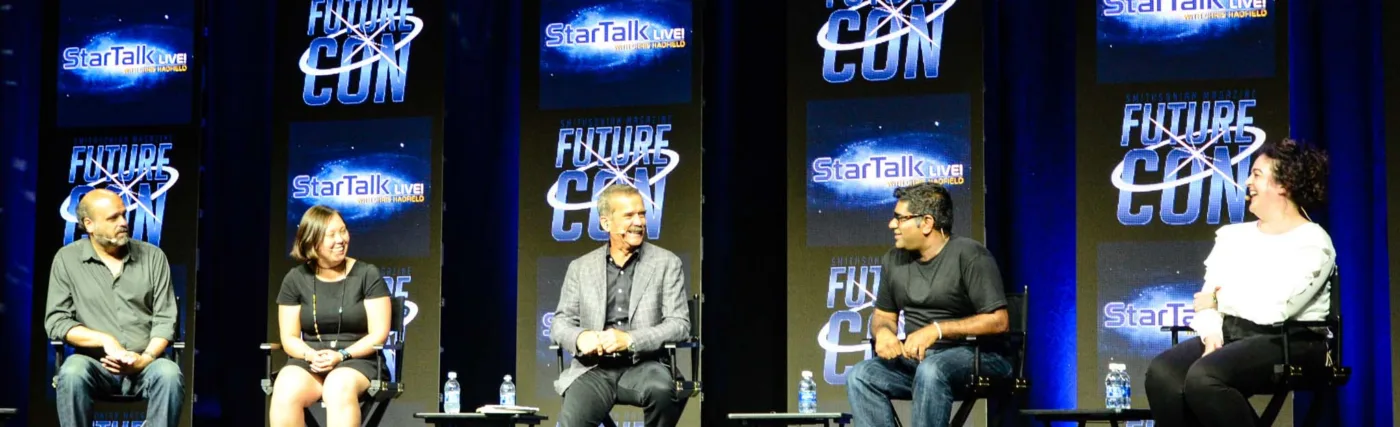
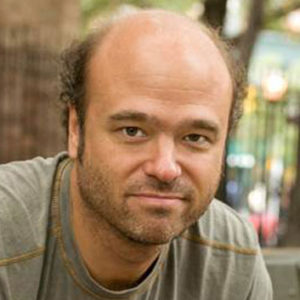
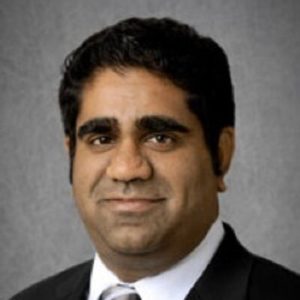
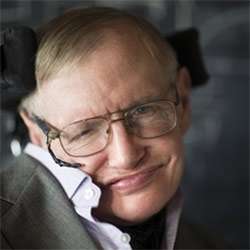
Are you ready to venture back into the future? Rejoin former astronaut and ISS Commander Chris Hadfield, comic co-host Scott Adsit, biorobotics engineer Katherine Pratt, mechanical engineer Suveen Mathaudu, and Maeve Higgins as we wrap up our time from Future Con. Before we continue the discussion on engineering the future, Chris gives us a little insight behind his viral hit performance of “Space Oddity” aboard the ISS, including what David Bowie himself said about his rendition. Explore the transfer of technology from space to Earth. Discover some of the “weird” science that happens while in space. You’ll also hear Chris share how his views on Earth changed after he saw it from above – what Neil often refers to as the “Cosmic Perspective.” You’ll learn about the challenges of creating better engines for space travel and how astronauts physically and mentally prepare themselves to journey to the stars. Investigate the physiological effects of long-term and short-term space travel. Science rock star Stephen Hawking appears once again, via holographic projection, to lead us in a conversation on simulation vs. reality, the dark side of technology, and the idea of world government. All that, plus, we take Cosmic Queries from the audience at Awesome Con/Future Con on everything from superheroes to space elevators and more!
Transcript
DOWNLOAD SRT
Welcome to Star Talk. Your place in the universe where science and pop culture collide. Star Talk begins right now. Welcome to Star Talk Live. I will be your co-host this evening. And I want to tell you about our...
Welcome to Star Talk.
Your place in the universe where science and pop culture collide.
Star Talk begins right now.
Welcome to Star Talk Live.
I will be your co-host this evening.
And I want to tell you about our special guest host tonight.
You know, he was floating up in his tin can singing to us.
This is Colonel Commander Chris Hadfield.
All right.
Welcome everybody back to to AwesomeCon, to FutureCon and to Star Talk Live.
Here we are in Star Talk.
I think everybody here knows this gentleman next to me has been on 30 Rock extensively.
He's a producer.
He's a director.
He's an actor.
He's a voice actor.
He's a writer, everything in adults.
It is a pleasure to be on stage with Mr.
Scott Adsit.
We have some interesting folks to be on stage here this evening, including one virtual guest that we'll bring up later.
But first, I would like to introduce, she is an electrical engineer.
She's a recovering rocket scientist, Katherine Pratt.
And we have a gentleman joining us as well, an engineer.
He's a professor of mechanical engineering.
He's a superhero science expert, Dr.
Suveen Mathaudu.
Also tonight, on the non-scientist side, she's an author, a comedian, and she hosts the podcast, Maeve in America.
Maeve Higgins.
All right.
So, folks, I just as a reminder, we are at AwesomeCon.
This is FutureCon, and we are here together celebrating science and talking about ideas here on Star Talk.
And soon we'll do Q&A.
At the end of this, if you have any questions to try and ask Scott or Maeve something, then please be ready to line up and ask us a question at the end.
But I thought what we would do here to kick it off was, what do we get out of this so far?
Some of the ideas, the things that have taken us through this various exploration over time that have put the crew up on the station now and have put our human creations out beyond the far end of Pluto and right outside the solar system.
What about the transfer from that?
How does that roll back into society?
And we haven't heard from you in a while here, Katherine.
What sort of ideas or thoughts do you have on that?
So, there's a lot of weird things that happen.
And I'm sure you can speak to this when you go to space.
So, you did the washcloth with the water that you squeezed out.
And the water did this weird gelatinous thing.
That's not what happens here on Earth.
And so, trying to understand how things change when you go to space.
So, lighting a candle, what does water do?
All those different things.
So, you can understand it there so we can use it better back here on Earth.
And that would also help us if you want to take a bath.
You know, make sure the water goes where it's supposed to.
Does anything happen to your body that's really crazy when you're in space for a while?
Really crazy?
Yeah.
Well, let's see.
You can't burp without gravity.
You can't burp.
That's my one-party trick.
One of your three-party tricks.
Because, of course, the only way you can burp is because the solids and liquids are in the bottom of your stomach and the gas is at the top, and you vent the gas off.
Try standing on your head and burping sometime.
You'll be disappointed.
But that means that nobody on the space station can ever burp, so you have to get rid of your gas some other way.
Is that what power is to...?
It is not propulsive.
It is not propulsive.
So, but we were talking technology transfer.
Well, you were talking about flame, and we actually do flame experiments up there, and we've recently discovered a state of flame that has been masked by convection, by heat rising.
When you light a candle up there, it immediately burns up all the oxygen in the vicinity and then goes down to this pathetic little blue semi-circular dome where the only, no more convection or conduction, it's just diffusion of the air that gets a tiny bit of oxygen to sustain the flame.
So it's a wonderful place to study that and fluid physics and all that.
But we do a lot of other testing up there as well.
Have you worked with any of the space technology transfer, Suveen?
No, but it influenced the field that I was in tremendously.
The original ideas of metal solidification were studied with what were called transparent metals in space.
They modeled the solidification of different kinds of mixed elements and how they formed.
These could only be done in the microgravity that was in space.
So all our knowledge of fundamental casting and mixing and alloy design stems from fundamental basic science that was taken from space.
Yeah, it's a busy spot up there.
There's the Alpha Manetic Spectrometer on the top of the station right now that is trying to determine what dark matter and dark energy are to look into that end of subatomic particles.
And NASTRAN, which is one of the early optimization software that made the space vehicles light enough to launch, that all came from it.
There's a whole legacy and history of spin-offs coming from it.
But we still have significant problems to face.
We need better engines if we're really going to truly leave Earth.
We touched on a couple of them earlier.
We need, I think, like that disk in the middle of your chest, like Iron Man.
We need a concentrated power source.
Yeah, we're in a bit of a hurdle with our energy technologies because we have things like batteries which can produce low current over long times or capacitors which can give large outbursts in short times.
But the materials and the battery technologies we need for high energy density, small power sources is a massive, massive limitation at this point.
Yeah, one of the beauties of setting the bar high, I think maybe one of the real interesting parts of Space Station is that 15 countries that are regularly strongly disagreeing on the surface of the world, when you give them a challenge like that, they recognize that it's a reason to join forces.
And that's one of the great legacies of it.
But really, a lot of the problem is how do you prepare not only the equipment, but how do you prepare those 12 new astronauts as well?
How do you properly get them ready so that when they get to the Space Station, because like Sue Helms, where Earth is a separate entity, they have to have every skill available to them onboard the spaceship in order to be able to deal with no matter what happens.
If someone gets electrocuted, if we have to reprogram the computers, if something goes awry outside, we have to be able to respond onboard.
And the only way we can do that is through extensive visualization and simulation for years and years in advance, as realistic as possible.
It's why we hired a submariner, because the tasks that a submariner has, the risks that she faced in her career, that's pretty similar.
The psychological and the technical environment.
Yeah, she can't just be like, I'm just going to go outside for a second, like in either of those shit.
Catch a breath of fresh air.
So do you, do like past astronauts who have done time up there, like do you go back and train the younger astronauts?
Yeah, the senior astronauts train the junior astronauts.
Yeah, I was an instructor as an old astronaut.
I was an instructor in a lot of different areas.
Do you ever try to sabotage one of the young ones so they ask you to take his place?
No.
May I suggest it?
And do you think it's the hard, like you were talking earlier about the psychological challenges of being up there.
So is it like, if you have a family on Earth, like does all that come into play as well?
Like, but who gets to go up there?
Our very first astronauts, when we were in the space race, there was such an urgency to the pace of what was happening that we worked really hard on the technical side, but we really didn't spend a lot of time on the psychological and the human side, and it ruined almost every marriage.
Almost no marriage has made it through the Apollo program.
And it was very difficult for those astronauts when they came back, of course.
How did they deal with life?
No one would ever treat them the same again.
Neil Armstrong became very much a recluse to try and deal with it.
Buzz went through a lot of personal problems.
Ed Mitchell became a little bit crazy and talked about a lot of crazy stuff in the rest of his life.
It was not a kind thing we did to them to try and get them ready for space flight.
But we learned a lot from that.
So we don't just simulate on the technical side, but we also simulate for the psychological side.
We have a habitat on the bottom of the ocean, off the coast of Florida, and we go spend weeks down there at a time.
We do survival up in the high Arctic where we trust each other with our lives.
We try and build that level of technical, but also mental toughness that will allow us to succeed.
How about if we ask Dr.
Hawking to talk?
Could he beam back in to join us again, the people that are handling that?
And the question.
Question.
I know that Dr.
Hawking has talked about simulation and its importance in exploration.
Professor, your thoughts on simulation, sir.
Philosophers from Plato onward have argued about the nature of reality.
According to classical science, there exists a real external world whose properties are definite and independent of us, the observer who precedes it.
Both observer and the observed are parts of a world that has an objective existence.
In science fiction, however, a different kind of reality is exposed.
In The Matrix, people live unknowingly in a simulated virtual reality created by intelligent computers.
And maybe this isn't so far-fetched.
Many people prefer to spend their time in the simulated reality of websites, such as Second Life.
How do we know that we are not just characters in a computer-generated soap opera?
It would be lawless, and we just play things.
As long as a simulation abates a set of consistent laws, we cannot distinguish it from reality.
And there is no way we could prove there was another reality behind the simulated one.
It then becomes our reality.
Thank you very much, Dr.
Hawking.
I appreciate that.
You can feel free to beam out if you wish.
After dropping that bombshell.
So we are all here in a simulated reality and there is no way to tell if this is real or not.
Have you ever thought about that?
Mind-blasting.
One time when I was in the same room as Michael Fassbender, I was like, this is not real.
Did you just name Drop Magneto?
Yes.
I mean, I didn't meet him or anything.
That would have been a real glitch, right?
If I like kissed him.
But he was in the same room as me and I think that was like the closest I've ever got to like a multiverse.
Your time will come.
Even though he's from like Kerry, which is right near where I'm from.
In fact, we use virtual reality more and more and more and getting ready for space flight.
We try and make it as realistic as possible.
Something I learned a long time ago as a test pilot, though, all simulators are wrong.
There's parts of them that are close, but you always have to be suspicious of a simulation.
You have to be really picky as to what part of the simulation you believe and which part you don't believe.
But it's still absolutely vital that we take the best of our technology to prepare us to do something really complex like that.
But technology, by its very nature, of course, has its own internal dangers, as evidenced in The Matrix, but in real life as well.
And actually, if I could ask Dr.
Hawking to join us once more, I know that you've said, if he can beam back in again, said some fairly profound things about the whole idea of the dangers that go along with what might be the dark side of technology, sir.
It's a bit like trying to put the genie back in the bottle after it's been released.
The knowledge of how to make nuclear weapons is available, and the material to make them can be obtained by a determined organization or country.
The only suggestion I can make on the danger from nuclear weapons is that we put a lot of effort into developing fusion and banish all fissile material locked in deep boreholes.
But it won't save us from other technologies and their dangers.
The only way to avoid these dangers would be some form of world government.
But that is not the way that the world is currently moving with right-wing successes like Brexit and Trump.
Yeah, well, thank you, Dr.
Hawking.
And thank you so much for joining us.
And thank you for the thoughts.
It was much appreciated.
And the depth of thought that you put into things has been an inspiration to so many people around the world.
You're an amazing man.
Thanks for joining us.
I hope you all enjoyed this evening.
Thank you all for your time.
And a pleasure to join you all from Cambridge.
I only ask you don't keep my umigrem up too late tonight, as I have a lot of work to do in the morning.
Good night.
Good night.
All right, so folks, just as a reminder, we are at AwesomeCon.
This is FutureCon, and we are here together celebrating science and talking about ideas here on Star Talk.
And so I think the idea of what Professor Hawking was referring to at the end of world government.
I mentioned briefly that the space station is an interesting and relatively unique example of the idea that the enemy of my enemy is my friend.
That if we can get away from a lot of the squabbles that have been our history as a species, maybe there's a way in order to rise above it.
And going from tribes to city-states to countries to eventually maybe world government, you've worked for large organizations.
I have, yes.
And what examples do you have in large organizations accomplishing things?
Yeah, so when I was in the Air Force, after I failed at becoming a pilot, they sent me to work on the F-35.
So I was an operational flight test engineer, which meant I was one of the engineers on the ground who helped the testing of the F-35 Joint Strike Fighter.
And we had the government engineers, we had civilian engineers, we had contractor engineers, we had the pilots, we had multiple countries, we had our maintainers, we had pretty much everyone involved on this gigantic project.
And we all had to work together in order to create a successful test program.
Had we not worked together, it would have been disastrous.
And sometimes it gets a little whiffy because some people want some things and some people want them.
But compromise is really where we need to go.
So, you know, being able to work together and compromise I think is definitely an important thing that we all need to learn.
Would it be a nice idea to put the entire current administration onto a spaceship and send them off into space for like four years?
I mean, well, so there's the quote from one of the Apollo missions where, you know, he, you know, paraphrasing here, go up and you look down and see you want to bring everyone up there and shake them and be like, look at this, you sons of words I probably can't say in front of a live audience.
But you know what I mean.
There we go, thank you.
Thank you.
But you know, there's something, and you can speak to this as well, there's something very transcendent about going up and not seeing, you know, cities and countries, but seeing this entire globe below you.
Yeah, one of the, I think, the most important results, it's scientific, it's technical, but being able to go around our entire world in 92 minutes, it is undeniably in your mind cemented then as one place.
I mean, it's hard to cross this city in 92 minutes sometimes, or to get to BWI or somewhere.
And yet you can go around the world 16 times a day, and the people are doing it up on the space station right now.
And I really wish I could take people to the window of the ship and say, let's just spend an hour and look at our planet and see the whole thing as one place.
And all seven and a half billion people in one day, I think we're always going to explore in fits and starts.
We have to take the bad with the good.
It's not going to happen magically.
That's been our history, but there's still a huge amount of good.
And our awareness is slowly increasing.
But we absolutely need the brilliance of the people that we're producing now.
We need to inspire them.
We need to hold up crazy science fiction ideas.
We need to, every single thing that's in every one of the boots, and every one of the artistic expressions that's here at AwesomeCon and FutureCon, those inspire people to imagine a world that doesn't exist yet.
And that's where our chance for growth is.
And then that intertwined with the reality of the work that you've been doing on new vehicles and on robotics, of the work you've been doing on materials, and the work you've been doing ridiculing those things.
But I think that work is a really important part of us achieving what Dr.
Hawking was talking about and looking for a path forward and a way to continue to combine as a species on this planet.
And it's so because I make this show about immigration and I learned that like so many American scientists are immigrants from like a disproportionate amount are immigrants from all over the world or as children of immigrants too.
So like you don't even have to leave the planet to see like how well that works, you know.
And I think like diversity in science is just proving itself again and again.
Isn't even like the new astronauts, there's like a child.
I think there's more, there's like first generation people, there's like African American people.
You don't have to look very far to see just how many people are recent arrivals at all different places around the world.
And that's evidenced in the new astronaut class as well.
So I think we're about ready to get to question and answer, if anybody has any questions.
But I think it's that interplay between technology that keeps so many people alive here on earth.
That keeps not just medically, but just the technology that allows so many people to thrive and have a good quality of life and not dying here on the surface of the world.
And also that does exactly the same thing for the crew that's on board the spaceships right now.
And it's the cooperation amongst us all that keeps us alive and moving forward.
You Now, I see some folks have lined up to ask questions.
Which side?
Are we starting over on this side?
Yes, go ahead.
Hi, so my name is Sarah Morrow, and I'm 12 years old.
So I've loved space ever since I was eight years old and I saw a video of you on the ISS.
And so I have a question for you.
So do you ever think that children will be able to go to the ISS, or space in general?
So do I think that children will be able to fly in space?
Absolutely, of course.
But if you had asked Magellan in 1519 if children should be on exploratory sailing ships, he would have said, no, it's too dangerous and all of our crew members need to have a certain skill set and qualifications.
And we're still in that early stage of space exploration.
But now, ships and airplanes and trains, of course, it doesn't matter.
It takes a lot less skilled crew in order to allow people to experience travel around the world.
And eventually the same thing will happen with space travel.
And maybe the work that's being done by Blue Origin, where you worked, and by SpaceX, the simplification of launch technology, the materials that we're building so that the ships are more robust and the probability of a risk on board dropping, that it will open it up to more and more people on board.
That's really the point of it all.
This shouldn't be just an experience that only a very small handful of people get.
So I decided to be an astronaut when I was nine and been working on it my whole life.
It's a wonderful, magnificent experience.
And the sooner we can get as many people to see the world that way, I think the better we'll all be.
So thanks for your question.
Over here.
Yes, please.
Good evening, sir.
Thank you very much for being here with us tonight.
You asked the rest of the panelists what their favorite superheroes and robots were, but we didn't get to hear yours.
So my favorite robot is lost in space.
Danger Will Robinson, you know, I just thought that talking trash can was just the great classic buffoon of a robot.
My favorite superhero is the Flash.
I don't know why.
I love speed, I think.
I love the idea of being able to just go from one place to another that incredibly quickly.
So when I was making costumes for Halloween and for parties and things, I would always dress as the Flash.
The Flash is my favorite.
I love those group shots of the Justice League rushing into the frame and the Flash is right out front there, but he's still running, which means that he, just as everybody was arriving, he left wherever he was and got there before them.
It's ridiculous to think of him running alongside people who are running like people.
Yes, sir.
Hi, I'm Jeb and I was going to ask, you said earlier that we needed better engines and stuff like that.
We need better what?
Engines for Starships.
Would you prefer an engine that could just direct lift right off of Earth and go to Mars or something like a space elevator that could just cheapen to get you to a higher orbit and then take off with a smaller engine from there?
Right now, our engine technology is the major limitation.
That's why Elon Musk is working on it so hard and Jeff Bezos and Richard Branson and a bunch of other folks because they recognize that if they can make that simpler and therefore safer and cheaper that it will revolutionize access to space.
And what Elon and the SpaceX team have done recently, suddenly they are way out ahead.
The Air Force is buying rockets from SpaceX.
That's a big change and it's a recognition of the advanced technology.
But fundamentally we are still burning dinosaurs to go to space.
Well, this may seem like an obvious solution but have you tried prayer?
Prayer.
I think prayer is an important part of a successful space launch.
But I think we need a different technology.
I don't think space elevator is necessarily it, because we have to be able to make a piece of graphene or graphite that is thousands of kilometers long and perfect.
But maybe, as you said, try to understand gravity.
If we could figure out, we understand electricity.
We didn't used to, just a few generations ago.
But now we understand it and how to harness it, and we use it to tremendous advantage.
And if we can make that safe-
Or we reduce the weight of our payload.
What's that?
We reduce the weight of our payload.
We reduce the materials and the weight of the things that we got to get up there, less power, less energy needed to put it up.
Right.
So making the spaceship lighter also, and materials is hugely important.
But I personally don't think we'll ever go to Mars with the engine technology that we're using right now, unless we absolutely had to.
I think we need an improved power source to make it, or a different idea before.
Maybe it's the Vassimir rocket, but it still needs a concentrated power source.
We'll see.
But there are a lot of people working on that exact problem right now.
Thank you.
Thank you.
Yes, sir.
Good evening, everyone.
Thank you again for being here.
So not everybody realizes how much technology that we use today was developed for use up in orbit or getting back and forth from the moon.
Does everybody have a favorite piece of technology or a most astounding piece of technology that's commonly used today that was developed for space?
Yeah, we mentioned a few of those earlier.
Do you have, if you guys think about it?
Silly putty.
I'm serious, man.
Silly putty is I use it in the classroom all the time to talk about flow-dependent behavior and to indicate all kinds of concepts.
And they used it to stick things in place.
Onboard the spaceship, we keep a big blob of that stuff in case we get a meteorite puncture.
There you go.
We actually, so you can run over this big glob of goop and just stick it on the hole, so it'll stop the spaceship.
Float over as quickly as you humanly can to...
And you can peel comics.
I don't know what my favorite would be.
I mean, there's so many...
I think the ability to navigate around the surface of the world is something we take completely for granted now.
And yet, that is such a new technology, and it is so much the child of access to space that our ability to map and understand our world...
There was a space shuttle mission in 1999.
We mapped the entire world down to just a couple meters of resolution in 12 days.
And that understanding and mapping of our world, I think, is probably one of the biggest benefits.
And yet, Siri still thinks I'm on the ramp when I'm on the highway.
I mean, the two that everyone thinks of, Tang and the space pen, are both debunks, I think.
So, you know, you can't really go with those.
The reason we don't fly Tang is because Tang tastes bad enough going down.
But it tastes even worse coming back up again.
So we haven't flown Tang since the early 60s.
Star Talk, sponsored by Tang.
Yes, over here.
My name is Emily.
I'm very interested in what you said earlier about the psychological effects of astronauts coming back to Earth.
In your experience, what was the hardest thing for you to adjust to life back on Earth?
And what do you perceive the astronauts and when they come back from Mars or their deep space missions, how are they gonna come back?
Like, how is their psychological, their well-being?
Right.
The most difficult thing for them to go into.
So what's it like coming back from space psychologically and what's it gonna be like for the people that go to Mars?
We work really hard to make that the normal part of the astronaut's life.
So it's not a big shock.
And we have a full psychological support team, psychiatrists and psychologists who, and we try and really get people ready.
We even have simulations where we include family members so that you get a feeling for what it's gonna be like.
And we work, other astronauts take care of the families while their spouse is in space.
And then we give them specific amounts of time for readaptation.
We've really tried to learn from our previous mistakes, but that's just for short duration missions.
The big difference, I think, going to Mars, is that within a week or so, Earth is gonna be just another star, really small.
So that crew is gonna be psychologically very separate.
And they won't ever be able to have a real time conversation with their family the whole time they're there because of the distance and the time lag.
So if I were the commander of that crew, as soon as Earth got in the rear view mirror, I would say we are no longer Earthlings.
We are Martians.
We're Martians.
That's who we are.
And we need to change our self-identification.
We need to take pride in who we are in this new thing and really work hard to accomplish that as a group of human beings who have been away a long time.
And it's going to be very difficult for them to reintegrate when they get back.
We don't have a precedent for that, I don't think, very much in human history.
It's going to be a lot of font for the writers and the artists that are envisaging what that's going to be like.
But I think we're going to have to work hard to keep those people psychologically and mentally healthy when they get back.
Thank you, sir.
Thank you.
Yes.
Hi, I'm a physics major and I'm currently interning at the Smithsonian Institute studying Europa.
As a woman of color, do you have any advice?
Do you have any advice for underrepresented community in the science field to increase the retention rate?
So if everybody heard, the question was, you're a PhD student and you're...
No, I'm a physics major at Middlebury College.
Physics major.
And you're working at the Smithsonian as well, you said.
Good for you.
As a woman of color, you say, what do you recommend for an underrepresented portion of the population?
Yes?
Yeah, like, do you have any piece of advice to kind of support the underrepresented community in science?
We've been talking about superheroes.
And I kind of look at that group of astronauts.
And I mean, what defines a superhero?
It's an individual with a quest, with sort of a central purpose to their life.
And some sort of moral code, right?
They have something that they believe in that is beyond the pale or beyond the normal life.
And they wear cool costumes, you know?
And they belong to an organization and they have a headquarters.
We sort of put our astronauts slightly into that role of superheroes.
They meet a lot of those criteria.
And so, I think it's doubly important that we recognize that the competence that allows us to be astronauts, we need to pull and encourage that competence right across the whole population.
We cannot afford to squander the brilliance that exists in our young people right now because we need every brain cell we got.
You know, the next Einstein, realistically, is probably going to be uneducated and undernourished.
Just statistically, around the world.
And we have some serious problems to solve.
And part of that is in what inspired you, right?
Someone who wasn't even real, but I was inspired by Captain Kirk and by, you know, 2001.
Those weren't real, but they inspired me to change who I was.
Well, we're at the stage now where if you just look at that astronaut class, that's a reasonable representation of the reality of the people of the United States.
And we need that.
Young people need to see that this is someone that they can actually turn themselves into.
Most of the things that you choose to do in life, you just look around and say, that's something that people like me don't do.
And no one ever really told you, you just sort of soaked that up.
So every positive example, whether it's in fiction, science fiction, fantasy or the reality of who we're choosing, we need those examples, I think, because we have to enable our young people to visualize themselves in a future that doesn't exist yet.
I think.
Can I jump in there real quick?
Please do.
So if your department doesn't have a mentor who looks like you, who you can go to for help, start raising a fuss because a lot of the problems in my personal humble opinion are that there's a lot of stagnation at the upper echelons of academia.
And so you have to be very loud and very vocal of I want more underrepresented minorities.
I want more women to be on the faculty, to be in the laboratory so I have someone to look up to.
Because if you have no one to look up to, it becomes very hard.
You think you're fighting this battle on your own and you may have a couple of classmates who you can band together with, but there's no one there leading you.
So if you take the charge and demand these changes from your department, you're going to make it that much better for the people who come after you.
So you kind of have to be the squeaky wheel in order to do that.
There's some fantastic people on Twitter.
You can come find me afterwards.
I can put you in contact with them.
But finding those role models, like Chris said of the superheroes, pushing for them at the local level at your university is a great place to start.
Yes, sir.
Hi, I'm Elliot.
I was hoping to get your opinions on the Fermi Paradox, the idea that there are billions of stars like ours.
And with all of the exoplanet discoveries recently, it's likely that most of those have planets.
So at least some of them are in the habitable zone.
So we're still talking about potentially billions of planets in a habitable range.
And the basic question of why haven't we heard from anyone?
Where are they?
These are...
Right, it is a paradox.
Yeah.
Suveen, have you thought about this?
Do you have an answer for it?
Maybe they just don't want to talk to us right now and we'll wait another few years.
Possible?
Yeah, cause it's like we're not the center.
Like, why would they?
Maybe they're wondering why we aren't talking to them.
Or they just haven't found us or, I don't know, it's like Tinder.
So, no one has the answer.
It's an unanswered paradox.
My observation from the perspective that I've had is we're really bad at big numbers intuitively.
You know, I can picture 10, I can picture 20.
If I really work hard, I can picture like maybe 1,000 or 10,000.
But beyond 10,000...
I thought you were going to say 21.
23.
But it's really hard.
The difference between 20 and 30,000, it's hard for me to visualize.
And the difference between 1 million and 2 million, it sounds a lot like one to me.
And when you get to billions and trillions, it's just so hard for us to have an intuitive sense of big numbers.
And that influences our understanding both of distance and of time.
And we're tiny, right?
We're tiny.
We're tiny and the distances are so huge.
And also, we've only been here to ask this paradox in 4.5 billion years.
As Dr.
Hawking said, what if we have 10,000 years of civilization out of 4.5 billion?
And it's nothing.
So we're just sort of like starting to wake up and now we're being real impatient as to how come somebody isn't here to wake up with us.
Maybe someone has visited a thousand times.
Maybe never.
Why did it take 4.5 billion years for intelligent life to develop on Earth?
Has there ever been intelligent life here before?
Or is that how long to go from 4 billion year old life to intelligent life?
I think part of the biggest answer maybe to the Fermi Paradox is our inability to intuitively understand what big numbers are.
Maybe.
But none of us has the answer.
Yes.
Hi Chris.
My name is Charlie.
I'm an undergraduate studying geology and meteorology as well as hopefully an aspiring astronaut.
I had a question about the requirements to become an astronaut, specifically the NASA physical.
What sort of like more specifically physical requirements are involved with that as well as what sort of things you have to undergo during your two year training period after you're accepted.
So the question about the requirements to become an astronaut.
So I can give you a very quick summary, but of course online you can get the just go to NASA astronaut, you know, selection and it will tell you the real specifics.
Basically, depending which vehicle takes you up and down, we have minimum and maximum height, minimum and maximum weight because you have to fit in the ship and you have to fit inside the space suits and the spacewalking suits.
Naturally, there's some sort of, there are only about a dozen of those spacewalking suits that exist, total.
And I think four of them are on orbit.
So of course there are some size limitations.
You have to be, it's the hardest physical in the world to be a crew, a space station crew member.
So you have to be born healthy, but also you have to maintain health in your body.
You don't have to be an Olympian.
You just have to be inherently healthy.
So those are some of the basic requirements.
You need to be competitive with the other 18,000 applicants.
You need to have advanced technical training to prove you can learn complicated things.
And then you need to show that you can make good decisions when the consequences matter.
So beyond physical health and schooling, you need to have done a job of very high consequence demonstrated abilities, like a medical doctor or a test pilot.
We hire the test pilots who are alive, because the dead ones made bad decisions.
So hire living test pilots is kind of a good rule.
But that will bring it down to 500 out of the 18,000.
And then we are looking for who is interesting, who can speak other languages, who understands the world, who do you want to live in space with.
That's really the question it always boils down to, is who would you want to go to Mars with?
You know, would you want Mark Watney on your crew?
You know, who is self-mocking, incredibly smart, physically capable, resourceful, tough, funny.
You know, you want a person who is the whole package if you can possibly get it.
And we are lucky enough to be in a place where there are so many super qualified people.
So what I would recommend, and I think this is going to be the last question because we are hitting the end of time.
I apologize to the other folks in line.
But the odds of being an astronaut are almost nil.
So I think it is important to accept that at the beginning.
Don't say to yourself, if I don't get to be an astronaut, then none of this was worthwhile.
I would say, do the exact opposite.
Say, I am doing what I love.
And I am really interested in geology.
And let's look at archaeogeology.
Let's look at the geology of the rocky center of Enceladus.
Or let's look at some geology we barely understand.
Let's challenge myself to try and push back the edge of what we were learning as a species.
Let's celebrate the stuff I am learning on a daily and weekly basis.
And maybe someday I will get to fly in space too.
And celebrate each little step along your way during your life as you achieve different things.
And don't wait for some distant externally applied validation in order to feel like you have succeeded.
Allow yourself to set as low a threshold for victory as yourself as you possibly can.
Celebrate victory often.
You know, you had the nerve to get up and ask this question.
Good for you.
That takes guts.
So celebrate your life all the way along.
And space flight is going to get easier, not harder.
And we're going to go further, not closer.
So allow yourself the privilege of succeeding all the way along.
And maybe someday you'll get to fly in space also.
That's what I recommend.
Thanks everybody for coming this evening.
I didn't have a chance to meet you on the end.
Thank you so much for helping out down there.
Both of you.
Thanks very much.
To my fellow panelists up here, Maeve, it was delightful to share a stage with you.
Suveen, I learned a bunch.
I have huge respect for you, sir.
Thank you.
Thank you for coming.
Nathan, thank you very much.
You've done so many interesting things.
I can't wait to see what you're gonna do next.
Thank you.
Appreciate it.
And what's the next character you're gonna be portraying?
Oh, well, Big Hero 6 is gonna be a TV series soon.
Woo!
And Maeve, you have something coming out fairly soon.
You have a what, a book or a show?
Or what are you doing?
What do you wanna talk about?
Oh, my podcast, Maeve in America, which is all about immigration and sometimes science.
Neil deGrasse Tyson, I interviewed him and I was like, I'm Irish and he was like, no, you're not.
The line is arbitrary that you've drawn.
You're African.
You're all African.
But then I get in trouble when I say I'm African.
You're Irish African.
Thank you for having us and amazing job doing your first Star Talk as host.
Thanks, everybody.
You wanna say anything else?
You okay?
Yes, sir.
No, it's been a pleasure and honor to be here to talk about science and to share the stage with all of you.
Thank you, I agree.
I couldn't agree more wholeheartedly, but most importantly, thank you to Smithsonian.
Thank you, AwesomeCon.
Thank you, FutureCon.
And thank you, everybody that's here in the audience.
Thanks for coming.
Thank you, Mr.
A.
See the full transcript




 Unlock with Patreon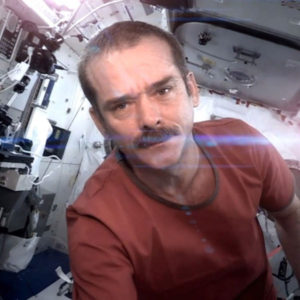


 Become a Patron