




 Unlock with Patreon
About This Episode
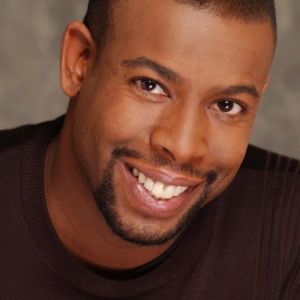
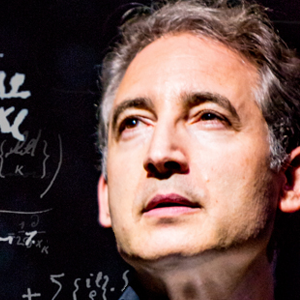
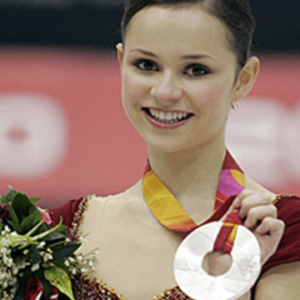
On this episode of StarTalk Radio, we wrap up our StarTalk at BAM – Science is Everywhere presentation. Back in March, the StarTalk Podcast Network presented StarTalk Radio, StarTalk All-Stars, and Playing with Science at the Brooklyn Academy of Music which turned into a night to remember. We pick up this episode where Part 1 left off with our continuation of StarTalk All-Stars featuring host Heather Berlin, co-host Chuck Nice, Neil deGrasse Tyson, and theoretical physicist and author Brian Greene as they explore the brain. In Part 2, the main point of discussion is time. You’ll explore if time is an illusion, and if so, what that means for the human experience. You’ll find out how your perception of time changes when you’re in different “states.” Heather explains how she can alter a person’s perception of time through neuroscientific experiments. After that, we say goodbye to Brian Greene, Chuck takes the hosting seat and we move right into Playing with Science. (Our other PWS co-host, Gary O’Reilly, was unfortunately grounded in London during the time of this show.) But the show must go on, and Chuck welcomed special guest, Olympic silver medalist figure skater Sasha Cohen on stage with Neil and Heather. Sasha and Neil break down the physics of figure skating and you’ll discover if Sasha is aware of the physics while she’s skating. We discuss muscle memory, or procedural memory, and why being too self-aware can cause problems. All that, plus, Neil reminisces about his time as a rink guard, you’ll learn why figure skaters don’t get dizzy, and Neil gives Sasha tips on how to pull off a quint – 5 spins in the air – however, his tips might not necessarily be “legal.”
NOTE: All-Access subscribers can watch or listen to this entire episode commercial-free here: StarTalk at BAM – Science is Everywhere (Part 2).
Transcript
DOWNLOAD SRTWelcome to StarTalk, your place in the universe where science and pop culture collide.
StarTalk begins right now.
Thanks for coming out and giving us your Friday night.
So our next segment is gonna be StarTalk All-Stars, where I take a backseat, and we bring on the host, one of our many talented StarTalk All-Stars, neuroscientist Heather Berlin.
My comedic co-host, the one, the only, Chuck Nice.
And let me introduce a colleague and a friend, one of the smartest people on earth, theoretical physicist, Brian Greene, everybody!
Everybody!
So, let me ask both of you something, because you both have to think about this.
If, since we’re talking about the brain predetermining something you do, you’re talking about the Big Bang predetermining all future events, then is the fact that we experience time, is that itself an illusion?
I’m gonna say yes, time is an illusion, the way we experience it.
Now, I’m not talking from the physics perspective, right?
But the way humans experience time is an illusion, because it’s very easily manipulated.
So for example, in experiments, we can take something called transcranial magnetic stimulation, which is basically-
Transcranial.
Transcranial magnetic stimulation.
You put a magnet and you can kind of zap different parts of the brain and temporarily knock them out.
People let you do this to them?
We do all sorts of things, Neil.
Why do you think I became a neuroscience?
I gotta be honest, I’m kinda up for it.
It’s a lot of fun.
Heather, you describe it with such glee, stick a magnet on their head, okay, and what happens?
One day I’ll bring you into the lab, Neil, it’ll be a lot of fun.
I don’t have magnets in my head?
So, we can manipulate, for example, we have you do an action, like you can press the button whenever you want, kinda like that.
Let me know when you had the intention to do it and then we see when you do it.
And then we zap you just after you do it.
Little magnetic stimulation and then what that does.
It’s harmless.
It’s harmless magnetic stimulation of the brain.
It’s absolutely harmless.
And what it does is we can move back in time your perception of when you had the intention.
We can move forward in time your perception of when you did the action.
Okay.
So, that’s one way we can manipulate time.
You can manipulate time when you’re in various different states of consciousness.
When you have particular types of brain damage, especially to the prefrontal cortex, your perception of time will speed up.
We’re trying to understand what parts of the brain are related to time perception.
And when they’re damaged, your time perception changes.
Or when you have certain psychiatric illnesses.
Even during the creative state, when you’re in that kind of flow state, like when Baba gets into his flow and he’s rapping, I’ve looked at his brain in the scanner and other rappers.
He let you do this.
Why do you think I married him?
Oh, he’s my husband by the way.
Wait, did he know before he married you that…
No, she made him marry her.
They were out at dinner.
She was like, come here, I’m going to put a magnet on you.
Real question is…
Don’t try to dodge this fact, we know.
The real question is did he write a rap about neuroscience because he married a neuroscientist or did he marry a neuroscientist because he wanted to write a rap about neuroscience?
We’ll never know.
I’m going to tell you what I know and no disrespect to Baba or my wife of 20 years, but he married you because you’re hot.
That’s one thing that every man is predetermined on.
He tells me he was more attracted to my brain, but I’ll leave it at that.
And I’m going to tell you, he’s lying.
So anyway, as I was saying, I put him in the scanner.
You put him in the scanner while he’s rapping?
While he’s rapping.
And we actually found a distinct pattern of brain activation where during the improvised state versus when he’s doing a memorized rap, he gets decreased activation of the part of the brain called the dorsolateral prefrontal cortex, which has to do with our sense of self and time and place.
So when you’re in these flow states…
There’s actually a part of the brain called the dorsolateral prefrontal.
Could you make up your mind where this thing is in the head?
I’m kind of with you because it’s like dorsolateral prefrontal.
So exactly where is it?
It’s all around here.
It’s like all over here.
In this exact spot.
It’s right there.
There are a lot of parts to the brain that we need to describe.
I won’t even ask you about your physics terms that you all use.
It’s turned down.
That’s why when people are in this flow state, it feels as if it’s coming through them from someplace else because they lose their sense of agency.
But they also lose their sense of time.
We also know in people, if you knock out with transgranular magnetic stimulation that part of the brain, it will affect their perception of time.
Time is a creation of the brain.
It’s an illusion just like anything else.
The other interesting fact is that people without any brain damage, just healthy people, actually have a slower subjective sense of time than the actual clock time.
So, we’re not very accurate at telling clock time.
So, we have our own kind of internal pace.
When I was a kid, I did a really geeky thing just because I could.
I trained myself to count seconds precisely.
And…
What are you talking about, Neil?
That’s not geeky at all.
And my personal best, my personal best was, I counted 89 seconds when 90 seconds had passed.
And I used to do it with stopwatches.
I almost got an applause for that.
One other…
And so, Brian, I just try to match real time.
But she’s saying it’s like, the brain can be manipulated to think about…
Is there such thing as real time?
I just think it’s an illusion that we experience, but is there actual real time?
Well, from the standpoint of physics, there is a conception of time, because that’s what allows change to occur.
So when people say, from a physics standpoint, that time is an illusion, I don’t really know what they mean.
But it is the case that our experience of time, which you say that you can manipulate, which is quite interesting…
With magnets?
Yeah, exactly.
Our experience of time does not give us insight into the way time actually works.
Because once you learn that time for me is not the same as time for you if we’re in motion or if we’re experiencing different gravitational fields, these are measurable differences between how your watch and my watch will tick off time based upon what we’re doing and where we are.
That’s counterintuitive.
We’ve never experienced that.
It took a genius of Einstein to come along and reveal it.
So I would say that our experience of time gives us a misrepresentation of how time actually behaves, but time is real.
But for every one of us, we are prisoners of the present, eternally transitioning from our past to our future.
Jesus.
That’s deep, man.
We should end the show right now.
You said that, I was like, I guess we’re out of time.
Well, there’s actually, I mean, looking into the future, there might be ways that we can do things now, like implant electrodes in the brain, right, and stimulate certain parts directly.
The more you talk about this, we can plant electrodes in the brain, because the magnet wasn’t good enough.
And to boot, we can control it with remote control.
This is real stuff.
You just, you, you just…
How do we know?
Barbara, you weren’t just off stage controlling Barbara like this, with a remote control.
How do we know?
Why do you think he was so good?
But if we could, and theoretically we could do this in the not too distant future, go in and implant electrode and affect your perception of time such that every moment appears to last an eternity.
It depends on which the moments are, man.
Well, you can fast forward the ones you don’t like.
You can keep the really good ones.
Wait, that was in Black Mirror.
I saw that in Black Mirror.
I was going to say that.
But the question would be, the question would be, would you want that implant?
Would you want that?
Because I happen to think that, you know, having to experience both the good and the bad, but the fact that it’s temporal and that there’s this limit and that it’s our most valuable resource gives life meaning.
But suppose you could find the moments in time where the place is in the brain where you’re most creative and then make that be your biggest, your most sustained experience.
Does creativity map into this conversation?
Yes, when you’re creating, the parts of your brain that are normally active when they’re clicking off time are down regulated when you’re in that creative flow state.
So people, time doesn’t seem to exist.
Self doesn’t seem to exist.
It’s a very pleasurable state.
People strive to get there.
I bet Brian and I could agree on this.
When you’re cranking out some equation, you forego personal hygiene.
You don’t know that you’re hungry.
You don’t know because, you don’t know how much time has elapsed.
And you almost feel like…
Brian, do you agree?
But you also feel, it feels as if you’re tapping into something greater, as if you are outside of something greater than yourself, because your sense of self is churned down.
So in those moments, I would argue that we feel eternal, in a sense, because time is not existing.
And it is very pleasurable.
But do you want to be in that state all the time?
I think it would be meaningless.
Do we have control over it?
If you had control, yeah, you can, potentially, yeah, we can give you control.
She wasn’t very sure about that part.
All I know is this, I am never coming to your lab, because you’re like a real life version of Get Out.
Come on in.
Anyway, I would argue that our sense of time is what gives us meaning.
There are some patients who get lesions where they are just literally living in the moment.
They cannot see the future and they cannot think of the past.
There’s someone who has a certain type of brain damage.
So the prisoners of the present without vision.
Right, because you say we’re prisoners of the present.
I say we’re not prisoners of the present, because we can see into the future and the past.
There are true people who…
There’s a man who has a certain type of brain damage where every minute he keeps a diary and he just keeps writing, I am now just conscious for the very first time.
Right now I’m just conscious for the first time.
Now I’m just awake the first time.
And it’s just each minute because he has no vision.
He can’t look in the future and he can’t see the past.
It’s only the now.
Which magnet made that happen?
No, that was the type of brain damage.
And can I borrow some money from him?
Wait, one interesting thing of that story though, just to give it meaning, he had damage to his hippocampus, which is involved in memory.
There’s an episode of Family Guy called Big Man on the Hippocampus, by the way.
Really?
I’ve never seen it.
I know it because I was in that episode.
You were the big man?
You were the big man on the hippocampus?
No, no, no.
The thing that remains stable though, is every time his wife would come to visit him, and this was over the course of years, he would recognize her, and see her like it’s the first time he’s seeing her in a million years, and say, oh, it’s so good to see you, I’m so happy to see you, whatever.
And that lasted for years and years, and that was the only thing that remained constant.
And the other thing was that he was a professional pianist, and whenever he’d get in front of the piano, and get into this mode, he could actually just play a whole piece.
Now, was he aware that his wife was putting magnets on his hair?
If only.
But the one thing is this, we control the electrodes right now.
The question is, can you control them yourself?
That’s why I hesitate.
We haven’t got to that point yet, because you don’t want people going home and just zinging themselves.
But when we get to that point, then I’ll give you a call.
So, Heather, we’re about to lose Brian out of this segment before we go to our sports segment.
Forever, she says.
So, Brian, do you have any sort of concluding reflective thoughts?
No.
And he freely said that.
So, Brian, I like, was it Einstein or John Wheeler who said of time, time is invented to make motion look simple.
I hear Wheeler said time was invented so that everything doesn’t happen at the same moment.
Oh.
You can spread it out.
And Einstein said that the distinction between past, present and future is only an illusion, however persistent.
And on that I’ll leave.
Thank you very much.
Bryan Green everybody.
Thank you.
And for those of you who are uninitiated, Playing With Science is a sports science mashup where Neil likes to say where jocks and geeks collide.
And I like to say without any concussions by the geeks, because when jocks and geeks collide, only one person suffers in that collision.
One person walks away, the other one does not.
And normally we do this-
By the way, in high school, I was a geek jock.
A geek jock?
Yeah.
Yes.
Yeah, you were a wrestler.
Yeah, yeah.
So, but intellectually I associated with the geek-iverse, but anytime I saw a geek sort of get beaten up or bullied, that was my sort of superhero.
I would like, the geeks need me.
And I would go and I would just, you know.
So I felt this urge to protect the geekosphere as a high school kid.
What’s the superhero name for that?
I don’t know.
I don’t know, but it needs one.
Yeah, yeah, I feel like that.
I believe it’s the Tysonator.
Well, that’s very cool, man.
So who do you have?
So, but before we get into our guest, who is just so, so, so awesome.
I actually, I’m going to use a different word, who is such a superb guest.
He said that because anytime I hear him say awesome, he said it would be awesome if you could pass the salt.
And I would say, when I grew up, the word awesome would apply to curing polio, walking on the moon.
And there’s a next generation that has no concept of how to use that word.
And I blame the Lego movie.
You didn’t see it.
Okay, let me just say, first of all, I can’t tell you how long I’ve been waiting to do that on stage.
But normally this show is co-hosted with Gary O’Reilly, who is a former professional soccer player and the co-host of Playing with Science.
And he is currently a broadcaster and he resides in the UK.
Unfortunately, his flight was cancelled and so he could not be here.
It was snowing in the UK.
It was snowing in the UK.
No, it was snowing here.
And unfortunately, he could not be here.
But he is listening right now, not right now, but he will be listening to this broadcast.
So if we could all give a round of applause to Gary O’Reilly.
And so what we do here is we explore the science of sport.
And to help us do that today, we have an incredible guest who is a former Olympic silver medalist.
And she is five time world champion medalist.
Please welcome the incredible Sasha Cohen.
Chuck, what did she get her medals in?
Oh, thank you, Neil.
The truth is that I took it for granted that everybody would know because you’re Sasha Cohen.
Sasha, of course, is a figure skater.
And a damn good one.
And not just a figure skater, you’re also an incredible ballerina and gymnast.
All of those things rolled in and then strap skates on and do it all.
Exactly.
I started in gymnastics.
I wanted to take hip hop.
My mom directed me towards ballet for skating.
That’s because she wants you to have a job.
Hey, what are you talking about?
What’s wrong with hip hop?
What?
Don’t worry.
Your husband is still my favorite white rapper.
White science rapper.
So that was how I got started.
I started in gymnastics because I was basically a bundle of energy and I destroyed the house.
And they’re like, how can we calm you down?
So I got put into gymnastics for about three hours a day, every day.
And when I was five years old, I was doing like hundreds of jumping jacks, push ups, V-ups.
And when I got home, I was a very well behaved child.
V-up.
Is that this here?
Are you going to show me?
Oh, this?
Is that a V-up?
Do I have to show you?
So you’re basically like this and you’re going up like that.
That’s a V-up.
That’s very impressive.
I got to tell you, right?
You know what?
I’m good.
It exists in the space-time continuum.
Just leave it there.
So we, of course, have Heather Berlin here, Dr.
Heather Berlin, who is going to break down the neuroscience because there’s a lot of neuroscience that goes into pretty much every athlete, correct?
Yeah.
Like, when you talk about the brain and the discipline and the…
They call it muscle memory, but it really isn’t muscle memory, right?
It’s actually called procedural memory.
So basically, when you’re first learning, and you’ll probably have had this experience, the moves or whatever, maybe you have to really focus and you’re using parts of your prefrontal cortex.
You need conscious focus, even learning to tie a shoelace for the first time.
And then over time, over repetition and discipline to do it all those many times, it starts to become implicit or unconscious.
And it moves into the basal ganglia, which is the sort of subcortical part of the brain.
And it becomes this procedural memory or muscle memory.
Which is what we call muscle memory.
Yeah.
And it’s like riding a bike.
And then once you get it into that implicit state, if you become too self-aware of what you’re doing, like, oh, exactly how should I hit that tennis ball or do that, it will mess up your flow.
So I imagine that you practice it so much that when you go into a routine, you’re almost going on autopilot, right?
You want to get to that point at which your body knows what it’s doing and you don’t have to think about it because the thinking messes it up.
Because Yogi Berra said that baseball is 90…
90% of the game is half mental.
I love it.
So here’s a fun little fact.
Can we let Sasha speak at some point in this conversation?
Absolutely.
I’m just here for show.
No, it’s true and I think that’s where a lot of elite athletes get in trouble.
And it’s happened to me on several occasions is where you train your body, you’re something over and over and over.
But then you have this one moment and you’re like, I can’t leave it to chance.
And so you get your mind involved because you also have days that you’re only practicing an hour a day once you’re at competition and then you’re just thinking about it over and over and this one moment arrives.
And it’s very hard to put away the monkey mind because it really wants to be there to help you.
But it’s like too many cooks in the kitchen.
Exactly.
And when you turn down that part of the dorsolateral premonocortex that’s making you self-aware.
And that’s the inner critic and oh my God, what should I do?
And then if you can manage to turn that down and just enter into the flow state and lose yourself, that’s when you really perform at your best.
Exactly.
You better watch Heather.
She’ll tell you to sink it to the ice.
So, Neil, you, yesterday actually, I heard you talking to somebody at another thing we were doing when you were saying that you skate or you did something at the ice rink where you wore figure skates.
What didn’t you do?
What haven’t you done?
No, I spent the time in high school as a rink guard.
But not with hockey skates.
Not with hockey skates.
I wore figure skates.
Which is very unusual.
Yeah, yeah.
The rink guard is like a little more aggressive with hockey skates, but I had figure skates.
Yeah, I had on figure skates.
Now, I’m just trying to figure this out, and maybe you can tell me.
Because that toe pick can hurt you.
That’s why you had it.
You ever see figure skates?
There’s like teeth in the front of figure skates.
And so, yeah.
And there were some thugs who came on who were like hockey thugs.
Who knew figure skating was so tough?
They were like, you know, beefy, thuggy guys.
And rather than fight them, I just challenged them to a race from one end of the ice to the other, and everyone parted ways.
And they’re having hockey skates.
So they got to like press their feet left and right to go forward.
I had a figure skater.
I just went up on my toes and just ran.
So then they shut up after that.
So I deeply appreciate your craft.
We’ll have to do the next episode on the rink.
We’ll race.
Oh, yeah.
Meet me outside on the rink with figure skates on.
In a tutu.
Are you aware of the physics that…
Because they call figure skating physics on ice.
There’s so much to it.
Are you aware of the physics when you’re skating?
Or are you aware of it at all?
I think you are aware of it, but you don’t think of it in terms of physics.
The way that you define it is this hyper body awareness.
You can feel when you take off for a jump if you don’t have enough speed.
If you slightly throw your shoulder too much and you can feel in the air that you’re off-kilter and that you’re going to go down hard.
You also know that if you’re doing a single, a double, a triple or a quad, exactly how much torque you have to put in when you leave the ice.
Because that is what determines like how fast you will rotate and if you’ll be able to complete, you know, a certain number of rotations up in the air.
So torque is a force that sets something into rotation.
And otherwise it’s just a force giving acceleration to an object.
So you have force that goes in a straight line and then you have torque, which is a force turning something.
So yeah, so there you are.
It’s a force you are putting between your body, your skate and the ice so that you can rotate.
To launch it, like to begin it.
And the same with spinning.
And that’s something, you know, you’ll kind of go into a spin slow and then you’ll glide in and you’ll ride the edge and then you’ll take the right side of your body and you’ll like, you’ll snap it to begin the spin.
And then you’ll use your arms and legs to increase your speed or slow it down.
Oh my God.
So, all right, so…
I’m learning how to physics skate.
Okay, so it’s physics skate.
You just invent that word.
I did.
Physics skate.
So here’s what I would love to do.
For those of you who are listening and do not have the benefit of visual because everybody is here, if you could stand up and just show us the actual…
But you have to talk it through because people are listening at home.
If you could show us the physicality of what happens when you’re doing that motion.
And then Neil, if you can break down exactly what’s happening from a physical standpoint, I think that would be really cool.
I’m making this up as I go along.
Wait, wait.
So Chuck, Wait, wait, wait.
So we can pretend like we’re the Olympic announcers.
Sasha Cohen.
And this is what she’s doing.
This is what she’s doing.
So Sasha Cohen, she’s wearing high heels at this moment.
I’ve not done it this way before.
So what happened?
So there’s two instances, right?
There’s a jump and a spin.
And I feel like everyone, if anyone’s watched any figure skating, is somewhat aware of the difference.
One you leave the ice and one you don’t.
The jump, you leave the ice.
I’m keeping up.
So for instance, I will start with a sow cow.
And so it’s something where you’re going to take off backwards and you’re going to be gliding on the inside edge of your left foot.
And you’re going to determine how much speed you want to get going in.
So I’ll be doing crossovers and running and running and going fast.
Building your speed.
Right.
And then people have different entrances.
But say like when I, many, many, many years ago, I did a quad sow cow and I wanted to get extra torque.
So I would do a turn ahead and then I would set myself here.
And then I would use the edge gliding backwards, the right side of my body.
And I would dig in with my left foot into the ice and whip this up.
And that’s what would initiate the momentum.
And I would leave the ice, push off this topic, and then immediately snap the weight over my right side.
And based on how much I followed through with my right arm and right leg and push down with my left would determine how fast I would spin and if it would be a single jump, a double jump, a triple jump, or a quad.
Wait, can I ask you a question then?
The way you just broke it down was a very logical, conscious whatever.
But when you’re actually doing that, you’re not thinking all those things, are you?
Are you feeling them?
You feel it.
You feel it.
So I think I’m explaining exactly what I feel.
But it’s like you’re very fine-tuned and you know exactly how much speed you need and you know how much speed is too much that you’ll lose control.
It could turn out great, but you have to get lucky because basically speed magnifies anything.
It helps you get more height and more torque.
But if you are one millimeter off in any direction and you have extra speed, you’re going to go down really hard or your alignment won’t be quite right.
So people are a little tentative with speed because you can go up in flames.
It’s like putting leverage on your house.
It can work out really well or you can go bust.
No leverage.
Sasha, you gave a brilliant description of how you give yourself rotational inertia.
We haven’t even gotten to the spin.
However, you didn’t…
In physics, you generally break things apart into components.
You put them all together for the one thing.
I break this apart.
You told me how you gain spin.
If you’re going to do a quad, you have to be airborne long enough to complete the quad before you hit the ground.
Yes.
That’s part of it.
You’ll notice if you’ve watched figure skating this past Olympics, you will see some people barely get off the ice and they can do three turns.
Some people get this high up and they don’t complete it.
Two or three feet off the ice.
It really is the rotation of spin.
It’s how fast you launch yourself up.
Then obviously it goes into what’s your body type.
Do you have wide hips?
How fast are you spinning?
And that’s why men rotate faster and generally do a lot more quads than women do.
They spin faster.
They’ve got narrower hips.
But, you know, women are more flexible.
So we’ve got better spiral sequences.
How many women have done quads?
You know, a couple have done it in practice.
And I feel like maybe like one or two have done it in competition.
And you’ve done a quad?
I have.
A long time ago.
Thankfully, YouTube exists and it will always live there.
I’ll be like, wow, I used to do that.
Now I just sit.
So people must have freaked out.
I mean, did the announcer lose his shit?
I mean, it was an exciting moment because, you know, people can see when you get really close or you double footed or you step out, but when you actually do it and you kind of you come down from four turns and you have to have tremendous amount of strength and balance to catch yourself when you come down, get out.
And so it’s this moment where it’s like, oh, she can do it.
She can do it.
And you have it.
And it’s very exciting.
It was exciting.
Well, you just do it.
So there’s the launch and the landing that both matter.
So when I train, you know, you’d work on explosive muscles for bounce and then you would also I would jump down off of boxes this high in order to kind of learn how to absorb all that pressure and momentum coming down.
And you do that with the skates on?
Off ice training, I do it without skates.
And then on the ice with skates.
Well, that would mean.
Thanks Sasha.
But then let me get to a spin, because the spin is very different.
Because you’re not launching yourself out.
It’s not fractions of a second.
It’s a spin can be 30 seconds, it can be a minute, and you basically, you’ll see most people wind backwards, and they’re creating this, it’s all about torque in the body, and this is why I realize I’m a terrible skier, because it’s the opposite.
So they’re winding the spring.
You’re winding, right?
And so my hips are going to the left, and my shoulders are going to the right.
A lot of abs, a lot of abs.
Core work.
Yes.
And then, so then you step in, and you ride this outside edge, and then again, you do the same whip momentum for a jump, except you don’t take off, and then you spin.
Generally, if I wasn’t in heels, I could do more spins.
And then once you’re there, you’ll keep this momentum, and then as I would bring in my arms and my legs, I can just insanely increase the speed of my spin.
And likewise, if all of a sudden I wanted to slow it down, I would just open up, and you would see the rotations just kind of almost stop.
And so in that way, I was aware of physics, but for figure skaters, we would think about it more in terms of like body awareness, of where your hips are, what torque you need.
Plus you have to look good doing it.
Yes.
Right, because you’re being judged.
And what color you look good in.
Right, right, there are other dimensions of the analysis, of the rank, of the scores.
Exactly.
Right, right.
So you actually, yes, can you tell us what is happening when she does that?
Oh, the physics, yeah, yeah, so if you, I’m gonna take my shoes off.
Wait a minute.
For those of you listening, Neil is taking off his shoes.
All I can tell you is this.
Prince Charming is never coming back.
So, in physics, here’s the deal.
So, if you set yourself rotating, all right.
So, I’ll do that right now, okay.
So, here I am rotating, okay.
So, that’s at a speed.
Wait, don’t applaud yet.
You don’t know what’s about to come.
So.
So, you just spun around.
So, you can calculate how much angular.
So, in physics, you might remember from your physics class if you had it or you were.
So, everything that happens in a straight line, you can think of in a rotation.
So, there’s a force.
The rotational counterpart is torque.
There is mass.
The rotational counterpart is moment of inertia.
There is…
You also have momentum.
And the rotational counterpart is just angular momentum.
So, here’s the thing.
Once you start rotating, your angular momentum is constant.
Okay?
It’s constant.
So, if I start spinning, and you calculate the angular momentum by…
Okay, here it is.
It is the mass of whatever your body is.
Which in this case would be the biggest figure skater ever.
Here’s the point.
So, your hands have a certain mass.
And they’re rotating out at this distance.
So, you have part of your body mass away from your axis of rotation.
Okay, so you can calculate how much angular momentum that is.
Now watch.
If I bring any part of my body closer to my axis of rotation, then one of the terms in your angular momentum drops.
So, what happens is the distance to your axis of rotation drops.
But your angular momentum stays the same, so something has to increase.
Because when you multiply these two numbers, you have to get the same answer every time.
Okay?
So, if I start changing the distance of the mass of my body to my axis, and I make it smaller, I have to spin up.
Nice.
So, there you have…
Allow me?
Yes.
Yes, may I?
Okay.
So, I will spin and then…
Okay.
And just like she said, because what she needs…
Right?
So, you are spinning, you speed up, but then you can stop it by just putting your mass back out.
So, here is my proposal to you.
Okay.
So, I don’t know if this is legal.
Here.
So, put your arms out.
So, you are my skating physics demo in this moment.
So, you have a certain amount of mass coming out here.
All right?
So.
So, wait for those listening.
Right now, Sasha has her arms spread apart.
Spread apart.
Yes.
And in a T formation.
And go ahead.
Exactly.
So, there is a certain amount of mass along your arm and in your hands.
And you also showed earlier when you start to spin, you might start with your leg out.
Okay?
And then when you bring your leg closer in towards your axis of rotation, you start spinning faster.
And okay.
So, we got this.
Oh, I like you.
This is an infinity on your wrist.
Very cool.
Because it’s an infinity tattoo.
Yes, that is an infinity tattoo.
Sorry, I didn’t mean it.
So, here’s my suggestion.
I don’t know if it’s legal.
Next time you do this, I think you can do a quint.
Is there such a word?
There is such a word.
Good.
Quint.
Five turns.
Now, how would you do that?
I’m going to say you get some lead weight to put in your hand.
Tom Brady all over again.
Tom Brady of ice skating.
So, when you start spinning with lead weights in your hand, even if you’re spinning at the same speed that you once were, you have more mass farther away from your rotation axis, so that as you then bring the more mass in, you will spin faster.
And I don’t know, people will notice if you’re grabbing something, holding on to something.
As you skate around the rink with two kettlebells in your hand.
Just get really heavy rings.
No, you can get a wrist bracelet and lead-infused the wrist bracelet, and it’s just your jewelry.
And meanwhile, I build up huge arms.
So, what I’m saying is, if you did that, the same gestures, you will spin faster.
And you’ll have to land, you have to figure out the landing.
But once you go-
I’m going to throw this back to you.
What’s that?
For spinning, this would absolutely work, and it would give me more torque and momentum when I spin.
Yes.
But, I think the extra weight would not allow me to get up as high in the air.
And so, even if I got extra torque when I pulled in, I would still not be able to rotate as many times.
You need to work on this.
You need to work on this.
You have to think about that.
It’s a good thing to think about.
You have to think about that.
So, this is one of the interesting physics problems where there are two variables competing with one another, and you don’t know if one is more powerful than the other, or where they meet to get the best combination of both.
And that’s where you get more interesting complex problems in physics and in life.
I have a neuroscience problem here that I can address.
Why don’t you get dizzy when doing all of these things?
Oh, yeah!
What’s up with that?
So, I have an explanation for that.
Yeah, you know, Chuck, if we did that, we’d be like, you know.
Because they’re going around and around and around.
Dizzy right now.
So, there’s actually a neuroscientific explanation for that question.
So, it’s interesting for jumping, you know, it happens in a fraction of a second and you don’t get dizzy.
It’s just very quick.
But spinning is something where ballet and skating really diverge.
You know, if you’re a ballerina, you’re spotting, you know, like to the edge of the room.
And that’s how you’re keeping, you know, your awareness.
And by spotting, you mean you pick a spot, you turn your head very quickly back to that spot.
And you like, you turn.
That prevents you from getting dizzy?
For ballet.
For ballet.
This is what ballerinas do.
They always spot.
But for figure skaters, you’re spinning so fast and you’re not doing just like kind of one, one, one.
You’re literally doing, I don’t know, like 50 turns.
And you, the trick is you have to stay in the same center.
So about like one to two blade lengths.
And I don’t know, I think it’s like something to do with your inner ear that if you’re not traveling and you’re kind of, you’re staying in the same spot, even though you’re spinning, you don’t get dizzy.
But from personal experience, when you do a spin, and you do a bad spin, which you get a deduction for, and you’re traveling, so you kind of start here and I end up off stage.
That would be bad.
You get out of the spin and it’s like a cartoon where you see the stars and you’re just like, what?
Where am I?
And so that’s why they teach you have your center and don’t travel.
So explain that inner ear to me in like neuroscience terms.
So your inner ear consists of these three like fluid filled tubes, right?
And each one is at a different orientation.
So it’s meant to be sensitive to a different orientation.
Let’s say if your head goes up and yes, like this or no, or side to side.
And within those three dimensions, three dimensions, and they’re represented within your inner ear and these little canal, these tubes.
And within each of these fluid filled tubes are these little hairs that are like sensing.
It’s almost like seaweed at the bottom of the ocean.
So when you move, it senses and sends signals to your brain.
So if you think about if you’re in a chair, let’s say spinning and you’re holding a bottle of water and you’re spinning in this swivel chair and then you stop, the water is going to keep going, right?
Because it builds up momentum.
And the same thing is happening in your inner ear.
So it’s telling your brain you’re still moving.
That’s why people get dizzy.
And also there’s…
Well, that’s why when you stop spinning, you fall over because you can’t keep your balance because your brain didn’t figure out that you stopped spinning.
It thinks you’re still moving.
But then there’s also information.
So there’s information coming to your brain from…
But your muscles are telling you stuff as well.
There’s proprioceptive input and there’s also visual input, right?
Giving you information.
What kind of input was the muscle input?
Proprioceptive.
Pro…
Proprioceptive.
Proprioceptive.
Like proprioception.
Yeah, proprioceptive.
I’ve heard that one before.
It’s here.
We good now?
We good.
It’s signals that tell your bodies its awareness in space.
So your brain is getting that information from your muscles and your joints.
The inner ear is telling you you’re still moving and your eyes are giving you information.
So that’s why they often say, and tell me if they say this to you, when you come out of the spin, different than ballerinas who focus each time they make a turn, but you then are told to focus at a specific point, because you want to have your eyes telling your brain, counteracting what your inner ear is telling it, that it’s still moving, that you’re not moving any longer.
And also what you do, I’m sure, is you practice off ice, just spinning, so that your brain can habituate.
So it’s not so much that you’re spinning in one place versus moving, although the movement is going to cause it to be more confusing because there’s moving in different directions, so it’ll be less of a movement if you’re in one space.
But that’s not what I think is happening.
I think you habituate because you practice, right?
So your brain just becomes acclimated to spinning.
It’s only so much though, right?
Because it’s still a physiologic effect, right?
So what you’ll see figure skaters do is they’ll spin very fast and then they’ll slow down.
And they slow down, they’re kind of getting their bearings, you know?
And they’re readjusting it.
So you’re kind of easing yourself out of it.
Exactly.
And then there’s like a trick move that you do is you spin really, really, really fast, and then you stop, and then you give it to the music.
It’s like, bam, and then you give yourself like a second, and then you’re like, oh, you built in.
You know, we have these like these breathers.
Sasha, is it true that your fastest spin in any performance is the spin you end on?
So you don’t have to be graceful and balancey after that.
It’s true.
People generally do.
They’re more strenuous, like wham, bam, hit every position.
It’s like very dramatic at the very end.
Also because it takes up a lot of energy and you want to get your jumping passes in earlier.
Although you’re seeing that change now a lot with the new judging system, where you’re getting rewarded and getting more points if you jump after the halfway mark.
But generally, you want to end on a big note.
And so people will do combination spins where you hit like six different positions.
You’re in a camel, you’re in a sit spin, you’re in a layback, and then you’re on the other foot and your legs up.
So there’s a lot going on.
It’s like a fireworks.
Put them all up there.
Smell her face.
Everything you got.
Throw it at the end.
Exactly.
So Heather, let me ask you this, because we are almost out of time.
Why is it that from a neurological standpoint, that that is our first kind of foray into getting high?
You see children spin around, spin around, and then they’re just like, oh, I am, I am messed up, man, like, what is happening there?
Well, a lot of what drugs do is they kind of play with your senses, right?
So normally we have input coming in from our senses and our brain is organizing in a certain way.
But when you kind of mess with your senses and the way the brain is interpreting them, that’s also what drugs tend to do.
And it feels interesting because it’s a different brain state, you know, and it’s not just your inner ear, by the way, those inner ear, that information goes to that little brain in the back of your brain, the cerebellum, right?
It’s right in the back of your neck.
And what’s interesting is that that has two times as many neurons as your entire brain, right?
Two times as many neurons.
So twice.
Yeah, twice.
It’s two, two, two times as many morons, but it’s unconscious.
OK, and people who have complete damage to the cerebellum, they are still fully conscious and aware.
I mean, they might have less coordination.
They can’t do triple axles and things, but they’re fully conscious and aware.
So we only need basically one third of our neurons to have conscious awareness.
But it’s interesting how much goes into that ability to have balance.
And so I think the reason why it feels good is that we like different sensations.
We like to be outside of our normal, even dream states or creative states or daydreaming.
When we’re not in that normal state where the prefrontal cortex is on and everything’s working properly, it’s fun.
It’s interesting.
That’s why we like to go on roller coasters or rides that make us feel weird.
So Sasha, when you’re performing, you’re in an altered mental state, according to this.
Maybe that’s why I became a figure skater.
It’s like the world is going to be too much.
I need to skate for 20 years.
That’s why you drink before competitions.
That is it for playing with science.
Please give it up for Dr.
Heather Berlin, Olympic medalist Sasha Cohen, the inevitable Dr.
Neil deGrasse Tyson.
I’ve been your host for a quick playing with science.
Also, please give it up for Gary O’Reilly, who is not here.
And our catchphrase is this, if you play with fire, you get burned.
You play with science, you get learned.
Get home safely.
Have a good night, everybody.

 Become a Patron