


 Unlock with Patreon
About This Episode
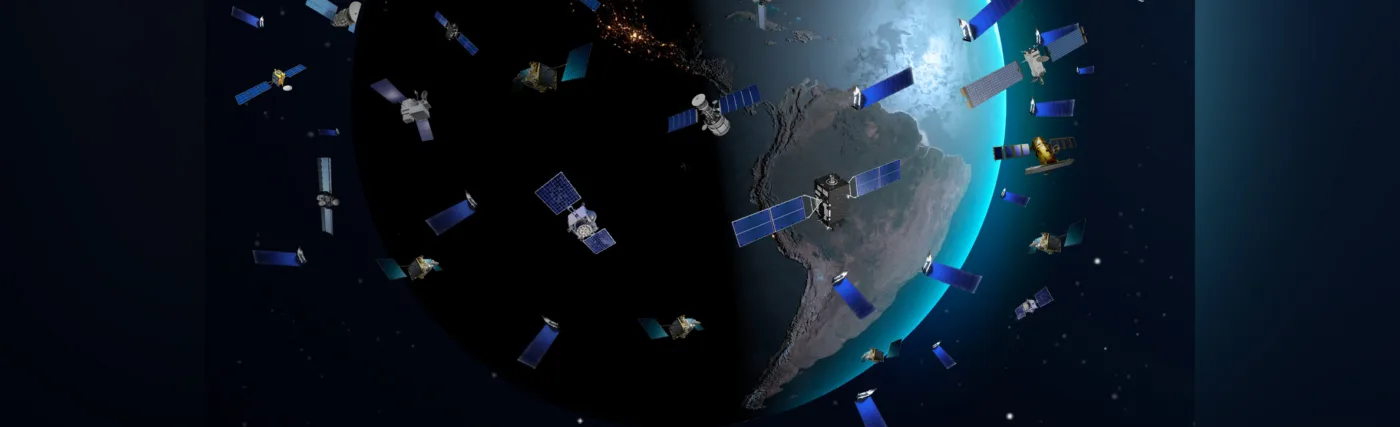
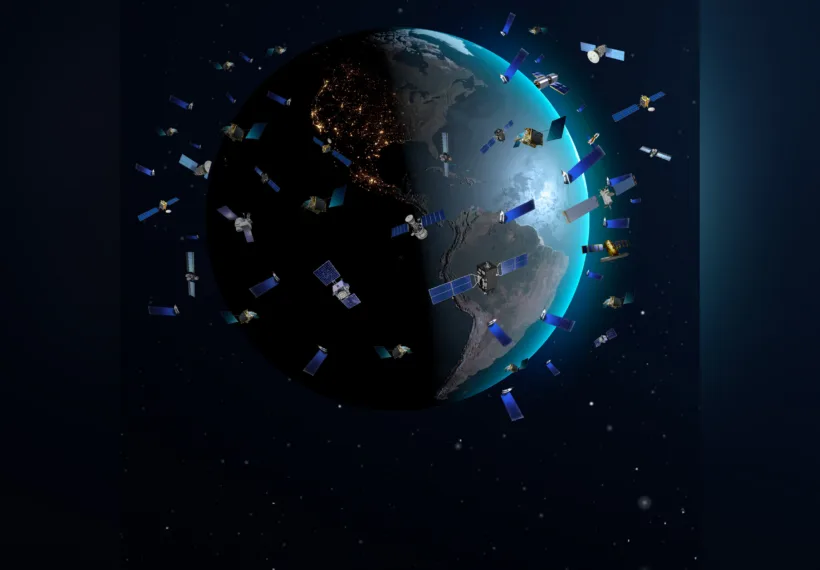
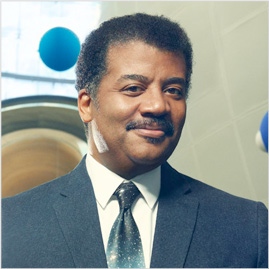
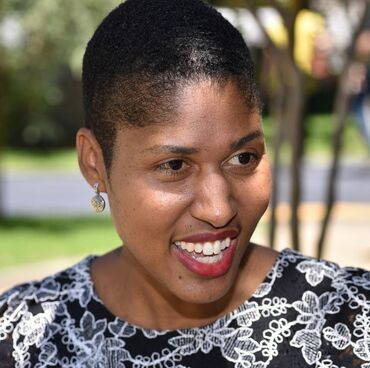
How can we keep space safe? On this episode, Neil deGrasse Tyson and comic-environmentalist co-host Matt Winning learn about the space industry and how we can keep debris out of orbit with aerospace engineers Jenna Tiwana and Danielle Wood, with words from Apple co-founder, Steve Wozniak.
This episode was filmed live at the Summit for Space Sustainability in London in partnership with Privateer Space x Omega.
Discover the exponential growth of the space industry and what “space sustainability” means. Are the countless launches to space growing out of control? We discuss needed regulation in order to keep space safe and operational. When did space sustainability start? Why do countries even want space programs?
Should we be allowed to dump things on the moon? Could we put a recycling facility there? We talk about making sure Indiginous cultures have a seat at the table when making decisions about the moon. Learn about Eugene Shoemaker and his burial on the moon. Should more people be allowed to be buried there? Where does Neil want to be buried?
How high in demand will lagrange points be? Learn about these magic points in space and what sort of facilities we could operate in a lagrange point. Find out about other objects in our orbit, how to deorbit safely, and the number one step we can take to decrease space debris. What is the Kessler effect? Matt tells us about his favorite Gerard Butler movie and what sort of regulations we need to help guide the space industry. Should we build upon the current outer space treaty? All of that, and the lessons we have learned from sustainability questions on Earth that we can take with us to space.
Thanks to our Patrons Sub Zero, Maury, Harrison Wilcox, Jim Langner, and JAYME HATTERSLEY for supporting us this week.
NOTE: StarTalk+ Patrons can watch or listen to this entire episode commercial-free.
Transcript
DOWNLOAD SRTWelcome to StarTalk, your place in the universe, where science and pop culture collide.
StarTalk begins right now.
Welcome to StarTalk, recording live at the Summit for Space Sustainability in London.
It’s an entire program devoted to space sustainability.
And I can’t do this on my own.
I got to bring in a co-host who’s part of the DNA of StarTalk, a professional stand-up comedian.
And who do we have here?
Matt Winning.
Yeah.
Pleasure to be with you here.
It’s good to be in London, a city that you can’t ever see any stars in.
So I’ve missed most of them my entire life.
All right.
So Matt is not only a professional stand-up comedian from Scotland.
Yeah.
He’s also an expert on environmental causes.
Environmental causes.
And in fact, let me get your full CV description.
Now, you were an environmental research fellow at the University College London.
And if you’ve written a book on the subject, Hot Mess, What on earth can we do about climate change?
That is the name of the book.
It’s a comedy book.
And you birthed this during COVID?
I did.
I sat in a room for a year while I had a baby.
I don’t know if you’ve heard of them.
I had a baby and there was COVID, so I couldn’t leave the house.
And I sat in a room and wrote a book about, I think the world’s first comedy book about climate change.
All right.
We’ll find out where that goes in a moment.
But let me introduce our aerospace engineer panelist.
All right.
Up first, we’ve got Jenna Tiwana.
So you have an aerospace engineer background, but also some business chops, right?
So this is with iSpace, a Japanese company.
Yeah.
iSpace is a lunar exploration company.
Headquartered in Tokyo but has European and American offices.
And really, we have a view to connect the moon and the earth as an ecosystem.
And I will leave it at that for now.
I’m loving it.
Loving it there.
We’ll come back to you.
And we also have Danielle Wood, an aerospace engineer from MIT.
Danielle, welcome.
Yes.
Pleasure to be here with you.
Assistant professor of aerospace engineering at MIT, and also director of MIT’s Space Enabled Program.
And we’ll also thank our sponsors, Privateer Space, and also, of course, Omega Watches.
Some of you might not know that Omega was the first watch on the moon in the Apollo program.
And they earned that spot.
They did an experiment where they bought all the fancy, expensive Swiss watches, put them in a black box, and shake them and bake them and accelerated them and checked in on the end.
They opened the boxes to see who still kept time and Omega did it best.
So, as I understand it, Omega earned that place in the history of space exploration.
We thank them publicly for this.
So, yes.
So, I’d like to begin this program with a five-minute clip of a conversation I had with Steve Wozniak.
Okay, you’ve heard of him.
He, of course, co-founded a company that they were going to make oranges and then they changed it.
Instead, they started making apples.
So, Steve Wozniak and Steve Jobs, co-founders of Apple Computer.
So, why do I have this conversation with Steve Wozniak?
Because he’s active in this space.
See what I did there?
He cares about space sustainability.
And in fact, he’s one of the founding members of Privateer.
So, let’s join us in that clip.
Woz, you’re engaged in this enterprise called Privateer, which is all about space.
But when people think about space, we think, okay, what rocket are you launching?
And is it going to be suborbital or orbital?
Are you going to go to Mars?
Are you going to terraform?
And none of that is in your portfolio.
So, could you please explain to me, what are you doing in space that no one else is doing?
First of all, I, like yourself, get a dozen pitches a day, join our operation, our company, lend your name to it.
Whatever.
And it’s just, I’m only one person.
I do not live in a big, like, kind of, I have a team world and all that.
I’m a company.
So, I take on very, very few of these.
And this one was one I took on largely because of my total most respect for my best friend, Alex Fielding, our CEO.
What we started up for was based around Alex, myself, and Moriba Jha, a professor at UT Austin.
He has been an environmentalist about space.
And he has been so concerned about, you know, what’s going on and where we’re going in space, and especially this idea of junk.
And we want to be starting out.
It’s like, you’ve got to know what’s there before you can deal with anything.
And we want to be a good mapping organization.
But we want more than that, we want to form standards and interoperate with other people that have satellites up in space, that have good useful information for those of us on Earth.
And we want to share it and sort of have the standard ways of representing where things are.
And first of all, you’ve got to know where things are to avoid collisions.
Is what you’re doing then creating a landscape, I realize you should call it a space scape.
Am I allowed?
Does that word exist yet?
The natural evolution of a landscape would be a space scape.
You’re creating a space scape on which future participants in space can make intelligent decisions collaboratively, if necessary, so that everyone can play in the same sandbox.
That’s a very good way to say it.
Yes, exactly.
Well, this word sustainability, which is a buzzword today in so many sectors, we’ve never heard it used before with regard to space.
Could you tell me what that means in space?
Well, things are growing out of control, out of regulation, and what’s going up is growing exponentially.
The number of launches, the number of things that we’re putting up in, especially near orbit, near Earth orbit, and we just want to have an environment where it doesn’t become too dangerous to launch the satellites that are so key to our humanness.
Well, in some ways, it’s kind of a happy problem to have because it’s saying, I mean, when you consider 60 years ago, there was one satellite in orbit or two, and now we have countless thousands, countable thousands.
But the fact that within 60 years is like…
Neil, look what we got from that.
Look what we got from that.
All of Silicon Valley.
I was fortunate to live there.
And we had a space race going on.
And the space race, Lockheed Martin moved into Sunnyvale, and Intel started up in Santa Clara.
And the need for chips, every gram, cost so much money to launch into space back in those days that, oh my gosh, if you could make six transistors on one little piece of Silicon instead of one piece, six times less the weight.
And so a lot of great things that humans have now, including our entire digital world, really grew out of that effort to basically get into space.
Yeah, Woz, that’s a very underappreciated fact about modern technology and how, you know, if it only ever stayed in your living room, why make it any smaller than the furniture that was your radio from the 1930s?
If someone says, I want to put this technology in space, oh my gosh, Silicon Valley, get to work.
Well, I’m delighted to learn not only about Privateer, but that you and your ambitions and your following, which is huge and your legacy are all being offered to this mission statement.
And you are here at the beginning of something that I’d like to think will be properly regulated going forward so that space won’t be a scary place to visit.
It should be a delight.
As for myself, I would not risk my legacy of doing a lot of good things, you know, in my life, would not risk it on, you know, a company that wasn’t thinking the same way.
Danielle, let me come straight to you, given your professional profile.
What does sustainability mean to you?
Because we know, at least from terrestrial sustainability with the environment, that everyone has a sort of different sense of what that means.
So I just want to make sure we don’t have to be on the same page, but maybe we’re all in the same book.
So what are the pages in this playbook of sustainability?
Thanks so much, Neil.
We are in an important era in human relationship to space.
Humans are having an ability now to use technology in a way that’s letting us influence what happens in the space environment in ways we’ve never seen before.
Part of that is the number of physical objects we put in space.
And part of it is the way we change the environment, whether it’s in orbit around the Earth or on the Moon.
So you can think about it historically and think about the number of objects we put in space and also what happens at the end of the mission of a satellite.
My first training is in satellite design.
So as a satellite designer, as an aerospace engineer at MIT, no one asked me, make sure at the end of the mission of the satellite that you take care to throw out your trash.
They just said make it work.
But space sustainability means that as satellite designers and operators and regulators, we check to see that at the end of the operational use of a satellite to monitor the weather or to make sure we have communication systems, that we make sure that the next generation of satellites and those in many years to come can still come.
So space sustainability means ensuring that we can keep space a safe operational place for many generations.
That makes so much sense.
Did no one think about that for 50 years?
Let’s just make a satellite and just when it stops working, just leave it up there.
I mean, whose thinking was that?
Well, there’s some physics to keep in mind, right?
There’s a couple of good things.
So one, if you work on a satellite, let’s think about where the space station is, about 400 kilometers, 250 miles above the Earth.
If you drop a satellite from there, which some people do, it’s not going to be in space too long, fortunately, because there is a nice system where there’s a convenient set of particles that are at the top of the atmosphere.
You’ve got your charged particles, you’ve got your molecules.
These particles can provide some friction if you’re low enough in the altitude.
But as you go higher and higher, you have less and less, so you have to move into a true vacuum.
So what could you have done for a satellite that was above where you have your air molecules and ionized particles to slow it down and have it reentered?
This is a great question.
You use this phrase, slow it down, the question of deceleration, right?
So one question is, are designers of satellites being told you must ensure that you have fuel that’s going to give you the option to deorbit?
Is that happening?
Right, I’d say it’s not happening enough, meaning there’s been both in the regulations at the national level or best practices saying it’s important to get your satellite out of space within 25 years.
Now, the question is, is that enforced by national governments and also is other technical challenges that make it hard to do it?
So, regulation is a missing dimension here.
It’s there, but it needs to be changed and improved.
So, Matt, you’re an environment dude?
Yeah, I’m a very much down to earth sort of environment dude.
Okay, so sustainability to you who thinks about earth problems, what does it mean to you?
I think it’s, to me sustainability is kind of like gymnastics, right?
In the sense that it’s very much about balance and also I like doing it on my high horse while wearing spandex.
To me sustainability is basically just thinking beyond today and yourself to think about who’s indirectly affected by these things.
Think about who’s affected by this in space and time, you know, space and time without space and the earth or space.
And yeah, so it’s sort of long term thinking really.
Okay, so before I get back to you here, I just want to…
He’s talking about how it affects different people.
So does satellite technology or the existence of satellites affect different people in different ways on earth?
For my PhD I traveled to a number of countries in Africa, as well as some teams in the Middle East and Southeast Asia, and I asked people why does your country want to have a space program?
And all over the world, everywhere I went, every country wants to have the ability to use satellites for national mapping of the environment, making sure they can track floods and meals after earthquakes, making sure they can have indications as they need it.
And right now, there’s not equal benefits in countries around the world on how they use space technology, but it’s possible to get there, especially if we keep asking how countries are going to train their next generation of engineers to design and operate satellites.
Okay, so Jenna, what does space sustainability mean to you, one who sees beyond the moon?
So, I think it can span a lot of things, really.
But sustainability, whether it is space, whether it’s business, it’s really about, as Matt said, thinking about the long-term mindset, right?
So, not focusing on short-term gains at the expense of your long-term gains either.
So, it’s really looking to the future and thinking how you can do things with a longer-term view.
And one thing I want to mention is that space by nature is not homogeneous.
So, everyone’s not going together.
There are some countries that are really emerging.
There are some companies that have been in space a lot longer.
And so, our definition of sustainability, whatever that is, needs to be sustainable for, yes, the space fragnations now, but also the ones that are yet to come, right?
So, some people are really at the first early stages of their exciting space journey, and we need to make sure sustainability means for them, not only for the developed nations, too.
Okay.
So, Matt, to do your job, you need satellite data.
Yep.
Satellites are so important to look at climate change.
Okay.
So, you’re in a balancing point here because you want as many satellites as you can get up there to help you on Earth, yet we’re trying to regulate how many it might ultimately be.
Is there some point of instability there?
Maybe we’ll get there.
We’ll fix the Earth, but space will be like, yeah, we can’t go there anymore.
Right, but you can’t fix the Earth if you don’t have the satellite data to help.
Exactly.
And too many satellites interferes with the satellite environment.
Chicken and egg, isn’t it?
Hi, I’m Chris Cohen from Hallworth, New Jersey, and I support StarTalk on Patreon.
Please enjoy this episode of StarTalk Radio with your and my favorite personal astrophysicist, Neil deGrasse Tyson.
So, tell me about, both of you have a very long view, by the way, and I’m totally impressed with your dual background of aerospace engineering and business.
Yeah.
Yeah, right, because without that, without the other piece of this puzzle, there is no meaningful industry that you can look to.
And both sides need to talk to each other, and including lawyers, and including artists, and really everyone.
It has to include lawyers?
Sorry.
Sorry to burst that bubble, but a space sustainability conference, I think we need lawyers, man.
Space lawyer.
There’s a film there somewhere.
So take me back to the moon in cislunar space.
That’s what it’s called, right?
Exactly.
Space between Earth and the moon.
Are there any solutions to this problem beyond the three traditional Earth orbits, you know, Leo, Mio and Geo?
Can we just dump garbage on the moon or somewhere else?
I mean, this is part of the problem, because technically right now, we should be mindful, but there is nothing telling you you can’t.
And, you know, we shouldn’t.
And this is exactly why we need to talk about it, because with Earth orbits, we’re at this point where it’s retrospective, we’re trying to fix, we know it’s a problem.
At the moon, we’re at this stage where we’re not there yet.
So we can do something about it now.
Now we can pre-fix problems that haven’t arisen.
Yeah, we can be proactive rather than reactive.
And that’s very rare in the way you get that instance to play that role and be in this point of time.
And so there should be more moon discussion.
Okay, when I think of the table that people need to sit around to resolve this as we go forward, you know, you’re going to have Earth, an environmental person, certainly you’re going to have business people, aerospace engineers, satellite designers, the physics engineering of that, you got to pay attention there.
Is there someone else you think who should be at this table?
I want to channel my geologist friends who would tell me the reason we want to dump a bunch of trash on the Moon is because the Moon is this beautiful, pristine place where there’s not a heavy atmosphere, a very limited atmosphere.
So what we have is this amazing record of when rocks come through our solar system and like land on the Moon.
The record is there forever.
So if we don’t mess it up, if we don’t dump all our trash there…
So no dumping trash on the Moon.
We can enjoy this record, right?
It’s all this great history.
But what if you set up like a recycling facility on the Moon?
I mean, as a business idea?
Yeah, yeah, no, definitely.
And this is it, right?
We need to be, rather than just one way of we’re going and can’t survive the lunar night.
So hey ho, on we go.
We need to be able to use what’s up there to create this kind of circular economy.
And it’s really difficult and no one’s cracked it, but at least we’re talking about it.
So what about other cultures around the world?
Do they have seats at the table on this?
You know, I spent a long time during the pandemic asking this question.
And the chance, like you wrote a book, I had conversations with indigenous scholars and people who do research on anti-colonial issues to ask the question.
Anti-colonial, wow.
Anti-colonial.
I sat and listened for hours, and you can join me because it’s all available to you online.
We recorded it.
We sat and listened on Zoom to indigenous elders talk about the fact that many cultures, we’ll start with those in the North American region, consider not just the physical earth, but also the moon and parts of space as part of their sacred heritage, a place where they have responsibility to care.
And there’s an interesting story that’s a bit sad, but also a lesson for us.
In the 1990s, we lost one of our astronomers, somebody who we wanted to honor, and NASA was— Who?
Who?
Yes, I’m just going to have a mental— I’ll come back to you in a minute.
Is that your secret way of saying, I forgot the person’s name?
Thank you for finding my mistakes.
It’s excellent.
This is Shoemaker.
So we lost Shoemaker.
NASA wanted to put the ashes on the moon.
Oh, so, yeah, Eugene Shoemaker.
Yeah.
Okay, just a quick background on him.
He was one of the early geologists to identify that the Beringer crater in Arizona was in fact of meteoric origin.
This is one of the best preserved craters on Earth’s surface.
For all the reasons cited, most of Earth’s surface would look like the moon were it not for erosion and all the other terrestrial forces that erased the history of these collisions.
He was one of the first to recognize that it was an impact crater.
And in fact, he was slated to be the geologist to fly on Apollo 17.
And I think they found some kind of heart murmur with him, and so they sent another geologist instead.
But he and his wife Carolyn Shoemaker and David Levy were big asteroid hunters.
And they discovered many, many comets and asteroids.
One of them they gifted to me in my name.
So I actually have an asteroid, 13123 Tyson, discovered by Shoemaker and Levy.
So when he died, they said, let’s send the boy to the moon.
Okay, so is that what they did?
They did.
Of course, you know, there’s a beautiful story that he couldn’t go personally.
And because of that, the family really wanted to honor him.
So this was done and it was done through a lander.
Not through a lander.
Done through a lander.
Oh, so it landed.
So it didn’t smash on the moon.
No, one of the goals was for the ashes to be on a safe mission.
You don’t want the ashes to burn up?
They already burned up.
They were safely interred.
Okay, fine.
But the next step of the story is a public letter written by the president of the Navajo Nation in the US whose name is Albert Hale, who says, we understand that this is done to honor this important astronomer and scientist, but I wish that you had asked for consultation on this because many Native communities, ours in particular, but others, hold the moon as sacred and objects that represent death actually violate our understanding of what’s sacred on the moon.
I want to give appreciation to a student of mine named Alvin Harvey, who’s also from the Navajo Nation, who’s done studies on this and given me the knowledge I have on it, but just to say that it’s a conversation worth having to say if there’s cultural differences in how we view what it means to honor someone on the moon, at least doing it publicly is a great way to start.
So that’s the opposite of colonialism.
There it is.
When I think of environments and stability and access points, there are also these sort of magic places in a two-body orbiting system, the Lagrange points, where the net force of gravity and centrifugal forces balance out.
And we put the James Webb Space Telescope in one of them.
So it’s like a million miles opposite the direction of the sun.
And when you put a satellite there, it kind of hangs out without requiring much sustaining, much in the matter of fuel to sustain its way.
So it’s a balance point.
And so, is this a factor in any of the conversation about sustainability at all?
Because there’s kind of magic points in space.
I mean, I’d like to know maybe if they can be exploited in some clever way.
I think it’s both a strength and weakness.
One question is, are we going to end up seeing a lot of popularity in those sites?
Probably so.
I think it’s going to make sense as people are asking, what ways do you want to sort of have systems working on the moon?
I ask you a question, how do you have logistics to make sure you can provide facilities?
And one could be to have some facilities operating around launch points.
And the question is, how do we share them?
Right, because any other place is just unstable and it will fall in.
Have to orbit and track it, track where it is.
So I bet they’re going to be very attractive going forward in the future.
Yeah, and because of that, they should be seen as a finite resource and they should be thought about sustainably and how we can operate sustainably.
For sure, they should be seen as finite, in my opinion.
Okay, and so there are multiple Lagrange points.
There’s Earth-Moon Lagrange points, there’s five of them.
And Earth-Sun Lagrange points, another five of them.
So, for anything that orbits, you can find these five spots.
And they’re very cool.
And they even collect debris.
So, for example, the Sun-Jupiter Lagrange points.
There are places in front of Jupiter and behind it in its orbit.
And they just collect meteors there.
And yeah, so it’s been suggested that in one of these places, you could just put all of your engineering materials.
If you wanted to build something, just leave it there.
It’s like your storage closet, because it’s not going to fall to any place else.
So, maybe this should be considered.
You’re a moon person.
Put it out there.
I’m not a sun Jupiter person, though.
But no, I think that makes sense.
And I think it’s all about also transferring lessons learned, right?
So, as we learn to work in an environment which is heavily cluttered, and LEO and how we kind of navigate away from debris, that technology, that thinking can be used to, if we do want to operate in these Lagrange points with lots of meteorites, how to navigate that field.
So really, it’s just about bridging the lessons learned in space and a lot of different fronts.
Okay, so something we haven’t directly addressed.
Satellites that were on purpose put there and maybe lived out their useful life.
So what about debris?
The fact that three satellites, last I checked, have been destroyed in orbit by different countries.
But in any case, it is itself polluting the environment, making all activities dangerous.
So I’m just wondering, what solutions do you have to clean up the debris?
Three sentences.
What are you going to do?
First, I’ll just say that countries need to commit to no more anti-satellite tests.
That’s just needed.
We need to have that be a global sense of peer pressure across all countries.
That’s a geopolitical solution.
Just to be clear, the anti-satellite test, that’s euphemism for let me blow my satellite into a zillion pieces.
Well said.
We should clarify what we mean.
So these are tests where country A says, I’m going to blow up my own satellite to prove that if I needed to, I could blow up yours.
But I’m not going to do that right now.
No, they don’t say, I’m just going to blow up our own satellite just to see if we can do it.
No, no, no.
They want you to watch as they do it.
Yeah, you better be paying attention.
I mean, it seems like a very childish thing to do as a sort of threat.
It’s like, I’m just going to punch myself in the face.
And I hope you guys are paying attention, because I could punch you in the face too, but my face is going to be too sore for me to do that.
I’m going to have to use the money to, you know, fix my face.
Yeah, I don’t know if that really works.
But there’s a difference between knocking out a satellite in low Earth orbit and in a higher Earth orbit, right?
So what’s that?
I mean, don’t all the particles just fall back out and burn up?
I mean, I think you should ask Daniel.
Again, it depends on some physics.
We’ve got to see altitude here.
We also want to ask, you know, how popular the altitude is where the original satellite was, right?
And what else is between the original satellite and all the pieces that needs to come down fast?
So, because I saw the movie Gravity, which should have been called Zero Gravity because it was all in zero gravity.
But in that movie, they showed this catastrophic failure of all satellites because one satellite was blown to bits, and each of those bits moving at 18,000 miles an hour.
Sorry, I’m American.
What’s that in?
Oh, no.
Miles, we’re in the UK.
It’s OK.
UK invented miles.
Yeah, fine.
So, we’re 18,000 miles an hour.
These are now debris moving 18,000 miles an hour.
They can take out other satellites.
And in that film, if you haven’t seen it, the movie Gravity, you’ve got to get out more, by the way.
I’m just saying.
It portrays a total satellite collapse of the entire system, which was named after Kessler.
So I love Sandra Bullock and I love Gravity.
I just have to note that the Hubble is not at the same altitude as the International Space Station or those who paved it.
Yeah, so Sandra Bullock, her character, she just decides to go fix the Hubble telescope.
Yeah, but they’re like hundreds of miles apart in altitude.
Plus, she’s a medical doctor, so I wanted her to keep her hands off my telescope.
As an astrophysicist, I don’t bust into her operating room and say, open heart surgery?
I got this.
I’m an astrophysicist, right?
No.
So I think they really had a good message, but maybe some of the physics was simplified.
But the point, of course, is that we do want to ask how other planets are affected by the breakup of one satellite.
And I’m just asking, what do you do about the debris?
Y’all don’t have those solutions yet.
Oh, oh, you got, Matt’s got solutions?
No, I’m going to have to bring up another movie right now.
Because one of the best and most atrocious movies you will ever see is about satellites in space trying to solve climate change.
It’s called Geostorm.
And the lead actor was from Scotland, and so is Matt.
Well, he lives in Los Angeles and his house burned down due to fires in Los Angeles.
And he still lives there and doesn’t live in our hometown anymore because it’s better to live somewhere that’s on fire than where I come from.
Where I’m from, just outside Glasgow, it went up for the UK City of Culture 2020 and lost to Coventry, which gets a laugh in the room.
It’s the equivalent of going up for an Academy Award and losing to Gerard Butler.
Anyway, the point is, he invents a satellite that controls the climate and it fixes climate change.
And then some terrorists hijack that satellite and start messing with the climate.
And there’s storms and stuff.
And the only guy that can solve it is Gerard Butler.
He goes into space, turns out it was the vice president that controlled it.
So I’ve given away the spoilers there.
But the point is, one of the greatest films of all time, and really don’t spend your time watching it, is Geostorm.
It’s about satellites, climate change, you know.
Interesting.
So this is not a let’s clean things up solution.
That’s like, let’s fix things with what we call geoengineering.
Geoengineering, exactly.
Yeah, yeah, yeah.
Which, again, I mean, we’re not going to get agreement.
And I joke about this, you know.
We have acid rain, and so what’s the solution?
Let’s give everyone acid rain-proof umbrellas.
I mean, some people would say yes.
People that sell acid, that invent acid rain-proof umbrellas, would be like, yeah, we’ve got a solution here for you guys.
Let’s go back to the question we were talking about, which is, you know, do we reduce phase debris by, like, creating less debris or by trying to clean up the debris that’s already there?
I think we need to do both.
And some of the ideas people have for cleaning up the debris that’s there are to send another satellite that can hopefully go grab it, whether it’s, you know, through a hook or through a four-fold docking.
So I think one question I have is, as we build new satellites, can we design them to be serviced so they can actually be ready?
If I set up a satellite, they can sweep up debris, and I can send a satellite to sweep up your satellite.
It is a question, another geopolitical question.
It’s like bowls.
It’s like you’re trying to knock the other bowl out of the thing.
Do you have that game in the US?
Bowls?
You mean, like, oh, even bachyball.
It’s bachyball?
What is that?
Curling.
Curling, yeah, exactly.
It’s like curling, but in space.
Space curling.
Space curling.
New Olympic sport.
So, we’re going to have to slowly land this plane that we’re flying now, but let me get some sort of reflections on this.
What do we have to learn so far that we can take with us?
A bit of wisdom.
I don’t even want to call it advice, just a little bit of wisdom going forward for all parties at the table.
What should we be doing?
So, I think for me, being in a company that’s sending things to the moon, and as Danielle rightly mentioned, we shouldn’t be dumping things.
The fact that if I worked on a terrestrial company, I would know what regulations I operate under.
Under a terrestrial company.
It’s ice space, it’s not a terrestrial.
Terrestrial company.
So, if I worked for a terrestrial company.
Everyone today works in a terrestrial company.
Well, if you go into the moon on space and I would say no, you’re working for a space company.
So, if I worked for a terrestrial company, every time I say that now, I’m going to think of you.
If I worked for a terrestrial company, I would know what regulations I need to operate under.
What assessments I need to do to make sure I’m compliant.
Go find my handbook, make sure whatever, whatever.
By the way, all those compliances were written.
We’ve got lawyers in the room.
Were written because something went wrong.
Every line in a contract, in a document, was not known prior to the problem that caused the line to be written in the first place.
But this is it.
For the moon, we know that we need to be delicate.
We know that.
So we need to, as I’m in business development, people approach me saying, I want to take this payload to the moon.
I have no assessment.
I have nothing I can pick up and be like, hey, this is going to, should we, shouldn’t we?
This is the analysis.
This is the nothing.
No regulations that are very translatable to the day to day.
For me, the best thing we can do is normalize that, bring that in.
And it’s very unusual for a company wanting to be regulated.
But it needs to be because we have, we should have responsibility and accountability for what we send up there.
It is all of our moon.
That said, when it runs its useful life, we have fuel to de-orbit it.
Or for it to self-destruct or disappear or whatever is the magic future physics that could affect the health of the satellite.
And tell me about this Eagle document you co-authored.
What’s that about?
Yeah, so as part of the Space Generation Advisory Council, led by Antonino Salmieri, which is a space lawyer actually.
Is that on your business card?
Space lawyer?
That’s badass.
That works.
So it was meant to put together a perspective on lunar governance from the younger generation.
So right now lunar governance is very fragmented.
We saw that.
We went and spoke to lots of different actors playing in the industry that has a view.
And we tried to put together the young person’s perspective on what we want to see in the world.
And that is, the output of that was a lunar governance charter building upon the Outer Space Treaty.
So we’re not trying to recreate the wheel, we’re trying to build into something implementable.
The Outer Space Treaty, if you haven’t read it, it’s an interesting document from, I think, 1967, somewhere around that.
Yeah, this is it.
I can’t pick it up and know what to do from the Outer Space Treaty in my day-to-day job.
Yeah, so I recommend you read it.
It’s just a fascinating attempt to think about the future, realizing that space was being born in that decade.
Yeah, and it’s for states, for public sector, so private needs its own thing.
Yeah, so Danielle, just give me some reflective thoughts about where we should go in the future.
I’m really excited to announce that at this conference, we are opening up and launching tomorrow an important initiative called the Space Sustainability Rating.
Wait, wait, who’s WE?
WE is a group of organizations that have come together in a consortium led by the World Economic Forum, including MIT, UT Austin, a company called PriceTech, the European Space Agency, and we’re really excited to have the EPFL Space Center, which is in Switzerland.
What does EPFL stand for?
EPFL is, if I can do my French, my French isn’t great, but it’s the École Polytechnique Fédérale des Leçons.
Very good.
And in English it would just be, you know, it’s definitely University in the Sun, but they are going to lead this initiative with the support of our design team.
We actually do have, specifically for the Earth orbit in general, a set of guidelines which are the actions that any space operator can take and to help reduce space to recreation and help avoid collisions.
And so it’s a long list of options for the design phase, the operations phase and the end of life for practices that can help.
And we’re asking companies to voluntarily get rated, to pay to get rated, and to announce the rating to the world to say how close they are to matching these ideal practices.
This is like the Leeds rating on a building.
Definitely inspiring.
And even though the government didn’t require it, it becomes sort of a voluntary thing.
And then the public is trained to look for that on building.
They might move their business into it or just live there.
You can walk into the building and say, this owner of this building chose to pay a little extra money to have the green practices first.
And so now, since we’re not a terrestrial company, we’re asking for companies.
And the same thing, both companies and governments can get rated.
But I can say that for every Leeds building I’ve been in, I’ve noticed that the air smells cleaner.
And that makes me wonder, what the hell am I breathing?
And now you’ll notice that your satellite data smells cleaner, because it’s going to come from these SSR rated emissions.
So Matt, you want satellites to help you monitor what’s happening on Earth.
So you are the enemy.
Yeah, we want satellites, but we just want you to also just clean up your satellites after yourselves when you possibly can.
But we need it.
So satellites look at greenhouse gas emissions, methane emissions.
We can now look at what’s happening across the entire world, when a bunch of oil and gas companies are leaking methane here and there.
We can spot that.
We can look at what’s happening in newer satellites.
So what he’s saying is Scottish for methane.
Methane, yeah.
It’s not like you had some new element, yeah.
Yeah, yeah.
We’re going to talk about aluminum in a minute.
Aluminium.
So it’s incredibly important.
One reason is that methane is a short-lived greenhouse gas.
Do you say the word gas?
Yeah, cool.
I mean, you actually call what you put in your car’s gas, which is nonsense because it’s a liquid.
Anyway.
Gasoline.
Okay.
You should have thought of that, shouldn’t you?
So, yeah, we look…
Methane is a short-lived gas.
So actually, you know, CO2 is sort of the main gas that we emit that’s causing climate change.
Methane causes more in the short term.
And just to be clear, it’s short-lived because it’s highly reactive, right, with other things in the environment, whereas CO2 is a pretty stable molecule.
Yeah, yeah, yeah.
So some people think we need to focus more on CO2, others think we need to focus more on methane, but, you know, the gas is always greener on the other side.
That’s one of the worst jokes you’ll ever hear about climate change, but very accurate.
Yeah, totally accurate.
But you still want your satellite data, but you’re with everyone.
We’re not going to believe we’re going to stop launching satellites.
We just have to manage that going forward.
Exactly.
Yeah, it’s helping the Earth.
You know, more satellites are helping the Earth, but, yeah, we need to be forward-thinking about what are the issues going to be causing in space because of it.
So I just want to say thank you, panel, for those observations.
And I want to share with you what I would call a cosmic perspective on all this.
It’s not a new problem that technology and engineering forces operate on our civilization in ways that make life better.
And we only later learn what kinds of constrictions it has placed on our health and our wealth and our security.
And all of those matter in space, of course.
So I’d rather view this not as some dire problem, but as a natural course of evolution of what happens when you become better at something than you had ever imagined.
And so now you deal with it.
And I’m delighted to see and learn that not only is such a conference as this something that’s happening now, not in ten years, because imagine if this conference were held fifty years ago, when we first started using plastic in major ways for food containers and other applications.
Just imagine at the time what we did with plastic.
We used it once, threw it away.
Where does it go?
Nobody thought about that.
Okay, it works its way into the oceans.
And now, last I read, the fish we eat are what, fifty percent plastic?
So, no one was thinking about this at the dawn of that era.
But the fact that it did happen that way, I think, has informed how responsible we need to be going forward.
And so, in that way, it’s kind of a silver lining to our short-sightedness on the past.
But it’s only a silver lining.
In fact, we can look to the past and learn from it, so that our descendants can be proud of what we have bequeathed them, rather than embarrassed by what we have left behind.
So that’s a cosmic perspective for this Sustainability Conference.
Thank you all.
And special thanks to our sponsors, Privateer and Omega Watches.
To everyone, keep looking up.



 Become a Patron