


 Unlock with Patreon
About This Episode
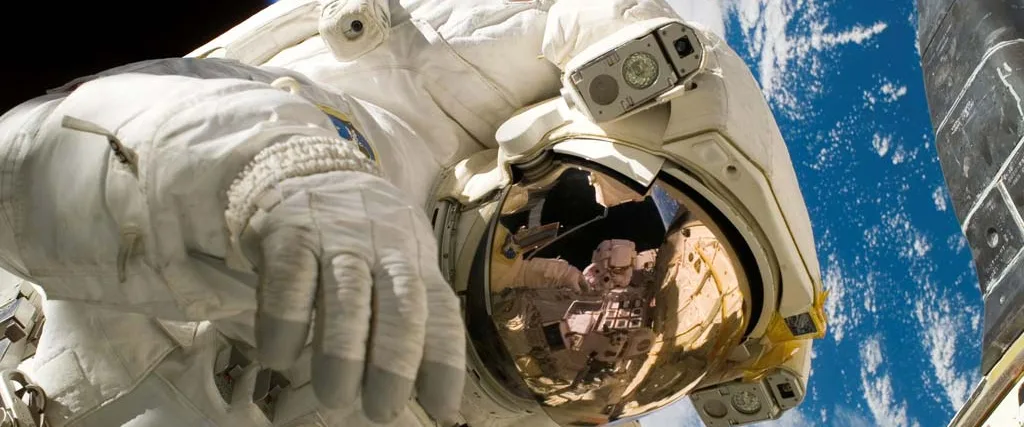
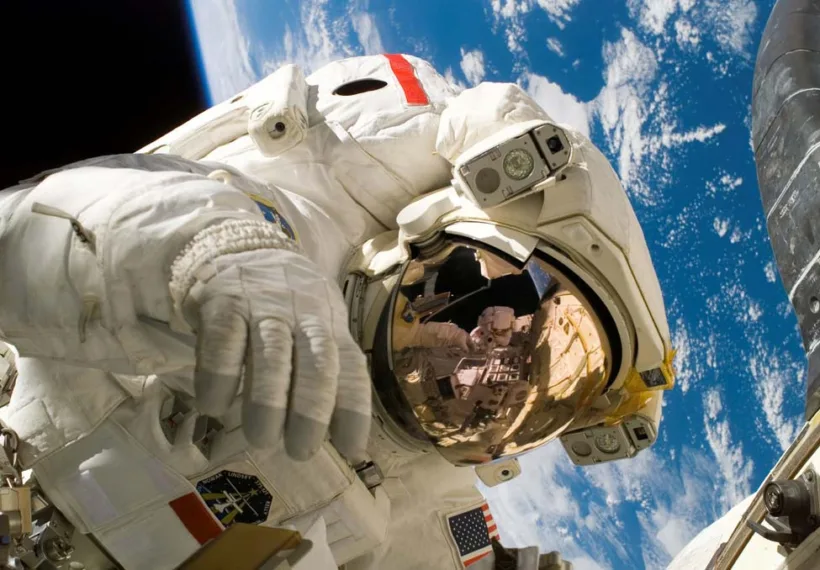
Space is now big business. Technology originally developed for the space program sometimes ends up in products for use on Earth, often in surprising ways. The 40,000 certified “Space Products” range from mattresses to medical devices, and have turned space into a multi-billion-dollar industry. Inspired by our excursions into the Final Frontier, entrepreneurs and inventors are turning stardust into gold.
Transcript
DOWNLOAD SRTOur universe is filled with secrets and mysteries, leaving us with many questions to be answered. Now more than ever, we find ourselves searching for those answers as the very fabric of space, science and society are converging. As we...
Our universe is filled with secrets and mysteries, leaving us with many questions to be answered.
Now more than ever, we find ourselves searching for those answers as the very fabric of space, science and society are converging.
As we give you the knowledge that breaks the barrier between what is science and what is merely pop culture, this is StarTalk.
Now, here's your hosts, astrophysicist, Dr.
Neil deGrasse Tyson, and comedian, Lynn Coplitz.
I'm good.
How are you, Neil?
You know what we're going to talk about today?
I do, but I think there's some clarifying that we're going to have to do.
What's that?
Well, go ahead and tell everyone what the show is.
You said before I do, you're going to clarify something.
No, no, no.
No, I want you to tell first.
Okay, fine.
This is StarTalk, and as you already know, we find topics drawn from the cosmos and our exploration thereof.
And talk about it.
Which means it's space topics, but we bring them down to Earth.
Bring it down to Earth.
Right on down to Earth.
And for today's show, I want to focus on space spinoffs.
There's all this investment we've made as a nation.
The world is made in exploring space, not only robotically, but with people.
And how do you make spacecraft fly and dock and move to other planets?
But I don't think we should call the show space spinoffs.
That's what I wanted to say.
Because spinoffs sounds like TV.
When I first saw that, I thought, because it's like Happy Days, the spinoff, with Laverne and Shirley.
Lynn, words can have more than one meaning in this world.
Well, thanks, Neil.
And I love it when you give me that, Lynn, you're an idiot face.
That is my favorite look.
The eye roll, Lynn's an idiot face.
I know you don't think I'm an idiot.
We're not talking about spinoffs from Star Trek.
No, we're talking about things that derive from space products, right?
Product spinoffs, that's right.
So I don't know if you had TV on the brain, but the show is about space.
I do, I just watched Real Housewives of New Jersey and I'm obsessed again.
Well, we always begin with my friend Bill Nye.
He's my guy, you know?
He's hilarious.
Let's see in his manic minute what he's got to tell us on this product.
Hey, hey, Bill Nye the Science Guy here.
This week on Star Talk, the Talkers are discussing the technology that came to be because we have a civilian space program, the spin-offs.
The idea of promoting spin-offs is left over from the Cold War, the race to the moon.
Even then, there was a great deal of controversy about the cost of the program, so NASA got in the habit of reminding us about their better batteries, geochemical assay techniques, knee braces and blankets, as they were spun off.
But if a society wants these sorts of things, it doesn't seem like it would need to build rockets and telescopes.
Since ancient times, new technology doesn't come from high dollar civilians, it comes from what the military is working on.
That's where we get stuff like telescopes, radar and boxed meals that heat themselves.
Instead of fretting over the frequency of finds back on Earth, I hope StarTalk listeners will focus on the future, the space that's yet to be explored and fathomed.
This is Bill Nye the Science Guy saying, spin on, but look ahead.
There he goes.
Hey, he didn't do Bill Nye gotta fly.
Oh well, because Bill does more than fly when he's got the power.
He's very, he sounds very laid back.
Is Bill single?
Yes, he's single.
Really?
Yes, he is.
I don't know, low 50s, something like that.
Oh, because I need a smart guy who can fix stuff in my life.
Don't you think we'd be good together?
Make it happen, Neil.
Well, you know, I...
We'd be like Pinky and the Brain.
We could rule the world, me and Bill Nye.
Are you saying you've dated incompetent...
Oh, I've dated from the sublime to the ridiculous.
I date people for a lot less than Bill Nye.
Well, Bill, at some point, he told me this once, that he was once voted as the most likely person they would want to have on a desert island to enable their new escape, like the professor from Gilligan's Island.
Really?
So he's like MacGyver-esque?
Yeah, except MacGyver-plus, like he knows science.
Oh, I have dated so many useless creeps.
This is perfect.
Somebody who could get me off an island, that right there already just catapulted him to the top.
Right, so Bill is much more valuable to others than just what you can do with duct tape.
Yes, and tell him that I can see past the gay house music Ivan put, our producer put behind him when he introduces him.
Because I love that, Ivan, did you hear what Ivan put behind him?
It's a bong-ta-chong-ta, bong-ta-chong-ta.
Ivan, our producer is.
Yeah, Ivan, our producer put this weird gay house music behind Bill Nye, which I have no idea why.
Well, I'll look into it.
I'll see.
I don't know what he's up to.
All right.
We should get back to the show.
Sorry.
He lives in LA.
So, yeah.
So, space spinoffs, they're all around us.
Often people don't think about it.
They don't recognize it because it's just a fundamental part of their life.
And if it's just a fundamental part of your life, you don't stop to think where it came from.
I definitely don't.
I really don't.
I mean, I'm embarrassed how much I don't because the more we've talked about this in the last couple of days, the more I feel like I really should have known some of this.
Well, it's a lot of stuff.
And in fact, we've got some people that help us remind us of it.
I once served on the board of the Space Foundation.
They're based in Colorado Springs, Colorado, obviously.
And the CEO of the Space Foundation, his name is Elliot Pullam.
Elliot, he came through town recently, and I got to interview him.
And what the Space Foundation does is they care about space no matter how it happens.
What does that mean?
NASA space, government space.
I'm a little hungover, Neil.
Could you please explain?
Neil says stuff to me and he forgets.
For me, it's like morning.
Fine.
I forgot the hungover factor.
I'm a comedian.
I'm still four in the morning.
That means you're working.
That's good.
So what he's got is the Space Foundation, among their many duties, is if you have a product that you're making money off of that came from technologies and innovations that was used for space exploration, you can get them to certify it, and you'll be on their list of certified space products.
Wait a second.
Do they have anything to do with NASA?
Well, a lot of the certified products first came from NASA, but they themselves are not NASA.
So they're like the American Dental Association?
The Miracle Dental?
The American Dental Association.
You know how, like, if the American Dental Association isn't on toothpaste, then that means there's not fluoride in it?
Well, I guess so.
I mean, yeah, they're certified.
So they stamp the product.
But that means it definitely has to do with space.
Yes.
It means that whatever makes that product work had its origins in innovations in space.
Now, can anyone get something certified?
Because I have an idea based on the Mars rover for, like, a lawnmower kind of thing, but it's like a surveillance rover that can survey, like, because I'm from the South, so my parents have lots of properties, so, like, it can survey your property.
Okay, I'm listening.
For what?
Wait, does it survey it or...?
Like a watchdog.
Like, you would have, you would send the, I would call it watchdog.
And it would go back on the property.
Watchdog rover.
Watchdog rover.
And it would also come back and tell you if there were, like, gopher holes or problems and bring you little samples of plants that were getting sick.
Okay, so...
Nobody steal it.
Well, okay.
Well, okay.
It's one thing to have an idea because you looked at a Mars rover and you said, I can put a rover in my backyard, but it has to actually...
Okay, well, I didn't just say I can put it in my backyard.
I think there was a little more think tank involved there.
Okay, fine.
Your think tank.
But you have to actually use the technologies that are there.
So if you went to the rover and said, hey, I like your wheels that can go up over rocks without flipping over.
I like your sensors.
I like your camera, your stereoscopic camera.
And you tap those technologies for your rover, yes, you get certified space product.
So how do I find out exactly what was on the rover?
I'd have to go to...
Can I get that off of a website?
I don't see why not.
You just look at the plans for the rover and you look at all the technologies that went into it.
Oh, yeah.
Oh, so then what's the next step when you want to find something?
Unless someone else invented it and they got the patent for it.
So you have to watch out.
You go look for the patent.
Yeah, just look for the patent.
Like, well, now, now it's over.
I can't do it now.
There's someone right now typing it in like, I'm gonna do it.
But here's my...
But let me ask you this.
Let's say I go on right now when I leave here and no one else has invented it and I get the idea.
I go right to Elliot?
No, you create the product to make money off it and say I've made a commercial product from space, so now I'm like Carrot Top.
I actually have to go make this stuff.
So go marry Bill Nye and you make it together.
Oh, now you're thinking.
So let's hear what Ellie Palm has to say.
CEO of the Space Foundation.
And if anyone else wants to call and tell us what they would invent, they should call it.
Because I liked your idea.
It's very cool.
I want people out there to call us and tell us what you would invent.
We've got them.
You are the guys who certify space products.
What's that about?
And is the Tempur-Pedic one of those products that you certified?
Because the guy on the commercial is always saying, we're a NASA product.
And I'm wondering, who the hell did that?
That must be the Space Foundation.
That would be us.
They are certified by the Space Foundation.
It's a program that grew out of a program that we have called the Space Technology Hall of Fame, which you're very familiar with, where we induct and enshrine technologies that came from space and became products here on Earth.
And as a further adjunct of that, we have a program where we certify products and establish that these products did indeed come from the space program.
And these products, you find them all around you in your everyday life.
And the companies that come to us for certification feel that being recognized as coming from space gives them a competitive advantage in the marketplace.
And that's how that came to be.
So is this like Tang?
You know, we all hear about space spinoffs.
And is Tang one of these products?
No, that's the urban legend of space spinoffs.
Space spinoffs, Tang and Velcro are really not really what we want to talk about.
We really talk about products and innovations that come from space that are real, that help us in our daily lives.
They can range from something as consumer-oriented as a mattress, Tempur-Pedic, or something as life-saving and critical as the Debakey Heart Pump, which is a life-saving device which is used for patients that have heart problems, which is based on the designs of the Space Shuttle main engine turbo pump and saves about 30,000 lives a year.
There it is, space saving lives, doing interesting things.
And if you have an idea for what you might wanna make from space-derived products, give it a call at 1-877-5-STAR-TALK.
We're also Tweetable at-
Tweet Tweet, StarTalk Radio, all one word.
So Lynn, did you drink Tang when you were a kid?
I did, and la, I don't believe that.
I'm not going for it.
It is the drink of astronauts.
I don't care what Elliot Palum says.
I heard that in third grade, and I'm sticking to it.
I also heard that if you say Bloody Mary in the Mirror three times, she comes to life and kills you, and I don't say that.
And you learned that in third grade as well.
Yep, so it's the drink of astronauts.
I have Tang in my house right now for that reason.
He did not deny that it was the drink of astronauts.
He just said it wasn't invented for NASA.
La la.
That's all.
It was, but the Tempur-Pedic thing I find really interesting.
I have a Tempur-Pedic bin.
Of course you do, they're $1,000.
They're very highly priced.
I have the Miracle Foam that goes on top of the bed.
That's like $100, this is just part of the Tempur-Pedic.
Because I couldn't afford the whole thing.
Seriously, I really do, and that part is nice.
Someday I'll be able to afford like 15 more of them.
But here's what I want to know, and I love the commercial, the Tempur-Pedic commercial where the glass of wine.
Is that true?
Yeah, yeah, pretty much, yeah.
Yeah, you can put a glass of wine on one side of the bed and jump up and down on the other, and nothing happens to it.
You got bigger problems than a bad back, my friend, if you got a glass of wine on the bed next to you, and you're worried about it falling over.
Much bigger problems, you big alcoholic.
But what I like about that too is that, you know, your husband can take care of business while you get some sleep.
You don't even know what's going on over there.
I don't even know what that means.
Okay, so let's play this game, Neil.
Okay, what's that?
I want to ask, Neil doesn't even know I'm gonna do this.
I want to ask you things that I think might have come from space.
And then you tell me if they did.
I can't claim complete knowledge here, but try.
Okay, let's try it.
Oh really, you can't?
Oh my God.
Try, go.
Capri Sun.
I don't think so.
That's a drink that came in a pouch.
Yeah, I don't think so.
This is the one you squeeze the pouch and the straw goes in it.
Yeah, you put the straw in it.
Doesn't that seem like a space drink?
It could be.
Yeah, it might have, but they do drink drinks out of pouches with straws in them in space.
So Capri Sun.
So that it is.
Maybe not the drink itself, but the mechanics of getting the drink out of the pouch.
What about boxes of wine?
You mean wine in a box you put in the fridge?
Yeah, because if you open it up, inside the box, there's a pouch.
There's a pouch, and it collapses as you drink the wine.
I don't think astronauts drink wine in space.
I think this is not.
I bet they have a box up there just in case.
Because if it looks like they're not coming back, let's get drunk and party.
What about ace bandages?
The way it like sticks to someone, but that's a stupid question because probably band-aids aren't a problem in space.
Well, I don't know.
I don't think so.
I don't think they invented ace bandages for space.
They've been around, my father had them.
Sunglasses?
He ran track before.
You think sunglasses came from space?
There's certain kinds of sunglasses that have certain coatings that protect you from ultraviolet light.
Like the stuff that astronauts have on their visor?
Yes, exactly.
Inspired by that kind of technology, there are sunglasses that do have space-derived technologies that were awarded and are in the Space Technology Hall of Fame.
Oh man, if you make sunglasses like that, you should definitely say that because I would buy them if you're like, these can look right at the sun.
Yeah, no, it's good stuff.
And it's not just products.
There are also things, as he mentioned, the DeBakey Heart Pump, things that keep you alive, things that matter to our health and well-being in society.
That is cool.
I asked Elliot about the, I'd heard that Lasik eye surgery, which is so common today, and everybody's got it.
And they just sort of take it for granted that it's available, like it dropped out of the sky, but it in fact did.
Oh really, it's from space?
It is from space technology.
Let's see what Elliot says about Lasik eye surgery.
Specifically in the case of Lasik, what it is, it's the tracking system that they use so that they can keep track of your eyeball as it's moving during the surgery and track the movement of that very precisely with the laser so that they don't make any mistakes.
And that came from a docking system that was developed for docking spacecraft in orbit.
So much other medical technology comes out of space.
The ability to biopsy potentially cancerous materials using a needle instead of a surgical invasive procedure.
Procedures like magnetic resonance imaging, which are used to scan your body, which were originally created to discover defects in workmanship and critical rocket motor parts.
So it really does run the gamut from the sublime to the ridiculous.
There are 40,000 or more products out there in the world that came from space.
We're on StarTalk Radio.
I'm your host, astrophysicist Neil deGrasse Tyson with Lynne, Lynne Coplet.
Lynne Coplet.
And Sidekick.
A professional comedian.
Our toll free number is 1-877-5-STARTALK.
If you have something to say or something to think about space derived products.
Or if you have a product, you want us to tell you if it's a good idea.
You think they're gonna care what we think of their product?
I think they'll care what you think.
You're an astrophysicist.
And I'm a straight talker, a straight shooter.
It's been StarTalk.
Let's take a break.
We'll be right back.
Whether you're a space cadet or a rocket scientist.
We want to hear from you.
The phone lines are open.
Call now.
This is StarTalk.
Welcome back.
We want to hear from you.
I'm Neil deGrasse Tyson with my co-host Lynn, Lynn Kaplets.
Neil, I'm so gonna out you for the other night.
I don't care.
Cause it's a Sunday and it's fun.
We had a people listening.
We had a public relations, but you know, just a press event that we went to.
And it was towards the end of the party.
And all of a sudden, Neil's got like all these like little press girls sitting around them, all these young little cute girls.
And all of a sudden Neil pulls his laser out.
His actual laser, that's not a euphemism.
And one of the girls is like, did you see Neil's laser?
It was the funniest thing.
I was telling the story, and then all of a sudden, Neil's laser's out, did you see Neil's laser?
And I'm like, I've seen Neil's laser.
No offense, but once you've seen Neil's laser, you don't really need to see it again.
Well, consider though that the laser, the pocket laser is standard operations for any astronomer.
Because it's the green laser that's much higher power than the red laser you use for PowerPoint presentations.
And if you're out under the cosmos, you pull out your laser and point out the night sky.
I'm sleeping now, because I've heard this 30 times, I know!
No, no, so the party was on the rooftop of the facility.
Just tell the truth, it's a science penis.
I was, no.
When a scientist pulls his laser out, it's like he's pulling out his science penis.
Look how big my laser is, it's green, not red.
Can we get back to Lasik surgery, please?
Lasik surgery uses lasers to help align the surgery so that in the eye that would otherwise be moving.
I don't think I understood that whole interview.
Maybe I wasn't listening properly because I was thinking about your laser.
Because I did hear the thing about the side effects of all this stuff now freaks me out, and again, this is kind of a hacky premise, but when you watch the penile implant things and all those drugs for stuff on TV, and they always say side effect, a nine-hour erection, and you might have diarrhea, and those are kind of big things, but they breeze over it, and with lasers, they're saying aberrations are a side effect, and you might see halos or triple, and it seems to me like that's a bad thing for an astronaut to be in space seeing aberrations.
Like, NASA, there's an asteroid right in front of me.
Oh, wait, apparently there isn't.
According to my friend Bob here, that is a lasik side effect.
Well, in fact, it was not interesting you mentioned that, and it was not until just recently where lasik surgery was allowed for someone who started out with bad vision but who needed good vision to become an astronaut.
There was a longest while where you had to come in with good vision, uncorrected good vision.
And so now they're allowing lasik surgery as a means of making the grade to become an astronaut.
So that's an important, that says that whatever are the side effects, they can't be all that common.
So they're using a laser in space to burn a hole in something and someone goes, we could do this with a retina.
No, they're using the laser to align in docking stations.
And so, right, exactly, exactly.
As you dock one vehicle to the other, you have to center it so that the docking collars can match up.
And that alignment process is what is used so that they can cut reliably and repeatably in what they need to do with your eyeball.
Listen, no offense, and believe me, I already have people in my life who have gotten lasik surgery.
It's a brilliant innovation.
It's an awesome thing that we have it.
But who allows that to happen first?
I know, yeah, well, I bet it's the person, people who have really, really, really bad eyesight.
So that even if it kind of messes up a little, they'll be better than whatever they had before.
So you start out with people with really bad eyesight.
And then the people with good eyesight or just slightly bad eyesight.
Right, or people walking in like, take my old dog, try and get my old dog.
So here's what's interesting.
The laser was not invented for cutting the eye.
The laser was invented by physicists back in the 1950s.
And the idea had to be put forth, comes out of quantum mechanics, a branch of physics.
Great, quantum mechanics, my subject, let's go.
No, so you've got these, so a laser has to do with like quantum transitions inside the atom.
I mean, it's a brilliant concept turned into an actual device.
And early lasers were the sizes of entire rooms.
Now I got one in my pocket.
You can practically get them at the checkout line at Kmart.
We know you got a laser in your pocket.
Sorry to mention that again.
I got a laser in my pocket.
Are you happy to see me?
So they also mentioned what I did not know until my conversation with Elliot Pullam that the MRI, the magnetic resonance imaging, had its first applications in space and space exploration.
Because the MRI allows you to look not only inside the human body, but that was not its first application.
The first application was looking inside of like space parts to make sure that they had structural integrity so they wouldn't break.
You know, that's awesome, but that aggravates the crapola out of me because why then is it that when I get a mammogram, they slam my boobs between two hard things?
Why aren't they in some soft space gel?
And why are we still at the place where it seems like with astronauts and all this stuff, with all the space program stuff, why is it that when you get a CAT scan, they go like four doors down and talk to you through a microphone because it's so dangerous?
Well, it's dangerous if you live with it, but if you're just in there once, it's a low dose and you'll be just fine.
Yeah, but it seems like, can't they come up with something that is like less radiation or not so?
Well, previously, they had to cut you open to find out.
So this is safer than anything that had previously been put forth.
So it's not how dangerous it is, it's how much safer it is than what anything that came before it.
So with the MRI, magnetic resonance, which we actually talked about last week briefly on for Star Trek, it comes from nuclear magnetic resonance.
And this is the nuclei of atoms.
You put a very strong magnetic field across it and they align and they can interfere with light that you pass across it.
And the CAT scan is the one that's in the big tube that you go into, right?
Well, I mean, it depends on what they're looking at for you.
I mean, CAT scans and MRIs and mammograms and all the rest of these, all use slightly different technologies but the entire goal is to see what's going on inside of you.
That's right, that's right.
And ultrasound?
And ultrasound, that's right, ultrasound.
But that doesn't use light of any kind, it uses vibrations.
And jelly.
And jelly, so we can be reached at StarTalk, StarTalk Radio, in fact, we're online, it's startalkradio.net, where we stream this broadcast and you can also reach us by phone, 1-877-5-STARTALK, or you can tweet us, StarTalk Radio.
In fact, we have a tweet, Lynn.
Tweet yourself and tweet us.
We have a tweet, let me read this here, what do we have?
Could products be developed on the vomit comet rather than in space?
You don't know about the vomit comet?
Everybody knows about the vomit comet.
Thanks, Neil.
Well, you know what?
I don't, everybody but me.
All right, in order to train astronauts in actual weightless environments.
Oh yeah, yeah, that.
People think that NASA has some secret room somewhere where you walk in and they flick a switch and they turn off gravity.
No, there is no such thing as no gravity rooms on Earth.
So one way they get around that is they work in a swimming pool, but that's not a complex enough term to refer to it, so it's called the neutral buoyancy center where there's a huge swimming pool and they have space suits on that make them neutrally buoyant, which means they neither float nor sink.
And when they're in there, and they submerge entire satellites and things that they might be repairing, so they practice in the neutral buoyancy tank.
They don't need you wasting time out in space.
Wasting time out in space.
So that's one way they do it.
But that's called the vomit comet?
No, no, no, no, no.
So now you want to actually be weightless.
You can, have you ever, remember when you were a kid, you'd be in a car, and like they would, your father, whoever's driving, your mother would drive over a slight bump in the road.
Okay, drive over a slight bump in the road, and you'd feel like your heart would jump up into your throat.
Yeah.
Okay, right temporarily there, you were kind of weightless.
That feeling is a feeling of weightlessness, and your body was reacting.
I'm getting there.
So now you have a plane that does what your car did over the bump, except it does it in a trajectory through air.
So the plane goes up, and it goes to the top of an arc, and then stops the engines, and comes down on the other side in a parabolic trajectory, and you are in free fall towards earth, and you are weightless inside that volume.
Oh my gosh, it's so much easier being a comedian.
So you're weightless.
What was the tweet question again?
I'm so.
Can they do the experiments on a vomit comet, rather than go to space to do it?
So the problem is, that trajectory, you only get about 20 seconds of weightlessness.
So your experiment would have to be over and done within 20 seconds.
A really quick experiment.
Yeah, quick experiments.
Where as if you're in orbit, you get to have continuous experience of weightlessness.
It's all because you're in free fall towards Earth.
If you're in an elevator shaft.
I couldn't be experimenting anything, because I'd be.
If you were in an elevator and I cut the cable, you would fall, the elevator would fall, and everything around you would fall at exactly the same rate to Earth.
So let's say you're holding a pen in your hand, you could let go of the pen, and it would just stay there right in front of your eyes, because all of you are falling at the same rate.
Yeah, I was good, I was good.
You're a hero for centuries.
I get extra credit for that, Galileo is sexy.
But no, if you cut the elevator cables, I would be screaming.
I wouldn't be able to experiment with anything.
I'd be freaked out.
No, if my elevator cables were cut, and I knew I was gonna die at the end, I'd at least get some physics experiments in there.
Of course you would.
But why not?
How often do you get?
I think we need more vanity products from space.
Well, because I think people come back from space, there's gotta be all sorts of gravity, anti-gravity.
I'm no spring chicken, as somebody told me on the street the other day, which was really nice living in New York City.
No, some homeless guy's like, you're good looking, and you're no spring chicken.
Thank you very much, sir.
I hope you get out of that box soon.
But so here's my thing is that it seems to me like there should be someone who's just kind of keeping an eye out, when you got back from Jupiter, Judy, I noticed you, your wrinkles looked good.
Oh, I see.
So you want to-
Like there might be some space thing that we could get.
Because you spent time being weightless, and so-
Yeah, because Botox and all that.
It just seems to me like there ought to be some good, new cosmetology thing that's going on.
The cosmetics industry is huge.
I mean, billions and billions a year.
Are you coming out of space, because they're using diamonds now to do microdermabrasion, and can't there be some sort of moon rock that can do something?
I mean, I don't know of any.
I don't know of any.
You think this is stupid?
No.
But I bet you think that the saber sound coming off your phone is perfect.
That's worth it.
That's important.
Does anyone here agree with Lynn that we should have cosmetic products from our space investments?
I mean-
Okay, please, no, no, no.
No, do you agree with me that it's more important to use technology to remove wrinkles than make a lightsaber sound on your telephone?
Which Neil, by the way, does all the time.
Call in to 1-877-5-STARTALK.
So, let me get back to my interview with Elliot Poem because he tells us more about what's available.
That's not why I use these segments, just to get away from you.
I'm gonna get your saber from you.
Elliot Poem, let's see what else he had to tell me about space-derived products.
We honor the people who have taken space technology and brought it down to earth for practical use for the people on planet Earth.
And so these are technologies, for example, that may have come from military space satellite.
For example, your car has probably got airbags.
Those are deployed by an accelerometer.
Accelerometers were developed with the space program.
My iPhone has an accelerometer.
Your iPhone has an accelerometer.
There is so much that we touch in our day-to-day lives, and so this is a way of recognizing the innovators who saw an opportunity and a technology that may have been developed for a very different purpose.
For example, we recently, we're talking right now with a company that makes what is called a humanitarian demining device.
And we all know that land mines are a tragedy.
Well, what this company has done is it has developed a device at the sides of a road flare, and it has filled that with space shuttle solid rocket propellant.
And when they find a mine, they just lay this device next to the mine, light it, and it burns through the casing of the mine, and it consumes the explosive in a harmless manner.
And so this is space technology originally developed to propel the space shuttle that's being used in humanitarian demining efforts.
There you have it.
I mean, that's...
So that's where that saver sound thing from your phone comes from.
Oh, well, on the iPhone, there's an app called, like, Lightsaber, and...
I know, you've shown it to me.
So when you take your iPhone and wave your hand with it, it feels the acceleration of your hand as you wave it back and forth, and then it matches the sound of the Lightsaber to that acceleration.
And that's more important than wrinkles because...
There's also the Mind Diffusers, a brilliant application of space shuttle solid rocket propellant.
No, what's the Mind Diffuser thing?
So, you know, the space shuttle, the solid rocket boosters that sit adjacent to the main tank of the space shuttle.
These are hugely powerful rockets, and a highly effective and high temperature propellant.
And they just lay that next to the landmine, and it burns through the landmine.
Cool.
And totally disarms what's inside of it.
Have you ever seen one?
No, I haven't, happily.
I mean, we live in a place where that's not the problem.
But these accelerometers are not, they're used for not just lightsaber apps on an iPhone.
For this current season of Nova Science Now on PBS that I host, one of the segments, I...
You see how Neil just threw that in there, listeners?
Nova Science Now that I host on PBS.
Tuesday nights, I mean, no, no.
Seriously, one of the segments I hosted was on...
I was taken to a diamond factory where they manufacture artificial diamonds of gem quality.
The old days of artificial diamonds were like...
They're just like diamond powder for, make a grit for sanders and this sort of thing.
Well, they found a way to rapidly make diamonds that can go on your finger, that can become jewelry.
And why am I mentioning this?
Because they would not tell me where the factory was.
So they put me in a car and they bought...
Why wouldn't they tell you?
Because if anyone find out who's invested heavily in natural diamonds, this could undermine that business model, that marketplace.
Well...
42 Mockingbird, like no, I don't know.
I don't know where it was that I was blindfolded.
And they knew that my iPhone had an accelerometer on it and they wanted me to completely shut down the iPhone.
Because with an accelerometer, you can remember.
Ah, geniuses, they're so annoying.
I was ready to slip that one by and they said, no, show us your iPhone and show that you're turning it on.
See, this is why I'm telling you, sometimes you need good old fashioned like M&Ms or Reese's Pieces like ET did.
Just drop.
Now because I could think of...
Throw them out the window.
I could remember maybe we made a left turn and then a right turn, but they actually drove me around in circles for a while to alter that.
But if I had an accelerometer, it could have tracked the accelerations that the car made.
If you had Reese's Pieces, that could have done the same thing.
I didn't think of Reese's Pieces at the time.
And they wouldn't have taken that off of you.
Let me tell you right now.
It's not only on that, it's on at least some computers.
Macintosh, they've got an accelerometer on in case it's gonna fall off your desk.
And it'll feel the acceleration of falling and then it locks the drive so the drive doesn't get damaged upon impact.
So...
Neil, that's so stupid.
Wait, it locks it.
Okay, so it's okay when it falls.
Yeah, it doesn't stop the fall.
I was gonna say, I thought you were saying, it says like, about to fall, I'm falling.
Out come the airbags.
So all it does is locks the drive so you keep your data, even if you do damage to the case.
Do airbags happen because of accelerometers?
Yes, yes, yes, yes.
Oh, that's really cool.
So as the car, now if you slow down with your brakes, that's not slowing down fast enough to trigger the air, the, wait, wait.
Is that why your seatbelt does that weird thing too?
Because I'm the worst driver and every time I hit, like the brake, my seatbelt tightens up and I'm like, what happened?
There were old accelerometers that just had a heavy ball that would roll back and forth and rolling forward, rolling forward, it would lock the seatbelt in place.
Hey, who are you calling a heavy ball?
So what happens is, if you actually collide into something, your deceleration is huge.
You're going from like 60 miles an hour down to zero in a fraction of a second.
That is a-
That's why that happened.
That's right.
So the accelerometer triggers an explosion.
Ivan's got the sound effects today.
Ivan's is in his mind.
Yeah, actually that crash lasted way too long.
If the crash lasted that long, you'll probably survive it because it took a long time to come to a stop.
I'm crawling out of the car right now, bloody.
Thank you, Ivan.
What kills you is-
What kills you is the very high acceleration, the high or deceleration.
Go from 60 miles an hour to zero in a fraction of a second.
That's what kills you, unless the airbag can get to you first.
So the airbag deploys explosively from an accelerometer.
And this all came from space.
That is so cool.
I didn't know that.
That's cool.
Now here's the thing, and here's what people need to be reminded of.
There are people who are only interested in discoveries to help us explore space, because space is cool to them.
If you said, figure out a way to save your life in a car wreck, they might not have come up with the accelerometer.
You need people who are excited about whatever it is they're doing to have the free reign of creativity, and then you look at how else it applies.
And that-
That's true of any kind of creative process.
It's true of any kind of creative process.
I mean, if you used to take an artist and you tell him, do this paint by numbers, he's not gonna be as excited as just painting his own thing.
Well, exactly, exactly, exactly.
You can't tell him what to invent.
It's gotta come out of them, whatever that is.
Kerry Hoffman, my manager, just so you know.
You're listening to StarTalk.
I'm Neil deGrasse Tyson, your friendly astrophysicist with Lynn.
You're not so friendly, comedian.
You're occasionally friendly, Lynn.
We need to take a break, but if you want to call and tell us what you think of space-derived products, 1-877-5-STAR-TALK.
Or if you know the directions to that mine where the diamonds are.
Give us a call.
The future of space and the secrets of our planet revealed.
This is Star Talk.
That was horrible.
Did you see what just happened?
this is being filmed for our website too?
Cause my top was just wide open.
I looked down, it was wide.
I think it was all that saber and laser talk.
Alright, go to the website if you want to see my boobs.
StarTalk Radio.
If you have a question on products in space.
I'm an idiot.
That come out of space-derived investments, give us a call 1-877-5, StarTalk.
In fact, we've got a caller right now.
We do?
Oh, exciting.
I think they have a question about spiders in space.
Let's find out.
Caller, welcome to StarTalk.
You're here with Linda Neal.
Stephanie, right?
Stephanie?
Hi Stephanie, you're in Pasadena.
Yes.
Dr.
Tyson, I have a question.
I remember reading about spiders that NASA took up in space and gave them all kinds of drugs, like aspirin, marijuana, speed, the whole variety of drugs.
To see how it affected their spider webs, the pattern.
And I was just wondering if anything ever came of that and also if NASA has ever tested or developed drugs for human use in space.
I can tell you what happened to the ones who they gave weed to.
Those spiders are still building their webs.
It took them like three years to get what the other spiders got done in 10 minutes.
Well, thanks for that question.
Thank you, Stephanie.
I do remember a lot of talk at the time.
It wasn't only spiders that they took up.
They brought up ants and other kind of insects and arachnids.
What'd they give them?
Well, I don't know if they gave the ants, but the ants have very distinct behavior patterns here on Earth, as do spiders.
They have a J-O-B.
Right, they have a J-O-B.
Like if you're a sloth, to bring a sloth into space, the sloth will just be sitting there.
Like it's still doing nothing, nothing.
So you wanna bring something that has a very definite behavior pattern and see how that might be altered.
That would be interesting to see if you get the sloth to do something.
That would be interesting.
And that's a drug I could use for many men I've dated.
So what happens is, what we find is that if the insect or the life form is small enough, the smaller you are, the less gravity matters to you.
Why'd you look at me when you said that?
No, because you look, you can see ants crawl up the wall and sometimes they can crawl on the ceiling.
You see spider webs in every possible orientation, horizontally, vertically, at angles.
And so the smaller you are, the less gravity-
But chimps can do that?
Well, they can hang, but they know they're upside down and they don't want to live that way.
I mean, I'm just saying a spider is happy in almost any orientation.
And so the less gravity matters to you, even here on Earth's surface, like for example, microbes in pond water, gravity doesn't matter to them.
You bring them into space, it just simply wouldn't matter.
But they don't have brains, do they?
I mean, does anything matter to a microbe in pond water?
I've never asked, I don't know, but they seem to have behavior that's worth studying.
I see.
So I just want to say to the caller, I did not follow up on what became, Stephanie it was, what became of those spiders that were drug induced.
It seems to me you would drug induce them here on Earth first to see what effect that had and then compare it to space.
But keep in mind that these experiments done in space are really, what they're really after is to see what happens to them being weightless.
That's the test, are you weightless?
The real space test you might do is if you send them on a voyage to Mars where it takes almost a year to get there and then there's like space radiation and other things that could affect the behavior.
Now do people ever volunteer to be space guinea pigs?
Like let's say someone who's like really old and sick and says like very cocoonish, like send me out, radiate me.
Coo-coon like the movie, yeah.
Coo-coon the movie, like I'll go, I'll go to Mars, I got a year, why not?
If I knew I was terminally ill, I'd subject myself to all kinds of experiments.
I'd go in a minute, I'd be like yeah, take me to Mars, I got no one left here, I'm bored.
Slow me down, yeah, completely.
But do they do that?
Do they send?
No, no, you gotta be healthy.
At the moment, you gotta be healthy to go in space.
But why?
That's my point is why can't you take somebody who's like 80 who wants to go and is in a home or something and they've got lots of problems and send them out?
Yeah, but it costs 20 million to look at the ants, too, right?
No, ants don't cost 20 million dollars to put into space.
They don't weigh enough to cost that much.
But a whole human being costs millions of dollars.
You're a payload.
But it might be worth it if she comes back kicking the jig.
Well, there's the ethics of that.
Do you do experiments on a sick person that you would not do on a healthy person?
There's a whole ethics to that.
Maybe there's a whole future of space ethics to bring that up.
I think if they want you to, you do.
Yeah, space ethics.
I wonder if any callers have any opinions about the ethics, the future of space exploration.
Space ethics.
Yeah, if you're dying, can you just go up there and have them do whatever kind of experiments they want?
If, yeah, if it's your wish.
I'm not saying you do it against their will.
Like, oh, we've got a great idea.
Just come here, get in this chair, and we'll be right back.
See you in a year.
I also interviewed a friend of mine, Lon Levin.
He's a space entrepreneur.
Some of you may know him, but he's a more behind the scenes person than in front.
He's the founder and creator of XM Radio.
And yeah, so talk about a space derived product.
We wouldn't quite call that a spinoff per se, but it is an entire industry that was born of space innovations.
So let's see what Lon Levin has to say.
You know, when it comes to space, I mean, there have been plenty of companies that have made money in space, and those are the ones that at least have put up the satellites that are effectively just high antennas.
We're just riffing off Marconi, putting up higher and higher antennas to communicate with the earth more effectively.
I never quite thought of it that way, but that's exactly what it is.
Put an antenna a couple hundred miles up or 23,000 miles up, there you have it.
And it happens to be in space, and that's what this is about.
And that was the ultimate thinking that went on.
Wasn't too much thinking.
It was like, how can we get as high as we can to cover as much as we can to be efficient?
XM radio, how can we get 100 channels in each community efficiently?
Well, the way to do it is to put an antenna high enough that covers the entire continent.
So there he has, so for him, space was just simply the high ground, rather than as some special sort of innovative product.
Because we all have listened to radio with transmitters at the tops of mountains and tops of buildings, if you live near big cities.
He wanted to send the same transmission to the entire country at the same time.
The only way to do that is from a geosynchronous satellite.
A satellite who's, oh, do you know about geosynchronous, can I tell you about geosynchronous?
Yeah, I already know about it.
No, I don't know anything about it, but it means you have to have a big antenna, right?
Big, well, so XM Radio, the principle behind XM Radio is imagining your antenna were so high up that it could see the entire nation rather than just from horizon to horizon.
And that's what the XM Radio principle is.
That's why there's like 4,000 channels.
No, well, he can put however many channels he wants, but it's why everyone in the country hears the same XM Radio station.
If they're all listening to like the 60s or the 80s, you're all listening to the same information at the same time because of that.
And so that pioneered that concept.
And it puts it in a geosynchronous orbit.
You know, okay, so the shuttle is what we call low earth orbit, LEO, low earth orbit.
And it goes up a couple hundred miles.
The space station.
I'm gonna stick that in my facts I didn't need to know bag.
One day you're gonna be a millionaire, you're gonna thank me for this.
You're right, I'm gonna call you.
It's like, no, I'm not telling you because you were like mean about it when I first told you.
So LEO, low earth orbit.
And at that height, in order to stay in orbit, you have to travel 18,000 miles an hour sideways and it takes about 90 minutes to circle the earth.
If you go higher in orbit, it takes you longer to go around the earth.
There's a height for which it takes two hours, a height for which it takes eight hours, 10 hours, 12 hours, 15 hours.
Well, it's the same thing when you're in a plane, the higher up, the farther, like right?
No, no, because given the distance.
How about that was true, because you go up higher, don't you?
Given the distances plane travel, your height above the ground is kind of irrelevant to that.
It's insignificant.
So if I wanted to go in a little puddle jumper to England, I could do that?
No, because the plane doesn't have the fuel to get you there.
I'm just saying you go five miles up, six miles up, and you're going a thousand miles away.
So that height is not much of a difference.
But you can stop getting fuel.
Well, that'd be hard.
They used to do that before they had long distance planes.
Okay, so that was dumb.
So all I'm saying is there's a height with which you can orbit an object where it takes 24 hours to go around the Earth.
But Earth rotates once in 24 hours.
Yeah, that I knew.
So if you put a satellite at that altitude, both the satellite and the Earth will turn, will turn around the Earth once every 24 hours, making it look like the satellite hovers.
And that's called geo, geosynchronous orbit.
Oh.
And you can park a satellite right center line, longitude over the United States, and you can beam up from New York and beam it right back down to Los Angeles, and everybody can hear the same, hear the same.
That's cool.
That's cool.
I like all that beam and stuff.
So.
Do they have radio in space?
Radio, well.
And TV?
Astronauts can put in for what song they want to be awakened by by NASA, and NASA pipes up into the audio system.
They get a wake up call from NASA?
In fact, there's a NASA website that tracks what music is playing on the space station when they go up there.
That's hilarious.
Oh my gosh, how embarrassing would that be?
Like all of a sudden you got Barry Manilow playing in the background.
You're like, excuse me, you're supposed to be a cool astronaut and you're listening to Mandy.
That's hysterical.
Okay, now it turns out the space shuttle orbits below the geosynchronous satellites.
So if you're broadcasting radio from the geosynchronous satellites and you had a receiver there, you could in principle hear the signal while you were flying over the United States.
But then you'd rapidly come out because you're not over the United States for very long.
That'd be a good application for your thing to know on your computer where you could find out what the astronauts were listening to.
Yeah, oh, I mean an astronaut music app.
Yeah, that could be a whole show, like Big Brother in Space.
Just tune in and watch what the astronauts are doing.
If you've got a question about, or a comment about space-derived products, give us a call at 1-877-5-STAR-TALK, or tweet us at StarTalk Radio.
You can also visit our website at startalkradio.net.
What songs do you think the astronauts are listening to right now?
Right, let's find out.
In fact, we have a caller right now.
Oh, we do.
Yeah, let's go now to the lines.
Caller, you're on the air with StarTalk with Neil and Lynn.
Hello.
Hello.
What's your name, sir?
Oh, I'm Eric from Side Harbor, New York.
Oh, hello.
Hi, Eric, I'm sorry, your name wasn't on our screen.
What's your question, Eric?
Well, it actually was more a comment about you had been discussing a few moments ago where you had talked about sending elderly people into space, but in fact, it was-
And terminally ill people.
Well, there was, in fact, back I think in the 80s, there was a senator from Utah who went on a, it was pretty much an overpriced junket of sorts, but to give him a purpose for being up there, they actually encouraged him in weightlessness to throw up as often as possible.
To throw up?
Yeah, isn't it, Jake Garn.
And in Doonesbury, they kind of lampooned him, referred to as barfing Jake Garn.
That's hilarious.
You sure he wasn't just drunk?
Let's take the strong senator, the senator's drunk.
We'll just say we made him throw up.
Oh, wow, that's interesting to know.
Yeah, and by the way, earlier we mentioned the vomit comet.
Obviously going in and out of weightlessness can upset your stomach, and so.
Yeah, but he's saying that they did that on purpose.
Well, yeah.
They induced vomiting.
Well, you wouldn't even have to try, for me, you wouldn't even have to try if that happened.
Did they find out anything from it?
I'm not privy to whatever Pentagon secrets were divulged from the experiment, but.
That sounds like a drunk, I'm sorry to burst your bubble, but that sounds like a drunk senator to me that they just created and spin around.
That would be a cover up that no one would care about.
The contents of Jake Garn's Woody Earl.
Vomit.
Plus, as you know, if you're waitlist.
Thank you, Eric.
If you're waitlist.
It was my pleasure.
Yeah, if you're waitlist and you throw up, it just floats in the air.
It would be a very hard cleanup problem.
Just.
We're gonna get engrossed.
We're off task now.
Thanks, Eric, we'll call it.
Thanks, Eric, thanks.
Let's go back to Lon Levin and see what more he says about.
XM radio since he invented it and pioneered it and just see what he had some thoughts on these matters.
Why are we going to space?
And we can have many reasons for it, but I just have one and that is, I do think great nations explore.
I think that we have a lot of.
And plus make money.
No, that's the frontier part.
I don't know if we're gonna make money.
Lon, you didn't develop XM radio because you wanted to explore.
You did that because you saw a business model for it and that you can make money.
That's exactly why we did what we do.
So don't stand here and tell me that you do it to explore.
No, but I'm saying as a nation, as a nation, we as a nation, the reason why we actually had an XM radio was because first we were exploring with government satellites and then the government handed it off and then we went to the commercial sector, private sector, and the private sector said we have an application here.
The same thing will follow, the government will first start exploring because they're taking risks that private sector will not take, but sooner rather than later, always the government should hand it off to the private sector if there's money to be made.
And I think we don't know the, we just don't know the answer to that question.
We need to find that out.
And then you make the money and then the government taxes you so the government gets it all back.
That's how it works, exactly.
Yeah, so Lon knows how big the space industry is.
In fact, if you add up all money spent on space, it comes to 200 most recent data, $257 billion a year are related to the space industry.
But it's worth it because we have lots of things from space.
But not yet cosmetics, apparently.
So it's apparently not worth it yet for you.
Nice little day.
So you've told me.
So here, just for comparison, NASA's annual budget is $18 billion a year.
So NASA is just the tiny fraction of the total activity going on in space.
But NASA's looking for specific, like they're not being general.
They're looking for specific.
Exactly.
In fact, NASA is not the only source of space products that are out there.
And let's find out what else Alon tells us about other things that drive space spinoff.
There are many applications that are used, that exist today, that are not NASA government oriented.
In particular, almost all communication satellites today, of course, are provided on a private enterprise basis.
We're seeing things like, well, GPS, that is a government effort, but underneath that, all the technology that's built around it is, for the most part, private.
And I think...
You mean all of the applications that we now use, because the military didn't create a talking map in my car, right?
Well, the military didn't do it for your car.
They probably came up with a way to do it that was far more expensive.
But with regard to consumer items, yes, it was companies that said, there is an opportunity here.
Let's see if we can get the right price point so that people will buy it.
And they did it.
And right now, one of the fastest growing industries, in fact, and still a bright light in our bad economy is this space-based navigation systems.
So Lynn, how many people do you think continue to remind themselves that the GPS they're using in their car comes from space?
Do you think they remind them?
I don't think anybody knows that.
But I mean, I would never have thought of that until I just heard it.
I have a girlfriend, now that you say it, who does voiceovers for NASA.
And she had to go through all the security clearance because she knows what they hear, like all the special things that they hear that she has to say.
Because the GPS in the car has voices.
Right, it's voices.
She has the voices, but she's the one who does them for NASA.
So she knows what astronauts hear, like if something bad were to happen, she knows what they would hear so you can't.
So she needed a security clearance for that.
Yeah, she needed a major security clearance.
Can you imagine if my voice was the voice I heard?
Watch out, there's an asteroid!
Watch out!
So did your girlfriend have a nice voice?
No, she has like a sexy like, waluuu.
Oh, cool.
Very distracting perhaps if you're going to hit an asteroid.
We're running out of time.
Okay, I just want to say before we go that I think this is all wonderful, all the space technology, but I think we should be very careful because my nieces don't even know how to use a phone book anymore.
All these applications and things.
We'll find out.
You have been listening to StarTalk, funded by the National Science Foundation, Neil deGrasse Tyson, with my favorite co-host in the world, Lynne Coplet, signing off.

 Become a Patron