


 Unlock with Patreon
About This Episode
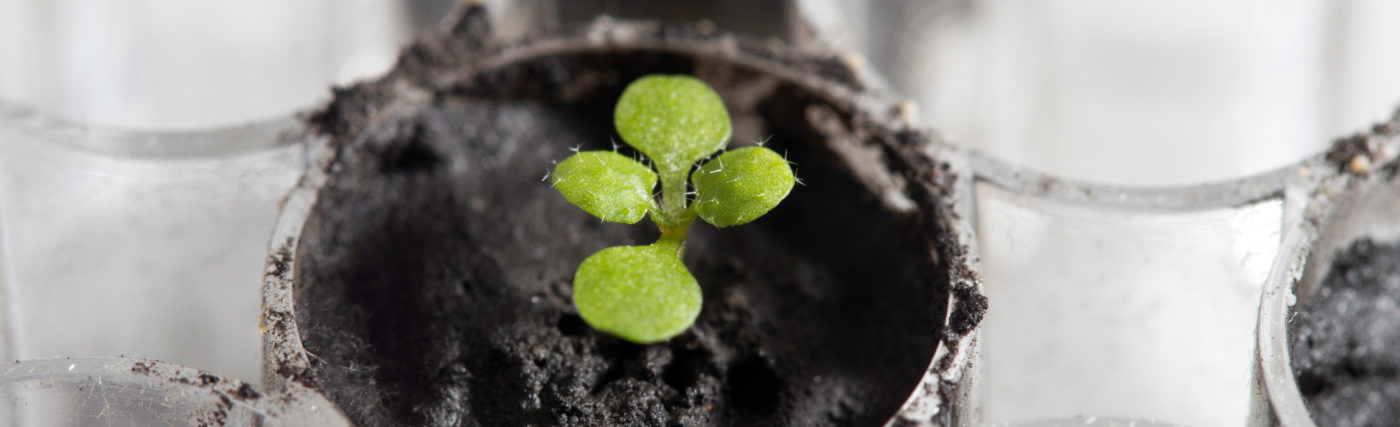
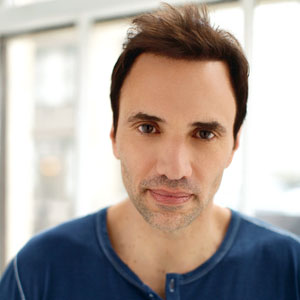
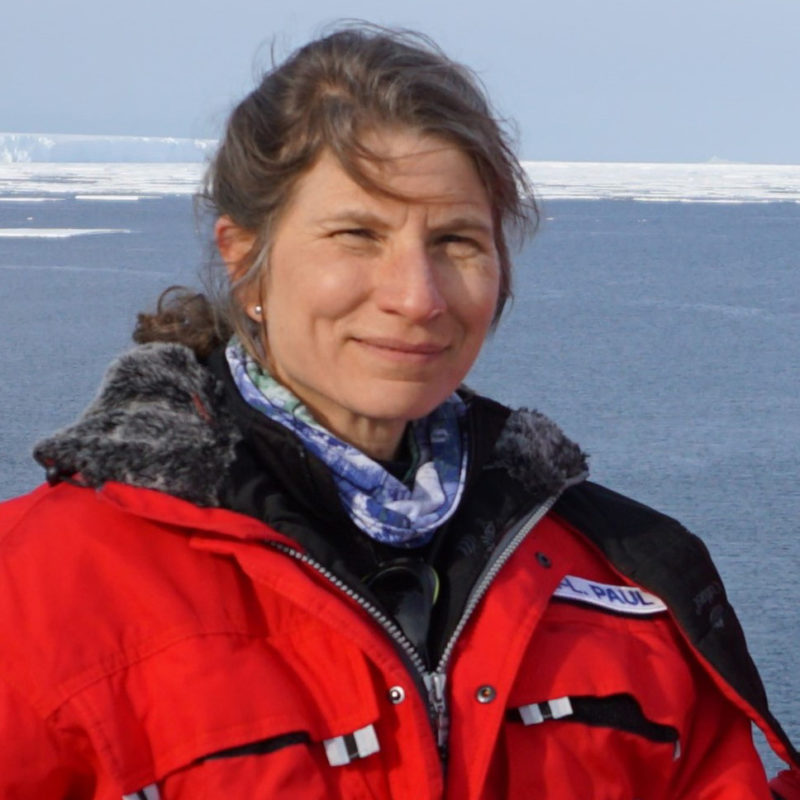
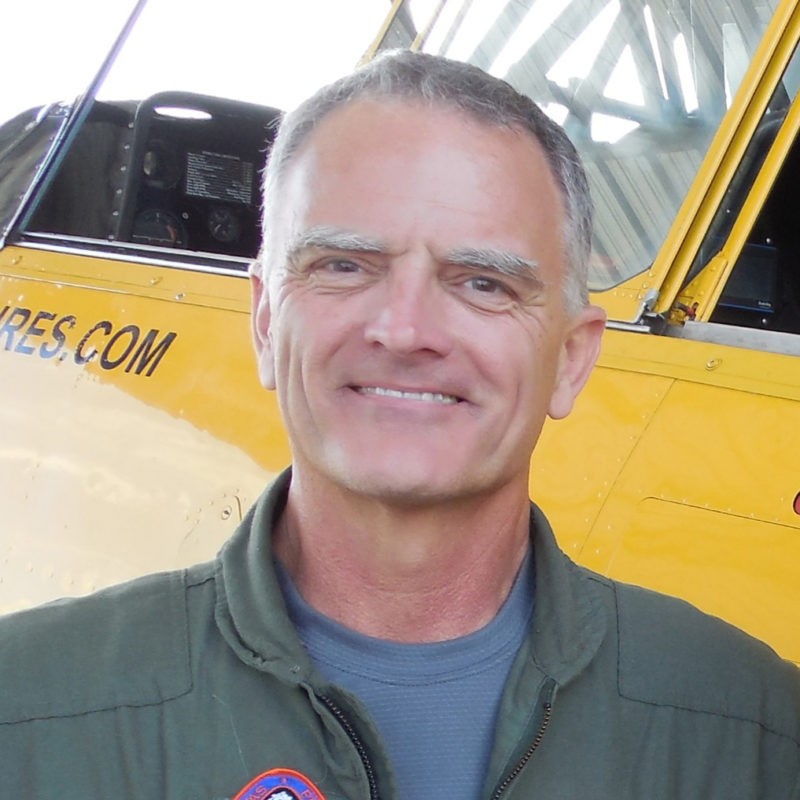
Can you actually grow potatoes on Mars? On this episode, Neil deGrasse Tyson and comic co-host Paul Mecurio explore how to grow plants in space and whether we can farm on the Moon and Mars with University of Florida Space Plants Lab biologists Anna-Lisa Paul and Robert Ferl.
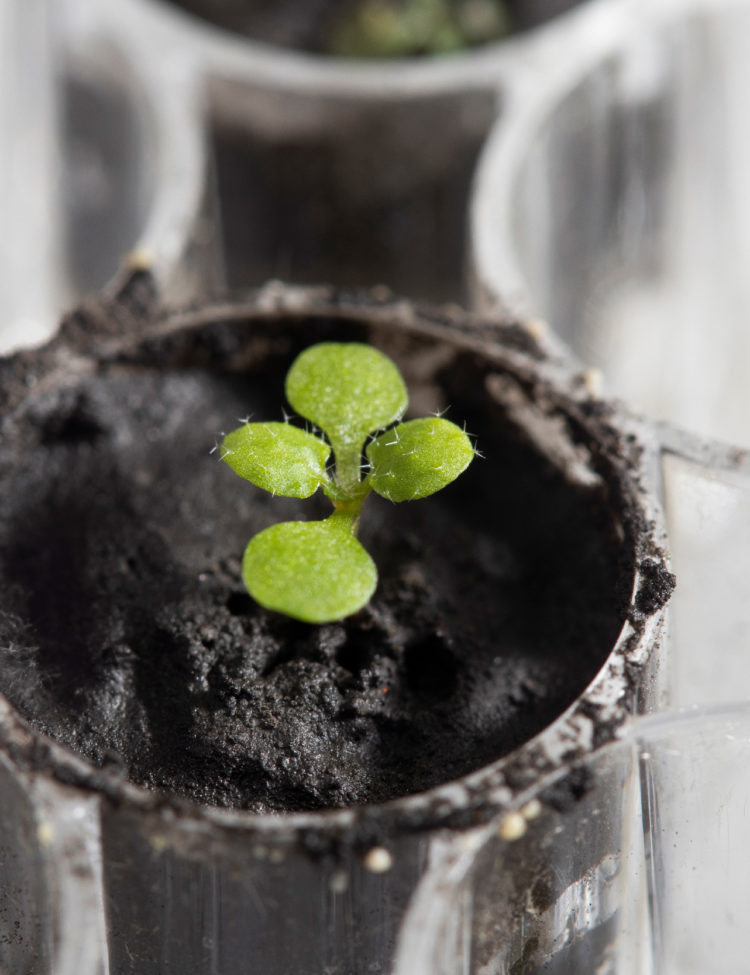
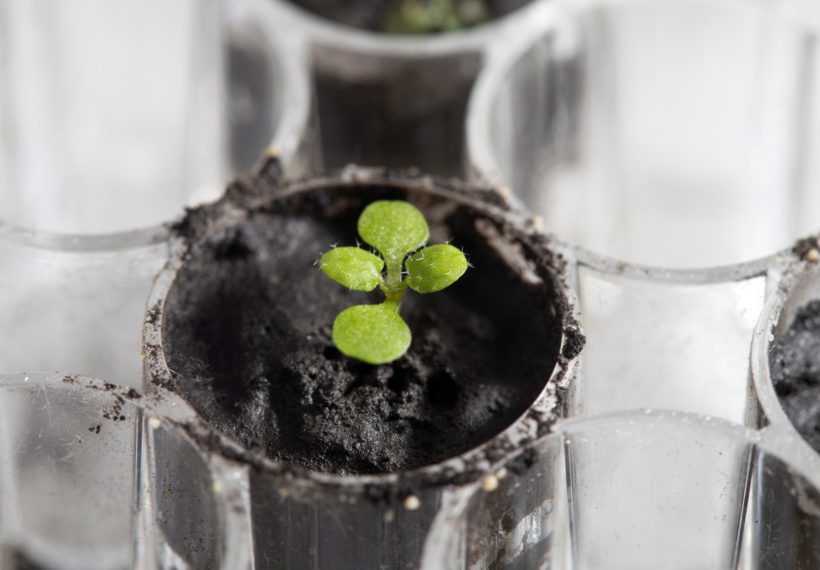
Do we have experience trying to grow things on moon soil? Learn about regolith and the moon dirt brought back by the Apollo missions. What is the difference between dirt and soil? What are the challenges of growing plants in non-living soil? Discover orbital plant research, microgravity, and what happens to biology when not protected by Earth’s magnetic field. How do plants respond to space at a molecular level?
What types of plants are used for space plant research? Learn about Arabidopsis thaliana and its role in space plant research. What does it taste like? Discover the many ways to stress a plant out. Are different areas of the moon better for farming? We explore what makes good soil and what regolith might need to make growing plants more viable.
How does zero gravity affect how plants grow? How do plants know which direction to grow? Do plants grow toward light or against gravity? Is it a bit of both? Will future astronauts have to be vegetarians? Would food taste better or worse grown on the moon? What about moon wine? You will learn about other possible space-grown food. Could human feces be used as fertilizer like on The Martian? All that, plus, in the space-horticulturalist sequel who would play Anna-Lisa and Robert?
Thanks to our Patrons Andrew Herron, Bhargava Kandada, Mark Roop, Martin Bonner, Pete Quist, and Estee Catti-Schmidt for supporting us this week.
NOTE: StarTalk+ Patrons can watch or listen to this entire episode commercial-free.
About the prints that flank Neil in this video:
“Black Swan” & “White Swan” limited edition serigraph prints by Coast Salish artist Jane Kwatleematt Marston. For more information about this artist and her work, visit Inuit Gallery of Vancouver.
Transcript
DOWNLOAD SRTWelcome to StarTalk, your place in the universe where science and pop culture collide.
StarTalk begins right now.
This is StarTalk, Neil deGrasse Tyson here, your personal astrophysicist, and I got with me Paul Mecurio.
Paul, dude.
How do you get to see him, my man?
A bit too long.
Yeah, I know, I know, I know.
We’re going to get together for lunch again soon.
Yeah, we’ll do it, we’ll do it.
Stand up comedian, and I just love the fact that every time I’m on Colbert, you’re there warming up the crowd before anything else happens.
So that’s why they’re laughing and they’re always in a good mood.
Or if they’re not, it’s my fault.
I forgot, I could blame you as well.
Or you get like, why were they so excited but not laughing enough?
Why weren’t they laughing?
So today’s subject is something, it’s been eating away at me because I’ve been thinking about it ever since I’ve been thinking about it.
And it’s like, can you grow plants on other planets?
I mean, we think of putting seeds in the ground and then it grows, and all you need is a little bit of water and a little bit of sunlight and nobody’s thinking about what role the soil is playing.
I mean, regular people aren’t thinking this, of course.
Experts think about it all the time.
And so, there’s a word they use for the, quote, soils of the moon, it’s called the regolith, right?
It’s a geology term and we’ll learn more about that in a minute.
So, this whole show is going to be, if we’re going to go to another planet, either our moon or Mars or wherever, and we’re going to feed ourselves without having, you know, supply chains keep us alive, then, like, what do you do and how do you do it?
And I have no such expertise in this.
So, we combed the world and we found two people who, this is what they do.
Let me first introduce Anna-Lisa Paul.
Anna-Lisa, welcome to StarTalk.
Thank you.
So happy to be here.
Excellent.
So, you’re the director at the Interdisciplinary Center for Biotechnology and a researcher at the University of Florida.
And a research professor at Horticultural Studies.
Horticultural Sciences, yep.
Horticultural Sciences, very good.
And so, you think about, you’ve had a green thumb from early on.
Is this what you’re telling us?
Yeah, kind of.
But I also would describe myself as, you know, simple country molecular biologist.
There you go.
I love it.
I’m a country molecular biologist.
We need more of them.
Yes, exactly.
Just got a quick question.
How good are your tomato plants at home?
That’s the litmus test.
Because if you got crappy tomatoes, we’re finding another guest.
We’ve done some research and we have photos that are…
But my Arabidopsis crop is pretty good.
All right.
We’ll get top people worth looking into that.
And we’ve got with us also one of your collaborators in this effort, Robert Ferl, professor and VP of research in horticulture.
Am I saying that right, Robert?
I’m vice president for research at the University of Florida.
There it goes.
Thank you.
You happen to have an academic specialty of horticulture, but if you’re VP of research, you’re overseeing all the research in the science there.
Well, I have a role in enabling the research overall at the University of Florida.
That is so politely, tactfully said.
You don’t want to make any enemies just by how I describe what you do.
I have here your interests are environmental regulation of gene activity in plants.
So I love this combination of expertise because it’s not just, let’s find a seed on earth and then grow it somewhere else.
You might have to do some serious gene editing to make that happen.
And so could one of you just start us off and tell me, do we have experience trying to grow things on moon soil?
Did the Apollo astronauts, I know they brought back rocks, but did they bring back bags of soil too?
Yeah.
So you’re talking on one of the really interesting parts of sort of Apollo history that drew us into this business.
We’re very used to sending experiments to the International Space Station and understanding the role of gravity in terrestrial biology.
And in fact, trying to think about how we would feed in astronauts as they’re traveling between planetary bodies in our solar system.
But it turns out that this whole notion of whether plants, whether biology interacts with lunar samples is one of a pretty deep historical note.
The Apollo astronauts, to answer your question, they sure did bring back lunar dirt.
They brought back all kinds of rocks.
They brought back all kinds of samples of the dust and the dirt that was in and around their sampling sites.
So Paul, you notice he can’t call it soil.
He just used four different adjectives.
I know.
And all I’m thinking about dirt is like somebody had it on their boots when they walked into the laboratory and you just started screaming, hello.
That’s why we have a mat at the door.
You’re an astronaut.
You can’t figure that out.
Until biology touches it, it really can’t be called soil.
So we have, because of our work, we actually have lunar dirt, lunar soil in our laboratory now because it’s been in contact with biology.
So to round out your question about dirt, Apollo astronauts did bring soil.
They bring dirt back from the moon.
They kept it.
They, NASA, they, the lunar sample curators and the lunar sample community kept it under tight wraps at Johnson Space Center.
For the purposes of studying lunar geology primarily, but it’s one of the great untold stories, unremembered stories, underappreciated stories of the Apollo era is the role that biology played, including plant biology, in determining the samples that came back from the moon were not dangerous, did not have lunar pathogens.
Okay, so let me ask you, Anna-Lisa, if we know in advance that it’s not earth soil and whatever it is, by the way, I’m glad somebody, your professional brethren from a previous generation, did decide that there was no bug that was brought back from the moon.
You may remember the novel, The Andromeda Strain, which came out right around that time, which was a bug from space that totally wreaked havoc.
And, of course, I think that was Michael Crichton’s first novel before he wrote Jurassic Park and a whole lot of other things.
So he had some good sort of bio chops to give us fun thrillers.
But, Anna-Lisa, if we already know there’s nothing living, or we suspected and confirmed, nothing living in the soil, then isn’t the challenge to grow plants in something that doesn’t have living organisms?
And who cares if it’s regolith or anything else?
Well, so there’s two layers of stuff there.
First of all, they never grew plants in it, even back in the Apollo days.
All they ever did was a scientist, biologist called Charles Walkinshaw just sort of rubbed the surfaces of the leaves, you know, sprinkled on the surface just to see if there were any pathogen or anything.
But nobody ever actually grew it in the dirt, in the regolith, to see if it would actually support plant growth and development.
So we had no idea whether there wouldn’t be something toxic to plants or something too reactive to plants that would be able to support it.
So if you’re going to go someplace else, you have to be able to have plants as part of the equation to support long-term goals.
You have to have plants to recycle your air, water, in addition to providing food.
And the best way to do that is if you can use in situ resources, something that’s already there so you don’t have to carry it with you.
So for the moon or Mars, the most logical thing to grow plants in is, of course, the regolith.
Yeah, and you want to be able to have, grow your own food.
I mean, if there’s an alien civilization, they may be price gougers.
You want to protect against inflation.
Well, how are you going to…
You can’t haggle with an alien.
You’re 2,000 light years away from home.
You don’t have any leverage.
So whatever they’re going to charge you.
So you want to have your own food.
But just to be clear, Paul, the moon is one third of a light second.
This is where you don’t have to be so smart and correct me.
Just go along with it.
One and a half light seconds, sorry.
I got the wrong number there.
No, but if…
So I hadn’t considered that, of course, it’s not whether there are microbes that could help it, but whether there’s something that would actively destroy it, that would be bad too.
All right, very good.
Okay.
And NASA, correct me if I’m wrong, I remembered this 20 years ago.
Do they still have a branch of themselves that specializes in in situ resource utilization, ISRU?
Yep.
Yep, absolutely.
And why did it…
It was 50 years, right, before you actively started trying to grow things in the regular…
Why was there such a long period of time, or if I’m off on that a little bit, it was a long period of time before you started trying to grow things in the soil.
Why was that?
I mean, Neil Armstrong had to be upset because he must have been calling like every other week on, hey, you know that dirt I brought back?
You guys using it?
Because I took up a lot of space for tang on the ship.
Is there a reason that you guys…
It took a while to start to use some of that?
Well, there are several reasons, and many of them are, I think, tied up with the simple fact that until the Collective We decided to go back to the Moon with the Artemis program, those lunar soil samples that were at Johnson Space Center kept under nitrogen and controlled conditions were the only ones we were going to have.
And so they were very, very careful.
NASA was very, very careful with how much and what kinds of samples they put out to the community to study.
And by and large, the questions that needed to be answered was things associated with the age of the Moon and the geology of the Moon.
Biology going to the Moon, interacting with the Moon was not as important.
It’s down the road.
It’s down the road.
Yeah, yeah.
So, Anna-Lisa, tell me about the Florida Space Plants Lab.
What do you guys do?
Well, so, it’s directed by Rob and myself, and we do mostly what you think of as orbital science.
So, we do a lot of plants to the space station and ask the very simple question is, how do plants respond at the molecular level to the novel environment of space flight?
So, we look at patterns of gene expression, what molecular tools plants are pulling out of their toolbox.
But we also do what we call sort of exploration science and suborbital science, so we can test what kind of things we can learn about plants in any of these kinds of environments that we may face ourselves with in the future.
Right, so the environment, just to be clear, Rob, when I think of the space environment, of course, as an astrophysicist, you’re in zero G.
But there’s also a high energy flux of particles from the Sun that could affect DNA, I suppose.
I know, at low Earth orbit, we’re a little bit insulated from that.
But in terms of, quote, space environment, it seems to me it’s more than just a zero G proposition, correct?
Oh, absolutely.
And much like the previous question about lunar soil samples, most of our space biology research for the last 20 years has been in low Earth orbit.
The opportunities to study biology beyond the Van Allen belts, biology on the moon or biology in deep space basically didn’t exist.
It wasn’t an option.
And so to drive back to the question, many, many of our scientific questions are about what happens in microgravity and the absence of unit gravity here on Earth.
That’s something that’s been a driving evolutionary presence for all of biology forever.
But again, going back to the moon now opens up sort of the intellectual floodgates.
And we do have to come to grips with the question, what happens to biology when it’s not protected by a magnetic field?
So absolutely, solar flux is an important thing.
Are there layers here?
In other words, once you establish you can grow something in the regular, so you have to factor in cosmic rays, solar winds, and how you can, and the substrates, and how do you, have you started to look at, I guess what Neil was referring to as the environment and the effects on the regular, if you’re going to do this going forward, or is that farther down the road to try to figure some of that out?
So there’s a couple layers of questions there as well.
Really?
Wow, I’m pretty smart.
Tons of layers, like an onion.
But if you think about anything, you’re going to be growing on the moon.
The horticulturist says it’s layers like an onion.
You’ve got food references to everything here.
I was thinking more of Shrek, actually, but yeah.
But you’re going to be growing it in a habitat, so you’re not going to worry so much about things like the solar wind because you’re going to be as protected, the plants will be as protected as the humans inside a habitat.
However, the solar wind does affect the regolith itself from before you’ve collected it.
And that’s one of the things that we found in the work that Rob and I did is that the older regolith stuff that’s been exposed to the solar wind longer is actually more hostile to plant growth than the, quote, younger, we’re talking a billion years younger, regolith of other sites.
Interesting.
And of course, the solar wind just embeds in the surface of the Moon, and it just stays there.
It doesn’t erode, it doesn’t wash away with the streams.
So you’ve got quite the record there.
And just to make sure, because Rob mentioned the Van Allen Belt, I want to make sure we’re all on the same page here.
I hadn’t heard reference to the Van Allen Belt in decades, so thanks for bringing that up again.
So the Earth has these sort of magnetic zones that can actually trap particles and prevent them from coming lower and funnel them to the poles and give us the Rora Borealis, this sort of thing.
And so, if you were orbiting within that, you’re basically protected.
But once you go beyond that, you don’t have these repositories, these protective layers and zones, protective because it otherwise would be hostile to life as we know it.
So, yeah, thanks for that bit of memory lane there.
Well, I got to tell you, this is going to be great for me, because trying to grow something in harsh conditions, I’m going to give you my situation.
It’s similar to me, I can’t grow a philodendron, I guess I keep fricking watering it, and my watering process is terrible.
So, if you can help me with the harsh conditions that I put my plants on there, I think we’d be in better shape.
Paul Mecurio-proof plants, that’s what they’re going to put that ahead of the space plants, Paul.
Please, I feel like I’m a common man and we all have the same problem.
If someone could just remind me to put some water on the plants.
We’re going to take a break and when we come back, we’ll get deeper into what kinds of seeds are being used and what kind of modifications to them are necessary and what kind of food is produced.
Because I hope it’s going to be something other than kale.
I ain’t going into space, all right?
So, nothing against kale.
But if you blanch it, it’s fine.
No, it’s not.
No, it’s always bad.
So, we’ll be right back.
We’re talking about growing food in space on StarTalk.
Hey, I’m Roy Hill Percival, and I support StarTalk on Patreon.
Bringing the universe down to Earth, this is StarTalk with Neil deGrasse Tyson.
We’re back, StarTalk.
We’re talking about growing plants, not only in space, but in destinations in space, such as the moon and perhaps Mars and beyond.
And you can’t just plant the seeds, you got to, you need a little more than that.
And I’ve got with me two experts, two folks who are colleagues at the University of Florida, who are horticulturists with special interest in biotechnology and show, not quite astrobiology, that would be life forms that develop somewhere else.
We’re talking about developing earth life elsewhere.
And both of them are totally into this, published papers together on it.
And that’s why we got them both here for this program.
And I got with me, of course, Paul Mecurio to help me out.
And so let me ask you guys, what studies have you done with what seeds and why did you choose those seeds instead of others?
What’s the thinking behind your experiments?
All right, that’s an easy one.
We mostly work with the model organism for plants.
It’s called Arabidopsis thaliana.
We just call it Arabidopsis for short.
And it’s a tiny plant, the genome has been completely sequenced.
It’s been used all over the world for all manner of types of experiments.
And so why we chose it for growing in lunar regolith is both its size, it can grow just a teeny tiny thing, it can grow in a quarter teaspoon of material.
It’s also completely sequenced.
There’s a lot of reference material on growing it in other types of harsh environments and stress responses.
And so we have a huge compendingium of information that backs up all the stuff that we will find about growing it in regolith, as well as grown it in space a number of times over the years.
You know, Anna-Lisa, I’d never thought about it.
Of course, you guys would want to do the same thing that sort of people who use laboratory animals do, right?
I’ve looked, it’s completely freaked me out, opening up a catalog of mice.
You can short order mice that are identical to thousands of other mice that are distributed around the world so that when you compare your research results, the full genome is identical so that you can remove the variables and only look, you can remove things that you don’t want to vary and look at the things that you do.
And that’s what you’re doing with the seed, isn’t that correct?
Yep, exactly.
That is, I’d love it.
I’d love it.
Now, did you guys create this?
It’s sequenced, but did anybody genetically create it or engineer it?
We just found one that everybody just agreed would be good for this purpose.
Yeah, for this particular experiment, we used one of the, what is called a standard strain, one that is, as Anna-Lisa described, very well characterized by thousands of laboratories on earth for all kinds of environmental studies and developmental studies.
So…
But the real question is, does it contract cancer like all species of mice do?
No matter what’s your feed.
Really, I’ve been working out, I’ve been exercising, I got cancer?
Come on, doctor, you’re right.
Right, every mouse ever studied in the lab gets cancer.
Can I just say this, sir?
The Arapidopter sounds…
Actually, it sounds like on a salad or appetizer menu, you’d find it like in a three-star Michelin restaurant.
It sounds delicious, but it’s a veggie.
Can you guys work on a plant that tastes like pizza, maybe?
You know, something a little more fun or Krispy Kreme doughnut?
That’s top secret.
That’s a top secret product in the back room.
It’s got a glazed doughnut, a powdered doughnut.
So is this an edible plant?
Is it an edible plant?
I mean, edible, is it…
I’m following up on Paul’s comment.
Is this a seed and plant that we would consider eating or is it you just got to get any kind of plant working at all first?
A little bit of both.
So could you eat it?
Yes.
Have we eaten it?
Oh, sure.
Is it really tasty?
You know, it just tastes like a green plant.
It’s a…
Tastes like chicken.
It does.
It’s right.
Only the ones that we’ve engineered with chicken flavor.
Now you’re talking.
I want to go to space right now.
I want to go.
Okay, so you have to…
This is you have to crawl before you walk and walk before you run, right?
You want to get any kind of…
You want to get plants to do this at all.
And that becomes the starting point.
Is that fair?
That’s why we call it a model plant.
And does it have any special, dare I call them, talents where it needs fewer nutrients relative to other plants?
I mean, does it do better under stress conditions?
You know, I’m just wondering, because you’d want to start broadening how much you stress the system, the plant, right?
So that you can enclose as much of what goes on in space as possible.
Well, I’d say the only talent that this Arabidopsis has is that it’s a member of the mustard family.
And the mustard family is really plastic and resilient in all sorts of environments.
I mean, think about all the different vegetables that you eat, everything from broccoli to Paul’s favorite kale and turnips.
All these things are all in the same family.
But just to be clear, you used the word plastic.
Yeah.
I meant as in Mally.
You just ruined every hot dog for me from now on.
You ruined my baseball games, my Fourth of July cook-up.
You’re using the word plastic in its original definition, which gave it the name to the petroleum byproduct that is called plastic.
The word plastic predates plastic.
And you’re using it in the original term.
So that’s a good fact about the plant.
But there are stresses within the different soil samples you use.
Some have heavy metal and salt.
Some are more sensitive to drought.
So you found different results based on the three different Apollo missions, the soil that you brought back, and that the older the soil, the less fruitful it was.
So it doesn’t matter what plant you’re putting in it.
You’ve got to first somehow control that soil in some way and eliminate some of those stresses within the soil, regardless of the plant.
Is that right?
So you’re hitting on what may well be one of the more fundamental things that we discovered as part of this project.
I think I’m done.
If I did that…
Yeah, Paul, stop there, Paul.
I’m going to go have a hot dog with ketchup.
Stop on your head, Paul.
Very clearly what we found with these plants is that they, in some ways, act as if they are stressed.
But one of the key things in terms of interpreting this, and I think, Neil, this will appeal to you is that this is an experience beyond the evolutionary experience of these particular organisms.
And so, Paul, to interpret our results directly as equivalent to a terrestrial response that we know about might be right.
It might be only partly right because, as Anna-Lisa mentioned, they’re reaching into their metabolic toolbox to deal with what they found.
And what they found is quite literally brand new.
It’s out of their world.
So we have a job ahead of us to help the world interpret what the plants are telling us.
And it could be, yes, that they have to deal with heavy metals and other things that are different among different soils on the Moon.
Yes.
It could be there are other general things that they’re dealing with simply because they’re in a strange new environment.
Does it matter what area of the Moon the regolith comes from?
Do you get a different soil?
Like, I mean, look, it’s pretty obvious that Neil Armstrong got bum-steered into lousy territory when he was drug, when he was working around the Moon.
Just a little known fact, all right?
The astronauts landed in the Maria, which is very flat areas.
It’s called Maria, which is Latin for seas, because at one point people thought that the wide, dark areas were, because they were flat, that they were bodies of water, and before anyone really knew any physics or chemistry.
But the reason why they landed there is because it was flat, and they didn’t want the lunar module to try to land on something that would end up tipping it over on some unfavorable terrain for a horizontal landing.
So that was a safety reason initially.
And so if the soil that Armstrong brought back on 11 had been used earlier, I guess it just aged.
It’s not like wine.
It goes the opposite.
It doesn’t age well, right?
So if it had been, whereas 17…
Wait, wait, wait, wait, wait.
Paul, she just said stuff has been there a billion years.
So what’s 60 years going to do for anybody?
What are you saying?
Yeah, I, you know, it’s, well, there’s a difference between this dirt from 17 and the dirt from 11, right, in terms of its efficacy.
So there must be something to that.
Okay, what is the difference?
So what is the difference?
Okay, so the difference is that the Apollo 11 materials were exposed to the solar wind for, and I’m not going to get the number exact, but say a billion years longer than the samples in Apollo 12, the Apollo 12 landing site.
So in that billion years, as Neil said earlier, you don’t have anything to weather it per se.
You just keep accumulating the deposits from the solar wind, the heavy metals, the nanophase iron, the different things that make it also sharper and more reactive surfaces and things.
And so it just gets more and more to a plant, hostile.
And so is there a difference among the sites?
Absolutely.
Is it something we can mitigate?
Yeah, probably.
So that’s interesting.
Just in case people didn’t know, we take this phrase heavy metal for granted, but there are light metals.
I don’t know if anyone has ever thought about what the light metals are.
Such metals exist.
Aluminum is a light metal, and it is light enough to have the density of rock.
And we think of rocks as heavy, but aluminum having the density of rock means you’ll find aluminum, at least on earth, aluminum and rock in the same places because they settled out in the original molten earth having the same density.
And so aluminum is like one of the most abundant elements in earth’s crust.
So aluminum, titanium, sodium are all light metals, that’s all.
And there’s never a light metal band, right?
It’s called Barry Manilow.
That’s what that is.
Why did volcanic ash…
Some of these plants did a lot better in volcanic ash, right?
Oh, I like that.
The moon has a fascinating volcanic history.
And we know on earth, volcanic regions, not initially because it kills everything, but then becomes very fertile soil.
So, in the future, might we target sort of volcanic planes, which many of these maria are, but is there anything we can learn from volcanic fertile places on earth and apply that to these other planets?
Paul, were you also asking perhaps about the controls that we used, the volcanic materials that we used as a control?
So, we used this material JSC-1A, which is a lunar simulant, that, yes, is a type of volcanic ash, it’s ground up basaltic material that’s as similar as to the lunar materials that we get that.
JSC stands for Johnson Space Center, I bet.
That is correct.
So, it’s their own sort of off-the-shelf starter kit, I guess.
Is that what that is?
And what’s the branding?
Exactly.
Big branding.
But I guess what I’m asking is, there are places on the moon that are less volcanic than others.
And given that I’ve tasted many a wine from volcanic soils here on Earth, and the viticulture is extolled for its virtues, can we say that in the future we might target volcanic regions versus others?
I think that would be…
in growing food and growing wine on the moon would be one set of factors, yes, that would choose the landing site.
I suspect that it wouldn’t be the major driver for where we go to the moon.
Well, I think you need to change your priorities then, personally.
I think it should all be about the wine.
The wine on the moon.
And we’ve already made a cheese, right?
Right, exactly.
And legalized marijuana.
I mean, when that kicks in, I’m there.
So the regolith didn’t do as well as the volcanic ash.
That’s the bottom line.
But it did get a participation trophy.
I just wanted to make that so it kind of did well.
But can you take properties from the volcanic ash and factor it into the regolith?
Maybe you can, maybe you can’t, right?
Sure.
So the terrestrial volcanic ash is, and again, both the lute materials and the simulant are both essentially ground up with salts.
And so they have the fundamental characteristics of each other.
But whereas the material from Earth is more rounded, it’s less reactive, it has less surface area, it’s less sharp.
You did use that word sharp.
I hadn’t fully appreciated that the texture of something matters greatly in terms of the interaction of it and its surroundings, right?
I mean, think of the difference between a sea glass and something you dropped on your kitchen tile the same day.
Right, right, right, right.
Yeah, you can walk on sea glass, right?
It’s basically smooth pebbles, right?
So you could walk on your freshly broken glass, but you’ll cut yourself.
Exactly.
Let me ask a question that will surely blend into our third segment.
There’s not enough talked about, I mean, and people who think about this know about it, but in the public, the fact that, you know, an ant can walk straight to a wall and then just walk up the wall, right?
And we can’t do that.
And an ant could get trapped in a small bubble of water and because of the surface tension of the water.
And all I’m saying is that for small things, gravity, as we experience it, becomes less and less and less important to their lives.
And so you have plants growing in zero G on the International Space Station, and you study its molecular changes, properties, of genetic code, why should zero G have any effect on it at all when it’s at the molecular level and why do molecules give a rat’s ass about gravity?
That’s a great question.
And it’s really not whether the molecule cares, it’s whether the organism cares.
Oh, the fuller organism.
Oh, okay.
All right.
So do plants care whether there’s gravity or not?
That’s a big question.
Well, they do grow up instead of down, so maybe, maybe so.
Not mine.
Not mine.
Yours just don’t grow.
It’s really all about cues, right?
It’s all about directional cues.
And so on Earth, plants have evolved to use gravity.
So the roots grow down, the shoots grow up.
But wait, how do you know the shoots grow up against gravity rather than toward sunlight?
They do both, actually.
Okay, well, let’s hold that.
We’re going to take a quick break, and we’re going to come back.
We’re going to get into sort of the molecular physics of these plants, and what forces of nature do they care about most, and what do they just not care about at all?
On StarTalk, we’re talking about growing plants in space, not only in orbit, but on planetary bodies when we return.
We’re back, StarTalk, talking about growing plants in space, in orbit, planetary bodies.
I got Paul Mecurio with me.
Paul, how do we find you on social media?
Plus, you got a podcast, don’t you?
Yeah, it’s called Inside Out with Paul Mecurio.
You’ve been on it.
I had a great time.
Your name is in the podcast?
My name is in the podcast, just only so I remember who’s it is.
Yes, so you can get it wherever the millions and billions of podcasts are sold, as I say.
And at Paul Mecurio, that’s where you can add.
At Paul Mecurio, okay.
M-E-C-U-R-I-O.
If you do M-E-R-C-U-R-I-O, there’s an Australian actor who has a really, wears tight pants.
That’s not me.
And we have Anna-Lisa Paul and Robert Ferl, who are on the faculty at the University of Florida, specializing in aborted culture with sides of interest that help us figure out how you’re going to grow plants in space, possibly to eat them one day.
And how can we find you guys?
How can the public find what you guys do?
Well, we have a laboratory website called UF Space Plants.
And if you were to just Google that, you’d come up with us.
Nice, so UF as University of Florida, Space Plants.
Yes, correct.
And Space Plants, I just love that pairing of those two words.
It just sounds great.
You’ve heard of space aliens, but space plants, you know.
By the way, I have our good authority.
I don’t know if you knew this.
I couldn’t imagine I could tell the two of you something you didn’t know in advance, but I bet this is one of them.
That ET, ET from the movie ET was conceived as a sentient plant.
That’s why ET had that glowing finger and you’d come near the plants and the plants would rejuvenate.
Do you remember this from the movie?
Yeah, so ET was a vegetable, not an animal.
Just thought I’d tell you that.
I knew you would dine and learn something like that today.
I like it.
Surprising, the kid liked it if it was a vegetable.
That’s a strange combination.
Usually kids don’t like vegetables.
Can I just ask these two great scientists, the iridoptis, which is the basis for your research, what is the best vinaigrette to go with that?
Have you done that research yet?
Where are we on that?
That’s a very important question for the astronauts, I think.
Actually, Johnson Space Center has a food lab where they combine flavors that have a good enough shelf life for long-term space missions.
May I suggest a little avocado vinaigrette?
That’s just my suggestion.
The hint of sweetness will make all the difference.
There you go.
So tell me again about how do you know that the plant is reaching up against gravity rather than reaching up towards sunlight?
Because for a long while, didn’t we think that plants turned towards the sun because they wanted sunlight, but in fact, sunlight was killing some chemical in there on the side of the branch that it ended up curling towards it, and it was just a side effect that the leaves faced the sun?
Isn’t that what’s actually going on inside the plant?
This is precisely what is going on.
So that’s actually very well said.
It’s not that they’re, but they are doing that.
They are reaching towards the sun, but they do that by, because they’ve evolved such that when you have too much sun, what it does is it makes the other side of the cell elongate more, and so as it elongates, it causes it to curve.
The same thing happens with, for gravity sensing, the plants are growing down on earth, but if you take a plant to an environment that has no gravity, you lose the gravity cue, and so you still have to rely on light for that cue.
But if you have a seed embedded in a blob of soil, and you’re in zero G, and then you water it, however you do that, because there’s no gravity, but okay, you get water in the soil, however you do it, magically, how does the seed know which way to open and then pop out of your blob of soil?
So we’ve done this experiment, essentially.
We’ve done that the blob becomes auger on a plate, it becomes closed in the light, we’ve done it in the dark.
The plant has an inherent mechanism on how to grow away from where it’s planted, because if it didn’t, it would just grow in this little tight blob and then it would use up all the nutrients right around it and it would die.
And so it has an inherent mechanism to elongate and make this sort of a coil kind of growth pattern that takes it away from its planted.
The roots just coil away, the shoots coil away in the other direction and eventually you get something that looks more or less like a plant, even when you grow them in the dark.
But if you grow them in the light, then plants without gravity use light as a cue.
The plant’s roots grow away from that light and the plant’s shoots grow towards that light, even without gravity.
Or at least away from which way the shoot is going, because if you’re in the soil, you won’t see the light at all, I presume.
That’s true.
So how about all these people I see growing plants, I get, what is it called, hydroponic?
Growing plants just in a pot of water.
Why can’t you just do that in space?
Well, in fact, you can, one can, and one of the sort of major engineering thrusts of plant growth in space is try to understand how to manage water in zero gravity, because in the absence of gravity, capillary action takes over and you get blobs of water attached to your roots.
And so you can essentially drown your roots with very little water in space simply because gravity is not pulling the water away.
So there is a lot of biology and water management that is on Earth dependent upon gravity, especially for hydroponics or things related to that.
So yeah, water management is a big deal.
And would that be a way, a non-soil way, to grow plants in space for life support?
Yeah, absolutely.
Okay, but then you have to still feed it nutrients, right?
And they have to be nutrient rich water.
Can’t be distilled water.
Yeah, and that’s called miracle grow, Neil.
Everybody knows that.
Seriously, just between the four of us, you guys cheat a little bit, throw a little miracle grow in when you’re doing these experiments, just to see.
Absolutely.
This is breaking news, everybody.
So what about light and the light that these plants need and will need?
I know there is going to be controlled environments in space, but right?
I mean, have you experimented with different types of lighting that these different plants need?
Dude, have you never grown marijuana?
You just get a grow light.
What kind of question is that?
I haven’t, but I know somebody on this.
Of course you haven’t.
I’m just meeting that has in this conversation.
No, initially, just in all fairness to that question, when I first thought about the problem, I said, if you’re going to travel to the outer solar system, the sun gets dimmer and dimmer and dimmer and dimmer.
So you can’t rely on sunlight, and I was imagining you couldn’t grow plants, but of course you can.
You just have some other grow lamp, right?
Well, so Paul, again, potentially by pure mistake or random error, landed on a very, very…
Wait a minute.
Wait a minute.
That was a very passive aggressive compliment.
Are you the vice president of passive aggressive compliments at the University of Florida?
I got stopped by red.
I asked a good question so I could record this and tell my wife that I asked a smart question.
So here’s the real deal.
The question of how you would get lights to your plants on another planetary surface is a very fair one because you have to trade off the cost of generating the energy for lighting up the LEDs against the cost of building, for example, a light collector and a translucent tube to bring that light to your growth surface.
Which would then be a passive, would be energy passive for you, yeah.
Plus you’ve got to factor in use of electricity for the disco ball every Saturday night when you’re having your disco party on the move.
All of this.
All of this has to be factored in.
But continue, sir.
That’s basically it.
The whole idea of how you manage light as you transit around the solar system or whether you dig underground and use nuclear power with your LEDs or whether you pipe light in from the surface.
This is the stuff of science fiction, but it’s becoming science fact and reality as we think about what a habitat on the moon might look like.
Do we want natural sunlight?
How do we collect it?
How do you pipe it down into where you’re going to live, whether you’re a person or a plant?
Okay, so here’s the $900 question.
Will all future astronauts have to be vegetarians?
Or is there some way you’re going to also sustain animal life out there that would then be edible?
I guess chickens or something.
I mean, is there a…
Who’s thinking about this?
NASA’s actually thinking a lot about this.
The problem is that the best animal protein sources are not commonly utilized in Western cooking, things like mealworms.
Yum, yum, yum.
And insects in general are high protein.
Is there a way to make sure that any of these astronauts who are vegetarians have the gene taken out of them where they lecture you about how great being a vegetarian is?
Can you guys work on that, please?
I’ll give you more of my light information and my brilliant lighting questions, but please, if you can all work on that.
But otherwise, what you haven’t talked about is fungus, right?
Fungus, I mean, mushrooms are occasionally described as being meaty.
Maybe that would be the compromise between a pure vegetarian diet and one that would involve meat, because portobello mushrooms taste meaty.
Do they ever?
But it also helps with this concept of what do you do with all the biomass that you can’t eat directly?
So you need something to help break that down.
And so you’re right, funguses could do that.
And let’s not forget about psychedelic mushrooms.
I’m just putting it out there.
Okay.
In case being in space is not enough for you.
No.
Yeah, this is all right.
But I really, this is a trip, but I’d really like to be tripping right now.
In the end, we will be traveling, whether we wanted to by design or not, we’ll be traveling with microbes, fungi, and probably intentionally with plants.
But we will have an ecosystem of some sorts wherever it is we’re living.
So back to your question about fungi, when would they be part of the ecosystem that does do some composting, if you will, in space as part of the life support system?
Yeah, very likely.
And Paul, you can tell Rob is VP because once again, he said it very tactfully.
Let me tell you what he didn’t say, but this is what he actually said, right?
There is fungus growing on our skin and all over our bodies that we’re taking into space no matter what.
Now I have to take a shower after this show.
Wait, Rob, am I correct?
You didn’t say that, but you know that’s what you meant.
You are, of course, absolutely correct.
There’s no way we are sterilizing our skins and our innards when we’re traveling anywhere.
I love Rob because he says really scary stuff that it doesn’t sound scary at all.
That was kind of a good question, you dummy.
Like that kind of stuff.
I just love this.
Thank you.
I’m going to have an extra therapy session this week, Rob.
I appreciate it.
Let me ask you this real quick about Apollo 11, the regolith from that versus 12 and 17.
12 and 17, it gave you better plants, if you will, or whatever.
So would that be like to put it in layman’s terms?
So would the food generated by the Apollo 11 regolith versus the 12 and 17?
12 and 17 would be like food sold at Whole Foods, way above what it should be costing, and then the Apollo 11 stuff would be sold at Costco.
Is that kind of how this would work?
If there were a Costco and a Whole Foods?
Please don’t answer yes to that.
That just took away from my light question.
But in all fairness, one of the real questions would be, does it taste differently if it’s grown in different soils?
A different question.
Actually, that’s brilliant.
That’s right, because wine picks up some of that flavor.
Yeah.
Well, let me catapult this, because I’m done with Apollo in this conversation.
Let’s go straight to poop potatoes, which were famously grown on the surface of Mars during the movie The Martian.
So, first, question one, how good is human feces as a fertilizer relative to like cow poop?
Second…
Oh, I can answer that in a video.
Could he?
How realistic is that?
Because, by the way, professionally in the storyline, Matt Damon’s character was a botanist.
So, he’s supposed to be all up in how that’s supposed to work.
And so, can you comment on the efficacy of his actions in that film?
I’m going to start by saying, first off, there is almost never in the history of movie making where the botanist is a space hero.
So, let’s just celebrate that.
By the way…
That’s exactly what it is.
I got ranked over the coals in Twitter.
I think I said something like, it seems to me it would be easier for the engineer to know as much engineering as he did to pick up some botany on the side than for the botanist to know all the engineering that he did.
And then the botanist just wrecked.
Because you’re right.
Because we have engineering heroes and scientists all the time.
I should have backed up and given the botanist the day and the sun.
Can you just let us have our escapism for two hours?
I did the same with the movie Arrival.
The movie Arrival, we want to talk to aliens and they got a linguist and a physicist.
It’s like, no, get a cryptographer and an astrobiologist.
And then all the linguists jumped all over me.
Well, yeah, we should hear them go off on Mary Poppins.
No one can fly with an umbrella.
No, that is not true.
Really?
All right, so I will concede that we have a hero botanist.
Okay, so now let’s get back to the poop potatoes.
All right, so I’m going to jump in on this one.
First of all, I am happy to say neither Rob nor I are experts in poop.
Okay, that’s a separate profession.
That’s a separate sub-profession of what you guys do.
However, I will say that the Martian regolith, as far as we know from blander studies and stuff, not as far as we know, but as far as scientists know, is full of things like perchlorates, for instance.
Toxic stuff, plants hate it, so do humans.
And if you have perchlorate type soils here on Earth, what do you do?
You mix it with water, and you mix it with organic materials to help mitigate the toxicity of that.
So, just saying, Matt Damon was close.
Okay, so he had the hermetically sealed poop of everyone, which meant whatever was anaerobic was still happy, still in there, I presume, right?
Because your lower gut is all anaerobic, right?
But his poop wasn’t representative of poop in general, because it was all based on just eating potatoes and whatever that pill he was grinding up.
So, you can’t say…
No, he didn’t use his own poop.
He used the poop in the trash left by his crew of all the days they had spent there.
Don’t you remember?
He cut open the packet and he said, Dude, Freddie, what were you eating back there?
Snickers for us.
Got it.
So, there is some sci-fi authenticity to that approach.
Absolutely.
And we do have to answer the question.
Human poop, yes, is perfectly good for fertilizing.
Why don’t we all just poop into our houseplants?
I have.
Gotcha!
No, I’ve done that experiment.
Not intentionally.
I was drunk.
But you know what?
Good things come from drinking.
What can I tell you?
Hey, speaking of Marcia, Neil, when they do the sequel, who is going to play?
Who are we going to cast to play Anna-Lisa?
And who is going to play Rob?
Oh, meaning the sequel to the Marcia?
They’re going to be the hero.
Okay, I’m friends with Andy Weir.
I’ll put him on top of this podcast.
Okay, so I think for Anna-Lisa, we should do Sandra Bullock.
Oh, who’s going to play the characters?
Yes!
And for Rob, how about, because he’s so passive-aggressive, Christopher Walken?
How about that?
Deal.
Done.
So that’s all done.
So call Andy in.
Yeah, yeah.
Thank you for that.
So what if you’re going to a place like Venus, where it’s 800 degrees?
None of this is feasible, right?
No, that’s the end of story.
Right.
You can grow eggplant, put some cheese on, and you instantly have eggplant parmesan, I guess.
But that’s about it.
Very instantly.
Just for context, a pizza oven is 500 degrees, and the surface of Venus is 900 degrees.
And I did the calculation.
You could cook a pizza in seven seconds on the windowsill.
And then I got out geeked, and someone said, no, you left out the radiative energy from the atmosphere itself, so it’ll cook in three seconds.
So, yeah.
Our esteemed guests today are not thinking about plants on Venus.
But Mars, right?
This is all building to Mars, right?
Hopefully.
Why not?
This could be used in Mars.
Absolutely.
And also food scarce areas on Earth as well is another…
Yeah, I want to just end on the thought.
Can either of you, each of you just briefly comment?
Surely we’re going to learn things from your work that will help us produce food here on Earth in places that either previously were not arable or are arable, but now we can improve on what their yield is or productivity or nutrition.
Surely there’s some overlap here, is that not right?
Absolutely.
One of the things that this work does is it pros the edges of the adaptability of plants in various difficult spots.
It happens to be an extraterrestrially difficult spot, but the analogy is the same.
Yeah, there you go.
Mars is drier than the Sahara, so if you grow some on Mars, we can do it in the Sahara.
I’m pretty sure.
Guys, we’ve got to end it there.
This has been fun and illuminating, and I think, you know, when you guys have, when you can grow a, what, an apple tree, give me a call.
We’ll bring you back on.
I think of Isaac Newton and apple trees, but fruit and other things more interesting than kale would be a must, otherwise I’m staying here on Earth.
I’m with you, or, you know, the Krispy Kreme doughnut.
I’m going to go back to that.
If you really are good at what you do, you would figure that out.
I’m just saying.
We’ll engineer it in.
Yeah, you can, you can live for centuries off a Krispy Kreme doughnut.
The energy content is, you can power missiles.
It’s like a twinkie, you know.
It’s a thousand year half life.
And when you guys walk the, you know, when you do the celebrity walk for the premiere of Martian 2, I would like to be with the two of you as, you know, because they’re going to have stars playing you in the movie.
So I’d like to be there for that.
All right.
Anna-Lisa Paul and Rob Ferl, a delight to have you for the first time on StarTalk.
And maybe it won’t be the last.
And Paul, this will be your last time.
You were brilliant here, Paul.
You were like all in.
I love you, man.
Neil deGrasse Tyson here, your personal astrophysicist.
As always, looking up.
 Become a Patron