




 Unlock with Patreon
About This Episode
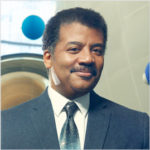
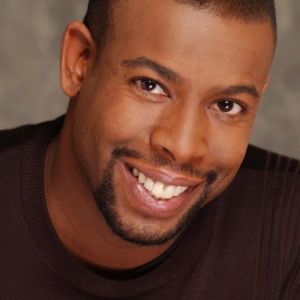
How much of your life is touched by space? On this episode, Neil deGrasse Tyson and comic co-host Chuck Nice break down the newest branch of the US military, The Space Force, with Charles Liu, Major General DeAnna Burt and Dr. Moriba Jah. Is this one step closer to Star Wars?
Discover the alliance between astrophysics and the military. What ways are there to destroy a satellite? Charles Liu teaches us about electromagnetic pulses– EMPs– and how they disrupt electronics. Can people be safe from a detonated EMP, like in the movies? How do we protect ourselves against EMPs?
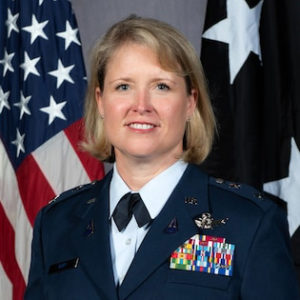
Next, we speak with Major General DeAnna Burt about her role within The Space Force and what it’s like to form an entire branch of the military from scratch. Who came up with the name Space Force? Is the creation of the The Space Force an escalation of military tensions in the world? Is it a step towards war in space? Find out about geosynchronous robotic arms, kinetic kill vehicles, and what The Space Force really does to protect us against threats that exist already. We discuss satellites and just how much of daily life on earth is touched by space. How far does space go? Is The Space Force for the domain of the universe itself?
What’s the potential for warfare in space? Or the possibility of Star Wars? How do we work together to ensure fights don’t extend into space? Moriba Jah breaks down the objects we’re tracking in our orbit. What do you do when an object is on track to hit another object in orbit? We also discuss the Kessler Effect and what it means for the future of our orbits. How do you regulate and track the booming private satellite industry? All that plus, what about non-human threats?
Thanks to our Patrons Lisa Cotton, Luis Stark, Oscar h, Travis Mansfield, Justin Thomas, Josh Wise, and Astaroth for supporting us this week.
NOTE: StarTalk+ Patrons can watch or listen to this entire episode commercial-free.
Transcript
DOWNLOAD SRTWelcome to StarTalk, your place in the universe where science and pop culture collide.
StarTalk begins right now.
This is StarTalk, Neil deGrasse Tyson here, your personal astrophysicist.
I serve as the director of the Hayden Planetarium right here in New York City at the American Museum of Natural History.
In today’s episode, we’re going to talk about the science in the Space Force.
Space Force!
Of course, I got my co-host Chuck Nice.
Jack.
Hey, just a reminder to everybody, I serve as the director of my town home here in Jersey.
Okay, there you go.
There you go.
And one of our old-time favorites here on StarTalk to help us navigate the Space Force, we’ve got my friend and colleague and geek in chief, Charles Liu.
Charles.
Hi, so good to see you.
And I’ll just tell you that I’m the director of absolutely nothing.
Okay, that means you’re getting work done, you see.
I hope.
Yeah, you can be productive or you can be creative, but you can’t be both, so I don’t know.
So what we’re going to talk about is the Space Force.
Allow me to remind everyone that Charles is a professor at the City University of New York on Staten Island, and he’s an associate in our Department of Astrophysics at the American Museum of Natural History.
So I get my dose of Charles whenever I want.
And I get a dose of you whenever I want, Neil.
It works out great.
We’re talking about the Space Force, and later in this program, we’re going to bring on Major General DeAnna Burt.
She’s a general in the US.
Space Force.
Yes, this is real.
And in our third segment, we’re going to talk about space junk with the general, and we’re going to bring in an aerospace engineer who specializes in space junk, Moriba Jah, who’s a friend of StarTalk, he’s been on before.
So let’s get started here.
So I don’t know how many people read my 600,000 page book.
Which one, Neil, which one?
It was called Accessory to War, the unspoken alliance between astrophysics and the military.
It’s all in there.
It’s what role, being an expert on the universe, what that has to do with any kind of military operation, military hegemony, domination, whatever people were doing in the history of civilization.
There was an astronomer right there because the sky enabled people to navigate.
And Charles, what is the greatest navigation system ever devised?
What?
You mean the sky and navigation?
You mean GPS?
Oh, that’s the one you’re looking for.
GPS, that’s how you can find the directions to grandma’s house.
So all this is pivots on navigation, and there’s always some kind of astronomer, astrophysicist in the mix.
And so if anyone is interested in sort of the deep history of that relationship, it’s all in the book.
Or you can just listen to this show and not buy the book, okay?
You can do either.
Let me just tell you, I got a little note from your publisher here.
Neil, shut up.
Keep pushing the book.
You’re the only guy I know who actually promotes his book by going, hey, you know, you don’t have to get it.
No, because I’m not making people spend any money at all.
You can listen to this show, and dad, just don’t get the book.
Just don’t get the book, yeah.
No, get the book, people.
So we had a StarTalk on National Geographic episode where we sort of introduced the concept of a space force before it was formally designated as such.
And we showed some footage of me visiting the Tule Air Force Base in Greenland.
Greenland, wow.
Oh my gosh.
Which is not green at all.
It’s not green, it’s cold.
That’s what I’m talking about.
What I liked about that episode was Neil got off the plane in the beginning of the episode.
He had on like a jacket, it was kind of open.
I was cool.
Hello, hello scarf on.
He said, hey, what’s happening, Greenland, what’s going on?
I got this, I got this.
By the end of the episode, Neil, you couldn’t see his face.
He had on four parkas, he had on four parkas.
Chuck, I don’t think you could resist the statement why there are no black people in Greenland.
Let me tell you something, there was not one brother, not one brother in Greenland.
And Neil showed up and they were like, oh wow, what are you doing here?
Well, at that tool Air Force Base in the top of the world, they monitor satellites and missile threats and anything from space that could be coming over the pole.
And now that is under the auspices of the Space Force.
We’re going to find out more about how that works from General Burt later in the show.
But right now, Charles, I want to get some physics out of the way before we break into that second segment.
We can think of ways you might destroy a satellite if there’s any kind of military conflict on orbit.
And it’s something that shows up in a lot of sci-fi stories.
Even movies that are not sci-fi, just fi, okay, is the EMP, the electromagnetic pulse.
The electromagnetic pulse.
Now, that made a cameo in Ocean’s Eleven.
You might remember that, okay?
It was an EMP that took out the power grid in Las Vegas when they robbed the safe.
Also, there was an EMP in The Matrix.
The Matrix.
Of course, okay.
The Nebuchadnezzar.
The Nebuchadnezzar and all the sentinels were coming at them, and they can’t attack them one by one, but an EMP can take them all out.
That’s exactly what they showed.
So, Charles, my fellow physicist, tell me about EMPs.
What are they and why do they destroy machines and not people?
Oh, it’s very simple.
Electromagnetic pulse is a burst of radiation.
It could also contain electrons, but mostly it’s high-energy radiation that will disrupt electronics.
Think about it.
If you’re ever listening to radio and a lightning strike, a lightning bolt hits nearby, for a moment, your radio goes, tss, brief bit of static.
The bottom line is, and we’ll keep this super short, an electromagnetic pulse can simply be created by detonating a very large nuclear device, maybe a few tens or maybe a few hundred miles up from the Earth’s surface.
And if it’s a powerful enough burst, it will blast so much pulse out into the environment that it will fry any electronic devices, communication systems or power grids in its vicinity.
So you’re not talking about the blast, the physical blast, you’re talking about the electromagnetic blast that’s associated with those bombs as well.
That’s right.
The physical blast is bad enough, but there were some nightmare scenarios back in the 80s, where maybe an enemy could take a huge bomb, put it a couple of hundred miles up above the continental United States, detonate it, create an electromagnetic pulse from coast to coast and wipe out all communications and command and control of the United States before a single shot was fired.
Wow, wow.
Electromagnetic pulse, ooh.
So can we protect against electromagnetic pulses?
Yes, to some extent.
The military knows how to harden things, to protect it from electric magnetic pulse.
For example, Air Force One.
I like the way you uttered that, Charles.
That was it, Charles.
This word is in quotes, utterance.
Yes.
Yeah, Air Force One, for example, is hardened against EMP, but unfortunately, you can only do so much before you will be overwhelmed if the blast is too close or too powerful.
So is this the famous Faraday cage you can stick it in?
You can help, that will help, yes, when you surround something with metal.
And also, don’t forget tinfoil hats.
Ha ha ha!
That too.
That’s a different kind of pulse.
That’s a different kind of pulse.
Yeah, absolutely.
Very effective.
Well, wait, so if you surround something with a metallic frame, then the electromagnetic energy gets stopped at that outer surface and doesn’t penetrate it.
Right, it circles around the outside, something called the skin effect.
The skin effect, yeah, very cool.
Very cool, very cool, so if you want satellites to survive an enemy attack, not by missiles, but by an EMP, you’d want to harden them in this way.
Yes, for example, there are other ways.
So in all the examples of this that you have seen in film, have they done it right?
Like, how about in Ocean’s Eleven?
No.
I mean, that wasn’t a bomb, it was just something that made the pure electromagnetic pulse.
And apparently, this high energy radiation is not melting the flesh off of the people who detonate the switch.
Unfortunately.
You’re a morbid dude.
Have you gotten this checked out?
No, I haven’t.
It’s still rampant within you.
It’s just happening, man.
I can’t help it.
So how is it that you can have a pulse that doesn’t then harm the people who engage the pulse?
A pulse is electromagnetic, and therefore it generally passes through the human body.
If it’s strong enough, it can scramble you, cause you injury the way like a radiation burn might.
But generally speaking, it takes much less to damage an electronic system than it does to damage us.
Okay.
All right, I can get that.
And so, plus I presume if you design an EMP detonator, you could tune the frequencies to be just what would be most damaging to a circuit and not to whatever might be the electrochemistry of the human body.
It’s possible, but it’s a little harder to do that though.
When you have a bomb going off, especially a nuke, a lot of radiation goes out from a lot of ranges.
That’s just the way it goes.
Yeah, and you just take it.
And so, yeah, human beings are under threat, but a human being at a certain distance will wind up being damaged less than an electronic device at that same distance.
Or even at a greater distance, right.
Right, right, right.
As generals.
Okay, all right.
All right, cool.
Well, we gotta take a quick break, and when we come back, Charles, you can stay with us, and we’re gonna bring on Major General DeAnna Burt, who’s in the Space Force.
This is an actual…
Da-da, we’re the Space Force.
We’re the force that deals with space.
Well, the Air Force has designated a march, which is based on a piece by John Philip Sousa called The Invincible Eagle.
However, no lyrics have yet been written.
Oh.
Oh.
Okay, so this is waiting for the moment.
We’re waiting for Charles to utter the lyrics.
Da-da-da-da-da, oh, sorry.
That’s much better than mine, which was just, Space Force, nothing but Space Force.
Where have I heard that before?
Alright guys, we’re going to take a break.
We’re going to come back with an actual member of the actual US.
Hey, I’m Roy Hill Percival, and I support StarTalk on Patreon.
Bringing the universe down to earth, this is StarTalk with Neil deGrasse Tyson.
Thanks watching.
We’re back, StarTalk.
We’re talking about The Space Force.
Space Force, and I got my co-host, Chuck Nice.
Chuck.
Hey, hey, hey.
Chuck, you’re still going to Chuck Nice Comic.
Thank you, sir.
Yes, I am.
You are, indeed.
And our resident geek-in-chief for a return visit, his nth return visit, we say mathematically, because we’ve lost count.
Charles Liu.
Space N plus one.
Charles Liu, always good to have you back here, Charles.
We’re talking about the Space Force, and for this segment, we are bringing in an actual physical human being person who’s part of the Space Force.
Major General DeAnna Burt.
DeAnna, welcome.
Welcome, General, and welcome to StarTalk.
Thanks, Dr.
Tyson.
It’s a pleasure to be here with you guys today.
Excellent, and I’ve got your whole-
Now that we’re just using our actual titles, please, I am Lord Nice.
Okay, Lord Nice.
Your Lordship.
We’ve got Dr.
Liu, Dr.
Tyson, Major General Byrd, you know, and-
And Lord Nice, okay.
Lord Nice.
So, just some of your pedigree.
I mean, you guys have these titles, which are very precise in the military world, but they just sound so impressive just listening from the outside.
So, as I have it written here, you’re Commander of the Combined Force Space Component Command of the US.
Space Command.
Did I get that right?
Cool, cool.
And you’re also Vice Commander of Space Operations Command at Vandenberg Space Force Base in California.
That’s different from the Commander of Vice.
That’s different from being Vice Commander.
That was my former position.
That’s what I used to do.
Different operations there.
And you were formerly at Peterson Space Force, I knew it as Peterson Air Force Base, now Peterson Space Force Base, Colorado.
I visited that when I served on the board of the Space Foundation.
And correct me, General, is that where they control GPS satellites?
Yes, sir.
At Shrever Space Force Base.
That’s about 12 miles east of Peterson.
Okay, both in Colorado, for sure.
There it is.
So tell us, what is your actual role as a Major General in the new US.
Space Force?
So thanks, Dr.
Tyson.
I think, again, we talked about that I have two hats.
So my first hat that you mentioned, I’m a functional component command working directly for General Dickinson, the US.
Space Command commander.
So I command and control about 17,000 military and civilian personnel to provide combat space effects to the other combatant commands, the multi-domain fight, and our coalition partners and the nation.
And my other…
Just to be clear, multi-domain means other branches of the armed forces, is that correct?
So again, space is not just done for space’s sake.
It’s done to be able to provide those war-winning effects both to the nation and to the other services so they can fight and win the fights that they come against.
On the service side, though, my other hat that you mentioned, and I’m a vice commander, I also work on the generate, sustain and present for the Space Force and how do we put forces together.
So I’m really…
It’s good that I have the two hats.
And one way I’m looking at how do we make sure the forces are ready to be presented to as the vice commander to then present to the combatant command in my joint hat to do that warfighting.
So you have a degree in aerospace engineering.
So were you thinking back then, gee, I want to be general in the US Space Force that isn’t invented yet.
Like what’s going through your head?
Not even close.
I am a first generation college student in my family.
And so that was a big deal.
I went to college.
You know, you could have done just a little less.
Yeah, what a slouch.
I know, I’m older than you.
And you’re just like, I’m just going to blow up the road behind me for everybody else.
You’re just going to be completely embarrassed if you try to follow in these footsteps.
Yeah, I’m the first generation.
I’m now a major general.
I’m head of all space.
And yeah, I got 17,000 people reporting to me.
So you’re Lordship.
I want you to imagine you’re my brother who’s three years younger than me.
Yeah, it doesn’t go really well.
Okay, so what was your brain transition from getting a quote simple engineering degree to landing as an officer in the military?
So I think I entered Dr.
Tyson the same way many people come into the military is for college.
I mean, my parents couldn’t afford to send me to college.
The Air Force offered me a four-year degree if I was willing to pursue STEM, science, technology, engineering, or math.
I took aeronautical engineering at Embry-Rendell Aeronautical University in Daytona Beach, Florida.
It was far enough away from home that I didn’t see my parents every weekend, but I could go home to Jacksonville, Florida, where my family was when I wanted to.
I was a Space Coast baby, so space was always interesting to me growing up with the shuttle program.
Just to remind people, Space Coast is the East Coast of Florida.
The northern section where we have Cape Canaveral.
I don’t know how many people know that that’s just called Space Coast, but it certainly is.
Glad to hear that you had a little bit of space baptism from that exposure.
Okay, keep going.
I thought I was going to do my fore and done, because when you take a scholarship, you owe four years back to the military.
But I fell in love with the people and the mission, and here I am 29 years later.
It’s been really good to me, and I’ve learned a ton.
And now I’ve crossed over three months ago from the Air Force to the Space Force, and it’s just been an amazing, amazing ride.
So here, I just want to ask very quickly, because it’s just a bit of an aside, just a bit of a digression.
Who came up with the name Space Force?
Because I’m just going to say it’s so very clever.
No, I think the name United States Space Force identifies the domain that we work in, and it’s a warfighting domain, and then the force that executes, just like you have the United States Air Force, the United States Army.
Again, they typically associate with the domain that they operate in.
Okay, so we’ve got to get to brass tacks here, because there’s some percent of the public.
I don’t think it’s the majority, but it’s enough of them for me to bring the question to you.
They’re concerned that Space Force is sort of the escalation of military tensions in the world, and that it’s just we’re just going to have laser fights and bombs in space.
And I don’t think people see this as a positive step, as opposed to being either neutral or a peaceful step for the future of the security of the world.
Could you just react to that?
I totally understand it.
And understand as a military member, I don’t want to see a war that extends into space.
That’s not good for anyone.
That’s not good for our coalition partners, commercial industry, anybody.
So we don’t want to see that.
But like any other department, we have to be ready to fight and win our nation’s wars wherever they go.
So again, our enemies are showing and the threats have evolved.
General Raymond and General Dickinson have both testified to many things that are on orbit today by our strategic adversaries or competitors, China and Russia, that exist as we speak right now.
So it’s not that the threats are coming.
The threats are on orbit and we have to be prepared to respond and react and protect our assets.
And for those who are into our archives, we actually have General Raymond as a guest on an earlier episode of StarTalk.
So you can dig that out of our files.
When you say threat, what exactly are you referring to as a threat when it comes to our low Earth orbit positions?
Or any Earth orbit.
So you have direct-descent anti-satellite munitions, so ASATs for both low Earth orbit and beyond.
And that’s been proven by the Chinese in 2007.
They launched an ASAT and hit one of their own dead weatherbirds in 2007.
Blew it into thousands of pieces.
We are still tracking to this day and will be for generations to come.
So that created long-lived debris that will affect everyone in the domain, not just the Department of Defense.
And it will affect China as well.
That’s like peeing in your own bathtub.
Yes, sir.
I mean, what were they doing?
Is that like a guy who starts a fight by punching himself in the face?
You know, just like, I’ll show you how tough I am.
Well, what we’ll do is we’ve got Moriba Jah coming in in the third segment, and that’s his total expertise.
So that’s a nice seed planted for that.
So let’s keep going on.
What other threats do we see?
So the other options that are out there again, General Raymond and General Dickinson in their congressional testimonies talked about both of these.
One is a Chinese robotic arm.
So they have a robotic arm in geosynchronous orbit that they are doing testing with.
So if you’ve seen the show Space Force, one of my favorites.
In the second episode, you see the satellite.
Just to be clear, that’s a comedy, right?
With Steve Carell.
And when you see them cut the solar panel off of the satellite, funny ha ha.
But when you talk about today on orbit, the Chinese have a robotic arm.
That’s exactly what they could do.
They could rip off a piece of a satellite or hurt it in some way, throw it into an unusable orbit.
So again, that robotic arm is very scary and a very high interest orbit for communications, missile warning, and all the capabilities that we depend on to protect and communicate with our forces.
The second one again is what we call the Russian nesting doll.
So the Russians launched into low Earth orbit a Russian nesting doll.
So it was a primary vehicle launched an orbital engagement system that came out of that satellite and then from that satellite came a kinetic kill vehicle.
It shadowed one of our high value assets in low Earth orbit for a period of time that again to us was not appropriate because they were testing that capability and instead of testing against their own capabilities, they were shadowing and testing near one of our high value assets.
So again, not good happening every day and on orbit and their capabilities continue to grow.
And again, those are all down class level.
We recognize that security is important for us, but at the same time, how do we portray to the American people?
What are the threats on orbit?
It’s really hard to understand because satellites don’t have moms, right?
No one can understand what the threats are on orbit because you don’t see them every day as you do in the other domains and you get pictures up.
So it’s really hard to communicate to the American people what this is.
And the show is really important to doing that.
And so I appreciate that you do these because it makes it real to folks.
It helps them understand some very complex things.
As the boss says, space is hard.
How do you translate that to the American people and the taxpayer?
Interesting, very perceptive point that satellites don’t have family that you can then get them to plea for their safety.
But satellites do have financial value, not only in the value of the hardware itself, but in the marketplace that it enables, be it Uber or Tinder or bank records or anything else.
Is there some clear way, and is it your job, to communicate how deep that threat can be to our way of life?
Oh, absolutely.
Or is there some other agency whose job that is?
No, that’s absolutely ours.
There is a threat to the American way of life and the American way of war if we lose these capabilities.
GPS, I’m a former GPS squatter commander.
One of the things we talk about all the time with GPS is not only the navigation signal, which we all use every day to travel the world, but also the timing signal.
The timing signal is used to seek many of our cell towers and communication networks that you use every day, as well as the New York Stock Exchange.
So imagine if that timing signal is gone.
What does that do to trade?
What does that do to commerce?
I mean, those are things that happen every day.
One of General Dickinson as the US.
Space Command commander’s slogans is never a day without space.
So again, absolutely his wheelhouse as the US.
Space Command commander to defend and protect all those capabilities.
And most people don’t even know.
I mean, I try, really, I try, but they don’t know how much of your everyday life is touched by space assets.
Beyond simple GPS.
I mean, I don’t think people appreciate that.
And so I think there’s a task ahead of us all in this to try to communicate the value of what you are doing.
And do these satellites that you guys are responsible for, for a lack of a better term, do they include private sector property that might be…
Oh, that’s a good question, yeah.
Or just government satellites.
Your Lordship, great question.
She’s sticking with that title.
You know what, see, but this is the difference between civilians and people in the military.
People in the military are like, oh, you want to be that?
I’m going to make you regret that.
Chuck, you’re going to have to change your Twitter handle.
The Lordship.
I think Lordship Nice has a great ring to it.
It does, it does.
Actually, I hate to admit it, but it does.
It does.
That’s a great question.
So what I would say is we track 32,000 pieces on orbit.
Of that 32,000, about 5,000 are active satellites or active objects.
And from that, then about 10%-ish of those are government resources for the United States of America, whether that be Department of Defense or other agencies, but government capability.
When you guys did this interview with General Raymond in 2019, we had about 1,800 objects that were live on orbit, and that was quoted in that podcast.
Today, think 5,000.
We’ve almost tripled, and you might say, well, why did we triple?
That’s not government, because we’re only 10% of that.
The triple has happened in the commercial market.
The cost of launch has reduced based on the number of folks who are bringing that capability to bear and reducing launch costs.
And now you see companies engaging in building satellites, SpaceX with Starlink, getting ready to launch 100th row to get 5G in low orbit, OneWeb.
I mean, there are many companies now that are launching satellites, and we only see that continuing to explode.
So to your point…
And by the way, Charles and I are co-authors on papers that use data from the Hubble Space Telescope, which is a hunkering satellite up there.
Not a lot of people think of it as a satellite.
It’s a satellite, but it’s a big one, the size of a Greyhound bus.
I’d like to think that some major portion of your responsibility is protecting that telescope, I’m just saying, between you and me.
Absolutely, and we do that day in and day out to ensure nothing from a debris perspective or another active payload would conjunct or hit you.
Also, as any of those objects reenter Earth’s atmosphere, we’re tracking those and reporting those, working with State Department if we predict a landing in another country or how that would happen through US.
Space Command.
So those are happening day in and day out, and that’s our bread and butter of our job.
I think what will change here shortly, which we really need to normalize the domain, and this is all space traffic management, right?
How do we operate on orbit satellite to satellite and is free and fair for all is the Department of Commerce.
So there’s an NDAA, a National Defense Authorization Act, that says the Department of Commerce will be the lead for space traffic management.
We have been doing that as the government because the government had the lion’s share of capability on orbit due to the cost of entry.
But as I said earlier, you can see now it’s tripled.
It’s more commercial.
And of course, I was reminded that NOAA, National Oceanic and Atmospheric Administration, is a branch of the Department of Commerce.
And so here we are monitoring climate and weather, recognizing its direct impact on the economic security of the nation.
So Charles, do you have a question?
Yes, it would be great.
Thank you.
I have two very short questions, if that’s okay.
First of all, you mentioned domain, right?
As we know, the United States generally considers space as being 50 miles on up.
So I presume that your domain certainly starts at 50 miles, perhaps, before then.
But how far up does it go?
Does it go past the moon?
Does it go to the moon or lunar orbit?
Does it go to Mars?
In other words, is Space Force really the force for the domain of the universe itself or just a little bit less?
No, that’s a great question.
General, he wants you to protect from here to the edge of the cosmic horizon.
That’s what that sounds like.
What I would say is, as the US.
Space Command unified command plan, so when you’re a combatant commander, you have a unified command plan that defines what your area of responsibility is.
Every geographic combatant commander has that.
So whether you’re European command, Pacific command, you have a defined area of responsibility.
For General Dickinson, as the US.
Space Command commander, the unified command plan signed by the SecDef and the president states that he is responsible for 100 kilometers above the Earth’s surface to infinity.
To infinity.
That completely answers my question.
General, go back to that document and you have to put in and beyond.
I know.
You have to go.
Please do that.
By the way, you have to stretch it out in tight.
And beyond.
And in all seriousness to Dr.
Liu’s question is, I would say to you day to day, Dr.
Liu, we are concerned mostly with geo and in.
So 22,500 miles and into that 100 kilometer area is where we focus day to day.
Geo is code for geosynchronous.
When you talk about the moon and you talk about where we’re going in 2024 by putting astronauts on the moon to stay, where Elon Musk is in his adventure to get to Mars, you can see, though, that in the next five to 10 years it will become geo and out and how far out is appropriate.
One of the discussions we’ve had is about geo times 14.
And you might say, hey, DeAnna, Dr.
Liu may know this answer, but geo times 14 is where you have a three body problem between the earth, the moon and the sun.
And so we’re trying to define requirements in the military of how far out do we want to start looking for the future to then build requirements and build systems and and do budget requests, et cetera, for all of that.
That sounds like the Lagrangian point, I guess.
You have to start.
Yes.
You have to start paying very close attention to the Lagrange surfaces and Lise Zhu figures and things.
Now, I’ve heard of Lagrange.
You can’t just drop in like you’re in a French cooking show.
Look it up.
Look it up.
No, no.
I have…
No, no.
I really…
I would love to ask one more question.
And this is actually from my educator’s hat, if that’s okay, General Burt.
First, let me just thank you on behalf of so many of us for your service to the country, to keeping us safe, to making sure that our lives are as good as they are.
So thank you so much for that.
Now, there are people, young men and women and young people all over who are looking at you and saying, how can I be General Burt?
Not just education wise, but like your opinions, your thoughts.
When a young person comes to me and says, how can I become someone on the Space Force?
How can I become a guardian?
They’re going to be looking to you.
And because, you know, what would you tell them as completely unironically, you are indeed the very model of a modern major general?
That was a long walk around the block to get to that.
To land on Gilbert and Sullivan.
Worth the payload, right?
Worth the effort, right?
Okay, it was worth it.
But the question is serious.
I agree.
And that was a long way to go, but that is awesome.
I like that.
Now, what I would say is, again, to join the Space Force, we see ourselves as a digital service.
So I’m looking for young folks who have innovative minds, who want to ask why.
I love three-year-olds.
Ask why.
Why do we do things the way we do?
It’s a new service.
We have a clean slate.
We can do anything we want in any way we want.
We value artificial intelligence, machine-to-machine communication.
Obviously, the whole exploration of space and where this is going to go, and if I were to meet a young 21-year-old graduating college or a young 18-year-old entering college, I would say, hey, the sky is not the limit.
It’s endless.
And there’s opportunity that in their generation, they will be operating and living in space in their lifetime.
And how do we go to that new frontier?
So I think it’s very exciting.
I think we’re looking for educated folks with STEM degrees.
Again, obviously, what we do is very difficult and complex.
So we’re looking for that academic rigor and background to get out there and get after it.
But innovation and asking why are the two key things.
And I think this generation is stock full of it and ready to come hard in the Space Force.
And we have not had a recruiting problem.
We’re very small and lean, purposely focused on mission, but we’ve seen, again, beating the doors down in every aspect to join the Space Force, whether that be as officers or as enlisted members.
I need you to confirm, are the new recruits actually called space cadets?
No, just to be clear.
Guardians.
Oh, guardians.
Guardians.
Oh, man, now I want to join, Syed.
Now it could be Star-Lord Nice.
Absolutely.
Let me ask you, Charles, do you think the first person to walk on Mars is alive now in elementary school?
Yes, absolutely.
Maybe not in elementary school, maybe even in college.
Yeah, whoa.
Wow, that’s pretty cool.
All right, we’re going to take a quick break.
We’re going to lose Charles, Dr.
Charles Liu.
We got more coming in, Chuck.
We’re not going to leave you hanging here.
Call me any time, I’ll be around.
Charles, you will have been our and will ever always be our geek-in-chief.
We’ll be right back with the General and Lord Nice when StarTalk returns.
We’re back, StarTalk.
We’re talking about The Space Force.
What is it, what’s going on, what are they up to, what are their priorities, and how is it protecting all that we care and love about our modern lives?
Got my co-host, Chuck Nice.
Chuck.
Hey, hey, hey.
And my special guest is US Space Force Major General, DeAnna Burt.
General Burt, welcome.
This is your second segment with us, and thanks for hanging on and giving us this much time.
We’re also gonna bring in, in a couple of minutes, someone who is now, I get to call him a veteran of StarTalk.
We have Professor Moriba Jah.
He’s an Associate Professor in the Department of Aerospace Engineering and Engineering Mechanics at UT Austin.
And I think in terms of what he specializes in, we get to call him an astrodynamicist and space environmentalist.
Sounds like we’re going to need some more of those going forward, okay?
If environmentalism moves from the surface of the Earth to space itself.
But we’ll get to his expertise in a minute.
I just want to work our way into that and ask, General, when we think of space warfare, we’re not always thinking of sort of machines that would like turn off the switch of a satellite or redirect it.
We’re thinking of weapons that destroy.
And you mentioned in the second segment, was it 2007, the Chinese sort of did a kinetic kill on one of their own satellites?
I think we did shortly after that as well.
So what does that mean for the present and future of the space environment?
Well, I think it’s, again, as I said earlier, no one wants a war that extends into space because those types of weapons, particularly anti-satellite weapons that we talked about, create huge debris fields that affect everyone.
And so, again, not good.
So what we have to prevent against is how do we work in a multi-domain, so thinking all of our other service partners, how would we keep that anti-satellite munition from launching left of launch?
I don’t want that to launch and we don’t want to see that debris.
So how would we work with all the other services in a joint fight to make sure that that didn’t launch and use other capabilities?
So a fight that could extend into space doesn’t necessarily mean it has a space answer.
It could have a land or a cyber or special ops or another element that helps us take away that threat, particularly ground-based threats.
And so while that anti-satellite weapon is en route, a big part of that is through Earth’s atmosphere.
So you might expect the Air Force to have something to say about that and want to jump in and help protect you on the bottom end.
Could be.
I think the other piece is how do we also make ourselves resilient on orbit?
How do I make myself a hard target?
How do I get those indications and warning that if, in fact, it does launch, how do I confuse the seeker or the endgame to hit me so that there’s a miss?
So you want to duck, is what you’re saying.
You want to duck and cover.
We’ve heard that one before, many decades ago.
One more question before we bring in our astrodynamicist.
When we took out our own satellite, if memory serves, it was relatively lower in orbit so that most, if not all, of the debris that we created has already fallen out of orbit, whereas the Chinese satellite was much higher up with much less air resistance to drag it down and burn up.
Am I remembering this correctly?
Absolutely.
As you will recall, the satellite that we shot down was a large dead satellite that was reentering and it was such a size and the amount of fuel that was on it, we were worried about it reentering intact and hurting the population.
So again, hit it at a much lower orbit, as you said, such that the debris and gravity would work for us and bring it all in or burn it up in smaller pieces.
So that’s exactly what we did.
The Chinese again did that more in a higher orbit, in low Earth orbit, and it then pushed debris up into other regimes as well as into low Earth orbit.
And as I said earlier, we’re still tracking debris from that and will be for decades to come.
See, now what you just explained there, I believe is called American exceptionalism.
Even when we blow stuff up, we’re cleaner about it.
It’s also called thinking ahead.
So I just don’t even understand how the Chinese could do something like that.
So let’s bring in Professor Jah.
Just so you know, Professor, the good general here has bestowed a new title on our comedian.
So Chuck Nice is now Lord Nice and she refers to him as the Lordship.
We will require that of you for this remaining segment, just so you know.
Absolutely, I’m here to serve.
So, Dr.
Jah, how many satellites are in orbit approximately?
Dead and living.
Okay, well, so if we talk about dead and living, look, we’re talking upwards of like, you know, six to ten thousand of these things, dead and living, but the living is four thousand.
But if we include the dead stuff, then, you know, ten thousand or so.
Total stuff is like thirty thousand things, but most of the thirty thousand things aren’t complete satellites.
They’re fragments and that sort of stuff.
So, wait, are you telling me we’re tracking, and this is for both of you, Major General and Dr.
Jah, are we tracking and how far down can we track in terms of size?
These, some of this has to be debris, some of it has, as you say, the dead things.
What can we track?
Yeah, so, look, I mean, so the largest thing clearly is the space station, right?
So we don’t have an issue with that.
But when we go on the smaller stuff…
Just to be clear, the space station is the size of a football field.
So…
So goodness, goodness to sake, we can track that.
That’s good to hear.
Right, if we can’t do that, we’re in big trouble.
I think I could track that with a pair of binoculars.
Well, you know, I could, exactly.
With a pair of binoculars from my roof.
So this is what I’m calling, it’s not even low-hanging fruit, Chuck.
This is like fruit on the ground turning rancid, right?
Is your ability to like, yeah.
But, yeah, the smaller stuff really, we’re talking about softball size.
Is really kind of the smaller stuff.
And people clearly want to be able to get to like, you know, golf ball size things, but that’s really hard to do.
So I would say softball size is kind of on the smaller range of things.
So I’ll ask you.
Wait, wait.
I’m sorry, Neil, because now I’m scared to death from what you just said.
Softball size things traveling at 17,000 miles an hour.
That’s crazy.
Wait, wait.
Charles, anything traveling…
Chuck, anything traveling at 17,000 miles an hour.
I don’t want to get hit by a softball or a golf ball.
That’s true, exactly.
I got a feeling you won’t be taking a base.
But here’s what scares me.
What do you do when you track it and you find out that it might become injurious to something else?
Then what?
Okay, this is going to hit whatever.
Now what?
For the things we track, again, as he mentioned, softball size and lower, the only thing I would say is, again, I said earlier, 32,000 objects is what we’re tracking today, roughly, and a 5,000 active.
So when we talk about active versus inactive, so if it’s two inactive objects, hey, we’re watching crash-up derby occur.
There’s not much to do.
We just have to watch the two objects, what we call conjunct or hit each other.
And we predict that and we watch that closely because then that creates more debris, right, when they hit.
If it’s a live object and a dead object, obviously we’re contacting the owner operator of the live object and giving them that information and asking them for consideration for move to protect their payload.
This is called safety of flight operations that we do here every day at the Combined Space Operations Center.
Even if it’s another…
We have to tell people, you got to tell people, if I understand correctly, almost all satellites retain a little bit of reserve fuel to adjust their position, either to give themself a new boost because the atmosphere is dragging on them or to avoid a collision.
Is that correct?
Absolutely.
So everyone has a certain amount of gas and what they can maneuver or not.
And again, when we talk to those owner operators of those active satellites, what kind of gas budget do they have and can they move?
If it’s two live objects, again, we make the notification to both owner operators and then the discussion is between the two of how they’re going to move.
We do this with both the Chinese, the Russians, commercial or coalition partners.
It doesn’t matter who you are.
That mission is done every day from the Combined Space Operations Center here at Vandenberg Space Force Base.
That is insane.
So, Professor Jah, we all saw the movie Gravity.
And that was a documentary, I’m told.
Well, you know, anytime Sandra Bullock and Clooney are in that, for sure it’s got to be educational.
So, my favorite is that he comes up to the spaceship and is knocking on the outside door.
But she was imagining it, but that was just a funny little scene.
So, in that, they do, however, portray a very real effect.
And I’m told it’s called the Kessler Effect.
Could you just briefly tell us what that is?
So, look, there’s this gentleman, Don Kessler, worked for NASA for a long time, came up with this hypothesis that given the increase in crowding of things on orbit and things going bump in the night, that there would be a tipping point, as it were, where even if you didn’t launch anything else, the population is self-growing because things keep on colliding and you can’t prevent those collisions from happening.
So that’s, I think, loosely what people understand as this Kessler Effect or Kessler Syndrome.
So that would mean that there’s a catastrophic point where it’s just a roller derby up there and everything, or a space derby, everything is colliding, making more and more debris, colliding even more, and then all space assets gets completely wiped out.
A never-ending chain reaction.
Right, right, isn’t that kind of a chain reaction thing?
Well, so this is where people that fully embrace the Kessler Syndrome would say yes, it’s this chain reaction never-ending.
I’m not a big believer in never-ending things, so I would say that equilibrium at some point would be reached.
But equilibrium can also mean orbits become unusable.
So the end effect is an orbit becoming unusable, and clearly we don’t want to see that happen.
I think that’s only unusable, so I guess I’m not a fatalist in that it’s all going to be terrible.
Yes, we care about this as the military, but I think, one, it’s being an owner-operator, and as you said, sir, having the gas to be able to control your satellite and do orbit and station keeping properly, and when notified, being a good operator of your capability.
Second is when you get to what we would call your min fuel to de-orbit or move to an unusable orbit, you’re able to do that, and that’s what we would say is that norms of behavior of how you should operate day-to-day so it’s free and fair for all.
Lastly, I would say we were just at Space Symposium last week and a lot of discussion about debris removal.
So I think this Kessler discussion also posits that you wouldn’t have any debris or trash truck capability to go pick up debris.
I think that’s absolutely a business case for industry and commercial.
Because again, I go back to if the military were to do that, let’s say I have an arm that goes and picks up trash or does things, it could be dual use.
So you don’t want that to come from a military perspective.
You want that to come from industry and commercial to be the trash trucks or the pickup and to be fully transparent and they would be asked to service and go pick up things or put more gas on something that’s capable of continuing mission but has run out of something that’s like a propellant that it needs more gas.
So I think there’s options here to not be so fatalistic.
We just haven’t produced the technologies yet to get there.
So what about other things that could slam into satellites or even into Earth, like asteroid threats?
The Hubble telescope itself has a safe mode where the lid closes and it turns its underbelly its sensitive underbelly towards Earth during meteor showers of high expectation so that the micro meteoroids that come through and light up the sky would have a minimum lasting quote impact on the telescope if it hit.
So in your portfolio of things to worry about beyond Russia, China and possibly other adversaries, do you have natural disasters on your list?
Oh, absolutely.
Every day in the environment, as you know, Dr.
Tyson, the environment is very harsh from solar flares, various emissions from the sun that impact the satellites, as you mentioned, asteroids, those kinds of things.
We work closely with NASA to be able to predict and talk to those meteor showers.
Again, that’s more in their wheelhouse of tracking and how they do deep space work, but that is shared with us.
And again, we work to how do we protect our payloads.
Just as you talked about flipping the Hubble, we would be looking at those same kind of options to limit any damage to our capabilities as well.
Is there any kind of regulatory global commission that tells countries what they can and cannot do?
I remember China, they deorbited a satellite or something.
I don’t know what it was, but they were like, oh yeah, by the way, we don’t know where it’s going to come down.
Oh, I remember that, right, right.
No, no, no, it wasn’t just that, it wasn’t just that, Chuck.
They launched the booster.
And Professor Jah, correct me if I’m wrong, they had a booster that did not contain the capacity to control its descent back to Earth, which leaves it kind of random.
Professor, did I get that right?
Yeah, yeah, that’s exactly right.
And so, look, I mean, we have international law codified in things like Outer Space Treaty and conventions with the UN and all that other stuff.
But, you know, the language is widely interpreted and the implementation is, like, you know, randomly assessed.
And isn’t that from 1968 or something, that treaty?
Yeah, 1967.
Wow.
The only other argument I would offer that other regulatory organizations that are involved, obviously you have the FCC, the Federal Communications Commission.
So, again, when we start talking about satellite communications, whether they be in low Earth orbit or geosynchronous orbit, the de-confliction of frequency, so people aren’t stepping on each other or, you know, interfering with each other intentionally as we work the design.
The other one is the International Telecommunications Union, and that’s who decides, has the slots out at geo.
So every one degree out in the geosynchronous belt are slots that people can go out and register for and co-locate together.
So there are multiple satellites that fly in that one degree box and basically station keep and operate day in and day out together.
So it can be done.
I think some of the concerns moving forward is the proliferation of low earth orbit.
Like we talked about Starlink and OneWeb and on the order of I think Starlink, I heard yesterday their new satellite registry that they’re trying to do with the FCC is 25,000 satellites in low earth orbit.
That’s a lot.
Yeah, that’s pretty crazy.
So how do you regulate how they operate in that domain and again, that station keeping and so we don’t get this Kessler effect we talked about earlier.
So again, how do you regulate that?
This is some of the part I talked about earlier, Dr.
Tyson, about why the Department of Commerce and being the owner of space traffic management and getting them on board will be important.
The Department of Defense has played that role and will continue to do so and partner with the Department of Commerce as they stand up.
But you can see the value that we needed.
There’s a regulatory requirement and even international regulatory element, kind of like the FAA is for air.
We need that same thing for space.
You need those.
Yeah, but I think getting to the Lordship’s point, there is no global Star Trek Federation that’s going to do this.
It’s all up to individual countries.
So the countries actually have to get together and say, we are the bottleneck to all this stuff and we are the ones that are responsible for providing authorization and continuing supervision of all these folks.
Let’s agree to a set of standards, norms of behavior that we can then hold our people accountable to.
And I think on the one point that the General made really quick on the dual-use type stuff, look, when you go with commercial people that have the grappling arms, that’s also dual-use technology.
So I think the main thing is, when I was a security policeman guarding nukes at Malmstrom, I was taught a threat required intent, opportunity, and capability.
So the thing that really separates hazard from threat is the intent piece.
So what kind of behaviors can we put in place to basically put away this threat stuff so we don’t assume that everything is out to get us necessarily, because the capability and the opportunity for harm are always going to be present with dual-use technologies.
So Dr.
Jah brings up a great point.
It’s understanding space domain awareness, not just space traffic management.
Space domain awareness is more ISR, intelligence surveillance, and reconnaissance in space.
What is your pattern of life?
How do you normally operate?
Is this unusual for you?
Is this your norm?
How do you typically station keep?
All of those things play into that space domain awareness over the domain for all the players that are there.
And when something is nefarious or doesn’t seem as it should be, then that’s when this discussion of norms of behavior, having defined what is good, now if we see something that is bad, how are we going to respond?
And does it rise to the occasion of that it needs a military, diplomatic or any of the instruments of power that the nation can bring to it?
That’s really cool.
Very important facts there that just the existence of what could be a threat if there’s no intent, that is a conversation, that’s an analysis.
And that’s where I don’t trust AI.
I think people have to be in that equation.
AI is stupid.
I mean, AI is about as smart as an earthworm.
SI, stupid intelligence.
That’s a whole other show, by the way.
We’re going to have to call it quits there.
We ran over.
Professor Jah, great to have you on again.
And General Burt, a delight to meet you for the first time.
And I hope this is not the last time we see you.
We will have continuing questions about this domain and what it means to Earth, to Americans, and to the future of space exploration.
Now, can I tell people that I know a two-star general now?
Is that okay with you?
Absolutely.
And that at 50 cents will get you a cup of coffee.
Alright, and Chuck, you just got to earn this.
She was describing one-degree boxes out there in the geosynchronous.
So how many boxes are there?
Well, it’s round, so it’s got to be 360, right?
Very good!
Okay, just checking.
I knew he was leading you in that direction.
You earned your lordship today.
Yes, you earned Star Lord right there.
Star Lord!
I love it.
We really got to end it right there.
Thank you all for making this work and making it informative and even fun.
Neil deGrasse Tyson here for Star Talk.
As always, keep looking out.


 Become a Patron