Transcript
DOWNLOAD SRT
Welcome to StarTalk. Your place in the universe where science and pop culture collide. StarTalk begins right now. This is StarTalk Radio. I'm Neil deGrasse Tyson, your personal astrophysicist. This week, I'm joined again by comedian Leighann Lord. Welcome back,...
Welcome to StarTalk.
Your place in the universe where science and pop culture collide.
StarTalk begins right now.
This is StarTalk Radio.
I'm Neil deGrasse Tyson, your personal astrophysicist.
This week, I'm joined again by comedian Leighann Lord.
Welcome back, Leighann.
And also joining me is special guest Phil Plait, the bad astronomer.
Well, welcome to the show.
I've got you on the show because I happen to know that you're an expert.
I count myself as an expert in this as well, but you're like a real expert in criticizing science in movies.
And today's show is about science in movies.
When do they get it right?
When do they get it wrong?
The good, the bad, and the ugly.
Well, when they get it right is rarely, and when they get it wrong is all the time.
So this is going to be a pretty lengthy show.
So I suggest everybody sit back and relax, folks.
So I look at the top five science fiction movies gross, of all time, worldwide.
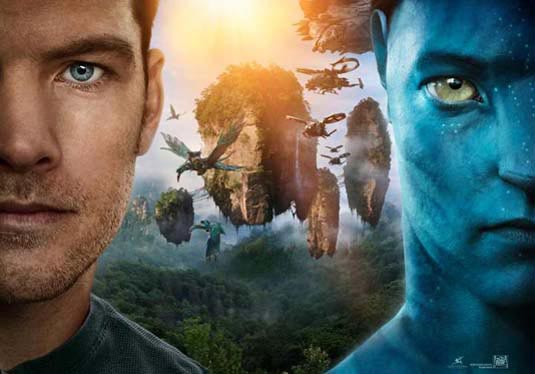
And number one is obvious, it's Avatar.
Avatar.
Oh, what's, what, Leighann?
What?
Go on, please.
Are you jealous that because they were hot women that were blue and you're not blue?
Is that the problem?
Oh, that is totally not my issue.
Do you go blue in your comedy?
No, not really, not really.
My mom comes to my show, she keeps me honest.
I wonder if the blue, the blue, the blue man group, you know, I wonder if they have, that'd be cool.
They have a lawsuit actually, that's the problem.
So of course there was Star Wars Episode 1, Phantom Menace, so that's Episode 4 for those who are not Star Wars geeks.
It's Episode 1, they came after Episode 1, 2, 3, 4, 5 and 6.
Well, I heard they were going to make three more Star Wars movies after the original three, but as far as I know, those were never made, Neil.
Well, let's do these one at a time.
Let's go back to Avatar.
I thought Avatar was fine.
I didn't have issues with it.
I was a little concerned about the Unobtanium, like what the hell is that?
But otherwise, Phil, what did you think?
Unobtanium is a standard science fiction joke.
That's been around, I don't even know how long.
Apparently it was a serious mineral on this planet.
Well, I think they named it that tongue in cheek because it's been used by science fiction authors since the 50s.
I mean, I remember reading that as a kid.
And in The Corps, they do the same thing.
In the movie The Corps.
We'll get to The Corps a little later.
But they use that as a shield to protect them from the Earth's heat.
So it's sort of a standard kind of an inside joke.
Standards like placeholder name for whatever.
Something hard to get.
But do you otherwise have issues with it?
Nine foot blue people on a planet moon.
I actually haven't seen the movie.
Wow!
And I think that's all that needs to be said, quite frankly.
Well, forget you then.
Leighann, how do you do with Avatar?
I would have liked to have seen a script.
That would have been nice.
Some real writing.
All the writers in the world who are unemployed.
It would have been nice.
Didn't they spend 15 years making this movie?
They did.
At no point did nobody say maybe this needs a script.
That's what bothers me most.
All these wonderful, well, quote unquote wonderful science fiction effects, these special effects, and not one writer.
The writers go to the meetings.
Dude, everybody's unemployed.
Everybody would have signed on.
I tweeted about it, and I remember saying this movie, the recipe for it is like three parts The Matrix, two parts Pocahontas, because there's a lot of sort of evil Westerners taking over the native culture that's all connected to nature.
It was very subtle.
And Fern Gully, that's what everybody was telling me.
And I saw Fern Gully with my daughter when she was very young.
And everybody said it's exactly that movie.
And there they were with USB ponytails, because they take their ponytail, plug it into the plants, and then they became one with the plants.
Electrochemically one with them.
Normally people connect with plants and then become one with something else.
Oh, yeah, yeah, by smoking the plants.
That's how I've heard about this.
And now that's a different show as well.
So how about Jurassic Park?
That one is everybody's favorite, you know.
How do you feel about that?
I have to distinguish between a movie I really enjoyed and the scientific accuracy of a movie.
And I can do that.
Okay, why didn't Jurassic Park do both?
Well, because the science in it was silly.
Uh-oh.
You know what?
No giant dinosaurs, sorry.
Incredibly enjoyable movie, fantastic special effects, great soundtrack, I like John Williams, but being able to extract DNA from a mosquito's stomach just doesn't work.
Well, it doesn't work yet.
It won't work at all.
Basically, what your stomach is designed to do is take substances from other things, plants and animals, and digest them.
I thought they covered their ass on that.
Oops.
They covered their buttocks on that one.
They showed the mosquito freshly sucking the blood of whatever dinosaur it was.
Moments after that, a bead of sap covered over the mosquito.
So it got trapped with undigested blood in its belly.
Now, you know what?
I'm not a biologist.
Do red blood corpuscles have DNA?
They don't have a nucleus, do they?
This is where we need a colon.
Yeah.
So if you're out there on Twitter...
Tweet us.
Now, I have colleagues at the museum who study amber, right?
Because the mosquito was trapped in amber.
And they said the best amber for this sort of thing is in New Jersey.
Really?
Yeah, but in the movie they showed them going to some exotic island and plucking it out of a cave or wherever.
So it just would have looked a little less interesting if they went to Hackensack to get this.
Amber is oranges, right?
How could they tell that they could go to New Jersey?
Amber is amber.
So they missed an opportunity to tie this in with the Jersey Shore?
There you go.
The Snooki is sort of the same color, I think.
And we would like to see her encased in amber.
So how about Transformers?
What did you think of that?
Okay, perfect example.
I really enjoyed this movie.
People were going crazy.
Now I'm a little bit too old to have really gotten into the TV show because I think it was in the 80s, and by then I was already moving on to different shows.
Which was back when it was just a vehicle to sell a product.
Exactly.
But I figured, hey, giant robots beating the crap out of each other.
And you know what?
That's what I got.
Kicking butt, taking names.
Awesome flick.
And it was a funny movie.
I really enjoyed it.
The science of it was pretty silly.
Because you've got this object, which evidently has a huge amount of mass, and they shrink it down until it can fit in your hand.
And somehow all of the mass went away.
They were picking up and walking around.
So you had mass issues.
Yeah, exactly.
That was a pain in the mass, if that's what you want to go in there.
Pain in the mass, very nice.
This thing's down the size of a Rubik's Cube, and it should weigh as much as a mountain, and they're just running around with it.
Now, maybe it has special inertialist powers.
Antigravity.
Because when you shrink things, they never say that.
Yeah, they never say that.
But what I liked about it was how they constructed the cover-up for it.
I thought that was great.
That's why they built the Hoover Dam.
Because that's when they came, and that's where we got all of the high-tech discoveries from reverse engineering these transformers from another planet.
I thought that was a cool sort of back story to make that happen.
Yeah, and I thought it was fine.
Now, the second movie was not as good.
Okay, so we'll continue.
It was terrible.
You know, there was a NASA panel that got together to decide, I guess for the guidance of others, what the five best science-based movies of all time are.
And Transformers was on that list.
No, it was so not on that list.
But one of them, one of my favorite movies, a lower budget one, was Gattaca.
Gattaca, remember that?
Very good flick.
Yeah, very good flick.
And you know, the title of that movie is spelled by the letters of the amino acids that are the protein of life, the proteins of life.
Right.
Yeah.
I'm gonna write that down.
What else could they spell?
Is it tact?
Yeah.
So can you recite that there's guanine at...
Guano?
No, that's later.
Yeah, it's cytosine?
Cytosine.
Thiamine?
Or is that a, that's a thiamine?
And you guys are professionals.
Because I don't know this.
So for those who hadn't seen Gattaca, it's a story where you, where, where you can get your DNA selected for you so that your offspring can get the best possible version of the you and your mate that, that is possible, I mean, that is possible, that you can possibly construct out of it.
So they're not engineering DNA, they're simply, new DNA, they're simply assembling all the features that you want to have in your children from what already exists in your genetic profile.
And so it's basically a genetically engineered society, but not outside of the bounds of what you could have produced otherwise.
Right.
And the story becomes when everybody is genetically engineered to be superior, there are people who are not.
And how do they survive in society?
How do they, yeah, because they're not as smart, they're not as quick, they're not as, they smell worse, you know.
I mean, clearly this is not going to be covered in everybody's health plan.
This is going to be, that's a hell of a deductible.
So it's, it's, now, what was not a follow on to that, but was basically the same movie, but with a much higher budget, was The Island, which I thought was a high art.
The way they filmed it, the concepts, the emotion, the drama.
That was Scarlett Johansson, wasn't it?
Well, she was in it.
Yes.
Is that all you remembered from the movie?
Well, the thing is, I never saw it, and she was in it.
And so that might tell you, you know, something about this movie.
No, actually, I thought it was, I thought it was well done.
In this case, you can genetically engineer your twin, but the twin does not come into being at birth.
They can be born as adults, and then they live out their lives, and they are all you harvested for whatever organs you might need later in life.
And they don't even know it, they're kept on an island, well, on an intellectual island.
They don't know where they are.
They think they're on an island, and they just live out their lives.
And there's a fake disaster outside of this island where if they went out, they would die.
So they all believe that they're safe.
But then they're told that they created a safe haven for them, but not everyone can go.
So when their lottery number comes up, then they can go.
But that means it's ready, they get harvested.
They get harvested.
This sounds like part Logan's Run, part Lost.
And part Clonus, the parts, the Clonus horror.
I don't know if you ever saw this, a terrible 70s movie.
A terrible 70s movie?
Hard to believe, isn't it?
But, you know, I always wonder about this.
Why grow a whole person?
That seems like an awful lot of trouble to get a finger.
Oh, I shot my finger off making a salad and I'm going to have to kill this person.
Yeah, but if you're right-handed, you want that finger back.
Well, yeah, but I would just grow a finger.
Yeah, you'd just grow the finger.
Right, yeah.
All the histrionics of the whole person is so out there.
Now, another movie, I think one of my, the best, I think it's the best film of the 90s, maybe second only to The Matrix in my sort of sci-fi opinion, is Contact, the Carl Sagan story, Contact.
That got it.
I think we found a fan.
He's your boy.
Yeah.
You are so cool.
You like those turtlenecks.
You like those turtlenecks.
So, it's his story and it thinks through what it would be like to make contact, first contact with intelligent life that's out there.
And I think what they put a lot of effort into was capturing how the public would react to such a discovery.
Yeah, it was fantastic.
People would start out crazy.
Now you add this element on it, we make contact with an intelligent species, and then the crazy becomes crazy squared.
Right.
So, how did you react to it?
I thought it was great, but I read the novel, the novel is even better than the movie.
The ending of that novel still gives me chills when I think about it.
And part of the beauty of that movie is how they detect the civilization, how the civilization communicates with us, how that all works, is really quite possibly how it would happen.
It's based on Sagan's work.
So I agree with that.
We're wrapping up our first segment here.
We're going to go through the good, the bad, and the ugly.
You're listening to StarTalk Radio, back in a moment.
StarTalk, we're back.
Today's special guest is Phil Plait, who is a commentator extraordinaire on science fiction films.
And we're joined again by Leighann Lord.
We're talking about the good, the bad, and the ugly.
We're still in sort of the good segment of movies.
Contact is up there among the best movies, I think, that capture the science.
And it also captured, I think, the social cultural reactions to the discovery of life in the universe.
Did you otherwise have any issues or problems with the science as captured there?
There was one or two small mistakes.
Like what, like what?
I think it was when Jodie Foster is talking to Matthew McConaughey in the movie.
And she's trying to describe how many stars there are and how many civilizations there are.
Go on, go on, go on.
And she says if there are 100 million galaxies out there and if one in a million has...
No, no, no, I got it.
You know what, you know what, okay, I don't have to quote.
No, I'll tell you why I got it.
Because I was at the world premiere in Pasadena and Jodie Foster's two rows ahead of me.
And I've got the guy whose equation they're verbally capturing.
This is...
Frank Drake.
Frank Drake is two rows behind me.
This is the equation that estimates how much life there might be in the universe.
And Jodie Foster getting inch by inch closer to Matthew McConaughey with the sky in the background, Arecibo Observatory, it's a romantic moment in anticipation of their first kiss basically.
And she says, if they're, if, if they're.
He can hardly hold, hold it back here.
Of the 100 billion stars in the galaxy, if only one in a million of them had planets, and only one of the million of those with planets had life, and only one of the million of those with life had intelligent life, that still leaves millions of planets to find.
I think that's right, that sounds right.
If you do the math, that leaves 0.001 planets.
The division was wrong there.
You're ruining a romantic moment with math.
So I got all upset about this, because this is simple arithmetic.
And Jodie Foster went to Yale last I checked, and don't they have arithmetic at Yale?
So she should have turned to a director and went, cut, I can't do this, this isn't right, I'm in my trailer.
So I mentioned this to her at the after party.
I said, Jodie, you got this wrong.
She said, oh, I worked so hard to memorize that line.
And so it meant it was just a line rather than an actual mathematical statement.
And so then I thought maybe they could just put other words inside it, you know, like Forrest Gump style, you just sort of change the words with the image.
But no, they just left it in, because the very next scene was the two of them waking up in bed.
So this is what got her laid at that moment.
Was it bad math?
You know, it never did that for me, and I'm pretty bad at math.
Now I'm thinking if you talk about every galaxy in the universe, there are about 100 billion galaxies in the universe.
100 billion, sure.
With 100 billion stars in them each, that's 10 to the 22, and she had three factors of a million, that's 10 to the 18, that would leave thousands.
Thousands, if she did that for all the stars in the universe, but she started with the galaxy, and that's why that's the issue.
Yeah, and it's still wrong, because it would be thousands, not millions.
You know what, you guys are right, that is sexier.
Is it warm in here?
Oh, if only this were television and not radio, you should see her right now, she's fanning herself.
Leighann is feeling it.
Another one, how about, one of my favorite of the good movies is Deep Impact.
Absolutely.
Oh, yeah.
Got all the good science.
And what I liked about that is they understood that if you're gonna get hit by an asteroid, you'll probably get hit in the ocean.
Right.
Because Earth is a 70% ocean surface.
And of course, all the producers wanna destroy the cities, but you can still do that, you do it with the tsunami, as they did with New York and other sort of major coastal properties.
But what was your reaction to it?
I thought Deep Impact was a terrific movie.
I think the screenplay was written by a scientist.
And very much of the movie is quite accurate.
My favorite scene, I was watching this in the theater, my favorite scene is when they go to the comet, and in other movies, they might land on it.
But in this one, because a comet, even though it's 10 miles across, it's roughly the size of a large mountain or bigger, the gravity of a comet is very weak.
So you can't really land on it.
So instead, they pull up next to it.
You couldn't, it'd be hard to Stay there.
Stay there, a gust of a breeze would blow you into orbit.
Yeah, if a little bit of the comet evaporated, it would puff you away.
So instead, they park near it and then shoot basically Harpoons.
Harpoons or pitons.
Oh, there's a word for it.
What's the word?
Isn't it pitons when you like are climbing a mountain or something like that?
Oh, so I'm a city person, so I have no idea that that's the right word.
And I live in Boulder and I actually don't know.
So I'll probably get thrown out of the town now.
And then they basically winch themselves down to the comet.
And I was like cheering in the theater and I'm surprised I wasn't escorted out of there as well.
So they got their gravity right, is what you're saying there.
That was fantastic, yeah.
That was good.
And I actually use the tsunami scene when I give public talks about asteroid impacts because it is so well done and so accurate.
And I tell people that they might even be underestimating the damage from an impact like this.
And you gotta admit that that portrayed, I think, the best president there ever was in a movie.
In fact, yes.
Morgan Freeman as president was so convincing and so authoritative and he was played that role just the way you would want a president to be.
What, Leighann?
No, I was just asking, is anybody bothered that natural disasters of this magnitude always seem to happen on a black president's watch?
Anybody?
Anybody in my being?
Always?
Yeah, I was on, I was on.
Danny Glover, he was president, something went down.
I mean, anybody?
Yeah, yeah.
Maybe I'm going to too many rallies.
In 2012, was the president black in 2012?
No, I don't remember.
Did we see a president in 2012?
I blacked most of that movie out.
It was a three hour movie, I remember like four seconds of it because I think that's how long the plot actually lasted.
We'll get to 2012 because that's in the bad section.
Oh my word.
Is it really?
Kidding.
But I do want to add with Deep Impact, Deep Impact made one mistake that was kind of a big one.
And that is when they blow up the big piece of comets about five miles across and they blow it up, it actually disintegrates and still all the pieces hit the earth's atmosphere and burn up.
And the problem is that's still going to kill everybody because the energy of an impact of an object depends on its mass and its velocity.
It's the kinetic energy.
And when they blow this thing up, the mass hasn't changed.
It's just in small pieces.
And the velocity hasn't changed either.
So the total mass, excuse me, the total energy that's released by this impact is exactly the same.
It's just spread out over more area.
So in the end of Deep Impact, really everybody should have died anyway.
Bummin us out.
Yeah, sorry.
So no residuals for anybody on this movie.
That's true, so, you know.
But one thing I do love about that movie is-
Wait, wait, it is possible, wait, wait, wait.
It is possible that if the pieces are small enough, they'll burn up in the upper atmosphere and their heat radiates back into space.
Whereas, if the whole thing gets through, then all the energy goes to Earth's surface.
Maybe, maybe, but we're talking about an object that is five miles across.
So I'm still thinking that even if, even if like 5% of it dumps its heat into the Earth's atmosphere, we are truly screwed.
It's still a bad day.
It's still, you basically get flash-cooked.
Yeah, yeah, it would, bad.
No SPF for that, eh?
SPF a billion, yeah.
So what else do I got here?
I got my list here.
Is there any particular, what's your favorite science fiction movie of all time that got the science right?
Oh, they got the science right.
Well, actually, Deep Impact is way up on the list.
Contact is way up on the list.
2001 has really accurate science.
It has its errors.
I know a couple of errors in science, yeah.
Tell me one, we'll just go back and forth.
They are so nitpicky.
Let's go back and forth.
Okay.
And who, the last man standing wins.
Okay, go.
Oh, man.
2001, A Space Odyssey, 1968, was it?
Yeah, okay.
Stanley Kubrick.
When they're on the moon and they go to Tycho base and they show the earth over the horizon, it's too close to the horizon.
Too close to the horizon.
Yeah, it would be much higher up.
Earth never sets from the near side of the moon.
Right.
But did it fit nicely in the frame?
Oh, well, sure, that's a canonic scene.
They took some creative liberties to make the scene look cool.
If by that you make mistake, then yes, we agree.
That's a creative mistake rather than that they don't know what they're doing mistake.
I'm glad you agree with me.
One for me, go ahead.
Okay, good.
If you calculate the rotation rate of the space station, it is three times too fast for the gravity to make one G on board the space station, on board the rotating.
I've done that calculation.
I think that's right, yeah.
Yeah, three times.
It's way too fast.
It's way too fast, but it looks nice.
Yes.
So I'll give him that, because if it went slower, it's too slow and it's too...
The movie's already kind of slow in those scenes.
It would match the pace of the movie.
I watched that movie when it came out and I think I'm still watching it.
That's how slow that movie is.
All right, so, your turn.
You want nitpicky?
Yes, go.
When Haywood Floyd is on the Pan Am shuttle, Pan Am, which is now out of business, by 2001, actually, and he's on his way to the space station, I think it was, they give him some food, and he slurps it up through a straw, the level of the drink or whatever goes back down when he releases with his mouth.
And that happens because of gravity.
I believe it happens because of gravity on the Earth.
I can actually explain that, though, if the food is in sort of an airtight container, then air pressure is all you need to suck it back down the straw.
And I've gone back and forth with this to people, but-
Wait, what you're saying is that he's in zero G on that trick.
He's in zero G, that's right.
So therefore, the liquid should just stay up in the straw.
I think so, but I'm not sure.
If he's drawing it up through a container, then the pressure gets lower.
It would go back down, but it's arguable either way.
The rebuttal that I heard was that he just simply blew it back down.
Really, okay.
That's the rebuttal.
But I think air pressure would do it.
I think that's one of those marginal ones.
Oh, in part to inside the vehicle itself.
Yeah, yeah.
Your turn.
I'm trying to remember the movie.
Okay, I got one.
You ready?
The monolith is supposed to have zero albedo if you read the novel, okay?
Yet, all images of the monolith, you can see the edge between one side and the other, which implies that it reflects differently on one side than the other, whereas it has zero albedo, all light that hits it is absorbed, and you would not be able to see an edge with a slightly different reflectivity than as you do in the film.
Albedo being the reflectivity, zero is perfectly black, white is perfectly white.
You might be able to explain this as a phase effect.
If the light hits it at a different angle, then it might reflect off, because albedo does depend on the angle of the light hitting it.
This is an alien zero albedo.
They'll get every light that hits it.
It's an alien thing.
All right, I'll give you that one.
You'll give me that, okay.
Okay, your turn.
I'm trying to, it's been so long since I've seen the movie.
Haywood Floyd is played by a different actor in 2010, the sequel.
He's younger.
You have an issue with that?
Roy Scheider, no, I don't know.
I'm trying to think something, I don't know.
I'm desperate.
Okay, I'll give you time, we'll come back to that.
Actually, you know what?
There's a scene in the moon bus when they go from the moon base to see the monolith, and it's unclear whether they're actually in a ballistic trajectory or just-
Or suspending themselves.
Like using rockets or jets to suspend themselves.
When we come back on StarTalk, we'll talk about the bad ones in The Good, The Bad, and The Ugly of science fiction films.
We're back.
Just to finish out The Good before we get to the bad of science in science fiction films, I gotta give a shout out to the animated feature Chicken Little, when the sky was falling.
I gotta give a shout out.
Didn't see that coming at all.
That, wait, Chicken Run or Chicken Little?
Not Chicken Run, which I enjoyed.
That was the-
That's not in the notes, people.
With the Wallace and Gromit.
Chicken Little, where the sky is falling, all right?
So how does the sky fall?
In the movie, they're aliens who come to visit, and they replace the sky with these tiles that are hexagonal, because they'd have to be to tile a surface, no other shape, well, square can do it, I guess, and triangles, but how many shapes can tile a surface?
A hemispherical surface?
Yeah, not very many.
Well, if it's a big enough hemisphere, you couldn't make it.
If they're all the same shape, yeah.
Yeah, yeah, so they have hexagonal shapes, and the way they work is, it's a piece of hardware that carries forth the image of what's behind it.
So if you drop one of these on the floor, you say, oh, that's a hexagon, a few seconds later, it reads the entire carpet pattern, makes that the upper surface, and so therefore it looks like it disappears.
So you don't even know you're walking on these tiles.
So the entire, so what had happened was Chicken Little saw one of these hexagons accidentally fall out of the sky.
So the aliens were doing something, I don't know what it was, but I just thought that they had to put in some kind of topology, some geometry, and just a little shout out to Chicken Little.
That's actually pretty good.
It is.
And he's got one of these, and he plays with it.
He puts it in front of his bed, and it disappears, and it becomes, it looks like his bed on his floor and his cabinet.
So anyhow, just a shout out.
I can find a lot of uses for something like that.
Let's go to the bad.
I've got Phil Plait here, the bad astronomer, Leighann Lord, comedian.
2012, the movie.
Phil.
Yeah, yeah, you know what?
I didn't mind the science.
It was a neutrino transition out of the sun, which was a new decay of the neutrino that gets absorbed inside the earth, heated in the earth from the inside out.
I didn't have a problem with that.
Really?
Wow.
Really?
And our time is up, folks.
Thanks for listening.
My big problem is the premise that a limo could somehow save you under these conditions.
Well, the 75th time that John Cusack and Amanda Peet narrowly escape a crack opening up underneath them as they're running away, I said, ugh.
But this idea of, neutrinos are a subatomic particle.
They are, they move in such a way that they don't interact with normal matter very well.
So the thing that most people say is they can pass through a layer of lead without interacting with it.
And honestly, that's not so far off.
And so these things pass through the earth.
There are millions of neutrinos passing through you right now.
They pass right through you, you don't even know it.
Yeah, you felt that?
Yeah, that's right.
And the point is the neutrinos don't know it either because they're not interacting with you.
Exactly, and so for them to actually interact with the earth is kind of ridiculous.
They invented a new transition of the neutrino state that does interact with the earth.
Once you buy into that premise, yes, the earth would be heated from the inside out.
I don't have an issue with that.
Okay.
Okay.
We'll have to agree to disagree.
How about the core?
Neil's wrong.
How about the core?
That I think we can agree with.
An enjoyable movie, like the acting, I thought it was really funny and enjoyed it.
Just terrible.
There's a science in it was just terrible.
The idea was that the earth's core stops rotating and somehow this is collapsing the earth's magnetic field and it lets dangerous things from the sun.
Evidently not super neutrinos in this case, but other things happen.
And the-
Oh, because the magnetic field would normally protect us from these dangerous forces from the sun.
And there are problems with this in that the core can't just stop rotating.
And even if it could, I don't think it would really matter.
But then what they show the Earth's magnetic field not working anymore, what was starting to hit the Earth were microwaves.
They specifically say microwaves.
And there's the scene with the Golden Gate Bridge in San Francisco, and these beams are coming down and boiling the water and doing stuff like that.
And it's like, well, you know, microwaves aren't affected by magnetic fields.
Microwaves are just another form of light.
They're not particles.
And so they're not deflected by the Earth's magnetic field at all.
We could have one or not.
Microwaves from the sun are still coming.
And even if they are, it's not like your microwave oven.
The sun barely puts out microwaves at all in that case.
They can't cook anything.
So that whole thing was just wrong from top to bottom.
So one of the worst, and in fact, on a NASA panel, they judged that as one of the worst science movies of all time.
I'm not surprised.
And as an astronomer, I could watch it and enjoy it.
All of my friends who are geophysicists.
Yeah, I got some of them too.
They couldn't stand it.
Yeah, they felt the same way about that movie.
They needed therapy.
They needed, they so needed therapy at the end of that movie.
It's wrong, it's wrong.
Yeah, and there were some, honestly, some good scenes.
Now they know what we feel like, because more of the sci-fi movies are cosmic rather than geological.
Right.
And they're up there saying, oh, you just overreacted.
No, we were not.
No, no.
See?
What's that?
That brings up, for me, an interesting point, does anyone when they're writing this stuff ever say, hey, I should call somebody and do a little fact checking, do a little background?
Apparently not.
Well, the guy who wrote the core, now I may be misremembering this, but I believe he had a master's degree in geophysics.
And that explains a lot about our education system.
Well, I don't know if I would say that.
The problem here is Hollywood, right?
You hand in a script and then 50 other people rewrite it.
So you're siding with the scientists, assuming that the scientists got it right and that Hollywood messed it up.
That's very possible.
That betrays your profession.
I gotta stick by my peeps.
Your peeps.
How about Armageddon?
That's everyone's favorite movie to hate.
You know, by the end of that movie, I was rooting for the asteroid.
I have never seen a movie with more mistakes in it in my life.
Give me your top three mistakes.
I can't.
I simply, the credits.
I mean, there are-
Wow, misspelled names.
This movie has more mistakes than frames.
From the opening scene where they talk about the dinosaur killer impact, where Charlton Heston narrating, and they say the explosion was the force of 10,000 atomic bombs.
And it's like, no, try 10 billion atomic bombs.
It was way more than that.
You know, unbelievable.
In a movie where they're trying to, they exaggerate everything in the movie.
The one thing that's actually scientific, they screw it up and underestimate it.
And they underestimate it.
So that's how bad it was.
They didn't even get the thing that they should've gotten right, right.
And so you've got this asteroid the size of Texas, discovered 18 days before impact.
They're going to blow it up with a bomb, split it in half, and the two pieces are going to expand far and fast.
And by the way, an asteroid the size of Texas, asteroid the size of Texas, we would've found that 200 years ago.
Exactly.
That's a huge asteroid.
Big mistake.
The biggest asteroid in the solar system series is roughly the size of Texas.
And it was discovered in 1801.
So yeah, anything like that we'd see.
If it took 18 days to get from the asteroid belt to the earth, it would be moving faster than any spacecraft we've ever launched.
I mean, that's hugely fast.
It's hundreds of millions of miles.
They're sending the space shuttle, which is not equipped to go beyond a couple hundred miles above earth orbit, that's sending that out to the deep space.
Oh, but this was the X-35 secret military space shuttle.
You know, and so, yeah.
And then they're gonna blow it up with a bomb that's gonna split it in half with the two halves separating and missing the earth.
You can calculate the energy of that bomb, roughly.
You have to make some estimations, but you can do that.
And it would actually explode with the same energy that the sun emits.
And so, we don't have a bomb like that.
That we know of.
That we know of.
It's a hundred million gigaton bomb, I think is the number.
I'm something like that.
Yeah, that would be, that's bad.
I mean, in a word, that would be bad.
Bad, bad bomb.
And so, at that point, when Ben Affleck was crying, at that point, I was like, yeah, I'm with you, Ben.
And it's Bruce Willis saving the world, you know?
Cracker Jack oil drillers.
I wanna like Bruce Willis in this movie.
Liv Tyler is in this movie and I didn't like it.
That made it work for me, I think.
You know, that was working.
And you know what, it is a funny movie.
I have to admit, there are enjoyable moments to it and everything like that.
But honestly, a friend of mine likened it to having a steel pail put over your head and somebody hitting you with a wrench for two hours.
And that's really it.
That's pretty specific.
Yeah.
But I thought if actually it was written in a rather witty way.
There was a lot of good one-liners.
It was kind of fun and jocular.
Would you agree?
Yeah.
I'm twisting your arm on that one.
I mean, when Steve Buscemi gets space madness, why is there a machine gun on a shuttle?
What do they need this for?
Ugh.
All right, so now, okay.
So you vetted, I got to vet on another vent.
I've got to, you vetted your venting, I'm gonna do this.
I actually have a run-in with Jim Cameron regarding Titanic.
I know the story.
You know the story.
I like this, this is a good story.
May I tell the story?
It's a good story.
I was one of the last people to watch the Titanic in the movie theater, and I'm watching it, and there's Kate Winslet, okay, the ship sinks, she's on the flow, on the plank, looking up, singing deliriously, looking up into the sky.
We know the day, the time, the year, the location, the longitude and latitude of where the Titanic sank.
There is only one sky she should have been looking at as she looked straight up, and it was the wrong sky.
It was not only the wrong sky, the left half of the night sky that she looked at was the mirror reflection of the right half.
It was not only the wrong sky, it was a lazy sky.
Cameron cheaped out.
Man, and I don't mind you being loosey goosey, except that the entire marketing premise of that film was on the accuracy of the details of the ship Titanic, because he had a submersible and went down there and knew what the wall sconces look like and the China patterns and the state rooms.
If you're gonna boast about that, something I can't double check, and you're gonna on the sky, which you can double check with a cheap planetarium program you put on your computer, I was pissed off.
When we come back, I'm gonna tell you what happened when I told this, when I got up in the face of Jim Cameron.
When we come back to StarTalk Radio.
This is StarTalk Radio, welcome back.
So, where do we leave off?
Well, first of all, you can follow us.
We friend us on Facebook.
I guess it's now Like Us, I think is what it's called.
Oh yeah.
You gotta like us.
But just find us, we're StarTalk Radio, and we tweet at StarTalk Radio.
I tweeted Neil Tyson, and we got Bad Astronomer tweeting, and Leighann Lord just bringing out piece of the universe.
And I just tweeted, so excuse me.
Is that what that was?
Okay, I thought that was Neutrino's passing through you.
So where do we leave off?
I think I was telling my, retelling my encounter with Jim Cameron regarding Titanic.
Sounds like a throw down.
It was so a smack down with Jim Cameron.
So had he not made any premise of accuracy in his film, I would not have cared.
I would have just said, fine, he made up a sky, I'm not gonna lose sleep over this.
So it was a matter of inconsistency in delivered product.
So I went, I met him in California.
We happened to be attending the same conference.
And I came up to him and I was polite.
And I said, Mr.
Cameron, Titanic's great, and I understand, all right, fine.
But I wanna call something to your attention.
The sky that was above the sinking ship was the wrong sky.
And I was wondering what you, and I wanted him to grovel at my feet, right?
Is what I wanted to have happen in my immaturity.
And he said, oh, actually that was done in post-production.
And so that must've slipped by.
That was so honest and simple, but still I was left unfulfilled.
I wanted him to beg forgiveness, but I had no rejoinder at that point.
Three years later, I would see him again.
He would be visiting New York, getting an award from Wired Magazine.
And their party was in the Hayden Planetarium Hall of the Universe.
And they invited me just as a courtesy.
It was a rental, but they invited me as a courtesy.
I'm having dinner with the guy.
The wine is getting poured.
There's only eight of us around the table.
And I said, I gotta bring this up again, because he did not react the way I wanted him to react.
Glutton for punishment.
And I said, I said, Jim, because now he's Jim, right?
So I said, Jim, how is it that you could have made that mistake, given how much attention to detail was there before?
And he said, last I checked, Titanic Worldwide has grossed a billion dollars.
Imagine how much more it would have grossed had I gotten the sky correct.
I'm guessing that wasn't the reaction you wanted.
Man, and my tail went between my legs.
There was nothing, he just called my stuff out right on the spot.
And so I was quiet, the rest of them, sort of quiet, the rest of the meal, but I didn't bring up the subject again.
Three weeks later, I get a phone call from some guy who says, hello, is this Dr.
Tyson?
I said, yes.
He said, I forgot his name, Johnny Jones.
I work post-production for Jim Cameron, and he's going to release a 10th anniversary director's cut, and he'll be adding new scenes, and he tells me you have a sky he can use.
It was, yes, yes!
It was like he shoots, he scores.
It is good to be the king.
You see, and the lesson I get out of that is I need to get my own planetarium, clearly.
For real.
Man.
Don't forget the wine.
One of the few triumphs we can call attention to here.
So, let's get to the ugly.
Let's talk about ugly creatures, ugly aliens.
How about Alien the Movie?
Tell me about that.
Awesome flick.
Now, my wife disagrees.
She thinks it's really boring.
But, you know, it's a different movie.
It was made in 1979.
Well, tell me about the science.
Did you like the alien in that?
I thought the alien was so cool.
It was great.
It wasn't just an actor in a lizard suit.
Well, it was based on HR.
Giger drawings and his stuff is so creepy.
I knew that.
Yeah.
And so, oh, I see the geek off starts again.
But, you know, it asked it for blood.
I can believe that.
That would be an extraordinary defense mechanism.
And, you know, whether it could evolve naturally or not, I don't know.
But how can something be growing inside of you and you not know it?
Well, it was little.
Oh, no, I don't know.
Are you serious?
Only a man could make that statement.
You know, usually sometimes you have a good six weeks before you actually know.
Well, something could be growing inside of you and I wouldn't know it.
So we're not even counting germs, fellas?
Viruses, diseases, nothing?
You're full of germs.
Isn't most of your body weight or?
They're finding that some stupidly high fraction of your total body mass is microbes.
Not even you.
It's like other creatures.
And there are things that are almost visible to the naked eye living on your eyelashes.
And I mean your eyelashes.
Just mine, specifically.
Although I'm still a little stuck at the fact that you married a woman who doesn't like aliens.
She just thought it was slow.
She prefers faster movies.
I can understand it.
She's younger than I am.
She's younger than I am.
I gotta get back to creatures growing inside you.
So Leighann, how many days before you know you're pregnant?
Ooh.
What?
You should ask me how many, what?
You said you would know.
There's time where some could grow inside of you and you wouldn't know.
How much time?
I do not know.
Because you haven't been pregnant yet.
No.
So you know more informed about this than either Phil or I.
But we're still talking about growing things inside of a woman and you don't know instantly.
You're not your own pregnancy test.
Oh my gosh.
That would be interesting.
Whoa, I got pregnant that second.
Yeah, that would be interesting.
Well, in the movie's defense, there is some evidence that the aliens were genetically engineered.
And in the Predator versus Alien movies and in the series of books, the Predators developed the aliens as the ultimate hunting game.
Let's talk about Predator.
How about Predator?
What'd you think of that?
I enjoyed Predator as well.
The infrared vision and coming to earth to hunt people.
But it was still very humanoid.
It had two arms, two legs, a torso, a head, and a neck.
Well, I've talked to Seth Shostak.
And the dreadlocks, yeah.
Seth Shostak, who was an astronomer with the Search for Extraterrestrial Intelligence, and I talked about this, and he actually feels that the humanoid form is actually a pretty decent shape for an intelligent life form.
I agree with him.
I don't think it's the only one.
I smell bias.
I have a cocker spaniel.
He has four legs.
He's brilliant.
I see, PhD in cocker spanielism.
All right, how about ET?
Everyone said he was cuddly.
I thought he was ugly as sin.
That's right, and that whole neck thing freaked me the hell out when I saw it.
And any alien has glowing fingers and starts walking towards me with a finger glowing.
I'm of a certain age where I've gone to the doctor and they've walked towards me with a finger extended.
Out of here, gone.
There's so much more to talk about, but all good things must come to an end.
You've been listening to StarTalk Radio.
I'm Neil deGrasse Tyson.
As always, keep looking up.
See the full transcript



 Unlock with Patreon


 Become a Patron