NOTE: All-Access subscribers can listen to this entire episode commercial-free here: Rocket City Rednecks.
Transcript
DOWNLOAD SRT
Welcome to StarTalk, your place in the universe where science and pop culture collide. StarTalk begins right now. Welcome to StarTalk Radio, I'm Neil deGrasse Tyson, your personal astrophysicist. I also serve as director of New York City's Hayden Planetarium...
Welcome to StarTalk, your place in the universe where science and pop culture collide.
StarTalk begins right now.
Welcome to StarTalk Radio, I'm Neil deGrasse Tyson, your personal astrophysicist.
I also serve as director of New York City's Hayden Planetarium at the American Museum of Natural History.
And I got with me today, Chuck Nice.
Hey, Neil.
Chuck Nice comic.
That's right.
That's your Twitter thing, everything.
Everything, Chuck Nice comic.
All right, thanks, love you on the show, thanks for coming, showing up for these things.
It's always my pleasure.
And we have a special expert guest today.
Yes, we do.
He's sitting over to my side here.
Yeah, he undid his tie, his bow tie.
It is the one, the only Sir William Nye.
Sir William Nye.
I gave him the, it's my personal sir for him.
I don't know if the queen said that, but I, Bill.
That's a matter of time.
Bill, thanks for coming.
Oh no, no, no.
It is I who must thank you.
No, it's great to be here, you guys.
Today we're talking Rockets.
It is Rockets all the way, because today we're going to talk about the Rockets City Rednecks.
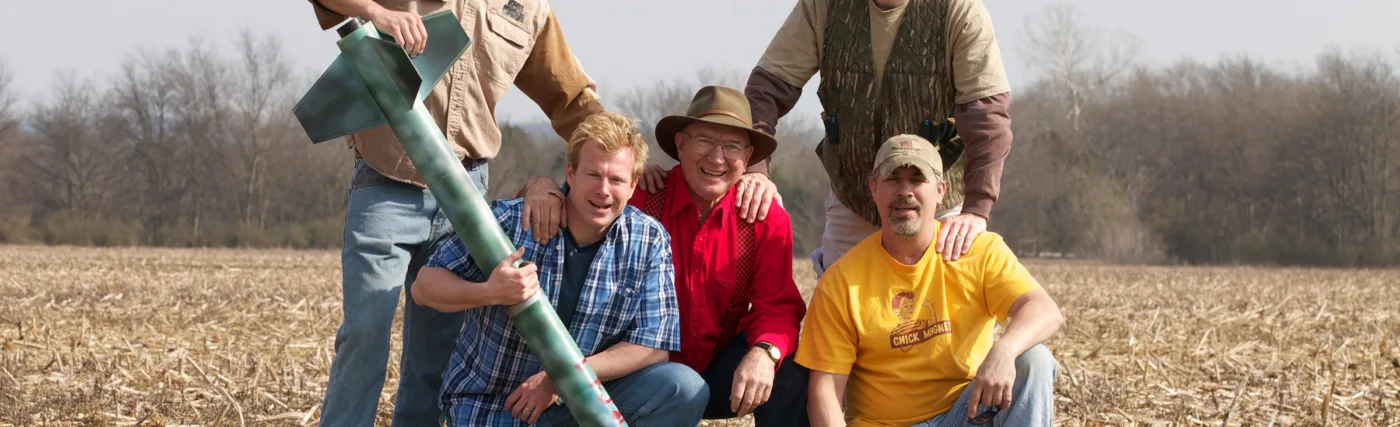
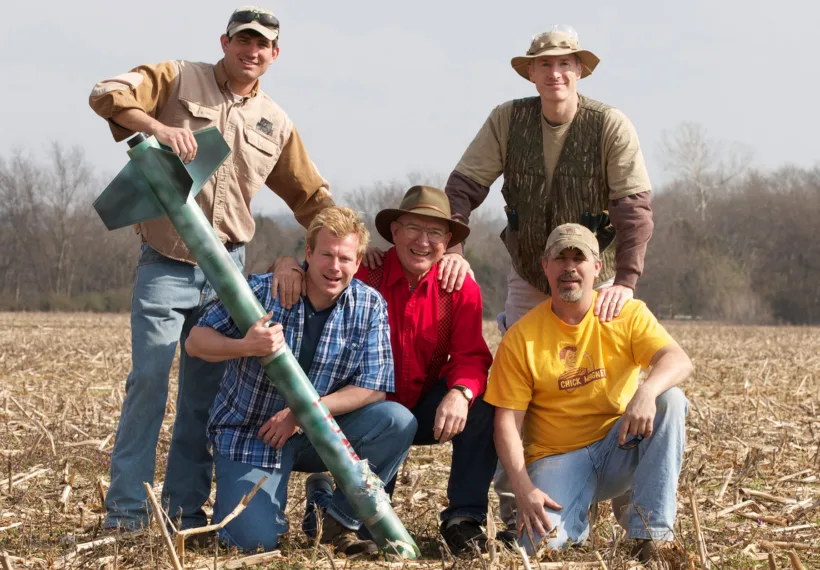
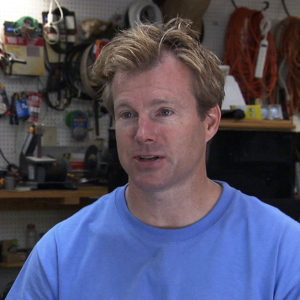
And we have, who visited me in my office, Travis Taylor, one of the stars of Rockets City Rednecks.
By the way, this was a TV show that went two seasons on the National Geographic Channel, then got canceled.
But it's in heavy reruns right now.
And so maybe we can get this thing back.
Yeah, a little revival.
Rockets City revival.
Well, it's guys that blow stuff up.
What's not to love?
Let's find...
No, that's the premise of the bit.
So the premise is, Rednecks is now a term of endearment, I think, ever since the Redneck comedy tour.
And Jeff Foxworthy, and you know you're a Redneck.
Bill Envall.
Right, and none of that was racist or anything.
It was fun, self-poking, you know, poking cell phone.
Exactly.
So I think that gave the word Redneck a little different kind of currency than when I grew up.
Right.
Yeah, you guys might have a different view.
A little bit of a different view.
A little different view.
But that's okay, you know, times move on.
Y'all ain't from around here, are you?
So it features people, now Rocket City, Rocket City is Huntsville, Alabama.
I don't know how many other people know that.
That's where the Saturn V rocket was like designed and built for going to the moon.
And...
You can take a train track from there to Cape Canaveral.
Straight, straight in, so that's where they bring the supplies, Cape Canaveral, Florida.
So here we have some engineers who are homeboys, homebred, and now they just want to have fun.
And Bill, yeah, it was a reality show for geeky southern rocket scientist engineers.
Yes.
What a premise.
Well, the thing is, it's a reality show.
When you say geeky redneck scientist engineers, that totally smacks of fantasy.
That's how it looks right now.
Well, just we all have this perception.
Now look, I have family, I got family in Appalachia.
My nephew, this guy is my flesh and blood.
I cannot understand him when he talks.
With that said, we have a perception that people with southern accents are not rocket scientists.
That's the stick of the show.
But here they are.
Otherwise, you'd just be called Huntsville engineers, but it's rocket scientists.
Ooh, Huntsville engineers.
Man, turn it up loud.
Let's go to our first clip.
Travis Taylor visiting me at the Planetarium in my office.
The production company was asking, well, what would we call it?
And I said, well, we're in the Rocket City.
It's gotta be Rocket City something.
A lot of people in the country do not know that the rockets that went to the moon, like this Saturn V you've got over here in your office, was built in Huntsville, Alabama.
And I said, you know, I've got it.
We ought to call it the Rocket City Redneck.
He says, well, I don't know if we can do that because people think Redneck is a bad thing to call people.
I said, well, no, no, let me go through the historical origin of the phrase.
I've found through historical analysis, at least three origins of the word Redneck.
Well, where it's pertinent to us is the Southeastern United States sharecroppers, farmers, all of the resources that they had on this farm and they had to keep it going.
Their family was there.
If something went wrong, they had to fix it themselves with only the things they had available.
On the spot, in situ, out of the garage.
That's exactly right.
Or the barn in that case.
And they had Rednecks and farmer's tans, right?
And so they became known as Rednecks.
And then, when we took the German rocket scientists from Peenamunda after World War II, they needed a place to go.
They didn't really like white sands in New Mexico.
And Warner Von Brown saw-
The Warner Von Brown.
The Warner Von Brown saw North Alabama and said it reminded him of home.
And they said, let's move here to the Redstone Arsenal in Huntsville.
You know, that Saturn V right there had something like two million parts.
About 100 Germans came over for the rocket program.
A hundred guys are not gonna build two million parts.
It took a hundred German rocket scientists and North Alabama full of Rednecks to put that together.
And that's where Rocket City Rednecks came from.
So we got to the moon on the sweat equity of Rednecks.
That's exactly right.
That's exactly what I'm saying.
Wow.
There you go.
There you have it, man.
See, look, notice that you guys are right into, you're playing right into it.
Well, you can't help but talk like that.
I was saying to you guys, I met y'all.
You're right, so Bill, that is the stick.
I mean, you don't expect it and they're that and so there it is.
I mean, that's how they...
So I used to work in an oil patch.
I don't know if you know this.
An oil patch?
In the oil field.
And there was a perception of my bosses in Seattle that people with Southern accents weren't that sharp.
That turns out not to be entirely accurate.
Well, yes.
Well, that's the whole point of all this here.
Have you guys ever been victimized by generalizations or scary stuff, has that ever happened to you?
Let me think, I'm gonna have to go back a little bit.
For new listeners, you're unfamiliar.
So we got Wernher von Braun coming to...
Who's not African American.
Simply the United States, but Alabama.
Right.
To build, I mean, this could only happen in America.
We have someone who is making V2 rockets.
The Vengeance rocket.
The Vengeance two, Vengeance rocket.
Right.
For...
That's your German right there?
That's my German accent.
So he leads this program.
By the way, at the time, they knew that these kind of rockets would get you to the moon, or get you off of Earth, wherever else they would take you.
And so a German rocket pioneer who was fought with the German army with his brain comes over to the United States, is put in Alabama with the seat of the Civil Rights Movement, and then makes the Saturn V rocket for the United States to go to the moon ahead of Russia.
America, what a country.
It is, no, it is remarkable.
Say what else, but that is remarkable.
What a country.
Let's go to my next clip to find out what, is this, is it all in the family?
What is it?
Let's find out what his lineage goes.
My daddy was a machinist for Warner von Braun for I think about six to eight years.
So he's got stories.
Oh, he's always got stories about.
Folks like that got stories.
Oh, he's got stories about mornings where von Braun would come by and hand him blueprints and they would build something and they'd come back and lock them up at the safe at the end of the day.
And there's one famous picture of von Braun and a bunch of other famous scientists of the time and some politicians.
And von Braun's got a stick and he's pointing at parts of the Saturn V.
And if you look in the very top right corner of the picture, there's a young 20 something year old guy and it was my dad.
And the reason my dad got to be in that meeting was because he built the model that von Braun was using for the demo.
So this is like family lineages right here, you know.
I mean, well, I suppose that that becomes the family business.
That's the culture.
Yeah, that's the culture.
Because, you know, it's a rocket town.
Well, the first time, did I tell you I'm like an adopted son of Huntsville?
Did I tell you that?
Of Huntsville, Alabama?
Yeah, I'll get back to that.
I'll tell you.
Well, you have a key to the city or something?
I'll tell you about that.
Do you have a valve to the rocket fuel?
What have you got there?
You know, because when Vordermarmor came to Huntsville, which is just a sleepy southern town, it changed the town.
It transformed it into like an engineering center in the south.
And when I first visited Huntsville and I came off the airplane and I see the ads in the airport and it's aerospace, and I said, this is not, I'm not in Kansas.
Let's get a little more about that culture that he experiences down there growing up with his pappy in Alabama.
I actually built a phase switching interferometer when I was in the 11th grade.
So you were a redneck geek.
Oh yes, very much so.
Phase switching interferometer is a radio telescope, like the type at the very large array out in New Mexico.
The one that Jodie Foster used.
Yeah, the one in Contact, right?
To listen to aliens.
And the idea there is you take multiple antennas and put them together to make a larger sort of antenna.
And it won state level competitions and took me to national level competitions and...
Did you just make it or did you actually do something with it?
No, no, no, I built it.
And then if you're gonna build it, you gotta use it.
Well, you didn't say what you used it for.
Yeah, I looked at Taurus A and at Cassiopeia A and...
Okay, so these are the remnants of...
Supernova remnants and possibly black holes in some of those.
At age what?
I was 15.
So you were destined.
Oh, I don't know about that.
Well, I gotta ask, if you were redneck geek at age 15, are you embraced by your friends, or are you slammed into the locker by the football quarterback?
What is the plight of a redneck geek?
You know, I think that's a lot to the benefit or whatever the right exact word is, but to speak very well about the North Alabama culture.
When the production company asked me about what we were gonna do, and I told them we were gonna do a show in North Alabama about really smart people, they really laughed.
You know, they gave me a hard time about that.
So then they started doing some research and they started finding out that North Alabama, particularly around the Huntsville Decatur area, the Rocket City area, has the highest average IQ of any other place in the country.
Nobody gave me a whole bunch of crap.
Our high school football coach, he actually was a member of the Beta Club.
So the legacy was already established.
Yeah, it was already there.
When I was working on my first PhD in physics, there was a girl in the physics department working on her.
How many people get to even start a sentence that way?
For my first PhD.
There was a girl that was studying with us and she was working on her PhD in astrophysics.
She paid her bills by working at Hooters.
She pays the bills.
The waiters and waitresses at the time, they were going through school.
No telling what you would be talking about at a restaurant.
You might be talking about how you're gonna solve this problem, whatever, and somebody else in the room would have some smart input.
Add to it.
Yes.
Even the Hooters waitress.
Even the Hooters waitress, believe it or not.
There you go.
Yeah, so this is a town where Hooters wait, everyone's so smart that even the Hooters waitresses are smart.
Yes, yes.
It's like, I could have been a doctor, but I'm surrounded by so many smart people, I could only get a job at Hooters.
No, she was working at Hooters, putting herself through school and after school.
Travis Taylor himself has three master's degrees and two PhDs, and a self-admitted redneck, and we can all definitely call him a geek.
He's a card-carrying geek.
I love it, man.
This is so cool.
I just get a sense of like, when I hear his voice, like he's working on a rocket with overalls and no shirt and with a Budweiser in his hand, you know?
And white gloves from the clean room.
Drinking his Budweiser with the white gloves.
Yeah, like when you walk into the lab, there's a sign out front that says no shirt, no shoes, no science, you know what I mean?
It's like, it's pretty cool.
Let's hear a little more of this clip and just flesh out the complete stereotype of the redneck culture.
Everybody does have guns.
We drink a lot of beer.
We have pickup trucks.
We watch football on Saturdays and Sundays.
Checking each one of those boxes, right?
But the real essence of it is what we call the stay with it attitude.
And no matter how hard something becomes, we've learned that we just stay with it.
The plow broke down or something.
They had to get the field plowed, you know?
So they figured out a way.
They stayed with the problem till they solved the problem.
My buddy, Raj, on the show, he has a saying that we use.
He says, we don't believe we've bit off more than we can chew.
We just have to learn to chew harder.
Excellent.
And that's sort of the philosophy that we live in.
That's sort of the way everybody is in the local community.
And that's the essence of it right there.
It's not giving up and rolling over.
So if you don't give up, it means you have to keep being ingenious about how you solve the problem.
Raj, my buddy's next door neighbor, is one of the production assistants on the show.
But one day we were filming and they wanted to do this real fancy shot where they rented this huge jib boom.
And that's this thing that's on a lever arm.
It's like a giant seesaw and it puts the camera on the end and it keeps the camera level no matter what angle you tilt the seesaw.
Well, they were paying something like $5,000 a day to rent that thing.
Yeah, it's expensive stuff.
Yeah, yeah.
Well, the PA is one of our neighbors.
He just went over, production assistant.
He went over and he found an old piece of gutter drain pipe off of his house that had fallen off.
Got some old weight set that he had and some concrete blocks and a grocery cart.
And he rigged up a jib boom that worked exactly as good as the one that we were renting for $5,000 a day.
I can't believe one of the parts was something that fell off the house.
Well, he wasn't using it.
The house doesn't need it anymore.
I believe that Yoda was completely right when he said there is no try.
There's only do or do not.
But what I tell people is sometimes there are do nots along the way to do it.
Now, wait a minute, how many Rednecks quote Yoda?
Oh, almost all of us.
We have a thing that we say around there all the time, it's may the force be with y'all.
There's the culture right there.
I like that.
I do too.
So like you said, the show ran two seasons and it was canceled for this current season, but it's in reruns.
I mean, it's all there on the internet and then you can find it and National Geographic is still airing it.
And so I kind of like, I saw the show.
It was fun watching scrappy, off the seat of the pants, ingenuity folded together with these PhDs and masters and Bill, you're an engineer, right?
Yes.
You gotta feel this.
Yes.
He'd say his, okay.
Bill's having a hard time forming a sentence at this moment.
No, he's not.
He's listening.
He's listening to you guys.
Trying to be respectful.
Here's what I'd like to know, especially since you said from your origins in Appalachia.
And this was at one point a farming town.
Do you think it's more of a farmer's mentality?
Like when people lived on a farm, like you have to make things work.
You don't have a choice.
You know, when people.
You can't call anybody.
Right, when people went west, you know, here we are, we're living in the middle of this place.
Our nearest neighbor is God knows how far.
And he doesn't know what he's doing either.
So we gotta figure it out.
Kansas called a handyman.
You gotta figure it out.
Like these guys, if you've been to Huntsville, they still grow cotton everywhere.
And there's a lot of machinery involved in that.
And so this is just part of the deal.
You just, you get used to being around machines, what to expect from machines, what maintenance machines need.
Well, in Huntsville, Alabama, remember I said earlier in the broadcast, I'm kind of an adopted son.
Yes, you were, yeah.
Yes, because there's a rocket, a scale model of a Saturn V rocket in my office.
It's about five feet tall.
And it's not just like plastic.
I mean, maybe plastic, but it's engineers.
It's beautiful.
It's beautiful.
Details, details.
It was a gift from the rocket center down there, because they have a Saturn V that's in captivity.
Well, they have two Saturn Vs.
One is visible from everywhere.
Right.
And I suppose you can point your compass to that.
Driving by, there it is.
There it is.
There it is.
A giant thing.
It's a thing.
300 feet tall.
It's a thing sticking up out of the ground.
100 meters straight up.
And they have another Saturn V in captivity in the Huntsville space and rocket center.
Now, in captivity, does this thing have a tendency to escape?
Is somebody gonna light the fuse?
So it's got actual flight tested parts.
It's kept under a roof.
Would have flown in Apollo 18.
Flight spares, as we say.
Flight spares, spares, exactly.
So they have sort of an exploded view, so you can see the different segments of it, and you walk the length of it.
And I said, this is huge, it's huge.
One of the five nozzles at the back, you can hold a tea party for five in each one of the five nozzles.
That's how big this thing was.
We're throwing money at it.
And we went to the moon.
Okay, so, so I was on a committee for ABC News to select a list that would become the seven wonders of the United States.
And I said, you gotta put this in there.
You gotta do that.
And I was fighting other things people wanted.
But I finally won.
I won to get my one out of the seven in there.
And so that Saturn V rocket in captivity is now one of the seven wonders of the United States.
And they loved it down there.
And ABC News went down there and broadcast live from the center.
And since then, I got like certificates and stuff.
So I feel like I'm gonna adopt it.
You're a son.
You're a son of Huntsville.
You're a Huntsville hero.
Testify.
Huntsville hero.
We are listening to StarTalk Radio when we come back more of my interview with Travis Taylor.
He's one of the stars of the reality show Rocket City Rednecks.
We're back on StarTalk Radio.
We're on the internet at startalkradio.net, and we tweet at StarTalk Radio.
And my two guests, Chuck Nice.
Yes, sir.
He tweets at StarTalk.
I do retweet StarTalk Radio.
You're tweeting at Chuck Nice Comic.
Chuck Nice Comic.
And I've got the one and only who now lives in town in New York.
Now I'm gonna exploit that fact.
He was out of my arms reach in LA, now he lives in New York, Bill Nye, the science guy.
The science guy is your Twitter handle.
And I'll do some retweeting of the StarTalk.
Yeah, so it's the science guy or science guy?
The science guy.
All in the Twitter handle, he's got it.
The science guy.
So we're talking about Rocket City Rednecks.
Rocket City Rednecks, a TV show, which is a reality show.
A TV show.
A reality show on engineers.
National Geographic.
Yeah, for a National Geographic channel.
Engineers who live in Rocket City, which is Huntsville, right?
Where they built.
With PhDs in physics.
Designed and built the Saturn V rocket.
PhDs and master's degrees, and they're engineers and family affairs.
And they just do weird stuff, applying their engineering intellect.
What's not to love?
To it.
And it comes down to building stuff.
You use physics to make things happen.
Make things go, run or happen.
That's our business.
Did you have a garage growing up, Bill?
No, but we had a basement.
Did you blow stuff up?
Yes, yes.
Okay, so out of control.
Yes.
But no, not out of control.
Let's find out about blowing stuff up.
What you wanna do is blow stuff up without injuring yourself.
That's key.
I don't think anyone who injures themself had planned to do so at any time.
Well, you gotta take it seriously.
It's all as I'm saying.
Let's go to my first clip with Travis Taylor, one of the stars of That Reality Show, see what he says.
We did build a rocket that was man capable for under $10,000, but we didn't return our crash chest dummy back very safely.
Well, it was supposed to, but the avionics we used failed.
Was this a human crash chest dummy?
Well, it was human sized.
We had a mannequin in there, and we named him Yuri, because our idea was he was gonna bail out like Yuri Gagarin had to.
Yeah, oh yeah.
He didn't actually write his capsule all the way down, he bailed out.
And so we were gonna do the same thing, and we sent him up to a mile, and we turned over and the avionics didn't fire the pyro, so he was stuck in there, and he rode it all the way back down to the ground.
We missed the fourth tee off spot of one of the local golf courses by about 10 feet.
They don't let us play golf there, though.
None of us play golf anyway.
What's your favorite explosive?
My favorite explosive?
No, no, favorite household explosive.
Oh, favorite household.
Otherwise, you can just go to get some TNT, right, so.
Right, right.
I like them all, but they all have different applications, right?
They all have different applications.
So that's a book waiting to be written.
What to do with the different explosives that are available.
Yeah, the FBI would show up at your house the next day if you did that, I think.
But yeah, we actually had an episode where we played around with homemade explosives.
My nephew's boss had a barn that was about to fall down out in his field and he was wanting to put cows out in that field and he was afraid the barn was gonna fall on his cows if they bumped up against it.
So you take out the barn first.
Well, we had so much rain you couldn't get in there with construction equipment back in the spring and my nephew's like, I'm gonna have to pull that thing apart bored at a time.
He said, well, let's don't pull it apart.
Let's blow it apart.
If it's gonna be taken down anyway.
That's right.
So we had a little competition of who could come up with the best explosives out of stuff that we could find in daddy's garage.
We ended up using a mixture of gasoline and kerosene, black powder and map gas.
Well, everything with us is sort of a competition.
And so we divided into teams.
And in this particular situation, my nephew, Michael, my buddy, Raj, who are more of our technicians, they wanted to be on a team because they figured they could do it better than the eggheads.
And so me and my brother-in-law, Pete, who was also a PhD physicist, we were a team.
You're the eggheads, okay.
Yeah, we're the eggheads.
And daddy was gonna be the judge, right?
So two of the guys who worked for my nephew, my nephew called them up and had them go build two outhouses.
Okay, so these are the test?
They were the test stands.
That's exactly right.
And so we each had our own outhouse to blow up.
So Michael and Raj, they decided they were gonna do just like the old pirate movies.
They just went and got all the gunpowder that daddy had in the shop and we're gonna pile it up in the middle and run a trail out and spark it and let it do just like in the movies, right?
And there it goes.
And it's completely unconfined.
It's just laid out in a pile in there.
And then they went and drank beer the rest of the day while me and Pete were off working and figuring out a way to make this work.
So we're at the chalkboard calculating the volume of the outhouse and how much explosive power we're gonna need in the pressure waves and all this stuff.
And we ended up creating this MacGyver device where it's a tube that would put a charge behind a gas canister from a gas torch.
And we blow the charge and it slams the tube into a pointing spike.
It makes all the gas fly out at once.
And this happens fast enough that there's still some residue sparks from the gunpowder.
It ignites the gas and boom, blows up all at once.
So they have a gas explosion.
We have a confined gas explosion.
Much more effective.
It's a fuel air bomb at that point, right?
When we go and we set the thing off, the black powder smokes and blows the door open and that's about it.
And then they were very disappointed.
And we blew ours up and it blew the top off and the walls out and it fell over.
And we were like, this is our idea.
And so we went from there and we started blowing up the barn.
The first time we didn't use enough oomph and the barn was still there.
And so then we-
That's a good barn.
Yeah, it was a pretty good barn.
So we upped the ante and added enough.
More power.
And when we did, people called 911 from two miles away.
Fortunately, we knew the fire marshal and he was hanging out with us when we did it.
Drinking beer.
Yeah, well, afterwards, afterwards.
Wow.
So we're gonna build stuff in your garage.
Like the X-Prize, one of the principles is we want to democratize who has access to this.
To explosive, no, wait, to science.
Well, what is a rocket, if not a controlled explosion, to take you somewhere different?
You heard he dropped the word unconfined.
Yes.
Yeah.
And the other thing I just love about those people is they uptalking.
At the end of the sentence, there's a question.
Yeah, okay, that's called uptalking?
With some map gas.
And they did.
Map gas, if you're scoring along with us, methane, acetylene, propane mixture, just right.
Just right.
Just right.
Not just wrong, but just right.
And that's called what gas?
Map.
Map gas.
Guys, the freaking city slickers right here.
Yeah, I know.
You've never had to sweat a pipe.
You've never sweat a pipe?
No, you don't.
And you know what else you never do?
You never create an explosion that has a mushroom cloud in the center.
Because you know what else we don't do?
We don't build outhouses to test for that.
However, I gotta say, I have blown up a few bathrooms in my life, so.
We will not go there.
No.
Is there a video?
So anyway, the guy's an enthusiast.
He's an enthusiast.
And they thought they'd have fun knocking this barn down.
On StarTalk, we interview Peter Diamandis, who founded the X-Prize, who wants people to build rockets in the garage to take them to the moon.
We also interviewed the Mythbusters, who also talk a lot about blowing stuff up.
So Bill, what's this about blowing stuff up?
It's charming, it's compelling, it's power.
Is this what budding engineers do?
It's power.
Yeah, yeah, it's controlling nature.
It's taking advantage of these chemicals and making them do work for you.
Now notice-
And making FBIs list.
Yeah, so to me, if you got something coming down near the fourth T of the golf course, and you happen not to kill anybody, that's charming and kind of redneck in aspect, but I think that's sort of, you've done something wrong when you get that close to knocking somebody's head off.
When you get that close to humanity, period.
However, so is this it, since you're an engineer just like these guys?
Oh, just like them.
Well, you are.
Kinda?
Yeah, you are.
Yes.
So, here's the thing.
Does it start off, like when you first get intrigued and you're first starting off, does it start off like, wow, man, just blowing stuff up, this is so cool, and then you get bored with just seeing stuff blow up and then you're like, we gotta do something with this.
Or is it a noble endeavor from the beginning?
What you're saying, is it a drug that they constantly need more of?
Yes.
So, I just want, before we go too far along, I just want to eschew, avoid the expression bored.
If you're bored in this world, you're boring.
That's all I'm saying.
So what happens is escalation to your point about it.
The drug reference, right?
Yes.
Or as we call it, tolerance.
You start with paper air points, and that's pretty cool.
Then it gets to be dark.
Wouldn't they look better if they were on fire?
Yeah, cool.
I would have gotten some flashlights and pointed to the thing.
The flashlights require batteries and interacting with the grownups.
Bill, I have never had that thought.
Well, you get a little older, Neil.
See more of the world.
So if you go to Huntsville, maybe you'll feel it.
And then you get the rubber band powered plane.
Right.
And it's going okay.
Then you get it where you can steer it by bending the vertical tail a little bit.
Then you think, wow, man, if we were to tape firecrackers to that and have two other guys light the fuses while we throw it, that'd be cool.
Bill, when do they let-
Where do you get firecrackers?
Bill, when do they let you out?
Somewhere in Alabama.
That's where you get them.
Pretty much everywhere in Alabama.
Bill, when did they let you out?
Some time ago, and they're very happy about it because there was trouble.
No, but this is, you'll find it's quite compelling.
How many people have watched fireworks shows?
Let's find out.
You've been there.
I asked Travis Taylor all these questions.
So let's find out, what was the most inventive thing he ever built?
Our most imaginative thing, we built an Iron Man suit out of junkyard car parts.
And we did that in two weekends with less than $2,000.
Minus the energy source.
We used car batteries.
So I had two batteries on my back.
The whole suit weighed about 250 pounds.
You know, I was actually able, it enhanced my strength enough, I could curl a full beer keg with one arm.
That's an important task that somebody needs to be able to do.
So what powers did this Iron Man suit have other than just to probably look cool?
It was bulletproof from head to toe.
Okay, that's a start.
Yeah, that's an important start.
That's pretty important.
It probably couldn't fly yet.
No, we actually did some tests with some mannequins and they didn't turn out well.
And, but no, it enhanced strength, mostly the upper body strength.
It allowed you to walk with all this weight mechanically.
Without feeling the after weight.
Well, it felt like you were walking with a pack on, but the whole suit, like I said, weighs 250 pounds or so.
It had sensors, it had a rocket launch platform on it.
It had a rocket.
Launch a rocket out of your.
Well, I had it mounted right here on my shoulder, on my left shoulder, and I had sensors in my helmet and joysticks that I could look through the camera sensors and it would tell me where the rockets were pointed.
Just in case.
You never know.
Why are we still using battery technology that's been around since the 1800s?
And why are we still using internal combustion engine cars?
It seems to me we should be well past this.
Well, you're a physicist, so you realize that batteries, we've pushed them about as far as we can push battery technology.
We're going to have to invent something else to store energy.
Rather than just improve.
Rather than just improve batteries, because batteries are not going to go much further than they are.
It's like rockets aren't going to go much faster than that.
Using chemical fuels.
Using chemical fuels.
We'll have to invent warp drive if we want to go to another star system.
So the internal combustion engine, the reason why we're still using it is because it's very cost effective.
We've got plenty of oil around that we've been using for the last century, and we've learned how to use that oil efficiently in the cars.
So it's been cheap.
It's the mother of necessity sort of thing.
We have to invent something when we need it.
And right now, we just haven't been forced to invent it.
So the day the last drop of oil comes out of the ground, we're all going to your place.
What's next?
I think the next generation of technology is going to be something that we haven't discovered yet, probably based on quantum vacuum energy fluctuations.
That's wishful, I think.
Well, I'm a futurist kind of wishful thinking kind of guy.
I'm sorry.
While I was listening to that, all I could think of was if a foreign invader wants to sort of do a landfall on the United States and start taking, heaven help them, they come across.
This guy with his car batteries on his back, he could lift a beer keg, it's going to be trouble.
Curl a beer keg with his one arm.
Did they run tests on the bullet proof?
Could shoot rockets off his shoulder.
You'll hear that thing, there's a word that we have in English, it should.
It should work.
It should.
It should fly.
That guy, the mannequin should have lifted one.
Yeah, it should have.
It should have too.
And then it sort of should have didn't work.
I'm thinking of that movie Red Dawn, I'm sorry, yeah, you know, if anybody try to invade the United States.
Well, that's why nobody will ever invade the United States.
For that reason right there, that and there are other rednecks that don't need an Iron Man suit.
And those are the guys I'm really relying on.
Because you can believe me, you know, when Bubba sees the pink Okami coming over the hill, he's not gonna need an Iron Man suit to take care of that.
Now, gentlemen, let me just say, what if this gentleman is called Bubba?
Yes, my friend Bubba.
I didn't know you had a friend named Bubba.
What happens if Bubba encounters somebody dressed in a way that he or she does not approve of?
That's when you get in trouble.
I'm not, that's not what I'm talking about.
I'm talking about we get invaded by conventional land forces.
Yes, conventional land forces.
By the way, they would never get there.
Do you know why?
Because Bubba and his buddies would have a fleet of little fishing boats that would just...
I saw that movie.
That's right.
All right.
So by the way, I got to say, Taylor, Travis, Mr.
Taylor, Dr.
Taylor.
I disagree that batteries have come as far as they can go.
Oh, really?
Got to say, got to disagree.
Go, go.
I like the controversy.
Contrast the battery you had.
Cat fight.
Engineer cat fight.
You had big flashlights when you were a kid.
You made a reference moments ago.
The batteries leaked.
Yes.
I remember that.
Carbon batteries.
Even the alkaline battery will leak a little bit.
Yeah.
Okay.
Very seldom does the battery in your cell phone leak.
That is true.
Very seldom.
Look how small the thing is.
And it's very powerful now.
So we're talking about improving it beyond this.
So what do you have?
Well, we're talking about, and I'm not joking, the bipolar battery where we got layers that hold the lead.
Chuck, that's your cue.
Chuck, you just let the universe down on that one.
Because I had like three lithium jokes that popped into my head and I went.
Lithium, we hope to not be involved anymore.
Right.
So lithium, that's a hilarious chemistry joke right there, everybody.
That is hilarious pharmaceutical comedy right there.
We have lithium ion batteries.
And then we also take lithium, if you're a little bit crazy, do you have a bipolar ex-girlfriend?
I was that bipolar ex-girlfriend.
So what we'll do is get that lithium out of there, have the lead held up in another way, and then we could, dare I say it, change the world.
And so if we had a better battery, if you're out there listening, chemical engineer, material scientist, venture capitalist, attorney who enables a patent to be effective with regard to the new battery, you will get rich, and dare I say it, change the world.
Wait, so that means this is vaporware here, because if he knew how to do it, he'd be doing it.
Look at the guy.
Well, don't tell me that you know how to make it.
No, no, you got to be 25.
You got to be fresh out of school, able to do chems all on your sleeve.
Don't tell me that we've reached the top of battery technology when you don't have the answer and you're soliciting it from the listeners.
That's my job.
That's all I'm saying.
I'm Science Educator Bill.
I'm not the...
I'm not Battery Maker Bill.
Exactly.
Battery Maker Bill.
I'm Science Educator Bill.
Yes.
Peoples.
Okay.
How about quantum vacuum fluctuation?
I'd ask you astrophysicist.
I think it's a little not around the corner.
Yes, definitely.
And you know, this is this kind of magical thinking, but however, I will give him this.
Thinking big and thinking in terms of physics.
Is a good thing.
That's the way to go.
Excellent.
We're listening to StarTalk Radio.
We're talking about Rocket City Red Max with Bill Nye and Chuck Nice.
We're back, StarTalk Radio.
Chuck Nice, Bill Nye.
Yes.
Yes.
My peeps.
Yes.
My geeky peeps.
Yes.
And my backup singers.
That's the sound of the whooshing rocket as it gets high in the altars.
This is, I interviewed Travis Taylor from Rocket City Rednecks, Rocket City Huntsville, Alabama, came to my office, Hayden Planetarium.
So you're talking about him and you affect the accent.
Yep, so what, you got an issue with that?
Sue me.
No, it's all good.
He's a kindred soul, because the geek.
He's got two PhDs in physics.
He's got two.
And you have just the one.
So they make rockets.
I'm sorry.
So you're killing my comedic co-host here.
So I've just never been in a room where people can actually argue about who has more or better PhDs.
I was careful to avoid an anchor.
Yes.
So apparently he made a rocket for Jay Leno.
And I didn't know anything about this.
His mother, his father made one for Werner von Braun.
And he made one for Jay.
Let's see where this goes.
We built a thing for Jay Leno, because we'd been on his show.
He's a big car guy, and he called us up and said, come build me something.
And so we went and got to stay for a week in his garage.
And he let us use his tools.
So did he try to get you to like work on his cars?
What was it?
Yeah, yeah, the deal was we'd gone and done a science demo on his show a couple of times.
And he said-
You blew something up.
Yeah, we blew something up on stage.
The first time he said, oh, we'll come back and do it again.
Right?
And he like, then he called us up and said, guys, why don't y'all come see me?
And so we get out there, he says, well guys, I really like those steam catapults on the aircraft carrier that throws the airplanes off the deck.
Said, build me one of those that we could launch a car with.
And we were like, that sounds like fun.
He said, well, go on out there in my backyard and look at the junk I've got and see if there's anything that you can use.
And he had an old dune buggy out there.
So we took the engine off of it and used the frame because it had good brakes, good steering.
And then we rigged up a reservoir to store steam in.
And then we built a piston that we connected to that car.
And it's kind of like those stock cars that have the air thing.
You stomp on it, it shoots the car.
Well, that's kind of our idea, except instead of stomping it, we had a valve, we had a tank full of high steam pressure, throw the valve and it would launch the car.
And I calculated it was gonna create several G's when we took off.
And I told Jay, I said, Jay, you wanna ride in this thing with me?
Can we test-pilot it?
And he says, absolutely, I wanna ride in it.
And I said, well-
Talk show host dies.
Well, I thought my dad took me aside and said, son.
You cannot kill this man.
You cannot kill this man.
Well, so I said, Jay, do you have any health issues that we oughta know about?
Because we're liable to pull some heavy Gs when we launch on this thing.
And he says, well, about three weeks ago, I didn't blackout until I pulled about 7.3 Gs when I was riding with the Blue Angels.
And I said, you're fine, let's go.
It's good stuff.
So we get in the car and we get ready and we count down and I'm driving and he's gonna push the button.
And when he pushes that button, we went from zero to 40 in eight feet.
Forget the time, eight feet.
Yeah, go try that in your sports car.
And I calculate we pulled about 6.5 Gs.
And it was a nice little thump.
I actually chipped a tooth.
So Leno came limping in the next day.
He loved it.
He thought it was great.
And actually he got up and he said, well, I got a show in Vegas in a couple hours and he went over to get in his plane and took off.
Look at that.
6.5 Gs, Jay Leno's chin even got bigger.
Hey, let me ask you something.
What's that?
What were you calculating there, Bill?
I was just working.
So he said 40 miles per hour.
How many in ancient English units, which you're still fond of for whatever reason.
The times are right when you need it.
So here's one.
What's 88 feet per second?
88 feet per second.
60 miles an hour is 88 feet per second.
88 feet per second.
Okay, so sorry I didn't know that.
I was gonna go the speed necessary to actually get the flux capacitor to take me back.
Well, it's sort of what it is.
That's 88 miles per hour.
That's 88 miles per hour.
So I just, when I hear that eight feet thing in there, I'm thinking that he's working with an 88 feet per second, and 11 and B, that you take half of that, cause it gets a little, can I drop the word?
Go for it.
Average.
But there's another word I like to slip in there, calculus.
Go for it.
Calculus, if you do a little calculus.
It gets to be a factor too, but I was scribbling fast, as you saw, because it's irresistible.
But if you, so Chuck, in the break, you mentioned something about the culture of this.
What were you saying?
Yeah, I was saying, like, as I listened to him, and it seems like where he grew up in this culture, it's a culture.
Rocket city, it's a culture of science.
It's like when everybody is a maker, or around makers, or around science, and it's just ever present, then.
You do something different with your idle mind.
That's right, exactly.
You can't help but become a part of that.
And there's gotta be a way to actually do that nationally, where we make America rocket country instead of just Huntsville, Alabama, rocket city.
So we go from a sleepy country to an innovation nation.
Exactly.
And this is Neil deGrasse Tyson's big theme, and also a theme here at the Planetary Society.
If we have-
Disclosure, that man who just uttered those words is the CEO of the Planetary Society.
Disclosure, I serve on the board of the Planetary Society.
Disclosure, Chuck has no relation at all to the Planetary Society.
Not yet.
Exactly.
Not yet.
So the thing is, if we had, if the United States, if the world had this culture of exploration, and this is everybody's going wild for Philly, that came off of Rosetta, catching up with Comet 67P, CP, this brought out the best in us.
When you go to make things, you solve problems that have never been solved before, great things happen.
And this is the maker culture you're talking about.
This is the maker culture I'm talking about.
I mean, it's really fascinating to see it in action.
Let's watch another example of that in this next clip.
I had the idea one night looking through my telescope at the moon, that craters looked very parabolic, meaning they look like dishes, like your satellite dish, or like a radio telescope.
And then I got to looking, I thought, well, you know, in the visible, we can see the moon.
And so I started looking up the albedo numbers on it, which is how reflective it is.
And it's on the order of somewhere between 5% and 15% reflective, depending on what part you look at.
It's like tire sidewalls.
I mean, it's very low reflectivity.
But it's still reflective, it's not zero, right?
And so I thought, you know, it costs a lot of money if we went back to the moon to carry a big dish.
The bigger your dish, the more data you can send, right?
Think about your internet connection.
The bigger the antenna, the higher the bandwidth, the more stuff you can download quickly.
If we looked at one of those big half mile wide craters that's very parabolic, could you just use the dirt as the dish and just put your feed horn at the focus and would that work?
I got my nephew to dig us a crater in the hillside there by where my dad lives.
And we got some satellite dish feed horns that just happened to work at the right frequency that we needed and some electronics and hooked it up.
And we actually picked up radio waves from outer space with nothing but dirt as our reflective dish.
So where that quote come from, the idle mind is the playground for the devil, but except in Huntsville where the idle mind is the playground for radio telescopes.
So back up one, he got his nephew to dig him a crater in the hillside.
In the hillside.
Mm-hmm, that's amazing.
That is amazing.
How big, I mean, dude, that's an extraordinary thing.
Just, no, so forget the fact that he even did it.
Is that even thought it up?
It's pretty cool.
That's pretty cool.
That's half the effort.
It's thinking that up.
That's to see, that's what I always say about engineers.
I know we have so many scientists on this program.
Engineers use science to make things and solve problems.
He had a problem.
Can I get radio waves from space?
Well, I know, I'll dig a crater.
And that's just cool.
And then you just use the dirt as your reflective circle.
And you know, he had some feed horns.
He had some feed horns that you have, you know, in your closet.
Because everybody has those in their closet.
Anyway, these are wave guides.
You down with wave guides.
So when you use just a wire, it becomes an antenna.
But if you use a hollow thing, it soaks up things that when the wavelength is short enough.
It's not magic.
It's science.
Yes.
Nice.
And so this is an extraordinary thing.
So could it be that people go to the moon and just excavate a crater a little bit, rig up a feed horn, just tighten up the parabolic shape a bit?
So you've been to Arecibo, everybody out there.
This is, there's a city in Puerto Rico called Arecibo.
Okay.
You like my accent?
I like it.
And so what we did was we, I mean, there was a natural crater in the ground and said, hey, let's use that as the place we will mount a dish.
It turned a whole valley into a radio dish.
It's the largest telescope in the world.
And it still is.
That was, by the way, it was Dale Corson, Cornelian, who rigged that up.
And so this was, I think, during the good old days.
Disclosure, Bill Nye is a Cornelian.
He's a clerical error over there.
But the thing that's amazing, they said they were listening for the ionosphere, but I think they're really listening for Soviet nuclear tests.
And so the thing turns out to be-
He's still whispering that.
Because he thinks we're still.
I don't want people to think that I'm revealing secrets, but it is a remarkable thing when you have the dish and you can't point the dish, because it's the crater.
The dish, the crater is unmovable.
So you can't aim it to different parts in the sky.
So what I'd end up with is the focus is not a point, it's a line.
And you get that in your daughter's math class.
She's in 10th grade, right?
She's in 10th grade.
These are my people.
Right, this is where the rubber meets the road for you, is the 10th grade chem student.
The 10th grade's important, they're all important.
You think about the influence of teachers.
They change the world.
And so we've gotta pay them.
Did you get a chance to ask Travis, Taylor, about any of his education?
Well, what I did ask him is, he likes making rockets.
Does he ever wanna go into space?
Let's find out where that lands go.
I've written about 14 science fiction novels.
A lot of them are best sellers.
And I've written two textbooks.
One is used in a lot of colleges across the country.
What's that one called?
It's called Introduction to Rocket Science and Engineering.
And so my friends always tease me about, I wrote the book on rocket science.
And then I've written a few non-fiction books.
And my newest one came out in November.
It's called A New American Space Plan.
The book is about how we've gotta get the next generation of rocket scientists going, what we need to do to do it as a nation from the ground up.
And hopefully it'll spark some folks into wanting to do this again.
I want America to realize that our best days aren't behind us.
Our smartest days aren't behind us.
You know, we've been to the moon.
But that's not true.
We just need to learn how to chew a little harder, right?
We need to keep moving forward, like Walt Disney would say.
I've always wanted to be an astronaut.
I have an idea of a thing that we could use on the space station.
And who knows, somebody wants to pay for the ride, I would love to go with it and test it out.
It's just a thing you want to test?
Yeah, well, and go to space, too.
Because you just have to test it.
Yeah, well, you've got to test it in space because it's an idea for something to make astronauts' lives easier.
And you have to be the one to test it.
Oh, well, I'm the expert on the thing, right?
That's only $20 million.
Yeah, that's right.
I mean, y'all need a good sponsor.
Come on, we'll get you.
We'll start the movement.
Yeah, right.
So you know, I'm a little torn because had we been on our way to Mars now, all y'all would have been employed doing that and you wouldn't be doing a show on television.
It's like you got all these clever rocket guys doing a TV show when you should be making a Mars rocket.
Well, I'd much rather be making a Mars rocket, but we'd be doing that on TV too.
So maybe we'll do it anyway.
Rednecks on the Red Planet.
We actually had an episode where we...
What, that's a TV sitcom?
We actually had an episode where we simulated a Mars mission using an RV as our rocket ship and we couldn't go outside the RV without wearing space suits.
This will be like the Beverly Hillbillies of the future.
So they loaded up their truck and moved to Elysium Planitia.
The Valles Marineris.
That's some fun guy.
I love it.
Man.
Everything's good.
I wish you'd asked him about the beer can problem.
The beer can problem, can you say that in 30 seconds?
Yeah, so the problem is you look at a rocket, typically it weighs about as much compared with its fuel as the can of ways compared with the beer inside.
So very low.
It's mostly beer.
It's mostly rocket fuel.
So if we have this plane that's gonna skip off the atmosphere, this rocket plane, it needs to be very lightweight materials.
Material scientists out there, get going.
Let's change the world.
Once again, he's commanding other people.
Like he's field marshal general here.
It's Bill Nye's minions taking over and changing the world.
I'm just a messenger.
It's an opportunity.
It's just, you might go into genetics or something, but I'm hoping somebody goes into material science.
Well, let me thank Travis Taylor for agreeing to be interviewed for StarTalk, and I hope National Geographic Channel might think differently again and bring the show back.
But it is, you can find it on reruns, and they're a hoot, as they say.
You've been listening to StarTalk Radio.
I'm Neil deGrasse Tyson.
Chuck Nice, thanks for being with me as always.
Bill Nye, now that you're in town, I'm gonna call you again.
You moved to New York.
Bring it up.
Can you handle it?
Yeah, both hands.
You've been listening to StarTalk Radio and an episode brought to you in part by a grant from the Sloan Foundation.
I'm Neil deGrasse Tyson once again, getting you to keep looking up.
See the full transcript



 Unlock with Patreon

 Become a Patron