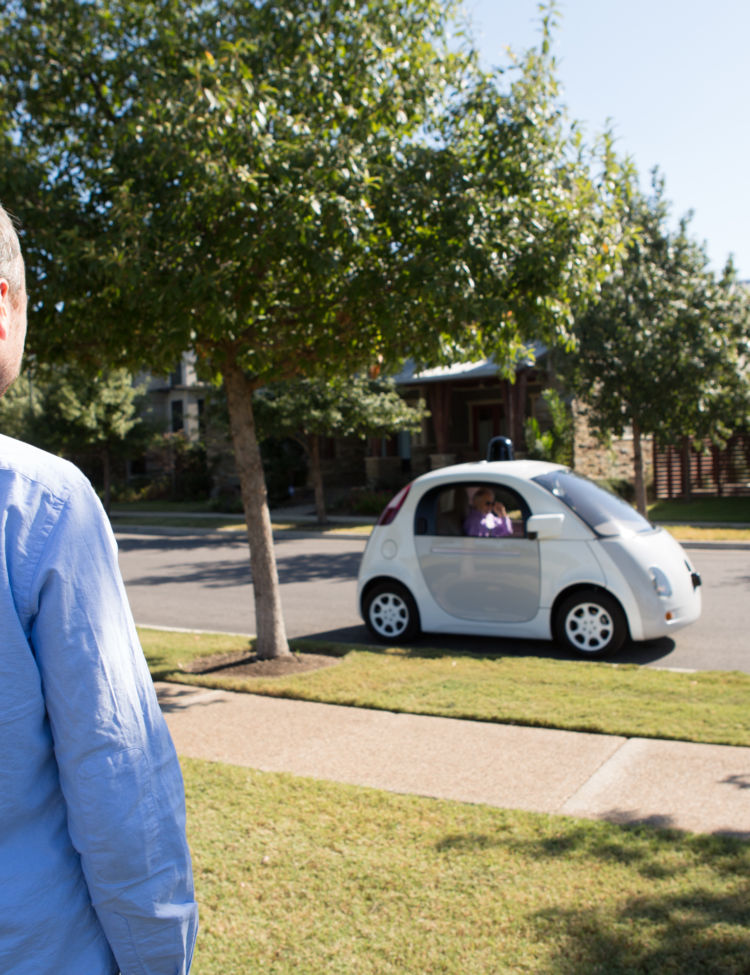
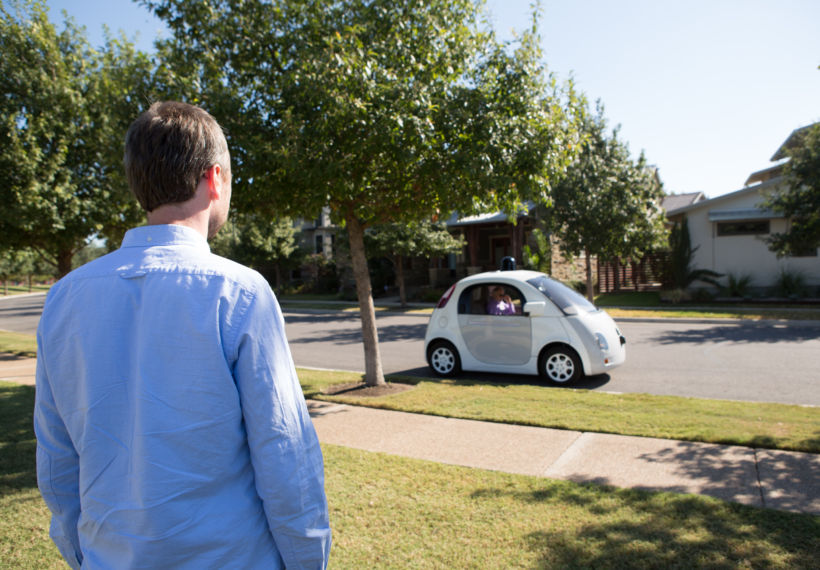
Neil deGrasse Tyson finally gets to investigate a topic he’s long wanted to cover on StarTalk Radio: self-driving cars. Neil and comic co-host Chuck Nice are joined on their journey by Larry Burns, Mobility Consultant for Google Inc. and former VP of R&D at GM, and transportation journalist Alex Davies. Ride along as they discuss the fast-rising world of self-driving cars and the future of transportation. You’ll hear about a new “car DNA” that will change our basic understanding of automobile functionality. Explore why autonomous transportation will reshape the basic way we move around and the economic implications involved in a complete industry overhaul. Discover more about the history of auto-making, and why traveling by horse was made obsolete within two decades. Our crew discusses the legal ramifications for accidents involving driverless cars, the accident involving the Tesla autopilot system, and why they believe self-driving car manufacturers will use past mistakes to make for a better, safer future. You’ll learn the reasons behind traffic congestion, why lane changing in traffic is ineffective, and what happens to traffic in a world of autonomous vehicles. Apart from autonomous cars, you’ll find out about autonomous delivery systems like drones and robots, and you’ll also find out why Neil has an irrational dislike towards drones. All that, plus, Neil ponders why flying cars have yet to come to fruition and Alex explains Uber’s plans to finally make them a reality.
NOTE: All-Access subscribers can watch or listen to this entire episode commercial-free here: The Rise of Self-Driving Cars
Transcript
DOWNLOAD SRT
Welcome to StarTalk, your place in the universe where science and pop culture collide. StarTalk begins right now. This is StarTalk, and I'm your host, Neil deGrasse Tyson, your personal astrophysicist. I got with me today, as my comedic co-host,...
Welcome to StarTalk, your place in the universe where science and pop culture collide.
StarTalk begins right now.
This is StarTalk, and I'm your host, Neil deGrasse Tyson, your personal astrophysicist.
I got with me today, as my comedic co-host, Chuck Nice.
Always good to have you, Chuck.
It's always good to be here.
Tweeting at Chuck Nice Comic, and you get your bad boys sometimes out there.
I like to kind of disrupt the world with my tweets, if I can.
Bringing truth to power, it's always good to have you.
Today is a topic I've long wanted to have on this show.
Really?
It's an exploration of self-driving cars.
Wow.
Where are they?
Where they been, where they going?
All right.
Now let me ask you before we even get into the show, because since you're fascinated by this, are you an advocate of self-driving cars?
I, you know, yes.
First, do you like to drive?
Now, I've driven with you, so I'm gonna say that you are a person who likes to drive.
I'm a city kid, so I don't long to get behind the wheel.
I think you like it when you're behind the wheel, though.
No, that's fine, but I don't like, you know, walk by the Car and Driver magazines and have them call to me.
Come back and look at the centerfold of the Ferrari centerfold, not that guy, okay?
Just because I'm...
Because I'm urban, okay?
And when you're urban, a car's a liability, not an asset.
And you know what a centerfold really is for.
What the purpose?
Why they were invented?
When you grow up in the Bronx, you know what a centerfold is supposed to look like, and it is not a car, okay?
So interesting to me is that, of course, a self-driving car would, I think, benefit city people the most.
Okay.
Think about it.
Where are you gonna park a car?
How much does it cost to park a car?
One of the great measures of the cost of living in the city a couple of years ago was when the monthly parking cost, yeah, yeah, well, yeah.
The garage cost.
Passed the monthly two-bedroom home rental in the United States.
Yes.
So that just set that up.
Wow.
So anyhow, so we're featuring my interview with Larry Burns.
Larry Burns used to be with GM, and now he's advising Google.
He's thought about this a long time.
But again, I can't take this alone because this is out of my comfort zone.
Wheelhouse, right?
Wheelhouse.
So we've got Alex Davies here on video.
Alex, welcome.
Hey, thanks for having me.
Excellent.
So you're a transportation editor at Wired Magazine?
That's correct.
That's a thing.
Who would have thought?
Yeah, well, I mean, transportation, it's not only crucially important to just about everybody, everybody moves one way or another, but all these things are changing at such a rapid pace that about a year and a half ago, we decided that transportation needed its own section.
So here we are.
Well, that's cool.
And so you, and so this is on wired.com where you report this.
Yes.
Okay, well, excellent.
So the future has arrived, I think.
I mean, it's like, it's, or if not, if it hasn't arrived yet, it's in the vestibule.
If it hasn't arrived, then Google has the, I mean, Amazon has the drone on its way.
And so, and just a note about Larry Burns, which is my featured interview today.
I interviewed him maybe a few months ago, when he came to my office, and so that's where we're slicing that in.
So he's a total advocate of this new era, all right?
And he wants to reinvent everything, the entire system, top to bottom.
Just pick up my interview there and see where it takes us.
All right.
When you think about the roadway transportation industry, the history of it, Carl Benz invents the first patent, gets the first patent for a gasoline powered automobile in 1886.
And I contend if you...
Call Benz of Mercedes Benz.
Yeah, yeah, yeah.
And I would contend if someone dug up a 1900 vintage car and then dug up a 2000 vintage car and did a DNA analysis.
Same DNA.
Mechanically driven.
Oil energized, powered by a combustion engine, mechanically controlled.
Gasoline.
Gasoline and driven by a person and operates pretty much independently.
You sit down with the steering wheel and there it is.
Yeah.
And so my boss at the time, Rick Wagner, when I became head of GM Research and Development in 1998, he asked me a rather interesting question.
He said, Larry, if you were going to invent the automobile today rather than 100 years ago, what would you do different?
And to me, that was not a question about any one technology.
It was a question about how do you deliver the value that comes from the freedom of owning and operating a car?
So this wasn't a question that could be answered with, oh, I put a battery in it and make it an electric drive.
It was really how do you preserve all the freedom that people get from being able to go where they want to, when they want to in a car, get rid of all those side effects, which are 1.2 million fatalities a year worldwide, which is epidemic in scale.
Does that include pedestrian fatalities?
Does that include pedestrians, motorcyclists, any kind of roadway fatality?
But then our dependence on oil, climate change concerns.
As I thought about reinventing the automobile, it was really reinventing the entire system.
And this new DNA that surfaced was really electrically driven with diverse sources of energy, cars that are connected, communicating with each other and along the roadway, very importantly cars that could drive themselves and the ability to tailor design the car, which is the pathway to making it electric.
And when you put all of those together, connected, coordinated, shared, driverless, tailored.
You've got a different DNA.
You get a different DNA, and you get a different experience for people.
So Alex, does your sense of the future of self-driving cars match his sort of global redefinition of what life with a driverless car would be?
Absolutely.
And I think it's interesting to see that it's not just people like Larry Burns who have left places like GM to work with the Google and Uber types.
It's the big automakers themselves are saying that this technology is finally on the cusp of happening, and it's time to really rethink how we move around.
But the big automakers were not first out of the box.
Weren't they being reactive to these more innovative, more nimble companies in doing so?
Yes and no.
I mean, they would certainly say no any time you talk to GM or Ford.
You're like, well, this is pretty new to you.
And they say, whoa, hey, hey.
We were in the DARPA Grand Challenges back in the early 2000s, where a lot of this work started.
But I think you have to give a lot of credit to Google in particular for putting a fire under them and really advancing the idea of a fully autonomous self-driving car.
Are all the driverless cars on the roads today just experimental?
Yes.
Yeah, basically.
There are a couple.
Uber is doing its thing in Pittsburgh and in Arizona where it's actually picking up passengers, but it's still very much an experimental car.
It's got engineers up front and they're trying to figure out how well all this is working and how to really make it work.
So, back in 2010, GM unveiled a concept car, what should we call it, the ENV?
Yes.
Autonomous electric smart car for urban environments, right?
And so, let's pick up my interview with Larry Burns and see what he tells us about that.
We teamed up with Segway and we developed a vehicle called ENV, E-N-V for electrically networked vehicle, and that was the star of the Shanghai World Expo.
So, this is a two-person balance machine, and the developers of that at Segway took their transporter, widened it and put more power in it, and they went to Cracker Barrel and bought a rocking gliding chair, mounted it on there, put a roll cage around it, and six weeks ahead, this thing running.
And Rick Wagner and I are driving it around in a warehouse in New Hampshire in the middle of the winter.
It was amazing, you know, how fast they put it together.
So, we showcased this whole vision at the Shanghai World Expo.
And what's exciting...
When I see what they call the smart car on the road, I think of that as a two-seater car.
Two-seat, yeah.
You have to leave off all the rest of what you don't need or use.
And so, because it only weighed 750 pounds, you've got one-fourth the mass.
So, that's wasted material.
Oh, by the way, when a New Yorker sees the smart car, they're not thinking, oh, how fuel-efficient.
They're thinking, wow, you can park that anywhere.
We're only thinking parking.
We're not thinking anything else about it.
And if the New Yorker shared it, it would never get parked because when that New Yorker gets out of that car, it goes and picks up someone else.
It doesn't go and park.
So, what you want to do if you're going to have a vehicle moving around, you'd like to have it utilize 75% of the time, not 5% of the time.
Which, in all fairness, is what New York City taxis are.
That's what they do.
That, in principle, it captures some of this fact.
The problem with the taxi, though, is they have six-tenths of a mile driven searching to pick up their next person for every mile they drive with a person in it.
If you have a shared vehicle system and you use wireless connectivity communications to connect vehicles with customers like Uber does, you can take that six-tenths of a mile down to 0.05 miles, five one-hundredths of a mile.
So you did the calculation, which no one had done before.
And we are convinced that we have a mobility system that's evolving based on driverless shared vehicles that are tailored to two people that can take the out-of-pocket cost of traveling and owning an automobile plus parking of 75 cents a mile.
We can take that below 20 cents a mile and give you your time back.
If you make median income in the United States, which is $25 an hour, that's the 50th percentile income, and you move at 25 miles an hour, your time is worth a dollar a mile.
So we're in a world of a dollar.
We even calculated that.
Yes.
Is there anything you don't calculate?
Neil, we're in a world of $1.75 a mile for the typical car owner dropping to 25 cents.
Americans travel 3 trillion miles a year.
If you can save just 10 cents.
3 trillion?
10 cents.
That's half a light year.
10 cents on 3 trillion.
Well, you would know that.
I got that one.
I got that one.
3 trillion miles is half a light year.
10 cents on 3 trillion miles a year.
That's a couple of dollars.
That's $300 billion.
I just love that you will take driving a car here on earth and find a way to relate it to the cosmos.
So, Alex, I think most people who are newbies in this are thinking, I will buy and own a self-driving car.
They're not thinking that the car gets shared.
So, would you agree with this vision that this is how it's going to come to us out of the box or is there some adjustment pains do you think we'll have to go through?
Absolutely.
I think when you're talking about full autonomy, the car that's shared, that you never drive, you know, the Google pod car that doesn't even have a steering wheel or pedals, that car is going to be shared.
So, you get that vision of shared autonomy which works and part of that is a technical limitation of these cars is people think that within three, four years they can make a fully self-driving car but not one that can drive anywhere or handle any conditions.
They think that you start by making a car whose capability is like this but that can only drive in this big a space.
That's why Google is testing in certain cities, that's why Uber is testing in downtown Pittsburgh and slowly expanding from there.
So, the shared thing in set geographic areas really makes sense.
So, is this NV concept car, is that still alive because he's recalling that from back in 2010.
I presume we've moved beyond that by now, is that correct?
I think we're beyond that and when GM talks about self-driving cars, what they're using to test that technology right now is the new Chevy Bolt, the Bolt EV.
That's the first electric car that can do 200 miles on a single range and it costs around like $35,000.
The Bolt or the Volt?
The Bolt with a B.
Bolt.
Yes.
Bolt.
Like the dog.
Like the dog.
That's why they change the name, they always say Bolt EV right now because I feel like maybe they made a mistake naming their cars almost the same exact thing.
So now, and you're right they made a mistake because I'm still confused.
Is the Volt still around?
The V-Volt?
Is that still around?
The V-Volt is still around.
They actually just put out a new version of it last year.
It's really good.
Oh, okay.
I just think it's great.
We have two leading electric cars named after physicists.
Yes.
There's, so there's Alexandra Volta.
Volta.
After whom we named this unit of electromagnetic force.
Voltage force, electromagnetic potential, the volt.
And then you have, of course, the Tesla.
Right.
Nikola Tesla.
That's just cool.
That's cool.
I just think we get physicists on cars.
This is good.
It's very cool.
There are even electric trucks called Nikola.
There's an electric truck company called Nikola.
Excellent.
Wow.
Again, his first name and his last name.
His middle name, his mama's name.
So let's rejoin my interview with Larry Burns.
And we're going to talk about the economic implications and consequences of this shift in our culture, really, and who's going to have a job and who's not.
Let's check it out.
It has the potential to not only impact the automobile industry, but the energy industry, the insurance industry, the retail industry, and how we consume food, how we educate ourselves and others.
And it's pretty exciting.
Is this all a rosy story?
No.
There's a lot of jobs tied to these industries that I've talked about.
And what's the economic implications of suddenly not needing drivers and vehicles?
And a huge number of jobs are tied to that.
So, just like the future of innovation always has been, there's going to be new solutions.
They're going to be adopted.
The world's going to have to change.
Think if you were in the horse industry back before the car was invented and you grew hay or you did horseshoes or you had barns or you cleaned up after horses and the horseless carriage comes along and displaces all of that industry.
And we're in the ring.
That's the proverbial buggy whip.
Do you make buggy whips anymore?
Is it a place in the catalog to buy?
No.
But what impressed me 110 years ago was how rapidly we transition from horses to horseless carriages because we use horses for 10,000 years.
Yes.
If there's anything that would have, should have, could have had inertia to never change, it would be the horses.
1886, Carl Benz gets the patent.
1903, Horatio Jackson drives across the United States.
By the early 1900s, Henry Ford hit on the assembly line concept.
And then by the 1910s, he's building a car that his workers can afford to buy.
So in 30 years, an entire industry basically goes obsolete.
So going forward, do you see this autonomous car transition happening as rapidly as was the transition to cars in the first place?
Absolutely.
I think it's going to happen very fast.
I think the biggest risk incumbent companies in this industry can make is to assume it's going to take longer than it's actually going to take.
Wow.
Yeah, so Alex, it seems to me that a change can happen not simply because you have good PR people, but because it has significant economic benefit to those who want to make the change.
And then you make the change overnight.
It's a business calculation.
But the people who would lose their jobs, how does this, are you ready for that?
In your column, have you thought about this?
How to transition this entire community of people?
I heard yesterday, yesterday, that nearly 10% of all jobs are drivers.
People drive trucks, taxis, trains, and most of them are men.
Most of them are men and gone.
So how do you deal with this?
That's not really clear yet, but it is a lot of jobs.
That's not my problem.
That would have been great if Alex would have been like, Neil, we here at WIRED don't give a damn about blue collar workers.
That's their problem.
The way you began that sentence, I was certain it was going to go there.
That's great.
Sorry, Alex.
Go on.
There's something like 3 million truckers in the United States.
In one sense, it's a really good job because it's one of the few jobs that can make you good money without anything more than a high school diploma and a commercial driver's license.
It is going to be stressful on a large part of the economy when those jobs start going away.
I think that will happen gradually.
If you talk to people like Daimler and Volvo, the companies that also make trucks and they're all working on autonomous trucks because they see really great economic benefits there almost right away, but it's not really clear what's going to happen to those workers.
I think, like Larry said, it's something that's happened throughout time and it's just growing things.
Yeah, the difference, though, is when you said buggy whips when you were in your interview, the thing is that buggy whips found a home in the dominatrix industry.
That will not happen with drivers.
If you have autonomous vehicles, there is no need for a driver anywhere.
When we come back, we're going to tackle issues like traffic and accidents and fatalities and other things that a self-driving car might get involved in.
Who are you going to call when that happens?
Welcome back to StarTalk, I'm Neil deGrasse Tyson, Chuck Nice, and right to my left.
You're wearing an Einstein T-shirt today.
I am.
You're feeling some Einstein.
He's my spirit animal.
He's your spirit advisor.
Oh, you're spirit...
He's my spirit animal.
I made her animals.
Okay, that's a beautiful thing.
We're featuring my interview with Larry Burns, who's a self-driving car consultant for Google, has deep history in the automotive industry.
He's an engineer, so he's got the engineer sense of the world where they calculate everything.
And I had to ask him, he came by my office several months ago, so we're slotting in clips from that interview.
So I had to ask him about accidents and what could lead to fatalities when nobody's behind the wheel.
That's an expression, right?
Who's behind the wheel?
Right.
Exactly.
Nobody.
And we meant to.
We meant it that way.
On purpose.
On purpose.
So let's check out what he says.
How does that change the legal ramifications of a highway death?
It's a hugely important question.
The whole ethics behind this, the legal system behind it is a very important part of the story.
Because if I get on the road drunk, it's easy to point blame there, legally, but if everyone is completely sober and they get in an autonomous vehicle and your software ends up killing them, holy shit.
Those are banner headlines.
And without anyone saying, well, look people, 29,000 people didn't die this year, no one pays attention to who doesn't die.
Yeah, there's a fascinating analogy to that, and that's the history of vaccines.
Flu vaccines were being developed as a good thing, because people die from the flu, but the producers of those vaccines were concerned that someone could have an allergic reaction to my vaccine and die, and I'm going to be held accountable for that.
People were concerned about that flu vaccine because if they took it, they may have a reaction and die.
But it's a good thing.
If I get the flu shot, not only do I not get the flu, I'm not going to give it to you.
So that's a public good.
So the government stepped in and created what's called the National Vaccine Injury Compensation Program.
25 cents of every flu shot goes into this fund.
And the liability protection for the manufacturer and for the person that gets injured from the vaccine comes from that fund.
So I think it's a good thing if we go from 35,000 fatalities down to 1,000 fatalities.
I would hate to think…
Or even less, yeah.
Or even less.
I would hate to think that manufacturers won't go down that road because they're concerned about your scenario that the one time the software doesn't work, it causes someone to die.
We're going to have to work through that as a society.
You know what I think is going to happen, Neil?
We'll learn past the thousand.
We'll understand those fatalities well enough so that it will go to 900 to 500 and maybe we'll get all the fatalities out of the system.
We've got Alex Davies on video, Alex from wired.com.
You're the transportation guru.
What's your actual title?
Actual title would be editor, but I think guru might fit.
I would go with guru if I were you, Alex.
Yeah, let's go with guru.
So Alex, could you update us on...
So we all know that there have been self-driving cars in test modes out there.
Have there been any injuries or fatalities so far?
There's been one fatality so far in the United States that we know of, and that was in a Tesla self-driving car.
So it's not the full autonomy that people like Uber and Google are chasing.
What Tesla has is called autopilot, where it's a car that once you get on the highway or any place with lane lines that doesn't have intersections, the car can stay in its own lane and use radars to detect other cars and stay a safe distance from them.
About a year and a half ago now in Florida, a man was driving in his Tesla in autopilot mode when a truck was turning across the highway and the Tesla didn't slow down at all and slammed into the truck and it killed the occupant.
That caused something of a furor because people were like, this is the first self-driving car death, and there have been fears that once that happens, you're going to scare people away from the technology.
That didn't really happen ultimately and the US DOT investigators looked into the accident.
Department of Transportation, yeah.
Yeah, the Department of Transportation said, okay, we're going to look at this.
They investigated the accident.
They ultimately said that it wasn't Tesla's fault.
Tesla still went back and tried to revamp its system.
But they said it wasn't Tesla's fault, if I recall correctly.
They said it wasn't Tesla's fault because the car was not, the purpose of the program was not to have the car drive you.
It was to aid in you driving the car.
Therefore you are still considered the driver of the car, which means that anything happens is ultimately your responsibility.
So it's kind of a technicality like that.
It's a little bit of a technicality because even though, in other words, the guy was misusing the car, because he was in the back seat taking a nap or whatever, and he should have been driving it.
Let's get to how did this fail?
So Tesla never really revealed exactly what happened, but that version of the car used a combination of cameras and radars, and mostly it was really dependent on cameras also to detect obstacles in front of it that it would need to brake for.
And what seemed to happen here was it was a very gray day, and it was a white truck, and the theory is that the Tesla's camera had trouble distinguishing that truck from the cloudy sky, and so it didn't stop.
So then Tesla went back, it revamped its self-driving system, it tweaked it to use more cameras, more radars, and to hopefully offer a better blend of sensor technology.
So just when I thought we had discussed everything that matters with self-driving cars, there's more.
Oh.
Yes.
In my interview with Larry Burns, check it out.
What happens to traffic in the world of an autonomous vehicle?
Traffic is a real important concern.
The reason you have traffic congestion is there's more people who want to use the road than there is supply for the road.
And because of that, the traffic backs up, it's a fancy term, it backs up nonlinearly.
You're going and the traffic's moving smoothly and all of a sudden it's chaotic and you get a traffic jam.
With autonomous vehicles, communicating with each other, optimally spacing and flowing together, you're going to be able to get much more throughput on those roads.
When you get the crash out of the system, you're going to be able to get more throughput.
Every morning there's a crash blocking traffic.
Next time you're driving on an expressway, watch the people around you.
The car next to you will pass you and get in front.
A little later on, you'll pass that car and get in front of it.
A little later on, someone else will pass both of you.
You've gone 20 miles, you get to that point and all three cars are at the same spot.
So, all that lane changing isn't adding a lot of value.
Big over-the-road trucks can slow traffic down.
We may be able to organize that freight traffic in a single lane with optimized spacing or headways between the trucks to improve aerodynamics and fuel economy, reduce crashes.
So, every truck would basically draft off the previous truck.
And then, thus, parking in Manhattan.
I've heard, I'm not sure it's true because I haven't validated this fact, I've heard that 20% of the miles driven by Manhattan cars in Manhattan are people cruising around looking for a place to park.
Plus, you've got the street-side parking.
And we may be able to even organize our lives in such a way that those delivery trucks that block up a street or a new...
Maybe they can deliver at night.
And because that just works with their overall business model because it's autonomous, perhaps.
So, I think there's a lot of ways to get a lot more people moving on the roads that already exist.
So, Alex, do you have a ranking of which cities in the country have the worst traffic?
Not offhand, but the last I saw, it was LA.
San Francisco, New York, Atlanta has terrible traffic.
Terrible.
It's the usual suspects.
Alex, do you guys calculate how much we lose in productivity by being in traffic?
I think about that all the time.
I'm sitting away to get through a toll booth and it opens up to however many lanes.
And I'm looking at all these people and I'm thinking we could be either with our family, with our kids, or at the job.
It's billions of dollars and this is a number I'm pulling off the top of my head.
I think the average Angelino spends like, geez, dozens of hours stuck in traffic every year and you think about the time they could be spending at home or the time they could be spending working and if, in a self-driving car, even if you can't get rid of the traffic right away, at least you could spend that time working, sleeping, doing whatever you want.
Well, now I'm against self-driving cars altogether now.
Why?
Because I gotta work now.
You gotta work.
I gotta sit in there and do my work.
That'll be expected of you, yeah.
Exactly.
Also, it might collapse the audio book industry.
Oh my goodness, you're right about that because that's when people make use of that time to listen to their audio books.
That's right, that's right.
And so, do you spend much time thinking about traffic flow and rubbernecking and all these other elements that urban planners have to think about?
Because a self-driving car would get rid of, it would eliminate rubbernecking.
There's no rubbernecking.
The car doesn't give a damn, right?
That's exactly right.
You know, as a matter of fact, you're mad at the car.
You're like, no, slow down, I wanna see that.
The car doesn't say, oh, blue flashing lights, I wanna have a closer look.
Exactly, right.
And that's only because the car's not black.
Yeah, blue flashing lights, oh my God.
No, what would be good if the self-driving car had a rubber-necking mode where it got closer to the accident so that you could see.
So you can see.
Would you like to see the accident?
So Alex, what's your take on the solution to traffic?
Do you see that as fundamentally built into the solution that involves driving self-driving cars?
I think it is, and because as you've noted, things like human error, accidents, rubber-necking, all that stuff, that leads to a lot of traffic.
But don't think that once you put one or two self-driving cars on the road, the problem's fixed.
It could actually get worse in the short term when you have self-driving cars mixed in with humans because you're still gonna have enough human error to clog things up.
And you really need a much higher percentage market penetration to really start making the difference on highways, that stuff that Larry was talking about.
You know what I read?
I just read this, and it may have been in Wired magazine, as a matter of fact, Alex, that in the beginning of self-driving cars being introduced onto the roadways, that the self-driving cars may be more frustrating to those passengers because they will defer to the regular drivers because they'll look and say, oh, that guy's an a-hole, I gotta let that guy go.
And so you'll be able to bully them.
Right, so here's how that actually came to pass.
I think we might have read the same article.
You come to a four-way stop sign.
Yes.
Okay, now the rule is the car to your right is the right of way, provided everybody stopped.
But suppose you come to the four-way stop sign, but you do a California stop.
You slowed down, but you didn't actually stop.
And the self-driving car is just waiting for you to stop.
Right.
Because it knows, oh, it's moving one centimeter per hour.
Exactly.
It's still moving.
It's still moving.
I gotta wait for that guy to stop.
Right.
So that we can then do the four-way stop sign rule.
And the self-driving car is sitting there all day.
Sitting there all day, because it's getting bullied by...
This is a scenario, right, Alex?
Yeah, it's a real scenario.
This is happening to Google engineers in the early days.
They were just sitting there at four-way stops, and ultimately, their solution was to program their car to be a little bit more human, to kind of...
So what now?
What does the car do now?
It's like, hey, I'm driving over here!
Over here!
Hey, I'm driving over here!
What's your...
They haven't started programming voices yet.
But they will...
Those are cars from the Brooklyn factory.
The Brooklyn self-driving car.
I'm over here, I'm driving over here!
So, there's another issue that came up in my conversation with Larry.
And let's find out what that is.
Check it out.
What are the people who just like to drive?
Yes.
You know, there are people who love to ride horses.
Equestrian, horse racing, and the horse industry hasn't gone away completely, and it's okay to ride horses, and it's gonna be okay for people who wanna drive.
That's great.
And no one's saying to you, you can't drive.
That's the last thing I'd ever try to imply here that we're gonna impose on them something that they can't drive.
A lot of these people like to drive on Highway 1 in California on a beautiful sunny day where there's no traffic and curvy mountain roads, and that is a thrill, the thrill of the road.
But when they're stuck in Los Angeles traffic or Detroit traffic or New York City traffic, that is not enjoyable.
And presumably most people drive as a utility element of their life, not for entertainment.
Most of the miles are a utility element, yes.
So no one wants to take it away, just like no one took horses away.
Yeah, so Alex, I assume you agree with that, that you can't just get rid of cars.
People love their cars.
People who love their cars love their cars.
People do.
I think there's going to be a nice little boom in the racetrack business, somewhere where you can go, where you can safely drive as fast as you want.
And I do think driving will never be illegal, but I do see a world in which cities say, hey, this is a self-driving zone.
If you want to get in here in a car, that car has to be autonomous for safety and for traffic reasons.
Or park the car at the border, and then you're going to do an Uberized self-driving car coming through.
Exactly.
That sounds like an awful place to live.
I'm sorry.
I love driving.
When we come back, we're going to get into drones and shopping with autonomous delivery systems.
Oh, my God.
That just sounded like the most awesome shopping trip ever, where a drone goes with you to go shopping, and then it drops a bomb on the mall.
You don't mean that kind of drone.
No, no.
Not the military drone.
When StarTalk continues, more on self-driving cars and autonomous vehicles.
We're back on StarTalk.
Formation.
You have Jetsons on the brain.
I know, that's, you self-driving cars.
Chuck, we've got Alex on the line, Alex from Wired Magazine.
So, we're featuring my interview with Larry Burns, who's an advisor to Google, on autonomous vehicles, and he thinks deeply about every dimension of this question, in ways I didn't even know people thought before, and it's great.
I had a great conversation with him.
And so, we got into autonomous delivery vehicles.
Yeah.
And how that would change a whole other industry.
Let's check it out.
It's about goods movement as well.
You know, Domino's has created a robotic unit called Drew.
Domino's Pizza Delivery.
Domino's Pizza Delivery has created Drew, the Domino's robotic unit, 12 mile an hour vehicle that can operate and deliver hot and cold food to your home robotically.
That's kind of neat that they think that's better than maybe a FedEx truck or a UPS truck or a postal truck that weighs 4,000 pounds and a driver.
You know, I work out of my home office a lot.
So I'll be sitting at home and doorbell rings, it's the FedEx guy.
Doorbell rings later, it's UPS guy.
Postal service will come to the door.
What's going on here?
Well, I have two daughters and my wife, they're shopping online and all this stuff is coming into the house two and three times a day.
And you've got a person bringing a one pound item to the door and a truck.
You have a 150 pound person bringing a one pound item to the door.
150 pound person bringing a one pound item to my door and a truck that probably weighs more than 4,000 pounds.
And now we've got, the people who develop Skypes have created I think a company called Starship Technologies.
They've got a little robot that can deliver two grocery bags at four miles an hour.
So I'm not clear exactly how all this is gonna play out.
You know, you've got Amazon working on drones that can deliver packages in 30 minutes by a...
I irrationally don't like drones.
Excuse me?
I irrationally don't like drones.
You don't?
No, yeah, if I see a drone, I wanna hit it with a baseball bat.
For no reason, I just, is it looking at me?
Why is it there?
I don't care if it has a package for me.
It creeps me out, get out of my window.
You know what fascinated me about this?
It's not rational, it's a non-rational response.
What fascinated me about the 60 Minutes episode on Amazon's drone wasn't the drone.
It was that Amazon thinks it's important to get me something in 30 minutes.
That intrigued me and I asked my wife and daughters about that, well, absolutely.
I can try those jeans on in 30 minutes and decide whether I like them or not.
And if I don't, I can ship them back.
So that's all about how are we gonna shop?
Drone, can you hold on while I try on the clothes?
Can I watch, you know, with voyeuristic drawings?
So Alex, in your column, do you also deal with other autonomous systems?
We do, we look at drones a lot.
And it's worth noting that Domino's actually just joined up with that Starship Technologies thing and now in Hamburg, Germany, they've got little wheeled robots delivering pizzas to people.
Yeah, and does that really seem like a good idea because certain neighborhoods, you're going to have kids just really enjoying some free pizza.
In my neighborhood, it would be adults doing that.
No, how could you have an autonomous anything walking with a pizza in front of you?
Right.
That's a recipe for disaster.
For disaster.
I don't know anybody who's going to let a free pizza just walk by, you know.
Hey, Drew, Drew, come here.
That pizza.
And they will say that, I asked them that, and they're like, no, no, no, it's locked, but people steal ATMs.
Exactly.
So, you know.
Yeah, I don't see that.
They'll lasso it and put it in the back of the truck, drag the ATM down the road.
Yeah, so what you're going to have is a bunch of missing Drews on pizza boxes.
Have you seen Drew?
It'll be a pizza, have you seen Drew?
You know, so you'll have that, and you'll have destroyed drones that are going to Neil deGrasse Tyson's house.
Mr.
Bezos, for some reason, we keep losing drones that go to Neil deGrasse Tyson's house, and in the backyard of Neil's house, there's just a pile of drones that have been eaten to death with a baseball bat.
You would need to make drones that know martial arts.
So, I also wanted to know, also needed to know, about flying cars.
Oh.
Who doesn't?
Isn't that the big promise that?
It is the big, I feel bad.
That's the holy grail, right?
I'm in the science community, and we all promise people flying cars.
I had to bring it up with Larry to check it out.
Cool.
Okay, after you give me the autonomous car, we want the flying car, okay?
You are way overdue for the flying car.
I just want to publicly, on record, say, you have failed us on the flying car promise.
I failed on the flying car promise as an engineer.
Why not?
Okay, and we're going to have to work it out.
You can't help but be impressed by the progress on the drones and how fast we've gone from not having any to a lot of people working on them.
You know, I had the privilege when I was at General Motors to travel to 20 to 25 countries a year for over a decade.
I was able to see Mexican engineers, Korean engineers, Israeli engineers, German engineers, Chinese engineers, Brazilian engineers, all motivated to do exactly what American engineers are doing.
And I would wake up at night thinking about China and realizing that the 25% of the smartest people in China equal the population of the United States.
That's a stunning fact.
And what's happening with drones and autonomous vehicles are those young engineers are getting captivated by these opportunities.
And when you put that much brain power and creativity and motivation globally around things, why not flying cars?
Alex, you wrote a story about Uber taking over the skies with flying, what was that?
Tell me about this story.
Uber actually thinks that flying cars can happen.
And this isn't the idea of a car that drives sometimes and flies sometimes.
It's more of a vertical takeoff and landing electric vehicles.
Basically, it comes in, picks you up wherever you are, flies up vertically, flies wherever it's going, and then drops you off.
Isn't that called a helicopter?
I said, wait, why not?
We have a word for that.
I was like, well, rich people already have helicopters.
And I say, well, one, we think that this could be done electrically, you can do it in smaller packages and more quietly than helicopters.
And so I found some aviation engineers and kind of to my surprise, they're like, yeah, that's not totally insane.
But in a few years, we'll actually have the battery and the aeronautic technology to make these things work somewhat efficiently.
But there are a lot of other questions like, how on earth do you regulate them?
How does the FAA get involved?
How does air traffic control change?
So technologically, it's not crazy, but realistically, there are some pretty big hurdles.
And I brought up this point with Elon Musk.
We interviewed him for StarTalk as well on all manner of topics.
But in there, I asked him about flying cars.
He's like Mr.
Inventor, rockets, cars.
If there's anybody who's gonna bring those flying cars.
If there's anybody.
It's Elon Musk.
Elon.
So I thought he had a really good answer.
Because once we understand the point of having a flying car, because you're stuck in traffic and there's all this air above you, just travel through the free air, right, and not, okay.
So what you're doing is you're adding a dimension to the traffic pattern.
And when you do that, you completely blow open all the ways you can get from one place to another.
You get this.
So what he said was, we already have a modern version of that, holding aside helicopters.
You know what the modern version of flying cars is?
Tunnels.
Think about underpasses.
Tunnels.
Subways.
So here we are.
No, it's not flying, but it is under feet.
And under the traffic you are stuck in, there are railway cars going on multiple levels even there.
Yes.
The problem is, or not the problem, the benefit will be my flying car will not smell like urine.
Well, we can work on that problem.
As long as you have traffic lanes that are in a third dimension, be they tunnels, bridges, underpasses, even here in New York City, there's the, we have a battery park underpass.
You don't have to drive through a battery park.
There's a whole tunnel underneath that.
That's correct.
That's basically a flying car through what would otherwise be traffic.
And still the best way to travel in New York City, I don't care what anybody says, is the subway.
Even though it smells like urine.
It used to smell really like urine.
Now it only kind of smells like urine.
Well, that's because I stopped doing that.
You're the one that did.
So, Alex, have you thought about Elon Musk's plan to build tunnels under LA?
Because again, this is the flying car solution.
Do you just have you go in another dimension?
Have you thought about that?
It's something we've looked at and it's something we actually talked to Elon Musk a little bit about.
And our question was, well, if you just build one tunnel, that's not really going to solve anything.
And then he came back and he said, well, yeah, you're thinking too small.
I'm thinking 30, 40 layers of tunnels, which is mostly insane.
The idea of building like a 40 layer deep tunnel structure under a metropolis that's already full of stuff like pipelines and subways and train tracks.
Why is it crazier than saying I want to fly?
No, not necessarily.
I want to go to the moon.
Wait, we have been to the moon and you're saying it's crazy thinking to put tunnels under a city.
Now, explain yourself.
I'm saying it's crazy that Elon Musk wants to build 40 layers of tunnels under the city.
I think you could do a couple and I think it's a really smart solution.
I'm so glad you clarified that because for a moment there, I was like, how did this guy.
You actually agree that it's a good idea, Alex.
You just think that to the extent which he wants to do it, there may be a lot of problems with that, but to have a couple layers of tunnels would be a good deal.
I think part of my job is putting a little bit of salt on Elon Musk's ambition.
Oh, that was funny.
Let's get to my very last clip with Larry Burns and just see where we land this plane.
Okay.
Check it out.
So, what's the future?
Pilotless airplanes, engineerless, conductorless trains.
Well, yeah.
There's no stopping.
There's no stopping this trend.
There's nothing to stop.
The train industry has to have two people on the train, one on the front, one on the back.
And right now, that's a regulatory issue, not a technology issue.
It's an economics issue for the railroad industry.
And let's say suddenly you're launching driverless over-the-road trucks and the railroads are still having someone in the front car and someone in the rear car.
Again, I think society will find a way to work through this.
There's vested interests in all of this.
There's vested interest in the oil story.
There's vested interest in the insurance companies.
And there's vested interest in the auto companies, the road building industry and all of that.
But at the same time, we need to have a planet that survives.
And the sustainability concerns and mobility are about all these sources of waste that we have and how we elect to move people and goods around on roads.
And there's a new DNA in town and there's a whole new set of opportunities.
Yeah.
So Alex, those are quite summative marks there.
Do you have a sense of how you want to sort of end our time with you?
I think it's important to note that automation isn't quite here.
There's a lot of work left to be done, but it's most certainly on the way.
All of the big players have bought in.
And I think one of the water marks there is that Ford came out last year and it said, we're not an automaker anymore.
We're an automaker and a mobility company.
So if you've got Ford, one of the biggest automakers in the world saying, this is not only what we're doing, we also have to talk about mobility.
Nissan is not an oil company, it's an energy company.
Absolutely.
That's how they think about it.
Okay, go on.
So I think you are seeing a sea change, that all these players are getting into this market and automation is going to touch on so many things, even beyond transportation, but within the world of moving around, trains absolutely, drones, construction, agriculture, mining, driving, trucking, flying, I think you're going to see it come into every part of this economy.
And since there are going to be so many people losing their jobs, how can we make some money off of this?
How do we get in on this action?
Well, I got more here.
There's a little bit of that interview that didn't make it to these chosen clips.
And that was, what's the limit of the Uber model?
And not to interrupt, Neil, if you want to hear that full interview, you can do it on startalkallaccess.com.
But go ahead.
The full interview with Larry Burns.
Yeah, the full interview, yes.
But go ahead.
So the limit of the Uber model is you don't even own a screwdriver.
You just call up a screwdriver and a screwdriver gets delivered to your windowsill ten minutes later.
Wow.
It's a shared screwdriver.
And if you need a hammer, why keep a hammer?
Why keep a, you know, the tools, the power tools?
A toolbox or a power tool.
Why keep anything that you use once a month?
Right, exactly.
Have that stuff fly.
So, what that would mean is there will always be these hammers and screwdrivers and power tools just floating around, looking for who to deliver to.
You use it and then you give it back.
You don't even need a garage under those conditions.
I already do that.
I have a neighbor.
Chuck, can I get my lawn mower back, please?
So Alex, thanks for joining us on StarTalk.
Thanks for having me.
You've got a column at wired.com.
We got you.
That's where we can find you.
Chuck, always good to have you as my co-host.
You've been listening and possibly watching StarTalk on this episode involving driverless cars and automated delivery systems.
I've been your host, Neil deGrasse Tyson, your personal astrophysicist.
And as always, I sign off by bidding you, keep looking up.
See the full transcript




 Unlock with Patreon


 Become a Patron