


 Unlock with Patreon
About This Episode
Will alien life look like anything on Earth? Neil deGrasse Tyson and comedian Chuck Nice deep dive into questions about astrobiology, revisiting the Drake Equation, and life beyond Earth with NASA astrobiology strategist, David Grinspoon a.k.a Dr. Funkyspoon.
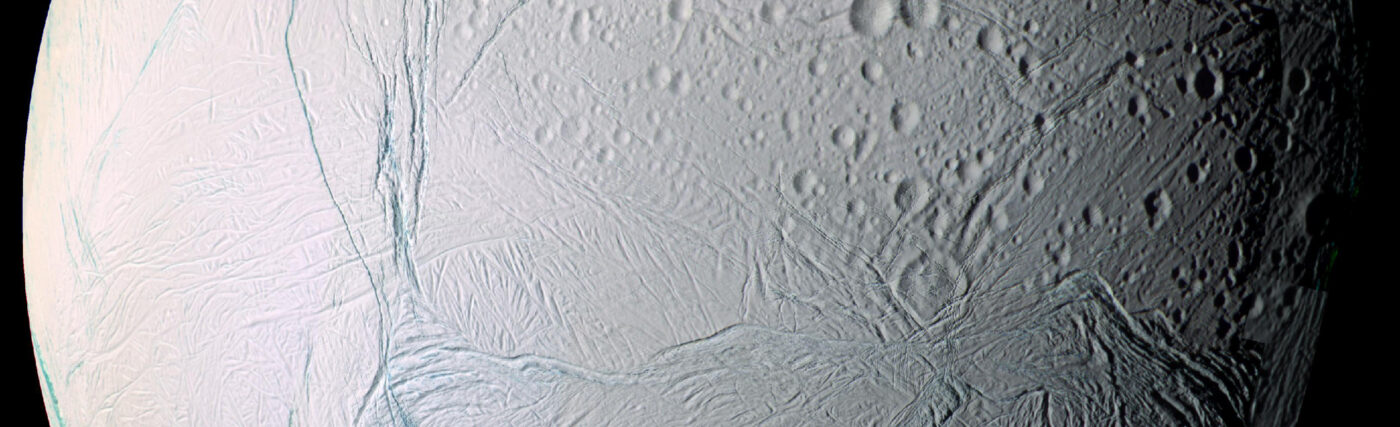
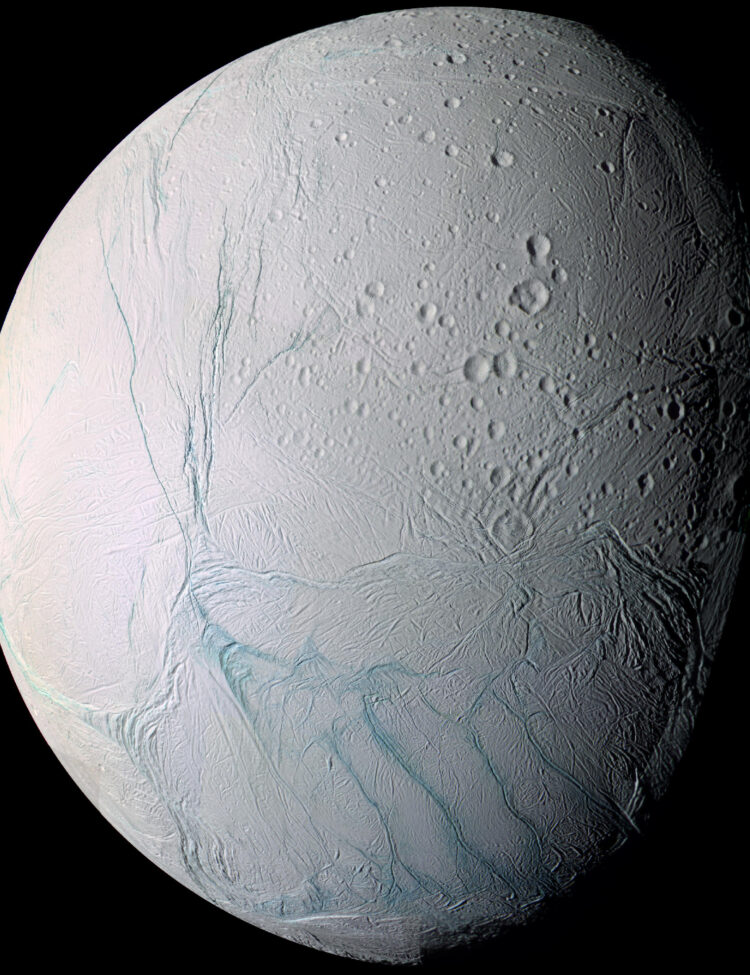
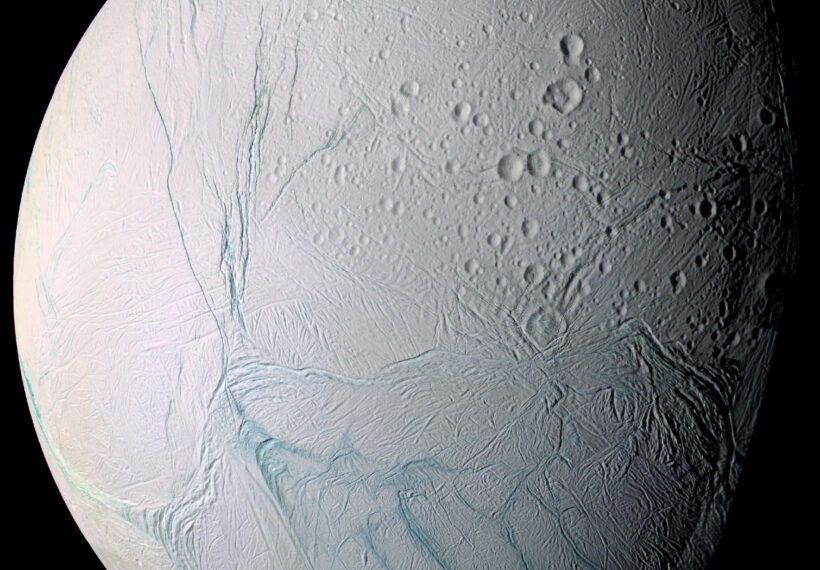
We discuss the evolution of planetary science and how collaboration between astronomers and planetary scientists is shaping the search for extraterrestrial life. David sheds light on his new role at NASA, where he helps craft strategies for the next decade of astrobiology research. From exploring the mysteries of life’s origins to working with innovative roboticists to probe icy moons like Enceladus, he’s helping chart the course for humanity’s quest to answer one of the most profound questions: Are we alone?
Neil and Chuck dig into audience-submitted queries, exploring topics like the potential for synthetic life, the importance of moons like Enceladus and Europa in the search for extraterrestrial organisms, and even the possibility of humanoid plants evolving through convergent evolution. David shares his favorite alien from Arrival and touches on the scientific rationale for creatures like these existing. Plus, you’ll get insights on Europa Clipper’s mission to uncover the secrets of Jupiter’s moons, as well as a lively debate on the Drake Equation and the challenges of defining life itself.
Thanks to our Patrons Edvardo Cullen, Harriet Harmon, Andre Rivera Hinostroza, David Rolfe, Piotr Toruński, Karen Mills, Ghost Rider, Leonard Leonidas, Beatriz Clemente, Jon Johnson, Loren Blaine, John Bigelow, and Leslie Colonello for supporting us this week.
NOTE: StarTalk+ Patrons can listen to this entire episode commercial-free.
Transcript
DOWNLOAD SRTChuck, Dr.
Funkyspoon, back in the house.
One of our favorites, always.
David Grinspoon.
And in this episode, we found out exactly where that we found life.
We found it.
Did we?
I mean.
Did we record the same episode together?
Yeah, I mean, we didn’t find it out in the universe.
It’s here, but we still found it.
Join us again with one of the world’s leading astrobiologists on StarTalk.
Welcome to StarTalk, your place in the universe where science and pop culture collide.
StarTalk begins right now.
This is StarTalk, Neil deGrasse Tyson here, your personal astrophysicist.
Chuck Nice with me too.
Chuck, how you doing, man?
What’s happening, Neil?
Oh, right.
You’re a comedian, also acting.
Yes, I’m stealing money.
That’s all.
I’m just stealing money, Neil.
They don’t even know.
They don’t even know.
You make people laugh and they just hand you their money.
They’re just giving me money and I’m like, you don’t even know.
I’m just acting like a comedian.
But I’ll take that, Chuck.
So today, Chuck, we got Cosmic Queries.
It’s a fan favorite, Cosmic Queries.
Yeah.
And, oh my gosh, one of our favorite guests.
Yes.
To help us out here.
Excited to have him back.
We got Dr.
Funkyspoon.
Dr.
Funkyspoon.
David Grinspoon, long-time friend and colleague.
We kind of came up together through graduate school, but we were sort of different sides of the fence.
I was sort of galaxies and cosmology.
He was like planets and asteroids and stuff.
Oh man, that’s like the jets and the sharks right there.
Just to put it in context, we had telescopes that would reach out to the galaxies.
We had telescopes that would see the planets, but then they started going to the planets.
Is it still astronomy if you can go there?
You see, this was part of the divide.
You go there and bring back samples and stuff.
You’re just a lab technician.
Oh, you had to observe first.
You had to look through something and see it first.
David Grinspoon, welcome back to StarTalk, dude.
Oh, thanks a lot.
It’s really great to see you guys.
It’s a pleasure, as always.
And yeah, that divide between planetary and astrophysics, it’s kind of funny.
I mean, it is interesting how it evolved historically.
And at times, it was kind of intense.
Like, you know, when I was in grad school in planetary science, the astronomy department across the street, the professors were like, oh, don’t go over there.
But now that was before exoplanets.
Now we need each other more than we ever knew.
Yeah, there’s been a meeting of the melding of the minds and hearts and souls.
Also, our preeminent journal, the astrophysical journal, the ordering, I don’t know if it’s still is this why I haven’t paid attention.
The ordering of the articles in every released issue was in descending order of distance from Earth.
So it’s start out cosmic microwave background, large scale structure of the universe, galactic and you keep doing and way at the bottom is observations of Saturn.
It was like clearly the prioritization of the universe is writ large in those pages.
That’s all.
So David, I noticed you have a title that you didn’t have last time.
At first, you’re an astrobiologist.
We get that.
But you’re also senior scientist for astrobiology strategy at NASA.
What is that?
Yeah.
So that’s my new job.
Since the last time I really had a good conversation with you guys, I started a new role.
I’ve always worked with NASA and been supported by NASA for my research and the missions that I’ve involved in my whole career.
But just about a year ago this week, I started a new job at NASA.
I am now a G man.
I work for the government.
Oh, look at that.
Yeah.
You’ll never take me alive, cop out.
I am now working at your nation’s space agency, helping to run the astrobiology program.
And it’s just like it says, doing astrobiology strategy.
So really trying to understand and figure out how we can expand astrobiology in new ways and plot the future.
It’s a really interesting role for me.
It’s fascinating.
It’s very different.
I mean, I feel like my career up to this point was preparing me for this in a lot of ways, but it’s fundamentally very different from any other job I’ve had.
It’s been a year, but I feel like I’m still learning the ropes.
But you don’t have power over missions, do you?
We do that in our decadal surveys.
So do you help shape it after the priorities are set?
Yeah.
Absolutely.
Like you say, the decadal surveys, which are these big community input exercises to set the priorities on a decadal time scale.
So if the public understands, it’s why you never see astrophobe publicly arguing about how money should be spent.
We do that among ourselves, like in private.
Yeah.
Like any good marriage.
So that sets the major priorities, which we take as our foundational document.
Those are, in a way, our marching orders.
But within that, there’s a lot of decisions to be made about how we prioritize different research areas and directions, and what we emphasize and how we communicate about what we’re doing.
The Decadal defines the shape that we’re acting within.
But then within that, there’s a lot of decisions to be made.
And again, it’s all about working with the community.
We represent the astrobiology community.
And so it’s not like, oh, what ideas do I have today about what NASA should do?
I’m just going to go do it.
Of course, I hopefully am interjecting my own creativity and my own ideas, but it only works if we’re really working a lot with that community and kind of moving the things forward.
If you speak too far, some of you come down to DC and kick your ass.
Well, exactly, exactly.
I’m a public servant, but it’s interesting.
It’s a different kind of creativity.
Before this, I was doing my own research.
Now I’m putting a lot of time into facilitating other people’s research and figuring out how to creatively get groups of people working together in new ways and helping create connections between people that think they’re doing separate things but trying to get them to see how working together the whole can be greater than the sum of the parts.
So it’s a real new kind of, I feel like I’m tapping into a new sort of creativity for me and that’s fun.
So we kind of need that and even expect it, but are you following some mission statement that’s been established for your strategic plan?
Yeah.
So as you mentioned, there’s the Decadal Survey, which is, you know, and there’s a Planetary Science and Astrobiology Decadal Survey, which is different from the Astrophysics Decadal Survey, although they play well together.
And then beyond that, there’s actually something called the Astrobiology Strategy, which is a 10-year document, which is much more detail about the research priorities and so forth.
And part of what I’m doing now, a big part is we’re working on a new Astrobiology Strategy.
So we’re actually starting to canvass the community of astrobiology researchers and say, hey, what should our priorities be for the next decade?
I saw that right now.
Find life.
That’s the big goal.
But give us some detail.
How do you want us to do that?
We’re trying to fill in the steps there.
Here’s the funny thing that you guys are always looking for life.
Have you ever thought about creating it?
Like, maybe we’re the progenitors.
Like, you know, when you look at like Prometheus, it’s all about like, ah, you know, these aliens came, they left, you know, some microorganisms in our water and that made us.
Oh, you mean Prometheus, the movie?
The movie, not actually Prometheus.
People through aliens.
It’s just good to catch people up with your your sci-fi fluency.
That’s my sci-fi, yes.
So is it ever us, maybe?
We are the aliens that create and see life elsewhere.
It’s funny, you should ask, because there are people working on.
Well, obviously, there’s there are people working on sort of origin of life experiments, not necessarily that they’re literally trying to create organisms, organisms, but they’re trying to recreate the chemical steps to help us understand how life started, and that’s, you know, astrobiology supports a lot of that kind of experimentation.
There are people actually trying to work on synthetic life.
Like could we create some kind of a life form?
And that, you know, it’s a really interesting idea.
That’s certainly something how, that’s an avenue towards learning a lot about life, if we could do that.
Just to be clear, when someone says this is made of synthetic leather, it means it’s not leather.
It just kind of looks and smells like leather.
If you’re going to say synthetic life, you’re not making it out of some ingredients that life is not made of.
You’re actually making life.
Right.
So that word synthetic, it can mean a few different things.
But there are people…
I think it means the wrong thing in terms of a person’s first hearing of that phrase.
Maybe you want to say artificial or, you know, laboratory created.
And that’s not a major effort of astrobiology now, but it’s certainly something that some people are thinking about, and it is very related to this question of, you know, alien life.
And some people have predicted, you know, sort of provocatively, but maybe they’re right, that the first alien life that we will discover or come to know will be something made in a laboratory, you know.
And then you can say, well, is that really alien?
It comes from Earth, but it’s pretty alien in a way, if we may.
Yes, the impossible meat alien.
Yeah, exactly.
What do they call the turkey made out of?
Tofurkey?
David, we had a guest recently who was a roboticist describing a collaboration with NASA about the search for life in the subsurface of Enceladus.
We know Enceladus has these striking plumes that we can see sort of in those side views when it’s properly lit by the sun, you see these sort of geysers coming out.
So, he’s working with folks at NASA to make a worm, a robotic worm, that will go down that hole and then look around for life, because it’s frozen on the top and then you have sort of liquid water, we presume, below.
So, do you know about that and do they need your permission or do they need your blessing?
Or do they need a fishing license?
No, I mean, we like Sam Drucker, right?
He’s got the fishing license.
I mean, yeah, we certainly put some resources into these experimental and speculative engineering projects that could someday lead to a new way, a new kind of mission to search for life in a place like Enceladus.
Not just the lander and the usual, right?
That’s not a current mission that’s in our plan.
We’re definitely going to do this.
But part of our strategy is to support people with innovative concepts that could lead to future missions.
And certainly Enceladus is one of the places that’s very high on our list of places that we would like to visit and characterize for habitability and perhaps search for life.
For the reasons that you mentioned, Neil, it seems like a place.
Not only is there liquid water in the interior, but the hints we have about that ocean based on what we’ve seen in that plume, suggests that the chemistry of that interior ocean may be really conducive to life.
It may have the right mix of chemicals to have sources of energy and the biogenic elements, the right elements to make life.
So we have some hints that not only is there an ocean on Enceladus, but it might have the good stuff.
So it’s definitely high on our list of places that we intend to explore.
You know what I never asked you guys, and this is for both of you, a very icy crust frozen over, right?
And then underneath a liquid ocean.
So what is making it so warm underneath that we can have a liquid ocean, but clearly it’s like not in some Goldilocks zone because the outside is a frozen crust.
Yeah.
Well, you know, it’s been a big surprise of planetary exploration that so many of these moons of the outer solar system have these warm, active interiors.
We didn’t expect that.
Maybe we should have if we were smarter because the physics works out.
But before we sent spacecraft to Jupiter and Saturn, we thought they’d just be these greater dead ice balls.
But it turns out that being near these giant planets, the way the moons interact with each other flexes their interiors basically by tides.
The interiors are getting squished.
And that makes certainly a place like Europa keeps the interior warm and keeps pumping heat from basically the gravitational influence of those giant planets.
There’s also any place with a rocky core and all these moons have rocky cores, have some sources of just natural heat from radioactivity in the rock.
So it’s some combination of natural radioactivity and the tidal history of these moons that have like warmed their interiors.
So I remember Enceladus, I’m not entirely moon-fluent, but Enceladus, if memory serves, orbits Saturn, correct?
That is correct.
Okay.
Yeah.
Last I checked.
Yeah.
It was like, I’m just giving you that one, Neil, I don’t have to say.
I thought you were just pausing for dramatic effect.
When Neil deGrasse Tyson says, Enceladus orbits Saturn, correct?
I’m going to think that that’s rhetorical and just shut up.
I was going with that.
Jupiter has no shortage of moons.
It’s got tidally heated moons.
It’s got moons with ice on it, everybody’s favorite, Europa.
And Jupiter is only half the distance out there compared with Saturn.
So why would Saturn moons have any priority at all relative to Jupiter’s moons?
Cassini at Saturn, which was the orbiter that really brought those moons to us, turned up some really surprising things.
And probably the biggest surprise was that Enceladus is so weird.
And it’s weird in enticing ways that it seems, some people think it’s the best candidate for finding extant life.
Some people think it’s even a better candidate than Europa.
Now I don’t want to get into that fight that we’re going to Europa with the Klipper mission, which is great because Europa is a very promising place to look.
But what’s amazing about Enceladus is, as you mentioned, it has these geysers.
So it’s literally, you know, like shooting its guts out into space.
And there is stuff from that ocean landing on the surface.
Some people think we can go to Enceladus and just scoop up snow from the surface and look for organisms in the snow.
And never have to go down into the liquid, right?
The ocean is so accessible because it’s literally squirting out into space.
So what’s this I heard, you know, some of the chemistry, like hydrogen cyanide, is that right?
Was it HCN or something?
Yeah, yeah.
Which sounds like, oh, that’s poison.
But actually, it’s a very, and if you’re thinking about the origin of life and what primitive life may need, it’s a very juicy chemical.
Because whenever you’ve got nitrogen bound up in a carbon molecule, that’s, you know, the basis of so much, that’s the basis of amino acids and all this stuff.
So, hydrogen cyanide is actually a very promising sign if you’re looking for a life somewhere.
But just to be clear, it will kill you if you ingest it out.
You’re talking about the formation of life, just to be clear.
Yes, yes.
No, don’t try this at home, but I’m not.
It giveth and taketh away.
There you go, Chuck.
So, it’s hydrogen cyanide.
I think that’s the gas in gas chambers or some variant on that.
But you’re saying, if hydrogen is HCN, the C in the end together is what really, that’s what’s fertile for organic chemistry.
That’s enticing.
Because one thing we’ve learned is that there’s carbon molecules everywhere, I mean, many places in the universe, which is encouraging for astrobiology.
It’s not hard to, you know, the universe likes to make carbon molecules, which is great.
But you need certain things beyond that.
And carbon bonded with nitrogen is very key to all the biochemistry we know.
So when you see that in a natural environment, you go, hey, that’s, you know, that’s encouraging.
All right, so this is what’s attracting people.
All right.
Interesting.
This is a Cosmic Queries episode.
That’s right.
And Chuck has collected them.
So David, you may remember in our Cosmic Queries, we tell people, you’re going to be on.
They’re reminded of your expertise, and they come in with their questions that are inspired by the curiosity that your work drives.
So let’s see what you got, Chuck.
Okay, we got it.
Let’s start off with Brad Lester.
Brad Lester says, hello, Dr.
Tyson, Dr.
Grinspoon, and Mr.
Nice.
Didn’t get the memo on the Lord part, did you there, Brad?
Okay.
So I’ve heard scientists speak about how unlikely it is for intelligent life to evolve into a humanoid form on other planets.
That being said, has any study been devoted to the likelihood of other exoplanets that might contain trees or other plants or structures comparable to trees?
If tree-like flora existing elsewhere in the universe is reasonably likely, and if we assume sentient life could also evolve on these planets, is it reasonable to conclude that some organisms would evolve to have limbs, hands, fingers or similar appendages to allow them to spread to the tree-heavy environment?
Maybe I’m mistaken, but isn’t that the reason why primates evolved in the first place, and thus, like humans, contain two arms and two legs and fingers in which to grab things?
So, you know.
Damn.
See, that’s not where I thought he was going with that.
I thought he was…
I thought, can we have sentient trees like they have in Lord of the Rings?
That’s such a good question.
You should get this guy to be your next guest on the show.
No, I mean, it’s like what he’s asking about is something that we call convergent evolution.
Like, you know, on the one hand, we know evolution is full of accident and contingency, and you know, like Stephen Jay Gould used to say, if you ran the tape again, you wouldn’t get the same biosphere because there’s so much randomness.
Why would you expect anything to be the same since evolution is so random?
But the opposite of that is that there are certain things you can see on Earth that evolve similarly in different environments multiple times because they make sense.
They solve a problem, and evolution is all about solving problems, right?
And so we do expect on other planets, probably photosynthesis evolves, like the ability to use sunlight, because what is there all over the universe?
There’s stars in any environment with, that’s a great source of energy.
So if you have photosynthesis, you’re going to have some organism that spreads out and has something like leaves so it can capture that, and then you’re just going to have something like branches, because that’s sort of a natural, so you can make these arguments.
Yeah, there’ll be things that are like trees.
And similarly, you can say, well, there’s not going to be a humanoid because that would be unlikely.
Why would you expect aliens to look just like us?
But then you go through some of our characteristics, like a head makes sense, to have one central processing system for the brain, and two eyes make sense to have stereo vision.
And yeah, like your questioner astutely said, something to grasp and swing from tree branches.
So, I would not expect humanoids, like we’re going to mistake them and say, oh, wow, are they from Earth?
I think nothing’s going to be that similar.
But some characteristics in common, there’s a rationale for that.
And one of the fascinating things, if we ever get to meet complex aliens, that’s how we’ll answer this question, you know, not by speculating, but by like finding out what they’re like.
And I’d say…
By the way, you don’t have to actually, I mean, you can, you don’t have to necessarily evolve hands and instead of limbs, you could just evolve tentacles.
Right, right, right.
But David, when I think of convergence, I wouldn’t be so specific as you’ve been.
I would just say, there’s convergent, a convergent evolution that enable organisms to sense things at a distance.
For us, it’s sight, and there’s other versions of sight, right?
So, insects can see, but they don’t have a retina, eyeball situation, but they can see for sure, right?
And then locomotion, you don’t have to talk about legs or arms, but can you move?
Trees can’t move, okay?
Not at least, I mean, the ones in The Wizard of Oz, I think chased Dorothy down the street.
But I think, I don’t know, they were…
And they threw their apples.
Threw their apples at her.
So, you have locomotion, and in that need and that valuation of that talent, you have snakes with no arms and no legs at all, yet they move along just fine.
So, when I think, just come to it from the world of physics, I’m not, I don’t have the urge to be so specific about what it is so much as what it accomplishes.
Yeah, no, absolutely.
I mean, it’s a fascinating question.
You’re right.
It’s all about the needs being met because that’s what evolution does.
And there are some cases on Earth, though, of very specific things like eyes evolve more than once.
Yes.
And you can say that’s all on the same planet with the same condition.
So, who knows?
I mean, I think we can speculate, but this is what I love about astrobiology and exploration is that that’s how we’ll find the answers is by going out there and seeing.
Chuck, give me some more.
This is Tom Lindelius from Sweden.
He says, greetings from Sweden.
Or did he say greetings from Sweden?
Okay.
Yes, Chuck.
Thank you for interpreting.
Right after that, he says, are you still being in a beachy beard or is to be in a beachy board?
Is that what he said right after that?
I don’t know.
Anyway, he says, we already know that Neil’s favorite alien movie is The Blob.
But what is your favorite alien movie, Dr.
Funkyspoon?
And what do you think the first encounter, actually bigger than microbes, might look like when we encounter aliens?
Let me just clarify.
That’s my favorite.
It’s not my favorite alien movie.
It’s my favorite alien.
Right.
Just to be clear.
Because it has no bones, no skin, no mouth, eyes, teeth, hair, fingers.
It is, I think, it’s the most creative alien ever put on the screen.
Because it looks nothing like any other life form on Earth.
And if you want to come visit from another planet, and you look more like humans than either humans or you look like anything else on Earth, you’re not being creative in Hollywood.
So I want to know too, David, what’s your favorite?
So, I mean, I have to give you two answers if that’s OK.
Because in terms of favorite, I’m old school with the favorite movie.
To me, it all goes back to 2001.
And part of that is because, as Neil says, if you show the aliens, they’re going to look cheesy no matter what.
And in 2001, they did the brilliant thing of implying them without really showing them in this pretty mind blowing way.
By the way, I’m told, and you might have some other insight here, that Carl Sagan at the time, though young, advised the producers of that film to not show the aliens and leave it to your imagination.
And that fact was preserved in his novel, Contact, when the screen version at least, you don’t see the aliens at all.
Yeah, no, that’s absolutely right.
That’s absolutely right.
I think, you know, rumor has it, or the story is that Sagan and Kubrick didn’t really get along that well, and Carl didn’t have that much input into that film, but his one substantive piece of advice that was followed was, don’t show the aliens, because in some earlier drafts, they were going to try to.
But it’s always a brilliant storytelling ploy is to leave things to the imagination.
When you think about Jaws, you don’t see the shark until how long into the movie, right?
And again, you’re right, Neil, that was what they did in Contact to brilliant effect.
The one depiction that’s coming to mind of an alien organism in a movie that I think is pretty good is in Arrival, you know, where they have those…
The septipoids.
Oh, the septipoids, is that true?
I just saw it a few days ago.
It didn’t count.
Oh, awesome, awesome.
I like that.
An odd number is good, too.
But you know, and they’re kind of floating there and behind this frosted glass in their own atmosphere, and you can sort of see them.
But to me, there’s nothing about them that seems like fake or implausible.
I’m like, yeah, that looks like an alien.
So I give them high points.
Hi, Mark.
Yeah, but you miss the ray guns and stuff like that.
You know?
Yeah, yeah.
Well, so you said you had two movies.
So The Arrival, by the way, there’s another movie, The Arrival with Charlie Sheen in it, playing an astrophysicist.
Yes.
So you’re talking about the more recent one where they have the astrophysicist and the linguist to decode Amy Adams.
Amy Adams.
Yes.
Yes.
Yes.
So that’s the more recent one from a few years ago.
So what’s the other film you’re talking about?
The Charlie Sheen one, by the way, is underrated.
Let me just say that Charlie Sheen one is pretty cool because it’s about climate change.
Oh, okay.
I’ll go back and check it out.
Yeah.
Go ahead.
No, the other one I already mentioned in 2001.
I said that’s my sort of foundational one where that’s, you know, I like the aliens because you don’t see them.
Nice.
This is Ivan de Souza, who says, Hello, doctors and Lord, greetings from Abu Dhabi, United Arab emirates.
My question is about Jupiter’s moon Europa.
I can’t help but wonder what life may possibly find in that vast ocean that insulates its icy surface.
Yes, I am ruling out impossibility because I really want to be there.
What do you think we will find and in what form?
Please do visit the side of the world.
This side of the world would love to take you all around.
Okay, there you go.
Very cool.
Open standing invitations.
If that existed more frequently in the world, imagine how much more at peace we would be because there’s an invitation awaiting you, right?
Not a wall preventing you.
It’s just a very, very kind forward thinking gesture.
We’re going to put a door in the wall.
There’s a door.
Yeah.
No, I love that.
And I love the fact that these kinds of questions make it so obvious that we’re all on the same side when we’re thinking of what’s out there, you know?
So that’s great.
What’s the best thinking about Europa?
Because that gets everybody’s imagination for sure.
Like, Europa was in 2010, the sequel to 2001.
And Europa has shown up in several storytelling efforts.
There’s another one called the Europa Report, which is a film, sort of lower-budget sci-fi film.
I know about that because I’m in it.
Oh, get out.
Interesting.
I have a very short cameo.
And it was simple because they just clipped something from when I was on CNN.
And the clip was, I can’t wait to go ice fishing on Europa.
Cut a hole in the ice, put a camera lens down there and see if anything swims up and licks it.
I think that was my entire quote.
I love it.
Licks the camera.
Can you imagine a giant Europa in a tongue like, what was that?
Europa is one of those places that’s just been in our imagination for a long time.
And actually, so I have a cameo too.
In episode six of the original Cosmos with Carl Sagan, Traveler’s Tales, they show the scene at JPL when Voyager 2 showed the first closeups of Europa that had ever been seen by a spacecraft.
Somehow, Carl convinced them to let a camera crew in the room while this was happening.
And I’m actually an undergraduate intern in a skinny kid with a giant Afro holding a clipboard in the very back of that scene on screen for like three frames.
Did your mom have a poster of that, you know, with a circle and an arrow?
Of course, of course.
Yeah, but so Europa, you know, and that was 1979, summer of 1979.
And that was the first, you know, Europa came to our attention as like a really weird world.
But just to be clear, Cosmos was released in 1980.
So it was filmed, that moment took place in 1979.
Yeah, yeah.
And that, you know, we saw with Voyager, a moon with no visible craters on the surface.
So that tells you it’s young.
There hasn’t been sitting there getting hit.
And these weird lines turned out, you know, across, which turned out to be cracks in a thin ice shell with an ocean of liquid water.
And the more we’ve learned about that, it seems the ocean probably has probably the right kinds of chemicals to support some kind of metabolism.
And, you know, it’s more and more encouraging to imagine some life form there.
And what’s really cool is that we’re going back there.
We have to interrupt you again, Chuck.
He said a thin coat of ice, but let’s get him to quantify that.
By thin, I mean maybe between 10 and 100 kilometers.
Little thin little coat of ice.
This is not, you know, dangerous ice to go ice skating on.
No, no, no.
You would not fall through.
Just to be clear, I’m just trying to…
Truth in advertising here, thin ice out of David’s mouth.
This is an object, a world about the size of our moon.
So if it’s just got 10 kilometers of ice over a deep ocean, that’s, it might be, it’s probably our solar system’s largest ocean of liquid water, more water than on Earth.
So it’s impressive in that way.
As far as we know, life on Earth began in our oceans.
Absolutely.
I mean, it must have begun in water, and either oceans or a pond or, you know, we think maybe a hot spring at the bottom of the ocean, which actually that’s really interesting because they’re probably a hot spring, you know, or like these vents, sea floor vents at the bottom of Europa’s ocean, we think, fed by that tidal energy we were talking about earlier.
So we’re sending a spacecraft back there, if all goes well, launching later this year called Europa Clipper, which is going to orbit Jupiter and make lots of close passes of Europa to examine this question of habitability and to look at things like, are there pockets of water in the ice shell itself, which would be one place you could have life if there are, because then you have chemicals coming in from the surface and chemicals coming up from the ocean below that are kind of mixing.
So that’s one place you could have in the ice shell itself.
NASA astrobiology strategist, why go back to Jupiter and just keep orbiting?
Isn’t it high time we landed on Europa?
What is the delay?
So there’s a couple of things.
We can only do what we can do.
It’s very difficult to, at one point, we wanted to maybe orbit Europa rather than orbit Jupiter.
Dude, we landed on Saturn’s moon Titan.
Come on now.
Don’t tell me you can’t land on Jupiter’s moon Europa.
But Huygens wasn’t even supposed, it was supposed to touch down and then die, right?
And it lasts for 45 minutes on the surface.
We don’t want to do that on Europa.
Eventually, by the way, we do want to send a lander to Europa.
But with the budget that we had, it was decided that what we want to do first is characterize Europa much more carefully.
For one thing, you want to know where to land.
You want to know if it’s safe and you want to pick the right spot.
You can’t do that without surveying more than we’ve done.
A hundred kilometers thick, you’re not falling through.
You’re not falling through, but you don’t want to land in the wrong spot and be like, oh, if only we had been over there, that’s where the interesting stuff is.
A lot of people don’t know, because the Apollo program was so visible.
There was an entire lunar ranger, was it the Ranger series, that photographed the entire surface of the moon to enable people to study it and figure out where the best landing sites would be.
Right, right.
So that was all the homework we did before the famous words were spoken.
And the other thing that’s interesting is you might say, well, so why aren’t we just gonna orbit Europa rather than orbit Jupiter and make lots of passes by Europa?
And there have been Europa orbiters studied, but the problem is Jupiter’s radiation field is so intense that if you’re at the distance of, if you’re at Europa’s distance from Jupiter, that’s pretty close in to Jupiter, you would get fried.
And I don’t just mean you, I mean, our electronics don’t survive very long with that intense radiation.
So what you do is you orbit Jupiter, you spend time farther out when you’re doing things like sending the images back to Earth and doing other things.
And then you make these quick close passes by Europa where you dash through the radiation and then you retreat to safety.
And if you do that enough time, you can build up these really detailed maps of all the different qualities we want to study of Europa, the images, the spectra, the gravity data, the radar data that’s going to tell us of what’s underneath the ice, the radio data is going to tell us if that is ocean is salty by looking at the conductivity.
But we do it quickly on these close passes and then you retreat.
You still you can’t just wrap the vessel in one of those blankets that my dentist wears and just land.
Well, believe it or not, we’re doing that with this thing.
Even even with what I said, the radiation hardened biggest danger is radiation.
So we have all these radiation hardened components and it’s in a vault.
It’s in something that’s literally called the vault, which is this radiation hardened container where all the electronics are.
Even with all that, you still get way too much of a dose.
So this reminds me of the monster movies from Japan in the 1950s and 60s.
I think many of them, if not all of them, they got that way because of radiation.
And of course, let’s not soon forget that Japan is the only country to ever have nuclear weapons used against them.
So the idea that radiation would create some next world order with these giant monsters.
So that is cinematic evidence that Godzilla is in Europa.
Well, it’s funny, though, because, you know, so you think of radiation is just going to like destroy everything.
So there’s going to be no life on Europa.
But of course, underneath the ice shell, the ocean is shielded from that radiation.
And not only that, the radiation is interacting with the surface of the ice in ways that can actually make Europa more habitable, because when that radiation hits the H2O ice, it knocks off hydrogens and it leaves behind some oxygen and oxidized compounds in that ice, which then can make their way over time into the ocean.
And so that could be a source of energy in the ocean that’s coming indirectly from that radiation.
So just like Godzilla on Earth, those Europans may be fueled by radiation in some indirect way.
Chuck, only a few more minutes here.
Let’s see if we can tighten up these answers.
This is Mack Lamkin, who says, question, if you, Neil, Chuck, David, could have one definitive understanding of anything from life on another planet, what would you like to understand most?
Ooh, look at that.
I only get one?
We only get one.
I got one.
I want to know how they encode information.
I want to know how they create a global technological civilization that survives long-term.
It survives itself.
That assumes they’re intelligent.
The question didn’t require that.
Right, right, right, right.
I think between Neil and I, we kind of covered the gamut there.
Well, no, you guys missed what I want to know.
Do you have weapons?
That’s what I want to know.
And are they better than guns?
Because if they’re better than guns, then we’re not contacting you.
This is Patrick Weglinski.
And Patrick Weglinski says, Hello, Dr.
Grinspoon, Dr.
Tyson, Lord Nice.
This is Patrick from Salt Lake City, Utah.
What is your and your colleagues’ algorithm for characterizing something that’s being alive?
I’d imagine that if we found life far away from our planet that evolved in a vastly different environment, it could be hard to directly compare it to life on Earth and therefore make it difficult to say whether indeed it’s life or not.
Yeah, David, what’s the biologist’s current stand on the definition of life?
The definition of life has evolved.
Yeah, that’s right.
This could be a long answer, but we’re keeping it short because people still argue about this.
It’s another one of these things that will be much more sophisticated about when we find other life.
But in brief, something that reproduces itself and is evolving by something like Darwinian evolution.
Okay.
Except if you find a life form that is perfectly suited for its environment, it would never have to evolve and they would never discover evolution because they were just always the same.
That doesn’t sound like much fun though, Neil.
Alright, Chuck, give me another quick.
This is David Geiger.
David Geiger says, greetings, Dr.
Tyson, Dr.
Funkyspoon, Lord Nice, David Geiger here from Crescent, Iowa.
Has anyone updated the estimate of the number of active extraterrestrial civilizations postulated by the Drake equation given the enormous amount of data that is available now?
I love it.
Just a quick thing.
In a book I co-published a few years ago with two fellow professors, we co-taught a course at Princeton, and it’s called Welcome to the Universe.
We actually give the latest estimate there of the number of technologically capable civilizations in the galaxy, but that was as of maybe eight years ago.
So David, what would you say is the latest number if you give the galaxy several hundred billion stars?
My first answer to the question is people are updating it all the time because it requires a lot of assumptions of parameters that we fundamentally don’t know the answer to.
The Drake equation is really meant as a medium for a discussion of how the different factors would influence the answer, not as a way to calculate a definitive answer.
And you know, as we…
So this can remind people of the Drake equation, you start with a number of stars and you just hack away at it with fractions.
What fraction of the stars have planets?
What fraction of those stars with planets have life?
What fraction of those that have life have intelligent life?
What fraction of those that have life that have intelligent life have technology?
This sort of thing.
And by the time you hack away with these fractions, there’s not much.
But if you start with a big enough number, there should be a few left.
Come on now.
It’s got to be at least one.
So give me a number here.
Well, we know there’s one, I think, unless you consider, you know, you could debate whether it’s an intelligence civilization.
We rescind the intelligence status.
Yeah.
Yeah.
But, you know, there’s so many, you know, I hate to just come up with a number.
I love to just like talk about the possibilities.
If you asked me to come up with my own personal number, not wearing my NASA hat, but just my Dr.
Funky Spoon, David Grinspoon hat, I would say, I would say a thousand civilizations in the galaxy.
But with a huge error bar that ranges from zero to a million.
So what fraction of those civilizations would you suggest might be considerably more advanced than we are?
Most of them.
Okay, there it is.
And how many of them would still be around?
Because there’s a possibility that many of them have come and gone.
Yeah, no, that’s an estimate for the current number.
If you want to talk about all the ones that have ever been, then it’s of course going to be a larger number.
Although I tend to think, and this is again, we’re trying to keep our answers short.
I tend to think that over a certain threshold of success, that they last really, the longevity gets huge because you pass this sort of unstable, immature phase that arguably we’re at.
And if you make it to the point where you’ve learned how to be sustainable, then you know enough to not get wiped out.
So the longevity, they stick around.
If you get out of your teenage years, Yes.
You got a damn good chance of making it.
Your brain sets in.
If you make it to adulthood, you’re probably going to be okay.
We’re not quite there yet, unfortunately.
Chuck, we got time for one last question.
Just squeeze this in.
All righty.
This is Starry-Eyed Mama.
It says, greetings, Drs.
Grinspoon, Tyson, Lord Nice.
If mathematics is the universal language, what would it look like to be able to convey a message and communicate with another intelligent life form?
Can’t wait to watch you live here in Columbus, Ohio this fall, Dr.
Tyson.
I’m a grateful fan, Maria Gayle.
She already bought tickets, bro.
That’s amazing.
Yeah.
I come in through Columbus, Ohio.
Yeah.
I generally don’t give my speaking schedule publicly.
You got to go find it.
Well, she did.
You didn’t.
She did.
So go ahead, Dr.
Funkyspoon.
Yeah.
Well, Starry-Eyed Mama, if mathematics is not a universal language, then I feel like we have a much, much harder task in trying to establish any understanding with other creatures out there with whom all we share in common is the same universe of origin.
So it seems to me, and this is an interesting philosophical question, that mathematics kind of has to be a universal language because it seems sort of built into the universe, not something we’ve created so much as something we’ve discovered.
If that’s correct, then presumably other intelligences could have, should have discovered the same mathematics.
And that creates a basis, you know, like even you can think of two-dimensional, you know, we have these ways of making two-dimensional messages.
Just send a circle, a perfect circle.
Then you at least know this is, that’s another mind.
Nothing made that randomly.
And then once you’ve established we’re a mind, you’re a mind, we’re trying to communicate, then you can start to get more sophisticated.
So to me, mathematics is the thing that gives us hope of being able to establish that connection with some other intelligence.
circles are everywhere with large planets and things.
I would send a triangle.
There are no natural triangles out there.
Yeah.
Well, no, right.
A circle is ubiquitous, but something that is encoding a digital message that makes a circle, that’s like, oh.
Got it.
Got it.
You know the first idea how to communicate with aliens?
You know what that was?
You surely know this, David.
Was this like making giant triangles of fire in the Siberian forest or something?
Exactly.
No.
So what you do is you create a right triangle as big as you can on earth.
So it’s got a right angle and then the other two angles.
Okay.
Now, do you remember your Pythagorean Theorem, Chuck?
It’s 180 degrees.
Well, those are the sum of the three angles.
So 45, 45 and 90.
But there’s A, B and C.
These are the three sides.
You remember how they relate?
Right.
Yes.
There’s A squared plus B squared equals B squared.
C is the hypotenuse.
Okay.
So now, this is what’s so brilliant, okay?
You make this triangle as big as you can, and it’s got to be, you got to be able to ignite it.
I mean, not blow it up, but light it with fire so you can see it at night on the side of the Earth that’s not lit.
So the aliens could then see it.
So first you get a right triangle, right?
Then you fill out the sides of the triangles with squares, okay?
So one side of a triangle is the side of a square.
So you create squares, three squares off the side of that triangle.
Off the sides of the triangle.
Why would you do that?
Because the area of one of the squares plus the area of the other squares equals the area of the third square.
How do I know that?
That’s the Pythagorean Theorem.
A squared plus B squared equals C squared.
What’s the area of a square?
The one dimension times the other dimension.
So it links trigonometry and geometry.
And you get to an alien saying, oh, there’s intelligence down there.
Right.
The aliens say there was intelligence down there.
They’re like, well, clearly they were smart enough to figure out our Galupian Theorem.
However, they were dumb enough to burn down their whole damn planet trying to show it to us.
Now, wouldn’t it be cool if the first time we get a direct imaging picture of an exoplanet with our super duper space telescope, that’s what we see?
That would be amazing.
The Galupians would be…
The Galupian Theorem, that’s a good one, Chuck.
We gotta keep that.
So, David, we gotta call it quits here.
Remind us of the book that you wrote about Pluto a few years back.
What’s that title?
Oh, yeah, Chasing New Horizons with Alan Stern.
Oh, both of you.
We’re together on that.
Yeah.
Excellent.
The subtitle was…
Oh, gosh, you want to remember the subtitle?
It was…
No.
Chasing New Horizons, Inside the Epic first Mission to Pluto.
Okay.
That’s the only mission to Pluto.
Just stop trying to number them before their number.
So far.
And we find you on, and you also like your musician, like Dr.
Funkyspoon is your, that’s your moniker, your musical moniker.
Yeah.
You can find me on YouTube and, you know, the usual channels.
And I think in our archives, we have you playing the guitar.
That’s right.
We did the Astrobiology Blues that Chuck and I wrote together.
Yeah, that’s in there.
Oh, it’s in our archives.
Dig that one up.
All good.
All right, Chuck, good to have you, man.
Always a pleasure.
All right, Neil deGrasse Tyson, yet another installment of Cosmic Queries.
This one with the one and only Dr.
Funkyspoon.
We’ll see you next time.
As always, keep looking up.



 Become a Patron