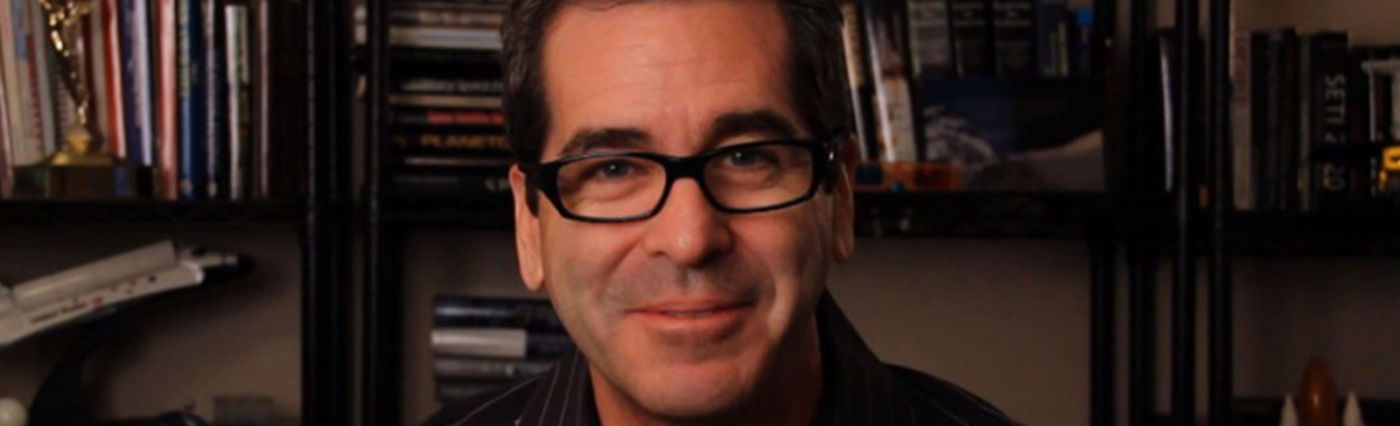
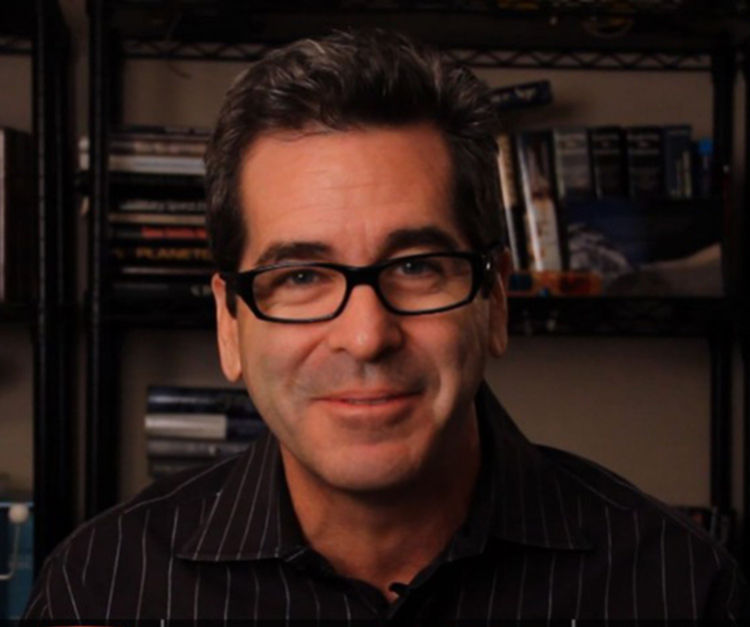
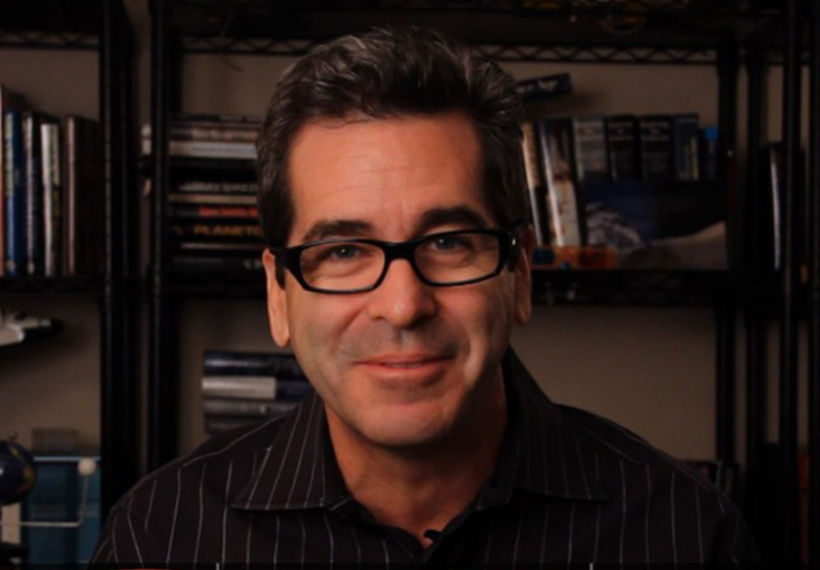
In the conclusion of Neil’s interview with veteran science journalist Miles O’Brien, the two discuss the inherent conflict between the goals of true journalism and corporate America. You’ll hear how Miles was finally able to convince CNN that the climate change debate was over, or at least, that both sides were not equivalent from a scientific point of view. He describes going to Spaceflightnow.com after CNN fired its entire science and technology division, because “after all, what do we know about the Kardashians.” Learn about the rise of “boutique journalism” in opposition to “Wal-Mart” journalism, and how journalistic integrity is most often found not on network or cable TV, but in family-owned newspapers and non-profits like PBS. Miles also recounts how the use of technology in journalism has evolved over the years, while in the studio, comic co-host Chuck Nice and Neil rip on the overuse of some of that technology, like 3-D holographic reporters in the 2-D medium of TV.
Transcript
DOWNLOAD SRT
Lenovo is sponsoring Life with Machines, a new video podcast hosted by comedian and tech whiz Baratunde Thurston, where he discusses all things AI. Lenovo's Smarter AI is your AI. Personalized and easy to scale, Smarter AI delivers outcomes that...
Lenovo is sponsoring Life with Machines, a new video podcast hosted by comedian and tech whiz Baratunde Thurston, where he discusses all things AI.
Lenovo's Smarter AI is your AI.
Personalized and easy to scale, Smarter AI delivers outcomes that matter most to you and your business.
With full stack AI hardware, software and service solutions, Lenovo is bringing the transformative power of AI to industries, organizations and people of all kinds.
Discover how Lenovo and Baratunde are using AI for good to power people forward.
Listen to Life with Machines now streaming wherever you listen to your podcast.
The holidays bring the world together and language can help us enhance our connections.
How will you be connecting with others this holiday season?
As the most trusted language learning program for over 30 years, Rosetta Stone immerses you in an enriching experience.
I'm learning and practicing Spanish with Rosetta Stone so that I can say things at the holiday table and nobody will know what I'm talking about.
Things like, estas terriblemente equivocado, which means you are horribly mistaken.
Start learning today with Rosetta Stone's Lifetime Membership Holiday Special.
Visit rosettastone.com/startalk for unlimited access to 25 language courses for the rest of your life.
Available for a short time at rosettastone.com/startalk.
With incredible new features and upgrades, there's never been a better time to armour up and play the critically acclaimed action RPG Diablo 4.
Get ready to continue the epic story in your battle against evil in the new expansion Vessel of Hatred.
As darkness spreads through the lands of Sanctuary, it's up to you to fight back the encroaching corruption.
Read the benefits of massive updates to character progression, loot systems, difficulties, and tons of added activities.
Face off against new and iconic bosses teeming with the spoils of Sanctuary.
Plus, harness formidable powers of the jungle with the all-new Spirit-Born class, now yours to customise and progress alongside five other iconic classes.
Embark on the epic journey solo or with friends.
You'll quickly understand why Diablo IV has been called one of the best action RPGs of the last decade by PC Gamer.
Forge your own path through hell-torn lands of Sanctuary.
Get Vessel of Hatred, available now in the Diablo IV Expansion Bundle, rated M for Mature.
Welcome to StarTalk, your place in the universe where science and pop culture collide.
StarTalk begins right now.
Welcome to StarTalk Radio.
I'm Neil deGrasse Tyson.
You're a personal astrophysicist, or at least that's what I think I am.
Maybe you have other, you got other main squeeze astrophysicists, I don't know.
I got Chuck Nice in studio with me, Chuck.
Hey, Neil.
Always great to have you back.
This is part two of the interview we started earlier with science journalism.
That's right.
And you now know one science journalist, and his name is?
Miles O'Brien.
There you go.
Who I like to call Balsey O'Brien.
Balsey O'Brien, because he majored in history.
Majored in history.
Busted into the CNN offices many years ago, said, I want to be your science journalist.
And didn't know anything about science.
Pulled it off.
That's right.
Pulled it off really.
That is chutzpah, baby.
Really well.
Well, I caught up with him with my roving micro, I mean, I couldn't, I saw him in Washington.
I mean, we're friends from way back.
I saw him in Washington, so I want to get him on StarTalk, and we didn't have time or schedule to fly him back here to New York.
I got him on the spot.
And so we ducked for cover in this flood conduit.
We'll call this Conduit Acoustics.
And underpass.
And underpass.
We're at a highway underpass.
Where's the quietest place in this intersection?
So in this interview, I asked him about many things, of course, but just accuracy in journalism.
Do you people care that you're accurate?
I'm ready to slap the man.
Let's find out what he says.
Tell me about accuracy in journalism.
Such a quaint notion.
Ha ha ha.
Me lad.
Old fashioned.
I remember the times when we actually had facts and checked them.
So I've spoken with journalists who, because of some journalistic ethos, they would not show me the text they were writing that came out of the interview that we conducted, out of some premise that they worried that I might influence it.
Then I said, well, do you care about being right?
Right.
And they said, oh yes, above all else.
And I said, well, if I don't see it, how do I know you interpreted it right?
And now there's a chance you'll be wrong.
Right.
So what's your bigger ethos?
Being right or having the person you just interviewed take a look at what you just created?
I always hear on the side of being right.
But I'm not the average journalist.
There is an old fashioned notion that if you show people your copy in advance, somehow, someway, they will either try to get it locked or will try to manage you in such a way that they change it.
Well, if they're managing you in such a way that they change it to make it more accurate, that is actually a good thing.
Reporters have got to get over this stubborn sense of, that's what I heard, darn it, I know that's what I heard.
We're all human beings and we all misinterpret, and especially in the line of work I do where it's very complicated at times, and I'm the history major.
I will surrender every time to concerns about that.
I generally don't send an e-mail with my script, but I'll go through it.
If I said this, is that right?
Or I'll send a little passage that I'm stuck on.
I've written it this way, does this make any sense?
And it almost always works out to the better.
But there is a whole journalistic convention that this flies in the face of, and I suspect I'll hear from people who say, you're a Satan of a journalist for doing that.
But you know what, think about how scientists go through peer review.
Oh, that's all it is.
Because I really started thinking about this journalistic notion of these sacred words which must be published, and everybody sees at the same time, including your sources, when I started really fully understanding what peer review was all about, and how that does a lot to keep integrity in science.
I think journalists would be wise to embrace this.
Peer review journalism.
That sounds good.
Interesting concept.
I like it.
But because they can be so tight about, and I wrote it, this is the truth, this is what it will be.
Sometimes they can define a truth that isn't true, but everyone reads it and it's in print, or it's journalistic, and so therefore it must be true.
But nowadays, I got my Twitter stream.
If somebody says something that's not true, I just say, nope, they messed that up.
Then I can come back at it.
But there was a day you couldn't even do that.
No, absolutely.
Right.
But accuracy in journalism, that leads to, what's this phrase?
Is it fair and balanced?
I had to ask Miles, what's this fair and balanced movement that we've been hearing about?
Let's check it out.
Some stories have one side that is represented by, say, 95% of the scientific community of the world.
Is it fair in a story about climate change, which I'm obviously talking about, to do this classic journalistic convention of equal time for both sides?
This is a huge mistake, I think, for journalists.
We should get 95% and then there's the 5% so you get a person from that 5%.
Right.
Now it gets 50% of your time.
Is that serving the truth?
I would submit to you not.
As a matter of fact, that is feeding obfuscation.
That is actually perpetuating a myth, dare I say a lie.
And so for journalists who are hung up on this idea, well, we got to go out and get the guy from the Cato Institute to balance out all this global warming stuff, I fought long and hard.
I did an hour-long documentary for CNN back in the mid-90s, and it was about 90-10.
Basically saying the scientific jury is in here.
That was the word I used.
It's not out, it's in, yeah.
Yeah, it's in.
There's no more scientific debate.
There's a political debate.
There's a debate over money, over how we should spend it, what we should do.
But there's no scientific debate, okay?
Let's just get over that.
And this caused a, you remember, I'm talking to these science phobic polypsi guys in the newsroom who don't really follow this the way we do.
And they thought it was just a journalistic aberration.
How could you write a piece this way?
Where's the other side?
And I started sending them papers.
And I started going through things and trying to explain to them where the science really was and where the peer reviewed science was, where the fossil fuel industry, and I'm using the finger quotes science was at the time.
And I managed to convince them, it didn't end up 90-10, but I got to probably about 75-25, which I considered a victory at the time, because that was big for them.
It was hard for them to wrap their heads around this.
This was not journalism in their view.
This was advocacy.
But I managed to at least move the needle and get them to the idea that doing 50-50 on this is not accurate.
You know, you have to fight that battle.
It requires doing your homework and understanding a lot of nuance.
And those are two things that TV reporters do very little of.
So he's totally, totally getting on the case of all his colleagues.
I wonder what they think of him.
Well, you know what?
I'm so glad to hear somebody actually say this, because that 50-50 argument is stupid.
It's like four out of five dentists recommend brushing.
The fifth dentist, he actually works for the National Sugar Council.
Come on, let's do some homework and find out who are these scientists that are saying that this isn't the case.
Right, right, right, right.
And so this concept of fair and balance implies that everything is a 50-50, or even that there are always two sides to a story.
There could be three, four, or five, or six.
Right.
Right.
So it's an odd ethos that they put themselves in.
I think maybe it's because journalists historically would report on politics and religion and all these other social cultural factors where you always had warring factions and so you got to give everybody time.
Exactly.
When we come back, more of my interview with Miles O'Brien.
We're back on StarTalk Radio.
Chuck Nice, right here with me.
Hey.
At Chuck Nice Comic.
That is correct.
Cool.
So Chuck, we're talking about science journalism.
You know, and do they do it right?
Do they do it bad?
I got my interview with Miles O'Brien.
I caught up with him in Washington.
Miles O'Brien, the leading science journalist of our times.
And the only one that I know.
You gotta get out more, man.
I don't know where you hang out, but we gotta work on you.
I'll give you a list of places to visit and shows to watch.
I always wondered, in the old days, you would send your story back in via telegraph or something.
They're invading over the border, stop.
And they're coming, it's beginning to rain, stop.
And so now obviously everything is instant and I've always been intrigued by all the ways technology has affected science reporting or reporting in general.
And so I asked him about it, because he's old enough to have been there in the old days and then in the new days.
Good evening, Mr.
and Mrs.
America and all the ships at sea.
I got it.
Mr.
Newsreel.
That was your first job back in 1938, you're a Newsreel reporter.
That's right.
So let's find out, let's get Miles' reflections on this topic.
Go.
CNN was chicken noodle news until which night?
Oh, of course, well, it was the Gulf War.
Thank you.
The first Gulf War.
And if you really think about what happened that night.
I saw the plos of CNN's audience.
Oh yeah, you've seen it.
It matches the world event.
They hate that graph because they'd like to figure out how to fill the gaps.
Because it's all been that way.
Yeah, they either manufacture wars or, you know, Anderson, what's going on, and come on, talk to me.
So anyway, that night, if you really want to know how CNN won that night, it was technology.
It was a young producer by the name of Easton Jordan who had the foresight to buy a dedicated line, audio line, into Baghdad back to Jordan.
And that is the only reason CNN was on the map was because of that one line.
Nobody else had done that.
Nobody else guaranteed transmission.
Most people think, well, I watched that on TV.
Actually, you didn't watch that on TV that night.
It was all audio.
It was just a phone call.
Later you saw the footage coming.
We had the boys from Baghdad, Peter Arnett, John Holloman, and Bernard Shaw.
Most people don't remember who was there, or whether they saw it on TV or heard it, but they just know that it happened.
That was a long way of saying that CNN has always had its core embracing technology to get the story done.
While I was there, I was schooled in a lot of this by some of the best in the business who are always looking at new different ways to get signals back from remote places.
As time went on, those big live trucks were shrinking.
Pretty soon, it was a suitcase, and pretty soon, it was a Mac attached to a phone, and it's getting to be Dick Tracy time pretty quickly.
I know as a comic book hero, you understand what I'm talking about.
Only of late have I been in a Superman comic.
When I was summarily dismissed along with the rest of the science and technology unit, because after all, what do we know about the Kardashians?
The entire unit disbanded from CNN, gone, we were pink-slipped.
I was really crestfallen because I thought, certainly it's bad for me, but I figured I'd figure out some way to make a living.
But really, I actually do care about making people understand how important all this is that I cover.
I really do.
It means a lot to me and I think it's so important for our nation and everything else.
So I was really upset about that.
And then I realized I don't need no stinking truck.
I don't need no Time Warner Center.
I don't need all that stuff.
You got fired at just the right time.
I did.
Technology is waiting for you to be the old one man news band.
You know, remember way back when on Saturday Night Live with Al Franken, he had the satellite hat?
Yeah, you remember that?
It's classic.
Anyway, so I was fired and frankly, I just did not want to miss a shuttle launch.
That's what it boiled down to.
So I called my friends at Space Fight Now, Steven Young, and I said, do you have internet connections?
But you find out the internet site that tracks every single launch.
They have a great, space nerds love this site.
And I say space nerd as being one of them.
I don't say that as pejorative at all.
Of this show, nerd is a compliment, a badge of honor.
Thank you.
Of course.
Anyway, so I said, I mean, what's your internet connection like there?
I'll bring down my Mac and a DV camera and we'll just stream out coverage.
And that way I won't miss a launch.
So we started doing this and it got progressively a little more complicated.
We do three camera shoot, but basically we were doing it for the cost of the travel down to Florida and the T1 line to the Cape, to the launch pad 39.
It was no money at all.
Toward the end, we did seven or eight launches this way and we would do six, eight hour length webcasts.
You were on them.
It was great for a guy like me who loves space to have six or eight hours to just keep talking.
Everybody's there.
And they're all there and they all come in.
And we all love you, so we'll talk a couple of minutes out with you.
And people were tweeting back questions.
It was fantastic.
And toward the end, we were getting a couple of 300,000 people watching the world over.
Now, it's not a huge thing, but we weren't spending any money.
We were just there with our little Mac.
And so I realized suddenly that we are in the boutique age of journalism.
I mean, if CNN is the department store or the Walmart, and think about what that does to quality, there is room for a Madison Avenue boutique still, right?
For people who care about things that are specific to them.
And they will seek you out.
They will find you.
They will find you.
And you have learned this by the way you tweet, by the way you use all the tools out there.
You really can do it on your own.
I used to think, well, it's just going to be this group of already interested folk.
But the truth is, that shows you have no appreciation for what social networking is all about.
There is an exponential nature to it that is just infused in it.
And yes, you might have this core that begins with you, but inevitably it gets bigger.
You've probably seen this study.
Pew did a survey.
They asked people, what's the thing you care most about that you see the least of in the mainstream media?
Answer, science.
Science.
So you and I know that there's an audience out there.
The mainstream media has decided, for whatever reason, they're scared of it, it's too complicated, it's too expensive to cover it.
I can just throw people in here in a studio and have them yap about the election, whatever.
Maybe they're still burned from their science classes.
Could be.
You were never wounded because you never had science.
I think that there is much work to be done, admittedly, but there are avenues for those of us who care about this.
To share our knowledge and passion and interest.
That lead me to believe not all is lost.
All right, so he's liking the technology.
Yeah.
But we've both seen technology taking a little too far.
Yeah, it can go awry.
You know, I saw one was at CNN where they had a hologram.
Yes, Wolf Blitzer's hologram, which now is not just Wolf Blitzer using the hologram.
Not everybody, but they're like, you know, they're using it for specific stories.
So if I remember the story correctly, in 2008, during the presidential election returns, Wolf Blitzer brought in via hologram Jessica Yellen, a reporter, and we see her floating in the middle of the space.
So apparently it wasn't an actual physics hologram because he would have seen it.
It was put into that space for we the viewers.
And she was three-dimensionally photographed image, teleported, put here on our screen.
But why does anyone wanna see all sides of a reporter?
Right, exactly.
I don't get that.
Who needs a three-dimensional reporter in a two-dimensional medium?
That makes no sense whatsoever.
You could just have her pirouette while she's speaking, and you get the three all sides of her.
No, I didn't understand that.
Maybe I'm overreacting.
Maybe we should applaud it for the experiment.
Cuz you gotta step in new places to see what works.
Maybe that's-
But see, the experiment would be, I'm sitting in my living room and Wolf Blitzer shows up in my living room as a hologram.
That's cool, but watching it on TV-
Watching a 3D hologram on your 2D TV.
That's stupid.
I'm sorry.
Projector.
And the fact that she kept saying, help me, Obi-Wan Kenobi, you're my only hope, really got on my nerves.
It just-
Star Wars Episode IV.
Exactly.
Right, right, right.
So yeah, so technology, it can always be overused, and I think you need time to have it sort out.
Do you remember when CDs first came out?
Yes.
Okay?
It could capture so many different channels of music with such accuracy, the early CDs went overboard.
And they just piled on all instruments and all, and they had the stereo running back and forth, ear to ear, and they were-
They called it overproducing.
Oh, there's a phrase for it.
Okay, yeah.
It was overproduced.
And then maybe you had to go there to feel out the space and then pull back on it.
And so what you really need the technology for is if you're gonna go to Mars.
And like he said in the first of these two interviews with Miles O'Brien, he wants to report back from Mars.
They're gonna need some technology, right?
Yes.
And a breathing apparatus.
I might add.
Not to mention a Motel 6 or something along those lines.
Cause I hear there's not a lot up there.
Yeah, you have to like terraform Mars first or something.
And so, no, technology is good.
And if you can get news faster, but maybe you don't need any more technology now that we have Twitter because somebody is eye-witnessing every news event in the world.
I was just about to say that.
You being a big presence on Twitter.
I mean, you know, we had the whole Arab Spring and it happened pretty much on Twitter.
It happened on Twitter.
And there's nothing a reporter is going to tell me that's better information than people actually live in it.
Right.
And in real time.
In real time.
What are you going to do to that story that's going to improve it?
Right, exactly.
Right, right, right.
And it happens when there's earthquakes.
You get instant, accurate reporting on when people felt it, what time it happened, and each tweet is time stamped.
Exactly.
So you know exactly when it happened, how it happened, where it happened, and then I am happy that I'm here.
And alive.
Sending out the tweet in the first place.
When we come back more of my interview with science journalist, Miles O'Brien.
Running a small business takes endurance, determination and the right support to reach your goals.
And MasterCard is here to help fuel that journey in a fast-paced digital world.
With innovative tools and resources, we're here to guide businesses every step of the way digitally.
Because when small business wins, everyone wins.
Let's power up our communities, one small business and one step at a time.
Keeping the community running strong, priceless.
Lenovo is sponsoring Life with Machines, a new video podcast hosted by comedian and tech whiz Baratunde Thurston, where he discusses all things AI.
Lenovo's Smarter AI is your AI.
Personalized and easy to scale, Smarter AI delivers outcomes that matter most to you and your business.
With full stack AI hardware, software and service solutions, Lenovo is bringing the transformative power of AI to industries, organizations and people of all kinds.
Discover how Lenovo and Baratunde are using AI for good to power people forward.
Listen to Life with Machines, now streaming wherever you listen to your podcast.
If you're ready to elevate your driving experience, the first ever Kia K4 is worth a closer look.
It combines style and performance with a sleek futuristic design, featuring StarMap LED headlights and an available panoramic display.
For unforgettable looks, SiriusXM comes standard in every Kia K4, bringing you closer to what you love.
Plus, with an available 190 horsepower turbocharged engine, the Kia K4 delivers everything driving enthusiasts crave.
Learn more at kia.com/k4.
StarTalk Radio, Neil deGrasse Tyson here, Chuck Nice sitting across from me.
Hello.
We're in studio, New York City, and we're slotting clips from my interview with Miles O'Brien, science journalist extraordinaire, and I had caught up with him in Washington to get this interview.
And we've been talking about everything.
I mean, he's been around long enough, he's got a story about everything.
And I finally had to ask him about, nowadays, there are news sources that are just aggregators, right?
They don't actually have their own reporters, they just pick and choose.
True.
That's an interesting, I mean, Huffington Post is largely that, right?
And Drudge, Drudge Report.
The Drudge Report, yeah.
And so what would happen if everybody were an aggregator?
Then no one would actually be getting any news.
They'd be aggregating each other's aggregations.
Let's see what Miles' reaction is to this.
Well, somebody's going to have to go to the city council meeting, right?
I mean, somebody's got to show up for the launch.
Somebody's got to be there.
I mean, we can aggregate all we want, but we're running out of actual primary news gathering instruments here, right?
Then it gets repeated that many times because it only has one source, and then everyone thinks it's that much more true.
Yes.
Because it shows up in more places.
Yes.
And you can be reading in the midst of Hurricane Sandy, making stuff up from whole cloth about the stock exchange being flooded, and it gets on TV because this is where it's all come to.
We don't have reporters there anymore.
We don't bother with that.
Silly.
We can just read the tweets.
So yes, it's a big problem.
However, when you think about journalism, you can almost always say the goals of true journalism will be an anathema, dare I say, mutually exclusive to the goals of corporate America.
There will always be a conflict there.
Because if journalism's job is to poke questions at the status quo and the establishment, what is corporate America but the ultimate embodiment of the establishment?
So there was a time when the networks, there were three of them, right?
And they had the fairness doctrine and they were worried about the FCC and news was a lost leader.
And they had unlimited budgets and the ability to give us people like Cronkite and Murrow and great television journalism.
And have bureaus in all these cities around the world.
There was not a money motive.
And then things changed.
The fairness doctrine went away, the cable began, there was much more competition.
Suddenly the news divisions had to be entertainment.
Well, they had to make money, so therefore they had to be entertainment, right?
They had to make their own way.
And that was the beginning of the end for serious journalism, in my view.
And if you really look at it, there are two kinds of truly successful journalistic endeavors.
There are family-owned enterprises, the Times, newspapers, the few that are left, that are run by families in communities.
This is actually how Ted viewed CNN.
There was an element of cocktail party braggadociousness that goes into this, right?
You want to be the upstanding citizen and the pillar of the community, and whatever the case may be, you're not in it just to make a buck, right?
Then there are the outright nonprofits now, like the Pointer Institute, which runs the Tampa Bay Times in Florida, or places like ProPublica or the Center for Public Integrity, that are actually doing true journalism funded out of the goodness of people's hearts.
That's where the journalism lies.
When you get into corporate ownership, a big change of newspapers and TV, you don't see a lot of good journalism.
You really don't, and I don't think that's a coincidence.
All the three networks are owned by corporate interests, right?
That's correct.
ABC is Disney, NBC is GE.
Now Comcast or-
Comcast, okay.
Yeah, well, GE, Comcast, whatever they are.
CBS is what?
Well, CBS is Viacom.
So there is hope for journalism.
It's just journalism doesn't fit well into the corporate business model.
And so maybe we're evolving, we're in the middle, but you don't believe in evolution, right?
Oh yeah.
Maybe we've had some intelligence design into a new era where journalism is fashion of these entities who, going back to that, it fits in with my boutique idea.
Yeah, boutique journalism.
Journalists not, I mean, imagine a story comes up that is really bad for Disney.
What will ABC do with that story?
You wonder.
I got a feeling that Mickey is not talking about it.
Mickey's not been available for comment on the story.
Mickey's not available for comment.
No comment.
A few years ago, Peter Jennings did a round the world New Year's Eve program where they had reporters in every time zone, which I thought was cute.
It was a little slow, but I applaud the experiment.
And they invited me in right at the time that scientists at the South Pole moved the location of the pole.
And that freaked people out.
Said, what's going on with Earth's rotation?
I had to explain that there are glaciers moving and this pole that's stuck in ice is moving with the moving glacier.
So you have to re-align it to the actual rotation axis of the Earth.
But fine.
But in there, Peter Jennings, he's smooth.
And he says, I wonder how they're celebrating New Year's Eve in Disney World.
Let's check it out there.
And so Disney World is an icon of America.
Of course.
But I thought, why didn't he go to Universal?
And then I was reminded.
Exactly.
Disney owns ABC.
But I'm thinking I was duped by that little smooth move of his.
He should have said, oh, by the way, they own us, so we have to go there.
Right.
And nowhere else to tell this story.
I was taken in at that brief second, thinking that there was something honestly genuine about going to Disney World for that story.
But yeah, and that's who cares about a New Year's Eve.
We're talking about real stories.
What's the future of news if corporations are going to own it?
More of my interview with Miles O'Brien, science reporter extraordinaire, when we get back.
Star Talk Radio, Tyson here.
Nice on the other side of the table.
That is correct.
Chuck Nice, they call him.
That was very wrong.
I'm Nice, Chuck Nice.
Nice, Chuck Nice.
My chicken baked, not fried.
So, what's the matter?
Because if you weren't black, I'd be like, why's it gotta be chicken?
Why's it gotta be chicken?
All right.
Okay.
So, here's the thing.
How soon do you know when you wanna be a reporter?
That's a question.
When does that happen?
I ask myself, and of course I ask that of Miles O'Brien, and I wonder for you, when did you know you wanted to be a comedian?
Was it the teacher saying, what, are you a comedian?
Yeah, you got it.
Pretty much every comedian, I think, has that same experience.
Same experience.
So what great, that happened in like elementary school.
Elementary school, when you get in trouble for trying to be funny, that's, and but-
And that's counted as something bad.
Not that you could make a boatload of money doing that later on in life.
No, it's just awful, and it just gets your life into complete peril, but you're like, I can't wait to do this again.
That's when you know.
That's when you know you're on to something.
All right, so you knew early.
Let's find out about Miles, how soon he knew he wanted to, how early he wanted to know he would be a journalist.
I remember wanting to be a reporter, just watching the old Al Primo style, eyewitness newscasts in Detroit in the 70s, and just thinking that was the coolest possible job.
But at that time in Detroit, not knowing anybody who ever did it, assumed it was out of reach because I couldn't even go to anybody and say, how do you do that?
Those people could have come in from another planet.
Plus, who knows anyone who's a reporter?
That's not a common trade.
It isn't a common trade.
And especially when you're in Detroit in an automobile town, it's not a town that celebrates the media.
So I didn't see it as a job.
So I went to school at Georgetown, majored in history because I found that of interest.
I was always on the newspaper, photography, news editor, all those things interested me and I gravitated toward them.
But I always thought this is way too much fun to be a job.
And so I never saw myself doing that until it got to the end of the line at Georgetown.
And I thought, what the heck am I gonna do?
And I took an internship at NBC.
NBC DC in Washington.
In Washington at WRC and NBC.
And I walked in that newsroom and I just knew immediately I was home.
You know, it was just like, this is the coolest place ever.
These people are having a ball, doing-
Everybody's busy and they're enjoying it.
And they're getting a paycheck.
I was like, I can do this.
And suddenly it all clicked and I just never turned back.
So it's a drug.
Yeah, that's absolutely-
They're in there, it's fast-paced.
And we all saw the movie, what was it?
Network News?
Network, yeah.
Not network, but network news, right, right.
Broadcast News.
There you go, there you go.
I'm mad as hell.
No, that's network.
That's network.
Yes, yes, yes.
It was before your time.
I was gonna say, I don't know Broadcast News then.
No, you know Broadcast News.
It had Holly Hunter in it and William Hurt.
Okay, I do know that.
So yeah, but it showed the fast-paced, it's highly energized and they have to be on time.
And the tape has to be working and the interview's gotta be in place and the anchor's hair has to be just right and everything's gotta come together.
So there's gotta be some kind of drug going on, drug influence.
Yeah, but that's a good drug, you know.
Unlike comedy, which is like crack.
Just straight up crack, it's awful.
So I think the universe is a drug.
Really?
Yeah, yeah.
Is that your personal drug, your drug of choice?
It's ecstasy.
It's ecstasy?
I can see, I see you right now with a couple glow sticks, getting high on the universe.
That's it.
Yeah.
How much higher than the universe can you possibly get?
That's true.
It is as high as it comes.
That's so true.
So what I wonder is, in journalism, if they print something that is not true but people think it's true, how long does it stay how people think it's true?
Is there, does it stay that way forever?
You know, for a lot of people, it does.
You know.
Especially if it lines up with what you already believe.
There's the bias.
You don't even put in energy to ask if it's not true.
That's right.
You just accept it because it already lines up with your beliefs.
And then at that point, if the redaction is made.
Redaction?
Then retraction.
Retraction.
Redaction.
Yes.
Well, I'm looking at it in print form.
But if a retraction is made, at that point, you're like, oh, well, you don't even hear that.
That doesn't register.
This is a famous bias that we have.
It's a selectivity bias.
Right.
We remember and pay attention to the things that we already want to be true.
And we remember the hits and forget the misses.
There you go.
That's what it is.
You're listening to StarTalk Radio when we come back.
More of my interview with Miles O'Brien, science journalist.
If you're ready to elevate your driving experience, the first ever Kia K4 is worth a closer look.
It combines style and performance with a sleek, futuristic design featuring StarMap LED headlights and an available panoramic display for unforgettable looks.
SiriusXM comes standard in every Kia K4, bringing you closer to what you love.
Plus, with an available 190 horsepower turbocharged engine, the Kia K4 delivers everything driving enthusiasts crave.
Learn more at kia.com/k4.
Imagine what's possible when learning doesn't get in the way of life.
At Capella University, our game-changing FlexPath learning format lets you set your own deadline so you can learn at a time and pace that works for you.
It's an education you can tailor to your schedule.
That means you don't have to put your life on hold to pursue your professional goals.
Instead, enjoy learning your way and earn your degree without missing a beat.
A different future is closer than you think with Capella University.
Learn more at capella.edu.
We are back on StarTalk Radio, Neil deGrasse Tyson here, your astrophysicist.
Can I say that I'm people's personal astrophysicist?
I love it when you say that.
You like that.
Your personal astrophysicist.
But what I really want is there be a whole bunch of more astrophysicists than I can just go to Bahamas and not be anybody's at that point.
That's what I'm trying to do.
Yeah, it's no good if it's just me.
I want company.
We should get some Neil impersonators.
Oh, is that it?
Okay.
You know what I mean?
Like they had Elvis, Elvi.
Yeah, but what about me would you impersonate?
That's what I'm asking.
Do I have ears that stick out?
Do I have some weird facial feature?
I don't know.
No, you don't.
Do I say thank you very much?
No, I don't have any.
You have a very distinctive voice, though.
Oh.
Oh, yeah.
So you come back one day and you will try it.
We'll try it.
Okay, you know, they tried it on Saturday Night Live.
Oh my God, I saw that.
And I gotta say, that was the worst.
Oh, you didn't like it?
That was the worst, Neil.
No, how could it be the worst?
It was the only Neil impression there ever was, so how could it be the worst?
It's not the worst, it's the first.
It's the first.
Get through the first, then you start comparing them.
All right, I'll give you that.
On Saturday Night Live, I was very flattered.
Okay.
I would be imitated.
Back to Miles O'Brien, journalist.
Yeah, so, you know, he survived CNN and the beginning pink slip there, and he had his little, his freelance interval for a while, and now he landed on his feet at PBS.
And so let's see, let's see how that is going for him, to find out.
I was available, as we know.
You were between jobs.
I was between jobs, as they say.
I was flailing about.
Actually, I was living large.
CNN gave me that.
Severance, yeah.
Just another contract.
And I was like, do you want to send me home?
You got to pay me.
Anyway, the news hour was approached by a bunch of funders who said, we want you to do more science.
Well, who do you call?
There it is.
The science busters right here.
And what's really interesting is when I was at Georgetown, my first ever taste of television was in that very building at WETA where the PBS news hour is located.
And my boss at the time was Linda Winslow.
Now Linda Winslow is the EP for the news hour.
So I've come completely full circle.
EP, executive producer.
Executive producer.
So there I am back and it is extraordinary.
I mean, here's the thing, you work at CNN.
CNN is on 24 hours, 365, right?
I believe that is all the time we have, right?
Pretty much.
And yet, they would say, when I came in with a two minute and 30 second piece, we don't have enough time.
I'm sorry, you have all the time.
And I go into the news hour and I say, I've got a 13 minute script here.
And they say, well, can you trim it to 11?
And I think to myself, I have died and gone to journalistic heaven.
Thank God for Big Bird.
What would I do without him?
Wow.
Yeah.
So he goes from people asking why his two minute shot is worth anything to can he trim a 13 minute segment to 11 minutes?
You know what?
That is the beauty of what I call crowdfunded journalism.
That's why I listen to NPR, you know, not because they have a particular band.
But you don't listen to StarTalk Radio?
Well, I listen to StarTalk all the time.
I'm listening to it right now.
You're creating it.
But, you know, the fact is that they don't have to worry about corporate financing.
They just do what they do.
Do what's right and as they got to do it.
Exactly.
And, you know, I'm old enough to remember that the, was it NBC, the local news in New York, all right, they, you know, they give their half-hour news before the evening news.
They said, we're going to go to an hour.
And people said, right, that's, that's, how do you do that?
How do you do that?
Oh my God.
What are you going to talk about for a whole hour?
How could you do an hour's worth of news?
Hours worth of news before the news, you're going to do an hour's worth of news.
And they said something that's, well, I thought they would just be essaying.
They said, if you're wondering how we could fill that hour, actually, we had a hard time finding out what to cut.
Wow.
And I said, no, that can't be right.
And sure enough, they filled the hour and the rest is history.
Now we have 24 hours.
24, 7, 365 plus leap day.
Maybe leap day should be a day without news.
Oh God, that would be great.
Because it's not, it's one day in four years.
Just give us a break, for goodness sake.
Yeah, but that's it, 24 hours a day?
24, 7.
And so then you look, are they actually filling it with 24, 7?
If you look at Headline News, they're not.
They're on a loop.
Right.
Don't you have a gig coming up on Headline News?
I can't talk about it.
Oh, sorry, top secret, sorry.
We might see you on Headline News.
You may, you may, very soon.
Or might not.
But there's a loop going on there and Sports Center.
Same thing, same loop.
They go on loops.
You know what that is?
So, they're not really filling 24-7.
No, they're not.
And you know why?
That's the radio model.
I mean, I don't know if this is what they actually call it, but I remember when I worked in terrestrial radio, you know.
Terrestrial radio, that's old fashioned radio that doesn't come off a satellite.
Thank you, sir.
So, we would say, why can't we play deeper cuts on the album?
And they said, well, deeper cuts mean more than just the top hit.
More than just the top hit.
And they would say, nope, you got to play the hits.
People only listen for a certain period of time, so you got to play the hits.
You can't show them what else this artist might do.
Because then they won't hear the hits.
They won't hear the hits.
Hit the time they're tuning in.
That's right.
Could you go to, just while they're in the car?
That's it.
Just while they're at the beach?
And that's the news.
That's what we're doing now with the news and the information that we have.
Okay.
It's awful.
So, they're lying to say the 24-7 covers, the 24-7 repeats.
That's what it is.
Absolutely.
When we come back, we're gonna have some special guests to talk about science journalism.
Looking forward to it.
And its enemies.
We'll see in a moment.
We're back.
Yes, we are.
Guess who I have in studio.
I am very excited about this.
I have in flesh Bill Nye, the same guy.
It's so good to be here.
What happened to your voice, Neil?
And we have via Skype, by Electronic Transmission, Elise Andrews, Elise, the curator of IFLS, I effin frickin love science.
Elise, thanks for being on StarTalk again.
I count both of you as friends of the show.
It's not your first time you've been on, or we've chatted with you about us.
And so, what I wanted to focus on, IFLS has nearly 20 million likes, people who follow its content.
Bill, your book, Undeniable, is now on the best sell, New York Times, best sell.
Congratulations on this.
Thank you.
But there's a denominator here I want to tease out.
Bill's book is not simply Here's Evolution, it's Here's Evolution to all you people who think it didn't happen.
It's got a target audience in there.
And Elise, you've got entries on your Facebook page where the comment thread, it attracts people who just want to attack science.
So Elise, let me start with you.
What is your take on who these people are, why they're out there, and why they're doing it?
You're just trying to spread out what's going on out there.
Just trying to drop some knowledge.
Just trying to drop some knowledge.
Honestly, I have no idea.
I think the psychology of these people is very hard to get inside.
I personally had never felt the need to write a thousand word comment about why I disagree with an article or why I hate something.
So it's hard for me to get into that mindset.
But it is very bizarre.
Even on a site like IFLS, which is very expressively and very clearly about science, it's very pro-science, very usually goes to the scientific consensus.
We still have an astonishing amount of people who just don't accept things that are scientific fact, at least according to the scientific consensus in the world of science.
And that's really quite disturbing.
All I have to do is post about anything vaguely controversial, and that includes evolution, climate change, vaccines, GMOs, anything like that.
And you'll see comment threads that get to tens of thousands of comments long, or with people getting very, very vicious and very upset about it.
It's really quite supr, I mean I've stopped being surprised after all this time, but there are times when you look at it and think, wow.
So what you should try is try putting a post, there's such a thing as gravity, and see if people object to that.
I was wondering if people would.
There would be.
There would be people that would find a way.
I gained weight last week.
I wanna repeal the laws of gravity.
So Bill, you were in the Lion's Den debating Ken Ham.
Yes.
And I call Ham on Nye, that's what I call that.
I think I know what you mean.
That was a priceless response.
I call it Ham on Nye.
Well, it was.
But so.
It was a loss for words, which is unusual for me.
But it's a community of people who sort of all in agreement that you don't know what you're talking about.
That the earth is 6,000 years old.
Right.
So as I say, the guy, I'm not an expert on the Bible, this isn't my business, but he right away goes to the New Testament.
But the whole 6,000 year old thing, as I understand the Bible, was about the Old Testament.
But at least, at least, at least they have this, this document that they're basing their belief system on.
Whereas I and Elise, what do we have?
No, no, no, no, no, no, no.
At least he has a document.
At least the naysayers on your site, what do they base, it's a political philosophy then, in many cases, rather than a religious philosophy.
Is that how we split the kingdom here?
A lot of the time it is very politicized, yeah.
And I find that very strange, obviously, I'm British and we don't have such a strong divide down party lines on science that you seem to have in America.
Just from my observation, it seems very strange to me that people feel like they have to design a climate change based on who they're voting for.
That's very alien to me, but that is what I see very much in the comments.
That's because you guys have something that we sometimes lack called intelligence and in addition to...
No, you guys, it just shows you...
Chuck just started a website.
I don't think that's there at all.
You guys have a robot driving around on Mars.
Come on.
Let's not, let's not, it's too much.
We still have two robots.
Yeah, you do.
There's two driving around and there was one stuck in there somewhere.
That Chuck is just trying to plug his anti-global warming website funded by Exxon.
That's right.
That's right.
But you know, just to talk about all that and Exxon, two things.
First of all, the biggest problem that I have with the creationist movement is they have a very strong, complete, thorough curriculum where they try to indoctrinate young people, schooled kids, into this philosophy.
And they have workbooks and DVDs and curriculum guides, quizzes that demonstrate there is electricity, there's voltage and amperage, and the earth is 6,000 years old.
Right.
And so, what I will say, at least, what keeps the developed world in the game, the UK and the US, is innovation, is new ideas.
We, both countries, have no trouble feeding themselves right now.
With food, yes.
Yeah, with food.
But what we export now is ideas rather than products.
I mean, there are a few products.
So, if we raise a generation of kids that's not scientifically illiterate, that is a formula for disaster.
Yeah, absolutely.
And that's where IFLS really is changing the world.
Do you know what your demographics are for IFLS?
It is very much mostly young people.
The vast majority of our followers are between the ages of 18 and 24.
So that bodes well for the future.
It sure does.
And are they UK or is it USA?
Is it, do you have any idea?
It's mostly, I mean, the four big countries we've got, it goes USA, UK, Canada, then Australia.
So it is mostly the USA, but then to be honest, there are a lot of you guys.
So most of the people on the internet are in the USA.
But it is vaguely proportional per country.
It is remarkable.
What's the world's most populous country, gentlemen?
China.
Second most populous?
India.
Third most populous?
Russia.
United States.
Really, did we pass Russia?
There you go.
Oh, it wasn't the Soviet Union, it wasn't, but now I guess it was just Russia.
Maybe.
So, there's a lot of, so that's why there's so many U.S.ians on the IFL esters.
Unfortunately, Facebook's blocked in China, so I can't reach them.
That would, dare I say it, change the world.
Wait, wait, you're blocked in China?
Are you blocked in China?
No, not me specifically, the whole of Facebook.
Oh.
So it's not her, it's kind of Mark Zuckerberg.
Not my page specifically, you can't access Facebook whatsoever in China.
Do you know how fast that place would change if you could get Facebook in there?
It would, yes, it would change.
Well, they have their own version, don't they?
Yes, they do.
Yes, yes.
They have their own version of Facebook or Tinder?
The government sanctioned version.
Or Tinder?
Yeah.
Wouldn't that be cool if Tinder got into China?
Man, that's-
You guys, I just got a feeling it kind of is.
That would bust loose everything.
That's what I'm saying to you.
Exactly.
No, but I mean, really, you guys, it would change the world if people had unlimited access-
To sex.
Right.
No, to anything they wanted to see.
Oh, okay.
But then maybe that's the same thing.
Which initially would be sex.
Maybe it's the same thing.
Yes.
But it would change the world, you guys, and so I think it would be a more effective-
So at least you're doing noble work.
These people who argue with the science, do they look like they're part of an organized group the way Bill's resistance is?
No, I don't see that very often.
Occasionally, you do get what does look like a very mobilized task force.
At the moment, actually, something I've got going on is, I made a comment about animal testing.
Somebody asked me if I supported animal testing or not.
I said, obviously, I do support medical testing on animals.
It's unfortunate, but necessary.
I look forward to the day when it is no longer necessary, but for the moment, it is necessary because it saves lives, and that's obviously important.
Somebody screenshotted it and it went viral and it got to the top of IMGA or something like that.
I've had a lot over the last few days.
I don't know if it's a specific group, but it certainly feels like it.
I've had a lot of threats.
I've had a lot of people organizing.
I've had dozens and dozens of emails.
I've even had people tracking down ex-employees and calling them, hoping to get my contact information, hoping to get my address.
It's really kind of frightening.
I'm kind of happy that I'm here in the UK rather than where I usually live because people are crazy.
Yeah, people are crazy.
But for that particular argument, you just have to tell them that they are welcome to be the test subjects for these trials.
And that's what I said.
No, no, what you do is, no, no, here's what you do.
You have the medicines that were tested on animals and medicines that were not tested on them.
And anyone who doesn't want to use the medicine test on them, they can buy that and then.
Exactly.
There it is.
And then everybody's healthy.
Yeah, yeah.
Matt, how about that?
What do you think of that, Bill?
I don't think it'll fly, but yeah, you can talk about it because it.
And then the evolution people can use the vaccine that was not based on evolution.
Would bet they were that simple.
That's the great irony.
Speaking of which, this is the great irony.
When you go to Answers in Genesis Ministry in Kentucky, they have iPhones, they've got Facebooks, they got Twitter, they're cranked up to 11, they got LED lighting, and they don't believe in science.
Right.
So that's it.
They have the most modern technology and they also handle snakes.
They believe in the part that suits them, like everybody else.
They believe in the parts that suit them.
Everybody's the same.
So that is our collective challenge going forward.
Right.
Those who cherry pick science and those who do not.
That's a good way to put it.
At least we gotta call it, we gotta stop it there.
Thanks for Skyping in to StarTalk Radio.
Thanks for having me.
And Bill, thanks for coming in.
It's so good to be in.
Chuck, always good to have you here.
My pleasure.
On, we've been listening to StarTalk Radio.
I'm Neil deGrasse Tyson, as always, bidding you to keep looking up.
If you're ready to elevate your driving experience, the first ever Kia K4 is worth a closer look.
It combines style and performance with a sleek, futuristic design featuring StarMap LED headlights and an available panoramic display for unforgettable looks.
SiriusXM comes standard in every Kia K4, bringing you closer to what you love.
Plus, with an available 190-horsepower turbocharged engine, the Kia K4 delivers everything driving enthusiasts crave.
Learn more at kia.com/k4.
Imagine what's possible when learning doesn't get in the way of life.
At Capella University, our game-changing FlexPath learning format lets you set your own deadline so you can learn at a time and pace that works for you.
It's an education you can tailor to your schedule.
That means you don't have to put your life on hold to pursue your professional goals.
Instead, enjoy learning your way and earn your degree without missing a beat.
A different future is closer than you think with Capella University.
Learn more at capella.edu.
See the full transcript



 Unlock with Patreon

 Become a Patron