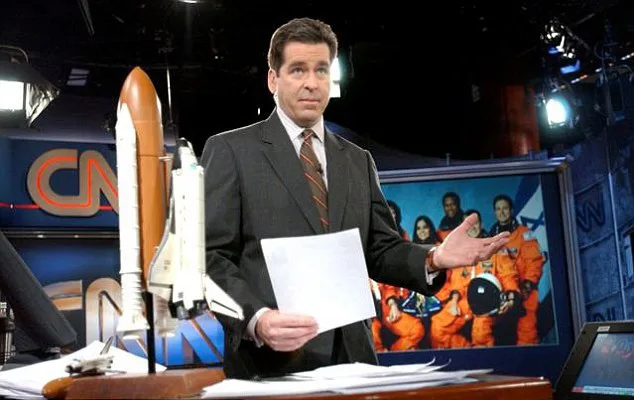
When it comes to science journalism, there are few reporters with as much experience as Miles O’Brien. In Part 1 of their interview, Neil, Miles and comic co-host Chuck Nice discuss the business of science news. You’ll learn what makes a good science-focused interview, from both sides of the microphone. You’ll find out why CNN started a science division – and why they shut it down. Miles explains the impact of “The Foxification of News” and journalists who make themselves the center of the story. He describes his journey from history major to science reporter, including an interview with CNN’s president who told him, “You don’t know sh*t about science.” Miles also shares his most memorable stories: reporting on the Columbia space shuttle disaster and covering John Glenn’s return to space with “co-anchor” Walter Cronkite. It’s an eye-opening journey beyond the headlines, into the business that decides the science – or lack of science – that gets reported to the rest of the world.
Transcript
DOWNLOAD SRT
Welcome to StarTalk, your place in the universe where science and pop culture collide. StarTalk begins right now. Welcome to StarTalk Radio. I'm Neil deGrasse Tyson, your personal astrophysicist. I also serve as Director of New York City's Hayden Planetarium...
Welcome to StarTalk, your place in the universe where science and pop culture collide.
StarTalk begins right now.
Welcome to StarTalk Radio.
I'm Neil deGrasse Tyson, your personal astrophysicist.
I also serve as Director of New York City's Hayden Planetarium right here in New York City at the American Museum of Natural History.
My co-host is the one and only, Chuck Nice.
And thank God for that, huh?
The one and only.
You're thanking God today, right?
Exactly.
Not your parents for birthing you.
Right.
All right, today we're gonna be talking about my interview with the science journalist, Miles O'Brien.
Nice.
I mean, how many science journalists can you actually name?
Uh, now one, now I can name one, Miles O'Brien.
Miles O'Brien.
He's had a whole career in this stuff.
He was a science correspondent for CNN for 16 years.
And he might even have been there from the beginning.
I mean, I don't know.
CNN ain't all that old, right?
Not really.
Right, right, and he's reporting on science and space and aviation and environmental issues.
He was their go-to man.
And right now, he's no longer with CNN and he does pieces on science for the PBS NewsHour.
That's great.
But formerly the McNeil Lair.
McNeil Lair hour.
Yeah, that's right.
Did one of them die or something?
I'm not sure.
One of them left.
I'm sure one of them's gone.
I'm not sure if he's left us completely.
Don't know if he's left this earth or not.
Right, left the earth or not.
But yeah, I think they both retired.
They both retired, okay.
So I caught up with Miles on the road and I said, I can't miss that opportunity to get him on StarTalk.
So I pulled out my microphone and we just started talking.
Sounds so dirty.
So I didn't say I whipped out the microphone.
I said, I pulled it out.
You made it, I made it clean.
You made it clean, I made it dirty.
I was wondering, was he always interested in science and did he study science in school and how do you become a science reporter for a major news?
So this is what I was curious about.
Let's find out.
I'm a history major and it shows in my reporting, don't you think?
I'm a classic example of a guy who has a natural interest in appreciation for science and without naming any names, was taught by some teachers who didn't infuse the enthusiasm for the subject that should be there.
Enthusiastic, because you can read that immediately in the face of a reporter.
Exactly.
It's interesting how when I came to the subject, I came to it in such a strange way compared to other people.
History major, I become a reporter.
I'm in local news for a dozen years.
What local, where were you local?
Oh, I was in St.
Joe, Missouri.
That's a big market.
191 out of 203 at the time.
Used to shoot my own stories back in the day when the camera was attached to a big recorder, which itself weighed about 100 pounds.
All myself, one man band.
And then I found my way into Albany, New York, then Tampa, Florida, Boston.
And then while I'm in Boston.
Each market ever bigger than the previous one.
Yeah, yeah, more crimes to cover.
There's more bodies and therefore more crimes.
You know, it's fires and mayhem.
And so I was getting tired of that, but I didn't see a logical way out necessarily until I heard that CNN was looking for a reporter.
The catch was they were looking for a science correspondent.
A science correspondent, the history major who had been chasing around.
So now you're being audacious to respond to an ad for a science reporter.
Scientific term would be ballsy.
So I managed to cobble together a tape that had a reasonable number of technical stories that was kind of science-y.
Science wasn't something scary to you.
This is the key.
The only reason I am where I am, I was never afraid of the subject.
That's important.
Yes, and this is a key issue with people because there is a science phobia, which I discovered in a palpable way when I was trying to get stories on the air at CNN.
You know, that newsroom is populated by science phobics.
They're all poli-sci history English majors, God bless them, I'm one of them, who are petrified.
You say the S word and they practically run from you.
And I cannot tell you how many times you go through all the iterative processes to get a piece ready for air and then there's a final play for the supervising producer of CNN, play the tape for the tape we had in those days.
I was about to comment.
Back in the day.
It was relatively esoteric.
There's like bucky balls.
Carbon 60, making the vertices of a soccer ball, essentially, yeah.
It was graphite of the year.
It was on the cover of Science Magazine.
You know, it was a big deal for a little while.
We thought we were gonna have superconductivity by now on Mars with bucky balls.
But then, a lot of these things didn't pan out.
But anyway.
And the flying cars, don't forget those.
Yes, exactly.
So I flew my jet pack into the newsroom and played this tape about bucky balls.
And the guy said, I know this is science, but that was interesting.
Wow, that seems to have a book in it.
Yes, as if the two were mutually exclusive.
So it's interesting how science is perceived by people.
And I think we do a pretty good job in our educational system of scaring people away.
But how much of this was because you were simply a good journalist telling the story?
That's a really good question, because really the purest definition of a journalist would be the most important thing is an overriding sense of curiosity, a desire to understand yourself.
No matter the subject.
And an ability to communicate that to your audience.
That's the job, right?
So whether it's politics, and Lord knows we get a lot of that, or science, it should be the same discipline.
When I went down to interview for the job, Bailey Barish was the science editor at the time.
She was a former molecular biologist.
She actually knew science.
And I came in there as this local news guy, cobbled together this reasonably technical tape out of Boston, and really had no business being there.
And she put me through the two day interview, which included going out and shooting a story, you know, reading in front of the camera, all the stuff you'd expect, but also a written and oral exam about science.
I flunked.
You know, she was asking me all these things about climate change, and this was 1992.
Early in this.
You would have known about it, but I was the history major chasing bodies around in Boston.
I didn't really know much about it.
We knew about it from the 80s when we started talking about the effect of climate change from asteroid impacts and nuclear winter and all of this.
Of course, Jim Hansen and Al Gore were talking to Congress about it late 80s, but I wasn't paying attention.
Anyway, so I flunked it miserably.
I get to the end of the line after this two-day ordeal, the president of CNN, Bob Fernand, and he's at his desk.
He doesn't even look up from the papers, his desk.
Obviously, you don't know shit about science.
So this is one of those moments in your life.
What do you do?
And I threw the Hail Mary Pass.
I said, and that is why you want to hire me.
And I thought at the time that was deep into the balls of vacation.
The truth is, it is the truth.
Because the audience of CNN, it's not scientists.
You know, they tell us to write to somewhere between the fifth and eighth grade education.
And what you need is somebody who's curious, not afraid of the subject and able to figure out ways to communicate complex things in a more simplistic way.
All those things, as it turns out, I was pretty good at.
And so actually having somebody come in there defending a degree might get in the way.
And as we all know, science is a lot of things to a lot of people when it's very compartmentalized.
If I happen to be an astrophysicist, what would I know about buckyballs or whatever?
I would have a keener understanding of the scientific process, but I learned the scientific process pretty quickly along the way.
And I also had a former molecular biologist as my editor.
So it's a great lesson for all of us, I think, about science and why it scares us and how if we're just a little curious and embrace it, we might all like it a little bit better.
You're listening to the StarTalk interview with science journalist Miles O'Brien.
And that'll continue when we come back.
Bye We're back, StarTalk Radio, Neil Tyson here, Chuck Nice.
Across the desk from me.
We're here in New York City, and we're talking about science journalism.
Yes.
And we've got Miles O'Brien.
So apparently you only know one science journalist, and his name is.
Miles O'Brien.
And before this.
You gotta get out more.
Yeah, I really do.
And except I also know Science Friday, except I don't know the journalist.
You don't know the journalist on Science Friday, NPR, Science Friday.
But I'm gonna rename him Ballsy O'Brien.
Ballsy O'Brien from that last clip.
Yeah, as a history major, bust into the man's office, say, I'm gonna be your science reporter.
Yeah, man, Ballsy O'Brien.
But that's kind of, there's a gender neutral way to say that.
What is that?
You say, gonadal O'Brien.
Go-nadal.
Yeah, gonads, because men and women both have gonads.
There you go.
So we have more of my interview with him.
Like I said, I caught up with him on the road and some of the clips sound like we were in a rain conduit under a highway.
Yes.
Absolutely, that's so true.
But we got him, I got him on tape.
Were you guys graffitiing a wall while you were talking?
I'll get the interview wherever I can, whenever I can.
So in this next clip, I'd asked him, what's going on?
Because it seems like journalists are now the center of the story.
They're not talking about something else.
Everything's got to go through them and get their opinion and their perspectives.
And I just was curious about the trend.
Let's find out.
I think the idea of journalists becoming personalities was probably rooted in a good idea, but it's gotten out of control.
The good idea is that we all need to kind of have somebody take us along for the ride.
Otherwise, you'd all go out and do stories and it'd be mayhem, right?
The notion of journalism is that you hire a guy like me who has the time wherewithal profession to go out and talk to people about complicated things and relay that back.
In the process of doing that, you kind of want to go along for my journey and see how you did it.
That makes for a more effective storytelling motif.
So you got my personal guide.
Kind of like that.
I have a tour guide to the world of science.
Now, you can do it other ways where people like you as a scientist could carry the entire story, sort of the old BBC style, right?
No narration, just let the scientist tell the story.
There's nothing wrong with that.
It's just that this is another way to do it.
What happens, though, is if you get really good at it, you get in the way of the story as the fame and the fortune and the attention get-
Your identity becomes bigger than the story itself.
The way it dwarfs, it's like the sun exploding and taking the planets in with it.
That's a bad analogy.
The point is, I think it's difficult to stop this train once it gets going down the tracks.
And we're pretty far down the tracks right now.
The thing about working for a place like PBS is no one cares.
There's no money or fame.
It's just we go out and do stories.
Go out, get the job done, go on to the next game.
I assert myself to the extent that it makes sense and no more, no less, and it doesn't get out of control.
What happens is it becomes a real money game.
And frankly, it leads to bigger contracts for journalists.
And so it's obvious that they would do this.
But I think there's a little bit of a conflict of interest there in telling the story.
I guess I don't mind people being personalities, but what has happened is the journalists have now become opinion leaders.
And so the line that I thought used to be there between here's someone who I trust who's giving me news, and here's someone who I just heard the news, but now they're telling me how to think.
I don't know that that line is still there.
No, it's gone.
But I think what has happened, part of the problem here is that in a world where information has become a commodity, what is a journalist to do to provide the value added?
How do they, in this cacophonous world, wave their hands and say, hey, hey, listen to me over here?
And it's a natural outcome of my experience covering news for 30 years and space for 20 to have enough depth and knowledge of it to actually be able to analyze it in a way that is not just the facts, ma'am.
I can go beyond Joe Friday.
Now, does that mean that I turn my work into just opinion screen after opinion screen?
No.
Does it mean that in the context of what I do on the web, through the various media that I'm involved in, there are places for me to kind of connect some dots that I wouldn't necessarily in a classic AP style story?
Yes.
Reporters are given a license to give their opinion.
It's very easy to just keep doing that.
That's happened with Lou Dobbs.
He was probably the first to do that in a really big way.
I used to watch him for news, and then I noticed a growing fraction of his delivery of content, which is how he thought about the world.
It was like the Lou Dobbs show, you know, rather than time to get more news.
Well, there's a lot of history to this.
Of course, you know, we call this the Foxification of news because Fox, of course, made a huge business out of providing news from a very distinct perspective.
From a point of view.
Right?
There used to be a thing called the Fairness Doctrine, all that's gone for the broadcast.
Of course, cable has never been FCC controlled anyway.
So what you've seen is this kind of polarizing component to the mainstream media on cable.
Lou saw that, got right on there, and she helped lead that charge.
And the presumption is that plain old vanilla newscasts, that Ted Turner always said the news will always be the star here.
That was his quote back in 1980.
That sentence was actually uttered.
That was uttered.
It's acquainted humble time.
He got off his horse there in Atlanta, and it was lit by kerosene.
The news will be the star.
What a notion.
Somebody should resurrect that.
CNN's philosophy should be that still today.
But for whatever reason they've decided they have to answer this Foxification factor, but they can't quite figure out how to do it because they want to be the world's most respected important network, which they are globally.
And yet they want to put in this edge and you can't square that very well.
So I think, frankly, if they just got back to that notion, you could cut your salary on their talent, Ted just hired washed up local anchors to do it back in 1980 because that's all he could afford.
And all they did was give the news.
Well, these days, could you make a business doing that with all the other sources?
I don't know.
I'm not sure.
Yeah, so Chuck, does your fame get in the way of your storytelling of accurate content?
Yeah, yeah, all the time.
And by get in the way, I mean not at all because I don't have any fame.
Kind of hard for it to get in the way of something that doesn't exist.
That doesn't exist.
Let me ask you something because I'm partly on the journalist side of the line in the sand because I get called by journalists to talk about the universe.
If you're watching the news, what do you want to hear?
Do you want to see a famous person and then have them talk about the news objectively?
I don't want to see a famous person.
And he's right, you know.
Miles O'Brien is right.
Miles O'Brien is right.
I love when he says, basically what he's saying is, you gotta get the money out of journalism.
You hear that, Matt Lauer?
We're coming for you.
No.
Coming for your paycheck.
We're coming for your paycheck.
It's like Citizens United.
Get the money out of politics.
We gotta get the money out of journalism because it really has become about personalities.
It's a cult of personalities.
Yeah, but it's not the journalists' fault, all people tune in.
They wanna see Anderson Cooper, they wanna see Rachel Ray or she's Cooks, but still, personality apparently matters.
Well, you know, I blame Walter Cronkite for this.
Good point.
People tune in to him.
He's the guy that did it.
He's the guy that was, people were like, I gotta get home and watch Walter Cronkite because I really trust that guy and whatever he tells me.
It's his fault.
It's his fault.
God rest his soul.
Wow, I have to agree with you.
Yeah.
It was his way of telling the news that people trust it.
Right.
And we didn't think of it as personality type, but that's what it was.
That's really what it was, yeah.
And for him to be on the news nightly and coming into your home and saying, you know.
In your living room.
In your living room.
And that's the way it was or it is or.
Or will be.
Or will be.
It might have been.
I love that.
See, that's true journalism.
Right, right.
You know, and that's the way it might have been.
That's honest journalism.
I'm totally objective.
You know, for most of my world, the universe, it's hard to put a strong opinion on it.
You know, if I tell you, you know, two galaxies are gonna collide or the sun just burnt up some plasma and that gets reported, it's not susceptible to politicizing.
Oh, I don't know.
You don't watch a lot of Fox News, do you?
No, I mean, of all the sciences, astrophysics, I think, is the least politicizable.
When you think about it, there's biology, there's health, there's, you know, think of all the other sciences and the way people try to put a spin on it.
But see, now here's the deal.
Once again, you're thinking like a scientist because when you think about the absolute, you know, what you think is just a truth, okay?
For instance, the age of the universe because of measurable light.
Yes, yes, 14 billion years old.
14 billion years old.
There are people who say, nah, that's no, that can't be.
Well, so, but it's, like I say, the good thing about science is true whether or not you believe in it, we just move on.
Oh, that's true, that's a good point.
That's all I'm trying to say here.
But the idea that we have personalities, I think it's unavoidable because we like personalities.
There it is, you can complain about it, but that's not gonna change.
And also, information has to do with whether or not you receive it has to do with from whom it's coming.
The storyteller.
The storyteller.
And not everyone is an equal storyteller.
Absolutely, right.
And the journalistic version of a storyteller is, do I just like what you wear or what you sound like?
Or your hair.
Yeah.
Right, your great journalist hair.
Crazy, we gotta take a break.
We'll be back with StarTalk's interview with Miles O'Brien, science journalist.
Thanks This is StarTalk Radio, continuing.
I'm Neil deGrasse Tyson, your personal astrophysicist, Chuck Nice.
You're a personal comedian.
What's that, right?
I'm trying to be something.
You need some kind of moniker.
I'm just trying to be something now.
What's your Twitter moniker?
Chuck Nice Comic.
At Chuck Nice Comic.
Comic, okay.
I follow you, actually.
Yeah, I follow you, too.
Okay, well, thank you.
Of course.
Mutual following society.
That's right.
We've been listening to my interview with Miles O'Brien.
Fascinating stuff.
The science journalist started out at CNN and freelanced for a bit, and now he's a regular correspondent for the PBS NewsHour.
It's all about science journalism.
And I just wanted to get to the bottom of it, because I've been interviewed a zillion times and not all science journalists are created equal.
And so I wanted to ask him, what did he think made a good interview or bad interview?
Let's find out.
How many times have you sat and listened to an interview on TV where it's obvious the person doing the questioning is not listening?
Yeah, I see that.
And this happens a lot on live TV.
Like they're just going through the motion.
Yeah, it's very difficult, because they'll say, hey, we got Neil Tyson on this morning and we're gonna talk about this new planet they discovered, right?
And we got maybe four minutes.
And when you get on the air, somebody's gone long before you, the politician, and they get in your ear and they say, we only have two minutes with Neil.
And then, you know, you're-
Because they're talking to you the whole time.
And then when you talk, the minute you say something, they're screaming in my ear and I can't.
So it's obvious what happens.
That becomes a horrible interview.
And a lot of that is not the fault of the anchor person.
But the moral of that story is, if you're allowed the opportunity to actually have a dialogue, as we're having now, you'll have a great interview.
You know, Larry King, famously, did not do homework.
He was proud of that fact.
Now, I think that's a little extreme, but there is a little kernel of wisdom in that.
He's in the family.
He's in the family, but he famously did not do any homework.
He wanted to be as if he was a viewer, which led to some very embarrassing moments on television, frankly, where he just asked some really inane, stupid questions.
However, by and large, I think there's something to that.
You don't want to forget who's coming along with you on this.
And to the extent that you're trying to impress people by being smart and knowing stuff, you're not doing a good job as an interviewer.
You're just trying to show off.
If you're just asking questions that seem logical to you as a reporter and a person, and by extension, the viewers, and you're listening to your subject, you can have a great interview.
So that must be the times when I find myself sometimes having to tow the interviewer when I'm being interviewed, because they don't really know what they're asking, so I have to sort of help them along.
And that's a big effort that I have to put in.
I don't want to have to do that.
It takes two to tango.
Sometimes you just don't click.
Because when they do click, then we can go to new places in a short amount of time.
It's extraordinary.
It's a back and forth, and there you have it.
I know this is a family show, but it is like some other things in life.
Either you got the chemistry or you don't, right?
Yeah, I am fatigued when I have to tow a journalist's interview.
Oh man, it's like we could have made music together, and now I'm towing your ass.
Exactly, right.
You're a big, large butt.
You're a big, journalistic, large butt.
I gotta carry you around now, because you don't know what.
But you must feel that if you're doing a room.
If you're in a comedy doing a room, and the room is not with you, you gotta tow them, right?
That's a burden.
Yeah, but you know, you can't look at that way as a comedian, because it's my job to make them laugh.
It is your job, okay.
So I can't look at them and say like, well, you guys aren't getting this.
It's your fault.
You know, I don't suck, you do.
It's a little difficult as the comedian to take that stance.
That wouldn't go over well.
Right in the middle of my ass.
You know what?
You guys have no sense of humor.
Right, you guys have no sense.
But now, it's funny what he said about, I think the thing I learned the most in that clip was that Larry King is lazy.
No, because I never did Larry King while he was on, excuse me, I was never interviewed by Larry King while he was on CNN.
But he has a web show now.
And so I did his web show.
And so my first time ever with Larry King, he's there, suspenders, and...
Cleveland, you're on.
Cleveland, you're on with Neil deGrasse Tyson.
We're sitting here having some gin-sana together.
What's the question?
Yeah, so what was interesting was, he never actually followed up on any answer that I gave.
He just kept, it was like a machine in motion.
So it was, superficially, it might have seemed like a conversation, but it wasn't.
But it really wasn't.
It wasn't.
He was just, I'm getting through these questions.
Whatever he answers, it doesn't matter, I'm moving.
And that means he gets through an interview.
You gotta credit him that.
He's not gonna leave anything out from his agenda items.
But that's not a conversation.
It was not a conversation.
And it's also not an opportunity for people to learn even more, especially with someone like you.
Because you're, I mean.
I go places.
No, I'm serious, you do.
And I'm not, listen, I'm gonna kiss your butt just a little bit right now.
But the fact is that you're not just smart about astrophysics.
You are, and you are intellectually curious, period.
So like there are so many things that you can talk about.
That's what, that's, you know, that's why I do this show.
Well, it flushes, well, thank you.
Thanks for, yes, because it flushes out all the surrounding terrain.
Exactly.
Of a conversation.
No, I agree, I agree.
So, but it's interesting that he is definitely aware of that because he's on the journalist side of that equation.
And he sees it and he knows it when it's happening.
Right, right.
You know, so generally when I go in, I'm ready for the journalist to not come back at me and I try to parcel the information so that it lives on its own.
Gotcha.
But if they then engage me, we go to new places.
Now that you do do in comedy, it's like, ooh, I could tell this is a stupid audience.
Take that to another place.
I better go someplace else.
When we come back, more StarTalk Radio.
Star StarTalk Radio, we're back.
Neil Tyson here with Chuck Nice.
Chuck, we just came off that clip about what's a good interviewer, bad journalistic interview.
I don't expect anything from the journalist.
I try to come with my information parceled, and I check to see if does it click or does it not.
And so I put out a little testers to see are they paying attention or are they not.
Oh, absolutely, we do that in comedy too.
You do?
Yeah, you have to calibrate your audience.
Calibrate, oh, I love the word.
Very scientifically literate.
You gotta float little trial balloons, you know what I mean?
You tell a joke and then they don't get, you're like, oh, okay, I see what it is.
We're going in there, dick jokes it is.
Okay, people, nothing smart for you.
You're calibrating the intelligence level of your audience.
Basically.
So Miles O'Brien has a lot of history there.
He started at CNN and then CNN closed their science division.
And I said, look, I can't interview Miles without hearing some backstory on that.
So let's see what he has to say.
In 1980, when CNN was new and the fanciest commercial they could get on the air was the Chia Pet and Zanfair the Flute Guy, AT&T, back when it was really Marbel, approached Ted Turner and said, Ted, how would you like it if we sponsored your fledgling cable news network for science stories?
And Ted said, science, yes, we'll do science.
Now, admittedly, Ted Turner probably would have done science eventually, we would have gotten around to it, but AT&T forced the issue.
They came in and they said, we want to do three spots a week, you'll play the spots and right after the spot we'll air an AT&T commercial.
And then we'll compile those pieces along with a few other things and we'll have a weekend show called Science and Technology Week.
And we're gonna give you X million dollars.
Brilliant idea.
All of a sudden there was a science unit at CNN, brand new network, cable news, 24 hours, and they had a science unit run by a molecular biologist, Bailey Barish, and off to the races they went.
And for years and years and years, the world could be coming to an end and those spots would air.
Because the pieces were linked to the advertiser.
We had a direct linkage between our science coverage and Mulan.
That's the crash truth, not some noble principle.
No, it was money.
They had a travel show that was similarly linked to commercials.
And over time CNN decided they didn't like that and they didn't have to do it anymore because it got to be the big dog.
And so why should we force ourselves, producers hate this because in the middle of their show they have to put the buckyball piece in with the AT&T spot right after it and it messes up their show and if something's going on it makes it difficult for us to produce our shows.
So let's get rid of the linkage.
And once they got rid of that linkage, it was just a matter of time.
Now I deluded myself into thinking we were so good and that they cared, or at least I thought that for a while, but then I noticed we weren't getting on the air.
We would pitch ideas, we would produce stories, and they wouldn't get on the air and then we'd get queries from certain shows to do, you know, how does that water skiing squirrel water ski anyway?
Is there some science there?
So at the beginning of the end, so the first shuttle launch that you're not covering for CNN because you got pink-slipped, I'm watching CNN and in come the replacements.
Send it to the clouds.
In come the replacements and this particular launch, it landed at night, so there was like the night scope on it.
And so they announced it saying, oh yeah, there's a glowy area of the shuttle.
Yeah, they got a special camera that makes the hot spots glow.
And so I tweeted, I said, could someone teach the reporter the word infrared?
So he was describing what he saw, but with no understanding behind it.
And so therefore the viewer is not taken to a new place that they don't see for themselves.
And worse yet, no one in the newsroom would have called him on that and said, you dummy, that was infrared, because they either are not listening or are equally uninformed.
So Chuck, if you don't have dedicated staff, they don't have the vocabulary, they don't have the insight, they don't have the lexicon to carry a story.
So they're just people on the street at that point, not trained journalists.
Exactly, yeah, people who are, yeah, these guys are going up into the sky in their Sky Chariot.
Oh my God, look at that, it's magic.
And there's hot flames coming out the back.
Exactly, apparently the ship had Mexican.
There's a lot of flames coming out of the back.
Oh, Leah.
What?
It's terrible, it's terrible.
No, it makes sense, you're absolutely right.
What he just hit on and what you just said one of the things that beyond that, in addition to that being annoying, the fact that these guys are kind of proud and think it's cute when they don't know something about science, you know what I'm saying?
Right, right.
Oh, I never did well in science, ha.
The interesting thing is there's a lot of mysteries in science where if you learn a little bit of science, then you could talk about those mysteries, not the mystery of why you don't know the word infrared at all.
Right.
And there's not a mystery behind that.
It's called public school.
All right, this is StarTalk Radio.
We'll be back in a moment.
StarTalk Radio, Neil deGrasse Tyson here, your personal astrophysicist, and I'm in studio with Chuck Nice.
Yes.
Chuck Nice comic.
That's right, at Chuck Nice comic.
Is that where you, no, you're at here right now.
I am at here.
Oh, my mother would just had a stroke.
That's where you be at.
Where you be at.
I be at here.
I could almost feel the lash of a belt across my backside.
How dare you.
Chuck, bringing the ghetto into StarTalk Radio.
We've been featuring my interview.
This whole show has been on science journalism and who's the leading science journalist?
Gotta be Miles O'Brien.
I mean, who else would we be talking about?
Who else?
And I caught up with him.
I think it was in Washington, DC.
I did this interview some time ago and it was the best I could do.
I had pulled out a microphone.
But do you know what's happened to Miles since then?
No.
He got into an accident and he damaged his forearm of his arm and they had to amputate.
He's like missing half his arm now.
Oh, my goodness.
Yeah, I know.
He had really good spirits about it because the option was to not amputate and then die.
So if that's your choice, I think you're good with the missing half an arm.
One arm, die.
Right.
You got that, but he's back in business and got an active Twitter feed and he's still doing pieces for the PBS NewsHour.
So he's a real trooper.
Oh, good for him.
And I asked him in the interview, what kind of stories, I like knowing people's favorites.
So I asked him, what's the favorite stuff he likes to do as a journalist?
Because you know, there's gonna be some boring stories.
Yes, this is true.
You know, everybody's gotta do the boring ones, but I just wanted to find out what makes him tick.
What meant the most to me as a journalist, covering the loss of Columbia, to be on the air for 16 solid hours live, no net, and drawing upon my knowledge and wits.
This is the Columbia Space Shuttle that broke up on February 1st, 2003.
At that time, I was a couple of weeks away.
We had been having private meetings to talk about what NASA had agreed to do, which was to fly me on the shuttle to the station.
That was all ready to go once Columbia landed.
You were in line to be an astronaut.
I was gonna do it.
I was gonna move to Houston.
The whole thing lined up.
I'd been working on it for years.
And that Saturday morning, we lost Columbia crew, friends of mine, NASA.
This is our family, right?
And so as a journalist, talk about a mix of emotions to deal with.
And I went on the air for 16 hours and frankly, helped our nation get through a horrible tragedy.
And so I'm extremely proud of being a part of that.
But to say that's your favorite story sounds really strange because it's a horrible thing.
So the bookend of that is to cover John Glenn's return to flight with Walter Cronkite as my co-anchor.
Who else in the world can say Walter Cronkite was their co-anchor?
And we ended up having a nice relationship that lasted up until his death.
That's the way it was.
He was a great man and it was a wonderful experience.
So it's hard to beat those two.
Is there some future story that you want to cover?
You know, if I had the opportunity, I would gladly take a one-way trip to Mars and set up a bureau there.
Gladly.
Wouldn't that be awesome?
Mars Bureau.
Yeah, that Mars Bureau.
That sounds great, too.
Doesn't that sound good?
Miles O'Brien.
Reporting live from the Valles Marineris.
Well, and to see the reporting live, I thought about this reporting live thing.
You think the lag is bad going to Baghdad now.
20 minutes, the punchline's on jokes.
Don't go so...
Yeah, there's no witty repartee.
You know, Miles, how you doing?
I would get back in 40 minutes.
20 there and 20 back.
Yeah, yeah, you can't have spontaneous live reporting.
Right.
Yeah, because Mars, you know, at its sort of average is 20 minutes away, like travel time.
Like travel time.
Right, so I'm going to say, hey, Miles, how you doing?
20 minutes later, he receives it.
And he can answer instantly, right?
I'm fine.
20 minutes later, back, right?
That's great.
And here's the thing that would kill that conversation.
I'm sorry, could you say that again?
You're done.
Just wasted an hour.
So there'd be some serious nipping and tucking of those interviews to put them on air.
But it's interesting how tragedy, and consider that CNN, its greatest ratings over all the years were during tragedies, during the Gulf War, when there was major disasters, people tuned in to CNN.
And so there it is.
I mean, maybe it's something deep within us all.
I don't know.
We definitely gravitate towards the macabre and tragedy.
Does that work in humor too?
Yes, it does as a matter of fact.
Which is odd because people want to laugh, but now you're going to make them sad and they laugh about being sad?
And there is a very specific dark humor that many people subscribe to.
Really?
That they just love when you have jokes.
Like, there's dead grandma jokes.
Okay, I hate to put it in there.
But there's a whole genre of, they're just called dead grandma jokes.
Just the dead grandma genre.
Yes, and people love it.
You guys are messed up.
We are messed up in the head, man.
You guys are just messed up, okay.
So actually, no, now that I think about it, when I tell cosmic stories, the ones that people, eyes open the most, are like when the human species goes extinct from asteroids.
Or if you get stretched and spaghettified, falling into a black hole.
People totally dig that.
Well, there's something in our psyche that, I mean.
Okay, so it's not you, comedians are messed up.
We are messed up as humans.
Absolutely.
I mean, I have to say, one of the most fascinating things to me is when you think about two galaxies colliding.
A train wreck that is the most awesome thing to observe ever.
Absolutely.
And why would that appeal to me?
Okay, so we conclude in this StarTalk that human beings are just messed up.
There you go.
In the head.
Thanks for tuning in.
You've been listening to StarTalk Radio.
I'm Neil deGrasse Tyson.
Chuck Nice, thanks as always.
My pleasure.
For being my co-host.
That was all about journalism.
It'll continue.
Trying to bring the universe down to Earth any way we can.
I'm Neil deGrasse Tyson.
You've been listening to StarTalk Radio.
As always, I bid you to keep looking up.
Up.
See the full transcript



 Unlock with Patreon

 Become a Patron