


 Unlock with Patreon
About This Episode
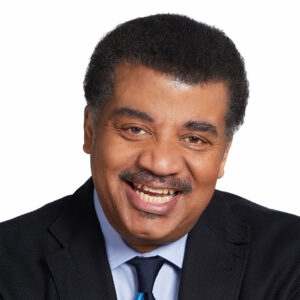
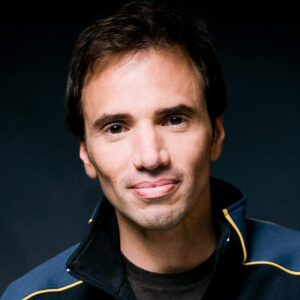
Is the universe infinite? Neil deGrasse Tyson and comedian Paul Mecurio go to infinity and beyond as we explore the origins of relativity, time travel, and the discovery of expansion with astrophysicist Janna Levin, PhD live from Pioneer Works in Brooklyn.
What was Einstein’s biggest blunder? We discuss the theory of relativity, the cosmological constant and the concept of the universe’s beginning. Learn about variable stars, Henrietta Leavitt, and the stability of the universe.
Why was Einstein so hesitant about the Big Bang? We explore expansion and whether the universe has an edge. Are you at the center of everything? We discuss debates in science and whether the universe is infinite and static. What would a finite universe look like to a traveler?
Find out about Einstein’s relativity and the intersection of time and space. Could wormholes be used for time travel? We break down time travel in movies like Interstellar and Back to the Future, what is a Jinn particle, and free will. Is there a difference between traveling to the future versus traveling to the past?… Is there a future?
Thanks to our Patrons Shari Murnane, Gary, Eoghan Smyth, Dmitry Petrov, Paul Dragicevich, Elizabeth Flores, Joseph Russomano, and William Riley for supporting us this week.
NOTE: StarTalk+ Patrons can listen to this entire episode commercial-free.
Transcript
DOWNLOAD SRTApple Card is the credit card created by Apple.
You earn 3% daily cash back upfront when you use it to buy a new iPhone 15, AirPods or any products at Apple.
And you can automatically grow your daily cash at 4.15% annual percentage yield when you open a high yield savings account.
Apply for Apple Card in the Wallet app on iPhone.
Apple Card subject to credit approval.
Savings is available to Apple Card owners subject to eligibility.
Savings accounts by Goldman Sachs Bank, USA.
Member FDIC.
Terms apply.
Nissan has a car for everyone.
Every driver who wants more.
Whatever your more is.
More fun, more freedom, more action.
From sports cars, sedans and EVs to pickups and crossovers.
With Nissan’s diverse line-up, anyone can find something to fit their more.
Get more revs in their sports car, not guts with all-wheel drive.
And more than enough options to fit your driving style.
Nissan can take you where you want to go.
Find your adventure and more with Nissan.
On this episode of StarTalk, it is StarTalk Live at Pioneer Works in Brooklyn.
My comedic co-host is Paul Mecurio.
And our special guest is cosmologist Janna Levin.
And we talk about my latest book, co-written with our long-time senior producer of StarTalk, Lindsay Walker.
We talk about Einstein’s greatest blunder.
We talk about Hubble, Edwin Hubble, the man, not the telescope.
And a lot more on StarTalk.
Welcome to StarTalk.
Your place in the universe where science and pop culture collide.
StarTalk begins right now.
Tonight, we have our friend and one of my favorite comics around, Paul Mecurio.
Paul, come on up.
Where are you?
Paul.
Good to see you.
Paul, you got a podcast of your own.
I do.
And it was creatively called what?
It’s called, see, he’s insulting the title of my podcast already.
Inside Out with Paul Mecurio.
Inside Out with Paul Mecurio.
Yeah.
I’ve been a guest on his podcast.
And we had a great time at the Planetarium.
Yes, we did.
Yeah.
Yes.
Yeah.
And then a few drinks and we broke a couple of things.
But no.
Yeah, my office is.
So thanks for coming on.
Thank you for having me.
This is a live thing.
This is an amazing space.
I’ve never been here.
This turnout is amazing.
I’m really excited.
And then we’re all going to go swimming after this.
Just right in the East River here.
Yeah.
So you have a new.
You can sit down.
That’s right.
You have a new off Broadway show.
I do.
It’s called Permission to Speak.
And we were doing it off Broadway and we’re bringing it back as COVID.
The premise of the show is we’re kind of nameless and faceless to each other.
But if we share stories, we talk, we connect, we realize we have more in common than we think.
And this produced by Frank, directed by Frank Oz.
So we’re taking the show out again and we’re really happy and excited about it.
It’s not a stand up show.
It’s about interaction and connection.
And you’ve also written for The Tonight Show and The Daily Show.
Yeah, I was on The Daily Show for a long time.
Yeah.
You got good chops in the business.
Yeah.
Carrie John Stewart.
That’s all.
It was all me.
Now, and then The Colbert Report and now I work on The Late Show with Stephen Colbert.
Stephen and I go back, but yeah.
But I always say about Neil, I repeat this, his enthusiasm.
If I had him as a science teacher, I’d be doing science today.
He makes it relatable, but his enthusiasm and his passion, you know, I had a guy with a cigarette, literally cigarette hanging from his mouth.
All right.
Here’s how you make a battery.
Like that’s like he didn’t care, but he’s an amazing person.
I got to know him through the show.
So thank you for having me.
But then if I were your science teacher, we wouldn’t have you as a comedian.
Oh, see, you got to ruin everything, don’t you?
Next up, we all know and love her as Janna.
She is Professor Janna Levin.
Janna, come on up.
Janna Levin, Tao Professor of Physics and Astronomy at Barnard College of Columbia University.
Where we first met.
It is.
And you’re Director of Science here at Pioneer Works, Editor-in-Chief of the Pioneer Works Podcast, author of How the Universe Got Its Spots, one of my favorites, Black Hole Survival Guide and also one of my favorites, the Black Hole Blues and other songs from outer space.
That’s how you want me to say it.
All the time.
I want you to say it all the time.
The Black Hole Blues.
And so, in fact, tonight, we are going to focus on the fourth section of the book, which is really where the title of the book takes shape to infinity and beyond.
Places where our bodies can’t go, but our minds can.
So let’s begin here right now in Brooklyn.
All right.
So in the book, it’s about upheavals in our understanding of how the world works and how we reacted to that.
Were we elegant and graceful, or do we get dragged into the future kicking and screaming?
Not all stories in the history of science have smooth, sort of journalistic, oh, the burn the midnight oil and say Eureka at the end.
So let’s detail some of the weirdest, wackiest ideas in the universe, and you got to start with who?
Einstein.
Einstein.
That was just a good guess.
Yeah, so his theory, special and general theory of relativity, and you’re an expert on that, right?
Oh, absolutely.
Yeah, I’m just checking.
So tell us about Einstein’s biggest blunder, what’s known as his biggest blunder.
Yeah, he called it his biggest blunder.
And we talk about this in the book just because this is some of the fits and starts that we go through to understand the universe.
So what’s going on with his…
I love this about him because here he is dreaming these dreams that defy everything everyone else took for granted, but then he has a moment of like resistance and it’s emotional resistance.
He wants to believe the universe is permanent, that it didn’t have a beginning and it won’t have an end and that it’s like static.
He wants that.
That’s an emotional response.
And even in his own mathematical theory, he’s surprised when other people study it and tell him it predicts a beginning of the universe and an end to the universe.
His own theory.
His own theory.
And he couldn’t handle it.
He couldn’t handle it.
He couldn’t handle the truth.
He couldn’t handle the truth.
But maybe, maybe he just was exhausted at that point.
He’s like, I’ve done all this.
I know some of it’s wrong, but I just, I need to, I need to, I need a year off.
I need some drinks.
Like maybe that was the issue for the guy.
Well, crazily enough, the guy almost can’t be wrong even when he tries.
So he, he introduces what he calls the cosmological constant, which is just a term that’s mathematically consistent with the general theory of relativity, but he, he, he declined initially to include it because it made no sense.
It came out of nowhere.
He couldn’t explain it.
He couldn’t justify it.
But what it allowed him to do mathematically was precariously balance the universe so that it was static.
But it was very, very unstably so.
And when he realized that, he was like…
Right.
So just so people are on the same page, I know you guys are scientifically literate here, but just to make sure you can balance a marble at the top of a hill and that’s, that’s a point of equilibrium, but it’s not stable because any gust of wind will send it one way or the other.
Yes.
And in this case, the gust of wind would set the universe contracting or expanding.
Whereas, if the marble were at the bottom of the hill, it’s also, it’s also a point of equilibrium, but it’s stable because you can displace it and it’ll always return to that spot.
And that’s what he was hoping for.
He was hoping that if you tried to make the universe expand or contract, not be static and permanent, that it would actually prefer to stabilize, but it doesn’t.
It’s actually very, very hard to stabilize the universe.
And as we know today, the universe is in fact expanding.
So Einstein was an idiot, you’re saying.
Yeah.
But what was it?
I mean, there’s a quote in the book where you say, with the notion of a static universe firmly anchored in its philosophical substrate, Einstein developed a general theory of relativity and it embodies his assumption of a stagnant universe, even though his own equations reveal the unselling truth.
So he must have known, why couldn’t he get his head around that reality?
I think that’s, nobody really knows.
I don’t know if there was really a sense of investigating with him why he was so resistant to the predictions of his own theory.
But can it be really his fault?
Who would have been the first to say, the universe has a beginning?
I mean, religion said it, but scientifically, there’s no reference frame to even have that thought.
No, it’s really stunning.
It’s the first time there’s a scientific concept of a beginning, a big bang, beginning of the universe.
I think it’s clear the guy was closed off emotionally.
You’ve got the analysis.
So tell me about LeMoff today.
Yeah, so a physicist and there was also a Russian, there were others, but they looked at Einstein’s equations.
Let’s assume that there’s a description.
He’s a Catholic monk.
Yeah, sorry, I forgot that important part.
Yeah, he’s a monk, a physicist.
Monk.
Put that on your business card.
Let’s talk about closed off emotionally.
Wow, that’s a whole, thank you.
It’s one guy’s getting everything.
The hell with the rest of you.
No, but that’s some kind of business card to have.
Yeah, it’s amazing.
He kind of made it into the canon, really, that he wasn’t just sort of forgotten and excluded.
He’s studying this and he says, you know, if I imagine a universe where everything is kind of smooth and uniform, the whole universe, and I ask, how does space and time respond to a universe full of stuff, as long as it’s kind of smooth?
You know, it’s a very simple system, but not that far off from actually what we observe.
But he realized that in response to a universe full of stuff, it wants to either expand or contract.
All right, so it doesn’t want to just sit there.
So did he finally agree to this?
I’d say, yeah, he agrees after Hubble in the 20s, Hubble, the human being, not the after whom the satellite is named.
Hubble looks out at a smudge on the sky, and he’s not sure what it is, and he’s trying to figure out is it a Nova, which would be a nearby object that’s very bright, or is it a distant galaxy, and much brighter, and much more distant.
And there’s an actual photographic plate that he took where he crosses out an OV, and he writes VAR, with an exclamation point, a variable star, and it makes him realize, because of his understanding of variable stars, that it’s a bright object far away.
And that’s based on Leavitt, right?
Henrietta Leavitt’s work.
Henrietta Leavitt’s work.
Yeah, exactly.
Henrietta Leavitt classified this variety of variable stars that turned out to be crucial to understanding the distances to objects.
Leave it to a woman.
Made it happen.
Great.
Unbelievable story, actually, about Henrietta Leavitt and all that, that whole crew of female astronomers around the turn of the previous century.
They were called Pickering’s harem because Charles Pickering, who was the director of Harvard’s Observatory, hired them for 25 cents on the dollar after he fired all of the male astronomers because they weren’t doing a good job.
And he said, my scotch maid could do a better job.
And he hired her, which was Wilhelmine of Fleming, and she hired all these women and they became this cluster of phenomenal observational astronomers, unsung heroes.
They died in poverty, penurious and…
It’s called The Glass Universe.
That could be it.
Thank you.
We had David here to talk about that book.
And it’s an incredible story, but Hubble knew about that work, which is remarkable.
If he did not know about these unknown women and their work that they were doing at the Harvard Observatory, he would not have understood that he was not looking…
You know, if you just imagine a light bulb up close, that he wasn’t looking at something up close, but he was looking at something much, much brighter that was very far away.
And so we are now in the centennial decade of Hubble’s major discoveries, as well as the centennial decade…
We are.
Exactly.
It was 1922.
Exactly.
Of most of the discoveries of quantum physics.
So that was a watershed decade right there in the 1920s.
Here a new Recolor Throat Balm comes in.
It’s an entirely new and tasty way to do throat care.
It coats and protects against throat irritations and has a delicious duo of a liquid center with honey and smooth caramel-flavored coating.
So whether you’re talking, presenting, singing, or even podcasting, new Recolor Throat Balm is the drop you want to shop.
It’s the perfect drop of protection to add to your daily routine to make sure you’re at your absolute smoothest.
Try new Recolor Throat Balm.
Coat your throat.
Now available in the cough and throat drop aisles in stores across the US.
Hey, you’ve been searching for a hotel for that epic trip that you’ve been planning, but there’s so many options that you can’t decide which one to book.
The Choice Hotels family of brands has over 7,500 locations with a hotel for every type of stay, like Cambria Hotels with offerings like rooftop bars, spa-like bathrooms and convenient downtown locations or a comfort inn for the whole family to enjoy.
Cambria Hotels offer spa-like bathrooms with many that have Bluetooth mirror connectivity so you can listen to your favorite podcast and we all know that StarTalk or songs while you get ready.
Each Cambria Hotel is curated with locally inspired design elements, providing guests with a sense of space and place in the city you’re visiting.
Cambria Hotels offer hyper local craft beers on tap.
Okay, you had me at craft beer.
How about rooftop bars, lounges and outdoor spaces for guests to enjoy?
Comfort offerings include a free hot breakfast, great pools for the entire family and spacious rooms.
Make your travels come true today when you book direct at choicehotels.com.
That’s choicehotels.com, where travels come true.
Many of us travel a lot, whether it’s for work or for play.
And you know with me, it’s mostly for work.
And whether you’re on the road, which I am, or at home, we all use our phones to stay connected.
Maybe you use your phone to download apps, or play games, make playlists, or download TV episodes in seconds.
Or maybe you’re like me and you like to use your phone to watch football because you’re on the road and you can’t see your favorite team lose to the d***s.
I’m sorry, I’m so sorry, where’d that come from?
Well, no matter what you’re doing, it requires a strong network like T-Mobile.
T-Mobile is America’s largest and fastest 5G network.
It’s built for speed and coverage.
Stay connected to what matters when in town or on the road because they cover more highway miles with 5G than anyone else.
Coverage like that just makes everything easier.
You know, I’ve been a T-Mobile customer for years and I have to tell you, everywhere I go, it works.
To find out more, visit tmobile.com/networktoday.
Coverage not available in some areas.
Fastest based on media and overall combined 5G speeds according to analysis by OOKLA of Speedtest Intelligence Data Q2 2023.
See 5G device coverage and access details at tmobile.com.
So, fast forward to 1998, and we discover a value for Einstein’s constant.
That’s insane.
It’s insane.
So this is what I meant.
He can’t even make a mistake.
So he introduces this thing to try to make the universe not expand.
Hubble comes along and says, I saw this galaxy, it’s really far away, and then I saw a bunch of them, and they’re all moving away from us.
The universe is expanding.
The whole universe is expanding.
The whole universe is expanding.
We’re not at the center.
We’re just part, we’re also moving away from everything else.
It’s the whole thing’s expanding.
And that calls into question the age of the universe and if any of those numbers are right and all of that.
And we find out that not only is the universe expanding, it’s accelerating by the power of this term in Einstein’s equation.
So in fact, the term does exist.
So even when Einstein was wrong, he was right.
He was right.
Exactly, so everyone’s like, Einstein, get rid of that constant.
It’s a big blunder and he’s like, oh, my biggest blunder.
And then in 1998, long after Einstein passed, they realized, oh, actually, the only thing we can think of, not just to make the universe expand, but to make it expand faster and faster to accelerate, is the cosmological constant, his biggest blunder.
Okay, so it turns out to be right.
So if we’re expanding, that means yesterday we’re smaller than today, and the day before smaller than that.
And I’m shrinking, then.
And if you go back in time, there’s got to be a point where the whole universe is occupying one spot.
It had a beginning.
Oh, my gosh.
That’s Lemaître coming in, which is actually very interesting as a monk.
I wonder why Einstein was more resistant to the idea of an expanding universe than a Catholic monk who had to confront the idea that the universe was ancient and had a beginning.
Right.
I mean, I think that’s pretty amazing.
Right, but not 6,000 years ago.
Yeah, yeah, yeah.
14 billion years ago.
Yeah, billions of years ago.
So if it had a beginning and it’s expanding, does the universe have an edge?
And by the way, these questions, is that any different from sitting here on Earth and saying, how do I get to the moon?
I don’t know.
Pose the question.
And you heard in this exchange that the answers to the theories had to wait for experiments to join the conversation.
You can’t just sit in an armchair and claim you fully understand the universe.
So, does the universe have an edge?
Are you asking Paul or me?
Paul, does the universe have an edge?
I think it does.
I’ve been to the edge and it’s the Hamptons.
Some people have edges.
Yeah, a lot of rich people with an attitude.
And I walked away.
All right.
In the context of this, in the book, you talk about the human ego, right?
And there’s an interesting concept there that I thought, which really sort of surprised me.
And what you say is that, given the battles, that rage, etc., etc., you say we know the universe is expanding, blah, blah, blah, the ultimate defining barrier between space and well-not-space.
However, yeah, there’s a lot of stuff.
By the way, the book needs more pictures.
You know, it’s like, oh, look, a spaceship.
Woo-hoo!
No, it’s a great book to fall asleep.
And I think I’m never coming back on this show again.
So, no, so in all seriousness, this is a quote from the book.
We know the universe is expanding, and that expanded from a single point.
Furthermore, everything in the universe must obey a speed limit.
Reason would dictate that the universe must therefore have an edge.
However reasonable though that might sound, it arises from a faulty premise, driven in part by the human ego.
And I was fascinated to know what you meant by that, driven in part by the human ego.
Well, ego just, are you in the center of everything?
The authentic center?
If you learn you’re not in the center, can you deal with that?
Can you handle?
You can.
Because, no, sitting, just think about it.
And we detail this, once again, in our ascent from Earth into the solar system.
You say to yourself, we’re in the center.
By the way, we make calendars, not knowing, calendars we still use today, not knowing Earth went around the sun.
Yes, but they’re adorable.
They have puppies on them.
No, no, they’re all good.
So, you can deduce a whole lot about the world without telescopes.
But one of the things you cannot deduce is that Earth is going around the sun.
That’s messed up.
Okay, that meant we went thousands of years thinking we’re in the center of the known universe, fully feeding our ego.
But why wouldn’t you?
And when there’s no proof of anything else in all seriousness, what other premise would you…
Yeah, you’re being too hard on, you know, pre BCE civilizations.
What are the issues that you have inside of you?
No, what I’m saying is…
You need a hug.
The whole universe…
You need a hug.
The whole universe is masquerading as a system centered on us.
And so we’re not given reason to question it because it feeds our ego.
When something feeds your ego, you say, yeah, that’s probably true.
Not asking, well, maybe it’s not true.
Because maybe it’s not true could have the result that you’re not in the center.
But think about the ego you have to have as these great astronomers and scientists to say, I’m going to go and look into something that no one else has done and then stand by it and believe in it before anyone else does.
That’s not ego.
That’s curiosity.
No, but you’ve got to have an ego to stand by something, I think.
No, yeah, no, then you’re stubborn.
I’ll fight you right now.
Yeah, if you have an idea and you stick by it, regardless of the data, go home.
That’s not what science is about.
That’s what Einstein did.
Which is why we discuss not having debates over science, because nobody, no scientist worth their salt, wants to come in with a notion and be unyielding or unwilling to accept a new idea or adopt it when it’s clearly right.
So two scientists in an argument, there’s a different contract between them than there is between two people debating on a stage.
Absolutely.
So that contract is either I’m right and you’re wrong, you’re right and I’m wrong, or we’re both wrong.
So we’ll argue until we get to the edges of what our data can show, and then we say, you know, I think we need better data.
Let’s go have a beer, right?
Said no one ever at the end of a political debate.
But the idea of the infinite universe kind of fell into that category because when Einstein was first writing things down, he was just doing the first pass, so to speak.
And he has a famous quote where, you know, he assumed the universe was infinite, but he also assumed it was static.
And he said something to the effect, only two things are infinite, the universe and human stupidity.
Yeah, best quote ever.
And then he added, and I’m not so sure about the universe.
I forgot about that.
Isn’t it a matter of the observable edge versus…
There’s an observable edge, for sure.
So we can only see as far as the light has had a chance to get to us.
But it’s not a physical edge because…
You can’t drive through the universe and say, the universe ends here.
Well, we don’t think so, but we’re not actually 100% sure.
We don’t believe that there’s an edge any more than there’s an edge to the earth.
To the surface of the earth.
There’s not a sign, welcome to the edge of the universe.
Right.
So if I travel from New York City and I go on a straight line, I don’t fall off the edge of the earth.
Right.
There’s no edge.
I make my way all the way around and I come back to New York City again.
And that’s actually a really valid model for a universe that is finite, not infinite, in which you go into a spaceship, you leave the earth, you travel in a straight line, you go out of the galaxy, you don’t deviate, and you find yourself approaching the Milky Way again with the earth in front of you.
And you’ve never fallen off the edge of the universe.
It’s completely contiguous, but it is finite.
So I have to repeat a quote from one of my earlier books.
The universe is under no obligation to make sense to you.
Every memorable gift starts with a story.
This holiday season gives something with power.
Jefferson’s Ocean Bourbon and Jefferson’s Ocean Rye are aged at sea where they’re transformed by unpredictable and unrelenting elements.
They’ll taste the journey in every sip, darkened by pounding waves, kissed by ocean air, caramelized by equatorial heat.
Give the gift of adventure.
Give Jefferson’s Ocean Bourbon and Jefferson’s Ocean Rye.
Please sip responsibly.
Copyright 2023, Jefferson’s Bourbon Company, Crestwood, Kentucky.
Think about what happens when you’re sick and you have to see a doctor.
First, you have to schedule an appointment, which sometimes can take days or even weeks to get in.
Then you have to go to the doctor, even though you’re probably feeling miserable.
Then you wait in the aptly named waiting room, exposed to whatever the people around you are coughing and spewing into the air.
Oh, the humanity.
Fortunately, there’s an option that is far more humane.
Teladoc Health.
With Teladoc Health, you can get in touch with a doctor 24 hours a day, 365 days a year, all from the comfort of your own home.
Whatever your medical problem, just open the Teladoc app and connect with a board certified doctor who will offer advice write a prescription or even schedule an in-person visit.
Just open the Teladoc Health app and get a diagnosis, treatment plan and prescription if needed from a board certified provider, all of which makes Teladoc Health a far healthier form of healthcare.
I am speaking from experience when I say that it works because I use it all the time.
Download the app to get started today or go online to register or schedule a visit at teladochealth.com/startalk.
That’s T-E-L-A-D-O-C health.com/startalk.
Hey, I’m Roy Hill Percival and I support StarTalk on Patreon.
Bringing the universe down to earth, this is StarTalk with Neil deGrasse Tyson.
All right, so let’s get back to Einstein’s theories of relativity.
Tell me about the intersection of time and space, which feels so unintuitive, but actually we exist.
This way, the example I give is if I say, oh, Janna, I’ll meet you tomorrow at 10 o’clock.
What’s your next question?
Where?
Where?
Sorry, where?
I gave you a time, but I didn’t give you respect.
I’d say, are you bringing wine?
So then I say, Paul, I’ll meet you tomorrow at Starbucks.
We know which Starbucks, and then you’ll have to say?
What time?
What time?
So we know this intuitively.
So then Einstein stitches them together.
Why do people lose their mind?
Well, I mean, it’s amazing because a lot of things he did were actually really simple and intuitive, but he pushes it much farther where many people would start to get flummoxed and give it up and just be happy to meet at Starbucks with a bottle of wine.
That doesn’t really make any sense, but okay, Paul.
And, but…
Always go to one with a bathroom.
You can do whatever you want.
So he starts to think, well, you know, I can draw up and down north and south, east and west.
Why don’t I just also draw a dimension called time?
And then we can just agree on where we are in space and time.
And then he kind of pushes that further and further and further until he starts to say, oh, it’s a space time.
And it’s surely…
That’s one phrase.
One phrase.
Space time.
Right, I don’t like editors out there.
I don’t like when you put a dash in there.
It’s space time.
No, no, paired words have to evolve.
Yeah.
And then they eventually lose their hyphen, okay?
But like percent used to be two words, then it was hyphenated.
Yeah, in French it is.
But why don’t you like the hyphen?
Because it separates space and time in a way that Einstein was trying to transcend.
And in this book, we did not use a hyphen.
We have editors that followed suit here.
So we got National Geographic editors.
That’s a National Geographic book.
Okay, so what that means is that if time is a coordinate, it can stretch or shrink.
So you have different rates of that.
Christopher Nolan did that in the movie Interstellar.
Yeah, which was by our friend, the original treatment was by Kip Thorne.
Yes.
Who’s gonna probably come up in conversation today.
He’s your counterpart at Caltech.
Yeah.
Yes.
Well, that’s a compliment.
Thank you.
I’ll take it.
No, Kip was one of the most gracious, elder statesman of science when I first met him.
He’s one of the most generous.
And they made him an executive producer of Interstellar.
So that meant you knew the science at some backbone.
And then he won a Nobel Prize.
Really weird order of things.
Yes.
Yes.
Yeah, but really, really.
Chronologically weird order of things.
Behind that Nobel Prize, the real person was Matthew McConaughey.
Gave him all the information.
He’s a brilliant, handsome man.
The person behind the Nobel Prize, yes.
He’d hang out his trailer and Matthew would be like, no man, that’s not how you do it.
But wait, so you have, if you’re nearer a significant source of gravity, your timeframe slows down relative to other people.
Yeah, that’s-
That’s freaky.
It’s very freaky, but in Einstein’s language, it’s no more freaky than the fact that my left and my right are rotated relative to your left and your right.
In Einstein’s language, you can rotate space and time differently than somebody else’s notion of space and time.
In a four-dimensional coordinate space.
Yeah, in a four-dimensional space.
Yeah, that’s really easy to grab there.
That when you near the black hole, it’s as though you’re rotating in space-time, just like you could rotate left and right relative to somebody far away.
And just as I won’t be like, my left is an absolute notion, obviously I’m rotated and it’s relative to your left.
If I face you, that’s my right.
Exactly, 100% rotation.
And he says as you near the black hole, you have 100% rotation of your space, if you’re far from the black hole, with my time that’s near the black hole.
It’s just like my left being 100% rotated into your right.
All right, so what about wormholes and whether we can use that for time travel?
That’s Kip Thorne, or maybe it’s Matthew McConaughey.
I’m not really sure.
I don’t know.
Can we do this without a DeLorean?
Which is now, by the way, on Broadway.
It’s back to the future.
The musical, now on Broadway.
You really said that as though you were promoting.
He’s got a piece to the end.
Just a quick point there to your space time.
Just to slip this in, because we have it in the book.
If you go in a time machine, I want to go back three days.
So you go in and then you step out and it’s three days earlier.
You would be in the vacuum of empty space because earth is in a different place.
But why is it empty?
It’s still earth.
Well, why are you in a vacuum?
Because earth is in orbit.
And the atmosphere went with it.
Earth is, you just went back in time, but earth, was it in orbit?
You go three days back in time, you didn’t say keep me on earth and do that.
And the whole solar system moved.
So if you actually want to go back in time and show up on this stage, you have to go back in time and in space.
So that the earth is where you need it to be at that time.
So the space time thing is real.
If you want a time machine your way around the galaxy.
Now they got around this in Back to the Future, because he jumps into the car, quickly types in a thing, and he goes back exactly 30 years.
So he’s in the same orbit, at the same point in the orbit.
The earth would have been in the same spot in its orbit.
But did he also calculate for the fact that the whole solar system is rotating around the center of the galaxy?
For 30 years, no.
He left that one out.
You got to give them a hall pass.
They got one of those right.
What is magical about 30 years in that scenario?
It’s just…
Any years.
In that scenario, it goes from 1985, the year of the film, to 1955, which is a very fun setting to put a movie in, okay?
Because teenagers are coming of age, so…
Chuck Berry’s music gets stolen.
It’s a great time.
Oh, Chuck Berry’s music?
Do you know…
Are we speaking…
Have you…
Who has not seen Back to the Future?
A hand went up.
Security, could you take this person out?
No, just a quick point about Chuck Berry’s music.
Marvin Berry, the brother or the cousin…
Was he the cousin?
Okay, here’s Marty play Chuck Berry, but that song isn’t written yet.
He holds up the phone for Chuck Berry to hear Marty play this Johnny B.
Goode song.
Was it Johnny B.
Goode?
Yeah.
To play it, and he says, Chuck, this is the sound you’ve been looking for.
Okay.
So holding aside that it credits a white person for giving music to a black…
Holding that aside…
That’s exactly what I was going to say.
You’re holding a lot aside.
That’s a tune, aren’t you?
Holding that aside, there’s something called a gin particle.
You know about gin particles?
These are things that are neither created nor destroyed.
And they involve the time continuum.
It’s a loop in time where that song in that movie was never written.
It only existed to be handed into a time loop.
And we call it gin particles because you can hand a person something that you then give to me later in time, and that was never created nor was it destroyed.
No, but when she hands you that later in time, you can’t say that it wasn’t invented previous to that.
No, because I go back in time and give it to her.
The time travel enables gin particles to exist.
So this is along the lines in the book where you talk about, you go back in time with a spaceship, and just before you’re about to leave, the day before you blow up the spaceship, right?
I wouldn’t do that, but yeah, go on.
Well, it’s in your book, sir.
No, it’s a scenario.
Go on.
And where you’re talking about parallel universe, right?
And sort of how things break off, right?
Yes, yeah.
That’s right.
So how do we, how does, can we travel backwards in time authentically?
Well, this is all interesting related to it because you’re assuming that the person who traveled back in time could make a choice that was inconsistent with the physical universe in which they live.
Right, and Neil, you saying, well, I wouldn’t do that, is actually kind of close to the bone because it’s really the presumption that we have a free will that could do something that defies the laws of physics.
So you can completely go back in time as long as you don’t exercise any free will that deviates from the consistency of that universe.
Well, that’s what you call in the book the butterfly effect, right?
Like you go back in time and then you start this sort of ripple.
That could then change all future events.
But you don’t have the option to do that.
Even if it prevents the birth of you, who then went back in time.
Wait, let’s back up.
So my favorite example of this is, I see a friend of mine walking down a corridor and they slip on a banana peel.
Okay?
And they get hurt.
I don’t want my friend to get hurt.
So I pull out a new texting service that uses particles that travel backwards in time, tachyons.
And so I send a text backwards through time so that my friend receives the text before it steps on the banana peel and therefore they don’t fall.
So I do that.
But what if he has his phone on airplane mode and doesn’t get the text?
Well, let’s find out.
So I send the text back.
My person feels the vibrate, picks it up, looks at it, and it says, watch out for the banana peel.
But while they’re looking at it, they don’t see the banana peel and they slip on it.
So the very fact that I sent the message back in time is what caused the slippage on the banana peel.
And so that’s the temporal event laws of physics that you’re referencing.
Strictly speaking, the laws of physics, we know that general relativity has universes, hypothetical, not ones that we’ve yet observed, in which you can do exactly what you just described, go back in time.
But there is no law of physics that we know of that allows you to do so in a way that is inconsistent.
That prevents you from existing.
With the exact path that you are on.
So the idea of being able to alter my future by going back in time is…
It’s very 12 monkeys.
Yeah.
Whoa.
12 monkeys?
Yeah.
You don’t know.
You’re giving people a hard time about…
I missed that one.
How did you miss 12 monkeys?
I remember.
I saw it, but I forgot it.
Somewhere in between now and back to the future.
Sorry.
Could that be wrong?
Could what be wrong?
Could that be wrong?
So there was a refinement of the process to figure out the age of the universe.
Right?
It started 3 billion and then 5.5 billion or whatever.
And to this day, right?
There could be some new science that gets discovered that makes this inaccurate, right?
What we believe now.
Or some time science.
So there’s nothing absolute.
That remains to be discovered.
There’s nothing absolute.
Never is there.
Other than Neil’s handsomeness, there is nothing absolute.
And even Kip Thorne, who’s come up a couple of times, who looked at this concept of wormholes.
Wormholes were originally proposed kind of like the battery tunnel or something.
It was a shortcut from one place to another.
You know, you go under the East River and you connect Manhattan and Brooklyn.
Not that weird, right, to find a shortcut to get from one place to another.
But what Kip Thorne did, which was exceptional, is he figured out a way to make that shortcut also traverse through time.
So that you weren’t just traveling from a shortcut from one space to another space.
So you didn’t have to go the long way around.
But you could actually go earlier in time.
And they were time travel wormholes.
They were time wormholes.
But I think if I remember correctly, you could not go back earlier than the time…
Oh, no, then the time at which the wormhole was created.
Oh.
So none of these things forbid the possibility that you could go back in time before you were born, kill your grandfather, the grandfather’s paradox, before he had your mother and then you were never born.
You have to kill him.
You just have to prevent them from meeting.
Well, this is kind of…
It’s so Terminator.
Or slipping on a banana peel.
Yeah, just…
Or have them have sex ten minutes later than they did.
A different person…
Okay, now I’m throwing up in my mouth a little bit.
It’s actually very much like your banana peel story because a lot of people think that the resolution is that if you went back in time and tried to kill your grandfather, you might just wound him, and then he’s so mentally disturbed that when he has your mother, she’s tormented and traumatized, and you’re so psychotic that you go back in time to try to kill him.
What happened in both of your childhoods?
So what you’re saying is that…
It hasn’t happened yet.
The wormhole is like a doorway that has to exist at that point in time or before that point in time that you want to travel back to, right?
It was just Kip Thorne’s idea for a way to make that happen without altering the entire universe, a way of doing it locally, so that you don’t have to think of an entire universe that violates time moving forward.
But you could do it right here.
We’re still constructing the rules of time travel, is what this sounds like.
Yeah.
Oh yeah, I can definitely, obviously we’re all traveling to the future.
We are in the future from where we were.
At a rate of one second per second.
Exactly, and none of us can stop it.
It’s really weird, I can stand still in space more or less, but I can’t stand still in time.
So right now, this is the future.
It’s not the present.
It’s the present, but a second ago when we stood on stage is the past.
We have traveled.
We are prisoners of the present.
Forever transitioning between our inaccessible past and our unknowable future.
He went back in time and gave himself that note.
Alright, so…
Wait, wait, can we just go back to that for one second?
Back to the future?
There is a present.
Yes.
Right now.
And there is no future.
I can’t say that.
So there’s questions like, is this like a hill where the future exists already and we’re just traveling towards it, but it already is there, like a physical hill, or is it kind of unraveling in front of us instantaneously?
That’s not a question.
Is there a predetermined destiny that’s scientifically based?
That’s part of that question.
Well, you’re not going to stop the expansion of the universe.
I would call that a scientific future.
I would say that if it wasn’t for the pretty big curveball of quantum mechanics, that the answer scientifically would have been, if not for that curveball that, as you pointed out, happened right at this time a century ago, absolutely predetermined from the second the universe was created.
Us sitting here would have been exactly as it had to be.
Quantum mechanics is a curveball, but it’s not a curveball that really saves us a lot.
So what is deja vu in all seriousness?
Like, we all had it, right?
Like, we’re in a moment where we go, I remember feeling this thing, or it just happened to me the other day, right?
So is that somehow tied to this?
Could one argue that it’s tied to all of this?
Now, George Carlin argued that he has vujade, which is where he goes into a place, and he’s certain he’s never been there before.
So that’s me.
That’s right.
So, I mean, to me, this feels in some way…
I mean, you’re nodding your head.
Are you having deja vu right now?
I am.
I feel like I was in a place before where Neil was telling that joke.
We’re never getting off of it.
So, look, we’ve got to bring this to a close here.
Oh, can we talk about the human ego?
No, free will.
You talk about free will in the book in the context of this.
Yeah, that’s a whole other number.
What a fascinating concept.
Well, then they have to buy the book.
Well, I’m helping you sell the book, buddy.
Why don’t you talk to them?
I can’t do everything, Neil.
I can’t write the book.
He didn’t write the book.
Lindsay wrote the book.
And…
So, Janna, take us out with…
Can you imagine a future of actual wormholes that we create or warp drives, something to help us move across the galaxy with something other than chemical fuel rockets?
Yeah, I actually can.
No, but it’s been…
It’s really…
So, just like you build a bridge, you know, under the water between Manhattan and Brooklyn, you have to think about…
A tunnel.
Under the water.
To me, they’re all bridges.
Wow, you just lost a lot of credibility with me.
I’m not being a jerk, but I know the difference between a bridge and a tunnel.
I’m the smartest one on this stage right now, everybody.
Good night.
So, you know about the spherical cow.
This is kind of like all physicists think anything that connects one thing to another is a bridge.
Anything that connects one thing to another is a bridge.
And you think about how much energy, money it would cost, and how to do it, like what materials you would need.
So, very similarly, when Kip Thorne and people like that were talking about wormholes in space-time, they were like, what kind of fuel would I need?
And they just made it up.
I know it has to have certain properties, it has to repel, it has to keep this open.
And they made the wormhole great, but then they looked at the fuel, and they were like, we’ve never seen anything like this in the observable universe.
So, nobody knows of a fuel or an energy source that can do what the wormhole can do.
But if we had that fuel, we could build wormholes.
Well, that was my question.
How does one make a wormhole, and it’s very difficult to get contractors to do work, how long does it take to get someone before they give you an estimate and then actually start on the wormhole?
Plus, wormholes, as I understand it, are unstable.
If you go through a wormhole, they can collapse on you in a moment’s notice.
That was a real problem, as it kept pinching shut and separating the two space times completely.
And so, you couldn’t make it through without being crushed to death or annihilated.
But doing that, you can make them stable, again, if you make up a form of energy that we don’t have never seen in the universe.
But it doesn’t mean we never will see.
I mean, Einstein’s greatest blunder, you know, in 19…
When did he…
1916 was general relativity.
When did he write it down?
Must have been that same year.
1917.
1917.
And it was 19…
You wrote the book!
Okay.
He is the smartest person on this show.
Wait.
No, I was impressed.
I made notes, buddy.
You didn’t have to look at your notes.
I made notes.
Hang on a second.
You just looked at me.
You talk about the difference between bridges and tunnel.
I’ll be right back there, right?
No, Paul, we’re proud of you.
Real good.
So watch.
So…
The universe finds a way is all I’m saying.
Okay.
And it’s not any different from going back 200 years ago and saying, in order to get to the moon, we need a fuel that has this amount of energy in it.
They would not be able to fathom that.
And you pack all the energy into this tube, and then you can reach…
They would say, what’s wrong with you?
Okay.
So that’s what gives me hope.
That you can make a wormhole, and we’ll go right to you when we have the material.
And then that would completely transform transportation in the world.
In Star Trek, you wouldn’t need the transporter.
Just open a wormhole and step down to the planet.
Much less terrifying than having all your atoms reassembled.
Of course.
Exactly.
Is that doable at some point, you think?
Transporters?
Yeah, to break down your molecules and put them back together.
It’s actually been done, technically.
They have teleported a molecule from one place to another.
A molecule.
Taking the energy that it became.
All of its facts.
And put it over here.
Tossed them over there.
And it appeared exactly as it was before.
Now, we have a lot of facts about us.
It’s a lot more information.
Than just the existence of the molecule.
I know you do.
You got a lot of issues inside of you.
So, just again, to round this, to close this out and land this plane, this rocket.
So, I look forward to a future, because that’s the whole spirit of the book, where the next wave of what happens is beyond the reach of what we can even imagine building today.
That’s the beyond infinity.
See, but this argues against your thinking in all seriousness about sort of the ego thinking we’re at the center of the universe.
So, when you were talking about sort of how they found a way to invent fuel to go to the moon, it was ego-less.
It was actually the opposite.
It was like striving to find other life, right?
So, it works against that argument, doesn’t it, on some level, about that we’re ego-driven?
Wait, you’re saying we are not ego-driven because of the example of the moon?
I never said we were ego-driven.
But I think the example of the moon is very ego-driven because it was very fueled by the Cold War, when the Soviets put Gary Gagarin in space for the first time.
Americans panicked.
And they said, you know, the phrase…
Translation, we lost our shit.
And that’s when JFK came out and said, hey, space exploration is for all mankind.
It was very ego-driven in that sense.
So, I mean, we are what we are.
We’re a product of evolution, and maybe the ego was important in our survival, and here we are.
Or the fact that we can’t be contained in a box.
Which is also important for our survival.
Indeed, it is.
I’ve always said that about Neil.
You can control them, but you can’t contain them.
That’s the last words of this recording of StarTalk.
Join me in thanking Janna and our comedian, Paul.
This message is brought to you by Cologuard.
Cologuard is a one-of-a-kind, non-invasive colon cancer screening test.
The test kit is delivered right to your doorstep, so you can collect your sample in the privacy of your own home.
There’s no special prep, no need for time off, and no changes to your diet or medication.
Your Cologuard collection kit comes with simple instructions, but if you have any questions, they have a customer care line you can call 24-7.
If you’re 45 or older, at average risk for colon cancer, ask your provider about Cologuard.
Cologuard is available by prescription only.
Learn more at coliguard.com/listen.
In the Canada Dry comfort zone, there’s no such thing as holiday stress.
Sure, your in-laws keep their thermostat at 84, and you have to sleep on that 50-year-old couch with the mystery lump in the middle every time you visit.
But you’re too busy relaxing in the refreshing world of Canada Dry to notice.
Is this memory foam?
Absolutely.
Canada Dry, sip into your comfort zone.

 Become a Patron