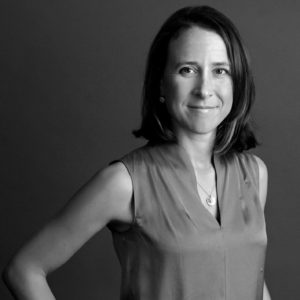
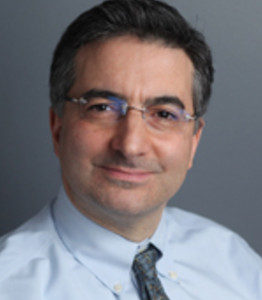
Just how much can we actually learn from testing our DNA by spitting into a tube? What does CRISPR/Cas9 gene editing technology allow us to do inside an embryo? And can genetic testing lead to new forms of discrimination in the workplace and in our wallets? These are just a few of the questions we’ll answer when Neil deGrasse Tyson gets an update from the front lines of the genomic revolution from Anne Wojcicki, CEO and co-founder of the genetic testing company 23andMe. Anne talks about empowering individuals to take more control of their own healthcare and to benefit from increased understanding of their own genome. Meanwhile, in studio, Columbia University bioethicist Prof. Robert Klitzman, MD offers his own perspectives on gene bullies, personalized medicine, gene splicing and more. You’ll learn about the four nucleotides that make up everyone’s DNA: Adenine, Cytosine, Guanine and Thymine. Discover the difference between a full assay of the 3 billion nucleotides we each carry inside us and the SNPs, or Single Nucleotide Polymorphisms, that 23andMe uses in their tests. Explore the dangers of false positives, false negatives and the limitations of what we do and don’t know at this very early stage in what is proving to be a much more complicated process than we used to believe. You’ll also hear about the trouble 23andMe had with the FDA, now resolved, and about revolutionary new approaches to treating breast cancer, including the BRCA mutation that Angelina Jolie carries. Chuck Nice co-hosts.
Transcript
DOWNLOAD SRT
Welcome to StarTalk, your place in the universe where science and pop culture collide. StarTalk begins right now. This is StarTalk, and I'm your host, Neil deGrasse Tyson, your personal astrophysicist. And I'm also the director of New York City's...
Welcome to StarTalk, your place in the universe where science and pop culture collide.
StarTalk begins right now.
This is StarTalk, and I'm your host, Neil deGrasse Tyson, your personal astrophysicist.
And I'm also the director of New York City's Hayden Planetarium at the American Museum of Natural History.
My co-host today, Chuck Nice.
Hey, what's up, Neil?
Love you, man.
Love you, too, man.
Good times.
Today we're featuring my interview with Anne Wojcicki, co-founder and CEO of the genetic testing company 23andMe.
And we'll be talking about the promises and the perils of the genomic revolution.
I can't do that alone because I'm an astrophysicist.
What the hell do I know about genes?
So our guest today is Dr.
Robert Klitzman, bioethicist and professor of psychiatry at Columbia University.
And you co-founded Columbia Center for Bioethics.
That's just awesome.
Somebody's got to do it.
I think the world of astrophysicists.
And you're author of the book, Am I My Genes?
Am I my genes?
Or not?
Are you something else?
Right, like my culottes.
Ah, you see what I did there, Doc?
So it's confronting fate and family secrets in the age of genetic testing.
So what is 23andMe?
It provides direct to consumer personal genome tests.
So you get, and they'll give you the whole genetic profile of you.
Talk about profile.
Yeah, talk about profile.
It ain't just what your skin color is.
Yo, you've got a 40% chance of developing whatever in 20 years.
You have a 22% chance of being denied a mortgage.
But these are issues, actually.
These are actual real issues, because there is genetic discrimination that's a major problem.
Well, we're going to get there.
And so once they sort of figure you out, all right, once you send in some sampled cells, body cells, so they'll provide ancestry info.
That would be as a minimum, for sure.
And of course, the next step would be health-related info.
And it was founded in 2006 by Linda Avey, Paul Sucesna, and Anne Wojcicki.
And so when I sat down with CEO Anne Wojcicki of 23andMe, I had to ask her, how do you get in the business of this?
I'm always curious.
How do you get from here to there?
Let's find out.
When you're in college, did you say to yourself, I want to start a company to map people's genes?
That's really creepy.
If you had said that, I would have said, nice to meet you.
You want to live in the other dorm.
I definitely did not think about that then.
When I was in college, I was pretty focused on having fun.
You majored in?
Biology.
I love genetics.
I always loved microbiology.
I always thought about doing something in science.
I had dreams of being an MD, PhD.
But actually, it was more my father is a physicist.
My father was part of something called the Superconducting Super Collider, which got shut down in 1990.
And it was 10 years of my father's work that I saw him painfully involved.
But it taught me the importance of being able to communicate complicated ideas to non-scientists.
And I think I really took away from that, that if you can't communicate what you're doing, no one's going to support it.
And I think that happened a lot with the physicists.
And so when I got into biology and I was on Wall Street for a while, and then I saw the human genome sequenced, and I realized this is the next massive era of discovery, and that we're just starting to understand the genome.
And how cool is it that if you can actually be part of it, and why is it that the lay person can't actually learn about it, but you should be able to follow all this progress with your own genome?
Just to be clear, you are reflecting on the failure of your father to make the case for the superconducting supercollider to Congress, so that they would continue to fund it.
And you said, I'm not going to make that mistake.
Yeah, I think that part of the reason why that failed was because there was not a great understanding of what would actually come out of it.
And even today, people understand Higgs, but most people will say, well, what do I get out of that?
And I think that's part of what I've tried to say, is teach everyone about the meaning of science and let people actually explore in their own genome and be part of the process.
So, Robert, this word genome is currency today, but we heard of genes, we've heard of DNA, chromosomes.
Does genome have a precise definition?
Yes, it does.
So we each have a molecular blueprint that is half from our mother, half from our father, and makes us and gives us the hair color and eye color that we have and also predispositions to certain diseases.
So some of us are more likely to get one disease or another.
And what it is is in almost every cell in our body, in the nucleus, there are 23 clumps of genetic material DNA, which is deoxoribonucleic acid, but we'll just call it...
Glad you guys abbreviated that one.
All nine syllables.
So there are 23 of these clumps from each parent that we get.
And each clump consists of information.
And the information is in a language that consists of four molecules that we abbreviate A, C, T and G.
And so these letters laid out, A, C, T, G, laid out three billion times is a very long word, but that is the unique blueprint that makes me yours is yours, yours is yours.
And those four, those are proteins, is that right?
Or amino acids.
Yes, exactly right.
Okay, so could you list them for us, please?
So it's actinine, thymine, cysteine, and guanine.
Guanine, excellent.
And the movie Gattaca used those four letters to spell its title.
Exactly right.
And the chapel used the cysteine as well.
There you go.
Trying to get into conversation.
Any way he can.
Okay.
Okay, Chuck, go on, we'll carry you for this one, Chuck.
That was quick, I liked that.
Give them an example of what that means is, so this is three billion letters.
If this was, behind you was a wall of books, that would be three billion letters.
And so if it's eight, our alphabet is 26 letters, but if you just had four letters and you wrote A-C-T-G-G three billion times, A-C-T-G-G, A-C-T-C-C, whatever, we're 99.9% the same and we're 0.1% different, which means if I...
From one another.
From one another.
So if I pull out one book, that's on that shelf, that's the amount by which each of us differs.
And what we can now do is we can tell someone what those three billion letters are for themselves.
So the whole sequencing the genome is getting the sequence of letters.
Absolutely, exactly right.
So genotyping is the act of...
Is the process, right.
Is the act of doing so.
Right, right.
That's pretty cool.
It's very cool stuff.
And I should say that the first time this was done was 15 years ago.
2000.
2000.
Right.
Okay, so hence the banner headline that the human genome has been saw.
In fact, we interviewed President Clinton on StarTalk.
I don't mean to boast or anything.
President Clinton, I just don't mean to boast.
It was good for me too, Neil.
He was proud that that happened under his watch.
As he should be.
That's all I'm saying.
So getting back to my interview with Anne, I wanted to find out what's the mission.
You can genotype somebody, but now what are you going to do with it?
Let's find out where we're going.
We are about individuals accessing, understanding, and benefiting from the human genome.
The genome, I think, has a massive potential in transforming health care.
And what we did is we got a million people genotype last year.
And so people are now a million people running around, going to their doctors and talking about genetics.
I think it starts to become disruptive.
Do this, fix that.
Well, you can't necessarily do this and fix that at this point, but you can come in and say, hey, I'm a carrier for cystic fibrosis.
I should be aware of that.
So part of what we've had as a mission of the company, we are very much about enabling access.
And so in order for you to actually access it, it has to be affordable.
And right now, what does it cost?
We're at $199, $199.
It doesn't require any insurance, anything.
It's online.
And what, do you send it some spit or something?
Yes, so we give you a little tube.
You spit in the tube.
I just made that up.
It's really true?
It's really true.
It is really true.
It is a saliva-based test.
We send you a little box.
You spit in the tube.
We can give you one.
You spit in the tube.
And then it's easy to understand.
So when we've worked with the FDA, we have over 90% comprehension, meaning that people from all over the country get this.
They don't know anything about genetics.
They're understanding it.
And the long-term, the research that we're doing is all about people benefiting from the human genome.
They're trying to do good with this, but there's always the bad side, the dark side, if you will.
And it's information.
Right.
Information is power.
Information is control.
Yes.
So what are the anxieties that we should have, and what are the future anxieties we don't know we actually should have yet?
Right, right, the unknown unknowns.
Yes, yes, Mr.
Bioethicist, you should have, you would have thought about this way more than any of us.
Yes, well, there's a few concerns.
So one is there's still genetic discrimination, which is that there is the Genetic Information Nondiscrimination Act that was passed by Congress that applies to health insurance.
But life insurance...
In other words, if they find something else, something out about you from your genetic profile...
You are predisposed to cancer.
We are not going to cover you.
Exactly right.
So that they can't do.
But life insurance companies can discriminate.
Disability insurance companies can discriminate.
Those sons of bitches.
Those sons of bitches.
Long-term care insurance companies can discriminate.
So if I apply for life insurance today, they could say, well, have you ever had genetic testing done?
Let's see the results.
Oh, you have this gene that gives you an increased rate of cancer.
I'm sorry, we're not going to cover you or we'll triple your rate, et cetera.
So you've been failing at your job as bioethicist.
If you could convince Congress to change on this, I'm with you.
I'm just saying.
We brought you on here as a bio...
I thought you were a fix in the world, but now, okay.
So what you're saying is that law that was passed doesn't cover all aspects of the health industry.
It just covers health insurance, not life insurance, disability insurance, long-term care insurance.
It only covers health insurance because that damn Obama and stupid Obamacare made it so that we can't be prejudged and discriminated against.
Thanks, Obama.
Obama's done another good thing, by the way, which I hope we get to, which is he announced last year that we're going to sequence one million Americans.
I think that's a terrific thing.
Let's get back to that.
One concern is discrimination.
The other concern is subtle discrimination.
One woman I interviewed, for instance, told me...
You don't have to tell us about subtle discrimination.
We just skipped that and go on.
Subtle discrimination.
Could you park my car?
I don't work here.
I do not work here.
No, go on.
But this is the issue, as you know.
So one woman I interviewed, for instance, said, you know, I tested for that breast cancer gene test, and I mentioned this to a coworker, someone I share my cubicle with, and the next thing I know, everyone in the office was coming up to me saying, how are you?
The next thing I knew, when the boss was going to retire, everyone assumed that I would be promoted to fill his spot.
The boss was retired, and I was not promoted.
I wasn't fired, but I wasn't promoted.
And there's sort of a glass ceiling for me now.
Sound familiar?
And so there's that kind of subtle discrimination that goes on as well.
So people may say, well, let's see, we're going to promote someone.
Well, we just found out that she has an increased risk of cancer.
You know what?
Let's see, maybe we shouldn't go there.
So it's more of a, it's more of stimulating an implicit bias towards someone than outright discrimination.
Yes, correct.
I got you.
So that's one concern.
Another is that what 23andMe is doing, as I said, there are 3 billion letters.
23andMe is not looking at all 3 billion letters.
They're looking at one out of every several hundred thousand letters.
They're looking at what are called SNPs, which are single nucleoid polymorphisms.
And I should say the ACTG, by the way, actually are nucleotides rather than proteins.
They form proteins.
So what they're doing, imagine this wall of books again.
What 23andMe is doing is it's saying, well, take one book.
We're going to give you the first letter on every three pages.
So the first letter of the book's A, three pages letter of the first book's a C, three pages letter of the first letter's a T.
Well, you don't know if you're reading the phone book or the dictionary or the Bible or anything else.
So what 23andMe is now doing is just giving you one one hundred thousandth of the information that's there.
So there are going to be false positives, as in orange and x anyway, there are going to be false negatives, and there are going to be lots of other problems understanding it.
So what hot water did 23andMe get into a few years ago?
So several years ago, 23andMe said, we're going to give you medically useful health information.
From your spit.
From your spit.
And what happened, there were false positives, there were false negatives, a lot of it is increased, it didn't give you...
To be clear, a false positive is the test shows that you have something, but in fact you don't have it.
Correct.
Yes, and a false negative is the test shows you don't have something, but in fact you do.
Yeah, like the test says you don't have to worry about cancer, and in fact I should be worrying about cancer because I do have that gene.
I don't know what that tumor is on my neck then, right?
That type of deal.
Yes, right, right.
So the other...
But what they said is that this is going to be medically useful information, in fact for the vast majority of people it wasn't.
What the FDA said is you're advertising this is medically useful information, show that it's medically useful over several years and they couldn't do it.
Imagine if your doctor said, you know, I'm going to give you a bunch of information, but it's not really right.
Okay, but genetics is a complicated business.
Genetics is complicated.
It's a complicated business.
But you would hope the people who are charging you for it understand those complications.
Let's get an sense on how complicated it really is.
Check it out.
Of all the properties we think of being human, what percentage of those are cleanly identified in a genetic sequence, and what percent are a tangle of cross-influenced forces?
I would say the majority of us is a tangle of cross...
A tangle.
So we've done research.
We've done the largest research study out there, for instance, on things like handedness, left-handed, right-handed.
And it is remarkable how complicated that is.
Is it complicated just because you haven't really figured it out yet?
I mean, the movement of the planets in the night sky was complicated until we figured it out.
It took the genius of Isaac Newton to show how simple it was.
Well, I think that we have to establish...
At some point, there will be a world where there's just laws and principles, and it becomes very clear and simple how everything works.
But at this point in time, it's incredibly complicated.
So, handedness is complicated?
Everything is complicated.
How about height?
Height is very complicated.
Really?
Yes.
The thing that's interesting here is all these things are...
We're just scratching the surface of our understanding, and the job I feel like I have to my consumers is conveying the fact that we really don't know a lot yet.
So, we're just scratching the surface of this.
Is it premature for anybody to promise anything to anybody?
So, it turns out that there are around 50 genetic tests for about 50 diseases that if you have it, it's pretty predictive and we can do something about it.
That's a start.
That's a start.
And those affect about 1%, 2%, 3% of Americans.
Then there are...
So, some people, but for 90-something percent of people, we're not going to find things that are very predictive that you can do something about.
Well, not yet, in principle.
Okay, so the interesting test as we go forward will be, and we'll discuss this as we come back from commercial, once you are armed with this information, then what are you going to do with it?
Okay, what will people...
How will people behave in the face of that information, knowing their genome perfectly, when StarTalk returns?
Welcome back to StarTalk.
I'm with my cohost, Chuck Nice, and our guest, bioethicist, coolest title ever, Dr.
Robert Klitzman of Columbia University.
And we're featuring my interview with Anne Wojcicki, co-founder and CEO of the personal genetic testing company, 23andMe.
Not 23andYou, 23andMe.
And one of the most famous sort of genetic testing cases, typically has to happen to a celebrity to achieve consciousness in society, and it was with regard to Angelina Jolie.
She had the breast cancer genes, in fact, had her kids, and then went in preemptively with the double mastectomy.
And so I was just curious about the case of Angelina Jolie, what role that played in her field, in her industry, and what impact it might have had on the rest of us.
So let's just, let's open this segment with what Anne says about Angelina Jolie.
Perhaps the most famous person with the breast cancer gene has been Angelina Jolie.
Do you foresee the day where women, they get their own information, say, I'm gonna go get the double mastectomy?
Yes, for sure.
This will just be a thing.
For sure.
Right now it's lots of people who have the BRC mutation and end up dying, in my opinion, unnecessarily at an early age because they didn't know this.
Okay, so there's an interesting point here, of course, is that gene mutation that gives breast cancer is the very small percent of all breast cancer.
Sure.
So while it's a start, it still doesn't really make a dent in the breast cancer knowledge.
100%.
But that's where genetics is complicated.
We know what some part, like breast cancer, in 10 years it will not be seen as breast cancer, but you're going to say you have a cancerous mutation, it's based on these things, it's manifesting in the breast, it could manifest in the uterus, it could manifest other places in your body, but this is the source of the mutations and this is how it's evolved, and it's going to be a different sort of treatment.
And you're already starting to see that with personalized medicine where breast cancer tumors that have the Herceptin mutation, the HER2 mutation, get the drug Herceptin and it ends up working incredibly well because it's targeted towards them.
And I think that's a lot of the promise for genetics and personalized medicine.
So that's the tuning of the attention given to the one case versus another.
Correct.
But it has not trickled into the broad public and I think that's part of the mission of 23andMe is get the genetic information out there.
So we get the information out there, will people do right by it, do you think?
Well, the problem is a lot of people may not understand the information, so you hope that someone could sit down with them and go over it.
So with breast cancer...
Someone like...
Well, I hope they read the book.
Someone, someone, someone somewhere, I don't know.
Someone who listens to this and is interested and I think we need to increase public understanding of these issues.
But breast cancer, for instance, as you've said, is about, of all breast cancer, about 10% is the genetic kind, the familial kind.
And if you have the breast cancer mutation, there's about a 50% chance you may or may not get breast cancer.
So you could not have the mutation and get it, or you can have the mutation and not get it.
Not get it.
So let's say I find out that...
By the way, can I be obnoxious in this moment?
Anytime there's a medical result that says you have a 50% chance of one thing or another, it means you have no freaking clue.
Because if you had a clue, it would be a 0% chance, or a 100% chance.
Yes.
If you had a clue.
I just want to make that clear.
Is that correct?
It's like the weather person said, 50% chance of rain tomorrow.
You have no idea.
Right.
Because in the future, perfect weather forecasting would be, it will rain or it will not rain.
And you wouldn't be giving probabilities.
You give probabilities when you don't actually have predictive value.
So that's the issue, and that's a problem with a lot of most diseases in 23andMe and other genetic testing, is that we don't have predictive value yet for most people, for most major diseases.
Actionable predictive value, right, because you want to be able to make a decision.
Right, correct.
I should say, by the way, as mentioned there, that the future and the hope in why 23andMe is doing this in part is to sell these results for millions of dollars to drug companies who are trying to figure to target drugs to know based on your genes, you should get this drug for a disease, whereas for the same disease, maybe I should get a different drug.
And it's thought that that's going to be a patentable kind of information.
Okay, so on the subject of am I my genes or am I my environment, then tell me about how environment plays out.
Because I used to host a TV program called Nova Science Now.
We did a segment on epigenetics.
And even though I did the segment and I narrated it and I spoke with the people active in it, it's still magic to me that this can happen.
So can you just tell us what this is?
So it used to be thought, and I should say we're learning more about genetics every day.
So this is a rapidly evolving field.
But it was used to be thought.
No pun intended, ha ha ha.
That's right.
I like that.
So it used to be thought that there would be a cancer gene, a fat gene, an alcohol gene, the gay gene, the whatever gene.
And we now know that it's much more complicated, that there are many, many, many genes involved with any kind of complex behavior or common disease like that.
And so.
And the environment is in that equation.
And the environment is in that equation.
So, I can give you many examples, but what happens is that genes give you a predilection.
And it's like the weather.
How often we know that there's a 50% chance or a 30% chance it may rain, but there could be other stuff that goes on.
The wind can blow one way or the other.
And we don't quite know.
There's that butterfly who could be.
There's that butterfly.
Over here.
That's right.
Blame the butterfly.
There was an article in the Journal of Irreproducible Results, where this is the fun journal where it's not real science, but it sounds like it's real science.
So, someone captured the butterfly that was responsible for Hurricane Andrew back in 1990.
That's pretty funny.
But I interrupt.
Go on.
So, what we know is that somehow the environment affects which genes get turned on, when they get turned on, how long they get turned on, things like that, as well as whether or not a disease will manifest itself.
So epigenetics is the study of how environment can help, or for good or for worse, alter those genes.
Exactly.
Turning on genes, turning off genes, could be what you eat, other things in the environment.
And also— The epicenter in an earthquake is the center on the—it's on the ground above where the earthquake took place.
So epigenetics would be something above the genes.
Exactly right.
So, and because we have the genes that are forming, proteins— Proud of me for knowing that, okay.
Yeah, but you're you when you know that.
No one's going to be impressed.
You, and you know that.
I'll give you an example.
So, for the book, when I did these interviews for the book Am I My Genes, the first woman I interviewed with breast cancer said, you know, I always knew I shouldn't have stayed in that awful relationship all those years.
I said, why is that?
She said, well, that's why breast cancer.
I said, but you have the mutation.
She said, oh, yes, but what triggered it was the stress of that awful relationship.
And she may be right.
So you have phenomena like that.
The problem is it's often hard to measure that stress.
This is why we don't quite know.
But even things like depression, for instance, are 50% genetic, 50% others.
So you can get depressed.
In other words, a bad thing could happen to all of us.
And the person who has genes predisposing for depression could really get depressed.
You're just completely susceptible to it.
So part of genetic counseling is environmental counseling.
Yes.
So like if you have a predilection to being depressed and you are a drinker, you are exacerbating the fact that you are going to be depressed.
Right.
Got you.
And genetic counseling also looks at, I feel like we're about to stop for a second, but other issues of what would you do with the information?
Are you going to have your breast removed?
Are you going to tell your sister you can't stand?
Are you going to tell your 17-year-old daughter that she may have this?
There are a lot of decisions.
So, let's find out what Anne says about what the role of changing your environment plays in this.
Check it out.
What's inspiring is that you get the opportunity to actually alter your environment.
You can't alter your genome, but you have the ability to alter your environment.
So, the people who are smoking, not all of them go on to develop lung cancer.
So, is there a genetic reason potentially why some do and some do not?
Part of what we're hoping to do, so for instance, there was a story that came out about Target where they said they predicted the source, and so there is a scandal that they predicted a 16-year-old was pregnant before her father or before she knew.
And that was in part because Target had so much information about her shopping patterns, they were actually able to predict.
And so, what I think about…
Correct.
Correct.
So, but part of what I think about in healthcare, which I feel like is a tragedy, is I would love to walk into my doctor and say, hey, Anne, based on all the different behaviors you have and your genome, your environment, what you eat, how you exercise, you are five years away from having this kind of condition.
Then I could actually mention…
That would be awesome.
That would be awesome.
So, that's what we're building toward.
Well, so tell me about that.
Is there a…
Apparently, Target was able to disentangle shopping habits and come up with an accurate conclusion of the health and state of this girl.
Based on the…
But that was based on the girl's online presence.
They took everything she did online.
Well, she probably is buying pregnancy tests.
Right, right.
One week she's buying pregnancy tests.
The next week, she's looking at the prices of diapers, right?
How much is formula?
It's like, hey!
The problem is that we all know that we in America…
Wait, didn't she have a three-hour phone call with her boyfriend right after she took the pregnancy test?
And then he actually went online and looked up, suicide prevention.
That's right.
There it is.
Put it all together.
But we know that two-thirds of Americans are overweight or obese, for instance.
So if we want to improve our health care, we don't need genetic testing to tell most of us we need to watch what we're eating, to exercise more.
Those are basic things we all need to do.
And the problem is that a lot of the environmental influences that affect our genes are things we can't control.
For instance, we know there are certain markers that have been associated with mental illness, which become active if you've been abused.
Oh.
Well, you can't affect...
If you're being abused, you should change your environment anyway, regardless of the fact that it may affect genes.
Now you tell me.
Or it may be that the diet of your parent, your mother when she was pregnant.
Again, so some of those are things we can't control.
Which was like alcohol for all the rest of us born in the 50s and 60s.
Right, alcohol.
Right, exactly.
Or lead.
Which is now a big thing now with Flint, Michigan.
Yeah.
Yeah.
So let me find out something.
The disentanglement of these...
Because it's not the gene for this, it's the gene for that.
Yes, correct.
It's way more complicated.
How much more data do we need to disentangle it so that we can improve these predictions?
The analogy I use is, if someone had asked Christopher Columbus in 1500, what'd you find?
He would have said, I found some islands off the coast of India.
And it took hundreds of years, 300 years later plus, Lewis and Clark are still traipsing around figuring out what's in the middle of the country.
So we're at the beginning of what will be a long adventure.
We're learning a lot.
But when you think 15 years ago, we didn't know anything about these three billion letters, or we did not know what they were or how many or how they operated.
And so in 15 years, we've learned an enormous amount.
In the next 15 years, we're still in our infancy.
We're still in our infancy.
Yeah, like born a couple days ago.
Right, a couple of days ago, right, in the big picture.
So you have hope then that the future will bring improved predictions.
So that you're not a 50% this or that, it's 100% this, 0% that.
Well, but some, you know, there's gonna be a lot of uncertainty.
I'm concerned, even the weather, you'd think that whatever the weather is in New York, they would be able to know because it was that whatever is whatever the weather was in Florida for yesterday.
And yet, and sometimes they're accurate.
But sometimes they're not.
They say 30% chance of rain.
So there's going to be chaos theory of uncertainty and, you know, butterfly wings and you ate happened to be living near, you can't one day near that place where there was lead in the water.
Who knows?
Can I ask you this, though?
Because it sounds to me like this is a big data problem.
Because the way you're saying it is, well, with what we know, we have this mass of information, but what we have to be able to do is sift through it, almost like you guys or the geneticists have to become like Target.
You actually have to switch places with Target so that you can know exactly what's going on on our individual basis.
That's right, so this is why President Obama announced that he wants to do the full sequencing, not the SNPs, but the whole three billion for one million Americans.
And if we start-
That would benchmark some data set.
Exactly right.
And that's the kind of research that we need to really understand all the variation.
And if only he hadn't have said it, because now half the country doesn't want to do it.
So I asked Anne, is there anything we can do to improve the future predictions?
Because she's in the business of this, and let's find out where she's taking it.
Is there some machine that you think should be invented that can help you do your work?
I'm a big fan of the tricorder.
I mean, if I could-
For non-Star Trek fans, this is the-
Well, so I want some kind of device where-
That makes a sound and a light flashes and completely diagnoses the entire condition of the body.
So I want some way of continuously monitoring what's going on my body.
Some way you can see exactly, like I eat a candy bar, exactly what happens in your body.
And so I think with that kind of information, people will be able to change their behaviors.
And I think with FitBit and whatnot, we are just at the beginning of being able to monitor individuals.
The tech revolution is changing the landscape of consumer healthcare and actually bringing consumers to the forefront of healthcare and letting them knowing about their body.
I think the reality that I realize, like people go to the doctor, let's say once a year.
If you're healthy, you go once a year, you have your checkup, but you do things that impact your health every single day.
If it's smoking or walking or eating, etc.
all those things impact you.
Impact it plus or minus.
Exactly.
So part of it is actually helping people track all that and realizing that your health is not about the episodic visit to your doctor, but it's about what you do every single day.
So Robert, do you think doctors will become obsolete in the limit of this technology?
No, because there is a lot of complicated data, and it helps to have someone objectively look at it.
So, patients...
He works in a hospital that hires doctors.
Just make that clear.
This is the disclaimer here.
Tell me there might be some bias in it.
I think consumer-driven health care is extremely important, but patients often say to docs who now say, well, I'm not going to decide for you decide, patients say, well, what would you do if you were me, doc?
I don't know what to do with this information.
What do we do if there is a 30% chance of this versus a 70% chance of that?
Should I have my breast?
Like prostate cancer involves so many of these kinds of, you don't know what the good and the bads of one decision versus another.
Right.
I mean, so there are people who could fix their own computers, God bless them.
Some of us need to go to the Apple Store and say-
Did you say jobs bless them or God bless them?
I thought they're the same thing or some people think they're the same thing.
Jobs bless you.
So many of us could technically fix our computers, but it helps if someone who knows what they're doing look at the information, particularly when there's conflicting information out there.
The other problem is a lot of the data on diseases and treatments is based on people who have no other medical problems.
They only have diabetes versus they have diabetes and were an alcoholic and they're depressed and they have cancer and so you need judgment.
So when we come back with my interview with Anne, we're going to find out what fears we should all have about genetic testing in the future.
Welcome back to StarTalk.
I'm with my co-host, Chuck Nice, and our guest, bioethicist, Dr.
Robert Klitzman of Columbia University, author of Am I My Genes?
Levi's, or, no, that's a stupid joke, and you probably get it all the time.
We're featuring my interview with Anne Wojcicki.
And I asked her, just to benchmark this segment, I asked her, what are some of the most common fears and concerns that people have with genetic testing?
Let's find out.
People usually come and they say two things.
One, I don't want to know the day I'm gonna die.
And I'll say, we don't do that.
And then second, they really say that.
They really say that.
I so want to know the day I die, because I know how to live the day before.
That was a Frank Sinatra who said, live every day like it's your last, because one day you'll be correct.
The second thing that people fear is the insurance questions, and that's actually been rectified in large part with the Genetic Information Non-Discrimination Act, known as GINA, so you cannot be discriminated against for knowing your genetic information by your employer or by insurance companies.
But they already discriminate based on other information.
Yes, but they cannot discriminate based on your genome.
If you walked in and said, I have the BRCA variants for breast cancer, they cannot discriminate based on that information.
It's one thing to be discriminated against by some institution, but how about people just not wanting to know?
And I don't understand that.
I want to know everything I can possibly know so I can make an informed decision.
But you're an ethicist.
You must remember the day.
We're kind of the same age here.
Remember the day when doctors, it was in their code of interaction with patients to not tell you if they opened you up and found out you were terminally ill.
And that's still the case in many countries, in Japan, in Spain, in Italy.
If that happened to me, I would punch the doctor in the face.
Exactly.
From the casket.
So other countries still don't do that.
That's right.
But take an example with genetics like Huntington's disease, which is a deadly disease that Woody Guthrie, the famous singer-songwriter had.
If I have this mutation, there's a 50% chance that each of my kids will have it.
And if you have it, you will die of it.
And there's no treatment.
So people like Arlo Guthrie, damn, not a good...
Right, right, right.
So have to decide, do I want to know that I'm going to die of this thing?
And I'm going to die at about the age my parent died.
So usually in your 40s or 50s.
And there's nothing you can do about it.
Now, some people say, well, I can still...
One person I interviewed said, you know, even though there's nothing I can do about it medically, if I find I have this, I'm not going to raise four kids in suburbia and have a boring job as an accountant.
I'm going to move to Tahiti and be an artist.
So there are personal decisions...
Just accountants.
I was going to say, one man's Tahiti is another man's accountant.
This is a quote.
So, you know, there are some people want to know.
Alzheimer's disease, for instance, we have very good tests that show you have maybe three times the risk of getting Alzheimer's disease.
Some people say, well, I want to know, but there's nothing we can do about it.
Other people say, no way, I want to just live each day as if it's my last, which is by Seneca, actually, who said I want to...
Seneca?
Oh, man, I wanted Frank to have that one.
Frank Sinatra.
Live each day as if it's your last, because you never know when you're going to write.
Sorry, Frank.
So, he was then assassinated, I believe, Seneca.
Bye, Frank Sinatra.
Chairman of the block.
They didn't do it his way.
That's right, you crazy...
It was not my way.
Yeah, moke.
Okay, go ahead.
Anyway, so these are decisions, and the point is that one wants to sit down with a genetic counselor and figure out what information do you want.
Do you want to know about the stuff we can't do something about?
Do you want to know everything?
Do you just want to know the things that are actionable?
Et cetera.
Are people plugged in enough to even answer those questions in an informed way?
We need to give people more education.
I don't see that happening.
I was going to say, well, now the whole thing's crap.
Talking about educating the masses, okay.
I would say that in...
That means it will never happen.
Exactly.
But I would say that in 10, 15 years, when you go to your doctor, he or she will have on the computer your complete genome and can press a button and say, do you want to know if you have the Alzheimer's gene?
I can press this button.
Do you want to know if you have the breast cancer gene?
I can press that button.
And hopefully they'll talk to you and say, you'll say or they'll say, this means X or Y.
You know what I want?
I don't want you to tell me with precision what I'm going to die from because you know my genome.
I want you to know my genome and fix the genome so I don't die of it.
Exactly.
And therein lies the real thing.
Is that so wrong to now require that of you?
Now, in my interview with Anne, I asked about, there's something about genetic, what is it?
Supercast 9.
What is it?
You can, a technology to edit your genes.
The genes of embryos.
Edit them.
If there's something wrong, fix it.
Come out, you got the perfect gene.
How those two black people end up with a white baby?
Oh, they fixed it.
Let's find out where Anne takes us on that topic.
So there's a new technology out called CRISPR Cas9.
It is a very easy gene editing technology.
It's a tool.
And so what happened is the first time there was the recombinant DNA, there was a meeting, a famous meeting about the ethics.
Yes, called the Sylamore meeting.
And there's a new one that's being formed based on this new gene editing technology.
And there has to be discussion.
So in China, there was the first embryo that was gene edited.
And so people are already starting to do those types of things, but as we understand the genome better and you can edit better, you have to understand where does society draw the lines.
Mr.
Bioethicist, where does society draw the lines?
I think we need to be very careful.
Because the problem is we're editing the genes.
We could have said that.
I need to get better information.
Thank you, dear Dr.
Professor.
I'm just impressed how right you are.
So we can take an embryo and we could say it has the breast cancer gene.
This is hopefully in a few years.
Or this is what people are thinking.
We can make sure it doesn't have the breast cancer gene.
We want to have blonde hair, blue eyes.
We can put in blonde hair, blue eyes, etc.
The problem is, one, who will have access to this?
So with a lot of reproductive IVF kind of technology...
Just to be clear, if you can get in the embryo to remove the breast cancer gene, do you do that there and then because there are fewer genes that you have to do that to?
So, right, so for instance, rather than...
Every one of my cells has that information.
Exactly right.
So any one of your cells could get too much UV light or something in an airplane or something, too much radiation, start to go berserk, and that's what can happen.
Less likely for Chuck and me, but go on.
Okay.
A little bit of a sun shade happening.
Okay, right.
We got genetic UV filtering.
Here you go.
But go on.
I'm envious.
So in the embryo though, there is just one big cell at a certain point.
So there you go.
Before we go into two cells, four cells.
So by changing the one original cell that makes us, when the egg and sperm combine, you can then affect all the genes.
The problem is, what if we make a mistake?
We find that a gene actually does two things.
So that gene may lead to some cancer, but it also helps with intelligence.
Or that gene may give you blonde hair, but it also lowers your something else that you need.
Or you take it out and you're born with nipples for eyes.
What?
But the idea is that we don't know what we're playing with here, and that's what the danger is, is one.
And the second is down the line, who will have access to this?
So right now, it costs a lot of money, and people pay out of pocket for, right now we can screen embryos for different diseases.
And wealthy people can now say, I want to screen the breast cancer genes for my embryos so my kids don't get it.
And while you're there.
And while you're there, poor people can't get this.
So in the future, it may be that certain diseases become more diseases of poor people than of wealthy people who could afford to screen it out.
That's kind of already the case still when you think about it.
Health care in general.
From health care in general.
But the question is, do we want to make it worse?
Okay, fair enough.
Anyway, so, and the other problem is even now we're trying to develop stem cells from skin cells.
They make a lot of cancers.
We make mistakes for figuring it out.
Okay, but all of that is to cure something where there was a problem.
Yes, correct.
Clearly, if you can cure something that was a problem, you can take something that's not a problem and make it better, right?
You can improve something that might have just been average.
We could try.
Okay, is that on the docket?
So, the Chinese are very interested in looking for genes for intelligence.
Oh, brother.
If we find a gene for intelligence, let's stick it in every embryo we got.
The problem is there have been millions of dollars spent looking for genes for intelligence.
They found one that's the most powerfully predictive one.
If you have this gene, you get one extra point on your IQ test.
That's it.
That's it.
So, there's a lot of stuff we don't understand.
And it turns you into a jerk.
A smart jerk that no one...
It may.
No one will have babies with you.
Big, nasty a-hole.
So, because that was the theme in the film Gattaca.
Gattaca wasn't inventing new humans.
It was using your entire genome and saying, let's get the best that is within you, match it with the best of who is with your mate.
And I had to ask Anne, what was her take on the movie Gattaca?
And let's find out.
Gattaca is actually, in a large part, a movie about inspiration of what's possible.
Because they essentially took this individual and said, this is your genome, you can't do these things.
And he kind of said, screw you, I'm going to do it anyways.
And he showed that there is a balance between gene and environment.
And that as much as people can have a genetic predisposition for something, there's potentially things in your environment that you can do to overcome it.
And to me, that is why I started this company and why I do this.
And because I want to know what I can change.
So the part about designing babies, that was not a thing to you.
But the fact that the guy in the end who wasn't genetically, that he swam farther, that that was the cool part, boy, that was a cool part.
But they created their own baby.
And there was the piano concerto with, and the person finishes and he has six fingers on each hand.
That's why the music had more notes getting played.
So that didn't disturb you?
I actually, I tend, I am a half, you know, glass half full kind of person.
So I tend to focus on the positives here.
And I think there's a massive positive for the potential of genetics.
Okay, yeah, just in case people didn't see the movie Gattaca, there was, people were being genetically engineered.
And one person played the piano and was beautiful.
And he shows up later and he's got six fingers.
Six fingers.
Only he can play the particular piece that's being played.
Exactly.
And so it was an intriguing experiment in what the potentials are of the human genome.
And there was one guy who was not so born, not born with such intervention.
And they're called invalids.
Oh, that one, I forgot that.
That's why they're invalids, invalids.
And at the end, he was able to not be constrained by the expectations of his genotype.
And he did things that actually surprised other people.
And so she focused on that.
But to me, the rest of the movie was still kind of weird.
Well, there's a few problems.
One is, I'll say, the hubris of prediction.
In other words, a notion at birth, oh, this child has a 70% chance that this is 60% chance of that, that kind of predictiveness we don't yet have.
The notion that there is this gene, that that gene that's 100% predictive.
Every medieval fairy tale has a soothsayer or the crystal ball that can tell us our future.
Wouldn't it be great to have?
We don't have that.
We need a lot more information.
Even there, there'll be, for good or bad, some of us think for good, a lot of variability.
The other thing is, it's a discriminatory society where even that little bit of genetic difference could make...
We're tribal.
We're tribal.
The problem is with genetics, you can imagine a school saying, we want the kids who don't have that gene that gives them a little predilection for autism.
And Johnny has that gene...
Gene bullies.
Oh, I love it.
Oh, I am going to write a whole animated series called Gene Bullies.
My most recent book, actually, is called The Ethics Police.
Ethics Police, okay.
Is it out yet?
It came out a few months ago.
I looked for that.
Why didn't you bring that one?
I would have held that up.
The arch enemy of the gene bullies.
We get the whole superhero scene scenario already figured out.
Yeah, so I think like any great discovery scientific or exploratory, there's always dangers.
There's dangers that can kill us, dangers that can, but with wise governance, leadership, guidance, such as what your job is, I don't see why we can't take this as far as we can into the future and improve the species, not in a Nazi eugenics way, but in a sensible way and get rid of the diseases, improve the quality of people's lives, and I think we're good to go.
So these absolutely should be goals.
It's important that we have equal access, so it's not just going to be the super wealthy people who get this, but everyone has access.
And I think absolutely there are diseases we can get rid of with genetics.
There are treatments that we could use that will help us better than the current way we give out drugs, et cetera.
So I think there's a lot of terrific possibilities, and this is a great opening field.
And I'm glad we solved all those problems in this episode of StarTalk.
Thank you, Robert Klitzman.
Your book, Am I My Jeans, should be on everybody's shelf.
Chuck.
Always a pleasure.
It should be everyone's lap as they read it.
That's how weird it should be.
Chuck, always good to have you here.
I've been your host, your personal astrophysicist, Neil deGrasse Tyson, bidding you, as always, to keep looking up.
See the full transcript




 Unlock with Patreon
 Become a Patron