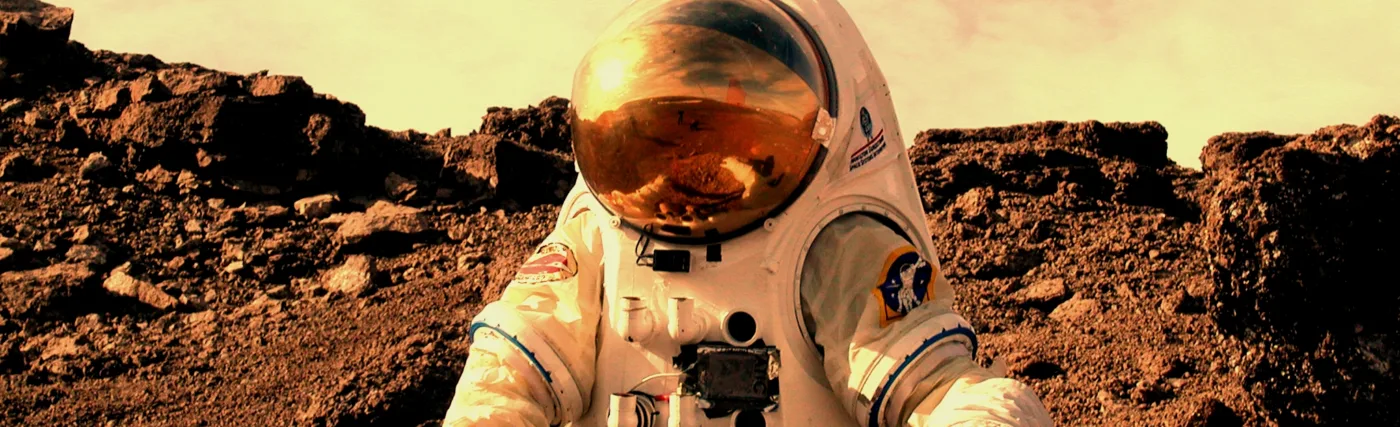
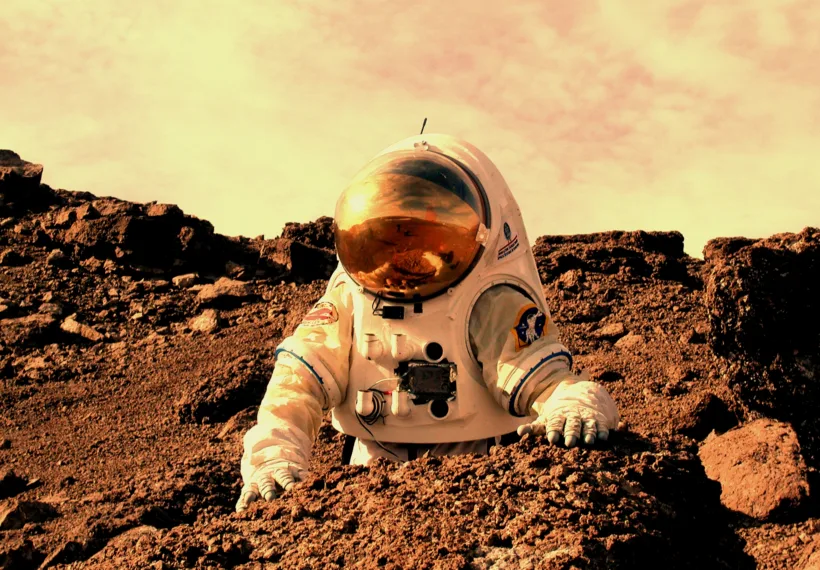
What are the practical considerations for a manned mission to Mars? From the psychological issues of spending 2 to 3 years cooped up in a spacecraft, to the science of protecting astronauts from solar radiation, get the inside scoop on what a journey to Mars would need to succeed when astrophysicist Neil deGrasse Tyson sits down with NASA astronaut Mike Massimino and “Packing for Mars” author Mary Roach. You’ll learn about an actual NASA device that turns human waste into plasticized radiation shield tiles, the nutritional benefits of Mouse Stew, and which personality traits would fare best on a NASA Mars mission. Co-host Chuck Nice is on hand to offer his own outside-the-box suggestions for the flight, including Jamaican “Rastanauts”.
NOTE: All-Access subscribers can listen to this entire episode commercial-free here: Packing for Mars (Part 1).
Transcript
DOWNLOAD SRT
Welcome to StarTalk, your place in the universe where science and pop culture collide. StarTalk begins right now. Welcome back to StarTalk Radio. I'm your host, Neil deGrasse Tyson. I'm an astrophysicist at the American Museum of Natural History in...
Welcome to StarTalk, your place in the universe where science and pop culture collide.
StarTalk begins right now.
Welcome back to StarTalk Radio.
I'm your host, Neil deGrasse Tyson.
I'm an astrophysicist at the American Museum of Natural History in New York City, where I also serve as Director of the Hayden Planetarium.
This week, my co-host is comedian Chuck Nice.
Chuck.
Hey, Neil.
You've been away too long.
I know, man, I've missed you.
Oh my gosh.
Haven't seen you in a while.
I love you, man.
I love you too, man.
Now we gotta break out some beer.
Normally that comes at the end of the beer conversation.
Oh, there you go.
Great to have you back.
You were like the ideal person for this subject.
Oh, fantastic.
Because this topic is, we're calling it Packing for Mars.
Sending humans to the red planet.
Nice.
And not that you're necessarily an expert on Mars, but-
Or packing.
Just saying.
Just saying, right?
You never know what you need to pack to go to Mars.
That's right.
But there was just so many weird and odd things that an astronaut had to go through.
I just figured you'd be the right person to offer critical commentary on the running of this.
I couldn't do this without, we needed an astronaut in studio just to offer commentary.
And we brought the one, the only, the hometown kid, Mike Massimino, live NASA astronaut.
Mike, welcome back to StarTalk.
It's a pleasure to be here now.
Is this like your third or fourth appearance?
I guess.
We're gonna have to put you on payroll after this.
No, that's all right.
Then you might expect a little more from me.
I don't wanna set the bar too high.
There you go, there you go.
You're a veteran of two space shuttle missions, STS-109.
That was on Columbia, by the way, which we lost a few missions later.
And STS-125 Atlantis both serviced the Hubble Telescope.
My man, where would we be without the Hubble Telescope?
Well, we would still be here, but we would be poorer for it.
That's right.
It would make a big difference in our lives, in everyone's lives.
We'd be psychically poorer.
Absolutely.
That's right.
And so, let me just find out.
Oh, I just realized you were like the first astronaut to tweet from space.
Is that right?
That's right.
Yeah, I was the first guy.
And you had like a zillion Twitter followers like overnight for that.
Not quite a zillion, but over a million.
That's the same thing.
A zillion, a million.
That's the same thing.
When you're dealing in astronomy, zillions, billions, trillions, it gets mixed up in there.
Yeah, all I wanna ask you is who is your carrier?
Because I can't get service in my apartment and you're tweeting from space.
That is awesome.
Yeah.
Okay, I have to ask, you know, Neil Armstrong, it was one small step for mankind.
What was your first tweet?
Oh, actually, they made fun of my first tweet on a Saturday Night Live.
Oh, really?
And that's one of the few things that got my kids excited was that they mentioned it.
And what I tweeted was, launch was awesome, I'm feeling great, the adventure has begun.
But what they said on Saturday Night Live was that I mispronounced my name, but that was okay.
But they said, I said, launch was awesome.
So I said, in 40 years, we've gone from one small step for man, one giant leap for mankind, to launch was awesome.
If I ever found aliens, I would tweet, geez, guys, look, aliens.
So really, I guess it wasn't as momentous as I thought it would be.
It was not as deep as it might have been.
Right, but you know me well enough.
So for me, that is actually pretty deep.
Yeah, that was pretty deep for Mike.
That's about as much as you're gonna get.
Right.
So Mike, would you go to Mars?
I would, yeah.
You're an astronaut.
You've only been to low Earth orbit, couple hundred miles up.
Hubble's about 300 miles up.
About 350 statute, 300 nautical.
Yeah.
You have statute issues.
Well, statute gives you, it's a smaller measurement, so it means it's more impressive.
When you use, it's really 350.
So I just, I fell into a bad habit there.
Yeah, it's more impressive.
350 versus 300.
So statute miles is what the rest of us use.
That's right, like when you're driving a car and it says how far you gotta get to the next town.
It's 220 statute miles from New York to Washington.
There you go.
See, it's more impressive if you say, well, it's like 250.
Yeah, so that's, yeah.
All right, so would you go to Mars?
I would, yeah.
I think that would, I think most astronauts would answer that question, yes.
Wait, wait, those who wouldn't would say no.
I don't think any, I think it would be a wonderful experience.
I think it would be worth the time and training to put into it and the sacrifice that would be involved.
It will take almost a year to get there.
Wow.
It is a long time, but I think the reward of getting there and the significance of it and being able to be a part of that would be worth the sacrifice.
You know what we did for StarTalk?
I interviewed Mary Roach, who's a sort of journalist author, writes about really cool, weird stuff.
And one of her books is actually called Packing for Mars.
And so let's go to my first clip, just find out what her studies have shown her about.
Item one, Packing for Mars.
You've written a bunch of books on such a wide range of subjects.
And one of them is on Mars, for goodness sake.
You wanna be the first in line to go?
No, no, no.
Well, the title, Packing for Mars.
I will happily go to the moon, two and a half years in a small space with people that I didn't choose.
I mean, I'm just an irritable person.
Because the moon is only a few days away and Mars is years.
You could do the moon in a week, week and a half, but Mars, are you kidding me?
No, would you go?
Is there no one that you know that you're friendly enough to spend that much time with?
Yeah, you can't get out.
I mean, you're stuck for, no, no, you go.
So maybe-
I want that warp speed thing.
Maybe you need city people to go to Mars because we're accustomed to being very close to one another living in small spaces.
Well, the Japanese are speaking very, very generally, good astronauts for a number of reasons, small payload, used to tiny spaces, not much privacy.
And also, again, obviously speaking in generalities here, raised to be not confrontational and aggressive, but polite and respectful.
So all of those things make them-
Ideal candidates for this.
Wow.
So, Mike, are you not-
Your name is Mike Massimino.
Yeah.
You're from New York.
I'm from New York.
Yeah, so-
Oh my God.
According to her, you are the worst candidate for an astronaut ever.
Because you're big, you're 6'4, you're like heavy, you're from New York.
I'm keeping her away from any decision process involved with flight assignments.
I'm glad she's not the chief of the office.
You're like the opposite, the chief of the astronaut office.
No, I'm a big goon and I need a lot of food and large clothing.
It went in work, I'm the complete opposite of what she described.
I was not polite, loud, annoying.
Oh my God.
I'd have to be a solo flight.
Right.
And the only reason they'd send me is to get rid of me, apparently.
Right, right.
Let's get rid of that guy for a couple of years.
So here's the problem, you get to Mars and there's no air, it's freezing, you have radiation from the sun, you'd have to live in pressurized habitats.
I mean, it's different from just the cushy space shuttle that you went up and back in.
Yeah, she's perfectly right, though, on a lot of, I mean, everything she said, of course, but particularly the psychological aspect of having to go for that long a period of time, getting along with people, the emotional support would need to be a big part of that mission.
For you.
For me, yes.
More important for my crewmates.
So do you need, I wonder if you need, like in the old days, the Kings had court gestures, do we need to send Chuck along so he could entertain people the whole way?
Absolutely.
Now, the only problem is, I would just be saying, are we there yet, the entire trip?
But having a guy like Chuck or you would be a good idea.
Having guys that are fun is really important on that type of mission.
We gotta wrap up the first segment.
When we come back, more on Packing for Mars.
You're listening to StarTalk Radio.
We're back to StarTalk Radio.
I'm Neil deGrasse Tyson, your host.
And with me in studio is comedian Chuck Nice.
Yes, very nice.
And on this show, where we talk about Packing for Mars, what it takes to go and the challenges therein, had to do that with an astronaut.
And we went to our favorite man about town, Mike Massimino.
New Yorker, live astronaut.
I mean, you're an active astronaut right now.
I still am in the office, yep.
Yes, I'm still there.
But he's very surly.
He's nothing like those Japanese astronauts.
No, those are the people you wanna hang around with.
As we learned, if we're gonna have a long mission, you need people who know how to get along and are not confrontational.
And the New Yorkers apparently don't fit that.
New Yorkers and black men is how it is.
Aside from me and Neil, we're delightful.
You guys would be great on that.
I think the three of us would be great on that mission.
That'd be cool.
I don't know if Mary Roach would agree, but I think we'd have a good time.
Mary Roach, yeah, we're checking, because she wrote the book, Packing for Mars, and did all the homework on what that might take.
So there are a lot of challenges.
One of them is radiation, because as you know, Earth has a magnetic field, and that magnetic field deflects highly energetic charged particles from the sun, because the sun is a turbulent place.
You know, it burps up plasma every now and then.
Plasma is just what it's made of, so I'm not saying anything deep there.
The sun is plasma.
It burps, plasma comes out, and plasma.
You know, my kid used to do that.
What's it glowing?
I would pat him on the back.
He would burp up plasma all over me.
He got over that.
Now he does it on purpose.
So plasma is charged.
It's a gas, but a lot of the molecules, atoms or molecules, have been ionized, so they're electrons freely floating within the gas.
And so the thing can respond to magnetic fields.
And so here's this blob of this plasma pie coming from the sun to earth.
It sees our magnetic field and deflects to our poles.
And those particles upon streaming down to earth collide with our atmosphere and they render it a glow.
And it makes the aurora, the Northern Lights.
Is that cool?
Oh, that was awesome.
You know what, I gotta tell you, Neil, I was sitting here like, where the hell is he going with this?
But now I actually just learned something.
Well, that's what StarTalk is about, Chuck.
That's the only reason I'm here.
All right, in fact, we did a whole show on The Sun, and we talked about, they're called coronal mass ejections, in case you were wondering.
Yeah, okay.
I was gonna say, Chuck, do you ever have coronal mass ejections?
You know what?
I was about to make a nocturnal reference.
I saw that.
And I caught myself.
I was gonna say, is he gonna go there or not?
So here's the problem.
If you go outside of this protective magnetosphere, not from X-Men, magnetosphere, then you are susceptible to this high-energy radiation.
And so, Mike, you've been within the blanket, the protective blanket.
Take you outside of it, there are issues not yet resolved.
And it's just a big challenge.
And we don't know if we can protect you.
And if we can't, you might get sterile.
What?
What?
That's crazy.
No one told me that.
I must have missed that part of the briefing.
Oh, that's awesome.
Let me write this down.
I gotta tell my friends.
You just single-handedly ended the space program.
Forget that.
Have you finished having children?
We just, no reason, no reason.
So here's what happens.
It's not just whether the sun burps up plasma.
It has to be a plasma pie headed our way.
Because it can send it other directions, but we don't care.
It just has to be headed our way.
And so what you'd have to do is you'd have to take this mission during a time when the sun is quiet.
Sun has an 11-year cycle where it peaks in these emissions and then it's quiet.
And there's an 11-year cycle.
So you have to plan these missions accordingly or shield the craft.
And one way is water will actually is a good absorber of this.
And so there's a thought maybe you'd have a shell of water around your craft and then you'd sort of drink that and recycle it.
And so it's an unsolved problem, but it's not unsolvable for sure.
You just get some clever engineers.
You're an engineer, right?
By training, Mike?
I am, yes.
Yes.
You left off clever.
So you got that.
Now, because all the astronauts are together, there's not much privacy, right?
I mean.
Yeah, you need to respect each other's privacy.
Well, how do you do that if you're crammed in a love seat together?
You just try to get along on the shuttle.
It was fairly small compared to the space station, especially, but when you need to use the restroom or change.
The restroom, yes.
When you gotta go to potty.
There are privacy curtains and you just try to have respect for each other so no one gets embarrassed.
Okay, well, actually we're gonna devote a whole segment to going to potty.
But I'm worried about cabin fever.
You're there and cooped up in a small space for a long time.
Yeah, and that's a big issue even on the space station missions.
And we've learned a lot from our presence on the space station for almost 12 years now where we've continually had people up there.
And one of the issues, as you've already mentioned, a couple like the radiation and what we can do to shield people from that and understanding that.
But also a lot of it is the psychological, the cabin fever, and one of the things is trying to remain in contact with the Earth.
You know, keep, they have a phone they can use on board that they can call from certain parts of the day where they get coverage.
Is it red?
It is, no, it's not, because then it would only go to the president.
Yeah.
So all red phones only go to the president, so.
But here's like, because one of the goals is to make a habitat on Mars, and so that way you create a little bit of Earth on Mars.
Yeah, you want to try to recreate home, bring things you like.
And try to make you feel comfortable, or else it can really be a problem.
So do you ever have the urge to just break through one of the living areas with an ax and go, here's Johnny?
No, that kind of cabin fever?
No, that's why we don't have any axes on the...
We have different ways to suppress fire.
We find out what Mary Roach had something to say about what it is to live in the psychology of different habitats, of living in a Mars habitat.
Check out what she says.
They do analog studies, and that means they pick a place like Antarctica where people are confined and isolated.
And in Antarctica, you're not in a box, but you might as well, because if you wander off, you die, you freeze.
So they're stuck on their base together.
I can imagine how that goes.
I've heard that joke before.
Yeah, I've heard that story.
Yeah, yeah, after about six weeks, you get this irrational antagonism sets in where the very things you loved about your crewmate initially begin to just drive you crazy, like the way they take off their boot and drop it.
Of course, in space, your boot would be floating.
The way you take off your boot, not stow it.
Unzip your boot.
Yeah, you un-velcro your pen or whatever.
These little things start to really bug you.
And you get very frustrated.
Wait, that's the same thing with married people.
People have been married 40 years.
Yeah, marriage is a good space analog.
So married couples are space analog.
I just made that up.
That's brilliant.
But what happens generally, you get frustrated, and then that kind of turns to anger.
And in space, you've got three things you could do with anger.
You could take it out on your crewmate's bad idea, because you depend on them for your survival.
So, okay, or you can take it out on mission control, and you see this in the mission transcript.
Or you could take it out on your ship, but that would be devastating.
That would be bad, would take an ax, you don't want to do that.
But you can see in the mission transcripts, like Gemini 7, Jim Lovell was taking it out on the nutritionist, the guy who invented the food.
He's like, memo to Dr.
Chance, Chicken Alla King, cereal number 654, cannot even squeeze food through neck.
And then like two minutes later, further memo to Dr.
Chance, Chicken Alla King, all over window at this time, I think you can do better at $300 a meal.
I mean, I'm just really taking it out on him.
Crabby.
Poor Dr.
Chance, yeah.
And Gemini, how long was Gemini, a couple of weeks?
Gemini 7 was the longest, two weeks.
Couple of weeks.
Try six months, try two years.
Years.
Three years, I know.
The third thing, you turn it inward, you get depression.
And depression actually has been a problem with some of those mirror and ISS.
So what is the profile of the person who would be less susceptible to these weaknesses?
You know what you want, and I don't know how you bind these people, but Commander Whitson from the ISS.
This is a woman I know.
International Space Station.
Yes, International Space Station.
I was watching NASA TV and somebody radios to her and says, Commander Whitson, those photos you took this morning, we can't find them.
Okay, if it were me, I'd go, what do you mean you can't find them?
I spent the whole morning, I don't have time, I got a lot to do.
She goes, that's not a problem, we'll do them again.
Like just unperturbable.
You cannot make this woman angry.
That's what you need.
You need to find those people who are unflappable.
Just nothing bothers them.
I think I'm pretty unflappable.
Actually, I'm not the judge of that.
You need others to make that decision.
You're too tall, you're too big, sorry.
You're not gonna get chosen.
My producers are shaking their head now, pointing at me, saying, no.
Saying, flappable, flappable.
You liar.
So, Mike, do you get along with your fellow astronauts?
Yeah, and it's like.
He hesitated there, didn't he, Jeff?
No, absolutely.
And I think one thing that you said.
That's the party line, yes, I get along with my fellow astronauts.
Well, yeah, as long as you don't talk to them, I get along fine.
Don't get their opinion about me.
But what she said, one of the things she said I thought was very interesting was the personality type.
And we're actually going through an astronaut selection now.
We just started.
And people all the time ask me, what does it take to be an astronaut?
And it's not always the smartest person, obviously.
But it is very important to be able to get along with people, particularly now with these long duration missions.
You need to be able to live with someone for a long time who is unflappable, easy to get along with.
And those are the things that are hard to quantify in people.
When we come back more on Packing for Mars, and I want to talk a little bit more about the stress that you might experience getting the job done, or the stress about doing nothing.
You are listening to StarTalk Radio, I'm Neil deGrasse Tyson, with me in studio, Chuck Nice.
Chuck, you're hilarious on stage, and I don't want to be the only one to know that.
So for others to find you, it's just chucknice.com.
chucknice.com, hilarious on stage, as opposed to what I am on the show.
I didn't mean it that way, I promise.
And in studio, active NASA astronaut, Mike Massimino.
We're talking about going to Mars.
And Mike, and what challenge is that involves, just to not get into a fight with your fellow astronauts?
And what are some frustrating things that you've experienced in your, you were in space, what's the longest period you were in space?
Two weeks.
Two weeks, that's with the same set of people.
Right.
And is it a point, you're saying, I heard that joke before, you got another one, is it like two, an old married couple?
You know, during our missions, we're not as long as some of these, well, particularly something like going to Mars, but space flight I think brings out the best in you, particularly when the chips are down and you need to get your job done and everyone cooperates.
Wait, wait, Mike, that sounds like NASA boilerplate.
Right, I'm trying to set you up.
So, but, you know, We are the right stuff.
Exactly.
I can see Mike walking in slow motion now.
Coming out of the hangar, here he goes.
All right, okay, you busted me.
But there are times, particularly in training, because you spend a lot of time training together.
There's a couple years of training before you go, and it's kind of like a family.
So just like you might get annoyed at a family member, you still love them, but you might get annoyed and have little disagreements.
That happens a lot.
Usually by the time the mission shows up and you've got the objectives to fulfill, that sounds like a right stuff thing.
But yeah, there are times where you might have little annoyances, why is this guy leaving this around?
How come I just got coffee in my eye because this guy didn't close his little straw on his drink bag and now I got hot coffee in my eye?
Why do I see this piece of underwear again in front of me?
Who's aspirin just went down my nostril?
You know, stuff like that.
So little things like that can kind of get to you after a while.
These are zero G challenges.
These are zero G challenges and that's what happens.
Yeah, because I don't think, that's a sense that's never been uttered in the history of the world.
Your aspirin floated up my nostril.
Well, I've got an unusually large nose.
This is radio, so I don't know how you portray that on radio.
But I've got a really, which again makes me, according to the Japanese theory, I'm not a very good candidate because my nose probably weighs more than most Japanese people.
So I'm a little sensitive to the floating objects that I could inhale.
That's just unique to me.
I don't even know how to follow.
I'm not sure how we got there.
So what you're saying is, you see, because two weeks is very different from Mars, because Mars, it's almost a year to get there.
And the full mission is what?
It's like it's two years.
It's almost two years, because you have to wait there for Earth and Mars to realign in their orbits so you can get the minimum energy transfer back.
So you talk about at least two years, three years more likely.
You're going to have conflict.
And one of the things we do at NASA is that we do train in stressful environments.
We go on national outdoor leadership training.
We go backpacking.
I went with my crew, my most recent crew, we went to kayaking in an extreme environment where you're dependent on each other.
And you're tax money at work.
Sending astronauts on vacation.
You do things that you do things.
This is all training.
But you try to get into an extreme environment on Earth where you start to recognize when people get irritable.
And you start noticing that usually there's a reason why your crewmate is cranky.
And it sometimes has to do with dehydration.
Sometimes you're thinking about something at home that's bothering them.
Maybe you're missing comfort food.
Missing comfort food.
Comfort food, it could be a lot of things.
So you recognize that in your crewmates and you learn to deal with it.
So it's really part of your training.
In my interview with Mary Roach, who wrote the book Packing for Mars, we talk about food and what role that plays in the health and stability of the astronauts.
Let's check it out.
I visited the Johnson Lab where they make the food.
And I tasted like eight-year-old pork chop.
Yeah, me too.
I tasted seven-year lifespan hash browns.
Hash browns, how were they?
But better than the early, the stuff that's really interesting is from the Gemini and Apollo era when they were really concerned with making the food low residue so that the astronaut could avoid using the bathroom system, which at that time was a bag, terribly.
I always wondered what food it would be that would accomplish that.
It's low fiber, highly processed.
So you absorb everything out of it.
You absorb everything out of it, yeah.
And they would be really dense little egg bites.
Well, I'm thinking whatever the food tastes like on Earth, if you've been away from Earth for a year, any food's gotta taste good.
You know, like you're camping, a can of beans is like, wow, this is amazing baked beans, because you're in the middle of nowhere and there's no other food.
One of the things people come to say, oh, I could never be an astronaut because you don't have any comforts of home, you don't have good espresso, you don't have this, you don't have that.
But I think it's like backpacking.
It's worth all the inconvenience, sleeping in an uncomfortable situation, eating horrible food.
That's all worth it because you get to this amazing place.
Same with space.
So these astronauts, they don't care, they're not complaining about that stuff.
And they know it's basically temporary, however long temporary means.
Look out the window, look what you're seeing, how amazing.
So who cares that the food is absolutely horrible, and nowadays it's not as horrible.
We actually did a whole StarTalk on space food.
You can find that in our archives on startalkradio.net.
So Mike, what's your favorite food that you had in space?
Well, first off, I'm glad she's not the cook.
Yeah.
Because, no, the food actually is pretty good in space and it's easy to cook.
You just add water, you put it in the oven, and I don't know what it's gonna be like going to Mars, but on the space station, on the shuttle, it was excellent.
So what single food was really good?
My favorite was the lasagna.
Lasagna, was it like the way mom had made it?
Not quite, but again, it was easier to cook.
I just threw it in the air, it came back, but it was delicious.
We had lasagna, ravioli.
You can tell my Italian's coming out here.
And one of the great things-
Wait, wait, wait, wait, wait.
You're like the guy who never, you know, still lives in your parents' basement.
That's it, exactly.
That's my comfort food.
On Sundays, I'd have my lasagna.
And every other day of the week.
Well, you know what?
It just occurred to me that with the stress and the food, Jamaicans would make great astronauts.
Exactly.
Yeah, you call them rostanots.
Just like, yeah, man, everything's airy.
Right, yeah.
Okay, now eat that, man.
It's delicious.
All right, when we get back, more on Packing for Mars on StarTalk Radio.
This is StarTalk Radio, I'm Neil deGrasse Tyson in studio, comedian Chuck Nice, ace, and astronaut Mike Massimino.
Why do we have an astronaut in studio?
We're talking about going to Mars, and all the challenges that that involves.
We came off the segment talking about food, comfort food.
What's your favorite?
You love the lasagna, but lasagna is not comfort food.
For an Italian kid, it is.
Macaroni and cheese, shrimp cocktail is a favorite.
I don't know if that's comfort food.
I really don't know what comfort food is.
To me, it's food you can eat about anything.
Comfort food for the bushes, yes.
We have hamburgers, comfort food for the bushes.
Depends on how wealthy you are.
You want some good food.
The idea of wanting to look out the window and not worrying about food, that's when you're applying to get on the mission.
Yeah, I don't need food, I'll eat granola bars.
But after you get assigned, you're going to want to eat.
So the quality of the food is going to have to be pretty good, I think.
And Chuck, you said the Jamaicans would, why would they make good astronauts?
Because, think about it, man, you know, everything that you need to deal with, your stress and food issues are taken care of with one little rasta puff.
That's how that works.
If your fellow astronaut is on you, hey, man, go ahead and smoke these.
I'm guessing there's no smoking in space.
Yeah, there's not just that, but there's a few issues there.
I don't know if we want to go there.
But that might not be an easy, it might sound like an easy solution, but it might not work as well as you think.
Spaceflight is tough in that way.
We just put it in a pouch, you add water and put it in the oven.
No smoking necessary.
No comment.
That's right.
We put them in brownies.
So what's fun is if you create a Mars settlement, there's food you might bring, but maybe you don't want to bring food.
You bring seeds, you bring sort of baby animals, and then you sort of raise livestock on Mars.
That way the astronauts wouldn't, they didn't have a real burger.
You know, you can have like Kobe beef on Mars, maybe.
I interviewed Mary Roach, author of Packing for Mars.
Let's see what she says about Mars settlements.
I think we know enough about space we don't have to send animals to Mars first.
What a waste of money that would be.
No, no, nobody's going to do that.
Unless someone decides there's this wonderful paper from a 1964 conference on space nutrition and related waste issues.
Okay, that's the title of the conference?
That's the title of the conference.
If you were to bring livestock to Mars, like if you're going to bring animals and have ranching going on, what would be the best species to bring in terms of how much it costs to launch them versus how many calories you get?
And he did an analysis of cows.
I would include taste in there too, somehow quantify taste.
I don't think he did because the winner was mice, mouse stew.
So mice are more efficient.
That's what he determined that you should launch mice.
I can't believe that.
You know why I can't believe it?
There's not much meat on a mouse.
That's what I'm saying.
I once ate a squirrel when I was in Texas.
There's barely any meat on a squirrel, you know, there's nothing on a mouse.
Well, you've got to take it up with Max Clyburn.
Could it be that mice, they have a very short gestation period, so they can multiply their generations very quickly?
That could have been it.
But just think of the steer, talk about waste issues.
No, then it's fertilizer for the plants that you're going to grow.
Or it becomes radiation shielding because you want your hydrocarbons.
So manure being radiation shield.
NASA has a device down at Ames that can take...
Ames Research Center in California.
Yes.
It's kind of like an easy bake oven where you would take waste material and kind of plasticize it in a tile and you could line the capsule with that.
On your way home, you'd use that for radiation shields.
You take animal poop, put it in an easy bake oven.
Or human.
Yeah, well, humans are animal.
And so it hardens.
It becomes a tile, like the ceiling tiles.
And so you line your craft with this.
It's a good radiation.
And doesn't it smell?
I mean, you have to coat it.
It's sealed in plastic.
But it is interesting because if you go to another place, you're thinking you're going to take food that you would be comfortable with eating and might want to sustain.
So it'd be like an ark, right?
You wouldn't just take a cow, you could take a cow and a bull.
No, more likely a cow and bull sperm, right?
Right, right.
Okay, because a bull sperm weighs less than a cow.
Sorry, I just did the math on that one.
That's just how that worked.
So Mike, if you ate mouse stew, if that's all you could eat, would you go to Mars?
That's what I would say.
If that was my interview question, if I could go, yes, and then after I got assigned to the mission, I wouldn't be eating any mouse.
Boy, mice cannot catch a break.
I'm telling you.
No, we're not eating mouse.
We're not eating mouse.
I'm telling you.
You know, it's just interesting using animal waste to line the aircraft because there's still this radiation problem unsolved.
Yeah, you know, I think it shows the way you have to think out of the box for this type of trip.
And any crazy idea might seem a little bit nutty.
You need to think about if it's going to help you.
You need to think creatively.
That's more like thinking out of the butt.
Not out of the box, yeah, I'm sorry.
Yeah, come on, hold it together.
The crappy shields are crappy out.
Quick poop, we're in danger.
Yeah, I don't know.
I'm trying to give some credence to it.
You know, it's just it's odd because it'll all change.
You know, it's just what we think of is what will sustain us.
Right.
You have to be, you know, we say that about other foods in other countries.
Oh, it's a delicacy in whatever it's, you know.
Don't fall for that.
When we come back more on Packing for Mars, you're listening to StarTalk Radio.
This is StarTalk Radio.
I'm your host, astrophysicist Neil deGrasse Tyson in Studio Comedian Chuck Nice, tweeting at ChuckNiceComic.
At ChuckNiceComic, that's correct.
You got it.
And Mike Massimino, a living, active NASA astronaut, except we've got him here in Studio now.
You're not in space, not in physical space.
No, but I feel like I'm in orbit with you guys.
And you tweet, you're at astro underscore Mike.
That's correct.
Astro Mike.
All right, we'll find you there in the Twitterverse.
We're talking about going to Mars, and we've been slotting in clips of my interview with Mary Roach, who did a lot of research on this stuff.
I never knew that people thought about considering what kind of animals you would eat en route that are efficient to deliver you protein, such as mice.
Mice.
Yeah, I know I've never heard of it because they don't want us to know about it.
Maybe the food that they say is shrimp is reconstituted mice.
Now you're blowing my mind.
It's people!
For those of you born after 1970, that was a reference to Soylent Green.
That's a Soylent Green reference.
Gogol it, kids.
So, you know, what's interesting is that it's a whole other kinds of engineering solutions.
I mean, scientists aren't creative enough to think that way.
You need an engineer to say, how do you sustain astronauts?
It's the job of engineers to solve these problems, right?
Yeah, and there's a lot of, as you can see, you've got to think about everything.
It's a long trip.
It's a lot to think about.
And one interesting consideration is, if you are slightly chubby and we put you on a diet on the way there, then you are actually surviving off of your own stored foodstuffs.
Think about that.
So you binge before the pre-flight meal, man.
You're gonna go nuts.
It's like running a marathon.
That's it, yeah.
Carbo load, yeah.
That'd be great.
No exercise.
Well, that'd be just, well, if you carbo load, the carbo would just be coursing through your blood.
That's why you carbo load the night before you run.
Okay.
Because when it's in your blood, the energy's immediately available.
If you then don't use it and it doesn't otherwise come out of you, then your body turns to fat, and those are your fat reserves.
This guy knows everything.
He knows everything.
I swear to God.
Are you making this up because Chuck and I, we're falling for it here, man.
I just changed my whole menu for lunch.
How'd you come up with this stuff?
Well, it matters because it's expensive to send any extra pound on a spacecraft anywhere because that's fuel.
I spoke with Mary Roach about limiting the weight on space missions, and let's see how that conversation went.
The most extreme approach that I saw was this guy who suggested, and I think he was being serious, that NASA should recruit obese astronauts, and he figured out that for 50 pounds of excess weight, there's like 184,000 calories.
So you would just basically starve the astronaut for the duration of the mission.
That crossed my mind as well.
So all you have to do is give them vitamins so that they have their...
And they would burn off their fat.
Burn off their own fat.
Their own fat.
And they'd get there in peak physical condition.
But really, really grumpy.
Yeah, these are the people who are pushing buttons on the craft.
That's interesting.
Has NASA considered this?
I do not think so.
It's $10,000 a pound, I think, to get something in the orbit.
It is, that's what I've heard.
So you got a fat butt, and you try to get that up in orbit.
Yeah, it seemed to me that it would be more expensive to launch the fat astronaut as expensive as it would be to launch all the food.
So where was your savings?
Yeah, except that it's already part of your body.
And the waste has already been expended from that.
I'm trying to imagine the picture of the Mercury 7, all fit Marines, and then the fat 7 going to Mars.
Imagine them just sort of coming out of the hangar, you know?
No, once you've already turned it into your own fat, it's calories for you.
See, I got the perfect solution.
It's one fat astronaut that can pilot the ship back, and then four other skinny astronauts that he will in turn eat before the return trip.
Okay, well, that'll be a research paper to be delivered.
Now, here's the problem.
The problem is we have a mindset that we got to take all the fuel we need with us and all the food we need with us, but all we need is some filling stations, some quickmarts, all along the route and on Mars.
So then you don't have to load up in advance.
That's the problem, Mike.
Yeah, we need something out there.
Something out there?
Yeah, that would be, put a little cache out there.
You know, a cache of food.
Oh, cache.
C-H-E-C-H-E-C-H-E.
Thanks, thanks.
Yeah, something that you can get out there.
And the obese ass, I don't know.
I think that would just, that wouldn't work.
For the image.
The image, the clothing.
What are you going to do?
This is your tent to wear.
I mean, clothes costs, big clothes are going to cost a lot to get to orbit.
I don't think that's going to work.
Plus, I don't think it'd be good for morale.
Why?
The big and tall astronaut store.
There you go.
Well, plus you would need different changes of clothes as you lose weight along the way.
Yeah, right, it'd be too complicated.
I don't think, I just, we're looking for fat astronauts.
You know, it just doesn't, I don't see.
It goes against everything.
You know, first lady's out doing pushups on all the TV shows and now we're like, all right, you want to be an astronaut, kids, cut all that out.
Stop playing video games and eating Doritos.
I mean, it just doesn't, I think it's totally counter to our culture.
What are you doing?
All you do is sit around, play video games and eat chips.
I want to be an astronaut.
We've got to wrap.
Parents are yelling at the kids, stop exercising.
Actually, there's plenty more of Packing to Mars to come, but we got to wrap up our first hour.
You've been listening to StarTalk Radio.
Mike and Chuck, you come back for another hour on this.
Absolutely.
Definitely.
This is StarTalk Radio, funded in part by a grant from the National Science Foundation.
We will be back shortly.
See the full transcript



 Unlock with Patreon


 Become a Patron