


 Unlock with Patreon
About This Episode
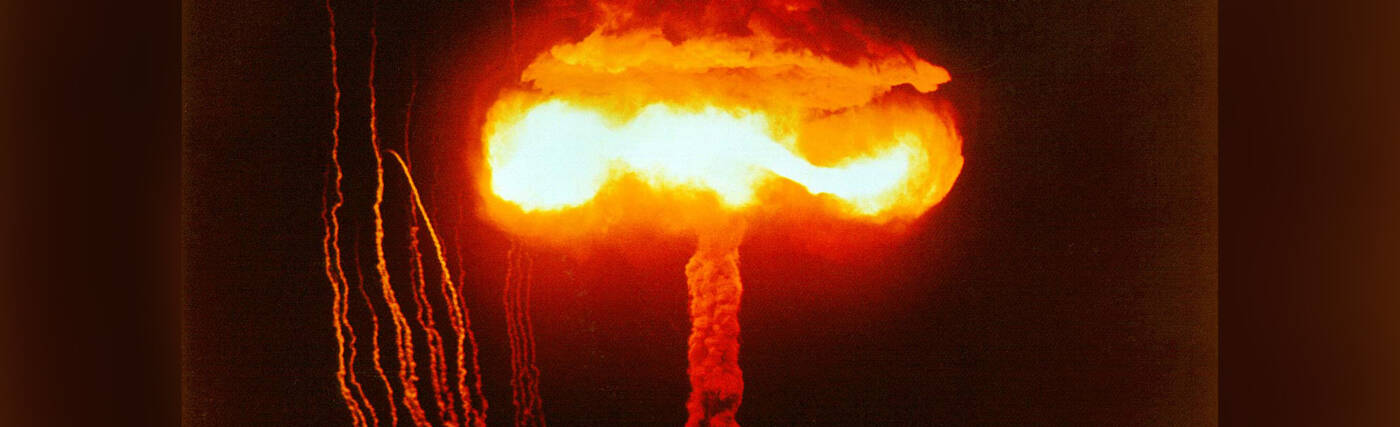
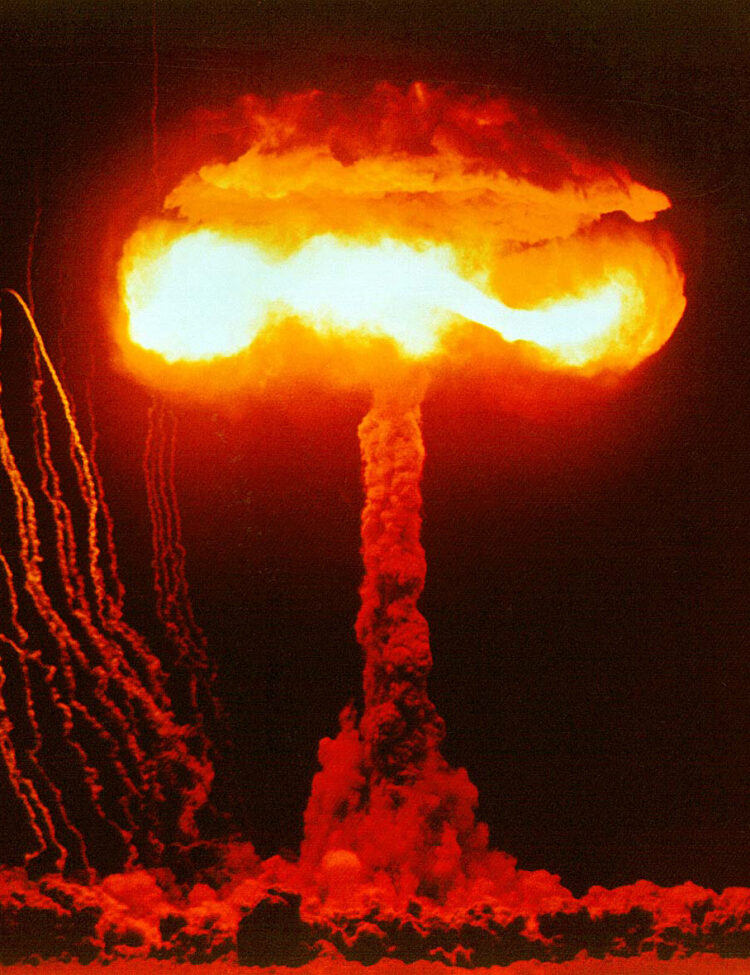
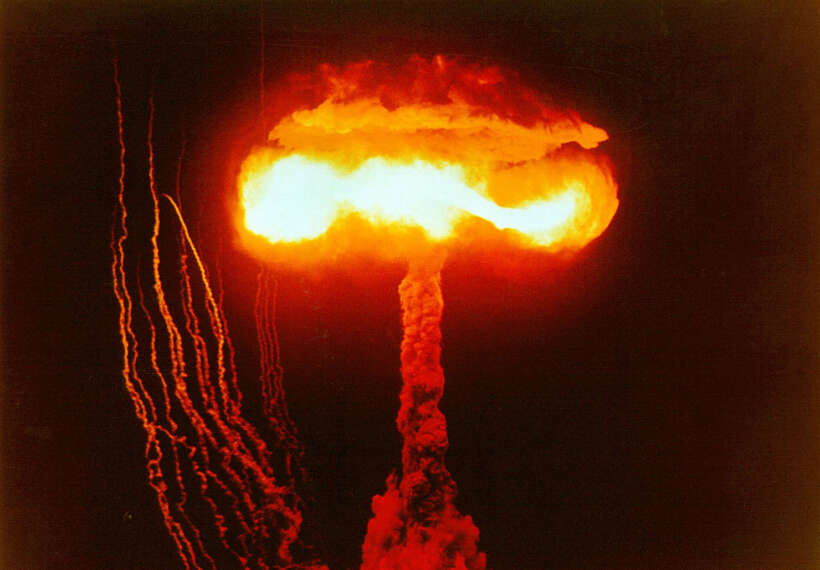
If someone else led the Manhattan Project, would it have gone differently? Neil deGrasse Tyson discusses theoretical physicist J. Robert Oppenheimer, Christopher Nolan’s film, and the creation of the atomic bomb with Pulitzer Prize-winning biographer, Kai Bird.
Were we building the atomic bomb no matter who was in charge? Could a biographer raise the status of a person higher than they were in real life? We discuss the role of Robert Oppenheimer and how he was uniquely equipped to run the Manhattan Project. Learn about the early days of quantum theory in the 1920s and how it impacted Oppenheimer’s trajectory. We dive into details of the movie and what Neil and Kai think about its execution: were there any big inaccuracies?
Why did American Prometheus take so long to become a movie? Find out about the making of Oppenheimer and how it is more than a story about the making of the atomic bomb. We discuss McCarthyism, Hiroshima, as well as Oppenheimer’s motivation for creating the atomic bomb. We also talk about how important it is for more people to learn this story now as more countries develop nuclear weapons.
Did the government understand the power of nuclear weapons at the time? Find out what Oppenheimer thought about nuclear weapons and why he was so concerned about a third World War. Could we someday achieve disarmament? We explore the Communist Party in the 20th century and what it was like at Los Alamos. Plus, how could the Manhattan Project have gone differently without Oppenheimer?
Thanks to our Patrons Jimmy Dunn, Liviu Dimulescu, Keely Stults, Ralph Viator, Daniel Brophy, and Diana Gutman for supporting us this week.
NOTE: StarTalk+ Patrons can listen to this entire episode commercial-free.
Transcript
DOWNLOAD SRTHow great is it to be able to communicate with somebody in their language?
Makes you both feel good.
How about job prospects and how much more plentiful they are when you can speak another language?
Well, how about you learn a new language with Rosetta Stone, the most trusted language learning program to make you a more competitive job applicant?
It’s available on desktop and as an app and teaches through immersion.
Find convenient 10-minute lessons.
It’s used by millions because it works.
Rosetta Stone’s true accent feature even provides feedback on your pronunciation.
For a very limited time, StarTalk Radio listeners can get Rosetta Stone’s lifetime membership for 40% off.
That’s $179 for unlimited access to 25 language courses for the rest of your life.
Redeem your 40% off at rosettastone.com/startalktoday.
Muchas gracias, you say.
Siempre de nada, I say.
You know what’s missing in your life right now?
A little sparkle, a little effervescence, and maybe some fun while you’re supporting your immune system.
New Immune Supporting Emergency Crystals bring you the goodness of emergency in a fun new popping experience.
There’s no water needed, so it’s super convenient.
Just throw it back in your mouth, feel the pop, hear the fizz, and taste the delicious natural fruit flavors.
Emergency Crystals, Orange Vitality, and Strawberry Burst flavors for ages 9 and up have 500 mg of vitamin C per stick pack.
But more importantly, they make your mouth a lot more interesting while you support your immune system on a daily basis.
I love throwing back a pack and feeling the crackle in my mouth.
Makes me feel like I’m having fun while I’m supporting my immune system.
Look for Emergency Crystals wherever you shop.
These statements have not been evaluated by the Food and Drug Administration.
This product is not intended to diagnose, treat, cure, or prevent any disease.
Coming up on this episode of StarTalk is my exclusive one-on-one conversation with Kai Bird.
He is the author of American Prometheus, the Triumph and Tragedy of J.
Robert Oppenheimer, on which Christopher Nolan’s hit movie, Oppenheimer, is based.
We talk about Oppenheimer as a person.
We talk about his religious beliefs, his sensitivity to the human condition.
We talk about his angst and his triumphs, about all of his efforts to build the bomb.
We talk about the trial, and then we end by wondering what is the relevance of these topics as we go into the future.
We touch on all of these topics coming up on StarTalk.
Welcome to StarTalk, your place in the universe where science and pop culture collide.
StarTalk begins right now.
Hi, I’m Neil deGrasse Tyson, your personal astrophysicist.
And I’m Lindsay Nix-Walker, senior producer of StarTalk.
And Neil and I just co-authored a brand new StarTalk book coming out September 12th.
Yeah, this is the third in a series of collaborations with National Geographic Books.
And this one is titled, To Infinity and Beyond.
And it’s available for pre-order from the StarTalk website, startalkmedia.com/books.
If you do pre-order the book, you have a special access to a live conversation that I’ll be having with Lindsay Walker.
She’s been my senior producer for years.
She’s behind the scenes in practically every StarTalk episode you’ve ever seen or heard.
I look forward to doing a live stream for our audience.
And they’d be able to submit questions in advance.
So we’ll see you there.
We’ll see you then.
startalkmedia.com/books.
This is StarTalk.
Neil deGrasse Tyson here, your personal astrophysicist.
Welcome to StarTalk, Kai Bird.
Well, Neil, thank you very much for having me.
It’s a pleasure to talk about Oppenheimer things.
Yeah.
Anything Oppenheimer.
So, you’re an historian, a journalist, and I just, this is a, I love your title here, your official title, executive director of the CUNY Graduate Center, City University of New York, Leon Levy Center for Biography.
Whoa.
So, there’s a whole group of people just thinking about writing about the lives of others.
Is that pretty much what you do there?
That’s exactly what I do.
We started this about 15 years ago.
There were a lot of biographers around the country who complained that we didn’t get respect in the academy.
I’m sorry, I don’t get no respect.
No respect.
Historians weren’t taking us seriously.
And we biographers believe that biography as a vehicle is the best form of history.
It’s the most accessible.
It’s the most read.
And it’s deeply detailed.
And contained, right?
I mean, biographies tend to be, they can be large volumes, but they’re still single volumes typically.
Isn’t that right?
We try to make them one volume.
You know, my biography of Oppenheimer I did with a co-author who, alas, is no longer with us, Martin J.
Sherwin.
And Marty spent 25 years on this biography.
He only brought me aboard in the year 2000, and it took us another five years to produce the book.
But it’s a very time-consuming, deeply scholarly endeavor.
As it should be.
Yes.
As it should be.
I mean, why not?
Why wouldn’t it be?
Well, let me ask a different kind of question here.
Suppose you’re such a good biographer that the subject of your book, the person, rises higher than they ever did in real life.
Is that allowed?
Sure.
No.
No, I ask, for example, we all know the film Patton, and George C.
Scott, performing in that movie, he won the Academy Award, and it’s a brilliant movie, and it’s a powerful movie.
But I don’t know that I ever would have heard of this man, were it not for this movie.
And then I checked other generals of the era, and he’s in there, but it doesn’t rise up as high as the movie does.
So, if you write a brilliant book that wins a polar surprise, if my records are correct, who are you to place someone in a historical notch that maybe they either don’t belong, never deserved, or where does that fit in, in the total picture of your task?
Well, that’s what historians and biographers do, is reevaluate the history and the person.
And in retrospect, Oppenheimer, J.
Robert Oppenheimer, the physicist, the father of the atomic bomb, is becoming more and more an iconic figure and more and more relevant to our own times and therefore more and more important.
You know, Christopher Nolan, the director who wrote the screenplay and directed the film Oppenheimer, has been going around saying that Oppenheimer was the most important man who ever lived.
And I scratched my head for a moment about that and was wondering, I mean, really?
But the more you think about it…
Well, he has a movie to sell.
He does have a movie to sell.
And I have a book to sell, so to speak.
But, you know, it gave me pause.
And I thought about it and, you know, Oppenheimer gave us the atomic age, which is never going to go away.
And we’re always, as human beings, going to have to struggle with the notion of surviving the invention of atomic weapons.
So remind us who Prometheus is, because that’s centered to this concept here that you’re describing.
Yes.
Prometheus was the Greek god who stole fire from Zeus and gave it to humankind, and then was punished by Zeus for this thievery.
And he was hung on a cliff, and every night a giant eagle would chew out his liver, and then it would regrow, and then the whole thing would take place all over again the next day.
And he was being punished, tortured, for having given humankind fire.
And that’s exactly what Robert Oppenheimer did.
He gave mankind the atomic fire, and then he was punished nine years later and dragged through a security hearing and humiliated and stripped of the security clearance, and then this was broadcast on the front pages of newspapers all over the country.
Another famous book that uses or references Prometheus is the subtitle of Mary Shelley’s book, Frankenstein.
What’s the full title?
It’s Frankenstein, a Modern Prometheus.
I’m fascinated.
So this is Dr.
Frankenstein not so much bringing fire to the world, but creating life.
This seems like you’re transgressing God or something, right?
Well, so Oppenheimer was transgressing the gods in that he gave human beings, these very dangerous mammals, this weapon of mass destruction.
And for that reason, he’s the most important man who ever lived.
So my only, I think he was a brilliant scientist, coming to this as a scientist, I would have said it a little differently.
Like I said, you have a book and a movie to sell, so I don’t want to get in the way of that.
Plus, they’re doing well.
You don’t need me to say one way or another about it.
But when I think of systems and I think of nations and I think of geopolitics, we were building that bomb, whether it was Oppenheimer or any one of other dozen people who could have headed that project, who were active physicists at the time.
That’s right.
So I can’t think of him as uniquely as you are describing him.
I can think of him as the project needed a leader.
He’s a good guy to do it, so you bring him on.
Well, actually, he was a most improbable selection.
And yet, General Groves, the man who was in charge of the Manhattan Project, selected him.
Robert Oppenheimer was only 38 years old.
And yet, Groves saw…
Wait, wasn’t he old back then?
Wasn’t he 38 years old back then?
No.
I was pretty young.
Okay, fine.
That was me.
Okay, okay.
But, you know, Oppenheimer…
Groves saw in Oppenheimer a charisma, a spark, a tremendous ambition, and a man who was a scientist, a quantum physicist, but who could speak in plain English, and that was very important to Groves.
He needed to understand what was happening, and he realized that Robert Oppenheimer loved French poetry and the novels of Ernest Hemingway, and, you know, he learned Sanskrit so that he could read the Bhagavad Gita in the original.
I mean, he was a polymath, and that’s what made him a good scientist and actually a good administrator of this secret city in Los Alamos that built the atomic bomb.
Would you say it also gave him a dose of humanity and humility that might not have otherwise been there?
Oh, absolutely.
And, you know, biographers bend over backwards to take iconic historical figures like Oppenheimer and humanize them.
And the film does this too.
Nolan is very brilliant at compressing into only three hours.
Don’t tell me it was originally six hours and they cut it back.
It was a three-hour movie every minute of it.
As I understand it, the screenplay, as he originally wrote it, was four hours.
All right.
And he had to cut it down to maintain artistic control in Hollywood.
No, the film and the book both bend over backwards to explain actually how human and fragile the young Robert Oppenheimer was.
This is a man, and this is portrayed in the film, who has a deep emotional psychic crisis at the age of 22 when he begins to fail for the first time in his life as an experimental physicist.
He keeps breaking things in the lab, and then he suddenly realizes his forte is not experimental physics, but theoretical physics, and he happens to be coming of age just as quantum is being discovered.
There’s a whole catalog of physicists of the era who all were touched by or touched quantum physics, which was being invented in real time in the 1920s and early 30s.
So it was a remarkable period in physics.
I try to let people know that we are in the centennial decade of the discovery of quantum physics, and that was a watershed decade.
Not only the quantum, but Hubble discovered that there’s more than one galaxy in the universe and that the universe is expanding.
All that happened in the 1920s.
It’s incredible, yes.
And yet, most Americans, most people, do not understand quantum physics, and…
Still.
Still, still.
It’s hard to describe.
And the film, I think, I’d be interested in your opinion of this.
The film, I think, makes a really valiant attempt to visually explain quantum physics.
At one point, he has the young Robert Oppenheimer, as a young physicist, wandering through an art gallery and comes across a Picasso painting that’s in the cubist mode.
And he’s staring at it.
And they zoom in on it.
And of course, this is a metaphor.
Nolan is using Picasso’s painting as a metaphor for quantum and how different it forces you to look at the world.
Yes, a disruption of perspective, which cubism was to art.
There have been some art historians who have analogized the two as arising in approximately the same era.
And I think they tried to mention a cause and effect.
I’m less convinced of that, but I’m intrigued that they did correspond.
It was the era of relativity.
Are you looking at the front of someone or the side of their head or the back of their head?
There was a lot of modern physics that was disrupting our sense of what is normal and what isn’t.
And the art world was, I think, on some of the same track there.
So let me ask you about the…
Let me give you my reaction to some parts of the film.
As a scientist, I know most of the Oppenheimer story, but I’m not one of those, oh, they got that wrong or anything.
I’m not that guy, okay?
I’m not that guy.
But what I did notice, and is this you in your original writings or is this Christopher Nolan, who by the way, if you allow me to give a quick commercial, we interviewed Christopher Nolan on StarTalk some years ago when we were just talking about how many films he’s done that disrupt the timeline of events in the world.
So he’s a very good sci-fi thinker in that regard, and we had a wonderful conversation with him, and you can find it in our archives.
Just search for Nolan and you’ll go straight there.
So what I found is the movie is full of these simple gestures of scene, of script line, of movement, of camera angle that capture some interesting fact about the era.
And to accomplish that without it looking forced, I thought was brilliant.
And I’ll just give one simple example, okay?
Richard Feynman plays the bongos.
And he’s not identified.
And he’s not identified.
And there’s this scene where there’s a party and there’s just some guy there.
You look from behind and he’s playing the bongos.
It just goes by.
It doesn’t zoom in on, here’s Richard Feynman, you all heard.
No, it’s just a guy.
Just a guy.
And Nolan expects the audience to wonder about that and to maybe go and find out who is that guy playing the bongos.
Was that real or not?
Is he giving too much credit for the audience to dig up that level?
The movie is full of those details is my point.
I’ve seen the movie five times now, and each time I see it, I see new layers, new little changes.
Excellent.
And you wrote the damn book.
Yes.
And it’s only 720 pages.
So, another one is, again, Feynman goes un…
I mean, the actor who plays Feynman is credited in the end credits, I state through them all, but Feynman is not identified as a character in the story itself.
And there’s a scene where there’s someone sitting in the car…
That’s right…
.
as they’re all slathering themselves with the UV block for this explosion.
And it’s sitting in the car, they said, you want some of this?
And he says, no.
The windshield blocks nearly all of the UV.
This is a physics fact.
Physicists, we all know this.
But that was famously written in one of Feynman’s biographies.
That’s right.
And that’s Feynman saying that.
And with a good rejoinder, well, okay, the window blocks the UV, but what blocks the window?
In the explosion.
So little things like that were persistent throughout the storytelling, and he stitched it all together smoothly.
I didn’t feel anything was forced.
And all of the elements of this, little things like the…
We knew that in Germany, there was a Hitler and sort of the racist regime that that was.
They elevated experimental physics to a higher level than theoretical physics.
And so the Jews were relegated to the theory because that wasn’t as high ranked.
And so that would include Heisenberg and Einstein and all of these folks.
And so there’s that one place in the movie where they say, oh, he’ll be…
If we know this, then Heisenberg will know it.
And they say, no, he’s Jewish.
And they don’t give him access to the lab.
And so that encapsulates an entire worldview that the Nazis had.
But you can’t off ramp to that in a movie that’s through the POV of Oppenheimer.
But you can throw a bone to it.
And that’s the examples of what I’m saying here.
Yeah, it’s incredible that Nolan has weaved all this into the film.
And I’ve seen it five times, as I said, and I read the screenplay before they started to film.
And he wanted me to do that to identify any gross errors.
And I couldn’t find any.
It’s remarkable in a Hollywood movie.
And he wrote the screenplay.
He wrote the screenplay.
And it’s damn accurate.
Kudos to him.
Okay, no, I did find an inaccuracy.
And I tweeted about it.
I just thought I’d totally tell you.
Okay, what did you find?
Let me just say I let off the tweet by saying he got so much correct that I give him a hall pass on this next week.
So he’s in the desert on July 16th.
This is three weeks after the summer solstice.
The summer has the longest twilight of the year.
It’s 5.30 in the morning.
He would have been well into twilight at 5.30 in the morning and would not have been pitch dark.
But I give it to him because now he gets to have the explosion against complete darkness.
There it is.
I grant him that artistic license.
Are you sure you took into account daylight savings time?
So even including daylight savings time, that’s it.
Yeah, I totally took that into account.
Starting, growing or running a business is taxing.
And I’m not talking about the government, I’m talking about, it’s hard.
There’s little time to actually pause and plan for what’s next.
PayPal wants to help you rethink your business, plan for the future and build a path to success.
What if there was a simple way to get some real actionable tips specifically tailored to your business?
Meet MAP, a new tool built by PayPal.
Powered by PayPal Research, it provides you with customized tips in minutes to help you reach your goals.
With just a few clips, MAP analyzes your business information and goals and then generates tips that empower you to succeed on your own terms.
MAP stands for My AI Planner.
And so I saw this and I went really seriously.
So I’ll type in some stuff and it’ll tell me what to do for my business.
And guess what?
I did it.
And guess what?
It worked.
It gave me some truly actionable tips that I am going to put into use.
You know, AI is everywhere and it seems like companies are just slapping AI on the back of anything just to be a part of the whole craze.
But that’s not the case here.
The My AI Planner tool really provided me with some help to achieve the goals that I’m looking to achieve.
So what you need to do is rethink what’s possible for your business.
Visit paypal.com/us/startalk.
That’s paypal.com/us/startalk.
Think about what happens when you’re sick and you have to see a doctor.
First, you have to schedule an appointment, which sometimes can take days or even weeks to get in.
Then you have to go to the doctor, even though you’re probably feeling miserable.
Then you wait in the aptly named waiting room, exposed to whatever the people around you are coughing and spewing into the air.
Oh, the humanity.
Fortunately, there’s an option that is far more humane.
Teladoc Health.
With Teladoc Health, you can get in touch with a doctor 24 hours a day, 365 days a year, all from the comfort of your own home.
Whatever your medical problem, just open the Teladoc app and connect with a board certified doctor who will offer advice, write a prescription or even schedule an in-person visit.
Just open the Teladoc Health app and get a diagnosis, treatment plan and prescription if needed from a board certified provider, all of which makes Teladoc Health a far healthier form of health care.
I am speaking from experience when I say that it works because I use it all the time.
Download the app to get started today or go online to register or schedule a visit at teladochealth.com/startalk.
That’s T-E-L-A-D-O-C health.com/startalk.
Hi, I’m Chris Cohen from Hallworth, New Jersey, and I support StarTalk on Patreon.
Please enjoy this episode of StarTalk Radio with your and my favorite personal astrophysicist, Neil deGrasse Tyson.
Thanks for watching.
So, as a biographer, you don’t always know necessarily in advance you’re going to be writing about a scientist.
So, how do you, you know how to think about people and places and relationships?
I presume that’s the baseline for you as an author and as a biographer and as a journalist.
But now there’s a subject matter.
Science is as much a subject as the person Oppenheimer is.
So how do you do your research to get the right amount of science into the biography of a scientist?
Well, that’s an interesting question.
And precisely because it’s so hard or it’s a different level of research that needs to be done when you choose a scientist.
At my biography center at City University, we give out four fellowships a year to working biographers.
And we’ve now established a fifth that is funded by the Alfred Sloan Foundation that is dedicated exclusively to doing biographies of scientists.
Okay, so Sloan has a strong science leaning in their funding.
So that makes complete sense here.
And we did that because there’s sort of another mountain to climb if you’re a biographer when you’re trying to write about a scientist.
So coming back to Oppenheimer, I’m the guy in college who took a course in physics, but it was called Physics for Poets.
I confess.
So I don’t understand.
By the way, I heard this, just to slip this in here, there’s Newton’s laws of motion, and one of them is for every action, there’s an equal and opposite reaction.
That’s one of Newton’s three laws.
So I was told this by someone who took physics for poets, that there’s a poetical version of that law.
And it’s you cannot touch without being touched.
That’s beautiful.
Good poetry, good science.
So, yeah, no, so I had that problem trying to, as the biographer writing about Oppenheimer’s love life, his politics, his education, his privileged background growing up in New York City, but also his science is difficult.
How do you explain what he was doing with quantum physics in the late 20s and 30s and black hole theory?
And it was very difficult and particularly difficult to try to be able to explain some of this, some of his writings about physics and in plain English, in a language that people could understand in a biography.
And anyway, it was hard.
Among the mountains you scaled, that’s one of them.
Okay.
Absolutely.
Now, your book came out in 2005.
A Pulitzer Prize would have given it sufficient visibility at the time.
Christopher Nolan is making films around then, I think.
Why did it take so long to show up on the silver screen?
No one handed him the book until early 2021.
You know, it’s the uncertainty principle at work.
I see what you did there, okay.
You know, things happen by chance.
And yes, Nolan turns out to have been the perfect director because of what you just said earlier, that he’s always been interested in his film work about issues of time and space and memory.
And so he got this book by pure chance in early 21.
Not from you?
Not from me, no.
It came actually through a businessman who had studied physics actually at MIT, who bought the film option back in 2015 and tried over six, seven years to get the film made and was failing.
And finally, he got in the middle of the pandemic, went on a private jet out to California.
And this is a man named Dave Wargo.
And he just had a passion for the subject and he flew out to Hollywood and had one contact there who happened to be a producer for Nolan.
And that guy handed the book to Christopher Nolan.
He read it.
And Nolan, without contacting me or Marty, sat down over the spring and summer of 21 and wrote a very long screenplay.
And then the first I heard about it was in September of 21.
And he called me up and said that he had picked up the film option, he’d written the script, and he was going to do it.
And did you know of him at the time?
Did I know?
Well, I’d seen the Batman trilogy.
I’d seen Memento.
I’d seen Interstellar.
Okay, all right.
So you knew his portfolio.
Yeah.
Well, I think he was the right guy to do this.
And I think possibly even at the right time, because the nuclear proliferation and the risks and tensions around the world now make the nuclear age much more relevant today than even just a few years ago.
And this could sensitize people in a way that matters going forward.
Yeah, we’re worrying about Putin threatening to use tactical nukes in Ukraine.
It’s just, it’s astonishing.
Right, right.
So the movie is two, it’s basically two movies.
There’s the bomb and then there’s the trial or just his experience.
Is your book split in that same kind of way?
Well, like most biographies, it’s told chronologically.
Okay, so therefore it would be.
But I’m very happy with the way the film came out because at one point when, just after I joined Marty Sherwin on his 20-year project at that point in the year 2000, he at one point turned to me and he said, you and I wouldn’t be spending all these years writing this long biography if it was just a story about the father of the atomic bomb, if it was just about building the atomic bomb.
Of course, there’s already a book with that title, The Making of the Atomic Bomb by Richard Rhodes.
The Making of the Atomic Bomb by Richard Rhodes, right.
Also a Pulitzer Prize-winning book, by the way.
That’s right.
But Marty said that what made it really compelling as a story was the arc, the fact that Oppenheimer in 1945 was hailed as America’s most distinguished scientist.
His image was on the cover of Time and Life.
And then nine years later, he’s brought down and humiliated in this trial, this kangaroo court proceeding.
And he becomes a public nonentity.
That’s what makes the story really interesting.
And of course, it’s a story about McCarthyism.
So that’s a story about our divisive politics today.
So all of one piece, it’s really relevant.
There’s resonance.
So why?
Because we all knew that McCarthyism was the backdrop, but McCarthy himself spent all his time bringing up actors and no one’s so heroic as Oppenheimer.
Well, yes and no.
Because in 1953-54, one young Roy Cohen, McCarthy’s chief of staff, tried to subpoena Oppenheimer.
He wanted him to testify as to his communist leanings.
See, what’s behind my question is, at no time in the film, unless I missed it, but I was pretty attentive, no one even mentions McCarthy.
That’s right.
It’s just a framing of this.
And so my sense was, well, is this all happening above McCarthy’s pay grade?
It was, exactly.
That’s a good way to put it.
Right?
I mean, because we’re not talking about security clearance for Hollywood actors who you want to blacklist.
Right.
We’re talking about something that involved the military, the White House and all these other layers.
No, the Eisenhower administration and Dwight Eisenhower, the president himself, made a decision that they had to bring down Oppenheimer because he was going public as America’s most prominent scientist in his opposition to the building of the hydrogen bomb and to continued reliance on nuclear weapons as a defense.
He said famously, just three months after Hiroshima, he said, these are weapons of terror.
These are weapons for aggressors.
They were weapons that were used on an essentially already defeated enemy.
So, you know, he was speaking some really tough, hard truths to the American public, and this antagonized the American defense establishment, the generals, the Pentagon, and Eisenhower personally.
Even Eisenhower, because Eisenhower famously in his farewell address, he coined the phrase military industrial complex.
That’s true.
That’s right.
He warned us that if you build up an entire industry that’s equipped for war, and it’s an economic part of our nation, then it would never go away, and you’d always have to be fighting wars to support it.
And so I would think he would have a slightly more charitable view of Oppenheimer’s thoughts.
But that wasn’t the case?
Well, it wasn’t the case early in his administration in 1953 and 54 because Eisenhower latched on to the notion, he became convinced that atomic weapons are cheap and that they would represent a cheap defense vis-à-vis the Soviet Union and preparing and deterring a threatened Soviet land invasion of Western Europe.
And of course, we now realize that these weapons are not cheap.
We’re now spending over the next 10 years a trillion dollars to modernize our current nuclear weaponry.
And so these weapons are not cheap, and Eisenhower was wrong about that.
And he became convinced by Louis Straws, the man that he appointed as chairman of the Atomic Energy Commission in 1953.
Straws convinced Eisenhower that Oppenheimer was a security threat.
And in any case, he was someone that needed to be brought down because he was opposing their desire to build more of these weapons and specifically the hydrogen bomb.
Yeah, and the hydrogen bomb, you know, is ten to a hundred thousand times more deadly than that’s a whole other world.
Oh, it’s much worse.
Hey, you’ve been searching for a hotel for that epic trip that you’ve been planning, but there’s so many options that you can’t decide which one to book.
The Choice Hotels family of brands has over 7,500 locations with a hotel for every type of stay, like Cambria Hotels, with offerings like rooftop bars, spa-like bathrooms and convenient downtown locations, or a comfort inn for the whole family to enjoy.
Cambria Hotels offer spa-like bathrooms with many that have Bluetooth mirror connectivity so you can listen to your favorite podcast and we all know that’s StarTalk or songs while you get ready.
Each Cambria Hotel is curated with locally-inspired design elements, providing guests with a sense of space and place in the city you’re visiting.
Cambria Hotels offer hyper-local craft beers on tap, okay, you had me at craft beer.
How about rooftop bars, lounges and outdoor spaces for guests to enjoy?
Comfort offerings include a free hot breakfast, great pools for the entire family and spacious rooms.
Make your travels come true today when you book direct at choicehotels.com.
That’s choicehotels.com, where travels come true.
Hey, if you like saving, you should join Walmart Plus.
It’s a membership that saves you money on the stuff you’d expect plus the stuff you don’t.
Like gas plus free delivery plus a Paramount Plus subscription plus so much more.
I love saying plus.
So you can drive the kids to soccer practice, order snacks for movie night and stream your favorite movies all while saving.
Start a free 30 day trial at walmartplus.com.
See Walmart Plus terms and conditions Paramount Plus essential plan only separate registration required.
Required.
So, here’s an interesting question, and this was brought up in random banter, it wasn’t random, in some of the banter of the film, and it’s been discussed among historians that Truman just viewed the atom bomb as just another weapon in the arsenal of a war, not a specially deadly weapon.
Of course, it was more deadly than others, but they made it clear just a few weeks earlier, we had firebombed Tokyo, killing 100,000 people.
And this bomb would not even kill that many.
So are we to believe or understand that Oppenheimer didn’t see this as just the next weapon in war, that he really saw this as some kind of proscenium through which we walk and could never return?
Yes, Oppenheimer understood that.
Even before Trinity, even before Hiroshima and Nagasaki, he understood that this was an extraordinary weapon that would change things.
In fact, his hope was that it would be perceived as so awful, such a terrible weapon that it would end all war.
And of course, you know, that was the hope.
It’s still the hope of many people.
Truman had a much more simple understanding, and he thought it was a weapon that would help to end the war.
But after reading about what had happened on the second, the fact that a second Japanese city had been hit at Nagasaki, Truman actually noted in his diary that he had given the order to stop any further use of these weapons because he couldn’t bear the thought of all those women and children being killed.
This is in his private diary.
So even Truman begins to evolve and have a clear understanding of the extraordinary awfulness of this weapon.
And yet, there’s that scene in the film where Oppenheimer tries to come into the Oval Office and explain that we should be concentrating on control, regulation, disarmament, ban the bomb.
And Truman turns to him and interrupts him and says, well, Dr.
Oppenheimer, when do you think the Russians are going to get the bomb?
And Oppenheimer says, well, in a few years.
And Truman says, no, no, never.
He thinks that the Russians aren’t capable of producing this.
And Oppenheimer tries to argue, you know, they have good physicists too.
Yes, science doesn’t know national borders.
Exactly.
Once the secret is out, everyone knows that this can be done.
And he actually gives a speech around this time publicly in which he thinks, you know, he says, you may think that these weapons are very expensive because we spent $2 billion on them, but they are actually cheap in that any country, however poor that wants to build these weapons will be able to do so.
So it’s just an engineering problem.
The physics is all known.
Yes, that point was made.
Definitely.
Now, let me ask you, what’s the term that you guys use, counter-historical?
Counterfactual.
Counterfactual.
So, thank you.
So let me offer a counterfactual scenario.
If someone other than Oppenheimer were chosen as head of the Manhattan Project, whether or not it would have been interesting material for you to write a book on, do you think the project would have gone any differently than it did?
Well, yes.
And Oppenheimer was a much more interesting physicist to write about because he’s…
Well, that’s what I’m saying.
In a counterfactual world, it doesn’t care about you.
I don’t care about history, okay?
Yes.
No, of course, Oppenheimer was endlessly complex and an interesting man to write about.
But if he had not been chosen as scientific director at Los Alamos, they would have chosen someone else and the work would have been done probably not as quickly as he was able to build the gadget.
Probably not within two and a half years, probably not by the end of the war.
So it would have happened after the end of World War II.
And that actually poses another interesting counterfactual because if the bomb hadn’t been demonstrated during World War II in combat, then Oppenheimer’s fear and Niels Bohr’s fear, the famous Danish physicist, quantum physicist, their fear was that…
Who they smuggled out of Northern Europe.
That’s right, in a small airplane.
Their fear was that the next war would be fought by armed adversaries, both of whom would be armed with nuclear weapons.
And this would be Armageddon, because people wouldn’t realize what a genocidal weapon this was.
So what is it about Oppenheimer that you think had him turn this into an efficient operation?
Because the military is all over it, right?
I mean, the military gets stuff done when they need to get stuff done.
That’s right.
Because the money is flowing like rivers in a war effort.
So why are you so confident that someone else would have taken longer?
Well, everyone that we interviewed at Los Alamos, who was there at the time, they always made a point of telling us this, that Oppie was just extraordinary, and that they had numerous mountains to climb in building this gadget, and technical issues to solve, engineering problems.
And Oppenheimer was simply good at sort of standing back of the room and letting everyone, letting his scientists argue for 30 minutes, 40 minutes, an hour.
And then he would step in precisely at the right moment and summarize in plain English the options and where the path forward was.
And he was charismatic.
He motivated people to work hard and to play hard at Los Alamos.
And it’s just, you know, it’s extraordinary that, you know, only one physicist quit and walked away.
And that was Joseph Rotblat, who decided that he didn’t want to have anything more to do with this when he learned from General Groves that in late 1944, that the gadget was probably going to be used on Japan, not Germany, because the Germans were so close to being defeated.
So at that point, he walked away.
But Oppenheimer, he persuaded his scientists to stay on the job, to work even harder, and precisely because he wanted to see this weapon demonstrated, at least, maybe not in combat, but demonstrated during this war, so that the next war wouldn’t be fought with nuclear weapons.
So in the second half of the movie, where we see basically the trial of Oppenheimer, that’s very different material to work with, relative to physicists knocking heads trying to build the most destructive weapon ever.
It’s people sitting in a room having a conversation.
So in your biography, did you use any special tactics for the reader to keep them interested?
Or was the subject matter so enticing all on its own that you just simply needed to recount it and that would work as the pros of your work?
Well, that’s a good question.
But I think the answer is that it was a courtroom drama.
And as a courtroom drama, the actual testimony of all the participants of Oppenheimer, of Louis Strauss, Groves, it’s there and it’s very dramatic.
We have it all.
And Christopher Nolan actually uses straight out of the transcripts much of the dialogue for the…
Right.
So no disrespect, but that whole part of the story wrote itself.
Exactly.
I’m confessing that was the easiest part.
I just told you the hardest part was describing quantum physics.
So what I thought was odd is in the narrow interrogation room, Oppenheimer is always on the back couch while people are testifying.
Would he have been in the room at the same time?
Oh, yes.
Oh, yes.
That was everything…
Nothing was normal about this.
Okay.
Well, that’s the answer.
Yeah.
It wasn’t a courtroom proceeding.
They make that clear in the movie, too.
It was a security hearing, no rules applied.
But yes, he was there to defend his security clearance.
Just to be clear, it was not a literal courtroom, but the story unfolded the way courtroom dramas unfold.
Exactly.
It was the dynamics of the questioner and the squirming person who’s just been questioned.
Exactly.
No, it was a tiny little room and there was a sofa and Oppie sat there often with Kitty by his side listening to these awful accusations that he was commie, spy perhaps, not worthy of a security clearance.
What the movie also threw a bone to, and I don’t mean that to belittle it just because it’s a movie that the movie has so much to talk about, it can only just briefly address what ultimately are very important facts, that not all communism is the same.
I mean, there are variations of communism that the American government would find offensive, and then there’s parts of communism where you just care about the worker who’s being abused by management or something.
So, I thought that was addressed.
Would you agree?
Yeah, I think that came across very effectively.
You know, Oppie was…
You know, he was a science nerd in the 20s, and then his girlfriend, Jean Tatlock, you know, made him guilty for not caring more, feeling empathy for what was happening politically…
For the movement, yeah…
.
in the midst of the Depression.
And so, you know, he became active in Berkeley issues, like trying to help to desegregate a public swimming pool in Berkeley.
This was a project of the local Communist Party.
He helped to raise money to send an ambulance to the Spanish Republic in the midst of the Civil War in 1936.
I mean, these are the kinds of issues that motivated him to contribute to causes of the Communist Party.
And that came across, right?
Because they said, did you give money to the Communist Party?
I gave money to a cause that they managed.
That was clear, very clear.
And in the book, we go into great detail trying to wrestle with the mystery of whether he actually joined the party.
And Marty and I weighed the evidence and decided that really, you know, he wasn’t a joiner.
He was a free intellectual.
He discouraged his own brother, Frank, from joining the party.
Frank did it anyway.
And yes, he contributed, you know, as much as $400 a year to sort of Communist Party activities.
But he was a man of the left in the 1930s, which was not unusual.
Yeah, not weird.
And something you may know, I only know because my father was active in the Civil Rights Movement of the 1960s, that so much of Martin Luther King’s efforts was to bring dignity and suitable compensation to the working class black person in America.
And the people who would have been ideally suited to attempt that would have been the American Communist Party, because it’s all about workers.
But the movement knew that you can’t have communists leading this movement, because it would be squashed, because the official Communist Party line denies God and all the rest of this.
So you get a preacher to lead this.
If you get a preacher to lead the labor movement, then you can’t say he’s communist, because he’s a preacher.
So there was tactical steps invoked, just to protect yourself against what would otherwise be a government, which already did happen anyway.
Yeah, I think civil rights leaders at the time understood the lessons of the McCarthyism and the lessons of the Oppenheimer trial.
You do not want to be tarred and feathered as a red.
And actually, you raise an interesting point, because Martin Luther King, at one point early on, he had a close advisor named Stanley Levinson, who was a member of the Communist Party, and the FBI knew it, and he had to gently get distance himself from his relationship with Levinson, precisely for that reason.
And two other points.
I want to go back to something just briefly.
So was it a tactical decision for the film, if not your book, to make no specific mention of McCarthy?
Because those McCarthy trials were going on at the same time as what was being portrayed.
Oh, yeah.
And the famous Army McCarthy hearings, televised hearings were that spring of 54.
So, yeah, I think, you know, Nolan’s film is very complicated.
It’s conveying a lot of complicated history.
And this is hinted at, but you don’t need to go.
You know, it’s not a film about McCarthyism.
It’s a film about what happened to Oppenheimer.
Now, in the book, we talk a lot about what Joe McCarthy was doing and Roy Cohn and their attempt actually to subpoena Oppenheimer, which was thwarted actually by the Eisenhower White House, who sent over the Vice President, one Richard Nixon, to explain to Joe McCarthy that he really was getting in the way.
They had other plans for dealing with Oppenheimer, i.e.
the security hearings.
Yeah, there it is.
Yeah, yeah, yeah.
And I’m a little jealous that you’re calling him Oppie.
Do I get to call him Oppie?
Or do I have to be his biographer to be on a nickname basis with the man?
You just have to like the guy.
So all his students called him Oppie.
All his closest colleagues.
Kitty, his wife, called him Robert.
Okay, in spirit, I’ll think of him as Oppie.
Then I’ll feel real close to him.
So we’re running short on time here.
Do you have any reflections you want to share that might give insight to those who either haven’t seen the film yet, or don’t know much about Oppenheimer?
I mean, you would have deeper insights than practically anyone in the world on this.
Just something to think about going forward, reflecting on the past?
Well, I would just like to emphasize that the story of Robert Oppenheimer is a story for our time.
It’s a story about our fear of nuclear weapons, which we’re still grappling with.
The atomic age began with Oppenheimer, and it’s still over, and the story could end badly.
It’s a story about politics and McCarthyism, which we’re still living with because Joe McCarthy explains a lot about one Donald Trump.
And it’s also a story about the role of science and technology in our society.
We’re drenched with science and technology.
You know, lives and in geopolitics, right?
Yes, and yet many of our citizens don’t seem to understand science.
And part of the reason I’m convinced this is true is that we don’t value scientists as public intellectuals.
And we don’t give them a platform on which to get up and explain and debate the consequences of science.
So we’re seeing this beginning to happen with the debate over the implications for artificial intelligence.
But we need more of this.
And this was illustrated most dramatically during the pandemic, when public health officials like Anthony Fauci were tarred and feathered politically, and their patriotism questioned, and their honesty questioned, in the same way that Oppenheimer’s integrity was questioned in the 1960s.
You’re saying we haven’t learned a damn thing.
We haven’t learned a damn thing.
Hmm, hmm, hmm.
On that happy note, I’m sorry.
Sorry.
Well, I mean, your book and then the film, of course, these are two different marketplaces, the people who love to read and the people who only see movies.
We get to hit them on both sides with these very important contemporary issues.
Because everything old is new again.
Well, Kai Bird, it’s been a delight to have you as my guest on StarTalk in this exclusive conversation.
Let me remind people, Kai Bird, along with the late Martin Sherwin, is author of American Prometheus, The Triumph and Tragedy of J.
Robert Oppenheimer, came out in 2005, one of Pulitzer Prize, on which the recent Christopher Nolan film Oppenheimer is based.
And you’re the executive director of the CUNY Graduate Center.
We all love CUNY here, at the Leon Levy Center for Biography.
I’m delighted to even know that exists as a thing.
So, Kai, thanks for being my guest.
Well, Neil, this has been a lot of fun.
Thank you for having me.
Excellent.
I’m Neil deGrasse Tyson, your personal astrophysicist.
As always, keep looking up.
Capella University is rethinking higher education.
With their game-changing FlexPath format, you can earn your degree on your schedule, so you can fit education seamlessly into your life.
Imagine your future differently at capella.edu.
Wendy’s Home Style French Toast Sticks are so sweet and crispy, some are saying they’re better than mom’s breakfast.
Did you say Wendy’s French Toast Sticks are better than mine?
No, mom, some people are saying that, not me, even if I am thinking it.
Choose Wendy’s Home Style French Toast Sticks.
Participating US.
Wendy’s during breakfast hours.
 Become a Patron