





 Unlock with Patreon
About This Episode
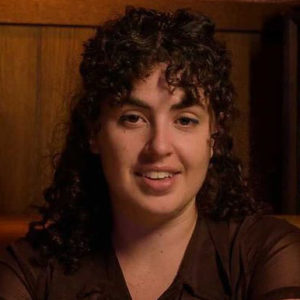
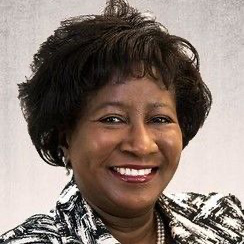
What the funge is up with crypto? On this episode, Neil deGrasse Tyson and comic co-host Marcia Belsky talk about the science behind cryptocurrency, NFTs, bitcoin, and the blockchain with electrical engineer Dr. Sandra Johnson.
What the heck is blockchain? We dive into the technological foundation to all these crypto-crazes and how the blockchain really works. What is bitcoin? What is a ledger? How do you mine bitcoin? Is it like mining gold? What’s going on???
What’s going on with NFTs? What does it mean for something to be fungible? We explore how blockchain may change the way humans interact in the future and if there are any applications beyond cryptocurrency and NFTs. Can someone hack into the blockchain?
Is it possible for all the bitcoin to get mined? Could blockchain be the basis of an intergalactic currency? We think back to when paper money took the place of gold and precious metals. How can someone invest in crypto ethically? Find out about the environmental impacts of crypto and what sort of energy it takes to generate. What does it mean for cryptocurrency to cost anything? All that, plus, how do we prepare for a crypto future?
Thanks to our Patrons Thomas Cochran, Tony Wilson, Rachel Farrell, Casey Bailey, AIDAN BARNETT, Sahil Gupta, and Jennifer for supporting us this week.
NOTE: StarTalk+ Patrons can watch or listen to this entire episode commercial-free.
Transcript
DOWNLOAD SRTWelcome to StarTalk, your place in the universe where science and pop culture collide.
StarTalk begins right now.
This is StarTalk, Neil deGrasse Tyson here, your personal astrophysicist, and it’s a Cosmic Queries edition on a subject that I don’t know a damn thing about.
Blockchain, cryptocurrency, we’ve heard about it, we’ve seen it, and I count myself among the profound ignorant to that subject.
So we had to do a show on it.
I have a new co-host.
Oh my gosh, Marcia Belsky.
Marcia, welcome to StarTalk.
Thank you so much for having me.
I’m excited to be here.
I am also very ignorant of cryptocurrency.
And when people have tried to explain it, I mean, I’m not even good at the basic finance stuff.
So this is like next level.
This is I’m in I’m in Ph.D.
and I haven’t gotten my undergrad, but I’m going to try.
Actually, so you’re a stand up comedian, a musician, a writer, and you had a hit song recently that’s just completely crazy, just completely.
It’s called 100 Tampons.
We’ll get you to explain it later.
But with a title song like that, you know, we need we’re going to need an explanation.
Yes, you got it.
And it’s space related and space related.
That’s what makes it even better.
So let me introduce our expert here.
It’s since neither you nor I, Marcia, carry that that expertise.
We have got Dr.
Sandra Johnson.
Sandra is the founder.
Let me check out my notes.
It’s founder and CEO of multiple companies.
Her day job currently is Global Mobile Finance, Inc.
which is a FinTech startup company.
She’s got multiple degrees in electrical engineering and has 40 patents.
Is that more than 40 patents pending?
Is that right?
Issued and pending.
OK, thanks for that.
And you’re also a visiting scholar at North Carolina A&T.
Sandra Johnson, welcome to StarTalk.
Thank you very much, Neil.
It is certainly a pleasure to be here.
I look forward to having some fun.
Excellent.
And part of your background takes you through IBM in Africa.
So what was that about?
That is correct.
What happened there?
That is correct.
Well, you know, 26 plus years at IBM and after about, I don’t know, 22, 23 years, and I was thinking about what I wanted to do next.
I actually went on a trip to Africa and had a eureka moment when I visited a slave castle in Ghana.
And it was through that experience that, you know, I found my purpose and destiny, and that is to focus on leveraging my technical skills to help the people in Africa.
So I then went looking for opportunities to do that with IBM, ended up spending three years in the Middle East and Africa, two years in Dubai and one year in Nairobi, Kenya, but all three years traveling throughout the Middle East and Africa, primarily Africa, visiting more than 22 countries, many of them several times.
And so I was the CTO of IBM Central East and West Africa.
It sounds like we can create four other shows based on your life experience.
But we have to like be selective.
And so right now we’re going to be thinking about cryptocurrency.
We solicited questions from our eager fan base, our patrons, Patreon members.
And just tell me, Sandra, what got you into cryptocurrency?
Well, I’m always like to always be aware of and try to learn about emerging or leading edge or bleeding edge technologies.
Yes, bleeding edge.
So a few years ago when blockchain was just starting out, I started talking to people about it, reading up about it, learning about the technical details, and then it just really took off in terms of hype.
And so I sort of rolled the wave in terms of keeping myself abreast from a knowledge perspective of what blockchain is all about, what cryptocurrency is all about, even thought about leveraging it in my fintech startup as well.
So is the first question we ought to, Marcia and I ought to be asking is, what is blockchain?
Yes.
Is that the entry level, like kindergarten, preschool question?
Since you were in, since the old stuff, you’ve been listening to them since the old records.
Like you were in before everybody knew it was cool.
Yes, yes.
So what is blockchain?
What is cryptocurrency?
What’s the difference between the two?
So blockchain, I think of it as the foundation, the technology foundation to get things done.
It is really, I’m sure all of us are familiar with, well, maybe not all of us, all of us older folks, are familiar with what’s called a ledger.
You think about a black bank ledger, where you put entries in the ledger, in the ledger.
What blockchain is, is you can view it as a distributed ledger.
It’s an electronic ledger, but it’s a distributed ledger.
And each entry is what’s considered a block, if you will.
And that block essentially contains a list of transactions.
And so a blockchain is essentially a chain of blocks, which is essentially a distributed ledger that, if it’s public, anyone can read anything that was ever written on that blockchain, that link of ledgers.
And once it’s placed on the blockchain, it’s immutable, it cannot be changed.
And so in the essence, that’s what a blockchain is.
So what is it?
Compared to a ledger, so it seems so far from what you described, the only difference is everyone can see it.
It’s unchangeable, as most ledgers really should be.
And it’s distributed.
So now what?
Anyone in the world can see it.
There’s no centralized mechanism for it.
So that’s what I mean by distributed.
So you’re removing the banker.
Right.
Right.
In fact, you know, step back just a little bit of the history behind this.
The first black chain was the Bitcoin black chain, which is Bitcoin is a cryptocurrency.
And I’ll talk about that in a minute.
But it was the brainchild of this individual or group of individuals that we don’t know.
They wrote this white paper.
The author is Sakoshi Nakamoto.
We don’t know who he or she is at this point, but he wrote this white paper that is this paper describing this idea of having a currency that’s independent of companies, you know, and it came right after the recession in 2008.
Right.
So, you know, it was a financially based recession.
So it came up with this idea.
How can we come up with this currency that’s independent of, let’s say, a central bank?
And so that’s not only independent of a central bank, independent of a country.
Yes.
Okay.
Yes.
And so that was the basis for the Bitcoin blockchain that was then created in January 2009.
So it’s been 13 years.
But again, it’s the foundation.
It’s a distributed ledger where you put information about transactions that anyone can access.
And it’s unchangeable.
I have to check.
I got to check with Marcia at intermittent moments.
So, Marcia, have you heard enough yet to be paid in Bitcoin for your stand up acts?
I mean, absolutely not.
But not because I don’t trust it.
Only because I’m fascinated, first of all, but also I’ve never felt more stupid in my life because I’m realizing I think I’m not almost and not there are other people in my generation where this is probably different, but I’m realizing that I’m a millennial.
I’m 32.
So I’m in the exact age where I don’t actually really know what a ledger is.
They didn’t really teach us any financial literacy in school.
I don’t really know how banking works.
It’s always mostly been like when I was a kid, I remember they taught us how to write checks, but they didn’t teach us any of the deeper stuff.
And I’m also not Gen Z and younger who knows all about the Internet.
You know what I mean?
So you’re just dangling there.
You’re dangling over the crevasse.
I’m dangling in the cosmos.
I’m like, but it’s so fascinating to me because I can see now, because people have been long.
What I have heard talking about cryptocurrency as a way, like you said, to work outside these establishments.
And I that never made any sense to me, but that’s I’m starting to see how and why that is.
But just to alert Sandra, what it means is some people are not being helped by your analogy to a ledger.
No, but most people probably are, because people my age are probably listening thinking like, no, I know what it is.
She’s just an idiot.
But OK, that’s OK.
OK, so I was checking in.
I would check in with Marcia to make sure we’re we’re on the same page.
I’m like the person that should put in the Olympics next to Michael Phelps to show how fast he’s actually swimming.
I’m how dumb people actually can be on this.
OK, so Sandra, continue.
So I’ve discussed at a high level what blockchain is, which is the foundation.
Now, let’s talk about crypto.
And I’ll use it as an example, the most successful, the most popular cryptocurrency, which is Bitcoin.
And so essentially, without getting into a whole lot of gory detail, Bitcoin was created to incentivize people to add blocks to the blockchain.
It’s a global chain of blocks.
The first one was created in January of 2009.
So every few minutes, a new block is created.
So how is it created?
Well, you have people that are called miners all over the world, all competing to have the next block to be added to the blockchain.
These are miners, not young people underage.
These are miners like coal miners.
People who are mining for gold, for example.
Like the seven dwarfs.
No, not the seven dwarfs.
They’re all miners.
Right.
And so around the world, they all have their own blocks that they have locally, and they all compete to be the next block in the global chain of blocks.
And how do they compete?
Well, they work with this very complex cryptographic algorithm that they use.
I liken it to rolling the dice.
Right.
And they’re all rolling the dice, and one of them is looking for the double six.
Well, they’re all looking for the double six.
But the first one to get it is the winner.
Okay.
And the prize is you get your block to be added to the blockchain, but you also get Bitcoin.
And that’s how Bitcoin is created.
So you get 12 and a half Bitcoin.
Initially, it was 25 Bitcoin.
So now it’s 12 and a half.
You get 12 and a half Bitcoin if you get the double six.
How do you know who, how, who, how, Marcia, help me here.
Is it all luck?
It’s all.
How do you know?
I mean, dice when we think, yes, when we think of dice, we think of luck.
So, so, so I don’t have this algorithm.
Can I make my own algorithm?
And how do I know if I’ve landed on the double six?
They all, they all use the same cryptographic algorithm.
It’s a very detailed computation.
It’s an algorithm that’s programmed.
And they all are looking for a certain result.
They all know what that result is, right?
But only it’s very difficult to get that result.
You know, it’s double six is a lot easier than the, it’s a number that they’re looking for.
It’s a binary number.
256-bit binary number.
And they’re all calculating this algorithm that will give them a 256-bit result.
How do you know if you hit the number?
Because you know what the number is.
Just like you know what the double six is.
So they’re trying to find a way to get to that number using this algorithm.
Yes.
Yes.
And the first one to get the result, and the algorithm will use as input some of the data that they have on their block.
So they crunch numbers using the data on their block, and they’re all trying to get this result that they all know what the result is.
So this distributed ledger is a ledger of pathways through the algorithm.
You can say that.
Yes.
May I?
Is that allowed?
I don’t want to get over poeticized about it.
Because I don’t want to liken this to poetry at all.
It is and that it makes no sense to me.
In that way, they’re the same.
I’ve been sitting in class and the teacher is going, what do you think it means?
And I’m going, you know, you tell me.
So Sandra, what you’re saying is that the minors are, to borrow terms I’m familiar with, they are printing money.
Yeah, but it’s not printing, of course.
But yeah.
Digitally printing.
Yes.
You can look at it that way because the winner, the double six winner, the person who gets that actual result first is the winner and the prize is 12.5 Bitcoin.
So they are working for their pay.
Yes.
We got to take our first break.
But when we come back, I want to know what the hell NFTs are.
And I assume Marcia does too.
And right after that, I think we might have enough foundation to go to our questions.
Yes.
With our Patreon members.
So when we come back, more of StarTalk Cosmic Queries with Dr.
Sandra Johnson and my new co-host, Marcia Belsky.
Yes.
And when we come back, Cosmic Queries on Bitcoin.
Hey, I’m Roy Hill Percival, and I support StarTalk on Patreon.
Bringing the universe down to earth, this is StarTalk with Neil deGrasse Tyson.
We’re back, it’s StarTalk Cosmic Queries.
This one’s about Bitcoin and blockchains and all that stuff some people know everything about and everyone else knows nothing about.
And I think my new co-host, Marcia Belsky, and I are in the same camp.
And of course then we have an expert on it, Sandra Johnson, who’s got huge pedigree in the tech world, started companies, got patents.
And you graduated as a summa cum laude with highest honors in what subject was that?
In electrical engineering, yes.
Southern Illinois State, Batwood, Louisiana.
So this would have been, I don’t know how old you are, but if you go back enough, electrical engineering was the department that had computer science in it.
And so later on, computer science had its own sort of identity on a campus.
But that meant you were in at the bait, at the ground floor front door or that.
That is correct.
That is correct.
In fact, my PhD is also in electrical engineering, electrical and computer engineering.
Got it.
So that doubles that up.
Right, right.
So Marcia, what’s your PhD in?
Oh, well, I got my undergrad in sociology.
No, that’s good.
If you’re going to be a comedian, you need to know that sociology.
Exactly.
All the material on the stand up floor is there.
It’s just sociology.
Exactly.
But I am so lost on the engineering stuff.
But it’s fascinating to me because it makes me feel better that you also don’t know what she’s talking about.
I’m sorry.
No, you should feel sad for me.
No.
Because then it’s like Eilisa, I know it’s not just my intelligence overall.
It’s like we’re all just, you know, it’s just a new field that a lot of us don’t know about.
But it’s fascinating.
It really is.
It’s crazy because people talk about it so much online.
They do.
And I think most people just don’t know what it is.
It pre-occupies online chatter.
So Sandra, tell me, what are NFTs?
OK, so crypto currencies like Bitcoin, OK, and there are literally thousands of crypto currencies, Bitcoin, right?
And those cryptos are interchangeable.
That is, you can buy and you can use these crypto to buy or sell goods and services.
And cryptos are what’s called fungible.
That is, you can interchange them.
NFT is a non-fungible token.
That is something that you cannot exchange.
It’s a very unique unit of data.
You can compare it to, liken it to like a deed on a house, right?
There’s only one deed for the house, right?
It’s not interchangeable.
Well, an NFT or non-fungible token is very similar to that.
It basically has two parts to it.
This is all electronic, all digital.
It usually has a digital asset, okay?
And that digital asset associated with it, that digital asset has a certain value.
It’s like a piece of artwork, for example.
So an NFT is a unique unit of data that leverages technology to enable this digital asset to be placed on a blockchain.
And it can be bought and sold on the blockchain.
In the open marketplace.
But it’s a unique asset in the open marketplace.
Okay, so what you’re saying is this is…
So you turned physical objects, like if I own a Picasso, then I have that Picasso and you don’t.
And if you want to buy it, you come to me and pay money for it.
But that’s a physical object made of canvas and paint.
And you’re telling me you have…
There is this world out there now of digital assets that are the digital analog to my physical thing that I have a possession of.
You can think of it that way.
It’s not quite because the legal…
It’s so new, bleeding edge, that the legal focus has not kept up.
But just for our discussion purposes, you can view it as that.
Okay, so if you dumb it down enough, we can think of it that way.
Did I hear her right, Marcia?
That’s what she just said.
I think NFTs need better PR, because what you said makes sense to me, where it’s a token of…
Because what people on the Internet think it is, is people paying thousands of dollars for a photo of an ape that you could Google.
And it doesn’t make sense to anybody.
You know what I mean?
But your explanation as a part of these other two things, that makes sense.
So I think we just need better PR out there, explaining it to people.
So, Marcia, why don’t we go to our Patreon questions right now?
There may be enough foundation there.
So let’s check it out.
And tell me like their names and if they say where they’re from, I always want to know that too.
Okay, absolutely.
Yeah, let’s start with this one because you were talking about working at IBM.
So this is from Jelmer Vandervijk, which looks like a Scandinavian name.
And it says, Hello, Sandra and Neil.
I’m working in finance and my girlfriend is a blockchain developer at IBM.
Most of the blockchain talk is about cryptocurrencies and NFTs, but the technology offers a lot more solutions that will change our lives.
We would love to hear from Dr.
Johnson about how digital identity applications work on the blockchain and how they will impact our lives.
There’s a sociological question in a way.
Yeah, this is all very sociological.
So, Sandra, this is, you know, to just live within, you know, within the ledgers of tech geniuses or does this have real world consequences?
Oh, absolutely.
Absolutely.
I believe blockchain technology will change the way humans interact.
Long term.
Right now, there’s a lot of hype, but I think moving forward in time.
So to more or less answer the question, I’ll give you an example.
For example, an example in the supply chain.
You know, you’re a manufacturing company.
You manufacture something and you want to ship it somewhere.
You can actually use blockchain technology and put on the blockchain when it was manufactured, where it’s going and who’s going to pick it up, all of the details of that.
You can write a program, if you will.
That’s called a smart contract that gives you all of the details from A to B.
And then once you finish that digit and put it on the truck, that automatically starts a chain of events that now many times is manual.
Stuff get lost, you don’t know where it is.
But if it’s on a blockchain, you know exactly where it is at all times from putting it on the ship, from the ship reaching its destination, from it going from the ship to another truck and from the truck to the final destination.
Wait, Sandra, FedEx does that for me.
Is that a blockchain?
I know where my package is.
I know when the label was created.
I know who signed for it.
But if that got disrupted, it sounds like this could maybe fill in some of those gaps because we’re seeing all these problems.
That’s interesting because it works outside of those.
I still don’t get it, but I’m starting to.
Absolutely, Marcia.
You’re getting it.
Thank you, Professor.
Even with FedEx as partners, they may have their own separate databases storing information with blockchain.
Everything is there.
Everyone can go there and find out at the same time where everything is, nothing should be lost.
And you know, with FedEx, you lose things.
And all digital because a lot of companies I’ve worked for are not all digital.
So that blockchain is not currency.
That’s a blockchain of information.
Yes.
That’s why I remember I said initially blockchain is the foundation.
It’s a general concept.
Currency is different.
Okay.
So, do you foresee a day in the not so different future where all information transactions happen on blockchains?
Well, the overwhelming majority.
Wow.
Yes.
Yes.
I mean, think about if you’re buying a house, for example.
You know, you have to make sure that the owner is the owner.
You know, and you pay somebody to do that.
If you do research on blockchain, you don’t have to do that.
It’s going to all be there, for example.
Okay.
That’s one example.
And if you could just take that little thought and kind of extrapolate it to look at how we do things now and how we can do it if we had this centralized place where everything is placed, nothing is modified, and you’ll have access.
Could there be a comedic blockchain where they put funny jokes on it and then everybody, you’ll know you’ll laugh?
That you can never delete?
No, thank you.
I’m good on that.
But think about this.
If you have an NFT associated with your joke, that other people use it, you can get paid.
This is what everybody has been talking about.
This is the first time I heard about NFTs was somebody advised me to create an NFT from some of my material.
And I was like, I have no idea what you’re talking about, but thank you so much for suggesting that.
But people have made thousands.
I know some comedian made like thousands of dollars doing that basically.
And I don’t know how and I don’t know who, but.
People have made millions of dollars, particularly last year on this.
So for that, that’s like, I take a video of a set and I don’t want to release it for Netflix.
A sequence of jokes, a set.
Right, like a set, like a bit or like an hour of jokes.
Bit means something else.
Right, right.
Oh, right.
Different industries speak.
So a set is you getting up with the microphone and then sitting down and everything you did between those is a set, correct?
But so then it’s like the NFT would be the video itself that somebody then privately purchases so that they own that set that I did.
But they don’t own the material, they just own that video, which might be valuable if someone were like hugely famous or like if it were like, you know, like somebody huge, like if Amy Schumer did a set that wasn’t released and then somebody privately bought it.
Yes, I think, Marcia, I think you’re just about ready to teach the class.
But that is absolutely correct.
And I’ll give you some examples of some recent NFTs.
Major League Baseball, imagine baseball cards.
They’ve done that, made thousands of dollars off of that.
A year ago, December 2020, a 15-year-old teenager, you know, learned about this thing called NFT.
He’s an artist.
So he worked to put his artwork, created NFT and sell it on an exchange.
And as of December 2021, just last month, he’s made over a million dollars.
See, that’s where understanding this stuff would be so valuable.
Okay, so that’s right.
And by the way, just for fun, Melania Trump’s eyes, her eyes, has also been created as an artwork that she sold as an NFT online last month.
Wow.
Okay, so can someone hack into the blockchain and change what everyone is thinking is permanent?
It is highly unlikely that that will happen.
I will never say never.
You just did, but go on.
That’s why I said.
But it’s highly unlikely.
You can say, I will hardly ever say never.
I will hardly, hardly ever, ever say never.
But it’s highly unlikely.
It’s very difficult to do.
Well, it’s difficult now, but I mean, you know, with quantum computing.
You can always change the algorithms to make it more difficult.
All right.
So it’s, you know, it’s a Catch-22.
You have to explain Catch-22 to Marcia.
This is for her day.
What’s that?
No, we wrote that one.
I’ll give you that.
They taught us how to read, just nothing else.
We have time for one more question before we take our second break.
So what do you have, Marcia?
Okay, great.
Yeah, this one was interesting to me.
So this is from Richard L.
Sanders.
And it says, once all Bitcoin has been discovered, what will incentivize anybody to keep auditing the blockchain if they know doing so will not result in discovering any Bitcoin?
I like that question.
In fact, I like it so much, we’re going to take a break.
We’re going to pick it up at the end of that break, see what I did there.
So anyway, when we come back, more with Dr.
Johnson and my co-host comedian, Marcia Belsky on StarTalk Cosmic Queries, all about Bitcoin, blockchain and non-fungible tokens or tickets.
Non-fungible tokens on StarTalk.
So we’re back, StarTalk, third and final segment, Cosmic Queries, all about blockchain and Bitcoin.
We’ve got Sandra Johnson here, who’s one of the world’s experts on this subject and been at computing forever.
Sandra, how do people find you?
Are you on social media or?
I am on social media, yes.
What do they call you there?
No, sorry, what do you call yourself?
Dr.
Sandra KJ.
And how about you, Marcia?
How are we going to find you?
I’m at Marcia Belsky on Twitter, M-A-R-C-I-A.
I also have a TikTok, that same name, and then Instagram, it’s MarciaSky, S-K-Y.
MarciaSky, very nice, very nice.
And Marcia, you made headlines for this song about 100 tampons.
That’s just a weird topic to title a song and an album with, because you’re also a musician.
And I’m asking, I’m curious, because I knew it had something to do with space, but I don’t see…
I know that that’s true, but I don’t know why.
So could you please explain?
So the story is, the song is about the first American woman they ever sent to space named Sally Ride.
They tried to give her 100 tampons to take with her for a one-week mission.
And the story is…
So she technically never officially took them with her, but they gave her a bag of 100 tampons tied together by the strings, is how…
This is from her, an oral history, I believe.
And they basically said, is 100 the right number?
And she said…
Of course, how else would you connect tampons?
And see, the song is sort of about how even our rocket scientists might be a little blind when it comes to the lives of women.
And just about how funny it is, because NASA, you know, obviously, is still a pretty male-dominated industry.
And although there’s a lot more women than there was at the time even.
And they also designed her a makeup kit to take with her to space, because they figured that she would want…
In case you met aliens, the aliens.
Exactly, you got to look pretty for them.
And she basically said, no, thank you.
And so, yeah, I wrote a song about how, you know, remember when NASA sent a woman to space for six days and they tried to give her 100 tampons.
Or in that song, I say they gave her 100 tampons, because she never officially took them.
But in her oral history, they did try and give them to her.
And they said, is 100 the right number?
And she said, that would not be the right number.
And they’re like, right, because it’s too much, right?
But Sandra, speaking of space and alien encounters where apparently Sally doesn’t need makeup, could blockchain be the basis of a currency, an interplanetary, intergalactic currency?
Sure, just like it could be that blockchain, the actual crypto.
I’m sorry, crypto.
Cryptocurrencies.
Yes, just like it could be a basis for a global currency.
Yes.
Blockchain will see how the aliens study us.
And by the way, Marcia, actually, you can make a song in NFT.
Yes, okay, I can.
I’m going to have to message you about how to do that.
I’ll give you 50%.
So Marcia, just before we hit the break, there was a great question.
Why don’t you just read that real quick again?
Absolutely.
So this is from Richard L.
Sanders.
And he said, once all Bitcoin has been discovered, what will incentivize anybody to keep auditing the blockchain if they know doing so will not result in discovering any Bitcoin?
So you are assuming that Bitcoin exists to be discovered.
That’s what it sounds like.
Bitcoin is created to award a winner, which is a little different.
It’s not like it exists and then you get your little picks like a minor and go find it.
It’s not like an Easter egg hunt.
Right.
So it’s created when we have a new block.
Now, there is a limit to the number of bitcoins that will eventually be created, but it’s not like it exists somewhere hiding and you’re going out to look for it.
So it’s just you keep at trying to get that next block on the blockchain and when you get it, you get the Bitcoin.
So you said there are thousands of currencies such as Bitcoin.
And is there any limit?
Could there be a billion currencies?
And at that point, there is no currency.
That is correct.
What does that even mean?
Well, just like when there are not thousands of currencies, but just like there are different currencies, what’s called fiat currencies, that is what we know.
Paper dollars, for example, is a fiat.
There are different types of currencies now.
There are also different types of cryptocurrencies.
Thousands, actually over 10,000 right now.
So obviously, it’s going to be difficult to have a global currency with greater than 10,000.
Well, that’s one of the issues.
This is still bleeding edge.
So I think moving forward in time, that number will dwindle down.
For the most part, even now, most cryptocurrencies are not used to buy things.
People just invest in it, right?
Yes, you use crypto to buy NFTs.
That’s probably the most popular way crypto itself is used to purchase things now to buy NFTs.
Well, that makes sense because it’s the same species, right?
Right.
But moving forward in time, there will come a time where we will use crypto to just buy goods and services that we buy normally now using fiat.
And you can use a crypto to buy at some point in the future, not now.
It’s funny because…
I was just going to say there are some businesses that allow you to purchase their goods and services using crypto.
And there’s a website that you can go to that lists the different businesses and then the type of cryptocurrency that they accept.
I can really relate emotionally to the people that were living when dollars took over for golds.
And they’re like, I’m just going to keep my gold.
Thank you.
You know, like…
Oh, interesting transition.
Here’s this piece of paper.
Yeah.
And it’s like, why would I trust that?
And now we’re going from paper to digital.
And I think people are feeling a similar way.
That’s spooky.
You’re spooking me out here.
Okay, Marcia, give me some more.
See how many we can fit into this segment.
Yes.
So this question I think is interesting because there were a few questions about the environmental impact of cryptocurrencies.
So I’m sure you’re asked a lot.
So this says, hello, Dr.
Johnson and Dr.
Tyson.
How can someone invest in crypto ethically?
It’s something I’ve been interested in, but the environmental implications of the incredibly high energy use have kept me from getting involved.
And that is from Chris Plotz.
Why does this take energy at all?
Yeah, I’m curious about that.
Is it just turning on your computer?
The computational power.
It takes a lot of computational power.
The computer crunching the numbers.
It’s a very, very computationally intensive, which means it takes a lot of electricity to actually get to double six.
In other words, right.
And for some blockchains, it takes the amount of power, the equivalent of a small city, okay, just to do one transaction.
So it is computationally intensive, particularly the Bitcoin and the second most popular blockchain, Ethereum, with its ether cryptocurrency, very, very massive amounts of electricity.
Marcia, you got to admit, that’s a cooler name, Marcia.
You got to admit, right?
Ethereum is way, way better than Bitcoin.
We need a rebranding.
Now, there are other blockchains that have a different type of methodology to arrive at who the winner is, for example, that are not as computationally intensive.
Even Ethereum, although they’ve been talking about this for quite a while, is moving towards another type of algorithm that is not as computationally intensive.
Therefore, it will not take as much electricity.
They’re not there yet.
They’ve been talking about it for a couple of years.
So there are alternatives to Bitcoin and Ethereum that are not as intensive in terms of the amount of power it takes.
So if you want to be a green cryptocurrency, you create a solar panel farm that just drives the computer.
I mean, it’s a solvable problem itself.
Not all energy on earth comes from coal, right?
Yes, absolutely.
That’s another option.
So it needs to be sustainable.
Yes.
Okay, Marcia, keep it going.
Okay, so you were talking about why this work really inspired you early on.
So I think this is interesting.
It says this is from Lydia from the Netherlands.
She says, dear everyone, so that includes me, I guess, as someone who has almost no knowledge about cryptocurrency and NFTs, it scares me that these things are growing and that paper money would be something for the poor people.
Why does crypto have so much preference by so many people and how can I prepare myself for the future?
I relate to that.
Yeah, I would like to know.
Love that question.
Very important.
Once again, a sociological question.
Those are the ones I’m drawn to.
Exactly.
Yeah, well, the haves be crypto rich and the pours be paper poor.
What’s this going to look like?
Whatever it is will blame you.
No, no, no.
It’s not me.
I just know about it.
I don’t create it.
I just know about it.
But anyway, some cryptocurrencies are very expensive.
For example, Bitcoin, last fall, November, got up to almost $69,000.
It’s gone down now to about $37,000 or so.
Per cryptocurrency.
Yes.
So that’s very expensive.
But then there are others that cost much less.
So in terms of cost, it really depends upon the actual cryptocurrency.
You know, my view is that as we move forward and it becomes used more prevalently, the cost will go down.
So that will address the issue of cost.
I have a philosophical question.
What does it mean for cryptocurrency to cost anything?
Because right now, unlike the dollar, you can actually invest in cryptocurrencies.
Wait, but I will buy cryptocurrency with my American dollars.
You can do that, yes.
Or I can buy cryptocurrency with some other cryptocurrency.
You can do that as well, yes.
Okay, so if I buy with American dollars, the person who had the crypto now has my dollars and I have their cryptocurrency in exchange for it.
That’s correct.
But there might be a day where everybody only ever wants cryptocurrency to acquire other cryptocurrency, and so no one will want the dollar, and that will drop down the value of the dollar, won’t it?
Because if you go down the street, the homeless person, you hand them some coins or a few dollars, no, I want cryptocurrency.
Well, you know, the mayor of New York, the new mayor, said he wants to be paid in crypto.
People are kind of roasting him alive for it, to be honest.
Oh, right.
Because also, because when the Bitcoin is down, people were like, well, now this is like what Eric Adams says, paycheck is actually going to be this percent less than it, would have been, and I think people are just so, it has such a reputation as being for, in my mind, like white tech bros that I don’t think people understand that there’s like different people and like incentives working on this because I think a lot of the fear is like, these are just the top 1% making a new set of money for themselves.
But hearing you talk, it seems like something so much different than that.
Right now, because it’s still new, most of the people who buy crypto, Bitcoin, Ethil and others, they use it as a speculator.
They are speculating.
It’s just the Wild West.
Yeah, because four years ago, even though we thought it was high then, it was like 20,000, right?
So now it’s gotten up to almost 70,000.
So it’s speculation.
Yeah, that makes sense.
And you have to have a certain bravery to like, or a certain comfort level to do that.
Right.
I don’t know if we have time for another question, but I do.
Since I’m host, I can make time for my own question.
So, Sandra, so I, you know, I’ve been in computing for a while, you know, since high school, at least, and I’m old.
So I’ve seen the power of computing grow.
I’ve seen what, and particularly in astrophysics, there are categories of problems that are intractable at any given moment with what the computing power is at that moment.
And so we say, well, we need this extra power.
And then so new problems get solved as computers get faster and more efficient, as algorithms get more clever.
So why lock anything into, why lock an economy into something that’s fundamentally seems to me about the power of computing at that moment?
Because if in the future, computers are a billion times more powerful, what you’re telling me is what takes the whole power of a city.
Look at the computers from 1958.
They were entire rooms just to do four function math.
So why lock into something that seems to me to something is a moving target for the power the computers will bring to that problem?
Okay, so let’s go back to the whole how much power it takes to complete a transaction.
Much of that is because you have miners, remember them, all over the world.
So as we move forward in time, more and more miners are competing.
It’s taking significantly more computing power because of the bottleneck, right?
So as you increase the power of the computer, that reduces the power to actually do the mining.
Yes.
So increasing the computational power of the computer helps that issue.
I get that, but then now I have a computer that just finds every single Bitcoin there is, and I can do it this afternoon, and then I’m the richest person in the world.
I don’t think we’ll get to the point where, you know, the computer becomes more computationally intensive.
More miners are added, and, you know, it’s sort of a loop.
It keeps going, right?
More miners, more power needed.
You need more miners, more power needed, et cetera.
Okay, so Marcia, the comedy club owner who offers you Bitcoin, are you going to say, no, I want Ethereum?
I would, the problem is like, I would say no just because I still, it’s tough though, because it’s like, I take cash and stuff even though I probably would still need to hire an accountant.
But it’s like, yeah, I don’t feel that I’m on the bleeding edge enough to be able to do it.
But then it’s, you know, I think it’s like anything too.
It’s like, I’ve heard stories of, well, there was this one guy I really trusted.
He got me into Bitcoin.
It turned out to be like a bad investment.
And then I’ve heard stories of the exact opposite.
So I think that’s what keeps people afraid is the inconsistency of the, what’s it called, the reward.
But so it’s like for me, I still want my cash because I’m not at the point in my life where I can risk my paycheck being $2,000 less than it was supposed to.
But I can understand why somebody who is in the financial position to do that would do that because it could potentially have a great bigger future payoff, not just for them, but for their kids.
I think it’s like diversifying your portfolio in a way.
It would make sense to have stocks, have crypto, and also have cash, but you need to be at a certain level to do that.
So, Marcia, you have to confess though, you’ve come a long way, not you, you, but you as representative person in this conversation, you come a long way from the days when you might have just accepted a chicken for payment, right?
Yeah, exactly.
It feels so scary to me, but I’m seeing it in my head like that, where I bet it’s the same that people felt when we went from, you know, cowry shells to gold, from gold to whatever, but not for me, not yet, but I’m interested by it.
Well, Sandra, we’re going to have to do, we, this is, this topic is ever, ever growing.
We might have to do this again, do a part two, and you have to give us buying tips.
That’ll be the most popular StarTalk episode ever.
I made a million dollars.
All right.
You have the richest fan base.
I must say, I’m not a professional at this, so you’ll buy your own risk.
But there is one thing I do want to point out, though, Marcia and Neil, kind of alluded to the volatility of cryptos, but there are some tokens, if you will, crypto currencies that are stable.
They’re called stable coins.
And these are associated with a physical kind of entity.
For example, there’s a USD coin.
It’s a crypto, but it’s backed by the US dollar, right?
Dollar for dollar.
The same thing with gold or diamonds.
So there are stable cryptocurrencies that you can actually hold.
And many people, they have these stable coins, and then they use them to buy the volatile cryptos, and they go back and forth, right?
You know what this sounds like to me, Sandra?
When Apple first came out with their Macintosh, and they had the windowing system, if you had a file and you wanted to save it together with other files, you put them in this icon on your screen that looked like a folder.
It’s not an actual folder.
It’s a virtual folder.
And then you throw something away.
There’s a little trash can.
So they try to emulate your office environment into the space that you are operating on for comfort levels.
I guess.
And I make special note that in recent Macintosh updates of their system, their icon for their mail, which used to be a stamp, is now just an envelope.
Both of those are still kind of archaic, but especially a stamp.
Generation Q, or what’s the latest, Z, whatever.
They’ve never licked a stamp in their life.
So like, what is that?
So anyway, we got to call it quits there.
Great to have you both on StarTalk, both for their first time.
Newbies.
Very, very excellent.
I love seeing some new blood flowing through the rivers of scientific enlightenment.
Okay, got to go now.
Thank you so much for having me.
This was so fun.
And it was such, it was so great to hear you talk, Dr.
Johnson.
Thank you.
Excellent.
Yeah, it’s been a pleasure, Marcia.
Call me about your song.
Oh, I will.
The 100 Tampons.
Don’t miss it.
The 100 Tampons NFT.
Be on the lookout.
There’s a YouTube of her singing it.
So this has been StarTalk Cosmic Queries, all about cryptocurrency with Dr.
Sandra Johnson and my new co-host of Marcia Belsky, who will never have you forget the meaning of 100 Tampons in space.
I’m Neil deGrasse Tyson here.
Your personal astrophysicist.

 Become a Patron