



 Unlock with Patreon
About This Episode
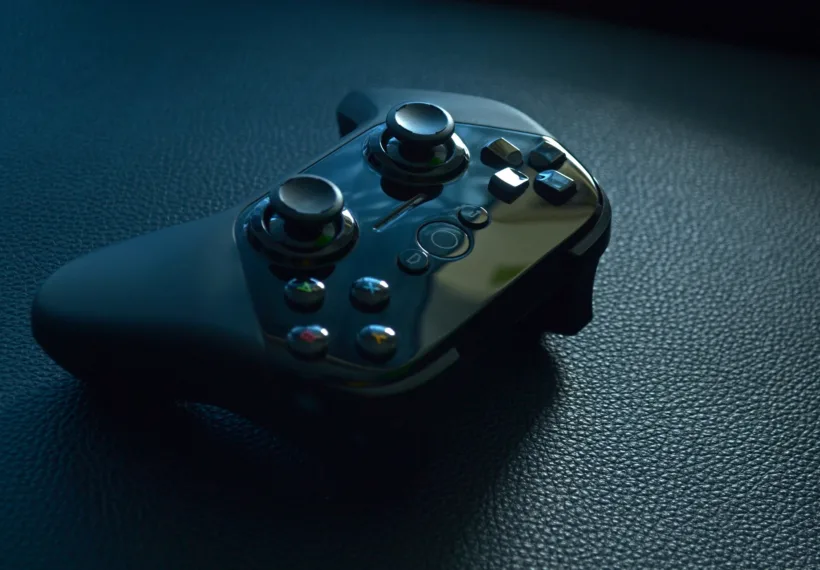
Do video games really turn your mind to mush? On this episode, Neil deGrasse Tyson and comic co-host Chuck Nice explore video games and eSports’ effects on the brain with neuroscientist Dr. Heather Berlin at PocketLab’s Science Is Cool Virtual Unconference.
Does playing video games change the chemistry of the brain? We break down the pleasure reward system in the brain and how gaming could end up being like cocaine for the brain. Learn about social facilitation and other effects that multiplayer gaming can have on our brain chemistry. Can you get PTSD from Halo? What does immersing yourself in virtual high stress scenarios do to your mental health? Can we tell the difference between a game and reality? Also find out how VR is being used to help veterans with ptsd. Does gaming help with hand-eye-coordination? Is socializing through gaming missing out on fundamental parts of human socialization?
What goes on inside the mind of a gamer? Can you get addicted to gaming? Discover aspects of addiction that may present themselves in gamers. Do video games really promote violence? Do we have the proper capacity to separate between what is real and what is play? We discuss gun violence and whether solutions lie in our approach to violent video games. Is there a way of using eSports to promote diversity, equity, and inclusion in our society? What’s it like being a female gamer? Should eSports be in the olympics?
Next we open up to audience questions: How does your sense of smell affect learning? Does the reward system in games undermine learning resilience? Does it give a false sense of encouragement compared to real life? Do games create apathy in players? What about real life consequences? If there is always an option to play a game, does the lack of boredom stifle creatively? All that neuroscience, plus, find out more about Chuck’s new invention “Smell-o-vision” on another episode of StarTalk!
Thanks to our Patrons Jeff Simon, Chazz Gencarelli, Anthony Mannetti, Mike Ness, Stephan Greenway, Jeffrey Burley, Nola Curtis, Joe Stoeckle, Peter Jacobs, and ellen porter for supporting us this week.
NOTE: StarTalk+ Patrons can watch or listen to this entire episode commercial-free.
Transcript
DOWNLOAD SRTLenovo is sponsoring Life with Machines, a new video podcast hosted by comedian and tech whiz, Baratunde Thurston, where he discusses all things AI.
Lenovo’s Smarter AI is your AI.
Personalized and easy to scale, Smarter AI delivers outcomes that matter most to you and your business.
With full stack AI hardware, software and service solutions, Lenovo is bringing the transformative power of AI to industries, organizations and people of all kinds.
Discover how Lenovo and Baratunde are using AI for good to power people forward.
Listen to Life with Machines, now streaming wherever you listen to your podcast.
The holidays bring the world together, and language can help us enhance our connections.
How will you be connecting with others this holiday season?
As the most trusted language learning program for over 30 years, Rosetta Stone immerses you in an enriching experience.
I’m learning and practicing Spanish with Rosetta Stone, so that I can say things at the holiday table and nobody will know what I’m talking about.
Things like, Estas terriblemente equivocado, which means you are horribly mistaken.
Start learning today with Rosetta Stone’s Lifetime Membership Holiday Special.
Visit rosettastone.com/startalk for unlimited access to 25 language courses for the rest of your life.
Available for a short time at rosettastone.com/startalk.
With incredible new features and upgrades, there’s never been a better time to armor up and play the critically acclaimed action RPG Diablo 4.
Get ready to continue the epic story in your battle against evil in the new expansion Vessel of Hatred.
As darkness spreads through the lands of Sanctuary, it’s up to you to fight back the encroaching corruption.
Read the benefits of massive updates to character progression, loot systems, difficulties, and tons of added activities.
Face off against new and iconic bosses, teeming with the spoils of Sanctuary.
Plus, harness formidable powers of the jungle with the all-new Spirit-Born class now yours to customize and progress alongside five other iconic classes.
Embark on the epic journey solo or with friends.
You’ll quickly understand why Diablo 4 has been called one of the best action RPGs of the last decade by PC Gamer.
Forge your own path through hell-torn lands of Sanctuary.
Get Vessel of Hatred, available now in the Diablo 4 expansion bundle, rated M for Mature.
Welcome to StarTalk, your place in the universe where science and pop culture collide.
StarTalk begins right now.
Welcome to StarTalk.
I’m your host, Neil deGrasse Tyson, your personal astrophysicist, and we’re coming to you in this moment live at Pocket Labs Science Is Cool Jamboree.
And we’re going to be talking about eSports, in particular, what’s going on inside the brain of those engaged in it.
And for that, I need expertise far beyond anything I carry.
And we’ve got a good friend of StarTalk’s called Heather Berlin.
She’s a professor of psychiatry at the Icahn School of Medicine at Mount Sinai, and she’s a neuroscientist.
So, in addition to that, we’ve got Chuck Nice.
Can’t do this without Chuck Nice, our in-house funny man.
Heather, welcome back.
Hey.
Yeah, you’re all in.
I’m all in.
Thanks for having me.
Always fun to be here.
Yeah, so just a couple of things.
The people who have sort of a, I mean, maybe just old parts, I don’t know, they have a biased understanding of eSports.
They think it’s like all eSports are just sort of shoot them up.
But there’s a huge range that goes from like online chess.
All right, that’s gaming and the Minecraft.
Nobody doesn’t love Minecraft.
And so what we’re going to try to do is get into the science behind what’s going on in the brains of people involved in this entire spectrum of sports, eSports.
So let me ask you, Heather, are you into any eSports at all?
Not at all.
I don’t know if that’s a PC answer.
But the truth is not at all.
Okay, so.
I mean, not as a pastime.
Not as a pastime.
I’m interested in it intellectually, yes.
My kids play some video games.
You study brain patterns, right?
So what is a brain pattern?
What does that even mean?
We look at activation levels.
So every thought you have, every feeling is connected to neurons firing in your brain.
So we’re trying to map that.
And we can use different neuroimaging techniques to look at what’s happening in your brain when you’re doing different tasks, one of which is playing video games.
So there’s been studies which look at what happens in people’s brains when they’re playing different types of video games.
And like you said, there’s a whole variety of different types of games that have different types of effects on the brain.
Okay, so when you say an effect, so what if it lights up, all right?
If I do anything, part of my brain lights up.
So does it also, because it’s sending electrochemical signals, but does it change the chemistry of the brain?
Ultimately, yes.
If you keep activating certain neural pathways, over time you have something called neuroplasticity where they start to change their morphology and they can fire more quickly together.
So yes, you are changing the pathways in the brain.
And we do see some of these changes in activation patterns when people have been gaming for quite some time.
Well, what’s all this I’ve heard about the chemical dopamine?
Yes.
It’s a little weird because it has the word like dope in it.
So, good or bad?
I don’t know.
It could make you dopey.
So that’s sort of part of the neurotransmitter system that’s involved in our sense of pleasure and reward.
And so in addition to having-
No matter where that comes from then?
No matter where it comes from.
So it could come from drugs, it could come from physical, other kinds of physical pleasures, and gaming, food as well.
So any kind of pleasure that we experience, you’re going to see some activation of, you’re going to see release of neurotransmitter in the brain, the neurotransmitter dopamine in particular.
So Chuck, did you play any e-sports?
Do you have a favorite game?
It’s called Real Life.
That’s the e-sport that I play.
I play this game called Real Life.
And what you have to do is you have to figure out how you’re going to pay your mortgage every month.
Well, when you pay it, you get some dopamine, right?
When you pay it, it feels real good.
You get a little dopamine shot when you pay it.
Right.
And if you don’t pay it, they come and take you to PS5.
So here’s something, Heather.
Go on, go on.
No, I was going to say when Heather was talking about dopamine, from what I have read, dopamine is what your brain is flooded with when people do cocaine, chiefly.
So are video games the new cocaine?
They can be depending on how you use it.
I kind of think of it a bit like wine.
When you consume an unreasonable doses, doses that can be good for you at the right age, but too much and it can become a bad thing.
It could be like sort of cocaine for the brain if it’s not done in the right way.
So is there a difference when I think of gaming?
I think more broadly, of course, this whole session today is about e-sports, but if it’s sports and you’re competing and you win or you don’t win, and the other word for that is lose.
If you solve a puzzle all by yourself and then you triumph, or if you play a board game or if you play a video game, is there a common chemistry to the winning feeling of any of those?
Yes.
So winning, whether it’s a solo activity, whether you’re solving a puzzle on your own or a math equation for that matter, will give you a little bit of a hit of that dopamine, a little bit of pleasure.
When you’re playing with other people and there’s a competition element involved, you not only get the dopamine, but you have other parts of the brain that are being active.
Things like looking at socialization.
So it might be more motivating.
So there’s something called a social facilitation effect, where if you’re doing any kind of task and others are, the mere presence of others can enhance your performance.
However, if the task gets really complex, you might have a social inhibition effect, where others being present can actually compromise your performance.
So again, it’s a fine balance.
Everything that happens, you’re calling an effect.
So if it’s good, that’s an effect.
If it’s bad, that’s an effect.
So if everything that can happen, you have a name for it, what does that mean?
It just means that’s what science does.
We try to name things phenomena that we observe.
It means you’re affected.
That’s what it means.
It means no matter what you do in video games, you are affected.
If I play enough Halo and Call of Duty, can I actually get post-traumatic stress disorder?
Oh, interesting.
If I’m constantly in these like almost, especially if I play like a VR game, if I’m constantly immersed in these high stress, which by the way, my impression of everybody playing a first-person shooter, online streaming with teammates, this is them, sitting with the game and then go, oh, garbage, garbage.
Okay, so they’re into it, they’re totally in it.
They’re totally into it, but could that have the effect on you of like seeing real battle?
So this is the thing, there’s part of your brain that is able to distinguish reality from being in a virtual situation.
And most of the time, you can make that distinction.
There are certain people with different disorders where they have more trouble distinguishing their imagination from reality.
Those are people like schizophrenia, for example.
But actually, it’s the converse.
We are now using as part of therapy, something called exposure therapy for people with PTSD, virtual reality settings.
So for example, if it’s people coming back from Iraq, Iraq War, they have a virtual reality of the desert scene and what it would actually feel like being back in Iraq, we give them a fake gun and actually re-expose them to those experiences, but do it in a way where they can re-associate it with more neutral feeling.
So it’s not so intense.
It’s sort of a more modified version of it.
But they need to, instead of avoid it, to kind of re-experience it and re-map those pathways in a more neutral environment to actually help heal some of the symptoms of PTSD.
So it depends on how it’s being used.
So a couple of other things before we get even deeper into that part of it.
Most modern video games and e-sports involve hand-eye coordination and reflexes.
So are reflexes something you’re born with or can you improve them by this kind of activity?
You can certainly improve it.
So there’s a lot of controversy in the literature about are these games good for you, bad for you, what are they doing to your brain?
We certainly observe a number of positive effects, one of which is it helps improve hand-eye coordination, which makes sense.
You’re constantly doing this task.
If you were playing tennis every day for five hours a day, that would help that whatever larger limb coordination.
But this really does help that.
You know what else is done, Heather?
What?
You know what else is done?
I’m an old fart when I grew up.
And there was a saying, if you were clumsy, you were all thumbs.
And today the thumb is such an important part of operating a controller.
If you tell an e-sports person they’re all thumbs, they’ll probably take that as a compliment.
They’re like, dude, thank you.
As a matter of fact, that’s my screen name, all thumbs.
The other thing it helps, though, with is attention.
So people used to think it’s going to make you more distractible.
It actually helps them refine their attention.
It helps with decreased distractibility.
It helps them be able to switch gears more quickly.
So there are certain things that they’re certainly having a positive effect on both behavior and the brain.
Because as I said, the brain is plastic.
So as it gets these inputs, it’s changing all the time.
My brain is not made of plastic.
Well, as in flexible, it is flexible.
We call it plastic.
Mine was plastic, but I melted it.
So.
Right.
So is there any difference between…
And this could go place right back into the classroom.
If there are games that are cooperation based, where there isn’t a winner or a loser necessarily, versus games where cooperation is not rewarded, where you’re sort of the single competitor.
Do we learn anything from that back in the classroom?
And what might be improved, the learning environment?
There are definitely benefits to having a cooperative environment.
I mean, there’s…
It’s usually a combination of competitive and cooperativeness, but it prepares kids for real life situations, how to negotiate conflict, if there is any.
It helps develop important life skills like empathy, right?
And, you know, so there are certainly benefits from that.
There are also drawbacks if people have sort of social anxiety, if they have maybe issues with self-esteem, the increased pressure can have a negative effect.
So it really depends on the individual, but overall, the benefit of working with others and teamwork, you know, it activates so many different parts of the brain and so many skill sets that we need to function adaptively in life.
And how about face-to-face socialization?
Like, a lot of gaming is done online where sometimes, I mean, you have no idea who you’re playing with.
You’ve never seen them.
I’ve actually been to meetups where people are meeting for the very first time.
One is from Texas, one is from California, one is from Michigan, and they’re all here in New York City for something, and they all meet up.
But when they meet up, they’re like friends, but they really don’t have any true personal socialization.
Is that good?
Is it bad?
No, the gaming…
Wait, Chuck, the gaming, why is there socialization?
That’s an aspect of social…
I mean, why is that any different from meeting in person other than it’s electronic through a game?
It’s just a different mode.
But I can touch you in person.
But I used to be able to hug you and have actual contact.
So that’s what I’m talking about.
I’ll tell you what’s missing.
Yeah, a couple of things are missing.
One is olfaction, smell.
That has a huge impact on how we interact with each other.
That’s happening unconsciously that we’re missing out on.
Yeah, that might be a good thing.
You don’t know the people I know.
That might be a good thing.
You don’t want to smell them, that’s what I’m saying.
But there are studies which we’ve done which show that you can pick up on people when they’re stressed just based on their odor and that enhances the empathy network in the brain.
So, we’re missing some of that.
Touch, touch.
That’s just a new app that sends out an odor, you know.
You just spray it and it sniffs, we sniff empathy, stress, everything.
Oxytocin.
Computers didn’t used to have video cameras built into them.
Now they do, okay?
So, now you have a smell, smell-a-vision as part of it.
That’s a new invention.
Somebody out there invent that.
That will never work with gamers.
They’re only going to send one smell to everybody and he who smelt it dealt it.
That’s it.
You denied it, supplied it.
I’m sure all of the teachers out there are very much appreciating this high-level conversation on who you smelt it, does it?
Listen, we’re just being honest.
The top lines in the world.
Yes, yes, yes.
I agree.
But there are things, we evolved evolutionarily speaking to have these certain signals when we are physically present that we are missing out on.
Also, let’s not forget anonymity.
I mean, I’ve heard about what some of the conversations on call of duty in these group chats and they can be pretty vulgar and people will say things that they probably wouldn’t say to each other in real life.
So there is something about a cloak of, you know, Oh, I could just do media.
Yes.
Okay.
Yeah.
I can just shut off and disappear and not have to deal with the aftermath of whatever I’m doing or saying.
So, you know, as I said, just as there are positive social impacts of this, there also can be very negative ones that we don’t want to forget about.
Yeah.
And what about people who might be on the spectrum, where a one-on-one interaction is not ideal, but a machine interaction is perfect?
For those people, it’s really been helpful.
And I’ve even seen with patients who have social anxiety.
And then we moved to the Zoom world where they’re interacting via the screen and they’re much more comfortable that way.
And it actually allows them to be social, whereas otherwise their anxiety would block them from doing so.
Right, so I’m not going to be like old-timer on the porch saying, my day we interaction was living, we blah, blah.
No, I’m not going to do that.
Did I remember, but what is this?
When the telephone was invented, people were-
You remember that, you were around.
Because you had to show up on their doorstep to say hi.
Now you could just call them up.
In fact, the word to call, the phrase to call someone meant to show up at their front door.
When Alexander Bell came out with this newfangled device, the word call took on a whole new meaning.
I’m not going to be the old timer, say we had to do it my way the way I grew up.
No, let this be a whole other way to do it.
Let me ask you, you do realize when you said, I remember the telephone when it was invented.
You didn’t say that line.
It’s similar like Alexander Graham Bell said, Neil, come here instead of watching.
Sorry, I remember reading about the phone when it was invented.
Let me just make that clear.
We’ve got to take a quick break, but when we return to Pocket Labs live streaming of StarTalk, our discussion with Professor Heather Berlin on what’s going on inside the mind of an E-gamer.
Experiences make life more meaningful.
And with MasterCard’s priceless.com, you can immerse yourself in unforgettable experiences in dining, sports, art, entertainment and more in over 40 destinations.
From a round of golf with a legendary player to a cooking class with a celebrity chef, you can fuel your passions and create lasting memories.
Explore experiences today at priceless.com exclusively for MasterCard cardholders.
Terms and conditions apply.
Lenovo is sponsoring Life with Machines, a new video podcast hosted by comedian and tech whiz Baratunde Thurston, where he discusses all things AI.
Lenovo’s Smarter AI is your AI.
Personalized and easy to scale, Smarter AI delivers outcomes that matter most to you and your business.
With full stack AI hardware, software and service solutions, Lenovo is bringing the transformative power of AI to industries, organizations and people of all kinds.
Discover how Lenovo and Baratunde are using AI for good to power people forward.
Listen to Life with Machines, now streaming wherever you listen to your podcast.
If you’re ready to elevate your driving experience, the first ever Kia K4 is worth a closer look.
It combines style and performance with a sleek futuristic design, featuring StarMap LED headlights and an available panoramic display for unforgettable looks.
SiriusXM comes standard in every Kia K4, bringing you closer to what you love.
Plus, with an available 190 horsepower turbocharged engine, the Kia K4 delivers everything driving enthusiasts crave.
Learn more at kia.com/k4.
Hey, I’m Roy Hill Percival, and I support StarTalk on Patreon.
Bringing the universe down to earth, this is StarTalk with Neil deGrasse Tyson.
Welcome back to StarTalk, the science of gaming, the neuroscience of gaming.
I’ve got Professor Heather Berlin right here in the house, a neuroscientist to help us through.
So Heather, I’ve seen people who cannot be pried away from their computers in their gaming sessions.
Can you get addicted to this?
Absolutely.
So we do see that and it’s even been, we call it video gaming addiction or disorder.
And it’s not about the length of time a person is on the game.
It’s really about, can they stop playing and how they react when being stopped, right?
So if you ever have a kid, they’re on a screen, you take them off and they start screaming and throwing a temper tantrum, that’s not a great sign, right?
But so it’s really about how much control you have over it.
And then also how it’s impacting your life.
If you’re doing it at the exclusion of other things in your life, if you’re neglecting, you know, your work, your social life, your relationships, it’s a problem.
But it’s really the ability to be able to stop or not.
And that’s the same thing with drugs and addiction.
I mean, maybe some people have tried cocaine here and there, we don’t say they’re an addict, but when they can’t stop and they want to and it’s interfering with their life, and then we even see withdrawal symptoms with gaming as well.
I’ve had to work with patients who are literally going to withdrawal.
They have headaches, they have anxiety.
So it can really be a problem, but it’s not for everyone.
It doesn’t mean everyone is going to get addicted.
When my son was in like eighth grade, I swear I went three days without seeing him.
And then one day he came out of his room and I said, Oh, what’s up?
The Internet’s down.
That’s right.
Now, how about this one that is always gets come up in Congress?
It comes up at family groups.
It comes up any time because, you know, America, the United States, especially, there’s violence in society.
And there’s a lot of sort of accusations bandied about about whether video games promote violent video games promote violence in society.
You said just a moment ago that we do have the capacity, very good capacity, to separate what is real from what is play.
But is there any further research on this?
Yeah.
So there’s been a lot done in this area.
And everybody can always find one or study that supports their particular idea.
But when you look at these meta-analyses, which are basically taking the congregate of all the studies, the vast number…
So that’s basically studies of studies.
Studies of studies, yes.
And what happens if you study those studies?
I don’t know what that was called.
A mega meta analysis?
But they do find overall…
Video games can increase aggression, but usually the effects are really small and it doesn’t have that big impact that we’re talking about in terms of people going out and shooting up a movie theater.
So in general, overall, it doesn’t really impact how people interact with the world, even though you might see these little up shoots of aggression just after they finish playing.
That being said, for people who are vulnerable or have an underlying psychiatric illness, some of it could trigger them.
It could be part of what triggers them.
But I think if you’re going to be placing tax dollars someplace to fight some sort of issue, I don’t think video games is really the problem.
I’d go more for the guns or psychiatric illness, actual guns or treating mental illness.
I don’t think the video games are really the underlying cause of what’s happening in society.
You have the example of Japan, for example, where gun violence is as low as it gets in the developed world, and as I understand it, there’s very high consumption of violent video games there.
Absolutely.
Also, they’ve done studies across the world as consumption of violent video games has gone up, there hasn’t been an equal increase in aggression, and crimes and all the rest does not correlate with that at all.
When you look at it anecdotally, it feels like it must.
Like I said, we see these tiny upshots, but it’s not really having the impact that people think it’s having.
You know what?
I’m going to say how my old phobia moment is that when I was coming up, it was rap music and rock and roll.
So they said that rap music is causing people to just like, guns don’t kill people, rappers do.
Like that was the vibe back then.
So it just seems like with each generation, they’re looking for a reason.
Grownups always need something to blame it on.
Right.
But this is the thing.
It’s like, yeah, that’s why I love science, because it goes against your intuitions and you have to follow the data sometimes.
And it’s said like, oh, it feels like this must be a cause.
But when you really look for numbers…
You have to follow the data all the time.
All the time.
I don’t know when it comes to who you’re going to marry and those kinds of decisions.
But in general, follow the data.
Yes.
Plus, let the record show, Chuck, that in fact, Heather is married to a rapper.
Oh, yeah.
She is.
So I did not follow the data at all.
Right.
Also, let the record show that Heather knows how to use electronic shocks to control a person’s mind.
Right.
So I thought out all the things.
They’re all hidden behind the curtain there.
That’s right.
Just to bring some of this to a close before we go to Q&A with Dave, is there a way to use eSports to encourage diversity, equity, and inclusion in society, if not sort of school activities?
Do you see a way that this can be a force of good?
That’s a great question.
And before you do it, can you speak to the fact that when it comes to video game competitions, there’s been a lot of talk and some of it I’ve witnessed myself, where the community kind of really comes down on girls who play, women who play.
So like, how do we overcome that in addition to what Neil said?
Yeah, yeah.
So I’m gonna take out a two part.
One is that I think just the gamification in general in education can have a real advantage, right?
If we can gamify things and we’re doing, and we and their studies have been done, which show the results, it really enhances learning and skill acquisition.
So coding.
I’ve seen a game that was created that was to learn calculus.
But when you gamify it and you have to like learn to figure out this thing to get to the next level, not only do people spend more time on it, trying to figure it out, they’re enjoying it, and they’re retaining the information better.
So it’s feeding a reward system then.
That’s what’s going on in there.
Absolutely.
And just the whole way the games have been designed to incentivize, we have to kind of pick and choose what’s really been good.
Some of the game makers want to get you addicted in some cases, but we can pick and choose the things that are working, and then kind of bring them into the educational environment.
And they can have really amazing results where people retain information better.
They’re more motivated to study.
So if you say go home and study these math problems, you know, oh no, I don’t want to do that.
Maybe I’ll spend a half hour.
But if you say just go home and play this game, and then they’re going to keep going back and try it again, because you know with games when you fail, you want to go back and try to get back to the next level, and you keep it until you get it, and then you move on.
And so I think in that way, gamifying education, we can definitely use it as a tool.
Still, we need teachers and we need socialization, but we can definitely make that part of the toolkit.
And then in terms of…
Heather, in my day, a gold star was enough.
That’s all that we needed.
Right.
Now you have to get to the next level of the kingdom.
But the other thing is that in terms of diversity, the nice thing…
I mean, as I said, the downside can be the anonymity, but you can have these avatars.
You can be anything online.
You can be a young girl who might have a low voice or whatever, and your avatar could be some big huge herculean kind of creature, and you can take on these different personas.
And in a way, it can take away these ideas of gender and skin color and ethnicity and all the rest, because you can be anything online, really.
And so then it might be purely just based on your skill set, if you’re in a game where you compete against other people.
So in a way, I think it might help.
Nobody’s discriminating against the Hulk for his skin color.
That’s true.
That’s true.
I can’t top that.
But we all, I think, also empathizing with other people getting into other characters.
There’s been studies where we show, for example, if my character, and to help with diversity, they’ve had like, if my character would be a black character, let’s say, interacting with the world, and they had, they’ve set up these sort of virtual realities where people would respond to me in certain ways, and I could feel what that feels like being in that avatar.
So in those ways, we can really use this to kind of get people to have some empathy for what it might feel like to literally be in somebody else’s skin.
So how did it feel to have all the other avatars called the cops on you?
It’s me and Mark on a Saturday afternoon.
That’s right.
In these parts.
No, but in these certain games, they actually created it so there would be a little bit of bias towards certain characters so you could feel what that would feel like.
And these games were specifically created to help people have an understanding of what it would feel like to be in a different ethnicity or skin color or gender.
And so the idea is that if we can use this technology to help with whatever the social psychological issues that we’re dealing with, it gives us an opportunity to do that.
And so for that, I think it could be really beneficial.
All right.
So before we go to Dave Baker, let me get a quick poll from the three of us or maybe send it out to the audience as well.
Should eSports be an Olympic sport?
Chuck.
I’m going to say yes.
And I will do so reluctantly, but I will say yes because I have a very newfound respect for eSport athletes because I interviewed a few of them who play on different teams for different games.
And I found out that they don’t just play video games all day long, they get up early.
They have these regimens where they start out with nutrition.
Then they have to exercise because all of these things actually help your brain.
And for them, it’s really about reaction times, and it’s really about being precise.
And that means you have to be focused and you have to maintain that focus at a very high level for a long period of time.
And that’s kind of like what sports is, it’s really mental.
So I’m going to say yes, it should.
All right, Heather, how about you?
Okay, I’m on the fence.
I think the same question can be asked of a number of sports that are, should they be an Olympic sport?
I didn’t ask about other sports.
I’m talking about people.
Okay.
So, if there is an obscure sport that nobody’s heard of and you want to put on the map or there’s countries competing against each other and you want to reward the, I guess, I am on the fence.
In my mind, I’m thinking that a sport is this physical, and maybe this is controversial, you know?
Maybe this is controversial, but, you know, this very physical activity that you have to perfect.
And if mental activities can be an Olympic sport, then we need to really open it up to everything.
I mean, is chess in the Olympics?
I don’t know.
I don’t think so.
No, it’s not.
I see.
If you open the gates, that’s a whole other place to be.
Right.
And so, yes, if we then open it up to other mental activities, which could even get us academics involved in the Olympics at some point.
Oh, we’re looking at mathletes now.
Look at you nerd.
That’s what I’m saying.
Look at you.
I was a mathlete.
I was a mathlete.
I’m not going to lie.
We also had an academic decathlon, where we had to compete in all these different academics.
So, could that be an Olympic sport?
I’m just saying.
So, we’re starting to…
Neil, Neil, I just changed my answer.
No.
Do you want to lose?
Is that what I’m going to say?
You don’t want to let us in?
Yeah, after hearing about mathletes and mental decaplones, I’m like, to heck with this.
I just feel like e-sports is on the border between the physical and the mental kind of thing.
And once you go over the edge, there’s no turning back.
Okay, so my answer is…
I’ve spoken to Chuck about this before.
I think the litmus test ought to be ancient Greece.
And you have to ask the sculptors who just finished sculpting the wrestlers, the…
The discus.
The discus thrower and say, will you now sculpt an e-sport gamer hunch over their console?
Right.
If they say yes to that, and then you put them on the side of Grecian urns, I’m good for it.
If no, I’m going with the Greeks.
However, Neil, however, based upon your criteria, all Olympic sports must be played naked.
Because that’s what’s on the side of a Grecian urn.
That’s true.
A bunch of naked dudes.
However, academics could then enter because, you know, the thinker, the thinker.
Oh, good.
If we’re going by sculptures.
Yes.
But if you, Heather, this position could be a whole game changer.
Yeah.
If you look at the body on the thinker, you know he’s thinking about going back to whatever sport he just got finished.
That’s true.
And he is still naked.
So there’s that.
He’s fully muscle.
Yeah.
Folks, we got to take a quick break.
But when we come back, more on the neuroscience of gaming.
If you’re ready to elevate your driving experience, the first ever Kia K4 is worth a closer look.
It combines style and performance with a sleek, futuristic design featuring StarMap LED headlights and an available panoramic display for unforgettable looks.
SiriusXM comes standard in every Kia K4, bringing you closer to what you love.
Plus, with an available 190 horsepower turbocharged engine, the Kia K4 delivers everything driving enthusiasts crave.
Learn more at kia.com/k4.
Time to acknowledge Jeff Simon, Chaz Gencarelli and Anthony Manetti.
Those are our Patreon shout outs to three people who are helping us make this show a reality.
Thanks so much for your support guys and anyone else listening who would like their very own Patreon shout out, please go to patreon.com/startalkradio and support us.
We’re back from the break, and for this last segment, we’re going to take questions from the audience of this live stream.
And the person who will bring it to us is the one and only Dave Baker, co-founder of PocketLab.
So Dave Baker, rescue us, please.
You know, you brought me in just the right time.
Hey, you know, there’s only-
Oh, no, Dave Baker is co-founder of PocketLabs, and he runs that stuff.
And he’s also a nice guy.
This is a good combination.
Dave, take it.
You’re all wonderful people.
And Chuck, you smell fantastic today.
I don’t know what it is.
Thank you, Dave.
I’m actually piping in Neil’s apartment to you.
We have some brilliant questions, so I want to dive into them.
Abigail Perkins asked, could the absence of…
From where?
Where are these people from?
Oh, I don’t know.
Abigail, if you put it in chat, we’ll find out.
Okay.
By the way, we have…
Abigail, please answer.
You’re from your mom’s womb.
We have 152 countries signed up to this today.
And by the way, thank you, guys.
You’re a big part of making this event a success.
So I want to say that.
Abigail Perkins asked, could the absence of smell be beneficial to learning inhibitions?
That’s our…
You know, I’m going to say no, because the more information you have, the more deeply encoded that information gets.
So it’s about making associations between things.
The more associations you can make between with an idea and other things that are connected to it, the more you remember it.
And so smell is one of those things that can unconsciously tag something that you’re learning in a way.
And taste is another one.
We call it one-trial learning, which, evolutionary speaking, makes sense.
If you eat something and then you get sick from it and you throw up, you’ll never go near that thing again.
And the same thing with certain odors.
You smell the milk.
The milk is not good.
I’m not going to touch it.
So smell is really important in tagging information.
So I would say probably not going to enhance it.
It might make it more less distracting, let’s say, when you’re learning something.
But I do think that when you add in emotions and other sensory information, it enhances learning.
Heather, when I was a kid, I grew up in New York City and I visited a Midwestern town for the first time.
And I said, something is not right.
Something is walking up and down.
It doesn’t smell like dog poop.
I know what it is.
This town has no smell.
And I realized that in New York City, you walk by an alley, okay, it smells of urine, okay.
And then you walk by a bakery and you smell bread.
You walk by someone and people and you’re closer to people in the street.
And so I took it for granted that I’m olfactorially alive in a big city such as New York City.
And it played right into what you’re saying there.
I can tell you this, though.
Neil is walking around a small town going, hey, do you guys have any bakeries that smell like urine?
These are two separate smells.
Oh, two separate smells.
Oh, okay.
But I can tell you this, there is also like everything else, everything in moderation.
So when I was pregnant, so it increases scientifically speaking, not just subjectively, it enhances your sense of smell.
And I knew that as a scientist, but when I actually experienced it, walking through the streets of New York, it was overwhelming.
It was too much.
And I couldn’t take it, especially in the summer when the heat just made all the smells and the odors that much stronger.
Dank is the word.
Dank is the word.
And I really was overwhelmed by this odor.
So that is to say when the smells are too strong, they can be distracting.
So if someone’s wearing really strong perfume, you know, sometimes it makes it can make it more difficult to concentrate or really bad odor as well.
So intensity of the odor matters as well as balance, whether it’s positive or negative.
Okay.
Dave, what else you got?
It’s a great answer.
Abigail was from Florida, from Boca.
Florida, okay.
This is from Jeanette Thomas.
I don’t know where.
We’ll find Jeanette, where are you from?
So there’s a lot of award games.
In fact, a lot of them are designed to kind of keep you, you know, keep you at an even pace and going.
Does that undermine the process of learning and resiliency or grit?
I don’t know if grit is in vogue, but resiliency, I’d say.
The fact that there are rewards with the things that you’ve…
Yeah, there’s a lot of times instant rewards, right?
I don’t think it does, because there’s also sort of punishers built in as well.
Because when you lose, you have to like, you know, I have a four and a seven year old, and when they don’t get past the level or something, they can get very upset about it, right?
So I think it does help.
It’s not only rewarding, you also have to learn how to deal with disappointment or losing points, right?
Or losing a life.
So they’re always intertwined.
But you know, the violence goes into that as well, just a little bit, because there’s these studies called the Bobo Doll Experiment, which was done by this researcher, Vandora.
It was about social learning theory.
And in these experiments, you had little kids watch a video of somebody else either punching a Bobo, the clown doll, and getting rewarded for it or getting punished for it.
And the kids would mimic the behavior of the model, depending on whether they were rewarded or not for their behavior, which is interesting.
So it’s not just about whether you’re doing something violent or getting a reward or not.
It’s looking at the connection between the behavior and the reward that’s gotten for that behavior or the punishment.
And kids do model that.
So it’s sort of an added element to all of this, if there’s a social aspect involved.
Let’s be honest, who doesn’t want to punch a clown?
Come on.
You can’t look at a clown without wanting to punch it.
Punch him in the big red nose?
That’s why he’s been punched before, that’s why he’s got a big red nose.
Wait, wait.
Dave, did Heather actually answer the question?
Wasn’t the question in real life, if you have to pick yourself back up and there’s no intermittent rewards to keep you going, do you get a false sense of encouragement in a game that you’re not going to get in real life?
Was that the question?
There, you can, that, so yeah, if you break it down like that, then yeah, there is a problem with kids, for example, my kids, I’ll say, can you clear up your room?
Well, what am I going to get in return will be the answer.
And I’m like, not everything, you don’t get a reward for everything.
And it really, yeah, what do I, what am I going to get?
I’m like, you’re getting nothing.
You’re getting not being yelled at.
Just clean your room.
What kind of mom are you?
But people can get acclimated to this idea that everything you do, you need to get a reward at the end of it.
And that can be problematic for people who don’t get rewards.
But that can happen with gold stars too.
I mean, before, when my daughters were young, they had gold stars on their refrigerator, right?
And those stars mattered to them.
But it’s also about the intensity of these.
So, it’s not just the reward, but how the duration, we look at duration, we look at intensity, we look at frequency.
And so, the kinds of rewards you’re getting in the video game because you’re so ingrained and it’s very, it really is perking up that dopamine system.
And so, when you’re getting these constant hits of dopamine, it’s like social media, you know, oh, I got to check my social media, did I get a like, did I get a like?
And so, it’s not a great pattern.
Rewards the way we did it in the old days, in the old times, you know, with those stars, or you have to earn enough stars to get a present at the end, was trying to instill this idea of a long-term goal that you build up to over time.
But here, it’s immediate gratification, and that can be dangerous.
You know, and there’s only a few more questions.
Can you squeeze in?
Okay, well, there’s a related one to this from Crystal Nailer.
Do video games, do they promote apathy?
It’s related to what you’re talking about.
That’s an interesting one.
I mean, only if you-
I think you can harm someone and there’s no real consequences to it.
You can crack up the car, you can drive off the cliff and you have three more lives, you know, or whatever, three more turns.
So yeah, that’s an interesting question.
Yeah, I think you can habituate to certain forms of, let’s say, violence and then you need more and more, just like with drugs, to get the same amount of stimulation.
So it can sort of feed into that where they need more to get the same level of excitement that they might have.
I used to play Super Mario Brothers and that was fun enough, jumping up and getting the gold little coin.
And now it’s like, you have to blow someone’s head off, right?
So I don’t know.
Not that that’s it, it was just then.
There was my Tyson’s punch out where you’ve got to punch them in the face, but I think the video games are becoming more and more realistic and you’re needing more to get that same level of stimulation and to keep people’s attention.
Well, so Heather, that’s a great topic.
This is a question from Melissa Goes and she asked, does long-term gaming cause you to need more intense games or longer gaming sessions to get the same level of work?
Like the game where Super Mario blows off Mike Tyson’s head.
And that’s not how, I mean, there’s addiction to like specifically opioids, that’s different, that works different, right?
There’s a physical, I believe.
But is this a physical?
No, it’s the same mechanism we call habituation.
So when you habituate, it’s like when the brain is getting the same stimulation over and over and over again, it learns to say, oh, that’s not something I really need to pay attention to.
Right?
It’s a little bit novel and you create a new baseline.
Yes.
You need more novelty.
The brain…
Dopamine comes from novelty.
And so once you’ve seen something over and over and over again, it’s almost like the intensity fades out and you need more to get the same novelty.
I mean, the same has happened with pornography.
People have talked about that as well.
Like you start with a little porn and then they need more and more and more to get to the same level and they can get addicted to porn in that way.
So it’s all the same neurocircuit just being applied to different behaviors.
And as long as you’re consciously aware of it and try to maybe take gaming breaks if you feel like you’re habituating.
And so that the novelty can come back again over time.
What you just described is the reason why I skydive without a parachute.
You’re pretty advanced.
I don’t know where you go beyond that actually.
Well, you can only do it once.
Yeah.
It’s the one time thing.
Okay.
So you’re done.
Basically you’ve reached the pinnacle at that point.
This thing that you’re describing as bad might have what got us out of the caves in the first place.
The urge to always do something greater, more novel, more interesting, if it were.
Absolutely.
But I think there is going to be a point at which we’ve created all the tools and the things that we need to survive.
And then that same mechanism that evolved to help us survive can also lead to our destruction if we’re not careful.
So over consumption, over eating, over all of it.
Same evolutionary drive.
But now that we have access to other resources, can actually push us into the other direction.
So I think it’s quite critical.
It’s like we have the capacity to eat as though we don’t know when our next meal will come.
That’s right.
Yet in the developed world, you’re never more than a few, you know, a meter away from a whole other meal in your refrigerator or someone brings it to you or someone brought it to the office or something.
And so yet we’re still responding as though you don’t know when your next meal is going to come from.
Right.
I mean, we have in-built things to crave sugar and carbohydrates because we would need those things to seek them out to survive.
And now we have these foods that are packed with extra packed with the sugars and the high fat and easy access to them.
And but the same old evolutionary mechanism, which can lead to obesity.
Right.
Dave, we got time for one or two more.
What do you got?
Well, okay, you know, I wanted to do more of this, more of a comment than a question, but you don’t need.
You’d be terrible in a lightning round.
I just thought I’d.
I know, I just feel Neil’s urgency.
He’s like, what’s the next question?
How many questions do we get to?
Maybe one on the, let me check the list.
He’s competing against myself.
How many can we get to?
Before the client time runs out.
I can totally.
One last question.
Dave, that’s all you get.
Okay.
One last question.
Let me see.
Let me pull from the list here.
I think it’s great.
We got the whole world on these call-ups.
This is great.
This is a great one.
This is Melissa Goes.
By the way, Melissa, early up front, check when you’re cracking jokes.
She commented, great intelligence has a great sense of humor.
So you got a fan.
Well, guess what, Melissa, you are just a person of impeccable taste and insight.
She has a great question.
So the lack of boredom stifled creativity.
Basically, you don’t have to be bored now.
I got my phone.
I could play a game.
I could call somebody.
Loves that question.
What a great question.
I love it.
In fact, Newton made great discoveries while he was holed up in his childhood home after he escaped London when the plague came through and they closed down the University of Cambridge and there he is alone at home.
Okay, and what are you going to do?
Oh, I think I’ll invent calculus or whatever.
Whatever he did in that period was quite productive because he had nothing else to do.
So look at his apple tree in his backyard.
So there you have it, people.
No matter what you did during the pandemic, you failed.
I thought to myself, as we started quarantining, I said, well, I got all these shows that can binge watch.
And I said, no, I want to be Newton.
I want to discover something.
And so I did finish the latest StarTalk book, Cosmic Queries, over that time.
So it was productive.
I just want you to say, Heather, I have to tell you.
Yes, but you didn’t discover, you know, gravity.
But that’s okay.
I mean, that’s okay.
That’s a tough crowd.
That’s a tough crowd, I’ll tell you.
Gravity.
I don’t know.
But, no, you were very productive, Neil.
You were very productive.
Gold star, gold star.
Gold star.
So I think it’s a great question because the answer is definitely yes.
Lack of boredom can inhibit creativity because when we’re talking about lack of boredom, we’re talking about distraction, being engaged in a lot of tasks, never letting your mind just rest and be into these flow states, into these, what we call the default mode network of the brain when we’re internally focused.
That’s when creativity arises.
Then you can do the thing that you’re, you know, you come up, Michelangelo comes up with this idea, make this sculpture painting, then he actually does it.
That’s the busy work, right?
But the initial spark of inspiration and creativity comes when you’re in these default mode, when you’re in the shower, when you’re going for a walk, when you’re not paying attention to anything in particular.
So, I would say yes, be bored.
Just call the Statue of David busy work.
Did you hear?
That’s what it sounded like to me.
Anyone can make a statue.
That was the idea.
Just call that busy work.
However, that’s a great compliment.
If the Statue of David is busy work to you, just imagine your brilliance.
I mean, I don’t even have to bother making the statue.
I just have to think about it and it’s done.
But yeah, I mean, being bored, letting your kids, it’s a long car ride.
Let them just look out the window.
Let them, after the boredom, it forces them to become creative and start using their minds to entertain themselves.
But you have to get through that.
Maybe not a car ride, Heather.
Maybe not a place where you’re trapped in the car.
But Heather, to your point, they only say, are we there yet?
Like in the first 10 minutes.
Later on, they don’t say, are we there yet?
Because I think they’ve got other activities.
You got to let them ride out that little rough spot.
Then once they do, they’ll get to the better place.
They don’t say, are we there yet?
Because the parent says, don’t make me come back there.
Don’t ask me again.
I swear, don’t make me come back there.
I remember my dad had a long arm.
It went all the way there.
Yeah, it’s no problem.
You get arrested for that slapping your kids, but back then, it’s not okay, I think.
It would all get slapped in the back seat.
Little slap, it’s okay.
Dave, thanks again for inviting StarTalk to your family, to your conferences, your celebrations of learning in science.
Heather, it’s always great to have you as a guest on StarTalk.
And, Chuck, co-host, dude, where would we be without you?
I always want to smile when I’m learning.
And I know if you’re in the room, that’s going to happen.
Thanks, man.
Thanks.
It’s always a pleasure.
In just this way.
So this has been a StarTalk PocketLabs edition, live streaming with its international community, with an international audience.
So, Dave, thanks to you and your entire PocketLab team for bringing us into your home.
And to the rest of the world, let’s just say we love you.
And we are so sorry about the last four years.
Only to the internet.
While we’re on the subject, just in terms of COVID, just keep fighting the COVID.
We’ve got a Delta variant out there.
If you have access to a vaccine, definitely avail yourself of that.
Otherwise, you will be unwittingly performing a biological experiment in unnatural selection by declining a vaccine that you could have had and then getting sick and possibly dying.
If you want to avoid that, because we’d like you in the audience here.
You’re better off in this audience than dead.
That’s all.
How’s that for a lesson, David?
That’s a great way to end.
Well, let me tell you, after that, I see the more you know, the more you know.
All right.
I’m Neil deGrasse Tyson, your personal astrophysicist.
As always, I bid you good luck.
If you’re ready to elevate your driving experience, the first ever Kia K4 is worth a closer look.
It combines style and performance with a sleek, futuristic design featuring StarMap LED headlights and an available panoramic display for unforgettable looks.
SiriusXM comes standard in every Kia K4, bringing you closer to what you love.
Plus, with an available 190 horsepower turbocharged engine, the Kia K4 delivers everything driving enthusiasts crave.
Learn more at kia.com/k4.




 Become a Patron