




 Unlock with Patreon
About This Episode
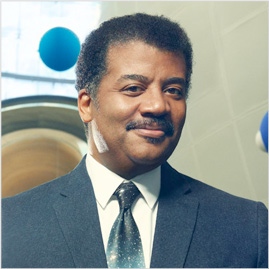
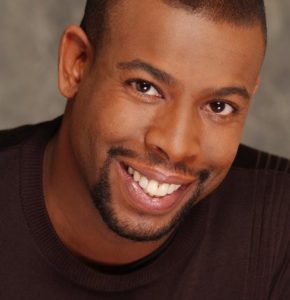
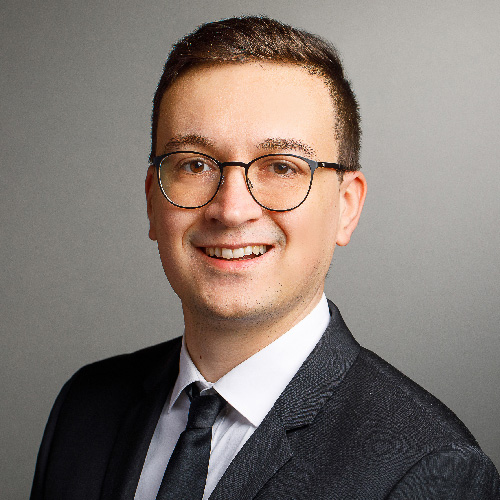
Can we bring people back from the dead? On this episode, Neil deGrasse Tyson and comic co-host Chuck Nice discuss restoring dead cells, the nature of consciousness, Frankenstein’s monster, zombies, and more with neuroscientist, David Andrijevic and consciousness expert and anesthesiologist, George Mashour.
If you can bring cells back to life, can you restore consciousness? You’ll learn about recent progress in the restoration of dead cells in pigs. How far along are we? Is “reanimation” the correct term for what was done? Could we one day bring a whole being back to life? We learn about the technology used in the experiment and the practical application of the methodology in organ transplantation. Is death more of a spectrum?
What is consciousness? George walks us through some of the fundamentals of consciousness and how we define it. Is there a scientific basis for a near death experience? We discuss the surge of electrical activity in the brain right before death and whether you can set a time limit for how long a brain can be dead. Can we explain consciousness? Is there a quantum element? We discuss Roger Penrose, and whether anesthesia uses quantum mechanics. Is consciousness reproducible?
Is consciousness an emergent trait? We discuss the nature of consciousness and how anesthesia works in making people unconscious. How does it make you unconscious without killing you? Are you the same person after you come to? We explore zombies and whether reanimating the brain in its entirety would be possible. Is there such a thing as an objective reality? Is our perception all in our head?
Thanks to our Patrons Darrell McClendon, Baby Daddy, Chip Towner, Marylee Dewey, and Michael Brockman for supporting us this week.
NOTE: StarTalk+ Patrons can watch or listen to this entire episode commercial-free.
About the prints that flank Neil in this video:
“Black Swan” & “White Swan” limited edition serigraph prints by Coast Salish artist Jane Kwatleematt Marston. For more information about this artist and her work, visit Inuit Gallery of Vancouver.
Transcript
DOWNLOAD SRTWelcome to StarTalk, your place in the universe where science and pop culture collide.
StarTalk begins right now.
This is StarTalk.
This is the Halloween show.
Chuck, always good to have you there, co-host.
Always.
Stand-up comedian and actor.
Acted like a comedian.
Oh, is that what that was?
OK.
Yes, it is.
So, today we’re going to talk about zombies, but in a more sort of analytic, scientific context.
We’re going to talk about ghosts.
We’re going to talk about re-animating putrefied life.
Or is that it?
Ooh.
Or just dead life, right?
If that phrase can ever even be uttered, such as what?
My Lord, by now he stinketh.
A little Lazarus reference thing.
Oh, is that what that was?
Yeah, yeah, you know, that’s…
Well, of course, I think that Jesus made the first zombie.
And people don’t even realize.
Oh my God.
He doesn’t get credit for that.
Jesus made the first zombie.
Chuck, you nailed that one.
There it is.
Yep.
There it is.
And that was before he became a zombie himself.
Well, there you go.
He was spotted in town after he rose from the dead.
Send your letters to Neil deGrasse Tyson.
Chuck Nice did not call Jesus a zombie.
So, anyhow, neither you nor I have any expertise in this field.
So we have two guests.
We’re going to start off with one first.
David Andrijevic.
I think that I pronounced your name right, David.
Close enough.
Close enough.
Thank you for having me.
Andrijevic.
Andrijevic.
Yes, actually, this was spot on.
Oh, God.
Andrijevic.
Andrijevic, your associate research scientist in neuroscience at the Yale School of Medicine.
So you’re coming to us from, I presume, New Haven, Connecticut.
Yes, yes.
Yeah.
And you co-authored a recent study.
And you managed to restore key cellular functions in the cells of a pig that had been dead for an hour.
Whoa.
Frankenstein pig is what that is.
Frankenpig.
But they didn’t have electrodes and, like, you know, a Tesla coil and…
They had no bolts in its neck.
No.
You had to throw your arms up and say, it is alive!
And then right afterwards you go, it’s alive!
It’s now bacon!
It’s not bacon.
Yeah, I need to disappoint you there.
Please straighten us out.
I mean, you know our imagination was just flying there.
So, what did you actually do, please?
Yeah, so it didn’t look as cool as you described, Al.
It’s basically what we’ve done is we developed this technology that is capable of restoring certain cellular functions one hour after that.
And how we achieve that is basically, and actually what makes this technology possible is two components.
So, one is a machine perfusion device, which is similar to those heart and lung machines that you hear about in clinics, sometimes called ECMO machines, which stands for extra corporeal membrane oxygenation.
I was going to say that, but I knew that.
It’s basically like a heart and lung machine, right?
And then we also made the synthetic perfusate, which is something sort of a synthetic blood, which we mixed with animal’s blood and restored the circulation first in order to achieve this kind of bringing cells healthy again, making cells healthy again and so on.
So you kind of created some blood, created a blood flow.
Sent oxygen to cells and thereby revived the cells themselves because that’s what they need.
You kind of fed them and then they kind of came back to life.
Exactly.
That’s the key.
So the key was to restore the circulation, of course, and for that we needed the machine.
And then also we developed this solution that has lots of different components.
For example, it has vitamins, amino acids.
It’s the chemistry.
Yes, exactly.
A drug cocktail, an oxygen carrier and so on.
And however, to reach out to those cells to restore their function, basically we needed the machine.
So they worked together to achieve our goal.
Wait a minute, David, are you saying you did not use the bolts of electricity?
Yeah, unfortunately.
The next time you do it, just fake the electricity.
Just fake it, man, because we need that.
We got to have that.
And also make sure that the roof of wherever you are opens up.
And that there’s a table that rises up.
And the moonlight.
You got to have this stuff.
You need the moonlight and the rising table.
I forgot about that, Chuck.
Yeah, you need the rising table, you need the moonlight coming.
You need all that.
Do it at night.
So the term we’ve heard is reanimation.
Is that a fair term for what you’re doing?
Because we focused on the cellular level.
So reanimation usually refers to other layers or levels of function, like a horror organism functioning.
So since we focused just on the cellular level, we wrote it like that.
We said we were restoring certain cellular functions and so on.
We wanted to keep it conservative, because we knew that everybody would think about zombie pits immediately.
Okay, so this brings the question.
An hour is sort of a nice, convenient amount of time, rather than just one minute or five minutes.
We all know people have been dead, or their hearts stopped for that time, and you zap them back to life.
So how much thought went into it being an hour, as opposed to three hours, six hours?
Twelve hours a day?
What sets your limits there?
And what is the level of cellular degradation at an hour?
That says, oh, we did something.
So those are both good questions.
I mean, one hour just sounds…
As you mentioned, it really has lots of implications if we can achieve it at one hour.
And also what we have discovered before in our lab and also with this study confirmed is that when cells die, it’s not like an instantaneous event.
It’s like a more protracted series of events.
And because of that, there’s this time window in which we can intervene, stop that process and restore the cellular function.
Not to put a word in your mouth, but what you’re saying is that the act of dying and death is itself a continuum.
Yes.
On the cellular level, definitely it is.
From my perspective, yes.
But see, that’s amazing.
It’s amazing.
We think of binary terms.
You’re either alive or you’re dead.
Or dead.
You’re not one third alive and two thirds dead.
So this could change the vocabulary.
This could change people’s awareness of what all this is about.
I’m on the death spectrum.
On the death spectrum.
So what this tells me is what you hinted at is different parts of the cell may die sooner than other parts.
And so the cocktail you feed it, plus the electricity just for show, the cocktail you feed it will have to know, you have to know what part of the cell needs reinvigorating at what time after death.
And that would presumably change as the minutes go by.
It’s like now science knows there’s just not one way for cell to die, there are so many different processes that can happen and cells can die in different ways.
So basically what we have tried to achieve besides of course restoring this environment for the cell to be healthy again and to restore its function, we also want to inhibit or stop these different processes.
And this is what we targeted with our drug cocktail.
So what are they?
I mean, I’m just trying to think of practical applications when this, let’s say, is fully developed.
Is this something where I kind of don’t have oxygen going to my brain for a long time and instead of being brain dead, you’re able to help me not be that?
Yeah, I guess what are the limits of this?
Yeah, we see where it’s starting.
Where can you take it?
So I think, like, well, brain is most susceptible to ischemia, to loss of blood flow, and it’s being notorious for that.
However, some other…
Just that word you used?
I like that word, ischemia.
Ischemia.
It’s like…
Ischemia.
Yeah, loss of blood flow, essentially.
Okay, thank you.
That’s a word.
Good.
And so what happens, like, we’re at the moment not sure how it will reflect all the other organs and, like, what the future will bring us.
But we hope that at least we can restore these vital organs, such as kidney, liver, heart, lungs, pancreas, even, that we have tested in our study, and that we can, by doing so, increase organ donor pool and use these organs for transplant.
To go that far and talk about brain recovery and so on, we’re kind of not sure to which extent brain can recover still, because it’s extremely susceptible to ischemia.
But maybe some other organs might work.
So we just hope that this will increase the organ donor pool, basically.
Well, no, you could end up saving so many lives because you’re extending the life of an organ.
Right.
So that gives it more time to reach the person who needs it.
Right.
But I have a question, though.
If I can get what you’re saying with regard to the cell, but an organ is a collection of countless cells all acting in some harmonious way.
And that’s not what you’re…
You’re not bringing the organ back to life.
You’re bringing a cell back to life.
How do you bring the organ itself back to life?
Or do all the cells say, hey, let’s just pick up where we left off?
Well, yeah.
Enter the electricity in the box.
We’ll get there, Chuck.
Maybe we’re trying to get there.
Maybe that was the ingredient that we needed there.
Because we wanted…
So this was all more of a proof of concept study.
So we wanted to show whether we can even do that or not after one hour.
And of course, we weren’t even expecting this to happen.
So yet alone, seeing the whole organ functioning again.
But in order to whole organ function again, at least we need a cell function again, then maybe a tissue function, and then a whole organ function where all the cells are communicating together, doing their functions like a concert and so on.
So maybe eventually we’ll come to that point.
All right.
So you’re using a machine to tell the cell what to do, so then why couldn’t you extend it to kind of let the machine kind of be like an endocrine, you know, traffic cop and tell the whole organ what to do?
Well, that’s an interesting question.
Well, basically, we kind of limited ourselves to six hours because we had some experience from some previous work in our lab and also wanted to see whether, like, it was more of a yes or no question at that point, so whether we can see that or not.
And then now when we know, okay, we can see that, okay, now it’s actually a next step.
So, for example, exactly this, we are trying to do two things at once.
We are trying to do two things at once in the future.
One is, of course, to maybe prolong this perfusion time, maybe to like 24 hours or even longer.
And then the other aspect would definitely be to even transplant these organs to other animals and then see whether, like, to which extent this organ has recovered in its function.
Now, your background is in neuroscience, but this feels, not to put dividing lines everywhere, but this feels more like sort of cell biology.
So where does your neuroscience training help feed what’s going on here?
So that’s a question of all the questions.
Well, I was fortunate enough, so I went to med school before, and then I joined the lab as a neuroscientist.
And then this whole technology started in the brain before.
And then, so this lab, actually, our lab published a study back in 2019, showing that it can restore certain cellular functions in the brain after prolonged ischemia or loss of blood flow.
And then after that, everybody was just excited about the findings, and Dr.
Chesson, my boss’ phone, couldn’t stop ringing because everyone from a different perspective would call him and would ask him, like, Oh, have you tried this on the liver?
Have you tried this on the heart or on the kidney and so on?
So what he decided to do is he decided to do like a shotgun approach, like, let’s see whether this can work on every organ at once.
And so I was fortunate enough to be at that, that was the time when I joined the lab.
And because of my background and also in medicine, so he told me that I would be a good person to lead this project.
So is there an ethical component of what you’re doing, where you bring in maybe a bioethicist to look over your shoulder and advise on where this is or can go?
Yes, I’m glad that you mentioned that.
So the whole study was being overseen by two committees.
So one was of course Yale’s Institutional Animal Care News Committee and also we had an external advisory committee to help us plan the experiments, to help us develop the anesthesia protocols so animals would not be in distress and so on.
And also to use the least number of animals possible for this study.
And of course one of the authors of our manuscript is a bioethicist, Steven Leighton from Yale as well.
Okay, so we got you covered on that end.
Yes, yes.
Because I’m pretty sure you can tell us during the break, which we’re going to have to take in just a minute, how many zombies you’ve stored in the basement.
We won’t tell anyone.
You can save that for the break.
I got one last question here.
Is there any sort of key chemical ingredient that seems to be the most important, or is it such a cocktail that it’s really the full mixture of them?
Yeah, unfortunately, we would also like to know the answers to that question, so we can, you know, sell it on the market.
And I’m joking.
It’s everything all together that we think is what makes the difference.
So, it’s also for us, we are constantly asking ourselves a question like can we somehow estimate which drug is doing, you know, percentage-wise, you know, if this drug is like 50, this is 20.
But that is just impossible.
There are so many different compounds.
And also, when we are doing experiments, we are doing one experiment per day.
And so it will literally take us like years and years to even evaluate…
To control all the variables, right?
Yes, exactly.
It’s just like it’s too complex.
Too many variables.
So after the experiment, did the pig have a taste for brains?
Did Frankenstein didn’t eat brains?
Did he?
No, no.
But I’ll tell you this, just since we are Halloween here, pigs, correct me if I’m wrong, a full-grown sort of hog has organs approximately the size of that of humans, right?
So they make very good sort of human substitutes in these kinds of studies.
You would do this for a pig rather than a mouse because for just that reason, is that correct?
Yes, absolutely.
There’s the reason why.
So David, thanks for this bit of insight and some exposure to your work here.
We will monitor that space and maybe bring you back when you actually finally do come to your senses and use electrodes.
You’re welcome.
So, do I call you Professor or Dr.
Andrijevic?
Just David.
Maybe this is fine.
That’s how we like it here actually.
Everything else is a barrier between the audience and what we’re trying to tell them.
Alright, so David, we’re going to say goodbye to you and maybe we’ll bring you back in the third segment when we’re just sort of chewing the fat on this.
But thank you for contributing your expertise to this episode of StarTalk.
You’re welcome.
Happy to be here.
Alright.
So, we learned you can restore and reanimate individual cells and possibly even whole organs.
But what about restoring your consciousness?
What is consciousness?
Is it something that can be restored?
What’s the latest on that?
What a mystery consciousness has always been.
And may continue to be.
When we come back, consciousness expert George Mashou?
After the break.
Hi, I’m Chris Cohen from Haworth, New Jersey, and I support StarTalk on Patreon.
Please enjoy this episode of StarTalk Radio with your and my favorite personal astrophysicist, Neil deGrasse Tyson.
We’re back, StarTalk, the Halloween edition.
I got Chuck Nice with me, Chuck.
All right, so we learned about reanimating cell functions after they’ve been dead for an hour, and even organs that the cells comprise.
And what about sort of reanimating consciousness?
Well, we can take that to its most basic level, because Chuck, when you go under anesthesia, are you conscious, right?
And then when anesthesia wears off, then you sort of wake, you’re not asleep, right?
Neil.
Yeah?
I am not conscious right now.
All right.
We’ll get in line and talk to our expert about that one.
George is the Robert Sweet Professor and Chair of Anesthesiology at University of Michigan Medical School.
And wait a minute, this man is also the Director of the Michigan Psychedelic Center.
We know which decade he went to college in.
Sounds like a guy I’m gonna be friends with.
We know when this man went to school.
And founder of the Center for Consciousness Science.
I love it.
What a frontier consciousness is on every level.
From humans to computers to aliens, other animals, plants, right?
Oh, please, not plants.
Well, you know, the mycelium is that people want to leave that way.
So that’s another show.
So George, welcome to StarTalk.
Thank you so much for having me.
Yeah, so tell me, what is a clinical definition of consciousness versus unconsciousness?
Just so we’re on the same page here.
Yeah, that’s such a great question.
It’s actually a really big question because consciousness by definition is subjective.
And yet all of our determinations about consciousness and other people and other species relates to behavior.
And we make inferences based on our responsiveness.
And in the clinical setting, really, it’s about following commands.
It’s about responsiveness, it’s about interactivity.
And most of the time that works.
Sometimes we can be led astray by making inferences that somebody who’s unresponsive is actually unconscious.
That sounds more like awareness because like you say you’re unconscious when you sleep, but you’re dreaming, your heart is beating, you’re, you know.
The brain is still lit.
The brain is still lit.
Yeah, so during general anesthesia, there’s actually a lot of brain function that is preserved.
I mean, you’re still controlling a lot of autonomic functions.
There’s still activity going on in your primary sensory cortices, connectivity, representation.
Anesthesia is probably more about the higher order integration that brings together all of this processing to create that emergent property of subjectivity that we’re experiencing right now.
So how does this connect to what we read about in their movies that try to talk about near death experiences, where if I can recount what people say they are, they’re sort of clinically dead in some way, their heart stopped.
And I don’t know that this always includes being brain dead, but certainly the heart has stopped and then they’re brought back.
And then they give a whole story of where they went, where they visited, what light in the sky, they looked at.
It was a big white light, it was huge, it was so bright, but yet it did not hurt my eyes.
And yet they’re on an operating table where there are lights above them looking down.
So what’s going on during what we think of as NDEs?
Yeah, great question.
And it’s a great example of where somebody who is behaviorally quiescent, they’re not doing anything, is actually having this really rich, vivid phenomenology that can transform their lives.
And actually it’s interesting, it gets back to that question of the electricity that you were discussing with your previous guests, because what has been identified in dying humans and also in some very well-controlled animal studies is that around the time of death, there’s actually a surge of electrical activity that goes down the brain.
This surge can actually be coherent and well-organized.
And it’s being explored as a neurobiological basis for the near-death experience.
Is this also, my whole life unfolded in front of me right before I did that kind of thing?
Yes.
I mean, there’s still a big bridge to be crossed between that neurobiology and some of the phenomenology that you’re referring to.
And these are really characteristic descriptions that go back to antiquity, seeing the tunnel, the light, the life recall.
So lots to do in terms of bridging that gap.
But I think what has occurred in the past decade or so is progress in terms of understanding that there can be a neurobiology to this.
There can be neural correlates of consciousness around the time of death.
So that takes it out of the metaphysical or supernatural realm into the neuroscientific realm.
Is it possible because our brains are just liars?
I mean, anybody who, I mean, whatever you think you saw, you most likely didn’t.
And we’re really malleable and very easily influenced.
Is it possible that people have these very similar experiences because they’ve heard that people have these very similar experiences?
It’s a great question, you know, whether or not this kind of folk psychology or common mythology around death gets transmitted and people report that.
But actually, this is where the science is quite helpful.
And when I, with my colleague, Gimo Borchigan, here at the University of Michigan, published an article almost 10 years ago in Animal showing that there were neural correlates of consciousness after experimentally induced cardiac arrest or respiratory arrest.
There are a lot of people who had near-death experiences who reached out to thank us because they felt like that neurobiology actually helped validate their experience.
So is it possible that there is some psychological influence?
It is.
But I do think that there is an emerging consensus that there might be some clear neurobiology that’s going on around the time of death.
Because we’re all the same species.
So you’d expect some common reaction to common causes.
That’s where you’re going there, right?
And it occurs across species too.
So we’re seeing very similar findings in rodents that we are in humans in terms of that surge of high-frequency activity.
So can you set a time limit to how long a brain can be brain-dead before it gets reanimated so that you could tell us that the Frankenstein brain abbe normal in the jar off the shelf in formaldehyde, that is it just that we don’t know how to reanimate it or can you say it can never be reanimated based on everything we know about physiology?
First of all, I want to make a distinction between what some people refer to as clinically dead, which is primarily from the cardiovascular perspective, so the heart is stopped with brain death, which is a cessation of all brain function, both cortical and subcortical brainstem activity.
So I think what we’re talking about in the context of the near-death experience is that cardiovascular death where you do have residual activity.
Again, it’s a spectrum and it’s a process.
So it’s not clear to me what the timing is.
This is extremely difficult to study.
We see the surge of activity in animals at around 30 seconds after cardiac arrest, and afterwards you do get that quiescence of brain activity.
But this is happening on both sides of the divide, if you will.
It’s happening across the spectrum.
So in these critical care patients, you’re seeing the spikes of activity prior to death.
And there are other examples, for example, terminal lucidity, which is where Alzheimer’s patients, for example, who have been non-communicative for years suddenly start to become lucid.
They start to interact right before their death.
So we think that there’s a spectrum of that brain activation that’s going on.
But the temporal window has yet to be defined.
But wait a minute, if you know that happens, that in principle is reproducible.
Yes.
Whatever is going on to reanimate the severe Alzheimer’s patient, we’re talking about science here, right?
So whatever that is, you duplicate it, and then put it in a pill and then let everybody take it.
Absolutely.
And I worked with a group from the National Institute of Health to make that claim that these examples of terminal lucidity really represent an opportunity to understand that neurobiology, that it’s not just structural degeneration, there’s some functional component.
And if we can bottle that, if you will, understand it, reproduce it, it could be a pathway toward reanimating cognition and communication.
That’s amazing.
By the way, Alzheimer’s, terrible, terrible disease.
Grandfather died of it.
And what it taught me is that every single thing that you do, your brain is, how can I put it, conscious that you are doing it.
When you swallow, you think it’s involuntary, your brain doesn’t think that’s involuntary.
Your brain is actually saying swallow.
And it’s crazy when you watch somebody lose every single bodily function because…
It’s sequenced.
It’s sequenced.
Thank you.
One by one.
It’s crazy.
It’s crazy.
So, George, let’s get back to consciousness for the moment.
Now that you’ve basically admitted that, combined with our first segment, we can make conscious zombies.
That’s really what you just said.
I’m pretty sure.
But, is there agreement on what consciousness is?
I guess people can define it.
But the fact that books are continually written about it tells me we know very little.
Because once you understand scientifically a subject, you don’t have to keep writing books on it to say consciousness explained or new discoveries.
So, I think to myself that consciousness studies is still kind of in its infancy because of this.
Am I wrong?
And that’s why you’re conscious.
Because you think, therefore you are.
Thank you, Chuck, for that.
You are correct, Neil.
This actually is a fairly young science.
And even if you think back historically, consciousness as a subject of scientific study was really delegitimized for most of the 20th century.
So it’s the 1990s, the mid 1990s, when this formal study of consciousness started to emerge.
And decades later, we’re still asking fundamental questions.
For example, are the neural correlates of consciousness in the front of the brain or in the back of the brain?
And that’s coming up in titles in neuroscientific journals.
I’m not exaggerating the coarseness of that.
So for as much as we’ve learned about how to manipulate neural circuitry over the past decades, there’s still some really fundamental questions in terms of where consciousness is happening or processed in the brain.
And an issue I have is in physics, quantum physics is a fundamental branch of the field, but there are mysterious things that happen that we can describe with high accuracy, but we don’t really understand what the hell is happening.
Particles disappear and reappear and we can describe it.
We know what they’re doing mathematically, but can you say, do you understand it?
Nope, that’s just how nature behaves.
What concerns me is I see people trying to apply the mysteries of quantum physics to the mysteries of consciousness as though taking our ignorance in one place somehow helps the ignorance in the other, rather than making it just doubly ignorant.
That’s just my opinion.
Really interesting, Neil.
Since it’s a Halloween theme, we can talk about spooky action at a distance.
Because one of the theories within that quantum realm is that the kind of integration that needs to go on for conscious experience to happen is mediated by a quantum process or quantum entanglement.
And the argument has been, as you just very well described, that just because one thing has a similar kind of mysterious quality as another doesn’t mean that they should be connected.
Now, we’ve actually studied this in the context of anesthesia because some people have posited that anesthetics work by disrupting this quantum interaction.
And we could talk about it if you want, but the long and short of it is we applied general anesthetics, liquid ether, to photons, both classical and entangled.
And I’m not a quantum physicist.
I’m not going to pretend like I am, but people are starting to address this empirically so we can either move forward or just leave that discourse behind.
Now, I know that Roger Penrose, a very famous decorated physicist, astrophysicist, has stepped into the consciousness realm, but let me remind people, by invoking quantum causes for so much of what’s described, but allow me to say in this moment that his Nobel Prize, granted just a couple of years ago, was for black holes, not for consciousness.
Just to be clear, what’s going on there?
Yes, and he was part of that wave in the 1990s, and his work really stimulated that line of thinking.
Yeah, and I think we shouldn’t ignore it, but I don’t like explaining things with things I don’t yet understand.
That never sat well with me.
You have to approach it empirically.
Yeah, exactly.
Chuck, what?
So if you’re looking for whether you’re looking at a place in the brain that houses consciousness, we know that the brain itself does house consciousness.
And whether it’s just these electrical impulses that are firing all the time, and when that electricity plug is pulled, we’re gone, or something else, could you take it and put it someplace else if you were to find it and locate it?
That sounds like something for the next segment, Chuck.
You’re talking about uploading your consciousness.
Kind of what you just said there.
Big question.
Is there something special about this neurobiological substrate, or is this just about functional relationships, electrochemical activity that could be reproduced in a non-biological context?
We’re going to get to that in the next segment.
Let’s take a break now.
When we return on our Halloween edition, we’re talking about reanimating cells, reanimating consciousness, zombies, Frankenstein, and we’re going to have to throw in ghosts somehow in this third segment, just to round out the Halloween experience.
You’re watching Possibly Listening To StarTalk.
We’ll be right back.
Bye On StarTalk, our third and final segment of our Halloween edition.
We’re talking about reanimating dead cells that’s actually been done and accomplished in a lab in New Haven and at Yale.
And we’re talking about consciousness, its existence, its absence, reanimating it with an anesthesiologist.
So first, David Andrijevic, thanks for coming back to the show for this third and final segment.
And we’ve got George Mashou, George, correct me if I’m wrong with your full title here.
A chair of anesthesiology, University of Michigan Medical School and founding director of the Michigan Psychedelic Center.
We didn’t even touch that subject yet, perhaps.
But let’s pick up where we left off.
There was a question, Chuck, what was that question where you left us?
Oh, I’m just saying, if you can locate it, can you take it and place it someplace else?
Put your consciousness somewhere other than yourself.
I love that question.
So, George, what do you have there?
I have anything.
I don’t know.
Very good.
That’s the best answer ever.
That’s about as honest as you can get.
I have to be honest because really it’s a foundational question as to whether or not consciousness is purely neurobiological or is it functional?
And functionalism is one approach to thinking about consciousness, which is this is about the characteristics of a system, not necessarily a set of neural systems.
But I think the first approach is we have to understand it better in humans who can report their conscious experience before we start thinking about how it gets reproduced elsewhere.
Of course, because if you don’t really understand it in humans to then say, let’s upload it somewhere, it doesn’t even make any sense.
But I will add, did you not, George, did you not, in different words, speak of what evolutionary biologists call emergence in evolution, where you can study a bird down to the cellular level and you will never know that birds together will flock.
That information is not contained in the cellular biology of the bird.
It’s only a collective emergent phenomenon.
So that if you can’t identify consciousness in the behavior of cells, could it be emergent in the ensemble of the behavior of cells that comprise the entire brain?
Neil, I mean, that’s my inclination and that’s my perspective.
Not everybody shares it, but I do think this is more of a network level dynamic and a network level emergence of subjective experience.
And I think that speaks directly to the question of reanimation, regeneration, if you’re, and we think about it even in the operating room.
We’re reanimating from the anesthetized stage.
That, you know, that is a process of reconnection and reemergence.
In fact, we call it emergence from anesthesia.
You do, okay.
So yeah, but if the sum of the parts is greater than or even different than the individual parts, how do you find it?
Like what are you able to do?
Maybe that very question is wrong, right?
Like, how do you find the flocking in a bird?
You can’t, right?
Maybe the very question is flawed.
Just saying.
I mean, we try to approach that experimentally by various measures of integration in brain function, such as connectivity and how the electrical activities relate to one another to try to grasp that.
We do dynamic analyses, but yes, it’s a difficult question, but I would agree that consciousness is not gonna be found at an individual cellular level, it’s gonna be at a systems level.
So I got a question connecting back to George here, because when you anesthetize someone, they can no longer feel pain, there’s a lot of their body that has shut down, other parts still work, of course the heart still beats.
So how is it that your anesthesia can do what the suite of things you needed to do, but not shut down George’s organs that he would otherwise try to animate that would otherwise be non-functioning?
Yes.
So, I mean, if you turn the anesthetic high enough, you can shut down the organs.
There’s no doubt about that.
At the concentrations that we use to suppress consciousness, I really do believe it’s a kind of disassembly of that emergent process.
You’re creating inhospitable conditions for the emergence to occur, for the connection, for the communication to occur.
In the brain, you can still have local areas that are functioning in meaningful ways, even representing the environment.
We’ve tested that empirically.
But it’s that higher order synthesis that seems to be disrupted.
Interesting.
Just to clarify something you mentioned earlier, just to throw a little more physics in the conversation, the whole idea of a quantum entanglement, by the way, anything on the level of atoms and molecules and the deep chemistry that goes on among them is quantum.
The quantum forces are operating all throughout.
So quantum entanglement is you have two particles that know about each other’s existence from separated by a distance.
And then something can happen in one where the other one responds instantaneously to it.
Because they’re entangled and not faster than the speed of light.
It’s an instantaneous, in the lingo of quantum physics, instantaneous collapse of the wave function because the two particles share the same wave, essentially.
And so if consciousness goes beyond just a local spot in the brain and it really surfs quantum phenomenon, then maybe quantum entanglement really matters.
And that’s just a frontier.
Just wanted to clarify all of that.
The Vulcan mind meld.
The Vulcan mind meld.
It can happen.
The Vulcan mind meld is a quantum entanglement.
Right!
You heard it here, people.
So George, can you reanimate a brain?
Do you think?
Not now, just at some point, do you think?
Like we know.
David comes to you and said, the brain dead.
They drag him off the table and he said, no, I got this, I got this, put him on my slab and I got this.
Yeah, well, again, I don’t know the answer, but the question really is going to be, what is reanimated?
Are we reanimating cells that are functioning in independent ways?
And this gets back to the organ recovery.
Or are we going to be able to-
Right, it’s a similar challenge.
Yeah, are we, yeah, absolutely.
And I think it’s even more pertinent for the brain.
Are we going to be reanimating that network level emerging phenomenon that is mad at best to us as consciousness?
And I think those answers are going to be distinct.
But so, David, how much of what you do is, I mean, I have to think at some level there’s some electrochemical things happening.
That’s how we’re taught about the brain.
Right, it’s not just chemicals.
There’s like, there’s synapses.
You know, why else would electric shock therapy work?
So is there no electrochemistry going on when you reanimate cells, even if it’s just the chemistry that you introduce?
So, no, unfortunately not again.
But I would say, so we kind of restored the environment of the cells and actually we targeted their functions because they were in that process of dying.
But maybe in the future, like if you want to restore the whole function of the full organ, we might do something like that.
Like, for example, in the heart, we have seen also in our study that there is a restoration of each heart cell, individual called cardiomyocyte, actually they contract.
You can see that if you take a piece of tissue of the heart to look at under the microscope, we can see they’re contracting.
However, in order to have to function properly, you need them to communicate together and actually have that heart chambers contract in like a synchronous way.
Yes, coherently.
So similar thing is in the brain.
You can have a single neuron or brain cell firing, but in order to actually, I guess, get to the point of consciousness, awareness, and so on, they need to act coherently.
A concert.
Yes, there has to be a concert.
Exactly, exactly.
Right, right, right.
So this level, I mean, the heart, it’s well known.
You can electro-sharp the heart, but for the brain, you’re not that fit.
Wow.
Okay, so other than in the film World War Z, where the zombies somehow could move really fast if memory serves.
Yeah.
Most zombies portrayed are kind of slow-moving, and they even are a little bit dim-witted, and so the implication there.
They’re tired, man, they’ve been dead.
It’s hard.
It’s hard.
Just cut them some slack.
Cut them a little tight.
Don’t give them a trigonometry exam.
So, what it says is the restoration of life in these movies is possible, but it’s a lesser version of what it was before they got…
Always.
So, what we learn is that in a zombie state, they still function, but in a diminished condition, not only physically, but also neurologically.
So, is there some…
In your organs and in the brain, does it work fully or can there be…
Is there a spectrum of how it could perform once you reanimate them?
Let me just start with David.
Wow.
Could it half work?
So, that’s a good point.
Do we want them to half work?
That’s also a question.
Because what’s the point if…
Let’s say we want to…
If the goal of our study is to recover the organs to be able for transplantation, like, you don’t want to make them half work and then…
Because nobody would like to have that heart or to get near the liver.
They’re just half working.
So, but maybe this is just like a one step.
We have this analogy in our lab, like if you break a leg first, you need to, you’re not going to run the next day.
There’s, you know, like a time period where you need to recover first, start walking again, and then able to run after, after some time.
David, I hate to be the first to tell you, but that saying is not deep.
If you break your leg, you’re not going to walk the next day.
I know.
We say it like this.
You crawl before you walk.
That’s kind of how we say it.
I get it.
You guys are scientists.
You got to make things difficult.
You got to make it difficult.
So wait, let me ask this then, because Neil just brought up a super fascinating point.
When you talk about coming back on a spectrum, with respect to consciousness, how much of consciousness is agency?
If you were to come back, but like halfway, is that you?
I mean, like, are you still really you?
And how much of being you determines what consciousness is?
Ooh, because by the way, George, a third of the mornings I wake up, I ask myself, am I still me or am I someone else?
And I ask myself that, just, I know it’s a little-
Damn, you’re getting deep in the morning, man.
That’s how you start your mornings?
No, I never really needed coffee.
That’s just, that’s my jumpstart.
Oh my God, I start my morning like this.
Oh Jesus, I gotta do this again.
I wake up and I just say, am I still me?
And so is there some minimum expression of the brain function where someone can say, yeah, I’m still me?
Right.
Taking it out of the realm of zombies, we try to probe this with inducing reanimation from anesthesia in the experimental setting, where we are stimulating with electricity or we’re driving a certain set of neurons and we see behaviors that emerge.
And we’ve asked the question actually in these terms, are these zombie rats now?
They look awake, but do they have phenomenology that’s associated with that wakefulness?
We think about it with the emergence of patients from general anesthesia.
What’s that minimal poor self that is emerging and that process of the self reconstituting after an anesthetic leads to very similar questions?
Is this the same person emerging as the one that went under?
So I think not addressing the really big questions, but utilizing anesthesia as an experimental model can help get at some of those questions of the emergence of the self and the pathway or trajectory of that self reconstituting.
Wow, that’s crazy because even if you just were to stop certain parts of the brain from talking to one another, you could dramatically change someone’s personality and make them kind of feel like I’m not really me.
I would never do that.
You know, like I would never do that.
And you know, and they’re doing it.
We interviewed Oliver Sacks a few years back.
If you’re interested, you can check out our archives.
And what we learned in that interview, because he suffers, if I can use that word, the condition of, is it face blindness?
He does not recognize faces, whatever the word is for that.
And I shouldn’t use the word suffer because I asked him, if you could go back and take some magic pill and remove this affliction, would you?
And he said, no, he wouldn’t because the fact that he had that affliction is what sent him on this journey to study neuroscience.
And he published books, he’s got a feature movie made after him.
My question to you is, well, I learned that at one point he looked in the mirror and did not recognize who he was looking at.
That’s how severe that face blindness manifested within him.
And so are we to say that something broke in his consciousness?
Yes, well, I mean, this gets back to Chuck’s earlier point, which is there’s so much that we take for granted that is all wired and encoded and processed.
I mean, we just assume that if we see our base, we know it’s ours.
There’s some people who can’t recognize that the hand that’s attached to them is theirs, that body ownership is disrupted.
So the conscious experience is there.
You’re seeing the face, the patient’s seeing their hand.
Now we’re getting to another level of self.
This is me, this is my hand, this is my face.
And so there’s really a spectrum of conscious experience from that foundational just sensation of the world, a sense of self, and then putting all that together.
By the way, if I just want to say, if you smoke enough marijuana, you can look at your hand and it’s not yours anymore either.
Chuck, I wouldn’t know.
Says the man who runs the psychedelic institute.
The psychedelic institute.
So, George, I say publicly, and tell me if I’m out of line here, that first, the brain barely works well enough to interpret objective reality, so that when people start stirring in chemicals, the assumption that somehow they have a deeper understanding of reality from where I stand cannot possibly be true.
It might be some different reality, but not an objective reality.
So the psychedelics that you presumably study as founding director of the psychedelic institute, what would you say is the long-term goal of that?
Because it can’t possibly be, let me ask the person on LSD what’s really happening here, and that will advance the scientific frontier.
So I look at psychedelics in the same way that I look at anesthetics.
They’re tools to manipulate consciousness, allow us to study the brain and study perception.
Anesthetics help us modulate the level of consciousness.
Psychedelics help us modulate the content of consciousness.
By the way, I don’t know if you knew this, but alcohol also influences your state of consciousness.
Just in case you didn’t know that, I thought I’d put that in your list.
Absolutely.
That goes along with the anesthetic, actually.
Acting on very similar things.
So I think these are tools.
I don’t romanticize or stigmatize research with psychedelic drugs.
We need to be rigorous, we need to be responsible.
For me, it’s really about understanding the brain, not using this as a tool to understand reality.
Now some would argue that your phrase, objective reality, isn’t meaningful because it’s the brain that’s generating this reality.
Those would be philosophers who don’t actually do science.
So those concerns do not worry me.
But you’re talking about what’s external.
Correct.
No, that’s why we have machines to make the freaking measurement.
Then we all gather around the machine and say, do you all agree what this machine says?
And we say yes.
And it didn’t depend on whether you had coffee or whether someone else, okay, with how awake you were.
The more you do this, the closer you are to an objective reality to the point where it repeats often enough, you move on to the next problem.
However, that is always external.
The only way the measurement can be made is because it is external, okay?
The only way it can be observed.
There are some realities that are not measurable.
Not yet.
So we got to land this plane here.
Oh no, this is too much fun.
George, again, you are with the University of Michigan.
David, you’re with Yale University.
Great to…
I have an academic soul, so I’d love reaching out to the resources that reside within the nation’s universities.
So thanks for being on StarTalk.
Thank you.
And Chuck, always good to have you, man.
Always a pleasure.
This was fun.
Alright, this has been StarTalk.
This is a Halloween edition.
Alright, Neil deGrasse Tyson here, your personal astrophysicist.
As always, keep looking up.
 Become a Patron