





 Unlock with Patreon
About This Episode
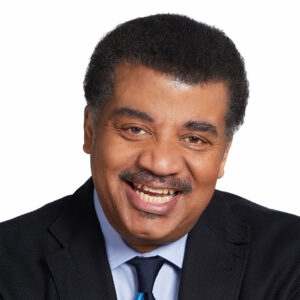
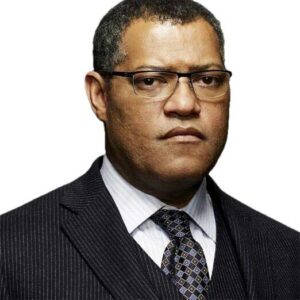
Are we all living in The Matrix? Neil deGrasse Tyson sits down with actor Laurence Fishburne to explore the science of The Matrix, simulation theory, and who has the better deep voice. Would you take the red pill?
Would you rather have truth or normalcy? We explore the choice Morpheus presents Neo and how it pertains to science. Laurence shares the experience of bringing Morpheus to life. He and Neil unpack the film’s profound symbolism as well as discuss the blending of ancient mythology with the emerging digital age.
We analyze the plausibility of the movie’s central premise. Can humans really serve as batteries for machines? We explore simulation theory, pondering whether our universe could be one of many nested simulations, as posed by Oxford philosopher Nick Bostrom. From the optical science behind the iconic spoon-bending scene to the film’s intricate religion and philosophy, we explore the storytelling elements that make The Matrix timeless.
Neil connects its themes to questions about reality, truth, and human potential. Plus, a few surprises—including the “deep voice-off” and musings on why gods always have baritone voices—make this episode a must-listen for movie buffs and science enthusiasts alike.
Thanks to our Patrons james martindale, Henry GLover, Steven Weber, Evan, Qaisar75, Moe, Denise Edwards, Micheal J Trietsch, Randy Frankel, John Mortimer, Austin Croley, Chase J, Kathryn Cellerini Moore, adijan Oda, Markus McLaughlin, Dan, 1 Eleven, Dustin Morell, Siva Kumar, Brandon Smith, Ken Zebarah, Steven Dominie, Layf Carlson, st.johnstantine, Thimon De Raad, Scott Payne, Micheal Williams, Ricardo Piras, Troy camilleri, lioz balky, s, and CeeJay for supporting us this week.
NOTE: StarTalk+ Patrons can listen to this entire episode commercial-free.
Transcript
DOWNLOAD SRTWelcome to StarTalk, your place in the universe where science and pop culture collide.
StarTalk begins right now.
This is StarTalk.
Neil deGrasse Tyson here, your personal astrophysicist.
And today, we are joining a one-on-one exclusive conversation with someone whom I’m proud to call my friend, Laurence Fishburne.
Laurence.
Neil.
How are you, man?
Welcome to StarTalk.
Thank you.
This is so great.
Thank you for having me, man.
Oh my God.
I’m so excited to be here.
Is this your first time back at the Hayden Planetarium?
I haven’t been to the Hayden Planetarium since I was a boy, probably.
Oh my gosh.
Walked by many times, but yeah.
Yeah, because when I was a boy, I came by and was like, I’m doing this for life.
Yes, exactly.
I wanted to live here, too, but I wasn’t that good in science.
I liked it, but I wasn’t that good.
Wait a minute, you told me your mama taught science.
My mama was a science teacher, yeah.
Okay, so then how’d that square out?
Well, I found this other little thing that I was good at.
Oh, this little thing.
You know, that little acting thing, the little play acting thing.
And it kind of worked out for me, so.
You know, kind of worked out, I think.
Kind of worked out, yeah.
So I just look at your catalog.
Oh, my gosh.
It’s not just deep, but it’s broad.
And I’m looking at it, and I’m saying, if I were an actor, that’s kind of how I’d wanna be.
Oh, man, thanks.
Because as an actor, you act this way and act that way and act this other way.
Yeah.
And if you’re always doing the same thing, that’s not acting.
It’s not as much fun.
I mean, it’s fun for some people.
Some people like they do the thing, they find the thing, it works for them, they do that.
Yeah.
It’s cool.
For me, I’m kind of a curious person, so I’m interested in stuff that I don’t know and learning about stuff that I don’t know.
By the way, that curiosity, most of us lose in childhood.
And as an adult, you get comfortable.
Yeah, sure.
But as an actor, it’s good to have that kind of curiosity because you never know what kind of part you’re gonna play if you’re looking for something different every time, like I am.
Plus you want people to, if you’re not always in control of what role is offered.
Exactly.
And you want to at least give the options.
Yes, yes.
And you want to keep learning.
I mean, I want to keep learning.
So my curiosity has just drove me to do it.
I’m just looking at this.
How many people know you were in Apocalypse Now?
A few people.
Okay.
I’d say a few people do.
Okay.
You had a bit role in Apocalypse Now.
I was one of the four guys on a boat heading up river with Martin Sheen to go and assassinate Marlon Brando’s character.
Right.
You were one of the young soldiers.
I was a young sailor on the boat.
Sailor on the boat.
Yeah.
And I remember, I don’t know if you confided in me, whatever.
Yeah.
It’s a little late now that you were like underage at the time.
How old were you?
Yeah.
So I auditioned for the movie.
I was 14 years old.
I got the part.
They asked me how old I was in the interview.
I lied and said I was 16.
They knew that I was lying, but they just hired me anyway.
It wasn’t like my lie convinced them to hire me.
It wasn’t that.
You know, a lot of guys, if you go back, you see these documentaries about World War I, you discover that there were many boys, 16, 17, who enlisted, who lied about their age, and they were conscripted anyway, and they went to war.
Okay.
So you were 14, lied and told when you were 16, and you were playing an 18-year-old.
And I was playing a 17-year-old.
17-year-old.
Yeah.
Okay.
So that was Apocalypse Now.
Yeah.
Yeah.
Apocalypse Now, 1976, 1977.
And, you know, Boys in the Hood, John Wick.
John Wick.
Oh my gosh.
Yeah.
That’s just fun, mindless entertainment.
Right, yeah, yeah.
John Wick.
Yeah, style above content.
Fighting, fighting, fighting.
Yeah, I love me some good fighting, you know.
Yeah, it’s all good.
And, you know, even I’ve forgotten, you and, I’m Blackish.
Blackish, yep.
Oh my gosh.
As the grandfather, as Pops.
Yeah, the grumpy grandpa.
Yeah, grumpy grandfather, Pops.
That was fun.
CSI, where I played a scientist.
Yes!
Television, Pee-Wee’s Playhouse.
Oh!
Where I played the cowboy, Curtis Cow, Cowboy Curtis.
Oh, I forgot about that.
Yeah, yeah.
Pee-Wee’s Playhouse.
Yeah, Pee-Wee’s Playhouse, yeah.
Man.
Good fun.
So what I thought was broad and diverse wasn’t even the full story.
Not quite.
Okay.
All right.
So you played a scientist on CSI.
Were you the guy in the morgue?
No, I was not the guy in the morgue.
I basically replaced William Peterson.
When William Peterson, who was the bug man, left.
Okay.
My guy came in.
I was a guy named Ray Langston, who was a pathologist.
So which CSI was this in the pantheon of CSI?
It was in the original CSI, which took place in Vegas.
I didn’t remember that.
Yeah.
Okay.
Yeah.
By the way, you must know CSI ended up, it became so successful as a force of attraction for people who might want to become scientists.
I didn’t know that.
Yes.
Oh, wow.
And at least anecdotally, there were chemistry professors that say, why are all these women now in the class that wouldn’t, weren’t there?
Wouldn’t normally.
Oh, I saw a scientist on CSI, because there were real people portrayed with real socialized, personal lives.
Exactly.
They were not just the scientists in the lab.
No, they were just nerds and brainiacs.
The nerd lab scientists that, give me the answer and let’s have the real people move on.
Right.
They made science sexy.
They were the real people.
Yeah.
And CSI created a museum exhibit that traveled.
That’s right.
They did.
They did.
They did.
It made science sexy.
Yes.
It was the way they shot it.
And what I used to always tell people about the show was, they were like, oh, you’re the star of the show.
I was like, no, I’m not the star of the show.
I’m like, the crime that they’re solving with the scientific method is the star of the show.
Yes.
There it is.
That’s the star.
Science reigns supreme.
Absolutely.
In every episode.
Every episode.
So was that your only time as a scientist?
No.
My other time as a scientist was in a film called Contagion that came out in 2009.
I played the director of the CDC.
So it was all about tracking down potential pandemics that were going to happen.
And we had a guy who recently passed on, a guy named Elliott, who was the head of the CDC, and that was his job.
And every day he’d be on the set and he’d be like, look at this, look what we’re tracking in Bolivia.
Look at what we’re tracking in Africa.
As an advisor?
Yeah.
He would be like, we’re tracking this in this country.
We’re tracking this disease in this country.
And it was fascinating.
And then, of course, when COVID happened, it was like…
There it is.
It was like they had lifted everything from the movie and it was actually happening in real life.
I visited the CDC for my very first time just a couple of months ago.
Oh, wow.
And they took me deep into the…
Did they?
Yeah.
Into what was basically like the situation.
The…
No, I saw this vial of Legionnaires’ disease, fluid.
It’s like, you know, it’s like this is their, what they study this.
And so I went into the room and as an astro person, the only analog I have to this is mission control.
Okay.
All these desks in arcs and a huge wall.
And it’s a screen of the world.
Right.
And at every country, there’s data.
There’s data.
Coming in.
What disease is there?
What’s getting tracked?
How many people have the disease?
How many people have died from the disease?
And potentially what it will do if it gets out?
All of this is there.
Yes.
But thank God for them.
Yeah, yeah, no, no.
Thank goodness that they exist.
That organizations like that exist.
And their hearts in it.
And they care.
They care.
They care.
So, scientists twice.
Two scientists.
Okay, let me say I’m a little disappointed given how many movies you’ve made.
Okay, you gotta come through for me now.
Well, I’ve done a lot of science fiction, though, Neil.
Oh, yes!
Oh, my gosh!
I did a little.
I looked at the list, and I’m embarrassed to say, I’ve seen like only, I gotta go on a like a Fishburne binge.
You gotta have a Fishburne night.
Are you like, you get the movies, you line them up.
I’m gonna do a Fishburne binge.
You get your menu, you line up your menu.
We gotta do the Fishburne binge.
Yeah.
And the Signal.
The Signal.
The Signal.
Yes, 2017.
Okay.
That was a great one.
I played not quite a scientist in that, but a guy in a hazmat suit.
Okay.
So it kind of counterflies.
Event Horizon.
Event Horizon.
Passenger.
Contagion.
Contagion.
The Colony.
The Colony.
Oh, man.
Predators?
What was that?
Predators was part of the Predator franchise.
Okay.
So it was…
That was in Predator 3, wasn’t it?
No, no.
It was like 4 or something.
Basically, the premise was the Predator collected a group of really, really bad human beings and dropped them on this planet, which is basically the Predators’ hunting ground.
So it’s like convict, serial killer.
So they selected them to be bad already.
They selected them to be bad.
So none of us would miss them, I guess.
Exactly.
And this is where the Predators go to practice their hunting.
It was Adrian Brody, myself, Mahershala Ali, Alicia Braga, Topher Reiss.
That would have been early for Mahershala Ali, right?
Yeah, yeah, it was.
It was.
It was early.
I’ve looked at everything he’s in.
Yeah, it was early for Mahershala Ali, myself, Walton Goggins, and of course, Denny Trejo.
It’s a pretty cool movie, I gotta say.
Pop, put it back on my list.
Yeah, Predators.
All right.
Fantastic Four, I didn’t know you.
Fantastic Four, I voiced The Silver Surfer.
Oh my gosh.
Yeah.
And then of course, this little thing I did called The Matrix.
The freakin Matrix.
That little movie.
The Matrix.
Yeah, you know.
I don’t know who saw that movie.
I can’t even look at my notes anymore because you just distracted me.
The Matrix, that’s my single favorite movie of all time.
Really?
Yes.
I don’t know if you’re ready to see what I want to show you, Neil, but.
Don’t try to out deep voice me.
Okay, I won’t.
Let’s try.
Okay, I want to hear you do as best you can.
Yeah.
This is StarTalk.
Okay, this is StarTalk.
No, you’re trying too hard there.
Oh, you don’t try?
You need to, that wasn’t naturalistic?
No, you were forcing that.
This is StarTalk.
I’m Morpheus.
Why can’t I be Morpheus?
Because you’re not.
Because I am.
You know, we just lost James Earl Jones.
The great James Earl Jones.
I only barely met him.
I was at a premiere on Golden Pond with him playing opposite Felicia Rashad.
Right.
But Darth Vader, I mean, come on.
Luke, I am your father.
Do not overestimate the power of your technological terror.
Let me hear Luke, I am your father.
No, Luke, I am your father.
Look into your, search your feelings.
You know to be true.
Look, CNN hasn’t been the same ever since they stopped using his voice for that.
They’re using all the correspondences, like, don’t you understand?
Exactly, I just, I would love that gig.
No, I want the gig.
You want that gig?
No, I don’t want you to have the gig.
We might have to fight about it now.
No, no, you’ll lose.
Okay, you ready?
You ready?
Let’s try it.
Ready?
Let’s audition.
This is our audition for CNN.
Ready?
Replacing James Earl.
Do I have Marme go first?
Yeah, absolutely.
This is CNN.
That’s not bad.
It’s actually pretty good.
This is CNN.
Oh, that sounded a little more authoritative.
All right, let me try again.
All right, go ahead.
Because you hit the syllable sharp there.
This is my wheelhouse, bro.
You know what I mean?
Okay, all right.
Come on.
This is CNN.
Nice, nice.
This is CNN.
You got the little breath at the end there.
I could put some breath in, too.
You could put some breath in.
This is CNN.
All right, you got it.
I’m gonna just, I acquiesce, it’s your gig.
You want it, you got it.
So how deep can you take your voice?
Have you tried?
Probably right about in here.
Like below audio frequency levels?
I don’t think it’s sub, I don’t think it’s that.
Sub 20 hertz.
I don’t know if it’s that deep.
With 20 to 20,000, that’s the traditional range.
Yeah, actually, I just put it through a thing.
I go to the studio, and they put it through a thing, and it comes out.
And they’ll take it down.
Yeah, and it sounds like evil alien.
Let me say, I haven’t done this in a while.
Okay.
And now.
Come on, baby.
Okay, so now, if you can do that voice, then it looks like Morgan Freeman got all the God jobs.
Yeah, he did, he did.
He did get all the almighty’s.
All the almighty’s.
He got all the everlasting’s and the almighty’s, yeah.
Okay, so, you know.
But you got the cosmos.
You got the cosmos.
You can’t have a pipsqueak voice coming out of the universe.
No, you can’t.
That doesn’t work.
No, no.
It’s like burning bush, gotta be down here.
You’ve got to be down here.
It’s just a bias we have.
Yeah, it does.
Suppose God’s voice was, hi everybody, I’m God.
There’s no reason why it couldn’t be high pitched.
Hi, I love you so much.
I love you.
All of you are my children and I love you so much.
No one would believe it.
They would just like, okay.
All right.
Let me take you to the map.
Let’s go, let’s go, let’s go.
So, one of the reasons why it’s my favorite film is other than one little bit where the science, they play loose with the science, okay?
By the way, I don’t mind that provided a story is internally consistent.
That’s the big Comic Con rule, really.
Ah, okay, okay.
It’s not whether it’s real science or not, but if you’re gonna have a rule that operates in your story, stick with it.
Yeah, if you set up the rules of the world.
I’m perfectly happy.
You have to abide by those rules.
Correct, and that’s what any video game is.
That’s right.
Any story.
Any story in any medium.
Actually, it’s any story in any medium.
I agree.
And so it did it so well.
And it was such a fantasy adventure, and good, and evil, and I don’t know.
It was beautiful to watch.
And so just kudos to the Wachowskis.
Absolutely.
Yeah, it was a brilliant idea and a brilliant execution of a brilliant idea.
So apparently, rumor tells, that Will Smith’s agent was not convinced by the story enough to have him Play Neo.
Play Neo.
Okay.
And so what about the story intrigued you?
Because it’s moved to Australia for five months or whatever.
For two years, basically.
Two years, yeah.
Basically, I mean, we were there for three years doing all three movies.
Okay.
Essentially, what drew my interest in it was…
It wasn’t too weird for you.
So I don’t know what this is.
I understood it.
Oh, so maybe…
I understood it when I read it.
Will Smith’s people couldn’t…
Here’s the thing.
There was a guy, one of the main producers on it, Joel Silver was one of the producers.
There’s another guy named Lorenzo Bonaventura who was one of the producers.
And he was, I think, the guy who was showing this to the studio executives, to the people who make the decisions.
And a lot of the story is…
What do you call them, the shirts or the jackets?
The suits, whatever.
The suits.
So the executives, right?
And the story is that many of them just didn’t get it.
They were like, we don’t understand this.
And what I’ve heard is that Lorenzo’s response to that was, don’t worry, no one under 30 understands it anyway.
Wow.
Right?
So I was 34, 35 or something when I read it.
And it was the most original thing I had ever read.
That didn’t mean that everyone was going to get it.
That didn’t mean that everybody was going to understand it.
That’s what my experience with Apocalypse Now had taught me.
Because when I made Apocalypse Now in the 1970s, it was the most expensive movie ever made.
It was the most ambitious movie ever made during that period of time.
Marlon Brando was in the movie and Martin Sheen was in the movie and it was about the Vietnam War and it was exciting and John Milius wrote the screenplay and all these wonderful elements.
But the movie commercially did not do well.
It was a critical success, but it was not a commercial success.
So I had learned that even though something on the page or as a concept is brilliant, that doesn’t mean it’s going to translate with an audience, particularly an American audience.
One never knows.
The American audience is mercurial, man.
So I just knew that it was the most original thing that I had ever read and I understood it, I got it and I wanted to be a part of it.
And the timing just so happened that the way that it all sort of came together, we shot the movie in 1998, the movie came out in 1999, the internet was born in 1998, essentially, cell phones became a reality in 1999.
It’s the digital world.
The digital world.
It was descended on everyone.
On everyone.
And essentially, what the story is and why it resonates with everybody all over the planet, and it did at that time, is because it’s the old myth told in a digital format.
And we were right at the birth.
So it had deep resonance.
Yeah, we were right at the birth of the digital age.
Okay.
And so, but is that rumor true that Will Smith turned it down?
I don’t know.
I’ve heard that before, but I don’t know.
I’ve never really sat down with Will and asked him about it.
Yeah, okay.
Because when I heard that, I said, how does an actor know what role you should or shouldn’t take?
You know, it depends on who you are and what your thing is.
If you’re true to yourself, it doesn’t even matter.
It doesn’t.
You’re true to yourself.
Yeah, I mean, it’s anybody’s guess.
Maybe that’s the case.
I don’t know.
I’ve never sat down and asked Will about it.
Okay.
Can I share with you all my religious observations on it?
Yes, please.
Okay.
Yeah.
Catholic, religious, Christian, Catholic observations.
As you are a Catholic.
Well, I was raised one.
You were raised Catholic, right.
Okay, please.
Yes.
My doubts descended early.
Yeah, wow.
A religion rifled with doubt.
Yeah, but I’m still fascinated by the fact that there is such a thing as religion in the world and billions of people practice it, right?
That intrigues me as an educator.
Right, right.
Because something is attracting them, what is it, and why, and you’re this religion over here, because that was the religion of your parents, and you’re sure your religion is the one true religion in the world, but so are these people, are just as sure as you are, and will go to war on that.
Historically.
Yes, historically, correct.
Yes.
So that’s why religion intrigues me.
So in The Matrix, so first, Neo, that’s an anagram of the one.
You had to dip your head in the one.
You can’t non-act that expression of the one.
So that’s the one, all right?
He’s the savior, all right?
So now watch.
The Christ.
Okay, so now watch.
Early in the film, he wakes up from his, right?
And there’s someone knocking at the door, and apparently he hacked something for them, and is about to give them, and so he says, wait a minute, and he goes back, rummages through a thing, and gives him a disc, and the guy says, thanks, you know, okay.
You’re my savior.
You’re my regular Jesus Christ.
Yeah, you’re my own personal Jesus Christ.
That’s a script line.
That’s right there.
Okay?
Yeah, it’s right there.
Right there, okay?
But let’s not stop there.
All right.
So we keep going.
There’s the part where he gets brought in to the Nebuchadnezzar for the first time, so he’s still wrapped and looking around, and there’s Joe Pants, Joey Pants.
Yeah, Joey Pants, yeah.
Pantaleonno.
Pantaleonno.
Pantaleonno.
And he’s there, and he’s just looking, and then that character, Cypher, is startled.
And he says, oh, you scared the bejesus out of me.
Yep, that’s true.
Okay, so hang on.
Yeah, that’s true, yeah.
Oh, hang on.
Yeah.
Who betrays the group?
Cypher.
Cypher!
Yes.
He betrays.
He’s the Judas.
Who?
He’s Judas.
Yeah, he’s the Judas.
He’s Judas.
Yeah.
After the bejesus was scared out.
Yeah, yeah.
He doesn’t have Jesus in him.
He doesn’t have Jesus in him.
Okay, nope.
All right, let me keep going.
Keep going.
Okay.
If you can.
Because you think you know the movie better than I do.
And you might.
I don’t know.
You might, let’s go.
Here’s the difference.
It’s my favorite movie and you’ve made 100 movies.
Right.
So.
Right.
So.
Okay.
Okay.
Okay.
All right.
So then, everyone sort of decides that he’s the one.
He’s the one.
Right.
When he’s pulling Trinity up from the helicopter as it comes in.
Yeah, yeah, yeah.
He is the one.
I told you he is the one.
He is the one.
Do you believe it now, Trinity?
I don’t know what it means to compliment you on exactly imitating what you were paid to do in a movie.
And I would say, hey, you should be that character.
Too late.
Already been done.
No, but the weird thing is, you’re not imitating that character.
You were that character.
Yes.
Even that.
Yes.
Yes.
So let’s fast forward towards the end.
He gets shot point blank.
Right.
By Smith.
Yes.
Yes.
Yes.
Then he drops.
He drops.
He keeps firing into him.
Yes.
Okay.
Just, all right.
Do you know how many bullets he put in him?
I don’t.
You don’t?
I don’t.
I will tell you.
Tell me.
Okay.
It requires a little bit extrapolation.
Okay.
Okay.
The bullets you see, it’s like four bullets point blank to the chest.
Okay.
At that point, we go back to the Nebuchadnezzar, and you see his body responding.
Right.
Okay.
But if you track the rate that bullets are being fired, and continue them into that scene, then we come out of the scene, and there’s a few more bullets that you observe.
Right.
That’s 14 bullets.
Okay.
Okay?
Okay.
There are 14 stations of the cross.
I didn’t know that.
In a Catholic church.
I didn’t know that.
Now, for non-Catholics out there, in every church, Catholic church, typically in the pillars that surround the main open area from the side areas, mounted facing inward are 14 drawings, paintings, relief maps of the 14, they’re called stages of the cross.
Okay?
Yeah.
And they’re key moments in Jesus’ life.
And it’s an early movie, really.
The word movie doesn’t even exist.
Exactly.
Right?
But a sequence.
But it’s visual.
It’s a visual sequencing.
Okay?
Okay.
And it’s all of it.
And it’s, he’s tried underpunches pilot.
He’s carries the cross.
He’s put up on the cross.
He dies on the cross.
Okay?
Yeah, yeah, yeah.
Got it.
So it’s all there.
You can look it up on any, you know, you can find them.
Okay, 14 stages of the cross.
Yes.
14 bullets.
Now.
Interesting.
And he dies.
Right.
Then he’s resurrected.
Resurrected right there.
It comes back more powerful than ever before.
That’s right.
Is that not Jesus?
That’s Jesus all the time.
Joining the side of God.
That’s Jesus all day?
All day.
Yeah.
All day, all night.
So who’s Trinity?
Well, okay, so we got to like…
In the Catholic…
That would have to be Mary Magdalene.
Okay.
But I’m thinking…
Let me not go that far.
Well, she goes to a sex club.
That’s where they meet.
At the sex club.
Was that a sex club?
That’s a sex club.
No.
Yes.
They were just dancing.
No, it’s a sex club.
You look behind and you’re looking deep in the background.
They didn’t allow them to show all of that, but it’s a sex club.
Really?
Okay, Mary Magdalene right there.
And who’s Morpheus?
In the Christ mythology.
I know, I’m trying to…
He’s the Baptist.
John the Baptist?
He’s John the Baptist.
Oh, because John the Baptist knows Jesus is coming.
Yes, he knows who he is.
And sets everything up.
And he’s been looking for him.
He’s been looking for him.
And when he meets him, he goes, I’m supposed to be baptized by you.
So that’s who Morpheus is in the Christ mythology.
In the Christ mythology.
But there’s also mythology, Greek mythology.
Tell me, tell me.
There’s, well, Morpheus is the Lord of Dream.
He’s the God of Dream.
All right.
From Greek mythology, right?
Persephone, who’s in the second or third movie, who’s played by Monica Bellucci.
The Oracle is Greek.
Yes, that’s an actual Oracle.
The Oracle is Greek.
Yeah, too bad we lost her before the second film.
She was a really strong character.
Niobe.
There’s an element on the periodic table called Niobeum.
Is there?
Yes, there is.
Because there’s something about the colors that were sort of iridescent and radiant.
And it’s something about, in the Greek legend, Niobe, I don’t know the full story, but it would borrow that from Greek legend, Niobeum.
So there’s the Osiris, there’s the Nebuchadnezzar, which is also biblical.
Yes, of course.
It’s also the size of a very large bottle of wine.
Ah, is it?
Nebuchadnezzar.
You tend to find it only in champagne, because that’s when you…
Kingly.
It’s kingly.
Yeah, it’s kingly.
It’s a party for 30 people.
And you just lean the bottle for Nebuchadnezzar.
Nebuchadnezzar, okay.
Is the size of a bottle of wine.
So there’s the Gnosis, there’s the Osiris.
Okay, so I don’t want to say mash up because that might undersell it.
It’s drawing from these very deep.
But it’s drawing from all these traditions.
It draws from western tradition, spiritually, religiously, and eastern tradition, spiritually, and philosophically as well.
Especially, because scenes are not just simple scenes.
You have to think about them.
No, exactly.
What’s going on here and why?
Right, right.
Like when I saw the film for the first time, I had forgotten about all of that because we had to train so hard to get the physical stuff right.
Oh, yeah.
That I forgot about all of the philosophy and all of the sort of really just endings.
You come in and film your scene and go back to the trailer.
It’s not, no, it’s not that simple.
It’s not that simple.
It was a year of work, but so much of it was physical and we had to work so hard to do that, that I really forgot about the stuff that’s in the dialogue.
Like, my favorite stuff is in that first encounter I have with him and I’m asking him, do you know why you’re here?
You didn’t say that right.
Do you, do you know why you’re here?
See, I, you know.
And this is what has brought you to me and that whole thing about, do you know what the matrix is?
And I go, it’s all around us.
You can feel it when you go to church, and all that stuff.
That’s my favorite stuff, because it’s very, it’s really cryptic, and it’s really scary.
And ethereal.
And ethereal and very scary.
And you have to deliver it that way, otherwise it’s just a line.
Yeah, it’s just a line.
But that’s some of my, and I had forgotten about all that stuff that’s in it.
And even the stuff with like Joe Pants and the agents when he’s talking to them, and he’s having the dinner.
Oh, yes.
He’s having his steak.
That’s very, that’s almost ASMR, okay?
Because he’s eating the steak, and he puts the…
And he’s eating it, and he’s like, I know this steak isn’t real.
But my mind.
And I don’t care.
Is telling me it’s real.
So we have a deal.
Oh, yeah, yeah, yeah.
And I don’t want to remember nothing.
Nothing.
You put me back in my body.
All that stuff is just, you know, it’s fantastic.
Yeah, so that’s my, so the religious line through it.
And no one doesn’t love the idea of a savior.
I mean, this is.
That’s right.
And a plausible savior, right?
He didn’t show up as Superman.
No.
Right?
No.
This, he had to find it in himself.
Exactly.
Just the way the Oracle had required him.
Yeah.
So that’s why it’s your favorite movie?
Because it reminds you of Jesus?
No.
No.
I respect storytelling.
Right.
And the stories that have outlived civilizations.
And the story of the Christ is indeed a powerful story.
That’s there.
That’s there.
It’s very powerful.
Yeah.
Very powerful.
So there’s all of that.
And then there’s a few more things.
Okay, they tossed in, it was a little bit, they stapled it on when the oracle says watch out for that glass.
And he says, what glass?
Oh yeah, yeah.
And he turns around and it drops.
And he drops it, yeah.
And she says, that glass.
Yeah.
Now here’s gonna be eating your craw.
Would you have done it if I didn’t?
If you did, exactly.
Okay, it’s one of these future, you know, did trying to avoid the future, make that future happen.
So I thought that was unnecessary because the movie was already deep.
Oh yeah.
And that was almost cliche sci-fi time, you know, future prediction.
Sure, sure, sure.
I thought the movie was above that, but fine.
I liked it.
I thought it was clever because of what they did, the way they set it up with the know thyself sign.
Oh yeah, right.
And they set it up with that.
And also that she’s grandma and she’s baking cookies.
Yeah, no, it was a full…
Her baking cookies and she’s in the projects, like she lives in the projects.
I don’t know if people know that those are the projects.
But did they have projects in Australia?
Well, we weren’t supposed to be in Australia.
Ha, no.
It takes place in a modern city.
Yeah, I think extensively Chicago.
Yes, basically.
Okay.
Yeah, yeah.
And I only know that because I have the original script.
Oh, okay, cool, oh yeah.
And so it’s the L going by.
Yeah, yeah, they wanted to shoot it there, but unfortunately couldn’t do it.
Heart of the City.
Heart of the City.
Heart O’The City.
Heart of the City.
Hotel.
And Wabash Avenue.
And Wabash.
And Wabash, yeah.
Wabash is the main street in Chicago.
And that’s an explicitly stated street.
Yes.
No, but I’m saying, where did you guys get the projects in Australia to film in?
Oh, there were, no, it was all location.
It wasn’t location, that wasn’t a location.
That was a sound stage.
Oh, just set that up?
Yeah.
Okay, very well done.
Yeah.
That felt like the project.
It did, it did.
Okay, that grew up in projects.
They were middle income projects, so there were fewer junkies.
Yeah, yeah.
No, but it felt like the project.
Yeah, it did, they got that.
They got it right.
And a couple of things.
By the way.
What did you think about the spoon?
I’m getting there, that’s my next thing.
Sorry.
So I give a public talk, one of which you attended.
Yeah.
I think you attended it.
One of them is called An Astrophysicist Goes to the Movies.
Yes.
And I show clips, and then I analyze the clip, okay?
And The Matrix has a dozen clips.
I don’t put them all in one thing, because it’s scientifically themed, not movie themed.
So I have a section on optics, okay?
With the spoon.
Yes.
One side is convex, one side is concave.
You slurp out of the concave side.
Concave, convex.
Yes.
If you look into a spoon, on the convex side, you are distorted, but right side up.
If you look on the concave side, it’s upside down.
You are upside down, and that was accurately captured in the frickin movie.
Yeah.
Yes.
The science was right.
The optics of that science.
The optics of the science was right.
Yeah.
That was good.
That was cool.
I like that.
Yeah, yeah.
And then the kid’s saying, do not…
Do not try to move the…
Do not try to bend the spoon.
That’s impossible.
That’s impossible.
Instead, bend yourself around the spoon.
Yeah, yeah, yeah.
I said, that’s good.
That’s good.
No, it’s genius, man.
No, it’s good.
It’s all good.
Yeah.
Now, here’s another thing.
I’ll let it go, because everyone does it, but just, I’m telling you that in almost every movie where they show people crazily brilliant.
Yeah.
Okay.
Like, that’s the point of the movie.
Right.
Because they’re brilliant.
Right.
Like Phenomenon, for example, with John Travolta.
John Travolta, which I’ve never seen that.
Okay.
It’s worth Saturday afternoon if you’re at home.
He gets hit by lightning and he was just a regular guy, even partly mocked for not being smart.
Oh, wakes up and he’s…
Yeah.
Well, after he’s hit by lightning, and Robert Duvall is in that as the person studying his new abilities.
Anyhow, the point is, he says, name me 10 mammals or something.
You want it in alphabetical order?
And then he goes through the whole alphabet.
Right.
All right?
So yes, a really brilliant, smart person would do that.
Right.
I don’t have a problem with that.
But in almost all these cases, they start moving stuff with their…
With their minds.
With their minds.
And it’s like, there’s no evidence that smart people can move stuff.
You just figure things out faster or better.
Okay?
I’ll give you that.
We start moving things.
And then there was Lucy.
Did you see Lucy?
You have to see Lucy.
Yeah, I saw Lucy.
Morgan Freeman was in there.
It’s fun.
Yeah.
And she starts using more of her mind, changes her hair color as she’s walking down the street, stops bullets.
You gotta be in The Matrix to stop bullets.
Come on now.
Exactly.
So anyhow, so the hopefuls, who are waiting in line to see the Oracle…
To see the potentials, yeah.
So they were doing things…
Yeah, the one kid was moving the blocks and all those things.
The blocks in the air, yeah, yeah.
So I, okay, fine.
Fine.
It’s a nice visual.
It’s kind of cool.
Also, the Oracle is establishing that Trinity’s in love with him.
Right.
And he’s oblivious to that.
Okay, I was kind of oblivious to that too.
I mean, I’m just, you know, guys are just generally stupid, you know, about these things.
So, and she says, you’re not too smart either.
Not too bright, huh?
Not too bright.
I don’t wonder what she sees in you.
Who?
Not too bright either.
Yeah, it’s great.
It’s really cool.
Yeah, because given the choice, you’ll have Morpheus and Wann and Trinity and the other.
And, you know, so I think it was brilliantly acted by Keanu Reeves, where he’s in the car and they’re driving, and he said, good sushi.
I used to have noodles, I used to eat noodles there.
I used to eat there.
Good noodles, really good noodles.
Really good noodles.
Yeah, yeah.
And he says, none of that’s real?
And I’m inside of him feeling this.
Because I can’t go back, can I?
Right, this is.
He’s like, even if you could, would you want to?
Oh!
Yeah, I mean, that was one of the hardest choices, because so many of us, I mean, that’s another thing.
Forget all the religious, mythological sentiment.
Right.
It’s, what do you value more?
Seifer said, put me back in my body.
I don’t want, you know, I don’t want.
I don’t want to know anything.
I don’t want to know anything.
But, you know, I’m a scientist, and I’m curious.
I’d kind of rather know the truth.
Right.
Because there’s some chance, some hope, that you can do something about the truth.
Or you can do something with it.
Do something with it.
If it’s all just a delusion, I don’t know that I want that to be my life.
Right, exactly.
Let me tell you my one issue.
Right, right.
I only have one.
The only one thing that scientifically just rubs you the wrong way.
Rubbed me the wrong way, and the rest of the movie was so brilliantly done, I’m giving it a hall pass.
My man.
Hall pass on The Matrix.
Here’s your hall pass.
What’s up?
So, you’ve got the scene where you are describing to Neo where he is.
There’s a chair there.
The construct.
We’re in the construct.
We’re in the construct.
And it’s white everywhere.
Brilliantly done, and there’s no echo.
That was perfectly done.
All right.
You describe to him that the machines are using humans.
As batteries.
As batteries.
As a power source.
As a power source.
And there’s some other language in there just to flesh out that scenario.
Right.
Here’s a problem.
In the laws of thermodynamics, if you have a certain amount of energy here, and you turn it into another kind of energy, for example, there’s chemical energy in gasoline.
You put that in your car, it turns it into kinetic energy to move your car.
You ingest food, which is chemical energy, and you keep your body at body temperature, even though it’s colder outside.
When you’re comfortable 72 degrees, your body is still maintaining 98 degrees.
Inside.
If you put anything outside at 98 degrees, it’ll go down to 72 degrees.
Even though you’re saying that’s a really comfortable, your body’s actively maintaining your body temperature.
That takes energy.
Right.
Your body’s moving, you’re running, you’re acting.
That takes energy.
Right.
Okay.
It turns out, any time you convert energy from one form to another, you don’t get 100% of it.
You don’t get 100%?
No, you get like, at best, 90%.
Your car, I forgot the numbers, the efficiency’s grown over the years.
Car might get 30% of the energy of the gas to have you move forward.
You know where the rest goes?
Into heat.
That’s why the engine gets hot.
Got it.
Of a combustion engine car.
We just take it for granted.
Of course it’s gonna get hot.
Wait a minute, that’s energy I wanted to use to go forward.
That’s miles per gallon wasted as heat.
That’s what happens when you convert from one form of energy to another form of energy.
Okay, so now, the laws of thermodynamics dictate that it’s not 100%, you don’t get 100% of your energy.
All right, here are the machines using humans as a form of energy.
I can tell you how much energy we radiate, okay?
Depending on how big you are, if you’re exercising or not in that moment, typically between 80 and 100 watts.
Okay, okay.
80, 100 watt light bulb, that’s what we are.
So we used a battery, and that’s fine, rather than a bulb, same idea.
Same idea, that’s not what matters here, okay?
We are an energy source for the machines.
They’re tapping our 100 watts, okay?
Fine.
Where do we get our 100 watts from?
They’re feeding us.
They’re feeding us.
They’re feeding us.
Right.
Whatever they’re feeding us, feed themselves with that.
Oh, wow.
Bypass the middle, the literal middle man.
Yeah, the middle man, why?
You don’t need the middle man at all.
Right, okay.
You don’t feed humans, have them generate energy, and then have that energy generate the machine.
Okay.
Well, what are you doing?
They didn’t study physics.
Probably not.
But then there wouldn’t be a movie.
There wouldn’t be a great movie.
You just have to Smith’s with no people.
There’d be just like a movie that you watch and you never get those two hours back again, and you don’t have the memories, and you don’t have the appreciation, and the cultural significance of the picture.
It was so worthy of a hall pass.
I gladly signed it.
Gladly signed it over.
The idea that human beings are batteries is kind of cool.
Yeah, it’s cool, and it’s true.
And it’s true.
Speaking of hall passes, I was once principal for the day at a middle school in the Bronx.
Oh, goodness.
There was a program where they bring you in, and you’d see how the public schools are run and this sort of thing.
So I didn’t tell them.
I snuck out the pad, the principal’s pad, that says principal on the top.
I still have it in my…
Don’t tell anybody.
That’s gotta be the most powerful thing.
Safe with me.
Safe with me.
The principal’s notepad.
Exactly.
So if I sign a whole pass, it’s legit.
It’s all good.
It’s all good.
Cool.
So I let that one slide.
That’s good, man.
It was a brilliantly delivered scene with the battery, you don’t say Duracell, but we all know what the copper top is.
Exactly.
And that was very well done.
And then one character refers to him as copper top in the movie.
Yes, derogatorily, yeah.
Yeah, yeah.
So, the film raised a point early on.
It was early.
By the way, just so you know, there’s someone generally credited with advancing the idea that we could be living in a matrix.
His name is Nick Bostrom, and those are into dumpster diving.
We have him as a guest on an earlier episode of StarTalk.
He’s an Oxford philosopher.
And you can hypothesize that if we have the ability to create a world in a computer, and the characters in that world think they have free will, then how do you know you’re not one of those characters that are created?
Now, if they have free will and they invent computers, and they want game time, they might create a computer world within their computers.
And if they think they have free will, and they could do the same thing.
They edit that all the way down.
Exactly.
And so if you close your eyes and throw a dart, I’m simplifying his argument, but this is the essence of, close your eyes and throw a dart, which universe are you most likely to hit?
One of these simulated universes, or the one real one that started them all?
And so, that’s a terrifying prospect.
That’s a frightening question.
Frightening question that The Matrix sits in the middle of.
In the middle.
And so, my best rebuttal to that was, by the way, the last universe has to evolve to get computers and program and, all right.
We currently do not have the ability, or the computing power, to create a perfect world where people think they have free will.
We don’t have that ability yet.
No, we don’t.
Well, if we don’t have that ability yet, we’re not any of the ones in the middle that do have that ability.
Nope.
So, we’re either the last one, the last simulated universe, that hasn’t gotten there yet, or we’re the original universe that hasn’t gotten there yet.
Logic tells you that, yeah.
So, we go from the odds are like 99.99% chance we are to one in two.
Okay.
That’s how I got out of this one.
That’s pretty good.
That made me feel better.
That’s very clever.
I feel a little better about that.
That’s very clever.
I was just talking about like the phones and virtual lives that people are living online.
Oh.
That’s what I was like.
Oh, that’s like not, you think, so.
You become your own avatar.
Yeah, people are having, I mean, people are living virtual lives on their phones and on their computers and they create these avatars for themselves and post and look at me and all that and it feels like the life that they live on their device is more important than their life here and now in the real world.
Reminds me of Chris Rock who said, anytime you meet someone, it’s not really them, it’s their representative.
It’s the person they want you to think they are.
And online does that better than anything.
Yes, it allows you to sort of present.
Present.
What you wish people to think of you and the way you want people to perceive you.
So is this our first step?
Will we one day step into that character?
And you become your online character.
I don’t know.
Here’s what I think though.
I did this show.
Wait, wait, it can happen.
Let’s say you’re dying, and we say we can upload your consciousness and have you occupy all these spaces you have established online.
So I did a science thing, this thing called Year Million.
Have you seen this thing?
No.
Year Million.
Yeah, it’s a limited series.
It was about four episodes, and it’s all about the singularity.
You’ve heard of the singularity.
So the hypothesis is the singularity, and when that’s gonna happen, and when it all becomes sentient, and when, and ultimately, what will happen is we will evolve to this point where we integrate with the technology.
Okay.
And that thing you just described about being able to upload your consciousness into a matrix is kind of, but it’s…
That’ll happen way sooner than the Year Million.
Well, according to this show, and the science behind the show, I wasn’t responsible for the science, I’m just the narrator, the singularity of this event is not as close as we think, and it’s not as far as we think either.
Okay.
All right.
That’s it.
All right.
That’s the basic premise.
I’m just saying, 150 years ago, we were in Horse and Buggy.
Yes.
And now we have rovers on Mars.
Okay.
Right.
So…
But what’s happening here is what’s important.
Not what’s happening out there.
Because I mean, even to get out there, we don’t have the infrastructure to do that yet.
No, not yet.
And it’s gonna take a long time to figure that out.
Wait, so straighten me out.
The Matrix was when you’re not in reality.
Got it?
Yes.
Okay.
So when you’re in The Matrix, most people, as they say, you take out her garbage.
Garbage.
Yeah, you go to church.
You go to church.
You go to work.
You go to work.
Yeah.
And…
But you can feel it.
Yes.
So who in the movie are only the hackers, the one who felt it?
The ones with great computing power?
No.
Would everyone have felt it?
I would like to think that everyone felt it, but not everyone paid attention.
In other words, most people chose to ignore the feeling.
Okay.
And then there were certain people who couldn’t ignore the feeling.
There it is.
Because I, I wake up, and I have these feelings.
Uh-oh.
Some getting ready to happen, man.
No.
So I wonder, more often than I should, why is it that I wake up every day as myself?
How come I don’t wake up as another person?
Why am I consistently myself every day?
And then I wondered, is that even true?
Do I actually wake up as different people every day?
Thinking I was always that person.
And why am I having these thoughts?
You should have been an actor, man.
Because then that wouldn’t bother you.
You wake up and be whoever you wanted to be that day.
It wouldn’t bother me.
I saw your one man show.
Why do you feel like Tiny Tims today?
I saw your one man show downtown at the Perlman Center.
And it was a series of skits and you were completely different characters in every skit.
The different characters, the different tonalities, different body gestures.
Acting is not just did you deliver the line right.
Did your body participate in the delivering of the line?
It’s the storytelling thing, it’s the characterization thing, it’s the physicality thing.
But essentially, that show is a thing I’ve been working on forever and ever.
Yeah, just congratulations on that.
Thank you.
And it’s just those five characters that I do, plus myself, as an adult and as a child and as a younger man and all that.
But thank you, thank you for coming to see it.
Yeah, yeah, that was good.
It was good.
It was beautiful.
So, there are so many great actors where you part the curtains and somewhere in there they’ve done Shakespeare.
Yes.
Right.
And you were Othello.
Yes, I did Shakespeare.
I did Othello on screen with Kenneth Branagh.
Oh, yeah, he’s a big Shakespeare guy.
He’s a great Shakespeare actor.
And Erinn Jacob.
Yeah, back in 1995.
Yeah, okay.
The street cred, Shakespeare cred.
I got a little shake.
I can shake it up a little bit.
Yeah, yeah, yeah.
It was fun.
It was great fun.
I haven’t done it live, which is one of the things I hope to do in the future.
In fact, I’m engaged to do it at the Pearlman.
I’m engaged to do King Lear at the Pearlman sometime in the near future.
That’s an important story right there.
It’s a great story.
Oh, wow.
Some say it’s arguably one of the greatest plays ever written.
For me, it’s up there, just for the messaging that it is.
It’s powerful.
For me, Shakespeare, the challenge is, here’s this very awkward sentence to anyone’s modern ears.
Sure.
And you’ve got to deliver it like that’s exactly what you would have said in that moment.
In that moment, at that time.
And that’s hard.
Well, he’s a better poet than we will ever be actors.
Wait, wait, pause.
I gotta, okay.
I have to credit.
I have to credit.
I have to catch up with that sentence.
I just have to credit that with Kenneth Branagh.
Kenneth Branagh said that to me when we were doing Othello.
Okay.
He said, Shakespeare is a better poet than we will ever be actors.
That gave you something to ascend to.
It gave me something to take comfort in and it allowed me to relax and not try, like, I’m never gonna be as great an actor as Shakespeare was a writer.
Okay.
So I don’t have to try to do that.
Okay.
All I need to do really is be mindful and surrender to the language and try to speak the language with as much ease and dexterity as possible.
I like to surrender to the language.
I like that.
I was in the Oregon, an inn.
I attended the Oregon Shakespeare Festival.
Oh, yes.
Up in Ashland, Oregon just recently.
I’ve never been.
Oh, oh my gosh.
The whole culture is embedded in the town.
And I saw a choreo lanus for the very first time.
Oh, I just saw it in London with David O’Yello.
Oh, yeah, okay.
It’s one of the most violent things ever written.
Oh, yeah.
Okay, except their version, now this sounds like, oh, they’re just trying to be woke.
Okay, their version was played by women and non-binary actors, but all women, okay?
And you say, well, why are they doing that?
What’s the point of that?
Here’s why.
When you see guys being violent, you say, oh, they’re just guys being violent.
You see a woman threatening to slit someone’s throat, our cultural, our acculturalization says, that’s especially violent, because women don’t go running around threatening each other with knives and swords, and it’s not a thing in our culture and in our literature.
When you see women doing it, it brought the violence to a whole other level that I think I would have missed.
Otherwise, it was just guys.
Unless you were in a woman’s prison.
Unless in a woman’s prison, okay.
You say that like you’ve been.
I haven’t, but I’m assuming.
Okay, yeah, no, so it took me to, now it just takes five minutes to adjust to it, but then it’s like every act of violence was more violent because of that.
So people just exploring ways to get out of a story, things that you wouldn’t otherwise know.
Right.
What’s this with you and the American Academy of Arts and Sciences?
I was made a member of the American Academy of Arts and Sciences last year.
Well, congratulations.
Thank you.
I was so honored.
I was so surprised.
My friend David Anderson, who is a scientist, who’s in Pasadena, California, nominated me and then.
That was a dig because I didn’t.
Because you didn’t, my friend Neil deGrasse Tyson didn’t.
And then my other friend.
So was that a dig?
I don’t know.
Francis Ford Coppola, who seconded my nomination.
So of course you’d know him because he directed.
He directed Apocalypse Now and Rumble Fish and Cotton Club and One from the Heart.
These are all your movies you’re in?
Right.
I was in One from the Heart, but I got cut out of it.
Thank God.
I was mercilessly cut out of it.
And then a movie called Gardens of Stone, which is the only time I ever worked with James Earl Jones, the late great James Earl Jones.
And then most recently, Megalopolis.
Oh, that’s on my list.
Yeah.
Yeah, I’ve seen previews.
Which is beautiful.
Yeah, I’ve seen previews.
It’s really beautiful.
So I sort of know Coppola?
Oh, yeah.
Francis Ford.
We met a couple of times, just overlapping paths, and his film, The Conversation, is second just below The Matrix.
As to my favorite.
That’s, wow.
It’s a very tight, brilliant story.
But really cerebral.
And cerebral, yes, I’m there.
Plus, I identify with the main character, who is himself geeky, and a little socially awkward.
Socially awkward, but also in a world of his own, and very, very much isolated.
Yes, that’s what part of, you know, back then, when you were geeky, you were isolated, and you’re geeky.
Now we all found each other at Comic Con, but back then, you know, that was not how it happened.
But then he also has this reach, this power that allows him to sort of enter into other people’s worlds and their lives as well.
That’s a way to say that.
I hadn’t thought about it that way.
Yeah.
Okay.
Plus, he came to one of my public talks, and he gifted me one of his wines.
Yeah, I think he acquired the Engelnuck Vineyards, and then became Coppola, and he’s done some other things.
I might have sold it since then.
Knee bound, yeah, knee bound.
So, yeah, I had a little overlap with him, but otherwise.
He’s an incredible man.
And so he nominated you.
He nominated me for the American Academy, but he’s really the guy that’s responsible for me becoming the kind of artist that I am.
My exposure, the things that he exposed me to and the way in which he trained me and the way in which I worked with him is really kind of how I’ve managed to do what I do.
So, let me tell people how we first met.
Yeah, yeah.
I’m filming Cosmos in the desert in New Mexico, which has a lot of tax incentives.
Tax incentives for movies.
So, it’s a whole movie industry.
And sci-fi lore, kind of hovering in and around the culture.
Am I not allowed to say that?
Did I say something?
I’m sorry.
Am I not allowed to talk about?
Did you visit Area 51 while you were there?
I did not.
Well, then, who were you to talk about?
I’m just saying.
I visited Area 51.
I’m just saying, it’s lore.
It’s like in the culture.
I visited Area 51.
I did a story about it on History’s Greatest Mystery Talk, as you know.
Matter of fact, two episodes were dedicated to Area 51 and the Roswell Incident.
All right.
Well, if you visit Roswell, the lamp posts have green alien lampshades on them, alien heads.
Oh, that’s so teaky.
Once you go there, there’s no turning back.
It’s so kitsch.
It’s built into the economy of the city.
Gotta go.
You gotta keep pumping that.
So back to the real story.
Oh, sorry, sorry.
So I’m there and our cinematographer is Bill Pope.
Bill Pope.
And I say, Bill, what other work have you done?
Oh, well, I filmed The Matrix.
It was like, oh, oh, oh, oh, oh, oh, oh, oh.
Can I touch you?
Right, right.
So I couldn’t stop talking about The Matrix with him.
Then I was wondering, can I get to do that in the Cosmos?
What can he do for me?
A little bullet time in the Cosmos.
I’ll do some bullet time.
Surely, you got something up your sleeve where I can do something cool.
But then I had learned, I had forgotten how, that you were filming.
The Signal.
The Signal, not too far in the nearby city.
Yeah, in Albuquerque.
In Albuquerque, yes, yes, because I was outside of town and near Santa Fe.
And the point is, I, what was it?
But then I forgot, then I connected with you.
Bill Pope connected us somehow.
Okay, but I brought you back, and then you hadn’t seen him in a while.
I hadn’t seen him in years.
Yeah, yeah, so there was like timeout on the set of Cosmos, and the three of us just boogie down for a bit.
Yeah, that was fun.
And there was a beautiful sort of rainstorm that was approaching the studio where you guys were shooting.
Yeah, what’s fun is, because you have vistas to the horizon, you see the rainstorm, pick up the dust.
We could see it coming.
And it was like something out of a movie.
And then you see the coloration of the sky, the pinks and the blues, then you’re reminded, this is where Georgia O’Keeffe, where do you think she got her colors from?
Exactly.
It was her life, her horizons, her skies.
So yeah, and I’m delighted that we’ve been friends since then.
Me too, man.
Because again, I’ve always been interested in science and astronomy and the future and what it’s gonna look like, and obviously science fiction.
Yes, clearly, yes.
So to have befriended you and to learn so much stuff from you, you know, even when we’re not sitting down, like just the fact that you came back with Cosmos, because I watched Cosmos as a child.
Oh yeah, under Carl Fagan.
We both watched that as children.
It was so inspiring to think of not just the world, but the Cosmos in that larger sense.
What it did was, it wasn’t just a separate subject that you study and then return back to your home base.
It folded it in to not only your knowledge base, but your state of mind.
Yes, exactly, exactly.
It opened your mind to the possibility.
In a way that you can’t even think of that series as a documentary.
We need a different word for it.
Absolutely.
Right, because the document, well let me sit down and let me watch this documentary.
When I come up with the word, I’ll let you know.
Please.
And if you come up with a better one, then you can have the CNN gig.
Of course, trading on the deep voice.
And this has been StarTalk.
Okay, and then say, as always, I bid you to keep looking up.
And as always, I bid you to keep looking up.
Cut!
That’s a wrap.
 Become a Patron