


 Unlock with Patreon
About This Episode
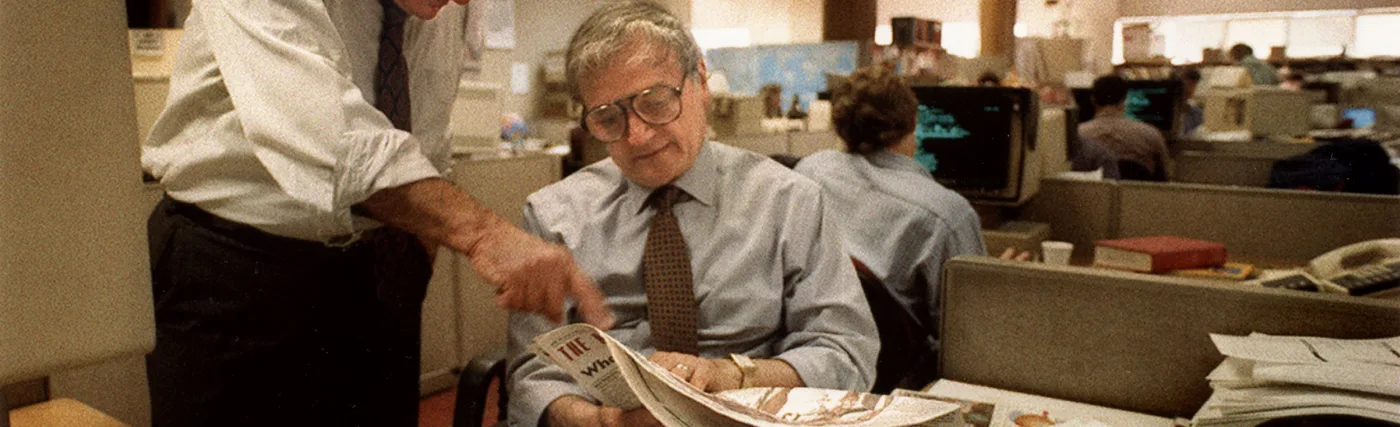
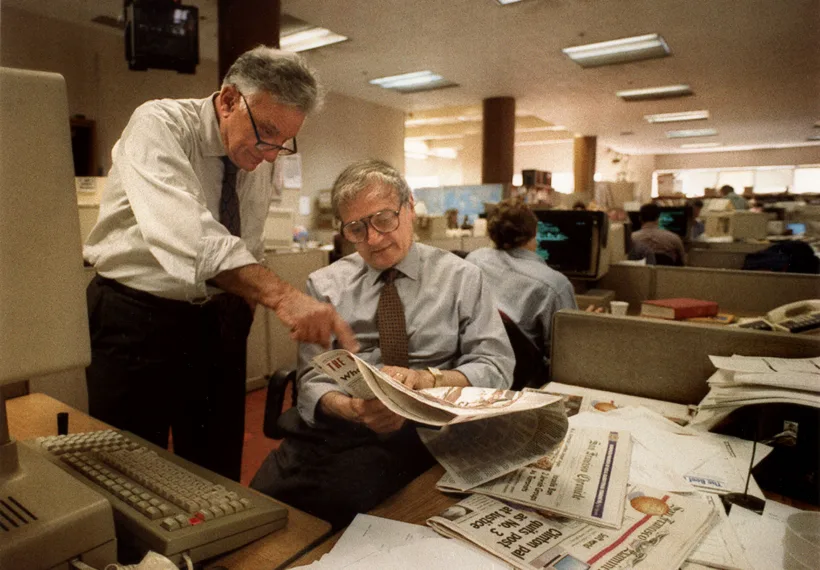
How do we fix America’s media problem? In this episode of StarTalk Radio, Neil deGrasse Tyson and comic co-host Chuck Nice talk echo chambers and the polarization of news with Max Tegmark, physicist and creator of AI media tool ImproveTheNews.org, and journalist Jeff Jarvis.
You’ll find out why our media landscape, and by extension our democracy, is suffering because of polarization and distribution of news through social media platforms. You’ll learn what our media landscape has in common with the multiverse. Tegmark walks us through how his tool works with machine learning to aggregate news articles, and how it tries to combat polarization in the way we find news articles. What are the pitfalls of such a tool? Will it even work?
We dive into the idea of objective truth, fact checking, and if big tech is trying to play big brother with our news media. Are readers trapped in their own social media bubbles? Are they willing to break out? Are people ready to challenge their own beliefs or is everybody only looking to confirm their own bias? Tegmark tells us why changing the delivery method of the news might result in less polarization. We explore the differences between scientific disagreement and political disagreement..
Then, Jeff Jarvis joins us to offer some criticisms and compliments about Tegmark’s website. Does the tool offer an accurate picture of the world? Is the material the website aggregates even capable of solving the problem? Discover why echo chambers might be a myth. Jarvis explains the transformation of mass media from the invention of the printing press to our current news climate. Do people need a single, go-to place for objective news? All that, plus, we get into a discussion about America’s epistemological war, how journalists need to take on the responsibilities of educators, and Jarvis gives us an optimistic vision of our media future.
Thanks to our Patrons kbw, Mike l Ness, Ashley Finamore, Amy A, Brandon, Scott, ITinker, Mike l, CrownFire, and Luke skywalker lustila for supporting us this week.
NOTE: StarTalk+ Patrons can watch or listen to this entire episode commercial-free.
About the prints that flank Neil in this video:
“Black Swan” & “White Swan” limited edition serigraph prints by Coast Salish artist Jane Kwatleematt Marston. For more information about this artist and her work, visit Inuit Gallery of Vancouver.
Transcript
DOWNLOAD SRTWelcome to StarTalk, your place in the universe where science and pop culture collide.
StarTalk begins right now.
This is StarTalk.
I’m your host, Neil deGrasse Tyson.
This episode, I’m calling A Physicist Reads the Newspaper.
Chuck.
Hey, I’m not that physicist.
You’re not that, okay.
Just in case anybody was wondering.
In fact, every comedy routine is really, a comedian reads the newspaper, right?
Because typically there’s a lot of commenting on current events.
Current events, yeah.
But so this show was created because I saw this product out there, this interface that I just said, I got to get the creator of that interface on StarTalk.
And that creator is a physicist and old-time friend and colleague, Max Tegmark.
Max, welcome back to StarTalk.
Thank you, Neil.
All right.
Max is professor of physics at MIT, does a lot of different things with his life.
He’s got a couple of books out there.
He loves the subject of AI and thinking deep thoughts about the future of civilization and our ability to be good shepherds of the power we have over ourselves and what that means.
So, Max, you’ve got this thing I’ve been reading about called Improved the News.
This is very ambitious of you.
You did this for your summer COVID vacation.
Oh, my God.
Wait a minute.
Is this a physicist version of the clay ashtray that you bring home from summer camp?
Oh, yeah.
Well, the little macrame thing.
So what did Max do for his summer vacation?
And what does it have to do with the news?
It actually goes all the way back to when they locked down MIT in March.
I just thought, I’m going to go stir crazy.
And I decided to pick the single thing I was most upset about and just try to do something a little bit useful about it.
This is March 2020 when they closed down.
Not only MIT, many other schools who were smart closed down right there in March.
Yeah.
And I’ve been feeling as I’m sure many of you who are listening to this also feel that our democracy hasn’t been doing so great recently.
There are increasing signs of polarization and dysfunction.
And it’s not just here in America.
It’s happening a lot on the global scale also.
And I think it’s so easy to slip into this over quick diagnosis and just say, oh, it’s because of so and so it’s their fault.
That’s it.
I think the root cause of this is a lot deeper and actually has a lot to do with machine learning.
People have stopped reading the newspaper on paper very much.
And most people get their news now from social media and so on.
And they are constantly being manipulated by these algorithms that are just trying to show them whatever they’re going to click on the most to maximize the ad revenue.
And an unfortunate result of this, I have a lot of friends in the companies that do this who totally haven’t seen it coming.
Just to be clear, the companies that do this, that’s euphemism for Facebook, for Twitter, for Instagram, that’s euphemism for sure.
Yeah.
These algorithms discovered that the best way to keep people glued to their rectangles is to show them things that elicit strong feelings, that piss them off, for example.
It doesn’t matter so much if it’s true or not, as long as it has the effect of gluing them to their screens.
And this has trapped people in these so-called filter bubbles where they just read more and more stuff that reinforces whatever conceptions they had.
And it’s gotten to the point that people with different views can’t even talk in civilized ways with each other anymore and start to hate each other.
And I just started to think, hey, why is it that I never see two science friends fight as bitterly about the interpretation of quantum mechanics as I see people insulting each other across party lines over politics?
What is it that we do right in the scientific truth-seeking that maybe we could share and beam into the media landscape a little bit?
We have this pretty good scheme for how to figure out what’s true, actually.
And it’s called science, right?
So I decided to code up this tool, which you mentioned here, and we did it for students for fun, so it’s free, no ads, anything.
You know, I love the idea of democracy, but for it to flourish, people have to have a good understanding of what’s actually happening in the world.
Only then will they vote in their self-interest and do constructive things.
And I think I’m not the only person who feels that the overall quality of our news has been going down.
So hey, if we can improve it a little bit, you know, awesome.
So Max, I don’t want to interrupt, but I just got to ask you, in your development of this Improving the News tool, did you factor in the fact that most Americans are stupid?
I actually feel that this is not only untrue.
I’m just saying.
That’s a factor.
That is a factor.
I would say this is propaganda by exactly the big companies that are running algorithms that trap people.
Just blame it on the consumer.
It’s the same old trick that tobacco companies used to use.
It’s not our fault that children start smoking cigarettes.
They’re just stupid.
Don’t blame us.
It’s a way of shifting blame.
What’s actually happening, of course, is an ordinary American can only choose between the things they have access to.
If we have very weird choices, we have to pick between them.
What happens, happens.
I wanted to make it easier for people to actually break out of their filter bubble a little bit and see other points of view.
So you’re not actually creating new news.
You’re changing how people gain access to news.
Precisely.
That is why a ragtag band of nerds like myself could actually do something like this and make it free.
Because creating news would be super expensive.
That would be a journalism project.
But here the premise is that there are actually a lot of interesting news out there and a lot of news which are very misleading.
And to create a tool just makes it easier for people to navigate this.
So first people told me, Max, you know, this is never going to work because people are stupid.
People just want to be told what they already believe.
But as I said, I don’t buy that.
And in fact there’s a really nice study by a colleague of mine at MIT, Professor David Rand, also suggesting that actually people like to find out if they’re wrong, as long as it’s presented in a respectful way, right?
If you’re planning on doing a little startup company, wouldn’t you like it if some friend explains to you that this is never going to work and explains what you’ve missed?
Of course you want to know that, right?
But if he starts by just insulting you, you’re not even going to listen to the rest.
And then today’s media landscape, if you have someone who’s only been reading this particular media source and they decide to take a walk on the wild side and go look at something else, and the first thing they see is a photo of their favorite politicians that’s chosen to be deliberately ugly, to illustrate the article, and then just some really, really strong insulting words, they all just sort of tune out.
So what happens instead if you go to improvethenews.org is you’re in the driver’s seat, you have these different sliders you can move around.
One of them says nuance on it, so if you don’t want to be insulted, just dial up the high nuance.
And then if you want to see now people are reading who disagree with you, you can take the left right slider, for example, and move it over a little bit to the other side.
And now see on the same topic that you had chosen to read about, that other parallel universe, so to speak, of what people are saying there.
There’s another slider which is also important called the establishment slider.
So of course, most of the big newspapers are owned by powerful companies and so on who don’t want a lot of news saying bad things about themselves.
So if you’d like to see more criticism of the powerful, you can try to play with that other slider.
And it makes it basically very easy for you to explore alternative viewpoints.
So I did it.
I’m actually on improvethenews.org right now.
I figured, you know, why just listen to you about it?
I mean, you’re only the guy that created it.
Why do I got to take your word for it?
So Max, so what you’re saying is you are an aggregator in an interface that filters according to sliders.
That’s right.
That’s right.
All right.
So now, is this every single news source that’s out there?
Is Breitbart one of the search places?
Is Breitbart in there?
So is totally extreme left-wing, right-wing propaganda in there?
Is there, you know, if this were 1937 Germany, would Hitler’s stuff be in there and his pamphlets?
Like, is there a limit to the edges of this that you have selected?
Yeah, there are two limits.
One is, you know, we’re just a ragtag bunch of folks.
We couldn’t put everything that’s out there.
But it has, right now, a lot of stuff, about a hundred different newspapers, really spanning the political spectrum.
The main limit is it’s just English language stuff.
Second, there’s nothing in there that advocates violence, for example.
So any kind of Hitler stuff you would not find there.
OK, all right.
Breitbart is in there.
Whatever you think of them, there’s a very broad spectrum out on the fringes where there’s a lot of crazy stuff.
As long as they’re not respecting the democratic ideals and so on, they’re in there.
And the idea of this is very much not to be some sort of Orwellian thing that tells you what you should read, but puts you in the driver’s seat instead.
So in other words, normally when you go out and seek the news, what happens is Facebook or Google or whatever will remember all the things you clicked on before and figure, well, this is probably what Neil is going to click on.
So you’re basically selecting your news impulsively through clicks.
It’s just like if you selected what you were going to eat by just walking through an all-you-can-eat buffet and always just picking things up on impulse.
I want to try instead to see what happens if people are given a more deliberative opportunity to choose their news diet.
Kind of like when you plan out what you’re going to buy ahead of time in the supermarket instead, right?
And say, I want to try, I want to read about these topics a little bit more, these topics a little bit less.
I want to try and look at it from this perspective.
So I’m on your site right now and I have to say, one, this is an excellent idea.
It’s freaking brilliant.
I spent an hour on it yesterday.
It is really, really, I mean it’s, and the reason why it’s so great is because it’s so simplistic.
You know, now the second thing I want to know, Max, is this proprietary?
Did you actually take these programs and register them, own them so that when we sell this to every news organization, they will not be able to come in and just take this technology because the truth is, the fact is that this allows the advertising model to still stay intact, but still gives the reader some freedom and some agency over the content that they’re consuming.
So reputable news agencies should actually be using something like this because it really is a very good tool for the reader.
Thank you.
My goal with this is to never make one cent on it ever.
I know.
That’s supposed to be my goal, Max.
That’s what I’m here for.
That’s why there are no ads.
That’s why it’s free.
MIT is also one of the pioneers of the whole open source movement.
We even give away our courses for free.
For example, the machine learning tools we developed for this, for classifying news, they’re already open sourced online.
The goal with this is to improve the news.
If other people take ideas from this and do things which also improve the news, I say more power to them.
That’s what the goal is here.
Not to make this big, but to make an improvement.
Suppose I choose to only get my news through this medium, does this create copyright problems?
Fortunately not.
There are many news aggregators out there.
If you go to Google News, for example, you will also see Apple News.
You’ll see the headline and then the article.
You can click on it.
But now you come to the newspaper itself.
It’s them who are actually giving you the article that they have copyright on.
We got to take a quick break.
But when we come back, I want to get in under the hood of this.
What are the engines that are driving it?
What is the open source that you use and what did you add to it?
And I want to really find out how it works and whether, in fact, there can be some implicit bias even in this product that presents itself as unbiased.
So, when we come back on StarTalk.
Hey, I’m Roy Hill Percival, and I support StarTalk on Patreon.
Bringing the universe down to earth, this is StarTalk with Neil deGrasse Tyson.
Thanks for watching.
We’re back, StarTalk.
I got Chuck Nice here.
Chuck, you’re tweeting at Chuck Nice Comics still.
Thank you, sir, I guess.
I don’t plan on changing it.
Very nice.
We’re talking about a physicist reading the newspaper, possibly revolutionizing how people think about the news that they’re presented with this product, software basically, it’s on a website, and it’s called, Max, it’s called…
improvingthenews.org.
Improving the News, I got Max Tegmark, old-time friend and colleague, professor of physics up at MIT.
So Max, this product allows you to, in real time, with a slider, see different news outlets treat the same topic through whatever lens they carry with them.
So that’s brilliant, and you think, you’re sure people will do that?
That they will have a curiosity.
Oh, I wonder what they say about this.
You think people will do that, or will they just still stay in their own stovepipe?
Doesn’t this give them more tools to not have to listen to anybody else?
Because they can lock it into place, lock in, I’m way right-wing.
I’m moving my slider to the right, and moving my other slider.
And gluing it there.
And now I’m going pro, and that’s it.
Locked in.
Be careful, is this an unintended possible consequence?
I try to be humble about this, so I’ll be the first to acknowledge.
Of course, I don’t know exactly how it will play out.
I feel quite negative about this very patronizing big brother mentality of saying, you, Neil, cannot be trusted at all with your own choices.
I’m going to make them all for you.
And in that case, I shouldn’t even let you walk on bridges because you might decide to jump off of it.
You know, you shouldn’t be allowed to do anything dangerous.
But in all fairness, dare I even utter such a sentence to Facebook and Google, they weren’t thinking to themselves, we can’t trust you to make the decision.
This is the unforeseen byproduct of their business model.
And so not that they aren’t blameless, but it’s not that they weren’t trying to play big brother.
Oh, no.
I have a lot of friends at Google and Facebook, very idealistic people.
I think they had not foreseen that the simple algorithm for the maximize people’s screen time would create such a polarized society as we have now.
So how do you end up choosing the articles?
Let’s open up the hood and see what kind of engine is there.
So how does this work?
So I just wrote a bunch of code, which lives in the cloud, which doesn’t choose the article.
It just downloads, vacuum cleans all the articles from 100 different newspapers, okay?
I don’t have time to read 5,000 articles every day myself and figure out what they’re about, of course.
So for that, we use some machine learning to actually go read each article and classify it.
Now, the machine learning that is used today in Google and Facebook and so on, it mainly classifies you.
It says, okay, based on everything you clicked on, we think that you’re the kind of guy who’s likely to click on this article and this article.
The machine learning is sort of big brother classifying the user and trying to manipulate the user into watching as many ads as possible.
Here, instead, the machine learning is classifying the articles and giving you the opportunity to affect your choices.
So the way we did this under the hood was New York Times, once upon a time, paid humans to read 1.4 million articles and classify what they were about into about 600 different categories.
So a huge, huge data set.
And then together with a bunch of MIT students, we trained the so-called artificial neural network to read through all this and replicate this human classification and learn.
Just to be clear, a neural network is a decision tree, basically, right?
That enables one bit of information to get you to one place and then branches depending on what forces are operating in that spot.
Is that a fair way to characterize it?
It captures the gist of it.
And these have gotten better and better.
And our brain is also a neural network, bunch of neurons connected together.
And it turns out that basically, if you have a lot of data, you can train these things to be quite good at figuring out whether the article is about golf or whether it’s about immigration or something else.
And that’s why…
We’re immigrant golfers.
Yeah, each article can be classified into many classes.
So when you go through Improving the News, you can go click on any topic and you get all these subtopics and there’s hundreds of them there.
So if you’re really interested in golf, that’s how it works.
That’s why you only get to see golf articles then.
And then you can see the different spin that people put on golf, as it were.
Although, honestly, it’s a lot more fun to look at controversial topics like immigration, for example, and move the sliders and see suddenly how differently the same event gets covered.
Yeah.
So this is a form of AI, basically.
AI has become a bit of a marketing term.
People always want to call something AI if they want to sell it.
You can call it machine learning if you don’t want to sound so…
Lofty.
Hypy or lofty, but yeah, what happens is you take all the text from all these articles and you put them into your computer and it’s, in our case, it classifies them into what they’re about and so on.
I happen to know separately that you are one of the world’s experts and expositors of the multiverse.
And so now you got to fess up.
Did this idea come to you because you spent so much time in the multiverse and then you looked at the media multiverse and you said, let me bring those two together.
And let me, is there some cause and effect here on this?
Maybe there is a little bit because I actually did catch myself complaining to Maya, my wife, that people of different political stripes seem to have ended up in parallel universes and that way they don’t communicate anymore.
And I think that’s very unhealthy.
You know, look at how different that is from a science conference, right?
You go to a science conference and there are these people who completely disagree with you, who maybe think that your idea of galaxy formation is rubbish or your interpretation of quantum mechanics is obviously stupid, and they’re still going to go for drinks with you and they will respect you as a human being even though they think you’re wrong, right?
In fact, Max, one of my most highly liked tweets was a very simple statement.
Anyone who thinks scientists like agreeing with one another has never attended a scientific conference.
It was a very simple point because people say, well, scientists is the establishment and they’re only protecting their cherished ideas.
We have the new age model here that we’re being repressed and it’s like, they have to all agree?
I say, no, that’s not how it works.
So I’m very, I hate to sound like your father, I’m proud of you for taking scientific principles and saying maybe this can spill out into society.
And I think there’s so much more that can be done.
And another cause and effect thing there, of course, is, you know, I just have this obsession always by looking at the bigger picture and then trying to take another step back and look at the still bigger picture.
So if I find myself in this country, I love getting ever more dysfunctional, I wanna look at the bigger picture and say, well, why is that?
It’s not like the idea of biased media is new.
I mean, there’s a, here in Winchester, Massachusetts, where I live, there’s a plaque.
This is where the house of the first resident of Winchester, John Converse, lived.
And then it says underneath, and he was thrown in jail for speaking disrespectfully of the king.
Do you think they had great free speech then?
Of course not.
I’m sure the king had some pretty good bias and spin going on the newspapers there.
And so what’s new?
There’s always been the powerful people with incentive to spin things their own way.
What’s new is exactly the machine learning stuff, right?
That’s what’s happened in recent years.
So my idea was just, okay, let’s take the same technology and use it for good because tech isn’t evil.
You can use the technology of a knife to do bad things, but also to make an awesome barbecue, right?
Same with machine learning.
Let the machine learning work for the individual to see through the biasing attempts rather than leave it only to big corporations to manipulate you.
Have you tested whether users do slide the bar to see the same news story covered multiple ways?
Have you done some tests?
Not so much yet, but I’m very, very interested in…
Like it’s brand new, right, this thing?
It’s brand new.
Oh yeah, it’s in development.
So the most important thing actually for anyone who wants to try this is after you’ve messed with it a bit, go to the feedback form and send in suggestions for how to make it better because I have a lot of ideas and suggestions for taking other ideas from scientific truth finding and building it on top of this.
And I’m actually very curious, you confessed, Neil, which I was very honored to hear, that you had actually wasted a lot of time yesterday playing with it.
What did you do?
What was your reaction?
Yeah, yeah, so no, it was like, oh my gosh.
Because as an educator, I want to know, I need to know how people are thinking.
Otherwise I have no access points to what’s going on in their brain.
So I don’t wanna say that I relish in it, but I see it as an obligation as a public educator to know what you’re being fed in all parts of the political spectrum.
Then when I come to you and have a conversation, I’ll have some insights into where you came from and what forms of bias you might be carrying and a sensitivity, like you said, you don’t call someone an idiot, you offer ways they might be wrong, but in a polite way.
And generally it’s hard for them to be angry back at you if you come to them in a polite way.
But we’re all polarized and everyone digs their heels in deeper when the fight begins and nobody gets anywhere.
So I just spent time picking stories and oh, that’s it.
And I just sliding back and forth.
That’s all I did for like a half hour.
So the thing that strikes me here is the fact that I am looking at two men who are brilliant scientists and that most likely will say that there is such a thing as an objective truth, okay?
What do you do with the person who comes to this place and they are just steeped in their own confirmation bias and the only thing they’re looking to do is reinforce that?
First of all, I think it’s very important to go in with humility and be honest about the fact that even though many people think that we scientists prove things and know the absolute truth, that’s our dirty little secret.
We never prove anything in science.
We just disprove things, right?
We’ve spent hundreds of years thinking Newton’s gravity was the shit and then we realize, oh, it’s not the shit.
That’s a little bit wrong.
In fact, very wrong when you get near black holes.
Just to be clear, the shit was used in a good context there, right?
It’s not that you’re not shit.
No, it wasn’t the shit.
Well, no, clearly Max knows a couple of black people because that’s a…
Black people talk.
Yeah, it’s like, yo, I’m the shit, baby.
I’m the shit.
But go ahead.
Going with some humility.
And actually, I think a lot of the fact checking that we’re seeing now in the media, which is causing a lot of controversy, I think comes from a good place to create more truth, but it’s done in a very sloppy way, which is not at all as careful as what we do in science, because in science, if it were so easy to figure out the truth, right, that some committee for some company could just easily figure it out, we could close science, we would be done, right?
The whole reason we still have science is because it’s so hard to figure out the truth.
And sometimes we go for a long time with almost all scientists thinking, oh, this is the correct theory of gravity, just later on to get, be like, oopsie, we were kind of wrong about that.
When someone comes to me and says, I don’t believe what you’re saying, the first thing I think I wanna do is be humble and say, of course, I don’t know for a fact either.
But then we can make it into more of a joint exploration.
Okay, so let’s look at the facts then, look at the evidence together, you know, both, none of us going into it with the axiom that the other one is wrong and idiot, right?
Now, it’s a joint search for truth, which is a much more healthy perspective, I think.
And it starts with what you said, Neil, with trying to understand also where the other person is.
You know, I would never go to a country I’ve never been to before without Googling them a little bit first and finding out a bit about their traditions and how they think about things over there.
What kind of American are you?
You gotta go there and say, how come you’re not knew what Americans do?
So if I’m gonna talk to someone who believes very differently, the first thing I also want to do is just understand, as Neil said so beautifully there, like what is their world?
What has it they’ve been told?
So, all right, so let’s establish a landscape here.
So a person comes up to the app and they represent one extreme on the spectrum, because if they’re in the middle, they don’t really need the app, right?
It’s really the people who are warring factions on opposite sides of a spectrum.
Can I actually interject there?
I think we people, we, meaning the people like the three of us who hang out a lot in our sort of intellectual university-centered bubbles, we can sometimes be a little bit arrogant and assume that the problem is not at all us, it’s just that all those fringe people are wrong, but we have the complete truth.
I actually find it quite humbling to think about that many of my very smartest colleagues have also been very wrong about things.
Like when the Iraq war, second one, was about to happen, most of my colleagues were quite convinced that there were weapons of mass destruction in Iraq.
They believed it and they had read it in the New York Times.
And yet we now know that that was just not correct.
So I think nobody should assume that the problem is only with other people.
Well, no, so let me just, for me, the problem is not so much what the world looks like through your lens.
The problem is what the point you raised at the beginning, that you feel so strongly about it that you are almost militarized in your attitudes regarding it.
And so my only point here is, if we look at the two ends of the spectrum, my question would be, if I am one end of it, will I be motivated to look at what others are saying on the other end?
And the hope here, the goal, and it’s in its infancy.
So I’d be delighted to see how this comes along is, will people at least realize that there are other perspectives out there and maybe go out and have a beer and talk about those perspectives?
I certainly hope so.
Einstein has this great quote that I put, right, that the greatest enemy of truth is a blind belief in authority.
So if you talk to someone who has a very strong belief about something, it’s interesting to ask, what authority is it that they believe in blindly?
And then start poking about that a little bit.
That’s good, that’s good.
Okay, so with that, what about identity?
So what you just said there, if you have a very strong belief in authority, if that authority has now grafted itself as a part of your identity, for me to believe differently, I now must deny my own identity.
Yeah.
That’s the cult problem.
That’s why it’s so hard to get out of a cult.
That’s very deep.
And we’ve seen that in science also, right?
We must never get so emotionally attached to our own scientific theories that we make them part of our identity.
It’s like, I am a flat earth guy, or I am a geocentrist or whatever, because then we start to become poor scientists.
Once you start labeling what you are, then that boxes you in.
That’s exactly right, Max.
Exactly.
My wife, Mia, likes to say we should keep our identities small, which I think is very profound.
We should not make beliefs about all sorts of facts part of our identity.
Let it be a flowing river that can move where it needs to in the face of evidence that emerges.
That’s when you’re a good scientist.
And this thing about Einstein saying we should always question authority, Feynman also used to stress that as being the core of being a scientist, that everything has to be open for questioning.
The ultimate authority to have to question, of course, is our own prejudices.
And you look now at some of the greatest breakthroughs in science, like Einstein, for instance.
What was it that he did better than everybody else?
It wasn’t that the math, for example, of special relativity was so hard that no one else could do it, but he was the first person to just challenge this prejudice that everybody had.
The time flows at the same rate for everybody.
Once he started questioning it, it started unraveling.
And before long, there you had it.
Special relativity theory, right?
So if Einstein had access to your app, he’d be even better.
So, Max, this is where we part.
Our third segment, we’re going to sort of bring in a journalism specialist to just think about and analyze what effect this might have on the landscape going forward.
It’s been a delight to have you on.
And this is just another chapter of the many chapters that occupy your very active and fascinating brain that we had the privilege to tap for StarTalk.
So thanks for being on.
Chuck, you’re going to hang around.
We’ve got another segment coming up.
This is StarTalk.
The physicist reads the newspaper.
We’ll be right back.
Bye Time to recognize some Patreon patrons.
KBW, Mike Ness and Ashley Finnamore.
Guys, thank you for being Patreon patrons and making this show possible in the way that we bring it to you.
And anyone who would like their very own Patreon shout out, well, go to patreon.com/startalkradio and support us.
We’re back, StarTalk.
Segment three of Improving the News.
And we’re coming off of two segments with my friend and colleague, Max Tegmark, where he had told us about a new app that he wrote.
In fact, we interacted with it on the website, improvethenews.org.
And it’s an AI-powered news aggregator where you can just slide how conservative or liberal you want your news to be.
I just thought that was a fascinating take on what it is to aggregate news.
And so, and Chuck, you and I don’t have particular expertise in this, but we know someone who does.
Jeff Jarvis, a friend of StarTalk, you’ve been on multiple times.
Jeff, great to have you back.
I miss you guys.
Oh yeah, so you’re professor of journalism at the City University of New York.
You’re director of the Tau Knight Center for Entrepreneurial Journalism at the Craig Newmark School for Journalism.
So, oh, wait, it keeps going.
You’re the Leonard.
That’s enough, that’s enough.
People go on forever.
I have no time left to talk.
You have a named professorship, so that T-O-W in the Tau Knight, you’re the Leonard Tau Professor of Journalism.
Gotta give a shout out to those who endow these chairs.
And you have a blog, buzzmachine.com, and author from a few years ago, let me read this here, Geeks Bearing Gifts, Imagining New Futures for News.
Well, the world has changed quite a bit, even since that book came out in 2014.
So say, welcome back to StarTalk.
I just wanna get your take on Max’s new tool.
Have you had a chance to check it out?
Yeah, I’ve had time to play with it, it’s very cool.
I have two concerns, but then I’m gonna be very complimentary.
The first concern is I think that we in news have too often put people into binary buckets, right?
Left, right, white, black, 99%, 1%, four against.
So I’m cautious about things that lack the nuance that is possible online for us to be in many different communities.
So Jeff, in that 99%, 1%, we could have the 83%, 17%, and the 64%, 36%, and that’s nuanced, right?
It is, it is.
In principle.
Well, but that leads to the second problem I have, which is that basically there’s, I’ll say this, next to no responsible conservative media in the US.
We have one major outlet, which is Fox News, which believe it or not, in Gallup is seen as the most trusted outlet in news.
Why?
Because there’s one of them, and then all the rest of us are liberal, and I’m liberal.
And I think we have a lack of a decent conservative media.
I actually believe as a liberal media person that we should invest more in conservative media to provide competition to Fox.
So the problem with the app there is it has very little to call upon that’s responsible before it gets to OAN on the right.
Oh, wow.
So all it has is what’s out there, and so you’re not blaming the app, you’re blaming the world.
Exactly.
That’s really what you’re blaming.
But wouldn’t that be a reflection, wouldn’t that be a reflection, Jeff, of who we are as consumers?
I mean, isn’t this kind of an outworking, or maybe it’s like two mirrors facing one another where the outworking is, this is what I want, so this is what they do, which makes me want it, which makes them do it, which makes me want more.
So you understand?
Yeah, it’s a good question, Chuck, and it’s an unanswerable one because it’s a chicken and egg question as to which came first.
The market that created it or the demand for that market.
I think in this case we have-
By the way, the chicken egg problem does have an answer.
I’ll tell you that for you in the show.
Oh, all right, you would.
Of course you would know that.
I’m just saying, I’m just saying.
It was the egg that came first.
It was just laid by a bird that was not a chicken.
Boy, was that mother surprised, yes.
And you get the mutation that gets you the new bird, which we call a chicken.
But I want to finish your comments on Improving the News.
Go.
So, but I do think there’s something really important here, which is, in my view, the internet so far has been built to speak.
And I celebrate that, because we can finally hear Black Lives Matter and Me Too and Living While Black and all these things that were not represented in mainstream mass media run by people who look like me, old white men.
So, I celebrate that speech immensely.
Yes, that also brings with us Q Online.
It’s worth the price in my mind.
But the internet I want to see next, the next phase of it, is an internet that’s built to listen and to tell us what and who we’re worth listening to.
So, that’s where Max App really impresses me because I think it starts to go to a next generation of the net where it says, all right, there’s all this stuff out there.
Some of it’s good, some of it’s bad.
Some of it looks at the world this way, some of it the world looks that way, and I can help you find those things to give you a picture of the world.
So, back to your question, Chuck.
In a sense, what Max does when you go to the right on his slider is you get an anthropological view of what my father and my uncle are seeing now, right, on Fox News and such.
It’s worthwhile to that extent, but I don’t think it’s what we want to have as a picture of a world, it’s not an accurate picture of the world.
Wait, wait, wait, wait, wait, no, wait, wait, wait.
Chuck, to Chuck’s point, if they give you what you want and then you want what they give you, what do you mean it’s not accurate?
It is accurate if that’s what people want and that’s what we’re being given.
It’s not accurate about that.
Over on the right side.
I grew up in a time where the only choice I had was to watch Gilligan’s Island.
And kids today may think that was fun, but I can tell you it was hell.
It was the only choices we were given, right?
And so the mass market, that whole idea, well, the internet kills is the mass market business model, mass media, and with it this idea of the mass.
This idea that there is one public and one view of the world.
That again, what you do wants.
One Walter Cronkite.
Walter Cronkite, God bless him, God rest him, but that was BS, that that’s the way the world was.
It was the way the world was for a certain number of people who had power.
Right, right.
Interesting.
Oh man, that’s, I mean.
Okay, so it’s a democratization of news.
Yes, I think that what’s really happening today, what I celebrate is the fact that we can all speak.
I’m researching a book on the Gutenberg era and the end of it.
And as I go back to the early days of print, I saw that print was very conversational.
Martin Luther conversed through print with popes, Erasmus with Thomas More, and so on.
We lost that conversation somewhere along the line, probably with steam power and mass scale and mass media.
And I think what’s happening today is that we are relearning as a society how to hold a conversation with ourselves.
Interesting.
So let me ask you this, then, how do we decipher between those who responsibly report and those who willingly obfuscate for the purposes of profit?
I was watching…
How’s somebody supposed to know?
If they’re not you, Jeff, how are they supposed to know?
That is difficult, but that’s where I think we have the opportunity to create new services.
I have a project going on now at the school which is trying to define quality in news.
I also think it’s responsible for us in news to start cleaning our house.
We say to Facebook and Twitter, clean your house.
Well, we haven’t cleaned our own.
We journalists haven’t stood up and said what we really think about Fox News and River Murdoch, and it’s time that we do something.
Interesting.
Well, what about filter bubbles, then?
Because we find ourselves in a bubble, we don’t even know it.
Actually, Professor, the filter bubble is more of a myth than anything else.
There’s a wonderful book I’ll recommend by Axel Bruns, who’s an academic in Australia, called Are Filter Bubbles Real?
His answer?
No.
No.
Tons of research says that…
Very short book.
Well, it’s well condensed.
The research says that we don’t…
Well, just to be clear, just on the same page, a filter bubble is what we think it is, where you’re only reinforced with the information you want to believe is true, and you don’t know anything outside the bubble.
Is that a fair characterization?
Yes.
So what Axel Bruns does in his book is he goes through a lot of research that says the filter bubble theory, it was a theory, is not borne out by how Google treats us.
Google doesn’t give us different Googles for everybody else.
It’s not borne out by our social behavior.
Most people actually don’t get rid of Uncle Joe who’s miserable and rotten because he’s still Uncle Joe.
And we still hear Uncle Joe’s opinions and we’re aware of them.
And so the filter bubble and the echo chamber don’t really rule us.
And the problem becomes when we start to make those assumptions, oh my God, everybody’s in a filter bubble, or everybody doesn’t know how media work, we invent interventions that are not necessarily appropriate.
Josh Tucker, who’s a researcher at New York University, did some great research where he looked at disinformation and said, who’s spreading this?
And is it our kids, as we fear?
So let’s have media literacy for them.
No, it’s grandpa who’s screwing up the world.
It’s old men who again look like me who are spreading the disinformation of the world.
And my daughter told me exactly that.
She’s 23.
She said, you guys are messing up the world, not us.
And I said, damn.
So how did things get so polarized?
I remembered, yes, you had warring factions, of course.
That’s not new in politics.
It just feels worse today.
So what caused that?
Media.
Oh, you guys caused it.
That’s the first answer, is we did it.
We put everybody into binary buckets and set them at war with each other.
We are built in our business model for attention and conflict, not for cooperation and collaboration.
But the second issue is, I think we go back to the myth of Walter Cronkite.
It was only from the 50s until about the end of the century where we had this idea of mass media and everybody watching the same thing.
Before that, going back to the beginning of newspapers in 1605, they represented many different viewpoints, many different perspectives.
It was only when TV, you guys, killed newspapers that we got to this idea of the monopoly having to serve everybody.
And we had then to, very interestingly here, is the myth of objectivity.
So this idea of objectivity is that there’s one view of the world.
Wesley Lowery, a former Washington Post reporter and Pulitzer Prize winner, wrote an op-ed in the New York Times a few months ago where he said objectivity is actually a construct of white racism in newsrooms.
Because it is, one more time, people who look like me, old white men who have the power, who decide what is objective and what is biased.
And so this idea that there was one view of the world from Walter Cronkite that was the same for everybody, that served everybody equally, was always a myth.
Wow, wow.
Okay, so, okay, you’re bumming me out here.
There’s no, no, you are!
So what you’re saying is, there is no such, let’s imagine, if you will, a newspaper where the first half is objectively verifiable information about the world.
And then the second half splits into, how do you think about this objectively true information, Mr.
and Mrs.
liberal person and Mr.
and Mrs.
conservative person, and then you get outlooks on what is factually agreeable?
Is that not possible?
I thought that was the New York Times!
Oh my God, I’m so deceived!
Now I will depress you.
I don’t think facts are enough.
I don’t think fact checking is enough.
Dana Boyd, who’s a brilliant researcher in New York at Data and Society, says that we are in an epistemological war.
If I don’t like you, I don’t like your experts, they’re elite like you, and I don’t like your facts.
So I’m just gonna say things that peeve you for the sake of peeving you.
That’s where we are.
We’re in an epistemological war, where perhaps what we need is not so much more education in facts, but more education in each other.
How do we become more sympathetic, empathetic, understanding, knowledgeable, any of those, about our fellow citizen situations?
How do we find common cause there?
I reread Hannah Arendt’s origins of totalitarianism recently.
Chuck just read that too.
He was telling me about it.
Are you kidding me?
It’s sitting right over there on my coffee table right now.
I have books ready to show you all the time right next to me.
So she said that in totalitarian regimes, people tend to give up their everyday concerns for abstract concepts.
So think about America right now.
I don’t believe that half of America think that guns and abortion are the single most important thing in their lives every day.
No, what’s most important in their lives is the welfare and safety of their families.
That I share with them, you share with them, we all share that.
But media come in and my business and we present the world as if it’s in conflict about these abstract notions.
And that’s how the agenda of the discussion gets set.
And it’s not very productive.
Are you saying that if we were to take what is, you know, the Venn diagram of America, and we were to create more intersections where people have overlapping identities or the recognition of where their identities overlap, that that acknowledgement alone would do more to bring us together than trying to convince somebody about a particular stance on an issue?
Neil, would you nominate that man for a Pulitzer Prize, or perhaps a Nobel Peace Prize, I think, actually?
Yes, yes, Chuck, exactly.
I think that’s what we need.
We need to make strangers less strange.
We need to take away that power of the other.
We need to understand that we share more interests than we don’t, and media haven’t done that, and I don’t think they give us a very accurate view of the world as a result.
Interesting.
Now, see, as a comedian, I hate everybody.
So now, but everybody loves you.
You got me.
So, but suppose I have what I think of as a trusted source that I always go to.
Don’t people need a trusted source?
And it’s, yes, it’s a problem that people have different trusted sources, but are you trying to abandon the entire concept of the go-to place to get the information upon which you base your world view?
No, but I’m saying it’s place-es, it’s plural.
And that’s where the app is good, because the app does expose you to other perspectives and other ways to see things.
The problem is, some are good, some are bad.
And your definition of good and my definition of good are going to vary.
But that’s okay, because that’s what a democracy is.
You know, I’ve really seen through my study about the early days of print that society is a conversation, and that what we have to do in media is to serve that conversation, to make that conversation better.
Yes, more informed, but also more respectful, as Chuck said, and also productive, so we can get somewhere and actually solve problems.
If someone is a particularly vociferous racist, you can’t tell me, I just have to think more about where they’re coming from, and then I will understand their position.
There are certain non-starters in a conversation.
Absolutely.
And what does one do about that?
But I think that what you do in that situation, so the New York Times tries to do this where they did a feature about a year ago on here’s a racist, he goes to Panera just like you and me, and he wears khaki pants, right?
That normalizes that person.
That’s no good.
What we have to do is understand their circumstances, right?
We’ve got to understand where they come from so we can then see what to do.
Now, I wonder, Neil, is whether journalism should look more like education, look more like your fields, where should we say, here’s a goal?
The goal is people should wear masks and they should get vaccinations and they should trust science.
And if they don’t, we’ve failed.
Now, does that make me an advocate?
I’m fine with that because you’re an advocate for science and so should we be.
Well, here’s another thing.
In science, if I’m in a debate with you about something not entirely fully known in the universe, one of three things is true.
Either I’m right and you’re wrong, you’re right and I’m wrong, or we’re both wrong.
But we can’t both be right.
And we both go into that conversation knowing and understanding those three possible outcomes.
And in almost every case, it’s we need more data so that we can then agree who is right.
And also, Neil…
And we can still go out for a beer after, we’re not just canceling each other.
Well, that’s what I was about to say.
The difference is, and from my observation, watching you guys debate one another is that you almost want your guy who’s on the opposite side to be right.
If he can show you that you’re wrong, you’re like, cool, you showed me I’m wrong.
Now we can move on to the next thing.
Whereas right now…
That’s a culture.
That’s a culture.
Right.
But the way things are now, if you show me that I’m wrong, I dig in further, and now you’re a greater threat, and now you have to die.
You know?
It’s like that.
Which is why, which is why we need both science and humanities.
Both are key.
We need education.
The answer to this is not one course, one new app, one different kind of news.
The answer to this, as always, damn it, is education.
Jeff, always good to have you on.
We don’t have you on enough, I think.
I agree with that.
We’re both right here.
I agree with you.
So are you tweeting?
What’s your social media platforms here?
Twitter, at Jeff Jarvis, Medium, jeffjarvis.medium.com, here and there everywhere.
Excellent, excellent.
So we can look for you and track your stuff.
And you’re working on a book.
Maybe when the book comes out, you come here first and we’ll talk about it.
I hope before us.
It’s still taking a while.
But yes, I’ll come there.
We hope to be around right along with you.
Chuck, always good to have you on StarTalk.
Always a pleasure.
Okay.
I’m Neil deGrasse Tyson, your personal astrophysicist.
Of course, keep looking up.

 Become a Patron