


 Unlock with Patreon
About This Episode
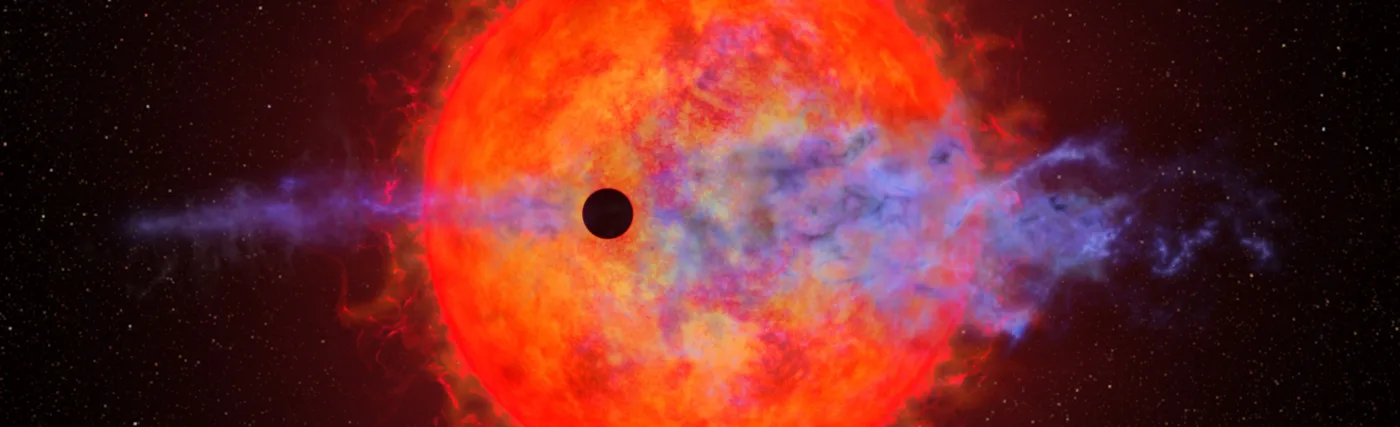
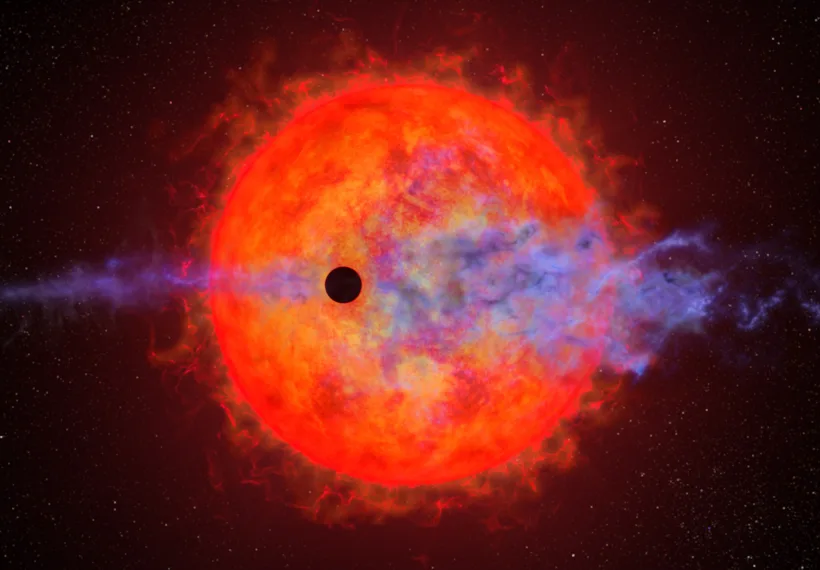
Is Earth going to evaporate? Neil deGrasse Tyson and comedian Chuck Nice learn about exoplanet discovery, planetary evaporation, biosignatures and technosignatures with astrophysicist Anjali Tripathi.
What is our most studied planet? Learn about Anjali’s time as a White House Fellow and her work with the US Department of Agriculture and climate change. How does NASA give insights on Earth? What can satellites do for you? Plus, we answer audience questions: are exoplanets evaporating?
What is the likelihood of other intelligent life? We discuss intelligent life on Earth and the likelihood of finding life elsewhere in general. Discover spectroscopy, how we learn about the composition of distant exoplanets, and what JWST is discovering about exoplanets. Would we be able to eat and digest life from other planets? Would you want to eat an alien?
Is there a minimum and maximum size for rocky planets to be habitable? We explore planet density, gravity on Mars, and what defines a “Super-Earth.” We break down the different types of biosignature gasses, technosignature gasses, and how pollution could help us find aliens. Are there some gasses that only life can make?
Thanks to our Patrons Christopher Stowe, Bo Cribbs, Jennifer Pierce, Sam Gilbert, Steven Glasser, Antonio Garibay, and David Frigoletto for supporting us this week.
NOTE: StarTalk+ Patrons can listen to this entire episode commercial-free.
Transcript
DOWNLOAD SRTYou know what’s missing in your life right now?
A little sparkle, a little effervescence, and maybe some fun while you’re supporting your immune system?
New Immune Supporting Emergency Crystals.
Bring you the goodness of emergency in a fun new popping experience.
There’s no water needed, so it’s super convenient.
Just throw it back in your mouth, feel the pop, hear the fizz, and taste the delicious natural fruit flavors.
Emergency Crystals, Orange Vitality, and Strawberry Burst flavors for ages nine and up have 500 milligrams of vitamin C per stick pack.
But more importantly, they make your mouth a lot more interesting while you support your immune system on a daily basis.
I love throwing back a pack and feeling the crackle in my mouth.
Makes me feel like I’m having fun while I’m supporting my immune system.
Look for Emergency Crystals wherever you shop.
These statements have not been evaluated by the Food and Drug Administration.
This product is not intended to diagnose, treat, cure or prevent any disease.
Nissan has a car for everyone.
Every driver who wants more.
Whatever your more is.
More fun, more freedom, more action.
From sports cars, sedans and EVs to pickups and crossovers.
With Nissan’s diverse lineup, anyone can find something to fit their more.
Get more revs in their sports car, more guts with all-wheel drive and more than enough options to fit your driving style.
Nissan can take you where you want to go.
Find your adventure and more with Nissan.
Coming up on Star Talk, we’ve got a Cosmic Queries edition all about exoplanets.
I’ve got with me one of the world’s experts on that subject.
Anjali Tripathi, welcome to Star Talk.
We’re gonna find out where she came from, where she’s been and where she’s going in this world of not only exoplanets, but also as a citizen scientist serving two presidents coming up on Star Talk.
Welcome to Star Talk, your place in the universe where science and pop culture collide.
Star Talk begins right now.
This is Star Talk, Neil deGrasse Tyson here, your personal astrophysicist.
Today is another Cosmic Queries ever popular format.
That is, on the subject of exoplanets.
Chuck.
Yeah.
My co-host, how you feeling, Chuck?
I’m feeling great, man.
Feeling good about the exoplanet?
Exoplanets are always a fodder for great thought because now we know that there are millions and millions of them.
They’re everywhere.
I don’t know if the catalog has quite hit that yet.
We went from four.
They were like, maybe there’s four.
So I don’t know a little bit about exoplanets, but if we’re going to really go in with the cosmic queries, we’re bringing the big guns.
So we combed the landscape and we found Anjali Tripathi.
Anjali, welcome to Star Talk.
So excited to be here.
Excellent, excellent.
You in your professional life, not only did original work on exoplanets, you also found yourself either on purpose or otherwise at the intersection between science and society.
So I want to get to that in just a minute.
Right now, you’re a research associate at NASA’s JPL, which Chuck stands for what?
I believe Judy Polson lingerie.
That’s right.
Judy Polson’s lingerie.
It’s all the rage now.
That’s usually classified.
Why’d you let that one out?
That was classified information.
Yeah, now the awesome Jet Propulsion Labs in Pasadena, California.
Yes.
And it’s not only a branch of NASA, they collaborate and are basically on the campus of Caltech, right?
I am a Caltech employee.
Right, right.
So who signs your checks?
Is it Caltech?
Wow.
Okay, there it is.
But you still have NASA overlords.
I’m pretty sure you do.
You know who we had on StarTalk just when she just started was the director of JPL, who is Lori Leshen.
Lori Leshen.
She and I served on a commission to study the future of NASA.
Well.
We were both appointed by President George W.
Bush.
And she went on to great things.
And you.
You got stuck with me, I’m so sorry.
What a shame.
But you can dig the Lori Leshen episode out of our archives.
That was fun.
I wanted to get to her before NASA got to her.
Because NASA, they want to over control the interviews.
But she and I go way back.
So there was an interval where let’s just rock and roll this.
Exactly.
Just say what you think, think what you feel.
Yeah.
Well, you’re not going to be able to do that with Anjali because NASA is still controlling her.
I have the NASA handguns on.
We’ll figure something out here.
So at JPL, what are your primary concerns?
I like thinking about what can we see from space, right?
So what can you see when you look up about exoplanets and other worlds and also looking down here on earth and how can you improve life here on it?
You know, people, when they think of space exploration, they don’t always think that from space, you can see earth as a planet.
Exactly.
And monitor what’s going on and how we doing, you know.
So this seems to be a really important feature of what NASA can deliver the public.
Yeah.
Something folks always get wrong.
Ask them, what’s our most studied planet at NASA?
And they go, Mars.
And you go, wrong.
And you think it’s earth and nobody realizes that.
Exactly.
So you still have roots back where you got your PhD?
I’m a research associate at the Harvard Smithsonian Center for Astrophysics.
Okay, all right.
So tell me, before we get back into exoplanets, because that’s where we got all the questions are based on though.
Yes, they are.
Just the science and society part of your life, how did that begin?
So being a Valley girl, you know, we had an earthquake in the 90s and I had to move out of my house for a year.
And the people who come on TV, for those of you who’ve had the pleasure of earthquakes, it’s a seismologist who comes and tells you what’s going to happen.
And I thought, scientists can come and tell you what’s going to happen next and sort of save things.
I want to do that.
And then I learned that seismology and geophysics and physics are important, but they don’t save the world in the same way.
And so thinking about how you can find connections between science and-
You know why they don’t save the world?
Because they only bring the geologists on after the earthquake.
After the earthquake.
Not just before the earthquake, after the earthquake.
It is true.
Okay, they saving nobody.
That’s a dull going to say, because like when do we really need them?
We just got some readings in.
That’s when we need them.
Whereas with the astronomers, we’re like that eclipse, get ready, it’s coming in six months.
Okay, it’s just total predictive powers.
All right, so now what?
So, okay, so the urge doesn’t make the reality.
So what happened?
I mean, I was lucky enough, I went and served in two administrations.
President Obama brought me in as a White House fellow.
She was lucky.
That was just luck.
I was gonna say.
That was just luck.
I mean, I don’t like to talk about the bribes.
I served in two administrations.
That’s funny.
I used to serve at Wendy’s.
I was Wendy’s manager.
And I served for two tours of duty.
Two tours of duty.
Wait, so who was your?
Thank you for your service.
So who was your first president?
Well, I mean, I was born a while ago.
Lady doesn’t reveal her age, but of the two administrations-
We’re gonna triangulate on that if you give us enough information.
President Obama.
President Obama, okay.
And so in what capacity were you serving in the White House?
I came in serving at the US Department of Agriculture, thinking about climate change.
It doesn’t matter why your soil is dry, you gotta get things to grow.
That’s right.
Is there a relationship between the Department of Agriculture and the Environmental Protection Agency?
I mean, so I was working on food waste, right?
Which is something that both care about, right?
Because, I mean, you know, your apple that you don’t eat turns into methane, greenhouse gas, right?
Yes, without a doubt.
So how does the Obama administration connect you to agriculture?
What is that pathway?
Where else would you put an astrophysicist in government?
Wait, what was your title?
I was a White House Fellow.
Oh, you didn’t say that.
Oh, okay.
A White House Fellow.
And so you have these science fellows at the White House.
So, the White House Fellows are actually, I was the only scientist.
Yeah, so it’s a group of about 16 in my class, right?
So one of them is now a Congresswoman.
We’ve got all kinds of folks, a lot from the military and business and law.
The idea is you go and you serve a cabinet secretary as a senior advisor.
Because the cabinet reports to the president.
So this is still a White House thing.
Exactly.
So the secretary of agriculture then became your campaign.
Who reports to the president and you were working with them?
Yep, so I’m intrigued by the fact that you get a PhD studying exoplanets.
So you’re thinking about planets, looking at them from afar.
And then earth and agriculture becomes earth that you’re thinking about from afar.
So what kind of NASA or astronomical insights can you offer the Department of Agriculture?
Well, I mean, I want it to be more down to earth, let’s be honest, right?
And the idea is just that, you can see so much more from satellites than you can with a guy.
Walking around with a mule.
They offered to send me to estimator school where they said you’re going to walk a certain number of pieces in a cornfield, pick the second ear of corn you see and count the diameter and across.
And that’s how we estimate the crop yields in America.
We still to this day don’t use satellite technology for the government predictions on crop yields.
Which is green acres?
That’s crazy.
You got Arnold the Pig predicting the weather?
Hey man, so how big is your corn?
Like that’s crazy.
It’s quantitative, you count.
But I mean it’s one of those things that it’s really useful for all the companies that come in because then it’s calibrated ground truth.
Okay, I mean in a way that makes sense.
Yeah, so now, but isn’t it much better to look at, because you can see from space, you can actually see soil conditions, you can see the crop yields themselves, there are, I mean, how dry it is, how dry you can see, you know, there’s so much more information you can get from looking down from above.
So what’s going on with that?
I mean, and so to your question, right?
There is tons of NASA data that looks at the soil moisture, it looks at sort of the different vegetation, and that’s all publicly available both to the agriculture department and anybody else.
And to the person pacing cornfields.
It’s available to them.
Right.
But maybe they need a job.
Exactly.
The farmer needs a job.
I don’t know.
So, no, I’m intrigued by this.
So, okay.
So that was a tour of duty.
It went across the administrations.
But then you ended up, you told me offline, you ended up at the Office of Science and Technology Policy, which is the executive branch that oversees the budget for science in the United States.
For science, yes.
For science, right.
And so what were you doing there?
Writing about, hey, what are we investing in?
What are the people and the programs?
And I figured that we added the word American in front of everything we want to do, so we wanted American health, right?
Not just health.
American health.
That was smart.
Yeah.
I mean, that is brilliant, because when you look at America, Merck, you should have made it that, instead of American.
You gotta spell it right.
Apostrophe M-U-R-I-C-A.
I-C-A.
Merck.
They didn’t teach me that one in my spelling classes, you know.
Okay, so that was clever, and so now more people across the aisle can take ownership of it.
That’s right.
Yeah, no, I mean, it was, I will say, coming in to a new administration, it’s kinda crazy, your hard drives get wiped, everything is gone, you’re starting fresh a little bit.
And lots of opportunity to learn.
So whether you wanted me to have that opportunity or not.
But I think, you know, we did some good stuff.
But would you have normally been discarded between administrations?
No.
Oh, how did you stay on?
So White House fellows have a one-year appointment that’s fixed.
And so, started August of 2016, went to August of 2017.
Oh, you started at the end of the Obama administration.
Oh, so you cross over.
You were a part of the transition.
So at the time you told me, again, offline, that you knew I was on a Pentagon board at the time.
How did you know about that?
Because I go into five-sided buildings.
I can handle that, not just four-sided ones.
Okay, right on.
You mean go with five-sided, how many five-sided buildings do you know?
I don’t know, because I work at the Hetsagon.
Why do you think the telescopes have these Hetsagonal mirrors?
Yeah, the mirror segments of JRSD are Hetsagon.
That’s right.
So that’s a top secret nobody knows about except for you.
There you go, that’s right.
And you know where we came up with that idea?
At the Hetsagon.
Not the Pentagon.
Okay, what’s your most recent published paper?
Was it about climate change?
Yeah, we just wrote a paper together about sea level rise and how you can use satellite data to actually do a better job of preparing coastal cities.
Excellent.
Right, yeah.
Which is only where most everybody lives.
Every major city is on a body of water.
And so…
What can satellites do for you?
Okay, but again, it sounds like the seismologist, it’s like, here’s what to do when the water knocks at your door.
Is there preventative advice in there?
No, so this is all about how cities can look at glaciers in Antarctica and Greenland melting now to prepare for what’s happening in the future, right?
Rather than waiting for the level to actually rise, that you have some early warning.
Oh, so you can make predictions and anticipate.
Got it.
That’s amazing.
Got it.
And plus, I’m not thinking about Antarctica or Greenland when I don’t live near them, but their water doesn’t carry passports, right?
That water molecule will go wherever it goes.
Yes, exactly.
Right.
So let’s get back to exoplanets.
So, your work for your PhD was what?
Thinking about how planets form and how they evolve over time.
Oh, formation of exoplanets, good.
Somebody had to make them.
That’s right.
They’re not just born whole.
No, exactly.
So Chuck, you got questions for her.
We have them right here.
Let’s do it.
You want to jump right into this?
Let’s do it.
All right, I love this first one.
This is Manchel Hicks.
And Manchel says, hi Dr.
Tyson, hi Anjali.
Planets are evaporating?
That’s it.
That’s all that it says.
I mean, Manchel’s got it down.
Planets are evaporating, right?
I mean, we got the earth, we got exoplanets, right?
Because you’ve got all this gas that we call the atmosphere that’s trying to stick to the planet by gravity.
But sometimes you got the heat from that star.
That’s enough that it just pulls it off.
Well, we’re losing what?
Helium and what’s the other thing?
Hydrogen.
Hydrogen and helium on a daily basis.
Hourly minutes, seconds, yeah.
Okay, but not so fast that I should worry about it and make a thing of it.
But if there’s stars that get brighter or more luminous and they’re gas-rich planets, so how about those big Jupiters that are orbiting close to their host star?
Are they evaporating?
Yeah, these planets that we call hot Jupiters because they’re so close in, right?
And especially since they’ve always got one side often facing the star, so the same side’s getting plastic.
Like the moon is tightly locked to us.
If you get close to a massive source of gravity, it’s gonna lock you and only look at one side, just as we did to the moon.
The moon is trying to do that to us.
Did you know that?
Yeah, just lead us down the wrong path.
It’s just trying to-
I knew.
I knew.
Yeah, don’t value judge the path.
It’s just the orbital mechanics of it.
Come on, then we go over here.
Why are we?
That’s what I’m just saying.
Let’s go over here.
So the moon is trying to slow us down so we only show the same face to it.
Yeah, that’s why we throw in leap seconds every now and then to make up for that.
With the evaporation, because I’m concerned about Earth, to be honest, what’s going to happen first?
Will our atmosphere, which I understand from Neil, is like thinner than the skin of an apple, okay?
It’s thinner than the skin of apple.
Will that evaporate before the sun expands and kills us all?
Or what’s going to happen first?
All right, Chuck, don’t worry about it.
Don’t worry about it.
A lot of things that I’ll scare you with, this isn’t one of them, right?
All right, so the idea is that you will have this atmospheric escape is what they call it because your atmosphere is literally escaping the planet, happening more and more in the future as the sun gets brighter, but it’s not all going to go away before then.
So you’re safe.
You’re good.
We’ll be crawling around the surface of the earth trying to breathe.
Right, stay low, like you’re in a fire.
Stop, drop, and roll, just so you can breathe.
Well, I think you’re going to want to go up towards the poles or something like that.
The equator’s not going to look so hot, or maybe it is going to look so hot.
Well, you already got this planned out.
You’re gonna have to join a Santa Claus.
Thank Starting, growing or running a business is taxing.
And I’m not talking about the government, I’m talking about, it’s hard.
There’s little time to actually pause and plan for what’s next.
PayPal wants to help you rethink your business, plan for the future and build a path to success.
What if there was a simple way to get some real actionable tips specifically tailored to your business?
Meet MAP, a new tool built by PayPal.
Powered by PayPal Research, it provides you with customized tips in minutes to help you reach your goals.
With just a few clips, MAP analyzes your business information and goals and then generates tips that empower you to succeed on your own terms.
And so I saw this and I went, really?
Seriously?
So I’ll type in some stuff and it’ll tell me what to do for my business.
And guess what?
I did it.
And guess what?
It worked.
It gave me some truly actionable tips that I am going to put into use.
The planner tool really provided me with some help to achieve the goals that I’m looking to achieve.
So what you need to do is rethink what’s possible for your business.
Visit paypal.com/us/startalk.
That’s paypal.com/us/startalk.
Hey, if you like saving, you should join Walmart Plus.
It’s a membership that saves you money on the stuff you’d expect, plus the stuff you don’t.
Like gas, plus free delivery, plus a Paramount Plus subscription, plus so much more.
I love saying plus.
So you can drive the kids to soccer practice, order snacks for movie night and stream your favorite movies all while saving.
Start a free 30 day trial at walmartplus.com.
See Walmart Plus terms and conditions.
Paramount Plus essential plan only, separate registration required.
Think about what happens when you’re sick and you have to see a doctor.
First, you have to schedule an appointment, which sometimes can take days or even weeks to get in.
Then you have to go to the doctor, even though you’re probably feeling miserable.
Then you wait in the aptly named waiting room, exposed to whatever the people around you are coughing and spewing into the air.
Oh, the humanity.
Fortunately, there’s an option that is far more humane, Teladoc Health.
With Teladoc Health, you can get in touch with a doctor 24 hours a day, 365 days a year, all from the comfort of your own home.
Whatever your medical problem, just open the Teladoc app and connect with a board certified doctor who will offer advice, write a prescription, or even schedule an in-person visit.
Just open the Teladoc Health app and get a diagnosis, treatment plan and prescription, if needed, from a board certified provider, all of which makes Teladoc Health a far healthier form of healthcare.
I am speaking from experience when I say that it works because I use it all the time.
Download the app to get started today or go online to register or schedule a visit at teladochealth.com/startalk.
That’s teladochealth.com/startalk.
All right, Harry, this is TJ Show, who says, hi, TJ here from Winnipeg, Canada, eh?
He does not have that in there.
No, they don’t, okay.
They do not.
Okay.
Okay, it says, thanks for taking my question.
Hello, Dr.
Tyson, Dr.
Tripathi and Lord Nice, long time listener and new Patreon here.
My question is about intelligent life.
If there are roughly 10 million unique organisms on Earth, 99% of all species that have ever existed are extinct, and we are only, the only intelligent species out of all that questionable, let me say questionable.
Big assumption.
Big assumption, then doesn’t that mean that the likelihood of there being intelligent life on a newly discovered habitable world is about one in a billion?
Oh, I like that.
Okay, so there you go.
His fast, fast, back of the envelope math there.
Back of the envelope math there, so he says, yeah.
So, and then he goes on our galaxy might be teeming with life, but intelligent life could be extremely rare.
So let me recast that in another way.
So if you have a dark, if you have all the, so his earth is this one branch of vertebrates coming out of fish that became great apes.
Right.
I know some apes, but not all of them were great.
Well, no, some of them were just not so great.
So at one thin branch of that are the humans.
Anything could have stopped that.
The asteroid not taking out the dinosaurs would have disrupted the mammals from ever even quote ascending to where we are.
Just sheer luck, okay?
Bad luck, dinosaurs.
So if this is just one branch out of the tens of millions of life forms, if you have tens of millions of Earths, close your eyes and throw a dart.
Really?
Most of them will just have life like we got here.
Just life, but it will not be developed.
So react to that please.
I’m just saying I’m not smart enough to know what else is out there in the universe and certainly not the numbers of that.
So I think if we’re being honest, do we know if there’s life out there?
I don’t know.
Do I hope there’s life out there?
Heck yeah.
Do I hope it’s intelligent?
Heck yeah, but the number’s one in a billion.
Let’s take the intelligence out.
Now, the fact is.
The 40 of them.
Let’s factor that out.
What is the likelihood of just life?
I don’t care if it’s single-celled life.
I don’t care if it’s just some type of bacteria, amoebas, whatever.
What is the likelihood of that happening, seeing as how the same building blocks that we have here are everywhere?
Yeah, plus it happened pretty quickly on Earth.
Yeah, I mean, we’re only 4.5 billion years old, and we got to the life part pretty damn quickly.
I mean, this planet’s everywhere, right?
Like every star has planets.
And so if you think about it, we’ve got so many planets, so many balls of rock are probably amongst those planets.
Chances are good you had the conditions for life, right?
And you know, water, some energy, those things seem like they’re out there.
So I think the chances are good.
But again, one in a billion, I don’t know if it’s that slim.
Yeah, plus we’re not even limited to rocky planets anymore because there’s some good moons.
There are some great moons.
That habitable world, right?
Not just the habitable planet.
Habitable world’s not just planets.
Yeah, world.
Forget planet, non-planet.
Yeah, have world.
World.
And then we, yeah, yeah, yeah.
I mean, like even like a ice, well, what would be like an ice world, like uncelled, like ocean underneath.
Yeah, but that could happen, right?
Totally happen.
All right, here we go.
This is Dylan and Dylan says, greetings everyone from Flagstaff, Arizona.
I’m taking undergraduate astrophysics courses and learning about spectro, spectroscopy.
Thank you.
Spectroscopy.
Spectroscopy.
I can’t, god, it always gets me.
And other amazing methods of how to find and characterize planets.
What has been the best method so far to find planets and what possible new methods are being thought of?
So let me focus that down and have you tell us, we’re now using spectroscopy to study the atmosphere of these planets.
So what’s coming out of that?
I mean, it’s amazing that when you get just the right configuration that you’ve got the star and the planet passes in front of it and you’re looking at that, some of the light goes through that atmosphere of that planet from the star and gets to us.
And so we can actually see some of those chemicals in that atmosphere.
That’s amazing.
So the chemicals are disrupting, really, the clean path of light from the star and that disruption shows up in the spectrum.
They were like putting their fingers on there, getting those fingerprints.
So what are you looking for?
So we’ve seen carbon dioxide with the James Webb Space Telescope, which is pretty cool.
The first time we’ve seen that on another exoplanet.
Okay, what else?
All kinds of other compounds.
We get water.
Okay, sure, water molecule, yeah.
And you got some good things in there.
And so all kinds of configurations of oxygen and carbon and hydrogen that you’re thinking about.
Methane.
Methane is pretty great, right?
You get methane there too?
Have you seen it yet?
There is methane about on the planets, yeah.
Okay, that would be evidence of?
Farts.
It can be, it can be.
All right, keep going, Chuck.
That is so cool.
This is Cessna.
By the way, just to bring closure to that, to say that the boring obvious fact, so many of these planets were discovered.
Exactly.
Were discovered just by their spectra.
Right, and by transits, right?
That you looked at the light and you saw it blinking, and that’s just because something kept going around at that light of the star.
The transit is the planet going in front of the star’s light, rocking the star’s light.
It’s just like when we have eclipses where you block out the whole face of the star, but here it’s just a fraction of it, right?
So we talk about it.
In fact, solar eclipses are really transits.
That, yes.
We talked about the transits of Mercury and Venus.
Yeah, yeah, yeah, yeah.
Mercury transit, Venus transit, it’s a moon transit.
And an eclipse technically, astronomically, is just object moving into the shadow of another object.
So a total solar eclipse, really, we shouldn’t use the term eclipse, but we do.
This is Cesar Erno, who says, hello, Dr.
Tyson, Dr.
Tripathi, is the James Webb Space Telescope used to look for exoplanets.
Heck yeah.
Okay, so why don’t we just zoom in on some exoplanets to get high-quality?
We’re from NASA, she said, heck yeah.
Heck, we heard that.
No, let me hear it real.
You’re in New York City, you’re in Manhattan.
Say that right.
I’m so sorry.
I can’t beat that.
I’m so sorry.
No, Chuck wins that.
That was just to New York, I couldn’t help it.
That’s a long belief on that one.
No, I think if I had the T-shirt, instead of I love New York, it would be I love GWST, right, for the exoplanets.
James Webb Space Telescope.
So I thought it would only be looking closer at exoplanets we’ve already discovered.
Is there a discovery mode?
There are discoveries too, yeah.
How does it do that?
I mean, it actually captures pictures where you see that there’s planets in the frame.
Without knowing that in advance.
Yeah, yeah.
So he said, why don’t we just zoom in and get some high quality images.
That’s what it’s doing.
And that’s exactly what you just saw it’s doing.
Wait, wait, so you see the host star and you see the planet.
You get a hint of the planet being there.
A hint of the planet.
You get a little dip of tea, right, dip of planets.
But I mean to, you know.
Wait, wait, can JNU-ST block the light of the bright star?
There is no coronagraph on JNU-ST.
Coronagraph.
Right, so a coronagraph is the part that, you know, it’s like sunglasses for your telescope to block out the light.
But, you know, the question of, can we zoom in on planets there?
You know, James Webb is looking at different patches of sky.
And if there are planets in there, that’s great, but it can’t look at just any part of the sky and say zooming in deeper and deeper because planets don’t give off a lot of light.
They’re just reflecting their starlight, which is so faint that you don’t see it most of the time.
Yeah, got you.
All right, this is Gavin Bamber, who says, hello from North Vancouver, where plant life flourishes.
And he’s not blind.
That’s a normal person.
Ooh, it’s so green up there.
Oh, you can go green blind up there.
It’s crazy.
It’s crazy.
He says, once we find plant or animal life on other planets, oh, will we be able to eat it?
Or can we tell if we’re able to eat it?
Or for Chuck, will we be able to smoke it?
That’s a question for you.
Wait, did he say that?
I swear to God.
Or for Chuck, will we be able to smoke it?
Okay, so let me ask this.
So, can we only…
I don’t know if it’s biology, you know, but can we process organic matter that has a different DNA from us?
Like, our DNA is right-handed.
Like, it spirals this way, like, clockwise, looking up.
The double helix.
Yeah, but in principle, you can have DNA doing the other direction.
Right.
The chemistry shouldn’t matter.
Right?
Except we don’t.
And all those people’s skin is on the inside of their body.
All their organs are on the outside.
They are so messy looking.
So what is the scholarship on just the digestibility of life forms that are not native to Earth?
Our researcher doesn’t eat and tell.
I don’t know why that got me.
But I mean, I would say, would you want to though, right?
Because I mean, there’s so many things that you’re like, oh, that cheese doesn’t look quite right.
I don’t know if I want to eat that.
Now you’re going, I just found this out there.
Foraged for some while.
That looks tasty.
There’s a whole lot of stuff on Earth you know not to eat.
Now, you’re that desperate to eat aliens?
Brad, I’m just saying, would you want some?
No one sees the world quite like an airline, but the world seen below is changing fast.
That’s why Delta Airlines is committed to net zero carbon emissions by 2050.
It’s why they’re partnering across the industry to create the future of aviation and switching ground vehicle after ground vehicle to electric.
It’s why Delta’s accelerating their push to source sustainable aviation fuel, and it’s why they’re also getting rid of 4.9 million pounds of single-use plastics annually.
That’s just what they’re doing, but it’ll take more than just the 90,000 people at Delta.
It’ll take everyone at every airline and in every industry because Delta knows a thing or two about getting where it needs to be.
And they believe it’s time we all got going together.
Learn more at delta.com/sustainability.
You know, chances are you’re listening to StarTalk Radio on your phone.
You’re probably on the go too.
Think of all you do on your phone the moment you leave your front door.
From checking the weather to transportation to online banking to ordering food.
You know, that requires an amazing network.
And that’s why you should switch to T-Mobile.
T-Mobile covers more highway miles with 5G than anyone else and helps keep you connected with 5G from the driveway to the highway and all the miles in between.
Because your phone should just work where you are.
It’s your lifeline to pretty much everything you didn’t bring with you.
Side note, I’ve been a T-Mobile customer for many, many years and I gotta tell you, I’m loving that network.
So next time you head out, whether you’re taking a trip or going to work or just running errands, remember T-Mobile’s got you covered.
Find out more at tmobile.com/network and switch to the network that covers more highway miles with 5G than anyone else.
Coverage not available in some areas.
See 5G details at tmobile.com.
Hi, I’m Chris Cohen from Hallworth, New Jersey and I support Star Talk on Patreon.
Please enjoy this episode of Star Talk Radio with your and my favorite personal astrophysicist, Neil deGrasse Tyson.
So this is Daniel L.
Thompson, this is Howley Dr.
Tyson, Dr.
Tripathi and Sir Nice.
And that’s Lord Nice.
He says…
Lord is above sir, by the way.
Exactly.
Lord is totally above sir.
Why would you demote me?
He goes, I’m Daniel from high school in the AFJROTC, Junior Air Force Reserve Officer Training Corps.
Good for you, buddy.
He says, for potential habitable planets, has there been a minimum and maximum size or density to define what would be survivable for humans to live?
I like that.
Yeah, and PS.
Chuck, you’re welcome for the easy name.
Well, thank you, Daniel.
But you can’t take credit.
I’m gonna thank your parents for that.
He, he, he, he, he.
But anyway, is there, I mean, I suppose, planet sizes in order to pressure, atmospheric pressure, or gas planets, whatever, all those things would have a…
There was a movie, The Space Between Us, where someone grew up on Mars.
An astronaut got pregnant on the night before the launch.
Yeah.
And it takes nine months to get to Mars.
And NASA had to hide that information.
So she gave birth on Mars and no one knew about it.
And then the kid came back to Earth and was like…
That’s pretty cool.
He had a hard time breathing.
And all the things he was used to on Mars.
His muscles couldn’t handle it.
But he was still alive.
It didn’t kill him.
So do you have any thoughts on survivability, of low or high gravity?
I mean, I’m a big fan of Earth, right?
So, like looking for planets, like Earth, because I like being able to jump up and down, rather than Jupiter out on it and jump up.
Where are you going next, right?
And having that nice solid surface.
So, something sort of the size of Earth is nice and cozy.
We seem to do okay.
Oh wait, so your point is, if it’s much more massive than Earth, it’s not a rocky planet.
It’s gaseous.
You’re getting gaseous.
Because it’s kept all of its gas.
Okay, so that’s out.
The upper end of that somehow.
Upper end’s out.
I don’t know how low we can go, right?
Because we’ve got moons that are possibly good places to live.
Well, our moon is one sixth gravity.
Right.
So, that’s not gonna kill you.
It’s not gonna kill you.
You’re gonna get some help.
But you don’t want to get used to it and then come back to Earth.
I was gonna say, yeah, I mean, three generations later, you have the bone density of a marshmallow.
But you’ve got the space suit, right?
That, you know, it’s a souvenir, right?
All I got was this lousy space suit, right?
When I came.
You’re not gonna be bound for my souvenir shop anymore.
So, I mean, I think down on the lower end, it’s hard to say how low you can go.
It is interesting, though, that when we look out at exoplanets, we find some where there are these little planets that actually end up just getting evaporated away.
So instead of their atmospheres being all that evaporates, you got just like crumbly planet going off into space.
Right?
So you got the wrong conditions there.
So it’s not just the size of the planet, it’s how close it is to the star and everything else it’s feeling.
It probably feels tidal forces, though, disrupt structurally, too.
Okay, but when they say super-Earths, we’ve heard this among exoplanets.
Super, how big is super?
Bigger than Earth, smaller than Neptune, right?
It’s not like anything we’ve got in the solar system, so you think like, that’s in between?
So you might be twice your gravity?
We talk about it in terms of the radius of it, so how’s the size of it?
Because the super-Earth, right, it could have a surface, it could be a little bit more puffy.
Okay, but so how big a radius compared to Earth if it’s a super-Earth?
Depends on your definition, right?
It’s a few times.
A few times, yeah, okay.
A few times, but that’s pretty big.
That’s pretty big, right?
When people think it’s twice the size, but if you can range 10 and 100 times bigger, a factor of two is just friendly.
Yeah, exactly.
I mean, we have a poster that we made of people skydiving on a super-Earth because they thought, oh, that’d be fun, right?
Yeah.
We’d be falling faster.
I personally don’t think it would be fun, but our art team thinks it’s great.
I think that’s great, but there was also the question in there of the density, and I definitely want to be on that ball of rock rather than that ball of gas, like Jupiter, because I like having a surface.
Yeah.
And so, but what if, or could you tell this, like when we retrieved part of the asteroid, right?
We were able to do so because we put the drill down in a place where we knew it was crumbly rock.
So what if we know that it’s a super earth, but it’s kind of made of that composition of crumbly rock?
I mean, I would love to get to that point, right?
Right now, I’m just like, it weighs this much, it seems this big, divide some numbers.
I don’t think that’s a real thing.
Really?
Yeah, because if it’s big enough and has a strong enough gravity, it’ll impact the fire.
Right, it will condense.
The problem with the asteroids, they don’t have much gravity, so they’re like loosely, they’re loose.
Plus, it didn’t drill, it was a touch and go.
It was right, boom, bang, and then it sucked up.
Grabbed whatever popped up in it.
And they were ready for just a couple ounces, and then they got half a pound.
Half a pound, so they were good.
But no, you’re right, the gravity makes a bit, that makes sense.
We got time for like one and a half more questions.
One more, all right, all right, all right.
Let me see.
Okay, let’s go with Andrew Nisker.
And Andrew says, hello from Flesherton, Ontario.
Can you please explain the different types of biomarker gases?
How will the next generation of telescopes enhance our ability to study exoplanets?
Guess that’s two separate questions, but hey, I’m always looking up, so I have to ask lots of questions.
So picking up on the earlier question, you mentioned water molecule, methane and carbon dioxide.
But is there like the greatest hits of what would reveal life on the surface?
I mean, there’s so many different ways that we can search for exoplanets with life, right?
Those signatures, right?
We call them biosignatures or technosignatures.
We even wanna go a little further afield.
And so the fact that you could look for pollution on a planet.
That’d be a technosignature.
Well, depending on how you count it, yeah.
But I mean, like you look for chlorofluorocarbons, right?
From your hairspray on your alien world.
That would be a slam dunk for life, even though it’s not one of the things we’ve historically always studied, right?
These sorts of things.
And so, signatures like methane.
Wait, so the chlorofluorocarbons, they’re idiots.
But they’re idiots we can see, right?
No sign of intelligent life there.
Exactly.
They’re getting rid of their ozone layer, which is probably what they’re saying about us when they actually see the biomarkers from this planet, or the technical markers from this planet.
Right, I mean, it’s like, if you were really smart, would you want people to see you and find you?
Right, right, right.
So, any more, what’s it?
Phosphate was one of them?
So, phosphine is something that people have talked about, possibly, no, no, it’s all good.
Being detected possibly in Venus and whether that’s a sign of life or something else is probably something else there.
But I think there are lots of detections of all of these more complicated molecules, right?
Where you start putting things together.
That would be there only if you have life on the surface.
That could be caused by life, right?
You know, like the chlorofluorocarbons would only be caused by life.
But methane could be common from something else.
Okay, because you can get naturally occurring methane.
Right, yeah.
Okay, so what about oxygen?
Oxygen could be there, it can be, I mean, when you look at it.
I don’t know how you get oxygen unless somebody’s making it, like with plants.
I mean, like look at the history of the Earth, right?
For billions of years, we’ve existed and we didn’t have this much oxygen all that whole time, right?
Like go back in time.
So you not only need to look at that planet and just see what it is, but at this particular moment in time.
When I saw the original Star Trek, do you remember that in the original Star Trek, no one ever wore a spacesuit when they went down on the Earth?
They didn’t wear a spacesuit, they never wore masks.
Right, right, you know why?
But they would establish oxygen, nitrogen, atmosphere, Captain.
Well, let’s go on down.
It’s a Class M planet.
Right, right, exactly.
A breathable atmosphere.
So I’m thinking, oh, if you just look hard enough, you find other oxygen, nitrogen planets.
And then I realized later that you’re only getting the oxygen from living matter on the planet.
It’s not just some random mixture in the random assortment of planets.
Somebody’s making the oxygen, and on Earth it’s our plant life.
But I mean, we can also, you know, when you form a planet, you got all kinds of chemistry going on in there and things going into the rocks.
And so what goes on in your atmosphere, some of that just happens naturally.
Okay, so you’re gonna have to distinguish those cases.
So getting the list is one thing, and then you fight about whether it’s biological or not.
Exactly.
Yeah, at the conferences.
Yeah, that’s good.
That was a good question.
Chuck, time for one half a question.
Oh my God, let’s see.
Let’s go with Captain James Riley, who says, hello everyone, Texas here.
Is there a most common atmospheric composition out there among rocky planets?
I’d like that.
Related to that last question.
I love that question.
And I think in the last question, he asked about the telescopes.
And I think the answer is, we need more data, right, to answer this, because we haven’t been able to tell the atmosphere.
I’m not allowing you to cop out and just say, we need more data.
No, no, but.
You talk to me, give me.
But I mean, I think that’s the thing, is that so many of these things, because if it’s a cloudy day, you can’t see what’s going on underneath, right?
You see clouds, you see like water vapor up there, right?
So there’s so many of these systems where you think like, hey, I need this new telescope.
Okay, so of all the planets where we know anything about their atmosphere, is there an emergent common list?
I think it’s kind of like the zoo, right?
There’s some common things, like there’s all those things with tails, so there’s all those things with oxygen, there’s all those things with carbon and methane, right?
It’s the sort of thing that we haven’t seen enough to be able to say, this is the most common thing yet, so not yet.
So like the zoo, you have animals with tails, animals with four legs, and animals with wings.
Things with wings, right?
Okay, so the blunt, the blunt, you start blunt.
I think what it means is we gotta chat more again in a few years and then we can do better on this question.
Well, very cool.
By the way, I understand you have a Ted Talk?
I do.
Yeah, on?
On Atmospheric Escape.
Whoa.
Well, I’m not watching that.
I’m scared to death.
But you know how it ends.
I’ll die long before.
So you’re the first to model the escape of gas from atmospheres.
Doing that in 3D for these planets.
3D modeling.
Oh, cool.
In the old days, computers weren’t fast and we didn’t have AI.
And so you do like 1D modeling and 2D modeling just to approximate the 3D modeling because you couldn’t calculate it.
And then when computers get fast enough, and she comes along, I got this, 3D, all in.
Okay, you go.
And it’s hard because you’re modeling gas.
Right, you’re just watching it flow.
Yeah, yeah, this is the flow of gas in a computer model, that’s not easy.
It’s not let it go, it’s let it flow, right?
Right.
Yeah, but I mean, what’s funny is like, isn’t that like, gas is, what’s that?
Gas moves towards entropy, it’s just chaos, right?
So what are you-
Somewhere in between, right?
Because it was starting on the planet in the atmosphere and just blowing off into space.
Okay, so that’s what you’re doing.
You’re going from where it’s very more stable and then to its instability.
Chuck is good till the next time.
I’m feeling better.
You’re feeling a little better.
I’m feeling better.
I mean, you gotta be feeling totally better.
So Anjali, thanks for coming on the Star Talk.
Thanks for having me.
We’ll continue to follow your career.
You know, there’s still a few more presidents you can work for.
Yeah, exactly.
Don’t slouch.
You gotta get back in the White House.
I mean, I’m the exoplanet ambassador, though, right now, right?
So I gotta go visit those exoplanets, too, eventually.
You have an ambassador title.
Oh yeah, no, I’m NASA’s exoplanet ambassador.
Oh, sweet.
Oh my God.
So do you speak at the UN?
I speak for the State Department.
The Galactic UN.
That’s what you get this week.
So when the aliens come, when they say, take me to our leader, I’ll say, we have an ambassador.
We have an ambassador.
Is that good enough?
No, we say, we ain’t taking you to our leader.
You’re, the ambassador is gonna be what you’re gonna meet.
Believe me, yes.
It will be a scientist or Taylor Swift.
The doctor will see you now.
All right, well, good luck in your continued career and your ambassadorship, and we’ll want a full update.
All right, sounds good.
As more exoplanets show up and more aliens visit, we’ll be first on the list.
All right, good.
This has been StarTalk.
Neil deGrasse Tyson here, your personal astrophysicist.
Chuck, thanks for being there.
All right.
And as always, I did you.
Thank Okay, text from the wedding planner.
She’s talking about a cake pop mural.
Ah, exciting.
Ooh, it’s $8,000.
I don’t know, we’re trying to save for a house.
Well, you only get married once, or twice, the three time stops.
There’s a lot of bad money advice out there.
For knowledge you can trust, come to GISA Credit Union.
Whether it’s saving for the wedding, or everything that comes after, we can help get you where you wanna be.
Find a healthier approach to money at GISA.
The next generation of streaming is here.
Introducing Spectrum One Stream.
Bringing together internet, advanced Wi-Fi, mobile and now TV with the all new Zumo StreamBox.
Get fast and reliable internet for $49.99 a month.
Free advanced Wi-Fi, a free unlimited Spectrum mobile line, and a free Zumo StreamBox when you add Spectrum TV.
Spectrum One Stream, it’s streaming simplified.
Visit spectrum.com or a Spectrum store for details.
Offer subject to change, valid for qualified residential customers only.
Service not available in all areas, restrictions apply.


 Become a Patron