


 Unlock with Patreon
About This Episode
Could LISA detect primordial black holes or gravitational waves from the Big Bang? Neil deGrasse Tyson and co-host Chuck Nice explore LISA and the future of gravitational wave astronomy with astrophysicist Kelly Holley-Bockelmann.
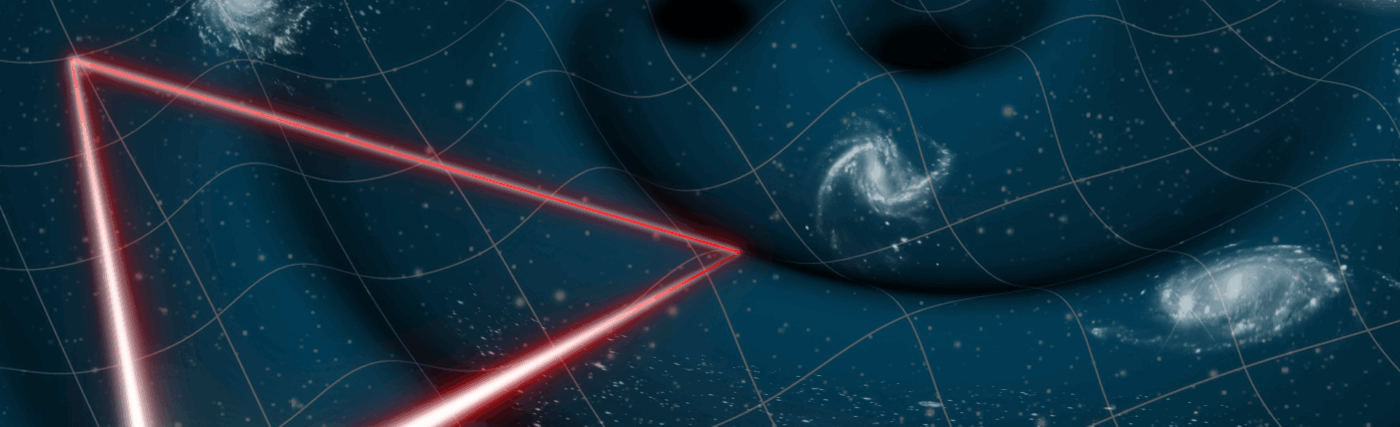
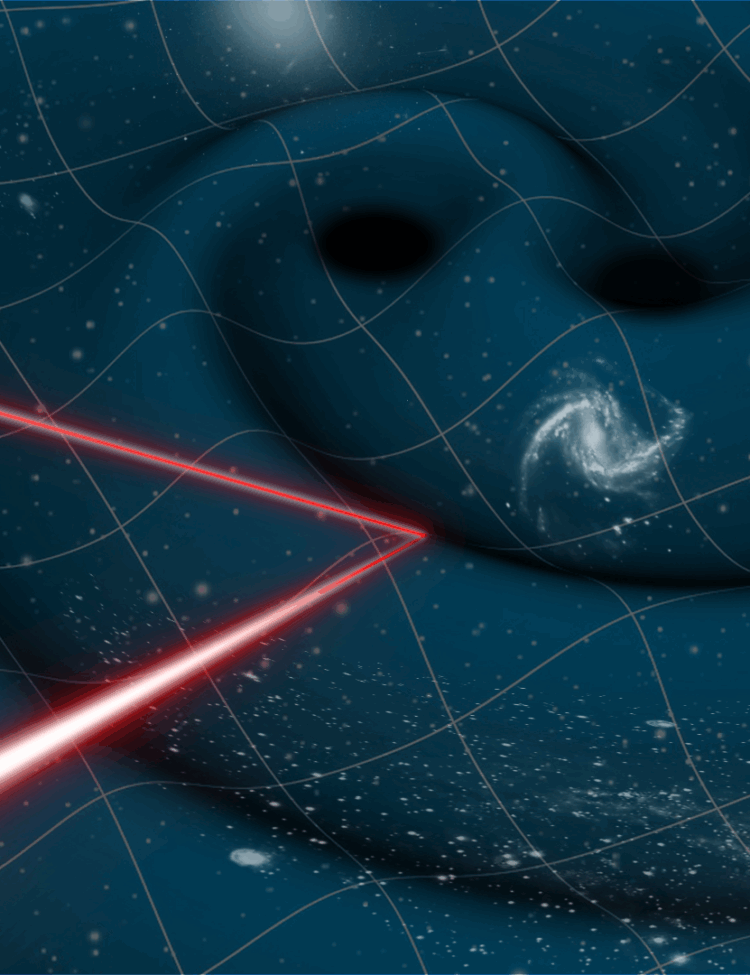
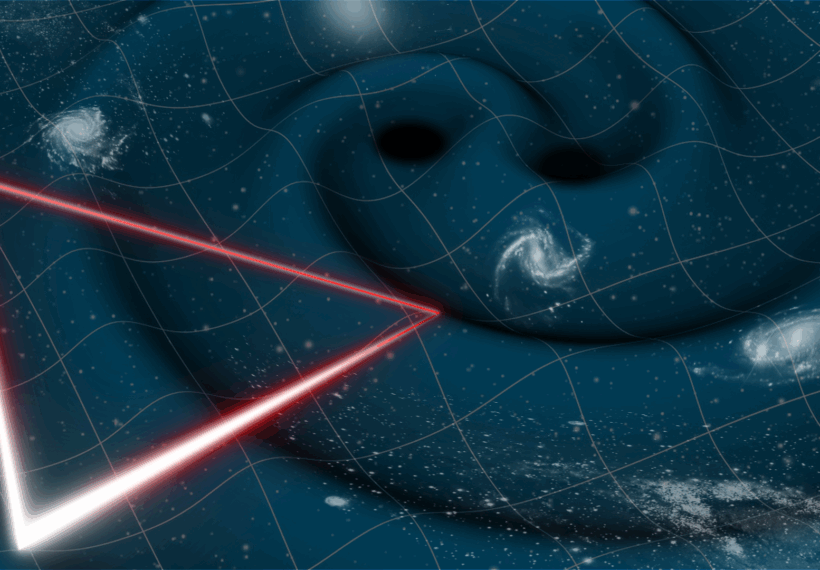
How does LISA differ from LIGO? Learn about LISA, the Laser Interferometer Space Antenna, and how these spacecraft will help us detect gravitational waves from space. Why does it need three spacecraft millions of kilometers apart, linked by laser beams? And how can orbiting cubes of gold and platinum reveal the secrets of colliding black holes?
Kelly explains why supermassive black hole mergers are her favorite cosmic events, how LISA could detect EMRIs–tiny black holes orbiting giants–and why the mission’s three-node triangular design matters. We explore the engineering challenges, from solar storms to relativity itself, and why interferometry is one of the most precise measuring tools ever invented.
The conversation turns to funding, politics, and why U.S. withdrawal could leave China to take the lead. What technologies might spin off from LISA? Could we one day have GPS, but for the entire solar system? And could LISA finally detect primordial black holes or the faint gravitational hum of the Big Bang itself?
Thanks to our Patrons Bobby, Ron Abernethy, yogesh job, Jared Richardson, cgillies87, John .A, Russell Hughes, Andy Revans, Darkeiser, TRacey Rankin, Anna Elliott, Andres Ortiz, Vavilov, Jeremy Nadeau, Mr Wolfgang, NorCalPhys, Advait Aithal, Alii Torres, Cody Pflieger, David Mauricio Perez de la Peña, Tommy Hadden, Kayce Rawlins, Ryan, Brian Hendershot, jenna Mich, smopeh, Boris Bendikov, Eileen, Matt Zullow, James Pickney, Micheal del Campo, Marsya, MomShikib, Syaz S., Jacob Harasymenko, Kevin Ingalls, Tom Reed, Paul S AKA Paul Biberdork, Treven Price, Tatiana, The Eye Child, STEPHEN R SMALL, Jedi_B0mbadil, Milton Flávio S. Teixeira, Davey_D, Mathys Marselis, fungus finder, Micheal French, Ngakora Beal, Mike Schaar-Ney, Robert Lima, Adam Small, Gonzalo Galetto, Nathan, DC, DGS DGS, Don, Mike McClelland, Arthur Pew, Matthew Vierra, Jeppe Fjordside, Sydney Wolf, and Caleb Carter for supporting us this week.
NOTE: StarTalk+ Patrons can listen to this entire episode commercial-free.
Transcript
DOWNLOAD SRTChuck, if you give an astrophysicist a cookie, they’ll ask for more.
You, we weren’t happy with LIGO.
No.
There’s more black holes to detect.
Yeah, yeah, exactly.
Now we got Lisa, which, you know, I have to say, better name than LIGO.
That’s for sure.
Coming up, everything about the next generation gravitational wave detector on StarTalk.
Welcome to StarTalk.
Your place in the universe where science and pop culture collide.
StarTalk begins right now.
This is StarTalk.
Neil deGrasse Tyson, your personal astrophysicist, got with me my co-host, Chuck Nice.
Chuckie, baby, how you doing?
Hey, what’s up, Neil?
How’s it going, buddy?
All right, yeah.
Professional comedian and actor.
And acting like a comedian.
I’ve even seen you on TV commercials.
Yes, you have, but not enough.
Not enough TV commercials.
That seems to be the problem.
That’s what I’m trying to convince the industry of is the public is clamoring for more Chuck Nice TV commercials.
Oh, OK.
So today, we’re revisiting a topic we’ve done in several different dimensions, in several different angles.
Really?
Yeah.
See, this is when I wish I would have read the emails about what the show is going to be.
Because I don’t know.
We’re going to be talking about gravitational waves in the universe.
Nice.
And while I know a little bit about it, I’m no expert.
And so we combed the landscape, and we found one of my colleagues who’s on the frontier of that.
Oh.
The future of gravitational wave detection.
And that is in the incarnation of Kelly Holley-Bockelmann.
Kelly, did I pronounce your whole rest of your three names correctly?
All of it, yes.
That’s a serial killer name if I ever heard one.
You’re a professor of physics at Vanderbilt University.
I think that’s in Nashville, correct?
It is, yes.
Nashville, Tennessee.
Recent chair of NASA’s Laser Interferometer Space Antenna.
Sensibly acronym.
LISA.
LISA, yes.
LISA.
Of their study team.
And you’re recent chair of NASA’s Astrophysics Advisory Committee.
Yes, I served on that many moons ago.
Did you really?
Maybe before you were born.
But I wasn’t chair.
I was just a member of that committee.
This is the closest NASA has to a board, right?
NASA has people who advise them, not only astrophysicists, but others in the full spectrum of NASA’s portfolio.
And you are director of the Fisk Vanderbilt Bridge Program.
Oh my gosh.
One of the most extraordinary and successful programs I have ever seen enacted for its intent and its purpose.
And in fact, I want to lead off with that.
So, Vanderbilt and Fisk University have a partnership through this bridge program, right?
And if I understood it correctly, Fisk does not have the full up research programming and facilities that Vanderbilt does.
And so in a bridge program, you get students from one university who can participate in another.
Are you ahead of that?
So tell me more about it.
Yeah.
Thanks.
It began about 20 years ago.
We’re about 20 years.
Right.
This has been going.
Yeah.
It has been going.
We started off with the idea that the traditional metrics that choose graduate talent are things like standardized test scores and grades.
That’d be the GRE, right?
That’s right.
The GRE.
They select people who are really great at taking tests and very smart people.
But science isn’t like that.
And so we need folks that have a diversity of thought and background and who are creative to be able to tackle the big problems of today.
And so, you know, we designed metrics that search for that, that search for creativity and like, you know, community mindedness and yeah, that those are the things that that end up making scientists and in our mind.
Sounds to me like we’re going to have to cancel you.
Creativity, diversity of thought, diversity, all bad things.
So what’s interesting to me, of course, is yeah, you can get high scores on an exam.
But modern science is no longer an isolated activity.
You have collaborations, collaborators, you write grants, there’s a public side of it, especially in our field.
And these are dimensions of who you are that don’t show up on an exam score.
Certainly not a standardized exam score.
So this has been going for 20 years, and you’ve been director the whole time.
That’s not true.
I started, I was in director for I think maybe 10 years, but they were the best.
Still a long time.
Still a long time.
Well, I’m delighted to see that it’s in your excellent, capable hands, and that it will continue to have a future as, if it’s not as good as, certainly even better than what it is, the successes it has already achieved.
So now, so that’s you as a citizen scientist in that regard.
So now tell me about Kelly, the Lisa Maven.
Our audience is not unfamiliar with efforts to detect gravitational waves.
We’ve had LIGO on, yes, the entire array.
The entire array.
Every single laser got them right here.
So I want you to, can you share with me and Chuck and others, what is the primary difference between LIGO, Laser Interferometer Gravitational Observatory, and you?
I guess you’re in space, but other than that, why go to space?
Got you.
LISA, which is the Laser Interferometer Space Antenna, is in space because it’s tuned to look for things that are in a different mass range.
So if you think of LIGO, the things that it detects are massive black holes that are merging, and it takes just that.
And that makes sense because the array, even though it’s big, it’s like four kilometers long for each of the arms.
And so like the wavelength of the gravitational wave kind of fits in that size.
And so if you want to detect things that are much more massive, you need really, really, really long arms, and arms that are so long that they’re bigger than the entire Earth.
You need to go into space.
Earth wasn’t big enough for you.
No, Earth wasn’t big enough for me.
Yeah, so Lisa is an interferometer that has arms that are like, that’s sort of in a triangle shape.
And the length between the two spacecraft, the arms, are like 22.5 million kilometers, which is like 10 times longer.
So each side of the triangle is 2.5 million kilometers.
It is so big that if you were to put it around the sun, which don’t do that because it’s not a good idea, but if you were to do that, the sun would fit right in it.
So it’s like a flower-sized telescope.
It’s the biggest dream catcher ever made.
That’s what you did.
It’s my dream, yeah, sorry.
A dream catcher, so obviously these are not physically connected to each other.
So how do you sort of station keep, as it were?
Yeah, it’s actually a misnomer that you even do that.
You definitely don’t want to station keep.
You don’t want to move these masses around at all.
What you want to do is let these test masses, that’s what they’re called, they’re roughly two kilogram gold and platinum cubes, they are mapping space time.
So they are moving around in what is called geodesics or orbits that are going around the sun, and naturally they will map space time, and you have three of them.
And so they are three independent orbits in a triangle that kind of tumble.
The way in which you detect gravitational waves is by looking for deviations from the lengths of the triangles, and that is because a gravitational wave has passed by, not because you’ve oriented them or moved them in some way.
In a naive configuration, they would be rigidly connected, and you’d be testing the effect on those rigid bars, right?
But you can’t have three rigid bars encircling the sun.
That doesn’t make any sense at all.
So it might correct to presume that it doesn’t matter where they are, as long as you know with precision how far away they are from each other at all times.
Yep.
That’s the entire principle.
So maybe, can you help me because, first of all, let me just get my idea of station keep correct.
That is when you keep something in orbit in a kind of a precise track so that it doesn’t like solar winds or the gravity or something doesn’t mess it up.
Right.
So to Neil’s point, this is what I don’t understand.
Wouldn’t you have to keep them in some kind of precise synchronization in order to make sure that you’re catching the wave so that there’s no, I’ll say like gaps in the fence?
Or am I thinking about the whole thing wrong?
Got you.
I think what you’re saying is you want to make sure that you’re always communicating between the three different nodes of the triangle.
Is that what you’re asking?
Right.
Yes.
Yes.
Definitely want that to happen.
So you’re always sending a laser beam from one part of the triangle, one little constellation piece to the other.
And that’s what the LISA spacecraft is.
It’s this constellation of three nodes and lasers shining between them.
And the lasers give you precise distances at all times.
Exactly what they’re doing.
What you’re doing is you’re timing how long it takes to go from one node to the other and back again.
But wait a minute.
You have to know the speed of light to get that.
How do you even know that?
I think we have an explainer video on that where the speed of light is so well determined it’s actually defined and then everything else is indexed to that.
To that?
Yes, it’s the most fundamental constant there is.
That’s why it’s the big C, baby.
It’s a little c actually in the equation.
True, that’s true.
The equals mc squared, that’s a little c.
That’s a little c, you’re correct.
Yeah, the e is the biggie.
The e is the biggie.
The e is the biggie.
The e is biggie.
When does this launch?
I remember reading about this decades ago.
So, what’s taking you so long?
I’m sorry.
It’s a very complicated build.
But the mission has been adopted officially.
And what that means is that both ESA and NASA have decided, this is a great, good idea.
We’re going to put our resources toward it.
And it’s supposed to launch in 2035, which sounds like a long way away, but it’s not to build a whole spacecraft.
And so ESA, that’s Europe, right?
That’s right.
That’s right.
It’s a European space agency.
Yeah.
And so they’ve been collaborators on us with a lot of space missions.
And it’s always good to have international collaborators just for the, for, it’s just new ideas from different people in different places.
And missions are always better when that happens.
So can I ask this?
I’m just curious.
So LIGO already detected gravitational waves.
Two black holes came together, washed over.
We know that.
Yep.
What do you, what, what, what do you guys do?
Were you paying attention three minutes ago when she said?
That was so exciting.
I’ll say it again, because I don’t care.
You were not paying attention.
I probably wasn’t, but go ahead.
Okay.
Those black holes are the kind of black holes that are made from regular stellar evolution.
Like a star is born and then it dies.
And it has, those are things are called stellar mass black holes.
And they’re about 10 to maybe 100 times the mass of our sun.
And those are cool.
I, you know, whatever, but they’re not my favorite.
My favorite are the kind that are, you know, millions of times more massive.
So the supermassive.
Yeah, that’s right.
Well, massive, not supermassive, but anyway.
Okay, so wait, now back it up.
Wait, what’s the difference between supermassive and massive?
Because now the…
Supermassive is bigger, Chuck.
Stay with the program here, Chuck.
I want some dorky ways of saying things.
I love it.
Kelly, if I remember correctly, you professionally studied colliding galaxies because they would have a supermassive black hole in each of them.
Each of them.
Or a massive black hole.
And they might get together if the two galaxies collide.
So is this what birthed your interest in this category of black hole?
And so we know galaxies have a massive black hole at the center.
That’s maybe millions to billions of times the mass of our sun.
And we know galaxies grow by merging together.
And if each galaxy has a black hole in the center, then when the galaxies merge, presumably the two massive black holes merge.
Is it a guarantee that they’ll find each other?
Not 100% guarantee, but that’s the research I do.
I use supercomputer simulations to figure out how long that process takes and what kinds of changes that makes to the galaxy that it lives in.
So I study the time scales over which that happens.
Interesting.
All right, so what rate detection do you expect?
Because the universe is full of images of pretty ratty looking galaxies that have been all torn up from a collision.
But that doesn’t mean in that instant the two black holes merged, right?
So how often, if yes, this happens, but it happens once every 1,000 years, you’re SOL on this, right?
Well, yes and no.
I would personally be SOL on that science topic.
But, so I’ll come back to the answer to your question here.
But I want to make sure that y’all know that LISA would still be great even it would not detect any of the massive black holes.
That is because as soon as LISA turns on, you’re going to be able to detect all of the individual stellar mass black hole binaries and neutrons-dye binaries and white dwarf binaries.
There’s supposedly 10 million of these in our Milky Way.
So this would be like a din of gravitational wave noise washing over LISA.
Yes.
Oh my gosh.
So you can detect those wavelengths because they haven’t collided yet, right?
Exactly.
The wavelength is on the scale of the size of their orbits.
Exactly.
Oh.
Exactly.
So by making something as big as LISA, you’re catching all of the sources that are loud and orbiting around one another on time scales of an hour.
And there’s a lot of astrophysics that does that.
Like, yes, there’s these massive black holes that I love when they’re colliding, but also these individual stellar compact object binaries is what they’re called.
There’s even these things that are called M-rays, extreme mass ratio in spirals.
And that is one massive black hole, but then little black holes orbiting around.
And then falling into it.
It takes a million years to do that.
And so they’re like orbiting around this.
Sorry, everybody, but they’re orbiting around this massive black hole.
I like the sound effects.
Those are good.
The racetrack sound effects never get old.
I’m excited about it, sorry.
The neat thing is that it traces space time like all over the place.
The orbits are beautiful.
I wish that you could see them and I wish that we will see them when we sleep.
When we had Nurgis Mavvalvala on from LIGO, she didn’t tell us that they were detecting sort of the smallest waves, but that’s what they’re doing.
They’re starting at the bottom of this ladder of wavelengths of possible gravitational wave detections.
Is that correct?
You are precisely right.
The wonderful thing about LIESA is that it’s opening this new window of the universe and every single time we open a new window in the universe, we discover something we’ve never expected.
And so I can tell you all day about what we think we’ll detect.
And for sure, we think we’re going to detect some stuff.
But the most exciting thing is that there’s going to be something that we don’t know that is in that window.
I can’t wait.
Wow, excellent.
Let me get back to the detector briefly.
Why three nodes?
Why not four or two or six?
Yeah.
Where does three come in?
And tell me about these objects.
Why are they two kilograms?
Why not 10 kilograms?
Why not a BB sized?
But who’s thinking this up?
And why is it that configuration in that shape?
And are these little kilograms nodules, are they kind of like the bell ringing?
Is that the whole deal?
They are kind of, I like it.
Well, they’re tests, they’re called test masses.
And I like to think of them as they are the things that are that are probing the space time, meaning that they their orbits and where exactly they are in space and time.
They’re the things that the lasers are measuring the distance between.
They’re the rubber ducky on the wave.
They’re on the wave, on the wave itself.
This is why y’all get paid the big bucks.
No.
They’re the rubber ducky.
They’re super expensive and gorgeous rubber ducky.
They’re bobbing up and down on the gravitational waves as they wash across.
You mentioned that they were cubes.
But why?
If it’s just a test mass, a test particle in the space-time continuum, what is a cube getting you that a sphere wouldn’t be?
And a sphere is just kind of cool anyway.
I’m with you.
When I was new to this, I thought I was going to be brilliant and tell everybody, why not a sphere?
And someone took me aside and said, you can’t machine spheres to the precision that you need a cube.
And so I trust them.
This has been something that folks have been thinking about for a generation, for 50 years now.
So I learned that in seventh grade.
Did you?
Yes, I did.
In my seventh grade wood shop, this is, I’ll tell you how old I am, back when they segregated boys from girls.
Boys went into shop and the girls went into home ec.
And so in my wood shop, I lathed a sphere to become the ball of a Saturn lamp that I manufacture.
Which he still has, by the way.
I still use it ever since I was in seventh grade.
It’s still on my desk.
I’m not at my office in this moment.
And, but that sphere, as you start with a cube and you lathed it down, but then there’s still the two parts that are attached, that are spinning.
And then how do you get to those?
You have to plug it on to the other side.
And you just can’t get the sphere.
You can’t, there’s no way to hold it and carve it.
And so I’m all with you.
I experienced that firsthand.
I did not because I went to Home Ec and I sued to do so because I didn’t want to lose any fingers.
I don’t know, those hand mixers can be pretty…
Tell me about why three and not four or five.
There are other designs.
In fact, there are plans for a Chinese gravitational wave mission that does use four arms.
Of course, we put up three and of course, China.
China has to put up four.
But if they just test bobs, but they’re test bobs equipped with lasers, so something could go wrong.
That’s right.
And so if you have three and you lose one, you still have two, so you would still have a gravitational wave mission.
I think this is just one of those instances where you have a cost-benefit analysis, and it would be more expensive with four or five.
So three is kind of the ideal configuration.
Okay.
I don’t mean to post-judge out of my own ignorance what’s going on here.
But if you’re just putting up cubes, this sounds like a really cheap space mission.
What do you tell to the Mars Rover people?
There’s a huge Mars Rover with a thousand pieces of scientific equipment attached to it.
It’s the size of an SUV.
We’re putting up a two kilogram cube.
No.
It’s not just that.
That’s what will come out of your mouth about it.
There’s more to it than that.
Okay.
I’m glad to hear that.
So it’s got to have it.
It’s embedded in something where it can perform the measurements, presumably.
That is correct.
There’s very sophisticated interferometry you have to have.
You do have to have some things as much as, for example, if there were a solar windstorm, you get charges that are on the test mask.
That can cause it to drift electrostatically a little bit.
Well, that’s not a gravitational wave.
You need to have some way to discharge that.
And so, there’s special LED discharging mechanisms that have been invented by folks in the US to be able to do that.
For this purpose.
For exactly this purpose.
Wow.
Look at that.
USA, USA, USA.
Scientists would never do that.
No, no.
I gotta do it.
I gotta do it for ya.
So, I’m trying to think of other things you’d have to correct for.
If it’s a big old triangle, of course, the path length starts out at its farthest point from the sun, then it gets its closest point to the sun in mid-leg of the triangle, and then it moves out to the other edge of the triangle.
But when it’s closer to the sun, it’s at a different gravitational potential than it was at the nodes.
Wow.
And since this…
So this works just for regular gravity, of course, but also relativity is going to matter here.
Just so you know what that effect is, so that you don’t then credit colliding black holes with it.
Wow.
Absolutely.
I mean, it ends up being, you know, not only that, but individual parts in this constellation, you have to weigh each object that you put in, each little cable very, very, very distinctly, because that causes a gravity gradient, and that’s going to, you know, mimic a gravitational wave.
That is so detailed.
So the thing could end up protecting itself, is what you’re saying.
It’s just like, yeah, yeah.
Unless you screw…
There’s another thing that’s called tilt-to-link coupling, where like, just like you said, you have it when you have a cube, and there’s a little bit of radiation pressure which is going to put a little force, it’s going to torque it, and so you’ll get this cube rotating back and forth, and that difference is going to be…
It’s going to mimic a difference in the path length, because you’re going to hit it not perpendicularly.
And so this, you know, bobbing back and forth is something that you have to correct for.
Yeah, yeah, and so, as I understand it, at least I’ve learned this from LIGO, because the LIGO has multiple observatories, right?
There’s Louisiana, there’s one up in the Pacific Northwest.
I think there’s one in India.
There’s a bunch around the world, so part of your confidence that you’ve detected something real is that there is, the wave washes over one detector, but not the others yet, because it’s moving at the speed of light, and you have this huge distance, and it gets to the others and you time that out, and you say, oh, it’s coming from that direction, and it’s not just a hoax or a prank put on by one detector on the other two detectors.
Speaking of detection, so I don’t know exactly how to describe the LIGO detection, but I know it’s so, so, so, so, so, so tiny, tiny, tiny, tiny.
So, since you’re detecting all these different, like, okay, like you said, the pulsars, and then the supermassive and bigger wavelengths.
Thank you.
Are you going to get bigger measurements or what is the difference there that makes you say, hey, we got it?
I’ll say what Chuck said, but I’ll do it in two sentences.
Thank you.
Thank you, sir.
I’m okay with that.
In LIGO, they were so precise, they could measure the fraction of a diameter of a proton.
So what kind of precision do you need to detect the black hole or the gravitational signatures you seek?
Is that what you were trying to say, Chuck?
That’s exactly what I was trying to say.
And that’s why I have you.
Y’all make a good team.
Okay.
So yes, we do have to have things that are that relatively precise.
So we aren’t detecting things a fraction of a proton length, not detecting relative changes on that scale.
But that’s only because our constellation is so big.
So we’re just detecting changes one part in 10 to the minus 20 because that’s how strong the gravitational waves are.
But because the mirrors are separated by such a huge distance, then the differential scale ends up being bigger.
But the other thing is that many of these massive black holes, when they merge, they’re so loud.
And so the kinds of signals that we’re going to get are having signal-to-noise ratios of thousands.
Wow.
You’re catching a fly ball with one of those novelty gloves.
A little bit oversized gloves.
A big giant oversized glove.
You’re out in center field like…
I like the baseball analogy there.
Tell me he’s not wrong.
Tell me.
He’s not wrong in that these are really, really loud signals.
And so your instrument just has to work, and then you’ll definitely catch the gravitational wave signal.
But you have to get up there, and it takes a while to build the instrument to get up there.
So the fact that we’re collaborating with ESA, the European Space Agency, or do I say that in reverse?
ESA is collaborating with us.
Does that give the funding stream a little more sort of reliability into the future?
Because if we default, then…
Would you stop, Chuck?
Chuck, stop.
You’re hurting the heart right now, y’all.
Chuck, stop.
Oh my God.
Hey, welcome to American people.
I’m just trying to ask a question.
And I’m trying not to cry right now, y’all.
Oh God.
I’m sorry.
I’m trying to think of the missions that have had the most sort of stability, funding stability, because 2035 is still 10 years away.
And yeah, when Kennedy said, we’ll put a man on the moon, return him safely to earth before the decade is out, that was an eight-year horizon, and we did it in seven years.
But of course, we were at war.
We had the godless commies.
We had all the mechanisms in place to persist in that goal.
You need more of these interviews to help out.
You got to get more TED Talks?
I saw your TED Talk a few years back.
Before they actually come up with a, instead of DOGE, DUNN, Department of NASA Efficiency.
Yeah, I’m going to turn serious now because that’s actually happening.
You know, the latest president’s budget request has zeroed out, Lisa.
And so, we are a partnership with ESA and NASA.
NASA is a junior partner and the US.
If this request goes through, the US can no longer participate and give our technology to this mission.
Okay, so here’s how you do that.
Based on my, I feel like an old time wise man on the porch now.
I remember we were just trying to put something up on the moon, see?
Now lots of people were coming around and saying, now first of all, how you going to land something made of cheese?
And we told them.
Here’s what has to happen.
If we pull out, then China rises up, we’ll take their place.
Oh, God.
Oh, my gosh.
So then we lose our shit and say, no.
And that’s how it goes.
You know what?
That’s a very good point, though, because that’s the one thing that will put a flame under our butts is if China tries to do something that we should be doing.
You know?
Yeah.
And so hopefully that will be.
You’re totally right.
Sorry to interrupt you.
But like as a scientist, I’m glad there’s two other Chinese gravitational wave observatories that mimic Lisa, because that means there’s more probability that this science that I love will actually happen.
But we are losing out.
We’re not going to be able to have the technological know-how.
We’re not going to have the stable of people who can solve big problems.
And so we lose out, and that sucks for us.
Yeah.
So we’ve seen something like this happen before, but the motivations were all different when we were building the superconducting supercollider in Texas.
And it’s the world’s largest, most powerful collider.
And that was in the late 80s.
And then early 90s, what happens?
Peace breaks out in Europe.
Can’t have that.
That will totally disrupt funding for science that you perceive would be in the interest of national defense because they were all physicists doing this, and physicists won the Second World War.
So that budget gets zeroed.
But as a scientist, I’m echoing exactly what you said, but from the point of view of particle physics, somebody in the world is going to do it.
Just because we don’t do it doesn’t mean it’s not going to happen.
The center of mass shifts, and it shifts, and all the glory goes to other countries, and the Nobel Prize is all around.
And so, yeah, it just becomes a shift.
But it’d be a shame if you were not front and center of that, because you’ve made your life to this.
I get it.
I also think it’s just…
And I think I’m echoing some of the things that y’all are saying, too.
It’s just that the act of building this humanity scale scientific endeavor, the act that we’re participating in that, trains us, trains our…
It allows us to have a pool of people who are prepared to tackle the next challenge.
I was just talking with a friend the other day who said, you know, there’s always these disaster movies, and then somebody comes and says, let’s get us a scientist to solve all the problems.
And it’s usually somebody from NASA that comes to save the earth.
But we won’t have those people if we are not participating in these big challenges.
But you missed something in the disaster movies, because yes, the scientist solves it in the end, but the disaster movies always begin by government officials ignoring the warnings from scientists.
That’s true.
That’s how it begins.
There you go.
You know, like in the documentary, Don’t Look Up, you know?
The Netflix documentary.
Yes.
So Kelly, what other missions or what other science might be inspired by this work, either scientifically or technologically?
Yeah, I think that’s great.
I personally am excited about the gravitational wave aspects, but there’s a lot of technology that can be used for the efforts for things like the moon and Mars efforts.
So needing to know exactly where we are is GPS.
And so Lisa’s really gonna be developing that technology.
The communication, laser communication, is gonna be something that we’ll need to have prepared.
And so all of these technological pieces, which have nothing to do with gravitational waves, are being developed and will be really useful for things that are our nation’s priorities.
Wait a minute, did you just imply that you are on the cusp of technology that will give travel through the solar system the coordinate equivalent of what GPS does on Earth’s surface?
So it will be a solar system positioning system, not a global positioning system.
At Saturn, make a left.
Recalculating, we told you to make a left.
Recalculating.
No, really, GPS is not going to be sufficient for where we need to go in the future, and Lisa really helps us get there.
So is there a term for it?
I mean, like SPS, solar system positioning system, we need a good acronym there.
I’m sure there’s probably an acronym, but I will ask my friends.
I’d heard that there was some thoughts of using pulsars in the galaxy as a global positioning, as a galactic positioning system.
Have you, are you on top of that?
Have you heard of that?
Yeah, that is dope.
Yes, I know, because pulsars take very precise time.
Very precise.
And if you know where they are, oh, that is brilliant.
If you move a little to the left, the signal from that pulsar is a little delayed compared with that one.
And you triangulate, you know exactly where we are in the whole galaxy.
Damn.
So, actually, I have a friend right across from the hall for me at work who is part of the effort to do nanograph, which is this pulsar timing array.
And one of the things he specialized in was recognizing that the pulsars, when you timed them, you needed to know where you were in the solar system, so what is called the solar system barycenter.
You needed to know your position in the solar system really, really well.
And so far, we calculated it wrong.
And so that had added a big error to whatever they were calculating.
And so that pulsar stuff helped us understand our place in the solar system.
Our own place in the solar system.
Yeah, just for everyone listening, there are two categories of errors.
And Chuck, maybe we’ll do an explainer on this.
There are statistical errors which will fluctuate around the actual answer you’re trying to get.
And then there’s systematic errors.
And these are errors that, oh my gosh, it’s not even where, the answer is not even where I’ve been looking because the wall current changed.
Or because I had a wrong assumption.
And that’s a whole, the entire direction the experiment is going is wrong because of a systematic error.
So two whole different kinds of errors.
So this sounded like, of course, a systematic error.
Yeah, one is stop and ask for directions.
The other is we’re not in Kansas anymore, too.
So what is the balance of funding that’s making Lisa go?
Well, right now, we are the junior partner to ESA.
And for those of you who are concerned that Lisa would not go without us, ESA is fully prepared to be able to go on with the mission without the US participation.
There’s a lot of that going on in the world right now, Kelly.
It’s a fading…
You fade to irrelevance on the world stage.
Before gravitational waves were detected, there was another funding snafu and NASA pulled out of Lisa again.
And so ESA was left stranded.
And so by now, we had broken up with them once.
And ESA said, you know, we’re going to have a contingency plan.
And so now we could well be breaking up with them again.
And there has been talk about whether or not they would let us back, which I, you know, personally, I don’t know if I’ve learned them.
We broke up with them.
Breaking up is hard to do.
Yeah.
Yeah.
I hope they don’t.
As long as you, you know, as long as we once, Blaine, John, whatever, however that goes.
Look at that.
It turned into a space disco.
Like, once you leave, you can’t get back in.
I’m sorry.
Could you spend a couple of minutes giving, maybe, a one sentence explanation of interferometry?
One sentence.
I’m just, you know, testing my people here, Chuck.
While you’re at it, Kelly, can you also distill the meaning of life into one sentence?
Could you do that, too, please?
That word, because it’s in the acronyms, it’s spilled into the public.
But I’ve never seen a really good explanation.
So, I want you to give us a stab at it.
I will do my best.
I always think of it like a light race.
And so, in an interferometry, you will often, like LIGO, for example, you will shine a laser from one part of an instrument to another and have it bounce back.
And if, and same for the other direction, you will shine a laser in another direction, have it bounce back.
And if the time it takes to go from one side of the arm to another is exactly the same, then the light will interfere with each other.
And that’s where the interferometer part comes in.
When the light interferes with each other, they cancel each other out and you see no signal.
But if the arm lengths are a little bit different, then it takes a little bit more or less time to go along one arm.
And so, by the time the light gets back, the light doesn’t perfectly interfere anymore and you get to see a little bit of light still left over.
And so, that’s kind of how an interferometer works.
It’s a light risk.
So Kelly, so the secret fact here is that a laser is not only an intense beam of light, it’s actually perfectly in phase with itself, right?
So you can just think of waves coming out, carried by a laser phenomenon.
And so, I think that people think of just these crests and troughs going out and coming back, they either line up with each other or they don’t, right?
And the amount they don’t line up tells you how much the two path links are different.
Exactly.
And in fact, the, Chuck, I don’t know if we talked about this, the invention of the interferometer itself got a Nobel prize.
Just that apparatus was proved so useful that, and it was the two guys who discovered that, who first measured the speed of light and the mobile core lasers even.
Yeah, yeah.
I thought there was the two guys on the, on the mountaintops with candles.
No, that was in Galileo’s day.
Okay.
Well, how’d you know about that?
I think I listen to you sometimes.
Galileo, a brilliant guy, he sent his friend over to another mountaintop with a lantern, with a little shutter, and he says, when I open my shutter, you open your shutter and I will time this.
So they did this on a far mountain that he could see.
Then he wrote, I love this, he said, if it’s not infinitely fast, it is faster than I could measure.
But he said it in a cooler way than that, in a sort of old-fashioned Italian sentence.
But yeah, he tried that.
So think about that, Kelly.
There’s Galileo just trying to send candlelight from one mountain top to another, and you were beaming lasers across the solar system.
Wow.
That’s been 400 years.
Yeah.
I think it’s like how we share knowledge and build on one another and how the nature of, like you said, of collaborating and really working towards one thing bigger than we knew before.
So Kelly, if ESA is the principal funder, are they building the spacecraft themselves?
No.
Bits and pieces of it are being built by different nations, and we all put it together.
So for example, the US is responsible for the laser, this charge management system that I talked about, and the telescope.
So if you’re shining lasers, you need something to detect them.
And so you got some kind of a telescope device on each one?
Yes.
On each one, there are telescopes that are actually made out of glass.
It’s a very, very temperature-stable glass called Xerodor, and it’s translucent, and so if you kind of, which I think is really cool, there’s a picture of it where you can, where there’s like a test model of it right now, and they shine a light underneath it, so it glows really, really well.
So when you said stable, what are you saying?
I think this is what you’re saying, that as the temperature fluctuates in space, the material does not expand or contract, and so in that way, it doesn’t affect the optics or any other measurements you’re trying to make.
You’re exactly right.
The whole name of the game for Lyssa is to keep everything as still as possible.
Extra charges, even air that would be left over in the instrument.
Sometimes there’s this outgassing that you do to get rid of all the air in a space instrument, but individual air molecules hitting that test mass will fake a gravitational, it’ll make it move, it’ll make that test mass move and make it seem like a gravitational wave.
But you’re in space, so where are you getting air molecules?
Well, it’s left over from the…
Left over.
Yeah, that’s what happened.
I remember I was in Bell Labs when I was in high school, and I was in a part where we were experimenting with high-temperature superconductors.
That’s not what matters here.
They put these devices in a vessel and create a vacuum around it.
And I said, that’s a pretty good vacuum.
They said, we’re not done here.
They heat it up, and then all the air molecules that were in the surface of the material come out, and the pressure goes back up, and you got to pump it again.
It’s like, whoa.
We’re not thinking that this stole away air molecules in the texture of the surface of the material.
Absolutely.
That’s that oxgassing stuff that we were just talking about.
In fact, sorry, story time.
As I said, you need to keep the instrument as stable as possible.
There was a big, like, how are you actually going to make Lisa?
You need to have, what about solar wind?
Could that push the test mass, et cetera?
There was this Pathfinder mission called Lisa Pathfinder, and its only job was to say, how still can we hold that test mass into space?
It performed exquisitely, like, a thousand times better than it was expected to perform.
And when you look at, you know, the tiny fluctuations in the test mass way afterwards, the tiny fluctuations were caused by individual air molecules hitting that test mass.
Because they didn’t outgas, they thought, ah, we don’t really need to be this accurate, so we won’t outgas as well as we thought.
But heck yeah, individual air molecules were.
So why didn’t solar wind just blow the thing out of orbit?
The constellation is a big enclosure for that test mass, and so it will react and move in such a way to like counteract the solar wind motion.
The radiation, yeah.
But keep that test mass still.
So it blurs.
Yeah.
Okay, and what about the fact that the side of the spacecraft that’s facing the sun gets much more radiative energy, heat, than the side that’s facing away.
Doesn’t that itself put a pressure on the object and try to push it into a different orbit?
Absolutely.
There’s radiation pressure as well.
And so you build the instrument with the ability to compensate for that fact of no radiation pressure.
Every now and then we see a news article about primordial black holes or black holes around the Big Bang.
Can this detect anything, any sort of gravitational waves, like a gravitational background, where we have a cosmic microwave background?
Is there something from the Big Bang that’s waiting for you to turn on your detector?
If dark matter were primordial black holes and if some of them were to merge or even be close enough so that they’re orbiting on, you know, a half hour or hour time scales, they will be observable with LISA.
So I’ve been working on predictions for what the LISA signature would be of these primordial black holes.
And yeah, definitely if they’re there, LISA would detect them.
And secretly, do you want your predictions to come true or do you want them to not match what’s measured, revealing to you that there’s some physics going on you had not foreseen?
Definitely the second.
I cannot wait to be wrong.
That’s the coolest part.
Say that out loud.
I cannot wait to be wrong.
Thank you.
Oh my gosh.
That is the best part.
There’s going to be something like, for example, when right before the discovery of, not discovery, the detection of gravitational waves with light growth, you asked any astrophysicist, what is the mass of a stellar mass black hole?
They say 10 solar masses.
I have, in grad school, had tests and I wrote 10 solar masses and if I didn’t, I would be wrong because they would mark you off.
What did LIGO detect?
30 solar mass black holes.
So immediately afterwards, all the astrophysicists were like, how do we make these black holes?
I don’t know.
They went back to their drawing board and we learned a whole bunch of really cool stuff.
That’s going to happen when LISA launches and it’s going to be the best thing.
It’s going to make us all wrong.
The press never gets this right because they want the public to think that we’re all just sitting in our office with our feet up on the desk basking.
We got this.
We got this.
And they think that somehow something shows up that ruffles the feathers that somehow we will be shocked or be upset the apple cart of our cherished theories.
They have no idea how delighted we are when stuff breaks.
Absolutely.
And that kind of goes back to the Fisk program.
We are we search for folks who will be comfortable and excited about not always getting the right answer.
I think that makes the best scientists.
Yes.
Right.
You guys should have looked for me.
That’s where I’m a Viking.
Well, Kelly, it’s been a delight having you on.
And we wish you luck because we know you need that on top of what it is to be smart to get these missions through because there’s so many, what do you call them?
Puppet strings operating on budgets.
And so good luck with this.
And we have to get you back when it’s on the launch pad.
And if I might if I might just say to all the listeners, it would not hurt for you to contact your representative and say just like this, God damn boy, I’ll tell you one thing.
If we don’t get that dog going Lisa up there in that sky, I don’t know what the hell we’re going to do.
I’d be a cold day and a blackness of space before I want to see some Chinese taking over all what we supposed to be doing.
That’s what I’m trying to figure out.
Now, if you want to stay in office and you know what’s good for you, you might want to release a few of them duckets over there to that Lisa program.
That’s all I’m saying.
So that’s how you convince your members of Congress.
There’s something like that.
Something along those lines.
We have a website called savelisa.org and it tells you exactly how you contact your rep.
Thanks, Kelly, for being on StarTalk.
Thank you.
Chuck, I think there’s a cosmic perspective due here.
What do you think?
There better be.
Once again, on the moving frontier of science, especially on the frontier of space, we’re on the brink of opening up a new window to the universe.
And just as you open any window and look out of it, there’s going to be a view you haven’t had before.
There’s going to be things to see, to learn, to test, to explore, to take your curiosity into places previously expected perhaps, but at its best, places you have yet to dream of.
And there is the finest way we can advance science.
And by the way, it’s, yes, you can do it from an armchair with a pen and pad, but persistently in the history of astrophysics, major advances have come when we join forces with engineers and say, look, we want to detect this, we want to accomplish that.
The astrophysicist is not the engineer, the engineer is the engineer.
You bring that together and then you get this new generation detector, equipment, telescope, measuring device, that opens up whole new places in the universe for us to explore.
And the urge is to think, oh, then we’ll know what’s going on.
But that’s not what the history of this exercise has been.
Instead, what we do know and what happens every single time is that as we grow our area of knowledge, so too grows the perimeter of our ignorance, so that science indeed is an endless frontier.
That is a cosmic perspective.
Kelly, great to have you.
Thank you.
Chuck, always good to have you there, man.
Always a pleasure.
We’ll look for you in the commercials that you’re not in.
Until next time, Neil deGrasse Tyson bidding you to keep looking up.


 Become a Patron