


 Unlock with Patreon
About This Episode
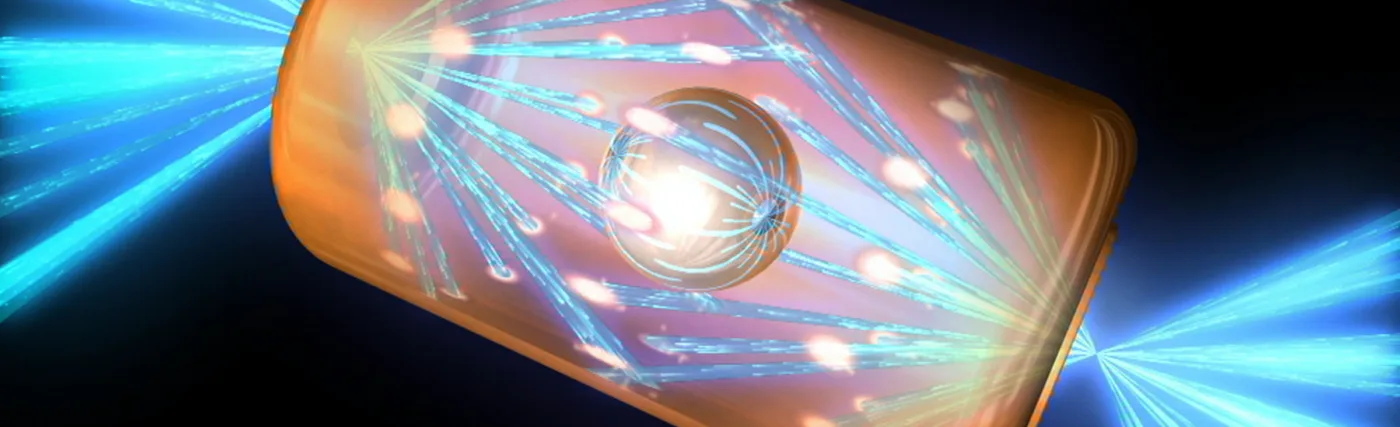
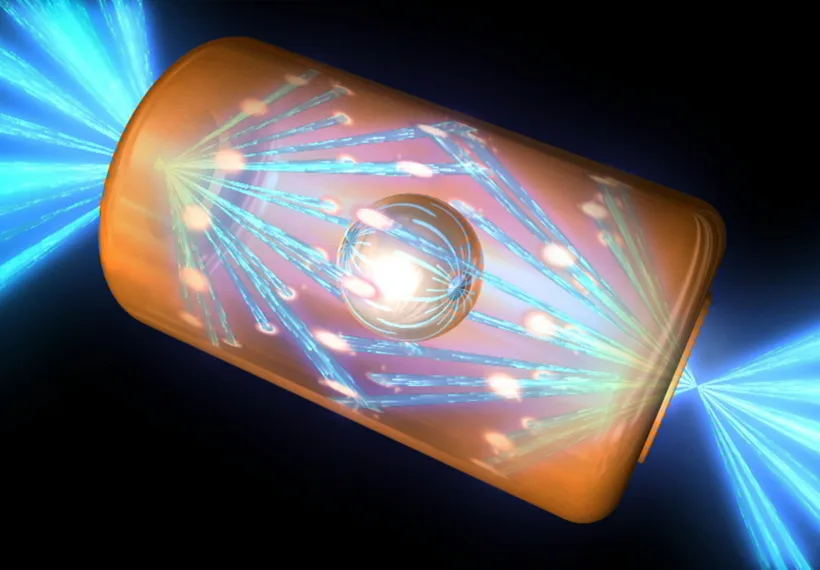
How did we achieve nuclear fusion? Neil deGrasse Tyson and comedian Chuck Nice learn about human-made thermonuclear fusion, the world’s most powerful lasers, and harnessing nuclear power with operations manager of The National Ignition Facility at Lawrence Livermore National Labs, Bruno Van Wonterghem.
Can we make fusion happen with less than 300 million jules? Find out about the NIF and the work being done in nuclear energy. We discuss quantum tunneling in the sun and the energy needed to overcome repulsive forces. Is our fusion hotter than the sun?
What are deuterium and tritium? Discover helium 3 and heavy hydrogen. What is the difference between a powerpoint laser and the world’s most powerful fusion lasers? Learn about the physics of lasers and what wavelength of laser is best for nuclear fusion.
Can we make our most advanced lasers better? We explain what plasma is and whether fusion will be scalable. Will we one day have nuclear fusion power stations or portable fusion reactors attached to our cars? What is in store for the future of Lawrence Livermore National Labs? How can fusion be improved?
Thanks to our Patrons Gavin Mallow, Willest74, Isaac Labbe, Allen, and Beefcake for supporting us this week.
NOTE: StarTalk+ Patrons can watch or listen to this entire episode commercial-free.
About the prints that flank Neil in this video:
“Black Swan” & “White Swan” limited edition serigraph prints by Coast Salish artist Jane Kwatleematt Marston. For more information about this artist and her work, visit Inuit Gallery of Vancouver.
Transcript
DOWNLOAD SRTComing up on the next episode of StarTalk, it’s fusion and lasers all the way, featuring the acting director of the National Ignition Facility of Lawrence Livermore National Labs.
We’re going to find out, why does ignition need such high temperatures in order to make the fusion this holy grail of the production of energy?
And how is it that our special guest for that show managed to cast shade on the sun?
Those are fighting words to an astrophysicist.
Also, where do you find tritium?
At the local store, in mines, in the universe.
Where do you get it?
And also, will fusion ever be portable?
All of that and more on this next episode of StarTalk.
Welcome to StarTalk, your place in the universe where science and pop culture collide.
StarTalk begins right now.
This is StarTalk.
Today, we’re going to talk about fusion and lasers.
Ooh, co-host Chuck Nice.
How are you doing, man?
Hey, Neil.
How are you?
Fusion and lasers have been in all the news.
Who would have thought?
It is the hottest thing going.
Okay, I’m sorry.
I’m so sorry.
And we did a little explainer video, and I got people comfortable with what was going on at the Lawrence Livermore Labs.
Yeah.
But we thought, why don’t we just get somebody from the labs?
I mean, why not?
That sounds good.
So allow me to introduce you and our audience to our special guest, Dr.
Bruno Van Wonterghem from the National Ignition Facility at the Lawrence Livermore National Labs.
Bruno, welcome to StarTalk.
All right.
My pleasure.
Excellent.
Excellent.
Bruno, you definitely have to be Dutch.
Yes.
Are you feeling it?
Yeah.
You know why?
Because, yeah, that was such a Dutch answer.
All right.
That’s how we react to it.
That’s how you come to Syria.
That’s great.
So, right now, you are acting director.
I’m acting director of the National Ignition Facility, and I am also operations manager for the facility.
So, I basically keep my pulse on everything that is happening in the facility, make sure that the experiments are done well and done effectively and safely, and make sure that we get the great results going.
So, in your past, you have a Ph.D.
in chemical physics from the University of Leuven in Belgium.
Is that correct?
Excellent, excellent.
And your background is in basically lasers, which is so cool.
It’s always been about lasers, and as I started out, I mean, I was working with, of course, much smaller lasers.
So, but I got my eyes on what was going on in the world, in other laboratories.
And so, in the 1980s, I moved over for a post-doc at the University of California in Irvine.
Again, working on lasers and X-ray sources and very interesting projects with respect to laser physics.
Then I moved to work for a couple of years at the Max Planck Institute in Goettingen, in Germany.
And just remind me, the Max Planck Institute is many different centers that each have an emphasis, correct?
Because we have one in astrophysics, but that’s not the same one you’re describing, correct?
So I was working when I was focusing on biophysical chemistry and using lasers to develop all kinds of diagnostic techniques.
And actually it evolved into a laser production center.
And it was studying extremely high-powered eczema lasers, a different type of technology.
But again, it was the biggest eczema, the highest-powered eczema laser under development in the world at that point in time when that’s how I met visiting scientists from Livermore, explaining about fusion technology, explaining about the NOVA laser that was in operation at that time at Livermore.
And basically putting a picture of a NOVA laser beam on the whiteboard, which was about, I mean, a year big.
And that convinced me immediately to say, well, that’s the place, that’s where I belong.
So, like I said, we posted a short 10-minute sort of update after the news hit.
And in the comment thread of our just little 10-minute update, a bunch of questions we want to sort of bring into this much more full and fleshed out program.
And so, could you just tell us, first of all, the National Ignition Facility.
When we think of ignition, we think of turning on our car.
So, when you say ignition, what do you mean?
Igniting plasma is basically a plasma that heats itself up higher and higher.
And so, the heat that is generated is larger than the energy losses.
I mean, you lose energy from a reaction, I mean, through radiation, through conduction of energy away from the plasma.
But if you can generate so much heat that you overcome those losses, then you keep heating up, you keep accelerating the fusion reactions, and basically it becomes a runaway reaction, and it’s like a match that you light up.
You start slow and suddenly it flares up and it burns up immediately.
And so, an igniting plasma is a plasma that sustains itself and heats itself up higher and higher.
So you get more fusion, you get more ignition, you get more heat production, and basically you basically burn all the fuel that you have collected and compressed around that little hotspot that ignites the plasma.
So we call that hotspot ignition.
I’d like your reference to the striking of a match, because of course when you start out with a match and a little, you know, rough surface, there is no heat anywhere, right?
And so then you strike it and then you start something and it doesn’t need you to keep helping it, it just is self-sustained as it continues.
Yes, it takes off by itself and it goes faster and faster and it actually is over in just, I mean, a tenth of a billionth of a second.
That’s the amazing thing is you create this enormous amount of energy through the fusion process and it is basically released from a tiny little spot in an incredibly short amount of time.
So the amount of power that is generated is just incredible and it shows the power of fusion.
Wait, but from the notes I saw, you invested, is it 300 million joules of energy?
Yes.
That seems like a high starting point.
It’s a lot of energy, but what we are comparing or the official definition of target gain is comparing the energy we put into the target to the energy that came out of the target.
So even if 300 million is a big number?
Yes.
300 million joules is a lot of energy, but we also have to keep in mind that the National Ignition Facility was never built for efficiency.
It was built for cost effectiveness.
So we choose the most inexpensive power supplies, the most reliable laser systems, and it worked.
It was cost effective, but it wasn’t built for efficiency and could have built a system with an efficiency that is 10 to 50 times higher if we would like to do that.
So yes, I mean, it is a big number, but it’s no surprise.
What you’re saying is you put in 300 million joules, you got out more than 300 million joules, but not much more.
And what you’re telling me, if I understand, is this was a test of concept.
Now that it works, you could go back in and say, let’s make this laser a little more efficient.
So you can ignite it in principle with fewer than 300 million joules in a new design in the future.
Yes.
So let’s repeat that.
So we had again, we had 2 million joules of laser energy, which was incident on the target and compressed the target.
And then the target itself emitted 3 million joules again.
So we had, from that point of view, a 1% return, but a 50% relative to the laser energy that was used to, I mean, push the fuel capsule together and ignite it.
Wait, so you needed energy to power the lasers.
Yes.
Okay.
But you’re not counting that in the return on the investment though.
You’re only comparing your laser energy to what came out of your pellet.
But the fact that you had to plug all this into the wall.
Of course it counts.
So is that fair?
Is it fair to think of it that way then?
It is fair, but once you start to think about now, how can we turn this into a process that delivers energy and can create or use the fusion process to drive a power plant, then of course the efficiency of the driver becomes very important.
I mean, you need to start working on higher gain targets.
You need to start working on higher efficiency laser drivers.
And that in this doing combination, I mean, can basically deliver to, I mean, a feasible inertial fusion energy plant.
Okay, so it’s engineering at that point.
Yes.
You’re going to hand it over to the engineers and say make this work.
Can I ask you this with respect to the process because you likened it to striking a match and you said, you used the term self-sustaining.
Is there a process where we don’t have to worry about how much energy it took to start it because it is self-perpetuating afterwards?
Good question.
Okay, yes.
Well, Chuck, there you go.
You solved it.
Okay, now go home.
Actually, the inertial confinement fusion, which is the process that we’re using, it takes a finite amount of fuel in a little target and compresses it and then creates fusion in the center to light off the little fuel match around it.
But it’s a finite amount of fuel, and so once that fuel is burned, we need to start that process over again.
So we bring in a new target, we again hit it with the laser, compress it, create the hot spot that ignites it, have the ignition, burn up the fuel, and do it over and over and over again.
So we believe that for a inertial fusion energy plant, you need to do that about 10 times per second, instead of once a day.
And so it’s a process that you repeat over and over again.
So it’s not that we have a gigantic amount of fuel that we can compress, it’s a small amount.
But it also makes it inherently safe.
There is no runaway condition.
There’s nothing that basically can melt down or become unsafe from that part of view.
The best thing that can happen is that all the fuel burns up.
And that’s it.
Interesting.
So unlike our current nuclear power plants where the actual chain reaction can run away and we can’t stop it.
Yes, you can have meltdown conditions.
You can have all kinds of undesirable effects and very unsafe conditions that can be created.
But that is not the case for inertial fusion energy.
So before we go to our first break, could you explain why you need such high temperatures in like the 10s or even did I read 100 million degrees?
Yeah.
What is the temperature doing for you?
So the temperature is needed actually to overcome the repulsive forces that normally prevent nuclei in atoms from basically recombining with each other.
They vehemently…
They’re all positive charges.
They’re all positive charges.
So the closer you bring them, they start to repel each other vehemently, which is a good thing, because otherwise the whole world would collapse immediately.
So there’s an incredible force that prevents you from molecules from fusing.
And in order to actually then overcome those forces and then have the nuclear force, which is the force that actually pulls the charges together in the core of an atom, you need to have incredible temperatures in order to start creating violent collisions between the atoms.
So you can relate the temperatures to kinetic energy of the atoms moving around.
If you want to increase that temperature, increase the velocity at which they collide with each other, you need to go to temperatures of about 150 million degrees in order for deuterium and tritium to fuse together.
And for some other systems, I mean, it can go up to billions of degrees before you can actually reach conditions where the nuclei can overcome forces that normally prevent them from collapsing.
So presumably this has been some of the decades-long challenge that this process has encountered.
Yeah.
I mean, from the initial idea that the lab developed soon after the invention of the laser in 1960s, it has taken us about 60 years to learn how to do this and learn how to achieve ignition.
And that’s why the December experiment was such a spectacular event because it basically, I mean, showed us that whatever was deemed impossible for so many years by so many people was basically overcome using just a continuous development of technological and scientific developments in the laboratory where we developed new codes, new computers, new and bigger laser systems over 60 years to finally come up with a laser and a target design that actually did the trick and worked and delivered the ignition.
Bruno, you’re talking about rooms full of smart people.
It’s rooms.
I mean, it is a campus full of smart people.
And it’s actually not even one campus.
It’s multiple campuses across the country, across the world that have participated in this.
That’s amazing.
Bruno, in the center of the Sun, it’s actually not hot enough to fuse the hydrogen outright.
And when we run the calculations, because the center of the Sun is like 10 million degrees around there, that it’s mostly driven through tunneling, quantum tunneling of the protons to come together.
And so you can get the tunneling at the lower temperature.
Are you saying that your process, going up to 100 million degrees, the brute force slamming together of the protons, that you’re not taking advantage of any quantum mechanical tunneling that might be available to you?
There’s some amount of tunneling involved, but I think we want to basically speed up the process, and that’s where we try to reach the higher temperatures, because if you look at the fusion energy production in the Sun, it’s actually really small.
It’s on the other side of a few hundred watts per cubic meter, which is almost like the level of a compost pile.
So the enormous amount of energy from the Sun really comes from the gigantic size of the Sun.
That’s how big it is.
Damn, I’ve never heard anyone cast shade on the Sun before.
And you did.
You threw shade at the Sun.
You’re not so hot.
You’re about as hot as a pile of garbage under some dirt, Sun.
And it’s a good thing actually, because if the Sun was igniting, I mean, there wouldn’t be a good day for us.
So, I think nice and steady process.
Whereas when you go to the full up temperature, that physically gets the protons together without relying on the tunneling, which is a kind of an effect happening in the edges of the process, if you go full up, then you’re going to get the full hammer of the nuclear fusion.
What a great villain story for a Bond movie.
Like, because Bond movies love lasers, right?
And so it’s like an evil genius who comes up with a laser that he’s going to use to ignite the plasma of the sun and destroy the whole solar system.
Forget the one where he’s just like, I’m going to destroy a city.
He’s like, I’m going to wipe out the whole solar system.
Okay, that’s why you don’t have a job at Lawrence Livermore Labs, Chuck.
Alright, we’re going to take a break.
When we come back, we’re going to get into lasers and what are they and how do they work and why are they useful for this?
And I want to get into a little bit of, dare I say, the chemistry of what’s going on in the nuclear reactions.
What are the nuclei that are actually coming together and where do you start and where do you end?
So we’ll get into that when we return on this edition of StarTalk.
We’re talking about lasers and fusion.
We’ll be right back.
I’m Joel Cherico, and I make pottery.
You can see my pottery on my website, cosmicmugs.com.
Cosmic Mugs, art that lets you taste the universe every day.
And I support StarTalk on Patreon.
This is StarTalk with Neil deGrasse Tyson.
We’re back, StarTalk.
We’re talking about lasers and fusion.
And of course, the person powering this conversation is Bruno Van Wonterghem, who is the acting director of the National Ignition Facility at Lawrence Livermore National Labs.
Bruno, so before we get on to just what lasers are and how they work and why, just remind me, what particles are you putting together in what sequence before you declare that you have completed your fusion path?
So the fusion reaction that we are pursuing is deuterium and tritium infused together to form a helium atom and a neutron.
So the neutron runs away with a good fraction of the energy of the fusion reaction.
While the helium is a massive particle that is actually used to heat up the remaining fusion fuel.
And in the process of fusion, we convert mass into energy.
And based upon Einstein’s equation, E equals mc squared, c squared being a gigantic number, a little bit of mass is actually converted into a lot of energy.
And you create a more stable, a little bit less mass and a lot of energy.
And that is what we’re trying to harvest in this process.
It’s unbelievable.
Wait, wait, so how about the runaway neutron?
Where does that go?
Into witness protection.
Witness protection?
It just goes and scatters around in concrete until it basically finally stops.
But it can be harvested using the correct or the appropriate technology and turned into useful energy or turned into electricity or something that we like.
That’s what I was wondering, because you can’t electrically trap it because it’s neutral.
So all of its energy has to just sort of slam into something and that energy then becomes heat, I guess, correct?
So there’s a collector.
What would it be?
I’m so fascinated by this right now.
I don’t know what to do.
My head is swimming.
So the byproduct, the neutron, so here it is scattering.
Are you saying that you could use some sort of collector and you would be able to gather that?
Yes.
Something like a molten salt mantle around the target chamber that can basically absorb the neutrons and get heated up and carry the energy away.
And it would heat up.
Jesus Christ.
You can heat, that could heat up and that could be used to actually do the traditional way we make energy right now, which is heat water, turn it into steam and turn a turbine, except that you’re not burning anything to create that steam.
That is, do you know that the oil companies are going to kill you, man?
You shouldn’t be in public.
You should not be in public.
I’m sorry.
We’ll embargo this work.
So, but let me get back to this.
I know that you can find deuterium in just regular water supply.
It was one out of whatever, a thousand water molecules.
Whatever the number, maybe one out of a hundred, I think, has of the hydrogen in the H2O is actually deuterium.
Where are you getting your hydrogen that has two neutrons, which is the tritium?
Where did you come up with that?
Sorry.
I’m sorry.
You’re two physicists talking to each other, regular person here.
Let’s get back, rewind, just a bit.
I got this.
I got this.
I got this.
So hydrogen, mining its own business, is one proton.
Yes.
That’s normal hydrogen.
Right.
You can give it a neutron.
It’s still hydrogen, except it’s a little heavier.
We call it heavy hydrogen.
And it’s called deuterium, so that’s two.
You can get a second neutron, cram it in there.
Now it has three nuclear particles, and that’s tritium.
But it’s still hydrogen.
Okay.
So that’s what’s going on here.
That’s what’s going on.
So now the other thing is one in every what molecules now?
Tell me, Bruno, is it one in a hundred or one in a thousand?
One in five thousand atoms in normal like, or seawater is actually a heavy hydrogen or a deuterium atom.
So it can be extracted, I mean, through chemical techniques, through distillation.
Plus it’s combining, it’s making the same molecule as a regular H2O because its chemistry is the same.
It’s just a heavier hydrogen.
Man, I’m telling you right now, if I had just known all this crap when I was in school, I might not be a comedian right now.
You might have been something else.
So, Bruno, where are you getting the tritium?
The tritium is a much more complicated story because it doesn’t occur in a natural process, except that extremely low abundance is like 10 minus 18, which is basically non-existent.
So our current supply of tritium is generated as a by-product in traditional nuclear reactors.
For example, one way that it’s generated is by you take a deuterium atom and you bombard it with neutrons, like what happens in a nuclear reactor if heavy water is used to cool, then it creates once in a while a tritium atom, and you can extract that and make it available for use.
Okay, but technically then it takes energy to make the tritium that’s in your reaction.
Is that part of your energy budget?
So that’s the current process.
The process that we would like to pursue for inertial fusion energy is to use the neutrons that are generated in the fusion process to create your own tritium, and you can do that, for example, by bombarding lithium or molten lithium or lithium salt with neutrons, and that creates tritium that can then be extracted from the process.
So, once you have enough fuel to start, you can start creating your own fuel.
Right.
So, once again, self-perpetual, you’re eating the whole carcass.
There’s nothing left over.
We’re using it all.
That’s great.
We’re using it all.
Oh, yeah, wait, wait.
So, now you get to your…
So, you do that, they come together in your high temperature.
Now, you have Helium-3, right, so now we have two protons, which is Helium, and normally it wants two neutrons, but now it only has one neutron, so that’s Helium-3, and you’re still not done, correct?
Yeah.
Okay, I guess what I’m asking is, I happen to know, you surely know also that the solar wind is very rich in Helium-3, and Helium-3 is heavily embedded in the surface of the moon.
And there’s been talk of mining, surface mining, the Helium-3 from the moon, and then injecting that directly into your nuclear fusion, so you don’t have to go through the deuterium-tritium process before you land on Helium-4, the full red-blooded Helium.
So what’s, any thoughts about that?
Yeah, there is an alternative fusion reaction, the D plus Helium-3 can basically also form Helium-4, but its threshold of the temperature that is needed in order to start the reaction is higher, almost twice as high as the deuterium and tritium, and not as effective.
So we still have a more efficient process with DT than the D Helium-3.
Did not know that.
Yeah, so the deuterium-tritium fusion reaction is really the most effective way of achieving ignition, and operating the system, although many others are pursued.
They are much less efficient and much harder to achieve.
Now, let me pivot now to lasers, because all this is enabled, empowered by lasers.
And this is your bailiwick here.
So let’s get on the same page here.
What’s the difference between my PowerPoint laser and the 192 lasers you blasted your target with?
I think you need billions of those pointing lasers.
The amount of power generated by a typical pointing source is about a few milliwatts.
The NIF can generate 500 trillion watts on a target and with an energy of 2 megajoules, which is millions and billions times more than what’s typically obtained from a small laser.
So it is the world’s largest, highest energy and highest powered laser.
It contains 192 individual laser beams, each by itself, I mean, the world’s largest laser.
And so it is a tremendous departure from the typical and the previously used lasers in fusion ignition.
It’s almost a factor of 60 larger than the Nova laser.
And so it is one of the first lasers that is really engineered instead of being a tabletop or a large scientific laser.
It’s a laser that is really designed to be compact, cost effective, I mean, high energy, high power, and it is really set up to meet ignition.
And we have worked almost 20 years to bring that laser from initial design in the early 90s to starting the building at the end of the 90s, starting the laser beginning of the 2000s, and completing the laser in 2009, when we started to do actual experiments.
So it took us 20 years, I mean, to build and put these lasers together.
And it worked incredible, I mean, it’s a laser that was just engineered so well, that when we brought it up, it all worked and it all met its design requirements and very quickly it exceeded its design requirements in the way that we currently operate and in the way that we achieved the ignition experiment last December.
Just to be clear, did I hear you say that each of the 192 lasers is itself the most powerful laser in the world?
Yes.
Did you say that?
Yes.
So this is the laser that cats actually hate.
The cats have no…
Yeah, they don’t…
They’re just like, look at that, we lost another cat, guys.
Lost another cat.
They have no…
Yeah, they have no recourse against these lasers.
That’s it.
That’s.
So, but just to be clear, my low-power presentation laser, which you dissed, I presume makes a laser beam in the same…
using the same physics as your lasers.
That’s correct.
So, tell us what that physics is.
So, the physics is based upon light amplification by stimulated emission of radiation.
So…
Yeah, that sounds like it spells something.
You think?
Exactly what the actual name that was put forward, I mean, to describe, I mean, the process by which you can actually store energy in molecules and use radiation to actually stimulate or trigger the emission of photons, so that when you do that in a coherent way, in a way where a beam of photons that goes in the same direction with the same wavelength creates more photons or more copies of itself and creates a brighter and brighter beam that goes one direction, that has one correlation.
And that is the difference, I mean, between a normal, ordinary incandescent bulb where you have light that goes in all directions over a wide spectrum of wavelengths, laser beams are now, is a way or means of extracting energy from a medium that you have excited using another energy source, and that could be another laser, that could be a flash lamp, to provide that medium that then can undergo light amplification by the stimulated emission of radiation, and that’s the mechanism that is being used to generate the laser beams.
So, as you said, the design of any given laser only can generate one wavelength of light that comes out.
So, there’s no certain, you can’t tune a laser, I guess, it’s only good for that one kind of light that comes out, is that correct?
That’s correct, some laser, some gain media or atoms, I mean, allow some, a little bit of tunability around a certain wavelength, but the laser itself is always, I mean, it’s basically characterized by its coherence, and that basically means a narrow spectrum and a narrow spatial distribution of the energies.
Alright, so the lasers we’re all familiar with use visible light, the red lasers and green lasers, and now we have some blue lasers, but I heard you refer to ultraviolet.
So are these UV lasers instead?
The laser itself, the solid state lasers that are used to create the beams and amplify the beams largely use neodymium in a glass media, because we need to be able to handle very high energies and be very efficient at the same time, and they tend to operate in the infrared, so basically it’s a wavelength just above the visible region.
Now the targets don’t like the infrared light, because they basically clear the plasma and send the laser beam right back towards the laser, which is not a good thing to happen.
And so we learned in our previous laser systems that you need to have a shorter wavelength, and we first started to double the frequency of the laser, so we turned the infrared to green and finally found that actually converting the laser, the infrared, to ultraviolet was even much more efficient, because the ultraviolet light can penetrate deeper into the plasma that you’re forming, and so it’s much better, much more of the energy is absorbed and used for heating the plasma that then can start your fusion reactions.
So, again, you guys are being very efficient about everything.
And I’m just trying to add up all the smarts that that takes, and I’m just very impressed just listening to you talk about this and your laserdom that you have there.
Laserdom.
Laserdom.
Laserdom.
Are we going to take a quick break?
When we come back, we’re going to talk to our special guest, this acting director of the National Ignition Facility of the Lawrence Livermore National Labs.
We’re going to ask him about the future of lasers and what’s next in line.
And when are we going to have Mr.
Home Fusion to power our cars, like in the movie Back to the Future?
We’re going to learn all of that when we return on StarTalk.
We’re back, StarTalk.
We’re talking about lasers and fusion with the acting director of the National Ignition Facility at the Lawrence Livermore National Lab, Bruno Van Wonterghem.
I think I nailed that one that time.
Yes.
I’ll get, you get it.
So Bruno, I’ve heard people joke about Lawrence Livermore Labs that those three L’s really stand for lasers, lasers, and lasers.
Is that, is that a thing?
Lasers, lasers, nothing but lasers.
And from our point of view, that is true.
So I’ve been looking at the Guinness Book of World Records tracking who had the most powerful laser in the world.
And it always landed at Livermore.
So why, yes, you did something great with these most powerful lasers, but over time, why the, why the…
Is it just bragging rights that you have the most powerful laser?
Or is there some real scientific objective for it?
It was a scientific technology bootstrapping process where every time we come up with the design for an igniting target or an igniting experiment, we build the lasers, we try to target and we figured out, well, there was something missing in our understanding.
We needed more laser energy and power.
There were more energy losses in the process.
There were different conditions.
And so it took us five, six of those cycles since the 70s to figure out a design, like the National Ignition Facility, where we had high confidence.
We said, we now have the right recipe, the right number of lasers, the right symmetry, the right precision in the laser to achieve all the conditions that are required to make ignition happen.
And it’s not all about the size of the lasers too.
Equally important is just the quality, the accuracy and the precision of where you point the beams, where you time the beams, how the power is distributed.
Because you take a capsule and you compress it 30 fold.
So you take a basketball and you turn it into a pea.
And if you don’t have exquisite symmetry, I mean, you don’t get a pea, you get something that just comes out through your hands.
And so, yeah.
Yeah.
So you need extremely, I mean, high energy, high power, but also extremely precise, extremely stable, extremely well-controlled lasers.
You’re creating a perfect implosion from all directions out of this sphere.
Now, plasma, of course, the only value of your lasers is to get the right temperature plasma when you’re done.
We’ve also heard of magnetically contained fusion.
I guess the tokamak is a whole other possible approach to fusion.
How do they get their plasma?
Because their plasma is also millions of degrees, right?
Yeah, but their plasma are lower temperature and densities and they are held together using magnets in a large vacuum chamber.
So it’s a very large plasma that is contained and heated up using an induction process.
So it’s quite different.
So it’s much slower in study and lasers are only used for diagnostic, but not to drive the process.
Forgive me for some of our viewers and listeners.
Could you just tell us what a plasma is?
Because I think we were just using it like it’s, of course we know what a plasma is.
Typically most people’s understanding of the word comes from blood plasma.
After you remove the, I guess at the platelets or whatever, and what’s left is plasma.
So there’s medical plasma.
So what is physical plasma, astrophysical plasma?
Physical plasma is a collection of medium of atoms that has been energized to such a level that it starts to lose its electrons.
And so the electrons and the nuclei start to form a continuum and start to float around each other.
And so that’s what is called a plasma.
That means it could respond to magnetic fields, whereas a normal gas would not have the reason to.
Yeah.
And why did they think this was a good idea for televisions?
Plasma televisions?
But wait, isn’t the gas inside of neon tubes a plasma and in fluorescent tubes?
Yes, because it’s very easily ionized and so it easily forms a plasma.
Without having to go to very high temperatures.
It’s just…
Right.
And that little…
You don’t see it anymore, but that glow ball…
Yeah, that you put your hands on.
You put your hands on and you see it’s just like glowing gas.
Yes.
Bruno, have you seen these?
They let you out.
No.
No, we have seen those.
We use those.
They let you out of the facility.
You can see them in malls, you know, in gift shops.
Yeah.
Yeah.
But there are applications of it, but the plasma also allows to be heated further and further and so you can create, I mean, interesting conditions and you can start to experiment and have atoms, I mean, do interesting physics for you.
And most of the universe is plasma.
I mean, all stars are plasma.
And so we’re kind of, we live with it when we study that.
I just want to ask, because, you know, as you were talking about the refinement of these lasers over a period of time, but it’s always been in service to finding a better way to achieve fusion.
In that process, has there been advancements in lasers that we benefit?
Like maybe you guys didn’t benefit, but we did.
You mean spin-offs on route?
Spin-offs, yeah.
We have had a number of spin-offs that are not directly, I mean, coming to your home, although, I mean, there was a technique that is being used, for example, to harden turbine blades for jet engines, using lasers.
That’s important.
That has been commercialized and is used on a relatively wide scale.
Well, I just wonder, now that the turbine blades are harder, maybe we’ll just slice up those ducks.
Hmm.
And then we can collect them on the back end and make lunch.
So now when a plane flies into flocks of geese or whatever, like Sully did and landed in the Hudson River, I don’t know, I’m just kidding.
It helps for that, but it also makes you feel better when you’re flying, that you know the engine is going to survive the flight and not basically start to disassemble somewhere en route.
I hate it when that happens.
Ladies and gentlemen, this is your captain.
As you can see, we just flew through a flock of geese, and I want to let you know that our in-flight meal today will be duck a la ronde.
We have to be fast.
So Bruno, tell me again, do you think what you have achieved here is scalable, whatever that word means as I’m using it, I don’t know, but scalable so that it can be ported to power stations or maybe I can have one of these in my garage?
Where does this go after what you’ve done?
Yeah.
So this concept can lead to the design of inertial fusion, energy-based power plants.
Those are fairly large plants because the laser system we’re needing is not a small laser system.
It is a large facility.
I mean, we’re talking stadium sized lasers.
We have to do a significant amount of engineering development because we need to run them at 10 times per second.
Instead of one time a day, we need to have targets that can be produced at the rate of 10 times per second.
We need to develop a system to capture the energy, produce the tritium fuel that is needed to run it, and then convert the energy to electricity.
But that’s just engineering at this point.
There’s a lot of engineering.
There is no…
You got the physics down.
We got the physics down.
I mean, we still want more higher gain than what we achieved on the December experiment, but we have ways to do that.
We understand how we can achieve that.
And so, yes, we believe that, I mean, within a few decades, two decades, we may have, I mean, a working model of an inertial fusion energy plant.
And so, how about one for my car where I have a Mr.
Fusion home device.
You just put stuff in the top and then close it down, and then I run, that’s my day’s fuel.
That would be like a portable version of it, right?
So, very little bit far-fetched from this, because I mean, right now, the scale of the lasers, or the scale that is required, I mean, doesn’t lend itself easily, I mean, to a very compact system.
But it doesn’t mean that there may be ideas to do this.
And Bruno, you know, computers used to be the size of entire rooms, factories, just to do simple calculations.
And now, you know, we carried around on our hip.
So, you think lasers might not be shrinkable in that way?
There are definitely materials that can be made more efficient, that can be drivers that are more efficient.
So, yes, they will scale.
I’m not sure, though, that it will scale large enough to be a tabletop type of device.
But then, again, I don’t want to say no because, I mean, like in the development of the cell phone, I mean, that was inconceivable 50 years ago.
There’s something in your pocket that tells you where to walk and how to drive.
Right, right.
I remember my first GPS device was this large, it was handheld, but it was huge.
And its only job was to give me my coordinates as I walked.
It was a fun sort of novelty item.
And it didn’t work.
And now it’s some chip inside of something that’s one-tenth the size of what the whole thing did, and it does a hundred other things, including make a phone call.
So, what’s in the future at your facility?
When can we have guns that go pew, pew?
You want laser guns.
Well, there’s actually a significant effort on laser-based, I mean, or direct energy weapons, I mean, besides fusion applications.
But in terms of the fusion applications and work that will be done in the National Ignition Facility, you want to achieve, I mean, significantly higher gains.
This time we obtained 3 megajoule.
We would like to obtain 10 megajoule, 50 megajoule, 100 megajoule, and basically improve the process, improve the physics, improve the quality of the targets, and investigate what needs to be done, and make then the fusion yield useful for our stockpile stewardship goals.
So, in the mission statement of Lawrence Livermore Lab, if I remember it correctly, it’s you are the nation’s repository and intellectual center for everything nuke, right?
Nuclear energy is you, right?
So, once you’re done doing the fusion thing, and then it gets mass produced or whatever, is there a next project that’s still within that mission statement that you’ll continue to do?
Well, the next challenge that we’re looking at is even higher yields, or yields around 500 megajoule or even gigajoule, which would have significant implications and significant benefits in our goal of achieving the safety and reliability of the stockpile.
So that would be our next step in the laboratory.
Well, of course, we will be participating and helping out, and working together with private industry, developing inertial fusion energy.
Okay, so Chuck, just so you’re on the same page as what he just said, did you hear him say gigajoules?
Did you hear that?
Yes, I did.
A joule is a unit of energy, and one joule per second is by definition a watt.
So if he gets to 1.22 gigawatts, then you can travel through time.
That’s it.
We’re good to go.
That is the secret energy level in Back to the Future.
This has been a delightful conversation, Bruno.
Unbelievable.
We have not met before.
Thank you for taking our call.
And if we can put you on a speed dial, if you have any new developments, we’ll put you back on and we’ll see what else.
Because we have a very eager, curious and interested following.
Our listeners are smart.
That was a great meeting.
I mean, I really appreciated the conversation.
Definitely.
Again, great to have you.
Our guest has been Bruno Van Wonterghem.
The National Ignition Facility at the Lawrence Livermore National Lab near Livermore, California.
And he’s in charge there.
Would you call him Chuck?
Boss man.
Okay, I get that.
I get that.
Put that on your business card, and then people will treat you a whole other way when you do that.
Chuck, always good to have you, man.
Always a pleasure.
Neil deGrasse Tyson here.
This has been StarTalk.
As always, I bid you to keep looking up.
Thank you.


 Become a Patron