


 Unlock with Patreon
About This Episode
How would it be different flying on Mars? Neil deGrasse Tyson and comedian Matt Kirshen explore aeronautics, aerodynamics, airplanes and more with NASA aerospace engineer and author Wendy Okolo, PhD.
What does the first A in NASA stand for? What does it mean to be an engineer? Wendy breaks down how engineers think and what her role at NASA is. Discover how systems of systems surround our lives. What are the main challenges of moving through the air? We discuss aerodynamics, what flying on Mars would be like, and the impact of climate change on aeronautics.
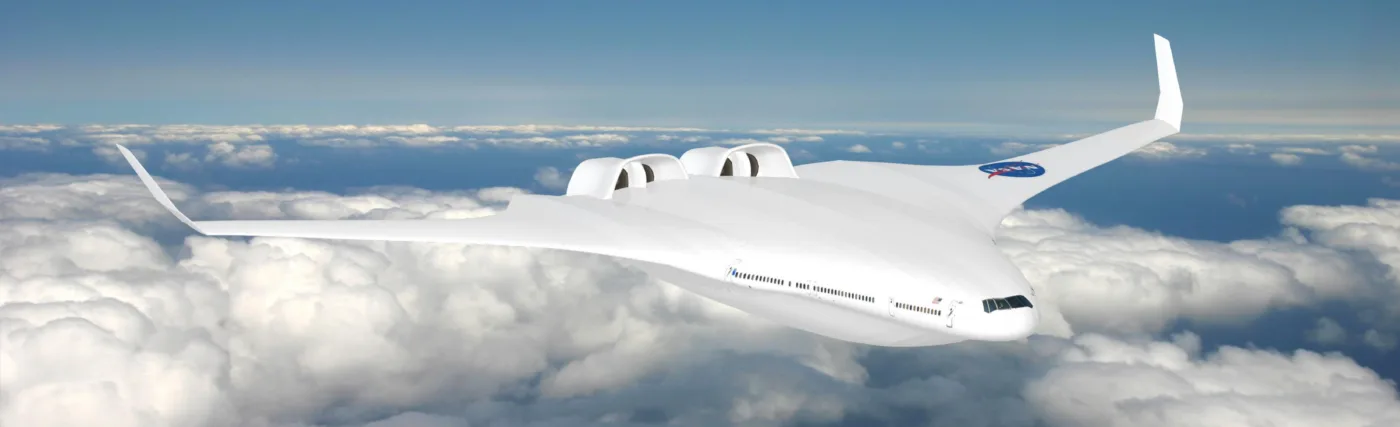
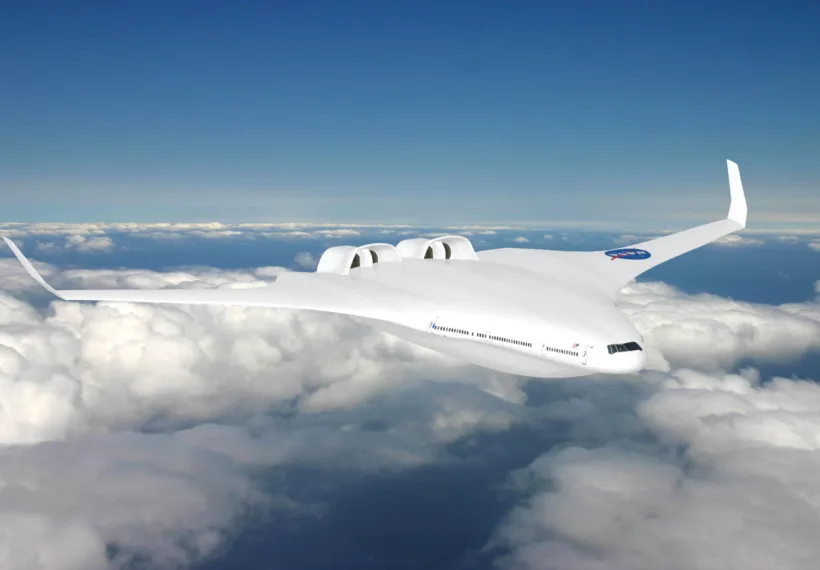
Why don’t we fly commercial planes higher? What is a blended wing aircraft? We explore optimization, propulsion, how to achieve aircraft stability, and Wendy’s book Learn to Fly: On Becoming a Rocket Scientist.
Could you one day get a license for flying like you do for driving? What is the future of flying cars? Could we one day have self-driving space vehicles? We also discuss autonomy in flight and the safety concerns of handing over aircraft to artificial intelligence. Are computers safer than humans?
Thanks to our Patrons David Hemsath, Becky Basmadijian, Etopirynka aka. Kate, Jaime Parker, Liuba Tereshko, Jeremy Seeman, and Carol Flynn for supporting us this week.
NOTE: StarTalk+ Patrons can listen to this entire episode commercial-free.
Transcript
DOWNLOAD SRTFord is electrifying its icons to keep the soul of driving alive while shifting towards an electric vehicle future.
The all-electric Mustang Mach-E gives you the bold style of a Mustang, along with the practicality of an SUV, an electric vehicle for people who want the freedom to experience the thrill of the drive while making sure their needs are met.
Get the excitement of a Mustang and the space to share it with five seats and a frunk, aka front trunk.
That’s right, it has room for you, your people and your things.
Learn more about the all-electric Mustang Mach-E SUV at ford.com/mustangmach-e, M-A-C-H-E.
Again, that’s ford.com/mustangmach-e.
Wanna learn a new language?
And who doesn’t?
Well, experience immersive lessons from the most trusted language app.
Rosetta Stone.
You know you keep telling yourself you wanna learn a new language.
The true accent feature even gives feedback on your pronunciation, so you can speak the language like a native.
Find lessons as short as 10 minutes, making it easy for you to learn anytime, anywhere.
Don’t put off learning that language.
There’s no better time than right now to get started.
And Rosetta Stone makes the perfect holiday gift.
For a very limited time, StarTalk Radio listeners can get Rosetta Stone’s lifetime membership for 50% off.
That’s 50% off unlimited access to 25 language courses for the rest of your life.
Redeem your 50% off at rosettastone.com/startalktoday.
Up next, we take a look at the field of aerospace engineering.
That’s a place we have yet to visit on StarTalk.
We bring in a PhD expert and we talk about all things related to flight.
What are the forces that keep you flying?
Why don’t airplanes fly at very high altitude where there’s less air resistance?
There’s a reason for that.
Also, what is a blended wing?
That and more on StarTalk coming up.
Welcome to StarTalk, your place in the universe where science and pop culture collide.
StarTalk begins right now.
This is StarTalk Cosmic Queries Edition.
I’m Neil deGrasse Tyson, your personal astrophysicist.
I got with me my co-host, Matt Kirshen.
Matt, welcome back to StarTalk.
It’s always nice to be back.
How’s it going, Neil?
Good.
Good.
Good.
You’re a comedic fellow, but specializing in science with a podcast with the word science in it.
And I always forget the title of it.
What’s it called again?
It’s probably science because we are very unsure of our credentials.
You’re still working on whether it’s actually science or not.
Actually, I say we’re actually very sure of our lack of credentials.
That’s probably more accurate.
That works, too.
Today’s topic is aeronautics, something we’ve never actually covered on StarTalk.
And I’m ashamed to say, and while I have some knowledge of it, when we need real expertise, we go out and get it.
So for this episode, we’ve got a full up aeronautical engineer, Dr.
Wendy Okolo.
Wendy, welcome to StarTalk.
Hi, Neil.
Hi, Matt.
Thank you for having me.
I am looking forward to this conversation.
Excellent.
And did I pronounce your last name correctly?
Okolo.
That’s correct.
Okolo.
Excellent.
Excellent.
You’re an aerospace engineer.
I got your PhD back in the teens, 2015.
And so right now you’re working for NASA for which NASA has 10 centers, which one you’re working for?
I am working for the NASA Ames Research Center in California.
So in the Bay Area, California.
The Bay Area.
But now I know at Ames, that’s where they have all the historical wind tunnels were there.
Yes, there’s some really, really, I mean, there’s a really large one there.
And it was, it’s actually pretty close to my office.
Well, when I, when I had an office before, I said I’m working remotely.
Okay.
And so you work remotely now from what city typically?
Houston, Texas.
Well, it’s more NASA.
I know.
I know.
I just can’t get away.
I can’t.
I can’t.
But I’m, I’m at Ames often enough, often enough.
But I’m still 100% affiliated with NASA Ames.
Okay.
And aeronautics.
Wait a minute, Matt, do you know what the first A stands for in NASA?
I’m going to guess aeronautics from that very heavy clue.
I don’t know much, but I can follow context clues.
That’s how smart I am.
I’ll be honest with you, Neil.
I’m still trying to work out whether I can get access to one of these wind tunnels.
I’ve never been in one.
I want to know, like, you know, can you do a photo shoot with some umbrellas?
Like, how strong does this thing get?
Yeah.
Yeah.
I don’t think…
Yeah.
When they’re on, I think you want to keep your distance.
Well, let me just finish that.
So, Wendy, people lose track of the fact that the first A in NASA stands for aeronautics.
A whole chunk of its budget is allocated to that, national aeronautics and space administration.
So how much of the full NASA budget goes to aeronautics?
What percent?
Oh, you know, the thing is, space is really cool.
And so sometimes people forget about Aero.
A decent size chunk goes to Aero, but I can’t speak to the exact amount in relation to what space gets, right?
Okay, so that’s the wrong answer.
What you have to say is, not enough.
That’s the right answer.
Yeah, yeah, yeah.
People get moon giddy.
They do.
I mean, if you even just ask anyone what they think aerospace is, they just they say space.
They forget about planes and potentially drone.
You got to get through the air before you get to the space.
Exactly.
Exactly.
And the air is pretty complex, too.
You know?
You’re damn straight.
So what division, what part of NASA within NASA do you work for?
The Intelligence Systems Division at NASA Ames.
Intelligence Systems Division.
That is correct.
So is there like an Idiot Systems Division as well?
We would want to believe, I think Matt is with me on this one.
All of NASA is intelligent.
So why are they specifying your division with the word intelligent in the title?
Because they have me.
That’s why.
Is there a division where I can send my crayon drawings and ask why this isn’t working?
Why is this not flying?
Probably, probably.
I mean, NASA is really open and want to hear from people, but the Intelligent Systems Division is interesting because we work across various disciplines from science to space and astro to aero and just really looking at making components, systems and systems of systems work smarter to achieve predefined objectives.
How to fly in a way that is more efficient or more intelligently, really.
So you can have systems that work.
How do we make them better?
Okay, so this intelligence thing sounds like Matt, would you agree with this one that this is ripe for the plucking by AI?
Like AI, this is next, AI has its sights on what you’re doing.
Neil, I don’t think we should give computers the air.
I don’t think they should have the sky as well.
Land, sea and air.
Okay, we’ll give them the internet and that’s it, right?
That’s what you’re saying.
How do you know?
How do you know they don’t already have it?
What insight know they have?
They’re not like the drones.
They run in all the time.
Hey, hey.
That’s what they’re doing.
They?
Wait, so this is kind of a new concept for me.
This notion of system of systems is, could you just tell me what that is?
Like speaking as an engineer, what does that mean to an engineer?
Because to a person, it sounds kind of redundant.
Right.
But engineers aren’t people.
I mean, to other people.
Yeah, yeah, yeah.
You know, and you bring up a good point because you can think about a component and a system of components being a system and a system of those kind of higher level systems being systems of systems.
So perfect example is when you consider a region in the airspace that has multiple planes in it or a region in the airspace that has multiple drones in it.
So you have these multiple systems kind of interfacing.
And when you have that holistic view of all of the systems, you can start to consider that a system of systems.
So it’s really the hierarchy and the complexity is where my own knowledge and definition of a system of systems tends to come.
Okay, so if you don’t have someone who’s thinking about that and who’s an expert in it, the systems could end up clashing in some fundamentally bad way.
Yes, exactly, exactly.
Exactly, and I mean, a basic example is just traffic, right?
Driving on the freeway.
Whoever is designing the freeways, looking at traffic lights and all of that, it’s not taking into consideration one car.
It’s taking into consideration the system of systems that is the interplay between multiple cars going different directions and even people, right?
Pedestrians.
We are systems interacting with other systems on the road.
And so that’s that kind of complex interplay that I speak about.
You know, we all just take all that for granted.
We do.
I’m very heartened to learn that somebody’s on top of the situation.
Yes.
Yes, yes, yes.
It’s a good thing.
It’s a good thing.
That, you know, higher order level is good.
It’s important.
But the little things, when I’m driving in New York, in Manhattan, there’s certain, there’s a pathways that I get to my parking lot.
And there’s certain lights that are a few blocks away that if I turn, when the light has been green for like 10 seconds versus 20 seconds, I will always hit another light in the exact same way a few blocks away.
So that’s telling me somebody’s thinking about, I’m just, anytime that happens, I say, okay, I’m glad somebody thought about this.
I certainly wasn’t.
Yes, yes.
And that’s the intelligence, right?
That optimization, so that you’re not stuck at every light.
And then these things would also even change depending on the time of day and potentially even time of year, because you have to optimize for these different, very different factors, right?
So I mentioned the traffic example, with cars and people, pedestrians, but another system that’s important is environment, right?
That complex interplay between the man-made systems that we design and then the natural complex systems that we’re still trying to understand, how do you optimize all of that?
So it’s pretty cool, you can go crazy.
Yeah, totally, totally crazy.
So tell me, before we get to the Q&A, because I definitely want to hear what our fan base is thinking, and Matt, you got all the questions lined up.
I’ve got some great questions lined up.
Okay, I don’t want to use up all this time.
I just want to set a mood here.
What is the challenge?
This question sounds so bluntly obvious, but I got to ask it.
What is the challenge moving through air?
So, it’s really, it’s the atmosphere, right?
Air has pressures in different regions and a body moving through air disturbs…
Basically, you shake up the pressure.
And a distribution of pressure acting on a surface is a force, right?
And so you can have forces that, you know, kind of when you resolve this pressure on the surface, you can have forces that really impede your movement.
It’s the same thing even if you’re on the ground.
So when you look at, you know, a plane or really any body trying to move through the air, that body has weight as defined by its mass and the gravitational force.
So the weight of that body changes if we’re not on Earth anymore, right?
And so you have that weight that you have to kind of counteract with lift.
When we go to Mars, which also has an atmosphere though very thin, everything weighs correspondingly less and they got to bring you in to figure out how to design the surfaces in that different environment, right?
Exactly.
You’ll be extremely in shape when you go to Mars because your mass times the gravity, I mean, you’ll be just in excellent shape, right?
Because you weigh less if you’re on a different planet.
So everything we know now as to who is overweight or underweight changes.
So when you go to another planet that has a different gravitational constant, things will change.
The weight will change.
The amount of lift that you need to generate, which is the opposite of the weight, will change.
And then that drag force that is impeding your movement, right, that will change as well.
So you might need the less propulsive force to maneuver.
So the atmosphere really is the big thing with moving through air.
Atmospheres and pressures that turn into forces.
So, but the air is kind of in the way because you’re trying to plow through it, but it helps you with lift, right?
I mean, so it’s a weird kind of give-take relationship, it seems to me.
Yes, yes, so lift is, the exact expression for lift is Q infinity SCL, where Q infinity is…
Yeah, yeah, yeah, Matt knew that too, right?
Right, right?
Yeah, yeah, yeah.
Matt, step up here when you know, that was your cue, Matt.
Yeah, the audio only people won’t be able to see the tattoo I have of that equation.
Oh, that’s a cool tattoo idea, I like that.
Yeah, yeah, I saw a really cool one, which was like the integral of, like what the integral is defined as a Riemann sum, like it’s the integral that is a summation of all these, anyway, yeah, I digress.
Why is the word infinity in that?
Why did you use the word infinity?
Where does that come in?
So, it’s a term that used to represent the dynamic pressure and that dynamic pressure really depends on, I bring that up to say it’s dependent on density and speed, right?
So, your lift is dependent on density, speed, the area, right?
Like how large is the area that the pressure is acting on?
And something called a coefficient of lift that depends on the body itself.
So, that density is a function of the atmosphere.
The atmosphere is directly proportional, right?
So, the lift that can be generated.
So, even though things may seem easier, like we’re saying, right, with the weight being less on another planet with a different atmosphere, if the density goes down, you’re able, you can only generate like as little, like the amount of lift you can generate goes down as well.
So, this is, this must be why at high elevation airports, their runways are longer, because the air is thinner, right?
I mean, I think in Colorado, in, what’s the one that’s a mile high?
What’s that place?
Yeah, Denver Airport.
Denver Airport.
My wife is from there, so we’re there a lot.
And it’s a bumpy landing.
The mountains are there as well.
So, there’s a lot of air.
Well, you’re not supposed to land in the bumpy mountains.
We go for the really cheap flights.
So, you know, we spend a few weeks in the mountains.
What airlines?
Some must eat each other.
What airlines are those?
Tell us what airline that is.
Just so we know.
So, let’s get into some Q&A.
A live airlines.
So, we’ve already touched on a bunch of things.
I’m going to jump straight to Anderson Clark, who’s one of our Patreon patrons, says, hi, Dr.
Tyson and Dr.
Okolo.
Anderson from Boston wants to know, does global warming have an impact on aeronautics?
We were just talking about the environment and the interplay.
That would be quite a nice feeder.
Yeah.
Yeah, yes.
I mean, climate change has an impact.
I can’t identify one facet or one thing that climate change does not impact, really.
I mean, from agriculture to aeronautics, right?
And just like, you know, on a very basic fundamental level, if you look at fuel, right, and the access to fuel, I mean, the very, very critical facet of propulsions, right?
The amount of oxygen that is needed and how it changes the atmosphere.
We’re just talking about atmosphere.
So for sure, global warming has an effect, but in a very, very different, very different ways.
And the fuel example was just one of the ones that I mentioned.
If there is some way, you know, that global warming will affect it, and this might be even an interesting question for Neil in that, can it change our gravitational constant on Earth?
Is there something that could potentially happen with our mass and our concentration on this Earth that it could change that?
Who knows in how many years, but there?
No, I think we’re good there.
The gravitation, what I would imagine is with climate change, we’re lifting more moisture into the air because as the temperature warms, the air can support more moisture.
And when you do that, you have more water triggered events or they become more severe.
So you’ll spend more time navigating around storm systems or getting rained out or flooded out of what your destination might be.
So in that sense, yeah, I would say, because it’s just wreaking havoc with all, you’re flying in the air and these are storms in the air.
So there it is.
Yeah, and that makes the already complex system of systems even more complex, right?
And so those are the things that you have to account for as well as the environment is changing.
Remember, I talked about the environment changing and having to consider the environmental impact and whatever it is that you’re doing and designing.
Does it also affect a major air currents?
I think it must at some level, because Matt, you know that we fly to, if you fly New York to California, it’s not the same flight time as California to New York.
Yeah, I mean, I do LA to London a bunch and back to visit my family, and it’s even more so.
It’s like there’s a good hour difference between the two journeys.
Yeah, and it’s not because, I mean, and it’s the same distance.
It’s just that air currents either carry the plane with it or your plane’s flying against it.
Yes, it’s headwinds and tailwinds pretty much.
Exactly, so headwinds going against the flow of, you know, against the direction of the plane and tailwinds helping to propel, going in the direction of the plane.
So it’s kind of something pushing you forward as you move or something impeding that motion.
Amica is a different type of insurance company.
We provide you with something more than auto, home or life insurance.
It’s empathy, because at Amica, your coverage always comes with compassion.
It’s one of the reasons why 98% of our customers stay with us every year.
Amica, empathy is our best policy.
All right, Matt, what more you got?
Well, so I’m going to combine a couple of questions here because they’re touching on the same thing and it’s still dealing with air, amount of air and atmosphere.
And I still want to know who the people’s questions are that you’re combining.
Oh, absolutely, absolutely.
And I’m also going to tell you that they’re both coming to visit you in different cities when you’re coming to visit them.
So, Colby Lappraisey is going to see you when you come to Greenville, South Carolina, and Morgan Fisher is going to see you in Toronto.
You’re talking about me?
You.
Yeah, absolutely.
Oh, me?
Yeah, because I’m giving public talks in each of those cities.
Okay.
This is not a commercial for my speaking schedule.
You have fans, Neil.
You have fans.
Well, why not squeeze a little plug in there?
I’ve seen Neil on tour, highly recommend it.
But Colby says, why don’t we fly commercial planes higher in the atmosphere to cut down on drag?
And Morgan asks, sort of related to this, some extremely high flying aircraft, such as the U2 and the SR-71 cruise at almost the edge of space with so little oxygen, how do the jet engines continue to function?
And how do the flight controls grab enough air to maneuver the aircraft in such a thin atmosphere?
I love that.
So they sound kind of related, Wendy, right?
Yeah, they’re sort of sister questions in a way.
Yeah, so if you go really high up, the air is thin, so your lift is not so great, but maybe you have to be traveling faster or you need really big wings.
But now there’s less oxygen, but these are air breathing engines.
So what’s up with all that?
This simple, I mean, so it’s interesting, Matt, that you saw that there was a correlation with this and you’re telling me you don’t have a PhD in aerospace?
Is that all it takes?
I mean, hey, you know, so there is a correlation and it’s really about finding that sweet spot in terms of optimization.
The higher you go, the thinner it is.
And so you think, oh yeah, you can just breeze through, but the higher you go, the thinner the atmosphere is, the lighter the air.
So for that amount of air coming in, the oxygen levels for the jet engine, the jet engine has to do more in terms of, it has to compress the air, right, to be able to get the oxygen required.
So that goes into one facet of aerospace called propulsions.
Right, aerospace is so, so, so diverse and you can really specialize in a number of these things.
So propulsions is really going into the design of these engines, right, these jet engines that can have an intake that can compress the air and get the required oxygen needed.
That’s how these aircraft are able to fly at those kinds of altitudes.
But the higher you go with those kinds of engines, right, that kind of limits you in that you’re needing to compress more and more air.
So conventional commercial aircraft have to find their sweet spot and not necessarily fly high enough that they’re having to do so much more with their propulsive systems.
So, if a plane is going to fly high, it’s got to, and it wants to preserve the lift that it enjoys, it either has to have bigger wings or it has to fly faster.
Right.
Is that correct?
Because when you gave us all those parameters for each one of those, you can presumably have more of one and to compensate for less of another.
Right?
Right, so it depends, right?
You remember we talked about those four forces on an airplane?
You have lift, you know, vertically upwards, weight down, thrust, you know, kind of impeding you in drag, you know, horizontally, right?
Thrust helping you in drag, impeding you.
So it depends on what the challenge really is.
Another thing I want to say about wings being larger, right?
Cause I talked about-
Cause the U2 has a huge wingspan.
Yes.
And it’s not going very fast.
And the SR-71, it doesn’t have a big wingspan, but it’s going really fast.
It’s going really fast.
So it’s also not necessarily the size of the wings, but in the design of the wings, right?
If the wings are designed such that they are able to kind of create this angle of attack and generate lift in a manner that is-
And this goes really into aerodynamics, which is another facet.
Oh wait, that’s another word.
That’s another word, right?
That’s another facet of aerospace engineering, right?
The design of the wings.
I talk about design of engines.
So the design of the wings is critical to create a lift coefficient that can be high enough to increase the lift.
So you can do it with the area, which is S, because I said lift is Q infinity times S times CL.
You can increase CL or you can increase S, the area.
And these are just different knobs that researchers with PhDs try to tune.
And that’s why I guess planes can look really different from each other.
And they still end up flying because somebody is trying to make something differently efficient on it for its needs.
You hit the nail on the head, Neil.
They can look so different and just-
Really different.
Because there’s just so many knobs.
There’s so many knobs to tune.
They look so different from each other and they can still fly.
Cool.
So there are a couple of questions touching.
There are so many, I’m going to try and get through as many of these questions as I can, because your Patreon patrons have really come through on this one.
This is clearly a topic that will spark things.
Yeah, yeah.
But again, so Dave Hartman has asked a couple of questions about wings.
And I don’t know what either of these things are.
So I’m going to, what is a blended wing aircraft?
Because he talks about this.
And then he also talks about the X-29, which is a unique aircraft, he says, with its wings on backwards.
Used to work in aerospace, apparently, Dave did.
It was posited it would have better maneuverability than traditional designs, and it did well in flight tests extending to supersonic, but it used analog computer at the time.
Would it be a better choice for today’s Air Force if it used digital computers instead?
And why aren’t canards used on more aircraft?
There’s a lot of questions coming in.
I don’t know what a canard is, or a backwards wing, or a blended wing.
Yeah, so Wendy, I remember seeing an airplane with the wings were pitched forward.
Is that the one where it looks like the wings are on backwards, or it seems?
So all that told me when I saw it was, wings on a tube is a highly robust thing to fly.
Yeah, so that kind of goes into what we’re talking about with these different aircraft designs, right?
And depending on what the objective is, like I don’t know what he said about something working well in supersonic regimes, but not working as well, in subsonic regimes, right?
Where supersonic is flying faster than the speed of sound, and subsonic is flying slower than the speed of sound.
Depending on the objectives of the plane, you can design things that may work well in certain regimes and not others.
So, for example, the blended wing is that it’s not like your conventional aircraft.
When you get on a plane and look out of the windows and you can see and easily identify the wing.
The blended wing is really, it’s almost like a flying wing where everything is part of the plane.
Cannards are wings at the front of the aircraft.
Yeah, they’re wings.
They look like catfishes.
Exactly, very good.
It’s like a catfish whisker is what it’s like, smaller wings at the front.
So the idea is that those can potentially create more lift and help the main wings and increase the lift on the plane.
The challenge with that is stability, right?
So you have like static stability and dynamic stability that pretty much you’re looking into what happens to the plane when something happens.
So if you’re inherently stable, as most humans are, if I push you, you’re not going to fall over, ideally, Neil, right?
So if I were to, yeah.
I know many unstable people, I just want to be clear.
Oh, you mean, oh, you don’t mean emotionally unstable.
No, no, no, physically.
Yeah, I mean, that’s something else, you know, we can’t delve into that.
But if you were to disturb a body, right, in flight, at rest, in constant motion, whatever, and if it were to return to its original state, it is considered stable.
If you were to disturb it and it started to, you know, like if you pushed me a little and I started to go back and forth and roll back and forth until I eventually fell, without any kind of controller stopping that, that’s considered unstable.
The challenge with certain designs is that they are not as stable as you can imagine, you know, wings, traditional aircraft that are more stable.
So they need so much more work done.
That was the problem with, that is the problem with canards, right, which is the tails and the front, right?
They’re, they have some sort of dynamic on instability in comparison to the conventional wings, such that if there was a wind gust, the plane would, you know, need so much more help to return to its original neutral state.
Okay, well, what about his comment about computers?
Because there are planes, there is an era of planes designed before computers were good.
Right.
And when I remember that…
It’s the more intelligent…
Yeah, yeah.
And now that computers can control the surfaces, the shape of the surfaces or the flaps or whatever, would it be that the canard design, which is unstable under normal situations, has an advantage in whatever its advantage is, if a computer making adjustments a hundred times per second can make it stable?
And that’s the other thing you want to weigh.
The benefits of whatever canard design that you’re looking for for your airplane in comparison to the requirements, even from a computational perspective, to make these many adjustments, one.
And two, from a fuel, right?
From a perspective of fuel savings, these many adjustments to your aircraft’s body shape, control surfaces, will cost you.
So you kind of have to weigh that.
But the good thing was, I mean, so that’s fly by wire, where you’re able to send these commands in, and your aircraft does what you want it to do.
But the great thing with-
But how about flying by the seat of your pants?
Fly by wire.
I’m sure a lot of fighters, fighters have pilots and even astronauts.
Yeah, no, it is not.
It is not, but that would be something.
No, but I was trying to say that one of the benefits with being able to do a lot of digital computations with aircraft design is the ability to just really explore a number of regimes, even for the design process.
You can say, what if I can generate this lift coefficient that varies with alpha, which is angle of attack and size up and a number of things.
Well, you can do more quicker and come up with a design that closes.
And when I say closes, means it’s something that’s flyable.
Yeah, you can get something that’s perfect, but it’s not flyable and that design doesn’t close.
So that would be a bad airplane.
That would be a bad airplane, right?
If it needs wingspan.
That’s why NASA hasn’t returned my letters.
Or your drawings, your brilliant drawings and designs.
So the pilots got a big smile, so I don’t know how they don’t realize that it was happy, it’s working well.
Send more.
So Wendy, you wrote a book.
I did.
Learn to fly.
That is correct.
On becoming a rocket scientist.
So I see what you did there, right?
Because you’re flying high with your PhD aerospace engineering and learning to fly would be learning how to accomplish things against what might otherwise be hurdles or a hand that you’re dealt that how you’re going to play it just in life, right?
Yes, yes, yes.
Agreed.
So there was, it’s a title that I really like because you’re thinking, am I going to learn how to become a pilot with this?
No, but you’re really going to learn how to sit.
That’s going to disappoint a lot of people.
Let me just say that right now.
You put a little appendix.
By the way, if you actually want to learn how to fly a plane.
Yes, there is, there is.
So learn to fly on becoming a rocket scientist is the subtitle, right?
So it’s clear in that.
And if you read the about the flight.
Very clear up front.
But it’s a fun introduction to aerospace engineering.
And in some places, I go into exactly how a plane flies and actually kind of drought lifted dragon thrust and.
And analogize that to your life.
A little, but it really covers where I felt like the rubber met the road and becoming an aerospace engineer.
And a lot of that was in college where you think, okay, this is fun.
This is really cool.
This is fascinating.
I want to do this.
But then you go and you take your first test in calculus, you get a D.
And what do you do with that?
That’s the story of a number of people we know.
How do you move from that D to an A in something as seemingly complex as aerospace engineering?
So it’s really to encourage and to enable, not just even a current generation or a new generation of people interested in science, technology, engineering and mathematics, but to equip them in these fields.
The tools of, I think the word, the buzzword of recent years is grit.
If something doesn’t go well, how do you recover from that and keep pushing if your heart is still in the subject?
Of course, see if you get delusion that, maybe we lose some people that way too, but it seems from your book, dare I call it a primer for how to overcome what could be forces that would impede or dissuade your success.
Exactly, exactly, how to get through mentally and really even just even like how to even optimize your time when you’re swamped with certain things and how do you make time?
I mean, I get the question like, oh, can I have a life if I do aerospace engineering?
Yes, you can, yes, you can.
You can do what you want to do.
You can party and eat breakfast and do whatever you want if you’re smart about the way you work.
Oh, I like that.
Not just if you’re smart.
Yes.
You’re smart about the way you work.
You have to be smart about the way you work.
Did you go to private schools, public schools?
I went to a federal school for high school in Nigeria.
So elementary school, high school, middle school, all of that in Nigeria.
And then I went to college at the University of Texas at Arlington.
I moved to the States when I was 16.
My family’s Nigerian-American.
So they make us go to school there, up until college.
And then all of you were born in Nigeria, came over.
Right, exactly, exactly.
So came over.
Texas is very different from Nigeria.
You probably noticed that.
It is, it is, but it’s warm too.
So people tend to like that, right?
Texas is warm, so people tend to like it.
No, no, we call Texas hot.
It’s hot, it’s hot, it is hot, it’s hot.
So people-
You’re saying there aren’t as many Nigerians in Wisconsin.
Exactly, that’s it, that’s it.
There aren’t as many, so they, you know, they tend to gravitate.
Exactly, yeah, yeah, yeah, don’t wanna freeze.
Amica is a different type of insurance company.
We provide you with something more than auto, home or life insurance.
It’s empathy, because at Amica, your coverage always comes with compassion.
It’s one of the reasons why 98% of our customers stay with us every year.
Amica, empathy is our best policy.
I’m Joel Cherico, and I make pottery.
You can see my pottery on my website, cosmicmugs.com.
Cosmic Mugs, art that lets you taste the universe every day.
And I support Star Talk on Patreon.
This is Star Talk with Neil deGrasse Tyson.
Well, given that we were talking about learning to fly, a few people have questions.
So, Autumn Rosemiller, Rotten Josh, aka Transmetal 2, oh, sorry, Transmetal 2, my apologies for getting that wrong, and Brian Purser all have sort of similar questions about whether the era of both flying cars is in our future and also sort of self-driving planes and whether one day flying a plane will be as easy as learning to drive a car where you can take some weekend classes, Brian asks, rather than thousands and thousands of hours of flight school.
Okay, so let me take that baton and ask Wendy.
Wendy, where the hell are the flying cars?
I mean, we want flying cars.
Yeah, yeah.
It’s not an easy problem to solve or a checkable problem because, I mean, if you just look, there’s potential, there’s a lot of potential.
And one thing that people tend to forget with potentially flying cars is, there needs to be available infrastructure, right?
To enable these things take off and land, right?
There needs to be air traffic management that will control these things.
And we haven’t even really figured it out with the self-driving cars on the ground.
We really, we honestly haven’t.
35,000 people die every year from car accidents on the ground.
And these aren’t cars falling out of the sky, right?
Right, exactly.
Isn’t there more space in the air, though?
There’s less stuff, you know, you’re not going to get a child running out into the air.
Yeah, yeah.
And aviation is really, really safe, right?
In comparison to, you know, ground travel.
However, the technology is being developed, you know, as we speak to enable planes fly on, you know, electric propulsion, you use electric propulsion systems, batteries and all of that, but the amount of batteries, it’s like the self-driving cars, right?
How heavy do your batteries…
Very heavy.
Very good.
How heavy do your batteries need to be to fly, you know, from point A to point B and maintain a charge as, you know, so there’s a lot that will go into that from the technology design standpoint and from the infrastructure and regulations perspective, right?
How do we regulate these things?
Do you foresee that?
Is that a real future or is this…
Should we just give up?
No, no, no, no, no, no.
I do foresee it.
It’s just the time scale that we might need to be realistic about, right?
Is it happening tomorrow?
No.
That’s it.
So just…
Is it happening tomorrow?
No.
But I foresee it.
I foresee that it will happen.
But there’s a lot that needs to be done from a regulatory, from a technology development, from an infrastructure, and even community buy-in, right?
We have to be careful with how we’re developing these things and how we’re creating a new mode of transportation for people.
At least you mean they’ll be quite noisy, right?
Potentially, right.
I mean, like helicopters.
Helicopters are pretty noisy.
Right.
And that’s where we’re looking at the electric propulsion, right?
So it wouldn’t be as noisy as a helicopter.
And there are a lot of studies looking at the noise levels and how acceptable they will be for communities.
That goes into community societal acceptance standpoint that we’re looking at.
I’m old enough.
I’m like three times older than both of you combined.
I remember when I was younger, if a plane flew overhead, you had to stop your conversation in the street because you couldn’t speak over how loud its engines were.
Now planes fly over and you have to pay attention and then you can hear it.
Do you realize in the 1969 World Series, the New York Mets at Shea Stadium, which is in the backyard of LaGuardia Airport, Mayor Lindsay redirected the air traffic to not go over Shea Stadium so that we could have the announcers wouldn’t have to wait for the plane to fly overhead.
And so these are the kind of things that was happening back then.
So planes have gotten silencer over the years.
I just want to just a shout out to you and your people, Wendy.
Yeah, they really have and there’s that’s the research that people are working on.
And these are visions of fly at significantly lower altitudes, right, than commercial.
So those are the things we need to consider.
Where are they flying?
Who are they flying for?
What communities are potentially going to be disrupted?
Where are they going to land and take off?
And do we have technology?
You’re not going to fly near the temperatures 40 below zero, right?
Yeah, exactly.
Exactly.
What’s that going to do with your batteries, right?
You know, right?
Oh, yeah.
Yeah.
All right.
Give me some more.
Well, so while we’re still talking about self-driving, so Rotten Josh was actually asking about self-driving space vehicles.
And also, I hope I don’t mess this name up.
Keti Kukana-Svili, I hope I got that fairly close to correct.
My apologies if I didn’t.
Wants to know, this is a bit of a silly question that keeps me up at night.
What happens if someone on the International Space Station forgets to turn on the engines now and then and the station crashes down?
Is there a fail-safe autopilot?
Do we depend on humans to keep the station in the right orbit?
Yeah, there’s a broader question there, Wendy.
With the power of computers, they can make faster, better decisions than we can daily.
And plus, do pilots really fly planes anymore?
Were they there just for show?
Because you feel more comfortable that a human being is there.
And let me just answer the thing with the space station.
Then I want to go to you, Wendy, on the automation of what’s going on out there.
The space station has a huge cross-sectional area, almost the size of a football field.
And, well, it’s physically the size of a football field with all of the solar panels and everything.
It is plowing into very, very thin atmosphere at 250 miles up, enough to slowly take it out of its orbit.
And periodically, it gets boosted to go up.
And so, it’s periodically, and they don’t miss that opportunity because once you start falling down, it happens fast.
Because you go to a lower orbit, there’s even more air molecules that takes you even lower.
It happens exponentially.
So we’re cool up in space.
Back on Earth in the air, Wendy, how much do we really need pilots anymore?
And that’s why they say hurtling down, right?
And it just felt like you would be hurtling towards, you know, towards the end of the Earth.
But remember when we started this, that Matt was talking about AI in the sky and he wanted to leave AI in the sky.
And I was like, are you sure we’re not there already?
Do you know how much?
So, I mean, pilots don’t fly planes for the entire duration of the flight.
They do have the ability to override and to step in and to do a lot, especially during takeoff and landing.
But a lot of it is automated, right?
It’s cruise control in your car, especially with air traffic management, you know, making sure things aren’t hurtling into one another or crashes or anything like that.
However, there’s a lot that pilots…
I didn’t expect that to be your next word.
Okay.
Everything is safe and everything.
Yeah, yeah.
This is good.
Good, however.
However, there’s a lot that pilots do that we don’t give them enough credit for, right?
And so that goes into kind of studying, you know, the human contributions to safety.
And we do a lot of that to see how we can model and mimic some of those for AI, right?
What you consider artificial intelligence, which is pretty much machine learning, right?
How do you teach something to learn on its own?
How do you teach it from past behaviors, right?
And that kind of reinforcement learning.
But there’s a lot that they do that’s really, really, really, really good stuff, even with the complexity, seeming complexity of flying something like a giant metal tube in the sky and carrying and be responsible for however many passengers.
So pilots don’t fly the entire flight.
You know, so Matt, it’s already there.
You know, autonomy is there and it’s here to stay.
But there’s a lot that they do, can override, and that we are learning from to be able to integrate in the autonomous systems that we design.
Okay, I’m old enough to remember when we first learned about autopilot.
There was a quiz, not a quiz, a survey that they sent to people and they said, you’re in a plane and something goes wrong.
Who would you rather trust, the computer or a decorated Air Force pilot to step up to the ranks?
And everybody at the time says the experienced Air Force pilot.
And I’m thinking, wait a minute, I know what computers can do for us.
They can make fast decisions quickly.
And at the time, I was voting for the computer, but no one else was.
Now, I don’t think people would put a person in the line of protecting the plane.
If something goes wrong with the plane, and we say the computer can take over, I’m not going to be saying, no, let’s get a human being up.
I think people would agree with me on that.
I can see Wendy kind of wincing.
My mind is it depends what the thing is, because if a computer has a bug and then does something ludicrous, a human will catch that, whereas a computer…
Now, if a human has a bug and does something ludicrous, will the computer catch it?
Like the pilot from Alaska Airlines that shut off the engines.
He was in the jump seat, and he was depressed, and he went and shut off the engines.
That’s something loopy that humans do, that a computer, I don’t think, computers go into suicide mode.
Wendy?
This one’s a little complex for me, because then it gets personal, but I think just like Matt said, it depends, right?
It depends on what is happening with the bug or with the person.
When we design or create algorithms, and I’m going to give you an example with controls, which is what my background is, controls is another facet of aerospace engineering that works, you know, that makes things fly the way you want them to, so when you look at an airplane and you see those flaps going up and down, those are control surfaces, rudder, elevator, you know, just flaps, right?
When you look at the representation of a system, right, from a mathematical standpoint, systems are typically non-linear, meaning it’s not Y equals X if you were to draw a curve, right, of Y versus X.
They come in, you know, different, just like us humans, we’re not linear.
But when you want to design, most times, I mean, there’s non-linear control, but a lot of times when you want to design a controller or something for that system, you create a controller that works in a specific region, a specific regime, and if you get out of that regime, that controller, and that goes into something called robustness, it may not be as robust when you step too far out of your operating regime.
So when we design these algorithms generally, we design them for ideally what we try to envision as operating conditions.
In this region, this works.
In that region, it works.
When you step out of those regimes, your perfectly idealized system may not, your computer may not work as well.
Humans, on the other hand, because of years and years of experience…
Completely adaptable to that.
Very adaptable.
They’re usually very, very adaptable.
They have experience, they can think foresight, and that’s what we’re trying to mimic with things like reinforcement learning and AI and machine learning.
How do you teach it to know unknown unknowns and account for unknown unknowns and adapt to unknown unknowns?
Right?
Right?
Yeah, it depends.
It depends.
I don’t know.
I’m not a yes or a no.
What you’re saying there is not to put words in your mouth, but there are situations where intuition matters and a program computer might not have the intuition, maybe ultimately AI will.
And intuition is I’ve been in 27,000 air flights and I’ve seen a thousand different scenarios.
And this is some combination of five different scenarios.
I know what to do here.
Yes, exactly.
Well, I think that’s all the time we have.
I’m sad about this.
I know.
We just scratched the surface of this.
Maybe we do a part two or something.
I don’t know.
Yes, yes.
I’ll talk to our producers about that.
But Wendy, it’s been a delight to have you.
We met earlier on Amazon.
We had a conversation closer to when your book came out.
So, Wendy Okolo’s book Learn to Fly on Becoming a Rocket Scientist by E4E Press, available.
And thanks for sharing your expertise with us, Wendy.
Of course.
Of course.
It’s available.
Get it on.
You know, Amazon, Barnes & Noble, wherever.
Available wherever good books are sold.
I like that.
Yes.
Wherever good books are sold.
Okay.
Matt, always love talking to you.
It’s a host of Probably Science.
Maybe one day we’ll become science.
Who knows?
It’s unlikely that it might happen.
Appropriately enough, a helicopter, I don’t know if you can hear that, is flying overhead right now, but not as loudly as it would have done back in the day.
So I don’t know if it was even picked up in the mics, thanks to the work of Wendy’s colleagues.
Yes, yes, you got it.
Okay, that has been StarTalk Cosmic Queries Aeronautics Edition.
Neil deGrasse Tyson, as always, thanks for listening.
Thanks for watching.
Until next time, keep looking up.
Amica is a different type of insurance company.
We provide you with something more than auto, home or life insurance.
It’s empathy, because at Amica, your coverage always comes with compassion.
It’s one of the reasons why 98% of our customers stay with us every year.
Amica, empathy is our best policy.


 Become a Patron