


 Unlock with Patreon
About This Episode
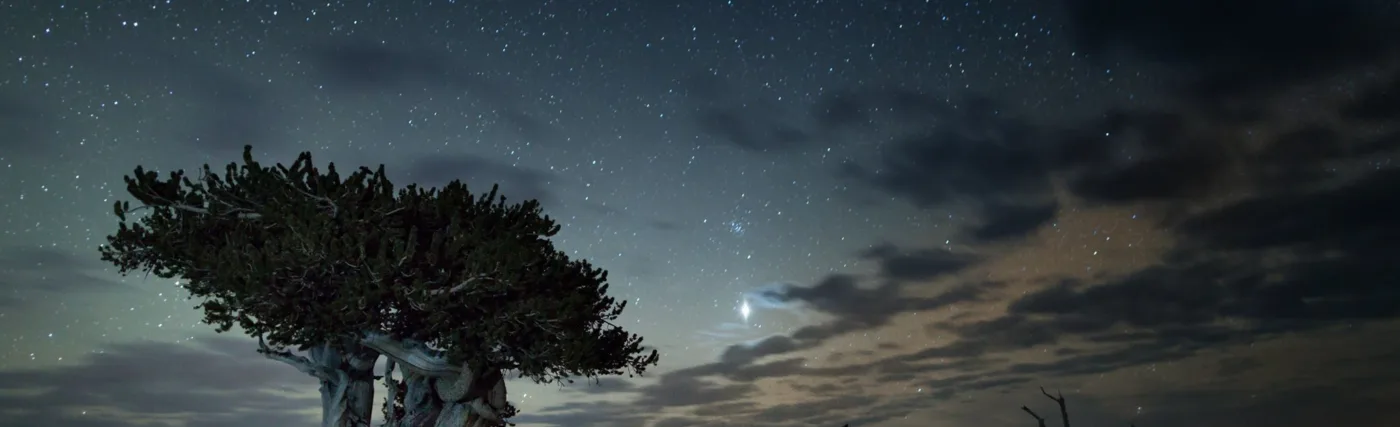
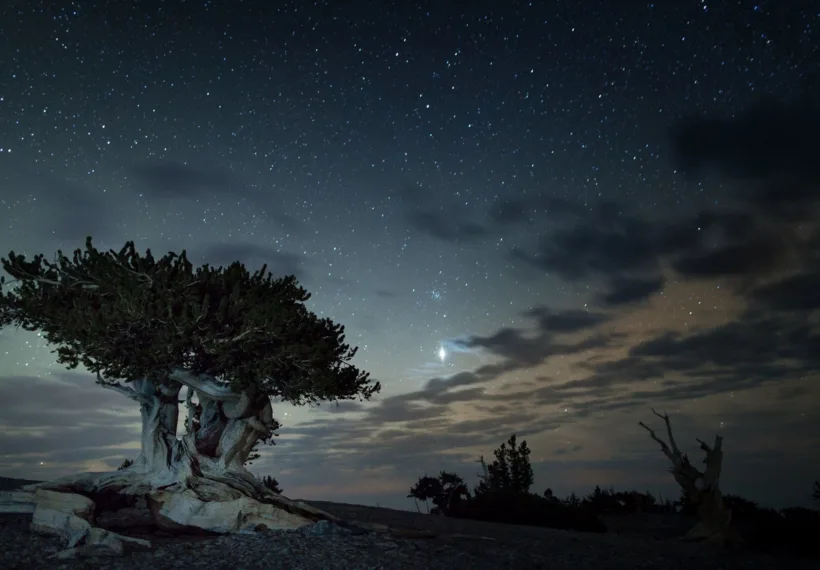
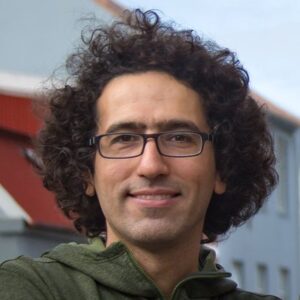
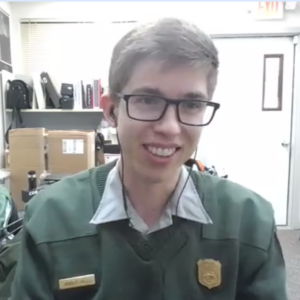
Where are the darkest skies in the U.S.? Neil deGrasse Tyson and comedian Chuck Nice learn about dark sky efforts, light pollution, and cool places to stargaze with guests astrophysicist Matt O’Dowd, astrophotographer Babak Tafreshi, and national park ranger Bradley Mills.
What makes for a good stargazing spot? Neil and Matt talk about their experience as astrophysicists looking at the night sky. Does understanding aspects of space takeaway or enhance the magic? What are the cool things you can see through a telescope in the Northern Hemisphere? We discuss the impact of seeing Saturn through a telescope and why people get so excited.
Babak tells us about his project Life at Night and how light pollution impacts wildlife. Learn about astrophotography, how to create a great image, and where to find dark skies to create your own astrophotography. Plus, Neil shares a story about the International Dark Sky Association.
We speak to Bradley about being an Astronomy Ranger at Great Basin National Park. What options are there for amateur astronomers to observe the night sky? All that, plus, we discuss what you need to know in order to become an astronomy park ranger or volunteer and how to get more people to keep looking up.
Thanks to our Patrons Rob Arifur, Peter Kariuki, Tina Anapolsky, Micheal Bishara, Rebecca Cain, John Aaron, and Stephan Kokot for supporting us this week.
NOTE: StarTalk+ Patrons can listen to this entire episode commercial-free.
Transcript
DOWNLOAD SRTThis episode is brought to you by travelnevada.com.
Up next on Star Talk, we devote an entire episode to stargazing, sponsored by Travel Nevada.
Why them?
Well, they got clear skies, being mostly in the desert.
Among my guests, we have my friend and astrophysics colleague, Matt O’Dowd.
We also have Babak Tafreshi, who’s a National Geographic astrophotographer.
Yeah, they got those too.
And also Bradley Mills, who’s a park ranger.
A park ranger who specializes in the astronomy programs of the National Park.
All that and more coming up on Star Talk.
Welcome to Star Talk.
Your place in the universe where science and pop culture collide.
Star Talk begins right now.
This is Star Talk.
Neil deGrasse Tyson here, your personal astrophysicist.
I got with me my coach, Chuck Nice.
Chuck.
Hey, Neil.
Hey, you know, we do a lot of topics, but I think there’s a topic we don’t give enough attention to.
And that’s the search for dark skies on earth.
You know.
And as a city person, you know, I grew up in New York City.
Right.
The whole notion of a dark sky didn’t have many meaning because my only dark sky was the local planetarium, the Hayden Planetarium.
Right.
And so.
An artificial dark sky.
But in a way, that’s kind of cool.
They created a dark sky just for you.
Yes.
Knowing I’d come back a few decades later and serve as director.
Director.
And you know what?
And they’re just like, God, that was a good investment.
Look at that.
Look how that worked out.
Just to show you that I’m not weirdly odd in this way.
I’m not the only one out there who loves dark skies.
Let me bring on my friend and colleague, Matt O’Dowd isn’t a fellow astrophysicist, a host of PBS Space Time, I want to ask you about that.
Associate professor of astronomy and astrophysics at Lehman College at CUNY, the City University of New York.
And you’re also an associate here at the American Museum of Natural History.
So, Matt, how are you doing, Matt?
I’m doing great, Neil.
Thank you very much.
Good to see you.
So, Matt, what do dark skies mean to you, especially since they’re not everywhere?
You got to like look for them and find them.
Yeah.
I grew up in the suburbs, you know, maybe not quite as bright as New York City, but I remember my first dark sky as a kid.
You know, I thought, there are so many stars in my little suburban neighborhood, you know, there’s at least a hundred, but then you go to the outback Australia where it’s pretty dry anyway and you look up and you can’t even find a spot of sky that doesn’t have a star.
Spectacular.
That’s amazing.
So, Matt, I didn’t see a dark sky that matched what I saw on the planetarium until I went deep into Pennsylvania, far across New Jersey, you know, across the moat around Manhattan.
You say that like it was such a treasury.
Oh, the treasury.
I actually had to swim across the Hudson.
I swam across the Hudson, and then we got into a Conestoga wagon and made our way across New Jersey.
So, Pennsylvania is rural, and then I got to see a night sky, you know, as nature had intended it, not even realizing that that’s just a sky in the northeast where there’s humidity, there’s some light leakage on the horizon, because even hundreds of miles away, you can see city lights.
And so, why don’t you remind us what the value of being in a desert is for stargazing.
You know, there are two big things, right?
There’s the fact that deserts are big, and so you’re probably far away from any town.
People don’t build a lot of towns in the middle of deserts.
I was at a town in the middle of the biggest desert in Australia, so Alice Springs, which is in the dead center of Australia, recently, actually.
And, I mean, you just get a little way out of town and look up, and I don’t remember seeing the sky like that.
So you have the proximity to light.
As you say, you want to be hundreds of miles away, okay?
In the middle of Australia, you’re a thousand miles away.
But then there’s the dryness, and the dryness is key.
So the water in the atmosphere causes, as the light trickles down from the stars, it sort of bounces the light around all its way.
It trickles, it’s not at the speed of light, dude, it trickles, trickles.
On a cosmic scale, that’s a crawl, eight minutes to get from the sun, it’s like, oh, I’ll give it to you.
I can make it.
No one ever calls it trickling, but okay, yeah, go on.
It puts a patch up, but it also bounces around.
So when you look up at the stars in somewhere where there’s some humidity, you see these blurry blobs, and you don’t really notice until you see the sky from a desert or a dry mountaintop, which is where we like to build our observatories, then there are these pinpricks, these crystal clear pinpricks.
And man, it’s stunning.
It’s like at the Hayden Planetarium.
Yeah, just like the planetarium.
So many people don’t think of the water molecule as something that matters in the night sky.
Yeah, it just gives you rain, of course, but you want to remove all the best observatories in the world are in deserts for this reason.
Yeah.
Yeah, you don’t want the water.
Plus, if you do have water, then it can make clouds and then it can rain.
So deserts are good for there being little rain, which means there’s very few clouds typically.
Yeah, you can actually see faint of stars that way, when the star gets blurred out a little bit, then what we call the surface brightness goes down.
And so if you concentrate all of that starlight into a single point, your eye is going to be able to pick up faint of stars and further away.
I forgot about that.
That’s right.
Because if you smear out the light, then it might not be bright enough to trigger your detection threshold, but concentrate it all into one spot.
And there it is.
It’s a pinprick of light.
Now, in the United States, we have places that can be far away from cities.
Where have you been?
What are some places you’ve been?
I mean, I’ve seen some good stuff in New York also, but you know, not the city, many, many, many, but a little bit blurry.
But exactly as you head west, you know, the middle of the country, the northeast is good.
But, you know, again, a bit of humidity, but, you know, those central states, Nevada is probably where I’ve done most of my Star Games.
Really?
Oh, really?
Nevada?
Nevada, yeah, of all places.
I mean, it’s an amazing state.
You’ve got cool cities, but pretty quick to get away from them, you know, hop in a car and there’s desert.
Oh, I get it.
So what Nevada did was it took all the city lights and put them into just two cities.
So they centralized all the city lights.
Whereas the Northeast is just towns all the way up.
It’s sprawling, continual Northeast corridor.
So you put it all in one place, then that leaves the rest of the state.
Because I was in Montana, I got a similar sense of that.
You know, they call it big sky country.
But what good is a big sky if it’s cloudy?
You know, it doesn’t matter.
So Montana is not in the desert latitudes, all right?
And if you go down south, what’s interesting is that between 30 and 35 degrees north latitude, it is all the great deserts of the Northern Hemisphere.
So you get the Mojave Desert, the Gobi Desert, the Sahara Desert.
And India would be a desert were it not for the monsoon.
And India is right on those parallels, 30 to 35 degrees.
So anyway, so if you go into the United States, away from civilization, and you get desert, that pretty much localizes where you can do this, right, Matt?
Yeah, I mean, it’s the best way you can do it.
Absolutely.
People do good astronomy everywhere because people are amazing, but for me, Nevada.
Black Rock Desert in Nevada is my favorite spot.
In a way, it kind of balances because we can see Las Vegas from space, but in the rest of the state, you can see space from there.
Very clever.
It’s a perfect balance.
That’s like a slogan or something.
That’s going to be on a bumper sticker, Chuck.
Yeah, so you get the benefit of the desert, which means also clear skies.
So where did you observe?
What precisely, Matt?
So the Black Rock Desert, which is a few hours out of Reno, is an alkali flat.
So it’s this huge many mile wide alkali flat, ancient, ancient lake bed.
Strange place, actually.
It’s this super basic dust, very flat.
You can drive on this surface most of the year with your eyes closed.
There’s nothing for miles.
Don’t do that, kids.
So when the dust isn’t up in a storm, it is crystal clear.
So I’ve been there a few times.
I’ve been there with a group of colleagues who run what’s called the Black Rock Observatory, and they bring a big telescope, like a meter-wide diameter mirror telescope.
But it’s still portable.
If they bring it, it’s portable.
It’s marginally portable, yeah.
It’s a small van, but yes.
So now let me just ask this as a city dweller myself.
When you’re out there in the desert, is there a Ritz-Carlton nearby?
Just in case.
I mean, if I want to spend the night.
Yeah, there’s a five-star hotel right in the Black Rock desert.
It’s there, of course.
You just got to know how to find it.
Ask the locals.
Chuck, you’re on a call with two astrophysicists.
You’re not spending the night anywhere.
You’re spending the day in the hotel.
That’s right, because the night is where the action is, baby.
The night is our day.
We are indeed creatures of the night.
Take that, Dracula.
We’ll show you how to do it all night long.
Oh, look, we just did another bumper sticker.
Astronomers do it all night long.
Yeah, I know.
That’s an old one.
Is that an old one?
Oh, very old.
Very old.
Yeah, yeah, yeah.
So, Matt, what were your favorite targets of the night sky?
Okay, so, I mean, out there, you know, you can see some good deep sky objects.
And, you know, the nebulae are the most beautiful, if you can see them well.
Okay, so, the remnants of stars that have ended their lives and blown off their outer layers.
And so, everyone’s seen these crazy configurations of colorful gas out there in space with a really good telescope.
Those are gems.
But, you know, the Andromeda Galaxy is a winner, I think, because it’s so bright.
You know, you can actually see the Andromeda Galaxy with the naked eye at a good dark sky, dark sky site.
You know, it’s…
Plus, plus, it’s a Northern Hemisphere object.
Northern Hemisphere object, added bonus.
It’s two and a half million light years away.
But, you know, if you know how to look at it, which is just off where it actually is, you see this distant giant galaxy just right there.
You’re talking about averted vision.
It sort of fades out.
Curious effect.
The one thing that you can’t go past, if you want to wow the locals, is Saturn.
Showing people Saturn is the most mystical experience for someone who hasn’t experienced all of this stuff previously.
And, Matt, what impresses me is you can show it to them through a telescope, and it’s nowhere near as richly displayed as a Hubble photo they might see online, yet this still blows their mind.
Yeah, because you can see the rings.
But you can see it in a photo.
I’m just saying.
There’s something about, I mean, I know exactly what Matt’s talking about.
In the moment.
Because the first two things I ever saw through a telescope, the first, of course, was the moon, okay?
And you get to see, and you’re like, oh my God, like it’s, I’m right there.
I’m on the moon.
I can’t believe I’m on the moon.
And the second was Saturn.
And even though, when you look at like Cassini and these images, right, where you just see these…
The Cassini space probe to Saturn.
Thank you.
And you see like how detailed the rings are and you can like, and they almost look like this little ballet of debris going around the planet.
But you can’t see it like that through a telescope.
You know, it looks like bright, kind of blown out version of that Cassini image.
But it’s so detailed in that it’s actually so different with the rings and you can make it out.
And it’s like the only thing that you know in the sky.
Like, you know what I mean?
Like you’ve never looked up in the sky before.
You know Saturn has rings and then you’re seeing it.
Something about that.
It’s confirming evidence.
It’s confirmatory evidence.
It’s like, oh my God, I’m really looking out into space.
Yeah.
Somehow all of those Cassini movies or Hubble photos, like, you know, we’re so spoiled on, you know, amazing CGI these days.
Part of us maybe doesn’t believe that it’s real.
But when the photons come from Saturn directly through the telescope and hit you in the eye, then there’s no denying.
Because they’re your photons.
There’s an immediate sense of the size of the universe.
So, Matt, I hear that Nevada has a dark sky sanctuary.
What is that?
You know, a dark sky sanctuary is a region where there’s regulation about the types of lights that can be within a certain region.
So it’s possible to do lighting in a way that doesn’t destroy the sky.
You don’t have to shine all your lights straight up.
You don’t have to illuminate all of your buildings.
How about you shine them down?
That’s where you need it.
If you’re in an airplane and you’re flying over a city and you can see a street light, somebody’s paying to send light to your eyeball in the airplane.
Right.
Okay, so what do you…
It looks bleak, everything I’ve read about the future of dark skies.
So it seems like these are cherished places, few places left on earth.
Yeah, so the expansion of the cities, more and more towns in between cities until you have the whole country, maybe the world being the northeast corridor.
And there are some spots that presumably will never become cities.
There are those spots in Nevada, I doubt that Black Rock is or will become a city.
But these places become more and more distant to most people.
And so fewer and fewer people have access and kids growing up are less and less likely to see more than a hundred stars in the sky.
So people are growing up without any relationship to the night sky.
They don’t even know to look up and be curious about it.
I think we will lose something deeply.
If that’s the world, that’s the next generation that’s going to lead the world.
They’ll have no sense of the paths of curiosity that led us into the universe.
Yeah, I mean, it’s hard to know how important it was or how lucky we are that we have a transparent atmosphere.
I mean, obviously, it’s good that it’s transparent that we can see, but it’s transparent all the way to space.
We can imagine situations where you have this permanent cloud cover at some level, and we wouldn’t even know that the universe existed beyond our atmosphere.
Matt, I think about that all the time.
Oh, really?
All the time.
If we grew up on the surface of Venus, which has a very thick cloud cover, now Venus doesn’t happen to have a moon, but if it did, we would just look at the tides come in and out mysteriously and have no understanding of it.
We have no idea that there was a night sky with stars and nebulae in the Andromeda Galaxy.
There’d be no cosmology until someone ascended through the air and emerged on the top of the clouds and imagined the first person to do that.
But would we even get there?
How instrumental was the night sky in sparking that curiosity that goddess started inventing?
Oh, to pull you there.
Curiosity, to fly, to fly in the first place, yeah.
So that’s a very good point, Matt, I had not considered, that the curiosity stimulators are looking to a place that you otherwise cannot reach and asking yourself, how can I, how will I ever reach it?
Well, then again, somebody would have looked up and said, I wonder what’s beyond those puffy things up there.
I wonder what’s behind that, that canopy.
Yeah, not everybody, but some, some do.
It didn’t take it a bit longer, but…
In fact, in the latest Star Talk book, we devote chapters and chapters to that kind of state of mind.
You know, what is beyond, it’s titled to infinity and beyond.
The infinity is a moving target.
It’s like in the 1700s, if I say, go to the moon, say, that’s not possible.
So the moon is at infinity to you for all you know, right?
You can’t ever get there.
Well, plus you need new laws of physics and this mythical magical substance called rocket fuel and a rocket on top of that, then you can get to the moon.
But that’s completely mythical at that stage.
So I’m intrigued by this.
So Matt, just describe your emotions when you’re out under the night sky, now as a professional astrophysicist.
If you were not an amateur astronomer, but now as a professional astrophysicist, what emotions come over you?
You know, some people have asked whether understanding the universe too well takes away the magic.
The opposite.
Yeah.
Expands and amplifies all of the experience.
So now when I go out under the night sky, I mean my first impulse is the same childlike, holy crap, look at all those stars.
But now I have, I guess, the apparatus to be able to imagine this vast three dimensional universe and the distance between the stars and me on this spinning orb of rock and all of this stuff.
So I can sort of hold that model to the stars.
And yeah, it’s a good man.
It’s a good trip.
Yeah, I still well up when I go to mountaintops and I look up to the night sky.
If I’m alone and just the eerie silence of just me, the mountainside and the night sky.
Well, Matt, it’s been a delight to have you.
You don’t come on often enough.
And remind me what kind of stuff you do on PBS’s Space Time.
Oh, sure.
Yeah.
I mean, we do astrophysics, astronomy and physics.
We go pretty hard in a lot of areas.
You know, we’re doing a bunch of quantum mechanics episodes right now.
So, you know, if there’s anything we need.
It’s a real learning experience.
Yeah.
People learn.
All right.
Come and check it out.
Love it.
All right.
We’ll do that.
Chuck, our next guest is a National Geographic Explorer, astrophotographer and science photojournalist.
Babak Tafreshi coming up.
This episode is brought to you by travelnevada.com.
With this week’s partial eclipse and the total eclipse happening in early 2024, we’re quickly reminded of how important it is to get outside and look up.
But if you’re in a big city like I am, you know that it’s near impossible to fully appreciate all that the night sky has to offer.
So as home to more of the last true dark skies than anywhere in the lower 48 states, we want to encourage you to consider Nevada when booking your next cosmic adventure.
Want to go on a guided tour through the stars led by dark sky rangers?
Journey to the Great Basin and book a spot on the Star Train.
As one of 17 international dark sky sanctuaries worldwide, you can also visit the Massacre Rim Wilderness Study Area.
Looking to put that telescope of yours to good use?
Check out the constellations from the Tonopah Stargazing Park.
And a quick pro tip from us, these places are remote.
So if you’re traveling there, be sure to bring a map because your cell phone might not work.
Yes, a physical map.
Remember those things?
As always, we here at Star Talk encourage you to keep looking up and get out there by visiting travelnevada.com.
That’s travelnevada.com for your next Nightsky adventure.
Thanks for This is Star Talk.
Neil deGrasse Tyson here.
You’re a personal astrophysicist with my co-host, Chuck Nice.
Chuck.
Yes, Neil.
What’s happening?
We’ve got with us, right in the house, Babak Tafreshi.
No, Babak, Babak Tafreshi.
Did I say that right?
Babak.
Perfect.
Perfect.
Perfect.
I say I did it right, so there.
You are an astrophotographer, a space photojournalist, which sounds like you go to space to get pictures, but that’s probably not what it is, but that’s what it sounds like.
Yeah, let’s get a close up on that lander, right?
Alpha Satari, over here, over here, Alpha Satari.
Smile, smile.
Who are you wearing?
Who are you wearing?
Your National Geographic explorer.
This is a highly privileged coveted designation that goes to people who are scattered around the world doing their thing in the National Geographic family of people bringing the universe to the rest of us.
You’re also an amateur astronomer and we’re going to find out why that is a badge of honor and not a denigration.
You studied physics in school.
Love that.
And you’re an advocate for night skies, dark skies.
And that’s another good thing.
And plus you’re a founder of the World at Night Initiative.
We’ll get into that when we get back to that.
And so let’s tell me what you’re about, Babak.
What drives you?
How did it all begin?
And what’s your relationship with your mother?
Let’s get into this very deeply.
Let’s really get into it.
Well, I’m originally from Iran, from Tehran.
I’m an Iranian-American science journalist and photographer.
My interest in astronomy started with the first look at the moon, like many others.
At the age of 13, I borrowed a telescope on top of a roof in an apartment in Tehran, which is highly light polluted.
I had a look at the moon and couldn’t believe my eyes.
It was much more than the map I had in my hand.
All the craters, mountains, and this was just a tiny telescope, two-inch.
I can remember that scene still second by second.
It was almost like being the Apollo orbiter going around the moon because I had no tracking with the telescope.
So it was with the Earth rotation, the scene was moving across the view.
And I thought that would be cool to capture it on film.
So that was the next night.
Just to be clear, you said something that I want to make sure our audience fully understands.
You have a telescope that’s not plugged in.
It just points in one direction and the moon is in the frame.
But because Earth is rotating, what’s in the frame is passing by.
And the magnification of the telescope is such that you’re basically observing the rotation of the Earth as the sky goes by.
Any time you look through a telescope, that happens.
Any time you even take a picture of the sky, even with your phone, if you go beyond 30 seconds, you start to see stars are not pinpoint anymore or little trails.
This is a fact for the Earth rotation.
I mean, it’s a very easy evidence of how Earth is rotating and how the sky is turning above us.
That sounds kind of annoying, like it would ruin every picture.
That’s very true.
That’s very true.
That’s why we are limited with shorter exposures, less than 30 seconds, unless you use a device that tracks with the Earth’s rotation, that can freeze the Earth rotation, we call it the star tracker, or use a motor attached to your telescope that can track the stars.
I didn’t have that, that tiny telescope.
So that’s why the view was moving, and it felt like being in an orbiter around the moon.
So later on I became an editor at Astronomy Magazine of Iran.
I started the TV program for about 10 years.
We had a weekly TV program on space and astronomy.
I was highly inspired by Neil, in fact.
I emailed you back in 90s, if you can remember, I’m not sure.
Well, that’s good.
If you didn’t, this would be very awkward right now.
It would be an awkward moment completely.
But I do reply to all emails eventually.
Yes, me too.
So eventually…
So yes, that was very inspiring to me.
And later I started a program called The World At Night in 2007.
I was still based in Iran.
And since the program became more and more global, with exhibitions here and there, I had to leave Iran because it was not possible with all the limitations from the government and also the sanctions and internet filtration.
So me and my wife decided to leave to Germany and later on to the US.
I became an Asian Geographic Photographer in 2012 and recently much more involved with Nat Geo across the platform, society and other parts of the platform of National Geographic.
And just to remind people in this moment, the National Geographic platform is huge.
We just published our third book in collaboration with National Geographic Books.
It just came out.
And so Nat Geo does a lot of different things for this world or for our appreciation of the world.
So I guess we’re in the family with you as well.
So I had to slip that in there.
Yeah, so in 2007, when the World at Night started, I shifted from science journalism more into photography.
But still in today’s photography, I try to bring in my science journalism passion into my visual storytelling.
So every image to me has a title, has a subtitle, and all the elements of an article.
Recently, I started to work on a project for the National Geographic Society called Life at Night, which brings the attention more to the ground, still at night time, and how animals are in relationship with natural night environment, how dark skies is important not only to stargazers like us, but also to billions of animals who are not journal, and how light pollution is impacting that relationship.
Nobody gives them a thought at all.
Nobody does.
You know, you look at casinos, and casinos are extremely bright beyond what they should be, and you’ll find that the indigenous bird population, wherever there are casinos, is totally screwed up.
It’s because the birds think it’s daytime 24 hours a day.
Yeah, more than 80% of birds in North America, which are migratory, they travel at night.
They fly at night because it’s safer to fly at night.
There is no predator.
And it’s also much more energy efficient without the heat.
And because of night flying, they use stars for celestial navigation, as well as Earth magnetic field and the landmarks.
But light pollution is a new source of attraction to them and completely disrupt their navigation system.
So they come down to the source of light, and most of them unfortunately die either by losing the time, either impacting or getting lost in the cities.
So Chuck, when you said casinos, you mean the illumination of the casino on the exterior.
Right.
When you said that’s right.
Okay.
Yeah, yeah.
Because you’ll often find casinos in an isolated place.
So think about it.
Like all of Las Vegas, right?
Well, yeah.
It’s in a desert or Atlantic City.
It’s on the beach or, you know…
Las Vegas is visible from Saturn.
Yeah, we did a project, in fact, about the light of Los Angeles and Las Vegas and the darkest sky of Death Valley within the border of Nevada and California, which is a darkest-sky place.
It’s a designated international darkest-sky park.
And Las Vegas was boldly visible, almost like sunrise, from 90 miles away.
Then we went to 150 miles away.
It was still visible.
I even have a record from 220 miles away, and there is still a glow.
So this is well beyond the distance to your horizon.
So it’s not a matter of sight lines to the lights, right?
It’s the glow in the air that it puts up, that you can still see.
Because your horizon is what, maybe 20 miles away from wherever you have to stand?
The actual horizon, maybe 30 miles.
Yes, that’s the actual horizon.
There’s some refraction impact too.
Because of the refraction, we see a further away horizon.
But that’s certainly called the sky glow.
It’s a reflection of light from dust, from aerosol, from clouds in the sky.
And the lower the place is, the more dusty it is, the more sky bullet generates.
Of course, right.
Which makes mountaintops a good target.
Exactly.
Even close to the cities.
It’s very interesting.
When you look at the light pollution maps, looking for darker sky places near you, the elevation is not there.
That factor is not visible in the light pollution maps.
And if you, for example, give you an example in Los Angeles, if you go to Mount Wilson Observatory, which is within the edge of Los Angeles, you can see the Milky Way from Los Angeles with all that light, barely visible, but still you can see the Milky Way.
It’s just like an impossible dream to see 180 degrees of light from Los Angeles and the Milky Way is visible because it’s 6,000 feet above the city.
I just have to add that Mount Wilson is where Edwin Hubble discovered that galaxies are whole other, that fuzzy objects in the night sky are other galaxies, and he discovered the expanding universe.
All of that in the 1920s.
So we are in the centennial celebration of these discoveries.
Not only that, quantum physics was formulated in the 1920s as well.
Oh, Mount Wilson Observatory.
So that’s pretty cool.
In fact, Neil, the 100 years anniversary of discovery of expansion of the universe is coming in October.
I’m going to put that on my calendar.
So you said that Death Valley in Nevada on the border of California was a Dark Skies site.
Is that like a sanctuary or what does it mean to be a Dark Skies site?
I work in partnership sometimes with a nonprofit called the International Darker Skies Association.
And darkerskies.org is where they put all the resources they have.
And they have designated more than 200 sites worldwide in more than 20 countries, in fact.
One of them is in Nevada.
And these places are dark enough to see the Milky Way.
Some of them are known as sanctuaries, as you mentioned.
These are the top level, the darkest.
Some of the best observatories in the world, for example, Mauna Kea or observatories in Chile.
There are in such places where the Milky Way still looks like from the down of humankind.
You can see it without any impact of light pollution.
We still have those places.
Then comes the Darker Sky Parks.
There are some light glows on the horizon, but still it’s beautiful.
Like many of the southwest parks, it is included in the Darker Sky Park designation.
We have also Darker Sky communities where people are trying to change lights to make the area more sky friendly, less light polluted.
And these are different designations.
And there’s also another program by UNESCO, which has starlight reserves.
I’d be surprised if UNESCO didn’t get part of its interest in there, because their scope is open from just cultural sites to places where you have a special relationship with nature and the world itself.
I have a fast International Dark Sky Association story where they got gangsta on me.
Chuck, did I ever tell you that?
When we opened the Rose Center for Earth and Space in the year 2000, in the middle of Manhattan, Manhattan’s Upper West Side, we had these tiny little pen lights in the plaza area before you enter the building, and these tiny little 10 watt lights were pointing upwards.
And I got a letter in the mail from the Dark Sky Association that said you need to be an example for the rest of them and not have upward pointing lights.
These were tiny little pen lights in the pavement.
And I thought that was gangster.
In Manhattan, right?
In Manhattan.
Oh my gosh.
I had to simultaneously love them and say, what the f*** are you doing?
I was going to say that.
It’s a little nitpicky.
Yeah, but I definitely appreciated their sentiment.
So, Babak, you described the World Night Initiative as combining art and culture.
You mentioned nocturnal animals, but in what ways art and culture are mixed in with this?
Well, if you look at the images we take of the night, they’re not necessarily scientific.
We have two kinds of astrophotography.
One made with telescopes, deep-sky photography in general it’s called, and the other one is more called night-escape photography, which includes earth and sky.
They’re mainly wide-angled.
In a wide-angle image that resembles the field of view of human eye, you are not going to discover a galaxy.
You’re not going to discover a new comet.
You’re aiming for art and you’re aiming for science communication.
That’s where the art of astrophotography can be a platform to tell people about the importance of night-to-sky principles of practical astronomy and also the issue of light.
So you’re talking about these pictures where someone is standing there with their arms up.
You see the Milky Way in the background.
There’s a mountainscape and trees.
And it’s just a beautiful photo that includes the night sky.
That’s what you’re talking about.
That’s right.
Sometimes there’s a story involved.
I try to include four factors in my photography and highly recommend to any viewer who’s going to be an astrophotographer to have this in mind.
Art, technique.
These are very obvious for photography as a basis.
Then comes the moment.
It could be nature, comets, a wild animal at night, and a story.
When these four come together, you have an image that can create an impact, can keep in the memory of somebody who is viewing it.
The story is the difficult part.
I love that.
This is a time-honored process.
Oh my gosh.
When you say it’s just a picture of a cosmic object, I can tell the story of the cosmic object, but I can’t bring it back to you.
I can’t make it real.
I can’t make a story that you then share with your next of kin.
So how important this is to the history of civilization.
Oh my gosh.
Yeah, and it’s very important to make it realistic.
I like to emphasize on that too because today astrophotography could be generally based on composite images, stacking different exposures and putting them together in Photoshop.
But it’s important to consider that the elements of the sky are like the elements of the natural world.
You cannot copy a mountain on top of a lake where it doesn’t exist, unless it’s for an artistic reason, not in documentary photography.
And for the same reason, you cannot copy the moon from another part of the sky to wherever you like.
This is like, to me, it’s like Cheetah on top of an elephant.
It’s a lie is what it is at that point.
You’re just lying.
People do that all the time.
People, especially the moon.
And you know it because they don’t, typically when they do that, they don’t know that people in the know, know what the orientation of the moon needs to be to the horizon, depending on your latitude on earth.
And they’ll just slap a moon there.
Sometimes it’s upside down.
Sometimes it’s backwards.
Sometimes the cues where you can just get it wrong.
And I’ll call them out.
I’ll be up in your face when I say.
They don’t do it around Neil.
Let’s be honest.
Come on.
Let me tell you something.
This dude went on the Today Show.
It was just like, hey, you know that globe thing you got going in the beginning?
It’s wrong.
It’s totally wrong.
Oh, no.
The Daily Show.
That was the Daily Show.
The Daily Show.
That’s what it was.
It was spinning backwards.
It was spinning backwards.
Yeah.
But that was the beginning of the interview.
So I love your message, one people, one sky.
And that’s very hopeful, very peace orienting thought there.
So how do we get people before we continue to get out and do more to look up?
I mean, Neil’s always saying, keep looking up.
How about the people who aren’t looking up at all?
They not keep looking up.
How do they start looking up?
I think a trip to a national park or a state park in a dark sky place is the best way to do this.
Because many of the national parks in the US and Canada are dark sky designated locations, especially in the southwest US.
Some of my favorites, for example, in Arizona and Nevada border is the western end of Grand Canyon or the Great Basin National Park.
It’s at high altitude in Nevada and it’s also very dark.
There are plenty of dark sky locations in that area.
All the five major national parks in Utah are dark sky designated or going to be soon.
In northwestern Nevada, we have the Black Rock Desert, another dark sky place, even very close to Las Vegas on the way to Beatty, on the way to Death Valley.
There’s a dark sky area.
Another place I have photographed many times is Cathedral Gorge, which is inside Nevada on the border of Utah.
And it’s just fascinating rock formations with dark sky above.
Is there a map they can go to online that identifies these dark spots?
There are two ways to do that.
One is lightpollutionmap.info.
That’s a website.
And there is also a layer for Google Earth.
A university study provided this layer of known as the map, the Atlas of Artificial Skyglow.
And this you can add it to your Google Earth, and then you can zoom in and see another place.
Another website is bluemarble.de.
It’s a German enthusiast who includes all these satellite images from every year that you can look at Earth at night and find the darkest sky places near you.
But do not forget that elevation is not there.
So even if you’re in a bright area, but you find an elevated side, which is at least 4,000, 5,000 feet above sea level, then you start to see the darkest sky even within the cities.
Very cool.
And right now, you are speaking to us from Iceland.
What are you doing there today?
From Reykjavik, Iceland, this was my last day after two weeks of a photo workshop capturing the Northern Lights and the Milky Way with a group coming from all around the country.
I do this all around the world.
I do this twice a year in March and September known as Aura Photos.
Oh, wow.
So people can actually hang out with you and learn how to do what you’re doing.
Oh, look at that.
My invitation might still be in my inbox, I’m guessing.
Exactly, yes.
Anytime, Neil.
Let me check my inbox if I’ve ever been invited on this.
So you made a career of this.
This is a brilliant, important, and envious career path that you’ve made for yourself here.
Congratulations on that.
Keep that going.
All right.
And Babak, thanks again for being our guest on Star Talk.
All right.
On this.
This.
We’ve got next up, Bradley Mills.
Bradley Mills, you are a Nevada park ranger, our very first park ranger on Star Talk.
Welcome.
Thank you very much.
Thanks for having me.
Yeah, you guys are all cool with your outfits and you got your hat, you got that park ranger, that smoky bear hat.
Absolutely, it’s an important part of the uniform.
So you are the lead astronomy ranger, and I’m so delighted to even know that such a person exists.
As a park ranger leading the astronomy effort, what are your tasks?
Well, Great Basin National Park, where I work, we have one of the most extensive astronomy program kind of sets of probably any national park in the nation.
So I just get to lead essentially how we run it all.
And oversee, I’ve got a seasonal staff of about five park rangers who get to focus solely on astronomy every single year.
So I get to work doing that, which is just an absolute delight.
That’s incredible.
And let me just back up just for a moment.
This park is a national park in Nevada.
It’s not a state park in Nevada, correct?
That’s correct.
We’re the only national park entirely within Nevada.
So there are some other smaller national park units, but we’re the only one that has got that full special name.
And where exactly are you?
Because I’m telling you right now, all of this talk about Nevada and the dark skies is giving me a reason to go to Nevada, because I’ve only been to Las Vegas.
It does not have dark skies.
It does not.
Absolutely not.
And it reminds me of work.
So I would love another reason to go to Nevada.
How close are you to Las Vegas?
Or how easy are you to get to, I should say?
Well, we’re one of the more difficult places to reach.
There’s no public transportation.
There’s only a couple highways that even come anywhere near us.
And so we’re about five hours north of Las Vegas.
And we are, I mean, way out in the middle of nowhere.
And that’s the benefit.
Because if we were anywhere near Vegas, it’s the brightest spot on earth.
So we got to get far, far away.
So we’re luckily about five hours north.
It’s a good check.
Brad, Bradley, if you don’t want me to come, just say don’t come.
You don’t have to.
No, we love it.
We’re one of the least visited.
It’s so hard for people to get out here.
We get 150,000 people a year.
Let’s do it.
So you manage the Great Basin Observatory.
What is that?
Because just to be clear, when geologists use the word observatory, it’s just a place where they go stand and look around, right?
So when an astronomer says observatory, we got real hardware there to connect you to the universe, typically.
So which kind of observatory is this?
I just love that you’re dissing geologists.
Don’t call it an observatory, just stand there looking at an escarpment.
That’s not an observatory.
That’s a scenic overlook.
Well, so luckily, I am not the one fully in charge of the Great Basin Observatory we’ve got.
It was built by the Great Basin National Park Foundation entirely from donated funds, which is incredible.
But it’s a proper research observatory.
It’s got the dome.
It’s got a 70 centimeter telescope.
It’s the real deal.
I think it might even be one of the largest in Nevada.
I could only find information on one other research observatory in the state.
So we’re pretty special having that out here.
And it’s a lot of fun.
So what’s the elevation of the Great Basin Observatory?
So the observatory is right around 68, 6900 feet.
So it’s high up.
Yeah, our park starts at pretty much no lower than 6000 and goes all the way up to the second highest point in Nevada at Wheeler Peak at 13,063 feet.
So it’s…
And at what point do you hallucinate?
From lack of oxygen?
We have people suffering from altitude sickness even this low.
So I’m sure it doesn’t take you to get that high to have that happen.
Yeah.
My favorite thing to observe is what happens to unopened bags of potato chips that you bring to high altitude.
They get really, really puffy.
I love these secondary experiments you can do at high altitude.
So what is this we heard here about a Star Train?
What is that?
So the Nevada Northern Railway is a historic railway line that operates out of Ely, Nevada.
And they run a train, have been running this train for 10 years in partnership with the park that goes from Ely, Nevada about 15, 20 miles north of town and to a telescope flats where we’ve got telescopes set up and let people kind of hop off the train.
They get to look through telescopes.
We do ranger programs and trivia and astronomy, just fun things, give out prizes and stuff on the train.
And we get to ride back in the middle of the night.
Chuck, doesn’t this sound like a setup for one of the scenes in Westworld?
Where you take some little train that you go out into the desert.
And all of a sudden, right, exactly.
There’s a swoon there and a gunfighter.
And then all of a sudden, Ed Harris shows up and you’re just like, wait a minute, wait a minute.
It does kind of sound like that.
It is, it is.
I interrupted.
The train goes from where to where?
So it goes from Alien Valley up the Steptoe Valley.
So it actually doesn’t come into the park, but it’s still in the Great Basin, which is about the size of Nevada.
So it’s a very similar environment and we still get some excellent, excellent night skies out there.
So you said you need that you have a telescope set up.
What do I need to bring?
Here I am a person, I’m just like, okay, why not?
Let’s go stargazing.
I’ll give it a try.
What do I need to bring?
If you’re coming to the park in one of our programs, just yourself and a sense of enthusiasm.
That’s all you need.
Because we’ve got all the other equipment, we’ve got all the knowledge and we love to share it.
So it makes it really easy for people to come and experience the nice guy.
Yeah, the amount of times I have people who have come out here never seeing the Milky Way, sometimes never even seeing more than five, six stars in this guy, and then get to come here.
That was me growing up, yes?
I count me among those.
No, me too.
I grew up in San Diego County and I counted maybe 10 stars in a planet every once in a while and then come out here every night in the summer.
Even sometimes when there’s a lot of moon, you get to see the Milky Way.
It’s incredible.
It’s life-changing.
Do you ever play audio of Neil deGrasse Tyson so that people feel like they’re looking up at a planetarium?
You know?
LAUGHS And now?
Well, we let them know we’ve poked lots of holes, so that’s why there’s so many stars.
Exactly.
It’s just a dome.
It’s just a dome.
So, generally, the best-observing sites in the world are in deserts.
So, just to remind me of my geography, does all of Nevada count as a desert?
Essentially.
Big, big, big sections of it.
So, we’re in the Great Basin Desert out here, and so we get very, very little annual rainfall.
We are incredibly high up, so we got the high elevation.
You know, we’re high desert, dry.
It really, really adds to making this such an excellent place for stargazing.
Because the drier it is, the fewer air molecules are in the air to disrupt the starlight and fewer clouds and less rain.
Exactly.
So, you’re pretty much guaranteed a clear night any time you schedule this, isn’t that right?
Not necessarily.
We have pretty intense monsoon season through July and August, and we get programs rained out every once in a while.
But if it’s just cloudy, we can always find something in the clouds.
It’s still dark enough here that even if you only have that much in the sky, you can still find a nebula or a galaxy or something in there to be able to show people.
When you say cloudy, you don’t mean overcast.
You mean clouds in the sky.
And you look in between clouds.
Yeah, exactly.
Can you quantify how dark the sky is?
I mean, is there ways to know who qualifies and who doesn’t?
So, we measure luminance here using…
I actually even grabbed it.
We have a little sky quality meter that we go around once a month.
It’s like a camera light meter.
Pretty much.
We point it at the sky and…
No, it’s a tricorder.
It’s a sky tricorder.
Oh, I should have said that.
I beat you to it.
Hold it up to the sky and go…
Yeah.
So, you know, I just pointed in my office, it just said 8.5, which means it’s bright in daytime.
But it can go up to 22 is where we want to kind of hang out at.
And Great Basin is right around like 21.6, 21.8, which means we have some of the darkest skies that are measured in this country.
So the bigger the number, the darker the sky.
That’s correct.
Just in case that was not clear.
Absolutely, yes.
So what kind of…
When we think of national parks and national forests, for example, there’s a maintenance budget for it, you know, for hiking paths, perhaps, or fire management tasks that they go through for the astronomy club in Nevada.
What kind of management is necessary there other than maybe just the upkeep of the telescope?
That’s a big part of it is just maintaining our equipment.
But I get a new…
I like to kind of say I get a fresh crop of rangers every year.
So we get some people that return, and otherwise I’ve got new folks who we got to train up and got to get them learning more about the sky if they’re still, you know, just kind of feeling the amateur level and one gets to that point where they can really, really teach people.
But otherwise, it’s pretty simple, and it’s just managing the people.
And we also get a lot of volunteers here throughout the year for some of our big festivals and other things that we do.
So there’s a lot of work put into that as well.
And you’re the guy wearing the badge.
If you’re an amateur astronomer, it’s a really great thing to get out to you because you can get paid for being an amateur astronomer.
That’s right.
That’s right.
Would that make you a professional astronomer?
I guess so.
All I’m saying is you got a nice shiny badge there.
I’m telling you, if I came out there, I would say, I don’t need no stinking badges.
I don’t need no stinking badges.
I know this guy.
So do you need to go through brush up classes or something to just stay on top of the constellations and the latest discoveries that you might then add to the stuff you point out?
How do you stay current?
It’s just a lot of just doing research.
And when you have downtime or if a program gets canceled, it means we get to spend more time learning.
So we read a lot of publications.
We’re always keeping an eye on what’s going to be above us in the sky that night, obviously, so we can point out things like cool space missions that might be happening.
We got to see some rocket boosters recently.
We were just even talking to people about the Osiris mission that just landed.
So we get a lot of very, very cool things that happen near us that are very visible that you wouldn’t really necessarily be able to see if you were not in a sky like ours.
Right.
I’m very glad to hear that because, yeah, the universe is not just the stars as they’re laid out for us on Earth.
There’s this whole frontier of research unfolding that does make headlines, right?
It’s not even obscure.
You know, with the Osiris-Rex mission, it was a piece of an asteroid brought back to Earth, landing in an adjacent state, right?
Right there in Utah.
Well, this is a delight to meet you, Bradley.
And I’m even more delighted to know that someone such as you exists in this country or even in the world.
Thank you.
Who’s tasked with bringing the night sky to the public and preserving the night sky in the interest of civilization.
Nah, there’s hope for us yet.
Yeah, and it’s amazing.
All right, so Bradley, give us a parting sentence to take us out.
If you ever get the chance, come out to Nevada, broaden your horizons, see the night sky as it naturally should be.
All right.
I’ll summarize that and say, keep looking up.
There you go.
All right, we’re out of here.
Thanks, Bradley.
Yeah, thank you both so much.
Always good to have you, Chuck.
Always a pleasure.
All right, this has been a stargazing edition of Star Talk.
Neil deGrasse Tyson here.
You’re a personal astrophysicist, as always, bidding you to keep looking out.

 Become a Patron