


 Unlock with Patreon
About This Episode
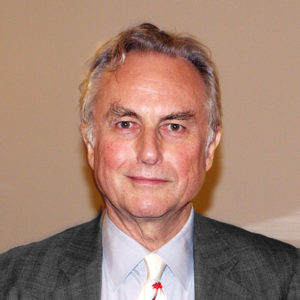
Neil deGrasse Tyson sits down with evolutionary biologist and author of The Genetic Book of the Dead Richard Dawkins to talk about evolution, whether we were “designed,” how we are living reflections of our ancestors and much much more.
Why did it take so long to come up with the idea for natural selection? Learn about Darwin’s dangerous idea and the history of upending scientific assumptions. Is there such a thing as a perfect version of an animal? We also explore the role of information in biology and evolution. Will there be a day when we no longer need biology in order to pass on information?
Neil gives his explanation for the chicken and the egg problem. We explore the origin of the word “meme”, evidence for god, and Carl Sagan’s poetic chapter headings. We also discuss the human inclination towards there being a “designer” and for complex biology to have been designed. Richard explains how you end up with something as complex as an eye through evolution.
Neil and Richard talk about when Neil publicly rebuked one of Richard’s claims during a talk. We take a look at Richard’s new book The Genetic Book of the Dead and how we are living descriptions of the world in which our ancestors lived. Plus, we discuss whether it’s worth it to try to convert people and the future of scientific acceptance.
Thanks to our Patrons Jason Byttow, Keith Bale, Daniel Levin, Multimedia Kart, Renata, CESAR FRADIQUE, Ginger Towers, handzman, Lisa Kohler, and 21Pandas_ for supporting us this week.
NOTE: StarTalk+ Patrons can listen to this entire episode commercial-free.
Transcript
DOWNLOAD SRTComing up on StarTalk, a one-on-one conversation between me and professor Richard Dawkins.
And we explore his life as not only a biologist, evolutionary biologist, but as an author.
And we pluck snippets from many of his books to find out what messages he wanted to lay down.
Join us.
Welcome to StarTalk.
Your place in the universe where science and pop culture collide.
StarTalk begins right now.
This is StarTalk.
Neil deGrasse Tyson here, your personal astrophysicist.
And today I’m in conversation with the one, the only, Richard Dawkins.
Richard, welcome back to my office.
Thank you very much.
This is like your fourth time here or something.
I think it is something like that.
Always a pleasure, Neil.
Welcome.
I mean, we have a lot of catching up to do, I think.
So recently, or at least this year, we lost Daniel Dennett, philosopher Daniel Dennett.
And I recently learned, I didn’t read all of his books.
I read some of them.
He declared that Darwin’s evolution by natural selection was the greatest idea anybody ever had.
And he’s coming to it not as a biologist, but as a philosopher.
So how do you reflect on that declaration?
He said that at the beginning of his book, Darwin’s Dangerous Idea.
And his point was that before Darwin came along, it seemed obvious to everyone that big complicated things like humans and oak trees and things had to have an explanation in terms of design.
And it was a huge stroke of insight for Darwin to see that it didn’t, that the laws of physics alone could produce this prodigious amount of complexity, filtered through this odd process of natural selection.
To me, it’s always been strange that it took so long, that it took until the middle of the 19th century for Darwin and Wallace and even maybe one or two other people.
This is thousands of years of thought.
Brilliant people have come before.
Aristotle could have had it and didn’t.
When you think how much cleverer you had to be to do what Newton did, or Leibniz, inventing calculus, working out about the laws of how gravity…
That’s the Newton finger puppet here.
You think that somebody would have tumbled to evolution by natural selection before the middle of the 19th century, yet they didn’t.
So that’s an astonishing thing and it needs an explanation.
So did Daniel Dennett explain why it took that long?
And if he didn’t, what would be your explanation?
I don’t remember whether he did.
Mine would be…
Well, first of all, Ernst Mayr, the great…
I mean, he was here, I think, in…
Here at the American Museum of Natural History.
He thought it was because of essentialism.
He thought that because of Aristotle and Plato, who thought that…
Just because they thought like geometers.
I mean, a right-angled triangle is a kind of perfect form, sort of hanging out there.
And they thought that the perfect rabbit, the perfect rhinoceros, was hanging out there just like a right-angled triangle.
So you couldn’t imagine how a rabbit could turn into just anything different.
That was his explanation.
That wouldn’t be mine.
I mean, I think it’s just that…
That’s an interesting one, though, because it speaks to the bias that we have observing nature.
So my people, including Copernicus, could not shake the idea of orbits that were perfect circles.
They couldn’t shake that.
Why would God design a universe with a shape that wasn’t geometrically perfect?
So even Copernicus putting the sun back in the middle of the known universe had circular orbits.
And since the orbits are not circles, they actually differed from predictions on the night sky.
So that was a problem at the time.
It’s like Copernicus, this might work, but it still doesn’t fit.
The epicycles are doing much better.
And so it wasn’t instantly taken up, including the resistance, the church resistance, of course, because the earth wasn’t in the middle anymore.
So our counterpart to what I think you’re describing is the urge to try to presume nature was perfect and then account for it with everything we know that is.
yes, all I was thinking was that I find an ellipse a pretty neat geometric figure as well as a circle.
But anyway, going back to why it took so long and the idea of the perfect rabbit, the perfect rhinoceros, the perfect horse.
In a way, that’s a bit silly because if you want to look at them in a population of rabbits is pretty variable.
And anyway, that was Ernst Meier’s explanation for why it took so long.
Darwin did it by going via artificial selection.
Everybody knew, farmers knew, horticulturists knew, gardeners knew, you could change a rose, you could change a cabbage by just breeding.
And really, Darwin’s insight would say, you don’t actually need a breeder.
You don’t need a human to do the breeding.
Nature does it for you.
Survival does it for you.
It’s not that difficult.
I mean, it doesn’t require any sort of higher mathematics or anything.
And yet nobody got it until Darwin and Wallace.
And this is why I’m intrigued that Daniel Dannett, a philosopher, who in principle, any philosopher could have come up with this.
Because unlike relativity and unlike quantum physics, which are realms of behavior of the universe, large and small, that you can’t just deduce from your armchair.
But evolution by natural selection could have been deduced in an armchair.
I think it could.
It’s surprising that it didn’t.
It’s interesting that both Darwin and Wallace were traveling naturalists.
And they both were collectors in South America, both in South America.
Wallace lost his entire South American collection in a fire.
And then he went to the Far East.
But they were both collectors of natural history specimens.
And the other person who might have thought of it is Patrick Matthew, who was a gardener and an orchard keeper.
But philosophers know they didn’t do it.
They didn’t and they could have.
They could have, yes.
So you’ve written, I mean, I have a list here of like all your books.
You’ve been out of control over them.
Not as much as some people.
I got you here.
Was The Selfish Gene your first book?
yes.
Back in 1976, I was, that was the year I graduated high school.
I remember, because it was like the bicentennial year.
Everybody made a big deal of this.
It was my first presidential election that I could vote in.
And I voted for Jimmy Carter.
And I got to tell him this so cliched line.
But when I met him, I said, you are my first president that I voted for.
And it was one month after my birthday I got to vote for him.
So, I thought I’d have a short exercise here.
I’m going to mention your books.
Not all of them.
You have too many of them.
Could you just tell me what your favorite bit of that book was that you were communicating with the reader, if I may?
So, start off.
The selfish gene.
The selfish selection chooses between genes.
genes are the only thing.
The information contained in genes, digital information is the only thing that goes from generation to generation.
That which survives is information.
Digital information.
Some genes survive better than others.
We, the bodies, we, the animals, we, the plants, are just the machines that are there to preserve the genes that ride inside us.
Whoa.
Okay, so.
That reminds me of how I describe your gut bacteria.
I say, people want to think they’re like top of the world, and I say, all you are to those bacteria is a darkened vessel of anaerobic fecal matter.
That’s right.
And it’s pretty much the same with your genes.
I mean, it’s not fecal matter, it’s testicular matter or ovarian matter.
Okay, so they’re the ones carrying themselves forward.
yes.
So if it’s just information, can you imagine a day where the biology is no longer necessary and you just have the digital information stored or duplicated in some way?
yes, certainly.
I mean, already you could preserve your entire genome.
I’ve got my entire genome on one disk.
Do you have a backup?
Just checking.
Is it on the cloud?
I don’t have a backup.
The idea was the television program, and the conceit of the program was it was going to be posted into the Dawkins Family Vault in the church at Chipping Norton to be dug up in a thousand years.
Like a time capsule.
yes, exactly.
And the idea was that in a thousand years they dig it up and make a duplicate of me.
And of course, then we talk about why it wouldn’t actually be me because it would just be an identical twin of me.
But that was the idea.
Was it you?
yes, it must have been you.
Because who else would do this?
Posted on social media.
Was it you?
If you had a book of your ancestors and it was, no, if you had a book of a picture of your mother, was this you who did this?
yes.
Tell me this again.
I think you’re thinking of…
Of your mother’s mother.
Yeah, you pile them up.
It’s just one of many ways of dramatizing the enormity of geological time.
I forget exactly how it goes.
There are lots of ways of doing it.
No, but you do this, and if you keep doing it, one of those pictures is a fish.
Exactly.
And yet every single generation looks like the previous one and the next one.
There’s no sudden discontinuity.
It’s not sudden.
And many people can’t grasp this.
They think, well, there must have been a time when it stopped being a fish, but there wasn’t.
It just gradually, gradually, gradually, gradually changed.
Okay.
Will you allow me, given this, which I completely understand, you have to allow me my explanation for the chicken and the egg.
Okay.
Okay.
So I tell people, but I’ve never gotten your blessings on this.
Can I use that word with you?
Yeah, of course.
I’m all for blessings.
So, so I simply tell people, they say, what came first, chicken or egg?
I said the egg.
It was just laid by a bird that was not a chicken.
yes.
That’s a fair state.
It was laid by a dinosaur.
I’m compressing a billion, you know, a hundred million years of time there.
But at some point, you’re going to say what comes out of the egg is a chicken.
And but that’s a that’s a genetic alteration from the previous generation.
There never was a moment when a bird that was not a chicken gave rise to a chicken.
It was never was.
Of course, it never was a very compressed.
It’s a shorthand.
yes.
For what you just said with the book of your ancestors.
yes.
Going back to the fish.
yes.
I mean, I once had a letter from a lawyer who said, roughly speaking, evolution can’t be true because a species is defined as members can always interbreed with each other.
And you can’t imagine that there was a time when a child generation was incapable of breeding with the previous generation.
Of course, you couldn’t.
But he thought that meant that some more evolution was invalid.
He couldn’t grasp that.
That everything was specially created.
Everything is, it’s a gradual process all the way through.
And as you step back through your ancestors, they become slightly less like a human, slightly less like a human.
But you never notice it as you walk past them.
If you imagine…
I want to see a fish.
It’s just funny.
So you skip ahead and there’s a fish.
You say, that’s my parent.
yes.
That’s…
It’s a little freaky for people.
But as you walk along the generations, you’d never see them getting more fish-like.
It would just be so gradual, you would never notice it.
Because generations are only 30, 40 years, and we’re talking billions.
yes, that’s right.
Yeah.
So you needed deep time for evolution to do what it needed to do.
Did we have deep time in the middle 19th century?
Well, not really, no, because…
We didn’t in astronomy.
We were satisfied with a 10,000 year old universe, because before we understood nuclear energy, which is a huge repository, we were thinking the sun was just a lump of coal.
It was George Darwin, was one of the…
Darwin’s son George, charles Darwin’s son George, was one of the people who pointed out eventually that nuclear energy could do the trick.
Oh.
Nice little poetic justice there.
Which of the Darwin’s explained tides for the first time?
Probably George, I’m not sure.
It was a Darwin.
And Newton and Galileo did not understand tides.
It was…
even though they had all the gravity necessary to account for it.
There’s a subtle point with tides where if you look at any textbook, any textbook, it’ll have like the moon and earth and it’ll have a tidal bulge pointing towards the moon.
yes, that’s wrong.
It’s wrong.
It doesn’t…
the moon would want that to happen, but that’s not how it is.
yes.
Tidal bulge is in advance…
the tidal bulge is in advance of the moon in its orbit.
yes.
Okay, and that’s earth’s rotation pushing the tides ahead of the moon.
And it’s that interaction that has remarkable consequences.
The moon is slowing down earth’s rotation.
And earth already slowed down the moon’s rotation, so it’s tidally locked to us.
So we’ll one day be tidally locked.
We’ll be double tidally locked.
And when that happens, then the tides will line up because we’re not be pushing it ahead of the moon.
So that had to…
somebody had to figure all that out.
That’s another draw.
Thank you for your Darwin’s.
Hello, I’m Alexander Harvey, and I support StarTalk on Patreon.
This is StarTalk with Dr.
Neil deGrasse Tyson.
So, which book did you came up with the word meme?
I know it was you.
That was in the Selfish Gene.
That was in the Selfish Gene.
You invented the word, and people long forgot how…
Tell me the authentic definition of meme, because that’s not how anybody’s using it today.
Unit of cultural inheritance, and the analog of the gene in cultural inheritance.
Okay, so this is communicated from one person to another, and certain memes have higher communicability.
yes, that’s right.
I really wanted to say that, because the whole book had been about the gene as the unit of selection, that’s how I described it, when you asked me earlier, it didn’t have to be genes.
It could be anything that is self-replicating.
And nowadays, I would have used a computer virus as my analogy, probably, for the gene.
But in those days, computer viruses, well, maybe they’ve been invented, but I didn’t know about them anyway.
So I used the unit of cultural inheritance.
It’s something like a…
So M is for memory, so memory gene.
It’s a portmanteau of…
That’s right.
It comes from the same root as memory.
Okay.
So if I say something, we have alligators in the New York City subway.
yes.
If that spreads, if that spreads because it’s a repeatable lie, or even might be true, whatever it is, if it’s spread.
Whatever it is, it doesn’t matter what it is.
It doesn’t matter.
If it spreads, then it’s a successful meme.
Because it’s so interesting to me, I have to tell someone else.
Exactly.
Exactly.
We love to tell stories which surprise people or amuse people, whether or not they’re true.
Okay.
So nowadays it’s just an image of something kind of cool.
yes, I’m rather sorry about that.
No, that’s not your fault.
But you’ve contributed to our culture.
The best of the memes are the ones that are spread around the most.
yes.
It’s a meme of me doing this.
Okay?
yes.
Like, I think, what is it called?
Watch out.
You got a badass over here.
I never said that.
Okay.
And there is a picture of me doing this.
But it spreads.
It spread.
And there are people in South America who saw me in the street.
They were tourists.
They said, we know you from the meme.
This is like ten years ago or something.
I think, the meme?
Really?
That’s not even me.
Why do they?
So somehow that spread.
I don’t have any understanding of it.
Should I tell you my John cleese story about that?
What is that?
Do you remember the Faulty Towers?
yes.
Okay.
Do you remember the episode of the…
I don’t remember episodes.
Come on now.
The Germans.
Don’t mention the war.
Do you remember that?
No.
Okay.
Well, there’s an episode where some Germans visit the hotel.
And Basil Faulty is going, don’t mention the war.
Don’t mention the war.
And of course, he does mention it.
He was in, I think, it was Munich Airport.
And he was going up the escalator.
And there was a man way over there and going down the escalator, right across the hall.
And he recognized him and he shouted, don’t mention the war.
Okay.
So that meme is spreading in Germany.
All right.
So that’s a selfish gene.
So let’s move ahead here.
The Blind Watchmaker.
Oh, that’s my favorite book of yours, if I may.
Okay.
Well, the watchmaker comes from William Paley, the theologian, who said that there must be a god, because if you find a watch, you pick up the watch.
It was crossing a heath, he said.
You open it up.
It was a great big pocket watch in those days.
Back when watches were watches.
yes, and you see all the cogwheels and springs and things.
It had to have a designer.
Of course, it did.
And so how much more would you say that of an eye or a knee joint or anything living?
So that’s the pale watchmaker argument.
Natural selection is the blind watchmaker.
It produces results that are like watches.
They’re beautifully designed.
eyes are beautifully designed.
Certain flaws, but they are beautifully designed.
And they come about not through any design process, not through any deliberate design, but through the blind watchmaker, which is natural selection.
So that’s hard for people to accept, especially if they’re deeply religious.
yes.
Because they already have an account.
yes.
Now you’re saying that their God is some random, one of the acts of their God is some random force operating.
He didn’t have to be there at all.
He didn’t have to be there at all.
And I think where people get confused is, and even some of our people have made this mistake, Fred Hoyle, who was the architect of the steady state universe who pejoratively invented the name Big Bang to describe the universe beginning in one point.
He said that in a pejorative way.
He wanted the universe to be a steady state.
He did a calculation for how you would get an eye, a fully functioning eye, and how long that would take.
And it was some impossibly, you know, tend to be some very high power number of years, given the rate at which you have defects in a genome.
And what, correct me if I’m wrong, the rebuttal to that is, natural selection is not completely random.
Well, no, that’s right.
It actually wasn’t an eye, it was a hemoglobin molecule, but it’s the same argument anyway.
What he overlooked was that it doesn’t happen all in one go.
He imagined all the bits coming together at random.
And that’s one case that doesn’t work, and it has another random thing that doesn’t work.
yes.
And you do that forever.
You do that forever.
Of course you won’t, but what you need is, let’s use the eye, even though he didn’t.
You need a slightly less good eye, and then a slightly less good eye, and a slightly less good eye, and if you start with just a sheet of light-sensitive cells, which just detect whether it’s light or dark, that’s useful.
It’s not light-sensitive.
Better than not having it.
Better than not having it.
You can tell when it’s night or day.
You can tell whether there’s a predator flying overhead.
And then if you have a slightly cup-shaped, if you bend that retina from a flat thing into a slight cup, then if it’s coming from that direction, it hits that side of the, and so you get, it’s not an image, but it gives a slight directionality.
And then, and you close up, and you start to get a pin-hole camera.
It’s a very crude, it’s out of focus, but it’s sort of an image.
And then you need a little bit of transparent gunk in there.
It’s not a proper lens, but it does something like a lens.
And all these stages, one by one, they step by step, they incrementally improve.
And every improvement is the new starting place for the variations at that generation.
Because every generation is not starting from zero.
That’s right, yes.
Okay.
yes.
So, The Blind Watchmaker, I just thought that was brilliantly written and it was my benchmark for, if I were to ever write a book for the public, I want to be this articulate.
Oh wow, that’s high praise, Neil.
Thank you for that.
I just want you to know that.
Thank you for that.
Okay, just let the record show.
And let me just skip coming to him.
Oh, I like this, a climbing mountain probable.
Well, that’s what we’ve just been talking about.
yes.
Mountain probable is…
Just that metaphor, describe it to me.
It’s a metaphor where you’ve got a mountain, with a sheer cliff, a vertical cliff, and on the top of the cliff is an eye.
And to produce the eye in the Fred Hoyle manner would be to leap from the bottom of the cliff to the top in one go.
In one go.
You cannot do it, but you go around the other side of the mountain, and you find a nice gentle slope.
And so you just climb, step by step, and you reach the summit.
Okay, so if you think it got there in one fell swoop, there’s no, of course you’re going to invent a god, but not imagining that there’s another way, you’re stuck in one religious philosophy versus any other philosophy.
Okay, all right, got that.
And this one, much was written about unweaving the rainbow.
So tell me about that.
We’re up to 1998 now.
That comes from Keats.
I did not know that.
Keats complained about Newton spoiling all the poetry of the rainbow by explaining it.
And so my point was the point which you’ve made often enough that actually there’s far more poetry in really understanding the spectrum.
So did I tell you this?
Do you remember there was this, it was on YouTube.
I forgot the title.
It was called Double Rainbow Guy.
Have you ever seen this?
No.
Double Rainbow, you should check it out.
Okay.
Okay, this is now, back when social media was just people posting things, it wasn’t as cesspool that it is today.
yes.
So, he was hiking somewhere, some guy, back when you needed a camcorder to take videos, not a cell phone, not a smart phone.
He’s hiking in, it was the Sierra madres, I don’t remember where, and you hear him sort of narrating his, oh, that’s a nice, that’s a clear photo.
Then he turns a corner and he says, oh, a rainbow, oh my gosh, what could it mean?
Oh, a double rainbow, oh my gosh.
And he’s tearing, you don’t see him, but you can easily interpret just his emotions and his breath.
And then he goes prostrate to the ground.
And he can’t contain himself.
What does it mean?
This is a sign.
And so I felt bad doing this.
You might be proud of me, but I felt bad doing this.
I tweeted, I put a link to this video, and I said, this is how you behave if you’ve never studied physics.
yes.
But I thought that was kind of mean.
He’s having his moment.
Well, in a way, that’s what Keith was doing.
To Newton.
yes, that’s right.
But anyway, I can capture a story in the opposite direction.
I read a story about a woman in California.
She had a lawn sprinkler, and she saw a rainbow in the lawn sprinkler, and she said, what are they doing to our water supply?
That’s funny.
Oh my gosh.
Yeah, so, all right.
So she missed all the beauty of the rainbow.
Yeah, okay.
They’re putting colors in the thing.
So I did not know that that that Keith had that to say about Newton, because Newton, yeah, he decoded the rainbow.
That was what, that was his thing.
It’s what he did.
One of his things.
Oh, by the way, you mentioned how beautiful the eye is, even with some flaws.
As an astrophysicist, when I would learn this very early, when I took classes here, actually, when I was in middle school at the Hayden Planetarium, that’s when I learned about the entire electromagnetic spectrum, and that the visible part of the spectrum is tiny.
It’s not even a full octave.
That’s right.
Of what’s out there.
And then I was just disappointed with my sight.
I said, is this the best nature can give?
Why can’t I see x-rays?
You know, let me go back in line and see what else is there.
And later on in Star Trek The Next Generation, there’d be a character called Geordi, who either he was born with outside or he went blind, and he had this visor, V-I-S-O-R, which was an acronym, Visual Instrument Sight Organ Replacement.
But with it, he sees all wavelengths of light.
yes.
And so they get him to look at scenes that they’re coming upon.
What’s high in x-rays is high in this, it’s high in that.
And then I worried that if you could see all bands of light, that would be very visually noisy, wouldn’t it?
yes.
I mean, if you see right through to radio waves, where you wouldn’t, I mean…
Well, then everything becomes transparent.
Long wavelengths, yes.
Then there’s no walls in this office.
You wouldn’t see things, that’s right.
Yeah, so that’d be a weird, I mean, to have that power in practice, I think ideally you would tune it, you’d have a little tuner so that you can target.
yes, yes.
So that you can target across.
In The God Delusion, the last chapter, I think, I said that the, I made your point about the visible spectrum being so tiny, as it opens up that spectrum.
yes.
And, It would be like hearing Beethoven’s Ninth Symphony played in one octave in the middle of the piano.
yes, yes, yes, that’s right.
You have coined this term, and we’ve even appeared on stage together under this title, The Poetry of Reality.
And, I’m all in, but if you’re actually a poet, then surely there are parts of reality that are best expressed by a poet.
Would you agree?
I suppose so.
I’ve never quite understood.
I mean, I don’t write verse, but I suppose, like you, I try to evoke emotion at the same time as science.
Otherwise, it’s just a wiki page.
yes, that’s right.
And I’m not entirely clear what you mean by poetic.
I sort of feel intuitively I know what it means, but I can’t quite put it into words.
Maybe that’s no accident.
But yes, I defend in my own mind the idea that science is the poetry of reality.
It makes me feel poetic.
I think it makes you feel poetic.
So it might be self-serving on that level.
What would matter if others can be convinced of the same?
Because otherwise it’s just a self-licking ice cream cone.
That’s right.
But if you’re skilled in writing, I think you can bring others with you.
So I have my own valuation of poetry.
I’ll share it with you and get your reaction to it.
For me, poetry, art more broadly, best serves us when it highlights something you might have otherwise missed or never noticed.
My best example of that was July 21st, 22nd, was it?
After we landed on the moon in 1969, the New York times had a special section.
People reacting to the fact that we walked on the moon.
And there were all these famous poets of the day.
It was Archibald McLeish and people who carried the soul of creative expression in the day.
And I read these poems.
They were awful.
We pierced the sky and touched the sky.
And I’m thinking none of this is greater than the act of walking on the moon itself.
So maybe I don’t need artists to interpret that for me.
Maybe I need them to interpret the tree that I’m walking by.
Then you get Joyce Kilmer’s poem, The Tree.
I will never see something as lovely as a tree.
Arms pressed to the sky.
There’s, in American poetry, American, Longfellow, Henry Wadsford Longfellow, who wrote The Midnight Ride of Paul Revere.
That might not be heralded as great poetry, but we all know it here in America.
And that’s a poem about a guy who told other people that the enemy was coming?
Is that an important person?
No!
Yet we all know that person’s name because it’s a poem about him.
You do not know that corresponding person for any other war that has ever been fought in the history of the world.
The person who told other people that the enemy was coming.
That is not a person.
But for us it is because it was a poem about him.
It was somebody who would otherwise go forgotten.
So for me, art is best when it captures that.
I don’t need artists saying, Oh, I saw this Hubble photo.
Here’s my painting of that Hubble photo.
I don’t need that because I got the Hubble photo.
Give me a point of view that science does not give me.
Then we can hang out together in the sandbox.
That’s how I feel about it.
Okay.
The tree poem you mentioned, that’s a religious poem.
I mean, only God can make a tree.
At the end.
But no, God was just in the culture.
So is it religious when you say goodbye, when that draws from God be with you?
It’s just a cultural expression.
Think of Carl Sagan’s chapter headings.
Oh, you’ve probably helped me with this.
I mean, they inspire me.
Just every single one of his chapter headings.
yes.
And by the way, his widow, the backbone of night, has it?
His widow, Andrewian, who is highly literate unto herself and co-author of all three cosmoses, even the two that I had the privilege of hosting.
She was a major force in that poetic voice.
I just want to give credit where that’s due there.
Andrewian.
yes.
yes, a lot of thought goes into those in the chapter.
Across the backbone of night, that is a poetic phrase.
It immediately speaks to me.
I see the Milky Way.
I’m not sure I’m meant to.
And I guess I try to do something similar, at least in some of my books.
All right, I’m up to 2004.
The ancestor’s Tale.
That is a title that reminds me of the Sagan book, Shadows of Forgotten ancestors.
It kind of feels the same to me.
What happened in ancestor’s Tale?
Well, it’s a reference to Chaucer, the Canterbury tales.
But one of his tales was not the ancestor.
No, no, no.
Oh, you just, the Miller’s Tale, and now the ancestor’s Tale.
It’s a history of life, but it’s going backwards.
So it’s in the form of a pilgrimage, Chaucerian pilgrimage, going backwards in time.
So we human pilgrims set off into the past, and we’re joined by the chimpanzee pilgrims, and then the Iran, then the gorilla pilgrims, and the Iran, and then we finally get back to the origin of life.
So it’s a way of doing the history of life, but do it backwards, because if you do it forwards, then you end up with the idea that humans are kind of the climax, which you don’t want.
I mean, that’s not a good way of looking at it.
So if you go backwards, then you start with…
Okay, I was getting on your case, but that’s brilliant.
Brilliant.
Thanks for delivering.
I want to now read that, okay?
Good.
I missed that one.
Here’s one we all saw and know about, whether or not we read it, The God Delusion.
That’s 2006.
That puts you in the same plateau as…
That puts you on a plateau to be identified as one of the Four Horsemen.
Oh, right.
Not a phrase that any of us actually…
It was bestowed upon you?
yes.
So it was Daniel Dennett, Christopher Hitchens, Sam Harris.
Both of them are past.
Sam Harris and you.
yes.
Okay.
The Four Horsemen, who have each been quite vocal about their atheism.
yes.
And the God Delusion, if that’s not atheist, I don’t know what is.
It is, yes.
In the title.
yes.
Right.
So we spoke about this book before.
Didn’t you say there were religious groups that wanted people to read it so that they know the face of their enemy?
Was that?
I forget.
It’s quite possible.
There are some people who say they were converted to religion by it.
Really?
I’m not quite sure how they managed to get that.
doesn’t say much for my rhetorical skills.
So is this your single biggest selling book, The God Delusion?
yes, just about.
yes, it was equal to The Selfish Gene, maybe.
Yeah.
Yeah.
I mean, plus you have, and I’ve taken you to task on the very first day I met you, and I think it’s worth repeating here.
The first day I ever knew you.
Again, like I said, I read your books, and I aspired to have the vocabulary, the command of vocabulary that spills off your plate.
I took you to task in the front of a group.
It was one of the, what’s the name of that conference?
A Beyond Belief Conference.
Which gathered scientists, biologists, theologians, philosophers, and it was to discuss, are we in an era beyond where belief matters?
yes.
does belief still matter?
yes.
It was quite the juxtaposition of points of view.
You and I are up on front in a panel.
Two other people are there, and I heard you speak.
I’d only ever read what you wrote, and I heard you speak.
It was more articulate and more barbed than anything I’d ever read that you had written.
And I said, oh, my gosh, I’m glad we’re on the same side because if you had spoke to me, I’d feel like a complete idiot.
I would feel not worthy of life.
And then I thought, you are so potent.
Is this turning people off because they reject it?
Because you are not investing in how they think.
Everybody has little receptors for receiving information.
And if you’re just going to say, I’m right, and I know I’m right, and you’re all just wrong, and you’re idiots, maybe that’s not as effective as you can be.
So I challenged you to be a little more sensitive to people who are just trying to explore the world and that you could be more effective than you are.
Do you remember you replied to me?
I said, I gratefully accept the rebuke.
By the way, in that moment, there was like five seconds of silence, because I’m just some young whippersnapper and you’re like story famous guy on stage.
Nobody made a sound.
They laughed.
No, no, no, no, no, no.
Just in that moment of silence, how is he going to react?
It was one of these, what’s he going to say?
In that moment, it was total silence.
And then you broke the silence with…
I gratefully accept the rebukeness.
And then people were calmed after that.
yes, and you gave a worse example.
What was it?
Do you remember?
The editor…
Oh, yeah, the editor of New Scientist, who was asked, what is your policy at New Scientist magazine?
And he said, our policy at New Scientist magazine is science is interesting.
If you don’t agree, you can f*** off.
So that was…
So that’s what we can feel better about you.
yes, that’s right.
All right.
Only a few more minutes here.
Let’s keep going.
The greatest Show on Earth, 2009, subtitled The Evidence for Evolution.
Was that motivated because around that time, there was the rise of what they called intelligent design?
Well, that had come before.
I mean, this was…
In a way, the blind watchmaker was the response to that.
yes, of course.
But this was really to set out the evidence for evolution, which I hadn’t really done before.
I just sort of assumed it, so…
You mean assumed that everyone knew it?
Well, not really.
Well, yes, maybe, yes, maybe.
Okay.
Yeah.
There’s a lot of misunderstanding I have found.
People think that an organism adapts to its environment.
And I say, no, it either survives or dies.
yes, that’s right.
I mean, and there’s a great quote at the end of War of the World, where, as you remember, HG.
Wells, at the end, there’s a recitation.
And he says, I’m paraphrasing, he says, these creatures from another planet, they were doomed, undone, by the smallest creatures on earth, to which we had developed immunity.
And it ends with a very poetic phrase, no man lives nor dies in vain.
Through the toll of a billion deaths, man has bought his birthright on this earth, and it is his against all comers, and it would have still been his had the Martians been ten times as mighty as they are, because no man lives nor dies in vain.
And I thought that was potent.
He was, of course, scientifically literate.
And he’s saying there are generations that die because they didn’t have, they can’t make it through this next stress to the environment.
It’s rather horrifying when you think that actually that’s what happened to the native South Americans when the Spanish arrived.
They were killed by epidemics of things like measles, which they had no immunity.
And in Europe, they built up immunity to these diseases.
But the better analogy would have been had the South Americans wanted to invade Europe.
They would have then died by the European diseases.
But that’s not how European colonialism works.
You’re a colonist.
yes, I know.
Don’t you invert that colony story on me.
Just a couple more books here.
I’m skipping over like a half a dozen, with your permission.
One that I delighted, not only because I received a book, a copy of it in the mail from your publisher.
It was just delightfully done, flights of fancy, defying gravity by design and evolution.
That was 2021.
Beautiful book.
Illustrated.
And who is the illustrator of that book?
Yana Lentsova.
She’s Slovak.
Okay.
And just something that I think is underappreciated in this world, because we can’t fly.
So, especially in the idea that we’re at the top of the evolutionary scale and everything else is less than us.
What does the Condor say about that?
Who flaps its wings once every ten minutes, because it coasts the rest of the time.
So, just a celebration of flight in the evolution.
I was delighted by that.
Thank you.
Well, that was sort of designed for young people.
It started out as a children’s…
Well, that’s why I liked it so much.
That accounted for its accessibility.
I mean, it was just very fun to see the illustrations and the like.
And right now, there’s a book coming out called The Genetic Book of the Dead.
yes.
A publisher actually let you use that title.
Why wouldn’t they?
Because it’s so…
it’s like, what?
A book of the dead?
That worries me.
I don’t know.
I think it’s rather an uplifting title.
The Genetic Book of the Dead.
yes.
It doesn’t mean human dead.
does it have a subtitle?
What’s the subtitle?
yes, it does have a subtitle.
A Darwinian Reverie.
So tell me about this book.
I haven’t read it yet.
Okay.
If you look at a highly camouflaged animal, a desert lizard, it’s one that I use.
It’s got pebbles and sand all over its back.
It’s just a dummy painting of a desert on its back.
So that is a description of the world in which its ancestors lived.
You can read that animal as a book describing the desert world in which its ancestors lived.
And that’s an easy example because it’s got it painted on its back.
But it must be true right the way through every bit of the, every cell of the animal, every molecule of the animal has got the same description written.
And some of it is baggage.
Baggage as in burdensome rather than…
yes, but…
We have an appendix that can burst.
That’s true.
You have a pinky toe.
When was the last time you made good use of that?
Oh, you’d be surprised.
I don’t want to ask what your feet look like.
They could look like full, full, uh, uh, chimp feet, you know.
Do you grab stuff with your feet at home?
Things are much more useful than you think.
You didn’t answer that question.
Do you grab things with your feet out of, out of kinship with our primate relatives?
I’ve known people play the piano with their toes.
Okay.
The point is that natural selection is very, very fussy, is very, very intricate in its, in its choice, far more than we even know about.
We are poor judges of what’s important for survival.
And you think that the genes that survive, going back to the selfish gene, the genes that survive have to survive through lots and lots of different individuals and through a huge amount of geological time.
And so any statistical estimate that you and I make about the likelihood that your pinky will be of any use to you is a statistical mistake.
Natural selection is a much better statistician than we are.
So I’d need to think harder about my pinky toe.
Well, natural selection has millions of years in which to choose between successful toes and unsuccessful toes.
JBS.
Haldane did a calculation.
JBS.
Haldane, the great geneticist, did a calculation.
He imagined a feature like a toe, something that seems trivial to you.
And he said, let’s allow that it’s so trivial that for every thousand individuals who have it and survive, 999 die.
So there’s only a tiny, tiny margin of advantage.
The point is that an actuarial calculation, a life insurance calculator would say it’s negligible.
Forget it.
It’s not important.
What really matters whether you smoke, which is hugely important.
But natural selection is a much better actuary than any human statistician, because this feature, the toe, whatever it is, has been repeated thousands of times in lots of different individuals and through lots of different millions of years.
And it’s got to survive through all those times.
I’m explaining this very badly.
The main point is that we are very bad estimators of what’s important.
In natural selection is a much better estimator of that.
Okay, how about male pattern baldness?
Well, that’s a variable.
I mean, some people have it and some people don’t.
You might take another example, maybe fingerprints.
Why do we have fingerprints?
Well, the fact that they’re different doesn’t matter, but are they important for clinging on to the trees when we had our boreal ancestors, that kind of thing?
Oh, I see.
So even if they’re not useful now, they were useful to get us to where we are now.
Hence the Genetic Book of the Dead.
I mean, we’re talking about the past.
Damn, you’re right.
There it is.
The Genetic Book of the Dead, enabling us to get to where we are at all.
yes, yeah.
We are a description of the worlds in which our dead ancestors survived until they died.
Survived long enough to reproduce.
Because if we didn’t survive, we’d be extinct and we wouldn’t be here to talk about it in modern times.
We are only here because our ancestors survived long enough to reproduce.
yes.
And they survived because of the highly detailed features that they had, which their rivals didn’t have.
I think differently about my pinky toe.
Because without the pinky toe, there might have been some dead ancestor that would have ended that branch of the tree of life, and we would have never been here.
That’s right.
Man, that’s going to be a good book.
Do you have hope for civilization as it’s currently manifested in the world?
I think we have to have hope to live our lives at all.
It doesn’t mean that at an intellectual level I necessarily have.
I live my life as though I have hope, yes.
So, I’ve come, I’ve become, cynical is not the right word, I’ve become a practical cynic.
It’s, there are people who think this way, or feel that way, or behave this other way.
And I’ve stopped trying to change them.
What I try to do is offer a way of looking at the world that maybe they’ll take, maybe they won’t.
Maybe as an educator, it’s my job to make this as tasty as possible.
So hey, that’s a good idea, I never thought about it that way.
But otherwise, you know, I just gave a presentation to a Christian school, K through 12.
I talked about optics.
And at the end, it was open Q&A, and they were 11th graders.
And they started grilling me on science versus the Bible.
And I said, I’m not here to stop you from being religious at all.
Okay, we live in a country that protects your freedom to be religious, and you’re in a private school.
So the government is not gonna come after you and say you have to get this out of the public coffers.
So I made that clear, but I didn’t have the urge to try to convert them.
And I get the sense that you’ve had this urge your entire life to convert people with no less zeal than a religious person, a religious evangelical, a religious person would have tried to convert people who are not that.
Insofar as their religious belief conflicts with science, I think we would agree.
And in my field, perhaps the conflict is more alarming because, I mean…
Did I tell you?
I didn’t tell you this.
We have a Big Bang theater here.
And back when we first opened here at the Hayden Planetarium, there’s a separate theater space where we just talked about the Big Bang.
Someone came out of the Big Bang, saw me and says, how come you didn’t mention God in there?
And then I realized, okay, what am I going to do?
I say, how about this?
Why don’t you go to our Hall of Human Evolution and then come back here?
When I tell them to do that, they never come back because that’s way more offensive to them, having monkeys and humans hold hands in the dioramas than anything we could ever say in the Big Bang.
I thought they’d rather like the Big Bang.
I mean, the Big Bang sounds pretty much like genesis.
It’s a creation event, yeah.
Maybe that’s why they thought we should have mentioned God and didn’t.
But I just, I don’t even have the conversation.
I just send them over to your part of the museum.
yes.
But I think you’re being too pusillanimous.
You shouldn’t duck the question.
Well, I don’t duck it so much as sometimes I don’t have the energy.
Oh, that’s different.
I get that too.
You feel that.
I understand that.
But in my field, that really is an absolute opposition.
It’s not something you can…
Although the Catholic Church, they’ve met you in the middle.
Yeah, yeah, they have.
They said, we have this branch of primates, and then God breathed the soul into them and their humans, allowing evolution all up to that point.
Yeah, yeah, yeah.
You gotta give them something.
No, not a step.
Not a step.
It’s a total cop-out.
No, but the world is not that binary.
It’s not that binary.
I don’t see it that way.
There are religious people who are, where jesus is their savior, but they’re perfectly fine with a four and a half billion year old Earth.
yes, they are.
Okay.
They’re not at the extreme.
They don’t see the contradiction, but yes.
So maybe the plurality of the world is a virtue rather than a, not a virtue.
I shouldn’t use that word.
Maybe the plurality of the world is a feature rather than a bug of the programming of what it is to be human.
But the truth is so much more grand and so much more elegant and so much more poetic and so much more beautiful.
Why drag jesus in?
And I would still claim you could get more of that across if people didn’t feel stupid talking to you.
Yeah, that’s true.
I accept that.
Just saying.
yes.
So you’re a professor at Oxford.
Are you retired yet?
I’m retired.
You’re retired.
OK.
And you were professor of?
Public Understanding of Science.
yes, I remembered that.
yes.
That was a post created by?
charles Simone.
To charles Simone.
yes.
And he created multiples of those around the world.
That wasn’t the only one.
No, he wanted the Princeton Advanced…
Yeah, the Institute for Advanced Study, maybe?
That’s right.
yes.
That, I think that was in a different field.
I think that was…
Oh, OK.
OK.
But it’s interesting.
He’s a very generous…
Yeah, if you’re wealthy and you want to make a change in the world, that’s a way to sort of keep that going.
Absolutely, yes.
Right.
And there’s another professorship somewhere in the UK, a professorship of the public understanding of risk.
That is good.
That is a professorship.
yes.
And forgive me, I don’t remember where, but I know that exists.
yes, that’s good.
And people have no way to judge or to think about that.
It’s a challenge in their lives.
That is a fascinating subject.
People get so wrong.
yes, yes.
Even smart people get that wrong.
People who would otherwise think should be smart don’t get it.
Well, Richard, it’s been a delight to have you here.
Let me just end this with some brief reflections.
There’s those among us who are educated on a level where you can’t just hold it in.
You have to share the knowledge, wisdom, insights.
One gleans from having committed your life to studying a subject and its related components.
And Richard Dawkins is an example of that.
Carl Sagan used to say, when you’re in love, you want to tell the world.
And where there are two dozen books on this list that I just read, this is professor Dawkins can’t contain his love.
He’s got to share it for all those who seek a deeper understanding of life.
Not only their own lives, but the lives of everyone around them and the lives of all that came before us and the lives of all those yet to be born.
But in there are messages of protecting our civilization because without it, there will be no future lives to be born.
And then what of our branch in the tree of life?
We can’t let the roaches and the rats take over after us.
Help us.
That is a cosmic perspective.
Neil deGrasse Tyson here.
You’re a personal astrophysicist.
As always, I did you.
 Become a Patron