Transcript
DOWNLOAD SRT
Welcome to Star Talk, your place in the universe where science and pop culture collide. Star Talk begins right now. I'm your host, Neil deGrasse Tyson, your personal astrophysicist, and tonight, we're gonna be talking about the science of cycling....
Welcome to Star Talk, your place in the universe where science and pop culture collide.
Star Talk begins right now.
I'm your host, Neil deGrasse Tyson, your personal astrophysicist, and tonight, we're gonna be talking about the science of cycling.
Why?
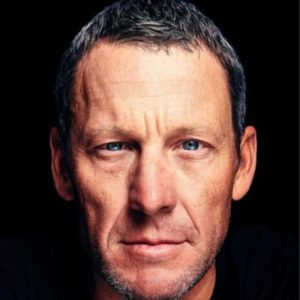
Because we're featuring my interview with controversial world champion cyclist, Lance Armstrong.
So let's do this.
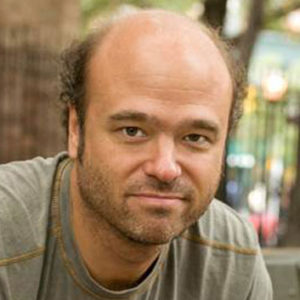
All right, got my co, Scott Adsit.
Scott, welcome back.
Thank you very much.
You're like old timer now with us.
Yeah, I'm like the universe.
I'm very, very old at this.
Very, okay.
And I can't do this with just Scott because I don't have particular bicycle talent, but we brought someone in who does.
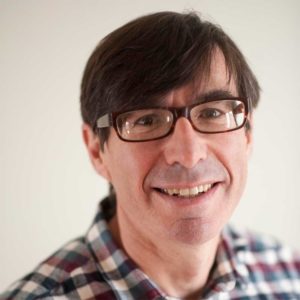
Max Glaskin, welcome from the UK.
You wrote a book, Cycling Science.
I did.
This is badass, just so you know.
And so you're also an avid cyclist yourself.
I am a very keen cyclist, yeah.
Clean, is that a Britishism?
You're a clean cyclist?
Keen.
Oh, keen.
Clean, we'll come to that later.
Indeed we will.
Because in fact, we're featuring my interview this evening with legendary and controversial cyclist, Lance Armstrong.
And we do talk about performance enhancing drugs.
We did go there.
And we will get there on this show, but later.
Because this is Star Talk, our primary interest is science.
And I want to find out Lance's early experience just with science and math, what effect that might have had on him in his early years of school.
Let's check it out.
So, I have to ask, tell me about your school background.
Did you have math teachers, science teachers?
I had all of those teachers.
You had all of those teachers?
English teachers, Spanish teachers.
I just didn't, you know, the crazy thing is I turned professional in triathlon at the age of 15.
Oh.
So I'm, you know, not even.
That's like an off ramp from school at that point.
And I was mentally, I was on that off ramp.
And so I did go to school and I competed in sports in school but the whole time I thought about what I was doing professionally.
At age 15, I saw the triathlon and I'd say these people are just crazy.
So you clearly did not think they were crazy.
You said this is something I want to do.
Yeah.
Okay, so what was wrong with you at the time?
A lot, yeah.
Yeah, still is a lot on me, but it was more, it made, I know that most people's reaction to that is these people are crazy.
Who wants to do that?
I swam competitively from a very young age.
I ran track and cross country.
So I had two of the three.
And so I thought, well, let's go find a bike.
So I found a bike and then it was surprisingly.
So the triathlon introduced you to the bicycle.
Absolutely.
The bike was the last thing that I did.
Whoa.
Yeah.
So Max, you're not only an author of a book, you're also a cyclist.
You were the first person to, to pedal across the Himalayan mountains.
I don't even know what that means.
I mean, there are no roads or anything.
There is a, there is a road.
Now.
He just, he just plowed that through.
So have you also researched the history of bicycles?
I have, that comes into it because there's a lot of science and technology that's developed with it.
So how far back do they go?
Cause I'm thinking you can't have bicycles before you have roads.
Like bicycle rideable roads.
Yeah.
The first roads were made for bicycles, but the very first kind of bicycle was 200 years ago.
1817.
This is the 200th anniversary.
It didn't have pedals.
It was made of wood.
By about the 1880s, someone came up with a bicycle, which was much easier to ride with pedals and a chain going to the back wheel.
Well, today, like the biggest event in the world is this 2000 mile race, the Tour de France, right?
And Lance Armstrong, he has lifted that trophy seven times.
Seven, no I didn't say he won't, because we'll get back to that.
He has lifted the trophy.
That is a factual, that is a true fact.
He has lifted the trophy seven consecutive times.
So, in the interview, I had to ask him about the origins of the race, because he became a very big part of anyone's understanding and appreciation for what that race was.
Let's check it out.
The tour started as a gimmick.
The original Tour de France, which is over 100 years old, you have a gentleman who owned a sports slash auto magazine called L'Auto, and it was printed on yellow paper.
And so he thought, what can I do?
What kind of a gimmick can I come up with to promote the paper?
And so he comes up with it.
He invents the Tour de France.
So he gets these crazy guys, these thugs to go ride around France, and hence the color of the winner's jersey.
It was a stunt.
What, was it on tricycles?
No, it wasn't on tricycles, but it was five stages.
Five stages, the same distance that they do today.
Think about how long the stage, the stage would be, these stages were 400, 500 miles long.
You think it's hard now?
Do it back then, 400 miles with two gears, with no support.
I mean, it was, dudes were getting in trains, holding onto cars, it was crazy.
Yeah.
So we've got some images of the tour.
What's the first one we have here?
Okay, so there's one yellow jersey there.
So what does that mean?
That means he has completed the race in the shortest amount of time.
Even though he's behind 50 other riders.
Yeah, they're helping him.
They're his teammates.
So you get 22 teams, each of nine riders.
So there's 198 cyclists at the start.
After three weeks, 21 stages, and they've covered more than 2,000 miles.
They're not all there at the end.
I don't think they're all there at the beginning.
So show me another, we got another image here.
So that's like the lead pack.
What's going on here?
There's your winners.
I know, they can say, yeah, yeah, exactly.
They're the team cars.
Each team has a car support car with spare bicycles in case there's mechanical problems.
And it's not just who's competing, they're like fans who are very, who feels very strongly about this.
Show it, what?
Which one are you?
Max, I don't understand.
Could you explain?
Oh yes, I mean, it's the biggest free show, free sporting show in the world.
What are they wearing?
It's a mankini.
Mankini.
Yes.
Now Scott, I think often how aliens would respond to our culture.
I think they'd be very excited.
I just wonder whether they would just confirm their suspicions that there was no sign of intelligent life on Earth and just keep flying on.
Well, I think they'll see that there's intelligence because all the cars and bikes just keep going past these guys.
I see.
So now, Lance has worn the yellow jersey more than anyone else.
He told me about the intricacies of the whole sport of cycling.
Let's find out.
You have the athlete.
You have the bicycle.
That's what people see, right?
But the way the sport works, it gets a lot more technical and a lot more intricate.
You have the team.
You have the team dynamic.
You have all of the elements, whether it's wind or weather, road surfaces, crashes, flat tire, you have all of these variables that come in to this sport that people don't necessarily think about.
I don't think about it at all.
No, you see-
It's just your bicycle.
Right, well, it is, look, I tell people this all the time.
It's a marathon meets a chess match meets NASCAR meets-
That's a good NASCAR.
Politics.
So there's just a lot with NASCAR being the drafting element.
Of course, all of that.
The chess match being the tactical strategic part, 20 teams on the road, nine riders per team.
You know, and then all the while the luck is so, you know, crash that you will end, could end your career any day.
So Max, you agree with this, I guess.
Oh yeah, I mean, it's a most complex sport.
The Tour de France, because you're riding in a team, you're doing flat stages, you get some tremendous mountain stages where they're going up to maybe four and a half, 5,000 feet, maybe not just one mountain in a day, maybe two mountains.
But you're riding with a whole team of people who are supporting you.
You have got a whole team who are supporting you, so you need specialists.
If you're the leader of the team, you have specialists who help you get up.
You have one or two other climbers.
Right, but we're thinking that the winners are because they're particularly physically fit and have a certain amount of grit.
And now we're hearing that there's this strategy, it's a chess match, but then of course, there's just the pure physics of it.
So let's check it out.
The most important thing for us was the power that we could produce, which interestingly enough, early in my career, we couldn't measure power.
You measured heart rate or rate of perceived exertion, or how do I feel, how hard am I going?
That's how you measured things.
And then the power meter came along and you could actually measure watts at the crank.
That changed everything.
So then you knew how strong you were.
You weren't guessing, you weren't timing yourself, you weren't racing somebody else.
We have this in Rowling, it's called the ergometer.
Yeah, so you knew exactly.
Yeah, you know if you're slacking up.
I mean, oh my gosh.
And literally overnight, the entire Peloton sport went from heart rate to watts.
And so that changed everything.
It changed the training, it changed the rate, it changed it all.
And so, but we knew.
You knew how much power you could produce, which is the number one variable, and you knew how much you weighed in the morning.
We call it power to weight.
So going up a hill, you can produce 500 watts and you weigh 160 pounds.
And it's Newton's laws of physics at that point.
That's right.
It is laws of physics, but you always go back to the fact that they're all, there's tactics, there's luck, so you have to always think about that.
But obviously if you don't have that magic number on power to weight, then who cares about the luck?
So it matters if you drop a pound.
Absolutely.
Without losing the power.
Yep, absolutely, or you could lose a little power and lose more weight.
Even more weight, so that the power to weight ratio goes up.
It's the ratio, that's right.
So Max, is there a golden ratio that you should seek?
The highest you can possibly get to be the one that you really want, but for riders in the Tour de France, they're doing maybe five watts per kilogram of weight for a flat stage, if they're going in a sprint, a really fast sprint, they can get up to the last 150 meters of the race, they can get up to 20 watts per kilogram.
So, but yeah, they're fit.
Now, what we did was, we sent out our senior sidewalk science correspondent.
We have such a thing.
Yes, Chuck Nice.
To find out more about the science of cycling, let's check him out.
What's up, Neil?
We came all the way to Staten Island to the sports science lab to find out how a regular dude like me stacks up against a top cyclist like Lance Armstrong.
Oh, it's on.
Gentlemen, how are you?
Thanks so much for having me.
I appreciate it.
I'm ready to be your lab rat.
So right now, they're putting a series of sensors all over my body.
There is no fear in this dojo.
There is no fear in...
Oh.
So these will actually show up as an avatar on screen.
And these smaller ones actually affix directly to my skin with an adhesive, and they measure my muscle activity.
So basically, I'm a cyborg.
Calibration complete.
So if you check out on the screen here, that avatar, everything you're doing, we're moving right there.
Hey, that's me.
Okay.
What's that?
This is the VO2 mask.
All right.
So I put this on.
That's going at the crown of the head.
Gotcha.
Help me out here.
Okay.
This is great.
Okay.
How's that?
Okay, just breathe a little bit nice and deep.
All right.
So everything that you're breathing in and out, okay, we can tell if your muscles are utilizing the socks.
Can you tell this?
Okay.
Sorry about that.
I had to do that.
Okay.
Here we go.
I think I'm on.
All right, Chuck.
All you're going to do is start pedaling.
All right.
Our wattage, our goal is 100.
100.
We want to sit right around that 100 mark.
Right there?
Yep.
Yep.
Right there.
Now we're sitting around 150.
That boy.
Deep breaths.
Deep breaths.
Breathe.
Ten more seconds.
Come on, baby.
Push it.
Push it.
Push it.
Good.
That's it.
Get this off of you.
Let's get some air in.
Yes.
Need some water?
Yes.
And a cigarette.
So here's what we got.
So VO2 is milliliters per kilogram per minute.
You scored 59.8.
So we're looking at the scale in the superior range.
That's very good.
I'm in the superior range?
For your age.
Oh, for my age.
Well, thanks.
So you're still about halfway away from Armstrong, all the elite cyclists.
For your age?
That means I'm half as good as Lance Armstrong.
I'm half as good as Lance Armstrong.
Whoo!
Let's do it again!
Chuck, nice.
So Max, tell me about the VO2.
VO2, Max?
Max, what is that?
It's a measurement of how good your body is at using oxygen.
So it's the respiratory, it's the heart, and it's the muscles.
How much oxygen is getting to your muscles to help your muscles work?
So if you could be working hard, but if your muscles are not getting the oxygen, they'll fatigue faster.
Yep.
And so that's not good.
That's not good.
Right.
So does the person who wins every race have the highest VO2 max?
Not necessarily, they may have the best strategy, they may have the best team support, and they may be the luckiest.
So it just helps?
Oh, it's very, very important.
Well, Chuck Nice had one more test in that lab to go through in the sports science lab.
It's their high tech version of, you remember in the old days you have a post-workout ice bath?
I didn't.
Yeah?
When you were…
I'm going to have one after the show.
After a rough comedy routine, you got to go into the ice bath.
In your mankini.
So there's apparently an updated version of that that Chuck was checking out.
Here he goes.
Okay.
Oh my goodness.
Dude, that's crazy.
Ready?
First of all, I can't breathe this because these are liquid nitrogen fumes and that is an asphyxiant…
What are you doing?
Are you lowering the temperature?
I've got to get out.
Seriously, please.
Neil, can you guys explain why athletes put themselves to all of this?
All right, so Max, liquid nitrogen.
So what you actually saw there was not the nitrogen, but the water vapor that would condense under the influence of such cold temperature.
That's what's visible to you.
Plus, it's the temperature of the air around him, so it's not gonna freeze him solid like a potato chip as what would happen if we dipped him in liquid nitrogen.
Okay, have you tried that?
I tried dipping him in liquid nitrogen.
Yeah, you would last maybe five seconds, 10 seconds.
So, the very difference between liquid pulling heat out of your body and air.
So, but what I wanna know from you is, do you know anything about this new way?
Well, I've done a little bit of calling around.
I spoke to the lead physiotherapist of a national cycling team, and he says that actually nobody's using it yet in cycling because there isn't enough evidence that it benefits a cyclist.
Even the ice baths aren't really used in cycling because it really helps people who have been in impact sports.
But in cycling, there's no impact, you hope.
Okay, so it's, for the moment, kind of gimmicky.
It could shrink stuff up, too.
Mm-hmm.
So there's mankinis would look different after you came out of it.
They'd be slack.
All right, up next on my interview with Lance and Armstrong, we're going to trace the evolution of the bicycle on Star Talk.
This is Star Talk from the American Museum of Natural History, and we're featuring my interview with controversial cyclist, Lance Armstrong.
From when you began riding to when you retired, did the aerodynamics of the sport change?
Well, yes.
I mean, the biggest thing that changed was in the late 80s, they invented a whole new type of handlebar.
And the guy who invented this is a guy named Boon Lennon, and he was an old ski racer.
But he also rode bikes.
And he worked for Scott, the ski manufacturer, to make poles and skis.
And he said, well, what if instead of, I wouldn't ski down the hill like this, what if a skier who's tucked like this, what if we rode like that?
So that takes away the aerodynamic drag of my arms outside.
Everything inside.
Everything inside.
And now I'm one thing.
Yeah, so it was called the Scott Bar, and it looked like a downhill ski racer.
So that revolutionized the aerodynamics.
But it's been interesting because the bike really hasn't changed.
They don't want the bike to change.
How it's going to get there?
Tell me about this.
Yeah, the bike, the traditional idea of a bike, which is sort of dictated by the governing body, is what they call a double triangle, right?
So you have the rear triangle and the front triangle, and that makes up the classic shape of a bike.
If you wanted to, you could obviously make a much faster bicycle.
If you got rid of the idea of the double triangle, a British guy in 1996, by the name of Chris Boardman, set the hour record, which is on the track.
I love the hour record.
Which is like the ultimate test.
I love that.
I mean, you're indoors, there's no wind, there's no draft, it's like the ultimate.
And the track is banked, so you just...
It's banked at 30 degrees.
There's nothing against you.
Right.
So he broke the hour record on a bike, it's called the Lotus bike.
It was not a double triangle.
You can look it up.
To me, and I think if the sports said, okay, you guys evolve technology-wise, do whatever you want, that's what the sport would look like.
Lotus bike looked badass right there.
So we got some examples of the evolution of the bike here.
So Max, what do we have on our stage here?
Well, we've got a penny farthing from maybe the replica of an 1860s bicycle.
Pedals attached to the front wheel, so your speed is limited by the size of the front wheel.
It's also dangerous, right?
You fall off of this thing.
You can fall off it, but if you start to lean one way or the other, because you're so high, you've actually got more time to correct it before you fall, to change the steering.
But you will fall.
So there's not only the bicycle, there's also, of course, as we discussed, the aerodynamics, okay?
And so how big an issue is the aerodynamics of bicycles?
It's phenomenally important.
When you're going...
Oh, but only if you're going fast.
No, no, no, if you're going slow, even if you're just going along at eight or nine miles an hour, half of your energy is being spent pushing the air aside.
And so we have a more traditional bicycle here, but I don't never think of bicycles themselves as aerodynamic.
Well, they've done lots of tweaks to make them more aerodynamic.
That one there, I think, has got deep section rims, which allows the air to flow more smoothly.
So it's not only that, there's drafting.
Something we know about in NASCAR and other very fast races, but there's also drafting in cycling.
It's crucial in cycling.
In Tour de France...
So somebody in front of you, you can get an advantage from that.
You certainly can.
The energy you need to expend reduces that by maybe 30%.
So I asked Lance about that.
Let's see what he says about drafting.
So let's talk about drafting.
So...
It's one of the most important parts of the sport.
So presumably there's some speed below which drafting is not useful.
Right.
That would be like one mile an hour.
Anything more than...
Anything more than stationary.
Keep in mind that the speed is important to talk about, but the wind is...
If you say 10 miles an hour, that's not very fast.
But if the wind is 50 miles an hour in your face, 10 miles an hour is pretty fast.
So your draft, it goes up exponentially.
The more intense the wind is, the direction of the wind, right?
Obviously, if it's right in front of you, you stay right behind the rider that's in front of you.
If the wind is from the left, then you inch over to the right.
Oh, okay.
So you just find, this is why I say NASCAR, you find that sweet spot of where that draft is.
And then, of course, that just gets multiplied.
If there's one rider in front of you, you have a draft.
If there are 100 riders in front of you, you're not even pedaling.
So Max, first this sounds like, it sounds lazy, first of all.
And diabolical, because you're exploiting the energy of the leader.
So then why does anyone lead the race?
Because that's their job, because their team leader may be behind them.
So they may be a domestique, one of these servants, to go at the front, to take the brunt of the wind, so the people behind their team leader can save their energy by slipstreaming.
Now what if the servant wins?
That doesn't happen, Scott, that doesn't happen.
No one's ever gone rogue?
People go rogue on one day, but the next day, suddenly they find they don't get out of the caravan.
So if you're in the back of the pack, however, and someone trips or whatever falls, then there's a domino effect, and the lead cyclist just keeps going ahead.
That's right, that's why some people want to be at the front, to avoid the crashes that happen in the peloton, the bunch.
Or cause a few.
Yep, that's right.
So the peloton, that I guess that's French, that is the pack...
That's right, that's the whole bunch of riders going along the road.
That are forming their own aerodynamic system.
That's right, and it changes, it moves.
Some people go to the front to take a turn at the front.
They're sent up the road by their captains to go and take the brunt of the wind, and others tuck in behind.
I'm told, I never witnessed this, but I'm told that birds actually exchange place in the front when they're flying through the air in their flocks.
There's been some mathematics comparing the two, and particularly interesting is penguins huddling.
You know, penguins huddle to shelter each other from the cold icy winds, and they actually take it in turns to go to the outside of the flock to shelter their friends, and then after a while they go back in.
And their movement is very similar to the way that the peloton moves, the dynamics of the bunch.
So you know what time it is now, Scott?
Is it time for Cosmic Queries?
Indeed it is!
So almost every show we field questions from our fans about, in this case, the science of cycling.
John Clemens from Canada, somewhere in Canada, is cycling a good way to maintain astronaut health, as depicted in 2001 A Space Odyssey?
They've been designing bicycles for space stations, and I don't know whether it would work, but there are a couple of...
Yeah, but we've perfected stationary bicycles, right?
And the resistance is not against gravity, it's against whatever is the friction against the rim.
So, in zero-G, you need an assortment of apparatus that doesn't require G for you to work it.
Like, you can't work dumbbells in zero-G, because you lift it up, it'll just keep going up.
So, but you can't do push-ups, because you push and then you float up, right?
So, you need, like, straps and velcro and all kinds of stuff you get at the corner S&M store, just to keep you, just to keep you not bouncing around the walls of the thing.
But a stationary bicycle, I mean, I would see that as, like, the best thing you could put on a station.
Well, anything involving a bicycle has got to be the best by my book anyway.
Says the guy who wrote a book on bicycles, okay?
So, coming up on Star Talk, we talk about the science of performance-enhancing drugs.
Yeah, we go there.
That's next.
Next.
And I sat down recently with cyclist Lance Armstrong, and we discussed his use of performance enhancing drugs during his seven time winning streak of the Tour de France.
He now admits he did it, and he's been stripped of all of his titles.
And we're gonna learn the science behind how and why all that went down.
So, let's do this.
Joining us in studio to help us in this conversation is Arthur Caplan, Professor of Bioethics at NYU.
Arthur, welcome to Star Talk.
Thanks for being here.
So, that's a thing, bioethics.
It is a thing.
It wasn't always a thing.
No, until we figured out a way to get paid for being philosophers, it was nothing.
Yeah, because it's deep thinking about how things are and how they should be.
Correct.
Yeah, there it is.
So, let's get back to my interview with Lance Armstrong and where we talk about these topics that are right in your bailiwick.
Let's check it out.
How much would you say your performance was enhanced as a percent of yourself from when you were at your peak response to these chemicals?
Well, the problem was in cycling you always had some of that.
And I break it up into two categories, low octane and high octane.
And you've always had and maybe still have some low octane.
So, these one, two percenters.
And then came-
Low octane enhancements.
Yeah, so whatever.
One to two percent, if you're world class and you just have to beat the one person, that'll do it.
Right, but assuming that everybody opts in for low octane, which they did in the old days.
But then what happened is somebody came along, Big Pharma, right, came along with something that was high octane.
And that was EPO and that was not one or two percent, that was 10 percent.
And so it was so great-
Urethrapoids.
So the red cell booster, which, you know, again, power, weight, oxygen, right?
How you get that power is-
So you had this, the sport, not even cycling, but the entire endurance world, they discovered it.
And it was so beneficial to the ones that made that-
it spread like wildfire.
And then everybody's faced with this quandary, like, oh my God, like what?
One or two percent, you can almost manage that.
You could say, you know what?
I'm not gonna do that and I can still compete.
10 percent?
Then you're faced with the decision, do I opt in or do I go home?
Arthur, was that the only real option to use illegal enhancements or just go home?
Well, it might have been true that if everybody's doing it, you gotta do it to compete.
But I think the bicycle association, whatever the professional group is that monitors the races and the sports, they let this go for a long time, a little bit like Major League Baseball, not doing anything about steroids.
You know, you're gonna tolerate it in the interest of keeping the fans around to pay attention.
I think the officials, if you will, made a mistake with the EPO.
So when he says low octane, what are the drugs he's talking about?
So you could have low octane cortisone shots.
Some of us get them.
Me for my beat up football knee.
It's a kind of pain reliever and a little bit of a lubricant in the joints, obviously for bicycling.
Kind of a low tech intervention, drugs around.
You might say I got a sore knee, you get it anyway.
Little higher powered stuff, steroids.
Builds up muscle strength.
The full blown 10% high octane stuff he was talking about.
That was a drug that was invented.
Is that the EPO that we were talking about?
That's the EPO and that really is a hormone that lets the body make red blood cells.
You have more red blood cells, you have more ability to process oxygen.
Scott, are there performance enhancing drugs for comedians?
Parental disappointment, same as ventriloquists.
Would you have one?
What would be your performance enhancing drug?
The universe itself is a drug.
Wow man, you blew my mind.
I think my body chemistry changes when I ascend a mountain and I look up into the night sky alone communing with the cosmos.
I am a different person.
Something biochemically changes within me.
Do you want to be alone with the universe right now?
I want to be, if I could be there 24-7, I would.
Okay, so let's get to brass tacks here.
Why is any of this illegal?
Why is it wrong?
You're a bioethicist.
Why is it wrong?
I just, I, I.
I have no idea.
No.
I.
Yes.
It's wrong for a couple of reasons, but let me preface that before I reveal the secret reasons.
There's no absolutes.
We make up the rules of our sport.
This is my point.
If we want to have the drug-addled, completely overdosed Olympics, we can.
But most people, and you started out the show talking about this, why do we care about what athletes do?
We want to see what the humans do.
We're not really interested in who has the best pharmacist.
So, if you're interested in human competition, you gotta set some limits.
Otherwise, it just doesn't matter.
It's who gets the best drugs, and that's what you're watching.
Yeah, but why not just have everybody do it, and that raises the level of the sport.
You drink coffee in the morning.
You're now more awake to do your sport.
Coffee's not illegal, yet you are enhanced.
You slept last night.
That made a proper chemistry for you to wake up and be alert for all the things you need.
That's not illegal.
You are going for the A in the bioethics class.
I can see that.
But here's the rejoinder, one, if you do things that are risky, it's not tolerable in athletics.
You take those steroids, they damage your liver, they cause all kinds of health problems.
Two, kids watch what the grownups do.
They start taking the drugs.
We saw steroids ramping up.
I'm now going for the A plus.
You're saying that you're implying that if all of these performance enhancing drugs did not otherwise damage your health.
Yes.
Nobody would have a problem with them.
They probably wouldn't.
And the other problem with performance enhancing drugs, and this is an odd one, but if you care about continuity over time, comparing performances, you can see sports like baseball get very nervous about introducing new drugs, because they like to say, is Babe Ruth better than Willie Mays, who's better than Rodriguez?
Oh, he don't.
Do we put him in the heart of things?
I'm from Boston, we call him a jerk.
But anyway.
But anyway.
So, where do you draw the line?
I think you have to do it in a couple of ways.
One, watch the health risk.
Two, if it gives you an enormous advantage, it's simply going to undermine competition, and that's really what we're paying attention to.
Three, if you have some kind of an agreement, you got to make it available to everybody.
You know, if our Olympic team goes and beats up poor nations, because we have nutrition and trainers and a good exercise physiologist and on and on, I don't consider that fair.
I want to see something balanced out there.
And none of that is illegal.
And none of that is illegal.
So again, I'm not saying there's an in principle reason to say, no, you can't do X.
You do want to pay attention to health impact.
No doubt about that.
We don't want people getting brain tumors because they're using growth hormone.
Bad idea.
But, you know, are we going to allow trainers better diets?
Yeah, I think that does become part of the sport, and we decide how much of that we can tolerate before it becomes an exhibition of pharmaceuticals, not an exhibition of athletics.
So, this splits it into two regimes.
One of them is, am I better than you at any given time?
Yes.
And another one is, I'm trying to create a world record, so am I better than all humans who have come before me?
And people are interested in both.
Some want to see, gee, I wonder what you could do if you artificially engineered somebody to have prosthetic legs and some kind of gigantic, genetically engineered muscles.
Okay, could they jump like over Mount Everest?
That would be cool.
We'd like to see that on TV.
Others would say, you know, that's not a sport.
That's become some kind of bizarre exhibition.
If you like that, watch Pro Wrestling.
That's what that is.
That's some kind of an exhibition.
It's not a contest.
I want to see what humans can do if they train, if they work, if they struggle.
That's sports.
So I'm not saying which one you ought to be a fan of.
I'm just saying, you know, that's where the line goes.
Which brings us to our new game show.
Is this doping?
What counts as doping anyway?
And why does it really matter also?
We got a game show going here?
All right.
Here we go.
I'm in, let's do it.
All right.
Neil, you're starting for 10.
Listening to music, is it doping?
Yes.
It completely influences my mood for what I need to do.
And I'm better at it for having listened.
Yes.
And Max?
Acoustic doping.
Oh yeah.
Yeah, it depends on the music, of course, but yeah.
Arthur.
Have you dropped acid?
We can do that after the show.
Let's play the game.
I'm going to say no.
I mean, I think that's part of the natural environment.
I don't think you're doing anything.
Aren't there some marathons where they don't let you listen to headphones?
There are, but I still think it's a, you know, basically you can do that as part of what I'll call the ordinary natural world.
Okay, so we have two, yes, it's doping, one, no, it's not doping.
The answer is, maybe.
All right, question number two.
Not having sex, is it doping?
Max.
Now?
Not having sex now?
No, it's not doping.
Not having sex, try to think back.
Well, the old bugaboo for boxers, used to be don't have sex at least a month before a match.
There is no evidence that that affects performance whatsoever, no.
Let's see.
I would say maybe.
Yeah, answer is maybe.
All right, and finally, really believing in dumb superstitions, is that doping?
Yes, I'll tell you why.
Because if you believe in a superstition and it gives you the confidence you would not have otherwise had, you perform with a new extra bit of chemistry that wouldn't otherwise be there.
Every morning when you get to work, you kiss a meteor, right?
I lick the meteor, yeah, no.
I'd like to know where you get the meteor from because I'd like to do that.
Oh, okay, take me there.
Yes, that's doping.
Yes, and Arthur.
No, again, I'll beat up on baseball for a second.
It takes you 12 hours to finish up your at bat because you have to cross yourself and jump up and down and turn left and right and look toward the north wind and I don't know what else they're doing.
But now, I don't think it gives you any advantage at all, so part of doping is to get an advantage.
Superstitious claptrap, nah.
All right.
Let's see, superstitions lead to...
Maybe, maybe, we don't know.
This is not the road to the A in bio-evidence.
So, Arthur, I'm wondering, what is the history of enhancement, of chemical enhancement of the human body?
It's old.
I mean, there were certainly Olympic athletes in the Greek times who were ingesting all kinds of artificial substances, gaining advantage.
Ancient Greece.
Yep, chewing the old sort of coca leaf type entities to get a little buzz.
You can see, oh, even back in the 60s and 70s, people taking the greenies in sports to stay alert, stay awake, that was methamphetamine.
It's always been with us.
Not having sex.
Not having sex.
So, if it's always been with us, but we don't have a memory of it having always been illegal, I guess.
Correct, correct.
That's the difference.
And, you know, on the technological front, you were saying, you know, well, if everybody does it, there are tiny motors now that they're starting to put in some bicycles to get a rest and have an advantage.
I think people would look at that and say, gee, I don't know, should we put a tiny motor in every bike?
Well, eventually, who needs the cyclist, right?
Just race the machine itself.
Exactly, Google may dream of this, the driverless cycle race, but I don't think it's a sport anymore.
It becomes some kind of exhibition.
All right, so if we follow your line of thinking and we say, it might harm you, it's an unfair advantage, so we stop it all, is there a point where we will no longer get better at what we're doing and then the interest in the sport might fade?
No.
So I asked Lance Armstrong that.
Well, let's ask the next person.
Sure, okay.
Let's find out what he said.
Do you think we've already hit the limit of human performance without enhancements, without illegal enhancements?
I don't know.
Are we there yet?
Look, use cycling as an example.
My view of the sport today, at this present time, the sport is much cleaner than it was in my era, fortunately, for these guys that race today.
Yet, the guys still go as fast, if not faster.
So, Arthur, if they're not using performance enhancing drugs, how is it that they're riding faster?
Well, I think training techniques have improved.
They're not drugs, but we know more about physiology.
You look at the way in which you film people on bikes.
You guys had the big discussion about aerodynamics.
The bikes themselves are getting a little better.
So, there's always going to be some technological improvement.
And by the way, if we do get to that limit of human performance, the next step is genetic engineering.
We're going to start to change ourselves to improve performance.
Ooh.
So, then you're not bionic, you are biologic.
Correct.
And we're going to see people, and by the way, if I tweak-
Wait, wait, before we get there, we see people who have, I mean, if you're missing legs, you have prosthetics.
And suppose we develop a prosthetic that is better than the human version of what it's replacing.
Pretty close to that right now.
And should that be allowed?
And so the track and field guys basically said-
They got that blade that they're running on now?
And if you have those blades and it gives you a distinct advantage, no, even if you're handicapped, even if you're born without legs, we're not going to let them in, you can't have that big an advantage.
But Oscar Pistorius, the guy who wound up, sadly, getting involved in the killing of his girlfriend and the trial and all that.
Before all that happened, he was this close to being able to run because he could show that his artificial limbs didn't give him a big advantage, it just made him competitive.
That's our call, we decided that.
The judgment call.
Judgment call.
On the spot, given the circumstances.
And so now you're imagining a future where we genetically engineer athletic performance.
So you could either do it by taking cells in your body now and instead of taking a chemical to make more blood cells grow, you tweak the gene and it makes more blood cells naturally, so to speak.
We were talking offline about a mouse that they did this with.
Super Hercules mouse.
Hercules mouse.
Yes.
I want it to be Mighty Mouse.
Yes, there you go.
And this leads to a wonderful Olympics with mice competing on 10 sports.
No, it's a.
The mice to cathelone.
But what you have is, you've got a mouse who you tweak the genes that control muscle production and it becomes the Arnold Schwarzenegger of Mouseland.
It's very muscular.
But the problem with these creatures were they got so muscular, they actually couldn't, their bones couldn't support them, their tendons began to fall apart, it didn't work.
That's just a technical problem.
So this is because you're not tweaking the right balance of genes.
Correct.
To have it all work in sync.
It's gotta be integrated, but we'll get there and I suspect we'll see that soon.
And then we have to call on you again to figure out whether we should.
That'll be Star Talk 2 in about 50 years.
All right, well Lance Armstrong was caught and has admitted to using illegal performance-hancing drugs and he's been stripped of his seven Tour de France titles.
So I had to ask him about his legacy.
I went there, let's check it out.
If everyone does it, including you, and you still win, aren't you still better than everybody else?
Well, because I could take it and I'm not gonna win the Tour de France.
So the person still matters.
The person still matters.
There's a bunch of arguments here.
Okay, first of all, I'm the wrong person.
It would be like me asking you, hey Neil, how was your lecture last week?
Was it good?
And you would say, well, I think it went pretty good, but you should probably ask the students or the people that were there.
Ask them.
So we can't answer that, right?
I mean, I would say, look, ask my peers.
Ask my rivals.
You could argue that certain substances are more beneficial to certain people and less beneficial to others.
So that starts to cloud the picture.
But then you just don't know what all, it was the wild, wild west back then.
You didn't have testing.
It was crazy.
And so it just all gets murky.
Where I go to on that is, I mean, if you ask me, do you think you won the Tour de France seven times?
I say yes.
And I say that because I think, I believe in my heart and soul that my rivals and my peers would support that.
So Max, did he win it seven times?
No, he rode according to rules which he kept to himself.
As a fan of the sport, those rules were not shared with me.
And with the hundreds of thousands of millions of other people who follow cycling.
Yeah, I'd have to agree.
I mean, I think you agree to compete under certain assumptions, certain conditions.
That makes you the champion.
You break the rules.
Even if they're all breaking the rules, it's fake sport.
It isn't what the sport was supposed to be.
Now, could we shift it and say, okay, you can use a certain amount of drugs and you can have a certain amount of technology and we'll all compete that way?
Yeah, but that wasn't what was going on with me.
I think he's like, he deserves it as much as Popeye deserves olive oil because...
I have no idea where you're going with that.
Because...
Spinach?
Well, that's it.
He's very strong, but unless he opens his can of spinach, he's not gonna punch that whale over the horizon.
Right, with one...
Exactly.
And I think the whale is at a very big disadvantage, unless the whale has had some spinach too.
And in that case, maybe the whale goes home with olive oil.
All right, let me offer some parting thoughts here that might be a little contrarian, if I may.
I deeply respect what each of you have said on this.
Scott, thanks for your comments here.
We have professional sports.
They're modern gladiators.
That's what they are.
They exhibit superhuman strength, speed, agility.
And we pay to watch that.
We want that.
And you know something, when they don't perform, we don't watch.
We don't pay.
So I accuse us of being equally accountable for all the doping that's been going on in all of sports.
Because we want to see world records broken.
We cherish those people.
We heap our greatest prizes and respect upon them.
And then we're so surprised that they break a rule to achieve what it is we wanted out of them in the first place.
So any time someone is busted and gets caught, and we somehow feel high and mighty and say, ah, you broke the rule, I think we should be looking at ourselves who aided and abetted the entire urge to do that in the first place.
And that is a cosmic perspective.
Thank you.
This has been Star Talk.
Scott Adsit, thanks, man, Max, Arthur, excellent.
This has been Star Talk, and I've been your host, Neil deGrasse Tyson.
And as always, I need you to keep looking up.
See the full transcript






 Unlock with Patreon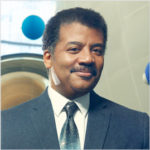
 Become a Patron