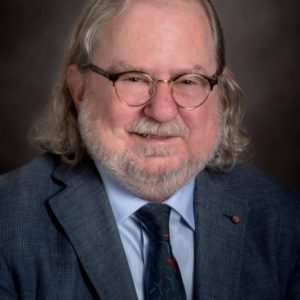
You’ll hear about Jim’s research and how he found ways , as did fellow Laureate Tasuku Honjo of Japan, to harness the body’s immune system to fight cancer cells. It wasn’t smooth sailing: Jim tells us about some of the backlash he received about the process, as well as which types of cancer are most impacted by this treatment. You’ll learn about the development process of a treatment, including trials on mice, and about the necessity of dealing with the FDA. Find out if we’re developing ways to prevent cancer from even happening at the same time that we’re researching ways to get rid of it once it’s found.
When it comes to Cosmic Queries, we answer a simple, yet still mysterious question – what is cancer? Find out why Jim calls cancer a “social disease.” Investigate whether cancer can be treated with gene-editing and CRISPR. Discover more about cryosurgery and if it’s even a viable option for cancer treatment. Get details on superfoods and whether any specific foods or diets can help a person battling cancer in aiding their immune system. You’ll also hear whether there is any research being done in order to predict those genetically predisposed to get cancer. We look at the applicability of nanotechnology for cancer treatment and research, and Jim explains how we extract patients’ cancer cells to conduct research. Ponder the chances of finding a universal cure to all types of cancer, and whether there are any cancer treatments that are based on cannabis.
Transcript
DOWNLOAD SRT
Welcome to StarTalk, your place in the universe where science and pop culture collide. StarTalk begins right now. This is StarTalk. I'm your host, Neil deGrasse Tyson, your personal astrophysicist, and I've got with me co-host, Chuck Nice. Always good...
Welcome to StarTalk, your place in the universe where science and pop culture collide.
StarTalk begins right now.
This is StarTalk.
I'm your host, Neil deGrasse Tyson, your personal astrophysicist, and I've got with me co-host, Chuck Nice.
Always good to have you, Chuck.
Always good to be here.
Always tweeting at ChuckNiceComic.
Thank you, sir, yes I am.
All right, he never says my Twitter handle.
I gotta say his Twitter, he never says, that's fine, that's fine.
I'm just saying, I don't think you have to say it when the person has like 100 million people on Twitter.
We have 12 million Twitter followers, then.
It's 13 million, but that's fine.
No worries.
This is a special edition, I think of it as a special edition of Cosmic Queries.
It's a special edition because we have with us someone who is not only the world's expert on this topic, he might be the greatest expert in the universe on this topic.
And it's the topic of curing cancer.
Wow.
Yes, yes.
It's a big topic.
It's a big topic, it's on everyone's mind.
And our special guest to help answer these questions on curing cancer, because obviously, I have no such expertise, is immunologist, Dr.
Jim Allison.
Jim, welcome to StarTalk.
Thank you very much.
Yeah, so you're Skyping in to us from where?
From my office at the Cancer Center in Houston.
The Cancer Center in Houston?
Huge medical complex there, if I remember serves.
And you were just minutes ago awarded the 2018 Nobel Prize in Physiology and Medicine.
You're a professor and chair at the Department of Immunology at the University of Texas at the MD Anderson Cancer Center.
Did I get all those titles correct?
Yeah, that's correct.
All right, excellent.
Very cool.
So did they call you in the middle of the night and said you won the Nobel Prize and then you hung up because you thought it was a prank call?
Because that's how it happened for me.
No, actually, there's been some buzz the last couple of years and my wife says, well, we wake up, look at the clock, say, well, the phone didn't ring, so just next year.
OK, this year I got up and she said, the phone, I guess next year, the phone didn't ring, I guess we'll get it next year.
Then the phone rang at that instant.
It was my son, though, saying, I just saw on TV that you won the Nobel Prize.
And I said, really, what?
You know, and then I looked at my phone buzzed and there was a call from Sweden on it, basically.
So my son beat him.
You found out, like, through the news, basically, not from the actual Nobel committee, but through the news.
Yeah, I don't know what it was.
They didn't have my right phone number or something.
I don't know.
See, I've never got a Nobel Prize because my phone number is unlisted.
I'd better fix that.
So again, thanks for, I know you must be swamped with media inquiries and the like, so I'm delighted that you gave this program this hour of your time.
So thanks for that.
So if you could just lead off by telling us, what is it that you were recognized for doing?
I was recognized for developing a way to get the immune system to attack cancer cells, which is something that people have been doing for a long time, and it's potentially curative in many kinds of cancer.
So instead of attacking the tumor, which would be the natural first thought, because that's bad, let's get rid of it, let's attack it, you came in the back door.
Yeah, what we did was for about three decades, I've been involved in trying to understand how these cells called T cells, they're kind of the warriors of the immune system, they go all over your body looking for a virus infected cell or a tumor or something, and then they deal with it when they say usually by killing it.
But anyway, we know they could attack, we know they can recognize tumor cells, but getting them doing effectively wasn't easy, and a lot of tries failed to try to, you know, arm them to go attack the cancer or get them to attack it.
But I found a molecule, it's called CTLA for it, it doesn't matter what it stands for, but it's a molecule that sort of breaks on the immune system.
After T cells get going, they use this as a negative regulator, turn themselves off so they don't hurt you by just continuing to divide, divide, divide, fill you all up with a particular kind of T cell.
And so I had the idea that maybe normally that molecule, the breaks were coming on too early and stopping the T cells from eliminating the cancer.
And so I thought, well, let's just disable the breaks temporarily and sure enough, it works.
But just for the reason you said, a lot of people had real trouble with it because they said, you know, how can you treat cancer by ignoring the cancer?
You're not even treating the cancer, you're treating the immune system.
No, I love the way you started your answer.
He said, I found a molecule.
That happens to you all the time, Chuck.
Exactly.
It's a little smaller.
It's a little smaller than what you look at.
So when we see these commercials on television that say, this is not a video game and this is not a screen saver, this is an actual cancer cell being attacked by your own immune system.
Is that your research that they're referring to?
Wow.
That is really impressive.
Now you're only impressed because it was in a commercial?
Yeah, because anybody can win a Nobel Prize.
Everybody can win a Nobel Prize, but not everybody can get a commercial on TV.
That's true.
I'm interested because I'm familiar with your work because my mother was lost to cancer last year.
About a week ago last year, I lost my mom to cancer, bone cancer.
But the immunotherapy was a little too, she was too advanced and too old, they said.
So what are the cancers where your discoveries are most effective?
Well, up to now, the most effective one has been melanoma, about 20 metastatic melanoma, which when we started working on this, there was no approved treatment.
And there had been no drug that had ever improved survival in a randomized trial, by what I mean is there was no successful treatment.
And so that was where the trials with my drug started.
Well, they started in mice, one of the things that was lucky.
It worked against all kinds of cancer.
But we started in melanoma.
And what we know now, and it was approved by the FDA in 2011 after a lot of trials.
But what we know now, actually, about two years ago, there was enough data to have 10 years follow up data on 5,000 people who had been treated.
And 20 something percent, a little over 20 percent, are alive 10 years after a single round of treatment.
And so when you add a second drug to it, a drug that was subsequently discovered by Hanzo and his group, who shares the project, that response rate goes up to 60 percent.
So that's the highest.
And there's no reason to think that those patients won't be around for 10 years as well.
We have to wait and see.
We don't know yet, but I'm hopeful.
But it also has been approved by the Food and Drug Administration for lung cancer, kidney cancer, bladder cancer, Hodgkin's lymphoma, Merkel's cell cancer, head and neck cancer, a few others.
There's 15 indications it's been approved for.
And with varying response rates from 15 to 50 percent.
And so that means the fact they're approved means any doctor, of course, could prescribe them.
I just heard you say head and neck cancer, which I've never heard of until this moment.
And that's not brain and throat.
That's actually head and neck.
No, it's from either smoking or human papillomavirus.
People that chew tobacco or smoke cigars get that a lot.
Okay, okay.
So another quick question just before we go to our fan base, because they're the ones that supplied the foundation of questions that is going to make this show.
Procedurally, if you can demonstrate that something you're working on cures cancer in mice or rats, do you have to have human trials for it to still be approved by the FDA?
Yeah, absolutely.
When I started on this, a lot of people said to me, well, anybody can cure cancer in mice.
Oh, wow.
That's funny.
Oh, my gosh.
By the way, doctor, just so that you know, doctor, we call those haters.
Oh, those people need a little education.
But yeah, you have to have the trials to prove it's safe and, you know, do efficacy.
Yeah, but it's something that was revealed in, what's that movie, the Dallas Buyers Club.
The Dallas Buyers Club, the FDA was like the enemy, and then in the end, they said the FDA loosened some rules to get a drug into use even before trials are fully completed.
Because if I'm about to die to say, oh, this drug might not be safe for you, but it could cure me entirely, the efficacy of that feels wrong.
Yeah, it's a complicated subject.
I mean, my brother had metastatic prostate cancer while we were developing this drug, and I really wanted to get it to him, but I just couldn't.
The reason is that the companies that helped develop it, I couldn't develop it by myself.
I had to team up with a biotech company to actually make the drug itself, and then they had to get it approved, do these trials, but they could only make so much, and if they tried on people outside of a trial and hurt them or kill them, then that ruins the drug, so at the risk of slowing it down, they insist on these trials.
I think what they've done though, especially since the issues you're talking about, they've become a lot faster now, so in this class of drugs, they've really greased the rails on it now, where there's enough experience, if you show a little efficacy, that's good enough, because they know now about the safety.
Yeah, excellent.
So Chuck, let's go to our fan base.
Who do you have?
Kyle Ryan Toth from Patreon says this, along with our search for curing cancer once it forms, are we researching ways to prevent cancer from even developing?
Yes, and that's a great question, by the way.
Yeah, we're working on that.
Actually, there are some vaccines for HPV-induced cervical cancer, for example, that just a word of wisdom.
I think all teenage kids, male and female, need to get that vaccine before they become sexually active, because we can completely prevent that disease.
Now, the normal kinds of cancer that we're talking about here, like melanoma and stuff like that, it's so hard to predict who's going to respond and what the targets are.
The immune system just attacks unique stuff, and almost every case is different.
There are some hereditary cancers, though, that might be able to vaccinate.
People are really giving that a lot of serious consideration now that already have some lesions that may predispose them, and then we can take care of that.
So, Jim, is it that we have one word to describe all of these kinds of cancers, so we think of them as one monolithic target to attack, but maybe we need different words for them all so that we can think of them as things that would respond to their own unique solutions.
I mean, it used to be it was cancer, and then when we realized there were, we, I'm speaking for the whole field, people realized that, you know, there's skin cancers, breast cancers, you know, colon cancers.
They were named after the tissue that they came from.
Then the next step was when people that were studying the cancer biology realized that the mutations that caused them were very different, and then they sort of, they all were differentiated by what the causative gene mutation was.
It gave rise to them, and if you classify them that way, there's several hundred kinds of cancer.
Right, there it is, okay.
So that is the trend line, yeah.
Yeah, but when we look at them now, it's sort of, we're broadening it again.
I just look at cancers either being immunogenic, meaning they provoke an immune response or they don't.
Instead of any individual type of cancer.
And just very quickly, before we move on, because we're almost out of time for this segment, but you mentioned something in a cursory fashion that I think is very important.
And I just caught the way you phrased it.
Every teenager might want to look into HPV.
Now, is that including men?
Because, you know, when you're a guy and you're 18 and you hear cervical cancer, you're like, I'm good.
I'm okay.
I don't have to worry about that.
You may be good, but the women that you encounter may not be good later on because men are asymptomatic.
You get it when you pass it, but you never know you had it.
And so, you know, men need to get it as well.
There you go.
So that was my point, is that this is something that affects everyone.
And the vaccine, we know, it leads to the direct prevention of cervical cancer in women because it fights the virus that causes it in women, correct?
Exactly.
The immune system destroys the virus before it can do anything.
Fantastic.
Wow.
All right, we got to take our first break.
You're listening to a special Cosmic Queries edition where we are privileged and honored to have the freshly minted Nobel Laureate.
Wow.
That sounds so cool, man.
Freshly minted Nobel Laureate, man.
Freshly minted.
They just made you, doctor.
Let me take a stamp.
A stamp of Dr.
Jim Allison from the University of Texas Medical Center in Houston.
We're back, StarTalk.
We have with us Dr.
Jim Allison, freshly minted Nobel laureate.
Sweet.
And he took time out of what we know is an oversubscribed day of his to just share with us his insights on what cancer is and how it works and how we're trying to fight it.
And it's Cosmic Queries, so keep it going.
Here's the next question.
This is from a friend.
Hey, Doc, what are you gonna do with all that money?
First, you realize he's got to split that three ways.
You realize this.
Oh, what?
That's not right.
So whatever the total money is, he gets a fraction of it.
Let's start there.
Okay, Jim, what are you gonna do with the money?
There's just one other, it's just two ways.
Oh, just two ways?
Two ways, okay.
The government's the third one, I guess.
Wait a minute, are you telling me that they tax you on your Nobel Prize?
That's disgraceful, sir, disgraceful.
Okay, so he gets half the prize and then the government gets like the other half.
The other half, they get half.
Okay, so what are you gonna do with the $40 and 89 cents that you have left today?
Well, I'm gonna probably give a lot of it to some cancer research organizations and I think I need a new suit.
We'll let you do that, sir.
I wasn't even serious about the, I was jerking around.
This was great to actually learn all of this stuff about the Nobel Prize money.
All right, let's go to a real question.
As a matter of fact, this should have been the first question before our Patreon and this is from Niren Reich on Instagram who says, what is cancer?
A lot of people may not know exactly what cancer is.
Well, I'm not sure we still know exactly what cancer is, but a lot of people have referred to it as sort of a social disease, you know, complex organisms with lots of different kinds of cells and they've got to play nicely with each other, you know, to grow organs to a certain size and then stop and then be able to heal wounds, but then stop when they're put and not go someplace else.
And so cancer is just sort of one description is hyperplasia, meaning it starts growing too fast and doesn't stop.
But that's basically, it's just cells losing the normal controls that make them cooperate with other cells to make you what you are.
And these are your cells.
They're not some exterior alien, not alien in a cosmic sense, but just...
Foreign.
It's not just some foreign thing in your body that you could just remove and all is well.
Your body is misbehaving.
Is that a fair way to characterize it?
Yeah, the cells in your body, some of the cells in your body are misbehaving and causing damage to the cells around them.
In some cases, just by getting too big.
But in other cases, by extraditing and destroying tissues.
Cool.
All right.
Let's move on to Renee Douglas from Pittsburgh.
And she wants to know this.
If a cure is found, would it cure all cancers?
Or are there different types of cancers?
And would each one need a different cure?
And just as a follow-up, is there a means of achieving a universal cure?
Is probably an easier way to put it.
Yeah, excellent question.
It used to be that there were what were called personalized therapies for each patient.
And you try to figure out where the mutation was that was causing the cell to be a cancer cell.
And those turned out not to be so good at curing cancer because there's so many mutations in a lot of cancer cells is that there is not just one.
You know, you cure them, you kill all the cells that got one mutation, there's one for others.
Drug doesn't work anymore, we have to keep changing it.
But one of the beauties of letting the immune system go is and unleashing it to the T cells to attack tumors is they can recognize many, many of the mutations.
So they can become a multi, bigger army that could hit a lot more targets.
And since it's not directed against any specific thing, you know, one of the ideas when I thought of this in the mid-90s, I thought, well, this could be a way of treating all cancers.
And, you know, that has not been realized.
You know, there are limitations that have to do with just the number of mutations and other properties of individual cancers.
I mean, some like lung cancer, melanoma, bladder, kidney, these can be cured, you know, in a fraction of patients, these can be cured now.
But we know from melanoma, where there's the most experience that over 20% of people are alive 10 years after a single treatment.
And that's maybe going up to about 60%.
But other ones like glioblastoma, which is what, you know, Senator McCain died of, we just haven't made much progress there.
And we're, you know, we're working, my wife, Dr.
Padmati Sharma, who's a physician and physician scientist, I'm a scientist, but we're working together in a group called the Amino Therapy Platform here at MD Anderson and our whole goal is to get cancer cells just from patients, get the tumors and see what's going on in there.
You know, what kind of T cells are there?
What kind of immune cells are in there?
And what's going on in individual kinds of cancer so that we could figure out how to make combinations that'll treat, you know, as many cancers as we can.
So I think we're gonna eliminate a large fraction of many kinds of cancers, but I don't think, I don't think I could say, see a world where there is no cancer.
So you just created a cancer bank.
Is that, did I characterize that correctly?
Basically, yes.
We store specimens, but we also study the fresh out of the patients as well.
That's cool.
That is one bank I never want to bank with.
The cancer bank, I'm just saying.
I'm happy with my money at Chase.
Well, we'll take things out of that bank, hopefully do some good with it.
Absolutely, absolutely.
Let's go to Ari Mody who says this.
Could cancer be cured through any of the breakthroughs achieved from CRISPR, the gene editing, and I'll just follow that up with her.
Was that instrumental in any way in your research, CRISPR and gene editing?
No, it wasn't.
Okay, that's the answer.
And there you go, Ari.
As far as it's promised, a lot of people are thinking about it.
The problem is, if you can get rid of those genes that are causing the cancer using CRISPR, turn them back to normal.
Problem is, it's kind of hard to figure out how to do that because you'd have to do, there are many of them, but you'd have to do them all one at a time.
But if you can figure out a way to, and people are working on this to change a whole bunch of genes at once, that might work.
So there's a lot of, it's not here yet, but I wouldn't rule it out.
So you're not ruling out the notion that it could be you have to snip out a piece of gene that would be causing cancer, whether or not CRISPR is the actual means by which that would happen?
Okay, cool.
That's excellent, excellent, good stuff.
David Bailey from Facebook wants to know this.
There are a lot of claims out there about different super foods and how they're able to, he says cure, but the claims that are made are not that they cure cancer.
However, example, turmeric.
But are there any scientifically validated foods or diets that can help a person who is battling cancer to aid their immune system in the fight?
Thank you, David Bailey.
What a polite question, David.
So it's a food question.
Food question.
Yeah, I think people ask me that all the time and I really can't give you any single answer except to say, do the things your mama told you when you were a kid, eat the well-rounded diet, don't smoke, don't lay out in the sun, don't drink too much, do everything in moderation, exercise, all that stuff.
Just stay healthy as you can.
Oh, good.
You had a good mom.
My mom used to tell me, you're gonna die.
And stay in the house, it's crazy out there, you're gonna die.
So I think Jim just said that I can stop eating kale.
That's what he said.
I think I heard him say that.
You need just a little bit of it.
Right, in moderation.
In moderation.
You just need a little bit of kale.
Remember when kale was a garnish?
What happened to our society?
I know.
Yeah, I can't stand kale.
All right, here we go.
Jeff Farris from Facebook wants to know this.
It's estimated about one third of the people who get cancer are genetically predisposed to it.
Where are we on the ability to do testing to predict the outcome and how reliable is the current state of testing?
Is having a genetic marker of 50% positive or 70% positive a good means of being able to tell?
It's as high as 30% a significant number are, but breast cancers, for example, to some extent ovarian cancer in women can be caused by BRCA mutations.
And so...
And by the way, doctor, just for all of those who are unlike me that know exactly what BRCA mutations are, what are those?
The mutations that were first found just by studying backwards that women with breast cancer had very often had this gene.
I don't even remember what it stands for, but anyway, this gene called BRCA, breast cancer.
I guess the BRC stands for breast cancer.
But we know now that it's involved in DNA, keeping your genes normal.
But it's inherited.
If a woman inherits one copy from her mom, then something happens to the other copy, then it could be dangerous.
So it's something with that, women with breast cancer.
But there's a lot of other kinds of cancer that it's not quite as definitive as that.
Prostate cancer, we know that if you have a brother that got it, you're about twice as likely to get it, but nobody's been able to put their finger on why that is yet.
I mean, on what part of the genetic of your genome is then responsible.
So with the BRCA, correct me if I'm wrong, is that the first time you have such high level confidence that a person will get cancer that people are convinced to have preventative surgery?
That's happening, yes.
Right, right, but there's no other cancer prediction for which that is advised, is that correct?
Not that I'm aware of.
Yeah, okay.
This is Denise Cunningham Troia, and she says, my five-year-old daughter, or granddaughter, was diagnosed in May with acute lymphoblastic leukemia P.
Since it is generated in the marrow, is there anything new on the horizon?
So are you familiar with this particular cancer and any research that might be encouraging?
I'm certainly not an expert on that kind of disease, but I can tell you that there is activity in seeing these checkpoint blockers, as we call them, work in leukemias in adults, and they do in some cases.
The works early had only started a few years ago, but there's some hesitation in using them in developing adolescents or younger kids because people are somewhat worried about immunological changes while your body's changing and everything, but I wouldn't be surprised if it gets there sooner or later.
Cool, well, that's encouraging.
There you go, that's very cool.
And there's another therapy called CAR T-cell, which is an engineered kind of T-cell that's put back into leukemia patients.
Might also have some promise of it.
It has been used in kids.
All right, so two things to perhaps look forward to.
And of course, we wish Denise and her granddaughter all the best.
This is Cheryl Squeaker Carter.
And she says, is there actually any scientific research being done on cannabis and the effects it has on cancer?
Yeah, I think there's quite a bit, but most of it's, you know, is giving to what we call palliative care to make patients more comfortable, less nauseous when they're getting chemotherapy.
I don't think there's any evidence that cannabis, you know, could be used to treat cancer itself.
And in fact, you know, it has some of the same carcinogens that actually smoking tobacco has, but at much, much lower levels.
So, as far as I know, the only thing that's being used for, like I said, is just helping patients feel better.
The carcinogenic components, does that, though they're much smaller, does it matter how you ingest the cannabis and what role it could then play in these cancer bits?
Yeah, I mean, if you smoke it, it's gonna immediately go, you know, into your lungs and then ultimately into the bladder.
If it's eaten, a lot of it gets digested away.
So I don't think there's any data showing that it has caused cancer, I think, or that it matters.
I doubt if it would, if it was just, you know, cookies or something.
Or brownies.
Or brownies, exactly.
Or any number of edibles, I'm just saying, you know.
Very cool.
I don't know why, but I feel a need to buy a ticket to Colorado.
Chuck, time for one more question in this segment.
Okay, here we go.
This is Daniel Junius, or Junius, wants to know this.
Is it plausible to kill cancer with cryosurgery?
Ooh.
Yes.
Yes.
Absolutely.
And we've done some experiments with that.
Just to be clear, cryo is cold.
Freezing, yeah, there's a probe.
And it's done in the clinic a lot, particularly in kidney cancer and breast cancer.
It's gotta be localized, though, but what we showed in mice, that if you had two tumors on opposite sides of a mouse, you could cure one of them by freezing it, leave the other one alone, but injecting our drug just after you froze the first one, because that makes them fall apart, and then primes the T cells that will go over and kill the other one.
So that's now in clinical trials in kidney cancer and in breast cancer.
Wow.
That sounds like a military operation.
We will conquer this side of the enemy, re-deputize them, and they become our zombie army.
We created a zombie army to go kill cancer.
Super cool, man.
All right.
So Jim, we're gonna take a quick break, and we'll be back for a final segment of StarTalk Cosmic Queries, how do you characterize it?
We're back for a final segment of StarTalk, Cosmic Queries edition.
I'm with Chuck Nice.
The subject is curing cancer, and we got all up in the face of Dr.
Jim Allison.
Yes, he's here with us, here and now, just won the Nobel Prize in human physiology, one of the categories of the Nobel Prize, and we've been picking his brain about this with our queries.
So again, Jim, thanks for being on StarTalk, and let's continue.
What do you have?
All right, this is Kyle Coombs from Facebook, and Kyle is from Airdrie, Canada, and says, is there a chance if we never find a cure for the many types of cancers that humans will one day, in a Darwinian sense, evolve out of cancer?
So a little awkwardly worded, but what he's saying is, can we evolve?
If it's killing us.
If it's killing us, can we evolve beyond cancer?
Kind of like selective breeding, in the sense where the small percentage of people who do not develop cancer will be naturally preselected to continue propagating the species.
Interesting question.
Not sure if that's your expertise, but.
Well, evolution is driven by survival of the fittest.
So it works on, let's put it this way, once you've made your children, evolution doesn't give a damn about you.
So there's not a lot of evolutionary pressure to, you know, so I think childhood cancers and stuff, there may be pressure to get rid of them, but I really don't think that there's gonna be any selection against people that are old, or the typical age to get cancer, because there's just no reason, that doesn't make you fitter and able to reproduce more.
I guess society could change enough where that becomes different, but biologically, I don't think it would have.
Yeah, if you have babies, you know, nature's done with you.
Right.
Right, you propagated your-
Right, because that's really what the whole thing is about, right?
That's what the whole thing is about.
It's all about sending your DNA into the future.
Right, and what happens to you afterwards, no one gives a rat's ass about.
Wow.
Yeah, yeah.
Boy, nature, what a cruel mistress she is, huh?
God, oh, well, there you go.
That was a great question then, and a very disturbing answer.
By the way, so, you know, the Darwin Award is given out annually to the person who does something completely stupid and ends up dying for having done so.
Okay, it's called the Darwin Award, but you can only get that award if you've died for doing something stupid and have not yet had kids.
Right, because then you already sent your stupidity forward.
Then you would have run.
So it's calling the herd, as it is, given out every year.
There you go.
And you don't want to ever be a winner of it because it means you're dead.
Yeah, and stupid.
That's stupid.
And that's no way to go through life.
Dead and stupid.
Okay.
I'll take one or the other, but not both.
I don't want both.
Muhammad Amir from Facebook says, naked mole rats, sharks and rays have immunity evolved to efficiently resist cancer.
How is this possible?
And can we use that to our advantage?
I know some time ago, there was a great deal of extensive research into broccoli enzymes and shark DNA.
And are we still headed down that path, doctor?
Well, there's still a lot of studies.
I mean, sharks do have an immune system, but it's very simple compared to ours.
And it's true that they don't get cancer very often, but I don't think we really understand why that is.
I mean, one reason is because until recently, the ocean was pretty free of carcinogens sometimes.
And so...
Well, we're changing that.
We're certainly on top of that one.
Allow me to ask a stupid question.
How do we know the cause of death of sharks?
That's a good question.
I have no idea.
Who's doing this?
Because it seems to me, when you die in the ocean, you are bait and consumed instantly by everybody else within minutes.
Right.
You can't just be laying up there dead and think that...
There are no shark mummies.
I guess occasionally some wash up on shore or something.
All right.
All right.
Well, there you have it.
Let's move on to Jess Nudalo, who says this.
I don't know if this would fall under the topic, but I'd like to go down a different direction and ask if we can take advantage of cancer cells at all.
I've heard of the Hela, or H-E-L-A cells, which may be relevant, but can't say that I'm an expert on the subject.
Well, thank you for explaining yourself so incredibly detailed.
Is there a way, is there any time where a cancer cell can be beneficial to the host?
Can that mutation do something good in any way?
Well, no, but cells, we take cancer cells out of patients all the time and use them to study what caused cancer and how they respond to treatments and stuff.
So that's what those Hela cells that he's talking about were used for for years.
And now there's a lot of cell lines like that that are in use for research.
Cool.
Okay, that's good to know.
Good to know.
Excellent.
Let's go to Vasilios Iconomitis.
Okay.
He's Greek.
Just go to Greek.
Feel the Greek in you.
I'm gonna feel the Greek.
It would be Iconomitis.
Iconomitis.
Vasilios Iconomitis.
Vasilis Iconomitis.
See, when you said it was Greek, the Greek came out of me.
Man, look at that.
Greek, Chuck Nice.
Have there been any advancements in stem cell research that connect to or better our understanding of cancer research?
Stem cells is in all the news all the time.
Yeah, that's all the time.
A hot topic, too.
All the rage.
Politically charged.
Yeah.
Again, there's a lot that's being learned from using stem cells to figure out how to put in the right genes and have them develop normally.
And also, again, to discover things about how they can go awry.
Now, as far as how things can go awry and make them become cancer cells, but so far as using those to treat cancer some way, again, I don't think anybody would do that, but they've been very useful in learning the mechanisms of the working.
So, there seems to be two separate approaches.
One is taking these cells and learning, but treating and preventing is kind of in a different area.
Yeah, yeah.
Yeah, actually, I left out something that's really big that I was thinking of the public perception of stem cells, but leukemias are very often treated with stem cells.
The patient's bone marrow, all of their blood producing cells are killed with chemicals and radiation, and they're replaced then with stem cells, which grow up and replace all the blood cells.
There's been some thought in some other cancers that you could do the same thing.
Yeah, that's appropriate, but so far, except for leukemias, that really hasn't gone very far.
People have tried it in breast cancer, but as far as I know, nothing's worked yet.
So the answer is yes, but in a limited way so far.
Yeah, in fact, it used to be the only way to cure leukemia was with stem cells.
Wow, and is that because when they, they're really kind of resetting the entire immune system because they destroy everything, right?
Kind of go down to like a tabula rasa, and then when you inject those stem cells, you're actually kind of like-
Jumpstart.
You're jumpstarting.
Yeah, jumpstarting.
Yeah, and it all starts over and replenishes everything eventually.
And if you're lucky, they got rid of all the cancer cells before.
You know what that reminds me of?
The poop transplant that they've been doing lately.
You know about that one?
Ha ha ha.
By the way, the-
People have chronic digestive problems and they put somebody else's poop inside of them and it jumps, it restarts the flora, the biome.
Gives them a healthy gut biome.
Somebody else's.
Somebody else's.
Has a new start.
Absolutely, that actually works quite well.
But what a number of groups have found recently, including Dr.
Jennifer Wargo here at MD Anderson in melanoma, you can sort of get an idea of whether somebody's gonna respond to therapy or not by the kind of bacteria they have in their poop, if you will.
And so there's some thought, and we're actually working with her a little bit on this, of trying to find out what the real good bacteria are and giving them to patients while they're getting their immunotherapies.
Sounds like some crappy research.
I couldn't help it.
I know, hit me, go ahead.
I deserve it, I deserve it, I deserve it.
All right, this is Sirius Frost from Twitter.
And he says, or she says, because it doesn't give a gender.
Do you think that, and this is for both of you guys, I don't know, do you think that with the recent spate of development in quantum computing, we would see the rise of nanotechnology as a feasible solution to cancer and other ailments reasonably soon?
That's hard to say reasonably soon, but.
I'll just tell you what I know, and I'd be delighted to then defer over to Jim.
Think about it, if you construct anything, I'm gonna give a cosmic perspective on this.
If you construct anything, in the end of the day, it will relate to what is the size of the thing that your tool can manipulate.
So if it's a brick building, then you grab bricks and you put bricks in place.
But if you wanna make something smaller than a brick, then you need a tool that's smaller than the brick holder.
You need tweezers.
Now if you wanna make something smaller than what tweezers make, you need something than the thing that it is you're making.
So if you're gonna make molecules, you need tools that are smaller than the molecule to assemble, to build the molecule.
Okay, so there's quantum tools that have, in fact, one of the Nobel Prizes this year, in 2018, if I remember the bio of it, references tools that enable you to manipulate atoms and particles.
And if you can do that, if the folks in the cancer research say, you know what we need?
We need this other molecule in this particular way, in this particular configuration, then I bring in the nanotools, the nanotool box.
And then he can bring his genius to the problem.
Yeah, there are a lot of people working on that, just as you said, because you can make things to deliver drugs with a lot of precision and deliver multiple things at the same time.
So there's a lot of activity there.
Some of it looks pretty promising.
I'm going to take host privilege and ask the last question.
I just happened to be sitting in front of a book written by a colleague of mine.
It's called Cosmic Discovery.
This was published like 30, 40 years ago, but this was very influential on me because as an astrophysicist, I say I want to see what he says about discovery.
And you read through it and half the book is a description of how advances in modern astrophysics only came about because of some advance in another field, in particular, physics.
The physicist invented some other detector or some other tool or some other thing.
Then it gets applied to our work and then we make discoveries.
You were describing using radiation therapy to zap the immune system and jumpstart it.
You got that from physicists.
You guys didn't invent that.
We did.
Okay.
So are you in need of some new physics advance to help you do your work?
And can you comment on the leaps that your field has taken when engineering or other technological advances show up at your doorstep?
Well, I can say two things about that.
One is the technological advances in computation and a lot of analytical machines that we use now that are now allowing us to figure stuff out about cancers and what's going on inside of it with great speed and precision.
It didn't exist four years ago or five years ago.
And so there's just a lot of effort there.
But, and then imaging too, because we know now that it would be useful often to know what cells next to another one and what's going on.
And then...
So this is imaging with precision to be able to see that level of detail.
Right.
And then I think there are a lot of advances being made in the treatment area of really giving more powerful radiation in a more focused way.
If we could figure out how to tune that to really kill just the tumor cells and not surrounding immune tissue or anything, we might, that might help develop really more effective ways, not a huge leap, but more effective ways of treating cancer, but certainly the analytical techniques that have come up with are just amazing.
There's something that happens now that we're not so much anymore, but in the early days of these immune therapy drugs, tumors would sometimes get big really fast, and so the doctors looking at them and the pathologists looking at them would say, wow, your drug isn't during cancer, it's making them grow faster.
But when you take it out and cut it open, it'd be full of T cells, you know?
But if that tumor's way inside somebody, you can't really do that, so new imaging techniques that would allow us to tell the difference between a cell.
There are metabolic ways now of imaging them, but you can't tell the difference between a rapidly dividing T cell and a rapidly dividing cancer cell.
So we need something better there to help us diagnose and follow disease.
So for me, that's a call for funding of research on all frontiers and then cross-pollinating them so that all can benefit, right?
There's none of this, well, let's study this kind of science now and we'll put the other kind of science on hold.
You just have no idea at the frontier what that cross-benefits might be.
Absolutely.
Absolutely, and one of the things that I try to do, whenever I can, is point out that what we found out that ended up being the basis of this new therapy, that research had nothing to do with cancer whatsoever.
I was doing it because I wanted to know how T cells worked.
And when I figured that out, I kind of scratched my hand and went, hey, maybe we could do something, you know, and it worked, so.
But it wasn't the reason for doing the work.
And with those who are only listening to that comment, he actually scratched his head on video.
Yes, he did.
When he said, I scratched my head.
Right.
I think we gotta wrap this up.
Dr.
Jim, it's been a delight to have you on, and congratulations first on your research, because that's what matters most, the Nobel Prize is an after the fact recognition of it.
At the end of the day, it's your research that'll make the difference in the world, not the fact that you got the Nobel Prize for it.
And so I just want to thank you.
It's all those people that are saved now that are the prize, really.
Yes, and I want to thank you and your team and others and just the whole enterprise of those who have given their lives to just improve the lives of others.
And so.
Yeah, yes.
And although it's a shame that my mom could not benefit from the work that you've done and everybody in your field, not just you, it's a collective view, the beauty of being able to see how the field operates is everything that she went through is going to help somebody else.
And that's the cool thing about what you do, so thank you.
Okay, this has been StarTalk, Cosmic Queries Can't Secure edition.
And Dr.
Jim Allison, again, thanks for being with us.
Thank you for giving me the opportunity.
I've been with my co-host, Chuck Nice.
Chuck, always good to have you here.
Always good to be here.
I am Neil deGrasse Tyson, your personal astrophysicist.
And as always, I bid you to keep looking out.
See the full transcript



 Unlock with Patreon
 Become a Patron